Ten-Hour Blackouts Come to Cuba’s Isle of Youth Despite Its Energy Autonomy

Authorities punish entities that do not participate in the rational use plan with the withdrawal of electricity service for seven days.
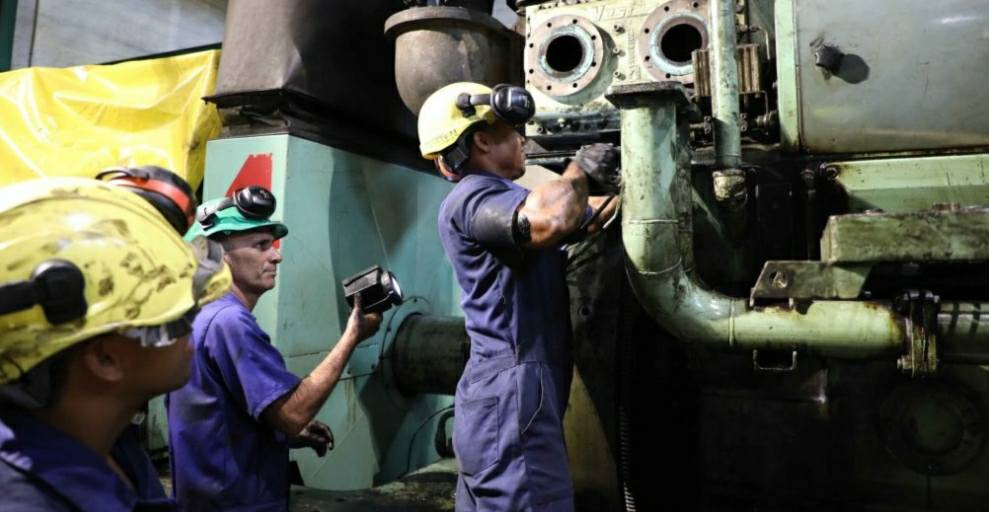

The authorities claim that efforts are being made to improve the situation, but the equipment is overexploited, and there are no resources for repairs / Periódico Victoria

14ymedio bigger14ymedio, Madrid, June 18, 2025 — The only territory that had been kept out of the scheduled blackouts and the electricity deficit thanks to its independent energy system, the Isle of Youth, has also suddenly entered a crisis. On Monday, the electricity company, for the first time, reported blackouts lasting up to five hours per block, although many customers report up to 10 hours. On Tuesday, the authorities went one step further and announced emergency measures, faced with only half the power generation that is needed.

The Municipal Energy Council said that of the 18 generators on the island, only eight are running, providing 11 megawatts (MW), when more than 24 MW is needed. The situation is so critical that the first secretary of the Municipal Committee of the Party, Rafael Ernesto Licea, convened a meeting in the Caribe cinema in Nueva Gerona, where representatives of the electric company explained how to deal with the situation.

Starting this Tuesday, a tough savings package comes into effect that includes the suspension of climate equipment in the state and private sectors, with the sole exception of those “considered technological and approved by the National Office for the Control of the Rational Use of Energy in Cuba (ONURE).” continue reading

Starting this Tuesday, a tough savings package comes into effect that includes the suspension of climate equipment in the state and private sectors

“Since Tuesday, we have allowed the use of generators for production and service processes; hence, Alimentaria, for example, will produce bread with a generator and not with electricity from the grid in order to relieve congestion and affect the population as little as possible,” said the official. He stated that there is fuel, and that, in fact, the problem of the engines is not lack of fuel but is related to the “many years of operation” of the equipment and the “lack of resources to reactivate its functioning.”

The leisure sector will be most affected. The facilities of the Gran Caribe are obliged to use generators from 8 pm to 6 am, while the recreational establishments may be open only from Friday to Sunday, whether state or private. In addition, they cannot use air conditioning systems, and in the case of restaurants, they cannot use the ovens from 6 pm to 8 am, directly affecting the meal schedule.

One of the hardest measures is for cooling: refrigerators, storage rooms and containers must be turned off from 6 am to 6 pm, (half a day ), with the risk of spoilage and loss, unless they are powered by generators.

Licea was in the meeting with Yuladis García Segura, president of the Assembly of People’s Power, as well as other managers and representatives of mass organizations, politicians and students. At the meeting, the municipal mayor, Adiel Morera Macías, criticized several entities for not having delivered to ONURE the plan required for the control of the rational use of energy that corresponds to the current month, so “they will be withdrawn from service as of this Tuesday for seven days for violating the established rule.”

The measures -planned by law, said Morera, “now begin in a joint way and will stop as the availability increases and the municipal electrical system is restored, for which it already has the support of the country’s brigades.” The first time that President Miguel Díaz-Canel mentioned the word “joint” to refer to the electricity shortage was in 2019, and a situation began that has become structural and worsened day by day throughout the country.

“The interesting thing is that a few weeks ago it was leaked on the street by people who work in that area that we were going to start having blackouts, said a user of Islavisión about the announcement. I did not believe them at the time because the Isle of Youth operates with a system that is independent of the national one, but today I can see that they are using exactly the same strategies and justifications as in the rest of the country.”

“I did not believe them at the time because the Isle of Youth operates with a system that is independent of the national one, but today I can see that they are using exactly the same strategies and justifications as in the rest of the country”

Several commentators have recalled that in 2023, a group of Japanese came to the Isle of Youth to assemble a generation plant. “Is it already broken?” asked several with discomfort.

In April 2024, the authorities came together to hold an “Isle of Youth Electricity Improvement Project Completion Ceremony.” The work, carried out with a state subsidy, included the installation of the necessary equipment and devices, such as storage batteries, installations for energy reception and transformation, facilities and control equipment” to increase renewable energy from 5 per cent to 18 per cent. However, this has not been able to alleviate the current crisis, and the officials have asked the people to save electricity, pushing their patience to its limit.

“There is no more understanding!” someone commented. “What there is is hunger, heat, mosquitoes. Do not gather anymore and face the people without solutions! We are tired of so much lying and being told to save more than we are already getting. Eynough!!!” Proof of the fatigue accumulated by the citizens of the former Isle of Pines circulates on social networks. There are even demands for independence and calls to form an “autonomous republic” with its own laws, including free trade or
associated with the Government of Cuba through some form of agreement.

Translated by Regina Anavy

____________

COLLABORATE WITH OUR WORK: The 14ymedio team is committed to practicing serious journalism that reflects Cuba’s reality in all its depth. Thank you for joining us on this long journey. We invite you to continue supporting us by becoming a member of 14ymedio now. Together we can continue transforming journalism in Cuba.

The ‘Five Grey Years’ Kept Going Much Longer Than a Decade, Primarily Because of Fidel Castro / Cubanet, Luis Cino

That dark, inquisitorial period lasted much more than five years. It did not, as some would like to pretend, end in 1976.

The work, “1971,” from the series, “Reconstrucción. Quinquenio Gris,’ [Reconstruction. Five Grey Years,” by the plastic artist Alejandro González. Image: MNBA.
Cubanet, Luis Cino, Havana, 7 June 2025 – It was the late essayist Ambrosio Fornet who coined the term, “The Five Grey Years,” to refer to the repression of artists and intellectuals during the 1970s–a disastrous time for the national culture.

Fornet first utilized this expression in January of 2007 during his appearance at an event convened by fellow essayist Desiderio Navarro with the blessing of the Ministry of Culture, and by which Fornet attempted to resolve the so-called “email storm.”

That storm, also known as “the little war of  emails,” was provoked by the fawning  presentations on the TV programs “Impronta” and “La Diferencia” (hosted by singer Alfredo Rodríguez) of Luis Pavón and Jorge “Papito” Serguera, executors of the cultural policies of that period—the former as president of the National Council of Culture (CNC), the latter as director of the Cuban Institute of Radio and Television (ICRT).

During his appearance in that roundtable, and in his attempt to do some belated damage control by minimizing the era as much as possible (and above all, by not indicating who bore the primary responsibility for it) Fornet understated matters by employing the term, “five-year period.”

That dark, inquisitorial time lasted much longer than five years. It did not, as some claim, end in 1976, when the National Council of Culture was continue reading

replaced by the Ministry of Culture, with Armando Hart at the helm; several more years would elapse before the darkness would begin to dissipate in the early 1980s.

Nor did it start in 1971 with the Congress of Education and Culture, and the Heberto Padilla affair. For a long while already, dark clouds had been gathering over writers and artists. Before the commissioners, irritated by the homoerotic tone of Chapter VIII of Paradiso, ordered Lezama Lima‘s monumental novel to be removed from bookstores and turned into pulp; before the ordeal visited upon Heberto Padilla and Antón Arrufat for their books Fuera del juego and Los siete contraTebas, respectively, began in 1968; before that Stalinist ectoplasm who would sign his name as “Leopoldo Ávila” (and whose authorship remains unknown, whether it was actually “Lieutenant” Pavón, José Antonio Portuondo*, or both of them in a duet) began to fire mercilessly at writers from the pages of Verde Olivo, the magazine of the Revolutionary Armed Forces.

Several years before Lieutenant Armando Quesada* ordered the burning of the Guiñol Nacional puppets related to Afro-Cuban traditions in 1971, considering them to represent “backwardness, underdevelopment, the stuff of black santeros,” other figures in official culture, imbued with “revolutionary fervor,” were already setting themselves up as inquisitors.

In October of 1963, one of the most Stalinist cultural commissars of the regime, the scholastically Marxist Mirta Aguirre, declared: “In the hands of dialectical materialism, art can and should be an exorcism, a form of knowledge that contributes to sweeping the dark shadows of ignorance from the minds of men, a precious instrument for replacing the religious conception of the world with [Marxism’s] scientific conception, and a timely Marxist resource for the defeat of philosophical idealism.”

In 1965, a recalcitrant and obtuse extremist like  Magaly Muguercia believed she was capable of deciding that Cuban theater had to be “an obligatory socialist expression.”

The writer and folklorist Samuel Feijoo, on April 15, 1965, in order to get in tune with that statement from the Union of Young Communists that screamed “Out with the homosexuals and the counterrevolutionaries from our schools,” and anticipating the UMAP by a few months and the Parametración*** carried out by the Evaluation Commission of the CNC in the early 70s by six years, published in the newspaper El Mundo a commentary entitled “Revolution and Vices,” in which he stated:

“This most virile country, with its army of men, should not and cannot be expressed by homosexual writers and artists. Because no homosexual represents the Revolution, which is a matter of men, of fists and not pens, of courage and not trembling, of integrity and not intrigue, of creative courage and not cheap surprises. Because the literature of homosexuals reflects their epicene natures, as Raúl Roa said. And true revolutionary literature is not and will never be written by sodomites… Destroy their positions, their procedures, their influence. That is what is called revolutionary social hygiene. They must be eradicated from their key positions on the frontier of revolutionary art and literature. If we lose a dance group because of this, we are left without the sick dance group. If we lose an exquisite literary figure, the air becomes cleaner. Thus, we will feel healthier while we create new virile figures emerging from a brave people.”

The witch hunt against artists and intellectuals would reach its climax with Fidel Castro’s speech in April 1971, at the closing of the Congress on Education and Culture. But the scribes of official culture and some of those who suffered from Stockholm syndrome yesterday, when speaking of the Grey Decade, prefer to reduce it to a five-year period and avoid mentioning that the responsibility for that dark and sad period lay with Fidel Castro, beginning with his “Words to Intellectuals” in June 1961**, and culminating 10 years later with the closing speech of the Congress on Education and Culture.

Luis Pavón, Papito Serguera, Armando Quesada, and other anti-cultural henchmen, however extremist they may have been, were merely the underlings with limited authority who, in compliance with “the instructions from above,” were charged with carrying out those aberrant policies to bring artists and intellectuals in line and “within the Revolution.”

Translator’s Notes:

*Portuondo and Quesada are pictured in this Translating Cuba article, Cuban Writer Jorge Ferrer Releases the Recordings of Heberto Padilla’s ‘Confession.’

**A reference to a speech by Fidel Castro on June 30, 1961, in which he set limits to the free expression of artists and writers: “Within the Revolution, everything; outside the Revolution, nothing.”

****Parameterization/ parametración: From the word “parameters.” Parameterization is a process of establishing parameters and declaring anyone who falls outside them (the parametrados) to be what is commonly translated as “misfits” or “marginalized.” This is a process much harsher than implied by these terms in English. The process is akin to the McCarthy witch hunts and black lists and is used, for example, to purge the ranks of teachers, or even to imprison people.

Translated by: Alicia Barraqué Ellison

New Documents Reveal That Mexico Has Paid Almost 93 Million Euros for Cuban Doctors

The newspaper ‘El Universal’ has obtained official information through the transparency portal

A group of Cuban doctors in the state of Tlaxcala (Mexico) / @EmbaCuMex

14ymedio bigger14ymedio, Madrid, June 18, 2025 — In just two years, the amount of money paid by Mexico to Cuba for health services has increased by 70.3 million euros. According to information published this Tuesday by El Universal, the total amount corresponding to contracts signed between July 2022 and May 2025 amounts to 92,525,569 euros, a quantitative jump from the last time data were collected, when the amount was 23 million euros.

The Mexican newspaper has again requested transparency about the available contracts and has analyzed them in a way that can be consulted openly on the Compras MX platform. In 2024, the same media published information corresponding to three contracts -between July 2022 and May 2023- for which the Cuban government would send 610 doctors to rural areas in Mexico, although the new documents indicate that the number was actually 809. Of these, according to an investigation, 48 escaped.

The new data show a very high amount, although not all of the money goes to the salaries. It is not known what part will be paid to the Cuban government’s Service Commercialization Agency, since the amount is the total corresponding to the transportation and maintenance of the health personnel. The service includes chauffeured transportation to medical units, safe and permanent lodging, “special diets delivered three times a day” – presumably for meals – and 24-hour personal care. continue reading

The new data show a very high amount, although not all of the money goes to salaries

The information provided by the Mexican Institute of Social Security for Welfare (IMSS-Bienestar) gives a account of the three known agreements, according to which the doctors were distributed in 15 Mexican states: Baja California Sur, Campeche, Chiapas, Colima, Guerrero, Michoacán, Hidalgo, Nayarit, Oaxaca, Quintana Roo, Sonora, Tamaulipas, Tlaxcala, Veracruz and Zacatecas.

According to a contract accessible on the Compras MX platform, the IMSS-Bienestar paid in pesos the equivalent of 12.5 million euros to nine Mexican companies for the “services of lodging, food and ground transportation for health personnel.” The number of beneficiaries varies by state, between four and 40 members, distributed in Baja California, Baja California Sur, Campeche, Chiapas, Colima, Mexico, Guerrero, Hidalgo, Michoacán, Morelos, Nayarit, Oaxaca, Quintana Roo, San Luis Potosí, Sonora, Sinaloa, Puebla, Tabasco, Tamaulipas, Tlaxcala, Veracruz, Yucatán and Zacatecas.

Another contract, starting on April 1 and ending on May 31, 2025, provides for payment in pesos of about 53 million euros more to five Mexican companies for the same reasons, and in this case for doctors assigned to a total of 24 states. What is striking here is the quantity, since the number of healthcare personnel ranges from 1,966 at the least to 4,845 at the most.

El Universal gives details about the entire process of installing the doctors from the time of their arrival in Mexico to when they are transferred to the destination unit. If it is far away, they are expected to have guaranteed transport seven days a week, 24 hours a day, at alternate times and on mixed dates. If necessary, the doctors are relocated.

As for accommodation, it can be temporary or permanent and must be no more than one kilometer from their work center. Lodging includes hotels, houses, single rooms for those who go alone or shared rooms for couples. It also specifies the equipment of the accommodation, which must have supplies – electricity, water, gas and sanitation – in addition to one bed per person, a closet, washing machine, microwave, sofa, TV, sink, bathroom, desk, stove, refrigerator and table with two chairs.

The provider must also guarantee three meals a day and customer care -in person, by telephone or email- for management and the health personnel

The provider must also guarantee three meals a day and customer care -in person, by telephone or email- for management and the health personnel.

The newspaper reports that the US has recently taken measures against officials who facilitate Cuban medical missions, considering them a form of labor exploitation and indentured servitude. This is based on the fact that the Cuban Government keeps between 70% and 95% of the salaries paid out for the health workers. According to the sanctions introduced by US Secretary of State, Marco Rubio, foreigners who facilitate these contracts will remain without a visa to enter the United States.

These and other measures of pressure have led the Government of the Bahamas to announce the termination of contracts with the Government of Cuba. As announced on Monday by the Bahamian Minister of Health, Michael Darville, Cubans interested in staying will “sign a new employment contract,” a solution that, according to Archivo Cuba, would not be enough if the regime in Havana forces them to “donate” their wages to the State.*

*Note from Translating Cuba: Added clarity on what this might mean, from Reuters: “June 16 (Reuters) – The Bahamas is preparing to cancel contracts with Cuban healthcare professionals after discussions with the U.S. government, Bahamian Health Minister Michael Darville said in a parliamentary address on Monday. Darville said his ministry would enter into direct employment contracts with Cuban healthcare professionals in the Bahamas. ’Those who are not interested in this new arrangement will be given time to wrap up their affairs and return to Cuba,’ Darville said.”

Translated by Regina Anavy

____________

COLLABORATE WITH OUR WORK: The 14ymedio team is committed to practicing serious journalism that reflects Cuba’s reality in all its depth. Thank you for joining us on this long journey. We invite you to continue supporting us by becoming a member of 14ymedio now. Together we can continue transforming journalism in Cuba.

Aroldis Chapman Has Two Options To Play in the World Classic: Great Britain and the US

The British team agreed to be part of the preselection, although the Americans also want him.

Chapman is looking forward to being a free agent in the US Major Leagues/ Instagram/_thecubanmissile54

14ymedio bigger14ymedio/Swing Completo, Havana, June 17, 2025 — Baseball player Aroldis Chapman, the “Cuban Missile,” has chances to play in the 2026 World Classic, but not with Cuba. Great Britain extended an invitation to him, and although the athlete said yes to being part of the roster (preselection), it all depends on whether he will get free agency this season after playing six years in the US Major Leagues. In addition, the US team asked him if he was available for consideration.

Chapman’s grandparents are from Jamaica, a former British colony, so he can apply for citizenship.

Chapman told Swing Completo that “before telling them that yes, I can be on the roster, I told them I was going to talk to my dad and that it depends on what he says.” The player said this father told him: “Come on, let’s go there.”

Chapman has expressed his annoyance at Cuba’s call for exiled players / Instagram/_thecubanmissile54

British managers have made adjustments for the World Classic. They appointed Bradley Marcelino as manager of the national team. The coach, who is a Minor League batting coordinator for the Arizona Diamondbacks, knows Chapman’s potential well, and to make his incorporation official, he will be a starter for two international events: the European Cup, where Great Britain is part of Group B and has France, Israel and the Netherlands as rivals, and the World Classic, where Great Britain is in Group B with the United States, Mexico, Italy and Brazil.

As for the possibilities in the US, says Chapman, there was an approach. American citizenship opens the door for him, but there is nothing concrete yet.

The issue of Cuba is closed, yes? The ball player deserted in 2009 during a tournament in Rotterdam, and the regime placed him on the list of traitors. In 2008, the government had accused him of an escape attempt and wouldn’t let him go to the Beijing Olympics. “I was a sellout,” he said a few weeks ago.

Chapman expressed his annoyance at Cuba’s call for exiled players. He recalled that all those who leave a delegation or tournament are called “traitors, worms,” but now because of the needs of the Cuban team, “they want them to go and play.”

“All those people who are calling the players who are here and those who are going to the Classic, I think they are the first ones that should be respected and not be calling everyone,” he said.

The Cuban Missile is part of the group that US-based journalist Yasel Porto Gomez named as players who have refused to be part of the Cuban national team. Among them are Yordan Álvarez, José Adolis García, Jorge Soler, Raisel Iglesias, Lourdes Gurriel, Edgar Quero, Luis Robert, José Iglesias, Adrián Morejón, Yandy Díaz, Yulieski Gurriel, Cionel Pérez and Nestor Cortés.

Translated by Regina Anavy

____________

COLLABORATE WITH OUR WORK: The 14ymedio team is committed to practicing serious journalism that reflects Cuba’s reality in all its depth. Thank you for joining us on this long journey. We invite you to continue supporting us by becoming a member of 14ymedio now. Together we can continue transforming journalism in Cuba.

Ruins up for Auction: The Cuban State Offers the Private Sector the Opportunity to Revive Run-down Spaces

“Anyone who ventures into this space is going to have to spend a lot of money.”

The space located on Aguacate and O’Reilly streets in Old Havana seems light years away from being able to be converted into a business. / 14ymedio

14ymedio bigger14ymedio, Natalia López Moya/José Lassa, Havana, 5 June 2025 — Where a building once stood, now only an empty lot facing the sea remains. The land at the corner of Perseverancia and Malecón streets in Central Havana is part of the public bidding process open in the Cuban capital seeking a private entrepreneur to convert it into a cafe, a restaurant, a craft stand, or a vehicle repair shop.

The task of attracting the private sector is beyond complicated, given the current state of these plots and buildings, since most of them are empty and dilapidated. The plot on Perseverancia Street is simply a vacant lot, where, in the past, stood one of those many buildings on the Havana coastline that eventually collapsed after decades of salt damage and neglect. Later, a small park replaced the brick mass, and finally, the perimeter became a makeshift garbage dump and a place for graffiti.

The corner of Perseverancia and Malecón streets in Central Havana is part of the public bidding process open in the capital. / 14ymedio

The Heritage Management Company, part of the City Historian’s Office, included the esplanade among the six locations available for lease until June 30th. The list also includes a plot in the city’s historic center and a stand in the former Almacenes San José. The activities that can be carried out at these sites range from gastronomy and retail to recreation and cultural events.

But paper is one thing, reality is another. One of the other plots being sought by a private developer is at the corner of Malecón and Crespo Streets, where, unlike its neighbor on Perseverancia Street, hasn’t even had all the rubble removed from the building that collapsed years ago. When it fell down, a man was seriously injured and it left images that starkly portrayed Havana’s ruins.

Neighbors still remember the dust that arose when the walls of the building, now uninhabited and undergoing demolition, collapsed. After clearing away the largest pieces of the wreckage, the authorities placed a metal fence around it to prevent the property from becoming a landfill or public restroom. The area, which looks like it’s located in a city in the midst of war, is one of those now being put up for bid.

The scene is repeated, more or less unchanged, on the plots of land at the corner of Malecón and Escobar. / 14ymedio

“Any private individual who gets involved in this is going to have to spend a lot of money to clean up that land,” says a resident of the nearby Lealtad Street, which has seen both the splendor and the ruin of Havana’s shoreline. “The State can’t get this ready to set up a business, since it doesn’t have the money, but it doesn’t make much sense for an individual because of the high costs of remediating it,” he explains to 14ymedio.

Crespo’s lot is large because it extends to the neighboring San Lázaro Street, where the adjacent building also collapsed years ago. An area is one that continue reading

many countries would strongly bid for, given its oceanfront location, its good connections to other parts of the city, and its history. But in Havana these days, the land scares away pockets more than it attracts them.

Another of the plots sought by a private developer is at the corner of Malecón and Crespo. / 14ymedio

The scene is repeated, more or less unchanged, on the plots at the corner of Malecón and Escobar and also on the one located on Avenida del Litoral and Calle Genios. Spaces without any construction, empty squares, lots where families once leaned out on their balconies, children ran down the stairs, and the elderly enjoyed the sea breeze sitting on their doorsteps, but where, in a second, everything collapsed, giving way to yet another gaping hole in the smile of the Havana coast. A mouth that’s increasingly toothless.

Also competing in disrepair, the space located on Aguacate and O’Reilly Streets in Old Havana seems light years away from being able to accommodate a business. Two royal palm trees vigorously resist the land, which, despite the fence surrounding it, has become a dumping ground that passersby avoid and “the divers” dig through. “This could be “the land of plenty”, but you’d need a lot of money to improve it”, considers a resident of one of the buildings nearby.

Located in the heart of Havana’s tourist scene, a few years ago, When the winds of economic and democratic openness gave Cubans hope, “this would have had a lot of eyes on it”, the Havana native ventures. But now, it’s hard to believe anyone could be interested in it “getting stuck in a project like this, to make something out of nothing.” The recently announced tenders seem like an attempt to revive spaces in clear decline.

In the list of offers from the Historian’s Office, the one with the best conditions is the option to obtain a stand in Almacenes San José. / 14ymedio

The state-owned monopoly Cupet hasn’t been left behind either, and it has published an advertisement seeking to lease the auto repair shop located at the corner of Justicia and Municipio streets in Luyanó, Diez de Octubre, to a private party.  Interested parties can apply until June 11 to “use the shop area, as well as its equipment.” But according to the shop’s employees, the entrepreneurs who have come to inspect the premises’ infrastructure have not been very satisfied. “The roof is a light covering, the equipment is very worn, and a lot of money would have to be invested to get this up and running,” one of the remaining state workers at the site, which currently barely provides any service, told this newspaper. “All the supplies needed to repair and do the bodywork on cars are expensive, many in foreign currency,” he explains. “An investor who wants to incur this headache will have to be very patient and have lots of bucks.”

Meanwhile, on the list of offers from the Historian’s Office, the one with the best conditions is the option to obtain a stand at the Antiguos Almacenes San José Cultural Center, near the Bay of Havana. The market, where artisans sell seed necklaces or paintings with the facade of the Bodeguita del Medio, has also suffered the migratory exodus and there are numerous empty spaces. With a roof, solid walls, and a yellow-painted facade, it is the crown jewel among so many ruins up for bid.

Translated by Norma Whiting

____________

COLLABORATE WITH OUR WORK: The 14ymedio team is committed to practicing serious journalism that reflects Cuba’s reality in all its depth. Thank you for joining us on this long journey. We invite you to continue supporting us by becoming a member of 14ymedio now. Together we can continue transforming journalism in Cuba.

The Cuban University Wakes Up After Decades of Being Gagged

Days before the ‘rate increase’, no one could have predicted that the students would regain their rebellion.

Faculty of Mathematics and Computer Science, University of Havana. / 14ymedio

14ymedio bigger14ymedio, Yoani Sánchez, Generation Y, Havana, 18 June 2025 — The Cuban regime is holding its breath. There are only a few days left until the end of the academic year in all the island’s faculties, a period that this year is proving to be an uphill struggle for oficialdom. In the classrooms of higher education, outrage has multiplied over the price increases implemented late last month by the state telecommunications monopoly, Etecsa. After decades of being muzzled, university students seem to have regained their voice.

Protests against the popularly known “tarifazo” have swept across all social strata in Cuba, but students have been the most vocal in their reactions. The need to constantly turn to the internet for bibliography to support their courses, the desire to escape a stifling reality through social media, and the many emigrated relatives and friends they want to stay in touch with, make web browsing as imperative at these ages as food, transportation, and a roof over one’s head.

However, just days before the declarations of opposition to Etecsa began to pour from the desks, no one could have predicted that the University would regain its rebelliousness. The epicenter of many of the political changes that shook Cuban politics during the colonial and republican eras, our Alma Mater seemed to have been totally controlled and domesticated by the Communist Party. Years of purges, rigged elections, reprisals, and expulsions of inconvenient professors managed to transform a natural youthful disobedience into pure docility. Until one day.

Under the slogan that “the university is for revolutionaries,” Castroism implemented ideological filters that forced students to ‘fake it’

Under the slogan “the university is for revolutionaries,” Castro’s regime implemented ideological filters that forced students to pretend and to wear an ideological mask to allow them to graduate. The faculties, which had once given rise to revolts and social uprisings, became places where government policies were applauded and the olive-green leaders’ cult of personality spread. The University Student Federation became a sounding board for the power to speak to the students, and only the most trusted teachers taught in the classrooms.

But enough! The announcement of an internet connection price increase was enough for the academic outcry to spread to dozens of faculties, where students collected signatures, joined in on statements, and stood up to the rectors. More than two weeks after the price hike began, university students in several provinces continue to publish letters of protest, voice their criticisms in assemblies, and receive threats. The image of higher education, one hundred percent in tune with Havana’s Plaza de la Revolución, has been irreparably shattered.

Political police have attempted to divide the protesters, visited the homes of students leading the demand to reverse the rising costs of connecting to the world’s largest network, and warned of short-term repercussions for those who insist on publicly complaining.

For their part, young people are responding by calling for a strike in classrooms at several educational institutions and continuing to resist in meetings with administrators and officials. In an audio recording leaked in recent hours, the rector of the University of Havana can be heard saying that “if it’s a strike, then it’s a counterrevolution,” alluding to the implications of students stopping showing up to class. But her voice hasn’t sounded with the authoritarian conviction of yesteryear, but rather with a certain tone of fear, the fear of a political class when it senses that university youth, long dormant, are awakening.

________________________

Editor’s Note: This article was originally published on DW and is republished with the author’s license.

____________

COLLABORATE WITH OUR WORK: The 14ymedio team is committed to practicing serious journalism that reflects Cuba’s reality in all its depth. Thank you for joining us on this long journey. We invite you to continue supporting us by becoming a member of 14ymedio now. Together we can continue transforming journalism in Cuba.

continue reading

‘If It’s a Strike, Then It Is Counterrevolution,’ Warned the Rector of the University of Havana

An audio recording reveals Miriam Nicado García’s pressure to get students to abandon their protest against Etecsa’s rate hike.

Nicado is a deputy in the National Assembly of People’s Parties (ANPP), a member of the Council of State, a member of the Communist Party of Cuba (PCC), and former rector of the University of Cuenca (UCI). / Cuba.cu Portal

14ymedio bigger14ymedio, Yunior García Aguilera, Madrid, 17 June 2025 — The recently leaked audio recording of a meeting between the rector of the University of Havana, Miriam Nicado García, and students dissatisfied with the so-called ‘Tarifazo’ — the rate hike from Etecsa, the State telecommunications monopoly– not only confirms youth discontent with an arbitrary measure, but also gives voice—and tone—to the authoritarian model of top-down pedagogy masked by the rhetoric of “unity and dialogue.”

Nicado is not a mere academic administrator. She is a deputy in the National Assembly of People’s Power, a member of the Council of State, a member of the Communist Party, and the former rector of the University of Informatics Sciences (UCI), an emblematic center of technological control and loyalty to power. In other words, she is an official of the regime, located in one of the country’s key institutions: the University of Havana, the historic cradle of Cuban critical thought.

It begins with economic technicalities, continues with condescension and ends with veiled threats.

The audio, which has gone viral on social media, shows a debate that begins with economic technicalities, continues with condescension, and ends with veiled threats. A story that many students, especially the bravest ones, know by heart. “If you don’t come to class, you don’t receive classes,” Nicado says in a calm but implacable voice. “If it’s a strike, then it’s counterrevolution.”

Thus, bluntly, the university’s highest authority equates a student civic action with “treason.” The students’ demand was clear: that the Etecsa rate hike be explained transparently, that space be given to criticism and real dialogue, not institutional monologue. The response: emotional blackmail, ideological disqualification, and the insinuation of punishment. continue reading

“Do not come to class until this dialogue becomes a reality.”

The demand of Amalia Díaz Pérez, president of the FEU (University of Havana) Faculty of Philosophy, History, and Sociology, was respectful, articulate, and, above all, legitimate: “As this is a problem that not only affects students but the entire population, our position as the University of Havana must also be aligned with that.” And the applause shook the walls when she stated her position: “Do not come to class until this dialogue becomes a reality.”

But Nicado prefers to crush any fissure rather than engage in genuine dialogue. What follows in her remarks sounds like something from an interrogation at State Security’s Villa Marista, not a university campus.

The rector anticipates any protest: “I have some information here,” she says, and pulls out a supposed rumor of a demonstration like a card up her sleeve. No one has said anything, but she already has the accusation ready. The method is familiar: discredit before the adversary speaks. Fabricate the threat to justify the control. She never clarifies who gave her this information, although multiple students have already reported the disproportionate presence of State Security agents inside the universities.

The paradox is that this exile they call the enemy is the one they are forcing to save their socialist enterprise.

“We can’t play into the hands of those who want to see us in the streets or those who want to see us protesting,” Nicado declares, always referring to an external enemy. The paradox is that this exile they call an enemy is the one they are forcing to save their socialist enterprise by sending phone and internet recharges — in US dollars — to their families on the island.

The rector hides behind technocratic language—numbers, clusters, percentages—to disguise what is essentially an imposition as a “rational explanation.” She says, with the tone of someone who has memorized her lesson well, that Etecsa relied on “arithmetic logic” to set rates, even though “this has a social cost.”

Nicado’s presence on the Council of State is not for show. It signals that she is aware of—and involved in—the decisions that affect the lives of millions of Cubans. That’s why she resorts to the same demagoguery: first, she sweet-talks the students by talking about “culture and intelligence,” and then she fires off the words “blackmail” and “division.” Her rhetoric is classic Cuban power. She talks about transparency while censoring and repressing any dissent. She offers dialogue, but only if the questions don’t bother her.

More and more young people are deciding to raise their voices.

The leaked audio is not an isolated incident. It joins a series of spontaneous expressions of discontent from universities, workplaces, and neighborhoods that are beginning to break through the wall of official silence. More and more young people are deciding to speak out. The fact that they do so in a classroom, in front of a rector, without insults or empty slogans, shows that fear no longer completely paralyzes them. The fact that those in power respond with threats disguised as pedagogy is a sign that the legitimacy of the system is cracking.

For now, Nicado remains in her position. Her voice, at least in the audio, sounds confident, even maternal. But beneath that confidence, one senses the cracks of an authority that is beginning to be questioned.

____________

COLLABORATE WITH OUR WORK: The 14ymedio team is committed to practicing serious journalism that reflects Cuba’s reality in all its depth. Thank you for joining us on this long journey. We invite you to continue supporting us by becoming a member of 14ymedio now. Together we can continue transforming journalism in Cuba.

Despite the ‘Titanic Work’ of the Authorities, Santiago de Cuba Is Again Without Gas

Outrage is growing against Cupet for failing to fulfill its commitment to deliver 14,000 cylinders a day for 24 days.

This Tuesday, the official State newspaper Granma dedicates an extensive article to the effort made by workers linked to the sale of a gas that, so far this year, has been unavailable / Granma

14ymedio bigger14ymedio, Madrid, 17 June 2025 — After so many months of waiting, the distribution of liquefied petroleum gas (LPG), which began at the end of May when the government was finally able to pay to unload the ship that was waiting in the port of Santiago de Cuba, has ended in the blink of an eye. This Monday, the company Cuba Petróleo (Cupet) in the eastern province announced the suspension of the sale of LPG until more is available.

The population’s indignation has been major, provoking a quick response from the official press: an article in the newspaper Granma explaining the enormous effort made by workers throughout the island to get the cylinders to the population. “If the second ship arrives at the estimated time, all customers will receive one, and distribution will not be interrupted,” said Lucilo Sanchez, director of Trade and Supply of the state-owned company. Only a few hours later, Cupet announced the opposite.

The message had been broadcast on the Telegram platform of Santiago’s Cupet early in the morning and provoked numerous reactions, which reflected the discomfort of customers over the broken promise. “They opened their mouths to say that there was gas for 100% of the population. Now there’s no name for this, neither disrespect, nor liars… No, this has no qualification, because they have already surpassed themselves,” said one user. The vast majority protested that they had been guaranteed more days and more beneficiaries.

“They opened their mouths to say that there was gas for 100% of the population. Now there’s no name for this, neither disrespect, nor liars”

On May 27, when the distribution of LPG began, the director of the Territorial Division of Fuel Marketing, Lisset González Sardinas, said that “the organizational conditions for distribution and marketing were created” so that “coverage of one hundred percent over a 24-day period” was expected. The entire plan was detailed, which included the use of the Ticket application, for which 80 daily turns were to be released. “Its clients will occupy a separate line,” the official said.

The forecast was to fill 14,000 cylinders daily, of which 7,500 were for Santiago de Cuba – 4,000 in the morning and 3,500 in the afternoon, provided there were no “setbacks in the industry” – starting with those who continue reading

last acquired them in January or earlier and continuing for those who had not bought since before February 15. “Each customer will buy only once, regardless of the cycle interval of their group. They will not be able to make a new purchase until all customers have been able to buy. This decision seeks to cover all the demand that exists today”, said the newspaper Sierra Maestra.

“I do not understand anything; it’s a total lack of respect for the people. I haven’t been able to buy my turn on Ticket, because last week it wouldn’t download. It’s one lie after another. All of them are liars. I want to know what business they are doing with what belongs to the people, with the work that goes on in this country,” complained another customer. “I haven’t been able to get gas since October, and I’ve had my turn since February. If the gas is coming and the turns don’t work, what’s going on?” cried another.

Among the reactions were reproaches, even by the official press, accused of spreading propaganda. “It’s a game of bandits, bullies, liars, disrespect. Even the journalists belong to the same cult with the news they give: transmitters of lies, saying that there was gas for everyone. And the Ticket lines, another gang of thugs; we are buried underground with our misery,” wrote another customer. In the most serious case, some pointed out that they have been unable to buy gas since last year.

“In my case, I haven’t been able to get gas since last year, and because of work, I decided to wait for a turn on Ticket. And now they say this. They should think about respecting the people and at the same time invest in managing such an important service as this. I recognize that communication has improved by using this app, but they have to improve the timing for the turns,” said another.

“In my case I haven’t been able to get gas since last year, and because of work, I decided to wait for a turn on Ticket. And now they say this. They should think about respecting the people”

This Tuesday, Granma’s note addresses the issue without recognizing the seriousness of the situation and even softens it with respect to the statements of the Minister for Energy and Mines, Vicente de la O Levy, who last month stated that out of 150 days in the year, Cuba was out of gas for at least 117. “So far this year, the island has suffered more than 60 days of crisis from a shortage of LPG. In some households they had to ’stretch the gas’ and use only what is indispensable, and in others they had to ’invent’ with coal or wood,” notes the text.

In its review of the facts of recent weeks, the media recalls that on May 27, the ship was able to unload at the Hermanos Díaz Refinery, in Santiago de Cuba, after weeks of deadlock because “economic constraints prevented payment.” Once unloaded, the ship then went to Havana before passing through Nuevitas (Camagüey), where it also left cargo.

After describing the work done – “We can’t rest,” “We can’t stop,” “We had to put it where it really needs to be,” “We are willing to work so that the population is satisfied”- it reports that everything was done accurately, including the filling of the cylinders, despite the fact that an earlier breakdown in one of the machines paralyzed the “continuity of service.”

The text also accounts for the preparations at dawn for the delivery trucks, which must be ready early for the deliveries to Granma and Guantánamo – “a titanic job”- and the complicated management of Ticket and Mi Turno, which customers say doesn’t work: a long article completely denied by the reality.

*A Cuban website for buying a turn in line.

Translated by Regina Anavy

____________

COLLABORATE WITH OUR WORK: The 14ymedio team is committed to practicing serious journalism that reflects Cuba’s reality in all its depth. Thank you for joining us on this long journey. We invite you to continue supporting us by becoming a member of 14ymedio now. Together we can continue transforming journalism in Cuba.

‘After Difficult Negotiations.’ Bahamas Cancels Medical Contracts With Havana

Cuban health workers interested in staying will sign a new employment contract with the country’s Ministry of Health.

Bahamas Health Minister Michael Darville speaking to Parliament on Monday / Screen capture

14ymedio bigger14ymedio, Olea Gallardo, Havana, June 17, 2025 — As announced, the Bahamas will directly hire Cuban doctors who are serving on the islands and cancel its agreements with the regime. This was announced by the Bahamian Minister of Health, Michael Darville, in a speech to Parliament on Monday about the government budget for 2025.

Darville said he was in Havana two weeks ago to “review the hiring protocols” of health workers with Cuban recruitment agencies. “After difficult negotiations, we are ready to announce the cancelation of all existing contracts with the Government of Havana and the signing of direct contracts with Cuban health workers,” he said.

Health workers who agree with the new terms, said the minister, will “sign a new employment contract with my ministry” and be able to stay in the country, deployed on the Family Islands (the myriad of islands that are not Grand Bahama and New Providence, whose capital is Nassau). “Those who are not interested in this new agreement will have time to settle their affairs and return to Cuba,” he emphasized.

The Cuban health staff currently consists of 35 persons: 3 ophthalmologists, 3 nurses, 10 biomedical engineers, 8 laboratory technicians and 11 x-ray technicians

As specified by the minister, the Cuban health staff currently consists of 35 people: 3 ophthalmologists, 3 nurses, 10 biomedical engineers, 8 laboratory technicians and 11 x-ray technicians, who, he said, “have recently completed a new training program at Princess Margaret Hospital” in Nassau. Most of them, he said, are willing to serve on the Family Islands.

Darville emphasized that all Cuban workers “receive the same benefits” as local workers. “They are well treated, they are respected in our country, we are grateful for their service,” he declared, while assuring that the contracts between both countries were articulating the changes.

In his address to Parliament, the Minister highlighted the shortage of health professionals in the country, including doctors and nurses from Ghana. At the same time, he promised that they will train and hire Bahamians to “fill in the gaps.” continue reading

He also said that the recruitment of Cuban teachers and health workers is suspended pending the outcome of talks with the US, which last February threatened to restrict visas for officials from foreign countries involved in what it called “labor exploitation” of Cuban workers abroad, including health workers.

“They are well treated, they are respected in our country, we are grateful their service”

Two days after the Bahamian Prime Minister, Philip Davis, held a meeting with US Secretary of State, Marco Rubio, on May 6, Davis told the press that he would renegotiate the labor agreements with Havana and that, from then on, he would pay all the Cuban health workers directly.

At the meeting, according to Davis, he explained the situation to US officials and denied that the Cuban doctors were being exploited for their labor. “We were able to communicate this to them, and I think they were satisfied that we are not involved in any forced labor that we know of,” he said.

“If forced labor is occurring in our country with the Cubans, we have no record of it,” he added, while indicating that an exhaustive analysis was being carried out to determine whether there was any “element” of this type present in the employment relationship. “If we discover something like this, it will be corrected,” he said.

Davis argued, with relevance, that the method of payment through the Cuban government was not extraordinary. The Prime Minister resorted to recalling how the US paid part of the wages of Bahamian seasonal workers to the UK before the islands became independent. “That is not an unknown concept or construct. But it is now considered an ingredient of forced labor. So we will address that and say to anyone we hire, ’Look, we’ll pay you directly into your account’.”

Archivo Cuba, at the end of April, published an investigation showing that the professionals on mission to the Bahamas receive only between 8% and 16% of what the Bahamian government pays to Havana or them – between 5,000 and 12,000 dollars a month. It added that the Bahamian statements were mainly for the US State Department, and it urged Nassau to hire the Cubans directly.

Translated by Regina Anavy

____________

COLLABORATE WITH OUR WORK: The 14ymedio team is committed to practicing serious journalism that reflects Cuba’s reality in all its depth. Thank you for joining us on this long journey. We invite you to continue supporting us by becoming a member of 14ymedio now. Together we can continue transforming journalism in Cuba.

Cuban Communist Party in Sancti Spíritus Suggests Residents Resolve Their Water Problems With the Private Sector

For more than two weeks now, the pump that serves several apartment blocks and that extracts water from the cistern and pumps it into the tanks stopped working.

Daily, dozens of residents, mostly women, elderly people, and children, gather in front of the broken reservoir with tanks and buckets. It’s not an unusual scene; it’s repeated daily. / 14ymedio

14ymedio bigger14ymedio, Mercedes García, Sancti Spíritus, 17 June 2025 — At Los Olivos 3, in Sancti Spíritus, the days begin and end with the same sound: the dull thud of buckets, the murmur of complaints, and the squeak of wheelbarrows. In buildings numbered 14 through 24, daily life has become an endurance race since the pump that draws water from the cistern and pumps it into the tanks stopped working more than two weeks ago.

The story is as old as the state’s lack of interest. “We went to the Aqueduct, to the Physical Planning Department, and then to the government,” says a resident who asked not to be identified, fearing retaliation. “At every office, every time, they gave us the same response: evasive answers, excuses, that they don’t have parts, that there’s no turbine.”

“At every office, they gave us the same response: evasive answers, excuses, that they don’t have parts, that there’s no turbine.”

The institutional apathy is evident in the proposal they finally received from the Party: that the residents meet and pay a private individual to repair the pump. “At the moment, they have no way to solve the problem,” they said. And so, with a terse phrase, they placed the weight of public responsibility on the weary shoulders of a community barely able to cope. continue reading

Multi-family buildings like those at Los Olivos were a testament to socialist urban planning: identical concrete blocks that promised dignity and community. But over time, like so many other pillars of the Cuban model, these buildings have crumbled not only physically but also in terms of institutional support. Pipes collapse, roofs leak, and water pumps break without anyone noticing.

The State is increasingly neglecting its affairs and responsibilities. On the one hand, they maintain control, prohibiting everything from the unauthorized installation of railings in hallways to the establishment of private businesses in common areas, but they no longer fulfill their obligations to public infrastructure: facades, water pumps, electrical outlets, elevators (the few that exist), and so on.

The Los Olivos case is not unique. It is repeated in different parts of the country, where residents must raise money, seek informal solutions, and hire makeshift mechanics to maintain what should be part of the basic functioning of a model that calls itself “socialist,” only for what suits it. The de facto privatization of public services in the hands of those affected has become the rule rather than the exception.

In Cuba, leftist solutions have been institutionalized under the shadow of an apparatus that claims to own the system but refuses to take responsibility for its failures. Residents organize, collect, and arrange for repairs, while officials manage rhetoric and excuses.

“What happens in homes where there are people who are bedridden, have limited mobility, or who depend on a neighbor to bring up a bucket of water for them?”

The water crisis also affects hygiene, nutrition, and health. “What happens to homes where there are people who are bedridden, have limited mobility, or depend on a neighbor to bring up a bucket of water for them?” another resident asks. And this, day after day, adds to the other problems: long lines, power outages, limited transportation, high prices, lack of medicine, as well as the increase in violence and drug use.

Others are still debating how to organize the collections, as not everyone can contribute. If there are people who don’t even have enough bread, how can you ask them for money for a pump that the state should be fixing? The photos show what the official reports don’t. They show a desperate community: men and women dragging buckets, clashes that create sparks between neighbors, children playing in stagnant puddles as if they don’t yet understand that what they’re experiencing isn’t normal, even though it has already become routine.

This is also the story of resignation disguised as “creative resistance,” of how the population has been educated to “figure things out,” to “fend for themselves,” to accept as natural what would otherwise lead to resignation.

Meanwhile, the residents of Los Olivos 3 continue to gather, buckets in hand, hoping that this time there will be pressure, even if only in the pipes. Because the other pressure, the social pressure, has long since dissipated among the broken hallways of the forgotten buildings.

____________

COLLABORATE WITH OUR WORK: The 14ymedio team is committed to practicing serious journalism that reflects Cuba’s reality in all its depth. Thank you for joining us on this long journey. We invite you to continue supporting us by becoming a member of 14ymedio now. Together we can continue transforming journalism in Cuba.

Up to Eight Years in Prison for Those Arrested for the Altercations at the Finca de Los Monos

Of the 20 defendants, 18 will go to prison for between four and eight years and two were sentenced to correctional labor without confinement.

Trial in the Provincial Court of Havana, on Tuesday, for those arrested for the altercations at the Finca de los Monos*, in the municipality of Cerro  / Capture/Canal Caribe

14ymedio bigger14ymedio, Havana, June 13, 2025 — The 20 defendants for the street fight that took place a year ago at the Finca de los Monos*, in the municipality of Cerro in Havana, received their sentences this Friday. In a statement from the Ministry of the Interior issued by official media, it was reported that 18 of them received between four and eight years’ imprisonment; one was punished with seven years of correctional work without internment and another with three years of the same penalty.

At the trial, which took place on Tuesday, they were accused of public disorder and illegal carrying and possession of weapons and explosives. According to Cubadebate, seven of the detainees had provisional detention, and two were tried for “committing other subsequent acts,” without the details. The remaining 11 are still at large.

With its usual pedagogical prose, the government emphasized that “the rights and guarantees of the accused” were respected, and that the trial sought to “contribute to the formation of awareness of respect for socialist legality, order, discipline, citizen peace and correct observance of social coexistence rules.”

They did not, however, disclose the identities or ages of the defendants

They did not, however, disclose the identities or ages of the defendants. The Prosecutor’s Office stated that investigations into other potential participants are “temporarily on hold, subject to reactivation if new evidence emerges.” continue reading

The facts for which they were tried happened on Saturday, June 8, 2024 and, at first, they were not very clear. Teenagers and young people were involved in the violent clash, and several were injured, according to the testimony collected at the time by 14ymedio from several people who were there. The clash took place mainly between members of gangs that exist in Havana, they reported.

According to one of the witnesses, “it all started by a stomp” at the concert of “repartero” music* celebrating the beginning of summer, which was finally suspended. “There was a little boy who was an initiate in the Santería religion, and he accidentally stepped on a gang member. He apologized, but the other was with a large group of bullies, who started the fight,” said the source.

Research on other potential participants is “temporarily on hold, subject to reactivation

Social media and messaging apps circulated videos showing groups of teenagers running in various directions in the middle of the blows, and some carried machetes and sticks. Immediately, photos of alleged deaths in the fights began to circulate, which were denied shortly after.

The absence of law enforcement officers was also evident during the fight, although in one of the videos that this newspaper could see, apparently recorded long after the fights began, it was possible to see a teenager inside a patrol car surrounded by dozens of young people.

The government released a report more than 24 hours later, denouncing the lies propagated by social networks. An official identified as Claudia Cancio said on Facebook, along with the tags #FakeNews and #FincaDeLosMonos, that “there are no deaths; investigations will be carried out and action will be taken, the authorities report.”

The Provincial Court of Havana considered as “aggravating factors” in the trial the place and circumstances of what happened: “a public activity with high attendance, including minors, where those involved acted with the intention of harming and imposing authority through violence.”

*The Monkey Farm was a former colonial mansion whose owners built a small refuge for exotic animals, including monkeys. It is now a recreational space for outside activities.

** A fusion of reggaeton, hip hop and dance music

Translated by Regina Anavy

____________

COLLABORATE WITH OUR WORK: The 14ymedio team is committed to practicing serious journalism that reflects Cuba’s reality in all its depth. Thank you for joining us on this long journey. We invite you to continue supporting us by becoming a member of 14ymedio now. Together we can continue transforming journalism in Cuba.

Cuban-American Enrique Tarrio Creates a Digital CDR to Report Illegal Migrants

The app rewards cryptocurrency to those who report criminal activity by undocumented immigrants.

Tarrio and other members of the Proud Boys* filed a lawsuit against the FBI after being sentenced to prison / EP

14ymedio bigger14ymedio, Havana, 14 June 2025 — The former leader of the Proud Boys of Miami, Enrique Tarrio, has not lost any time since Donald Trump pardoned him earlier this year from his sentence of 22 years in prison for the January 6, 2021 assault on the Capitol. Last Wednesday, in his eagerness to support the policy of the president – considered an unconditional one – he announced that he will be the head of Iceraid, an application to report undocumented migrants in the style of the Committees for the Defense of the Revolution (CDRs) from Cuba, where his parents were born.

“Enrique Tarrio, an American patriot and immigration activist, becomes the czar of Iceraid to lead the Web3 application for criminal control,” the platform’s website announced in a statement. It also says that the Cuban-American, although born in Miami, “brings a dynamic combination of entrepreneurial experience, activism and patriotic fervor to this fundamental role.”

Tarrio said he was honored to “lead a platform that empowers Americans to protect our nation’s values and security. I am committed to ensuring that Iceraid becomes a powerful tool for communities to uphold the rule of law and restore security in the United States.”

Iceraid rewards whistleblowers by giving them $RAID, a cryptocurrency that app users can obtain and redeem in exchange for “capturing, uploading and validating photographic evidence of eight categories of alleged criminal activity” by migrants. The more photos and locations they submit, adds the site description, the more rewards the platform offers.

As for the appointment of Tarrio, Iceraid states that it comes at a “crucial” moment due to the “insurrections” throughout the country

The system, although more lucrative than the Cuban CDRs, is based on the same idea: turn citizens into tools of surveillance in exchange for incentives. continue reading

As for the appointment of Tarrio, Iceraid says that it comes at a “crucial” moment because of the “insurrections” throughout the country, especially in Los Angeles, which require more than ever that “citizens collaborate with federal law enforcement. His extensive network of contacts and experience make him ideal to guide Iceraid’s mission to empower and reward communities,” it adds.

The platform offers a brief biography of Tarrio, whom it presents as an “outstanding community leader” raised in Miami’s Little Havana. His Florida leadership of Latinos for Trump, it adds, “highlighted his ability to unite diverse groups around a shared vision of patriotism and civic responsibility.”

The “first generation Cuban-American” is also the head of a coalition of former Proud Boys, who are currently suing the Department of Justice and the FBI for $100 million for allegedly violating their rights when they were tried and jailed in 2021, after they assaulted the US Capitol in Washington.

The launch of the application comes at a time of maximum stress for US immigration authorities

The launch of the application comes at a time of maximum stress for US immigration authorities, who have launched raids on illegal aliens throughout the country under the pretext that they are pursuing dangerous criminals and terrorists. They have also invited US citizens on more than one occasion to report undocumented immigrants.

According to El Nuevo Herald, several organizations that defend the rights of migrants have denounced these policies, which they believe only create more division among citizens and can be used to intimidate and extort migrants.

In order to present itself as a responsible organization, Iceraid enabled a method for undocumented immigrants to obtain rewards if they legalize their status in the US and self-declare themselves as irregular. That is, as long as they are “honest and hard-working migrants with no criminal record.”

Registration on the application, it warns, does not guarantee a favorable resolution of legal status, but Iceraid assures that “America values honesty and believes in second chances.”

Translated by Regina Anavy

____________

COLLABORATE WITH OUR WORK: The 14ymedio team is committed to practicing serious journalism that reflects Cuba’s reality in all its depth. Thank you for joining us on this long journey. We invite you to continue supporting us by becoming a member of 14ymedio now. Together we can continue transforming journalism in Cuba.

A Mother Managed To Get Her 10-Year-Old Daughter out of Cuba a Few Hours Before the Visa Suspension

Many other families living in the US were not so lucky and are experiencing the drama of separation.

Reunification visas are only being issued to immediate family members of US citizens / 14ymedio

14ymedio bigger14ymedio, Havana, 13 June 2025 — A week before the visa waiver for Cubans came into effect, Tania received a call that offered her an opportunity few had. Working in a clinic in Miami and residing in the US, the Cuban woman had long ago started the procedures for her daughter to reunite with her. With the ban about to begin, the US Embassy in Havana had to expedite as much of the backlog as possible, and her case was one of the first on the list.

Her daughter, she was told, had to come urgently to the Embassy with the proper papers. Tania had nothing prepared, but she couldn’t pass up the opportunity. On the Friday before the travel restrictions came into effect, her daughter left with her passport stamped and shortly thereafter arrived in Miami, she tells 14ymedio.

The Cuban woman knows that she was very lucky to be among those who were able to solve her case in record time. Others have not been so fortunate. Travel and visa restrictions that the Trump administration implemented in early June for Cuba and other countries have ended the hopes of many families on the Island to reunite soon. Those who also left their children behind to secure a future in the U.S. and avoid the hardships of illegal migration have suddenly been deprived of a direct way to reunite their families, given the suspension of visas for relatives of residents.

Tania knows she was very lucky that her case could be solved in record time

This Thursday, El Nuevo Herald published the testimonies of several Cuban families whose reunification procedures have been cut short by Trump’s proclamation. It authorizes only US citizens to apply for family reunification and only with immediate relatives – spouses, parents and minor children – justifying the decision by the need to protect the country from “foreign terrorists.” continue reading

Lia Llanes is one of the Cubans who, having been resident in the US for some years, had already begun the process to meet with her 10-year-old daughter. The request had been approved by the US Embassy in Havana last May, and only the interview and visa were needed. Washington’s new move, however, turned both their lives upside down.

“It’s very heartbreaking to know that your claim is approved and this happens,” said Llanes, who runs her own café. Her daughter, who posted a video on social media urging the president to “think it over,” spent several days without talking to anyone after learning that she could not join her mother as soon as she expected.

The case is similar to that of Clara Riera, who arrived in the US in 2019 and owns a cleaning business in Tampa. Riera had been preparing for the arrival of her children, aged 16, 17 and 19, who were also waiting for the interview. The teenagers live in Cuba with their grandmother, who was diagnosed with cancer, which made reunification more urgent. To top it off, her eldest son has heart problems which, according to Riera, are due to the stress of the separation.

“I hope that the people up there will bear in mind that we, the permanent residents, also have our children in a prison country”

After the ban announced by the White House, and with her children’s beds already bought and accommodated to receive them, Riera posted a video on social networks. “I hope that the people up there who sign and make the laws will keep in mind that we, the permanent residents, also have our children in a prison country, and we want them here with us,” she said, devastated.

Cubans are not the only ones affected by visa suspensions and travel restrictions for nationals of countries that do not comply with US immigration security measures. Venezuela and Cuba have partial restrictions, while Haiti is included on a list of 12 countries with total entry restrictions.

Another Cuban interviewed, 26-year-old Glaydys Sardá, left with her husband in 2022, determined to get to the US through the southern border. Then, fearing the dangers of travel, she left her three-year-old baby in the care of her grandparents. Now six, the child is constantly asking to live with his parents, who are also expecting their second child. “When we are there, the three of us are very happy, but since we left, I feel terrible. Now I am also expecting my second son, and it would break my heart to go to Cuba with one son, return with one and leave the other there,” she confesses.

Travel restrictions and entry permits are not the only immigration policy of Trump that has affected Cubans. On Thursday, the US Department of Homeland Security notified hundreds of thousands of immigrants from Cuba, Nicaragua, Venezuela and Haiti that temporary protections to live and work in the country granted by the previous government are no longer valid.

Translated by Regina Anavy

____________

COLLABORATE WITH OUR WORK: The 14ymedio team is committed to practicing serious journalism that reflects Cuba’s reality in all its depth. Thank you for joining us on this long journey. We invite you to continue supporting us by becoming a member of 14ymedio now. Together we can continue transforming journalism in Cuba.

A Cash Shortage Leads to More Long Lines Outside Havana’s Banks

“We need to withdraw more and more, and the banks are giving less and less,” lamented one client about inflation.

Branch 264 of the Metropolitan Bank of Havana, located on La Rampa (23rd Street) in Vedado, on Monday. / 14ymedio

14ymedio biggerJuan Diego Rodríguez, Havana, June 10, 2025 — Branch 264 of the Metropolitan Bank of Havana, located on La Rampa in the city’s Vedado district, was a swarm of activity on Monday as evidenced by the large crowd waiting for the ATMs to be activated. “Where’s the money I worked 38 years for? I can’t even take out what little I have in my checking account,” shouted a retiree who was waiting in line.

Though the machines were flush with cash by the time the bank opened at 8:30, there was not a peso to be had just two hours later. Withdrawals were limited to 5,000 pesos per person inside the sweltering premises, whose air-conditioning had been turned off in an effort to save energy. In other neighborhoods such as Luyanó, the limit was only 2,000 pesos.

ATMs at the Metropolitan Bank on Havana’s Obispo Street on Monday / 14ymedio

The scene was much the same at the city’s other banks, and not just yesterday and today. For several weeks now, people could be seen lying on sidewalks and camping out in nearby parks. “There’s no money for the people but it’s like the Gilded Age for the ’nouveau riche’ business owners and Central Committee members,” complained a teacher — his skin reddened by Havana’s summer sun — to the tellers at the Obispo Street branch. Havana residents’ frustrations over rampant inflation and widespread hardships have only been exacerbated by having to wait in the heat. continue reading

A uniformed officer waits his turn, along with other bank customers, in the shade of a nearby park. / 14ymedio

Meanwhile, at a branch bank in the Tenth of October district, an Interior Ministry policeman waited his turn, along with other customers, after parking his motorcycle under a shade tree. “They don’t have their own bank so they get to enjoy the ’ humane and socialist’ revolution,” said a woman to a family member in a low voice, referring to the uniformed officer.

The Metropolitan Bank’s Galiano Street branch in Central Havana on Monday. / 14ymedio

Ask random customers why they are waiting in line and they will tell you they need more cash because prices have gone up. “An avocado costs 500 pesos. A private taxi is 25o minimum. I can easily spend between 1,000 and 2,000 pesos just on transportation,” says a young man who works for a small business. “We need to withdraw more and more but banks are handing out less and less.” Inflation has even led to changes in the way vehicles carry cash.

A branch bank at 23rd and J streets, across from Don Quixote Park in Havana’s Vedado district on Monday. / 14ymedio

The National Office of Statistics and Information reported that inflation was 16.4% in May, the lowest rate since the COVID-19 pandemic. While still high, it is significantly lower than the 31.11% recorded in the same month last year. Though the government is pleased with the gradually declining inflation rate, Cubans — especially those who do not receive remittances from relatives overseas — do not notice it in their daily lives. And neither do the banks.

The Metropolitan Bank’s office on Toyo Street in Havana’s Tenth of October district on Monday. / 14ymedio

____________

COLLABORATE WITH OUR WORK: The 14ymedio team is committed to practicing serious journalism that reflects Cuba’s reality in all its depth. Thank you for joining us on this long journey. We invite you to continue supporting us by becoming a member of 14ymedio now. Together we can continue transforming journalism in Cuba.

Cuba’s Arts Students Criticize the ‘Aggressive’ Attitude of the State Communications Company Etecsa and State Security

They emphasize students’ willingness to engage in dialogue, but point out that the conditions for this “cannot be imposed from above.”

Headquarters of the Art Faculty of Audiovisual Media of the Instituto Superior de Arte / @famca_isa/Instagram

14ymedio bigger14ymedio, Havana, 15 June 2024 — Cuban academics continue to refuse to submit to the pressures of the Regime. This Saturday an official statement of the of the Audiovisual Media of the Higher Institute of Art (ISA) Faculty was added to individual complaints made by several students on social networks and in assemblies. The document refers to the “aggressive and indolent” attitude of Etecsa — the State telecommunications company — and State Security, and the harassment of students and the institution. It also disconnects the ISA from the multidisciplinary group created by the Federación Estudiantil Universitaria (FEU) to address the Etecsa rate hikes, dubbed el Tarifazo.

The faculty put forward three main reasons: the State-run communications department manages meetings on its premises and “on its own terms,” leaving teachers and other professionals out of the debate and establishing a “route” to follow where the solution has been to offer “perks that exclude large segments of the population.” Second, the students found it “unacceptable” to keep the new rates in place amid discussions about their unpopularity and called for their temporary cessation.

They also stated that they will only admit a commission for the debate if it has the participation of teachers, students and “specialists from civil society.” Finally, the fourth point focuses on denouncing the “pressure” exerted by State Security on several students who protested against the tarifazo, which “merely confirms the authorities’ vertical and aggressive attitude towards a horizontal and peaceful student movement.”

Students who have been “flagged by State Security” will sit out the activism to protect their physical integrity

The text emphasizes the students’ willingness to have a dialogue but notes that the conditions for this “cannot be imposed from above.” It also announces that students who have been “flagged by State Security” will sit out the activism to protect their physical integrity and that the Faculty will not promote independent activities “until a consensus among universities continue reading

has been consolidated.”

Raymar Aguado Hernández, one of the activists who openly supported the protests from Havana and who has also been intimidated by the authorities, published a complaint on social networks Saturday against the repression exercised by the political police against students. “The student strike in Cuban universities was not stopped organically by the majority will of the students, but because of the harassment and intimidation carried out by the repressive organs of the State against several students, members of their families and part of the teaching staff who supported it,” said the activist.

According to the 24-year-old, who dropped out of a career in psychology in 2022 because of the Regime’s harassment, “students’ demands were ignored by government authorities.” Instead of a dialogue, the State unleashed a “witch hunt,” he says.

“Denunciation of harassment and repression is the only form of protection that citizens have against abuses by the government and its law enforcement agencies”

“Allegations of harassment and intimidation against the students by State Security were made public from different faculties in the country,” said Aguado, who placed the focus of protests mainly on schools in the capital and in the provinces of Las Tunas, Villa Clara and Granma.

He also criticized the multidisciplinary group, which he described as “a handful of minions handpicked by different levels of political power. In short, it is only a well-orchestrated staging to give the false image of popular support, horizontality, democracy and consensus.”

Aguado stressed the need to make visible the “forms of repression” suffered by the students. “Denunciation of harassment and repression is the only form of protection for citizens against abuses by the government and its law enforcement agencies. It is the most effective way of gaining support and weaving networks of solidarity in the face of authoritarianism.”

Translated by Regina Anavy

____________

COLLABORATE WITH OUR WORK: The 14ymedio team is committed to practicing serious journalism that reflects Cuba’s reality in all its depth. Thank you for joining us on this long journey. We invite you to continue supporting us by becoming a member of 14ymedio now. Together we can continue transforming journalism in Cuba.