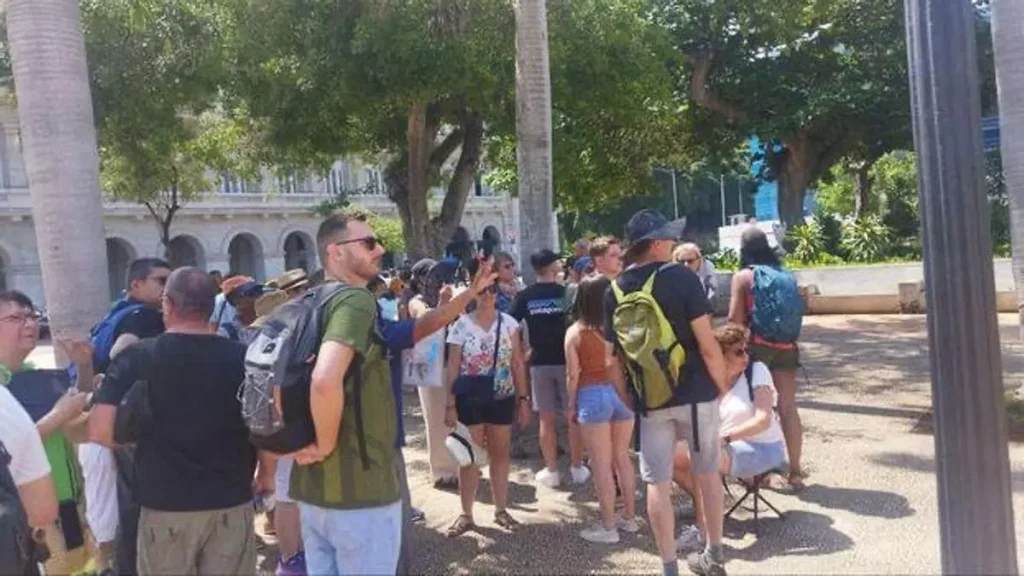
Those without dollars must wake up at dawn, endure long hours of waiting, and return when a blackout interrupts the work
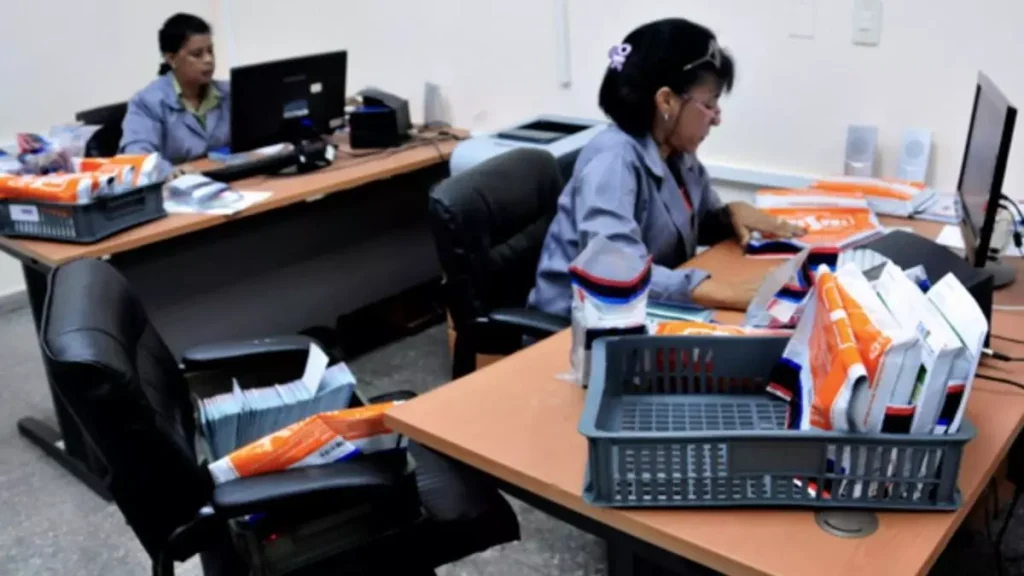
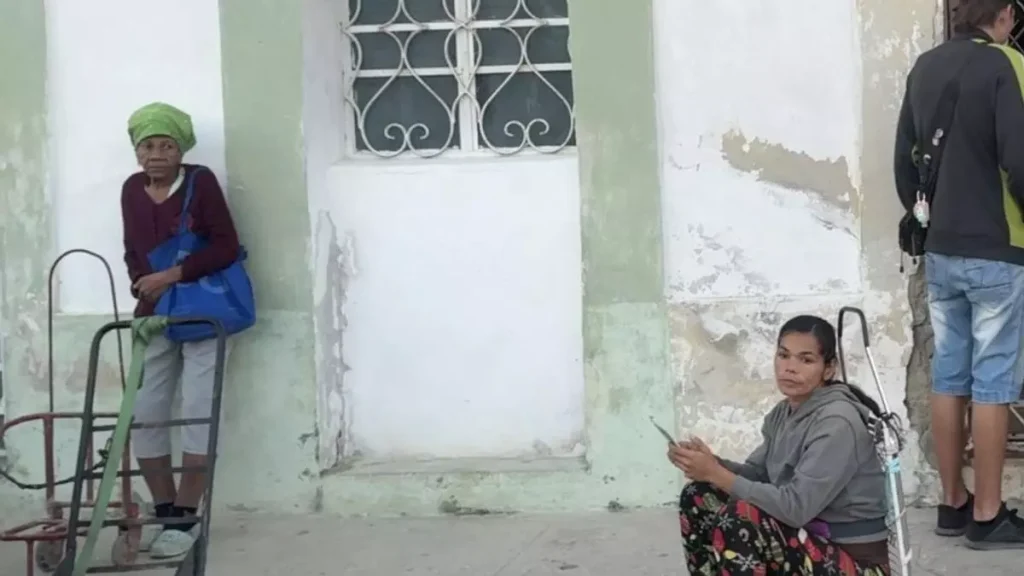
 14ymedio, Julio César Contreras, San José de las Lajas, February 14, 2025 — At seven in the morning, when the identity card office in San José de las Lajas should be getting into rhythm, fatigue has already spread through the waiting room. The metal chairs, lined up with a discipline that contrasts with the disorder of the procedures, are occupied by resigned bodies: men in caps, women with large handbags, elderly people staring at the floor, and young people passing the time on their phones. In one corner, two little girls swipe at a screen, unaware of the errand that brought their mothers there. The ceiling fan turns slowly, as if it too were rationing energy.
Handling any paperwork at this Ministry of the Interior office has become an exercise in endurance. Not only because of the usual bureaucracy, but because administrative collapse is now compounded by the so-called “reorganization program” the Government has imposed in response to the energy crisis. In practice, this means unexpected blackouts, interrupted schedules, computers shutting down in the middle of a procedure, and employees who frequently ask for patience as the only possible response.
Yesenia knows this well. She lives in the Jamaica neighborhood at the other end of town, and this is the third time she has repeated the same routine. “I come at five in the morning to get in line, spend three or four hours making sure no one cuts in front of me, and when I finally sit down at the computer, the power goes out or they tell me there’s no material to make the ID,” she says. She has been without identification for nearly a month after losing all her documents. Just getting to the office on 13th Avenue costs her no less than 500 pesos in transportation. “Once is complicated. Three times is disrespectful,” she sums up. continue reading
Just getting to the office on 13th Avenue costs her no less than 500 pesos in transportation.
At eleven in the morning, Yesenia finally manages to sit at the desk. The employee listens halfway and then gets up to go to another department, leaving her hanging. “It’s taking about forty minutes per procedure,” she comments, glancing at the clock. “You need infinite patience.” The official hours, from seven in the morning to four in the afternoon, are more of a theoretical reference. Blackouts, broken equipment, and lack of connectivity turn each day into a game of Russian roulette.
In this uneven game, not everyone is playing with the same cards. Sergio waits calmly in the room, with no sign of having arrived at dawn. “One of the girls here is going to help me,” he says quietly. He is applying for a passport and knows the process can take a month and a half or more, but he also knows there are shortcuts. “If you’re in a hurry, you have no choice but to pay for the stamps at whatever price they ask on the street and let something drop in here,” he explains. His son sent him dollars for that. “It’s the only way not to spend another New Year’s in Cuba.”
The gesture with which he greets the clerk when she enters the room confirms there are unwritten rules. Sergio expects to have his passport in about ten days. He doesn’t know exactly how his acquaintance speeds things up, but he is sure he’s not the only beneficiary. Meanwhile, others keep counting how many times they have come without resolving anything.
Isis carries a different story, though just as exhausting. She is trying to correct an error on her daughter’s ID card. First it was a misspelled last name. Then an accent mark missing from the first name. Now, a wrong number in the birth date. “I check the data on the screen and everything is fine, but when they print it, it comes out wrong,” she says, unable to hide her frustration. For her, the problem is not only the lack of resources but the total absence of empathy. “They don’t put any care into what they do,” she laments.
In four months she has been attended by different employees, almost all with evident difficulties handling the computer.
In four months she has been attended by different employees, almost all with evident difficulties handling the computer. “I don’t think they are properly trained,” she says. And she makes it clear that her case is not an exception. “You end up making new friends here from running into the same people so many times, all of us trapped by the bureaucracy.”
The images in the waiting room reinforce that sense of endless waiting. A television at the back plays without sound; the blinds let in a dull light that does little to ease the heat. Outside, the city continues at its slow pace, also marked by blackouts and fuel shortages.
In San José de las Lajas, getting or correcting an identity document is no longer just a procedure: it is a test of endurance. The “contingency plan,” as the authorities also call it, has added another layer of uncertainty to a system already full of obstacles. Between predawn lines, blackouts, repeated errors, and paid favors, residents learn that in order to exist on paper, they must first survive the wait.
Translated by Regina Anavy
____________
COLLABORATE WITH OUR WORK: The 14ymedio team is committed to practicing serious journalism that reflects Cuba’s reality in all its depth. Thank you for joining us on this long journey. We invite you to continue supporting us by becoming a member of 14ymedio now. Together we can continue transforming journalism in Cuba.