Cuban Artist Tania Bruguera Gives a Microphone to New York and Warns of “Freedom of Expression in Danger”

“This work had such great significance in Cuba in 2009, and unfortunately, the conditions of censorship are repeated throughout time and the world.”

“We are in a time of rising autocracies and dictatorships worldwide,” the artist stated. / EFE / Screenshot

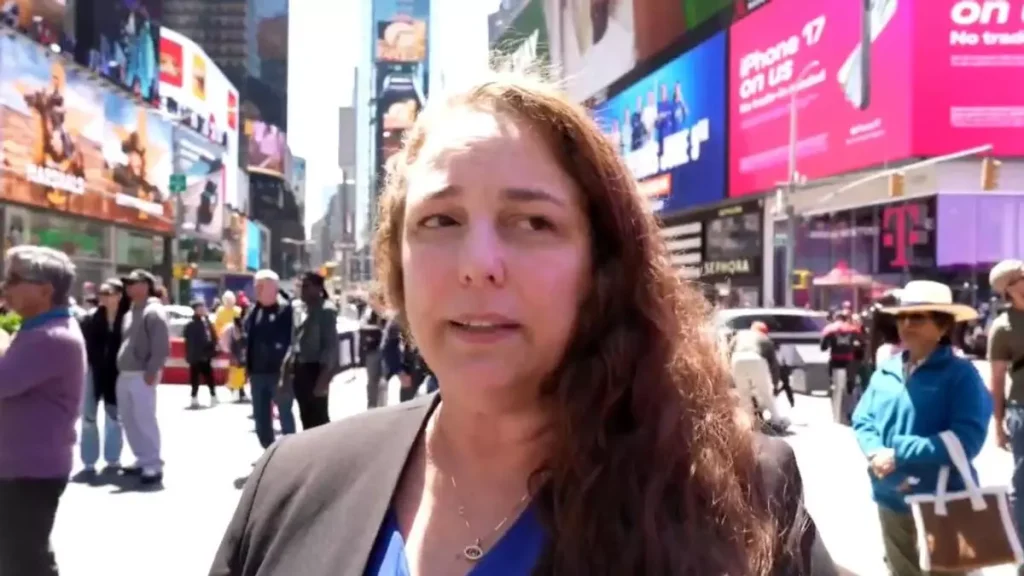
14ymedio biggerEFE/Nora Quintanilla (via 14ymedio), New York, May 2, 2026 / Above the hustle and bustle of Times Square, words against authoritarianism, labor exploitation and the mistreatment of immigrants were heard this Friday from an ephemeral stage, the work of Cuban artist Tania Bruguera, who warned EFE of a “freedom of expression in danger.”

Bruguera (b. Havana, 1968) performed at the most famous intersection in the United States a variation of her performance Tatlin’s Whisper #6, in which she offers a platform and a microphone to anyone, on the occasion of May 1st, International Workers’ Day, at a time that worries her.

“This work had such great significance in Cuba in 2009, and unfortunately the conditions of censorship are repeated throughout time and the world,” explained the artist, whose work caused great controversy at the Havana Biennial, where blogger Yoani Sánchez, among other participants, demanded freedom and democracy.

“We are in a time of the rise of autocracies and dictatorships in the world, not only in the United States, where freedom of expression is in danger,” said Bruguera, who observed a rather subdued audience and closed the event by exclaiming “Down with the dictatorship in Cuba.”

Each participant who dared to take the stage received a white dove and could speak for one minute, flanked by two imposing security agents, dressed in black and wearing sunglasses, who, when the time was up, placed their hand on their shoulder in a threatening manner.

Bruguera said she heard someone censoring themselves because the event would be broadcast online.

Throughout the hour-long performance, there were silences in which no one took the microphone, but most respected the times and ways to make complaints of all kinds, although one man went up twice and continued speaking, defiantly in front of his guards, about “the power of the people.”

Another man took the opportunity to promote a Spanish-language comedy event at the World Cup, another sang ” We Shall Overcome” with a guitar, another lamented the persecution of the LGBT community and proclaimed “Free Palestine,” and a woman defended the labor movement and human empathy.

Bruguera said she heard someone self-censor because the event would be broadcast online, and acknowledged that people are “very aware that the internet is a storehouse that always exists and that they can twist things whenever they want,” but reaffirmed the power of speaking out.

She compared the situation to that of Cuba, where recently “a person who wasn’t even a dissident, just a normal person who went out with a sign that said ‘freedom,’ was imprisoned,” and stressed that “art helps to prevent, to make us think before things have happened and become final.”

Sin pelos en la lengua — without mincing words — this artist, famous for her social interventions and as a professor and head of media and performance at Harvard University, also reflected on what it is like to be part of the Cuban community in exile, emphasizing that “the regime is not the people.”

For Bruguera, Cuba is in a “tense moment where people have placed a lot of hope,” because, she maintained, Cuban civil society “is more than prepared to lead that country.”

“It is a distinction that must be made in order to be fair to the entire struggle and the voice of a people who are not heard,” she said, pointing to the protests on social media and in the streets against the propaganda, with mothers who face “empty refrigerators” and remembering their “minor children imprisoned.”

For Bruguera, Cuba is in a “tense moment where people have placed a lot of hope,” because, she argued, Cuban civil society “is more than prepared to lead that country” and make changes, including the thousands of qualified Cubans and workers who are around the world.

“They can return to Cuba and build a Cuba that will definitely be better, because anything they do will be better than the garbage they are doing now, the Cuban regime, which is starving the people to death,” she added.

The initiative was coordinated by Times Square Arts, which manages public art in the square, and Fall of Freedom, an entity that has organized some 300 cultural activities, from museums to theaters and concert halls, to “unite in defiance of the authoritarian forces that are sweeping” the US.

The writer Laura Raicovich, one of the creators of Fall of Freedom, considered Bruguera’s work important today, when “people in the US and around the world are looking for those in power to understand that that power really resides in us, the workers, the ordinary people who do ordinary things.”

______________________

COLLABORATE WITH OUR WORK: The 14ymedio team is committed to practicing serious journalism that reflects Cuba’s reality in all its depth. Thank you for joining us on this long journey. We invite you to continue supporting us by becoming a member of 14ymedio now. Together we can continue transforming journalism in Cuba.

Cuba and the Night: In Praise of Daring

Amelia Calzadilla achieved something difficult: connecting with real Cubans, with ordinary people, exhausted by blackouts, shortages, abuses, lies, and fear.

It is unfair to demand from every opponent the perfection that the dictatorial machinery itself prevented us from achieving. / Facebook / Amelia Calzadilla

14ymedio bigger14ymedio, Yunior García Aguilera, Madrid, May 2, 2026 / One of the most common sports among Cubans is public shaming. I’m not talking about honest, necessary, even harsh criticism. I’m talking about that emotional machinery that kicks in against anyone who dares to step forward. The moment someone tries to organize an idea, propose a path, found a project, or take on a responsibility, the stones appear.

Some of these attacks, of course, come from the apparatus of the dictatorship. We know how they operate. They have resources, agents, smear campaigns, fake accounts, television programs, and spokespeople trained to destroy reputations. But not all the stones come from there. Some are born from ourselves, from our wounds, our frustration, from that anthropological damage left by decades of living under a system that rewards obedience and punishes initiative.

One doesn’t have to agree with every project to recognize the value of boldness. Nor do you have to applaud everything, suspend critical judgment, or make anyone untouchable. We’ve already suffered enough from absolute rule. And a democracy isn’t built by replacing one altar with another. But neither is it achieved by demolishing every leader at their founding moment, before they can breathe, make mistakes, correct themselves, and mature.

We want one person to carry the shortcomings of an entire nation on their shoulders.

No opposition leader emerges fully formed. That is a dangerous fantasy. Political maturity is a complex process, especially for those of us who come from authoritarian backgrounds. In a free society, people can join parties, debate platforms, lose internal elections, learn from campaigns, study others’ experiences, and train themselves in the exercise of citizenship. In Cuba, on the other hand, real politics has been hijacked for more than six decades by a single group in power. We were educated to repeat their slogans, not to deliberate. We were conditioned to in-or-out, and were never allowed to organize ourselves. We were taught to distrust everyone, not to build public trust.

That is why it’s unfair to demand from each new opposition figure the perfection that the dictatorial machinery itself prevented us from developing. We expect impeccable biographies, carefully crafted programs, perfect teams, flawless language, a heroic past, academic preparation, popular appeal, serenity, audacity, humility, charisma, strategy, and immediate results. We want one person to shoulder the shortcomings continue reading

of an entire nation. And when they can’t, we accuse them of being unprepared, ambitious, naive, or worse, a product manufactured by the regime itself.

Perfect leadership only exists in retrospect. They are a dubious construct of time. After victory, history smooths over contradictions, polishes doubts, erases blunders, organizes the narrative, and presents as destiny what was often trial and error, chance, mistakes, persistence, and learning. But in real life, leadership is born chaotic. It contradicts itself. It changes tone. It makes mistakes. The consolidation of ideas almost never happens in a straight line. It happens amidst noise, pressure, exhaustion, urgency, and also human vanity, because no leader is made of marble.

Amelia Calzadilla doesn’t have to be to everyone’s taste. Her political project can and should be discussed. Her ideas should be examined. Her party, like any other, will have to demonstrate whether it has structure, a platform, a vision, a team, and the ability to coordinate with other efforts. No one is obligated to follow her blindly. But it would be unfair not to acknowledge some of her merits.

Willpower, in exile, is no small thing. Exile wears you down. It disrupts your life. It forces you to start over.

Amelia achieved something difficult: connecting with real Cubans, with ordinary people, exhausted by blackouts, shortages, abuses, lies, and fear. Her voice emerged from a concrete, everyday, and relatable discontent. And that authenticity allowed her to reach many. Not all opposition figures achieve that. Some have a track record, but they don’t connect. Others have intellectual preparation, but they aren’t known outside certain circles. Amelia, with her successes and her limitations—like everyone—has demonstrated communication skills, social awareness, and a will that shouldn’t be underestimated.

Willpower in exile is no small thing. Exile is exhausting. It disrupts life. It forces you to start over. It brings hardship, grief, guilt, loneliness, bureaucracy, low-paying jobs, homesickness, attacks, and suspicion. Many arrive with a desire to act and end up crushed by the routine of survival. Maintaining political intent amidst these ups and downs requires considerable energy. That a young woman, a mother, in exile, decides not to limit herself to denouncing injustice, but to attempt to build a political platform, deserves at least our respect.

This isn’t about declaring her project infallible. It isn’t. No human project is. It is about understanding that pluralism can’t just be a pretty word to use against dictatorship. It has to be practiced among ourselves as well. Pluralism means accepting that parties, movements, platforms, leaders, and proposals will emerge that don’t fully align with our expectations. It means discussing without annihilating. Questioning without humiliating. Recognizing risks without turning disagreement into a moral condemnation.

Cuban democracy, if it ever arrives, will need more than slogans against the Communist Party. It will need a different political culture. And that culture cannot be improvised after the fall of the regime; it must be practiced now. Every time we respond to the emergence of an initiative with mockery, automatic suspicion, or public condemnation, we reproduce a part of the authoritarian country we claim to want to overcome.

Criticism is essential, but spite does not build. High standards are healthy, but paralyzing perfectionism can be another form of sterility. We have been waiting too long for the ideal leader, the definitive project, the figure capable of single-handedly toppling a military regime that has been in power for over six decades. Perhaps that waiting is also a trap. Perhaps the solution lies not in finding the perfect leader, but in allowing many imperfect leaders to emerge, compete, collaborate, fail, learn, and try again.

______________________

COLLABORATE WITH OUR WORK: The 14ymedio team is committed to practicing serious journalism that reflects Cuba’s reality in all its depth. Thank you for joining us on this long journey. We invite you to continue supporting us by becoming a member of 14ymedio now. Together we can continue transforming journalism in Cuba.

Russian Tourists are Replacing Cuba with Egypt, Vietnam and China

There were 184,800 visitors to the island in 2023, but the suspension of flights meant that only 249 travelers arrived on the island in March of this year.

The Russian government has not planned any measures to encourage Russians to continue traveling to Cuba. / 14ymedio

14ymedio bigger14ymedio, Madrid, May 4, 2026 / “Cuba, which was among the 10 most searched destinations in 2025, practically disappeared from searches in 2026.” This stark statement appears in a report by the Association of Tour Operators of Russia (Ator) in collaboration with Sletat, the leading travel and hotel search and booking service in the Eurasian giant. Just three days before the start of the Havana International Tourism Fair, FitCuba, the outlook couldn’t be worse for the island in one of its most important markets in recent years.

According to the report, the disappearance of Cuba and the United Arab Emirates from Russians’ favorite destinations is due to different reasons—the former due to flight suspensions, and the latter due to air travel closures caused by the war in Iran—but both have resulted in a complete shift in travelers’ preferences. Egypt, Vietnam, and China are the main beneficiaries of this situation, although a new destination has emerged nearby: Belarus, which appears for the first time in May 2026 as one of the ten most sought-after destinations.

The comparison was made using May 2025 as a reference point, when Cuba closed the top 10 preferences with 1.6%.

The comparison was made using May 2025 as a reference point, when Cuba closed out the top 10 preferences with 1.6%. Currently, the island is nowhere to be seen. Turkey remains at the top and is the main destination for Russians, accounting for a third of the demand (35.5%, almost the same as last year), followed by Egypt, which has grown substantially (from 20% to 26%), although it maintains its position. However, Vietnam is now third on the list, with 9.6%, whereas a year ago it was in seventh place with less than 3%, making it a surprise hit. continue reading

China is another country where the rise is noticeable, climbing from ninth place in 2025 to sixth, gaining three points to reach 5.5%. Along with Belarus—the neighboring country led by a Putin ally—the Maldives and Indonesia enter the top ten for the first time. And the small republic of Abkhaziaalong the Black Sea, Thailand, and Russia itself remain on the list of favorites.

Although Cuba has completely collapsed, with no flights and therefore a 0% market share, the declines are more pronounced for the other two countries dropping out of the top 10, as both had larger market shares. This is the case for Tunisia, which falls from 2.6% to 0.6%, and the United Arab Emirates, which was at 8.4%.

The analysis also includes the population’s desires, reflected in searches compared to actual purchase data. The case of Turkey is revealing, as customer interest exceeds final sales. Of the searches on the portal 43.2%  focused on Turkish beaches, eleven percentage points higher than the actual number of purchases.

The uncertainty surrounding Russian tourism to Cuba is significant. Russia is the only country, along with Canada, that almost immediately suspended all flights to the island as soon as it became known that there was no fuel available at international airports to refuel aircraft. Airlines from other nations have maintained routes and sought alternatives, at least until the end of the high season—such as Iberia. But Rossiya, Nordwind, and the Canadian carriers Air Canada and Air Transat canceled their flights just hours after the Cuban aviation authorities issued their warning.

The Russians who were on the island at that time – February 10 – were evacuated on various ships until 4,300 tourists had left, out of a total of 7,314 that month. The result has been clear: in March, only 249 Russians traveled to Cuba.

Russia and Cuba worked very closely to foster the growth of the Eurasian country as a market for the island. During the years of the thaw with the US, beginning in 2015—the best for the sector in Cuba—the number of Russian tourists grew significantly, even doubling the figures from previous periods. Although in 2019 travelers from that country began to look for similar beaches but with better amenities in other Caribbean destinations, the pandemic and the invasion of Ukraine had the unexpected effect of boosting that flow.

Although in 2019 travelers from that country began to look for similar beaches but with better amenities in other Caribbean destinations, the pandemic and the invasion of Ukraine had the unexpected effect of favoring that flow

Havana once again saw Moscow’s isolation as an opportunity for growth, and through talks between the two governments that facilitated an increase in flights, Russian tourism became the panacea to offset the general decline in visitors. In 2023, the construction of a hotel specifically focused on Russian tourism was first discussed during a visit to Havana by Boris Titov, president of the Cuba-Russia Business Council and a trusted advisor to the Kremlin, during which several new business ventures between the two countries were announced, including the opening of a wholesale store.

That same year, 184,800 Russians arrived in Cuba, far fewer than the 936,000 Canadians, but Russians were the second most common nationality by origin—only Cuban-Americans surpassed Russians. The outlook was so promising that the Cuban Minister of Tourism, Juan Carlos García Granda, promised 200,000 arrivals by 2024, but this figure was not reached, and the goal was postponed to 2025. Not only did this not happen, but the opposite occurred. Last year, only 131,900 Russians arrived on the island.

Moscow has repeatedly promised to support the regime in the face of increasing US pressure and, in fact, is the only country that has sent oil since the end of January. However, it has done nothing to continue flying to the island to provide some lifeline to a dying sector.

______________________

COLLABORATE WITH OUR WORK: The 14ymedio team is committed to practicing serious journalism that reflects Cuba’s reality in all its depth. Thank you for joining us on this long journey. We invite you to continue supporting us by becoming a member of 14ymedio now. Together we can continue transforming journalism in Cuba.

Old Age Without Rest at the La Micro Market in San José de las Lajas, Cuba

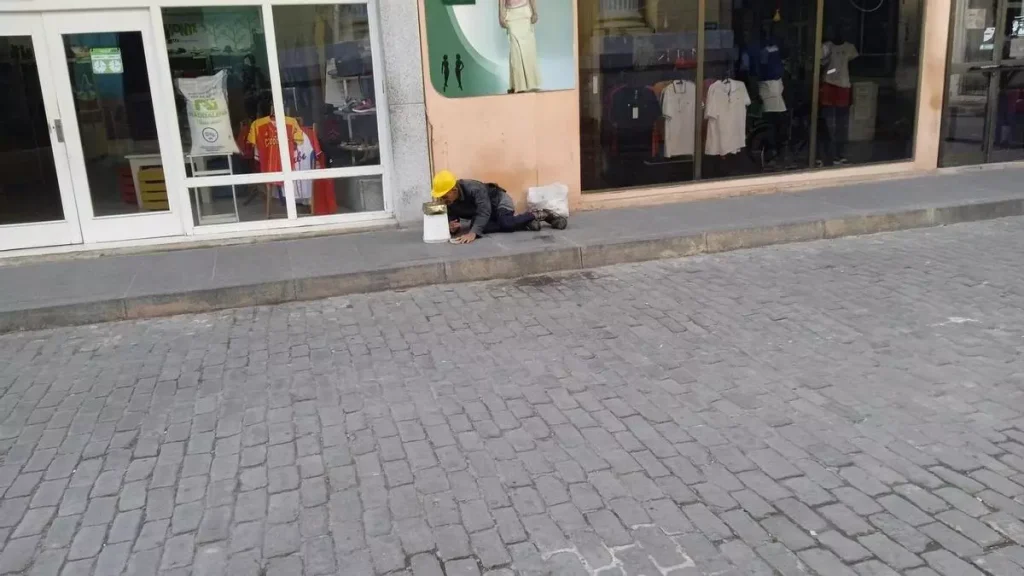
Elderly people sell nylon bags, guard their turns in line, and hope for opportunities in the doorways of this municipality in Mayabeque.

Every morning, retirees go to the La Micro market to try and make a living. / 14ymedio

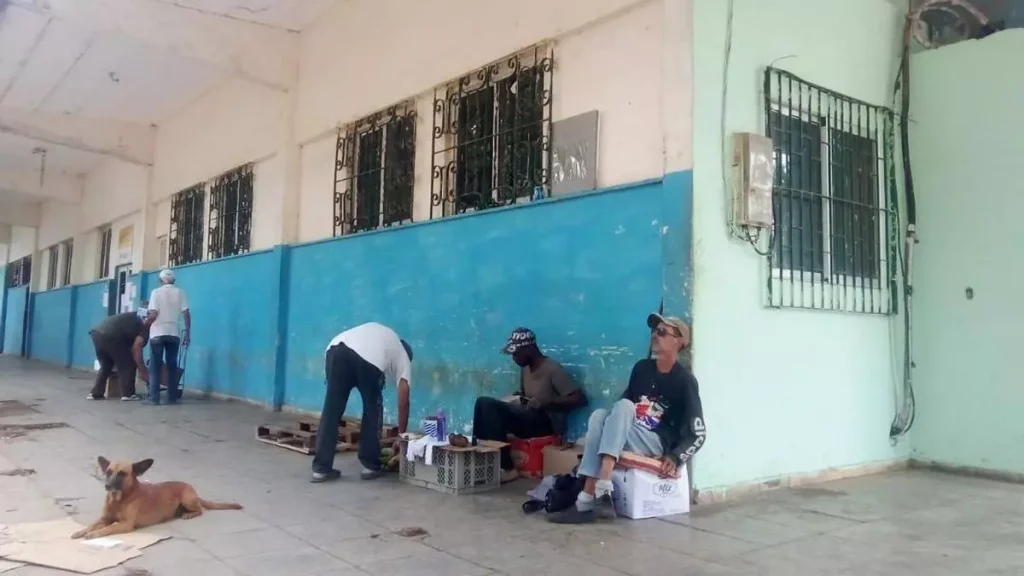
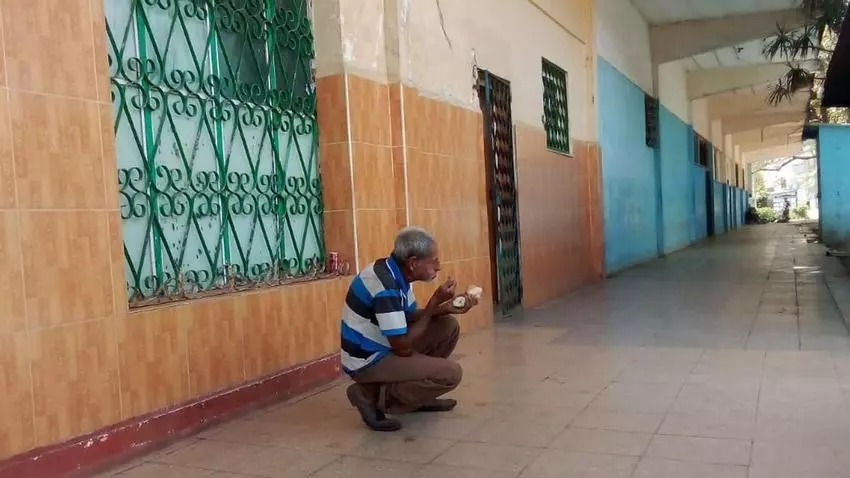
14ymedio bigger14ymedio, Julio César Contreras, San José de las Lajas (Mayabeque), May 3, 2026 / Under the peeling roof of the arcades at La Micro market in San José de las Lajas (Mayabeque), the morning unfolds with a leisurely pace that seems tailor-made for those who are no longer in a hurry, but neither are they restful. Seated on empty crates, on pieces of cardboard, or leaning against the peeling blue wall, several elderly men while away the time while they wait for a customer, an opportunity, or at least someone willing to offer them a cup of coffee. The market, which once bustled from early morning, is now more of an improvised refuge for retirees who have traded the tranquility of old age for the uncertainty of daily survival.

Away from the hustle and bustle of the town center, but within easy reach of those living in the microbrigade buildings, Rodrigo and his companions have found a fixed place in these doorways where they spend eight to nine hours a day. There they sell whatever they can get their hands on: plastic bags, recycled bottles, chili peppers, loose cigarettes, or any merchandise that can be exchanged for a few pesos. The scene repeats itself every morning. Some arrive before seven, shuffling along, carrying a worn-out bag or pushing a rusty wheelbarrow. Others appear later, when the sun has already warmed the cement and the shadows begin to dwindle.

Our presence here is an open secret. Everyone knows it, but they leave us alone so we can ‘escape’ however we can.

“Here, we’re not trying to avoid the inspectors, just pretending. This isn’t about getting rich,” Rodrigo says, carefully checking the contents of a plastic crate where he keeps his merchandise. His voice is measured, as if weighing each word. “We have plastic bags for 20 pesos and jars of chili peppers for 120. I keep the cheap cigarettes hidden, because if they catch me selling the cartons for 340 pesos, I could be in trouble.” Around him, other men nod silently, used to this tightrope walk between necessity and illegality. “Our presence here is an open secret. Everyone knows it, but they leave us alone so we can slip away however we can. That’s how the system works: on one side, they tighten the gasket, and on the other, they release pressure so it doesn’t explode,” he adds.

At the La Micro market it has been more than a month since anything for the regular ‘family basket’ has arrived / 14ymedio

A few meters away, a dog stretches out on a piece of cardboard, indifferent to the comings and goings of people. The animal seems like just another resident of the doorway, another survivor of the daily grind. Nearby, Andrés intently watches the street, alert to any movement. For decades he worked continue reading

as a locksmith in a state-run workshop and still keeps a master key, which he guards like a talisman. “People come to us to take out their trash, unclog a drain, or, in my case, to open their front door,” he explains, proud of the skills that allowed him to earn a living for years.

“We have a single checkbook worth 3,000 pesos. We are diabetic and are not on any social security benefits list.”

The market popularly known as La Micro hasn’t received any food rations for over a month. The empty stalls and dusty shelves are the best testament to this neglect. “A clerk told me they’re going to start giving out two pounds of rice to vulnerable people tomorrow,” Rodrigo says, shrugging his shoulders. “Of course, that concept of ‘vulnerable’ is convenient for the government. My wife and I live alone in a crumbling tile house. We have a single checkbook worth 3,000 pesos. We’re diabetic and we’re not on any social security coverage list.”

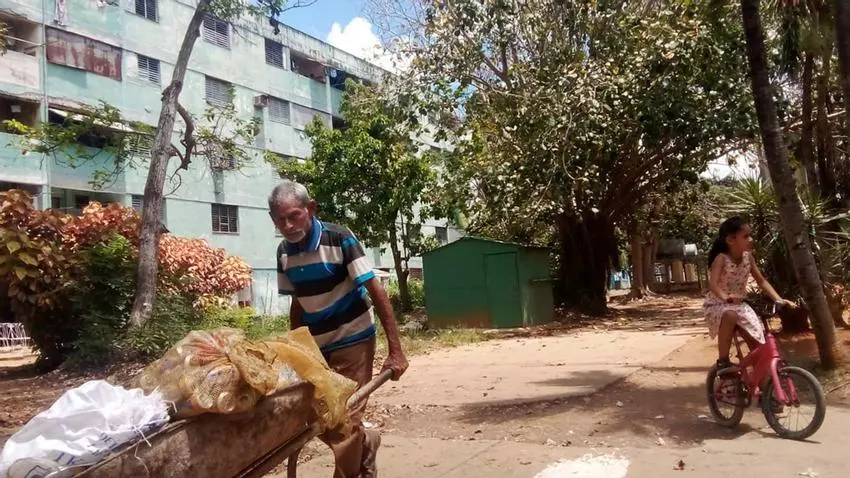
As he speaks, the old man nods his chin toward the street, where another man is slowly pushing a wheelbarrow loaded with crushed cans and dirty sacks. The effort is evident in the stoop of his back and the sweat trickling down his forehead. Each step seems like a battle against exhaustion. Behind him, a little girl pedals a small bicycle, oblivious to the scene, as if time had two different speeds in that very place: one for the old who endure and another for the children who still play.

As if time had two different speeds in that same place: one for the old who endure and another for the children who still play. / 14ymedio

As former day laborers, the elderly men gather every morning at their “command post,” as they call it, to try and make a living. Sitting on the ground, they share stories of times when work was hard but secure; they complain about current needs and remain alert for any opportunity to earn a few pesos. When someone appears seeking help carrying a sack, cleaning a yard, or holding a place in line, the group springs into action immediately.

According to Andrés, when liquefied gas is available in the area, business is usually a little better. “It’s true that we go two or three nights without sleep, but we pocket 1,000 pesos for each person who requests our gas cylinder delivery service,” he says. “We divide the numbers among ourselves so that everyone wins. The problem is that there’s almost never any gas, and while the gas is coming and going, we struggle to make three or four pesos, which isn’t enough for anything.”

My father taught me that things don’t fall from the sky and that, being a poor black man, I would have to work very hard so I wouldn’t go to bed on an empty stomach.

The hours in the market’s doorways drag on with agonizing slowness. Sometimes they share a sliver of stale bread to stave off hunger; other times, a shot of rum that appears suddenly, passed from hand to hand. Conversation is punctuated by long silences, vacant stares, and resigned sighs.

“My father taught me that things don’t fall from the sky and that, being a poor Black man, I’d have to work very hard to avoid going to bed hungry,” says Andrés, his gaze fixed on the horizon. “At 72 years old, I’ve chosen not to give up. As long as I have a master key and my hands still work, I’ll keep opening doors and selling whatever needs selling.”

_____________________

COLLABORATE WITH OUR WORK: The 14ymedio team is committed to practicing serious journalism that reflects Cuba’s reality in all its depth. Thank you for joining us on this long journey. We invite you to continue supporting us by becoming a member of 14ymedio now. Together we can continue transforming journalism in Cuba.

April Rumors in Cuba: Drones, Resignations, and Secret Negotiations

The streets and WhatsApp groups were filled with stories about invasions, power shifts, and military maneuvers.

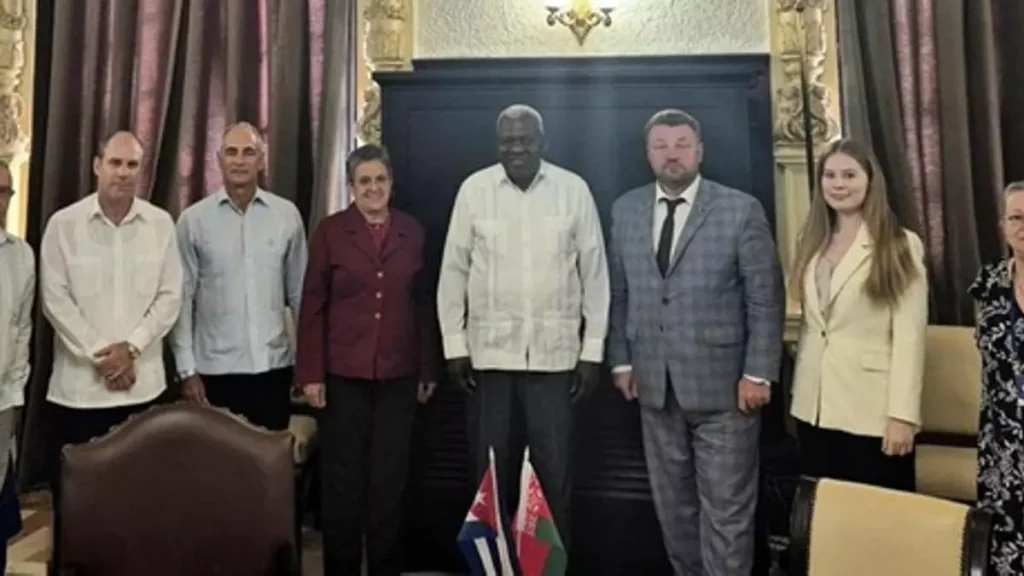
Esteban Lazo, president of the National Assembly of People’s Power and the Council of State, with Ambassador Vitali Borchuk and other Belarusian officials in Havana. / X/@AsambleaCuba

14ymedio bigger14ymedio, Havana, May 4, 2026 / April hasn’t been a month of abundant rain or good news, but it has been full of rumors that have spread like wildfire on street corners, in doorways, and especially in WhatsApp groups, where each audio message is listened to with the solemnity of an official statement. In a country where information trickles out and silences weigh more than speeches, rumors remain a way to interpret reality, anticipate disaster, or imagine a way out.

This fourth month of the year has been marked by stories that mix politics, war, palace intrigues and military technology, an explosive combination that reveals both the anxiety of Cubans and their inexhaustible creativity to fill the information gaps.

The most persistent of the gossip has been the supposed resignation letter of Miguel Díaz-Canel, a document that, according to those who claim to have seen it “from the inside,” was addressed to Raúl Castro and contained a confession of errors and failures. The letter, which no one has been able to produce but which many say they read on a friend of a cousin’s phone, has circulated in increasingly elaborate versions. In some, the president apologizes for the economic crisis; in others, he acknowledges the government’s inability to stop the mass exodus and the endless blackouts. As with tall tales, each storyteller adds a new detail until the story becomes larger than life.

In recent days, Cubans have become experts at interpreting radars, satellite maps, and applications that track flights and shipping

Another inexhaustible source of speculation has been the skies and waters surrounding the island. In recent days, Cubans have become experts at interpreting radar, satellite maps, and applications that track flights and shipping. Any aircraft that appears on a cell phone screen unleashes a chain of alarmist messages: “That’s not a commercial flight,” someone warns. “It’s a military drone,” another replies. The possibility of U.S. ships, submarines, or aircraft approaching Cuban shores has fueled the fantasy of an imminent invasion. In lines for bread or fuel, there are always those who insist that “this time they’re serious.”

In this climate of collective nervousness, the name of Raúl Guillermo Rodríguez Castro, known as “El Cangrejo” (The Crab ), has once again become a topic of informal headlines and dinner table conversations. According to the most recent rumors, Raúl Castro’s grandson has become the main interlocutor in the negotiations with the United States, a story that has grown amid leaks and anonymous comments. The narrative includes continue reading

mysterious intermediaries, discreet trips, and promises of agreements that never materialize. For many, the plot has the allure of a spy novel; for others, it is simply a reflection of the desperate need to believe that the country’s course will soon change.

War paranoia has also been fueled by the claim that the Cuban government has gone to Belarus in search of weapons and military technology to counter a potential US attack. This rumor has been repeatedly circulated on social media and in private conversations, accompanied by images of tanks and missiles that appear without context or date.

April has also brought rumors of imminent changes at the top of the power structure. According to some reports, Díaz-Canel’s replacement is being prepared, along with the start of a smear campaign to justify his departure. In this scenario, Sandro Castro’s recent interview with an international media outlet would have been part of a carefully calculated strategy to weaken the president’s image. The hypothesis sounds like the plot of a political soap opera, but it has found fertile ground in a population accustomed to interpreting every public gesture as a sign of conspiracy.

In a country where reality often surpasses imagination, rumors are not just stories whispered in someone’s ear: they are the reflection of a society trying to decipher its own destiny while patiently and skeptically awaiting the next news item that will confirm or deny what everyone already suspects.

______________________

COLLABORATE WITH OUR WORK: The 14ymedio team is committed to practicing serious journalism that reflects Cuba’s reality in all its depth. Thank you for joining us on this long journey. We invite you to continue supporting us by becoming a member of 14ymedio now. Together we can continue transforming journalism in Cuba.

A Teacher in a Havana Church, the First Femicide Victim of the Month in Cuba

Gloria Almanza had already reported her ex-partner for violence.

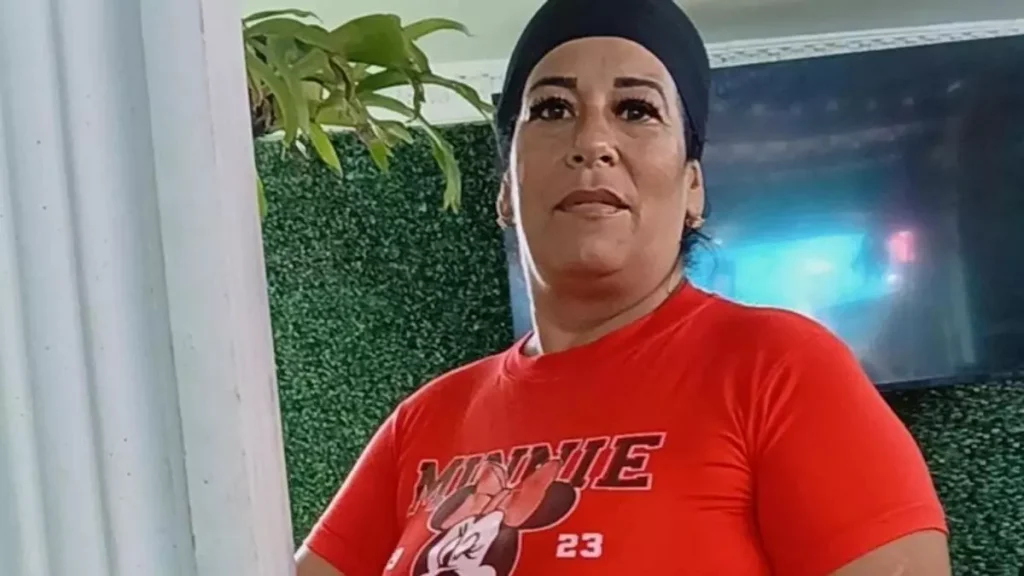
Gloria Almanza was attacked with a knife by her ex-partner / Facebook

14ymedio bigger14ymedio, Havana, May 4, 2026 — The Alas Tensas Observatory reported the first femicide of the month in Cuba this Monday. Gloria Almanza Céspedez, 52, was murdered in her home by her ex-partner on May 1st, in the Los Mangos neighborhood of San Miguel del Padrón, Havana.

The communicator Niover Licea, who cites testimonies from residents of the area on his Facebook page, explained in a post this Sunday that the incident occurred at night, when the woman’s ex-partner attacked her with a knife, causing a fatal wound to her chest.

According to the same report, neighbors say that “it was not the first time the aggressor had used violence, as he had a history of abusive behavior in previous relationships, including assaulting another woman who worked as a teacher.”

That version was corroborated by Alas Tensas, which denounced that, “once again, the lack of prevention on the part of the police is demonstrated, since the aggressor had been reported by the victim.” continue reading

“Once again, the lack of prevention on the part of the police is demonstrated.”

Regarding the attacker, Licea reported that “in the last few hours, it was confirmed that he surrendered to the authorities, so he is now in police custody while the investigations continue.”

Gloria Almanza, the mother of two young daughters, was a teacher at a local church, the NGO reported, adding that it had raised concerns about the rise in attempted femicides this year. The organization also documented the tragic case of a teenage girl who died under unclear circumstances, and that access to the investigation report was needed.

In their message, Alas Tensas reported that 12 other cases of possible femicides are under investigation, which, if confirmed, would considerably raise the number.

According to 14ymedio‘s records , this case brings the total number of femicides in Cuba to 17 so far in 2016. The most recent documented case was that of Mariolis López Silio, 37, who was attacked by her ex-partner with a gun “at point-blank range on the block, around 10 or 11 at night” on April 24, according to a relative of the woman who spoke anonymously to this media outlet.

There is a “higher incidence” of femicides committed in the victims’ homes by their partners

Although Alas Tensas has reported 21 deaths so far this year, most of them crimes between partners, some deaths have been recorded in different circumstances, such as that of Yarisleidis Saavedra Hernández or that of Olimpia Pérez, a 79-year-old woman who was found dead in her home in Mayabeque, on March 2.

The observatory has warned in previous messages about a “higher incidence” of femicides committed in the homes of the victims by their partners and ex-partners.

According to an analysis by typology of femicides verified in 2025 by Alas Tensas, 83.3% of the murders registered last year were committed by the victim’s partner. “This confirms the persistence of gender-based violence within intimate relationships as the primary risk factor,” the report states.

It also states that “the marked concentration of femicides by partners and ex-partners indicates that the home and intimate relationships continue to be spaces of high vulnerability, in a context where unequal power relations persist and where institutional mechanisms for prevention, protection and care are insufficient or non-existent.”

______________________

COLLABORATE WITH OUR WORK: The 14ymedio team is committed to practicing serious journalism that reflects Cuba’s reality in all its depth. Thank you for joining us on this long journey. We invite you to continue supporting us by becoming a member of 14ymedio now. Together we can continue transforming journalism in Cuba.

Félix and Saylí Navarro Reject a Forced Exile from Cuba Proposed by the Catholic Church

Amnesty International calls for the release of both political prisoners and demands urgent guarantees for their safety.

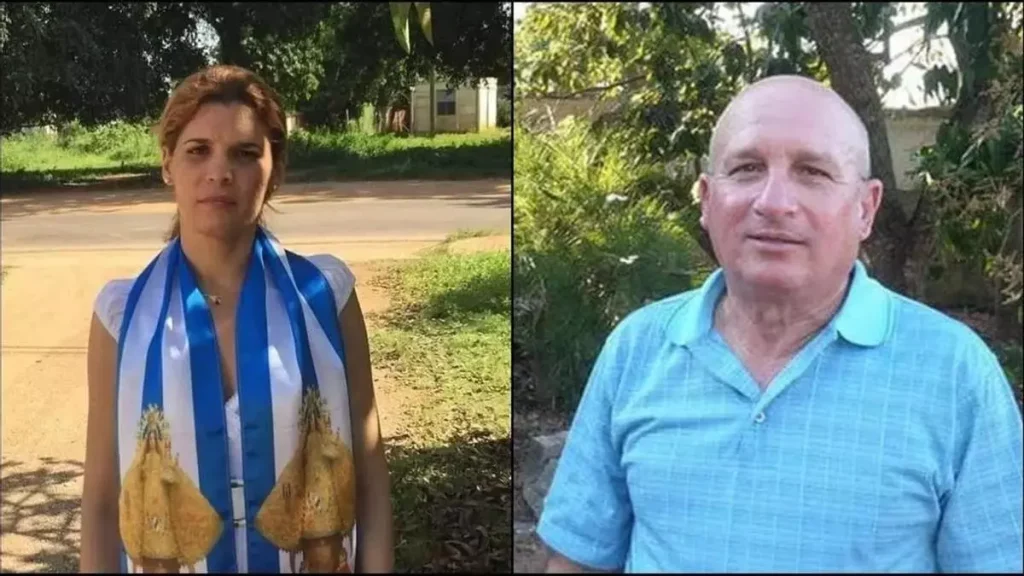
Saylí and Félix Navarro are serving eight and nine-year sentences respectively following the 11J protests / Collage

14ymedio biggerPolitical prisoners Félix Navarro and his daughter Saylí Navarro rejected the proposal to leave Cuba made by the auxiliary bishop of Havana, Eloy Ricardo Domínguez Martínez, who visited their respective prisons to offer them exile as a solution. In an audio recording shared by the Cuban Observatory for Human Rights (OCDH), Sonia Álvarez Campillo, Saylí’s mother and Félix’s wife, emphasizes that “they are not going to leave the country.”

“Last Tuesday, the auxiliary bishop of Havana and president of the Prison Ministry appeared at the Agüica prison – in Matanzas – with the aim of inviting Félix to leave the country,” Álvarez Campillo recounts in the audio.

After visiting that prison, the bishop went to the La Bellotex women’s prison, where Saylí is serving her sentence, to make the same proposal, “but the response from both was negative.”

The bishop also expressed his concern “about the beating that the bloodthirsty Noslen Pedroso gave to Félix” on April 8. As reported by the Council for Democratic Transition in Cuba (CTDC), Félix Navarro was beaten in prison, which endangered his life due to his fragile health. continue reading

Félix Navarro was beaten in prison, which endangered his life due to his delicate state of health.

The organization held State Security and prison authorities responsible for the attack and any resulting consequences, and denounced that, after the attack, Navarro was transferred to a punishment cell, which aggravates his situation.

Because of this attack, Amnesty International (AI) demanded the “immediate and unconditional release of Félix Navarro, urgent guarantees for his life and integrity, immediate contact with his family and justice for this serious violation of human rights.”

In a post on its official X account, the organization noted that repression in Cuba now has “another dimension: the punishment against families who seek information, care, accompany and denounce.”

It also stated that “prisoners of conscience in Cuba face arbitrary imprisonment, incommunicado detention, threats, punishments, and other forms of mistreatment for peacefully exercising their rights. Their families, especially women, often also endure harassment, anguish, emotional exhaustion, and institutional abandonment.”

“Prisoners of conscience in Cuba face arbitrary imprisonment, incommunicado detention, threats, punishments and other forms of ill-treatment”

Amnesty International also took a stand on Saylí Navarro. Last Saturday, the organization demanded her release. “She is a Cuban activist, prisoner of conscience, and co-founder of the Ladies in White movement, a group of mothers, wives, and daughters of the 75 people detained during the 2003 wave of repression known as the Black Spring,” Amnesty International stated.

Until April 18, the activist went more than 137 days without being able to visit her father, despite having the right to do so every 45 days. More than two weeks ago, the authorities allowed a meeting between them, days before the bishop’s visit to prisons in Matanzas and after the attacks on the opposition leader in prison.

The church visit came at a time of serious deterioration in the health of the 72-year-old opposition leader, who suffers from diabetes and respiratory problems. His family has repeatedly denounced the denial of adequate medical care in prison.

Both Félix Navarro – who was part of the prisoners of the Black Spring in 2003 – and his daughter were arrested on the morning of July 12, 2021, when they appeared at the Police Unit of the Matanzas municipality of Perico to inquire about the fate of those arrested the day before, after the historic Island-wide demonstrations of 11 July 2021, known as ’11J’.

Félix Navarro is serving a nine-year prison sentence, accused of “assault, contempt and public disorder,” while his daughter Saylí was sentenced to eight years, for the same crimes as her father, plus “disobedience,” both for events related to the popular protests of July 11 and 12, 2021.

______________________

COLLABORATE WITH OUR WORK: The 14ymedio team is committed to practicing serious journalism that reflects Cuba’s reality in all its depth. Thank you for joining us on this long journey. We invite you to continue supporting us by becoming a member of 14ymedio now. Together we can continue transforming journalism in Cuba.

HIV or Diabetes Patients Condemned To Beg on the Streets of Matanzas, Cuba

Idalberto claims to have received the Cuban “vaccine” Theravac-HIV without his consent: “It’s as if they were experimenting on me.”

Beggar on a street in Matanzas. / 14ymedio

14ymedio bigger14ymedio, Pablo Padilla Cruz, Matanzas, May 4, 2026 / Sitting on a central street, Idalberto observes the indifferent daily hustle and bustle of passersby, hoping one of them will give him a few bills. Beside him, on cardboard, he displays a clear message: “It’s for food,” and he doesn’t hide the fact that he is HIV-positive.

“It’s all there,” he says, showing another poster. “Even my case index, 15707, from December 21, 2011, for anyone who wants to check.” According to his account, the first decade of his illness was relatively stable. “Personalized” attention and, of course, free care for people living with HIV and those with AIDS is, in fact, one of the services the Cuban state boasts about most, although the reality, deep down, leaves much to be desired .

In Idalberto’s case, everything changed abruptly with the coronavirus pandemic, which hit the island particularly hard in 2021. “Before, I regularly received my treatments and visits from doctors and social workers, but after COVID, everything changed,” he told 14ymedio. The treatments began to change without explanation: “Sometimes they would give me an antiretroviral, and other times it would disappear. It was as if they were experimenting on me.” continue reading

Idalberto also claims to have received the experimental Cuban “vaccine” called Theravac-HIV without his consent.

The success of antiretroviral therapy (ART)—a set of medications designed to suppress viral replication and maintain a functional immune system—depends largely on its consistent administration. Frequent changes or interruptions in treatment, explains Idalberto, can lead to viral resistance, a weakened immune system, and other adverse effects such as nausea, cramps, or fatigue.

Idalberto also claims to have received the experimental Cuban “vaccine” called Theravac-HIV without his consent . The immunotherapy, still in the research phase, aims to stimulate the immune response against the virus, but its use without adequate information for the patient violates ethics and numerous laws worldwide. “I am a human being and I have dignity,” Idalberto states. “I didn’t like being a lab rat.”

Medical advances have meant that, in the developed world, having HIV is no longer life-threatening, but in countries with shortages, like Cuba, the situation is much more complicated. Idalberto recounts how he has had colds that have become severe, and how he lived through the recent arboviral epidemic—especially dengue and chikungunya—which left almost 70 dead on the island, according to official figures, and hundreds of patients with physical aftereffects .

Although the government claims there is “stable control” over the number of people living with HIV on the island, the reported figure for 2025 reached 35,373 cases , after having remained above 31,000 for several years. The prevalence among trans women , moreover, continues to be among the highest on the continent.

Like Idalberto, César Manuel, a diabetic patient who has developed an ulcer on his right foot, is barely surviving.

In the fight against AIDS, the regime also tends to overlook the importance of foreign aid. Just a few weeks ago, it was reported that Cuba will receive up to $16 million from the Global Fund to Fight AIDS, Tuberculosis and Malaria (GFAID) over the next three years, an initiative from which it has benefited since 2003.

The situation of begging for many patients, in any case, contrasts with the triumphalist discourse, still in force, of public health in Cuba.

Like Idalberto, César Manuel, a diabetic patient, is barely getting by after developing an ulcer on his right foot. “I just came from the clinic. They cleaned it with hydrogen peroxide, put on some ointment, and sent me home,” he recounts. With the wound bleeding and barely covered with gauze that, he’s grateful, they “gave” him, he had to walk back.

Why wasn’t he given Heberprot-P, the flagship drug touted by the Ministry of Health as the most advanced for this type of injury, designed to stimulate healing and reduce the risk of amputation, and approved in up to 40 countries and currently in Phase III trials in the European Union? Because in Cuba’s free and universal healthcare system, it’s not so easy to get it. “It’s a long process: from the doctor’s office to the polyclinic and then to the hospital,” César explains. “And that’s if they even approve it.”

His anger is evident: “Diabetes is one of the most widespread diseases, but it seems the medication isn’t reaching everyone. It’s sold abroad while it’s scarce here.” The millions in profits the Cuban state earns from international agreements for biotechnology, the sale of medical services, and health tourism don’t reach the majority of the population.

Idalberto, with his sign, and César Manuel, with his unresolved wound, wonder: what can they boast about, if the system doesn’t reach everyone?

______________________

COLLABORATE WITH OUR WORK: The 14ymedio team is committed to practicing serious journalism that reflects Cuba’s reality in all its depth. Thank you for joining us on this long journey. We invite you to continue supporting us by becoming a member of 14ymedio now. Together we can continue transforming journalism in Cuba.

The “Maracanazo”: The Afternoon When 200,000 People Fell Silent

July 16, 1950. A colossal stadium, an entire country celebrating in advance, and eleven men in sky blue who refused to follow the script. This is the story of the most unexpected day in the history of football.

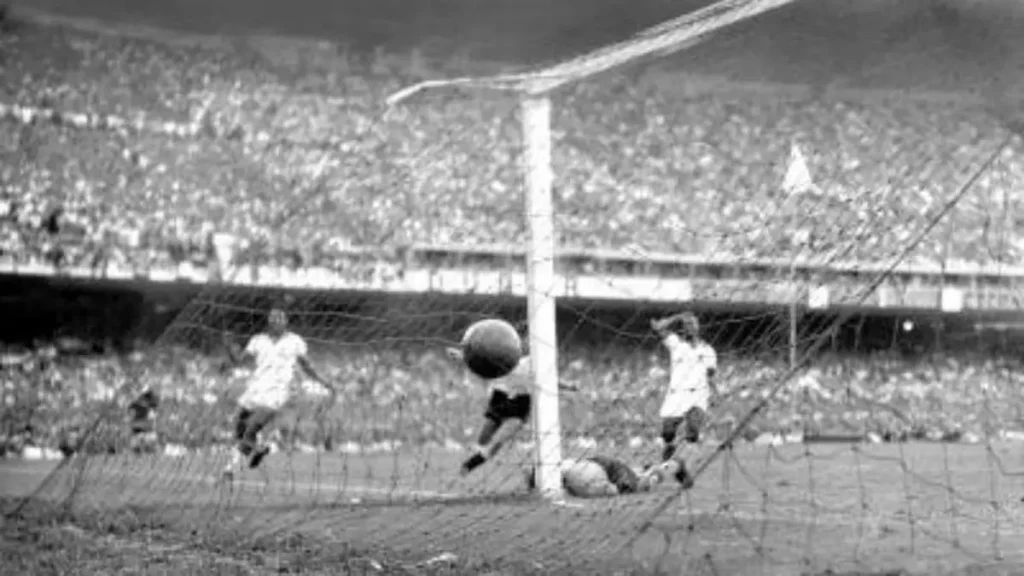
Imagen de la final del Mundial de Fútbol de 1950, conocida como Maracanazo, en el que Uruguay venció inesperadamente a Brasil. / EFE/Archivo

14ymedio bigger

14ymedio, Milton Chanes, Berlin, May 3, 2026 / To understand why the Maracanazo was what it was, you first have to understand the world in which it took place. The Second World War had prevented the World Cups of 1942 and 1946 from being played, and when FIFA decided that the 1950 World Cup would be held in Brazil, the planet was still shaking the dust from the rubble.

Only thirteen teams took part. Europe was rebuilding among ruins; South America, by contrast, breathed peace and prosperity. Football returned after twelve years of competitive silence—and it returned hungry for glory.

Amid so many absences, there were two appearances of real significance.

The first was England, the country that prided itself on having invented football and which, after decades of disdain toward FIFA, finally agreed to measure itself against the rest of the world in a World Cup.

Pelé summed it up years later with a phrase that stands on its own: “If England is the mother of football, Uruguay is the father.”

The second was Uruguay. And here it is worth pausing, because to speak of Uruguay in 1950 was not to speak of just another team: it was to speak of the team that had won absolutely everything it had played.

First champion of America. And first world champion, in a very literal sense that few remember today: when FIFA allowed football to be part of the Olympic Games, it imposed a non-negotiable condition continue reading

on the International Olympic Committee—that the Olympic tournament be recognized, at the same time, as a World Championship of football. The IOC accepted, but only on two occasions: Paris 1924 and Amsterdam 1928. Those were the only two times in history when the Olympic gold and the world title were awarded in the same match. And Uruguay won both.

To that was added, in 1930, victory in the first FIFA World Cup proper, held on its own soil. Three consecutive world titles, under three different formats, before any other country had lifted even one. And as if destiny wanted to underline the lineage, Uruguay would go on to win decades later the “Mundialito” of 1980, the tournament that brought together world champions to celebrate the fiftieth anniversary of the first World Cup.

And it is worth saying that it was returning, because Uruguay had not played in either the 1934 or the 1938 World Cups. But that is another story.

Pelé summed it up years later with a phrase that stands on its own:
“If England is the mother of football, Uruguay is the father.”

Two powers, then, returned to the stage. A colossus of concrete awaited them.

The temple of concrete and ambition

Brazil did not want to be a modest host. It wanted to be the most magnificent host the world had ever seen. To achieve that, it built in Rio de Janeiro—the country’s capital at the time—an unprecedented stadium: the Maracanã Stadium. Capacity: 200,000 spectators. The largest on the planet. A monument of concrete and steel to the ambition of a people who believed, quite rightly, that their time had come.

And the numbers on the pitch supported that certainty. Brazil had the best attack in the tournament, the most fervent crowd on the planet, and a team that swept aside opponents with frightening ease: 7–1 against Sweden, 6–1 against Spain. Everything pointed to an inevitable coronation.

No one in the world doubted the result. No one—except eleven men dressed in sky blue.

Uruguay’s path

Uruguay reached the decisive match by a very different route: winding, rugged, full of difficulties that hardened them. They crushed Bolivia 8–0, but then drew 2–2 with Spain and defeated Sweden 3–2 with a last-minute goal. This was not a dominant Uruguay. It was a Uruguay that suffered, that came from behind, that won in the final minute. A team that seemed made of scars.

With Brazil leading the group by one point, the situation was simple and brutal: Uruguay had to win. Brazil only had to avoid defeat.

On paper, there was no contest. But football is not played on paper.

The eve: a champion in advance

What happened in Brazil in the hours before the match is one of the most fascinating and ironic episodes in the history of sport. Everything was euphoria.

The front pages of the main newspapers anticipated the coronation. The newspaper O Mundo headlined: “Brazil world football champion, 1950.” A tribute march had been composed. Politicians already had their speeches ready. 500,000 shirts bearing the inscription “Brazil champion” had been produced and were waiting in warehouses. The trophy was already wrapped. The celebration had already begun.

On the Uruguayan side, the outlook was radically different. Coach Juan López Fontana asked his players to play defensively to avoid a humiliating defeat. The Uruguayan officials themselves were already congratulating them on second place and asking that the scoreline not be too heavy. Having come this far, they told them, was already enough.

Their own leaders considered them defeated before they even set foot on the field.

Obdulio Varela: the man who changed the script

And then Obdulio spoke.

Obdulio Varela—of African, Spanish, and Greek descent, nicknamed “El Negro Jefe”—was the captain of the Uruguayan team. A physically imposing defensive midfielder, combative and relentless. Considered one of the greatest captains in football history.

When the coach left the dressing room, Obdulio took the floor: “Juancito is a good man, but now he’s wrong. If we play to defend, the same thing will happen to us as to Sweden and Spain.”

And then, walking toward the door, eyes burning, he delivered the sentence that would change history: “Outsiders don’t count. We fulfill our duty only if we are champions.”

The dressing room fell silent. Eleven men who had entered in fear walked out with their souls on fire.

The first half: the silence that began to unsettle

The match began under suffocating pressure. Brazil attacked at electric speed, forcing heroic interventions from goalkeeper Roque Máspoli. Uruguay, however, maintained strict tactical discipline that began to frustrate the Brazilian forwards.

The minutes passed. The goal did not come. The stands began to grow impatient.

The first half ended 0–0. A tense, uneasy, almost threatening silence. Uruguay had not come to resist—it had come to play. And Brazil, though no one said it aloud, felt for the first time a shadow of doubt.

Friaça’s goal and the play of the century

Minute 47. Through ball from Ademir to Friaça, who breaks in on the right. Máspoli comes out to block, but the shot is clean, angled, perfect. Goal.

The stadium explodes as if a dam had burst. People embracing, shouting, crying. Commentator Ari Barroso breaks down in tears at the microphone: “Brazil world champion.” Jules Rimet, president of FIFA, rises in the stands and prepares his speech. The trophy is already being wrapped for presentation.

Then Obdulio Varela did something no one expected.

He walked slowly toward the goal. He went to retrieve the ball from the net. He took it in both hands. He held it. And he did not return it. He carried it calmly to the center circle. He began arguing with the referee. He played dumb. The clock kept running. Three minutes of delay.

The stadium, which had been in a delirious frenzy, began to settle into a quiet confusion. The exuberance had softened. The fear of Uruguay being overrun had passed. Without anyone noticing, Obdulio had just cooled down the hottest match in history.

The comeback: Schiaffino and Ghiggia

With the match cooled, Uruguay went in search of the impossible.

Alcides Ghiggia, 23 years old—the same man who had scored in every match of the tournament—received the ball on the right wing, burst down the flank, beat Bigode, and delivered a precise cross. Juan Alberto Schiaffino struck it on the turn. Goal. Uruguay 1, Brazil 1.

The Maracanã fell silent for the first time. But with the draw, Brazil were still champions.

Minute 79. Varela finds Ghiggia. The winger advances, pursued by Bigode. Goalkeeper Barbosa expects a cross, as in the previous goal. But Ghiggia does not cross—he shoots to the near post. The ball goes in.

The stadium fell silent. 200,000 people in silence.

Just over ten minutes later, the world had a new champion. But it was not the one everyone expected.

Jules Rimet, who had already prepared his speech for Brazil, stepped down from the stands. He walked alone through the corridors. He searched the crowd for the Uruguayan captain and, almost in secret, handed him the golden trophy. He shook his hand and left without being able to say a single word.

The greatest silence in history

When English referee George Reader blew the final whistle, something almost supernatural happened at the Maracanã. Most of the crowd left in silence or in tears. Brazilian players openly showed their grief. The band brought for the occasion played nothing. All preparations for a celebration that had seemed inevitable were canceled.

The defeat left deep scars.

Goalkeeper Moacyr Barbosa was blamed for the rest of his life. In an interview, years later, he said in a broken voice: “In Brazil, the maximum sentence for a crime is 30 years. But I have served a sentence my entire life.”

The white uniform worn that day was abandoned forever. From that scar was born the now iconic yellow jersey.

Years later, Ghiggia summed it up with a line that became legend:
“Only three people have managed to silence the Maracanã: Pope John Paul II, Frank Sinatra, and me.”

The legacy

Uruguay’s victory was described at the time as the greatest miracle in the history of football. Not only because of the magnitude of the triumph, but because of how it was achieved: in the home of the overwhelming favorite, before an unprecedented crowd.

The emotional impact was so deep that Pelé—then a child—later confessed that it was the first time he saw his father cry.

For Uruguay, the Maracanazo was much more than a title. It was the confirmation of something they had always known: that a small nation, when it has soul, can defeat any giant. At least, when it comes to football.

After the match, Obdulio Varela did not go to the dressing room. He went out to walk through the bars of Copacabana and spent the night talking with devastated Brazilians. Years later, reflecting on that night, he said:
“I realized they were good people. That’s when I understood what that match meant to them.”

And he himself, the eternal captain, summed up with brutal honesty what they lived that day: “If that match had been played 100 times, we would have lost 99. But that day we won.”

That is the Maracanazo. It was not a miracle. It was the hundredth match.

The Maracanazo is not just a result on a scoreboard. It is the most perfect proof that football is the most human sport that exists, because in it no result is written before the final whistle blows. It is the story of a captain who refused to accept the script others had written. Of eleven men who entered a stadium of 200,000 people and decided not to look up.

Because there are matches that last 90 minutes—and others that live forever.

______________________

COLLABORATE WITH OUR WORK: The 14ymedio team is committed to practicing serious journalism that reflects Cuba’s reality in all its depth. Thank you for joining us on this long journey. We invite you to continue supporting us by becoming a member of 14ymedio now. Together we can continue transforming journalism in Cuba.

To Tell the Truth Despite Everything

In Cuba, being an independent journalist means resisting censorship and redefining the role of the press in a society in transformation.

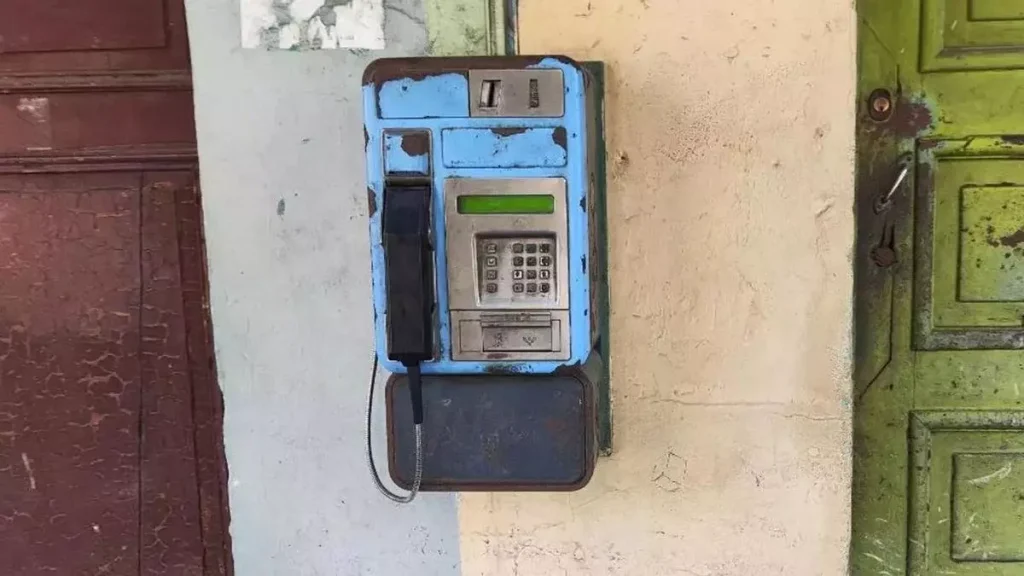
Many independent journalists only had a landline (or public phone) to report on the realities of Cuba. / 14ymedio

14ymedio bigger14ymedio, Havana, Generation Y, Yoani Sánchez, May 3, 2026 —  Every May 3rd carries a different weight when you practice journalism in a country where press freedom is not a right, but a daily battle. This is not a date for celebration, at least not in the most comfortable sense of the word, but for taking stock: of what has been won through hard work, what has been lost along the way, and what still needs to be built. In Cuba, being an independent journalist is not just a profession; it is a form of resistance.

I’ve learned to measure time not just by the days that pass, but by the times the internet connection drops, by the messages that never arrive, by the calls that are cut off just as someone begins to share their story. The poor quality of communications isn’t just a technical problem; it’s a strategy. As are the operations surrounding our homes, the police patrols that appear on “sensitive” dates, the officers who watch, take notes, and intimidate. There are days when going out to report something means first having to get past a cordon.

Added to this are the more visible threats: summonses, interrogations, seizures, and legal proceedings that seek to criminalize the practice of journalism. They call us “mercenaries,” “enemies,” “destabilizers,” as if reporting the truth were a form of violence. But the truth is that the greatest fear of those in power remains that someone will observe, ask questions, and publish.

The greatest fear of those in power remains that someone will look, ask questions, and publish.

However, the challenge doesn’t end with repression. There is another challenge, quieter, and more complex that has to do with Cuban society itself. For decades, the country lived under an information monopoly that shaped not only what was said, but also how it was heard. Many citizens grew up with the idea that the press should confirm, not question; accompany, not investigate; embrace, not criticize. Today, as the cracks continue reading

in that wall deepen, confusion also emerges: What is the role of a journalist? To whom do they answer?

Therein lies, perhaps, one of the greatest challenges of the future: rebuilding the relationship between the press and the public. Explaining, with facts and rigor, that our role is not to please nor to be an echo chamber for politicians or special interest groups. That we are not here to applaud nor to amplify slogans. That journalism, in its essence, makes people uncomfortable. It investigates. It reveals. And that this discomfort is necessary, both when it targets those in power and when it illuminates the dark corners of society itself.

To be an independent journalist in Cuba today is like walking on unstable ground, where every step can have consequences. But it is also an inspiring profession. Because amidst the blackouts, the censorship, and the imposed silence, every published story is a small victory against the gag order.

To be an independent journalist in Cuba today is like walking on unstable ground, where every step can have consequences.

This May 3rd, I have no certainties, but I do have convictions. The main one: that even if they cut off our connection, there will always be someone looking for a signal to publish an article or denounce an injustice. And as long as that need to know, to understand, to name what is happening exists, journalism, even the most persecuted kind, will continue to find a way to prevail.

To my colleagues, congratulations on this day, but I warn you that the road ahead is full of dangers, even dangers that come from what today seem to be very close support.

______________________

COLLABORATE WITH OUR WORK: The 14ymedio team is committed to practicing serious journalism that reflects Cuba’s reality in all its depth. Thank you for joining us on this long journey. We invite you to continue supporting us by becoming a member of 14ymedio now. Together we can continue transforming journalism in Cuba.

The First Private Nursing Home in Cuba Opens Its Doors

The lowest price in TaTamania is $1,080 a month, but the law requires it to reserve 10% of the places for the “vulnerable” at a rate set by the State.

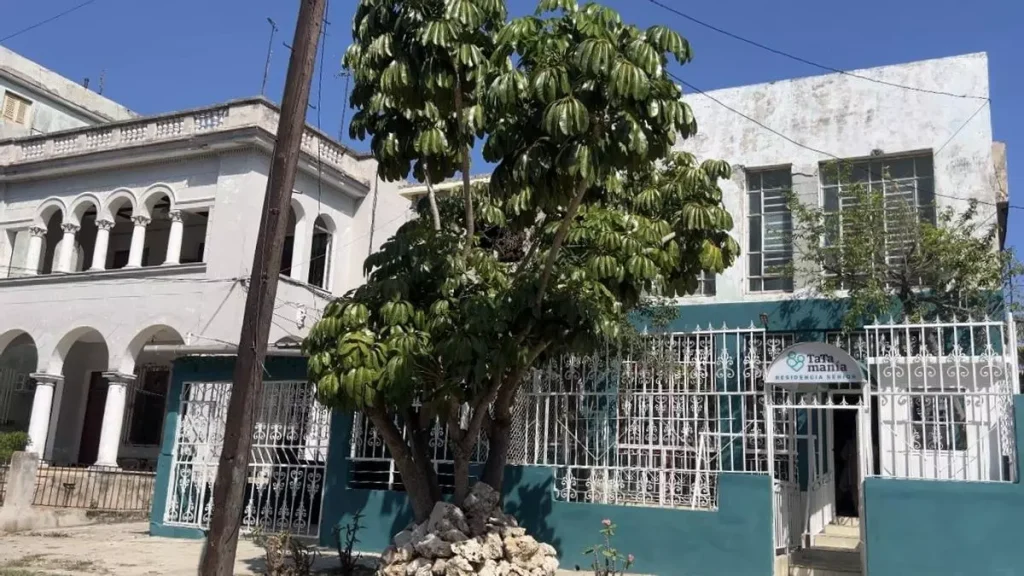
TaTamanía nursing home in El Vedado, Havana. / 14ymedio

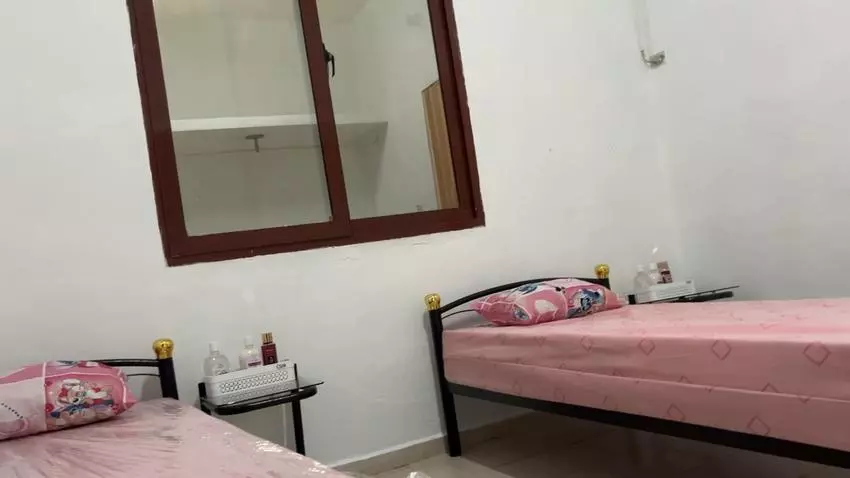
14ymedio bigger14ymedio, Havana, Dario Hernandez, May 3, 2026 / The TaTamanía Senior Residence is a hive of activity in recent days. “I’m not going to show you the whole house, I’m going to take you to a room so you can see how we have it equipped. Each room has its own bathroom, with hot and cold water. There’s a split air conditioner and a fan, because some of the elderly residents don’t like air conditioning…,” an employee of what will be the first private nursing home in Cuba tells 14ymedio.

“We are an agency that has been operating for four years. This permanent home service is a new experience for us, because we just received authorization, but we have been working in homes and hospitals for some time. So far, everything has gone well; we have quite a few clients. We are all healthcare professionals. Those who aren’t doctors are nurses, or if not they are are physiatrists. That’s why people seek us out,” the employee adds, alluding to the company’s experience in the Dominican Republic, as they boast on their social media. In fact, TaTamanía’s contact number has a Dominican country code, and the account where they request the required fee be deposited is also in Santo Domingo.

Its founders are pediatrician Yadira Álvarez and her husband, Rolando Pérez, a computer engineer

TaTamanía arrived in that country last year, opening a branch and establishing an alliance with Saritacelestec Homes, a group of senior living facilities. However, TaTamanía was founded in Guantánamo in 2023 and was the first private micro, small, and medium-sized enterprise (MSME) to offer this service on the island. Its founders are pediatrician Yadira Álvarez and her husband, Rolando Pérez, a computer engineer. It is registered with that name and purpose in the Ministry of Economy and Planning’s list of economic actors: “to provide care services for the sick, people with disabilities, and the elderly.”

On February 26 , legislation was finally approved formally authorizing the private sector to manage long-term and day care facilities after decades of state monopoly. The law was complemented by a resolution published in April —and which comes into effect on May 21—establishing the operating and oversight rules for these services, as well as the construction, personal care, and healthcare standards they must meet.

The law specifies that 10% of the places must be reserved for people continue reading

considered “of social interest due to their vulnerable status,” whose rates will be those set by the State for their own homes. If the beneficiary cannot afford the price, the Government will pay, the law states.

One of the rooms in the TaTamanía residence in Havana’s Vedado district. / 14ymedio

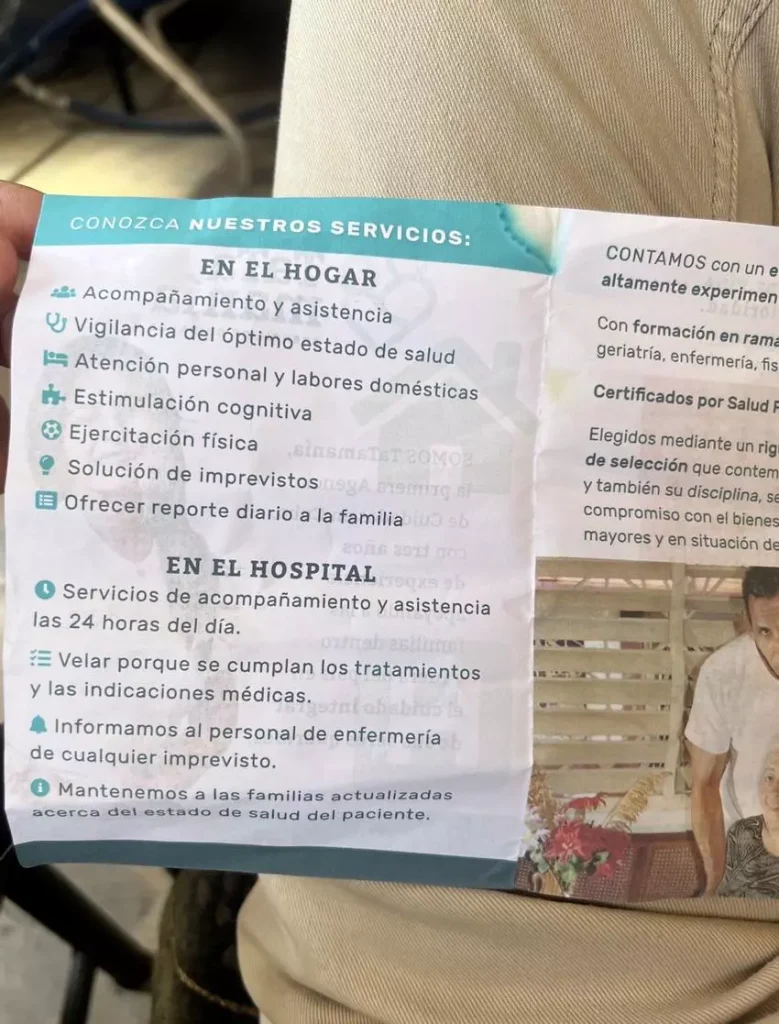
This is the Achilles’ heel of TaTamanía, whose prices are currently almost a state secret. The staff avoid answering the question of how much a private room will cost and simply hand out an advertising brochure outlining the services, which cover five main areas: accommodation, food – with adapted menus; hygiene and care – laundry, haircuts, assistance with bathing; medication and health; monitoring at the center and support outside of it; and activities – including physical and cognitive activities as well as leisure.

Finding out how much it costs is complicated, although if you search online you can eventually find the – restricted – profile that provides this information. The lowest cost is for a triple room, at $1.35 per hour, and the highest is for private rooms, at $1.75. At the Senior Residence in El Vedado, which a contributor to this newspaper visited, there are currently only double rooms available, whose price, according to this employee, is $1.50 per hour, totaling $1,080 per month if there are no additional charges.

The amount is unthinkable for any of the many elderly people living in Cuba without remittances from abroad, so the target audience can only be those with family living outside the island. Of the ten beds that TaTamanía has in its five double rooms, one would be reserved by law for a vulnerable person, who would pay the 1,260 pesos stipulated in the official rate, compared to the 535,680 pesos that — with the official floating exchange rate — the private room costs.

So far, TaTamanía has been very successful on the island. The very law that authorized the existence of private residences acknowledged in its preamble that “given the accelerated aging of the Cuban population, which demands increased care, and the need to expand the scope of social care services for older adults or people with disabilities, it is necessary to authorize the provision of such services by non-state economic actors.”

Some of the services offered by TaTamanía in Havana. / 14ymedio

This reform has allowed TaTamanía to expand services that, until now, could only be offered at home and in hospitals. “The elderly are assessed by a geriatrician who works three times a week in different municipalities, and, depending on that assessment, she determines whether or not they qualify to start here at the center. There are three options: permanent residents, daytime residents – the hours are from 8 am to 6 pm – who come and go on the same day, and temporary residents.” The latter are for those who stay for a short period of time while their caregiver is away on a trip.

It is noteworthy that the company’s advertising highlights some of its professionals as “doctors and nurses formerly employed in the public sector.” The salary of a nurse working at TaTamanía is unknown, but various accounts published in the independent press indicate that salaries in this market can range from 20,000 to 30,000 pesos for a nurse, compared to 5,000 to 7,500 pesos in the public sector. For nursing assistants, the salary can be up to five times higher in the private sector. To obtain certification, a course is mandatory, the price of which is set by the government at 500 pesos, and which TaTamanía has been offering in recent days.

The residence in El Vedado, with its ten beds, is a start, but the needs on an island where the serious problem of aging is compounded by the massive exodus of young people overwhelms not only the state sector, but also nascent private ones with serious difficulties in growing in a context of deep economic crisis.

______________________

COLLABORATE WITH OUR WORK: The 14ymedio team is committed to practicing serious journalism that reflects Cuba’s reality in all its depth. Thank you for joining us on this long journey. We invite you to continue supporting us by becoming a member of 14ymedio now. Together we can continue transforming journalism in Cuba.

“Concern” in Matanzas, Cuba, Over Active Cases of Hepatitis

Other outbreaks have been reported in Camagüey and Ciego de Ávila, although authorities are downplaying the problem.

At the beginning of April, in the Versalles neighborhood, there were already 18 active cases / ‘Girón’

14ymedio biggerWithout mentioning specific figures, Andrés Lamas Acevedo, director of the Matanzas Provincial Center for Hygiene, Epidemiology, and Microbiology, confirmed this Saturday the existence of active hepatitis cases in several locations throughout the province, including Versalles, the Plácido area, La Cumbre, and “isolated cases in all municipalities.” In an interview with the media outlet Girón, the doctor stated that all outbreaks are now “fairly under control.”

The official explained that “the hepatitis cases in the province have been spread from person to person” and not through water, “as we had 20 years ago in Versailles.” He tried to downplay the outbreak: “There really have been very few cases.”

However, the same media outlet points out at the beginning of the article that “for the past couple of weeks, the inhabitants of the province of Matanzas have been concerned” about the situation.

To try to contain the cases, Lamas Acevedo points out that the authorities temporarily closed establishments in the Plácido area. “When a group of people concentrated in a certain area gets sick, as is the case in Plácido, we have to close establishments, including the guarapera (a sugarcane juice stand) and the cafes that sell prepared drinks, such as coffee and juice, because there is no evidence that they are safe.” continue reading

“Not everyone has a way to boil water, either because they don’t have gas or they have to use charcoal.”

Another preventative measure is to boil or chlorinate the water with hypochlorite. However, the official himself acknowledges the population’s material limitations: “Not everyone has a way to boil water, either because they don’t have gas or they need to use charcoal. Therefore, we must promote citizen access to hypochlorite in all pharmacies.”

“Currently, it has been implemented, for example, in areas with the highest rates of hepatitis. However, it should be extended to all pharmacies in the municipalities to ensure direct access to the product,” he emphasizes.

The importance, he says, lies in the fact that an outbreak can start after “a fly goes to a landfill where there is fecal matter from a sick person and then lands on a piece of bread, a sweet or broth that is in a house, well, that’s where it leaves the virus.”

The doctor also said that hepatitis is a difficult disease to control due to its silent transmission period. “It begins to be transmitted 10 days before symptoms appear and continues for up to 15 days after. Therefore, I can have it now, feel fine, and still be spreading it,” he explained.

At the beginning of April, provincial authorities had already announced that they had strengthened epidemiological surveillance in response to outbreaks.

At the beginning of April, provincial authorities had already announced that they had strengthened epidemiological surveillance in response to outbreaks of hepatitis in several municipalities, with the most critical situation concentrated in the Versalles neighborhood, where, at that time, 18 active cases were recorded.

Specialist Lamas Acevedo himself acknowledged the relative seriousness of the situation at the time, although he tried to downplay the alarm: “Although it is not a large-scale outbreak, joint actions between the health sector and other organizations will allow us to cut off transmission.”

Other cases have been reported in Camagüey. On April 23, provincial television interviewed a health official who acknowledged that “there is currently an increase in suspected and probable cases of hepatitis A virus in our province, primarily concentrated in our municipality.”

In the television report, the media outlet noted that “in a scenario where there are serious problems with solid waste collection, it is urgent to intensify hygiene and sanitation measures.” Despite this situation, the health official interviewed maintained that “at this time, we do not have an outbreak in the municipality of Camagüey, even though there has been a notable increase in the disease.”

“At this time, we do not have an outbreak in the municipality of Camagüey, despite a notable increase in the disease.”

“Camagüey has been full of hepatitis cases for months. Where I live, I know of more than 20 people who have had hepatitis. Please, take this seriously,” one user responded to the TV Camagüey video. Another internet user also questioned the official message: “Isolation isn’t the issue, because when you diagnose 30 to 40 positive cases in a single day in an emergency room, that’s an outbreak.”

At the beginning of the year, the health authorities of Ciego de Ávila reported, through official media, that they were investigating several suspected cases of hepatitis detected in different municipalities of the province.

As is usually the case, no figures were given, and they simply reported that, after the detection of the first patients with symptoms compatible with the disease, the protocols established by the health system were activated.

Hepatitis is a disease characterized by inflammation of the liver. Its most common symptoms include fatigue, yellowing of the skin and eyes, nausea, abdominal pain, and dark urine, although it can be asymptomatic. However, in severe cases, it can cause extreme fatigue, fever between 37.5 and 38 degrees Celsius [99.5F to 100.4F], headache, muscle aches, loss of appetite, and bleeding gums.

______________________

COLLABORATE WITH OUR WORK: The 14ymedio team is committed to practicing serious journalism that reflects Cuba’s reality in all its depth. Thank you for joining us on this long journey. We invite you to continue supporting us by becoming a member of 14ymedio now. Together we can continue transforming journalism in Cuba.

A Tale of Two Cities: Havana and Washington on May Day

May 1, 2026, exposed two radically opposing political realities unfolding ninety miles apart. In Havana, the Cuban communist dictatorship attempted to stage its annual revolutionary spectacle amid visible fear, militarization, and growing insecurity. In Washington, the United States escalated its confrontation with the Castro-Communist regime through a sweeping executive order targeting the financial, political, and repressive architecture sustaining the dictatorship. The contrast was striking: one government desperately trying to manufacture the illusion of monolithic support; the other formally declaring the Cuban regime a continuing threat to U.S. national security and democratic values.

In Havana, the regime had originally planned a massive May Day mobilization at the Plaza Cívica — the monumental square later renamed Plaza de la Revolución after Fidel Castro consolidated communist rule. Historically, the plaza has served as the dictatorship’s preferred stage for choreographed demonstrations of revolutionary unity, giant propaganda rallies, and displays of ideological obedience. But this year, the regime abruptly relocated the main event to the so-called “Anti-Imperialist Tribune” in front of the U.S. Embassy. The explanation offered by state propaganda was predictable revolutionary theater. The real reasons were far more revealing..

The dictatorship feared poor turnout, despite available mass mobilization mechanisms. It feared images of half-empty plazas circulating across social media and independent outlets. More importantly, it feared the possibility of social unrest and spontaneous protest, particularly after the trauma inflicted on Cuban communism by the July 11, 2021, popular uprising. Thousands of Cubans across the island openly challenged communist rule in the largest anti-government demonstrations in decades. The memory of those protests continues to terrify the ruling elite because they shattered the regime’s carefully cultivated myth of universal revolutionary loyalty.

Security concerns also weighed heavily on the regime’s calculations. The appearance of the visibly frail and decomposing tyrant Raúl Castro beside dictator Miguel Díaz-Canel transformed the event into less a celebration than a display of dictatorial continuity under siege. Castroism’s rhetoric continue reading

was openly defiant and militant, sounding increasingly similar to the revolutionary absolutism and anti-Western hostility associated with the Iranian ayatollah regime, one of Havana’s closest ideological and geopolitical partners. This was not a workers’ celebration. It was a regime fortification exercise.

The communist dictatorship explicitly organized the May Day mobilization within the framework of the newly declared “Year of Defense Preparedness” for 2026. The Castroist regime has announced weekly military exercises, civil defense operations, and plans approved by the National Defense Council for a transition to a wartime footing in the event of conflict or internal instability. The atmosphere surrounding the parade reflected precisely that mentality. It is a state preparing not for prosperity or reform, but for confrontation and survival.

Military personnel, Ministry of the Interior (MININT) officers, intelligence agents, rapid- response brigades, and uniformed security forces maintained a heavy presence throughout the event. The symbolism was unmistakable. The regime increasingly governs Cuba, not as a confident political system, but as an entrenched security apparatus managing a population it fundamentally distrusts. The omnipresent deployment of coercive forces transformed what the dictatorship claimed was a celebration of workers into a demonstration of state intimidation and internal control. Rather than projecting revolutionary vitality, the spectacle exposed a government whose primary political instinct is surveillance, containment, and preparedness against its citizenry.

At the same time, the dictatorship attempted to manufacture legitimacy through mass political coercion. Havana triumphantly announced that more than 6.2 million signatures had been collected for the “Mi Firma por la Patria” (“My Signature for the Homeland”) campaign, a regime-driven initiative supposedly demonstrating national support for Cuban “sovereignty” and resistance to foreign pressure. In a totalitarian system, signatures gathered through workplaces, schools, party committees, unions controlled by the state, neighborhood surveillance networks, and government institutions cannot meaningfully be interpreted as free political expression. Participation in such campaigns is inseparable from intimidation, social pressure, and fear of retaliation. In Cuba, refusing to cooperate with state mobilizations can carry consequences ranging from professional marginalization to harassment, interrogation, or loss of opportunities controlled by the state.

The regime intended to project strength. Instead, it revealed insecurity. While Havana staged ideological rituals and militarized pageantry, Washington moved decisively in the opposite direction. On May 1, President Donald J. Trump signed an executive order titled Imposing Sanctions on Those Responsible for Repression in Cuba and Threats to U.S. National Security and Foreign Policy. The order represents another comprehensive sanction charter directed at the Cuban regime. It significantly expands the legal, financial, and diplomatic pressure against Castro-Communism.

The executive order declares that the actions and policies of the Castro government continue to constitute an “unusual and extraordinary threat” to U.S. national security and foreign policy. It further states that the regime’s conduct is “repugnant to the moral and political values of free and democratic societies.” The sanctions provisions are sweeping in scope. Under Section 2, the United States can block all property and interests in property under U.S. jurisdiction belonging to foreign individuals or entities operating in strategic sectors of the Cuban economy, including defense, energy, mining, metals, financial services, and security. The order specifically targets not only officials of the Castro government but also individuals and entities acting on behalf of the regime, those materially assisting it, and those providing financial, technological, or logistical support.

The order further authorizes sanctions against persons complicit in serious human rights abuses or corruption connected to communist Cuba, including expropriation of private assets, misappropriation of public resources, bribery, and political profiteering by regime officials. Even adult family members of sanctioned individuals may be designated. The message is unmistakable: the United States intends to target not merely isolated actors, but the broader ecosystem sustaining the dictatorship. By extending liability beyond formal state officials to financial enablers, intermediaries, and beneficiaries of regime corruption, the order seeks to penetrate the patronage networks that have long insulated Cuba’s ruling elite from meaningful accountability.

The executive order also dramatically raises pressure on international financial institutions. Foreign banks facilitating significant transactions for sanctioned Cuban individuals or entities may themselves face severe penalties, including restrictions on correspondent banking access in the United States or the blocking of assets under U.S. jurisdiction. These secondary sanctions substantially increase the financial risks associated with doing business with the Cuban regime. In practical terms, the measures are designed to further isolate Havana from global financial networks and deter foreign actors from serving as economic lifelines for the dictatorship.

Additionally, the order imposes a travel ban on foreign nationals tied to sanctionable activities connected to the Cuban government, suspending unrestricted immigrant and nonimmigrant entry into the United States for designated individuals. It also prohibits transactions designed to evade sanctions and authorizes aggressive enforcement under existing emergency powers legislation. The inclusion of immigration restrictions underscores that participation in repression and corruption in Cuba may now carry not only financial consequences, but also personal and diplomatic isolation from the United States.

Thus, May Day 2026 became far more than a symbolic holiday. In Havana, the regime attempted to choreograph revolutionary permanence through coercion, militarization, and ideological spectacle. It visibly displayed a deep-rooted fear of its population. In Washington, the United States formally intensified its economic and diplomatic campaign against the structures of Castro-Communist repression. Two cities, two systems, and two entirely different conceptions of political legitimacy.

One clings to power through surveillance, compulsory mobilization, and security-state control. The other increasingly signals that the Cuban dictatorship’s repression, corruption, and destabilizing conduct will face mounting consequences. The juxtaposition of Havana’s militarized choreography and Washington’s expanding sanctions policy underscored the growing collision between a system struggling to preserve totalitarian permanence and an American political environment becoming progressively less willing to tolerate or normalize its existence. Havana’s pathetic May Day spectacle revealed their inability to effectively orchestrate anything convincing. It also underscored their pathological refusal to negotiate themselves out of power. The U.S. must now seize the moment and take its legitimate national security concerns to another level.

Author: Julio M. Shiling

© The CubanAmerican Voice. All rights reserved.

Cuba and the Night: In Praise of Daring

Amelia Calzadilla achieved something difficult: connecting with real Cubans, with ordinary people, exhausted by blackouts, shortages, abuses, lies, and fear.

It is unfair to demand from every opponent the perfection that the dictatorial machinery itself prevented us from achieving. / Facebook / Amelia Calzadilla

14ymedio bigger14ymedio, Madrid, Yunior García Aguilera, May 2, 2026 / One of the most common pastimes among Cubans is public shaming. I’m not talking about honest, necessary, even harsh criticism. I’m talking about that emotional machinery that kicks in against anyone who dares to step forward. The moment someone tries to organize an idea, propose a path, found a project, or take on a responsibility, the stones appear.

Some, of course, come from the apparatus of the dictatorship. We know how they operate. They have resources, agents, smear campaigns, fake accounts, television programs, and spokespeople trained to destroy reputations. But not all the stones come from there. Some are born from ourselves, from our wounds, our frustration, from that anthropological damage left by decades of living under a system that rewards obedience and punishes initiative.

You don’t have to agree with every project to recognize the value of boldness. Nor do you have to applaud everything, suspend critical judgment, or make anyone into an untouchable figure. We’ve already suffered enough from the absolute chiefdoms. And a democracy isn’t built by replacing one altar with another. But neither is it achieved by demolishing every leader at their founding moment, before they can breathe, make mistakes, correct themselves, and mature.

We want one person to carry the shortcomings of an entire nation on their shoulders.

No opposition leader emerges fully formed. That’s a dangerous fantasy. Political maturity is a complex process, especially for those of us who come from authoritarian backgrounds. In a free society, people can join parties, debate platforms, lose internal elections, learn from campaigns, study others’ experiences, and train themselves in the exercise of citizenship. In Cuba, however, real politics has been confiscated for more than six decades by a single group in power. They educated us to repeat their slogans, not to deliberate. We were conditioned to in-or-out, and were never allowed to organize ourselves. We were taught to distrust everyone, not to build public trust.

That is why it is unfair to demand from each new opposition figure the perfection that the dictatorial machinery itself prevented us from developing. We expect impeccable biographies, carefully crafted continue reading

programs, perfect teams, flawless language, a heroic past, academic preparation, popular appeal, serenity, audacity, humility, charisma, strategy, and immediate results. We want one person to shoulder the shortcomings of an entire nation. And when they can’t, we accuse them of being unprepared, ambitious, naive, or worse, a product manufactured by the regime itself.

Perfect leadership sonly exists in retrospect. They are a dubious construct of time. After victory, history smooths over contradictions, polishes doubts, erases blunders, organizes the narrative, and presents as destiny what was often trial and error, chance, mistakes, persistence, and learning. But in real life, leadership is born chaotic. It contradicts itself. It changes tone. It makes mistakes. The consolidation of ideas almost never happens in a straight line. It happens amidst noise, pressure, exhaustion, urgency, and also human vanity, because no leader is made of marble.

Amelia Calzadilla doesn’t have to be liked by the whole world. Her political project can and should be discussed. Her ideas should be examined. Her party, like any other, will have to demonstrate whether it has structure, a platform, a vision, a team, and the ability to coordinate with other efforts. No one is obligated to follow her blindly. But it would be unfair not to acknowledge some of her merits.

Willpower, in exile, is no small thing. Exile wears you down. It disrupts your life. It forces you to start over.

Amelia achieved something difficult: connecting with real Cubans, with ordinary people, exhausted by blackouts, shortages, abuses, lies, and fear. Her voice emerged from a concrete, everyday, and relatable resistance. And that authenticity allowed her to reach many. Not all opposition figures achieve that. Some have a track record, but they don’t connect. Others have intellectual preparation, but they aren’t known outside certain circles. Amelia, with her successes and her limitations—like everyone—has demonstrated communication skills, social awareness, and a will that shouldn’t be underestimated.

Willpower, and in exile, is no small thing. Exile is exhausting. It disrupts life. It forces you to start over. It brings hardship, grief, guilt, loneliness, bureaucracy, low-paying jobs, homesickness, attacks, and suspicion. Many arrive with a desire to act and end up crushed by the routine of survival. Maintaining political intent amidst these ups and downs requires considerable energy. That a young woman, a mother, in exile, decides not to limit herself to denouncing injustice, but to attempt to build a political platform, deserves at least our respect.

This isn’t about declaring her project infallible. It is not. No human project is. It is about understanding that pluralism can’t just be a pretty word to use against dictatorship. It has to be practiced among ourselves as well. Pluralism means accepting that parties, movements, platforms, leaders, and proposals will emerge that don’t fully align with our expectations. It means discussing without annihilating. Questioning without humiliating. Recognizing risks without turning disagreement into a moral firing squad wall.

Cuban democracy, if it ever arrives, will need more than slogans against the Communist Party. It will need a different political culture. And that culture cannot be improvised after the fall of the regime; it must be practiced now. Every time we respond to the emergence of an initiative with mockery, automatic suspicion, or public condemnation, we reproduce a part of the authoritarian country we claim to want to overcome.

Criticism is essential, but brutality is not productive. High standards are healthy, but paralyzing perfectionism can be another form of sterility. We have been waiting too long for the ideal leader, the definitive project, the figure capable of single-handedly toppling a military regime that has been in power for over six decades. Perhaps that waiting is also a trap. Perhaps the solution lies not in finding the perfect leader, but in allowing many imperfect leaders to emerge, compete, collaborate, fail, learn, and try again.

______________________

COLLABORATE WITH OUR WORK: The 14ymedio team is committed to practicing serious journalism that reflects Cuba’s reality in all its depth. Thank you for joining us on this long journey. We invite you to continue supporting us by becoming a member of 14ymedio now. Together we can continue transforming journalism in Cuba.

Following Trump’s Latest Threat, Cuban President Díaz-Canel Calls on the International Community To Take a Stand

The US announced more sanctions against the regime and the deployment of the aircraft carrier ‘Abraham Lincoln’ to “take control” of Cuba

The White House maintains that the policies and actions of the Cuban government are “repugnant” to the values ​​of free and democratic societies. / EFE/ US Navy

14ymedio bigger In response to the US threat to send the aircraft carrier Abraham Lincoln to Cuba, President Miguel Díaz-Canel posted a tweet on Saturday accusing Donald Trump of escalating his “threats of military aggression” against Cuba to a “dangerous and unprecedented” scale. The Cuban president called on the international community and the American people to take note of what he described as a possible “criminal act” intended to satisfy the interests of a “small but wealthy and influential” group with “a thirst for revenge and domination.” Díaz-Canel also asserted that Cuba will not surrender to any aggression and that the country will defend “sovereignty and independence in every inch of its national territory.”

US President Donald Trump said on Friday – as he has done on other recent occasions – that he will “take control” of Cuba “almost immediately” after finishing the “job” in Iran, during his speech as the main speaker at a private dinner at the Forum Club in West Palm Beach, Florida.

The Republican added that he could have the USS Abraham Lincoln aircraft carrier —the largest in the world—travel to the Caribbean and “stop about 100 meters off the coast” of Cuba, from where the islanders, according to his speech, would say “thank you very much, we surrender.”

This Friday, Trump signed an executive order expanding sanctions against the Cuban government and authorizing the freezing of assets.

This Friday, Trump signed an executive order expanding sanctions against the Cuban government and authorizing the blocking of assets belonging to officials, state-owned companies, financial entities, and individuals linked to repression, corruption, or strategic sectors of the island’s economy.

The measure, dated May 1, 2026, is based on the national emergency declared by Washington in January of this year, when the White House stated that the actions of the Cuban government posed a threat to U.S. national security and foreign policy. With this new order, the U.S. administration reinforces that legal framework and opens the door to continue reading

further designations against individuals and entities linked to Havana.

The text stipulates that all property and interests in property located in, entering, or controlled by U.S. citizens, residents, or companies will be blocked. In practice, those sanctioned will be unable to move funds, receive payments, sell assets, or conduct transactions within the U.S. financial system.

The order directly targets those who operate or have operated in the energy, defense, metals and mining, financial services, and security sectors of the Cuban economy. It also allows the Treasury Department, in consultation with the State Department, to add other sectors if it deems it necessary.

Those potentially affected include high-ranking government officials, company executives, members of administrative boards, state agencies, and entities controlled by Havana

The scope of the measure is not limited to visible officials of the regime. Individuals or entities owned, controlled, or acting on behalf of the Cuban government, directly or indirectly, may also be sanctioned. The order further includes those who provide financial, material, or technological support, or supply goods and services to the Cuban state or to individuals already sanctioned.

Those potentially affected include high-ranking government officials, company executives, members of administrative boards, state agencies, and entities controlled by Havana. The document also mentions individuals responsible for or complicit in serious human rights abuses in Cuba, as well as those involved in acts of corruption, including the embezzlement of public funds, the expropriation of private property for personal or political gain, and bribery.

One of the broadest provisions allows for sanctions against adult relatives of individuals included on the list. The order specifies that it will not be necessary to notify those affected in advance before freezing their assets, to prevent them from transferring assets or withdrawing funds before the measure takes effect.

Entry into the United States is also suspended for those who meet the sanction criteria. The ban applies to both immigrants and non-immigrants, although the Secretary of State may authorize exceptions when he deems that admitting a person is in the U.S. national interest.

One of the broadest provisions allows for sanctions against adult relatives of people included on the list.

The order also contains a message for banks and financial institutions outside the United States. The Treasury Department may impose sanctions on foreign institutions that facilitate significant transactions for sanctioned individuals or entities. These measures can range from restrictions on maintaining correspondent accounts in U.S. banks to the complete freezing of assets under U.S. jurisdiction.

This point could have an impact beyond U.S. borders. Many international transactions pass through correspondent banks or use the dollar, so entities in third countries might avoid ties with Cuban companies or officials to avoid exposing themselves to sanctions.

The document maintains the validity of activities authorized under U.S. regulations concerning Cuba, including Part 515 of the Code of Federal Regulations. This means that certain operations permitted by general or specific licenses may continue, provided they do not conflict with the new restrictions.

The implementation of the order will be handled by the State Department — headed by Cuban-American Marco Rubio — and the Treasury Department, which will be able to issue regulations, guidelines, and licenses to put it into practice. The Treasury Secretary will also be required to submit periodic reports to Congress regarding the national emergency related to Cuba.

The White House maintains that the policies and actions of the Cuban government are “repugnant” to the values ​​of free and democratic societies. The statement accuses Havana of engaging in practices that harm the United States and of posing an external threat to that country’s national security and foreign policy.

______________________

COLLABORATE WITH OUR WORK: The 14ymedio team is committed to practicing serious journalism that reflects Cuba’s reality in all its depth. Thank you for joining us on this long journey. We invite you to continue supporting us by becoming a member of 14ymedio now. Together we can continue transforming journalism in Cuba.