The arrest of Ernesto Medina and Kamil Zayas is a warning to Cubans under 40: emigrate before repression catches up with you
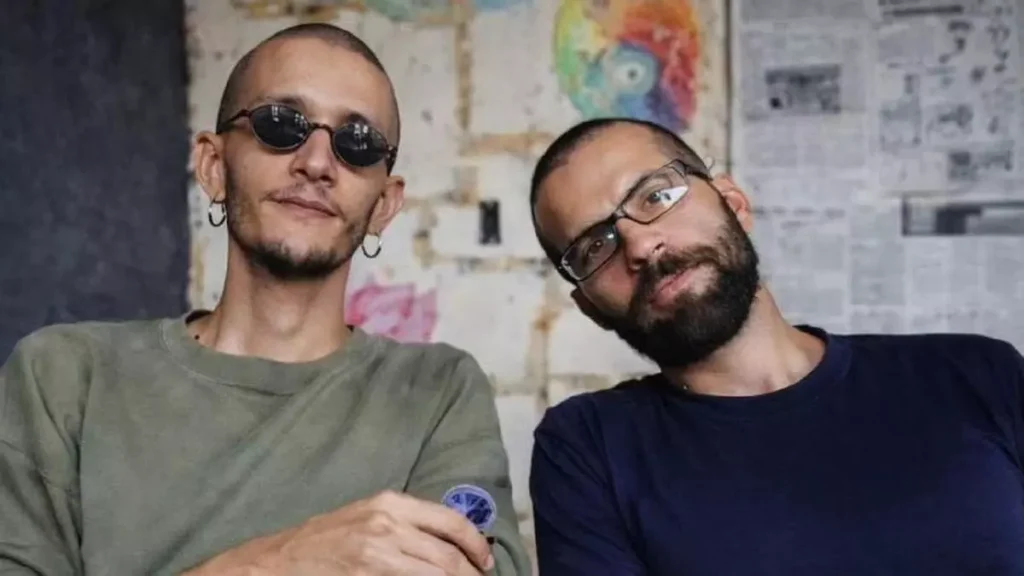
 14ymedio, Yoani Sánchez, Generation Y, Havana, 7 February 2026 — My generation has packed its bags. And the few of us who remain on the island have had to learn another kind of heartbreak: saying goodbye to our children. Watching them leave not only with a backpack on their shoulder, but with the certainty that staying means the risk of being silenced, perpetual poverty, or prison. Young Cubans today face a cruel dilemma: remain in the country where they were born, silenced and subjected to a crisis with no end in sight, or leave for places where everything starts from scratch, but where at least one can speak without fear. The arrest yesterday, Friday, of Ernesto Medina and Kamil Zayas, members of the El4tico project, is a stark warning directed at Cubans under 40: emigrate before the repression catches up with you
“If you are seeing or reading this, it is because they have finally found a way to silence me, to try to temporarily muzzle me,” Zayas says in a message written before his arrest and released this Saturday. “I am not being arrested for theft, assault, drug trafficking, or any common crime,” he clarifies. “I am being arrested for the only ‘crime’ that a dictatorship cannot tolerate: daring to look directly and say aloud what we all notice: its egregious failings, its chronic inefficiencies, its systematic injustices, and the oppression that crushes the dignity of an entire people.”
Standing in front of an old blackboard and with a fan that seems more intent on stirring up social inertia than blowing air, Medina and Zayas have connected with an audience fed up with slogans.
This testimony is not mere rhetoric, but rather an accusation. In a country where too many young people are trapped in the clutches of el químico [the chemical], others spend hours sitting on sidewalks with nothing to do, and a majority dream of throwing themselves into the sea or boarding a plane to get them out of here as soon as possible, these two men from Holguín have chosen the most dangerous path: to stay and speak out. With their videos, they have unsettled the authorities because they have abandoned coded language, fear, and self-censorship. In front of an old blackboard and with a fan that seems more intent on stirring social inertia than providing air, Medina and Zayas have connected with an audience fed up with slogans and in need of stories grounded in real life.
While official channels insist on clinging to the tired slogan of “creative resistance,” El4tico has shown a country where the Communist Party’s unpopularity is growing, patience is wearing thin, and the imposed political model is garnering increasingly less support. Where Miguel Díaz-Canel takes hours to string together clumsy phrases that provoke a prolonged national yawn, Medina and Zayas have opted for a direct, approachable, even engaging style. Their videos are devoid of posturing and scripted phrasing: they offer spontaneity, irony, and a sincerity that the system doesn’t know how to handle.
“Speak louder. Be dignified. Because history does not pardon those who remain silent out of convenience,” Zayas wrote before a police operation culminated in his and his colleague’s arrest. That phrase resonates today in a society marked by absences, by empty seats at family tables, and by the fear of ending up behind bars for an opinion, a social media post, or a criticism spoken aloud.
Repression doesn’t just imprison bodies; it also forces people into exile, cancels their future, and empties the country of its youngest voices. Every arrest like this confirms that speaking the truth remains, in Cuba, the most dangerous and most necessary act.
____________
COLLABORATE WITH OUR WORK: The 14ymedio team is committed to practicing serious journalism that reflects Cuba’s reality in all its depth. Thank you for joining us on this long journey. We invite you to continue supporting us by becoming a member of 14ymedio now. Together we can continue transforming journalism in Cuba.