
Cubans Will Pay 180 Percent More for Interprovincial Transport Beginning in March

More than 70% of passengers will continue to pay the fares that exist today, said the Minister of Transport, Eduardo Rodríguez Dávila. (14ymedio)

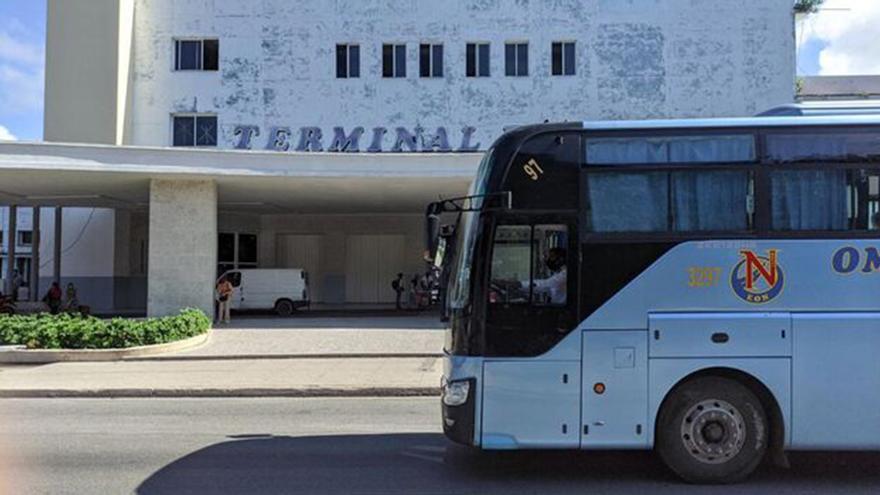
14ymedio bigger14ymedio, Havana, 9 January 2024 — Cubans have seen the new announcements on Tuesday linked to the large package of economic adjustments with which the Government seeks to “correct distortions.” The measures detailed on State TV’s Round Table program include an increase in interprovincial transport, as of March 1, which exceeds, in several cases, 180% of the current rate.

The Minister of Transport, Eduardo Rodríguez Dávila, and the Deputy Minister of Finance and Prices, Lourdes Rodríguez Ruiz, presented the changes in prices for passenger transport that fundamentally affect buses and trains that travel between provinces, in addition to maritime transport to the Isle of Youth and air connections.

Rodríguez Dávila clarified that all the rates are updated, although “the modification is not in most cases transferred to the prices paid by the population,” but “some prices have had to be transferred to the final customer.” The reason for the increase is that it is not possible to financially maintain the current rates “because of the amount that the budget has to contribute to be able to cover that difference.” continue reading

The cost of fuel and the repair and replacements costs of the deteriorated buses require having a capital that, “with rates at a loss,” cannot be covered, the official acknowledged

The cost of fuel and the repair and replacement costs of the deteriorated buses requires capital that, “with rates at a loss,” cannot be covered, the official acknowledged. “The budget has to contribute more than 2 billion pesos a year to cover that difference between the price and the rate.”

The head of the branch stressed that the official will is to maintain the prices of urban, suburban, intercity and easy access rural transport as well as rural transport and boats that are difficult to access, and these move “the bulk of the population daily to go to work, to school.”

“Buses will continue to cost 2 pesos in Havana and 1 peso in the provinces,” Rodríguez Dávila emphasized, referring to urban transport, a service that has been impaired in recent years with the loss of routes, a reduction in the fleet of vehicles and the deterioration of those that are still circulating. “All local train fares are maintained,” he added.

However, the hardest blow comes for interprovincial bus trips. While now a passenger pays 255 pesos for a ticket from Havana to Santiago de Cuba, with the new adjustments the route will cost 717.  From Havana to Guantánamo, the easternmost province of the Island, the ticket changes from 280 to 786 pesos. In each of these cases, the increase exceeds 180% of the current rate.

“All rates remain below 1,000 pesos,” said Rodríguez Dávila, who assured that “interprovincial services do not represent even 1% of the total mass of passengers that move in our transport service structure,” a fact that shows the crisis that the sector is experiencing.

The rates also go up for train travel. “The service without air conditioning to Santiago de Cuba, which is one of the longest sections, cost 95 pesos, and now it will cost 670 pesos. It used to cost 132 pesos for the air-conditioned car from Havana to Santiago de Cuba; now it will cost 820 pesos,” the minister said.

The announcements on the Round Table program were accompanied by statements that they are working to improve the situation of passenger mobility and to “advance in the development that our people want.” However, during 2023, the transportation sector barely managed to “stop the deterioration,” Rodríguez Dávila said.

As part of the adjustment package, a rise in fuel, electricity and gas prices had already been announced on Monday. In the case of the first, the price goes from 25 pesos to 132, an increase of 528%

As part of the adjustment package, a rise in fuel, electricity and gas prices had already been announced on Monday. In the case of fuel, the price goes from 25 pesos to 132, an increase of 528%. Electricity and propane will cost 25% more beginning March 1, when, according to the Government, a new tariff designed to “correct distortions” that the state budget has carried for years, becomes effective.

The increase in the price of electricity will affect those who spend more than 500 kilowatts per kilowatt hour (kWh), and all those who receive propane tanks will pay 225 pesos, 45 more than the current 180.

These measures occur in the midst of what President Miguel Díaz-Canel has described as a “war economy,” but always within the system. Officials have justified these widespread increases with the same argument: the State can no longer pay for everything, so those who have the most ability to pay must do it; otherwise, it will fall on everyone.

Translated by Regina Anavy

____________

COLLABORATE WITH OUR WORKThe 14ymedio team is committed to practicing serious journalism that reflects Cuba’s reality in all its depth. Thank you for joining us on this long journey. We invite you to continue supporting us by becoming a member of 14ymedio now. Together we can continue transforming journalism in Cuba.
Cuban Activist Ienelis Delgado Cue, Released After Nine Months in Prison for ‘Contempt’

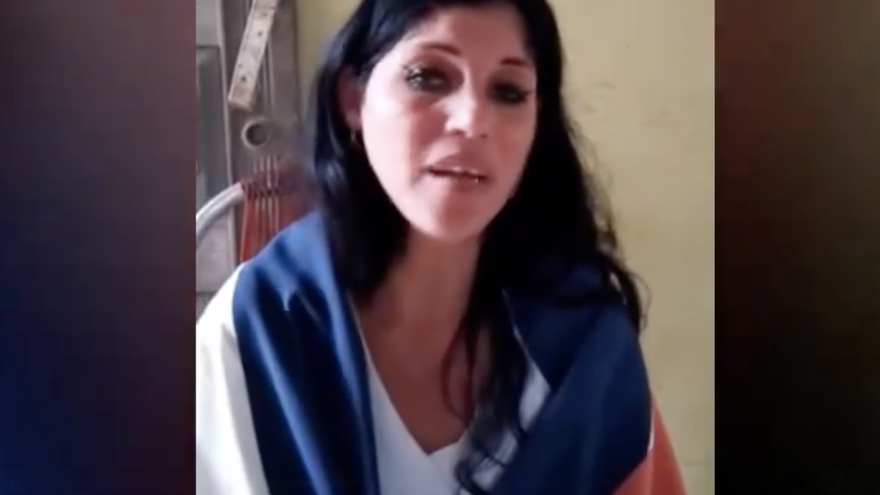
Ienelis Delgado Cué, ’Mambisa Agramontina’, in the video in which she reported her release. (Screen capture)

14ymedio bigger14ymedio, Havana, 29 December 2023 — Ienelis Delgado Cué, known on social networks as Mambisa Agramontina, was released this Friday after serving nine months in prison, for the crime of contempt, in the Kilo 5 women’s penitentiary center, in Camagüey, as confirmed by independent journalist José Luis Tan Estrada. The reporter specified that his release occurred from a labor camp known as El Anoncillo, to which she had recently been transferred.

“I stand firm in my principles despite all the repression I suffered. I will continue to fight for the release of the political prisoners who are still many in prison,” Delgado Cué said in a video she disseminated on social networks. “Here I am more willing than ever to continue fighting for freedom, because now I felt it and lived it. I know what a political prisoner is going through in Cuba.”

“Here I am more willing than ever to continue fighting for freedom, because now I felt it and lived it. I know what a political prisoner is going through in Cuba” 

 “Nine months of unjust imprisonment,” said Tan Estrada, classifying the time that Delgado Cué was in prison after the Popular Municipal Court of Camagüey condemned her. The activist was arrested last April for having shown on social networks her support for Aniette González, who published photos of her body covered with the Cuban flag and was sentenced to four years of deprivation of liberty for insulting patriotic symbols. continue reading

Delgado Cué, who had already been fined in October 2022 with 3,000 pesos for “not attending a police summons,” spent the days after the arrest of her friend posting messages of support and asking for justice for her cause and that of other political prisoners. On April 4, State Security detained her in her home in Camagüey, accusing her of having offended an officer, from where she was transferred to the Villa María Luisa detention center and, later, to Kilo 5.

Lawyer Laritza Diversent then pointed out that the young woman had to serve five months in prison, since she was already “four months in preventive detention.” Cubalex, the organization led by Diversent, had placed Delgado Cué on the list of more than 100 women political prisoners in Cuba.

During the trial against Delgado Cué, Tan Estrada and journalist Henry Constantín were arrested when they tried to cover the oral hearing.

Translated by Regina Anavy

____________

COLLABORATE WITH OUR WORKThe 14ymedio team is committed to practicing serious journalism that reflects Cuba’s reality in all its depth. Thank you for joining us on this long journey. We invite you to continue supporting us by becoming a member of 14ymedio now. Together we can continue transforming journalism in Cuba.
Cuba: Aguas de la Habana Surrenders in Nuevo Vedado and the Neighbors Take It Easy

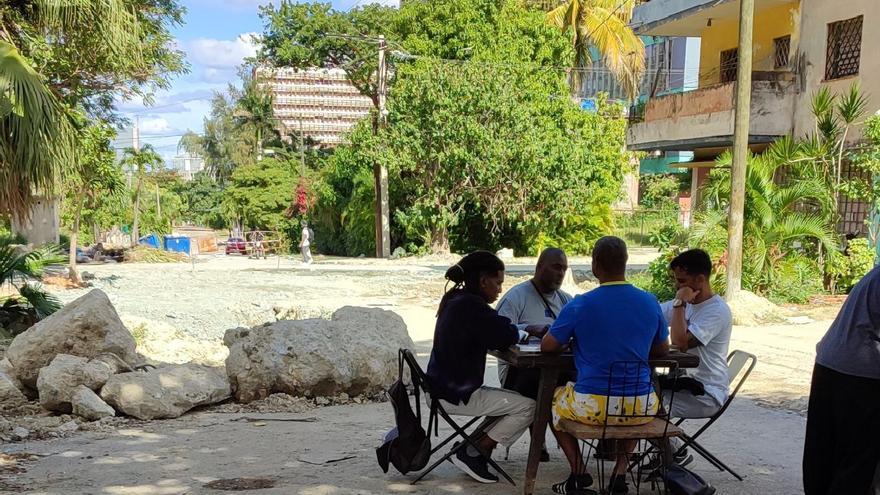
They chose to put the table in the shade, and the middle of the street was the only shady place they could find. (14ymedio)

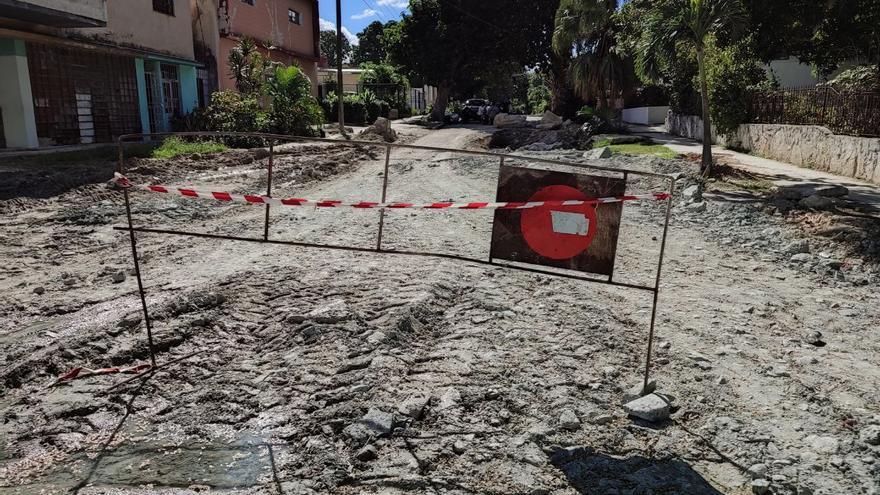
14ymedio biggerNatalia López Moya, Havana, January 02, 2024 — In the first days of January the noise of nearby Rancho Boyeros Avenue calms down, but the clacking of dominoes echoes in the neighborhood. The neighbors of Marino Street on the corner of Santa Ana, in Nuevo Vedado, take advantage of the holidays to put out the table and look for their double nine. This 2024, although diminished by emigration, they have greater reasons to get outside: after months in which an excavation prevented transit through their block, now the hole has been filled by Aguas de La Habana, although the work is a mess.

“At least we didn’t have to spend Christmas with all this full of water and mosquitoes,” acknowledges Amanda, one of the neighbors who, for more than three months, saw how the excavation was emptied of workers and became “a lagoon.” State employees repaired a leaking pipe that gets its water from the Palatino water treatment plant, built at the end of the 19th century in the municipality of Cerro.

The break in the pipe left a part of the municipality of Plaza de la Revolución without water, and, despite the triumphant official deadlines, the work lasted until December. “We were climbing the walls; on this block there is pizza business, a privately-owned business and several rental houses. All in the red because when people got to the corner they were scared looking at that hole full of water,” another neighbor confirms to this newspaper. continue reading

After months in which an excavation prevented traffic through the block, now the hole has been filled by Aguas de La Habana. (14ymedio)

Nobody knows if the breakage of the pipe was finally solved, or if, overcome by the magnitude of the damage, the workers of Aguas de La Habana only covered the hole to placate the nearby residents. “After weeks when nothing happened, one day they arrived in the morning and began to throw in dirt, but the brigades never showed up to cover it with asphalt so this now looks like a country town.”

For years, the neighbors of Marino Street had been complaining about the deterioration of the road that passed over the pipeline. The street had been sinking for a long time, and many warned of its possible collapse. In mid-2023, a pothole became so alarming that residents chose to put up a warning sign on their own, trying to avoid a misfortune.

To attract attention, they reported that many of the officials of the nearby Ministry of Agriculture parked their vehicles on that street and also evoked the imperatives of the nearby Panataxi base, the fleet of “yellows” destined to transport tourists from José Martí International Airport to Havana. Not to mention the adjoining exit point for ambulances.

The urgency didn’t much matter. Aguas de La Habana took its time and much more. This January, between red signs of “do not pass,” stones extracted from the substrate that mimicked a Martian landscape and frustration for so many months sunk in the mud and waiting, the neighbors of Marino Street decided to try their luck. They chose to set the table in a shady area, but the shade was in the street. A few meters away, the poorly-packed, soft earth warned of the danger: below the surface, nothing has been solved.

Translated by Regina Anavy 

____________

COLLABORATE WITH OUR WORKThe 14ymedio team is committed to practicing serious journalism that reflects Cuba’s reality in all its depth. Thank you for joining us on this long journey. We invite you to continue supporting us by becoming a member of 14ymedio now. Together we can continue transforming journalism in Cuba.
The Spanish Airline Plus Ultra Strengthens Its Presence in Cuba With a Route Between Warsaw and Varadero

A total of 268 passengers arrived from Warsaw to Varadero on the flight that inaugurates the new Plus Ultra route. (Facebook/Ministry of Tourism)

14ymedio bigger14ymedio, Madrid, January 9, 2024 — The Spanish airline Plus Ultra has just inaugurated a route between Poland and Cuba. The Island’s own Ministry of Tourism boasted, this Tuesday, of the first of the flights that, from now on, will connect Warsaw and Varadero every week.

In a Facebook post, the ministry published images of the 268 passengers who arrived at the Juan Gualberto Gómez International Airport in Matanzas and were received by an entourage of senior officials headed by the branch delegate in the province, Nastia Valdés López.

Polish travelers, according to a note in the newspaper Girón, will arrive every Monday “until the month of March,” through the Rainbow Tours agency, also based in Spain.

In this regard, the words of Rolando Marichal Pineda, director of the state-owned Cubanacán in Matanzas, reported by the official press, show the Government’s desire to encourage a sector that, after the pandemic, has still not recovered: “The largest sun and beach destination in the Caribbean nation continues as an essential destination, and the visits of familiarization groups from the tour operator Rainbow guarantee a greater continue reading

arrival of European visitors to the largest of the Antilles.”

President Miguel Díaz-Canel made his last official international trips on Plus Ultra, due to the lack of Cubana de Aviación aircraft

The official also said he expected that, with this new route “and the follow-up to the activities of the also Polish airline Lot Polish,” visitors from Poland will increase, “and the operations will be extended like the previous year, with flights where all the customers are from Rainbow Tours.”

With this flight, Plus Ultra consolidates its commercial ties with the Island more and more every day. President Miguel Díaz-Canel made his last official international trips on Plus Ultra, due to the lack of Cubana de Aviación aircraft.

The airline, involved in controversy for having been rescued by the Spanish Government despite having hardly any passengers and reporting losses since 2015, is rebounding with force after the complaints about alleged irregularities in the loan granted by the SEPI (Sociedad Estatal de Participaciones Industriales) were archived.

After launching a new website and a renewed mobile app, it has just announced a promotion of flights between Spain and Latin America (Colombia, Peru and Venezuela) at half price, both in business and economy class, with no baggage charges.

Translated by Regina Anavy

____________

COLLABORATE WITH OUR WORKThe 14ymedio team is committed to practicing serious journalism that reflects Cuba’s reality in all its depth. Thank you for joining us on this long journey. We invite you to continue supporting us by becoming a member of 14ymedio now. Together we can continue transforming journalism in Cuba.

The Cuban Government Dismisses Fernando Rojas, Despite His ‘Revolutionary Loyalty’

Lillitsy Hernández Oliva and Lizette Martínez Luzardo replace Fernando Rojas and Kenelma Carvajal Pérez as deputy ministers of Culture. (Ministry of Culture)

14ymedio bigger14ymedio, Madrid, January 9, 2024 — The deputy ministers of Culture Fernando Rojas Gutiérrez and Kenelma Carvajal Pérez were dismissed from their positions on Monday, January 8, and will be replaced by two much younger faces, those of Lizette Martínez Luzardo, 36 years old and up to now director general of Cultural Policies, and Lillitsy Hernández Oliva, 41, current president of the National Council of Performing Arts (CNAE).

“This move responds to the country’s policy of gradual renewal of management at all levels and ratifies in practice the confidence of the Revolution in young people,” says the statement from the Ministry of Culture.

The statement applies the usual official language, which it calls “liberation by renewal” to the exit of their predecessors, for whom it reserves praise ideologically without any mention of their role in the management of the area. “The Board of Directors of the Ministry of Culture recognized the dedication, revolutionary loyalty and impeccable ethical conduct of both cadres.” continue reading

“The Board of Directors of the Ministry of Culture recognized the dedication, revolutionary loyalty and impeccable ethical conduct of both cadres”

Kenelma Carvajal, previously in charge of Artistic Teaching, will now have “new tasks assigned by the Central Committee of the Party.” She is the wife of photographer Alejandro Castro Soto del Valle, the son of Fidel Castro and Dalia del Valle.

Her activity in international forums is known, and a little more than a month ago she was an active part of the group of officials who attacked the Instar Film Festival, organized by the Hannah Arendt Institute of Artivism and directed by the Cuban artist Tania Bruguera. “Once again, the counterrevolution machinery is attacking the institutional system of culture and the film festival of the Cuban people,” Kenelma Carvajal wrote on her networks, sharing an official text opposing the event.

Deputy Minister Fernando Rojas Gutiérrez, who will continue as an advisor to the Minister of Culture Alpidio Alonso, is better known. The deputy minister, brother of the renowned Mexican resident historian Rafael Rojas, has been one of the great battering rams of the regime, highlighting among his most recent performances the tense meeting with the artists of the 27N collective in which his boss ended up slapping the independent journalist Mauricio Mendoza.

That day, several artists who held a sit-in against the cultural authorities arrived at the ministry after paying tribute to José Martí on the eve of the 168th anniversary of his birth, demanding to meet with a senior official to raise their concerns. Alonso and Rojas appeared for a conversation that became a dispute and ended with police repression.

Hernández Oliva attacked Yunior García Aguilera after the playwright, then in Cuba, called for a Civic March for Change in November 2021

Her successor also lacks merit in that sense. Hernández Oliva attacked Yunior García Aguilera after the playwright, then in Cuba, called for a Civic March for Change in November 2021. A few days before, the official met with him – presumably to pressure him and to reverse his purpose – and, after the meeting, she wrote on her social networks:

“Today, in the morning, we talked to Yunior García, a playwright who maintains a work relationship with one of our institutions. We learned of the refusal by the authorities of his call for a march in violation of our laws and the warning about the crimes that he would incur to maintain his action. Yunior has accessed benefits to which every artist is entitled, including the granting of scholarships and prizes, and has enjoyed salary protection for workers in the sector during the pandemic. His actions show ignorance of our institutions and are not compatible with the contractual relationship maintained so far with the CNAE.”

Her place as president of the National Council of Performing Arts will now be occupied by Rachel García Heredia, current provincial director of Culture of Holguín.

Translated by Regina Anavy

____________

COLLABORATE WITH OUR WORKThe 14ymedio team is committed to practicing serious journalism that reflects Cuba’s reality in all its depth. Thank you for joining us on this long journey. We invite you to continue supporting us by becoming a member of 14ymedio now. Together we can continue transforming journalism in Cuba.
The Political Police Arrest Cuban Opponent Oscar Biscet in Havana

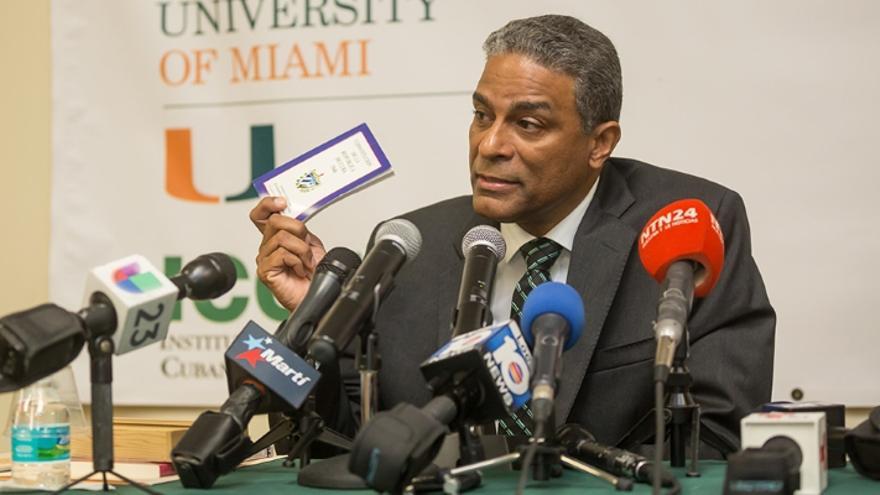
Oscar Elías Biscet, Cuban opponent. (University of Miami)

14ymedio bigger14ymedio/EFE, Havana, January 9, 2024 — Cuban opponent Oscar Elías Biscet, founder of the Emilia Project that seeks to restore democracy in Cuba, was arrested on Monday near his home in the Lawton neighborhood, in Havana, according to his wife, Elsa Morejón.

“At 8:00 am Oscar planned to go to a meeting with a group of activists in El Vedado to take stock of the project’s work for the tenth anniversary of its founding. When he left the house, Patrol Car 091 was already waiting for him with two uniformed and two civilian agents,” Morejón told 14ymedio.

According to Biscet’s wife, the agents “waited for him to walk down Milagros Street and get away from the house.” “They do that because they know that I record them,” she explains. The activist was finally arrested two blocks away, on the corner of Milagros and 8th, in the municipality of Diez de Octubre. “The neighbors warned me of the arrest, and I saw the police walking down the street with him,” she adds. continue reading

The activist was finally arrested two blocks away, on the corner of Milagros and 8th, in the municipality of Diez de Octubre

Asked if she knows the whereabouts of Biscet, Morejón says that she doesn’t. “The police’s methodology has always been to come to the house, and if Oscar is there they arrest him, because they know he’s going to leave. I looked out on the balcony and told him that the patrol was there, but he told me that he had to leave, that he was not going to be a prisoner in his own home and had to keep his word and attend the meeting,” she said.

Morejón tried to communicate with the rest of the activists to find out if they had also been arrested, but at the moment she cannot access the Internet. “I can’t post on social networks, I only have WhatsApp occasionally.”

She did, however, manage to contact the wife of José Elías González Agüero, in whose house the meeting would take place. “He told me that the ground floor of his building was surrounded by police officers who did not let anyone in or leave. Everyone who approaches the house is arrested,” says Morejón. “I don’t know if other activists have been arrested or not.”

Lawyer Marcell Felipe, leader of Inspire America – an organization dedicated to “inspiring freedom” in Cuba and the American continent – told the EFE agency that all the phones of the leaders of the Emilia Project are cut off, and they have not been able to find out anything about Biscet’s fate. The opponent, who is a doctor by profession, has been imprisoned on numerous occasions and was one of the 75 sentenced to more than 20 years in prison in the Black Spring of 2003.

Biscet was released in March 2011 in a process of release of political prisoners carried out by the Cuban regime

Biscet was released in March 2011 in a process of release of political prisoners carried out by the Cuban regime with the mediation of the Catholic Church and the Spanish Government.

The Emilia Project, according to its website, is named after one of the Cuban heroines, Emilia Teurbe Tolón, the first Cuban woman banished for political reasons. She embroidered the first Cuban flag with the star and the blue and white stripes that became the national flag.

“Those of us who subscribe to this document, inspired by its patriotic example, propose to carry out this project whose essential objectives are fundamental human rights, democracy and the freedom of the Cuban people,” says the website.

In 2017 Oscar Elías Biscet was awarded by the Hispanic Leadership Institute of the US Congress, and in 2007 he received the Medal of Freedom from President George W. Bush.

Translated by Regina Anavy

____________

COLLABORATE WITH OUR WORKThe 14ymedio team is committed to practicing serious journalism that reflects Cuba’s reality in all its depth. Thank you for joining us on this long journey. We invite you to continue supporting us by becoming a member of 14ymedio now. Together we can continue transforming journalism in Cuba.
The Government Is Also Raising the Prices of Electricity and Fuel To Penalize Cubans ‘Who Use the Most’

In practice, the price of fuel will go up in in March and for electricity at the beginning of April. (14ymedio)

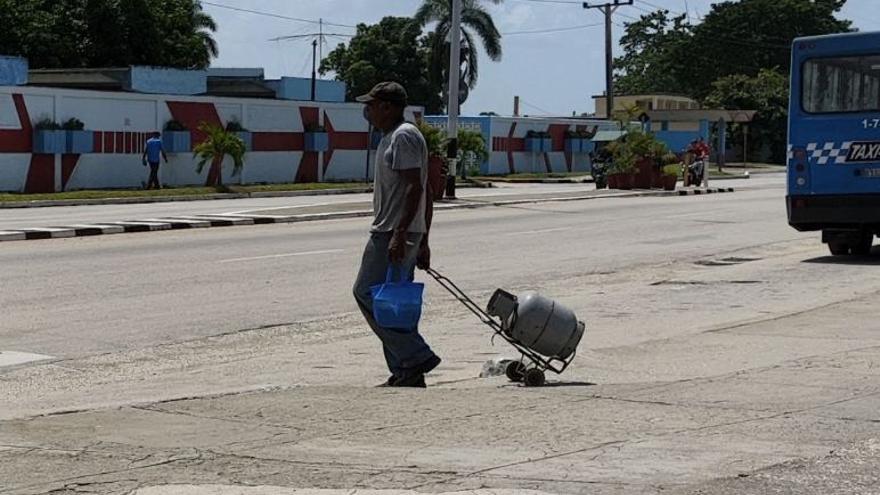
14ymedio bigger14ymedio, Havana, 9 January 2024 — According to the Government, electricity and fuel will cost Cubans 25% more beginning March 1, when a new tariff, designed to “correct distortions” in the state budget, becomes effective. The price increase will affect those who use more than 500 kilowatts per hour (kWh) of electricity and all those who receive propane tanks, who will pay 225 pesos, 45 more than the current 180.

During their appearance this Monday on the television program Mesa Redonda, the ministers of Energy and Mines, Vicente de la O Levy, and of Finance and Prices, Vladimir Regueiro Ale, alleged that their goal is not to ruin the pockets of Cubans but to find a “fair” system to penalize “those who use the most” and, by the way, to revive the state coffers.

In practice, fuel will rise in price in March, but the increased charge for electricity will not be until the beginning of April.

In the case of propane, the ministers admitted that the argument of “saving” does not explain the increase in the price to the 1,700,000 customers who receive it today, but that in any case the additional cost will contribute to “eliminating the subsidy on imports” and transfer it to points of sale throughout the country. continue reading

In the case of propane, the ministers admitted that the argument of “savings” does not explain the increase in price to the 1,700,000 customers who receive it today

De la O Levy insisted that for several years they have been studying how to make the “high consumers” pay more, which in 2023 were 107,570 customers of the 4,078,909 that make up the residential sector. The senior official tried to reassure viewers with a fact: only 2.7% of the members of this sector consume more than 500 kWh on a regular basis, although in July and August the figure “increases to 217,000 customers,” 5.4% of consumers.

The non-residential sector – 39% of the country’s consumers, according to the minister – is easier to control. “We have put up with it,” he celebrated, alluding to the constant inspections and energy restrictions that his office has directed throughout the country.

“It’s not to harm anyone,” he said. “We know that we have reserves to achieve savings in our homes, which without decreasing the standard of living can be adjusted to 500 kWh or be very close to that. There are customers who exceed 500 kWh in July and August but then not in the rest of the year.”

The minister explained that customers who use 600 kWh with the current rate pay about 2,451 pesos, but beginning in March they will have to pay 2,681. The increase is only 230 pesos, he clarified, because the additional cost only applies to the kWh that exceed 500, subject to the penalty.

He continued: “If I use 700 kWh today, I would pay 3,396 pesos; with the new rate it would be 3,862 pesos, an increase of 13%. For a consumer of 1,800 kWh, the cost grows by 22%. He currently pays 14,901, while in the future he would pay 18,355 pesos,” and so on.

During the program, both ministers offered data on the circumstances that, in their opinion, make the increase in prices indispensable

The increase in the price of gas will “unload” the state Union Cuba-Oil (Cupet) of about 280 million pesos that it had to request from the State for transport and other expenses, claimed Regueiro Ale. “It is not precisely the savings that is encouraged, but we do manage to recover the reduction of subsidies in that value chain, because the company (Cupet) can recognize the costs and expenses it has been incurring,” he said.

A network of social workers has identified “vulnerable people and nuclei,” who will not be able to “face” the new prices and for which measures are “being studied,” such as granting “subsidies to people who really require differentiated attention according to their capacity, their purchasing power.”

During the program, both ministers offered data on the circumstances that, in their opinion, make the increase in prices indispensable. First of all is the fact that 2023 was a record year of electricity consumption, which reached 64.5 gigawatts per hour in July.

In addition, in 2023, 2,300,000 household appliances entered Cuba, fewer than in 2022 – 3,430,000 devices – but much more than in 2021, when 2,240,000 arrived. The Island has half a million electric motorcycles, “which are mostly charged from the electrical system and not from renewable energy sources because we don’t yet have those possibilities,” they reported.

De la O Levy also said that inspectors are detecting more and more electricity fraud, and the deficit of meters in the country facilitates the increase in illegalities

De la O Levy also said that inspectors are detecting more and more electrical fraud, and the deficit of meters that the country is going through facilitates the increase in illegalities, he lamented. “The other thing is the fraud from manipulating the meter, diverting the circuit from the house or getting the direct connection outside the meter. We are having a strong battle to end that. We are going through 226,000 frauds detected in the last period, and we know that fraud is being committed because we are reading it in the difference between the energy that is generated and the energy that is charged. There are commercial losses, but the difference is that these being stolen from us. What they steal is almost what the Guiteras plant generates,” he explained.

The increase in electricity and gas prices follows that of fuel – which the ministers also reported on Monday – the cost of which will be quintupled beginning February 1.

Translated by Regina Anavy

____________

COLLABORATE WITH OUR WORKThe 14ymedio team is committed to practicing serious journalism that reflects Cuba’s reality in all its depth. Thank you for joining us on this long journey. We invite you to continue supporting us by becoming a member of 14ymedio now. Together we can continue transforming journalism in Cuba.
Avalanche of Petitions From Argentina and Cuba To Apply for Spanish Nationality

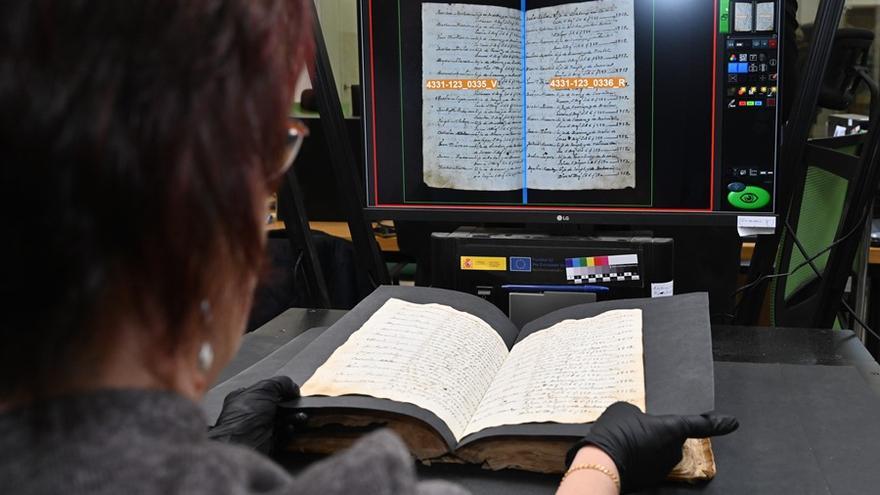
Volunteers work on the digitization of the parish records transferred to the new headquarters of the Diocesan Historical Archive of Palencia. (EFE/Almudena Álvarez)

14ymedio biggerEFE (via 14ymedio), Almudena Álvarez, Palencia (Spain), January 9, 2024 — Dozens of petitions arrive every week to the Bishopric of Palencia, from different parts of Argentina and Cuba, to request the necessary documentation that proves the Spanish ancestry of the applicants so they can initiate the necessary procedures to acquire Spanish nationality.

This is one of the numerous utilities of the Diocesan Archive of Palencia, recently digitized in a database with 1.7 million records from 27,000 sacramental books containing data from parishioners dating back to the 16th century.

Since the Law of Democratic Memory was approved, which allows the great-grandchildren of Spaniards of origin to apply for nationality without having to wait for the parent, grandson or granddaughter of Spanish origin to obtain it in advance, the ecclesiastical records have received an avalanche of petitions.

“During the days of Christmas that we have been closed, more than fifty have accumulated,” says its director, Dionisio Antolín

Dozens of petitions arrive at the Diocesan Archive of Palencia every week. “During the days of Christmas that we have been closed, more than fifty have accumulated,” says its director, Dionisio Antolín, who emphasizes continue reading

that there are many descendants of emigrants, mainly Argentines and Cubans, who look for their roots in the ecclesiastical records to request Spanish nationality.

Through these searches, not only do they get a paper to apply for nationality, but in many cases ties are strengthened, because “the children and grandchildren of emigrants are finding relatives, cousins that in many cases they did not know they had,” he added.

Applying for Spanish nationality and tracing the family tree to find your roots going back to 1540 is possible thanks to the records of the church, which for centuries has counted every birth, marriage and death in each town in Spain.

In Palencia, 27,000 sacramental books containing data about millions of people have now been safely transferred to a new facility.

The Diocese Archive of Palencia has just moved. Until now it was located in the episcopal palace, but the risk posed by obsolete installations for the integrity of the documents that were kept there encouraged the Diocese to transfer them to another place that would ensure their conservation and consultation.

This move contained the history of the men and women who had lived in the province of Palencia since 1540, when some experienced parishes began to make the first records

This Tuesday, the apostolic bishop-administrator of Palencia, Manuel Herrero, and the director of the archive, Dionisio Antolín, inaugurated the new headquarters on San Marcos Street, in the facilities of the Major Seminary, which until recently occupied the Digital Space of the Junta de Castilla y León.

This move contained the history of the men and women who lived in the province of Palencia from 1540, when some experienced parishes began to make the first records, since these were not mandatory until 1563 with the Council of Trent.

They encompass a huge number of documents, and the data allow the tracing between the past and the present by reading the birth and baptism certificates, death certificates, marriages, confirmations and all the sacraments that the parishioners received.

These books provide a testimony of the inhabitants of the province, “to know who they married, the children they had, who were the godparents,” explained Dionisio Antolín, but also to trace the family tree of any family since 1540.

“They are sacramental books that make us aware of the lives of the men and women of the province over the centuries,” Antolín insisted, appealing to the pride of having a human heritage “that should interest us all and that must be preserved.”

“We know that they were important data to avoid blood marriages at a time when someone born in a town often lived, married and died in the same place”

“We have to know that they were important data to avoid blood marriages at a time when someone born in a town often lived, married and died in the same place. They also bring us closer to epidemics that decimated the population in many towns.”

As the director of the archive explains, a total of 12,000 folders have been moved from the old facilities located in the Bishopric.

Each folder can contain one to five books, although some are so large that they do not fit into a single one. “We can say that there will be around 27,000 sacramental books of baptism, marriage and death mainly,” he said.

But in addition to these sacramental books, the ecclesiastical records preserve other parish books such as those about accounts, the factories, the brotherhoods, the minutes and the papal bulls that construct the history of each town and city.

Because, as Antolín points out, the history of a territory is not only made of great feats but is also supported by the lives of the men and women who inhabited them, and the ecclesiastical records and parish books are full of data that contribute to reconstructing that past.

So far, about 5,000 books have been digitized, and 1,700,000 records have been incorporated

Now, the entire file is being digitized and indexed, a huge task to which 92 volunteers dedicate hours and hours. Their quiet work has allowed, for example, Dionisio Antolín himself to be able to dive into the history of his last name and go back to 1570 in the history of his family in his hometown, Villanueva del Río.

And it will allow anyone interested to do the same by searching a database that grows every day. At the moment, about 5,000 books have been digitized, and 1,700,000 records have been incorporated.

“Each record includes the name and surnames of a person, the names of their parents, their date of birth, baptism, their godparents, maternal and paternal grandparents….” And between 1,700 and 2,000 records are being incorporated every day, he added.

In addition, before long, this database will be accessible through a website without having to search the computers located in the main room of the new archive.

Translated by Regina Anavy

____________

COLLABORATE WITH OUR WORKThe 14ymedio team is committed to practicing serious journalism that reflects Cuba’s reality in all its depth. Thank you for joining us on this long journey. We invite you to continue supporting us by becoming a member of 14ymedio now. Together we can continue transforming journalism in Cuba.
Lies Are the Foundation of Castro Totalitarianism

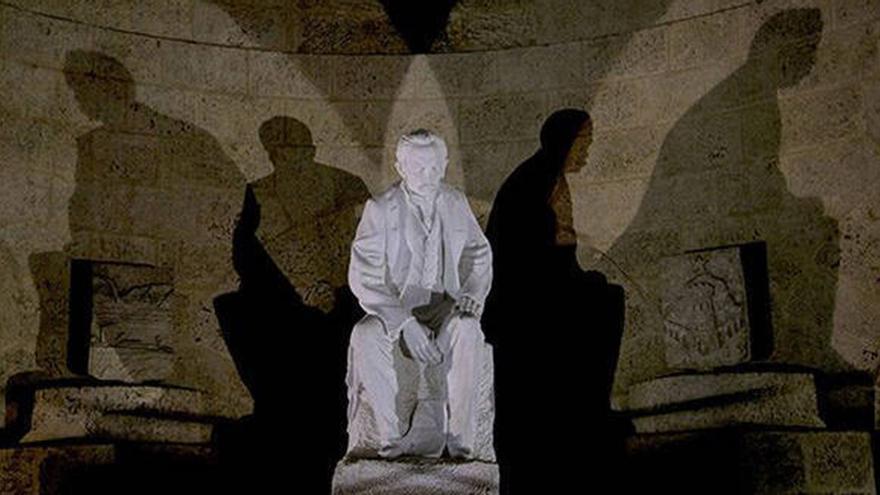
The José Martí monument in the Santa Ifigenia Cemetery. The first big lie was to link Jose Martí with the insurrectional process and the subsequent dictatorship that was imposed. (Cubadebate)

14ymedio bigger14ymedio, Pedro Corzo, Miami, January 7, 2024 — The totalitarian Castro regime was constituted and established based on a network of lies and myths that have been reconstructed for generations, always maintaining a false epic and honor that do not correspond to the historical truth, creating a narrative of heroic victimization that confused and made it possible to manipulate large sectors of the population for decades.

The first big lie was to link Jose Martí with the insurrectional process and the subsequent dictatorship that was imposed. Martí was a passionately free man, and freedom was the foundation of his luminous thought.

It is completely false to see the heroism of the brothers Fidel and Raúl Castro in the attack on the Moncada barracks. The missing dictator-in-chief never entered the military bastion, and his heir attacked the Palace of Justice. Both were later arrested without presenting resistance, although they were armed. continue reading

It is completely false to see the heroism of the brothers Fidel and Raúl Castro in the attack on the Moncada barracks. The missing dictator-in-chief never entered the military bastion, and his heir attacked the Palace of Justice

It is illusory to describe the arrival of the Granma yacht on the Cuban coast as a “landing”. In reality, it was a shipwreck, another great mistake of Fidel Castro, which showed, like the failed attack on the Moncada barracks, the strategic incapacity of someone who resorted to extreme violence with the sole purpose of projecting himself as a national figure.

The terrible preparation of the two operations testifies, without a doubt, that Fidel only sought popularity by killing those who disagreed with him. He tried, by their deaths, to procure followers.

The dictatorship has tried to match the heroic feat of the Mambisa invasion led by General Máximo Gómez and Lieutenant General Antonio Maceo with the incursion commanded by the serial killers Ernesto Che Guevara and Camilo Cienfuegos, two absolutely different events in purposes and results.

The modest guerrilla activities commanded by the sadly famous brothers in the mountains of the province of Oriente have been magnified.

There is no doubt that in the eastern mountains they fought against the Army of the Republic, but not to the extent that official propaganda has disseminated, with the sole objective of giving undeserved laurels to the evil brothers and their unconditional supporters: Guevara, Cienfuegos and the unscrupulous hitman Ramiro Valdés.

Another farce is the vaunted attack on the armored train, a term that intimidates but that in reality was not as protected as the propaganda says. In addition, the personnel it was transporting were not combat personnel but engineers and other soldiers who had the mission of repairing the tracks, without ignoring that the train, according to numerous complaints, was economically negotiated with the military chief in charge of it.

The control of information, in addition to the moral shooting of organizations and people, prevented the population from accessing investigations that allowed them to balance the knowledge of the past.

The control of information, in addition to the moral shooting of organizations and people, prevented the population from accessing investigations that would allow it to balance the knowledge of the past

A notable example is that the Castro dictatorship has always promoted the July 26 Movement as if it had been the only organization that dignifiedly fought the military regime of Fulgencio Batista, when in reality there were several that fought against the general, such as the Segundo Frente Nacional del Escambray, the Organización Auténtica and the Directorio Revolucionario, among others.

Another great lie on which totalitarianism was based was that 20,000 people lost their lives during the insurrectionary process. This false information came from Bohemia magazine – at the time under the direction of its founder, Miguel Ángel Quevedo – and from one of the greatest pimps disguised as a journalist – totalitarianism has had many – Enrique de la Osa.

The true figure was made public by Colonel and historian Ramon Barquín, head of the Conspiracy of the Cigars, a military faction that opposed General Batista in 1956, who was imprisoned for attempting a military coup against the regime of March 10.

According to Colonel Barquín, author of several books on the history of Cuba, including The Day Fidel Castro Seized Cuba, the death toll of both forces amounts to 2,495, a remarkable number of lives lost, but very far from the official figure of the regime.

In these 65 years the lies have been many, the destruction of Cuba, almost absolute.

Translated by Regina Anavy

____________

COLLABORATE WITH OUR WORKThe 14ymedio team is committed to practicing serious journalism that reflects Cuba’s reality in all its depth. Thank you for joining us on this long journey. We invite you to continue supporting us by becoming a member of 14ymedio now. Together we can continue transforming journalism in Cuba.
‘The Cuban State No Longer Has Money To Pay Waste Collectors, so I Sell to the Private Companies’

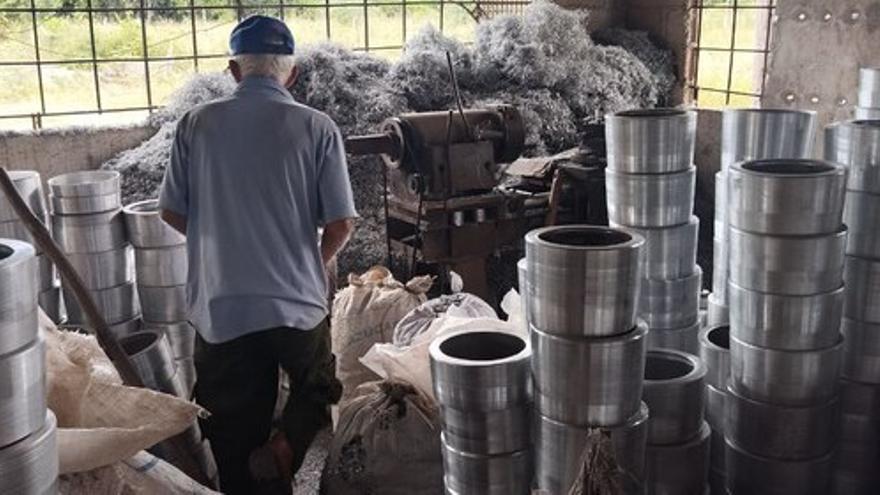
Cooking pots like pressure cookers are made from the processing of cans. (14ymedio)

14ymedio bigger14ymedio, Miguel García, Holguín, 7 January 2023 — Search, collect and crush. Ramón’s day, at age 57, contains those three actions. He makes his rounds through the city center of Holguín, where cans of soft drinks or beer can be more common in the trash. Then, after several days of accumulating, he sells his loot to an intermediary who will take it to a workshop where it is turned into slotted spoons, frying pans, pots and buckets.

“It’s been more than three years since the Raw Materials Recovery Company here had almost no money to pay the collectors, so now I only sell to private companies,” Ramón tells 14ymedio. “Many people have left this job because they earn less and less, and it depends on many things, so everything is very insecure.”

Ramón needs a lot of tourists to arrive in Holguín because they empty thousands of cans a week, and he can “fish” them out from the city’s broken garbage containers. “Now fewer foreigners come, and the soft drinks that are sold almost all come in small bottles, which is not what I pick up. My thing is aluminum.”

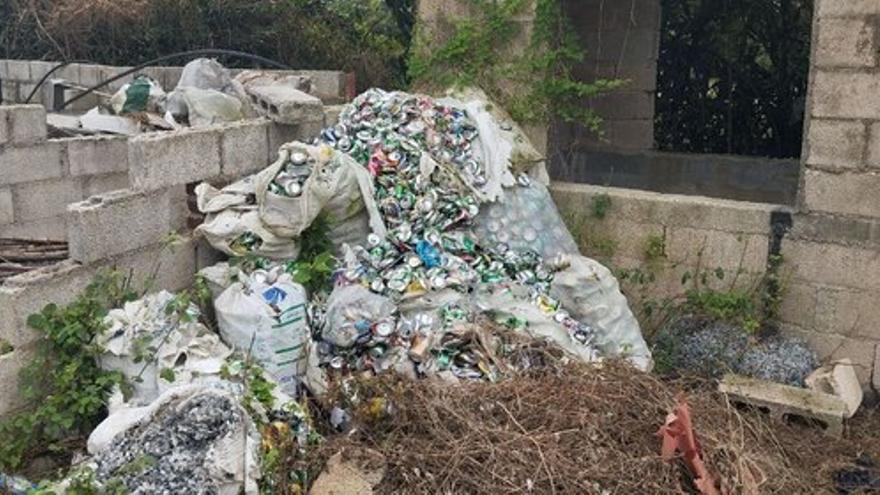
On the outskirts of the rustic workshop, the cans that have previously been collected and crushed accumulate. (14ymedio)

Born in 1968, the same year of the Revolutionary Offensive that erased the private sector in Cuba with a stroke of a pen, this holguinero once dreamed of being an engineer, but a traffic accident caused him a head injury that left him with the inability to remember numbers, concentrate and even find his way home in the busy streets of the city. continue reading

“I made a living with whatever appeared, but since 2014 I have been doing this,” he explains. Although the Raw Materials Recovery Company has existed since 1961 on the Island, for decades its operation was nourished by the waste collected by the Committees for the Defense of the Revolution and the State centers in their days of voluntary work, or with the by-products of the State industry.

After the opening to tourism during the crisis of the 90s, not only did travelers arrive but also their waste. Canned beer was no longer a novelty to be sold in hotels, shops and cafes. National soft drinks were no longer distributed in the traditional glass bottles but in the lightest and easiest to handle aluminum containers. It was at that moment that the “can crushers” emerged everywhere.

“I made my neighbors crazy,” acknowledges Luisa, another 81-year-old from Holguin, who was one of the first in the city to take up collecting raw materials on her own. “I would come home with a sack or two and spend the whole afternoon crushing cans, I didn’t let any can get away,” she says. Now she has left the business “because it got very bad.”

For the collectors of 30 years ago, the problems were different. “We didn’t have a license; we had to hide every time a policeman passed by, and people treated us badly because they thought we were all crazy,” Luisa recalls. “Now you can ask for a permit and sell the cans legally in one of the State raw material houses, but there’s hardly any business.”

By 2013 the country already had more than 5,700 people who were registered as self-employed in that occupation

It was the economic easing promoted by Raúl Castro from 2008 that boosted the activity, and by 2013 the country already had more than 5,700 people who were registered as self-employed in that occupation, according to Jorge Tamayo, then director of the state Raw Materials Recovery Company.

“With four or five bags of cans that I sold a month, I earned more than my doctor brother,” Luisa recalls. “We made the slab for this house out of crushed cans, because before it was made of tiles, and it was always wet. I had agreements with the private tourist homes, who gave them to me before throwing them away, and I also made some contacts in hotels to pick them up twice a week.”

Over the years, there were delays in payments. “You took the raw material to the State premises, and they told you that you had to wait for the money.” The State began to decline in the organization of its points of purchase, and the private sector occupied the place left by the increasingly ailing State companies with insufficient resources.

The clandestine factories now absorb most of the cans recovered from the garbage. Many of the owners of these small industries do not even have a license to operate, or, if they have a permit, it only covers a small number of employees under their direction.

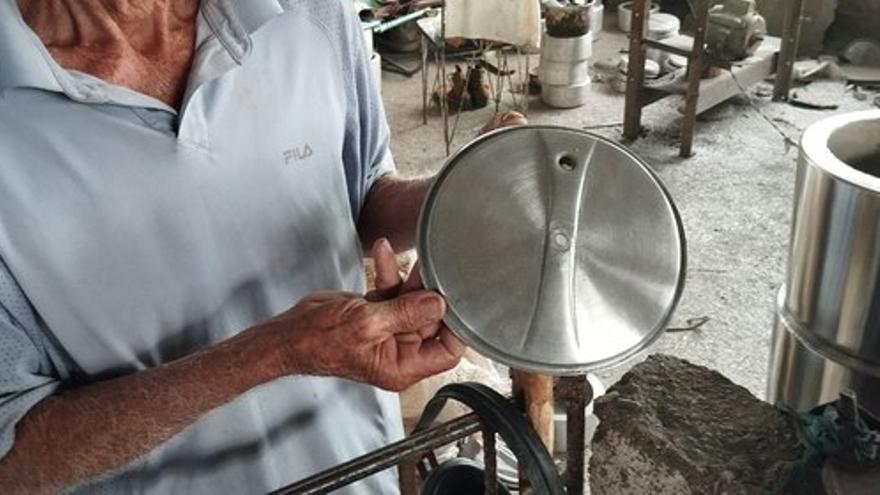
Image of a finished lid for a pressure cooker. (14ymedio)

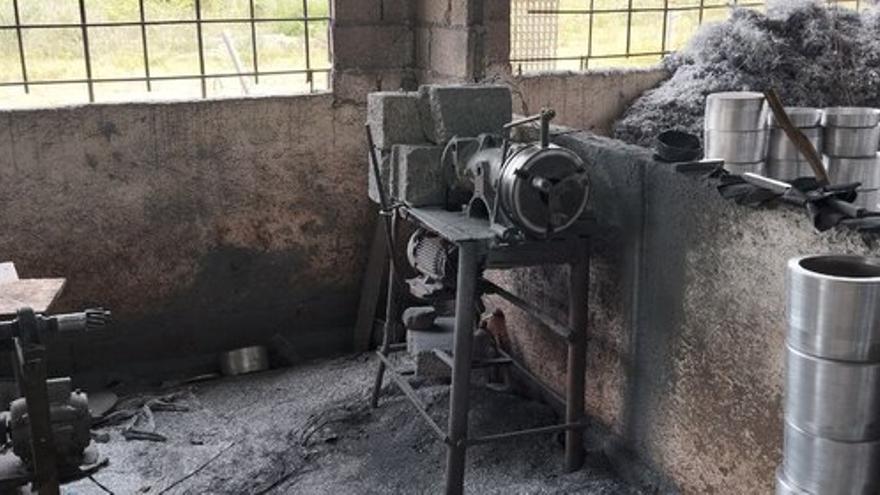
In the People’s Council of San Rafael, Víctor, (his name was changed for this report), says that in his private workshop he has “six permanent workers, although, if the volume of work grows,” he hires new employees. “One manages the oven, three are turners and the other two finish the pieces, throwing away the garbage generated by the whole process and collecting the cans upon arrival,” he explains to this newspaper.

“The State pays 30 pesos per kilogram of aluminum, and you have to empty the cans of any liquid and put them in a well-tied bag. They can be whole or broken, but now they’re buying only two or three times a month because they don’t have a budget,” Víctor explains. “We can pay a little more, at 100 pesos, depending on the need we have, with no delays to collect.”

Víctor clarifies that his workshop buys from intermediaries, who in turn pay between 50 and 60 pesos per kilogram of cans to the collectors who look for the raw material on the streets. “Everyone wins because a relationship is established, and the intermediary is the one who responds to me, the one who shows his face and has to guarantee that the merchandise he sells me is good.”

The arrival of the pandemic, the closure of the borders to tourism and the drop in the number of visitors to the Island have also influenced the number of aluminum cans that are discarded every day. “It’s not like before. There are fewer, and many collectors have left because they can no longer earn the same, plus the prices of food and everything else have risen a lot.”

The arrival of the pandemic, the closure of the borders to tourism and the fall in the number of visitors to the Island have also influenced the number of aluminum cans that are discarded every day

The fall into disgrace of State premises for buying raw materials is evident. On a visit to the 12th Street of Reparto Nuevo Llano, this newspaper found that in mid-December there was only one employee, who warned collectors who arrived that they were not buying due to “lack of money.” In another, located on 28th Street of the Reparto Pueblo Nuevo, the scene was repeated: two workers with their arms crossed due to the absence of a budget.

In Victor’s workshop, however, the coming and going doesn’t stop. “We have a lot of demand for pots, pans, kitchen utensils, buckets, pitchers and many other products we make,” the entrepreneur acknowledges. “Here the oven stays on for a good part of the day, and when a can arrives, it comes out on the other side in the form of a lemon juicer or a ladle.”

“Even people who can buy an electric pressure cooker in MLC [freely convertible currency] also want to have their aluminum pitcher to heat the coffee,” he says. “They are durable things that can be used for many years, and if they are broken it is not a tragedy for the family; they buy another one and that’s that.”

With instruments, also handmade, they produce kitchen utensils out of aluminum. (14ymedio)

The ruin of the State houses for buying raw materials is the result of the national crisis in which Victor and his employees get profits. “With the opening of the MSMEs [small businesses], a few more cans of beer and soft drinks arrived. That makes us happy because the customers buy them; they buy a lot.”

Thrown on a street or inside a garbage container, Ramón’s agile hands will find that empty can left by a tourist or a national. A large, dark stone, taken from a nearby river, helps him reduce it to a thin sheet. Then it goes into the sack, later into the hands of the intermediary and then into the oven.

In her kitchen, the experienced Luisa knows that the slotted spoon she uses to stir the rice once contained beer or Coca-Cola. The path of recycled aluminum that people like her helped to start remains open.

Translated by Regina Anavy 

____________

COLLABORATE WITH OUR WORKThe 14ymedio team is committed to practicing serious journalism that reflects Cuba’s reality in all its depth. Thank you for joining us on this long journey. We invite you to continue supporting us by becoming a member of 14ymedio now. Together we can continue transforming journalism in Cuba.
‘Writers and Artists Under Communism’, a Chronicle About the Cuban Government’s Hatred of Culture

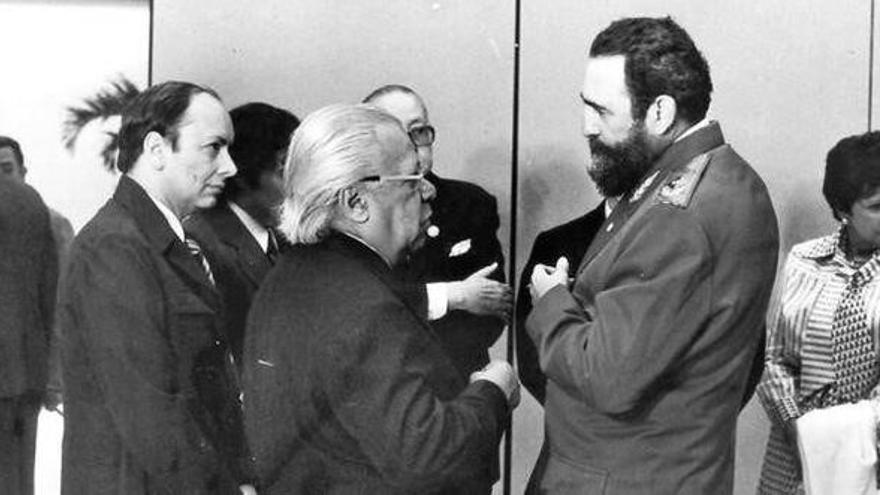
Caption – Alfredo Guevara, Nicolás Guillén and Alejo Carpentier talk to Fidel Castro at a reception during the second UNEAC  Congress in 1977. (Mario Ferrer/Cubadebate)

14ymedio bigger14ymedio, Xavier Carbonell, Salamanca, January 6, 2024 — “Down with the apolitical writers! Down with the supermen of literature!” “Their original sin: they are not authentically revolutionary.” “Outside the Revolution, no rights.”

The law of eternal return presides over the tension between the intellectuals and communism. Guevara repeats Castro, and Castro repeats Stalin or Mao. Hundreds of pages can be filled about espionage, shootings, accusations and complicity with “red-flag fascism”. This is demonstrated by the formidable Writers and Artists under Communism (Arzalia), by the Spanish journalist Manuel Florentín.

The vortex has its origin in Lenin, the historian Antonio Elorza explains in his prologue to the volume. In 1905, long before his troops assaulted the Winter Palace, the Bolshevik leader defined what he would do with writers and artists if the revolution materialized. In one of his libels, Lenin openly affirms that the problematic Russian intelligentsia should behave like another “wheel and screw” of the great social watchmaking. For the misfits, exile or bullets.

Since then, the communist regimes of any continent have followed the advice of Moscow. The intellectual must be an “engineer of the soul,” a servant of the State, which will pamper him with perks and recognitions, or he must not exist at all. continue reading

As a reader and imitator of Lenin, Fidel Castro dodged the “problem” of the intellectuals until 1961. By that time, the writers close to the “maximum leader” had already prepared the ground. The well-known “guilt” for not having fought in the Sierra Maestra – of which Guevara knew well how to take advantage – impregnated numerous poems and slogans: “We, the survivors, to whom do we owe survival?” the cultural commissioner Roberto Fernández Retamar wrote early in 1959.

European revolutions failed or were corrupted; the Cuban one was the hope of Hans Magnus Enzensberger and Saramago, of Feltrinelli, Sontag and Graham Greene

The “great illusion” of the intellectuals was followed by the “great disenchantment,” says Florentín in the chapter of his book dedicated to Cuba. European revolutions failed or were corrupted; the Cuban one was the hope of Hans Magnus Enzensberger and Saramago, of Feltrinelli, Sontag and Graham Greene. Others, such as Vargas Llosa or Gabriel García Márquez, soon traveled to Havana, invited by the Casa de las Américas.

The disappointment could be seen coming. Politically and militarily, dissident heads had fallen since 1959 itself, with Huber Matos and other senior officials. Castro’s chess was aggressive and incessant, and when it was the writers’ turn, he already had enough power to speak clearly.

The son of communists – and “vaccinated,” he clarified, against the viruses of Moscow – Guillermo Cabrera Infante was sitting at the same table as Castro during his famous Words to the Intellectuals. With a privileged view of the caudillo’s revolver, he soon understood what for several decades the lobotomized intellectuals tried to hide: culture was – and still is – a slave of ideology.

As a minor diplomat in Brussels, Cabrera Infante’s break with the Regime was the loudest and most militant until the arrival of Reinaldo Arenas. For Cabrera Infante, Cuba was “far from God and close to Mefistófeles”; for Arenas, who had a rougher time and life, his was a country of “scoundrels, criminals, demagogues and cowards.”

Cabrera Infante’s break with the Regime was the loudest and most militant until the arrival of Reinaldo Arenas

Florentín dedicates a section to the closure, in 1965, of Ediciones El Puente. Friends of the American poet Allen Ginsberg – who was expelled from Cuba for denouncing the persecution of homosexuals – the young, avant-garde poets were sent to the camps called Military Units to Support Production (UMAP), and, over time, they marched into exile. The cigar wrappers on which Ernesto Díaz Rodríguez wrote his poems from prison are the symbol of a generation.

But nothing better illustrates the tension between Castro and the Cuban intelligentsia than the Padilla case, in 1971, which has been the subject of debate again after the eponymous documentary by Pavel Giroud, with unpublished recordings of that day. Everything that the ideological purge had as a ritual is evident in those images.

Heberto Padilla’s punishment was the initial shot in an “uncomfortable” hunt. Paradiso, from Lezama, was removed from bookstores; Virgilio Piñera and Antón Arrufat saw their careers as playwrights cut off; hundreds of manuscripts were discarded as unpublishable; and Norberto Fuentes – fallen out of favor and rehabilitated several times – had to resort to powerful friends like Gabriel García Márquez to earn Castro’s favor once again, lost when he published Condenados de Condado.

The survival of the Cuban regime is an anomaly. So is its cultural apparatus, composed of bureaucrats and informants whose careers depend on their almost abject loyalty to power. Florentín closes his Cuban chapter with a biographical sketch of the poet Raúl Rivero, forced into exile, a long tradition that began in the 19th century with José María Heredia and continues today with so many writers and artists from the Island.

However, the worst thing – says Florentín – is the naivety, always complicit, of those who defend communist regimes as dreams of freedom. They are not, and Rivero, who suffered several boycotts from young pro-Castro attendees during his conferences in Spain, made it clear: “Their dream is the Cubans’ nightmare.”

Translated by Regina Anavy 

____________

COLLABORATE WITH OUR WORKThe 14ymedio team is committed to practicing serious journalism that reflects Cuba’s reality in all its depth. Thank you for joining us on this long journey. We invite you to continue supporting us by becoming a member of 14ymedio now. Together we can continue transforming journalism in Cuba.
Three Kings Day in Cuba Accompanied by High Inflation

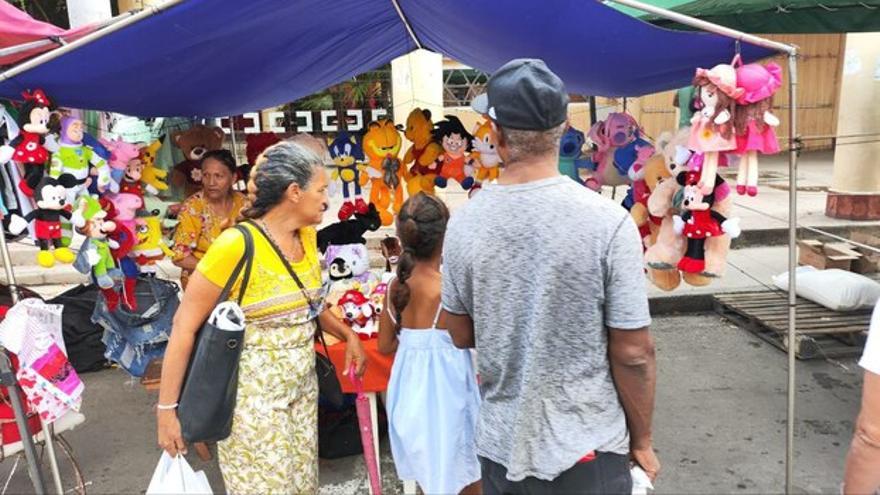
Stuffed dolls at an open-air market in Havana go for 6,000 pesos apiece.

14ymedio bigger14ymedio, Juan Diego Rodriguez, Havana, January 6, 2024 — “I didn’t suddenly wake up this morning flush with cash so my children are only getting cookies and soft drinks this year.” This is how one woman summed up her financial situation on Saturday. She and a friend were at the open-air market on Central Havana’s Galiano Street, looking for something to give her children on Three Kings Day. Surrounded by dolls, tiny fire trucks and stuffed animals with Minnie Mouse faces, the two friends perused the items for sale.

“Everywhere you look it’s 3,000, 4,000 or 7,000,” lamented the woman after inquiring about the price of several products. “That Barbie over there costs 6,000 pesos. That’s two months’ pay for me,” she added after asking about a box that also included a couple of changes of clothes and shoes for the lanky plastic body crowned with platinum blonde hair. “For that amount of money she ought to be able talk.”

The vendors brush off the criticisms and refuse to lower their prices. “Expensive?Everything is expensive here in Cuba. Just coming here cost me money in transportation and investment costs,” replied one young man to a father who criticized him for charging 3,000 pesos for a stuffed Pokemon doll. Not far away a brightly colored plastic telephone, with keys that light up and beep when they are pressed, costs 5,000 pesos. “I came here without my daughter because she would be upset if she saw this.”

Although Cuban officials downplayed Three Kings Day celebrations for decades — the most ideological hardliners describe them as evidence of the “capitalist fever of consumerism” — many families have tried to revive the tradition in recent years. Though state-owned stores currently sell few toys, and certainly not expensive ones geared towards this holiday, sales of children’s items have been growing on the informal market and at small, privately owned businesses more recently.

While some parents buy presents weeks in advance, others wait until January 6, hoping to find something at a close-out sale or because they had not been able save up enough money until then to buy a baseball and bat, a water pistol or a small kitchen with cups and pots. But the rise in the cost of living is also having an impact on children’s entertainment. This year, the Three Magi rode into town atop runaway inflation faster than any camel, which makes any gift that a child ultimately receives smaller and more ephemeral.

____________

COLLABORATE WITH OUR WORKThe 14ymedio team is committed to practicing serious journalism that reflects Cuba’s reality in all its depth. Thank you for joining us on this long journey. We invite you to continue supporting us by becoming a member of 14ymedio now. Together we can continue transforming journalism in Cuba.
From Christmas Dinner to Epiphany Gifts, the Festivities in Cuba Are Paid-for by Emigrants

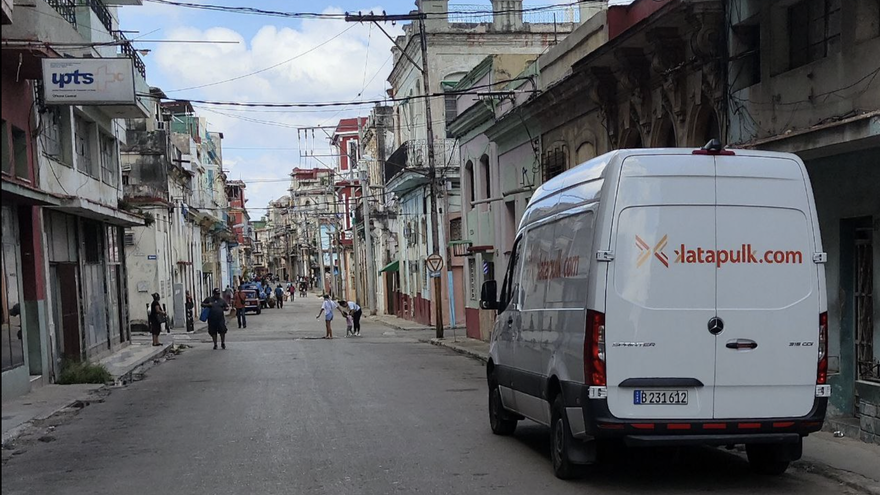
Many emigrants buy food through e-stores such as Katapulk, Supermarket 23 or Cubamax. (14ymedio)

14ymedio bigger14ymedio, Havana, 30 December 2023 — Two bottles of oil, Gouda cheese, 10 pounds of white sugar and a pork leg top the list of food Yoel bought for his family in Cuba this New Year’s Eve from Miami. The Cuban émigré laments, “it’s the same story every December, since 2015”.  Without their sacrifice, however, their relatives’ Christmas celebrations in Havana “would be sadder than they already are”.

“This list is just the one that’s meant for my mom. I have to add what I send to my children,” he tells 14ymedio. According to his estimates, the purchases he made through the Katapulk online store amount to almost $400. “I also sent a dozen bottles of beer and a cake, because, if not, it doesn’t feel like a celebration and you always want them to enjoy it”, he says.

“Every year when December approaches I start putting together money to buy food for Cuba. This year, however, the situation was worse, because everything is more expensive and there is nothing there. Before, at least one would send money, and since there was not much inflation or shortages, the family itself could get the ingredients for Christmas Eve or New Year’s Eve dinner, plus something that one would buy in virtual stores”, Yoel recalls.

Every end of year’s he tries to send food to his family in Villa Clara so they can have a “decent” holiday

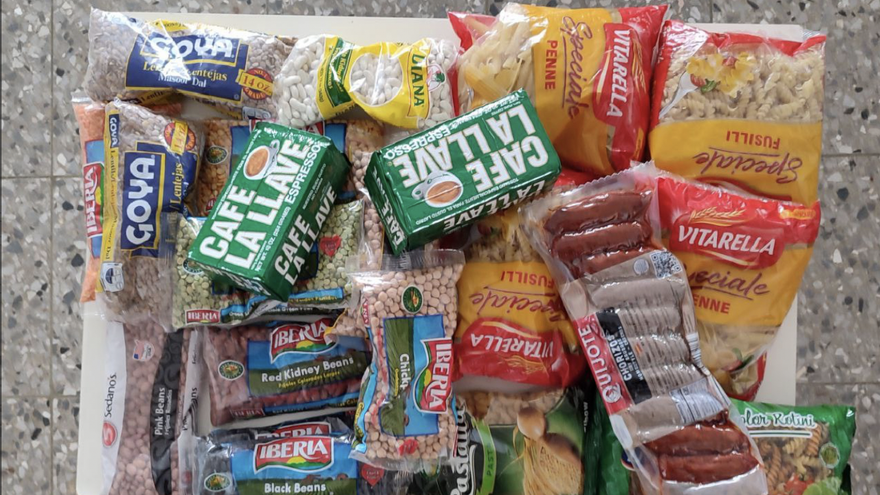
“My brother made his purchase through Cubamax, which has a sales method that allows people who are getting the package to choose the food they want. Coffee, chorizo, pasta, and all kinds of legumes – lentils, red beans, white beans and peas – was what they asked for. It amounted to 22 pounds of things that haven’t been seen in Cuba for a long time,” he adds. continue reading

The situation of Leticia, who has lived in Spain for five years, is similar. Every year’s end she tries to send food to her family in Villa Clara so they can experience “decent” festivities. “This year I bought two pork legs of more than 20 pounds each, for my in-laws’ house and my father’s. My brother from the United States helped me by sending a box of beer and some sweets. In total, everything worked out for us at about 200 euros,” she tells this newspaper.

Since her arrival in the Spain, Leticia has explored different ways to send to Cuba what she buys for her family. “Finally, I send everything I can with friends, and in these cases, I buy things in Miami through my brother, because everything is more expensive from here. I also look for individuals who sell the food within the country and deliver it at home, because in virtual stores they bleed you dry,” she says.

Leticia acknowledges that she is upset that all the money she sends or spends on food for her family “ends up in the hands of the Government”, but at the same time she considers that it would be “very painful” if her family could not enjoy that day of peace. “That is another reason to buy from individuals, but it also has its pitfalls. If you start to think about where they get the pigs they kill, the beer, the cheeses and everything else they sell, you realize that you are probably buying stolen food from some state warehouse or some hotel”, she says.

At the end of the year, she continues, everyone who sells food in Cuba “becomes rich.” “This time, the person who sold me the hams told me that I had to wait several days for mine to be distributed, because he had a long list of people in front of me. In the end, the meat arrived on December 24,” she says.

Irene, another Cuban from Holguín who came to Mexico with a scholarship to pursue a master’s degree, tells 14ymedio about the challenge of sending food to her family by the end of the year. “They don’t pay me much because of the scholarship, so I always prioritize buying items that last, like clothes, shoes or medicine. This way my parents can use all their money to buy food”, she explains.

One of the products most requested by Cubans from their emigrated relatives is coffee. (14ymedio)

At the end of the year, however, “things change, because, in Cuba, we have a tradition of getting together with relatives and celebrating by eating congrí (a traditional dish of rice and beans cooked together), roast pork meat and opening at least one bottle of cider. There is none of that in Cuba, and “you want your family to have a good time despite everything, so you end up spending an arm and a leg”, she continues.

From Guadalajara, where Irene resides, shipments cost about 350 Mexican pesos per kilogram (about $20), in addition to whatever must be paid for the product being sent. “Things are cheaper here than in Mexico City, for instance, but the expense is still enormous”, she says.

This year, Irene has noticed a peculiarity among her friends who also send food to Cuba. “Everyone is sending rice and beans. That is something that I had never seen done before, because sending a kilogram of rice costs more than 20 dollars and it’s barely enough for a meal for four people,” she reflects.

To this she must add the cost of delivering products outside the capital, which she adds another 700 Mexican pesos ($41) to the bill. “With that amount I can buy two weeks’ worth of food in Mexico”, she compares. “At least from here the shipping is direct. From other states, where there is no one traveling to Cuba, you have to pay extra to send things to a big city”, she asserts.

“We emigrants have started supporting those who stay there. If previously we bought what they didn’t have – shoes, clothes, or a recharge for the phone – now the need for everything in Cuba is covered by the Cuban community abroad,” she adds. “I will also be sending Three Kings’ Day gifts for the children this January”.

Translated by Norma Whiting

____________

COLLABORATE WITH OUR WORKThe 14ymedio team is committed to practicing serious journalism that reflects Cuba’s reality in all its depth. Thank you for joining us on this long journey. We invite you to continue supporting us by becoming a member of 14ymedio now. Together we can continue transforming journalism in Cuba.
To Reduce Its Expenses, the Cuban Government Will Lower the Highest Pensions

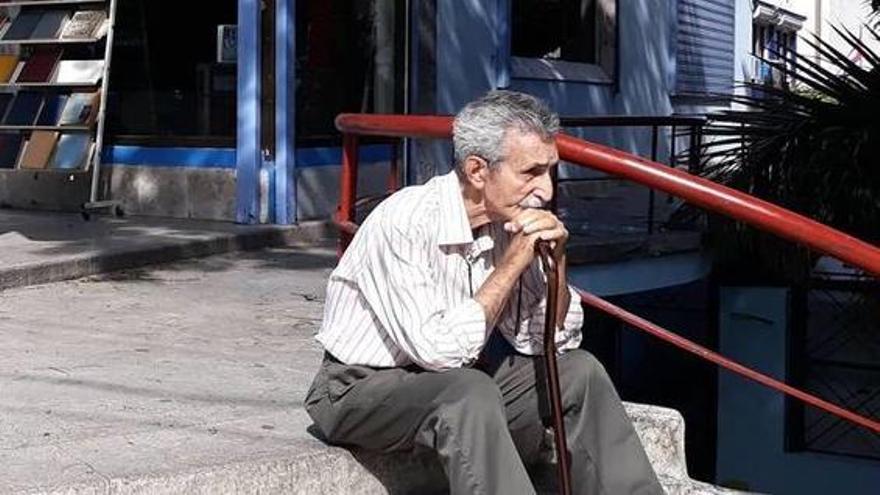
The public policies of the Cuban Government are leaving the elderly in the oldest country in Latin America unprotected. (14ymedio)

14ymedio bigger14ymedio, Havana, 7 January 2024 — The collapse of the finances of the Cuban State, the accelerated aging of the population, the increase in life expectancy and the loss of tax income due to the massive emigration of workers, have led the Council of Ministers to modify the method for calculating pensions for retirement and total disability. The regulations seek to reduce public spending with new regressive scales, which will penalize employees who receive earnings above the average.

The decree, adopted on November 29 by the Government, came into force with its publication on January 4 in the Official Gazette and will apply to those who request retirement from now on.

The basis for calculating the pension for age and total disability will be determined on the average monthly salary resulting from the highest salaries earned by the worker during five years, selected from the last fifteen calendar years prior to the application for the pension. As for the payments – and here is the novelty – which “form part of the calculation basis for long-term benefits,” they will be subject to a regressive calculation: “Up to nine thousand five hundred and ten pesos, one hundred percent is considered as the basis for calculating the pension [while] to the excess of twenty-eight thousand five hundred and thirty pesos, twenty percent is applied.” continue reading

The justification for the change highlights that when considering the payment of pensions the distribution of earnings have been generated “with high amounts”

The justification for the change highlights that by contemplating the distribution of earnings for the payment of pensions, “high amounts” of remuneration have been generated. The solution is to change the calculation base for retirements “in order to mitigate the expenses of the social security budget.”

“The aging of the Cuban population affects the increase in expenses of the budget of the social security system,” underlines the official text. The decree indicates that, on the one hand, the number of people who reach retirement age and the time during which they remain as pensioners increase and, on the other, the number of contributors decreases as the employed workforce is not replaced, that is, the working population.

The legal text indicates that the change is inserted in the new socioeconomic scenario that the Island is experiencing. The payment of pensions was modified in 2020 when the minimum pension was set at 1,520 pesos, however the gradual devaluation of the Cuban peso means that many elderly people are in a situation of poverty in the face of high prices resulting from inflation.

The previous decree eliminated the limits on the amount of monthly salaries to be distributed by each worker and added the payment of earnings to the calculation basis for social security benefits, a formula that led to higher pensions in many cases, overloading the state budget.

The previous decree eliminated the limits on the amount of monthly salaries to be distributed for each worker and added the payment of salaries to the calculation basis for social security benefits

For its part, the new Decree 99 maintains these special conditions of exceptional payments for activities such as work related to loadind and unloading ships “that are applied in port activity or other legally recognized payments that do not constitute salary and that form part of the base of calculation for long-term benefits.”

Likewise, the regulations warn that those who have started the retirement process before the publication of the current decree will comply with the provisions of the previous legislation.

In 2018, the minimum pensions rose from 200 to 242 pesos, by provisions of Raúl Castro and, just over two years later, with the Ordering Task*, the minimum amount rose to 1,520.

According to data from the National Office of Statistics and Information (Onei), at the end of 2022, 22.3% of the Cuban population was over 60 years old and life expectancy exceeds 77 years.

*Translator’s note: The “Ordering Task” was a collection of measures that include eliminating the Cuban Convertible Peso (CUC), leaving the Cuban peso as the only national currency, raising prices, raising salaries (but not as much as prices), opening stores that take payment only in hard currency which must be in the form of specially issued pre-paid debit cards, and a broad range of other measures targeted to different elements of the Cuban economy. 

____________

COLLABORATE WITH OUR WORKThe 14ymedio team is committed to practicing serious journalism that reflects Cuba’s reality in all its depth. Thank you for joining us on this long journey. We invite you to continue supporting us by becoming a member of 14ymedio now. Together we can continue transforming journalism in Cuba.
The Official Protestants Appreciate the ‘Facilities’ the Cuban Regime Gives Them in Cienfuegos

The pastors were even more specific and asked God “to support all the expectations of improvement to which Cubans aspire.” (5 de Septiembre)

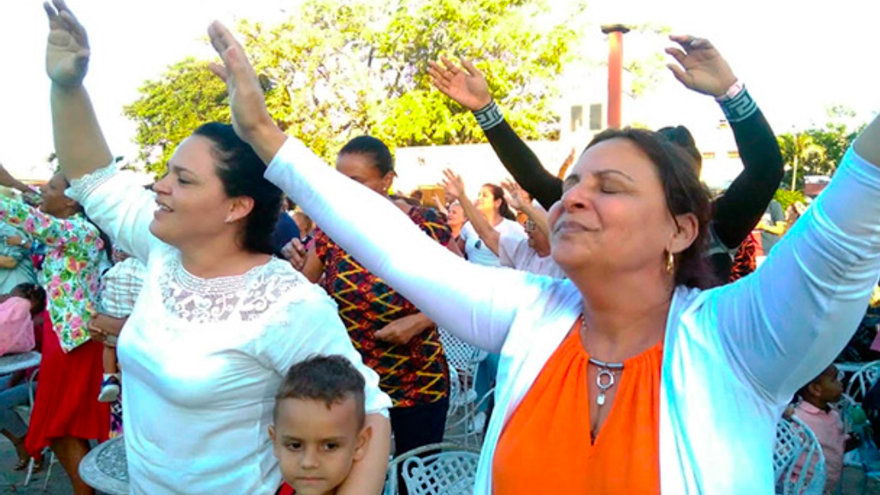
14ymedio bigger14ymedio, Havana, January 6, 2024 — An unusual article, which asks for God’s blessing “to the country and the province” during 2024, appeared this Friday in 5 de Septiembre, the Communist Party newspaper in Cienfuegos. The article describes a ceremony in which “numerous religious denominations”, such as the Church of the Foursquare Gospel and the Brethren in Christ Society, prayed for “love and unity” in the country in front of local authorities.

To leave no doubt about the “thematic axis” of the celebration, the pastors, the text adds, were even more specific and asked God “to support all the expectations of improvement to which Cubans aspire.” “Blessings to the nation and the city” followed, as well as “high-flying artistic numbers with careful stage composition.”

Immediately afterwards, Israel Curbelo, provincial representative of the ruling Council of Churches of Cuba, took the floor to thank “the facilities and willingness provided by the authorities of the territory” to carry out what he described as a “public act” at the Tropisur complex in Cienfuegos. He then spoke with the special envoys of 5 de Septiembre and gave an account of his organization’s agenda, in addition to reiterating his gratitude for the ceremony, “the fifth activity of this type that is carried out publicly in Cienfuegos.” continue reading

“Blessings to the nation and the city” followed, in addition to “high-flying artistic numbers and careful scenographic composition”

In another forum, no longer religious but digital, Cuban Foreign Minister Bruno Rodríguez criticized this Tuesday that Cuba and Nicaragua were included, for yet another year, in the list prepared by the US State Department of countries that violate religious freedom.

The echo of his statement, published on the social network X, did not appear in the official press. Several articles commented on Havana’s “exemplary performance” or – like 5 de Septiembre – covered events that, in their opinion, demonstrate that religion is not only tolerated but also encouraged in Cuba.

During the last weeks, and anticipating the publication of the list, Havana took several steps to clean up its image, among them the meeting of Miguel Díaz-Canel, on December 19, with Jerry Pillay, the general secretary of the World Council of Churches. The religious leader complimented the president and asked for the end of the US embargo on the island and the exclusion of Cuba from the list of countries sponsoring terrorism.

Pillay’s statements provoked outrage from several international religious communities, such as the organization Outreach Aid to the Americas (OAA), which in a statement on December 28 urged the reverend to “defend religious freedom in Cuba.”

“His visit, apparently closely orchestrated by the Cuban Government, has not provided him with an accurate understanding of the state of the fundamental right to freedom of religion or belief in Cuba. Worse still, we are seeing that the Cuban Government is using his visit, and specifically his statements celebrating religious freedom in Cuba, to reinforce his absurd claim that Cubans do enjoy this fundamental freedom,” denounced Teo Babun, the director of OAA.

Babun also commented on the “dark reality that the faithful live in Cuba” and asked Pillay to “raise his voice on behalf of the afflicted and oppressed in Cuba.”

Babun also commented on the “dark reality that the faithful live in Cuba” and asked Pillay to “raise his voice on behalf of the afflicted and oppressed in Cuba

An episode that exemplified Babun’s statement was the police summons, in December, of the evangelical bishop Jorge Luis Pérez Vázquez, leader of the Rehobot Ministry on the Island. The pastor published a video on social networks showing the document issued by the Police of Santiago de Cuba. “I want to record this and leave it as evidence. Our only ministry in this nation is to preach the gospel, help widows, orphans and prisoners,” he said.

For exiled Baptist pastor Mario Félix Lleonart , the summons – for which the cause was not clarified – constitutes another demonstration of the activity of “repressors and violators of religious freedoms in Cuba.”

The interest of the Cuban Government in gaining the support of the religious institutions of the Island has led it to meet on several occasions with their leaders to demonstrate the religious communities’ support for the State. This happened last June, when Díaz-Canel traveled to the Vatican to meet with Pope Francis. From the conversation, which was expected to handle delicate issues such as the release of political prisoners on the Island, only words of support for the regime from the Catholic headquarters remained.

Last September, the Bible Society of the Council of Churches was established, with a representation of Catholics and Greek Orthodox, who were not part of the group, made up mainly of Protestant churches. During the event, in which Caridad Diego – in charge of Religious Affairs of the Communist Party – was present, the representatives of the institutions sent bibles dedicated to Raúl Castro, Díaz-Canel and Esteban Lazo.

____________

COLLABORATE WITH OUR WORKThe 14ymedio team is committed to practicing serious journalism that reflects Cuba’s reality in all its depth. Thank you for joining us on this long journey. We invite you to continue supporting us by becoming a member of 14ymedio now. Together we can continue transforming journalism in Cuba.