Amelia Calzadilla achieved something difficult: connecting with real Cubans, with ordinary people, exhausted by blackouts, shortages, abuses, lies, and fear.
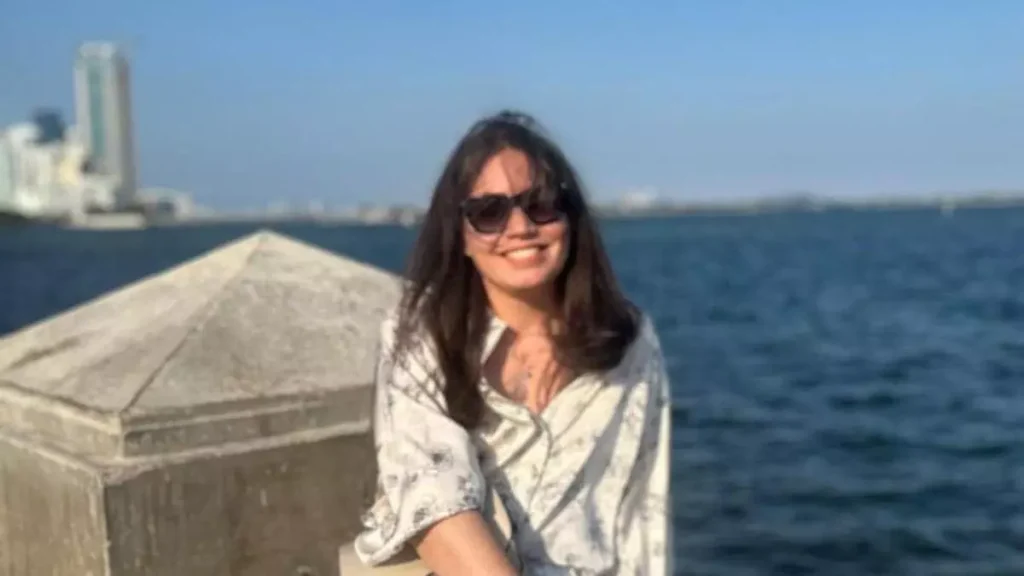
 14ymedio, Madrid, Yunior García Aguilera, May 2, 2026 / One of the most common pastimes among Cubans is public shaming. I’m not talking about honest, necessary, even harsh criticism. I’m talking about that emotional machinery that kicks in against anyone who dares to step forward. The moment someone tries to organize an idea, propose a path, found a project, or take on a responsibility, the stones appear.
Some, of course, come from the apparatus of the dictatorship. We know how they operate. They have resources, agents, smear campaigns, fake accounts, television programs, and spokespeople trained to destroy reputations. But not all the stones come from there. Some are born from ourselves, from our wounds, our frustration, from that anthropological damage left by decades of living under a system that rewards obedience and punishes initiative.
You don’t have to agree with every project to recognize the value of boldness. Nor do you have to applaud everything, suspend critical judgment, or make anyone into an untouchable figure. We’ve already suffered enough from the absolute chiefdoms. And a democracy isn’t built by replacing one altar with another. But neither is it achieved by demolishing every leader at their founding moment, before they can breathe, make mistakes, correct themselves, and mature.
We want one person to carry the shortcomings of an entire nation on their shoulders.
No opposition leader emerges fully formed. That’s a dangerous fantasy. Political maturity is a complex process, especially for those of us who come from authoritarian backgrounds. In a free society, people can join parties, debate platforms, lose internal elections, learn from campaigns, study others’ experiences, and train themselves in the exercise of citizenship. In Cuba, however, real politics has been confiscated for more than six decades by a single group in power. They educated us to repeat their slogans, not to deliberate. We were conditioned to in-or-out, and were never allowed to organize ourselves. We were taught to distrust everyone, not to build public trust.
That is why it is unfair to demand from each new opposition figure the perfection that the dictatorial machinery itself prevented us from developing. We expect impeccable biographies, carefully crafted programs, perfect teams, flawless language, a heroic past, academic preparation, popular appeal, serenity, audacity, humility, charisma, strategy, and immediate results. We want one person to shoulder the shortcomings of an entire nation. And when they can’t, we accuse them of being unprepared, ambitious, naive, or worse, a product manufactured by the regime itself.
Perfect leadership sonly exists in retrospect. They are a dubious construct of time. After victory, history smooths over contradictions, polishes doubts, erases blunders, organizes the narrative, and presents as destiny what was often trial and error, chance, mistakes, persistence, and learning. But in real life, leadership is born chaotic. It contradicts itself. It changes tone. It makes mistakes. The consolidation of ideas almost never happens in a straight line. It happens amidst noise, pressure, exhaustion, urgency, and also human vanity, because no leader is made of marble.
Amelia Calzadilla doesn’t have to be liked by the whole world. Her political project can and should be discussed. Her ideas should be examined. Her party, like any other, will have to demonstrate whether it has structure, a platform, a vision, a team, and the ability to coordinate with other efforts. No one is obligated to follow her blindly. But it would be unfair not to acknowledge some of her merits.
Willpower, in exile, is no small thing. Exile wears you down. It disrupts your life. It forces you to start over.
Amelia achieved something difficult: connecting with real Cubans, with ordinary people, exhausted by blackouts, shortages, abuses, lies, and fear. Her voice emerged from a concrete, everyday, and relatable resistance. And that authenticity allowed her to reach many. Not all opposition figures achieve that. Some have a track record, but they don’t connect. Others have intellectual preparation, but they aren’t known outside certain circles. Amelia, with her successes and her limitations—like everyone—has demonstrated communication skills, social awareness, and a will that shouldn’t be underestimated.
Willpower, and in exile, is no small thing. Exile is exhausting. It disrupts life. It forces you to start over. It brings hardship, grief, guilt, loneliness, bureaucracy, low-paying jobs, homesickness, attacks, and suspicion. Many arrive with a desire to act and end up crushed by the routine of survival. Maintaining political intent amidst these ups and downs requires considerable energy. That a young woman, a mother, in exile, decides not to limit herself to denouncing injustice, but to attempt to build a political platform, deserves at least our respect.
This isn’t about declaring her project infallible. It is not. No human project is. It is about understanding that pluralism can’t just be a pretty word to use against dictatorship. It has to be practiced among ourselves as well. Pluralism means accepting that parties, movements, platforms, leaders, and proposals will emerge that don’t fully align with our expectations. It means discussing without annihilating. Questioning without humiliating. Recognizing risks without turning disagreement into a moral firing squad wall.
Cuban democracy, if it ever arrives, will need more than slogans against the Communist Party. It will need a different political culture. And that culture cannot be improvised after the fall of the regime; it must be practiced now. Every time we respond to the emergence of an initiative with mockery, automatic suspicion, or public condemnation, we reproduce a part of the authoritarian country we claim to want to overcome.
Criticism is essential, but brutality is not productive. High standards are healthy, but paralyzing perfectionism can be another form of sterility. We have been waiting too long for the ideal leader, the definitive project, the figure capable of single-handedly toppling a military regime that has been in power for over six decades. Perhaps that waiting is also a trap. Perhaps the solution lies not in finding the perfect leader, but in allowing many imperfect leaders to emerge, compete, collaborate, fail, learn, and try again.
______________________
COLLABORATE WITH OUR WORK: The 14ymedio team is committed to practicing serious journalism that reflects Cuba’s reality in all its depth. Thank you for joining us on this long journey. We invite you to continue supporting us by becoming a member of 14ymedio now. Together we can continue transforming journalism in Cuba.