Thieves and Bureaucrats Make Life Impossible for Cuban Ranchers

Faced with permanent harassment on his farm in Cárdenas, Ernesto is almost thinking of selling his animals and abandoning the country

If you start to do the math, Ernesto has dedicated almost 20 years to a fa that is not actually his / Radio 26

14ymedio bigger14ymedio, Julio César Contreras, Matanzas, 5 June 2024 — Ernesto has had Spanish nationality since 2008 and in recent years he has traveled to Spain a few times, but he always returns. In Cuba, specifically in Cárdenas, Matanzas, he manages a livestock farm in which he also cultivates some land with vegetables which would be very difficult for him to part with. Until now, as a producer, he had been able to get by – although he acknowledges that “it has not been easy” – but the situation that the peasants are experiencing has led him to consider selling his animals and permanently leaving the country.

“A few years ago, I managed, with a lot of effort, to obtain three caballerias  of land [roughly 100 acres total]. I even had to go see the delegate of Agriculture in Matanzas so that they would give me this property in usufruct [a form of leasing]. After many efforts I achieved it. However, my goal developing livestock has cost me dearly,” the 58-year-old farmer confesses to this newspaper. 

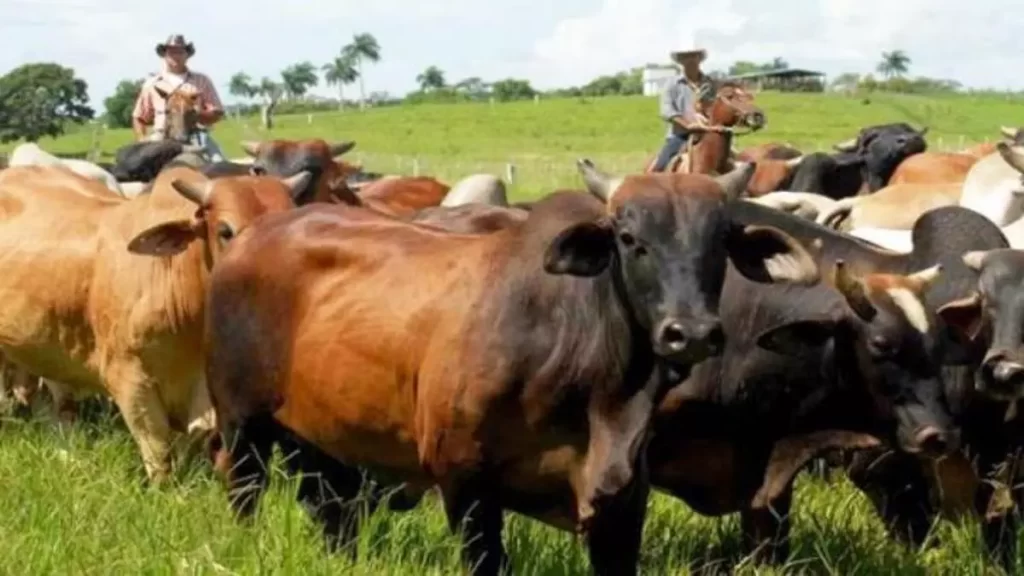
Between cows, bulls and calves, Ernesto has a total of 67 heads of cattle on his farm, distributed in two barns or dairy houses. “I initially thought of dedicating part of the land to livestock production and the other part to the cultivation of some vegetables, but the difficulties in having the necessary resources have prevented me from moving forward,” he explains. 

According to the rancher, about half of his pasture, with useful land, remains unused. “Where can I buy machetes, rakes or gloves to deal with the weeds? Where are the supplies that guarantee that we guajiros can take care of the land and the animals? These years I have seen everything: campesino stores, projects with foreign financing, sales of some products in MLC (freely convertible currency). But these are just insufficient attempts to help producers and they have all come to nothing.

continue reading

Between cows, bulls and calves, Ernesto has a total of 67 cattle on his farm / 14ymedio

Other problems keep Ernesto in suspense, and one is that, despite having water for the animals, edible pastures do not grow well in the area and the consequences can be disastrous for the cattle and for the rancher’s pocket. “If one of my animals gets sick, I have to buy the medicines on the informal market, at whatever price they want to charge, because either there are none or they are very difficult to obtain from the State,” laments the man.

“We cooperative members are required to comply with all production plans but, in the years that I have been here, no one has come to ask me what I need to build the dairy farms, to feed my cattle or to keep the lands healthy and in good condition. I have never wanted them to give me anything, but it is not fair that they abandon the farmers like that,” he says, annoyed. 

Faced with the dilemma between complying with the rules or surviving and saving their business, many ranchers end up making deals outsidthe normal legal ways. “These years I have been able to escape by selling some animals, but the matter becamcomplicated with the livestock census that began at the beginning of this year. The ‘orientation’ is that you cannot sell any animals until they finish counting everything, although people always manage to sell one or two cows,” he says. 

Even so, the guajiro reflects, the management of his farm has begun to give him “more headaches than satisfaction,” since it has become an unprofitable task and the State “does not give the campesinos much room for action. I supposedly own the cattle, but I can only slaughter two a year, with prior authorization from the cooperative and the Agriculture Delegation. If I make a minor slaughter contract, I have to look for a vehicle to transport the animals to the slaughterhouse. After everything I spend on time and procedures, they pay me per pound of meat at one-tenth of what is quoted in the informal market,” he laments.

“Some guajiros end up looking for a veterinarian to certify the death of an animal due to illness, removing it from the livestock registry and selling it,” he points out. 

Faced with the dilemma between complying with the rules or surviving and saving their business, many ranchers end up making deals outside what is legal / 14ymedio

Ernesto interrupts the conversation for a moment to answer a phone call. He is contacted by a seller who has obtained fencing wire for 1,200 pesos per meter. “Who supports those prices doing everything through the state channel?” But they are expenses that he must incur, since his animals could end up in the hands of an illegal slaughterer.

“This is getting as dark as a pitch. In all these years I have been robbed twice and the worst thing is that, when it happens, the authorities blame the farmers for not having the land fenced and letting the cattle roam. But if you are going to cut wood to build a fence, the Agroforestry Company delays your permit or denies it. If you file a report for theft, the Police are likely never find the criminals,” claims the guajiro

If you start to do the math, Ernesto has dedicated almost 20 years to a farm that is not actually his, since the land belongs to the Stateand the State can take it from him at any time. “I am exposed to shortages and problems of all kinds, including thieves who constantly try to do their own thing. I have grown tired of meetings that solve nothing and bureaucrats who live off the sacrifice of others,” he says. “Sometimes they make me feel like getting rid of all this and going to another country. That would be my biggest sacrifice.”

Translated by Norma Whiting

____________

COLLABORATE WITH OUR WORKThe 14ymedio team is committed to practicing serious journalism that reflects Cuba’s reality in all its depth. Thank you for joining us on this long journey. We invite you to continue supporting us by becoming a member of 14ymedio now. Together we can continue transforming journalism in Cuba.
Blackouts Are Suspended in Sancti Spíritus After a Protest on the Camino de La Habana

50 people were arrested on Wednesday, by Thursday night the power outages returned

The city of Sancti Spíritus during a summer power outage in which the only lighting was on public roads. / Facebook

14ymedio bigger14ymedio, Mercedes García, Sancti Spíritus, 31 May 2024 — Blackouts returned to the city of Sancti Spíritus this Thursday night. During the day, residents could not believe what they were experiencing: a day without power outages. But their joy did not last long.

“We went out into the street to bang on pots and pans because we had been without electricity for hours and hours,” a resident of the Camino de La Habana neighborhood, located in the southern part of the city of Sancti Spíritus and with a population of around 2,000, tells 14ymedio. “That was tremendous because people went out into the streets, they didn’t stay inside their houses. Even the old people came out with their pot and spoon.”

“The police arrived a while later and took some of the arrested people away. They grabbed the younger men and put them in the truck,” explains the source, who prefers anonymity. “There are still about 50 arrested, and the families are going crazy asking if they are going to be released or if they are going to be put on trial. The entire neighborhood is very upset with this, because the only thing we did was protest with the pots and pans.” continue reading

The resident assures that, for fear of greater reprisals, the participants in the protest concentrated on the pot-banging and shouting “Electricity!” and “Food!”, the words that have become a constant in protests of this type that have occurred in Cuba in recent years and that reflect popular dissatisfaction with blackouts, shortages and inflation.

“It was very exciting, because they were taking away the arrested people but those of us who were left continued banging on our pots. We were not afraid because they couldn’t arrest us all”

“It was very exciting, because they were taking the arrested people but those of us who were left continued continued banging on our pots. We were not afraid because they couldn’t arrest us all. My neighbors realized that they couldn’t fit the entire neighborhood into that Police truck,” recalls the man from Sancti Spiritus. “They took them to the Vivac [detention center for awaiting processing] in Sancti Spíritus,” he says.

The protest resulted in the city of Sancti Spíritus waking up the next morning with a strong police operation. “I left my house on my way to work and I started seeing police on the corners, patrols everywhere, and it was a neighbor who told me that there had been a protest and that the city was occupied,” a woman from Sancti Spiritus tells this newspaper. She works in a state company linked to the Ministry of Agriculture.

“When I arrived at work, my boss, who lives on Camino de La Habana, gave me more details. He says that it was impressive, that the police patrolled the neighborhood and people did not get out of the middle of the street, they were proving their strength with their pots,” explains the woman. “He says that he did not leave his house for fear of losing his job, but that he banged his pot in the yard.”

“In the office we had a blackout all morning but, surprise, this Thursday throughout the day they did not turn off our power in that area or in any of the city of Sancti Spíritus,” she explains. “People couldn’t believe it, I didn’t even get to enjoy the lack of blackouts, because I had the feeling in my stomach that at any moment they would knock out the power. I was stunned, I couldn’t figure out anything, I couldn’t function with electricity all the time, because I’m used to the fact that there almost always isn’t any.

“I was stunned, I couldn’t figure out anything, I couldn’t work with electricity all the time, because I’m used to the fact that there is almost always no electricity.

Several residents in the city also detail that they saw new police patrols in circulation that they had not previously seen on the city streets. Internet access was also reduced to a minimum to prevent the details of the protests on Camino de La Habana from becoming known through social networks. So far, no video of the demonstration has been released.

“The next day after the protest, a car from the Electric Company arrived to change a transformer, photos were taken and everything,” adds the neighborhood resident. “A clown, because everyone knows that the problem of blackouts has nothing to do with an electric pole or a transformer, but rather that they are taking away our electricity because there is no generation.”

On the Facebook page of the Sancti Spíritus Electrical Company, two images of a worker standing on a ladder and an old Soviet-made truck in the foreground, are enough for the state energy monopoly to use the hashtag #SanctiSpíritusEnMarcha, an irony If we are talking about a district where the most recent march was a popular protest, silenced and repressed.

____________

COLLABORATE WITH OUR WORKThe 14ymedio team is committed to practicing serious journalism that reflects Cuba’s reality in all its depth. Thank you for joining us on this long journey. We invite you to continue supporting us by becoming a member of 14ymedio now. Together we can continue transforming journalism in Cuba.

Edmundo García, Another Enthusiastic Fidel Loyalist Who Becomes an Opponent

Interview with Jose Daniel Ferrer and Edmundo García on the MEGA TV network, in Miami / Screen Capture

14ymedio bigger14ymedio, Pete García, Miami, 5 June 2025 — “I’ll see you at Unpacu,” Jose Daniel Ferrer told Edmundo García in the middle of a television debate held in the studios of the MEGA TV network, in Miami, in a space led by then journalist and now congresswoman Maria Elvira Salazar. In that context, the phrase was an invitation from the first to the second to visit the headquarters of the opposition group, to prove its existence, something García emphatically denied in the program.

Ten years have passed since the event and that phrase, seen in retrospect, could be interpreted not as an offering but a prophecy.

And today the former host of the Cuban Television program De la Gran Escena, a former defender of the regime and an enthusiastic Fidel loyalist, has passed, in his own words, into the opposition camp, and from his YouTube platform he attacks Havana and its rulers day after day.

It is not a strange case, quite the opposite. The individual mentioned above thus goes on to be part of an endless list of those disenchanted continue reading

with Castroism, a heterogeneous group that includes conscientious objectors and others who, as I suspect is his case, deserted when they stepped on their toes or were discarded after being used.

Some leave through the front door, others through the back. At this point, it doesn’t matter.

If Castroism has been efficient in all these years of folly, it is in producing defenestrated and disappointed people.

“Look at yourselves in my mirror,” Edmundo warned the still servants of the island’s hierarchs, in a recent interview on Guennady Rodríguez’s YouTube channel 23yFlagler.

Our history is complex, where oppressed and perpetrators often mingle

Our history is complex, where oppressed and perpetrators often mingle.”There are pure victims,” said Carlos Alberto Montaner wisely, “but they are very few.” Those who repressed in 1960 were then repressed in 1961, he added, and so on throughout this period of totalitarianism, which has not yet culminated. Therefore, summarizing the conclusions of this Cuban writer who died last year, in our process of reconciliation towards a civic future in a plural Cuba, in democracy, there should be not only justice applied according to the degree of responsibility of each one, but forgiveness ceremonies, where the Cuban people apologize to themselves for the damage that has been done. The part for what they are accountable, of course.

Edmundo García was, it is fair to say, at least as far as I know, only an accomplice of opinion. And I say this because in Miami there are former direct members of the repressive arm of the Cuban dictatorship. Some of them even converted – I want to think from the heart – into fervent fighters for freedom and democracy in Cuba.

And if there is something that is “continuity” it is the fact that revolutions, like Saturn, devour their children, as it happened in the France of Robespierre, who was also beheaded. No one in Cuba, outside the close circle of the royal family and its closest supporters, is safe from the guillotine.

So, if some of those who today fervently applaud the speeches of power from the chairs of the Central Committee or any other department of control and repression of the Government, read these lines, take note: look yourselves in Edmund’s mirror. Go out the front door or the back door, it doesn’t matter. Mañana será demasiado tarde. Tomorow will be too late. We look forward to seeing you at Unpacu.

Translated by LAR

____________

COLLABORATE WITH OUR WORKThe 14ymedio team is committed to practicing serious journalism that reflects Cuba’s reality in all its depth. Thank you for joining us on this long journey. We invite you to continue supporting us by becoming a member of 14ymedio now. Together we can continue transforming journalism in Cuba.

Cuba’s Ladies in White Report 12 Arrests in Havana and Matanzas on the Weekend

It is Sunday number 89 of the repression of the group since they resumed their activities in 2022, after the pandemic

María García Álvarez and Yudaxis Pérez Meneses were arrested in Colón this Sunday. / Yudaxis Pérez

14ymedio biggerEFE (via 14ymedio), Havana, June 4, 2024 — On Monday, the Ladies in White denounced the temporary detention of 12 people in Havana and in Matanzas a day earlier, making it the 89th Sunday with acts of repression recorded since 2022, when they returned to their activities after the pandemic. The leader of the Ladies in White, Berta Soler, and her husband, former political prisoner Ángel Moya, reported the arrests on social networks.

They also reported the arrest of 10 members of the Ladies in White in the towns of Cárdenas, Colón, Perico and Unión de Reyes, all in Matanzas.

Soler and Moya reported that, as on previous Sundays, they were arrested when leaving the headquarters of the Ladies in White, located in the Havana neighborhood of Lawton, and later taken separately to the police units of the municipalities of Cotorro and Guanabacoa. continue reading

Both were released on Monday morning, after the authorities imposed fines on them, according to Moya.

The Ladies in White movement was created by a group of women, relatives of 75 dissidents and independent journalists who were arrested and sentenced in March 2003 to long prison sentences after a wave of repression by the Cuban Government known as the Black Spring.

The wives, mothers and other relatives of those prisoners began a series of Sunday marches to ask for their release and became a symbol of dissent.

In 2005, the Ladies in White received the Sakharov Prize for Freedom of Conscience from the European Parliament. The EU and NGOs such as Human Rights Watch and Amnesty International criticized the wave of arrests, classifying them as political, but the Cuban authorities alleged that the women were “counter-revolutionaries” who tried to attack national sovereignty under orders of the United States.

Translated by Regina Anavy
_________________

COLLABORATE WITH OUR WORKThe 14ymedio team is committed to practicing serious journalism that reflects Cuba’s reality in all its depth. Thank you for joining us on this long journey. We invite you to continue supporting us by becoming a member of 14ymedio now. Together we can continue transforming journalism in Cuba.

Gibberish

The history of a family, or even a country, can be told through a few photographs

A blurry photo of the then eight-year-old author holding a Zenit camera / Photo courtesy of the author

14ymedio bigger14ymedio, Xavier Carbonell, Salamanca, 2 June 2024 — I open the package with the photos and papers that I brought from my country and start organizing them on the coffee table. From the bottom I take out the map of Cuba that Alexander von Humboldt created in 1827 though the brittle sheet of paper on which it is printed dates from 1930.

On top, a photo of a vigilant me when I was eight or nine years old, snapping a photo with a Zenit camera, whose click I can hear across time without effort. I am in my grandmother’s house. I am wearing a jacket that I really liked and a sweater. Except for the bamboo wallhanging behind me, everything is out of focus. I begin to lay out the other cards, like a game of solitaire.

A photo of my grandfather M., sometime in his thirties. Dressed in a jacket and tie. I have his eyebrows and his jaw. His face is a little asymmetrical, like mine. The photo paper has been nibbled by a termite. In the subsequent image he is next to two women, smiling. One is my grandmother C., whose smile is more of a grimace. Judging by the planks and the floor, they are in my old house, which to them, as newlyweds, is very new.

There are other people in the background: a laughing child who is too tall. There is a hand on his head that doesn’t seem to belong to anyone. Some fingers, also without an owner, hold a cigar. Here my grandfather is dressed in a jacket that I tried on once and that is now stored in a remote wardrobe, trying not to become trash. I think everyone is happy, or pretending very continue reading

convincingly to be happy. On the back, a cross and the number three.

My great-grandfather J. is holding my father in his arms. Black and white. They are in the same hallway as the previous photo, almost at the entrance to the parlor, as though that void in the building were the ideal place to take photographs. The old man has strong features that I will inherit. A belt and a white shirt. He is smiling, however. He has glasses. On the back side, the number 68.

A time when Cuba was laughing. The fat cows before they were plunged into “indigence,” a word that hits me like a blow to the head

The entryway of the house. In the background my grandfather M. is holding, I believe, his American bicycle. My grandmother C., with the bitter face of her later years that I can barely remember. Her tied-up face, as they often described it, leans on a railing. An iron screen, blue plastic blinds, the door that was separated from the threshold by a hook. On the back, the number four and a date: August 28, 1987. A time when Cuba was laughing. The fat cows before they were plunged into “indigence.” The word hits me like a blow to the head right before the thieves take everything.

The maternal line begins. My great-great-grandfather, whose name I do not know. Wrinkled, patriarchal, in a white shirt. He looks towards the margins of the photo like he is exhausted. Or maybe I am misinterpreting his posture and he is just playing dominoes. The image is printed on thin paper. On the front side someone has written in pencil, “For M,” his daughter, my great-grandmother. I have no other photos of the old man, no other evidence of his time on earth, and the handwritten inscription moves me.

A note written on 3 June 1944 reads, “Marry and you will know what flowers are!” It is a wedding greeting to my great-grandmother written by her brother, JF. Three days later, thousands of Allied soldiers crossed the English Channel and landed in Normandy. I wonder if Rommel or Montgomery or Churchill were ever topics of conversation at the family dinner table. Or if any of my relatives considered – as many Cubans did – going to Europe to fight against Hitler, as they now do for Putin.

Three days later, thousands of Allied soldiers crossed the English Channel and landed in Normandy

My grandfather P. laughs uncontrollably. He has lifted his foot onto a table and is wearing glasses. He assumes a rock-and-roll pose. The room where he is sitting is not just humble. It is dilapidated. Though the household is poor, he wears a shirt, a sweater, a watch and light socks.

In the next photo there is a drastic change. He was forced into military service, I estimate, around 1965. I know that they took him to Pinar del Río where he befriended Silvio Rodríguez. He is standing in front of the Capitolio in Havana. He looks at the camera, a picture of seriousness, with his hand on his waist and his back rigid.

Now he is shaving a man. My grandfather P. shares his name and profession with his father. Stools and sinks. A curious observer watches, or rather inspects, his work. Maybe the man is his next customer. I do not know why but there is a certain tenderness to this photo. It is taken from a corner, as though the photographer did not want to be seen. Was my great-grandfather the man holding the camera?

My grandfather P. and my grandmother I., recently married. Her dress is clearly homemade. His pants are shabby. The photo is taken in my town. The number 830 is on the back. They appear again in another photo, this one taken in Havana. The same shirt, the same dress, their eyes squinting in the sun. It is the late 1960s and the city already looks rundown. Balconies and rags, a battered car. I dare not call my grandmother to ask her the date.

A big Christmas tree and, beside it, my grandfather. This would be 1951 or 1952. Though there is an atmosphere of festivity and abundance, the house is modest. A haphazardly hung light bulb gives it away. The child’s gaze has a wonderful glow. His face, very similar to my cousin’s.

Forty years later, the expression is still the same but not the face. The hair coming out of the ears, the poorly cut suit, are those of a drunk. There was neither shame nor pride in it back then, when people first realized the magnitude of what was lost. On the back of the photo there is an amber stain that matches the silhouette of my grandfather. It is his double, his ghost.

There was neither shame nor pride in it back then, when people first realized the magnitude of what was lost

I have many other photos that have nothing to do with my family, at least not directly, but I carry them with me. It is what I like to call the Alavarez’ saga/escape. I have no idea what connection the Alvarezes had to my family. The father, in a military uniform, with a pencil-tip mustache, boots and a riding crop, was the chief of police in my town.

A baseball team sponsored by José L. Piedra cigars, one of which I smoked on the terrace of Ernest Hemingway’s house in Havana. The park as it looked in 1925, in the direction of my old house, with just a few bushes that are now trees several decades old. The Royal Bank of Canada, awnings, a rural guardsman. The parish, a boulevard.

A very elegant photo of Joaquín Álvarez, the last in the saga, in a suit. I see him boarding a plane, doing acrobatics while riding a horse and saying goodbye from a train – hands behind his back and well-groomed. On the back, a dedication: “To my unforgettable Mariita, a token of love and affection from her J. August 1924.” I have often imagined that unknown girl. A hundred years have passed. I do not know why she never received this photo, which now belongs to me.

____________

COLLABORATE WITH OUR WORKThe 14ymedio team is committed to practicing serious journalism that reflects Cuba’s reality in all its depth. Thank you for joining us on this long journey. We invite you to continue supporting us by becoming a member of 14ymedio now. Together we can continue transforming journalism in Cuba.

Cuban Sports Announcer Ángel Luis Fernández Arrives in the United States Thanks to Humanitarian Parole

Cuban announcers Ángel Luis Fernández and Yasel Porto / Facebook/DPorto Sports LLC

14ymedio bigger14ymedio, Havana, 4 June 2024 — The Cuban sports narrator and commentator Ángel Luis Fernández has been in Miami for days. “He was able to meet his parents and his eldest son again after a long period of not being able to be with them,” confirmed journalist Yasel Porto.

Fernández arrived through humanitarian parole, which as of May has favored 95,000 Cubans since its entry into force in January 2023. Fernández, a star of Cuban Television, will join the team of commentators that will attend the Olympic Games in Paris 2024, as he did in London 2012 and Tokyo 2020. With 25 years of experience and a consolidated place on the Tele Rebelde channel commenting on soccer, baseball, volleyball, basketball, wrestling and boxing games, this habanero “made the decision to start a new life in the United States,” Porto said.

Through the Dporto Sport LLC Facebook account, Porto recalled that his colleague Fernández “also developed a career as a presenter in cultural spaces within Cuba, in the “Gato Tuerto and Rosalía de Castro,” in addition to recently covering the funeral of the singer Juana Bacallao. continue reading

Cuban narrator Ángel Andrés Hernández Vargas arrived in the United States in May of this year / Facebook/DPorto Sports LLC

“With him (Fernández) I had the opportunity to work from the very beginning of both on the sports station Coco and then on the Havana Channel, being my first systematic appearance on television thanks, precisely, to his support for me to start my path beyond radio,” Porto said.

Fernández joins the long list of recognized announcers who have left the Island. On May 4, Porto himself reported the arrival in the United States of Ángel Andrés (“Andy”)Hernández Vargas. The “iconic” figure of the Coco radio station and especially of the Industriales team, “was claimed by one of his two sons living in Miami.”

Vargas had already retired, but fans remember him for his narrations of the Lions’ games and especially for the matches that led the capital team to win the title in the National Series in 1996, 2003, 2004, 2006 and 2010.

Yasel Porto is another of the sports commentators who left the Island. In 2020 he was expelled from Televisión Cubana and its branch RTV Comercial for his criticism of national baseball, which was in crisis. “My poor compliance with the editorial policy of these media was the cause put forward by the managers of these channels,” he said in a letter he published on his social networks and in Swing Completo.

Translated by Regina Anavy

____________

COLLABORATE WITH OUR WORKThe 14ymedio team is committed to practicing serious journalism that reflects Cuba’s reality in all its depth. Thank you for joining us on this long journey. We invite you to continue supporting us by becoming a member of 14ymedio now. Together we can continue transforming journalism in Cuba.

Painting Facades and Construction for the 510th Anniversary of Sancti Spíritus, Cuba

Residents regret that what the official press calls “social impact works” is not the reality

“Everything has been done to sell an image of Sancti Spíritus as perfect, but in reality the cultural life of the city is very bad” / 14ymedio

14ymedio bigger14ymedio, Mercedes García, Sancti Spíritus, June 4, 2024 — The residents of Sancti Spíritus don’t cease to be amazed. Anyone would think, reading the provincial press, that the 510th anniversary of the founding of the city – with the name of Villa del Espíritu Santo – has brought complete renovation to its Historic Center. According to an article published this Monday in Escambray, they have concluded, on the occasion of the anniversary, “works of social impact, along with actions of conservation and maintenance of more than a hundred buildings,” as well as “filling potholes and beautifying the main arteries.”

Alicia, 40, destroys this idyllic version: “Everything has been based on painting and repairing facades. There is no cultural resuscitation, no new recreational offers, none of that has happened. Everything has been done to sell an image of the city as perfect, but in reality the cultural life of the city is very, very bad.”

According to the official newspaper, “some facades and the eaves of heritage buildings were retouched with paint; the church of Maceo took on new colors, and in a second stage, three of the city’s fountains will benefit.”

“The change of the eaves is because they were falling,” says Alicia / 14ymedio

The same text says that the works include “the opening of new premises, changes for central establishments and the remodeling of properties in poor condition. The work will begin this Monday and will include the two convention centers of Independencia Street and Etecsa, the El Neri bakery-sweet shop, the remodeling of the Julio Antonio Mella primary school and the Combinado Deportivo, the Casa Museo Serafín Sánchez and the florist adjacent to the funeral home, among others.” The only leisure continue reading

establishments there, Alicia complains, “are new private bars that cost an arm and a leg, where a simple beer can cost up to 800 pesos after midnight.”

La Plaza Market, in Sancti Spíritus, with the roof visibly damaged / 14ymedio

She dismantles the regime’s hullabaloo bit by bit: “The change of the eaves is because they were falling; what they are remodeling on Independencia Street is a meeting room that has always been a meeting room. I don’t know what that Etecsa convention center is, I never heard of it, but it’s not going to provide any benefit to anyone either.” As for El Neri, she says, “the roof fell and that’s why they have to fix it. They are not making it new nor have they changed its corporate purpose. They put a roof on it again and slapped a little paint on, but it’s still the same bakery that sells bread from the ration store.”

The authorities announced that there will be works ready for “a second stage” / 14ymedio

In the same way, they “put paint” on the Julio Antonio Mella school. “Combinado Deportivo?” she asks. “What is that?” About the Casa Museo Serafín Sánchez, she says: “I think that in my 40 years I have entered only once and it is always the same. There are always the same bugs dissected and tied with a wire.” Regarding the florist, “the same: they changed the granite counter, which was ugly, for a new one that is still ugly but it’s new. They also put paint on everything and changed the ceiling above, where they have a loft, but it’s still the same florist shop.”

Translated by Regina Anavy

____________

COLLABORATE WITH OUR WORKThe 14ymedio team is committed to practicing serious journalism that reflects Cuba’s reality in all its depth. Thank you for joining us on this long journey. We invite you to continue supporting us by becoming a member of 14ymedio now. Together we can continue transforming journalism in Cuba.

Cuban Pentecostals Denounce Police Harassment Against Two Pastors From Camagüey

“Their movement is restricted and they must be available and locatable,” says the leader of the Assemblies of God in Cuba

Pentecostal Pastor Dizzis Ramos, leader of the Assemblies of God in Camagüey /Evangelical Revival Hialeah

14ymedio bigger14ymedio, Havana, 4 June 2024 — Pentecostal pastor Dizzis Ramos, leader of the Assemblies of God in Camagüey, has been waiting several days for a summons from the Police and a possible formal accusation from the Prosecutor’s Office for having been involved in the purchase of allegedly illegal cement in a State entity. The incident has been interpreted by the top authorities of his denomination as the prelude to “a very complex situation between the Church and the State.”

This is what Moisés de Prada, general superintendent of the Assemblies of God on the Island, believes; he clarifies to 14ymedio that neither Ramos nor Jorleidis Reynaldo – the pastor Ramos sent to buy the cement – are detained or under house arrest. The cement was confiscated and they were required not to leave the province. “They have restricted movement and must be available and locatable,” he says.

“He (Reynaldo) went to buy the cement because they were told that they were selling it with no rationing,” says De Prada, who insists on the disconcerting nature of the accusation: “It was a state-run stand,” he stresses. “He made his purchase and, when he left, he was arrested.”

He showed the bill to the Police so that they could verify “that there was no problem.” Agents disagreed and replied that the invoice was false.” We bought cement in one of your entities,” Reynaldo defended himself, adding that, “if the Police had doubts about the legitimacy of the sale, it was the entity from which we bought the cement that they should ask for explanations.” continue reading

He showed the bill to the Police so that they could verify “that there was no problem.” Agents disagreed and replied that the invoice was false.

De Prada cannot specify how much cement it was. Still, he estimates there were “quite a few bags, perhaps 40 or 50, which Pastor Ramos was going to allocate to constructions in the church of Camalote,” an area located in the Camagüey municipality of Nuevitas. “We lost the cement,” Reynaldo told Ramos as he returned empty-handed. Shortly after, they were told they would be summoned for a trial in the coming months.

As one of the leaders of the Assemblies of God, De Prada took action on the matter and called, from Havana, the Office of Attention to Religious Affairs of the Communist Party. “That was over a week ago. They told me they were unaware of the situation and that they would find out. ” When he called again, two days ago, they still didn’t know.

De Prada then took it upon himself to warn them that they would not agree with the potential measures that could be taken against Ramos and Reynaldo. “It could bring an altercation between the Church and the State,” he considers. “We are asking the State to assess the situation and that nothing happens.”

He also contacted the provincial office of the Communist Party in Camagüey and offered to meet with them. A meeting “out of respect and understanding that we will not agree on any action taken against our pastor,” he demands. “They say that the measure was not taken for the mere fact that a pastor was involved,” he says.

He also contacted the provincial office of the Communist Party in Camagüey and offered to meet with them. 

In his calls with Party officials, De Prada was told that perhaps the entity did not have the right to sell that cement. De Prada repeated the argument that Reynaldo had given to the Police: Cubans take for granted that what the State sells is legal. Later this week, De Prada will travel to Camagüey.

With more than 53 million members worldwide, the Assemblies of God, one of the most popular Christian denominations on the Island, has always been a target of State Security because of its close ties with the Pentecostal communities of the United States. With a great capacity for mobilization – they are famous for their “mega-churches,” capable of gathering thousands of faithful followers – they are not affiliated with the World Council of Churches nor the Council of Churches of Cuba.

In June 2020, the board of directors of the Assemblies of God on the Island issued a statement making clear its position on the “debates, articles and criteria” that questioned its “non-negotiable principles on the nature of the family, its function and purpose.” The text stressed that “the Church is independent of the State” and that it did not have to accept equal marriage endorsed in the Family Code, then pending approval.

Given the attacks by people linked to the National Center for Sex Education (Cenesex in Spanish), led by Mariela Castro, they assured that the Church “is not contentious nor does it allow itself to be provoked by the hate speech by people and sectors that do not accept our doctrine.”

The government’s tensions with ministers of different denominations have again made headlines in recent weeks. Last May, as a gesture of protest against the blackouts, the Camagüey priest Alberto Reyes rang the bells of his parish in Esmeralda. The priest, one of the most critical voices of the Catholic clergy, was forbidden by his own bishop to repeat the bell ringing, a call to order in which more than a few suspected the State Security’s pressure.

Translated by LAR
____________________

COLLABORATE WITH OUR WORKThe 14ymedio team is committed to practicing serious journalism that reflects Cuba’s reality in all its depth. Thank you for joining us on this long journey. We invite you to continue supporting us by becoming a member of 14ymedio now. Together we can continue transforming journalism in Cuba.

The Cuban Government Doesn’t Answer UN Questions About Human Rights Violations

In a letter, to which this newspaper had access, six rapporteurs ask for explanations about the police repression and the judicial processes derived from the protests of 11J

Arrests during the 11J protests. (Capture

14ymedio bigger14ymedio, Madrid, June 3, 2024 — Six UN rapporteurs have urged Cuba to explain alleged human rights violations linked to police repression and judicial processes arising from the protests of 11 July 2021, the largest in decades on the Island.

In a letter sent to Miguel Díaz-Canel, to which 14ymedio had access, four rapporteurs and two representatives of portfolio working groups linked to human rights talk about “concerns” and request explanations from Havana.

The 16-page letter is dated April 3 and explains that after 60 days the document would be published with the answers provided by the Government of Cuba. As of now moment, the UN website has not included any response from Havana.

“We would like to urge the Government of your Excellency to take all necessary measures to protect the rights and freedoms of the aforementioned persons and to investigate, prosecute and impose appropriate sanctions on any person responsible for the alleged violations,” the rapporteurs write. continue reading

They also urge Díaz-Canel “to take effective measures to prevent such events, if they have occurred, from being repeated

They also urge Díaz-Canel “to take effective measures to prevent such events, if they have occurred, from being repeated.”

They argue that, if the allegations were confirmed, “numerous international human rights norms and standards enshrined, among others, in the Universal Declaration of Human Rights and the Declaration on the Protection of All Persons from Enforced Disappearance” would have been violated.

The rapporteurs indicate that the letter is based on “sufficiently reliable” information so that the matter receives “immediate attention,” although they add that they do not want to “prejudge the veracity” of the contribution that triggered this special procedure.

That is why they call on the Cuban Government to respond in general to the “allegations” presented and, in particular, to explain how the Cuban legal system – from the election of judges and lawyers to the investigative and judicial process – is “compatible” with the country’s human rights obligations.

They also ask for a description of the “measures” adopted so that “the legislation complies with the international human rights obligations assumed” by Cuba and to guarantee the rights of peaceful assembly, association and expression “without fear” of imprisonment.

The letter includes a summary of the information that triggered the procedure, which speaks of “hundreds of thousands” of demonstrators on 11 July 2021, the violent dissolution of the marches and the arrest of between 5,000 and 8,000 people in the following days.

That story also refers to the fact that “thousands” of Cubans did not have a “fair trial” or enjoy due process,” that judges, prosecutors and lawyers in Cuba cannot act independently of the Communist Party of Cuba (PCC) and that defense lawyers often work at a disadvantage.

That account also refers to the fact that “thousands” of Cubans did not have a “fair trial” or enjoy “due process,” and that judges, prosecutors and lawyers in Cuba cannot act independently

The NGO Prisoners Defenders, based in Madrid, indicated in a separate statement that the letter from the rapporteurs is a “direct and unambiguous response” to the complaint it delivered to the UN in July 2023.

The president of Prisoners Defenders, Javier Larrondo, expressed his “deep gratitude” to the rapporteurs and his intention to continue working to “eradicate the procedural framework of violation of the rights of all defendants, convicts and political prisoners and prisoners of conscience in Cuba.”

The document is signed by the special rapporteurs on the independence of magistrates and lawyers, on the promotion and protection of the right to freedom of opinion and expression, on the rights to freedom of peaceful assembly and association and on torture and other cruel, inhuman or degrading treatment or punishment.

The letter is also signed by the vice president of communications of the Working Group on Arbitrary Detention and the president-rapporteur of the Working Group on Forced or Involuntary Disappearances.

The July 2021 protests were a political and social watershed in Cuba. Since then, Prisoners Defenders has registered about 1,500 prisoners for political reasons, while the NGO Justice 11J has collected 1,905 people arrested, of which 800 are still in prison.

Translated by Regina Anavy

____________

COLLABORATE WITH OUR WORKThe 14ymedio team is committed to practicing serious journalism that reflects Cuba’s reality in all its depth. Thank you for joining us on this long journey. We invite you to continue supporting us by becoming a member of 14ymedio now. Together we can continue transforming journalism in Cuba.

Denied Entry to the United States Under Humanitarian Parole, a Cuban Judge Requests Asylum in Tampa

Melody González Pedraza presided over the Villa Clara court that sentenced four young people to prison on May 8

The Audiencia of Villa Clara, Pedraza’s work center and headquarters of the provincial court that judged the demonstrators / Portal of the Citizen of Santa Clara

14ymedio bigger14ymedio, Madrid, May 31, 2024 — Cuban judge Melody González Pedraza, who among other sentences gave four years in prison for attack, has been detained in Florida awaiting a judicial resolution after requesting asylum. According to Martí Noticias this Friday, the magistrate arrived at Tampa International Airport on Thursday after receiving humanitarian parole.

Upon arrival, the immigration authorities denied her entry into the United States because of her history in Cuba, but she invoked political asylum, according to her sponsor, Roberto Castellón. One of the cases that González Pedraza judged as president of the Popular Municipal Court of Encrucijada, in Villa Clara, detailed by Martí Noticias, was that of four young people accused of throwing Molotov cocktails against a jeep and homes of the heads of the Police and State Security of the same Villa Clara municipality on November 18, 2022.

The judgment was handed down with a sentence on May 8, 2024. For this reason, she was included by the Foundation for Human Rights in Cuba on its list of repressors. According to the text, to which Martí Noticias had access, she imposed, for the crime of attack, four years in prison on Andy Gabriel González Fuentes, Eddy Daniel Rodríguez Pérez and Luis Ernesto Medina Pedraza, and three years on Adain Barreiro Pérez.

Judge Melody González Pedraza, in the image shared by the Foundation for Human Rights in Cuba / FDHC

Rodríguez Pérez’s mother, Marisol Rodríguez Millán, says that it was a “rigged trial” and told Martí Noticias that her son, now in prison, had been granted U.S. humanitarian parole. “She gave the boys four years, taking away my son’s privilege of being able to go to the United States. However, for her, a revolutionary judge, who has put so many boys in prison unjustly, she was granted parole and given freedom,” she complained to the American media. continue reading

Ana Iris Pedraza Balero, mother of Luis Ernesto Medina Pedraza, also complained about the possibility of the judge being granted political asylum on American territory: “I think it should not be granted, because she used her position to commit the greatest and most atrocious injustices in the world. Take the case of these four boys: she abused her position, abused her power, and now she wants to live freely and to the fullest, without paying for anything she did.”

“She gave the boys four years, taking away my son’s privilege of being able to go to the United States.”

Rodríguez Pérez’s mother, Marisol Rodríguez Millán, says the trial was “rigged ” and told Martí Noticias that her son, now in prison, had been granted U.S. humanitarian parole. “She gave the boys four years, taking away my son’s privilege of being able to go to the United States because he had been granted humanitarian parole. However, for her, such a revolutionary judge, who has put so many boys in prison unjustly, she was granted parole and given freedom,” she complained to the American media.

Ana Iris Pedraza Balero, mother of Luis Ernesto Medina Pedraza, also complained about the possibility of the judge being granted political asylum on American territory: “I think it should not be granted, because she used her position to commit the greatest and most atrocious injustices in the world. Take the case of these four boys: she abused her position, she abused her power, and now she wants to live freely and to the fullest, without paying for anything she did.”

Having submitted her asylum application, González Pedraza has two possibilities, Martí Noticias said: to be transferred to an immigration center or be released until she appears in court to defend her case. “In either case, the asylum seeker will have to appear before a judge and prove that she has legitimate grounds for persecution in Cuba. The judge can believe her and grant her asylum or he can order her expeditious deportation to Cuba,” a specialist lawyer explained to the American media.

For his part, the judge’s sponsor considers her arrest unfair. “They have done irreparable damage by including her in the database of Cuban repressors,” he told Martí Noticias. She is a Christian woman who only did her job.” Indeed.

Translated by Regina Anavy

____________

COLLABORATE WITH OUR WORKThe 14ymedio team is committed to practicing serious journalism that reflects Cuba’s reality in all its depth. Thank you for joining us on this long journey. We invite you to continue supporting us by becoming a member of 14ymedio now. Together we can continue transforming journalism in Cuba.

Private-Sector Retail Sales Lead to the Decline of Cuba’s Digital Currency

Cuba’s ’Freely Convertible Currency’ (MLC) Is Becoming Less Effective as a Tool for Extracting Hard Currency Remittances.

The MLC is a digital version of the convertible peso (CUC), issued by the Banco Metropolitano, Banco de Crédito y Comercio, and Banco Popular de Ahorro / 14ymedio

14ymedio bigger14ymedio, Miguel Alejandro Hayes, Miami, May 18, 2024 — After being suspended for several months, Western Union’s remittance service to Cuba resumed on May 9. The operation basically remains the same. Cubans living overseas will make deposits in U.S. dollars which recipients in Cuba will receive as “freely convertible currency” (MLC) via an ATM card.

It is worth remembering that the MLC is, in essence, a digital version of the now defunct convertible peso (CUC). It is the local currency into which three banks — Banco Metropolitano, Banco de Crédito y Comercio, and Banco Popular de Ahorro — convert remittance transfers.

That seems like good news but is it really? And for whom?

The MLC is essentially a mining operation masquerading as monetary policy, a way to insure that remittance transfers end up in state-owned banks. The more remittances Cubans living overseas send through Western Union, the more hard currency there will be in accounts at the aforementioned Cuban banks.

At the same time, earnings for the military-run business conglomerate GAESA are growing thanks to Fincimex, its financial investment and remittance company. Channeling foreign currencies through state banks is not conducive to secrecy, something on which GAESA relies to run its operations. Remittances could just as well move through the military’s continue reading

own banks such as the International Financial Bank (BFI) or directly through foreign banks. Fincimex has successfully promoted its own bank cards, which are not linked to state banks, as a way to tap into the remittance market. It has also announced alternatives to Western Union, specifically Tocopay and Vidaipay, as a means of sending dollars to Cuba. So the resumption of Western Union’s operations is not exactly great news for GAESA.

At the same time, the MLC subjects Cubans to economic kidnapping. This fake currency is only useful for purchasing goods sold through the network of military-owned hard currency stores, which are losing ground to SMEs,* privately owned shops and independent vendors.

On the other hand, if consumers have cash in the form of dollars, they can buy things directly from the private sector, exchange it at banks for MLC, or exchange it for Cuban pesos on the informal market.

This marked difference in practicality between the dollar and the MLC is reflected in the almost 100-peso difference in their respective exchange rates. To put it another way, the difference in value between 100 dollars and 100 MLC is almost equivalent to the price of three cartons of eggs [at 36 eggs per carton].

This suggests that, for those lucky enough to be getting remittances, it is currently much more advantageous to get them in the form of dollars rather than in MLC. So, though legal channels exist for transmitting remittances in MLC, there are more incentives to send dollars instead.

Similarly, if a segment of the Cuban diaspora — either through ignorance or for some other reason — starts remitting more MLC in the future, the supply of this currency on the informal market will grow. Then, due to the law of supply and demand, the MLC will depreciate, which will once again discourage its use because senders and receivers alike will prefer remittances to be in dollars, which have more value on the open market.

Going forward, it is highly unlikely that there will be a natural increase in the supply of consumer goods that someone can purchase with MLC

Going forward, it is highly unlikely that there will be a natural increase in the supply of consumer goods that someone can purchase with MLC. Its fate is tied to other factors.

The MLC is the most fictitious currency Cuba has ever had. It only exists and only has value because GAESA forces people to use it in order to buy things. The demand for it is artificial, its usefulness is limited. Why else would anyone want MLC other than to buy a specific random product at a GAESA store?

That is why the fate of the MLC as a currency depends on economic policy as it pertains to the supply of goods being sold for MLC. The more goods in quality and quantity that can be purchased with this currency, the more demand there will be for it.

On the other hand, the military and the government are facing a situation in which they have less ability to generate foreign reserves due to declining revenue, high costs and heavy debt burden. Therefore, all indications are that earnings from MLC stores will continue to decline, and with them the demand for their corresponding currency. Even so, the military has no other choice than to continue exploiting this tool and trying unsuccessfully to get the Cuban exile community to send more remittances.

The only question is how long the MLC will stick around. Cubans no longer need it to survive because SMEs offer a wider range of products, which consumers can purchase with pesos at the prevailing open-market exchange rate. The MLC will remain out there, following the pace of the economy, for as long as they decide to stick with it. More specifically, until they find another tool to extract hard currency. They are already experimenting with several.

*Translator’s note: English-language acronym for “small and medium-sized enterprise.”

____________

COLLABORATE WITH OUR WORKThe 14ymedio team is committed to practicing serious journalism that reflects Cuba’s reality in all its depth. Thank you for joining us on this long journey. We invite you to continue supporting us by becoming a member of 14ymedio now. Together we can continue transforming journalism in Cuba.

A Young Cuban Woman Missing for Three Weeks Left With a Group of Rafters

Yo Sí Te Creo in Cuba asks the authorities to look for the boat, whose location is unknown, where 19 people with hardly any drinking water are holding out

Melisa Odaisi Peraza Cabrera in the photograph disseminated to locate her. / Facebook

14ymedio bigger14ymedio, Havana, June 3, 2024 — Melisa Odaisi Peraza Cabrera, 24, who has been missing since May 14, is part of a group of 19 Cuban rafters lost on the high seas. The feminist organization Yo Sí Te Creo in Cuba asked the authorities for help this Sunday after the young woman communicated her situation to her family. Peraza Cabrera, a resident of Cárdenas (Matanzas), was last seen in mid-May, when she left her house to meet a man she had met through her social networks. The young woman has three children, two twin girls of four years and four months and a boy of two.

 Her family heard from her on May 27, after several attempts to contact her, thanks to an acquaintance who saw her on Ayestarán Street, in Havana

Her family heard from her on May 27, after several attempts to contact her, thanks to an acquaintance who saw her on Ayestarán Street, in Havana, walking with two men. At that time, they told the authorities, as well as feminist organizations, that they feared she was a victim of some kind of violence.

To locate her, they provided a photo, as well as the complete description of the young woman, and asked anyone who saw her to contact two family members by phone or to call the Police. continue reading

Hours later, the feminist organization Yo Sí Te Creo in Cuba sent word that Peraza Cabrera had called her family to tell them that she was leaving the Island with a group of six women and 12 men who were somewhere on the coast of Artemisa or Mayabeque.

“Neither she nor anyone in the group could send the geolocation because they barely had coverage or battery. They have little water left. And we have lost contact since 3:12 pm in Cuba. We ask the authorities to mobilize without delay to find them,” the association said in a Facebook post that it urged users to share.

Translated by Regina Anavy

____________

COLLABORATE WITH OUR WORKThe 14ymedio team is committed to practicing serious journalism that reflects Cuba’s reality in all its depth. Thank you for joining us on this long journey. We invite you to continue supporting us by becoming a member of 14ymedio now. Together we can continue transforming journalism in Cuba.

‘The Main Achievement of the Cuban Revolution Is Its Exile’

Writer Jorge Ferrer narrates the traces of totalitarianism in three generations of his family

The author, interviewed by Maite Rico and Ignacio Vidal-Folch at the presentation of his book in Madrid / 14ymedio

14ymedio bigger14ymedio, Madrid, 3 June 2024 — “There are many ways to have encountered the Russian and Cuban revolutions, and end up hurt by them. A lot,” says Jorge Ferrer (b. Havana, 1967). The writer and translator wanted to investigate the stories he knows best: those of a family, his own, shaken by totalitarianism. His book De Rusia a Cuba. Contra la memoria y el olvido [From Russia to Cuba. Against Memory and Oblivion] (Ladera Norte publishing house), which has just been presented in Madrid, narrates the vicissitudes of three generations that dealt differently with the destinies set for them by Castroism.

Its protagonists are three Ferrers. Federico, the grandfather, born in Spain, the adventurer who ended up as Batista’s police officer, a novelistic character, with excessive love affairs, who preferred to serve drinks in New York rather than languish as an outcast, a misfit, what in the USSR they called byvshi and in Cuba worm, lumpen or scum.

His son, Jorge, repudiates him and chooses to embrace the new times as a meticulous apparatchik, “a perfect creature to grow up in the Cuban and Soviet worlds,” where he was assigned as a senior official. And the grandson, Jorge, the schoolkid, who is none other than the author himself, studies in Cuba and Russia, where perestroika lives, and returns to the island imagining a similar opening, to end up exiled in the country of his ancestors.

Characters such as Joseph Brodsky and Heberto Padilla; Marina Tsvetáieva, José Martí, Lezama Lima and Dulce María Loynaz appear in the story

But Ferrer does not stay in the biographical narrative. The book is a rich tapestry woven with threads that intertwine and separate, and more often than not run in parallel. They pass through Havana, Moscow and Miami. They cover the twentieth century and are left unfinished in the tragic continue reading

Russian invasion of Ukraine, or a visit to Cuba in 2023.

Other characters enter this game of mirrors and enrich the picture: they are poets, Russians and Cubans, with equally broken lives: Joseph Brodsky and Heberto Padilla; Marina Tsvetáieva and José Martí; Lezama Lima and Dulce María Loynaz.

We immersed ourselves in the drama of the nostalgic byvshi in Bolshevik Russia, in Russian-Cuban relations from the Batista years to the present day; in the Cuban idiosyncrasy and its delight in exceptionality (like the Spaniards); in the role of intellectuals and journalists turned into choristers of the dictatorship.

Ferrer also pays tribute to the abused Cuban exiles, to their generosity, to their ability to forgive. “The only, greatest achievement that the Revolution can flaunt without blushing is its exile: its nobility, its dedication, its love for Cuba and Cubans. The economic muscle with which it has maintained the island’s residents. The nerve of the affections with which it has kept the Cuban nation united, only the exile alone,”he writes.

“From Russia to Cuba” is a vital journey and a reflection on uprooting, memory and oblivion. It is a search for roots and a journey of introspection. Ferrer does not judge the protagonists, guilty of history, who brave will and destiny as much as they can. But it does target autocrats. And a Revolution in whose “strenuous duration lies its genuine cruelty.” “Grinding for generations, the Revolution has not even needed to kill too much, because by lasting, it has left us to die. And it has watched us die. Time has killed us, like the bullets of the clock and the grainy fire of the calendar.”

Translated by LAR

____________

COLLABORATE WITH OUR WORKThe 14ymedio team is committed to practicing serious journalism that reflects Cuba’s reality in all its depth. Thank you for joining us on this long journey. We invite you to continue supporting us by becoming a member of 14ymedio now. Together we can continue transforming journalism in Cuba.

The Spanish Congress Asks the Government To Increase Collaboration for the Shipment of Powdered Milk to Cuba

With 33 votes in favor and three abstentions, Proposition No. of Law went ahead this Wednesday in the commission of international cooperation for development

A few packages of powdered milk in an establishment in Havana / EFE

14ymedio bigger14ymedio, Havana, 30 May 2024 — The international cooperation commission for development of the Spanish Congress of Deputies approved on Monday a Proposition No. of Law (PNL)* presented by the socialist Sumar coalition to “contribute to overcoming the shortage of milk destined for children in Cuba.” The proposal, which was approved with 33 votes in favor and three abstentions, urges the Government to allocate funds through the Spanish Agency for Development Cooperation (AECID) “to strengthen food aid programs to Cuba, especially those aimed at meeting the current needs of powdered milk for the child population, in coordination with the World Food Program (WFP).”

 It proposes to study the “possibilities of cooperation with the Government of Cuba to launch a program that contemplates the creation of powdered milk supply channels

In addition, it proposes to study the “possibilities of cooperation with the Government of Cuba to launch a program that contemplates the creation of powdered milk supply channels,” in which public administrations or companies in the dairy sector could participate.

In defense of the PNL presented by Sumar, the deputy of the Socialist Party, Alba Soldevilla Novials, recalled that last January the Government of Cuba requested “urgent help” from the United Nations World Food Program (WFP) to “facilitate the shipment of powdered milk” to the Island. The response was quick and “it has begun to send a kilogram of powdered milk per month for Cuban girls and boys under seven years old” in Pinar del Río and Havana. continue reading

The regime tried last March, through a text published in the official press, to minimize the dust raised by the news, stating that the request was part of a practice of the bilateral relationship, long-standing cooperation and the actions identified within the Country Strategic Plan for Cuba until 2024.

However, the shipment of 144 metric tons of milk powder, which temporarily covers the needs of 48,000 Cuban children, “is not enough to guarantee the longer-term supply,” Soldevilla stressed.

With the precedent that Spain is a “country with dairy surpluses,” Soldevilla said that the Government of Pedro Sánchez could “study collaboration formulas” for the long term.

The shipment of 144 tons of milk powder temporarily covers the needs of 48,000 Cuban children

For his part, José Francisco Alcaraz, representative of Vox, specified that the initiative showed that “communist dictatorships in the world are not able to feed their citizens nor their children and, obviously, they threaten freedom.”

Alcaraz said that the socialist support statement lacked “a condemnation of the regime and the lack of freedom,” in addition to “the request that political prisoners be released.”

The parliamentarian recalled, without giving his name, that a “counselor of the communist party took advantage of this good initiative,” but the money was not for the purposes intended. In view of this, he suggested ensuring that these funds “are destined entirely to the Cuban population”

The deputy pointed out that it is important to help the children of Cuba, although he specified to the socialist bloc that “there are more than half a million children in Spain with malnutrition and a 33% risk of poverty.”

The PLNs are not binding in the Spanish legal system, although they serve to establish positions of the chamber, in this case within a committee and not the Plenary.

*Note: A proposition of law is a statement suggesting an action that may have legal implications.

Translated by Regina Anavy

____________

COLLABORATE WITH OUR WORKThe 14ymedio team is committed to practicing serious journalism that reflects Cuba’s reality in all its depth. Thank you for joining us on this long journey. We invite you to continue supporting us by becoming a member of 14ymedio now. Together we can continue transforming journalism in Cuba.

April Rumors: Raúl Castro’s ‘Chemical’ Grandson, Death of Ramiro Valdés, Dog Meat

According to a rumor, Rodríguez Castro was the owner of at least one part of a drug trafficking network in Matanzas

14ymedio bigger14ymedio/Yucabyte, Havana, 22 May 2024 — El químico (the chemical), the fashionable synthetic drug in Havana, slowly takes over the Cuban underworld. The possibility that Raúl Guillermo Rodríguez Castro, El Cangrejo (The Crab), grandson and bodyguard of Raúl Castro, is the man behind its manufacture and traffic – in increasingly vast networks – was one of the rumors that circulated in April and that the collaborators of 14ymedio and Yucabyte registered on the Island.

The consumption of el químico among young people has left deplorable scenes, documented in several recordings on social networks. In several of them, symptoms of paranoia, dislocation and violence are noticeable in drugged people. Some have tried to injure themselves. A rumor insists that more than 20 young people are under medical surveillance in Havana for their addiction and – according to a health official who did not identify himself – there are no supplies to treat them.

The authorities have recognized that el químico is increasingly circulating on the Island, although they have not given details about its composition and have accused emigrants of being the ones who contribute to the entry of drugs into the country. The silence has generated the suspicion that some member of the upper elite, such as Rodríguez Castro, pulls the strings of its distribution or takes advantage of his position to import it from some allied country of the Island, such as China or Russia.

Several users say that El Cangrejo was alarmed by a police operation that dismantled several distribution sources of the “el químico”

Several users say that El Cangrejo was alarmed by a police operation that dismantled several distribution centers of el químico in Jagüey Grande, Matanzas. According to a rumor, Rodríguez Castro was the owner of at least part of the network, whose merchandise was confiscated from two brothers who, allegedly, acted as his front men. continue reading

The erosion of the leadership of power on the Island and the tensions between the “historicos” and the new leaders has been another of the most frequent issues among the rumors of the week. Several users said in April that Ramiro Valdés was dying after suffering “convulsions and fainting” – although there was also talk of poisoning – during a political event. Valdés’s is one of the most “announced” deaths in recent months, even above that of Raúl Castro.

The latter did not lack a “death notice” in April, about which — a rumor alleged — Miguel Díaz-Canel received a call to leave a visit to San José de las Lajas, in Mayabeque, and “run” to Havana to plan Castro’s funeral. Despite his advanced age, the soldier has continued to appear on television, which appeases — at least for a few weeks — the rumors about his death.

One of the rumors that reached the most notoriety last month was the emigration of part of Prime Minister Manuel Marrero’s family

One of the rumors that reached the most notoriety last month was the emigration of the family of the Prime Minister, Manuel Marrero. His ex-wife, a user points out, lives in the United States, while his son resides in Spain and manages a small luxury hotel in Havana. In addition, several independent media reported the arrival of two of his nieces in the United States.

The situation of poverty and shortages hit rock bottom when it was revealed that a clandestine factory in the La Güinera neighborhood, in Havana, had produced and sold packages of picadillo, made of minced dog meat. The bag was sold for 50 pesos, packaged with the El Cocinerito brand, and was supposed to be distributed in several private and state stores. The authorities initially stated that the information was false, but a statement from the Ministry of Agriculture ended up confirming that “unscrupulous people” had carried out the “killing of dogs” in Mayabeque, whose meat was turned into the picadillo.

As every month, there are recurring rumors about crime, violence and insecurity on the streets of the Island. Most denounce the disappearance of minors, assaults with knives – such as the stabbing of a rapist – the discovery of human remains in public places and the execution, by the people themselves, of thieves captured in the middle of the act. For posterity remained, in April, a symbol of the boredom of Cubans for these situations: a woman who unsuccessfully denounced her husband for machista violence sewed her mouth shut after being ignored by the Police.

Translated by Regina Anavy

____________

COLLABORATE WITH OUR WORKThe 14ymedio team is committed to practicing serious journalism that reflects Cuba’s reality in all its depth. Thank you for joining us on this long journey. We invite you to continue supporting us by becoming a member of 14ymedio now. Together we can continue transforming journalism in Cuba.