Executives of the Spanish chain state that domestic tourism accounts for “virtually all bookings for hotels still open”
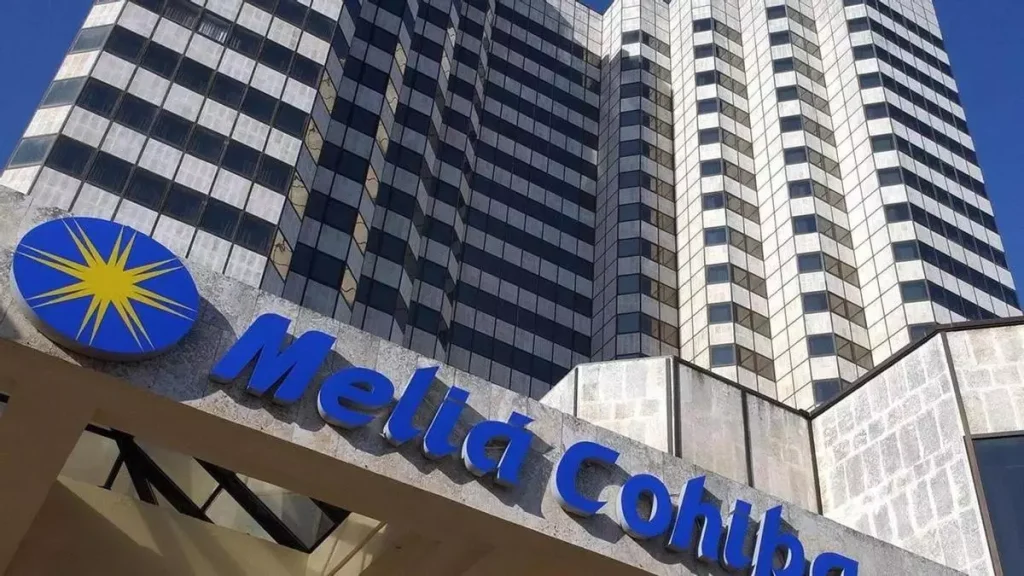
 14ymedio, Madrid, May 7, 2026 / The Spanish hotel chain Meliá Hotels International has reduced its operations in Cuba, closing approximately 50% of its hotel capacity on the island. The decision, implemented gradually during the first quarter of the year, is a response to the energy crisis, fuel shortages, and the decline in international air connections, as the company acknowledged in its financial results, published this Thursday.
The Balearic company, one of the largest foreign operators in the Cuban tourism sector, did not specify how many or which of its hotels remain closed. However, it admitted that as of the end of March, only about half of its hotel portfolio in the country was operational, where it currently manages 34 establishments and more than 5,000 rooms.
The chain also acknowledges that the establishments still operating depend almost entirely on domestic tourism, which accounts for “virtually all bookings for the hotels still open.” However, this market is insufficient to offset the drop in foreign visitors. In practice, the company has been forced to reduce its operational presence in the country while it awaits an eventual normalization of energy supplies and a recovery in international demand.
Meliá notes that operations in Cuba have been “significantly compromised” since the beginning of the year due to difficulties in obtaining fuel and the deterioration of the tourism market.
The measure expands upon the adjustment announced in February, when Meliá reported the temporary closure of three of its 35 hotels in Cuba . Operations are now concentrated in a smaller number of facilities, an increasingly common practice in the Cuban tourism sector due to shortages of customers, fuel, and supplies.
In its report, Meliá notes that its operations in Cuba have been “significantly compromised” since the beginning of the year due to difficulties in obtaining fuel and the deteriorating tourism market. The company added that the lack of aviation fuel has led to the cancellation of numerous direct flights to the island, including those from Canada, which remains the country’s main source of tourists.
This collapse in flights further aggravated an already weakened international demand. Hotels that remained open registered an average occupancy rate of just 34.1% between January and March, a very low figure for a destination that for years received substantial public investment in tourism infrastructure.
The situation confirms the decline of a market that for decades was considered strategic for Meliá. The company operates in destinations such as Havana, Varadero, Cayo Coco, Cayo Santa María, and Holguín, many of them designed for international sun and beach tourism. However, the combination of power outages, fuel shortages, logistical problems, and reduced flights has severely limited the profitability of these destinations.
In its forecasts, the hotel chain warns that the evolution of the business in Cuba will depend on how events unfold, the recovery of supplies, and an eventual return to normality.
Looking ahead to the coming months, the hotel chain is avoiding offering a clear reopening timeline. In its forecasts, it cautions that the evolution of the business in Cuba will depend on how events unfold, the recovery of supplies, and an eventual return to normality. Meanwhile, operations will continue to be limited by the drop in international demand and the coordinated lockdown measures implemented in the country.
The Cuban blow was also reflected in Meliá’s global accounts. The company posted a net profit of €3.3 million in the first quarter, 68% less than the €10.5 million earned in the same period of the previous year. Despite this drop, the group’s total global revenue increased by 4.4% to €460.6 million, and RevPAR, the indicator that measures revenue per available room, grew by 8.3%.
The company attributes this positive performance to other markets, especially holiday destinations in Spain, Europe, and the Caribbean, where it reports double-digit growth compared to the previous year. It also maintains that, for the time being, geopolitical tensions in the Middle East have not had a significant impact on either demand or costs, although it remains cautious regarding potential energy price increases and disruptions to air capacity.
For Cuba, however, the outlook is much bleaker. The island is experiencing one of the worst energy crises in its history, with prolonged blackouts, electricity generation deficits, and chronic difficulties importing fuel. This situation affects the population, state-owned enterprises, and also foreign businesses that depend on a stable infrastructure to operate.
______________________
COLLABORATE WITH OUR WORK: The 14ymedio team is committed to practicing serious journalism that reflects Cuba’s reality in all its depth. Thank you for joining us on this long journey. We invite you to continue supporting us by becoming a member of 14ymedio now. Together we can continue transforming journalism in Cuba.