
Cuba: The Decade of the Creative Stampede

When Castro died, Havana began forming into a giant anthill that, when it wants to be, is my country / EFE

14ymedio bigger14ymedio, Xavier Carbonell, Salamanca, 22 May 2024 — Ten years ago, I thought I would always live in Cuba. I knew where the graves of my relatives were. I knew how to speak Cuban, not the standard dialect, not Canarian, nor Iberian, which is what I speak now. I knew that my country was mediocre but Fidel Castro had one shave left — or perhaps several— judging from his beard. Maybe that would change everything. I had begun to study philology and worked in a library in Santa Clara. I had a cat and a lot of books. I had that life.

In effect, Castro died in 2016. (Judging from photos, only a few white hairs remained of his beard.) In Havana a giant anthill began to form that, when it wants to be, is my country. A battalion of insects and larvae and mosquitoes, all grieving, all with tears in their eyes, all there to see the corpse pass by. I knew that his death would disgrace the country, not because Castro had died – that was an epic relief – but because from then on the memory of the dead man would return, not from the future – he was known for being able to leap through time — but from the past, from newspapers and books, from the mouths of the nostalgic and apocalyptic. Fidel the Prophet, the Sacred Heart of Fidel, Fidel the Terminator.

The anthill would arrive in Santa Clara at dawn – nocturnal mourners, a pitiful spectacle – at the university where everyone had to be present. It was going to be unbearably historic, the newspapers warned. When I left the Central University, I made a point of being seen. “Where are you going?” a department head asked me. “I’m going home,” I responded, not knowing that years later the Cuban hip-hop artist Cimafunk would become famous for exhausting variations of that phrase until it became the motto of my generation.

I went home. A difficult task because it involved swimming against the tide of buses, cars and other elements that made up Castro’s funeral procession. From there, I kept going to closed spaces. My spaces, not theirs. Spaces that were becoming abstract. Ideas, novels, books. I went to Ecuador, I went to continue reading

India. Remote places. Countries to which I would not have traveled had they not gotten in my way. And even though everything seemed to indicate that I would not go back, I always went home.

In an essay about the Cuban novelist Pedro Juan Gutiérrez, the Chilean writer Roberto Bolaño said that Havana – and by extension all of Cuba – lived in a perpetual coma. He later corrected himself, describing the city as “anemic and feverish.” We can forgive Bolaños this mistake because he made the diagnosis at the start of the millennium. By 2016, the patient was no longer responsive.

Perhaps the most radical difference between the “New Man” — the children of the revolution — and us is that we decided to wake up from the coma. We were reading, and I mean reading a lot, of independent media. When I came back from India in the midst of the pandemic, I did so under false pretenses. I had a clear escape plan. I came back with contacts and resources. I came back restive and aloof, like a cat. A couple of friends had already left. When protests erupted on 11 July 2021, the rest got out. The jailbreak was intense and I was happy to be part of it.

I do not think I have ever felt the sense of guilt that seems to overwhelm some exiles. The latest wave of Cuban emigration is full of courageous mothers, cool Marxists, impromptu Afro-Cuban writers and activists of all stripes. Also journalists of very diverse abilities. I have seen old Castro loyalists waving flags in Madrid, trying to persuade Spain’s prime minister not to resign, which gives me a bad feeling. Before he emigrated, I also saw a well-known poet leave a small blossom at the tomb of Fidel Castro. I have been alive for three decades and, at this point in the game, I do not think anything can surprise me when it comes to Cuba.

After ten years, the idea of homeland has eroded. We never wanted it to be this way but Cuba has become so depraved that many of us will find it difficult to return, if we ever do return, to the place where our life began. That life, which now seems like an April Fool’s joke, came to an end. Late in his life, Kant warned against succumbing to “the panic of darkness.” We have decided to live, not just survive.

For me – for all of us who left — reading this publication is a way of restoring ties with the country of our birth. “Updating oneself” by reading a news article is a nostalgic somersault. We still get to watch, experiencing it through those who lend us eyes and ears to see what we are missing. And so by not being completely disconnected — always with a mother or a friend or an orphaned cat on the other side — we continue to feel Cuban. Nonetheless. . . And yet. . . With the help of this full-color reality, we can see the future and the decisions we will face more clearly.

The first ethical dilemma an exile has to face is whether or not to return to to the source of his pain, to the point of departure

The first ethical dilemma an exile has to face is whether or not to return to the source of his pain, to the point of departure. What is there to build? What is left among the ruins? What will those Cubans who stayed behind be like? Can a post-Castro Cuba and Cuban identity coexist. What about the Cuban mercenaries who fight alongside Putin’s forces in Ukraine and those fleeing Cuba via Nicaragua? Will it ever be possible to write freely in Cuba? The answer depends on the individual. Nobody asked us to stay and no one has the right to tell us when to return.

Escaping from the anomaly of time and space that is Cuba, moving to a quiet city in Spain, opining on what was lost, reading and writing for “14ymedio” is what one has to do now. It does not resemble the life we left behind, or what we anticipated ten years ago, but maybe it is better. True to my old profession and to the books I left behind, I carry two snippets from Greek philosophers in my pocket. One by Iamblichus is for the present and wards off melancholy: “When you leave your homeland, do not turn back because the Furies are following you.” The other by Democritus, for when I am feeling relaxed, helps me not to get my hopes up about going back: “I came to Athens and no one recognized me.”

____________

COLLABORATE WITH OUR WORKThe 14ymedio team is committed to practicing serious journalism that reflects Cuba’s reality in all its depth. Thank you for joining us on this long journey. We invite you to continue supporting us by becoming a member of 14ymedio now. Together we can continue transforming journalism in Cuba.
A Private-Sector Cuban Company, Paid $31,530 by the U.S. Government, Is Accused of Being a Front for the Cuban Regime

US Congresswoman María Elvira Salazar requests the termination of the contract with a company that fired an employee for writing “Down with the dictatorship”

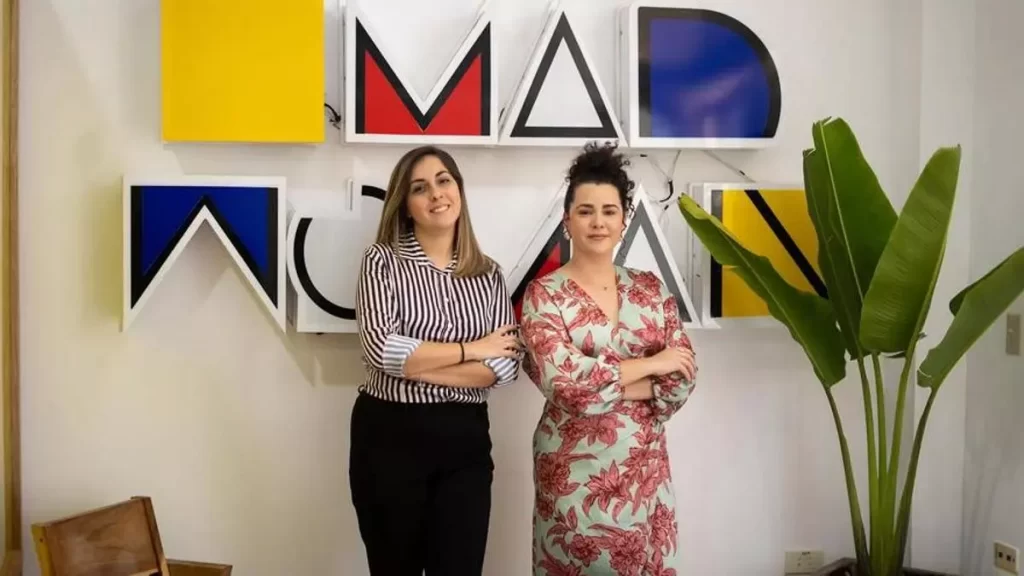
Disley Alfonso y Mayvic Delgado, fundadoras de MadWoman / MadWoman Agency

14ymedio bigger14ymedio, Havana, 22 May 2024 — The United States Embassy in Havana found itself embroiled in a controversy after paying a privately owned Cuban communications firm $31,530 (almost 11 million pesos at the current unofficial exchange rate) to develop information campaigns. The news was reported by website ADN Cuba, which claims that the company, MadWoman Agency, not only has ties to the Cuban regime but also fired one of its employees for posting anti-government slogans on social media.

ADN Cuba gained access to documents showing ties between the embassy and the company, which indicate that the work involved a total of thirteen separate projects. “Six were for migration-related messaging/campaigns, five for designs for strategic programs (Black History Month 2023 and 2024, Pride Month 2023, a musical exchange with local university students, and a film diplomacy program), one promoting bilingualism, and one Ukraine-related campaign in 2023.”

In February, a Cuban-American Republican congresswoman, María Elvira Salazar, sent a letter to U.S. president Joe Biden urging him to cancel the embassy’s contract with MadWoman and cease all communication with the company by April 1. Salazar also reminded the president of reports that, in September 2023, the company fired one of its employees, Álvaro Hernandez, for posting “down with the dictatorship” on his X (formerly Twitter) account. continue reading

María Elvira Salazar sent a letter to Joe Biden urging him to cancel the embassy’s contract with MadWoman

“This company, MadWoman, is clearly a front for the regime,” wrote Salazar. “It is completely unacceptable for our embassy to be working with a ’company’ that fires people for criticizing the Cuban dictatorship.”

In a written reply to Salazar this week, the White House Office of Legislative Affairs defended the embassy’s ties to MadWoman and stated that the company denies having fired any of its employees for political or ideological reasons, adding that Hernandez had left the company of of own accord. “[MadWoman Agency] assured the State Department that it ‘did not fire the employee in question and has not penalized any employees for their personal opinions,’” the reply states.

The White House letter also claimed that the company is a private entity that has no ties to the Cuban government. ADN Cuba reports — based on a “document from the State Department itself that had been prepared for the House Foreign Affairs Oversight and Accountability Subcommittee” — that the U.S. Embassy in Havana still has active contracts with the company.

MadWoman is a private-sector company that formally registered as MD Creativa S.R.L. in 2023. It came under scrutiny after Hernandez’ dismissal. The employee and his partner, another former employee, later left Cuba to seek asylum in the United States. Hernandez told ADN Cuba that, after his post appeared, the company directors demanded an explanation. “When I got to the meeting, they showed me my post X and asked me, ’What is this?’ That’s what I think,” he says he replied.

He claims that one of the owners, Disley Hernandez, told him the the agency was closely affiliated with the Cuban government. “They gave me several reasons why they had to indefinitely relieve me of my duties at the agency since they were a government company and couldn’t have employees making comments like this,” he said.

Hernandez’ partner, Alberto Góngora, also spoke to ADN Cuba about employee pay at MadWoman

Hernandez’ partner, Alberto Góngora, also spoke to ADN Cuba about employee pay at MadWoman. He says the company paid him 1,000 pesos ($2.87) for developing the embassy’s Black History Month campaign.

ADN Cuba also reported that, according to a MadWoman employee manual, the company requires contract staff, consultants and employees to “refrain from making posts or sharing content that may be at odds with established national policies.” Hernandez mentioned similar policies in a separate interview with “Diario de Cuba.”

The Cuban government legalized medium and small private-sector companies (MSMEs) like MadWoman in 2021. Since then, they have come under widespread public criticism from the public and prominent members of the Cuban exile community, among them Rep. Salazar, who see them as falling into a gray zone in terms of U.S. policy towards Cuba.

14ymedia has, on several occasions, reported on links between Cuban government officials and the owners of some private businesses, who many have likened to frontmen. Such is the case with Diplomarket, a mysterious supermarket that resembles the American retail conglomerate Costco and opened last October in Havana. As for ownership, the only thing known about the company is that it is registered under the name of a Cuban businessman, Frank Cuspinera Medina.

Other businesses known for their ties to the regime are shoemaking MSMEs in Camajuaní, a town in Villa Clara province that is also home to a pig farm to which Miguel Díaz-Canel makes frequent, hours-long visits.

____________

COLLABORATE WITH OUR WORKThe 14ymedio team is committed to practicing serious journalism that reflects Cuba’s reality in all its depth. Thank you for joining us on this long journey. We invite you to continue supporting us by becoming a member of 14ymedio now. Together we can continue transforming journalism in Cuba.

A Woman and a Ration Store Worker, Killed in Cienfuegos, Cuba, by the Husband

Ailen Tartabull, mother of an eight-year-old boy, was murdered at her home

Her death represents the 18th femicide on the Island, so far in 2024, according to 14ymedio / Facebook

14ymedio bigger14ymedio, Havana, May 29, 2024 — Machista violence claimed two new victims in Cuba on Tuesday at the hands of the same aggressor. According to several reports on social networks by residents of Cienfuegos, Ailen Tartabull, mother of an eight-year-old boy, was murdered at home by her husband, identified as Adrián Cruz, who later went to a ration store where he killed Víctor Manuel Ojeda Alpízar.

The death of the woman represents the 18th femicide on the Island so far in 2024, according to the count of 14ymedio. According to Irma Broek, Ojeda Alpízar, “alleged lover” of Tartabull, worked at the bodega (ration store) and was “lovingly called El Chino.”

The comments in that post by Broek, as well as in other posts, such as that of a user named Saúl Manuel, say that the victims were very well-liked. “That unfortunately left great suffering for the families of the victims, children who were left alone when they most needed their father and mother,” lamented Javier Pérez Macías. “I had the pleasure of meeting the victim, Víctor Manuel Ojeda Alpízar. He was my friend, a good guy who only thought about giving everything to his son and helping others.” continue reading

According to Irma Broek, Ojeda Alpízar, Tartabull’s “alleged lover,” worked in the ration store and “was affectionately called ’El Chino’

About the aggressor, who fled the place and is a fugitive, the same sources claim that he had served a sentence in prison in the past for serious assaults against Tartabull.

The most recent femicide before this one had been recorded just a week ago. María Emilia Savigne Borjas, 38 years old and a mother of three children, was murdered in Santiago de Cuba, in the middle of the street, as confirmed by the platform Yo Sí Te Creo en Cuba.

This attack is the last in a wave of sexist violence that began on January 2, with the death of Diana Rosa Cervantes, in Camagüey. In addition, there were three attempts at femicide registered by Yo Sí Te Creo en Cuba.

During a congress of the Federation of Cuban Women in 2023, President Miguel Díaz-Canel revealed that in 2023, the Island tripled the number of people convicted of machista murders compared to the 2022 record. He reported that 93 percent of the penalties were for more than 20 years in prison, and in five cases it was life imprisonment.

Translated by Regina Anavy

____________

COLLABORATE WITH OUR WORKThe 14ymedio team is committed to practicing serious journalism that reflects Cuba’s reality in all its depth. Thank you for joining us on this long journey. We invite you to continue supporting us by becoming a member of 14ymedio now. Together we can continue transforming journalism in Cuba.

Cuba Admits the Presence of Oropouche Fever in Santiago De Cuba

The Ministry of Public Health issues a statement after numerous complaints from Santiago de Cuba

The samples were analyzed by the Pedro Kourí Institute of Tropical Medicine / Minsap

14ymedio bigger14ymedio, Madrid, 27 May 2024 — After numerous complaints on social networks from the east of Cuba, the Ministry of Public Health admitted the presence on the Island of Oropouche fever. In a statement issued on Monday, it reports the discovery of the virus in two municipalities of Santiago de Cuba, the capital city, and in Songo La Maya. Without detailing how many cases there are and ignoring the numerous complaints made on social networks, the health authorities say that the virus was detected “through follow-up and surveillance actions of non-specific febrile syndromes.” The samples were analyzed by the Pedro Kourí Institute of Tropical Medicine.

“Great outbreak of epidemic in the Quintero, Santa María and Boniato neighborhoods,” independent journalist Yosmany Mayeta Labrada had warned on May 18 in a Facebook post. “Fever, vomiting, among other symptoms, and doctors don’t know what to do.”

“Sometimes, the most severe symptoms include vomiting and bleeding with small red spots on the skin, nosebleeds or bleeding gums”

This Sunday, the reporter, a U.S. resident, again reported: “The disease causes a condition similar to dengue. It is characterized by the sudden appearance of symptoms, including high fever, severe headache, muscle and joint pains. In some cases, there are rashes on the skin. Sometimes, the most severe symptoms include vomiting and bleeding with small red spots on the skin, nosebleeds or bleeding gums. Occasionally meningitis or encephalitis may occur.”

Similarly, he mentioned the Oropouche virus as a possible cause, since “it is hitting the countries of Brazil, Bolivia, Colombia, Peru and Venezuela, and it cannot be ruled out that some person or doctors who are working in these countries have entered the Island sick.” continue reading

In its statement on Monday, the Ministry of Health indicates that the Pan American Health Organization (PAHO) had reported the presence of the disease, transmitted by mosquitoes and gnats, in Bolivia, Brazil, Colombia and Peru, in addition to Ecuador, French Guiana, Panama, Peru and Trinidad and Tobago.

In the same way, he tries to reassure the population, confirming the symptoms of fever, headaches, muscle and joint pains, vomiting and diarrhea, but adding: “Associated with the virus, no serious, critical or death cases have been reported.” As it is a virus, they say, there is no specific treatment, only “general measures to relieve symptoms.”

In addition, they report that “entomo-epidemiological actions are being carried out to cut the chain of transmission and achieve the control of the disease in the shortest possible time.”

Translated by Regina Anavy

____________

COLLABORATE WITH OUR WORKThe 14ymedio team is committed to practicing serious journalism that reflects Cuba’s reality in all its depth. Thank you for joining us on this long journey. We invite you to continue supporting us by becoming a member of 14ymedio now. Together we can continue transforming journalism in Cuba.

A Femicide in Holguín, the Second Death Due to ‘Machista’ Violence in Cuba on the Same Day

In addition to that of Ariatna Gámez, on May 28 there was another femicide in Cienfuegos, that of Ailen Tartabull, allegedly attacked by her husband

Alas Tensas says that the aggressor of Ariatna Gámez already had a history of ’machista’ violence / Facebook / Ariatna Quintana

14ymedio bigger14ymedio, Madrid, May 31, 2024 — The murder of Ariatna Gámez Quintana, 32 years old, allegedly perpetrated by her partner this Tuesday in Holguín, brings to two the number of deaths from machista violence on the Island on the same day. Also on May 28, there was a femicide in Cienfuegos, that of Ailen Tartabull, allegedly attacked by her husband in an event in which Víctor Manuel Ojeda Alpízar, who was was working in the ration store where the events occurred, also lost his life.

According to the Alas Tensas Observatory, the aggressor of Ariatna Gámez, father of her two minor children, already had a history of machista violence, and his whereabouts are currently unknown. The authorities are looking for him for the crime he allegedly committed in front of the victim’s four children. “Our condolences to your family and our recommendation to activate a security protocol for people who survive Ariadna,” demanded the feminist association.

There are fewer details about an alleged femicide in Santiago de Cuba, that of Isaira Despaigne, 34, between May 14 and 15

There are fewer details about an alleged femicide in Santiago de Cuba, that of Isaira Despaigne, 34, between May 14 and 15. The deceased had three children, but more information about the circumstances of her death is not known. continue reading

The observatories Alas Tensas (Tense Wings) and Yo Sí Te Creo (Yes I Believe You) in Cuba already count 22 femicides so far this year, although the count made by 14ymedio totals 20, since the deaths of two elderly women last March are not considered by this newspaper to be of a machista nature. In addition, the organizations warn that there are six cases that need further investigation to determine if they are murders by machista violence, three of them in Havana, two in Santiago de Cuba and one in Esperanza, Villa Clara.

Last week there was also another femicide in Santiago de Cuba, that of María Emilia Savigne Borjas, 38 years old and a mother of three, attacked in the middle of the street. The cases have only multiplied since the first victim this year of this type of violence in 2024, Diana Rosa Cervantes, was reported on January 2.

The authorities are still unable to contain a swell that is growing to the extent that social networks contribute to the dissemination of cases. However, it is also likely that many deaths will not be recorded, and the official records arrive late and badly, despite the fact that Cuban President Miguel Díaz-Canel himself urged a resolution to the situation a year ago.

The announcement of the creation of an official observatory and a “real-time” record that still does not work have not contributed to mitigating the murders, while feminist associations demand a comprehensive law against machista violence that, in addition to making statistics public and criminalizing femicide, includes preventive measures.

Translated by Regina Anavy

____________

COLLABORATE WITH OUR WORKThe 14ymedio team is committed to practicing serious journalism that reflects Cuba’s reality in all its depth. Thank you for joining us on this long journey. We invite you to continue supporting us by becoming a member of 14ymedio now. Together we can continue transforming journalism in Cuba.

The Canary Islands and Cuba Are Developing a Research Project on Cassava As Feed for Livestock

The project seeks to reduce the costs of livestock inputs and look for sustainable alternatives to current agricultural production systems

The Canary Institute has imported 4,000 cuttings of four varieties of cassava from the Cuban center that are grown at the Finca El Pico del Icia / Government of the Canary Islands

14ymedio biggerEuropa Press (via 14ymedio), Santa Cruz de Tenerife, 31 May 2024 — Researchers from the Canary Institute of Agricultural Research (ICIA), the Research Institute of Food and Tropical Fruits of Cuba (INIVIT) and the University Without Borders Association (USF) are carrying out a study for the development in the Canary archipelago of animal feed alternatives based on new varieties of cassava, which aims to diversify livestock feed production from the use of this reserve root.

This initiative also aims to reduce the costs of livestock inputs, an activity that has been greatly affected by the increase in cereal prices due to the military conflict between Russia and Ukraine, among other conditions of the international context, which reduces livestock profitability, and to seek sustainable alternatives to current agricultural production systems aimed at mitigating and reducing the effects of climate change.

Thus, within the framework of the project, which began in June 2023, ICIA replicates the tests carried out by INIVIT on the use of the cassava root, once converted into flour as a substitute for cereal in animal feed, and of the aerial part of the plant as fodder.

With this objective, the Canarian institute has imported 4,o00 cuttings of four varieties of this tuber from the Cuban center that are grown at the Finca El Pico del Icia, in Tejina (Tenerife), to see their adaptation to the Canary Islands and their yields, in order to subsequently check the results of using this plant material in the feeding of local livestock of the Canary Islands archipelago, the Ministry reports. continue reading

The Canarian institute has imported 4,000 cuttings of four varieties of cassava from the Cuban center that are grown at the Finca El Pico del Icia, in Tejina

In this way, cassava’s agronomic aptitude and performance, its economic and technical viability for the manufacture of feed will be studied, and the formulation of balanced and complete diets using cassava and other ingredients will be evaluated.

Finally, palatability and consumption tests will be carried out in different species with evaluation of the final livestock products: milk, cheese, meat and eggs.

To do this, Cuban scientists, specialists in the management of these varieties, support the different processes.

ICIA president Janira Gutiérrez explained that the experimental cultivation of cassava in the Canary Islands will contribute to generating new knowledge about more viable and sustainable alternatives in animal fodder for the Canarian primary sector, whose result could be a product that would be added sustainably to animal feed. She also stressed that diversification is presented as a key strategy to manage risks in agricultural production in small systems such as the archipelago, allowing acceptable levels of productivity to be achieved even in unfavorable conditions.

 Cuban scientists, specialists in the management of these varieties, support the different processes

“In addition, these works promote cooperation in scientific research, knowledge and technological development in agricultural matters with the benefits that this entails for all the parties involved,” she added.

The study will be continued throughout 2025, when the results will be evaluated in different species of local livestock. By the end of 2024, the first results will be published on the yield and agronomic management of the crop.

This project is based on the work carried out by INOVIT on high production, quality and resistant cassava varieties, the promotion and advice on their cultivation for human and animal feed, and the development of the processing industry.

In this sense, the level of specialization is a reference for knowledge of this crop inside and outside the country, as well as the application of results in the industry, to which is added the extensive experience of ICIA in applied research in both plant and animal production, feed and fodder.

The consul general of Cuba in the Canary Islands, Elsa Agramonte, visited the Finca El Pico del Icia in December, where this project is developed, accompanied by the Minister of Agriculture, Livestock, Fisheries and Food Sovereignty of the Government of the Canary Islands, Narvay Quintero, the president of ICIA, Janira Gutiérrez, and the vice-rector for Internationalization and Cooperation of the University of La Laguna (Ull), Inma González, and researchers from this program.

Also, in the month of April, researchers from ICIA and the USF traveled to Cuba to participate in different work meetings and learn first-hand about the research and studies carried out by INIVIT on cassava and other tubers and reserve roots.

Translated by Regina Anavy

____________

COLLABORATE WITH OUR WORKThe 14ymedio team is committed to practicing serious journalism that reflects Cuba’s reality in all its depth. Thank you for joining us on this long journey. We invite you to continue supporting us by becoming a member of 14ymedio now. Together we can continue transforming journalism in Cuba.

Blackouts Are Suspended in Sancti Spíritus, Cuba, After a Protest on the Camino de La Habana

50 people were arrested on Wednesday, by Thursday night the power outages returned

The city of Sancti Spíritus during a summer power outage in which the only lighting was on public roads. / Facebook

14ymedio bigger14ymedio, Mercedes García, Sancti Spíritus, 31 May 2024 — Blackouts returned to the city of Sancti Spíritus this Thursday night. During the day, residents could not believe what they were experiencing: a day without power outages. But their joy did not last long.

“We went out into the street to bang on pots and pans because we had been without electricity for hours and hours,” a resident of the Camino de La Habana neighborhood, located in the southern part of the city of Sancti Spíritus and with a population of around 2,000, tells 14ymedio. “That was tremendous because people went out into the streets, they didn’t stay inside their houses. Even the old people came out with their pot and spoon.”

“The police arrived a while later and took some of the arrested people away. They grabbed the younger men and put them in the truck,” explains the source, who prefers anonymity. “There are still about 50 arrested, and the families are going crazy asking if they are going to be released or if they are going to be put on trial. The entire neighborhood is very upset with this, because the only thing we did was protest with the pots and pans.”

The resident assures that, for fear of greater reprisals, the participants in the protest concentrated on the pot-banging and shouting “Electricity!” and “Food!”, the words that have become a constant in protests of this type that have occurred in Cuba in recent years and that reflect popular dissatisfaction with blackouts, shortages and inflation. continue reading

“It was very exciting, because they were taking away the arrested people but those of us who were left continued banging on our pots. We were not afraid because they couldn’t arrest us all”

“It was very exciting, because they were taking the arrested people but those of us who were left continued continued banging on our pots. We were not afraid because they couldn’t arrest us all. My neighbors realized that they couldn’t fit the entire neighborhood into that Police truck,” recalls the man from Sancti Spiritus. “They took them to the Vivac [detention center awaiting processing] in Sancti Spíritus,” he says.

The protest resulted in the city of Sancti Spíritus waking up the next morning with a strong police operation. “I left my house on my way to work and I started seeing police on the corners, patrols everywhere, and it was a neighbor who told me that there had been a protest and that the city was occupied,” a woman from Sancti Spiritus tells this newspaper. She works in a state company linked to the Ministry of Agriculture.

“When I arrived at work, my boss, who lives on Camino de La Habana, gave me more details. He says that it was impressive, that the police patrolled the neighborhood and people did not get out of the middle of the street, they were proving their strength with their pots,” explains the woman. “He says that he did not leave his house for fear of losing his job, but that he banged his pot in the yard.”

“In the office we had a blackout all morning but, surprise, this Thursday throughout the day they did not turn off our power in that area or in any of the city of Sancti Spíritus,” she explains. “People couldn’t believe it, I didn’t even get to enjoy the lack of blackouts, because I had the feeling in my stomach that at any moment they would knock out the power. I was stunned, I couldn’t figure out anything, I couldn’t function with electricity all the time, because I’m used to the fact that there almost always isn’t any.

“I was stunned, I couldn’t figure out anything, I couldn’t work with electricity all the time, because I’m used to the fact that there is almost always no electricity

Several residents in the city also detail that they saw new police patrols in circulation that they had not previously seen on the city streets. Internet access was also reduced to a minimum to prevent the details of the protests on Camino de La Habana from becoming known through social networks. So far, no video of the demonstration has been released.

“The next day after the protest, a car from the Electric Company arrived to change a transformer, photos were taken and everything,” adds the neighborhood resident. “A clown, because everyone knows that the problem of blackouts has nothing to do with an electric pole or a transformer, but rather that they are taking away our electricity because there is no generation.”

On the Facebook page of the Sancti Spíritus Electrical Company, two images of a worker standing on a ladder and an old Soviet-made truck in the foreground, are enough for the state energy monopoly to use the hashtag #SanctiSpíritusEnMarcha, an irony If we are talking about a district where the most recent march was a popular protest, silenced and repressed.

____________

COLLABORATE WITH OUR WORKThe 14ymedio team is committed to practicing serious journalism that reflects Cuba’s reality in all its depth. Thank you for joining us on this long journey. We invite you to continue supporting us by becoming a member of 14ymedio now. Together we can continue transforming journalism in Cuba.

After the Protests in Baracoa Cuba’s Electric Union Claims to Have a Strategy Against the ‘Annoying Blackouts’

The terrible internet connection prevented the people of Baracoa from publishing more information about the demonstration on their social networks / Cubalex

14ymedio bigger14ymedio, Havana, May 18 , 2024 — The general director of Cuba’s Electric Union, Alfredo López, told the official State newspaper Granma this Friday afternoon that he had a plan to “attenuate the annoying blackouts.” The strategy, which includes a partial increase in generation capacity and reconnecting several thermoelectric units, aims to have an anesthetic effect after the outbreak of protests over the energy situation on Thursday night in Baracoa.

The terrible internet connection – already burdened by blackouts and lowered to a minimum when there are riots – prevented the people of Baracoa from publishing more information about what was happening on their social networks. Poor connectivity also prevented a larger number of protesters from receiving a summons. However, several recordings of the demonstrations managed to reach the internet.

The protest immediately mobilized local authorities and the official Guantánamo press, which have begun a campaign to “unite” the people. “As Fidel taught us. The leaders together with the people, in the most difficult moments,” Lorian Milhet Fuentes, leader of the Communist Party (PCC) of Baracoa, published on his Facebook profile this Friday, attaching to his message a photo where officials appear supposedly listening to a resident who complains in the middle of a blackout. continue reading

On the same social network, other pro-government profiles released several videos where some people appear calling on the people not to protest. “I think we should unite, but not in this way, unite to, together, look for an alternative to the situation that the municipality, well and the country, is having, and I think that the solution is not this, demonstrations, the solution is to look for alternatives for ’How can we give food to the children’,” said an unidentified woman in one of the Facebook posts.

In a second video, another woman demanded that the people must understand the “critical situation” that the country is going through. “We don’t have dollars to buy oil, what we have is to unite and each one of us, in the jobs we do, do better every day.”

The Municipal Assembly of Popular Power, one of the official pages that shared videos calling for the “unity that characterizes Baracoa,” shared this Friday a post from the local Primada Visión telecenter where it is stated that the PCC leadership in the territory agreed to “increase the sale of food products and other energy sources for cooking food in the population.”

Havana was slow to respond and only the next day, in Granma, did López reveal what specific measures the Unión Eléctrica planned to take in response to the situation. The core of the problem, it said, is the contrast between growing demand – as summer approaches, appliances are used more – and insufficient generation capacity. The difference between these two factors has left, in recent days, a significant deficit, which this Friday was 1,300 megawatts.

After justifying the endless “maintenance cycles” of the thermoelectric plants, López assured that units six and eight of the Máximo Gómez plant, in Mariel, and block six of Nuevitas, in Camagüey, will be reconnected to the National Electric System. López regretted that the current average length of the frequent and often daily blackouts was between 12 and 16 hours throughout the Island.

The problems do not end, he admitted. In Mariel alone, a “steam leak” in an extremely dangerous area caused two blocks of the plant to go offline. Similar breakdowns hamper the energy generation of Nuevitas and, in general, the other plants.

Families are the ones who bear the brunt of it. In the east of the country, where recent protests have broken out over long blackouts – the most important of which occurred last March, in Santiago de Cuba – the situation has reached rock bottom, fueled by shortages. Residents of Baracoa told 14ymedio that, of the basic family food basket that had to be sold through the rationing system at the beginning of the month, it was only on May 15 that a pound of rice and another of sugar began to be distributed in the bodegas (ration stores).

“I had to buy charcoal to be able to cook for the children because the blackouts extend for more hours every day,” a mother living in the municipal seat told this newspaper.

____________

COLLABORATE WITH OUR WORKThe 14ymedio team is committed to practicing serious journalism that reflects Cuba’s reality in all its depth. Thank you for joining us on this long journey. We invite you to continue supporting us by becoming a member of 14ymedio now. Together we can continue transforming journalism in Cuba.

Melia Creates an Import Company to Ensure the ‘High Standard’ of Its Cuban Hotels

The Spanish firm will manage two new facilities on the Island, in Ciego de Ávila and Matanzas

Meliá will inaugurate the Meliá Costa Rey on the North Keys of Ciego de Ávila on July 1 / Meliá Cuba

14ymedio bigger14ymedio, Havana, 16 May 2024 — The poor results of tourism in Cuba do not seem to deter foreign hotel companies that do business with Havana. Despite the drop in its profits on the Island in recent years, the Spanish Meliá plans to open two hotels this year, in Cayo Coco (Ciego de Ávila) and Varadero (Matanzas) – two fewer than in 2023 – in addition to an import company, and the Indian hotel chain MGM Muthu plans to inaugurate, using its own airline, several domestic routes within the country.

Both announcements were made during the 2024 International Tourism Fair. Meliá will inaugurate the Meliá Costa Rey on July 1 in the Cayería Norte of Ciego de Ávila, “located on the first line on Las Coloradas beach,” explains Cubadebate. The complex, which belongs to the state hotel group Gran Caribe, has 566 rooms and part of its structure will be adapted to house ’The Level’ section, a new brand incorporated by the Spanish company that offers adult only luxury spaces.

“The establishment will have six restaurants, bars, family rooms in the standard area and multipurpose rooms for conventions, with capacity for up to 200 people,” adds the official media. continue reading

Indian hotel chain MGM Muthu, using its own airline, plans to inaugurate several domestic routes within the country

The second inauguration, that of Sol Hicacos Varadero, will take place on November 1. The hotel, according to the press, will be intended for a public over 16 years of age and will use, after the “transformation,” the old Turquesa hotel. The complex is located near the enclave’s dolphinarium and several “ideal spots” for diving, such as the Varahicacos ecological reserve. Regarding the measures necessary to conserve this enclave, where endemic plants and animals are found, as well as migratory birds, both the press and the hotel industry leave it to the public’s imagination.

Meliá reported that it created its “own import entity,” Mesol. And it adds: “it will undoubtedly contribute to maintaining the high standards of service that characterize the accommodations we manage.” The Spaniard was careful to say it, but the truth is that, from towels to construction equipment, the resources she needs to maintain her “high standards” are not available on the Island.

The beginning of an “ambitious” reform plan from 2023 to 2026, as described by Cubadebate, could be another reason that leads Meliá to try to control the import of the products it needs. As the company explained at the fair, at least six of the facilities it manages are being renovated. “In hotels such as Sol Palmeras, Meliá Varadero and Meliá Las Antillas, the renovations will focus on the rooms; while in the Meliá Las Américas, Meliá Habana and Meliá Cayo Coco hotels, the improvements will be more ambitious, reaching common areas, restaurants, etc.,” the outlet asserts.

Meliá also announced the renewal of the brand of the Jagua hotel, in Cienfuegos. “It will operate in 2025 as INNSiDE Cienfuegos Jagua,” explained the company, which aims to bring its customers closer to the Cienfuegos cultural and gastronomic experience.

Meliá also announced the renewal of the Jagua hotel brand, in Cienfuegos

The Indian MGM Muthu Hotels is advancing in leaps and bounds and plans to involve its airline, Muthu Aviation, in its hotel management on the Island. This was confirmed to the official State newspaper Granma by the owner of the conglomerate, Nesamani Maran Muthu, who assures that “the future is in the Caribbean.” According to his plans, domestic flights would be made between four destinations: Cayo Coco, Cayo Santa María (Villa Clara), Santiago de Cuba and Holguín.

With this project “it is expected to increase the number of visitors to Cuba, especially those from Asian destinations, such as India,” the Island’s Ministry of Tourism told the media.

The authorities also granted Muthu a new hotel in the Sierra de Cristal, Holguín. This is Segundo Frente, managed until now by the Cubanacán Group, with 600 rooms.

Compared to other Caribbean markets, which have already recovered their pre-pandemic visitor numbers, such as Mexico or the Dominican Republic, Cuba continues to lag behind and is unable to reach the numbers it aims for.

On April 19, the National Office of Statistics and Information revealed the official number of tourists who arrived on the Island in the first quarter of the year: 809,238 international travelers, just 56,807 more than the previous year in the same period. This figure threatens to hinder the annual aspirations of the authorities, 3,200,000 tourists this year, since it represents only 25.2% of the objective. In 2023, as of April, 21.4% of the projected 3.5 million had been achieved and the final figure was only 2.4 million.

The interest of large hotel companies like Meliá does not seem to wane and, on the contrary, they continue to look for ways to revitalize the sector

However, the interest of large hotel companies such as Meliá does not seem to wane and, on the contrary, they continue to look for ways to revitalize the sector. This Tuesday the Council of Ministers approved the creation of Publisset, an “economic association” between the Cuban agency Publicitur SA and the Spanish agency Disset Consultores Comunicación y Marketing SL.

“Publicitur is a communication and advertising services company linked to the Ministry of Tourism of the Republic of Cuba, specialized in the design and production of advertising and communication materials, aimed primarily at the field of tourism,” Cubadebate clarifies.

According to the media, the new company will specialize in “the provision of services from Cuba to foreign companies located in the national territory or outside it, which currently import services and productions because they do not have companies that provide them in the country, or with high international quality standards” and one of its expected clients are “tourism companies, especially in countries in the Caribbean area.”

The visa exemption for Chinese tourists and the implementation of an electronic visa so that travelers can quickly manage their trip to the Island are other of the regime’s most recent measures to recover the sector.

____________

COLLABORATE WITH OUR WORKThe 14ymedio team is committed to practicing serious journalism that reflects Cuba’s reality in all its depth. Thank you for joining us on this long journey. We invite you to continue supporting us by becoming a member of 14ymedio now. Together we can continue transforming journalism in Cuba.

Gioconda Belli Describes the Cuban Regime as a ‘Stagnant Ideological Straitjacket’

The Nicaraguan writer, who received an honorary doctorate from the University of Costa Rica, points out that only a repressive system sustains the Revolution

When her nationality was taken away, Belli was residing in Spain, a country that has granted her citizenship and where she continues to live. / EFE

14ymedio biggerEFE (via 14ymedio), San José, 31 May 2024 — Gioconda Belli , the Nicaraguan writer exiled in Spain, declared this Thursday in Costa Rica her lack of love for the Cuban Revolution, which, she said, is a “failed attempt” that has been become “a stagnant ideological straitjacket sustained by a repressive system.”

After receiving an honorary doctorate from the state University of Costa Rica (UCR) for her contributions to culture, education and the fight for democracy and human rights, Belli reflected that victories can be as deceptive and illusory as defeats, and gave as an example the Cuban revolution of 1959.

“I remember when Fidel Castro’s bearded Cuban guerrillas were victorious in Cuba, the magazine that my father and mother read and the photography and the excitement of the elders around me for that Revolution,” the author of the book commented in her speech about her novela El país de las mujeres (The Country of Women), on winning the Latin American Prize for Literature From The Other Shore 2010.

“I myself, years later, admired and was dazzled by that romantic feat that, at this point, seems like a failed attempt to me.”

“I myself, years later, admired and was dazzled by that romantic feat that, at this point, seems to me to be a failed attempt, a stagnant ideological straitjacket sustained by a repressive system that has forced the Cuban people to go through misery, family separations, humiliations and sadness,” she argued. continue reading

Belli, now 76, and who according to her critics belonged to the Department of Agitation and Propaganda (DAP) during the first Sandinista Government (1979-1990), described it as “regrettable that Cuba is now the advisor for Nicaragua and Venezuela for the organization of espionage, propaganda and methods with which it is ensured that power crushes any democratic or liberating attempt of these people.”

The poet and writer observed that “there was also enthusiasm in Latin America with the 21st century socialism” promoted by the late Venezuelan president, Hugo Chávez, “which also turned out to be a failure.”

“And not to mention Nicaragua – governed by Daniel Ortega since 2007, after coordinating a Government Board from 1979 to 1985, and presiding over the country for the first time from 1985 to 1990 – because we all know what happened with that illusion,” she concluded.

The author of El infinito en la palma de la mano (The Infinite in the Palm of the Hand) winner of the Premio Biblioteca Breve de Seix Barral in 2008, also criticized the extreme right in Europe that speaks out against migration, as well as former US president Donald Trump, and the president of Argentina, Javier Milei.

Belli has been attacked by a sector of the Nicaraguan opposition for her past in the ruling Sandinista National Liberation Front

Belli has been attacked by a sector of the Nicaraguan opposition for her past in the ruling Sandinista National Liberation Front (FSLN), to which she belonged during the first regime (1979-1990), and for her sympathy with the Cuban Revolution and its main leader, the late Fidel Castro.

So, in a writing titled ¿La golondrina hizo el verano? (Did the Swallow Make the Summer?) she explained that she has “rectified and made criticisms,” in which she also reveals: “I have written books and given interviews about the problems and errors of the Sandinista revolution and the product that was left of it, unfortunately, and that is the Ortega Murillo dictatorship that we suffer today.”

In those writings she admitted that she was part of a generation that failed to lead Nicaragua “to the freedom that had been won by blood and fire after the Somoza dictatorship (1937-1979).”

Gioconda Belli has been in exile for security reasons since May 2021 in the context of a crisis in Nicaragua in which the Government of Daniel Ortega has been accused by international organizations and various countries of committing human rights violations and persecuting its critics and opponents.

On February 15, 2023, the Nicaraguan authorities deprived Belli of her nationality and her property, along with 93 other Nicaraguans, whom they declared traitors to the country and fugitives from justice.

At the time of her denationalization, Belli resided in Spain, a country that has granted her nationality and where she continues to live.

____________

COLLABORATE WITH OUR WORKThe 14ymedio team is committed to practicing serious journalism that reflects Cuba’s reality in all its depth. Thank you for joining us on this long journey. We invite you to continue supporting us by becoming a member of 14ymedio now. Together we can continue transforming journalism in Cuba.

A French Organization Sends 10 Tons of Powdered Milk to Cuba

The container is valued at 40,000 euros and another 63,000 euros has already been raised of a total of 70,000 that will pay for another shipment

The CubaCoop association in front of the shipment of powdered milk that travels to the Island. / CubaCoop

14ymedio bigger14ymedio, Havana, 31 May 2024 — The French association CubaCoop loaded a container this Wednesday with 10.4 tons of powdered milk valued at 40,000 euros destined for the Island to support the feeding of children and vulnerable sectors.

The cargo is expected to arrive at the port of Mariel at the end of June after being shipped from the French port of Le Havre by the association, based in Ivry-sur-Seine, outside Paris.

“It’s done! The first container was loaded on May 29,” said Víctor Fernández, president of CubaCoop in information published on his own website in which an ongoing collection for a new shipment of food assistance is also announced. Of the 70,000 euros needed, the association has already raised 63,000.

Of the 70,000 euros needed, the association has already raised 63,000 for a second shipment

This shipment, along with the one sent from Spain by the Alhucema Solidarity Initiatives Association in April, are part of the multiple donations that arrive on the Island in order to alleviate the food crisis caused by the shortage of milk, which forced the regime, in January, to request “urgent help” from the United Nations World Food Program (WFP) to “facilitate the shipment of powdered milk” to the Island. continue reading

CubaCoop explained that, once on the Island, the milk will be distributed “among priority sectors” such as hospitals, orphanages, medical and educational structures, as well as the most vulnerable population, such as children, single women and the elderly.

The sending of the solidarity cargo from France is part of the campaign launched by the organization last March to counteract what it considers “insufficient food production for the needs of the population, in addition to harsh deprivations in multiple areas, consequences of a criminal economic blockade imposed on Cuba by the United States.”

The organization considers that the lack of food is “a consequence of a criminal economic blockade imposed on Cuba by the United States

In an interview with Prensa Latina, Víctor Fernández expressed thanks for the donations made by citizens, local authorities, public and private companies, foundations, unions, political forces and solidarity associations.

After being informed of the shipment, the Cuban ambassador to France, Otto Vaillant, expressed thanks for the gesture in a post on social networks by the representation in that country of the Government headed by Miguel Díaz-Canel.

This Thursday, the Spanish Congress approved in a commission a Non-Law Proposition (PNL) presented by the Sumar coalition (left) to “contribute to overcoming the shortage of milk intended for children in Cuba.” The proposal urges the Government of Pedro Sánchez to allocate funds through the Spanish Agency for Development Cooperation (Aecid) “to reinforce food aid programs for Cuba.”

____________

COLLABORATE WITH OUR WORKThe 14ymedio team is committed to practicing serious journalism that reflects Cuba’s reality in all its depth. Thank you for joining us on this long journey. We invite you to continue supporting us by becoming a member of 14ymedio now. Together we can continue transforming journalism in Cuba.

The Adventures of Three Women in Search of Unlikely Transportation in Matanzas, Cuba

A ticket on a state bus costs 20 pesos and, in private trucks, 250, but “state buses are scarce”

Prices are rising for private transportation in Matanzas, which does not reach all the municipalities of the province / 14ymedio

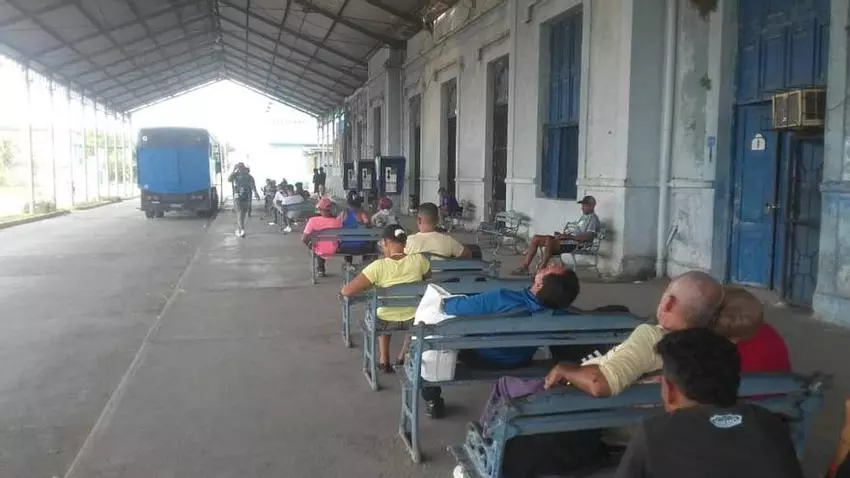
14ymedio bigger14ymedio, Julio César Contreras, Matanzas, 28 May 2024 — Marlén wakes up at dawn, but she is not the first to arrive at the Matanzas bus terminal – the only one in the city – where the broken state transport, the truckers traveling to Havana and private taxi drivers congregate. She had not visited the place for months, but now, due to paperwork in the Civil Registry, she must return to the municipality where she was born, Unión de Reyes.

When it comes to describing the transportation situation, a look at the boarding point says it all: the architecture damaged due to lack of restoration, a single employee who writes down or calls people on the waiting lists and who, at the same time, corrects the tickets booked in advance, the dirty bathrooms without water and the rusty benches complete the picture.

“There is not a single corner in this place where you feel comfortable. Everything is dusty and dirty. There are no bag lockers, so travelers must carry their luggage from the place where they get the ticket to the baggage compartment of the bus itself. The cafeteria doesn’t sell anything either and it’s common for buses to be late,” Marlén complains.

In the old bus terminal, the only one in the city, people gather to travel in and out of the province / 14ymedio

The woman from Matanzas managed to get on the waiting list for Unión de Reyes, but first she had to wait half an hour for the terminal employee to finish selling tickets for a last-minute car to Havana and correct the list of passengers to Santiago de Cuba. The long wait allows you to “take a walk” around the area where private vehicles wait, but the prices make you turn continue reading

around: 500 pesos to Unión de Reyes, because it is close, but for the trip to more distant destinations like Jovellanos or Colón it is between 600 and 800 pesos.

Meanwhile, a ticket on a state bus costs 20 pesos and, on private trucks, 250. However, “state buses are scarce.” “We try to at least cover a daily route to most municipalities, but the harsh reality is that sometimes that plan cannot be fulfilled. We also do not have fuel for our buses, so inter-municipal transportation often depends entirely on individuals,” an official from the terminal explains to this newspaper.

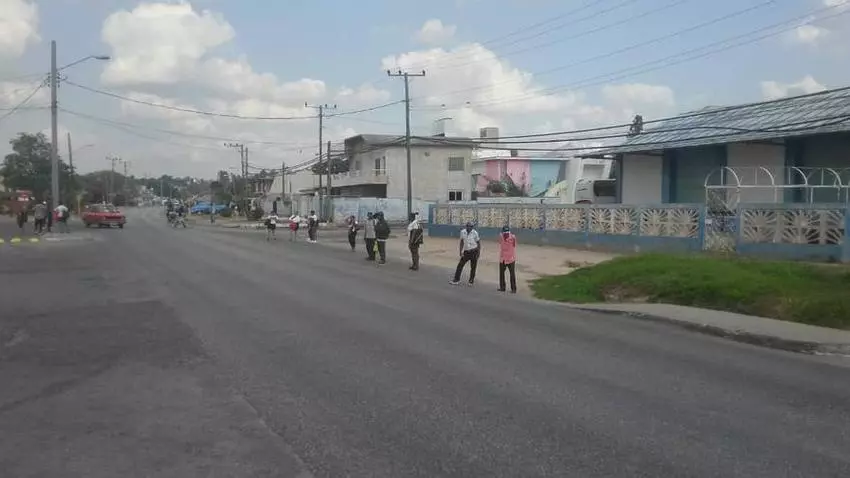
At the exit from the city, in the place known as Los Amarillos (‘The Yellows’), Ivis has been there for approximately an hour and a half. The name given to the site is due to the presence of inspectors who stop the cars driving by to facilitate the boarding of people. However, no inspector showed up at the stop this Tuesday, so the state and private cars, full and empty, pass at high speed without picking up anyone.

Some choose to travel to nearby municipalities or towns from Peñas Altas, and not do so from the Los Amarillos stop / 14ymedio

To visit her parents in the municipality of Limonar, Ivis must take at least two transport option, both on the way out and back. “I do this once a week, because my parents are very old, and I often find myself on road at night.” Ivis remembers that several times she has heard, on the street and in the official media, that state vehicles must stop at the collection points but, in reality, “almost all the drivers continue on by as if people were invisible.” As the only refuge from the sun and inclement weather, the stop has a narrow roof and a cement wall to sit on. Travelers must choose between staying in the shelter until a car voluntarily stops – which almost never happens – or staying in the shelter and not getting any transportation.

Another stop, at the Viaduct, has become dangerous lately, since in the tumult of people desperate to get on board, there is a proliferation of thefts of cell phones, wallets, among other valuable belongings. Claudia is among the vendors there, offering slushies, pizza or canned soda. The woman watches in amazement as the Transtur and Transgaviota buses continue on their way to Varadero. They have empty seats, but they pass without any intention of heeding the signal from the inspector, who asks them to stop.

“These drivers think they own the buses,” says a man sitting next to Claudia. The answer is not long in coming: “Yes, in reality the drivers are the owners because they buy, with their money, everything from tires to fuel,” responds another young man. “In the end one has to agree with them. I have a friend who takes a ticket and charges 500 pesos per person to Varadero and in the end he gets very little money even though it is exaggerated for us. Everything goes to gasoline, repairs and paying the rent to the owner of the car,” says the young woman, a hotel receptionist.

From the El Viaducto stop, passengers transfer to Santa Marta, Cárdenas and Varadero / 14ymedio

“Hotels have buses for workers, but they leave at certain times and if my work shift doesn’t coincide, I have to come here ready to leave as soon as it comes,” he explains. Claudia admits that riding the workers’ buses is much more comfortable, but “that comfort depends on the fact that they don’t stop to pick up anyone other than the employees, even though sometimes they are half empty.”

After a long wait, Marlén is the first of the three women who manages to take a bus to Unión de Reyes. She had to pay the driver 80 pesos above the ticket price, but she has finally achieved her goal. Ivis, for her part, continues at the pick-up point and knows that if she does not board soon she will have to return home because she will not have enough time to visit her family.

Claudia, meanwhile, manages to get on a truck that takes her to Varadero for 300 pesos. But the problem doesn’t end there. As soon as she sets foot on the peninsula she thinks about the return trip. “Today I finish the night shift and I don’t know how I’m going to turn around,” she laments.

____________

COLLABORATE WITH OUR WORKThe 14ymedio team is committed to practicing serious journalism that reflects Cuba’s reality in all its depth. Thank you for joining us on this long journey. We invite you to continue supporting us by becoming a member of 14ymedio now. Together we can continue transforming journalism in Cuba.
Cuba’s Military Officials Running GAESA Have Destroyed the Economy, Claims Cuba Siglo 21

A report published by the organization points to the military-run conglomerate as the main cause of inflation, blaming it for putting its interests before those of the nation.

The most ostentatious symbol GAESA’s economic dominance is a building that has come to be known as the López-Calleja Tower. / 14ymedio

14ymedio bigger14ymedio, Madrid, 20 May 2024 — War has been declared on the Cuban economy but it is not being waged from a department within the CIA. Instead, the attacks are coming from the executive offices of Cuba’s Business Administration Group (GAESA), the Council of State and its puppet, President Miguel Díaz-Canel. This is the conclusion reached by the organization Cuba Siglo 21 (Cuba 21st Century) and described in a report prepared by its vice-president, Emilio Morales, and released on Monday. In it, Morales blames the military-run business conglomerate, which has ties to the Castros and the country’s current political leadership, for the country’s high rate of inflation.

The report contains a detailed timeline of the inflationary spiral which began in 2016 after the creation of the International Financial Bank (BFI), a GAESA-owned entity that Morales estimates controls 95% of the island’s financial assets, including foreign currency reserves. This has stripped the Central Bank of Cuba (BCC) of any control it might have had over fiscal policy, which makes getting out of the country’s ongoing financial predicament that much more complicated.

Morales estimates that, since Miguel Díaz-Canel came to power in 2019, the dollar has increased in value by 1,537.5% relative to the Cuban peso

Morales estimates that, since Miguel Díaz-Canel came to power in 2019, the dollar has increased in value by 1,537.5% relative to the Cuban peso continue reading

(CUP). This calculation is based on the official exchange rate at the time of 24 CUP to the dollar. This was the rate used as the basis for Cuba’s 2021 currency unification (known officially as the Ordering Task) though one that economists have always believed to be wildly unrealistic. By comparison, the exchange rate on the informal market as of May 2024 is about 395 pesos to the dollar according to “El Toque.” On Monday, the independent news site, which is reviled by the authorities who accuse it of grossly exaggerating the exchange rate, put the price of the dollar at 375 CUP.

The peso’s depreciation in recent years has reduced the average monthly salary in Cuba to 2,100 CUP (5.31 dollars), plunging the population into an unprecedented level of poverty. According to the report, the economist Omar Everleny Pérez calculated that in March the cost of a basket of seventeen basic consumer products was 19,976 CUP a month, 9.5 times the minimum monthly wage.

Morales cites multiple reasons for this situation but emphasizes “the corrupt control that GAESA — a corporation not subject to any form of financial oversight — has had over the country’s finances in the last eight years.” He also points to the inefficiency of a government subordinate to the military conglomerate and incapable of implementing “a coherent program that truly transforms the economic system and gets the country out of the multi-systemic crisis in which it is mired.”

The report claims there is data to indicate that around twenty-four billion dollars is being allocated by the corporation for “excessive and unjustified construction of new hotels.” It claims the government has subordinated the interests of the nation to those of GAESA, whose focus on construction is consuming 30% of all annual public investment. The report also points out that this has contributed to the collapse of large industrial sectors, most notably sugar and food production, but also social services, sectors traditionally prioritized by leaders of the Cuban Revolution. These include basic services such as education, health care, energy and transportation.

 Morales points to “the corrupt control that GAESA — a corporation not subject to any form of financial oversight — has had over the country’s finances in the last eight years”

Another key issue that Morales identifies is the problem of debt default, which he estimates to be forty-six billion dollars versus the government’s figure of only twenty billion. The outlook going forward does not look any better considering that lines of credit have become almost impossible for Cuba to obtain even from its partners (notably Russia and China), which are inclined to help but only to a certain point.

The key turning point, according to Morales, was the Ordering Task, whose rollout he and many other economists believe was terribly mistimed. The plan, which had been in the works for more than a decade, has failed miserably. Its adoption, “without implementing real reform to liberate the forces of productivity, was a devastating strategic error,” the report states while providing some context.

By early 2021, when the pandemic was in full swing, tourism was down and so were remittances. The latter fell from 2.176 billion in 2019 to 1.972 billion in 2023 due to people fleeing the country and measures adopted during the Trump administration. It turned out to be the worst possible moment to implement currency unification. By this point, transfers of hard currency had fallen 36.8%, consumer goods were down 78.6% and international flights were down 76%.

 Transfers of hard currency had fallen 36.8%, consumer goods were down 78.6% and international flights were down 76%

The goal of the plan was to eliminate Cuba’s dual currency system. Instead, it had a multiplier effect, introducing an array of currencies— the dollar, the euro, the MLC* and the Cuban peso — that now circulate throughout the economy. It was accompanied by an increase in wages that was supposed to offset the new prices but which proved to be illusory.

The final blow was the demise of the self-employment sector and the rise of a network of small and medium-sized businesses (MSMEs) controlled by oligarchs, who are the real power brokers in the country today. The report describes them as “a voracious army that hoards pesos in order to buy dollars on the black market, which they need to acquire supplies from overseas.” In an effort to better control the flow of cash, the government announced a series of banking reforms in August 2023 that it called “bancarización.” It did little to reign in what Morales calls the “financial circuit” created by the MSMEs, the self-employed and the general public. He describes it as a parallel system that operates independently of the state “to control the buying and selling of hard currency and which, in practice, sets the actual exchange rate on which the market relies.”

Morales proposes a series of solutions that have no chance of being adopted. They include the BCC taking control of the BFI and supervising GAESA’s operations while the government considers a transformation of the economic system than involves taking real steps towards a market economy that would allow productive forces to operate freely.

Other solutions that Morales believes the government should implement include allowing unrestricted and unconditional levels of investment by members of the Cuban exile community, repaying or renegotiating the country’s outstanding debts, and reestablishing political freedoms. He ends the report, saying, “If anyone believes that the author’s recommendations are too many, the fault lies with those who allowed the problems to fester.”

*Translator’s note: Spanish-language acronym for “Moneda Libremente Convertible” (Freely Convertible Currency), Cuba’s official digital currency, which is pegged one-to-one to the U.S. dollar.

Editor’s note: Brilliant translation! Thank you!!!

____________

COLLABORATE WITH OUR WORKThe 14ymedio team is committed to practicing serious journalism that reflects Cuba’s reality in all its depth. Thank you for joining us on this long journey. We invite you to continue supporting us by becoming a member of 14ymedio now. Together we can continue transforming journalism in Cuba.
Cuban Political Prisoner Lisdani Rodríguez Granted One-Year Release Due to Complications in Her Pregnancy

The young woman’s family had already denounced the pressure from the political police to have an abortion.

Lisdani Rodríguez was sentenced to eight years in prison for demonstrating on 11 July 2021 / Mónica Baró

14ymedio bigger14ymedio, Havana, 29 May 2024 — Lisdani Rodríguez, one of the two sisters from Placetas, Villa Clara, arrested after demonstrating on 11 July 2021, was released this Tuesday after becoming pregnant. The young woman is six months pregnant and was diagnosed with placenta previa – a condition that can cause intense bleeding – for which the authorities granted her a year of extra-penal leave.

The information was published on social networks by journalist Mónica Baró, resident in the United States, who said that Rodríguez must receive special care “away from the inhumane conditions of prison.”

“Let’s hope that Lisdani is not separated from her son once he is born, and that her triplet* sister, Lisdiany, is released so that she can also be with her daughter. Neither of them has committed any crime,” Baró added in her publication.

News about the pregnancy of Rodríguez, sentenced to eight years for demonstrating in Placetas, began to circulate at the beginning of the year, when her mother, Bárbara Isaac, denounced the pressure from the political police agents of the Guamajal women’s prison, in Santa Clara, so that she would have an abortion. continue reading

“They want my daughter to have an abortion but she doesn’t want to because she has always hoped to have a baby. She didn’t imagine the moment it came to pass but they (her daughter and her partner, also a political prisoner) want to have it,” her mother said last January in an interview with Infobae.

The prison situation, where inmates do not receive good food or medical care, puts her daughter’s pregnancy at risk

According to Isaac, the situation in the prison, where the inmates do not receive good food or medical care, puts her daughter’s pregnancy at risk.

Weeks ago, the mother told CubaNet that the prison authorities knew about Rodríguez’s condition since she was five and a half months pregnant, “but they did not inform her” until two weeks later due to “a heart disease that developed in one of the analyses.”

“They take her to the consultations but they do not fully inform her of the results. She asked and it was then that the doctor told her that she had to rest, but that is impossible. She has to be straining all the time because they don’t have water and they have to carry it,” said Isaac, who also reported that her daughter had low hemoglobin due to the poor diet in the prison.

Both young women have suffered threats and repression in prison where, since at least the summer of 2023, the authorities have denied them transfer to a less severe regime. In an interview with 14ymedio last August, her mother reported that State Security denied them the transfer for six months in retaliation for writing a letter to commemorate the second anniversary of her confinement and for refusing to stand at attention for the prison directors.

At the beginning of the year, when another review of their case was carried out, the sisters complained that the authorities threatened to separate them in prison to prevent them from reporting everything that happens to them inside the prison. As of now, it is not known if they were transferred to a minimum security regime.

*Translator’s note: The sisters are two of triplet sisters; the third sister is not in prison.

____________

COLLABORATE WITH OUR WORKThe 14ymedio team is committed to practicing serious journalism that reflects Cuba’s reality in all its depth. Thank you for joining us on this long journey. We invite you to continue supporting us by becoming a member of 14ymedio now. Together we can continue transforming journalism in Cuba.

Only One Sixth of the Tobacco Harvested in Sancti Spíritus Can Be Used for Export

It is “the lowest production in history” in the province, admit the directors of Acopio

Of the ‘sol en palo’ (sun grown) tobacco, which is used to make cigars, only 351 tons were collected / Escambray

14ymedio bigger14ymedio, Havana, 30 May 2024 — The tobacco industry in Sancti Spíritus once again fell below mediocrity. Of the sol en palo [sun grown] tobacco – which is used to make cigarros – only 351 tons were collected, 67% of the plan, while the tapado [shade grown] tobacco, which is used to make puros, is expected to collect 315 tons. The most optimistic estimate of compliance with the plan, according to the State management company Acopio is 87%, and it is not likely that will be achieved.

This is “the lowest production in the history of Sancti Spíritus,” Isidro Hernández, director of Tobacco Collection and Processing in the province, says, without ambiguity. Gone are the times when the province – with a tobacco tradition due to the high number of Canary Islanders who settled there during the colonial era – was, along with Villa Clara, the second largest tobacco producing power in the country, after Pinar del Río.

Hernández regrets that the total estimated harvest – about 666 tons between shaded and sun grown – represents 20% less than what was harvested last year. Of the latter, he details, there are 202,987 cujes – the rod on which the leaves are dried – and of the former, 658,500. The province, he adds, has not met the plan targets for four years.

The planting campaign had started badly: it was barely 49% complete

The planting campaign had started badly and was barely 49% complete. According to the official press, which could not hide the disappointment with the figures, the main causes of the debacle were the lack of fuel to carry out the planting and “that many producers did not plant because the crop is not profitable.” continue reading

The most serious factor is that, of the entire harvest of shaded tobacco, only 104 tons have sufficient quality to make cigars for export, when they should have delivered 315 tons. The Sancti Spiritus leaf is used as a wrapper for cigars, on which presentation and color depend, while the Vuelta Abajo – from Pinar del Río– is ideal for the filler or interior of the cigar.

The manager licked his wounds and attributed the failure to “natural” causes, such as the rains in January and February, plant diseases – such as the so-called “brown leg” – and the “impact of atmospheric ozone.” However, he admitted that there was a late planting in the first half of the year of hectares of tobacco that, although it has not yet been harvested, already predicts a bad result.

The most determining factor, however, was the human factor. Acopio had hired about 1,180 producers but only about 480 actually responded. There were not enough cutters or vegueros (field workers) to take care of the leaf, and if the covered tobacco had better results it was because of the “stimulation with currency” that its producers enjoy. Now, Hernández assured, “a stimulation system in MLC (freely convertible currency)” is being negotiated with the Government to encourage those who deal with sun-grown tobacco. In his words, so that the currency “reverses the situation and sows more.”

 Acopio had hired about 1,180 producers but only about 480 actually responded

A similar situation is playing out in Las Tunas, a province that is rather plebeian in tobacco production, where they only managed to plant 102 hectares of the 163 planned. And even achieving that number “was very difficult,” confessed the provincial director of Tobacco Collection and Processing, Yanelys Ramírez. She also said that the failure had to do with the rains – in her case, those of October and November 2023 – which delayed the planting.

“In addition, in the month of November the physical fuel arrived at the pumps and the land that would be allocated to the line began to be prepared,” she complained. As a measure to improve results, they extended the campaign until March. It didn’t work. “We hope that the next campaign will be better,” was her apology.

To illustrate the productive “efforts” of Las Tunas, the official press presents the case of Orney Hernández, a guajiro from Sancti Spíritus “with his mind loaded with dreams” but only two years of experience as a field worker. With more than 1,000 cujes saved, he plans to contribute his production to Acopio, because they promised him “benefits.”

“With these benefits, the planting and subsequent harvest will be very attractive,” he emphasizes, encouraged by the fact that “the bandits do not steal the tobacco fields so there is no need to keep constant guards, the animals do not eat the plants, there is a safe market and, if pests appear, they are controlled.”

Despite the debacle of the tobacco industry, which each year reports more reduced and poorer quality production — which they continue to attribute to the passage of Hurricane Ian in 2022 — both the regime and its Spanish counterpart, who rule the industry, find ways to continue obtaining increasingly higher profits. At the beginning of March, the Habano Festival, held annually in the capital of the Island, raised 19.3 million dollars from the sale* of eight humidors alone – until last year six were traditionally sold – a record figure that the Government assures will be invested in Public Health.

 *Translator’s note: A single humidor, signed by President Diaz-Canel, sold for $4.9 million.

____________

COLLABORATE WITH OUR WORKThe 14ymedio team is committed to practicing serious journalism that reflects Cuba’s reality in all its depth. Thank you for joining us on this long journey. We invite you to continue supporting us by becoming a member of 14ymedio now. Together we can continue transforming journalism in Cuba.