Granma publishes an article on “Firmness in the prevention and the fight against terrorism.”
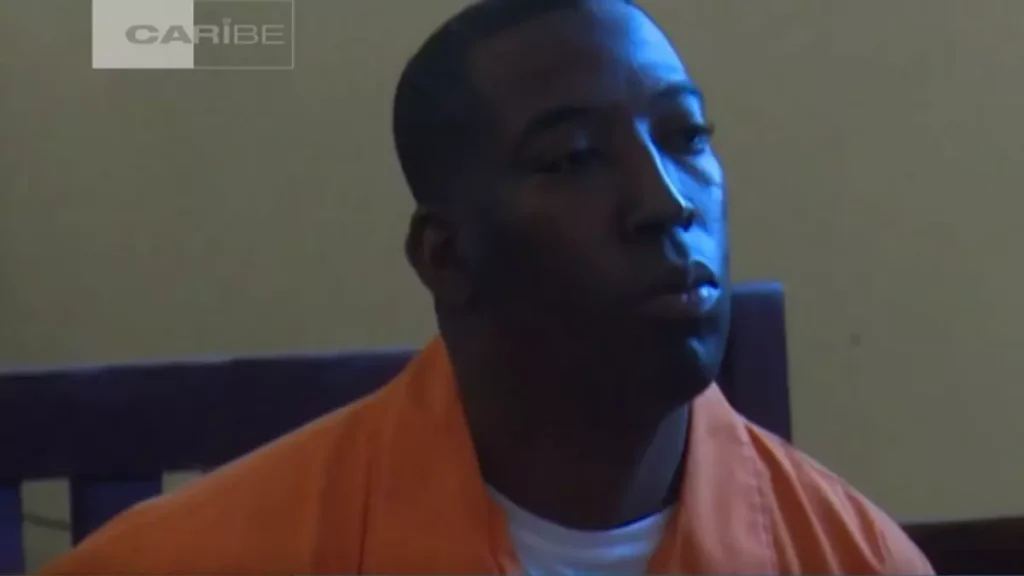
 14ymedio, Madrid, March 24, 2026 – Osvaldo Fernández Pichardo, a man detained last year after attacking a police officer with a knife in the city of Camagüey, was sentenced to life imprisonment for the crimes of terrorism and carrying and possession of weapons. In the report, broadcast this Monday on Cuban Television, a citizen residing in the United States was pointed to as the instigator of the attack.
The attack occurred on May 29 on the Camagüey boulevard, when Fernández Pichardo attacked the officer from behind, as could be seen in a video presented as evidence during the trial and aired this Monday on television. The official press reported the arrest of the individual at the time, accusing him of having consumed alcoholic beverages. The officer was seriously injured, “with imminent risk to life,” although she later recovered.
It is now that the authorities have linked the incident to “a person mentioned in the investigative process who resides in the United States and has extensive activism against the Cuban Revolution.” This individual, whose name has not been published, allegedly offered Fernández Pichardo $600 to attack a member of the police force “in a public place” in order to “provoke fear among people, disrupt order, and foster feelings of insecurity in the population.”
This individual, whose name has not been published, allegedly offered Fernández Pichardo $600 to attack a member of the police force “in a public place”
The report also highlighted that the attacker’s strong physical build played a significant role not only in the act but also in how he left the scene “in a threatening manner.”
The First Criminal Chamber of the Provincial Court sentenced him, in addition to the principal penalty of life imprisonment, to other additional sanctions, such as compensating the victims. continue reading
“Officers of the National Revolutionary Police have among their duties guaranteeing public order and citizen tranquility. That is why this criminal incident was widely condemned when it became known; and today, in the name of the people, the courts imposed an exceptional, rigorous, and proportionate sanction to the seriousness of the act,” the report emphasized, also noting, as is customary, that procedural guarantees were observed.
The news also appears this Tuesday on the front page of the State newspaper Granma and on page two of its print edition, alongside a note signed by Bileardo Amaro Guerra, the chief prosecutor of the Department of the Directorate for Combating and Preventing Corruption and Illegalities, which highlights the “firmness in the prevention and the fight against terrorism,” an issue of ongoing dispute with the United States, which keeps Cuba on the list of state sponsors of terrorism and also on the list of states that do not cooperate against that crime.
The article defends the regime’s fight against a crime it “has suffered,” generally “organized and financed from the United States,” and cites several cases in which “despite providing evidence of the organizers and sponsors (…) impunity has prevailed.”
The article outlines national and international legislation ratified by Cuba and in force in the country, including penalties ranging from 10 to 30 years for terrorism offenses, which, as in the case of Fernández Pichardo, can result in life imprisonment or death “for the most serious forms.”
The article also defines the crime of terrorism and other forms aimed at generating terror, including acts against maritime navigation and aviation security or against the use of computer systems.
“A particular analysis under current circumstances is required for the crime of financing terrorism, which has been used by terrorist organizations based abroad”
“A particular analysis under current circumstances is required for the crime of financing terrorism, which has been used by terrorist organizations based abroad. The Code punishes anyone who collects, transports, provides, or possesses funds, financial or material resources with the purpose that they be used in any of the aforementioned crimes,” the note adds, warning of the rigor with which these cases will be judged as they continue to occur “at present.”
The fact that the article reviews the list of individuals and entities considered terrorists by the regime and its final argument, asserting that “there will be no impunity for those involved in these criminal acts,” suggests that it is not so much about cases like that of Fernández Pichardo, but rather about another issue of greater relevance at the moment: the case of the boat coming from the United States intercepted last February in Villa Clara.
There were 10 occupants, five died after being shot by Cuban border guards, four on the spot and another after several days hospitalized. They “intended to carry out an infiltration for terrorist purposes,” according to the authorities, who are investigating the case in collaboration with the FBI.
Translated by Regina Anavy
______________________
COLLABORATE WITH OUR WORK: The 14ymedio team is committed to practicing serious journalism that reflects Cuba’s reality in all its depth. Thank you for joining us on this long journey. We invite you to continue supporting us by becoming a member of 14ymedio now. Together we can continue transforming journalism in Cuba.