“For Cuban pockets, the priority is food. Everything else has to wait.”
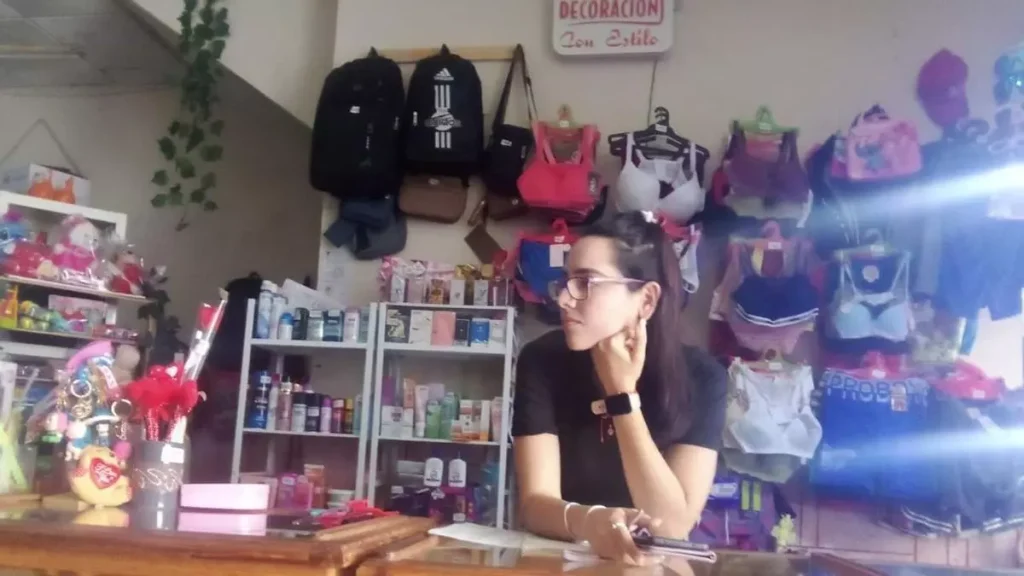
 14ymedio, Julio César Contreras,. Matanzas, March 22, 2026 / Taking stock of sales around noon, Yunia reviews a notebook where the numbers are written halfheartedly. The total doesn’t add up: barely 2,200 pesos all morning. Behind her, necklaces, bracelets, and keychains shine under a dim light that fails to attract customers. “No matter how much I try to promote the products, people come, look, and leave,” she says, without taking her eyes off the table.
At that small stand, a few blocks from Plaza de la Vigía, two eras intersect: that of a city that once lived off commercial bustle, and that of a present where every peso counts and is almost never enough. Yunia knows it. She also knows her stand is hanging by a thread. “It’s not my fault that a plastic broom costs 1,500 pesos, but in the end I’ll be the one who pays the consequences of these crazy prices,” she says. The business owner has already hinted that, if sales don’t improve, she herself will sit behind the table. For Yunia, that would mean losing her job.
Inflation, which gives no respite, has been pushing these small merchants into a kind of daily survival. Money loses value as quickly as prices rise, and what used to be a minor expense — a handbag, a decoration, a perfume — today competes directly with food. “For Cuban pockets, the priority is food. Everything else has to wait,” sums up Idael, an entrepreneur who recently closed her shop on Medio Street.
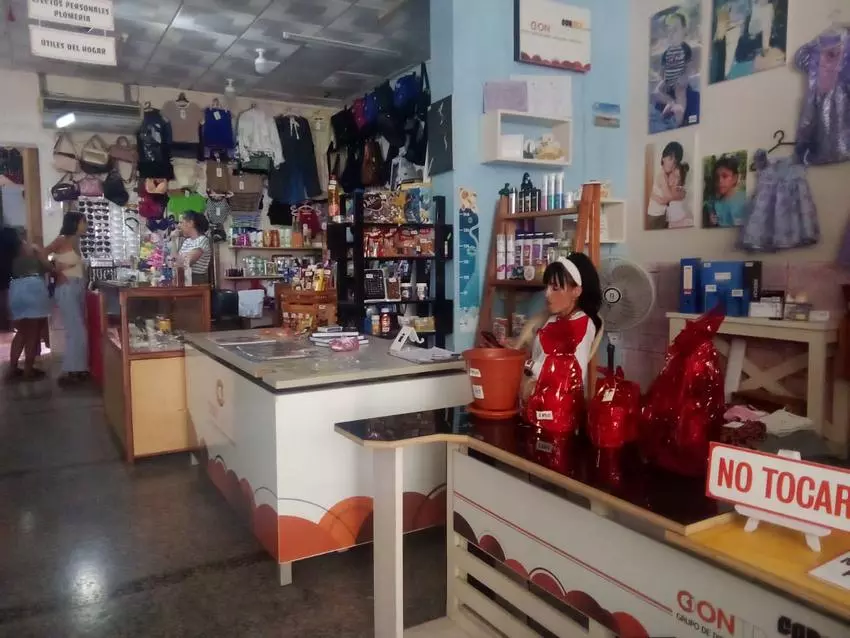
Her story is not unique. For years she sold women’s clothing and men’s shoes in one of those spaces where constant foot traffic ensured customers. Today, that same flow has turned into a parade of glances that calculate, compare, and leave empty-handed. “There was a lot of money going out and very little coming in. Between rent, taxes, and merchandise, the numbers didn’t work,” she explains. The decision was drastic: she gave up the license and left the premises.
Inside another store, not far away, a young woman rests her chin on her hand while watching the door. Around her, backpacks, underwear, and hygiene products share space on shelves that are full but motionless. The scene repeats itself: merchandise comes in but doesn’t go out. “Since the end of last year there’s been no need to restock anything,” Yunia comments. “Not even on dates like February 14 were there big profits.”
The city, meanwhile, seems to be slowing down. On streets like Milanés or Calzada de Tirry, activity drops sharply after midday. “Here, the little that gets sold happens at 1:00 in the afternoon . After that hour, this place is empty,” says another shopkeeper, who shares space in a large room with other trades that have been disappearing one by one. First it was the cellphone repairman, affected by blackouts that prevented him from working. Then the watchmaker. Then the jewelry seller. All of them closed.
She has held on, but only halfway. She has negotiated to pay only half a day’s rent for the space and has diversified her offerings over the limit of what is permitted. “My license doesn’t include selling hygiene products, but if I don’t take the risk, I’ll starve,” she admits. Thus, among handbags and wallets, she offers soap, toothpaste, and razors that end up being the most sought-after products.
The crisis has pushed many to reinvent themselves outside physical spaces. Idael, for example, now sells through social media. “I have a manager who posts on Facebook and Instagram. I pay her a commission for each sale,” she explains. Without a storefront, without fixed employees, and without the associated costs, she has managed to stay afloat. But she acknowledges that not everyone is as lucky. “Those who sell food are the ones most likely to survive.”
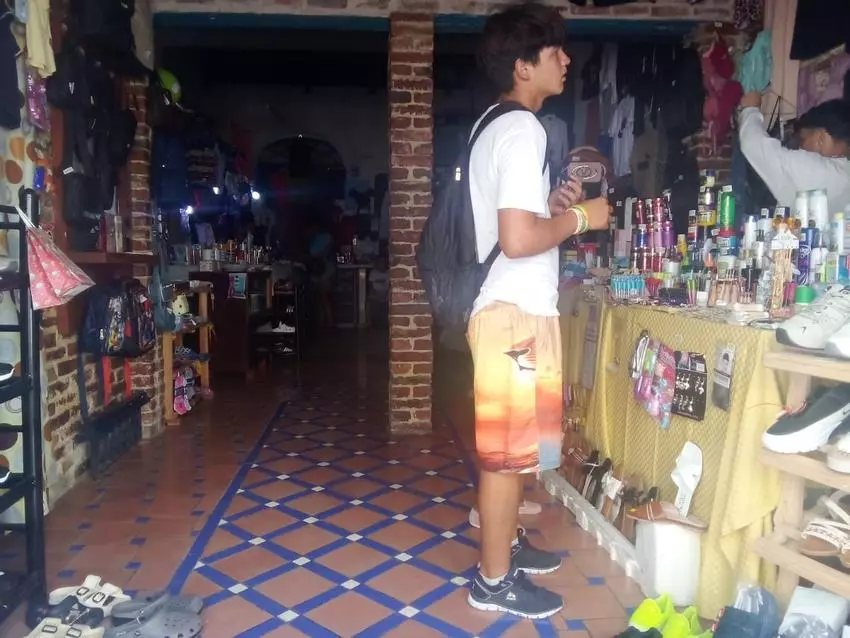
On a porch with brick columns, a young man scans a table full of perfumes, costume jewelry, and small imported items. He stops, picks up a bottle, asks the price, and puts it back. The gesture repeats at every counter. The walk is not for buying, it is for recognizing limits. Outside, the city continues at its slow pace, with fewer cars, fewer people, and less money circulating.
Yunia closes her notebook and puts away the pen. She looks again at the table, adjusts a bracelet, lines up some earrings. The gesture is almost automatic, a routine that tries to maintain order amid imbalance. “This used to guarantee sales,” she says, referring to the location of the shop. Today, it barely guarantees anything else than the certainty that, in an economy where the peso is worth less and less and prices keep rising, there is no one to buy what is not absolutely necessary.
Translated by Regina Anavy
______________________
COLLABORATE WITH OUR WORK: The 14ymedio team is committed to practicing serious journalism that reflects Cuba’s reality in all its depth. Thank you for joining us on this long journey. We invite you to continue supporting us by becoming a member of 14ymedio now. Together we can continue transforming journalism in Cuba.