For 2026, the goal is to achieve 229,500 tons of sugar nationwide, but perhaps not even last year’s minimal production will be reached: 127,300 tons
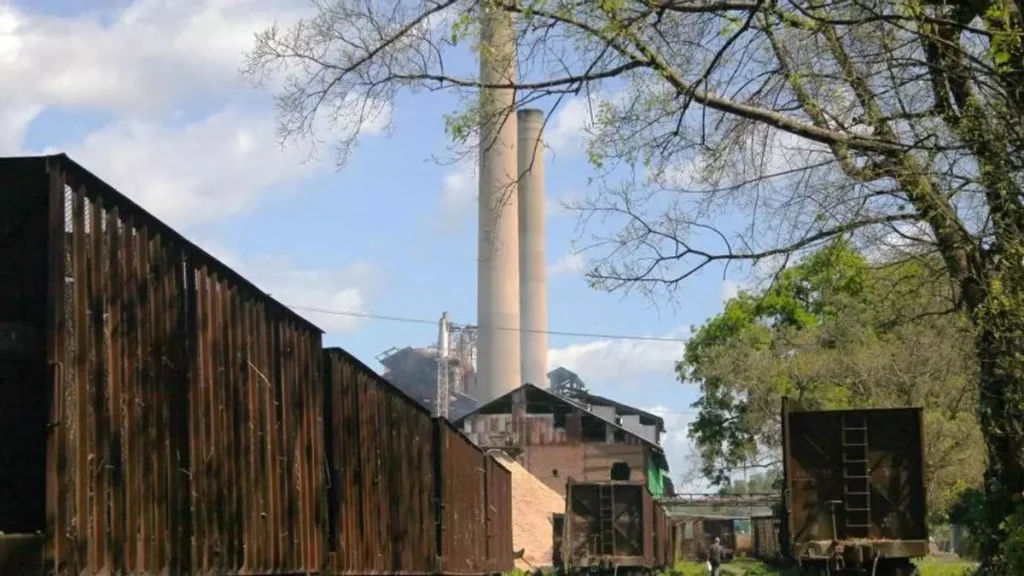
 14ymedio, Madrid, March 24, 2026 / This year there will be little doubt as to whether the sugar harvest was, once again, the worst in Cuba’s history, a title it has been repeatedly revalidating since 2021. The only mill that was grinding on the Island, Melanio Hernández, has had to cease operations due to the energy crisis.
The mill, located in Tuinucú (Sancti Spíritus), was the only one last year that met the planned work target. At the end of April 2025 it reported its achievement, and by mid-June it was 1,800 tons above projections, for an approximate total of 21,000, which earned it high praise.
This year, the projection was much more modest, at 14,000 tons, and although grinding began with a one-month delay in January instead of December, the situation was not going badly for this mill, which has withstood all odds. According to its directors, at this point it had reached 40% of the plan, about 5,600 tons, but it ultimately had to stop the machinery.
“Having had to close the mouth of the tilter when more than 40% of the sugar planned for the current harvest had already been produced has not meant, however, that the industry lets its guard down or accepts that ‘they throw in the towel,’” notes an article in the State newspaper Granma reporting on the situation.
“Having had to close the mouth of the tilter when more than 40% of the sugar planned for the current harvest had already been produced has not meant, however, that the industry lets its guard down”
Antonio Viamontes Perdomo, director of the sugar company, told the state-run outlet that the mill and its workers will return to the task “as soon as conditions allow and the country so decides.” The future is very uncertain given that nothing indicates that fuel will arrive to the Island in the short or medium term. Since U.S. president Donald Trump decided to block shipments of crude oil to Cuba under threat of tariffs or other measures, all ships that have attempted a relative approach have ended up turning toward another destination.
The latest case is that of the Sea Horse, flying the flag of Hong Kong (China) and carrying Russian oil, which sought to take advantage of the window of opportunity that opened when Washington temporarily lifted sanctions on that country’s crude; it changed course when the White House specified, days later, that the authorization was not valid for exports to Iran, North Korea, and Cuba. At present, everyone is watching closely to see whether the Russian oil tanker Anatoly Kolodkin, loaded with more than 700,000 barrels bound for Matanzas, will successfully complete its journey, although that is doubtful.
Just three days ago, the official press made the first mention of the suspension of grinding across the country. In another article published Saturday in Granma, Reidel López Santana, coordinator of Azcuba in Ciego de Ávila, said that “given the impossibility of carrying out grinding due to the lack of fuel, the 55 units and four sugar companies” in the province redirected “their efforts toward other productive activities.”
The priority activity has been the production of charcoal, which allows employees to remain active in a sector that, moreover, is one of the few that can currently generate some profit, since the product is exported at very attractive prices. At the Florencia agricultural company, there has also been an attempt to grow tobacco, another of the flagship export products. “In addition, food production has been implemented through the use of animal traction, taking advantage of existing resources,” the official added.
“In addition, food production has been implemented through the use of animal traction, taking advantage of existing resources,” the official added
Workers are focusing on products derived from sugarcane to make use of the harvested raw material, producing vinegar, molasses, and cane candy, specifically at the Primero de Enero Agroindustrial Company. In Ciro Redondo, meanwhile, and faced with the possibility of not being able to grind, the alternative has been much more “creative”: repairing playgrounds.
More than 4,500 workers in the sugar sector, both state and non-state producers, and cooperative members have thus been able to find alternatives, because the collapse of the harvest has lasted five years, but this year promises to be the one of its definitive disappearance.
Last December, Osbel Lorenzo Rodríguez, first secretary of the Communist Party of Cuba (PCC) in Las Tunas, warned that the 2026 harvest had to be “the harvest of dignity, shame, honor,” after the previous campaign recorded only 127,300 tons. For 2026, the aim was to reach around 229,500 tons, but at that time Nicolás Maduro was still sending crude oil to Havana.
Translated by Regina Anavy
______________________
COLLABORATE WITH OUR WORK: The 14ymedio team is committed to practicing serious journalism that reflects Cuba’s reality in all its depth. Thank you for joining us on this long journey. We invite you to continue supporting us by becoming a member of 14ymedio now. Together we can continue transforming journalism in Cuba.