The announced “return” of state sales to the population in Sancti Spíritus only reached some residents of one neighborhood.
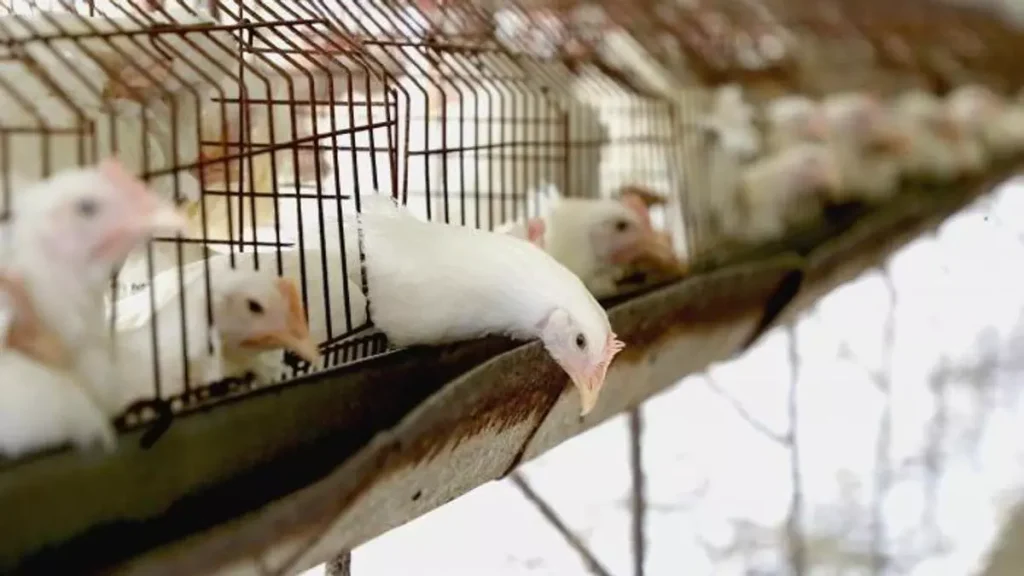

14ymedio, Sancti Spíritus, March 24, 2026 / In Sancti Spíritus, the crisis in state poultry production has worsened. To the problems accumulated in previous years is now added the fact that the provincial Poultry Company does not have the fuel required to transport feed from the ports of origin, which limits the feeding of the birds and, consequently, the production.
The situation interrupts the sale of 10 eggs per family unit that had recently been announced with enthusiasm in the official media. The initiative had been met with outrage among citizens, since the cost of 630 pesos for 10 eggs, rationed through the ration book, and with such sporadic frequency that it did not even occur monthly, exceeded prices on the informal market.
Regarding this “return of eggs,” reported triumphantly this very month, the official media Escambray now acknowledges that “only some residents in the Colón neighborhood had the opportunity to purchase the eggs through the ration store.”
The director of the Poultry Company of Sancti Spíritus, Félix Manuel Rodríguez González, explained the consequences of the lack of feed in the chickens’ diet: “This causes production levels in poultry farms to drop by almost half, and the quantities collected, about 15,000 eggs daily, are used only for prioritized deliveries.”
The prioritized allocations are, among others, “commercialization in foreign-currency-earning stores, with which it maintains a supply chain”
The prioritized allocations referred to by the director, according to the media, include, among others: hospitals, nursing homes, maternity centers, daycare centers, and “commercialization in foreign-currency-earning stores, with which it maintains a supply chain.”
Last year in Sancti Spíritus, more than two million laying hens died due to lack of feed. At that time, the president of the Business Group of Food and Poultry of the Ministry of Agriculture, Jorge Luis Parapar López, had announced that the alliance with Tabacuba, one of the few state companies with profits in Cuba, would help improve feed production and expand egg distribution by the end of that year. However, nothing has been reported about the results of that agreement, and the promises to “include other population groups in distribution” have gone unfulfilled.
The egg that should be assigned through the ration book has been practically nonexistent in ration stores for more than two years
For more than half a decade, eggs have ceased to be a basic product in Cuba. It is not only the high prices, but also the lack of access to purchase them, as if they were a luxury food. Currently, the cheapest carton of eggs in Havana is around 2,900 pesos, with the prices in the informal market nearly double, while the average salary reported in Cuba by official statistics remains very low: 6,685.3 pesos, equivalent to about 14 dollars, according to the official exchange rate.
Data published by official media themselves have acknowledged that Cuba went from producing around five million eggs daily in 2020 to just over one million in 2024, a sustained decline driven by the loss of laying hens, the shortage of feed, and the progressive deterioration of the poultry system in general. In 2024, the inability to maintain the hens due to lack of feed led to the need to cull at least 54,000 laying hens in Holguín.
“The difficult situation of feed production in Cuba, vital for animal husbandry and the production of meat and eggs, has been a persistent burden on the national economy and the population’s food supply,” the State newspaper Granma had acknowledged this year, when the U.S. tariff sanctions that have worsened the energy crisis had not yet been implemented.
Translated by Regina Anavy
______________________
COLLABORATE WITH OUR WORK: The 14ymedio team is committed to practicing serious journalism that reflects Cuba’s reality in all its depth. Thank you for joining us on this long journey. We invite you to continue supporting us by becoming a member of 14ymedio now. Together we can continue transforming journalism in Cuba.