Heavy Flooding and Power Cuts in Havana After a Downpour of Several Hours

Tropical Storm Erin threatens to become the first hurricane of the season but poses no risk to Cuba.
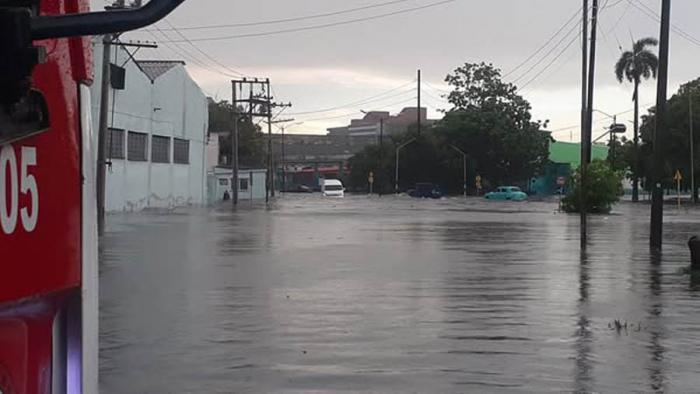

Videos of flooded streets throughout Havana on social networks have reported the situation associated with tropical storm Erin.

14ymedio bigger14ymedio, Havana, 12 August 2025 — A torrential downpour of rain fell on Havana this Monday leaving flooding in some places, such as Luyanó, which was completely dark after the impact of a lightning strike around 6 pm in the afternoon. The residents of that municipality saw water quickly running through doors and windows, even in the houses in good condition. The electricity did not return until after 8 pm, and the fresh water, which should have been pumped this Monday, did not arrive.

“A longshoreman from a nearby company was telling another that where he lives everything was flooded, and that the pots and statues of the saints next door floated out onto the street,” a Luyanó neighbor told this newspaper. In his house, the water even destroyed the painting of the facade.

The Havana authorities analyzed the situation in a meeting on Monday and called on the population to take precautionary measures before the flood. “I have seen young people on the streets avoiding the manholes and the waves caused by some vehicles. Right now in Via Blanca and the intersection of Vento and Lacret, not only are they hooking onto cars but also openly vandalizing and harassing them,” said the first secretary of the Provincial Committee of the Communist Party, Liván Izquierdo Alonso.

The Havana authorities analyzed the situation in a meeting on Monday and called on the population to take precautionary measures before the flood.

“In the area of Port Avenue and the intersection of Fábrica Street, an extremely dangerous area, a vehicle was trapped. Despite the presence of a Fire Brigade unit, some drivers insist on driving through the danger zone, including the boteros* and buses with passengers.  I wonder: What do these drivers have in their heads and why are they unable to see the danger?” he said.

The people, however, complain that the lack of cleanliness and the poor sewer drainage in the streets of Havana turn again and again into a deadly continue reading

trap when it rains, without enough maintenance being done to guarantee safety.

Videos of flooded streets throughout the capital have reported, on social media, the situation associated with tropical storm Erin, which is forming in the Atlantic and threatening to become the first hurricane of the season. The Institute of Meteorology (Insmet) is monitoring the situation, although it considers that there is no potential risk to the Island.

On Monday afternoon Erin was located about 455 kilometers west of Cape Verde and moving west at a speed of 31 kilometers per hour. From 3 am, Insmet mentions rain and storms during the day on Tuesday, without considering that they will be severe. However, it warns that “in areas with rain and associated electrical storms, wind strength and wave height can be locally increased.”

*Translator’s note:  ‘Boteros’ refers to the drivers of what are commonly 1950s American cars used as shared taxis on fixed routes.

Translated by Regina Anavy

____________

COLLABORATE WITH OUR WORK: The 14ymedio team is committed to practicing serious journalism that reflects Cuba’s reality in all its depth. Thank you for joining us on this long journey. We invite you to continue supporting us by becoming a member of 14ymedio now. Together we can continue transforming journalism in Cuba.
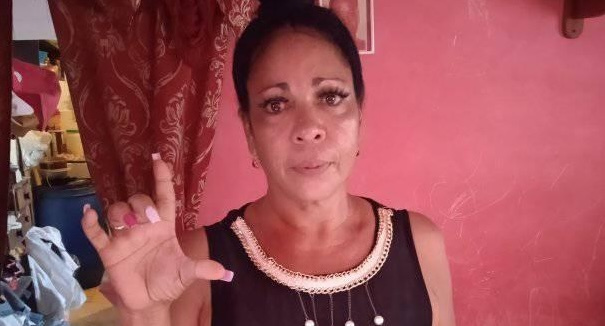
The Lady in White Aymara Nieto Leaves Prison in Exchange for Exile to the Dominican Republic

Nieto leaves behind an older daughter who could not say goodbye to her, since the authorities denied her last scheduled visit on Friday, August 8.

Aymara Nieto Muñoz, member of the Ladies in White / Aymara Nieto/Facebook

14ymedio bigger14ymedio, Havana, 12 August 2025 — The political prisoner Aymará Nieto Muñoz has been forced to leave Cuba and since Monday she has been with part of her family -two small girls and her husband- in Santo Domingo, the capital of the Dominican Republic. In Cuba, she leaves an older daughter who could not say goodbye to her, since the authorities denied her the last visit planned for Friday, August 8.

According to sources close to the situation, who have collaborated for her establishment in the Dominican Republic, she was taken directly from the prison to the airport, and the phones of her relatives were tapped, without allowing calls or messages. “This has no other name than exile,” warned activist Maria Regla Castro, who says Nieto Muñoz was taken in by a family at her destination.

“I was imprisoned until the last moment I was at the airport. They were the ones who took me. There they never let me go home, knowing that I had the papers they did not want to give me a pass,” confirmed Nieto herself in an interview with Rosa María Payá, promoter of Cuba Decide and member of the Inter-American Commission on Human Rights. Right there, the Lady in White explained that her departure took place “under conditions of threat from the State Security Department: she was either a prisoner or leaving the country.”

“I was imprisoned until the last moment I was at the airport. They were the ones who sent me away.”

Aymara Nieto Muñoz, member of the Ladies in White and wife of former political prisoner Ismael Boris Reñí, was serving her second consecutive sentence at the Bella Delicia Forced Labor Prison in Havana, where she had been since this May. Her first conviction came in 2018, when she was continue reading

sentenced to four years for offenses of assault and property damage, but while serving a sentence at the El Guatao women’s prison, she was prosecuted for allegedly leading a prison riot.

At that time she received a sentence of five years and four months, and from this April she could apply for a change of measure to a regime of lesser severity. However, the Provincial Court had not yet taken a decision in this regard. Prisoner Defenders had repeatedly complained that the regime made her freedom conditional on exile. “Aymara Nieto has spent a total of eight years in prison for reasons related to her human rights activism,” the organization reported.

Translated by Regina Anavy

____________

COLLABORATE WITH OUR WORK: The 14ymedio team is committed to practicing serious journalism that reflects Cuba’s reality in all its depth. Thank you for joining us on this long journey. We invite you to continue supporting us by becoming a member of 14ymedio now. Together we can continue transforming journalism in Cuba.

Five-Month-Old Baby Dies in Havana’s Flooding Due to Rain

The child, identified as Neimar Francisco Valdés Pérez, drowned after the water burst into his home.

Furniture destroyed by floods this Monday in Havana / 14ymedio

14ymedio bigger14ymedio, Natalia López Moya, Havana, August 12, 2025 — A five-month-old baby lost his life on Monday in the El Cerro neighborhood of Havana during heavy rains that hit the capital. The little one, identified as Neymar, drowned after the water burst with force in his house when a wall came down.

The news was confirmed to 14ymedio via telephone from La Nacional funeral home, where the body of the baby was being held. According to one of the employees, the funeral procession left at 8:20 on Tuesday.

In an interview with Florida-based Cuban journalist Mario J. Pentón, Karen Rodriguez, the baby’s aunt, said in tears that everything happened “in fractions of a second and gave us no time for anything.” The wall that divided the house from the family’s workshop came down with the rain, and the water entered in a torrent.

“He was given first aid and arrived at the hospital breathing, but died.”

At the time of the incident, she recounted, “we were all in the house with the boys.” She had enough time to get her baby out, but her sister-in-law did not. Neymar was dragged behind a door, where rescuers found him. ” He was given first aid and was still breathing when they arrived at the hospital, but died,” the woman said.

Her account matches that of several people on social networks. “Fly high little one. We got you out alive, but you did not manage to survive. You don’t know how we firefighters who got you out feel,” wrote young rescuer Enmanuel Díaz Rodríguez. His message was commented on by dozens of users, many of whom sent condolences to the family and expressed outrage at the conditions that led to the fatal outcome.

On the Patria y Vida Facebook page, where reference was also made to the unfortunate event, a comment from Zulema Fuentes, neighbor of the victims, also offered an account of what happened. The little boy’s mother, she recounted, was picking up the house because everything was getting wet, while holding the baby in her arms. The wall collapsed suddenly, letting in a large amount of water whose force snatched the child from her hands. Neymar had turned five months old that same day. The current dragged away not only him but also the mother, who took a few moments to get up and realize that the child was no longer there. continue reading

Fuentes added that the moment was one of absolute despair: neighbors, friends and family began to look for him while screaming, until a neighbor found him trapped behind the door. He was immediately given first aid, and according to the story, the child opened his eyes. He was rushed to hospital, where he received medical care, but eventually died. This new account provides a more vivid picture of the chaos and helplessness experienced in the critical minutes after the collapse, and it highlights how quickly the tragedy unfolded.

The authorities have so far not provided any information on what happened.

Wall knocked down by rain near the Villanueva station./ 14ymedio

At dawn this Tuesday, the scene in some neighborhoods showed the virulence of the storm, with furniture destroyed and washed into the streets and walls demolished.

In any case, the fact again highlights the precarious conditions of many buildings in the capital, particularly in neighborhoods like El Cerro, where accumulated deterioration and lack of maintenance make each rainy season a period of extreme risk. On numerous occasions, neighbors have reported leaks, cracked walls and weakened structures without timely repairs.

Havana is a city where heavy rains often cause flash floods, especially in low-lying areas with poor drainage. The aging rain system, largely clogged by massive amounts of solid waste, is unable to evacuate water at the required speed, causing accumulations that can reach dangerous levels in a matter of minutes. In areas like El Cerro, this problem is aggravated by the proximity of some houses to streets that turn into real rivers during storms.

Translated by Regina Anavy

____________

COLLABORATE WITH OUR WORK: The 14ymedio team is committed to practicing serious journalism that reflects Cuba’s reality in all its depth. Thank you for joining us on this long journey. We invite you to continue supporting us by becoming a member of 14ymedio now. Together we can continue transforming journalism in Cuba.
Recycled Containers and Corruption in Vivienda, Two Sides of the Housing Crisis in Cuba

In Las Tunas, authorities want to give a second life to solar panel containers by converting them into homes.

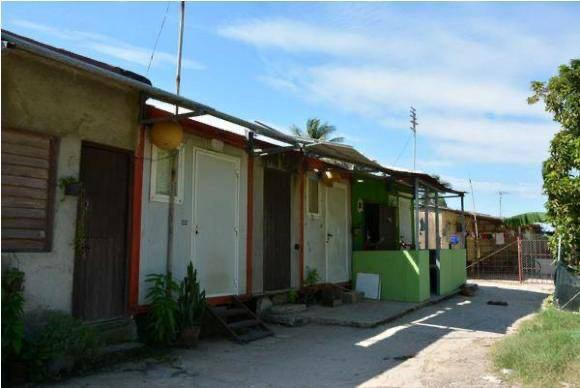
Reference image of containers converted into homes in Cuba. / Archive/Cubadebate

14ymedio bigger14ymedio, Havana, August 8, 2025 — In Las Tunas, where the housing crisis has been installed for years as an uncomfortable guest, the authorities have decided to resort to a “novel” solution: converting recycled containers into homes. The metal boxes are nothing less than those that transport solar panels to the Island, and the authorities-who assure that they are inspired by similar projects around the world-have decided to give them a second life.

Héctor Rodríguez Espinosa, provincial director of housing, announced with optimism that the first containers will be installed in the municipalities of Manatí, Puerto Padre and Majibacoa. Among their advantages are resistance, durability and low environmental impact.

“At present the province has 46 containers: Eighteen of them are assigned to the Electric Company for the construction of nine houses for its workers, and 28 are to be delivered through the popular councils by delegates, community groups and the government in each territory,” said the manager.

As for the frequent “concerns” about the metal material of the containers, which could turn them into ovens, he said that there is nothing to be alarmed about. Each improvised house will be covered inside with “anti-thermal elements,”which will also provide “aesthetics, comfort and a better continue reading

finish.”

They will have a plot of 150 square meters, so that “the family, if necessary and possible, can later expand by building other rooms.”

Each unit will have between 32 and 70 square meters-divided between bathroom, kitchen, dining room and bedrooms, according to the number of residents-and “ventilation” is assured with doors and windows, he highlighted. They will also have a plot of 150 square meters, so that “the family, if necessary and possible, can later expand by building other rooms.”

Meanwhile, the residents will have to adapt to living in the boxes of the refurbished metal containers. Some officials of the Housing Directorate itself were busy emptying other boxes, which came from the state budget.

In Matanzas, the People’s Provincial Court on Thursday tried two former employees of the sector-a director and an investor-for forging documents and embezzling funds. The trial, described as “exemplary” like so many others, ended with a sentence of five years in prison for the first and four for the accomplice, with the option to do correctional work without internment.

According to Girón, the former director had bypassed all procedures and signed a contract with a self-employed worker to rehabilitate a multi-family building known as the Transport Building, in the neighborhood of 13 de Marzo. The agreement was signed, clarifies the media, “behind the back of the unit’s Procurement Committee and without prior bidding.” The document did not contain “the work object; the person responsible for the supply; the representatives of the supplier and the customer; the terms of guarantee; the schedule of execution; and the list of persons authorized by the supplier and the customer to sign the certificates of conformity, acceptance and materials.”

There was no construction work on the building, which had “severe structural damage,” but there was a bill of more than half a million pesos.

There was no construction work on the building, which according to Girón presented “severe structural damage,” but there was a bill of more than half a million pesos for work that was never carried out. “No constructive action was taken to restore the original and functional values of this building as planned, and the property now remains in the same state of deterioration, although [the directors] arranged payment as if the construction had been carried out satisfactorily,” the newspaper said.

The investor, for his part, never verified that the construction had been completed with the desired quality nor requested the work file. He still certified the whole process.

Both were also prohibited from exercising any office related to “administration, care or availability of material and financial resources,” and their family members -it is not clear whether voluntarily- refunded the 531,486 pesos,19 centavos, so that Vivienda did not see its assets affected.

The trial, which was held in public, is yet another warning from the Government, among many that it has issued recently, to officials and low-ranking managers on the Island. However, the fact that such an obvious crime -since the building was never repaired- was ignored until the last moment casts doubt on the management and control of state enterprises over their resources. Justice was delivered, but, as is often the case, it was delayed.

Translated by Regina Anavy

____________

COLLABORATE WITH OUR WORK: The 14ymedio team is committed to practicing serious journalism that reflects Cuba’s reality in all its depth. Thank you for joining us on this long journey. We invite you to continue supporting us by becoming a member of 14ymedio now. Together we can continue transforming journalism in Cuba.
In Order To Avoid a Further Flight of Personnel, the Cuban Government Will Redistribute Salaries for Vacant Posts

This measure will be temporary and will apply only in the budgeted sector, in particular Education and Health

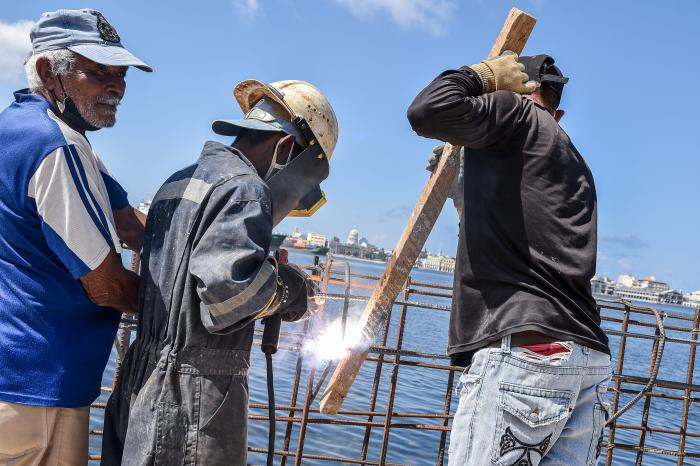
In recent years, the workforce in State-owned enterprises has been drastically reduced.

14ymedio bigger 14ymedio, Havana, 11 August 2025 — The Cuban government will redistribute wages already budgeted for unoccupied state positions among employees who are currently working. This is stated in an agreement signed by the Council of Ministers and published on Monday in a special Official Gazette.

The legal prose does not hide the fact that the measure is intended to be an “incentive for the stability of the labor force” in the face of the “sustained increase in the labor fluctuation of the budgeted sector,” which means the loss of human resources in the State sector.

“It is considered to be additional pay and salary for all legal purposes, without its application constituting a payment system.”

The decision does not imply an increase in wages, as one of the articles clarifies: “It is considered to be additional pay and salary for all legal purposes, without its application constituting a payment system.”

It will apply to all occupational categories in the budgeted sector, including units with “special treatment” (such as military personnel or doctors on missions). However, there are exceptions to this extra payment: “The bodies and agencies of the Central State Administration and national entities that have approved differentiated salary treatments of wage increases, as well as the care units and educational institutions whose health professionals and teaching staff receive the benefit of maximum effort and overload of educational work.” continue reading

According to the resolution, it will be the heads of the various entities who assess whether “the non-implementation of the salary fund is objective” and ensure the redistribution with the salary expenditure plan allocated for the fiscal year. The distribution shall be made by means of an internal regulation drawn up by the Board of Directors of each unit, which shall include the frequency of payment.

The regulation should also contain the “source of funding”; that is, the amount of “non-implemented” money to be distributed.

“It may be granted only once or for a period of time to be determined, according to the characteristics of the work or the result that is stimulated, without this being permanent or massive,” insists the text. The regulation should also contain the “source of funding”; that is, the amount of “unimplemented” money to be distributed and the procedure for granting it, which will also depend on different factors. The “high performance criteria, differences with greater recognition of highly qualified human resources, holding positions of higher responsibility, the competency management approach and the individual distribution mechanism” will mark the differences.

Similarly, states the Gazette, the amount paid to each worker “is to be approved by the Board of Management of the budgeted unit, in agreement with the trade union organization, and reported to the General Assembly of Affiliates and Workers.”

The Government sets a deadline of 30 days for each agency to carry out an “analysis.”

From the publication of the measure, this Monday, the Government sets a deadline of 30 days for each agency to carry out an “analysis” that allows knowing “which entities are able to redistribute the salary fund” and approve the “general guidelines” to allow the payment to be redistributed.

The implementation of the resolution will also be subject to review over a period of one year and every three months, requiring an outcome report to be submitted to the Ministry of Finance and Prices.

In recent years, the workforce in the budgeted sector and State enterprises has been drastically reduced, mainly due to the migratory exodus and low wages, which are barely enough in a context of widespread crisis.

Translated by Regina Anavy

____________

COLLABORATE WITH OUR WORK: The 14ymedio team is committed to practicing serious journalism that reflects Cuba’s reality in all its depth. Thank you for joining us on this long journey. We invite you to continue supporting us by becoming a member of 14ymedio now. Together we can continue transforming journalism in Cuba.
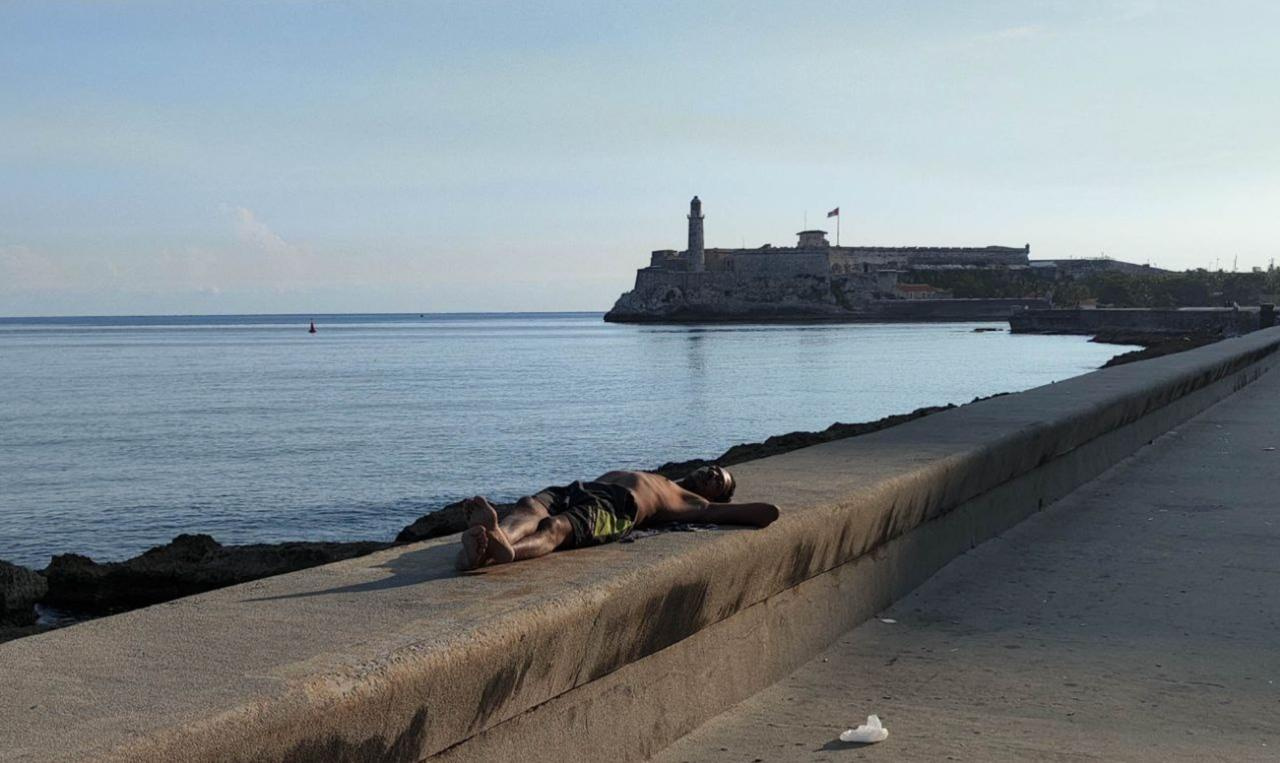
July Books: Variations on the Orishas, the Lottery and the Cuban Incubator

Katherine Perzant’s book about the Cuban countryside has just won the Franz Kafka prize for essay and testimony

‘Cubensis’ is another reflection on a lost country that we now begin to understand. / 14ymedio

14ymedio bigger14ymedio, Xavier Carbonell, Salamanca, 9 August 2025 — Katherine Perzant has rediscovered for readers the physical and spiritual desert of the Cuban countryside. A skeletal train that crosses a plain; oxen grazing casually by the road; miles of yellow grass and barren land. Anyone who says that Cuba is a tropical paradise would only have to travel through those villages of Oriente and Las Villas. “This is the Cuban nothingness,” writes Perzant.

Her book of vignettes and observations on the countryside of her childhood in Holguín during the Special Period has just won the Franz Kafka prize for essay and testimony. With a prose put at the service of reflection and charged with fatality, like that of Faulkner and Coetzee, La nada cubana (The Cuban Nothingness) evokes villages and hamlets and the distance between them. If you search the grass, you will find snakes, guinea pigs, mice and all kinds of vermin.

You will also find guajiros--farmers–in addition to country life and the women; they only know how to talk about one thing: La Charada.* If there is anything beautiful in the Cuban countryside it is La Charada,” writes Perzant in one of the best excerpts from the book. “People play the numbers and their meaning, looking for luck, although those who have played and know say that whoever plays by necessity loses by obligation. It doesn’t matter. If you grew up in the countryside, you know that a coyuyo (click beetle) turns upside down, and the number of its somersaults is the number of children you will have.” continue reading

The sacred combinational analysis leads a guajiro to place everything on five if he sees a nun and on 65 if he is pecked by a hen.

Chance is the only thing that dares to challenge nothingness: the sacred combinational analysis that leads a guajiro to play everything on the number five if he sees a nun and on 65 if he is pecked by a hen. “Number one is a horse; two, a butterfly; three, a little boy; and four, a cat,” enumerates Perzant. There has not been such a tremendous evocation of the countryside for a long time, which is the same as saying the Island, as if Havana did not exist.

Another reflection on a country that was lost and that we now begin to understand is Cubensis (Empty House), by journalist and film critic Alejandro Ríos. This collection of articles attempts to reconstruct Cuba from afar, in an exercise that the filmmaker Carlos Lechuga has described as a “rescue and salvation maneuver” for an identity that exile has not extinguished.

Mi último viaje en Lada (My Last Trip to Lada), published by the same publisher, is the first part of a collection of crime novels, la Trilogía de la Quinta Avenida (The Fifth Avenue Trilogy). Its author, Efraín Rodríguez Santana, explores the corridors of the Interior Ministry as he investigates an art theft in the 1990s. The crime novel, like other narrations of its kind, such as Leonardo Padura’s Paisaje de otoño (Autumn Landscape), is expected to be a pretext for social criticism.

Another crime novel, Lo que oculta la noche (What the Night Hides), by May R. Ayamonte, continues a tendency of popular Spanish novelists to use the Cuba of the 80’s and 90’s as an escape scenario. In 1987, a woman travels from Spain to Playa Larga with her lover and begins her initiation into santeria. Years later, a detective investigates to what extent this flight had to do with a crime that occurred in Granada, in which everyone sees the Devil’s hand, although these are innocent orishas.

Reina María Rodríguez is perhaps the most notable living female voice of Cuban poetry. With her book of poems Mazorcas (Corncobs), published by Rialta, the winner of the National Prize for Literature once again displays her intimate universe, composed of a series of images–the conversation of a poet with his daughter, a room with flowers, the corn fields in Wajda’s cinema–of a life that could not be lived.

In Salamanca, the Cuban poet Odalys Interián won the King David Award for Biblical Poetry for her poetry collection, Y la muerte se muere (And Death is Dying

In Salamanca, the Cuban poet Odalys Interián won the King David Award for Biblical Poetry for her poetry collection, Y la muerte se muere (And Death is Dying). The competition, organized by prestigious writers based in the city, like the Peruvian Alfredo Pérez Alencart, awards books in which spirituality and language are intertwined. Interián lives in exile in Miami and directs the publishing house Dos Islas.

Within Cuban literature, if there is a thunderous and unclassifiable author, it is Yoss. Nobody knows who José Miguel Sánchez Gómez is–a name that could be that of a baker or a mechanic–but everyone knows Yoss. Biochocolítica del caos (Biochocolytic of Chaos), published by Verbum and signed by Pedro Pablo Porbén, tries to get closer to the writer’s machinery without getting burned.

What is biochocolate mousse? What does it taste like? What is postmodernism? Who is Yoss? No one knows if Porbén will be lucky enough to answer those questions, but readers would do well to be afraid of the answers.

*Charada: Also called La Bolito, the clandestine game of numbers and symbols dates from the 1800s when Chinese workers arrived in Cuba. Although technically illegal, it is engrained in Cuban culture.

Translated by Regina Anavy

____________

COLLABORATE WITH OUR WORK: The 14ymedio team is committed to practicing serious journalism that reflects Cuba’s reality in all its depth. Thank you for joining us on this long journey. We invite you to continue supporting us by becoming a member of 14ymedio now. Together we can continue transforming journalism in Cuba.
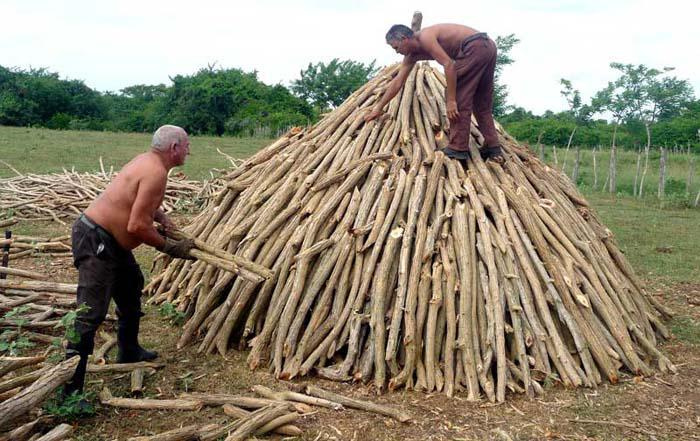
A Hard-Currency Incentive Is Promised to the Charcoal Producers of Pinar Del Río, Cuba

This measure aims to increase exports to 250 tons, which barely reached 36 tons in 2024.

Charcoal producers in Pinar del Río / Granma

14ymedio bigger14ymedio, Havana, August 11, 2025 — The Pinar del Río Agroforestry Company only exported 36 tons of charcoal out of the 400 tons it produced last year, but it promises very different results for 2025. According to its director, Leduhan Menéndez Cardentey, it will produce less than in 2024, about 300 tons, but 250 of them will be for export.

That is, if last year only 9% of the production was destined for sales abroad, this would represent more than 83%. How will they make up that difference? Menéndez Cardentey’s explanations to the provincial press seem more voluntarism [the principle of relying on voluntary action] than reality and refer to the approval of a “financing scheme” in dollars.

Of the sales of charcoal, the official assures, most, 54%, will go “directly to the producer” (30% to the State budget and the rest to be “negotiated with the producing company and exporters”). “This can multiply the volumes of production from which the producer would have a profit in hard currency,” says Menéndez Cardentey. It is not clear, however, how and to what extent they will be able to achieve this.

At the end of last year, charcoal producers in Sancti Spíritus were complaining that they received 20 per cent of the revenue compared to 80 per cent for the State, and about the continue reading

difficulties of dealing with the government. “The company takes up to seven months to pay. They do not pay until the charcoal is sold outside the country,” a producer told this newspaper.

“Production has never been stopped, but the volumes that were previously made are not being produced.” 

On the other hand, the explanation for the drop in exports in 2024 is found, for the director of the Agroforestry Company, in the US embargo of the Island. “Production has never been stopped, but the volumes that were previously made are not being produced,” he explains to Guerrillero. “In 2024, we had a complex situation with the shipping companies because of the blockade.”

The Government made another statement to the National Assembly last July, exposing the country’s economic collapse and the fall in production in almost all areas. At that time, the Minister of Economy and Planning, Joaquín Alonso Vázquez, acknowledged that although the export figures for tobacco, lobster and other fishery products had recovered, “these increases were not sufficient to compensate for the decline in nickel and other mining products, honey, charcoal, farmed shrimp and sea shrimp, and biopharmaceuticals.”

The reasons, listed by the minister himself, included not just the “blockade” but also the lack of inputs, energy and fuel, in addition to “logistical problems and the decrease of some prices on the international market.”

In the same place, Alonso Vázquez stated that of the entire plan for exports of goods in the first months of the year had been fulfilled by only 62%, compared to 78% in the same period of the previous year. This makes it more difficult to comply with the prediction of the Pinar del Río Agroforestry Company.

Marabou vegetal charcoal was black gold for the Cuban state. The Government, until now, has been awarded 50 per cent of $340 per ton for export. An article published in Granma last year reported that for each ton of charcoal the Matanzas Agroforestal paid around 200 MLC (freely convertible currency), equivalent then to 172 dollars. This same product is sold in the US for about 400 dollars and, in the case of premium, almost 490 in Spain, where a newly created company–Entre Brasas–imports it from the port of Santiago de Cuba to Vigo, in Galicia.

The difference between the price paid to the Cuban producer and the cost to the foreign consumer is $228 per ton or, in the case of premium, $318. This includes the Cuban State’s share, transportation and the profit of the final vendor. Granma’s data showed that the Cuban State kept 168 dollars per ton, since it gave 172 to the producer, which has traditionally received better treatment than those in other agricultural sectors.

Translated by Regina Anavy

____________

COLLABORATE WITH OUR WORK: The 14ymedio team is committed to practicing serious journalism that reflects Cuba’s reality in all its depth. Thank you for joining us on this long journey. We invite you to continue supporting us by becoming a member of 14ymedio now. Together we can continue transforming journalism in Cuba.
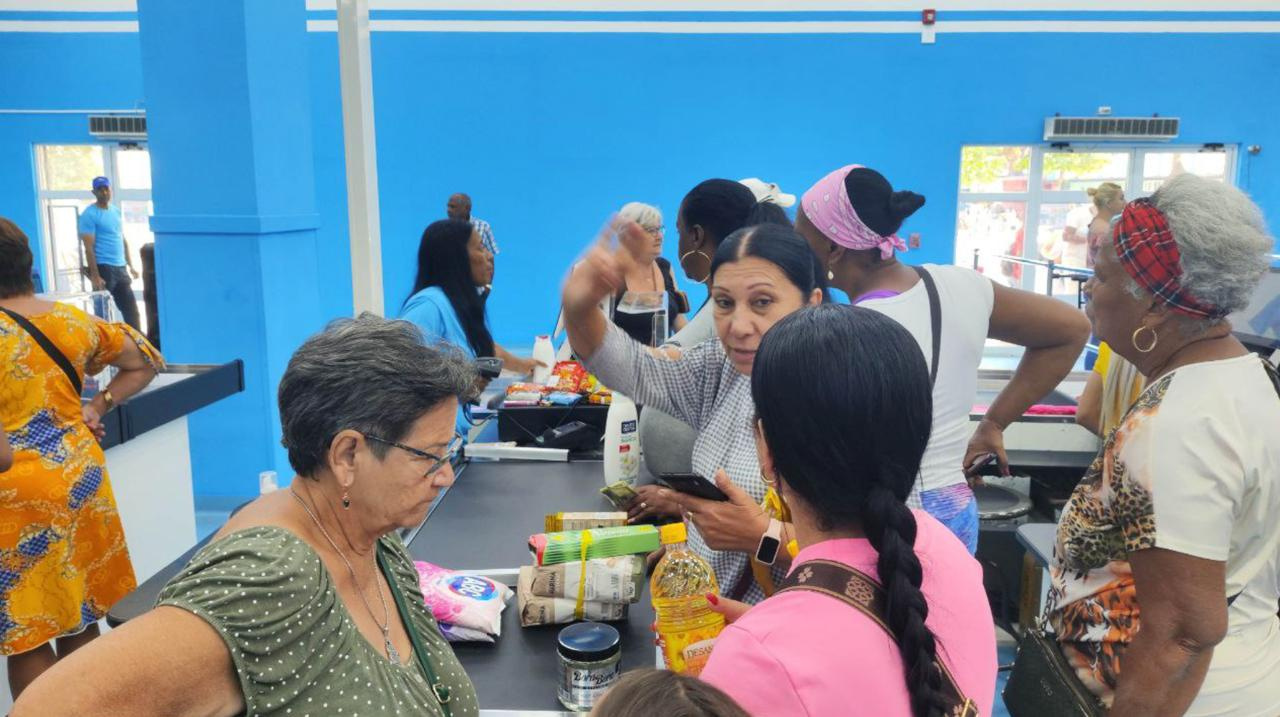
Cuba’s Guantánamo Official Press Lashes Out Against the ‘Virus’ of Dollarization

Venceremos laments the loss in value of the MLC (Freely Convertible Currency) and its replacement by the “empire’s” currency.

In the street, a cash dollar is worth much more than a digital dollar in MLC (Freely Convertible Currency). / 14ymedio

14ymedio bigger14ymedio, Havana, 10 August 2025 — The official newspaper Venceremos, organ of the Communist Party in Guantánamo, has described the phenomenon of dollarization with an unusually critical tone. The text emphasizes the gradual disappearance of shops in freely convertible currency (MLC), as well as the prominence of bank cards, especially the Classic, which allows paying in dollars without standing in line or coming up agasint problems. Some interpret this change as the prelude to a major transformation.

What the official newspaper calls a “virus” has spread to the rest of the country from Havana. The emblematic 3rd and 70th market in the capital began to accept green banknotes, and almost immediately the MLC stores began to show more shortages than usual, while relatively well-stocked outlets operating only in physical dollars and with new cards emerged.

The informal exchange market, always sensitive to signals, reacted quickly. The gap between virtual “convertible currency” and physical currency widened, becoming a chasm. On the street, a cash dollar is worth much more than a digital dollar in MLC.

The ‘Venceremos’ report comes a little late for a problem that the independent media have already examined in minute detail many times.

The Venceremos report comes a little late for a problem that the independent media have already examined in minute detail many times. First, there are discounts on non-perishable products; then, a temporary “closed for maintenance” sign and some cosmetic touches; finally, the reopening as a dollar store. Inside, the sellers confirm what the official channels have not said: the merchandise is liquidated, and when the inventory runs out, the store reopens trading exclusively in US banknotes.

For those who still have savings in MLC or receive payments in that virtual currency, the situation is discouraging. The supply is limited to items of low demand that many buy hastily in order not to lose everything. The feeling of helplessness is growing, and with it continue reading

the perception that the MLC is doomed to disappear.

On the street, the issue is one of the most discussed topics. It is commented on in lines, public transport and social networks. At the official level, however, silence prevails. The Venceremos article criticizes, without naming, those responsible for the communication policy, pointing out that people do not receive clear and timely explanations about processes that directly affect them.

The only recent official reaction came from the Central Bank of Cuba (BCC), which denied a rumor about the imminent disappearance of this virtual currency. Speculation had circulated after a maintenance of the country’s main payment platform. In a short statement, the entity stated that operations in MLC continued and that interruptions were part of routine technical work, and it called for reporting through official channels.

The denial did not dispel the concern. As Venceremos points out, it is difficult to blame the population for believing in rumors when there is a lack of accurate and timely information. In addition, the episode highlighted a missed opportunity to face reality. In three decades, the Cuban regime has created and eliminated the CUC, allowed and banned the physical dollar, introduced and restricted virtual currencies, and is now converting the currency of the “empire” into the only valid national currency on the Island, while condemning the MLC to irrelevance, all in the midst of a sustained devaluation of the Cuban peso and an unstoppable rise in the dollar, which this Sunday is approaching 400 pesos.

A monetary “solution” is introduced, presented as stable; its use is limited, devalued and eventually replaced by another.

The historical account made by the Guantanamo media itself, unusual in a Party organ, presents a repetitive cycle. A monetary “solution” is introduced, presented as stable; its use is limited, devalued and finally replaced by another. The MLC, which was born as a digital equivalent of the dollar and with the promise of stability, is now being replaced by direct transactions in physical currency.

In Guantánamo, as on the rest of the Island, each new store closure is interpreted as another step towards total dollarization. Consumers prepare, exchange MLC for dollars in the informal market at very unfavorable rates and prioritize spending their virtual balances before they lose value. The general expectation is that, sooner rather than later, the MLC will be history.

The Venceremos article does not pronounce against this possible transition, but its tone and structure say everything. The use of expressions such as “extreme unction” and “life support” to refer to virtual currency breaks with the usual triumphalist rhetoric and suggests that, in the provincial official press, some journalists are tired of making up fictitious advances like everyone else, which also explode in their faces. .

Translated by Regina Anavy

____________

COLLABORATE WITH OUR WORK: The 14ymedio team is committed to practicing serious journalism that reflects Cuba’s reality in all its depth. Thank you for joining us on this long journey. We invite you to continue supporting us by becoming a member of 14ymedio now. Together we can continue transforming journalism in Cuba.
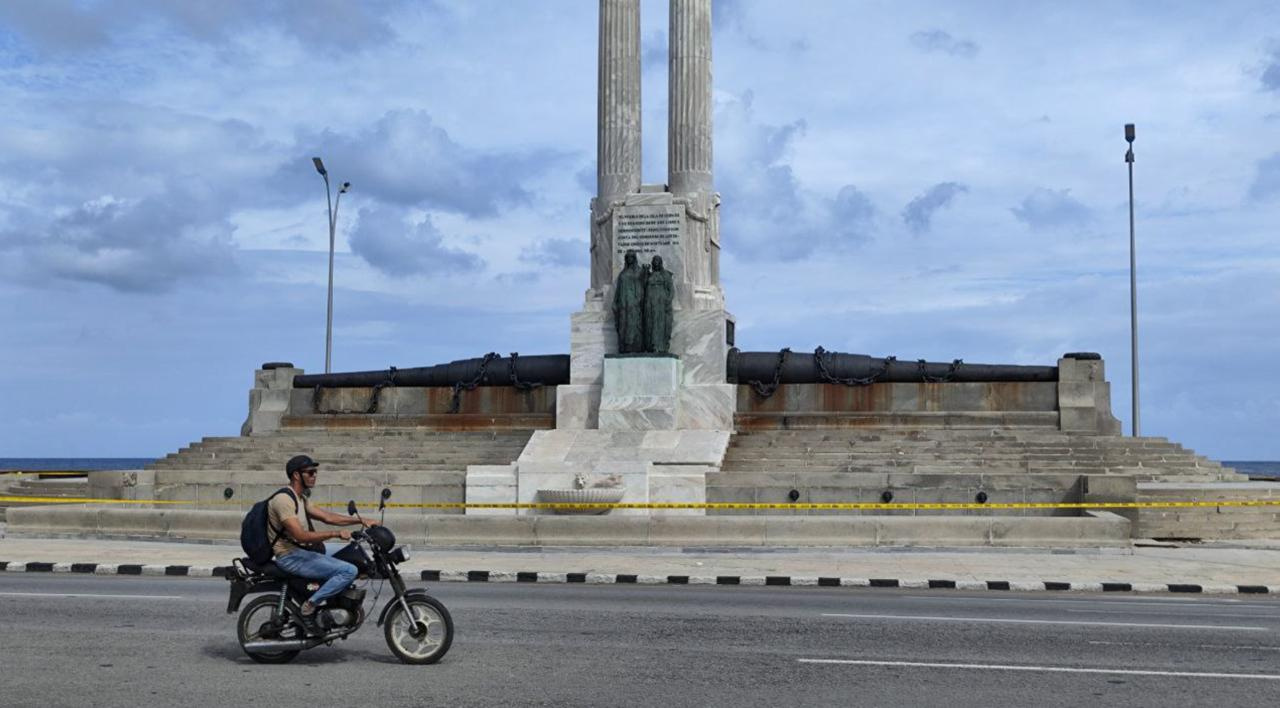
Cuba Bought $1.3 Million Worth of Motorbikes From the US in June

It is likely that a large part of this merchandise will be imported by the private sector.

In addition to motorbikes, used vehicles also represent a significant portion of the purchase.

14ymedio bigger 14ymedio, Havana, August 9, 2025 — The Cuban government’s dependence on U.S. imports continues to trend upward, as evidenced by data from last June, provided by the U.S.-Cuba Economic and Trade Council (US-Cuba Trade). In June, US food and agricultural purchases by Cuba reached $38.4 million, an increase of 10% compared to the 34.9 recorded in June last year, and also above the $37 million of June 2023.

This monthly growth is only part of a larger picture: between January and June 2025, imports of US products to Cuba amounted to $243.3 million, representing a 15.5% year-on-year jump compared to the same period in 2024, when they accounted for $210.6 million.

Nor is the increase limited to the agricultural sector, as the Island has increased its purchases of a range of commodities, including marble, travertine and alabaster for $23,521, enzymes ($13,498) and wire processing machines (&12,000). Even products such as bicycles ($22,160), overalls ($19,500) and solar cells ($43,500) were imported to the Island last June. continue reading

Used vehicles still dominate much of the purchase, with a total value of $12 million in the first six months of 2025 alone.

However, used vehicles still dominate much of the purchase, with a total value of $12 million in the first six months of 2025 alone. Motorbikes also stand out with $1.3 million, showing the role that transport -probably mostly in private hands- plays in the demand for US goods.

Other products stand out, either because of their scarcity on the Island or because they are unusual, such as milk ($1.8 million), pork ($3.2 million), frozen ready-made foods ($876,215), communion wafers ($776,301) and coffee ($699,273). And, of course, chicken remains at the top of the list, with 55.5% of the total purchase value, about $21.3 million.

In June 2025, imports from the U.S. of health care goods were zero. However, humanitarian donations, which could include health inputs but do not specify outputs, amounted to $14.4 million.

In June 2025, imports from the US of health care goods were zero.

The figures do not lie: the Cuban economy remains tied to the need to import products -and not only from the US- to meet both the domestic demands of the state and the private sector, in the face of an almost absolute debacle of its industry and agriculture.

This was recently recognized by the Government during the sessions of Parliament, when it revealed that in the first half of 2025, purchases abroad, from the private sector alone, exceeded $1,000 billion, 34% more than at the same date in 2024. The main products imported during this period, added the Parliament’s Economic Commission, include raw materials and intermediate products (37%), food (22%), beverages (16%), and “machines, appliances and their parts” (13%).

Contrary to the agility and purchasing capacity of the private sector, in the first half of this year the state fulfilled its plan for imports of goods and services by only 67%. “Priority was given to food, fuels, medicines and medical supplies,” said the Minister of Economy and Planning, although he acknowledged that, compared to 2024, “there is evidence of a decrease in the volume of food, which continues to be the largest item.”

Translated by Regina Anavy

____________

COLLABORATE WITH OUR WORK: The 14ymedio team is committed to practicing serious journalism that reflects Cuba’s reality in all its depth. Thank you for joining us on this long journey. We invite you to continue supporting us by becoming a member of 14ymedio now. Together we can continue transforming journalism in Cuba.
A Blackout Facilitates the Theft of Millions of Pesos From a Small Company in Sancti Spíritus, Cuba

Four people involved are captured, including a former employee of the company.

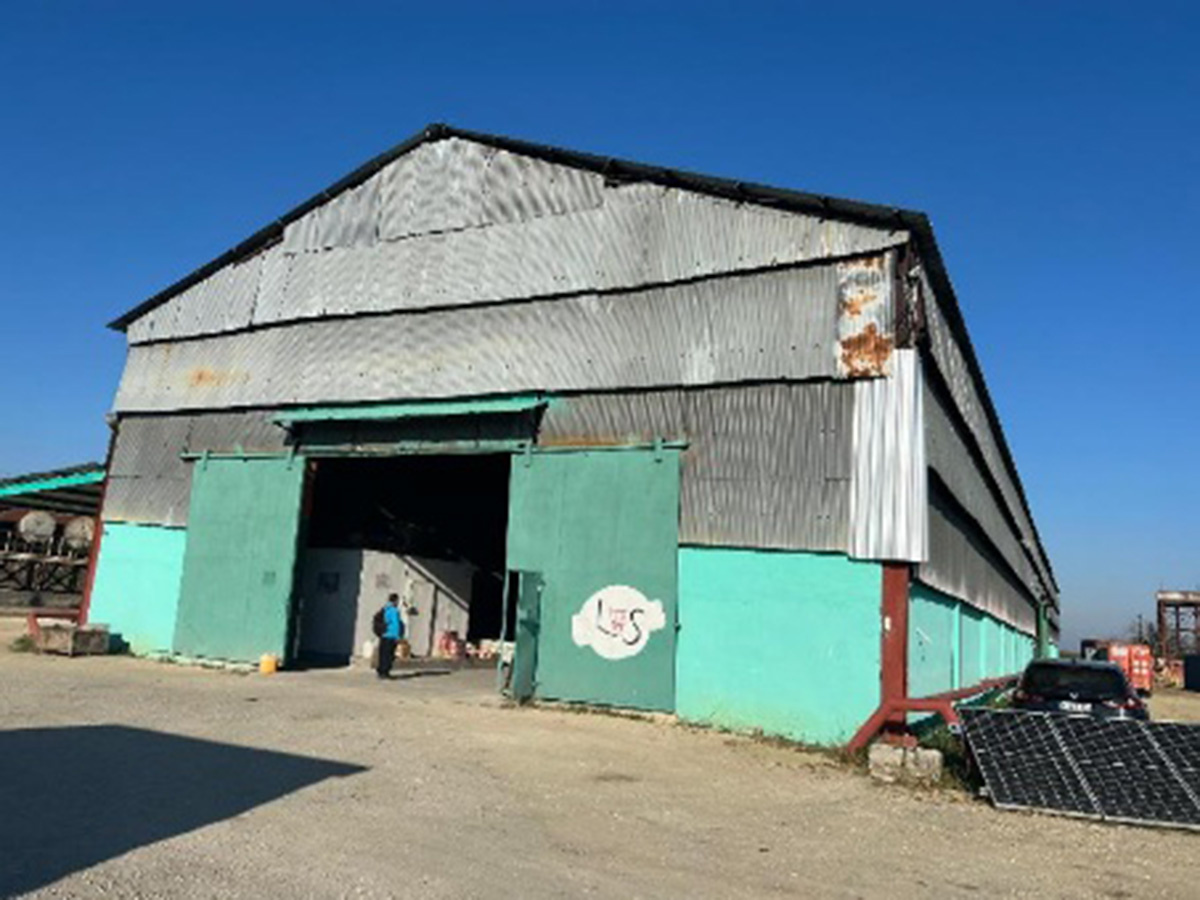
There are no reports from the owners or administrators of the small town, which Escambray erroneously calls”Lancervi.” / Facebook / Landservi SURL

14ymedio bigger14ymedio, Sancti Spíritus, August 9, 2025 — In the early hours of July 11, a daring criminal operation was carried out amid a blackout in Sancti Spíritus. Landservi SURL, a wholesaler in the agri-food sector located in the Chambelon area, was the victim of a million-peso robbery. Four people, two of whom were identified as the main perpetrators, were arrested and confessed to their involvement, according to an official report issued by the Ministry of the Interior.

The assailants took advantage of the lack of surveillance and electrical power to access the premises. They climbed up, created a hole in the zinc tarp roof and entered the premises. One of those involved had previously worked at the company and knew every nook and cranny of the place and where the money was kept.

The two main perpetrators were arrested, confessed to their guilt and named two others involved.

The investigation did not require a large technical deployment by the police. Progress was made, as is usually the case in Cuba, thanks to information from the population, including a couple of anonymous complaints. Following the initial proceedings, the two main perpetrators were arrested, confessed their guilt and named two others involved. One of them would have transported the loot in a cart to his home; the other acted as an intermediary for the purchase of the means of transport that facilitated the theft. Both would have received considerable compensation. continue reading

The finding of material goods acquired with the stolen money, such as two modern motorcycles valued at more than one million pesos each, two electric motors, five high-end mobile phones, clothing, a cart, and the recovery of 2,500,000 pesos in cash show the magnitude of the theft.

Frequent blackouts have become ideal scenarios for the increase in criminal acts.

At the scene of the crime, expert work was able to identify fragments of fingerprints that matched samples from the detainees. Those involved are currently in pre-trial detention, while their possible link to other robberies in the town is being investigated.

Behind the official account, this theft highlights persistent structural problems. The frequent blackouts have become ideal scenarios for the increase in criminal acts. Weak surveillance in a strategic area shows deep cracks in institutional and business security.

The participation of a former company employee opens up an ethical and control gap in human resource management. The awarding of compensation to those involved, who received large sums for participating in the transfer and brokering of the theft, suggests a more complex level of criminal organization than a simple robbery. A script is developed with the assistance of various actors who seek to quickly gain economic benefits without taking the direct risks of the act.

The newspaper Escambray erroneously calls the company “Lancervi.”

The official narrative works with an economy of words. A criminal act is presented; the modus operandi is explained; the arrest and recovery of the loot are confirmed; and adherence to the law is affirmed. But faces, claims and voices are missing from this synthesis..

There is no testimony from the owners or from the managers of the small town, which Escambray erroneously calls “Lancervi.” There are no data on the impact of crime on commercial operations, nor analysis of the economic environment that drives these crimes. The Landservi robbery is not only a story of intruders sneaking out at night but also a reflection on an increase in the complexity of crimes in Cuba.

Translated by Regina Anavy

____________

COLLABORATE WITH OUR WORK: The 14ymedio team is committed to practicing serious journalism that reflects Cuba’s reality in all its depth. Thank you for joining us on this long journey. We invite you to continue supporting us by becoming a member of 14ymedio now. Together we can continue transforming journalism in Cuba.
Hundreds of Migrants, Mostly Cubans, Leave for the North but No Longer Seek To Go to the US

Trump’s veto on travel from 19 countries, including Cuba, “puts at risk” the generation of taxes, warns a report.

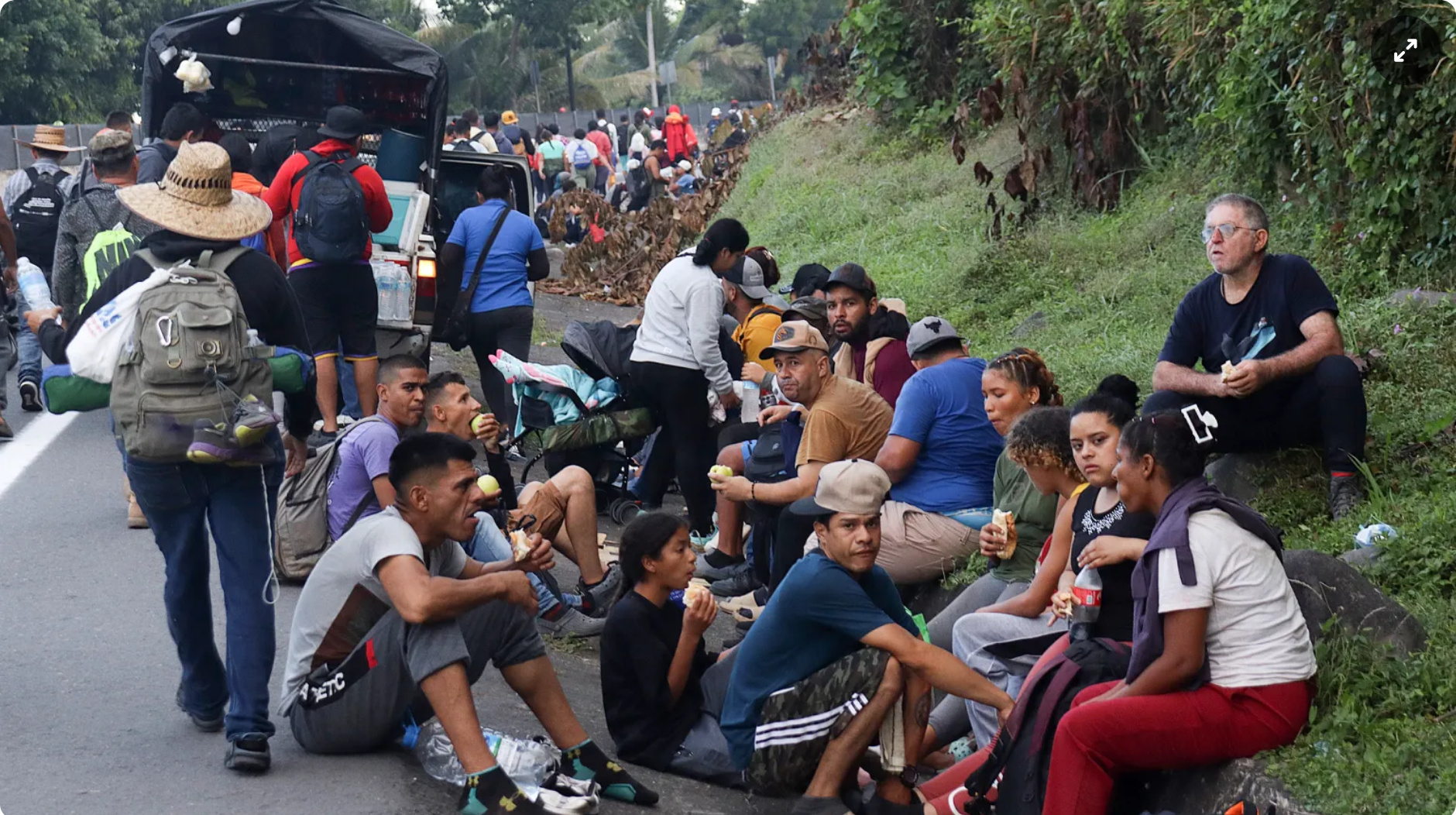
Migrants report that work permits are available from Canada, Germany, Australia and Switzerland. / Archive / EFE

14ymedio biggerEFE (via 14ymedio), Tapachula/Washington, August 7, 2025 — Hundreds of migrants, mostly Cubans, set off on Wednesday in a new caravan from the southern border of Mexico, looking to reach the north of the country. There they hope to regularize their documents to be able to travel to Canada or other countries that offer work, in the face of the tightening of US immigration measures.

“We want to get to Monterrey because the embassies of Canada and Germany are giving us visas to work and to populate their cities,” Maydali Barajo, a Cuban woman who travels with her grandson, told EFE.

The woman explained that they had the illusion of making their dreams come true in Mexico, but the country “denied it.” Now, she says, they want to look for other horizons “where we can realize ourselves as human beings and be the honest people that we are. And fight and help those we left behind.”

La Cubana points out that she went to Mexico because she hoped that the government would welcome them and give them work opportunities after Donald Trump “closed the dream to the whole world” of entering the US. But both the Mexican Commission for Aid to Refugees (COMAR) and the migration authorities “refused everything.” continue reading

‘La Cubana’ points out that she went to Mexico because she hoped that the government would welcome them and give them work opportunities.

In the caravan there are women and men, old people and children, who are undertaking this journey on federal highway 200 despite the risks and dangers.

This was after their stay in Tapachula, Chiapas, where they had been waiting several months for the resolution of an unsuccessful asylum application.

Prior to their departure, Father Heyman Vázquez Medina, pastor of San Andrés Apóstol in Ciudad Hidalgo, Chiapas, prayed with the migrants and asked them to remain united on their way towards their next destination.

The priest said that the migrants want to reach a city so they can work, have a better quality of life and live with dignity, but he regretted that the authorities intimidated them to avoid mobilizations.

“It’s a way of telling them: ’We’re going to hold you,’ of scaring and intimidating them so that they don’t have the courage to leave. The migrants are determined; it’s good, positive, that they come out, that the government and the world realize what is happening in Chiapas,” he said.

Juan Ríos, a Nicaraguan migrant, spokesman and coordinator of the group, told EFE that they organized themselves voluntarily because they do not want to stay in Tapachula. Although some have found employment, they face 12-hour working days for a salary of only 200 pesos per day (about $10.75), while conditions in the shelters are precarious.

“We have no destination in the United States. Our destination is to get to Monterrey, because most want to travel to Canada, Germany, Switzerland and Australia, which are giving work visas,” he said.

He also argued that they are not criminals, but working people. ” We are university students; here there are doctors and nurses who are suffering under a regime, for example in Cuba, Venezuela and Nicaragua.”

The Trump administration eliminated a number of immigration programs and benefits created by his predecessor, Joe Biden, including the Humanitarian Parole Program for Cuba, Nicaragua, Venezuela, and Haiti, and the CBP One application, which allowed people to request an appointment to legally cross the border.

As a result, more than half a million people have been left in legal limbo, while the courts decide on the legality of the programs, or directly on an irregular migration situation.

More than half a million people have been left in legal limbo, while the courts decide on the legality of programs, or directly on an irregular migration situation.

Trump is seeking to accelerate deportations and detentions to fulfill his campaign promise to expel the more than 11 million undocumented migrants living in the country.

Another part of his migration plan, the ban on travel to the US from 19 countries -among which is Cuba- puts “at risk” and impacts the generation of $715 million in taxes and $2.5 billion in purchasing power, according to a report by the American Immigration Council published this Wednesday.

“Those affected by this travel ban are students, workers and family members who pay taxes, support local economies and hold jobs in industries with massive shortages,” the report says.

According to the American Immigration Council, Trump’s measure puts the generation of 2.5 billion dollars at risk, because “thousands of workers cannot enter the country or move freely in the territory.” The analysis says that during 2022, the nearly 300,000 people representing the 19 banned countries generated $3.2 million in labor income and $715 million in taxes.

The human and social impacts also include family division, as some 2.4 million people in sanctioned countries are naturalized, but now many of their relatives will not be able to visit them.

Finally, the US Immigration Council considers that the veto is an exclusionary measure towards Muslim and African groups and questions the reasons Trump gave as justification for implementing the migration veto, recalling that at least 13 of the affected countries have very low rates of migration violations.

Translated by Regina Anavy

____________

COLLABORATE WITH OUR WORK: The 14ymedio team is committed to practicing serious journalism that reflects Cuba’s reality in all its depth. Thank you for joining us on this long journey. We invite you to continue supporting us by becoming a member of 14ymedio now. Together we can continue transforming journalism in Cuba.
Tobacco Is Recovering in Pinar Del Río, Cuba After Months of Blackouts and Lost Hectares

Last June, the authorities of Consolación del Sur complained that 385 hectares of the tobacco crop were ruined by lack of irrigation.

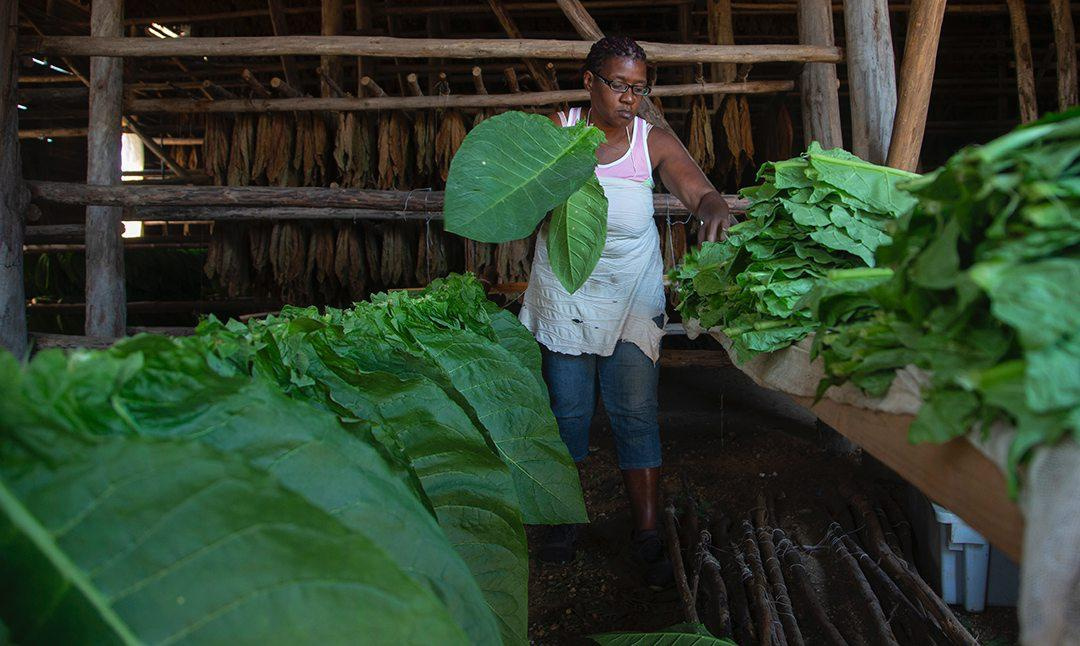
The industry has even surpassed the plan for cigarette production. / Cubadebate

14ymedio bigger 14ymedio, Havana, August 9, 2025 — After months of declaring blackouts, agricultural losses and figures that seemed more appropriate for a disaster zone than for a “tobacco power,” the Cuban tobacco industry is growing again. At least, this is what the Ministry of Agriculture claims, announcing that the production of twisted tobacco for export reached six million cigars during the first half of the year. According to the agency, this figure exceeds what was achieved for the same period in 2024.

The news catches Cubans off guard, because just two months ago they read in the official press that the panorama for tobacco-growing municipalities like Consolación del Sur, in Pinar del Río, was anything but promising: 385 hectares of tobacco had been lost due to blackouts and lack of irrigation, and the yield was only 79% of that expected.

Even so, and against all odds, this Saturday the State newspaper Granma announced that not only has the plan for delivery of cigars to Habanos S.A been fulfilled by 90%, but the manufacture of cigarettes is also going strong. In fact, the Communist Party paper applauded the results, despite “two very complex months” from failures at the BrasCuba factory, located in Mariel, where production has now reached its “productive peak.” continue reading

Out of the 192 million packages planned, some 201 million were produced, so the target was surpassed at 103.4%.

The industry, said its managers, even surpassed the production plan for cigarettes: of the 192 million packages planned, some 201 million were manufactured, so the target was surpassed at 103.4%.

The recovery of the curing sheds affected by Hurricane Ian in 2022 and an upturn in agricultural production compared to the previous year are also part of the optimistic facade of Tabacuba, although there is no lack of signs of a debacle in one of the sectors that, paradoxically, the State most pampers.

Mechanized production suffers from a lack of imported parts, although according to the managers of Tabacuba, they have already produced 80% of what was planned, with the hope of catching up in the last two months of the year.

Mechanized production suffers from a lack of imported parts, although according to the managers of Tabacuba, they have already produced 80%

Even taking into account the delays in the production of cigarettes, the data contrast with the disaster declared by the authorities of Pinar del Río last June. It was planned to sow 1,500 hectares in the year with an expected yield of at least 1,778 tons, but the output was only 1,301 tons, a drop of 27 per cent.

The blow was also felt in the number of cujes (sticks for hanging the tobacco leaves): 1.9 million were achieved, just 79%, when 2.5 million were expected.

Interviewed by the official press, the farmers then admitted to being concerned about the harvest, although they assured that they would continue working “with what there is.”

Translated by Regina Anavy

____________

COLLABORATE WITH OUR WORK: The 14ymedio team is committed to practicing serious journalism that reflects Cuba’s reality in all its depth. Thank you for joining us on this long journey. We invite you to continue supporting us by becoming a member of 14ymedio now. Together we can continue transforming journalism in Cuba.

In Bolivia, Cuban Doctors ‘Performed Unnecessary Operations To Inflate Statistics’

“They were thrown away, mainly paracetamol and diclofenac, to claim they were being given to patients,” a specialist told Cuba Archive.

Cuban medical brigades were sent to Bolivia between 2006 and 2019, when Evo Morales was president. / Archive/Escambray

14ymedio bigger14ymedio, Madrid, August 7, 2025 — “Patients had to be invented in order to justify all the Cubans who were part of the missions and had nothing to do with medicine.” This is what a Cuban doctor tells Cuba Archive about his experience of several years in the medical brigades sent to Bolivia by Havana during the time of the government of Evo Morales.

A doctor from the same mission confirms to 14ymedio the testimony of the specialist quoted by the organization based in the United States, and adds: “They had private cooks, custodians, drivers, laundry services, maintenance, housekeepers, counselors, maids, secretaries and support staff: all were Cubans and served as doctors.”

The doctor interviewed by Cuba Archive denounces the misuse of medicines to pretend that more patients were being treated than they actually received, in order to make the Bolivian government believe that more specialists were needed. “Surgical procedures were invented to ask for more money and make propaganda: unnecessary operations for abnormal fleshy growths and invented cataracts,” he says. continue reading

“Paracetamol and diclofenac were basically thrown away, supposedly given to patients.”

He also mentions that nurses were forced to break insulin syringes, break and burn prescription glasses and dispose of analgesics. “They basically threw paracetamol and diclofenac into the trash and said they were being given to patients,” he says, among other examples.

However, he continues, the majority of those sent were not doctors. “I remember that once in an official activity we were given a pamphlet which said that in Bolivia there were more than 700 ‘Cuban collaborators’ and, of those, fewer than 300 were healthcare personnel. I knew that the minority were doctors. The rest were handpicked. For all of them we had to invent patients and justify the money that Cuba was stealing from Bolivia.”

He also accuses the mission coordinators of living in the “most luxurious places in La Paz” with an entourage of staff: cooks, security, drivers, laundry service and all kinds of employees, who were disguised as doctors, when in reality they were political commissioners.

The doctor personally accuses the then ambassador of Cuba to Bolivia, Benigno Pérez Fernández, of sending “huge wooden crates, more than three feet high” by diplomatic bag while his colleagues were limited to 40 pounds of luggage. “The pilots and flight attendants made fun of us because we traveled with several pants and T-shirts one on top of the other in order to take some things home while the elite could send as much as they wanted,” he says.

Together with the former ambassador -in office until 2019- the doctor mentions other officials and involves the Argentine doctor Fernando Leanes–representative of the Pan American Health Organization–whom he accuses of knowing under what conditions the health workers were working without doing anything. “President Evo Morales and his family were served there, and Evo went a lot. Leanes loved stealing a camera and taking pictures with them. He knew everything, knew perfectly how we lived.”

“In Bolivia, many Cubans left the mission. Ironically, many of them were the same very revolutionary and shameless bosses]]

The doctor, who says he worked at the El Alto Eye Care Center in La Paz and is now abroad, did not leave the brigade for fear of the repercussions it could have on his family. “But in Bolivia many Cubans left the mission. Ironically, many of them were the same very revolutionary and shameless bosses.”

Similarly, he claims that he had difficulties in joining a medical brigade, because in previous years he had obtained a passport with the intention of emigrating to Spain but was refused exit. The authorities were suspicious of him, thinking that he wanted to use his job to leave the island, which is why he was systematically rejected, until an opportunity arrived for him in Bolivia.

The doctor considers that his non-military status in the Communist Party and the Union of Young Communists also played against him and states that its members paid 400 or 600 CUC (Cuban convertible currency, no longer used) to guarantee a “quick exit” from the mission. “I know that missions are bought, and even a cafeteria manager can leave as a medical technician,” he says.

The specialist earned $670, although he had been promised $800, sometimes with arrears of up to four or five months, and claims that he received a reduction of $100 per month, allegedly to pay for rent and basic services to be provided by the Bolivian Government, “so the mission leaders must have been stealing it,” he states. The doctor claims to have seen a “payroll” showing that $4,000 was paid per worker.

“Upon arrival in Bolivia, as soon as we got off the plane, someone from State Security was waiting for us at the bottom of the steps to take our passports. If you had to take another flight, they would give it back with the ticket and take it away again when you arrived at the next destination,” he says. This is consistent with what has been reported by hundreds of brigadistas, and they were forbidden from forming emotional or personal relations with nationals of the country in which they were serving. Visits to other homes were prohibited, and they were told how to respond in possible interviews.

The internationalist mission in Bolivia ended in 2019, when then acting president Jeanine Áñez cancelled the agreement with Havana, claiming that “less than a third were health professionals.”

At that time, 702 doctors left the country, of whom an estimated 205 were qualified. “They had a salary of 1,040, a stipend of 68 bolivianos per day ($9.50), and air transport costs paid by the State, making a total of about 9,000 bolivianos ($1,302) for each of them.”

Translated by Regina Anavy

____________

COLLABORATE WITH OUR WORK: The 14ymedio team is committed to practicing serious journalism that reflects Cuba’s reality in all its depth. Thank you for joining us on this long journey. We invite you to continue supporting us by becoming a member of 14ymedio now. Together we can continue transforming journalism in Cuba.

A Report on the Escape of a Blind Cuban Swimmer Is a Finalist in the SIP Awards

Two journalism students in Chile narrate the desertion that occurred during the 2023 Parapan American Games in Santiago.

“Escape in the Dark: the Story of the Blind Parathlete Who Deserted During Santiago 2023.” / JIT

14ymedio bigger14ymedio, Havana, 5 August 2025 — “I’m in a taxi and I’m escaping,” was the brief phrase Yunerki Ortega Ponce, a blind Cuban swimmer, told his mother over the phone after escaping from the Parapan American Games in Santiago, Chile, in November 2023.

Now, the report that recounts that flight, Escape in the Dark: The Story of the Blind Parathlete Who Deserted During Santiago 2023, published by Diego Portales University, has been nominated as a finalist for the Inter-American Press Society (IAPA) International Prize in the category of University Journalism.

Written by Francisco González and Juan José Leyton, the text accurately reconstructs the voluntary flight of Ortega Ponce, a Paralympic swimmer from the island who decided to leave the Cuban delegation.

He was the last of at least eleven Cuban athletes who deserted during that edition of the Games in Chile.

The report describes how Ortega, diagnosed with retinosis pigmentosa, came to compete in the S11 category and finished fifth in the 50-meter freestyle. He was the last of at least eleven Cuban athletes who deserted during that edition of the Games in Chile -among them members of the women’s hockey, rowing, handball and athletics teams- and his defection generated a police complaint for “alleged misfortune” before the Carabineros de Chile.

According to the report, his escape was planned with the support of a Mexican athlete friend and a lawyer in Chile. He left the Villa Panamericana in the early hours of November 19 and walked with all his belongings to the National Stadium. He was then taken by sympathetic supporters to the home of a compatriot and began the process of political asylum with attorney Mijail Bonito Lovio.

“God, don’t let them catch me, because if they grab me that will be my end.”

The text highlights the voice of Ortega, who expressed fear and determination: “God, don’t let them catch me, because if they grab me that will be my end,” in reference to possible reprisals in Cuba. It also describes his humble origin in Ranchuelo, his sports career, and the contrast between his international achievements and the lack of state support on the island.

Legislative recognition in Chile is also part of the story. In July 2025, the Chilean Senate unanimously approved granting citizenship by way of grace to Ortega, following a proposal that received support in the Chamber of Deputies in April of the same year. This institutional support helped his integration into sports in Chile. Now he is training for the paratriathlon with Venezuelan Miguel Brito as his coach and guide, with the ambition of representing Chile at the 2028 Paralympic Games in Los Angeles.

A system that rewards athletics, but marginalizes socially

The article, nominated for the Spirits International Prestige Awards (SIP), balances the chronological reconstruction of desertion with a human perspective and contextualizes the Cuban reality: a system that rewards athletically, but marginalizes socially. Ortega, a seven-time Parapan American medallist, faced obstacles in his country that led him to seek ansylum and a new citizenship in Chile, where his talent can find dignified conditions and a renewed projection.

In this sense, the journalistic work of the UDP not only exposes an individual story of escape and reinvention but also a broader phenomenon: the multiple desertions of Cuban athletes at recent international events. The narrative combines direct testimonies, logistical reconstruction and political analysis, which explains its inclusion among the finalists for the SIP competition.

Translated by Regina Anavy

____________

COLLABORATE WITH OUR WORK: The 14ymedio team is committed to practicing serious journalism that reflects Cuba’s reality in all its depth. Thank you for joining us on this long journey. We invite you to continue supporting us by becoming a member of 14ymedio now. Together we can continue transforming journalism in Cuba.
The Dance of Millions in the Tax-Free Enterprises of the Cuban Armed Forces

The Miami Herald got access to documents that reveal details about Gaesa’s finances and a $5 billion drop from the tourism crash.

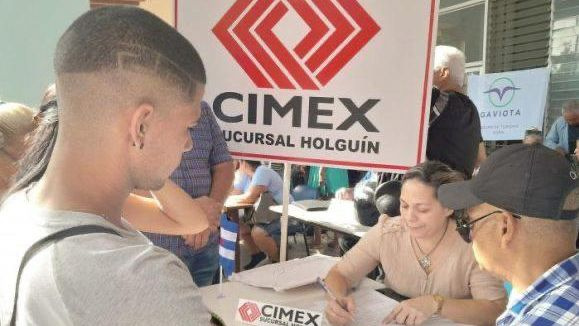
Photo of a Cimex office in Holguín / Granma

14ymedio bigger14ymedio, Havana, August 7, 2025 — The fact that the Gaesa military conglomerate has a free hand in the Cuban economy is no secret to anyone, but knowing -with figures in hand- that the economic crisis is also affecting its finances is, to say the least, surprising. A leak of 22 internal financial documents corresponding to March and August 2024, obtained by the Miami Herald, not only provides figures on its management, but also demonstrates that the group operates without being subject to tax control or paying part of its taxes.

In the first quarter of 2024 alone, the regime’s golden goose made $2.1 billion in net profits. Cimex, its most lucrative company, was responsible for more than half of that amount, with $1.2 billion in profits as of March 2024, out of total revenues of $3.4 billion in that period, although they were even higher the previous year.

Between January and August 2024, excluding Cimex, Gaesa recorded a drop in sales and profits of 67% and 72%, respectively, compared to the same period last year.

Cimex does not appear in the 2024 balance sheets, possibly due to a cyber-security attack that paralyzed their systems in January of this year, according to the Miami Herald, which points out that the fall in the finances of the whole conglomerate -and not only Cimex- coincided with the government’s offensive against the private sector, especially against wholesalers and importers, whom it perceives as competition.

The Herald gives the example of Gaviota, the Armed Forces division dedicated to tourism, whose leaked records show that the company lost $5.8 billion in just five months last year. By March, the company had deposited $8.5 billion in “unidentified bank accounts” and in Rafin S.A., continue reading

another financial institution owned by Gaesa. Five months later, the money given to Rafin was gone, and Gaviota had only $2.7 billion in the bank.

Five months later, the money given to Rafin was no more, and Gaviota had only $2.7 billion in the bank.

According to the Herald, “there is a possibility that the military may have simply transferred the missing dollars abroad or used them to finance other investments without being recorded. However, the collapse of tourism on the Island provides a reasonable explanation for at least some of Gaviota’s losses.”

The same is true for the other companies not associated with Cimex, which between March and August 2024 went from having $14 billion in liquid assets to only 9.3 billion, a fall of 5 billion attributed to the report to the collapse of tourism.

However, the size of Gaesa’s business is such that even without taking into account the contributions of Cimex, which represent about 40% of its revenues, the rest of its companies had, in March 2024, some $18 billion in assets, of which 14.5 billion were deposited in banks or financial institutions controlled by the conglomerate itself. These figures, argues the media, give an account of a business network that functions as a state within the state and which, according to the Cuban economist Pavel Vidal -consulted by the Herald-has assumed the role of “central bank.”

The business of the conglomerate continues to generate large profits. In 2023, Gaesa accumulated $17 billion in sales and $7.2 billion in net profits in the first eight months of the year. According to Vidal, these gross gains represented about 40% of Cuba’s official GDP and were 3.2 times higher than all the State’s tax revenues.

In sectors such as tourism, construction and finance, Gaesa’s role could be even greater. “I have not been able to find a similar example of a conglomerate with such a large share in the economy of a country,” Vidal said. “It even exceeds the weight of Ecopetrol in Colombia, Petrobras in Brazil or Pdvsa in Venezuela”.

Among the companies with the largest bank accounts up to March 2024 are Gaviota, with $8.5 billion; TRD Caribe, with $3.4 billion; and Almacenes Universales, with $1.6 billion.

One of the most alarming facts revealed by the documents is that Gaesa companies do not pay taxes on their foreign exchange transactions. In August of last year, the military conglomerate owed 920 million pesos in taxes -less than 1% of its domestic sales of 100 billion pesos- but had received from the State 9.2 billion as “state investment,” ten times more.

There is also no information on the taxes that Cimex should have paid, but the documents reveal that the tax deductions that Gaesa does pay end up in an institution hitherto unknown: the Revolutionary Armed Forces Tax Administration Office.

The Herald also denounced the opacity of the conglomerate’s financial records, which distort and hide its real assets.

The Herald also denounced the opacity of the conglomerate’s financial records, which distort and conceal its real assets. For example, the finances of August 2024 report a net worth of $2 billion, identical to the profits, when in reality that patrimony amounts to $13 billion, plus 28 billion pesos.

Gaesa uses the exchange rate of 1 dollar for 24 pesos in its operations, an anonymous source close to the conglomerate told the media, and its reports add up pesos and dollars as if they were equivalent.

Although much of the information is half-baked, it is clear that Gaesa’s power within the Cuban economy is greater than expected and that the tax benefits it receives favor its enrichment. In stark contrast, the Cuban people sink ever deeper into poverty, while the dollars flow to tourism, exports and banking.

Translated by Regina Anavy

____________

COLLABORATE WITH OUR WORK: The 14ymedio team is committed to practicing serious journalism that reflects Cuba’s reality in all its depth. Thank you for joining us on this long journey. We invite you to continue supporting us by becoming a member of 14ymedio now. Together we can continue transforming journalism in Cuba.