Sherritt Registers Losses in Nickel and Must Import Foreign Technical Personnel to Cuba

Businessman William Pitt says Canada will send food aid to improve the company’s image in the areas where it operates.
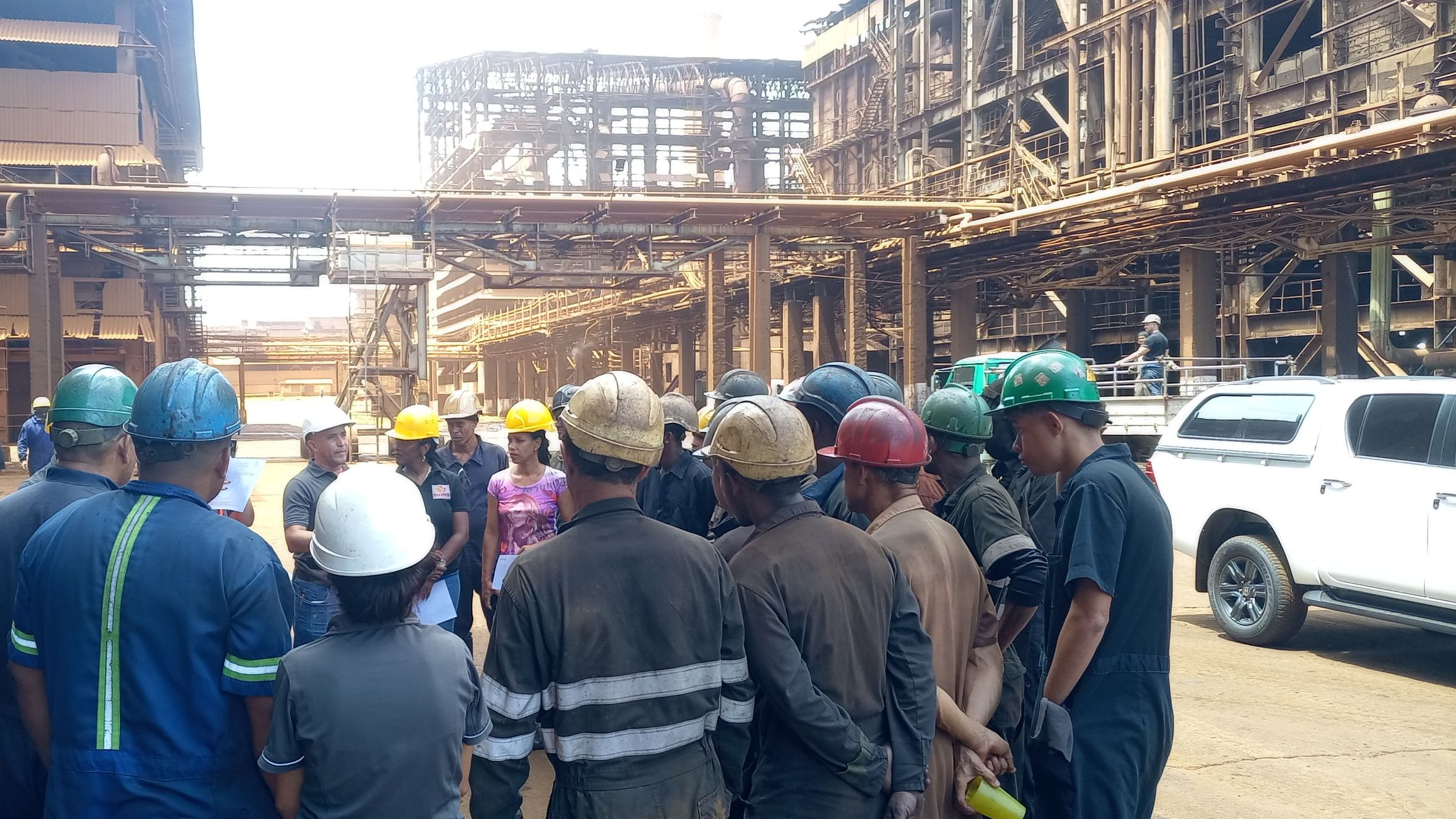

The Comandante Ernesto ’Che’ Guevara plant has even turned to university students to fill technical positions /Ecg Minera

14ymedio bigger14ymedio, Holguín, August 5, 2025 — The collapse of nickel and cobalt mining in Cuba is proceeding apace, with direct consequences both for the economy of the island and for Canada’s historic mineral extraction partner, Sherritt International. According to its most recent quarterly report, the company is experiencing multi-billion dollar losses, a drastic reduction in production and major cuts in its workforce in Canada, while operating conditions in the country are deteriorating.

Sherritt’s second quarter 2025 revenue fell to $43.7 million from $51.4 million in the same period of 2024.

Pitt Wasmer is the heir of one of the families that owned mines confiscated by the Cuban government in 1960.

Businessman William Pitt Wasmer, heir of one of the families that owned mines confiscated by the Cuban government in 1960, shared with 14ymedio a detailed analysis of the crisis facing the nickel industry on the island. The document reveals that the production of mixed sulphides, the base for refining nickel and cobalt, did not meet expectations due to worsening conditions on Cuban territory. Renewed pressure from U.S. measures, shortages of skilled labor and frequent blackouts have contributed to the degradation of results.

The situation led Sherritt to lay off more than 10% of its staff in Saskatchewan (Canada), where it operates the refinery, and another 10% in its corporate office in Toronto. The executive leadership has also been continue reading

reduced from seven to five members, and several expansion plans in both Cuba and Canada have been postponed.

Following these announcements, the value of shares fell by 3.45%, closing at 0.14 Canadian dollars, very close to its low in the last 52 weeks (0.12). This represents a fall of 63 per cent over the previous year, reflecting the sustained deterioration.

Environmental sanctions in Indonesia and the closure of operations in the Democratic Republic of Congo could reduce global competition.

Sherritt revised downwards its 2025 production forecast from 33,000 to 27,000 tons of nickel and from 3,600 to 3,000 tons of cobalt. Even so, the company clings to a moderate optimism based more on external factors than on local improvements. The imposition of environmental sanctions in Indonesia and the closure of operations for labor conditions in the Democratic Republic of Congo could reduce global competition, thus providing a respite.

The company has admitted, for the first time in direct terms, that the situation in Cuba is critical. The lack of trained workers has forced it to import technicians from outside to ensure maintenance at the Moa mine, while electrical instability has forced the company to operate with limited resources. Sherritt maintains its own generation capacity, but the availability of diesel and petrol remains uncertain, and a complete shutdown of the system would seriously affect the chemical refining process.

Nickel revenues fell by 15% in prices and 14% in volume.

The situation affects not only the Pedro Soto Alba plant in Moa but also the operations in Punta Gorda, and the Comandante Ernesto Che Guevara plant has even turned to university students to fill technical positions.

Nickel revenues fell by 15 per cent in prices and 14 per cent in volume. Cobalt reported a 27 per cent increase in prices but failed to offset the lower volume losses. According to Yasmin Gabriel, chief financial officer of Sherritt, combined revenues were lower mainly due to the decline in nickel sales, which has pushed the company into an aggressive cost-containment policy.

The availability of gas has also been limited by problems in the extraction wells.

In the electricity sector, the plants operated by Sherritt in conjunction with Energas continued to face setbacks. In particular, the Varadero plant operated with frequency control to stabilize the national network, which reduced production but kept revenues stable thanks to agreed offsets. However, the availability of gas has also been limited by problems in the extraction wells.

At the same time, the Canadian Government announced that it will provide food aid to more than 78,000 people in areas where Sherritt maintains energy and mining operations on the island. The decision raises questions: Why now? Why right in these locations? Pitt Wasmer suggests that Ottawa is seeking to dampen social rejection of Sherritt because of the polluting effect of its activities and to avoid further erosion of the Canadian image among the Cuban population.

Translated by Regina Anavy

____________

COLLABORATE WITH OUR WORK: The 14ymedio team is committed to practicing serious journalism that reflects Cuba’s reality in all its depth. Thank you for joining us on this long journey. We invite you to continue supporting us by becoming a member of 14ymedio now. Together we can continue transforming journalism in Cuba.
Sheep Thieves Kill One Custodian and Seriously Injure Another in Santiago De Cuba

Authorities presumably arrested the six responsible “in less than 24 hours.”

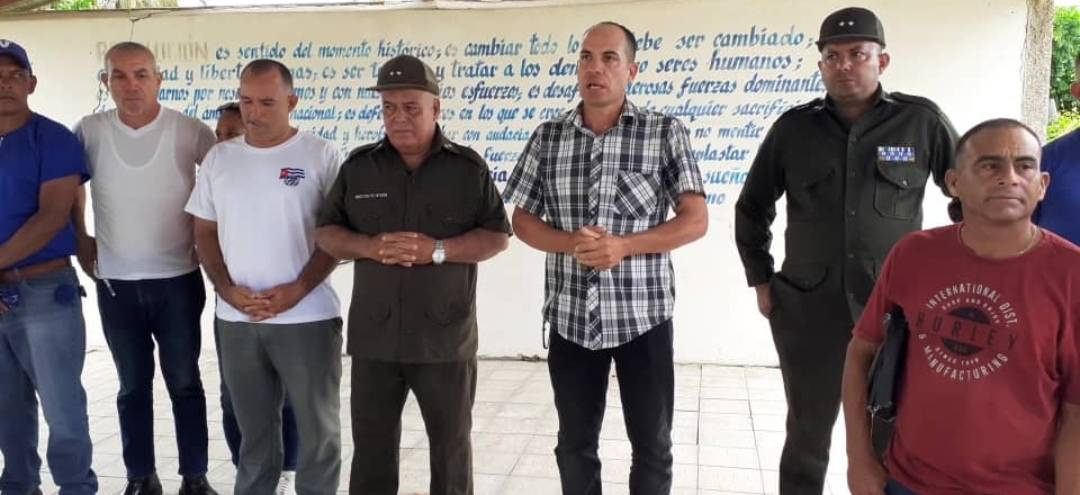
Authorities at UBPC Fidel Domenech Rizo, from Pueblo Nuevo, in Contramaestre (Santiago de Cuba), the day after the event / Facebook / Heroes of the Moncada

14ymedio bigger14ymedio, Havana, August 7, 2025 — A caretaker was killed and another seriously injured when six individuals raided a state cooperative in Santiago de Cuba to steal sheep. According to a brief statement released on Wednesday by the official press, the events took place on Monday night when “unknown persons” entered the UBPC Fidel Domenech Rizo, in Pueblo Nuevo, belonging to the municipality of Contramaestre.

From there they left with 13 animals, the text says, and “objects of the entity,” after killing one of the guards and inflicting “serious injuries on a second, to the point that he thought he would die.” The Ministry of the Interior’s statement says that early on Tuesday “investigations began,” and “within a few hours” they identified “several recipients of the stolen meat, as well as citizens associated with the commission of the act.”

The report does not give more details of the victims or the possible perpetrators, but an official profile on Facebook of Heroes of the Moncada gives complete information. The suspects are six men, between 33 and 43 years old, who have already been arrested. The post, which differs by one in the number of stolen sheep -12-, presumes that the security forces “solved the crime in less than 24 hours, putting behind bars the aggressors, who will be tried by the courts with the severity continue reading

that such a reprehensible crime requires.”

Several comments offer condolences for the murdered caretaker, whom they call Ismael.

Similarly, the publication reports that the animals were recovered and “slaughtered in gastronomic and recreational facilities of the municipality.”

In the comments, several users offer their condolences for the murdered caretaker, whom they call Ismael, a local resident. As usual in this type of crime, which is increasingly common on the island, commentators also call for the death penalty for those responsible.

Last October, three people were sentenced to life imprisonment and a fourth to 30 years in prison for the murder of the custodian of the Industrial Forestal de Mayarí economic unit, in Holguín, Orlando Pérez, who surprised them while they tried to steal the batteries from several vehicles of the state company.

Deputy Víctor Manuel Montesinos, from Contramaestre, denounced in July before the Agroalimentaria Commission of the National Assembly that of every 100 cases of livestock theft, “only one or two are solved.” That session of the Parliament exposed the debacle of the sector, which has only decreased, by leaps and bounds, since 2019. Additional data provided is that 84.5% of the livestock mass is in the hands of private producers while the government continues to prioritize the state sector, unable to guarantee even the shade under which their cows graze.

Translated by Regina Anavy

____________

COLLABORATE WITH OUR WORK: The 14ymedio team is committed to practicing serious journalism that reflects Cuba’s reality in all its depth. Thank you for joining us on this long journey. We invite you to continue supporting us by becoming a member of 14ymedio now. Together we can continue transforming journalism in Cuba.
The Official Press Warns About the Low Impact of Laws Against Sexist Violence

In Periódico 26, 72% of participants in a survey consider the current laws against these crimes to be “insufficient.”

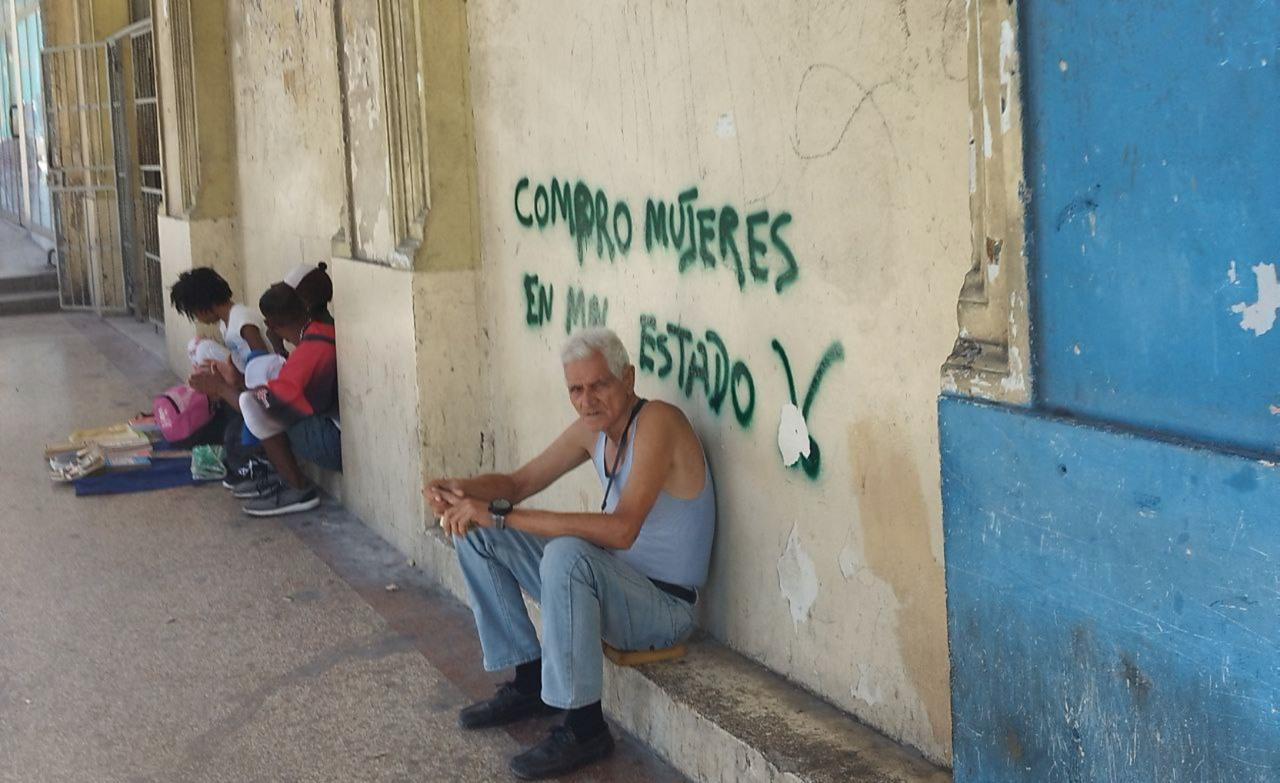
Image of a poster painted on a wall in Havana that reads: “I buy women in bad condition.”

14ymedio bigger14ymedio, Havana, 31 July 2025 — After years of complaints by observers and independent media about the limited capacity of the Cuban Penal Code to punish crimes against women, this Thursday the official press finally began to ask questions. “Do we need more legal reforms in this regard? Should sexual offenses be better criminalized? Do we need faster judicial processes and more protection for victims?” asks Periódico 26 in its own survey in which it exposes a crucial fact: 72% of the participants consider that the current laws against these crimes are “insufficient” or “lax.”

The media warns that the survey “is not representative,” but ensures that the perception of citizens brings to debate a concern not unfounded and, above all, “brings to light the macho culture that surrounds us.”

In 2024, according to figures from the Cuban Observatory on Gender Equality, Las Tunas reported 22 cases of “gender-based violence,” two more than the previous year. Although the report does not detail whether they were assaults or murders and offers a brief profile of the victims -the most common being white women between 20 and 44 years old- it confirms that these facts are hardly those that reached the courts.

The survey also measures the low level of trust in authorities.

Las Tunas was also the second province in the country with the highest number of cases that year, only behind Havana (51), which has more than four times its population, an information that Periódico 26 ignores.

The survey also measures the low level of trust in authorities — between 46% and 55% of respondents believe that many cases are never reported — and the stigma women suffer when they are victims of machista violence. “It is frightening that some, [a] small percentage but enough to worry, feel that ‘they are asking for it’, in a clear sign that the reprehensible culpability of continue reading

the victims persists,” warns the media.

This same Thursday, the official newspaper of Camagüey, Adelante, announced that the system of courts on the island created “gender committees” in each province to “mainstream a gender perspective in the administration of justice.”

According to the article, the strategy seeks, among other things, to deal with these cases “urgently and as a matter of priority,” emphasizing the “right to a dignified life free from violence.”

The articles of both Adelante and that of Periódico 26 were published ten days after the official press reported the murder of a woman in Holguín, calling it “femicide” contrary to its custom. However, a few weeks ago the independent media reported the case of Orlis Daniela, only nine years old, killed by a neighbor in Grito de Yara, Granma, about which the authorities never commented.

So far this year, 14ymedio records 20 femicides, of which one took place in that province.

The girl and her four brothers had found the body of their mother, Yusmila Mayo Ruiz, victim of a femicide perpetrated by her partner on February 14, 2024, in Las Tunas. After Orlis’ death, independent observatories called out the authorities for leaving the children homeless. “The terrible story of this little girl is not a tragedy or fate; it is the consequence of a broken society and a State that refuses to protect the lives of women and girls,” they said.

So far this year, 14ymedio records 20 femicides, of which one took place in that province. This is the teacher Nancy Leyva García, 35 years old and a resident of Las Delicias (Puerto Padre), who was killed by her partner on the street on April 12.

According to the platforms, Nancita, as she was known, was very popular in the community for her profession. She had two children, at least one of them of school age.

In an unusual report that seeks to confirm that enough attention is being paid to machista violence in Cuba, the official press also reported last June the sentencing to 28 years in prison of a man accused of killing his former partner last year in Las Tunas. “The accused, in the early hours of June 5, 2024, assaulted with a knife and deprived of life the woman (…) with whom he had two children,” said Periódico 26, which did not reveal the name of the victim, who could be identified thanks to independent records.

This is Katia Ortiz Figueredo, 25 years old, killed around 11:00 in the evening in front of several people who were waiting to buy medicines in front of a pharmacy. “They had been divorced for a few months, but he, under threats, had kept her in his home for five days and sexually abused (her), according to the expert reports from the necropsy, leaving two children, a boy eight and a girl of three,” said a family member.

Translated by Regina Anavy

____________

COLLABORATE WITH OUR WORK: The 14ymedio team is committed to practicing serious journalism that reflects Cuba’s reality in all its depth. Thank you for joining us on this long journey. We invite you to continue supporting us by becoming a member of 14ymedio now. Together we can continue transforming journalism in Cuba.

The OECD Estimates That Cuba Will Leave the Group of Countries Receiving Development Aid

  • The latest ECLAC report predicts that the economy of the island will remain negative for at least two years.
  • The agency believes that between 2025 and 2035, Cuba will be among the countries with sufficient per capita gross national income to be left without these funds.
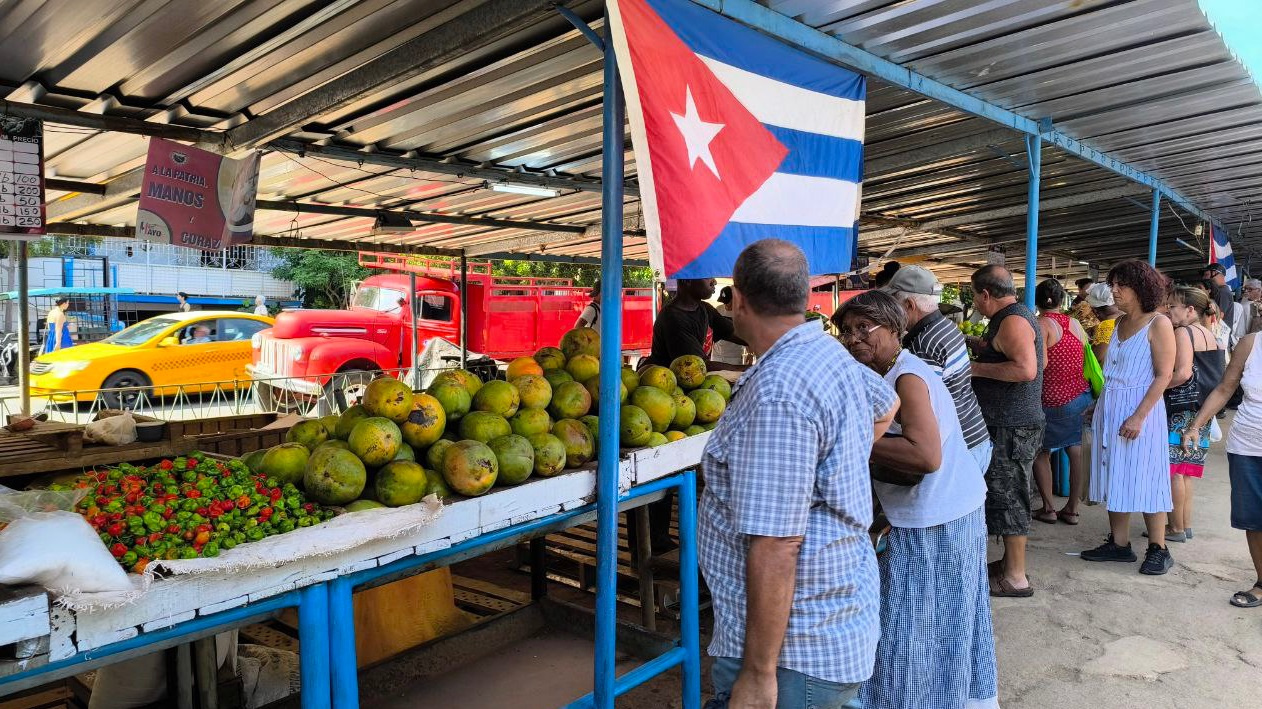
Cubans buying at a market stall at 17 and K / 14ymedio

14ymedio bigger14ymedio, Madrid, August 6, 2025 — At least two years of suffering remain for the Cuban economy. According to the latest report of the Economic Commission for Latin America and the Caribbean (ECLAC), Cuba’s gross domestic product (GDP) will fall in 2025 by 1.5%, more than in the previous year (-1.1%), remaining alone in this situation of decline. Its only companion is neighboring Haiti, whose GDP will decline by 2.3%, although in its case there is an improvement, since last year it declined by 4.2%.

For 2026 the forecasts are less gloomy, as Cuba will remain negative, but only by 0.1%.

Despite this, the ECLAC report contains relatively positive medium-term data, although with uncertain results. Cuba is in the group of future graduates, a block of countries that will move to the category of high “per capita gross national income,”which in practice means leaving the list of those eligible for Official Development Assistance (ODA). In other words, if this forecast is maintained, Cuba may lose one of its major sources of financing.

The Organization for Economic Cooperation and Development (OECD) considers that countries which have maintained a high-income status for three consecutive years, pre-defined on an annual basis and now very close continue reading

to $14,000, can “graduate,” and that the Island will do so between 2025 and 2035.

OECD allocates, through its Development Assistance Committee (DAC), the funds provided by donor countries based on per capita gross national income.

The OECD allocates, through its Development Assistance Committee (DAC), donor funds based on the per capita gross national income as established by the World Bank and the United Nations. As the report published this Tuesday mentions, several countries in the region have graduated in previous years, and by 2026 Panama and Guyana are expected to graduate. “The OECD (2014, 2024) estimates that between 2025 and 2035, Argentina, Brazil, Costa Rica, Cuba, Mexico, Peru, the Dominican Republic, Saint Lucia, Saint Vincent and the Grenadines and Suriname could also graduate,” states the document.

“In the last decade, Bolivia, Brazil, Cuba, Colombia and Haiti have been the main recipients of ODA, measured in dollars, which underlines the importance of these flows and the challenges that their possible loss after graduation entails,” warns the ECLAC, which draws ambivalent conclusions from this situation. While, in their view, graduation represents evidence of economic progress, “it also implies the loss of access to concessional financing that may be difficult to replace with alternative sources, which often have stricter conditions.”

In the case of Cuba, in particular, its access to other types of loans is mostly closed due to its withdrawal from international organizations such as the Monetary Fund, the U.S. sanctions and the very low rating of its debt.

ECLAC places the ODA as one of the largest funds, with disbursements of about $119,096 million between 2013 and 2023, compared to $50,296 from the World Bank. For this reason, the Commission offers some recommendations in view of the possible graduation of so many countries in Latin America and the Caribbean, and it asks that GDP per capita should no longer be considered as a criterion “because it does not reflect the complexity of development needs. It also recommends the adoption of smoother transitions for newly graduated countries.

The macroeconomic development of Cuba does not suggest that it can be part of a list of countries with high per capita gross national income.

The macroeconomic development of Cuba does not suggest that it could be part of a list of countries with high per capita gross national income. The latest data were obtained in 2019, when the last crisis had not yet arrived, and stood at $7,593.35, far from the $13,845 that the DAC considers “high” for the period 2024-25. However, it should be noted that the current classification of the island is intermediate-high, aimed at those above $4,496, according to the World Bank.

The ECLAC report, moreover, places Cuba once again as a country with chronic inflation, and it is one of the countries excluded from calculating the regional average. Argentina, Haiti, Suriname and Venezuela accompany the island in this case. Their inflation numbers are so persistently high that they would artificially deform the whole. While Latin America and the Caribbean have an average of 4.3% inflation and a median of 2.9%, which is much better than in 2022, when it was above 8%, Cuba has reached 24.9%. Only Haiti (28.7) and Argentina (122.1%) are worse off.

Cuba has greatly improved this indicator, at least officially, as it was 39.1% in 2022 and 31.3% in 2023. However, inflation figures above double digits are very dangerous and have two aggravating factors in this case: the first is that in the informal market, which must be constantly resorted to to obtain goods otherwise impossible to find, it is much greater. The second is that, as some Cuban economists point out, the decline in this figure has been achieved by the contraction of the population’s purchasing power and not because there is more production that reduces prices.

Translated by Regina Anavy

____________

COLLABORATE WITH OUR WORK: The 14ymedio team is committed to practicing serious journalism that reflects Cuba’s reality in all its depth. Thank you for joining us on this long journey. We invite you to continue supporting us by becoming a member of 14ymedio now. Together we can continue transforming journalism in Cuba.
The Murder of a 19-Year-Old Woman is the Fourth Femicide in Cuba in August

Ledisvannielis Acosta Echavarría was stabbed in her home in Centro Habana by her partner.

The murder of Acosta Echavarría adds to a particularly bloody cycle. / Facebook

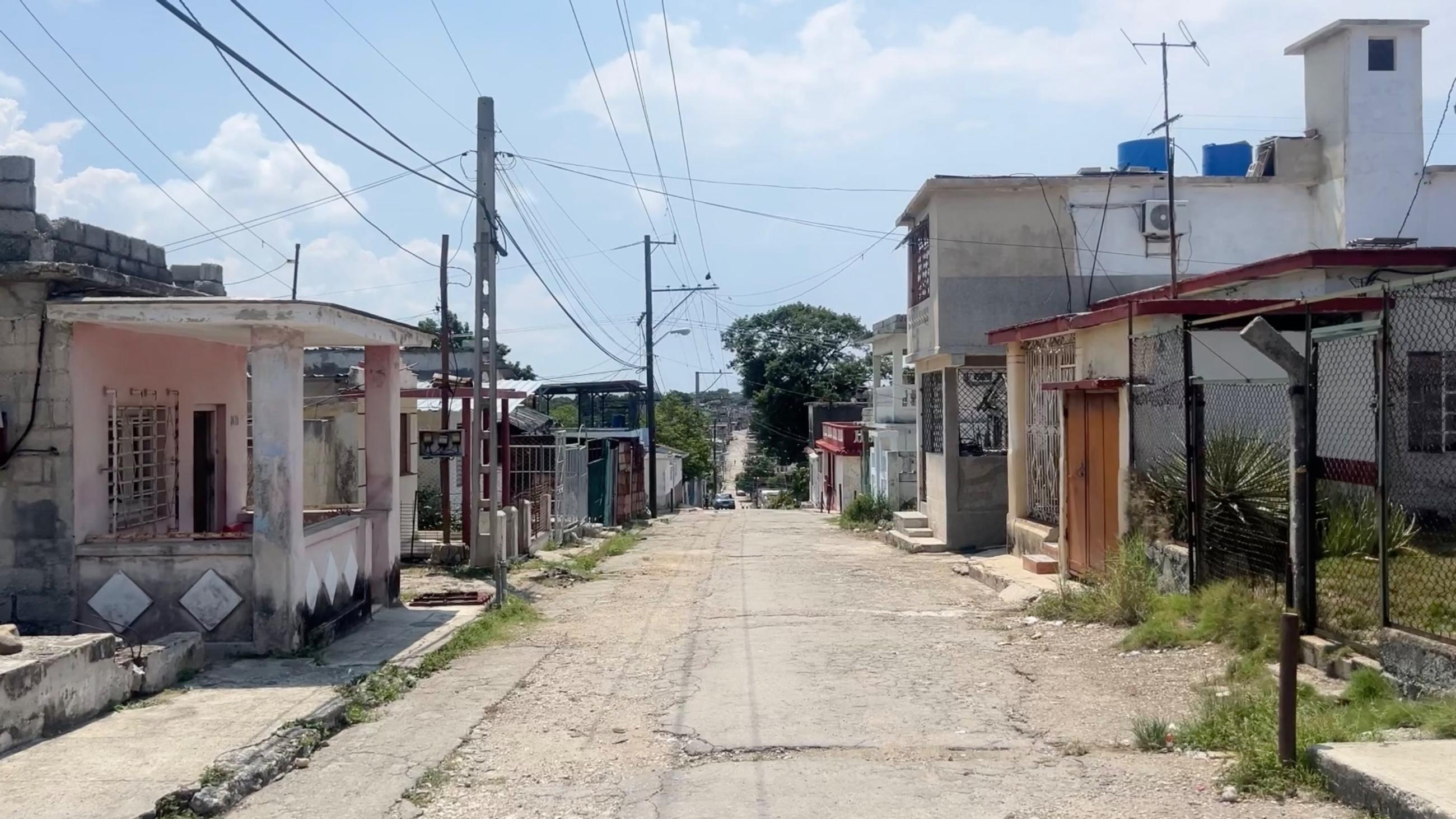
14ymedio bigger14ymedio, Havana, 18 August 2025 — The body of 19-year-old Ledisvannielis Acosta Echavarría was found in the bathroom of her house, located on Calle Amistad, between San José and Barcelona, in the Havana municipality of Centro Habana. The Alas Tensas Gender Observatory (OGAT) confirmed the event on Monday through its social networks.

The crime occurred on Tuesday, August 12 and, according to neighbors in the area, the attacker was seen trying to sell her pet before turning himself over to the police around eight o’clock at night. The perpetrator, also a very young man, stated that he was under the influence of drugs at the time of the murder.

The murder of Acosta Echavarría adds to a particularly bloody cycle. The young woman became the youngest victim of the femicides recorded this month.

Violence against women affects the entire country

With this case, 14ymedio counts 24 femicides in Cuba so far in 2025. In August alone, four women have lost their lives in similar circumstances.

The records of this newspaper and feminist platforms show that violence against women affects the entire country. Holguín tops the list with four confirmed femicides. It is followed by Havana and Camagüey, with three continue reading

victims each. There are two cases in each of Ciego de Ávila, Sancti Spíritus, Granma and Santiago de Cuba, while at least one such murder has been documented in Pinar del Río, Cienfuegos, Matanzas, Las Tunas and Artemisa.

The dispersion of the events shows that almost no province is exempt from a phenomenon that feminist organizations call a national emergency. The lack of official data and effective prevention protocols aggravate the picture.

Not all murders of women in the context of a robbery are classified as femicides.

On August 4, Mailenis Blanco Amor, 47, was murdered in the town of Puerta de Golpe, in the municipality of Consolación del Sur. Three unknown men, posing as policemen to break into her house and rob her, ended her life. Both Alas Tensas and Yo Sí Te Creo en Cuba emphasize that, although not all murders of women in the context of a robbery are classified as femicides, in this case “gender bias is evident,” since the aggressors waited for the victim to be alone and applied disproportionate violence against her.

A day later, on August 5, another crime occurred in the city of Holguín. Milagros Batista Estévez, 56, was killed by her ex-partner in her home in the Alex Urquiola neighborhood. According to reports from feminist platforms, the victim had filed multiple prior complaints against her attacker, but police authorities had not adopted any effective protective measures. Batista, a mother of two grown children and grandmother to several grandchildren, was well-known in her community, which was shocked by the incident and the institutional inaction.

The 72-hour deadline required to officially report a missing person puts women victims of gender-based violence at greater risk.

The third victim in August was Bárbara Elena Tejería Magdaleno, also 56, a resident of Calabazar, Boyeros municipality, Havana. On August 11, she was attacked with a machete by her partner, who denied having seen her for days. Bárbara Elena’s body was found three days later in a vacant lot in the Las Cañas neighborhood. The attacker took his own life shortly afterward. Her case reignited the debate over the 72-hour deadline required to officially report a missing person, a protocol that, according to activists, puts women victims of domestic violence at greater risk.

Neither the Federation of Cuban Women nor other state institutions have offered a public response to these crimes, despite the growing social alarm they provoke. Independent observers warn that the lack of effective recognition of femicide in the Cuban Penal Code is reflected in the lack of prevention policies, the lack of protection for victims, and the lack of transparency in official statistics.

The state’s response is limited to prosecuting the aggressors and issuing “exemplary sentences.”

These organizations also denounce that there is no network of shelters for women at risk, nor specialized helplines that operate systematically throughout the country. The state response is limited, in most cases, to prosecuting the aggressors and issuing “exemplary sentences.”

The four victims of August share common elements: solitude in the face of their attackers, a lack of institutional protection, and the extreme violence inflicted on them. From murders committed by resentful ex-partners to those perpetrated in the context of robbery, the common denominator is the use of excessive force against women in vulnerable situations.

Translated by Regina Anavy

____________

COLLABORATE WITH OUR WORK: The 14ymedio team is committed to practicing serious journalism that reflects Cuba’s reality in all its depth. Thank you for joining us on this long journey. We invite you to continue supporting us by becoming a member of 14ymedio now. Together we can continue transforming journalism in Cuba.
Guanabacoa, Land of Rivers and Hills, Is Running Out of Water

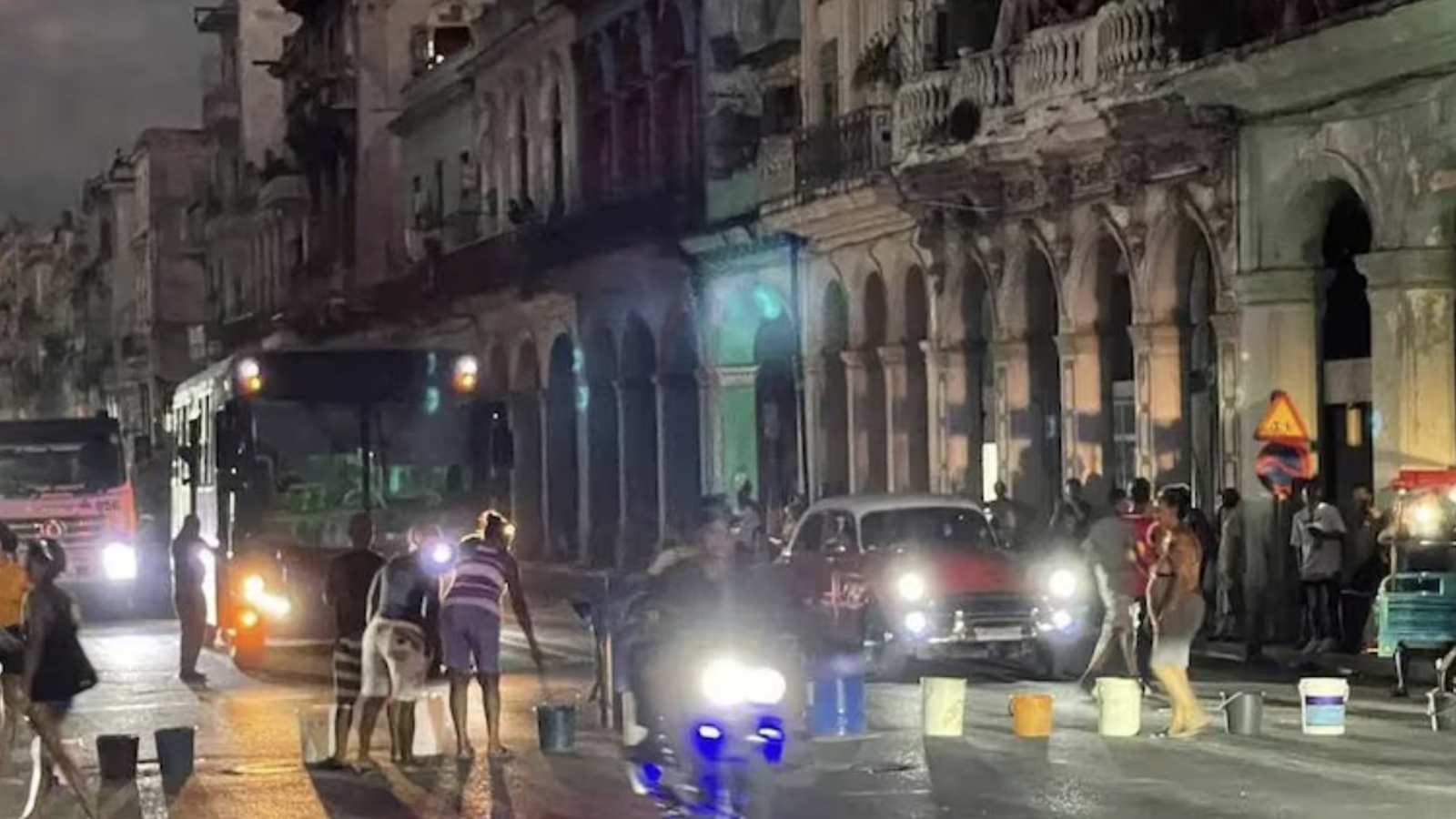
In Centro Habana, neighbors use buckets to block Reina Street in protest at the lack of supply.

La Loma de Corrales, Corrales Hill, which gives its name to the street, is an insurmountable obstacle for the old water pipes that have little pressure. / 14ymedio

14ymedio bigger14ymedio, Darío Hernández, Havana, August 20, 2025 — Guanabacoa evokes the orishas, Catholic processions and water, a lot of water, as reflected by the Taína word that gave it its name: land of rivers and hills. Although its springs remain part of the collective and religious imagination, dry water pipes are changing the way many residents perceive one of the most dilapidated municipalities in the Cuban capital.

“Here in my house we are lucky because the water sometimes arrives, but it’s been months since that block has had it,” says Carmita, a neighbor who lives a few meters from Calle Corrales, epicenter of the most serious supply problems in the area. “People have to come here to fill their buckets,” she says, adding “not that much comes in, you have to have a pump to get it out.”

La Loma de Corrales — Corrals Hill — which gives name to the street, is an insurmountable obstacle for the old water pipes that have little pressure. To the law of gravity are added problems with the electricity supply, the poor state of the pumping equipment in the aqueducts and, especially, the chaotic handling of the valves that allow water to reach the neighborhood.

“This problem has been going on for over 20 years, but it got more complicated when they did some work in 2022,” adds Carmita.

“This problem has been going on for more than 20 years, but it got more complicated when they did some work in 2022,” adds Carmita. She is referring to works that enabled a new continue reading

route for supply to other areas of Guanabacoa. However, the so-called bypass, directed by Rosaura Socarrás Ordaz, deputy director of operations of the Havana Water Company, brought relief to some and an ordeal to others.

“Since then, water has stopped coming in frequently,” says a neighbor. The lack of pressure that the whole area suffers forces residents, like Carmita, to have a ‘water thief ‘ able to suck the pipes to extract every last drop. But in the houses on Calle Corrales, not even the most powerful pump can get anything out most of the time.

“Right now we have gone 20 days without having any water,” says a young man who has just returned this Monday from the municipal office of People’s Power where complaints and claims about the water supply are coming more often. “”When they send a water truck, it is barely enough for three houses, and that is every 20 days or more. No one can live like this,” he emphasizes.

This Tuesday, in Centro Habana, a group of people protested by blocking Reina Street with buckets after going seven days without water. Their complaints even reached the international press, while Guanabacoa, with very few investments in infrastructure in recent decades, is still considered by many to be the most forgotten municipality of Havana. Its historic center has suffered numerous building collapses; its rivers are visibly polluted; many streets lost
their asphalt years ago; and demands on the hydraulic system, installed in the first half of the twentieth century, have grown along with the emergence of slums. The urgency of a renovation project is obvious, but the Havana Water Company does not have the resources to tackle it.

This Tuesday, in Centro Habana, a group of people with buckets protested the lack of water and blocked Reina Street. / OCDH/X

“They blow us off, tell us that the country lacks currency to buy what’s needed abroad; it’s the same speech as always,” complains a resident from inside her doorway, where she takes shelter from the strong August sun. “The water trucks they send are small, and the water, when it arrives, has a strange color, like it’s dirty.”

The protest calls out other affected people who end up improvising an assembly on a corner near Corrales. “The answer they give is that they write you down on paper and do nothing, nothing. They throw the papers in a drawer. They said that by today they would see if they could send us a water truck,” the young man complains. “They keep us guessing, because when the water comes they cut off the electricity, and we can’t fill anything. Since the 15th of last month, we haven’t had any water.”

Several residents point to a mishandling of the valves located in the area known as El Mikito as the main cause for the low pressure that prevents the inhabitants of Corrales street from having water in their pipes. They have been able to continue bathing and cooking thanks to the solidarity of those who live in areas where supplies do arrive and allow them to fill their buckets.

Several residents report poor valve management in the area known as El Mikito as the main cause of the low pressure.

“In my house we carry it from the neighborhood of Santa Maria, in buckets and small tanks. All this past year I have had to put some bottles in the same cart as the propane tank, and I go up and down that hill several times a day,” points out another resident who joins the improvised meeting where emotions run high and reports of the laziness of the institutions are repeated.

“The Havana Water Company is doing a bad job, because when they open the tap in El Mikito the water has a little more pressure. They will have to change the employee who takes care of it here. Change him or kick him out,” speculates an old woman with a face full of despair. “What they are doing is filling swimming pools and making money,” she says.

The discussion dissolves when the imperative of going out to fetch water imposes itself. One with a wheelbarrow, another with a shopping cart and a third with a backpack, they leave in different directions. They will not return until they have filled the bottles and buckets they carry. In La Loma de Corrales, whole families are waiting to start cooking, bathing and washing clothes.

Translated by Regina Anavy

____________

COLLABORATE WITH OUR WORK: The 14ymedio team is committed to practicing serious journalism that reflects Cuba’s reality in all its depth. Thank you for joining us on this long journey. We invite you to continue supporting us by becoming a member of 14ymedio now. Together we can continue transforming journalism in Cuba.
A House in Poor Condition Is Given to a Cuban Softball Captain

The house that was given to Yilian Rondón Velázquez has damp walls and beams full of woodworms.

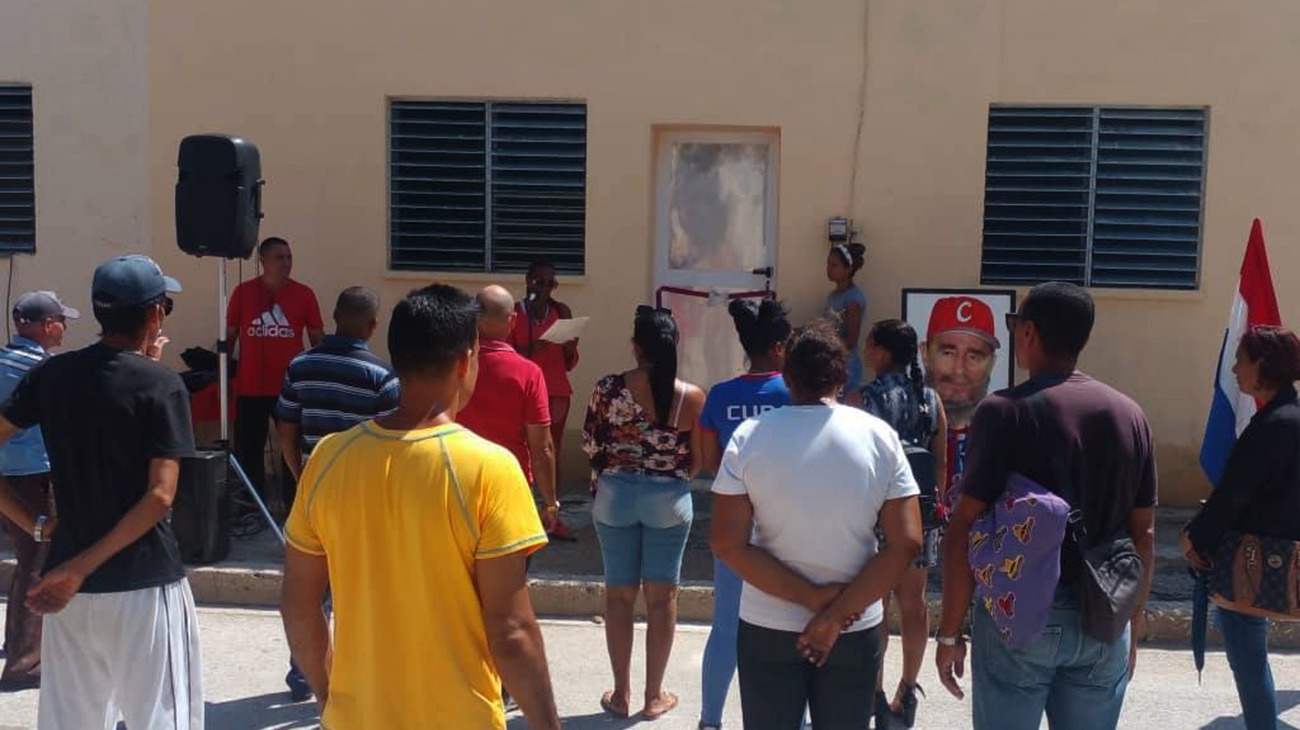
The event where the house was given to Yilian Rondón Velázquez. / Facebook/Yoel al Strike

14ymedio bigger14ymedio, Havana, 20 August 2025 — A house in very poor condition was given to the captain of the Granma and Cuba softball teams, Yilian Rondón Velázquez, at the celebration of Fidel Castro’s 99th birthday. According to the complaint published by ’Yoel al Strike’ on Facebook, the house in Manzanillo, Granma, “seems to be a shelter, a warehouse or a barracks.”

The “incentive” given to the national selection of the sport for 15 years, was a house with “damp walls.” In addition, emphasizes the post, “in the support for the beams, there is a maggot [that parasite that devours the wood little by little and comes out when the evil is already done].”

There are photos showing the carelessness in the remodeling of the house. “When painting, they did not take into account the protection of the landing, and it was covered with slag from the welding of the roof.” Also, “they dropped the tiles from a meter high, and they are uneven, without color and with joints that look like the tributaries of the Amazon.”

The walls of the house are damp. / Facebook/Yoel al Strike

Yoel Rosales Wert, the owner of the Facebook space Yoel al Strike, pointed to the president of the Cuban Baseball and Softball Federation, also national commissioner, Juan Reinaldo Pérez Pardo, for delivering a home that “does not have the slightest aesthetic, comfort and much less safety,” and who obtained four international contracts “contributing to the economy” of the Island.

“Don’t tell me that there are heroes and Olympic champions who have no home,” added Rosales.

The incentives to athletes, coaches and sports stars have often been questioned for their poor conditions. At the end of July, the coach of the five-time Olympic champion Mijaín López and other medallists, Raúl Trujillo, received a vehicle continue reading

with more than 190,000 kilometers on it and worn-out tires.

The “dedication and loyalty” of Trujillo, “one of the most successful coaches in the history of the Cuban struggle,” was recognized by the regime with a vehicle withdrawn from tourist rental. A car, stressed Rosales, with “three 14-inch tires and one 16-inch tire, without a spare. In addition, they are smooth, and there are two visible bumps on the body.”

The damaged vehicles with which the National Institute of Sports, Physical Education and Recreation recognized the fidelity of their sports heroes have been evidenced on other occasions. The gold medalist at the Olympic Games in Paris 2024, Erislandy Alvarez, said months ago that “they gave me shit” and that the only thing that worked on the Hyundai Grand i10 “is the engine.”

The boxer said he “spent almost $5,000” to restore it. “These are things that are not published when they report it. This shows no respect. A tire even blew out on me; thank God nothing happened,” he said on his networks, referring to an official press release. Shortly thereafter, he deleted the post.

Translated by Regina Anavy

____________

COLLABORATE WITH OUR WORK: The 14ymedio team is committed to practicing serious journalism that reflects Cuba’s reality in all its depth. Thank you for joining us on this long journey. We invite you to continue supporting us by becoming a member of 14ymedio now. Together we can continue transforming journalism in Cuba.

Cuban Judoka Jonathan Delgado is the Fifth Athlete to Escape in Paraguay

Robert Landy Fernández, Félix Puente Batista, Keiler Ávila Núñez and Suannet de la Caridad Nápoles, the first to flee, still have not applied for asylum.

Judoka Jonathan Delgado met the competition schedule at the Junior Pan American Games. / Jit

14ymedio bigger14ymedio, Havana, August 18, 2025 — Cuban judoka Jonathan Delgado took advantage of an oversight by the delegation at the Paraguay 2025 Junior Pan American Games to escape last Friday. The athlete’s departure “leaves a void within the team and generates reflections on the challenges that many athletes face in their sporting and personal path,” said Facebook space Del-pí Al-pá.

Delgado completed the competition schedule at the event. His first match was in the quarterfinals in the category of more than 100 kilograms, in which he was surpassed by the Dominican José Miguel Brache. However, the combination of results allowed him to access the playoffs, where last Tuesday he was defeated by the American Kanta Ueyama.

Before his return to the island, the judoka decided to escape and follow in the footsteps of the three members of the team of eight with helmsman, Robert Landy Fernández, Félix Puente Batista and Keiler Ávila Núñez, who won the bronze medal, and the handball champion Suannet de la Caridad Nápoles. All of them escaped on Wednesday.

Delgado was not afraid that the head of the Cuban delegation in the Panamerican Games Junior Paraguay 2025 and president of the National Institute of Sports, Physical Education and Recreation (Inder), Osvaldo Vento Montiller, would report the escape to the Tenth Police Station in Asunción and ask for support to locate the deserters.

Despite the fact that the local media made known the flight of the Cubans, the sports mission has kept silent about the absences. On Thursday, the continue reading

president of the Paraguayan Olympic Committee (COP), Camilo Pérez, confirmed that the head of the island’s sports mission told them that the athletes “withdrew from the delegation.”

These statements were followed the same day by those of the Paraguayan Minister of the Interior, Enrique Riera, to confirm that the Cuban athletes informed Vento Montiller of their decision to not return to Cuba. “The police in these cases do what is called an alert to find out if there are any issues to worry about, but apparently it would be a case of desertion,” he said.

Commissioner Pedro Bavera, of the Tenth Police Station in Asunción, who received the report of the flight, said that no reports were found that would lead to the location of the Cubans.

To date, none of the five Cuban athletes has approached the authorities for asylum. Nevertheless, the Minister of the Interior hopes that they will contact the National Commission for Stateless Persons and Refugees (CONARE) to initiate this process.

Cuba ranks ninth on the medal list with four gold, two silver and four bronze medals. The event that ends on August 23, and Brazil is currently in the lead with 52 first places, 27 second places on the podium and 36 third places.

Translated by Regina Anavy

____________

COLLABORATE WITH OUR WORK: The 14ymedio team is committed to practicing serious journalism that reflects Cuba’s reality in all its depth. Thank you for joining us on this long journey. We invite you to continue supporting us by becoming a member of 14ymedio now. Together we can continue transforming journalism in Cuba.

San Antonio de los Baños Celebrates the 99th Anniversary of Fidel Castro With Anti-Regime Posters

Indifference prevails, especially among young people, and the cult of personality no longer works as an ideological cement.

It is no coincidence that in the same place where the spark that originated 11J was ignited, the 99th anniversary of Fidel Castro’s birth was thus received. / Odalys H Rizo

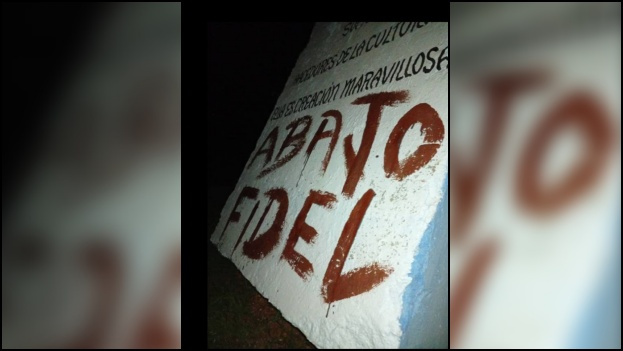
14ymedio bigger14ymedio, Yunior García Aguilera, Madrid, August 13, 2025 — On this 13th of August, in the streets of San Antonio de los Baños, several posters appeared that read “Abajo Fidel,” “Martí no es comunismo,””Patria y Vida” and “Libertad.” It is no coincidence that, in the same place where the spark that originated the social outburst of July 11, 2021 was ignited, the 99th anniversary of Fidel Castro’s birth was thus received.

The Cuban government, aware of the low popularity of the current leaders, has tried to dust off Castro’s figure. In a calculated maneuver, the electricity deficit was reduced for at least a few days, ensuring that almost two-thirds of the population were exempt from the usual blackouts. In addition, youth camps, book presentations, photo exhibitions and other activities were organized to revive an admiration that no longer exists beyond official circles.

What abound are photomontages of Castro in ridiculous situations and mocking comments about his legacy.

In New York, an enormous luminous sign with the image of the bearded man adorned a central street. It was not a spontaneous initiative of nostalgic emigrants, but a service paid for by The People’s Forum, an organization run by pro-Castro activists Claudia de la Cruz and Manolo de los Santos. Already known for their photos with the president-elect Miguel Díaz-Canel, and for campaigns to support Team Asere, the Cuban baseball team, both have been singled out for receiving funding from billionaire Neville Roy Singham, resident in Shanghai and linked to the Chinese propaganda apparatus. The operation, rather than a tribute, is more like an expensive reminder that the official Cuban story should not be forgotten abroad.

However, the celebration has not aroused enthusiasm on the island. Most Cubans reacted with sarcasm on social media, turning the event into a festival of memes. Instead of tears and veneration, what abounds are photomontages of Castro in ridiculous situations and mocking comments about his legacy. continue reading

None of the major international media dedicated relevant space to the anniversary.

Confusion was evident among the very ranks of officialism. Some activists believed that it was already the centenary of his birth, not the 99th year. The error reveals the historical ignorance even within the militancy and the overload of activities with which the regime saturated its bases. More than one official suggested, in a low voice, that something should be left for 2026, when the anniversary will actually happen.

Outside the Island, silence has been prominent. None of the major international media devoted significant space to the anniversary. In similar countries such as Venezuela and Nicaragua, laudatory notes were published but without much resonance. Even when asked by several artificial intelligences about the most influential figure born on August 13, “Alfred Hitchcock” was the most frequent answer.

Citizens stopped seeing him as the “uniformed and threatening leader” and perceived him as a frail old man, poorly dressed and obsessed with moringa.

The island’s own recent political history helps to explain the disinterest. During the period when Raul Castro took over, he strove to turn away from orthodox faithfulness, betting on an image of greater pragmatism. The thaw with Barack Obama and the timid economic opening required a symbolic break with his big brother’s intransigent speech. The Reflections that Fidel published in the press became anachronistic and often uncomfortable for the new course. Citizens stopped seeing him as the “uniformed and threatening leader” and perceived him as a frail old man, poorly dressed and obsessed with moringa.

The result was a gradual substitution of symbols, perhaps traced from Raúl’s own office. Presenting Fidel as a foolish and delusional grandfather served to smooth the transition and to justify the idea that the future depended on a change of style, not system. In contrast, Raul Castro has striven to be much more vital–at 94–than the last images we saw of his haggard brother. And this remarkable difference between the two nonagenarians is not a coincidence for a regime with so many communicative filters.

But the Raulist experiment also failed miserably. The Ordering Task, conceived as a decisive economic adjustment, further eroded purchasing power and public confidence. This failure gave new life to loyalist sectors that had remained in the shadows. Figures like Iroel Sánchez and other defenders of a more rigid Marxism returned to occupy media spaces, insisting that Fidel’s orthodoxy was the only way.

In contrast, Raúl Castro has striven to be shown as much more vital–at age 94–than the last images we saw of his haggard brother.

In this ideological vacuum, Miguel Díaz-Canel clung to the slogan of “continuity,” but without a clear plan or enough charisma to sustain it. Mass access to the internet has eroded information control. Authorities, who for decades boasted of “winning the battle of ideas,” publicly admitted that they were losing it.

The attempt to use the 99th anniversary as an act of political reaffirmation has come up against a reality that can no longer be reversed. The figure of Fidel Castro has been emptied of content for a large part of the Cuban population. The new generations know him more by familiar accounts of deprivation and repression than by fiery speeches about sovereignty. For many, he is the symbol of immobility, endless pronouncements and the cause of the problems that continue to suffocate the country.

The anniversary, far from strengthening the official narrative, has served to measure the distance between myth and reality. The personality cult that once served as ideological cement is now perceived as a liability. Propaganda fails to reverse accumulated fatigue and the increasingly widespread conviction that the country needs radical change.

Translated by Regina Anavy

____________

COLLABORATE WITH OUR WORK: The 14ymedio team is committed to practicing serious journalism that reflects Cuba’s reality in all its depth. Thank you for joining us on this long journey. We invite you to continue supporting us by becoming a member of 14ymedio now. Together we can continue transforming journalism in Cuba.
The Fall of Cuba’s ‘Freely Convertible Currency’ Sinks Private Tobacco Producers in Pinar del Río

A ‘veguero’ from San Juan y Martínez points out the unfair treatment by Tabacuba, which gets richer while the ‘guajiros’ get poorer.

The harvest has been good, but ‘vegueros’ (tobacco farmers) insist that they will not be able to cover their debts or the costs of production. / Granma

14ymedio bigger14ymedio, Madrid, August 11, 2025 — Alfredo Pérez, a veguero of the best tobacco area in Cuba, San Juan y Martínez (Pinar del Río), has put a damper on the fiesta in the State newspaper Granma, which last Saturday celebrated the recent harvest. The Ministry of Agriculture reported in the country’s flagship newspaper the success of the 2024-2025 campaign and claimed that they have recovered the curing sheds lost by the passage of hurricane Ian in 2022, as well as tobacco production, with six million cigars for export.

“It’s a shame that the end of this ’24/’25 tobacco harvest is slowly becoming, for most farmers, a dead end,” says Pérez, who recounts the chain of catastrophes looming over farmers as a direct consequence of Tabacuba’s refusal to update its prices for purchasing tobacco.

The veguero recalls that the hurricane destroyed most of the tobacco infrastructure, some 90% of the curing sheds. Michel Alejandro Valdés Rabelo, general director of the state Empresa Acopio y Beneficio de Tabaco Hermanos Saíz, said in an interview with the newspaper El País a week ago that “in San Juan and Martínez, of the 1,765 curing sheds that there were at that time, 22 remained standing.” The official boasted about the recuperation of at least 1,300. What he did not explain is that the guajiros had to pay a good price for the investment, believing that the sale of the product would serve to balance the accounts. Nothing could be further from the truth, says Pérez.

“Already in the prices of these new constructions we noticed the evident increase in the cost of the materials.”

“Already in the prices of these new constructions we noticed the evident increase in the cost of materials, besides adding the costs in hard currency, making these new investments more than twice as expensive as those built before 2022, but keeping the same sales price of our tobacco, which seemed illogical and very dangerous,” he said. However, they received false continue reading

promises that they keep resisting. They were given a two-year deferral of payment, which they considered more than sufficient for the price increase to give them enough profit to cover their debts and the following season.

“But the reality has been different. Today, Tabacuba refuses to update the cost sheet in our favor, leaving us completely vulnerable, since we have no money to invest in the harvest. Nor do we have the tobacco, because we have collected it (delivered it to Cubatabaco). We have only an abundance of debts, some for production and others for investments,” he says, pointing out that if they could not be better paid, at least the price of materials and inputs should have been capped.

On the contrary, a bag of fertilizer that cost 200 pesos in 2022 has risen to 1,600 today, but tobacco sales prices are completely paralyzed. “A curing-house-chamber of finished tobacco used to cost about 30,000 pesos; today it exceeds 100,000. The production cost for 100 pounds of sun-grown tobacco, which was estimated at 4,000, today exceeds 10,000 pesos, clearly generating losses,” he calculates.

So far, he argues, they have remained silent and calm, because at least they benefited from the amount in freely convertible currency (MLC) that was paid to them as a stimulus. The exchange rate was very beneficial, being “the only incentive for farmers, so we set up the economy on the informal value of the MLC. Today, it has fallen dramatically due to the latest changes in the country by the partial dollarization of the economy,” he explains.

“The levels of investments and purchases of inputs and equipment by Tabacuba show clear economic solvency.”

Since 2023, the MLC, created four years earlier at a parity with the official dollar rate, has experienced a very strong rise in the informal foreign exchange market. In January of that year it was equivalent to 155 pesos, but despite some slight fall, it began to soar until May 2024, when it hit the ceiling: it was then exchanged at 310 pesos. In January 2025, it made a short drop to 240, predictably by the announcements of dollarization made by the Prime Minister, Manuel Marrero, at the National Assembly. The virtual Cuban currency rose in February until it was around 260 pesos in March, but the drop since then has been brutal, reaching 210 this Monday.

Given the magnitude of the problem, Pérez has posted on his Facebook profile a battery of ideas for authorities, and believes that they should be taken into consideration immediately. The first is to update the cost statement in national currency so that a profit margin independent of the “stimulus” is obtained. The payments should be made immediately in cash to the farmers for the already finished campaign. This would “give us the opportunity to update our economy in order to be able to honor our debts and our commitments to the workers and to have the strength to start the next campaign.”

Pérez states that tobacco is a product with a secure market and a demand much greater than production, so no one should resist favoring it. “In addition, he adds, the levels of investments and purchases of inputs and equipment by Tabacuba demonstrate clear economic solvency.”

At the end of February, during the Cigar Festival, the company Habanos S.A. (a joint venture formed equally by Cubatabaco and the Spanish company Altadis) celebrated having achieved record revenues of 827 million dollars -106 million more than a year earlier- that is to say 14.7% more. At that time, many guajiros regretted that the money went to the state coffers, but the farmers did not get any return. “We have always been an advanced and protected sector compared to the others in agriculture and the country in general,” says Pérez, concluding: “Today, we are clearly being held back, because we do not have the possibility to market it freely, which would be fair, nor to achieve a good business within the Tabacuba group.”

Translated by Regina Anavy

____________

COLLABORATE WITH OUR WORK: The 14ymedio team is committed to practicing serious journalism that reflects Cuba’s reality in all its depth. Thank you for joining us on this long journey. We invite you to continue supporting us by becoming a member of 14ymedio now. Together we can continue transforming journalism in Cuba.

The U.S. Calls Fidel Castro a ‘Ruthless Bully’ in a Message Released by its Embassy in Cuba

On X, the Undersecretary of State criticized the “ideological fanaticism” of those who defend the Cuban regime.

Christopher Landau spoke about the crisis of basic services on the island. / 14ymedio

14ymedio bigger14ymedio, Havana, August 14,2025 — It is hard to believe that, after decades of repression, lack of freedoms and a rampant economic crisis, there are those who still see in Cuba a “socialist paradise.” However, on August 13, 99 years after the birth of Fidel Castro, congratulations to the island came not only from allied regimes but also from related sectors around the world. That “ideological fanaticism” was precisely what U.S. Undersecretary Christopher Landau criticized this Wednesday on X. Beyond the “myths,” he wrote, “any fair and honest person who approaches these issues should recognize that Cuba has been kidnapped by a gang of thugs.”

In the antipodes of the displays of tributes and celebrations that Havana has orchestrated for Castro’s birthday, Landau did not just point to the cult of personality around the dictator, but he also set out to dismantle revolutionary mythology. The brief text, in which he calls Castro a “ruthless thug,” was circulated by the U.S. Embassy on the island, which will surely bring an official response from Havana, currently engaged in criticizing the White House’s sanctions on officials from several countries involved in hiring medical missions.

“Anyone on the face of the earth younger than 67 years old, including me, has not known a single day in which Cuba has not been under the dictatorial regime of the communist party. Nevertheless, myths persist that the continue reading

communist leaders of Cuba are ’the good ones’ and that the Cuban people are happy,” Landau began his message before giving way to an enumeration of four major myths held about the Cuban system.

The first myth revolves around the idea that in Cuba there is a high quality of life, especially when it comes to health and education.

The first myth revolves around the idea that in Cuba there is a high quality of life, especially when it comes to health and education. Citing data that reflect the mass migration of recent years, the critical state of the electricity system and the average wage on the island, Landau argues that the standard of living is not only “terrible,” but that it “continues to worsen” while Cubans are “fleeing en masse” from the country.

“Cuba, once the world’s largest sugar exporter, now imports more sugar than it produces, and the recent harvest was the worst since the nineteenth century. The access to basic food and medical supplies (aspirin, bandages) for the average Cuban is, at best, precarious,” he stressed, while contrasting the data with the large amounts of money that the country receives for each medical contingent it dispatches in the world. “The Cuban regime and its apologists love to talk about Cuban doctors deployed in other countries, but these doctors are not doing it for charity, (…) and it is the regime itself that keeps the payments.”

The Cuban rulers are also not “progressive leaders,” continues Landau, who says that “rarely have myth and reality been so far apart.” According to him, both Castro and his followers consolidated their “absolute and perpetual” power through violent methods and, for decades, “have given refuge to fugitives from U.S. justice.”

The former U.S. ambassador also reserved a few words for Ernesto Che Guevara, who openly boasted before the United Nations that “firing squads were a tool of the government to eradicate ’worms’.” The situation that Landau recalls occurred during an assembly of the organization in 1964, at which the Argentine said, on behalf of Cuba: “We have shot, are killing and will continue to execute as long as necessary.”

Landau also did not overlook the repression unleashed by the regime following the massive Island-wide protests of 11 July 2021 (’11J’). At that time, he recalled, more than 1,000 people were arrested for fabricated crimes such as “sedition,” and many of them are still in prison.

The third great myth of revolutionary rhetoric, explains Landau, is that “the leaders of the Cuban dictatorship care about the welfare of the people, not their own.”

The third great myth of revolutionary rhetoric, explains Landau, is that “the leaders of the Cuban dictatorship care about the welfare of the people, not their own.” Nothing could be further from the truth, he argues. “The Castro family and other members of the regime’s elite (especially military and intelligence leaders) live in luxury, with access to food, housing, cars and tourist destinations, and have accumulated billions of dollars in foreign bank accounts while the people are desperately looking for food and electricity.”

To prove it, he adds, just look at the profiles on social networks of the grandson of Fidel Castro, Sandro, who has declared himself an influencer and boasts about the “luxurious lifestyle of his family, with designer clothes and a life of leisure.”

To top it off, he points out, if any of these myths turn out to be false, Havana immediately blames the U.S. embargo for its problems. “But there is no such ’blockade’: Cuba is free to trade with other countries and, in fact, receives economic lifelines from abroad, such as oil from Venezuela and Mexico, and tourists from Canada, Europe and elsewhere. U.S.law explicitly allows the export of food and medicine to Cuba, and the humanitarian situation there would be much worse without these exports,” he says.

If the island was ever “blockaded” by the U.S., he adds, it was during the 1962 Missile Crisis, a situation of great tension between Washington and Moscow that lasted only a short time. “After more than sixty years, it is pathetic that the regime continues to blame the U.S. for the Cuban economic collapse instead of assuming responsibility for its own grotesque economic mismanagement and political repression.”

“The Cuban people deserve a bright future, and the regime cannot even offer them a decent present. I hope to set foot one day on a free and prosperous Cuba, and I am confident that I will,” said Landau, aware that ideological fanatics will continue to believe the myths of Castroism. However, he added, the faithful of the Revolution “are free to also believe in unicorns.”

Translated by Regina Anavy

____________

COLLABORATE WITH OUR WORK: The 14ymedio team is committed to practicing serious journalism that reflects Cuba’s reality in all its depth. Thank you for joining us on this long journey. We invite you to continue supporting us by becoming a member of 14ymedio now. Together we can continue transforming journalism in Cuba.
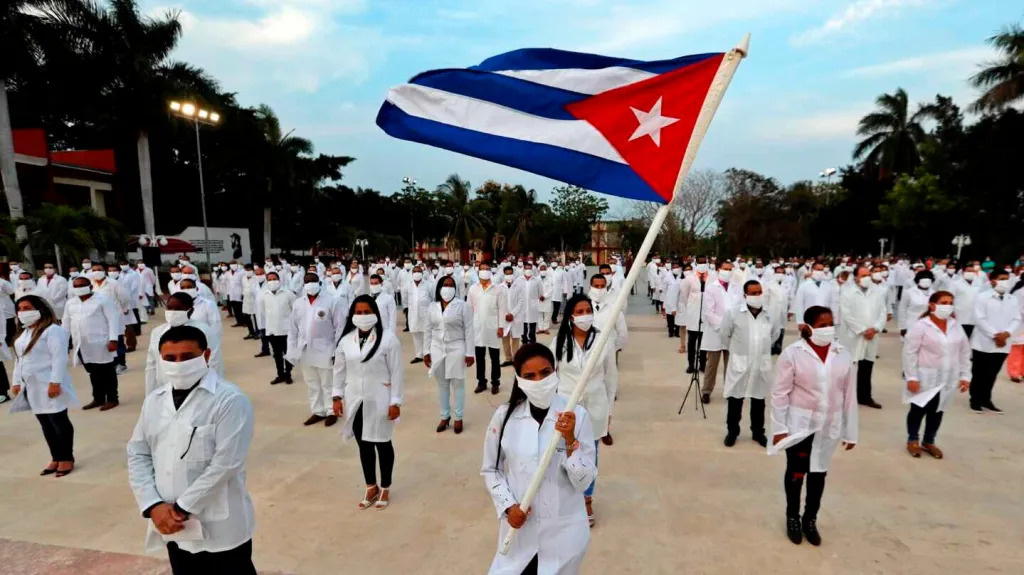
US Imposes Visa Restrictions on Officials From Cuba, Africa and Grenada for Coercive Medical Missions

The measure seeks to punish those who benefit from the “rental” of health professionals, a multi-million dollar business for the Havana regime.

“We urge governments to pay doctors directly for their services, not the regime’s slaveholders,” said the statement. /PL

14ymedio bigger14ymedio, Havana, 13 August 2025 — The US government announced on Wednesday new visa restrictions against officials as well as their families, from Cuba and several African countries and Grenada for their involvement in what the State Department describes as a program of “export of forced labor” directed by the Cuban regime.

In a statement issued by the Office of the Spokesman, Washington said that the sanctions target government officials who facilitate or benefit from Cuban medical missions abroad, although the names of those sanctioned are not yet known. According to the note, these missions involve “coercion” of health professionals, who are sent to work in other countries under opaque contracts and with severe restrictions on their freedom.

This scheme not only enriches the regime, but also “deprives the Cuban people of essential medical care.”

“The Cuban regime rents out doctors and other health workers at high prices, taking most of the income and leaving the professionals with a minimal fraction of the payment,” the statement said. For the U.S., this scheme not only enriches Havana but also “deprives the Cuban people of essential medical care.”

For decades, the international medical brigades have been one of the main sources of foreign exchange for the Cuban government. According to official figures, the sending of health personnel to more than 50 countries has generated billions of dollars annually, outstripping tourism revenues. Multiple complaints documented by international organizations and personal accounts from doctors have described the system as a form of modern slavery. continue reading

Washington has repeatedly criticized this model as “exploitative” and contrary to international labor law standards.

The practices in question include the retention of passports to prevent escapes, the imposition of clauses penalizing the abandonment of the mission with up to eight years’ prohibition to return to Cuba and constant surveillance by supervisors. In addition, the professionals receive only between 10% and 25% of the salary paid by the host countries, while the rest goes to Cuban government enterprises, most of which are linked to the military.

Washington has repeatedly criticized this model as “exploitative” and contrary to international labor law standards. With the sanctions announced this August 13, the government of Donald Trump seeks to “promote the accountability” of those involved in the administration and recruitment of these brigades.

The restrictions also affect officials from several African countries and Grenada.

The communiqué does not specify the names or exact number of the officials who were sanctioned, but it does confirm that the measure includes both those directly responsible and their immediate family members. The action comes under the provisions of the U.S. Immigration and Citizenship Act, which allows individuals involved in significant corruption or serious human rights violations to be denied visas.

The restrictions also affect officials from several African countries and from Grenada who, according to Washington, have been actively collaborating with Havana in recruiting and managing medical missions under coercive terms.

The United States reiterated that it will continue “working with governments and international actors to end forced labor.” 

“We urge governments to pay doctors directly for their services, not the regime’s slaveholders,” the statement said. The United States reiterated that it will continue “to work with governments and international actors to end forced labor.”

For his part, Cuban Foreign Minister Bruno Rodríguez Parrilla wrote an angry response on X: “Secretary of State threatens visa restrictions against governments that have legitimate medical cooperation programs with Cuba. Demonstrates coercion and aggression by force as a new foreign policy doctrine of that Government. Cuba will continue to provide services.”

“The United States aspires to support the Cuban people in their search for freedom and dignity.”

The measure announced this Wednesday is part of a broader White House policy to support Cuban civil society and sanction structures that, according to Washington, sustain internal repression and external exploitation. “The United States aspires to support the Cuban people in their search for freedom and dignity,” said the statement.

With these sanctions, Washington intensifies its offensive against a model that it considers incompatible with the principles of free work and fair remuneration. It remains to be seen whether other countries will heed the U.S. call or whether, as in the past, they will choose to maintain agreements that, for Havana, represent not only a juicy income but also a tool of political and diplomatic influence.

Translated by Regina Anavy

____________

COLLABORATE WITH OUR WORK: The 14ymedio team is committed to practicing serious journalism that reflects Cuba’s reality in all its depth. Thank you for joining us on this long journey. We invite you to continue supporting us by becoming a member of 14ymedio now. Together we can continue transforming journalism in Cuba.
Cuban Independent Observatories Confirm Two Feminicides in August

Three men brutally attacked Mailenis Blanco Amor after waiting for her to be alone in her home.

Blanco Amor was killed on August 4 by three strangers who posed as police / Facebook

14ymedio bigger14ymedio, Havana, 12 August 2025 — Mailenis Blanco Amor, 47 years old, was killed on August 4 at her home in Puerta de Golpe, Consolación del Sur, in Pinar del Río, by three strangers who disguised themselves as police officers to break in to steal. The news, which spread, as is usual in these cases, through social networks, was confirmed this Tuesday by the independent observatories Alas Tensas and Yo Sí Te Creo in Cuba.

The three men brutally attacked the woman, the platforms said, counting this crime as a femicide. “Although some murders of women during robberies are not classified as femicides, in this case the gender bias is evident, because the aggressors waited for Blanco to be alone and exercised excessive violence on her,” they explained in their publication.

“Although some murders of women during robberies are not classified as femicides, in this case gender bias is evident.”

According to the Facebook page Reporte Cuba Ya, two of the alleged aggressors were arrested. These are Reinier Raúl Pelegrín Izaguirre, with a record for “robbery, corruption of minors and violation of domicile,” and Ernesto José, alias El Maja, who “would have used a police uniform stolen from his brother to commit the act.” The third suspect, Miguel Ángel Reve Tamayo, a former inmate with a history of prison disorder, remains at large.

On August 5, 56-year-old Milagros Batista Estévez was murdered by her former partner in her home in the Alex Urquiola neighborhood in Holguín. According to feminist organizations, the victim had previously filed several complaints against the aggressor with the police, but these did not result in effective protection measures. Batista leaves behind two adult children and continue reading

several grandchildren, as well as a community affected by the violence of the event and the inaction of the authorities.

The Government does not publish disaggregated statistics on this type of violence nor has it criminalized femicide in the Penal Code.

The verification of these cases was based on reports in independent media, citizen complaints and reports by activists, contrasted with community sources. This methodology seeks to compensate for the lack of official data on femicides on the island, where the Government does not publish disaggregated statistics on this type of violence and has not classified femicide as an autonomous criminal offense in the Penal Code.

Feminist organizations have repeatedly warned that formal complaints do not guarantee the safety of women, as there are no clear risk assessment protocols or shelter systems to escape an aggressor.

According to the ’14ymedio’ register, so far this year 22 women have been killed.

The independent observatories Alas Tensas and Yo Sí Te Creo counted 54 cases during 2024. The Government, for its part, acknowledged that 76 women who were murdered by their partners, ex-partners or other persons in judicial proceedings held last year were tried in the courts, although they did not use the term femicide or detail the exact dates of the crimes.

According to the register kept by 14ymedio, so far this year there have been 22 women murdered. In 2024, this newspaper counted 52 murders from machista violence from independent records. According to figures from the Cuban Observatory on Gender Equality, in 2024 a total of 76 gender-related murders were tried in Cuba, in which victims were over 15 years of age. The agency does not specify when the crimes were committed, but they most likely occurred between 2023 and 2024.

Translated by Regina Anavy

____________

COLLABORATE WITH OUR WORK: The 14ymedio team is committed to practicing serious journalism that reflects Cuba’s reality in all its depth. Thank you for joining us on this long journey. We invite you to continue supporting us by becoming a member of 14ymedio now. Together we can continue transforming journalism in Cuba.

Holguín’s Residents Catch a Thief and Uncover a Chain of Robberies

A young man was caught trying to steal an electric motorbike and held by the community until the arrival of the police.

Some wanted to beat him, but an older man stood in his way, asking for restraint / Screen capture

14ymedio bigger14ymedio, Miguel García, Holguín, 7 August 2025 — In Holguín, a city increasingly hit by violence, a group of residents decided that this Thursday they had had enough. The scene occurred in broad daylight, around 10:00 am, in the Vista Alegre neighborhood, when a young man was caught trying to steal an electric motorbike and detained by the community until the arrival of the police.

The victim, a 56-year-old man who works transporting passengers on a motorbike, picked up the young man, who signaled him from a corner and asked him to bring him near the area of Alcides Pino. The journey proceeded normally until, when arriving at Calle Colón, the passenger asked him to stop in an alley with an unconvincing excuse. The driver, already alerted by the young man’s behavior, decided to remove the key from the vehicle as a precaution.

The young man, seeing himself surrounded, changed tactics: he began to shout that he was the victim.

The assailant came back and pretended to get back on the bike but then jumped on the man and punched him in the mouth. The driver reacted, trying to defend himself and holding on to the handlebars. The noise attracted several residents who, upon witnessing the scene, were quick to intervene. The young man, seeing himself surrounded, changed his tactics: he began to shout that he was the victim. But it was too late. No one believed him. continue reading

The real victim was bleeding from the mouth, and his appearance made it clear that he was the driver of the motorbike. In a matter of minutes, the street was filled with curious people and mobile phones. Some were filming while others were indignantly recalling recent robberies. There was talk of a chain of assaults, all with the same modus operandi: a young man who approached bikers in broad daylight and then attacked them to flee with the vehicle.

“Tie him up, so he can’t get away,” can be heard on one of the videos.

One of those present brought a rope. “Tie him up, so he can’t get away,” can be heard in one of the videos. The young man, already cornered against a wall, was insulted and threatened. Some wanted to beat him, but an older man stood in the way, asking for restraint. “Wait for the patrol,” said one lady as she watched the scene from the sidewalk.

Later, when the police finally arrived, the young man was taken to the Third Unit behind the Lenin Hospital, but what looked like an isolated incident turned into a more complex case as other people began to arrive. Four more victims showed up at the station and identified him without hesitation.

One of them, assaulted on July 25, was “an elderly man, about 60 years old, very skinny,” a neighbor told this newspaper. Upon seeing the young man arrested, the victim knew immediately that it was the same one who had attacked him and beat him until he broke his jaw. The pattern was repeated: the thief acted alone, without visible weapons, and took advantage of surprise to hit his victims, almost always older men, and to flee with their motorbikes.

The victim knew immediately that it was the same one who had attacked him, beating him until he broke his jaw.

In recent months, like other cities on the island, Holguín has been the scene of a worrying increase in urban violence. Robberies with violence, holdups on public roads, assaults on businesses and street fights have been reported frequently. Residents in neighborhoods such as Vista Alegre, Alcides Pino and Pueblo Nuevo often tell similar stories. Although there are no official figures published, fear is growing at the rate that informal reports and home videos circulate on social networks.

The lack of resources and or an effective police presence plus growing poverty have been identified as some of the causes of this deterioration. There is also a widespread perception of impunity. Many offenders are not prosecuted or re-offend shortly after release. This distrust of the institutions leads to scenes like what happened this Thursday: citizens who decide to intervene on their own in the absence of security in the streets.

The community acted quickly, but also within limits. There was no lynching, but a warning. Holguín is on the edge, and its inhabitants are willing to do what the law does not seem to guarantee them.

Translated by Regina Anavy

___________

COLLABORATE WITH OUR WORK: The 14ymedio team is committed to practicing serious journalism that reflects Cuba’s reality in all its depth. Thank you for joining us on this long journey. We invite you to continue supporting us by becoming a member of 14ymedio now. Together we can continue transforming journalism in Cuba.

In the Midst of Escapes, the Cuban Government Highlights the Gold Medal for Rowing Won at the Pan American Junior Games

Cuba is in ninth place in the medal table with two gold medals, two silver medals, and three bronze medals.

Leduar Suárez, Roberto Carlos Paz, Henry Heredia and Adel Gutiérrez won the gold medal in rowing. / Jit

14ymedio bigge14ymedio, Havana, August 13, 2025 -- The official media highlighted the gold medal of the Cuban rowing team at the Junior Pan American Games II.  Jit echoed the words of Roberto Carlos Paz who dedicated the triumph to Fidel Castro on the 99th anniversary of his birth.

The quartet, in addition to Paz, was composed of Leduar Suárez, Henry Heredia and Adel Gutiérrez, who had a spectacular finish with a time of 6:01.64 minutes, ahead of Brazil (6:01.75) and Chile (6:02.93). In addition, with this first win, the team secured its participation in the 2027 Pan American Games in Lima.

“We came with a higher purpose this time and are never satisfied, but we are happy for the result; the boys made an extraordinary effort,” said the president of the Cuban federation, Ángel Luis García, at the end of the competition.

On the fourth day of competition, Cuba is in ninth place with two gold medals, two silver and three bronze, well below Brazil, with 38 gold, 18 silver places and 23 bronze. This is well behind Brazil, which has 38 gold medals, 18 second-place finishes, and 23 third-place podium finishes.

The goal of the National Institute of Sports, Physical Education and Recreation (Inder) at the event, which culminates on August 23, is that Cuba obtain as many seats as possible for the 2027 Pan American Games in Lima, out of the 231 competitors from 28 sports disciplines who will participate in the event.

This Tuesday the journalist Francys Romero confirmed the arrival in the Dominican Republic of baseball player Geovelys Poll.

While the media broadcast images of the delegation with Cuban flags and officials praise Fidel Castro as “the greatest promoter of the Cuban sports movement and architect of each of its achievements,” the resignations continue.

This Tuesday, journalist Francys Romero confirmed the arrival in the Dominican Republic (DR) of baseball player Geovelys Poll. “He joined the Cuban team in the U-18 Premundial. There are now 11 players from the Island left of the 20 who attended,” he said on his social networks.

Poll joined Marcos Fuentes, who also came to the DR last Friday looking for a chance in one of the major league teams, one day before Alejandro Cairo did the same thing.

To the resignations must be added a list of escapes. At the beginning of August, Hayla González disengaged from Cuban sports in Pamplona, Spain. Her escape represented an important loss for the national athletics, which had her as one of the figures who would intervene in the next Pan American Junior Games in Asunción 2025. She “was profiled as the protagonist of the 4 x 100 meter relay and even targeted for the title on the women’s team.”

Last June the heptathlete Marys Adela Patterson left her hotel in Austria and did not attend the opening of the Hypomeeting Gotzis. A gold medallist at the Central American and Caribbean Games in San Salvador 2023, Patterson’s escape was classified by the Cuban Athletics Federation (FCA) and the national commission as “a serious indiscipline.”

Last April, judokas Héctor San Román and Naomis Elizarde escaped and sought asylum in Chile after their delegation won silver during a championship.

Translated by Regina Anavy

____________

COLLABORATE WITH OUR WORK: The 14ymedio team is committed to practicing serious journalism that reflects Cuba’s reality in all its depth. Thank you for joining us on this long journey. We invite you to continue supporting us by becoming a member of 14ymedio now. Together we can continue transforming journalism in Cuba.