Katherine Perzant’s book about the Cuban countryside has just won the Franz Kafka prize for essay and testimony
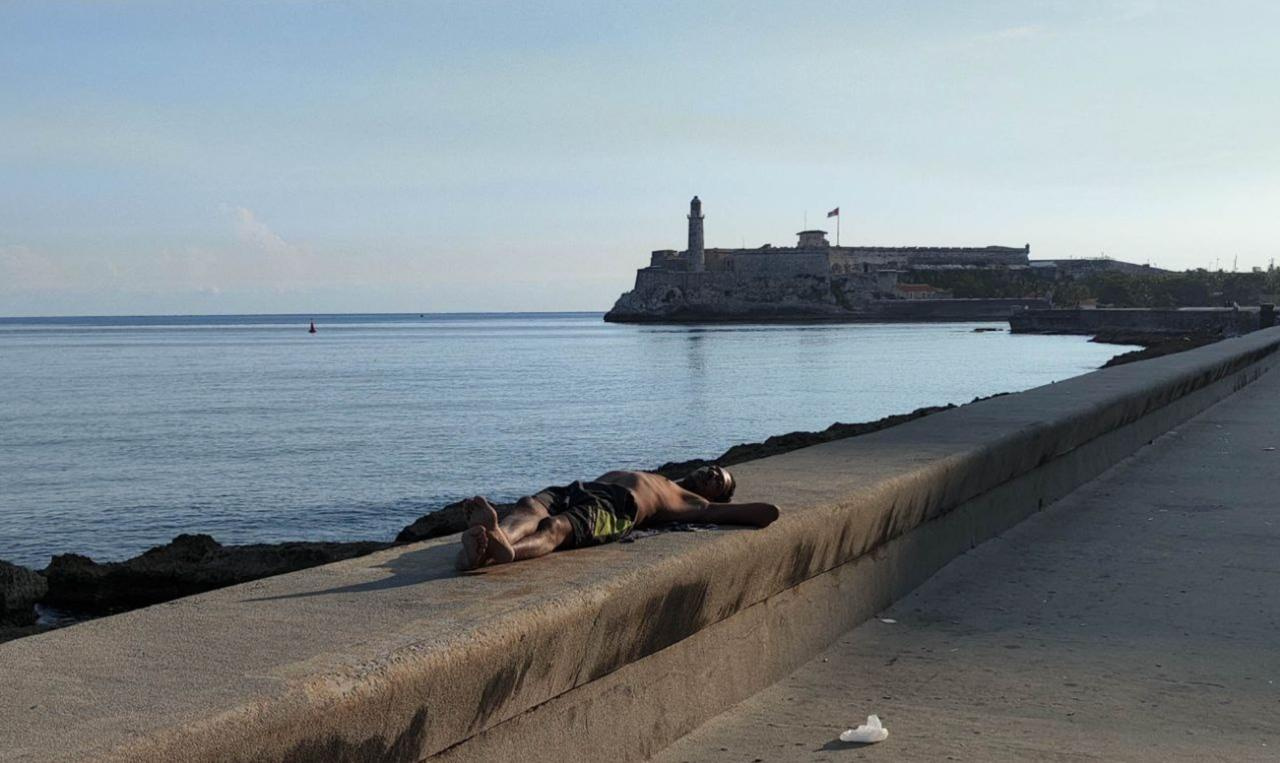
 14ymedio, Xavier Carbonell, Salamanca, 9 August 2025 — Katherine Perzant has rediscovered for readers the physical and spiritual desert of the Cuban countryside. A skeletal train that crosses a plain; oxen grazing casually by the road; miles of yellow grass and barren land. Anyone who says that Cuba is a tropical paradise would only have to travel through those villages of Oriente and Las Villas. “This is the Cuban nothingness,” writes Perzant.
Her book of vignettes and observations on the countryside of her childhood in Holguín during the Special Period has just won the Franz Kafka prize for essay and testimony. With a prose put at the service of reflection and charged with fatality, like that of Faulkner and Coetzee, La nada cubana (The Cuban Nothingness) evokes villages and hamlets and the distance between them. If you search the grass, you will find snakes, guinea pigs, mice and all kinds of vermin.
You will also find guajiros--farmers–in addition to country life and the women; they only know how to talk about one thing: La Charada.* If there is anything beautiful in the Cuban countryside it is La Charada,” writes Perzant in one of the best excerpts from the book. “People play the numbers and their meaning, looking for luck, although those who have played and know say that whoever plays by necessity loses by obligation. It doesn’t matter. If you grew up in the countryside, you know that a coyuyo (click beetle) turns upside down, and the number of its somersaults is the number of children you will have.”
The sacred combinational analysis leads a guajiro to place everything on five if he sees a nun and on 65 if he is pecked by a hen.
Chance is the only thing that dares to challenge nothingness: the sacred combinational analysis that leads a guajiro to play everything on the number five if he sees a nun and on 65 if he is pecked by a hen. “Number one is a horse; two, a butterfly; three, a little boy; and four, a cat,” enumerates Perzant. There has not been such a tremendous evocation of the countryside for a long time, which is the same as saying the Island, as if Havana did not exist.
Another reflection on a country that was lost and that we now begin to understand is Cubensis (Empty House), by journalist and film critic Alejandro Ríos. This collection of articles attempts to reconstruct Cuba from afar, in an exercise that the filmmaker Carlos Lechuga has described as a “rescue and salvation maneuver” for an identity that exile has not extinguished.
Mi último viaje en Lada (My Last Trip to Lada), published by the same publisher, is the first part of a collection of crime novels, la Trilogía de la Quinta Avenida (The Fifth Avenue Trilogy). Its author, Efraín Rodríguez Santana, explores the corridors of the Interior Ministry as he investigates an art theft in the 1990s. The crime novel, like other narrations of its kind, such as Leonardo Padura’s Paisaje de otoño (Autumn Landscape), is expected to be a pretext for social criticism.
Another crime novel, Lo que oculta la noche (What the Night Hides), by May R. Ayamonte, continues a tendency of popular Spanish novelists to use the Cuba of the 80’s and 90’s as an escape scenario. In 1987, a woman travels from Spain to Playa Larga with her lover and begins her initiation into santeria. Years later, a detective investigates to what extent this flight had to do with a crime that occurred in Granada, in which everyone sees the Devil’s hand, although these are innocent orishas.
Reina María Rodríguez is perhaps the most notable living female voice of Cuban poetry. With her book of poems Mazorcas (Corncobs), published by Rialta, the winner of the National Prize for Literature once again displays her intimate universe, composed of a series of images–the conversation of a poet with his daughter, a room with flowers, the corn fields in Wajda’s cinema–of a life that could not be lived.
In Salamanca, the Cuban poet Odalys Interián won the King David Award for Biblical Poetry for her poetry collection, Y la muerte se muere (And Death is Dying
In Salamanca, the Cuban poet Odalys Interián won the King David Award for Biblical Poetry for her poetry collection, Y la muerte se muere (And Death is Dying). The competition, organized by prestigious writers based in the city, like the Peruvian Alfredo Pérez Alencart, awards books in which spirituality and language are intertwined. Interián lives in exile in Miami and directs the publishing house Dos Islas.
Within Cuban literature, if there is a thunderous and unclassifiable author, it is Yoss. Nobody knows who José Miguel Sánchez Gómez is–a name that could be that of a baker or a mechanic–but everyone knows Yoss. Biochocolítica del caos (Biochocolytic of Chaos), published by Verbum and signed by Pedro Pablo Porbén, tries to get closer to the writer’s machinery without getting burned.
What is biochocolate mousse? What does it taste like? What is postmodernism? Who is Yoss? No one knows if Porbén will be lucky enough to answer those questions, but readers would do well to be afraid of the answers.
*Charada: Also called La Bolito, the clandestine game of numbers and symbols dates from the 1800s when Chinese workers arrived in Cuba. Although technically illegal, it is engrained in Cuban culture.
Translated by Regina Anavy
____________
COLLABORATE WITH OUR WORK: The 14ymedio team is committed to practicing serious journalism that reflects Cuba’s reality in all its depth. Thank you for joining us on this long journey. We invite you to continue supporting us by becoming a member of 14ymedio now. Together we can continue transforming journalism in Cuba.