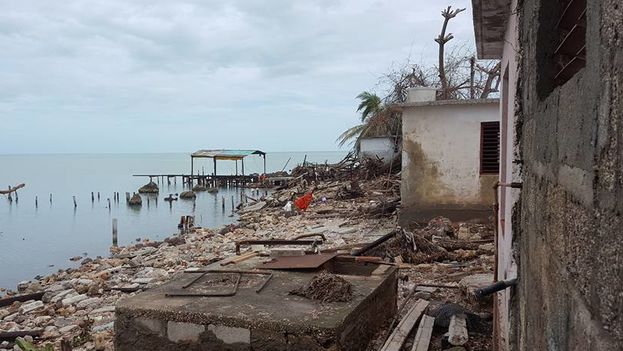

“The Hurricane Has Delivered Punta Alegre the Coup de Grace”

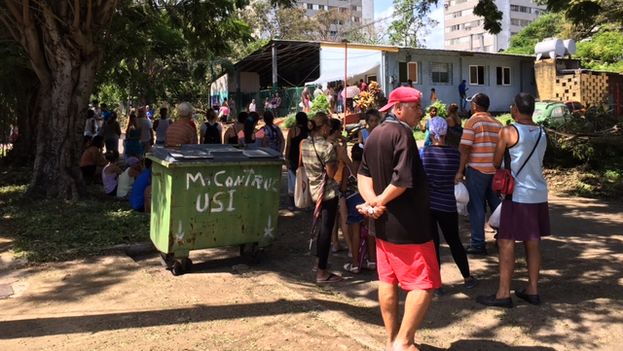
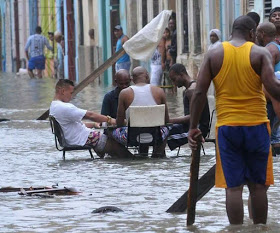
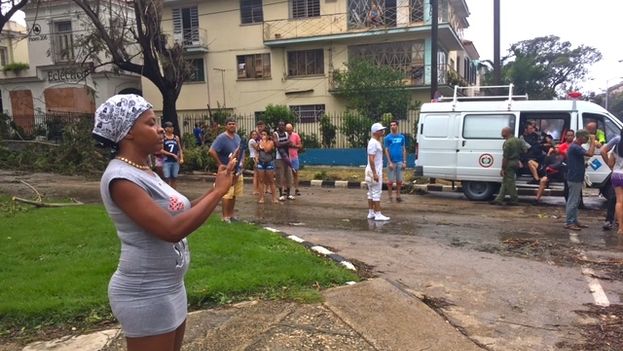
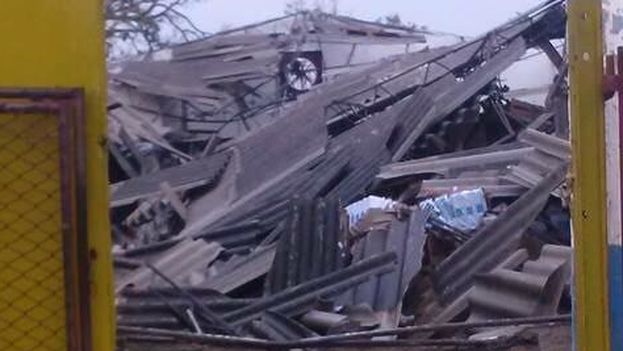
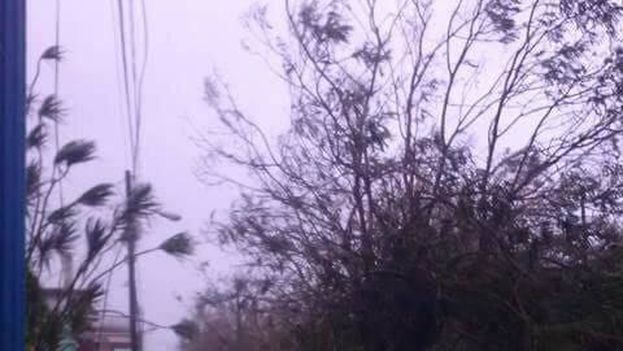
The damages in Punta Alegre, Ciego de Ávila, could be around 80%, but there are no official figures. (Lisbet Cuéllar)

14ymedio bigger14ymedio, Miriam Celaya, Havana, 15 September 2017 — Residents of Punta Alegre, a small fishing village located on the northern coast of Cuba’s municipality of Chambas, in Ciego de Ávila, have not yet recovered from the horror they experienced on September 8th, when their community was leveled while hurricane Irma struck for endless hours.

Ironically, it was the feast day of the Cuban patron saint, our Lady of El Cobre, who, according to legend, hundreds of years ago saved three fishermen from the raging sea in the bay of Nipe. The children of Punta Alegre, however, did not count on her divine protection. In fact, they did not have anyone’s.

After the catastrophe, when the inhabitants of Punta Alegre began to come out of the few remaining homes or shelters in which they had taken refuge temporarily, they encountered a panorama of utter devastation. A pile of debris, sea corals, chunks of roofs, scraps of furniture, tree branches, and mud stretched over what once was a quiet coastal town. Some fishing boats had been swept by the sea into the village and floated between houses. Only the more solid masonry constructions, barely a minimum percentage of the precarious housing found in the town resisted the hurricane’s fury. continue reading

Witnesses confirm that nothing resembles the picturesque little town that Punta Alegre once was, with its smells of sea and fish, settled in a privileged geographical landscape

 Irma’s attack, with sustained winds of 240 kph (149 mph) and the incursion of the sea, totally or partially destroyed both the humble houses and almost all of the scarce State facilities, including the fishing cooperative – whose already weak fleet suffered the total loss of or damage to several boats – the two shopping areas, the camping base, the two restaurants, the nursing home, whose dining room served food to retirees of lower income with no subsidiary help, and other facilities. Not even the village church escaped the catastrophe: half of the belfry collapsed, including everything besides the bell.

The amount and total magnitude of the damage is still unknown, but according to the testimonies of some neighbors who have managed to leave the town for other places where communications and electricity service have already been restored, the current image of Punta Alegre is of utter desolation. Some say that more than 80% of the town was destroyed, but, so far, there are only unconfirmed estimates. In any case, the witnesses say that nothing resembles the picturesque little town that Punta Alegre once was, with its sea and fish smell, set in a privileged geographical landscape between the bay to the north, and green hills that descend into the horizon to the south.

Ronald is a 30-year-old from Punta Alegre who was visiting his parents when Irma raged over the place where he was born. Five days later, back in Havana, where he lives with his wife and children, he tells us that “the hurricane has delivered the coup de grace to Punta Alegre”.

“The truth is that the decadence had begun there many years ago, since the Máximo Gómez Sugar Mill (formerly Punta Alegre Sugar Mill) was closed for good during the crisis of the 1990’s and many people lost their jobs”, he says, explaining why he left and moved to the capital.

“In my parents’ and grandparents’ days, Punta Alegre had a lot of drive for a country town. The bay was deep enough to allow ship traffic of respectable size, carrying the sugar produced in the mills,” he recalls. 

Tourist infrastructure, far from being a new source of employment, was a severe blow to fishing, because the maritime road did not meet the technical requirements

But the closing of its plant would be just the beginning of the town’s collapse. Tourism fever started around the same time, driven by a government desperate to raise hard currency. The construction of hotels in Cuba’s northern keys (Jardines del Rey), as well as that of the embankments to connect these keys to the mainland, far from being a new source of jobs for the inhabitants of Punta Alegre, were a severe blow, since the maritime road did not comply with the technical requirements that call for the presence of sufficient number of bridges to allow the proper circulation of the marine currents. This increased the salinity of the waters in Buenavista Bay, and with it, many marine species that were the economic sustenance of a traditionally fishing community disappeared from the area.

“Suffice it to say that, from that point on, the cooperative, built after the Revolution, which up to the ‘80’s maintained a fairly large flotilla, began to decline and its catch levels fell, eventually deteriorating and losing many boats for lack of maintenance or official disinterest. And, along with the decay of the cooperative, also came the decline in the fish-processing plant, which was the source of employment for many of the town’s women, including my mother and my grandmother”, remarks Ronald.

In fact, Irma is not the first hurricane to hit Punta Alegre. In 1985, Kate arrived in the region as a category 2 hurricane and demolished a good number of houses and other infrastructures, among which was the old nautical club built on stilts, over the sea waves. On that occasion, the late Cuban President Fidel Castro, who used to visit regions hit by the hurricanes and personally guide the recovery efforts, built a small community of houses further away from the sea for Hurricane Kate’s victims. In spite of this, the town’s original characteristics were never recovered.

“Somehow, people have always managed to survive, and also to try to have a little fun”. We still had the Los Cocos Beach, which was in the Máximo Gómez Mill, where people went to enjoy themselves at the camping base until a few days ago. Now all that was lost and who knows if anything will be recovered, or when. It is as if Punta Alegre has been doomed”, he mourns.

But, to date, what Ronald and the majority of the inhabitants of Punta Alegre can’t understand is the scandalous abandonment of the local and municipal authorities when Irma’s scourge was imminent, although it was known well ahead that the hurricane’s trajectory would have a catastrophic effect on the town and its people.

 “There was no assurance of food for the people. Only 150 packets of salt crackers arrived for a population of about five thousand, and some coal sacks were distributed free of charge”

“Before Irma arrived, transportation and communications were cut off, and there was no assurance of food for the people. Only 150 packets of salt crackers arrived for a population of about five thousand, and some sacks of coal were distributed free of charge”. That was it. Baby food did not arrive either, nor was there a distribution of powdered milk or canned food for the people to get by during the storm. One can just imagine the fights over a few of those crackers. The only thing that stayed open and active around the clock was the bakery, thanks to the only operational generator in the area. The medical post was also active”.

“Despite widespread propaganda in the official press, this town did not even benefit from an adequate contingency plan. There was no efficient evacuation procedure of the inhabitants near the coastline, where the sea breached with a force never seen before, so that entire families, including small children, who thought they were safe in homes, were forced to evacuate in the middle of the night, under rain and gusts of wind in a nightmarish situation. “We believed that this was it, that we were going to drown because the water was up to our chests. The children were terrified, screaming and crying non-stop. Some people did not scream, but panic was reflected in their eyes”, recalls Ronald.

Even under the pummeling of the winds, the two village stores were sacked, as well as the “El Toletazo Restaurant”. The scarce food collected there, and in other small warehouses of a few State establishments were shared spontaneously and jointly by the town’s people. “It must be noted that people helped each other. Not one person in a protected shelter shut anyone out. Everyone supported and consoled each other. It was very emotional, despite the misfortune”.

No Government representative visited the village until September 12th. However, in previous days, several senior officials had made an appearance in the Keys.

Until the 12th of September, when the first secretary of the Cuban Communist Party finally arrived in Punta Alegre, no government representative had visited the town, which to this day still lacks the basics, such as electricity, drinking water and telephone service. However, in previous days several senior officials, including the Minister of Tourism, had been present in the Keys to evaluate the damage suffered by hotel facilities and to guide reconstruction work which, according to President Raúl Castro, must be completed before next November, the start of the high season.

“When the worst moments had passed, a lot of people went out to forage… Some people found a considerable number of whiskey bottles and other alcoholic drinks, which had been swept away by the waves from the storerooms and facilities in the Keys. There were also some things to eat that landed on shore by the force of the waves and the wind, but they were spoiled. They say that the hurricane caused the loss of tons of food from the hotels in the Key resorts. It is a crime that food was lost instead of being delivered to the nearby towns before the storm hit”, admonishes Ronald.

When the young man was able to leave the village, he saw long lines of townspeople crowded in wait for food that, according to government leaders who just materialized on the scene, should start arriving by truck at any moment”. There were long lines of people anxious to get food for their families”, he says, “and it hurts to think that most of them have lost their homes and all their possessions”. After a pause, he repeats his initial idea: “Yes, Hurricane Irma was the coup de grace, but the destruction of Punta Alegre had already begun a very long time ago”.

Translated by Norma Whiting
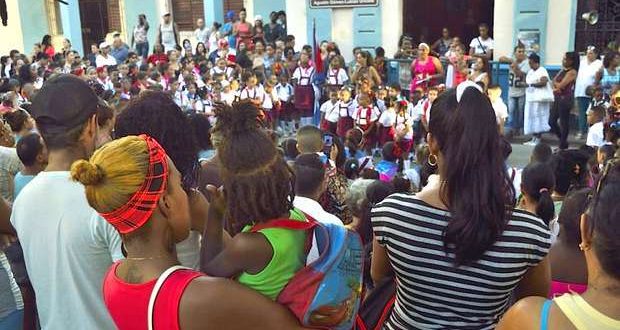
Cuba’s School Year: Fewer Teachers, More Expenses for Parents / Iván García

Otmaro Rodríguez, On Cuba Magazine.0

Iván García,5 September 2017 — In addition to packing several blouses, underwear and a pair of worn-out jeans the night before travelling to Havana, twenty-six-year-old Magda brought along three homemade cheeses and four kilograms of ground roast coffee.

She plans on selling the cheese and coffee. For six years Madga has been teacher at a high school in Havana. During summer vacations she helps her parents work the land on a small rural plantation in Villa Clara province. Or she sells slices of guava and clusters of garlic on the National Highway to make some extra money.

During the nine months of the Cuban school year, Magda lives in an old warehouse converted into a shelter for teachers from other provinces who work in the capital.

“The housing conditions are horrible. The food is wretched and sometimes there is no water. My salary as a teacher comes to 475 pesos (about twenty dollars), which I spend on pizzas in privately owned cafes. The mothers of some of my friends bring them lunch, an afternoon snack or add money to their cell phone accounts. We don’t earn much as teachers and the working conditions are not the best. That’s why almost no one wants to be a teacher,” says Magda.

A career in education, an essential component in the formation of future generations, has been devalued in Cuba. A teacher’s social status is low and assistance from the state, which finances one-hundred percent of education in the country, leaves much to be desired.

Marlon, a professor in a college prepatory school, notes, “Before the beginning of every school year, there is meeting after meeting demanding higher quality in the classroom, more commitment, more politicial-ideological tasks to counter student’s apathy towards the revolutionary process. But no government official talks about raising teachers’ salaries.”

Seven-hundred thousand students will enroll in primary, secondary, technical, pre-university and university courses  during the 2017/2018 school year but the shortage of teachers continues.

“It’s not as bad as it was ten years ago when Havana, for example, had a shortage of eleven thousand professors. These days, fifteen percent of of teaching postions throughout the island go unfilled. In order to make up for the shortfall in teachers, university students and graduates in technical fields, foreign languages and philology are being recruited. However, it’s getting increasingly difficult to fill those positions one hundred percent,” says an education official.

“And we have other problems,” adds the official. “The educational system has been screaming for changes to bring things up to date. A large portion of the content is out of date. Difficulties remain with the laboratories and textbooks need to be updated.”

Diario de las Americas asked him when primary, secondary and pre-university schools would get internet access. “Not this year,” he replied. “Every semester they postpone installing the internet and replacing old computers with new devices such as tablets. Sometimes the official press reports that it will happen soon, but in reality there is no guarantee. Only universities have internet connections, although the screen time for each student is limited. Everybody else will have to wait,” he replies.

The internet is not a luxury. It is an indispensable tool in every branch of educaton and in human knowlege. The Cuban regime is more interested in making money off of the internet than in making it widely available.

“Young people arrive at university with barely any knowledge of new technologies other than Facebook and Instagram. The internet is essential in any 21st century economic field. Our students are at a disadvantage compared to their counterparts in Latin America,” notes a computer sciences professor.

With the start of the new school year, family expenses include afternoon snacks and as much as 15 CUC (Cuban convertible pesos, roughly $15 USD) a month for a tutor to compensate for the poor education their children receive.

“For a while now, it starts by buying uniforms on the black market for 5 CUC. That does not include money for notebooks, backpacks or shoes, also in hard currency. Last week I spent 135 chavitos (CUC) for a backpack, a pair of tennis shoes, a water bottle and two dozen notebooks,” explains Dunia, the mother of a ninth grader.

“Lunches and afternoon snacks are a headache. There are five days in a week and the school year lasts nine months. Families make ham and cheese sandwiches and give their kids juice or canned sodas if they can. But for most people, just making sure your children get bread with oil and garlic, and guachipupa (a homemade beverage made with sugar and fruit) is like crossing Niagara Falls on a bicycle,” says Nora, a grandmother who brings a noontime lunch to her granddaughter, a high school student.

This school year, the facades of almost all Havana schools got a cheap coat of paint. “But inside everything is still shabby and the restrooms are disgusting,” says Saray, mother of two children in the third and sixth grades. “To maintain hygiene, parents bring detergent and buy fans because the heat in the classrooms is intolerable.”

Like other teachers at the end of their daily shifts, Magda returns to her hostel, grabs the cheeses she made and the coffee she brought from her home province, and goes out to sell them in the neighborhood. “I also sell mobile phones and clothes from overseas. And I paint fingernails at people’s homes. I always say that I have two jobs: a professor in the morning and a street peddler in the afternoon,” she confesses with a forced smile.

When night falls, others such as Miguel, a physical education teacher, puts on a tight dress, high heels and a wig. With a feminine wave of his hand, he says, “I am a teacher by necessity but a transvestite by vocation.”

The Strength That Weakens Us

Line to buy unrationed bread after the passage of Hurricane Irma through Havana. (14ymedio)

14ymedio bigger14ymedio, Reinaldo Escobar, Havana, 14 September 2017 — The passage of the devastating Hurricane Irma along the northern coast of Cuba and the subsequent recovery process have underscored the strength of a powerful state and the fragility of a deprived citizenry.

In each of the 14 provinces affected, from Guantanamo to Artemisa, substantial resources were mobilized almost immediately to restore power and communication networks, to reopen blocked roads and to collect solid waste. Following the order issued from the highest governmental body, priorities were established to restore the accommodation capacity of affected tourist centers and to make hospitals and schools fully operational.

Inside the thousands of houses hit by the fury of the winds or flooded by the penetrations of the sea, the drama unfolds at a different speed. In each of them, insignificant in appearance, are the possessions treasured by a housewife in her kitchen, clothing, mattresses, old furniture inherited from ancestors, appliances, and a long list of personal belongings, acquired through unimaginable sacrifice; everything that was once irreplaceable, has suddenly become unrecoverable. continue reading

The almighty state presents itself as generous with what it considers essential, so it “advanced” the monthly quota for the rationed market and sells food “at reasonable prices” in the most vulnerable areas. But speaking in legal terms, the state “does not know” what the citizens obtain through the intricate roads of the black market, nor is it aware of the backpack sent by a relative in Miami, shoes bought in the hard currency market, the television delivered by a mule who traveled from Panama or the computer sold by a neighbor before leaving the country.

Many losses cannot even be declared because of the fear of becoming a confessed recipient of goods acquired by illegal means.

Another aspect that emphasizes the fragility of those affected is the huge difference between the real cost and the legal price of the properties. What the buyer paid for a house or car can be 2000% higher than the value officially recorded for it, so that when quantifying the total damage or destruction, the true damage caused to the victim is never reflected.

In a nation of the dispossessed, the resilience of individuals and families affected by natural disasters depends on what the all-owning state assigns to everyone under the rules of distribution imposed by egalitarianism.

Those who, by one means or another, have achieved economic empowerment do not have a guarantee that assures them prompt reparations for the damages. This emerging middle class, which rose after Raul Castro’s timid reforms, is marked by the concept of self-sufficiency, which means that everyone must face the risks of entrepreneurship as best they can by themselves.

It will soon be reported that the hotels in the keys are even better than they were before Irma passed through, that air-conditioned buses filled with foreigners are already circulating along the causeways, and that all the airports are in service. What will never be known is how many snack bars, repair shops, restaurants and privately rented homes have disappeared.

The power of the state should not rest on the fragility of its citizens.

Cubans Are Disgusted By Government’s Management After Irma

Kiosk in Animus Street selling foods for hurricane victims in Centro Habana. (14ymedio)

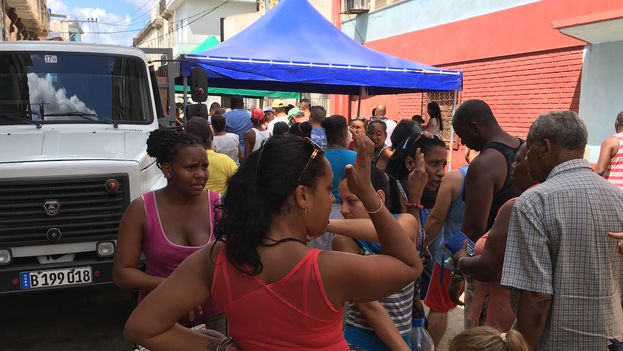
14ymedio bigger14ymedio, Zunilda Mata, Havana, 14 September 2017 – In Cuba’s capital city dozens of victims of Hurricane Irma surround an improvised kiosk clutching plastic bowls and bottles. The authorities have set up several stands that offer soup, rice with a protein and bottled water to anxious residents.

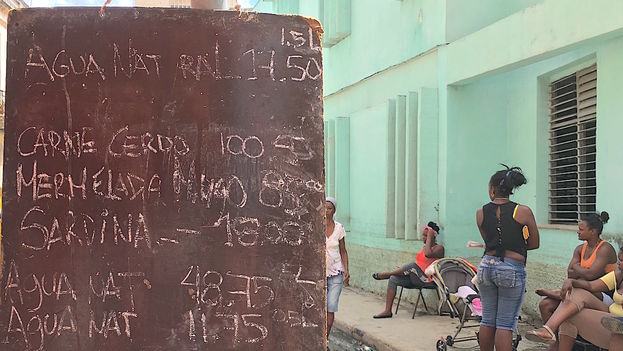
With prices of 2 Cuban pesos (CUP) for the ration of soup, and 8 CUP for a little box with rice and some meat and vegetables, the kiosks in different places are selling food prepared for the victims. However, the complaints are growing in the face of a distribution that many consider should be done at no cost.

“I don’t have a single centavo, I spent everything I had buying cookies and candles before the hurricane and now I don’t have anything,” laments Coralia, a resident of Marques Gonzales Street who was heading to La Inmaculada Church on San Lazaro Street this Wednesday, looking for help. continue reading

The mark left on the city by the sea is still visible on the facades of Lagunas Street, near Belascoain, one of the areas where the floods in Havana did the most damage. But these stains are only the visible marks of the drama. The most difficult effects are evident inside the houses, with the lack of water and shortage of food.

“This morning I ate the last egg I had left, which had miraculously survived because it was unrefrigerated for more than three days,” Eneida, a retiree of 73 told 14ymedio. “I have nothing left and I do not have the money to buy what the government is selling,” she says.

La Inmaculada, a centrally located church, lost its imposing and emblematic main doors under the force of the waves that poured over the wall of the Malecon. Since the winds stopped blowing dozens of parishioners and neighbors have come asking for some food and clothing, but the chapel is simply not equipped.

State kiosks in different parts of Havana sell prepared food for the victims. (14ymedio)

Rosario, the chapel receptionist describes the situation as “terrible.” “We have no water, the dining room where we normally serve food to about 25 elders from the area has not been able to function for several days and these people can not even get here because of the ongoing conditions in the neighborhood,” she says.

“Through the side gate we are collecting donations of any kind: clothes, food and kitchen equipment, because there are people here who have lost everything,” the woman emphasizes. Other churches are also mobilizing to alleviate what is taking shape as a humanitarian drama. “Many people are arriving in a very complicated situation,” Rosario says.

In the midst of these shortages, between Tuesday and Wednesday Cuba received 10 tons of humanitarian aid from Venezuela in the form of non-perishable food, medicines and drinking water, as well as another 2.2 tons chartered by plane from Panama, which mainly contains hygiene and food items.

One of the blue tents set up by the island’s authorities to sell food is just a few steps away from the well-known funeral home at Calzada and K Streets in Vedado. The residents of the lower floors and the improvised structures in the old semi-underground parking areas were the most harmed in that area, which is along the low part of the coast where the sea advanced several blocks and left significant damage in numerous houses.

Among them is Yazmín, the mother of two children and a worker for a state company. “In my house nothing is left that is usable, all the furniture got wet and my children lost even their school books,” she laments.

Yazmín had hoped that schools would resume classes on Thursday to “see if they offer food more cheaply,” but the schools in the area have delayed opening their doors until Monday. “With the children I do not have much mobility and we will have line up for a bit of soup,” she said, resigned.

A can of sardines at these stands costs 18 CUP, the equivalent of a day’s wages for a state employee, while ground beef is an unaffordable 65 CUP a pound. (14ymedio)

In Ánimas Street in the San Leopoldo district, another kiosk is selling a similar menu. Dozens of people wait in line to take home the first serving of hot food they will have eaten since last Saturday. Water is also for sale at 11.75 CUP a pint or 48.75 CUP for a 5 quart bottle, a price that those affected by Hurricane consider excessive.

“How can they be selling water? I do not understand that they do not distribute all this for free because they know that the people of this neighborhood don’t even have a pot to piss in,” complains Rigoberto Núñez, a 57-year-old neighbor whose water tank has been contaminated. Among the personal items he lost with the flooding was his wallet, he says. “I do not know if I lost it or if it was stolen, but now I do not have a single centavo,” he adds.

A can of sardines at the kiosks cost 18 CUP, the equivalent of a day’s wages for a state employe, while ground beef is 65 CUP a pound, an amount most people can’t pay.

While people waited in line on Thursday to buy a serving of food – limited in quantities to “avoid hoarding,” says one of the employees who sells it – the rumor spread that the Church of La Caridad in Manrique is helping with medicines and some milk to those most affected.

In a stampede, some leave in the direction of the chapel in search of those resources that have now become the greatest obsession for thousands of the storm’s victims.


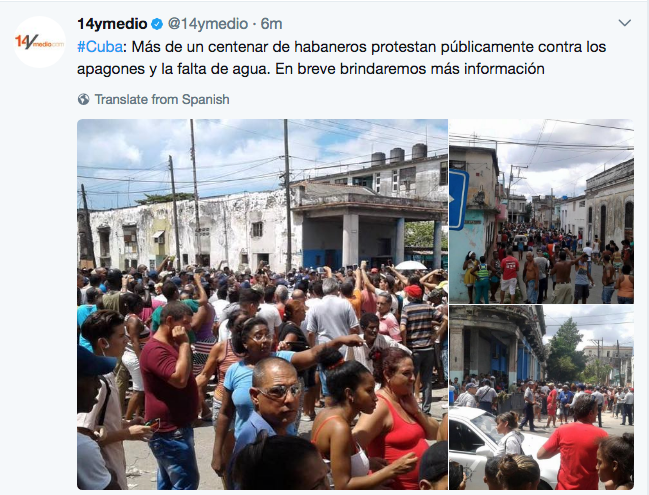
Hundreds of Havanans Protest in Neighborhood Five Days Without Electricity or Water / Updated

Hundreds of Havana protesters gathered in the streets of the Diez de Octubre neighborhood after five days without electricity. (Facebook Andy Michel Fonseca)

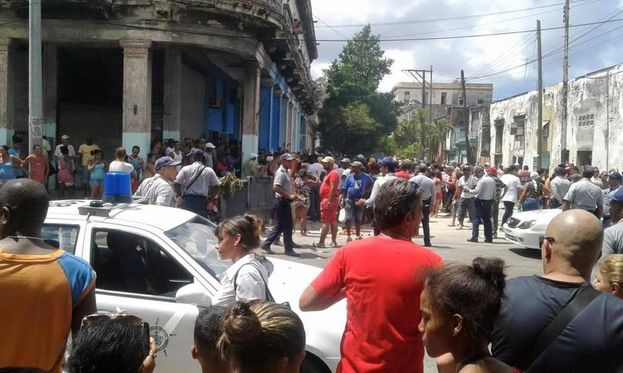
14ymedio bigger14ymedio, Luz Escobar, Havana, 13 September 2017 — Hundreds of people demonstrated in Havana’s Diez de Octubre neighborhood on Wednesday afternoon, protesting the lack of electricity and water after Hurricane Irma. The protest began spontaneously, according to witnesses who spoke with 14ymedio.

“We want light! we want water!” and “The people, united, will never be defeated!” were the slogans shouted by the crowd, demanding basic services suspended since Saturday when the hurricane struck the island with winds over 125 miles an hour.

Among the slogans the demonstrators shouted there was also heard the cry of “Let Raul come!” calling for the president to visit the affected areas. So far, the leader has limited himself to sending a message of support to the citizenry, but has not visited the areas damaged by Hurricane Irma. continue reading

“From noon, the police closed (the main thoroughfare) Calzada de Diez de Octubre, because things got hot there,” one of the private taxi drivers serving the area told 14ymedio.

Only a few minutes after the protest began, dozens police officers and special troops arrived. (Facebook)

Dozens of officers of the Revolutionary National Police (PNR) and special troops known as Black Berets arrived at the scene after a few minutes of protest, but the protesters were not intimidated and continued their demands.

A neighbor of Santos Suárez park said that the demonstrators were around her house for “some hours” and from there they went towards the main thoroughfare, Calzada de Diez de Octubre, continuing to protest as they came up against a police barrier that prevented their passage.

“People got tired of the government’s bad management and came out to protest. There was no alternative,” she added.

However, one protester said there were no arrests for the protests and that the uniformed officers withdrew with the promise to restore basic services “as soon as possible.”

After the protest, police patrols remain in the area. (14ymedio)

“There was fear, nobody knew who was who because many policemen in civilian clothes arrived,” says another of the demonstrators.

As of 5:30 PM when 14ymedio was able to check the situation just hours after the demonstrations began, authorities had sent work teams from the electricity company and reestablished electricty and the water supply.

“Fidel had his flaws but he put on his foot down when these things happened and went out to the streets to solve the problems,” said an old woman.

After the protest, police patrols remained in the area and, according to the neighbors, many of the people found at key points in the area “look like they are state security.”

By about six o’clock in the afternoon a tense calm was felt. (14ymedio)

By about six o’clock in the afternoon a tense calm was felt. Some people took the opportunity to wash down the entryways in the area, and only spoke in low voices about what had happened just a few hours earlier.

Public protests are severely punished in Cuba. Last July 26, three activists from the Patriotic Union of Cuba challenged the authorities with banners denouncing “58 years of deceit, hunger and misery” in front of the Cathedral of Santiago de Cuba. After being arrested following a “savage beating,” the activists, who demanded freedom of expression, assembly and the press are being held in prison awaiting trial.

Daniel Llorente, another protester who on May Day ran with a US flag in front of the government parade is still confined to the capital’s Psychiatric Hospital.

The biggest protest in the island’s history during the rule of the brothers Fidel and Raúl Castro – known as the Maleconazo – occurred in August 1994 when hundreds of people confronted the police in Havana with sticks and stones, looting shops and calling for an end to socialism.

Havana, Black on Black

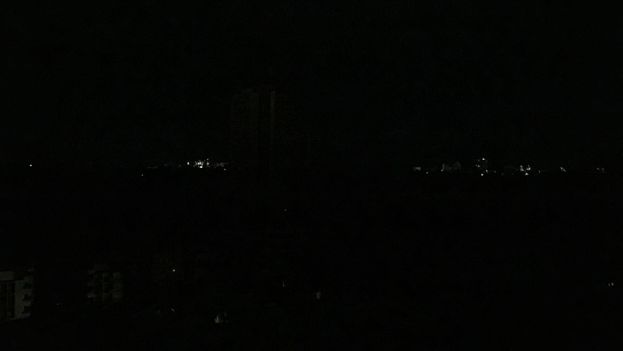
Havana at night, after the hurricane (14ymedio)

14ymedio bigger14ymedio, Havana, 13 September 2017 — Thousands of residents in Havana spent their fourth day without electricity or water supplies, on Wednesday, as a result of the damage left by Hurricane Irma. Brigades of electrical linemen are working to restore the energy supply, but the slow pace of the work, given its complexity in some stretches, brings despair to those who have been unable to take a shower since last Saturday, who must climb to high floors without elevator service, or who yearn to eat something other than canned food or cookies.

In the area of Vedado where hotels, hospitals and government administrative buildings are located, electrical services have been restored, but neighborhoods such as Nuevo Vedado, La Timba, La Viibora, along with extensive areas of the municipality Playa and parts of Centro Habana are still in the dark. Under these circumstances, the middle of the night is the most difficult time of day, with the complete lack of light, and the intense September heat with temperatures over 85 degrees.

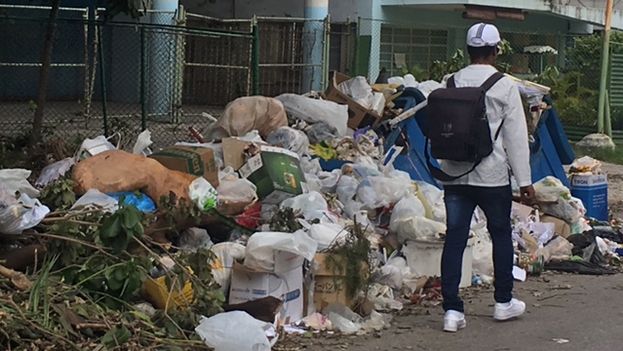
To find relief from the heatwave, many residents in the neighborhoods suffering blackouts have placed their mattresses on terraces, balconies and roofs. Garbage collection is also affected and mountains of trash, fallen tree trunks and branches pile up on the corners. National television continues to broadcast an extensive program dedicated to reporting the damage left by the hurricane and the recovery process, but in much of the capital people are oblivious to this information due to lack of electricity.

An unusual silence extends where even the TVs fail to bring a ray of light.

Irma Damaged 4,288 Houses In Havana, With 157 Total Collapses And 986 Partial Collapses

Numerous trees have fallen in Havana because of the strong winds of Hurricane Irma. (14ymedio)

14ymedio biggerEFE (via 14ymedio), Havana, 13 September 2017 — A total of 4,288 homes in Havana were damaged during the passage of the mighty Hurricane Irma, with 157 total collapses and 986 partial collapses, according to preliminary official reports published Wednesday in the island’s press.

In the Cuban capital, the state newspaper Granma said there were 818 roofs destroyed and another 1,555 affected, as reported in meeting of the Havana Defense Council attended by top government figures, the ruling Communist Party (PCC) and the Armed Forces.

“In the face of this situation, the roofs of the buildings are being restored, where there is damage of this type, and two premises have already been set up, one in the Havana municipality of Arroyo Naranjo and another in La Lisa, with the aim of housing the affected families,” said Granma. continue reading

The report does not specify where the damaged homes are located, but the areas of Havana most affected by the hurricane were the neighborhoods of Vedado, Centro Habana, Habana Vieja and Miramar, where the sea penetrated almost 330 yards inland.

Centro Habana and Habana Vieja, both in the founding area of ​​the city, both have a large number of old houses in poor condition.

Of the 10 people who died in Cuba as a result of the hurricane, most of them lost their lives due to building collapses.

Irma hit the capital on Saturday night and its hurricane force winds also caused serious damage to the electrical service, with electrical poles and lines fallen, as a result of which many areas of the capital have remained without electricity or water for more than 72 hours.

In Havana, nine food preparation centers have been set up in eight municipalities, “in order to guarantee the food supply, especially for the sheltered families, at a reasonable price.”

Medical coverage has also been guaranteed and the health system “continues to strive to prevent epidemics,” provincial officials said.

In Havana there are still hundreds of fallen trees, some obstructing traffic in the middle of busy main roads, such as Tercera Avenue in Miramar, along with others where electrical poles and lines have fallen over the roadway.

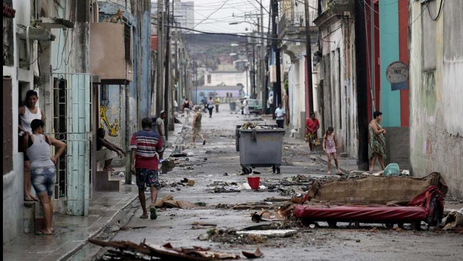
The streets closest to the coast still have stones and sand washed up by the sea, and on the sidewalks there are mattresses, clothes and appliances set out under the sun.

Lessons From Irma

Hopelessness has settled in for thousands of Cubans who know well how long it will for the island to recover from Irma, especially if there are no political initiatives. (14ymedio)

14ymedio bigger14ymedio, Yoani Sanchez, Havana, 13 September 2017 — There is a rare calm in Havana after the passing of Hurricane Irma. So many years of crisis leave a certain resignation in citizens in the face of new tragedies. The country of this September is not the same as that of a few weeks ago, and yet it is very familiar because it is in the state of emergency in which we have always lived.

Irma’s capriciousness has left us some certainties. The first of these has to do with that bridge of tragedy that united Cuba and Florida during the difficult days of winds, floods and power outages. Nature connected what politics has separated for decades.

In small Cuban towns, when many families did not know if they would survive through the night on Sunday, countless thoughts went out to their relatives in Miami who were waiting for the arrival of the hurricane. The same thing happened in the opposite direction. Hearts on the island and the peninsula beat as one, suffered in sync and shared the misfortune. continue reading

On the other hand, Cuba’s complex national situation has taken on an unexpected variable since the weekend. Just before the name of the next president is known– in advance of Raul Castro’s commitment to leave the presidency in February of 2018– and when many analysts insisted that all that was left was the “plain sailing” of a tightly planned transfer of leadership, the country is a pile of ruins and the future leader is heir to an immense mortgage.

The loss of at least ten human lives is the most tragic outcome of the hurricane, but Irma’s most palpable victim has been hope. The victims know that recovering a refrigerator, a mattress or a kitchen lost in the water could cost them the rest of their lives. Their expectations in the short and medium term are rock-bottom.

The lack of liquidity in the national coffers and the lack of supply in the markets, which made daily life difficult before Irma’s arrival, became deeper with this climatic shockwave. Predictions of GDP growth – which last year ended in negative numbers – are no longer realistic and the tourism sector will take months to recover.

The feeling that invades millions of people throughout the nation is that even more difficult days are to come. Times of famine, hardship and social tension. Only a generous about-face from power, along with international solidarity, could shorten the deadlines for a recovery that is expected to be long and complex.

Foreign aid will do its part, but the government must make important decisions to alleviate the suffering of those who have lost all or a good part of their property. Removing restrictions on personal imports and allowing commercial imports into private hands would help to bring huge resources into the country in the coming months.

In times like these it is urgent that vehicles, construction materials, medicines in large quantities and agricultural machinery can be brought in from outside.

The granting of licenses for self-employment needs to be unfrozen, the number of occupations allowed expanded, and a moratorium established on the payment of taxes in the most affected areas. These measures can help to rebuild the nation’s economic fabric.

International organizations need to be able to channel their aid directly and with less bureaucracy. This is the only way to prevent resources from ending up in provincial headquarters, in institutional stores where the “subtraction of resources” (i.e. management and employee theft) depletes their quantity, or on store shelves where they are sold at prices inaccessible to the poorest.

In the coming weeks, the government has the opportunity to demonstrate that it can cede areas of economic control for the sake of a less delayed recovery. The last page of Raul Castro’s book as head of the country is blank. Now he must decide whether to fill it with gestures of control or openings, whether he will contribute to the sinking of the island or help to revive it.

A Lot of Manipulation / Fernando Dámaso

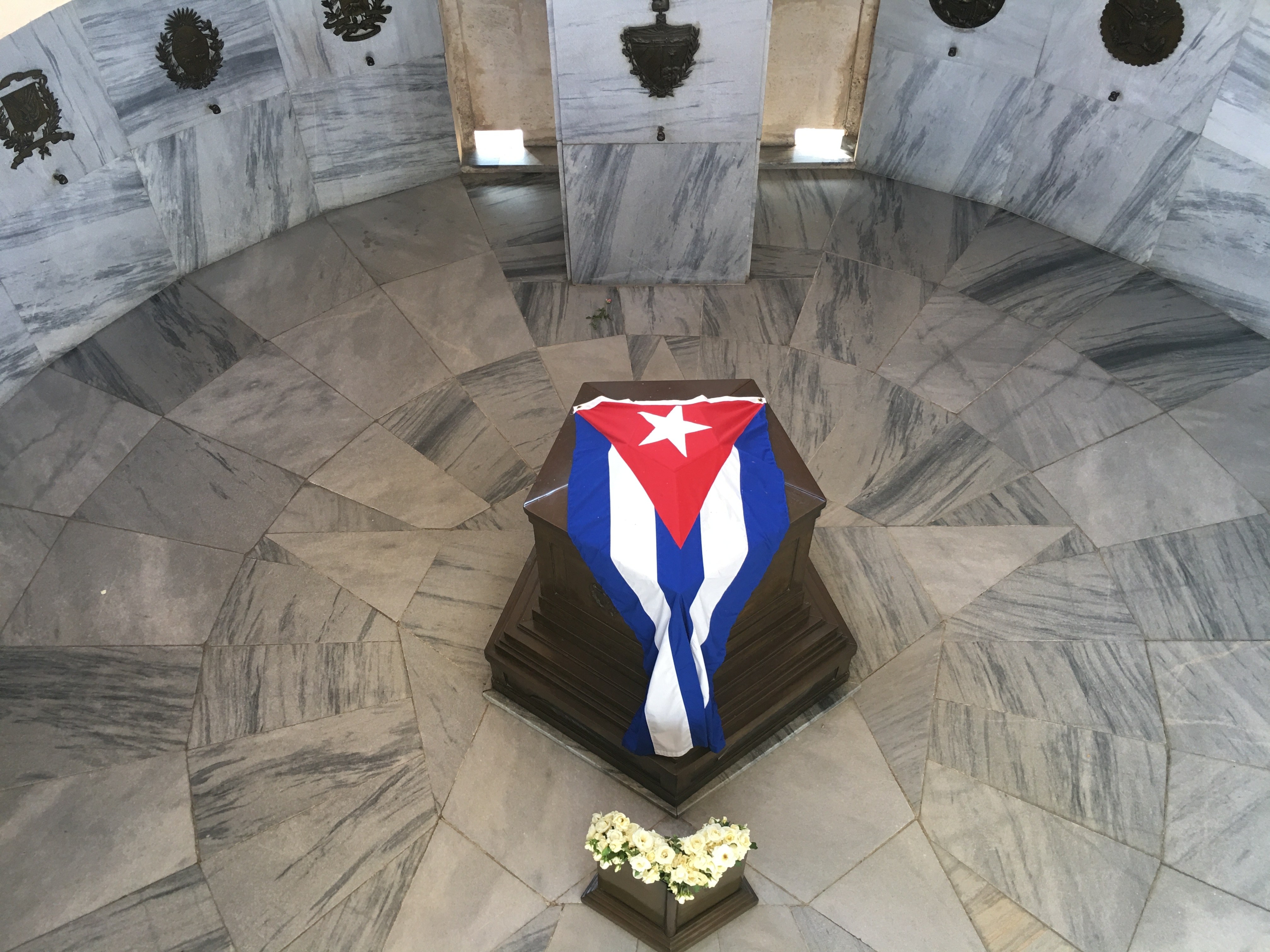
Jose Marti’s mausoleum in Santa Ifigenia Cemetery, Santiago de Cuba (ReginaBeardsley.com)

Fernando Damaso, 5 September 2017 — The manipulation of José Martí — whom we Cubans call “the Apostle — not just his life but also his ideas, has been progressive. Accused, in 1953, of being the “intellectual author” of the attack on the Moncada Barracks, and the assailants self-styled the “centenary generation” (it being 100 years since his birth), from 1959 on he was “unchained”.

The “Lenin-Martí” rooms (Lenin first and then Martí) in the military bases were there until the disappearance of the Soviet Union, embellished with “Martí-Ho Chi Minh Days”, when we felt like “giving our blood for Vietnam”.

Cautiously at first, when the Apostle was still thought of as a liberal-democrat, but distanced from socialism, in the eyes of the more dogmatic, they soon began to ascribe to him ideas he had never had, in order to convince us that now, had he been alive, he would have been a socialist. continue reading

In reinventing history and attributing merits or defects to their subjects, in accordance with the political convenience of the moment, our leaders have been very good at getting submissive historians to endorse their opinions.

Look at the absurdity they have propagated, that “before, we would have been like them, and now they would have been like us”, which is totally appropriate to the process of “baloneyfication”, which started then and has continued to the present day.

At a particular moment difficult to pin down exactly, during the period of the personality cult, the ideas of the “Maximum Leader” started to be considered as continuations of those of Martí, and that he was his best disciple.

Now, both of them, with their remains (bones and ashes), near to each other in the same cemetery, are presented as indivisible, where one cannot exist without the other, and they even affirm that Cuba cannot be thought of without them.

Without asking his permission, they have put an annoying travelling companion beside Martí. This soup (or rather an indigestible stew) of homeland, nation, party, Martí and “historic leader”, is what they offer to the younger people in the country, trying to gain their eternal commitment, without freedom of choice, and conditioned by conveniently manipulated facts.

Translated by GH

Cuba After the Hurricane: The Drowning of San Leopoldo

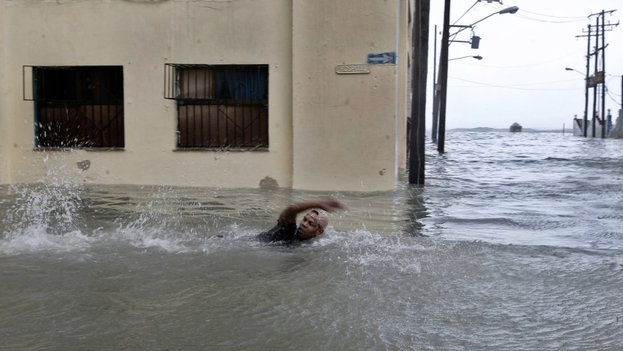
San Gervasio Street in Central Havana was completely flooded and some went swimming. (EFE)

14ymedio bigger14ymedio, Zunilda Mata, Havana/Cienfuegos, 12 September 2017 — The air smells of damp and feces. Using a shovel without a handle, Óscar Rodríguez’s family is shoveling the mud out of all the corners of their house on Gervasio Street, a few yards from Havana’s Malecon, an area recently flooded by Hurricane Irma. Everyone is working on the task, the children, the grandmother, and the neighbor who comes over to help.

“I’ve lived in this place since I was born and I’ve never seen anything like it,” says Rodríguez. “We have had floods but they haven’t gone past the door.” This time the sea respected nothing. “We lost two mattresses, the refrigerator got quite wet and the TV fell into the water when we tried to move it to a higher place,” he says.

Rodriguez’s wife circles the water tank in the yard. “We do not have water to drink or to cook because everything is contaminated with the sea and with the contents of the sewage pipes,” he explains. The dog stays put on the stairs leading to the loft platform, guarding it well. continue reading

The area where the family lives is supplied by underground electricity, an undeniable advantage for decades for the residents of the San Leopoldo district, which has suffered fewer interruptions than areas are supplied through poles and wires which experience the breaks caused by the winds. But Hurricane Irma has changed the situation.

“They say that electricity will take longer to come back in the underground area because we have to wait for everything down there to dry,” says Rodríguez. They have been without electricity for more than 72 hours and have squeezed every last drop of energy out of everything they had in the house.

“We started with batteries and a flashlight, then we went to candles and now we are getting light from an old kerosene lamp,” he adds. For cooking, the family has a small liquefied gas cylinder that it tries to use as sparingly as possible.

“We had to boil water here for a baby who lives in the next corridor because that family was left with nothing and they have nothing to cook with,” he says.

The hurricane gave the national energy system a real blow. Most of the Cuban thermoelectric plants, with the exception of Renté in Santiago de Cuba and Carlos Manuel de Céspedes in Cienfuegos, are located on the north coast, the strip most damaged by the hurricane in its trajectory on the Island.

The officials of the Electricity Union have clarified that it is not enough to live in an area where the hurricane had fewer direct effects, because the problem is power generation.

The truth of this is evident in Cienfuegos, where, despite being out of the path of Irma, there is not enough energy to restart the thermoelectric plant.

“I do not know what’s worse, the conjunctivitis outbreak or the lack of electricity,” says Olga Lydia Ulloa, a scientist who hopes that the engineers of the power company will manage to restart the city’s power plan and “turn on the light.”

Like most of the island, Cienfuegos has been without electricity for three days. In some places the destruction of the high tension towers and the electricity poles augurs weeks for the recovery.

The director of the Provincial Electricity Office, Ricardo García Parra, told the local press that work is being done intensely with the area’s generators to get the thermoelectric plant working.

“In recent weeks there has been an epidemic of zika and conjunctivitis in the village and, to top it off, the hurricane has left us with no lights; we have little kids and nothing to cook with,” says Ulloa.

Most Cubans were forced to use electricity as their only cooking option after the “energy revolution” promoted by the late President Fidel Castro. Although the unrationed sale of liquefied gas to households has been allowed in recent years, the price is high for an average worker, which limits access.

Private markets also have electric service thanks to generators that work with fuel oil and diesel, but only two provincial hospitals in the territory and its surrounding areas had electricity as of Tuesday.

Despite the disaster, in Havana there is room for hope. The Máximo Gómez Thermoelectric Power Plant of Mariel, one of those affected, was ready to begin service on Monday, after intense hours of repairs and hundreds of thousands of residents in Havana are hopeful that this energy colossus will bring them out of the dark .

The tracks left by “the days of the water”

But now, “the worst is the smell, there is no one who can stand it,” says Óscar Rodríguez as he removes pieces of wood, paper and some crushed beer cans from the mud. “At first it smelled of the sea, but as the waters receded this plague has come and now even we smell like this,” he laments.

San Leopoldo after Irma (EFE)

No one has showered since last Friday. They all try to drink little water so they do not use up the “strategic reserves,” as Grandma calls them, and continue look for some belongings, such as shoes and an identity card that seem to have gone with the flow.

Outside, some kids are enthusiastic about the day they swam down Gervasio Street, the dips in Maceo Park and how the wall of the Malecon disappeared after being covered by the sea. They have not had classes this Monday and nobody knows when they will reopen the schools in the area. At the moment the priorities seem to be different.

The epidemiological situation has been deteriorating since the floods began. The area, one of the most densely populated in the whole of the country, has a great number of buildings where dozens of families live in crowded conditions. Now, most of those residents are stationed outside their homes because the heat and bad smell make it unbearable to stay inside.

Others do not want to be in their homes for fear that the old walls will end up collapsing when they dry. “This is on the verge of pure miracle,” a resident of a tenement at San Lázaro and Lealtad streets tells this newspaper. The narrow, winding hallway is still wet. The rooms on either side have their doors open and waterlogged belonging are set out everywhere under the sun to dry.

The image is like a ship with ragged sails and tired-eyed sailors on no fixed course. The neighborhood of San Leopoldo continues to experience its own shipwreck a few hours after the waters recede.

With Water Chest-high / Camilo Venegas Yero

Playing dominoes in Cuba after Irma.

Camilo Venegas Yero (from his blog “El Fogonero”), Dominican Republic, 11 September 2017 — I found this image on a Facebook wall. It illustrates today’s Cuba like few others. In it, it is clear that the ruined country survives from catastrophe to catastrophe, without producing anything that makes it move in any direction (when you’re stuck any movement is better than nothing).

The sea, driven by Hurricane Irma, fills the streets of Havana. It would seem there is no time to lose, however this group of Havanans wastes it playing dominoes. Shortly before I saw this photo, I read a dialog between Dominicans. They commented on “the great discipline of the Cuban people.”

“It is admirable,” one of them said, “everything the Revolution does to minimize the impact of these natural disasters.” Another noted the million people evacuated, and even that a group of actors had performed to ease the stress of the refugees. continue reading

Is it perhaps that there is not a great concentration of victims in Cuba? The problem for Cubans is not the tensions of a storm, but the poverty-stricken daily life that awaits them after its passage. I was tempted to share this image with the Dominicans, but these kinds of discussions already exhaust me.

Tomorrow, when the waters return to their level, they will steal something, or buy something stolen, or – if they are fortunate enough to have a family member in exile – call them to resolve their problems. Today the sea is chest high, tomorrow it will be reality that causes the same feeling of suffocation.

That is why they can’t think of anything better to do than to sit in the water and shuffle the dominos.

Charging Cell Phones Becomes the Obsession of Thousands of Camagüeyans Without Electricity

A woman in Havana used her phone to photograph the damage left by Irma. (14ymedio)

14ymedio bigger14ymedio, Ricardo Fernandez, Camaguey, 11 September 2017 – Yosvani has been in a long line for an hour outside the polyclinic, though he is not sick or injured. Hurricane Irma left him with no electricity and he is anxious to recharge his cell phone battery to try to communicate with his friends and family and to find out how they are. Hundreds of residents have been crowding the Camagüey’s emergency rooms since Saturday to benefit from the generators installed there.

Since the lights went out, something more than 48 hours ago, Yosvani knows nothing of his family on Florida beach, one of the places most affected by the powerful hurricane that touched down in Cuban territory as a category five. “I’m going crazy,” he says in the endless line to which everyone arrives with a charger and a mobile phone or a tablet in hand.

“Right now there are two things in this city that are worth their weight in gold: drinking water and a connection where you can charge a cell phone,” says the young man. Everyone in the line has a story of desperation. continue reading

“My parents are from Esmeralda and they say that their world is gone, but I have not even been able to find out if they managed to evacuate in time,” explains Roxana, a woman in Camagüey with two children whose home was also damaged. “We lost many roof tiles and the yard is devastated, with all the trees on the ground,” she laments.

When her turn in line arrives, Roxana opens her bag and takes out three cell phones. “They are from my neighbors, who can’t come here and urgently need to receive calls from their children in Miami,” she says. She plugs in each phone and watches with relief as the battery bars grow. “One, two, three …” she says softly.

Those behind her in line try to rush those in front of the prized outlet. “Don’t wait to fill the battery, just take a little bit and leave something for the rest, everyone has the need to communicate,” complains a man.

A pregnant woman approaches to ask to be be allowed to cut the line, but a hullabaloo ensues. “Everyone here has a different tragedy. The person who doesn’t have missing relatives is a missing person for their family,” complains another who is waiting.

Most of the light roofs in the village of Esmeralda in Camagüey are on the ground after Hurricane Irma. (Courtesy)

The nurses come and go trying to get around the line that fills the hallway. Medical staff dislike the crowds that fill the corridors, but they understand that, for many, electricity is now the best cure, the most sought after remedy.

Between 2004 and 2014, the Government imported 52,292 generators at a value of 1.3 billion dollars. The commissioning of these units was one of the last campaigns promoted by Fidel Castro. Over time, the deterioration and theft of fuel has diminished their use, but in moments of massive electrical cuts they regain their importance.

“Last night they brought in an extension with multiple sockets and the load was so heavy that they burned out the outlet,” complains polyclinic security staffer Rodolfo Ramírez Esquivel to 14ymedio,” so we only allow people to connect equipment and not extensions.”

However, the need to recharge the devices is so pressing that many people ignore the recommendations. “I brought an eight-outlet powerstrip and put it in my backpack with the cellphones of my entire family without them noticing, because outside the backpack I was charging two more,” says a resident.

Everyone fears that the electricity cuts will be prolonged due to the serious damages suffered by the electrical lines in Camagüey province. Some have tried alternative ways to recharge their cellphones without having to go to the polyclinics.

“Days before the hurricane a cousin emailed me a trick to charge a cell phone with a 9-volt battery, so I started looking around my house and I found one that solved the problem a little,” says a young man standing in line with his mother to use the clinic’s outlets.

The damage to poles, transformers and cables has been so extensive in the central and eastern part of the country that Raúl Castro, who is also president of the National Defense Council, ordered that support brigades be created in each municipality to “guarantee the restoration of the electricity” according to an official note.

Those in Camagüey who are starting their third day without power greeted the news with displeasure. The weather is still humid although the rains have stopped. The streets remain covered with a mixture of mud, leaves and tree branches. On the stands in the markets there is nothing but bananas and some tiny papayas that must have fallen due to the winds.

A woman walks past the polyclinic with a bag of eggs and a group surrounds her to inquire anxiously where she bought them. Provisions are unavailable and agriculture in the area has suffered a devastating blow that will take months to recover. Most affected are bananas, but beans and vegetables have also suffered.

The chicken farms on the outskirts of the city are the scene of massive deaths, several of them have lost their roofs and are flooded, according to testimonies of several farmers in the area. Hopefully there will be images circulating in the next few days, when neighbors recharge their mobiles and send them out.

Every kilowatt is worth whatever people ask for it and more, in a city where public transport has been cancelled and electric motorbikes are the only way that many can get around.

“There are places where they do not let you connect to recharge [a motorbike], but there are always people willing to help,” explains Yusnier Ramirez, a young man in line to recharge his cell phone at the medical post in front of Plaza Méndez. “There are also those who recharge their motorbikes, but for that we have to pay,” he says.

The urgency to reactivate cell phones grows due to the failures in city’s fixed-line phone network.

“I’ve been waiting for more than two hours,” says another Camagüeyan outside an emergency room. The young man tried to use a rustic solar panel to revive his device, but was unsuccessful. “This polyclinic looks like a disaster zone, but the consultation rooms are empty,” he explains. “We are all here to recharge our mobiles.”

At Least 10 Dead In Cuba After Hurricane Irma

The municipality of Esmeralda in Camagüey was among those most affected by Hurricane Irma. (Courtesy)

14ymedio biggerEFE (via 14ymedio), Havana, 11 September 2017 – At least ten people have died in Cuba as a consequence of Hurricane Irma, according to information received this Monday from Cuba’s Civil Defense General Staff.

Most of those who died were killed in building collapses, seven of them in Havana, as the hurricane caused heavy flooding on the north coast of the country.

In a message addressed to the population, Raul Castro appealed to the “Cuban people’s spirit of resistance and victory” after the “devastating” hurricane, which caused “severe damage” to the country, according to a statement published in the official newspaper Gramma. continue reading

Castro emphasized that under these circumstances “the unity of Cubans, solidarity between neighbors and the discipline of the guidelines issued by the Civil Defense General Staff have prevailed.”

Castro said that the cyclone has caused “damage to homes, the electrical system and agriculture,” and also hit some of the island’s “tourist destinations.”

“These have been difficult days for our people, who just a few hours ago have seen the effort to forcefully respond to this blow from a devastating hurricane,” the country’s president added.

As a result of Irma’s passage through the most popular tourist destinations in the country, the tourist company Thomas Cook reported Monday that it will evacuate more than 2,000 United Kingdom tourists from Cuba and will send additional personnel to Cuba to coordinate assistance to the passengers.

“We are working on an evacuation plan for our 2,350 customers in Varadero to bring them home in the coming days. We have an additional 26 members of our special assistance team waiting to fly from the UK to provide additional support to our customers as soon as we can reach the airports in Cuba,” said the company’s statement.

This measure was taken after several tourists complained about the lack of information about their situation.

On the other hand, a spokeswoman for the tour operator Thompson said that tourists arriving in Cuba will continue with their holidays as planned because the hurricane has already passed.

On Friday and Saturday Irma was a category 4 storm as it punished the north coast of Cuba from east to west, causing serious flooding on the coast and forcing the evacuation of 1.7 million people.