The Caravan Of Terror Expands Its Impunity / Agustin Lopez

2- 104_0402

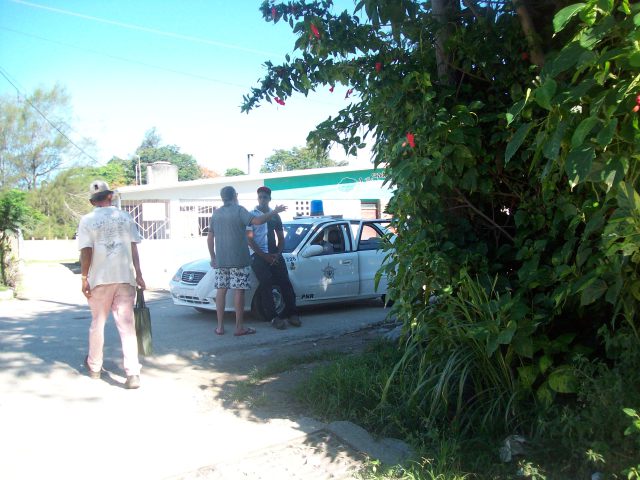
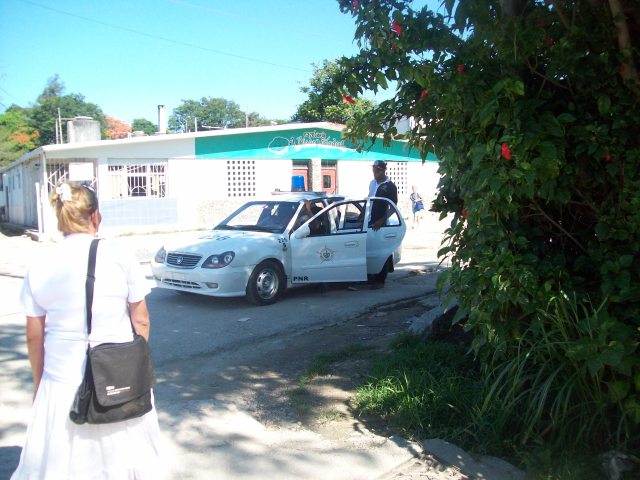
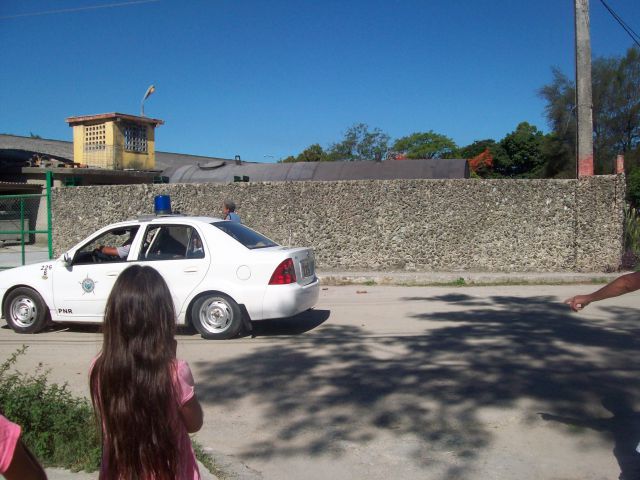
Dekaisone, Agustin Lopez, Havana, 8 June 2015 – It is 8:30 in the morning on Sunday, 7 June. I am at my sister’s house and go down to the street with the intention of buying bread for breakfast. A People’s Revolutionary Police (PNR) patrol car with two uniformed police officers and a henchman from Castro’s Gestapo, are waiting for me a few yards from the exit and don’t allow me to realize the action. During the previous days I had been warned to stop attending Sundays at Gandhi Park.

I engage in a conversation with the dictatorship’s assassin, who after using various dirty and perverse methods of persuasion to keep me from attending Mass at Santa Rita Church, including subtle threats, orders me to accompany him. I am put into the patrol car under the express orders of senior commanders and after riding around various places on the outskirts of Havana I am abandoned on a central highway some 12 miles from the city with threats not to go to Santa Rita next Sunday. continue reading

Because the Ladies in White movement has continued to mark the difference between a fair and dignified act of justice and some degrading relations between the governments of Cuba and the United States, giving in to the dictatorial wishes of the Castro government. The tyranny of Raul Castro has done everything possible to break up the movement, using against its members and other people who support them or show up at the place all possible methods of repression: blackmail, bribery, subtle direct and indirect threats, slander, attempts to smear and defame, perverse acts of repudiation by mobs lacking the slightest thread of of dignity, and psychological tortures.

Having failed and seeing for themselves the impossibility of silencing their voices, since 17 December 2014 when Obama announced the reestablishment of relations between the dictatorship and the United States government, without conditions relating to human rights, they have intensified the violence and direct torture of their physical bodies as an last resort.

Every Sunday after being violently arrested all the peaceful people of both sexes who gather in the place, are led harshly handcuffed to prisons where they are held with the handcuffs tightened for several hours. Now, for many, has been added arrest on leaving their homes and threats to be abandoned in places far from the city.

A few of us independent journalists who dare to go to this place, after being arrested the images that we take with our phones are erased with the intention that people won’t know about it and it will not get out to other countries.
3- 104_0403

4 104_0407

More than 70 Ladies in White and Activists Arrested / Diario de Cuba

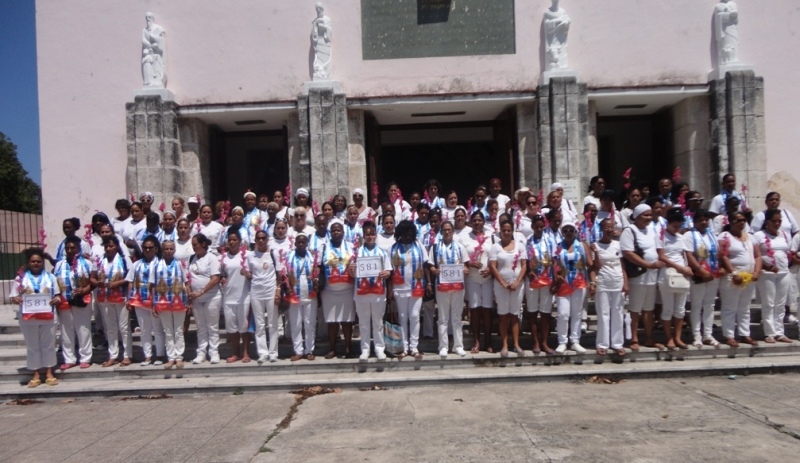
Ladies in White in front of Santa Rita Church on a previous Sunday (fhrcuba)

Diario de Cuba, Havana, 7 June 2015 – Over 40 Ladies in White and some 27 activists were arrested this Sunday, the ninth of repressive operations in Havana, according to dissidents.

Among those arrested were the musician Gorki Aguila, the director of Estado de Sats, Antonio Rodiles, photographer Claudio Fuentes and artist Tania Bruguera, who has already been released, according to the activist Ailer Gonzalez.

Other Ladies in White and opponents were arrested on leaving their homes, or forced to remain in them, according to the dissident Martha Beatriz Roque. continue reading

Gonzalez, artistic director of State of Sats, said she was able to talk with Antonio Rodiles when he was led into a State Security “paddy wagon,”, along with nine other men, and taken to the criminal prosecution center known as “Vivac.”

“He told me that his arrest had been violent and that they had put him in a chokehold,” she told Diario de Cuba.

Given the continued repression against the Ladies in White and the activists who support them when they attend Sunday Mass at Havana’s Santa Rita Church and undertake their walks down Quinta Avenue, supporters inside and outside the island carried out a campaign on Twitter using the hashtag #TodosMarchamos (We All March).

The initiative seeks to break the silence on the current repression in Cuba despite the regime’s negotiations with the United States and the European Union.

“This is a resistance,” said Ailer Gonzalez about the activities of the Ladies in White and dissidents every Sunday. “Many believe it is exhausting, but it seems to me that it is about the right to demonstrate, not only for the release of political prisoners,” she added.

“With this resistance every Sunday we are demanding the right to peaceful demonstration in Cuba, which is something that they (the government) are terrified of. Therefore they are engaged in this sustained repression, because the day they let us walk more than 10 blocks, they know how many people are going to join in,” she said.

Induced Compliance / Reinaldo Escobar

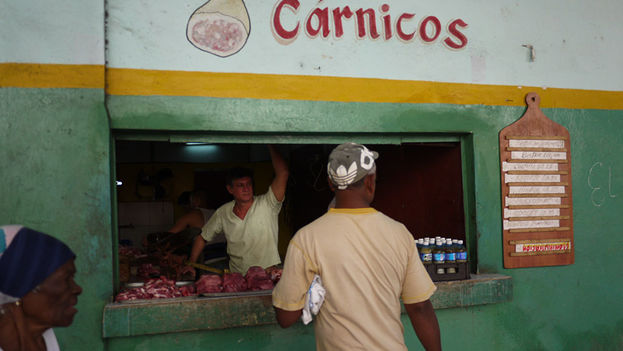
Butchers in Havana (14ymedio)

Desde Aqui, Reinaldo Escobar, Havana, 8 June 2015 – What has come out in the magazine Muy Interesante (Very Interesting) generates no surprise, but what is published in the newspaper Granma causes astonishment.

In the “Direct Line” section, on page 4 of the edition of June 6, under the title, “Are there foods that wake us up and foods that relax us?” we learn that research at the Massachusetts Institute of Technology (MIT) has demonstrated that “the proteins of eggs, meat or fish bring tyrosine to the brain, an amino acid that increases the production of neurotransmitters that keep the mind alert, focused and productive (dopamine and norepinephrine).”

continue reading

The article adds that “when tyrosine levels drop we suffer apathy and lack of motivation. If the proteins wake us up and accelerate our thinking, relaxation usually comes from carbohydrates (potatoes, pasta, rice, bananas .. .). These foods induce the release of insulin, which eliminates from the blood almost all amino acids except tryptophan, which exercises a soothing effect.”

My namesake, the commentator Reinaldo Taladrid, takes the opportunity to say here, “You may draw your own conclusions.” Obviously, MIT lost a golden opportunity in our country for study, especially in the times of the microjet bananas that eventually became our daily bread during the harshest times of the Special Period, moments in which in other better-fed latitudes they wondered at the resignation of Cubans in enduring such hardships.

The widespread listlessness in production and provision of services disappears when poorly-fed Cubans jump to other frontiers

This massive obedience, which the Party-State characterized as conscious and unconditional support, should be attributed exclusively to the diet the population was subjected to, though no one would seriously affirm that such dietary restrictions obeyed a scientific plan conceived by some malign genius, but at least it is a detail that should not escape observers of our reality.

It should be added that the effects of this lack of motivation could extend beyond the scarcity of political rebellion and also contribute to that widespread listlessness in production and the delivery of services, which disappears almost by magic when the poorly-fed Cubans jump to other frontiers in which they are converted into beings fiercely eager for prosperity. There they are seen to work without rest, creating with imagination and protesting in freedom.

Is it just a matter of chemistry?

Five Months and… / Rafael Leon Rodriguez

Image from Cubadebate.cu

Rafael Leon Rodriguez , 22 May 2015 — A little over five months have transpired since the conversations between the governments of Cuba and the United States of America were made public. After half a century of disconnected positions, hope has returned of renewing the ties that have historically linked the two nations. An exchange of political prisoners, conversations about the reestablishment of diplomatic relations, consideration of measures to improve exchanges between the two countries, of communications, of human rights; removal of Cuba from the list of state sponsors of terrorism, among other significant steps, auger a new era for Cubans and Americans.

As for the relationship between the authorities of the archipelago with the national society in this new scenario, everything appears to reaffirm that only the economic categories are subject to modifications or changes, but the political categories remain unalterable, based on the anti-democratic hegemony of a single party. They talk about a new electoral law but the first-round votes for the delegates to the Municipal Assembles this last April was conducted under the existing law. They suggest they are considering enacting another constitution, but provide no information about this important issue. continue reading

Now, finally, they sent a strong and clear message at the 7th Summit of the Americas in Panama, of intolerance in the face of political diversity. To the representatives of Cuba’s independent civil society that attended the parallel forums, they confronted us with dozens of members of the civil society dependent on the Cuban State, sent as representatives of a questionable institutional civility.

Ordered to show through their actions their loyalty to the regime, they preferred confrontation over the sharing of spaces for dialog with their fellow compatriots. If it weren’t for the significance of the event itself for the present and future of the nation, we could call on island humor, rejoicing over having two civil societies: one dependent and one independent of the State.

In the speeches of the most senior political leaders of the archipelago about the conversations with the American authorities, we heard constant allusions to: “We must learn to live with respect for our differences.”

Is the national context not applicable to this affirmation. The Cuban nation belongs to all Cubans, independent of where we find ourselves and the way we thing. We are people, we are diverse, we are all subjects of the law and respect for our human dignity.

Beyond the importance of normalization of relations without neighbors to the north, the formation of a true Cuban nation “of all with for the good of all” should not and cannot be kept waiting.

Shortage Of Hygiene Products Is Severe In Holguin / 14ymedio, Fernando Donate Ochoa

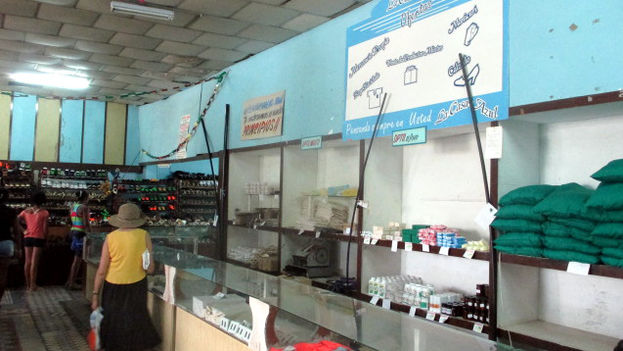
A market in Holguin (14ymedio)

14ymedio bigger14ymedio, Fernando Donate Ochoa, Holguin, 8 June 2015 – People in Holguin are worried about the lack of home cleaning products, particularly so close to the beginning of summer. The shortages have worsened just when the health authorities are calling for extreme cleaning measures to prevent acute diarrheal diseases, which can be worsened by the heat and severe drought affecting the country.

The tips on frequent hand washing and thoroughly scrubbing kitchen appliances in every home, broadcast on national television, contrast with the deficit in the area’s markets of liquid detergent, chlorine bleach, degreasers and scrubbing agents. In local stores such as La Marquesita, Hanoi, Las Novedades and La Casa Azul, there are no supplies of any of these products.

Employees of the commercial network of stores selling in national pesos and hard currency in the provincial capital do not know why the shortages have been exacerbated. Customers, in turn, refer to the other provinces where these products are available. A situation taken advantage of by resellers who bring in the products from other provinces and sell them in the informal market.

The sector of self-employed workers in food services is among the most affected by the shortages. Holguin province has the fifth highest number of self-employed in the country, after Havana, Matanzas, Villa Clara and Camaguey. In the entire country, those who work in the food preparation and sales represent 12% of the 495,725 people working in the private sector.

Honey from the Bees / Rebeca Monzo

From the time we were little, our grandparents and parents gave us spoonfuls of honey to cure our coughs, or anointed our minor injuries with a dab, or simply put it on our lips, chapped by the cold or a high fever. Its curative properties came down to us from our ancestors for hundreds of years.

This natural substance has been used as a culinary sweetener since ancient times in many countries, and also appreciated for its curative qualities. Treatment with honey is known as apitherapy and replenishes energy, increases physical vigor, and strengthens people weakened by illness or because of ongoing stress. continue reading

Honey also promotes better sleep, as well as easing indigestion. Its principal components are simple sugars, fructose and glucose, water, pollen, organic acids, enzymes and various proteins. Honey contains only small traces of the toxins emitted by industries, autos and chemical products used in agriculture. Its carriers, the bees, act as a biological filter and die if they are exposed to toxins so they do not return live to the hives.

It is a healthy stimulant, as the glucose has also been pre-digested by the bees that produce it. These simple sugars are rapidly and easily absorbed by human beings. If you use honey in place of sugar to sweeten tea or coffee, take care because of the high calorie content: a teaspoon of honey has 64 calories, while a teaspoon of granulated sugar has 46.

There are many kinds of honey. Its characteristics are determined by the type of bee and the flower it has sipped in collecting the nectar. It is always advisable to look for honey produced by beekeepers who don’t use dangerous insecticides. It is important to read the labels with its components.

Caution: Unpasteurized honey is dangerous for children because it contains a bacteria that is not harmful for teenagers and adults, but is for small children.

Use of honey as a wound dressing: applied externally, honey cures minor cuts and abrasions, because it extracts excess water from the tissues and reduces inflammation. To do this, spread the honey on the would and cover it with a sterile bandage. It is a powerful home remedy that can be combined with medicinal herbs.

Right now, honey with propolis sells in the Cuban market for 15 Cuban pesos, or almost an entire day’s wages, for a 240ml bottle. This product is highly recommended for diseases of the throat.

3 June 2015

The Sovereignty of the Internaut / 14ymedio, Yoani Sanchez

A man surfing on the Internet. (CC)

14ymedio bigger14ymedio, Yoani Sanchez, Havana, 8 June 2015 – I searched the screen fruitlessly for those faces I know so well. In every report on TV about the International Conference on New Scenarios of Political Communication in the Digital Realm, I scanned the guests to identify geeks, computer scientists, bloggers, tweeters and other “creatures” linked to the use of new technologies in Cuba. Instead of them, my gaze fell on notorious bureaucrats, official journalists, cyber-censors and ministry officials.

On the street, popular humor did not ignore the event that took place in the Palace of Conventions with guests from more than 34 countries. People attributed the constant crashes on the state phone company’s Nauta mobile email service, that began on Friday, to the “WiFi network of ‘that conference’… stealing the bandwidth.” Those who know the many tricks perpetrated in other sectors to display a lovely showcase for foreign participants, didn’t find it funny. continue reading

For its part, the scant representation from national guests at the meeting contrasted with the diversity of phenomena related to computing that exists in our country. From the “weekly packet,” a compendium of virally circulating audiovisual material, to the sweeping classified portal Revolico and the independent Twittersphere, to the clandestine wireless networks and the urban tribes huddled around video games or the impact of Facebook among the youngest. A vast and plural cosmos despite the limitations in connectivity that we suffer.

The Internet is not a fad or a luxury, much less superfluous, it is an imperative need for every human being of the 21st century

However, the absence of the alternative sector wasn’t the only limitation that detracted from the conference. Its most striking failure lay in not objectively including the just demands of individual sovereignty and the protection of Internauts throughout the Island. Especially those who are moving to safeguard users’ private information against the intelligence services of the government itself. Global issues such as the cybersecurity of nations and the governance of the Internet left little space on the agenda for critical discussions about the existence of a cyber-police, the creation of false opinion matrices by the official machinery of state, and the sites censored for political reasons.

As a principal requirement in areas of technology and communication, Cubans today need access to the Internet. The demand for this connectivity, long denied, has grown in recent years and is not exclusive to the most computerized sectors of our society. From the hacker who wants to test his latest codes on the web, to the owner of a privately-owned snack bar who wants to access forums on food, a good part of the population feels the need to be interconnected.

Among the millions of Cubans for whom food, housing and economic pressures are overwhelming, the idea that a digital presence would bring more opportunities to their daily lives has also grown in the last five years. The Internet is not a fad or a luxury, much less superfluous, it is an imperative need for every human being of the 21st century.

In the face of this urgency, the Cuban government has opted for caution and for doling out in dribs and drabs the advantages of this common good which is the World Wide Web. To support this policy of rationing and control they have used prohibitive pricing at the public Internet rooms, where right now an hour of navigating the web costs – at a minimum – the equivalent of three days wages, some 2.25 convertible pesos. To this is added an iron policy of censorship and vigilance over the web that has limited an entire nation’s access to knowledge, opportunities and information.

The role of the government should be to facilitate universal access to cyberspace and to guarantee that our rights to free information and association are met

Thus, the first demand in Cuba with regards to technology and communications is respect for the user’s individual sovereignty, on the base of which should rise national sovereignty in these conflicts. This latter cannot be seem as a contradiction to the spirit of convergence, the global village and interconnection that cyberspace brings us. The “conservation of our cultural and linguistic identity” that was brandished about in the recently concluded event should not constitute an argument for shutting us out from the influence of other cultures and nations. On the web you can’t play at being Robinson Crusoe…

Nor can the State set itself up as the authority to guide our steps on the web. It is not its role to protect citizens from “the dangers” of connectivity, nor to prevent us from being “infected” with trends, opinions or news that we find in our grappling with the network. The role of the government should be to facilitate universal access to cyberspace and to guarantee that our rights to free information and association are met both in the real world as well as in that other world made up of kilobytes.

By not delving deeply into these burning and crucial points, the International Conference on New Scenarios of Political Communication in the Digital Realm became another lost opportunity. A space that privileged the government voice above the demands of society. An event to project an Internet in the hands of those who want to control everything.

The Cuban Telenovela Presents?

In the end, the public emergence of Colonel Alejandro Castro Espín, the pretender to the throne, was swift. First he was seen at the foot of the aircraft steps receiving the three remaining spies on December 17. Now he is seen accompanying Daddy at the great meeting and, most importantly, presenting himself—in some form—to President Obama, when the person who should have been there was Vice-President Diaz Canel, who was supposed to assume the presidency in 2018, at the end of Raul Castro’s  second term, and the sixtieth year of his family’s.

We had predicted by elementary deduction the simple theorem of Castro shamelessness: don’t trust puppets. All that remained was how and when they would publicly unveil the prince.

“Another Castro ahoy!” warns the boy from the crow’s nest, but in this case the ship ran aground on the coast six decades ago and we found no suitable maneuver for the development and freedom of the Cuban people.

Alejandro Casro Espín seems to me to most resemble the Russian dictator Vladimir Putin: they share a similar military and espionage trajectory.

Cuban life seems like a TV melodrama that continues episode after episode, season after season, never reaching a final resolution.

Ángel Santiesteban-Prats

April 12, 2015

Border Prison Unit, Havana


USA Had No Prior Knowledge Of The Attack On The Cubana Aviation Airplane / 14ymedio

14ymedio bigger14ymedio, 5 June 2015 — For the second time in 10 years, the US State Department has declassified the same “secret” document. Now, with fewer redactions and many fewer censored lines, the 1976 memorandum addressed to the secretary of state of that time, Henry Kissinger, says exactly the same thing: “The United States had no previous knowledge of the attack,” and Luis Posada Carriles figured among the suspects at that time.

The 12-page document has been public since 2005 but has resurfaced as a result of a perhaps political initiative motivated by the Office of the Historian of the State Department. It is a compilation of the data available two weeks after the destruction in mid-flight of a Cubana Aviation plane flying from Barbados to Havana on 6 October 1976. Seventy-three passengers died. continue reading

Signed by Harold H. Saunders, director of the State Department’s Bureau of Intelligence and Investigations, and the deputy secretary of state for Interamerican Affairs, Harry W. Schaludeman, the memorandum reflected Washington’s concern and its desire to distance itself from an act it didn’t approve of. The two senior officials developed “a strategy to counteract the false accusations that involve the U.S.” in the attack, that Fidel Castro had launched soon after the tragedy.

“The CIA had had relationships in the past with three of the people allegedly implicated, but the participation of these people, if confirmed, would have been without the knowledge of the CIA,” the authors said. Above all, it they were concerned with the relationship with the Cuban Luis Posada Carriles, who had worked with Venezuelan and U.S. counterintelligence services. “It is hard for Fidel Castro to imagine that these people acted independently of the United States,” the officials emphasized.

It is noteworthy that the U.S. intelligence services offered no concrete information about the identity of those responsible for the attack. Instead, they note they are very concerned about “the danger for the United States represented by Cuban activists in exile.”

66% Of Municipal Delegates Belong To The PCC And UJC / 14ymedio, Reinaldo Escobar

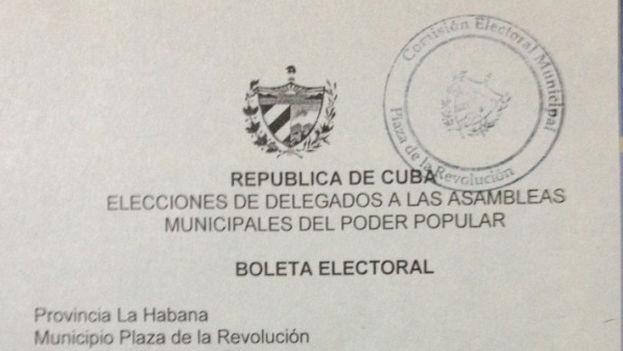
Ballot in Elections of the Municipal Assemblies of People's Power (Photo: Yoani Sanchez)
Ballot in Elections of the Municipal Assemblies of People’s Power (Photo: Yoani Sanchez)

14ymedio bigger14ymedio, Reinaldo Escobar, 4 June 2105 — 66% of the delegates to the Municipal Assemblies of People’s Power are members of the Communist Party (PCC) or the Union of Communist Youth (UJC), a fact that reveals the overrepresentation of the political membership of both organizations, which together do not total 18% Cuban electorate.

This Thursday the National Electoral Commission released the official data on the 12,589 delegates to the Municipal Assemblies of People’s Power elected in as many constituencies across the country. Of those, 8,249 belong to one of the two aforementioned organizations. A note published in the newspaper Granma included the names of the chairmen and deputy chairmen of the 167 Municipal Assemblies. continue reading
Young people make up 15.37% and notably among them is the presence of 21 people aged between 16 and 18. At the other end of the generational spectrum are 1,420 delegates aged 61 years or more. As a linguistic anecdote it is worth noting the abundance of names like Yanelki, Yadelki, Yudorkis, Yoenkis, Yasmany among the delegates, so common among those born in the ‘70s and ‘80s.

According to official information 34.99% are women, while 58.9% are white, 24.51% are mixed-race and 15.89% are black.

Regarding employment status, 5,159 district delegates hold some responsibility as leaders in the business area, political organizations, social social organizations or other levels of government, some 41% of the total.

Next in numerical proportion are those who work in production activities and services, with 4,036 members, representing 32.06%. To continue, there are 825 delegates engaged in national security issues, members of the army, the Interior Ministry and other defense-related activities, which constitute 6.55%.

The diversity that occurs in both the Cuban Parliament and these municipal bodies, is representative of the social spectrum of the nation from the standpoint of gender, race, age and occupation. Political diversity, on the other hand, is an unresolved issue.

#TodosMarchamos, We All March, or Fear of Freedom / Cubanet, Antonio Rodiles

antonio cuba

cubanet square logoCubanet, Antonio Rodiles, Havana, 3 June 2015 – Right from the year 1959, Fidel Castro made it very clear that public spaces were only for “Revolutionaries.” To achieve this objective he converted every public act in a harangue to intimidate the citizenry. Very quickly Cubans saw that the saber-rattling was converted into actions and mobs that could demolish them and their loved ones. Terror was implanted, the “Revolution” imposed.
Fifty-six years later, totalitarianism seeks to maintain its power with the tool it knows best, violence. Reactivating the panic genes that put you in a straightjacket is the regime’s priority.

Can Cuba change if we continue to sustain the memory of fear? Can Cuba change if we accept the terms of some decrepit old men and their followers?

It is not about a dilemma between a supposedly peaceful change and a violent one, as some want to show. Cuba will change if we feel the determination to make it so, if we push a genuine desire to end the nonsense and the stupidity. continue reading

For eight Sundays, the regime has brutally repressed a group of opponents who, together with the Ladies in White, demand the release of the political prisoners. Two points are intolerable for the dictatorship: that we demand the inmates be released, and that we exercise our right to demonstrate publicly and peacefully.
However, what has been unexpected is the ability to resist that we have demonstrated in the face of the abuses and the impunity of the repressive forces. Nearly a hundred activists, we continue to attend despite the violence they impose on us. It is hard, but our rights are worth it. We don’t know how many more Sundays of abuse and outrages await us, but we are confident that we will win freedom.

Last week we asked some friends to support us, because we need help to sustain this demand in the face of the silence of the international community. Quickly they promoted the Twitter hashtag #Todoas Marchamos (We All March). A “twittazo” – Twitter protest – against repression was organized, in support of the Sunday marches. And the result could not be better. Thousands of Tweets flooded the Internet. Seeing them was a balm after so much abuse.

Next Sunday we will be back on the street along with the Ladies in White, those humble women, laden with virtues and defects, but who have persevered like few others, and to whom we will be grateful for the Cuba of the future.

Hopefully many will join. Off the Island, let all those Cubans who yearn for a change send their Tweets, or gather in public spaces to show that Cuba is hurting. Within Cuba, let the rest of the opposition understand that the street is a space belonging to everyone, and that the blows hurt, but more painful for us is the indifference.

If #TodosMarchamas – If we all march – on Sunday, the fear and the disctatorship are finished. Let’s do it.

Debate: Should the Cuban Adjustment Act be Changed? / 14ymedio

“We are aware the abuses caused by the Cuban Adjustment Act and are looking for a way to ensure that only those facing Government oppression benefit from it.”

Carlos Curbelo, Republican Congressman from Florida

VS

“When things change in Cuba, then we should change the Cuban Adjustment Act (…), which certainly helps to resolve the problem of Cuban refugees, and allows them to move through the system more quickly.”

Joe Garcia, former Democratic Congressman from Florida

14ymedio bigger14ymedio, June 2015 — The announcement of the reestablishment of diplomatic relations between the United States and Cuba, last December 17, has revived the debate raised by the most conservative Cuban-American members of congress: Should the Cuban Adjustment Act be changed?

Although US president Barack Obama has been quick to affirm that there will be no change in immigration policy toward the island, the growing criticism of “wet foot-dry foot,” and the consequent fear that this law will be repealed, has increased the number of Cubans trying to reach the US coast from the island. continue reading

Created in 1966, the Cuban Adjustment Act (CAA) offers special procedures to concede permanent residency to Cubans who manage to enter the United States citing political persecution.

Some criticize that people who take advantage of this measure to legalize their migratory situation in the United States, then return to the “persecuting country” to visit their families.

Others, however, maintain that the rule shouldn’t change until the human rights situation on the island improves.

Florida Republican Carlos Curbelo, the son of exiles, has been the latest voice raised against the special rule, along with other conservative members of congress such as Ileana Ros-Lehtinen and David Rivera.

These politicians demand that Cubans asking for asylum under the Adjustment Act sign a formal declaration in which they specify they are fleeing Cuban for political reasons. Under this proposal, visits to the island would be restricted for these refugees.

“We are aware of the abuses caused by the Cuban Adjustment Act and are looking for a way to ensure that only those facing Government oppression benefit from it,” said Curbelo in a statement.

Republican senator Marco Rubio also thinks the rule should be “reevaluated and updated,” but he doesn’t offer concrete details about his proposal.

The New York Times also hosted a discussion of the issue. The former chief of the United States Interest Section in Cuba, Vicky Huddleston, asked in a column published in December that the Adjustment Act be repealed to “foster a safe and orderly migration, as well as to save lives.”

Congressman Joe Garcia, Miami Democrat, is on the side of waiting. “When things change in Cuba, then we can change the Cuban Adjustment Act. Things haven’t changed and it certainly helps to resolve the problem of Cuban refugees, and allows them to move through the system more quickly,” he said last October in an interview in El Nuevo Herald.

Since 2001, more than 416,000 Cubans have used the rule to legalize their migratory status. In the last trimester of 2014, US authorities reported an increase of 60% in Cubans arriving in the United States (8,624) compared to the same period in 2013 (when there were 5,221).

An Abandoned Doll…at the gates of Miami / Luis Felipe Rojas

Story of an Abandoned Doll, Teatro Pálpito. Photos LFRojas.

Artefactus Teatro has been so kind as to receive Ariel Bouza and his team into its southeast space in Miami. Bouza and company bring a gift from Havana for this April: a loose, free version of Story of an Abandoned Doll by Norge Espinosa, which is from the text by the Spanish playwright Alfonso Sastre.

I traveled far into the southern reaches of Miami to see this play for the second time in my life, having already seen it once in Camagüey. It seems they have taken extra care to conserve the grace with which Paquita and Lolita play with ambition, love, envy, and piety within a theatrical framework that places the performance beyond the fallacies that we so often see in current times.

Ariel Bouza (Teatro Pálpito, Havana) directs the action with equal parts drama, laughter, and reflection to carry the spectators into situations where they must decide who are the heroes and anti-heroes, but there can be no middle ground. This piece that Bouza has been taking to the stage since 1999 has the bonus of ambivalence: it can be viewed and enjoyed equally by children and adults. Sastre’s version is classical, hierarchical, and well placed in the history of modern theater–it is rejuvenated with Bouza’s staging and a good push from Teatro Pálpito. continue reading

Gleris Garcés (Lolita) takes all the applause. Though a very young actor he does not lack mastery. The handling of the attire and dolls, the conversation of the voices, and the projection he puts forth in their tones to reach the rearmost seats, earn him the sympathy of the spectators from the very moment he appears on the scene.

With the version by the Cuban critic, playwright and poet Norge Espinosa, something surprising occurs, for it comes to us from the proven hands of Sastre, who, in turn, is filtering through the shadow of The Caucasian Chalk Circle, the well-known play by Bertolt Brecht. The result is unscathed between these two excellent writers who were obligatory reference points in 20th century play-writing.

Both actors, Bouza and Garcés, radiate the splendor of these words that do not go into a vacuum; the theater always serves the people, andHistory of an Abandoned Doll saves its spectators. This morning of Saturday the 4th, there were only five of us in the auditorium, invited to play and to enjoy the work of artists who exemplify dignity in performance. I watched them as if they were performing, ultimately, to a full house–which it was–because every setting is a judgment on how well someone is doing in life who is implicated in this dream: from the lady who cleans the windows to the theater director, who heads up the roster in the playbill.

I invite you all to visit Artefactus Theater, the venue where Teatro Pálpito is celebrating the feast of words and gestures. It is at 12302 SW 133 Court, in Miami.

Translated by: Alicia Barraqué Ellison and others


From Capitalism to Capitalism / 14ymedio, Fernando Damaso

14ymedio bigger14ymedio, Fernando Damaso, Havana, 5 June 2015 — Although many refuse to accept it and some prefer to ignore, Cuba is making the transition to capitalism “in haste and with pause*.” This is the true formula being executed, despite the official rhetoric around “saving socialism,” and “making it prosperous and sustainable,” designed more to appease the nostalgic comrades than the Cuban people.

The system is being constructed “with haste” because the authorities urgently need it to survive and remain in power. “With pause,” because they fear that the installation of capitalism will escape their controlling hands. The steps being taken, now mainly in the economy, point to this and it is clear in the interest in foreign investment, coming from Russia, France, Germany, China, Brazil, Canada, Spain or the United States, all market economies. continue reading

The old joke, “the long and difficult transition to capitalism is produced through socialism” is coming true. No one imagines, however, a capitalism in the style of our Republic era, with its lights and shadows, in the short term. Nor does it seem to be that of Norway, Sweden, Denmark or Switzerland, and much less that of France, Germany or the United States. The capitalism that is coming is State Capitalism, far removed from democracy, where the current leaders will try by every means possible to maintain political power and assure the greatest possible control over the economy.

The capitalism to come is State Capitalism, far removed from democracy, where the current leaders will try by every means possible to maintain political power and assure the greatest possible control over the economy.

Those who hold the most important posts today will position their families and closest collaborators as capitalist businesspeople, and will favor their foreign partners with full capital or joint ventures. Meanwhile, what the rest of Cubans will be left with, if anything, will be small agricultural production and services through different types of cooperatives where, as has already been clarified, “The form of management will change but not the form of property.”

In any event, whatever clothing in which they try to dress up such a system, it is capitalism, however primitive. With the passage of years and the activities of citizens, this atypical model will be decanted and humanized, although it will be very difficult at the beginning. In this context, the reestablishment and maintenance of normal relations with the United States will exercise a certain influence in relation to the democratization of the country, but it will not be the determining element.

The different administrations of that country, be they Democratic or Republican, have prioritized their interests above all others, just like the Cuban government, having maintained relations with democratic governments as well as others of the authoritarian stripe. The White House has no commitment nor obligation to Cubans to bring freedom to our country. To believe that would be to accept a position of subjugation to a foreign power. The commitment and obligation to restore democracy in Cuba is the responsibility, and exclusively the task, of all Cubans.

*Translator’s note: The phrase references a speech by Raul Castro where he stated economic reforms would be undertaken “without haste but without pause.”

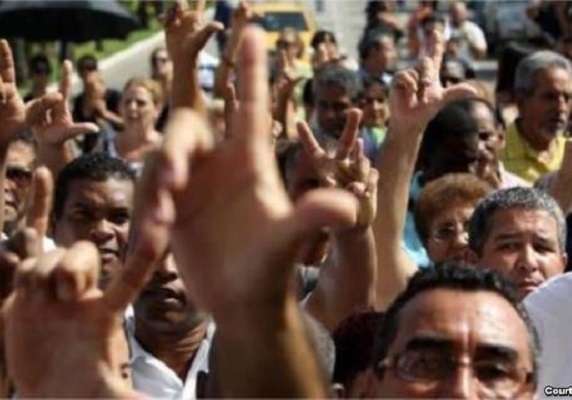
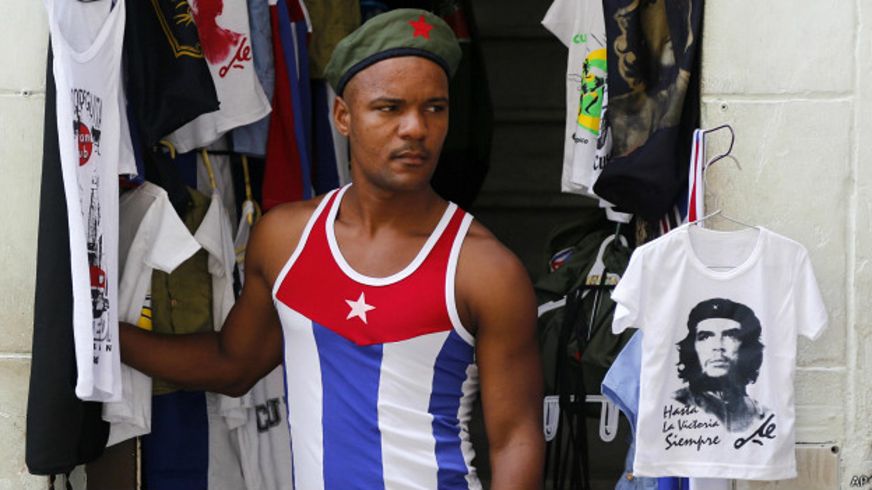
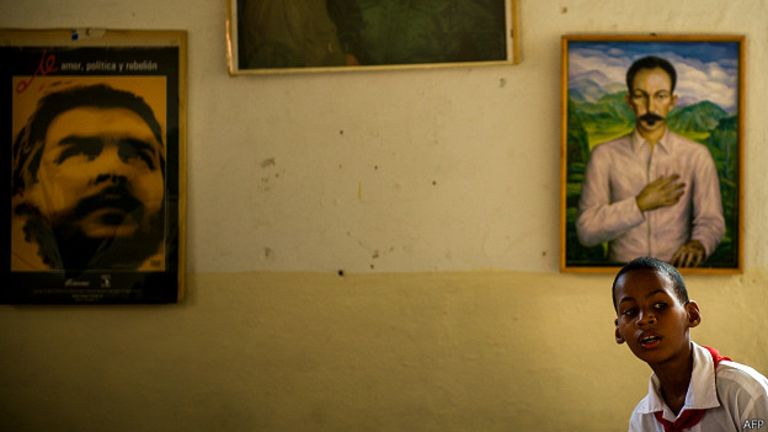
Why Cuba could not build the New Man promised by Che Guevara / Regina Coyula

All photos from the BBC

Regina Coyula, from BBC Mundo, 4 June 2015 — One of the most attractive promises of the 1959 Cuban Revolution for a Third World thirsty for paradigms, was, undoubtedly, the prospect of a generous, industrious, learned and well-mannered human being.

This New Man would be the result of the new schools that as the cradles of a new race, together with the Marxist and Martist[1] combination of work and study, would forge a personality without the burdens of a bourgeois education.

Mass produced, the new man would put the collective interests above his own, and would take the future by assault to build a superior society. continue reading

For 56 years, this government has never lacked attractive rhetoric and great international public relations. But, what about the New Man?

Many refutations can be made of this experiment. The economy alone would fill volumes, especially those dedicated to agriculture with an emphasis on the sugar cane industry. But in the social aspects, that education, aimed at sweeping away the past, has left very ugly and persistent scars on this society.150604140419_cuba_blog_624x351_afpWith the devaluation of the older generation of professional educators who did not show enough commitment to “the process;” the just right to a universal free education required prodigious waves of new teachers. Hundreds of young people, filled with revolutionary fervor, stepped up to answer the call to teach.

Vocation could be seen as a bourgeois leftover so many of whom, in normal circumstances, would have opted for other careers, found themselves in front of a student body barely a few years younger than themselves, and many performed well. Because in difficult times, everyone has their definitive test.

The queue of new teachers began to thin. Too many demands and too little reward, beginning with the salary. An exodus toward new horizons forced the training of new teachers, each time younger, each time more improvised.

150604145016_estudiante_cubano_624x351_afp
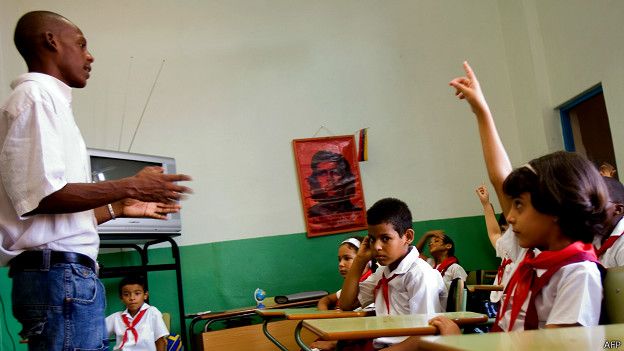
“Pioneers for Communism, we will be like Che!”

If this weren’t enough, the Commander in Chief, who decided everything from beer distribution to the introduction of intensive cattle grazing, decided to recruit teachers from among those just graduated from high school, mostly to cover the deficit of teachers in the capital.

A tidal wave of young people from other provinces, whose mediocre academic results prevented them from accessing a college career, responded to the attractive prospect of living in Havana, making a magnificent salary and avoiding military service.

The Comandante decided as well that these teachers would teach all subjects. Readers who have a strong preference toward the sciences or the humanities will be able to envision how the classes in the teachers’ non-favorite subjects, with some notable exceptions, went.

Hopefully the ignorance of doctors relates only to their spelling

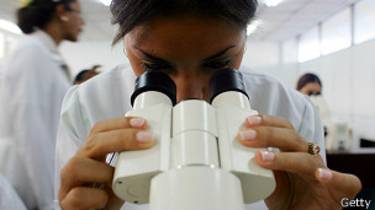
You can trace down the results of the university entry exams, there is an online compilation of curated nonsense, we have a worrisome number of university graduate professionals who can’t spell, and we hope that the ignorance of a doctor or an engineer is related only to spelling. Many of our professionals babble unintelligibly because of their awful diction or read taking long pauses and making mistakes because they are unable to read smoothly.

This situation is the result of hastily created teachers and parents educated by hastily created teachers. Neither in school nor at home do the models help.

But, what about the New Man? He never coalesced in any junior or senior high boarding schools in the countryside where coexistence had more to do with jailhouse bullying than with Communist altruism.

150604140330_cuba_blog_624x351_afp

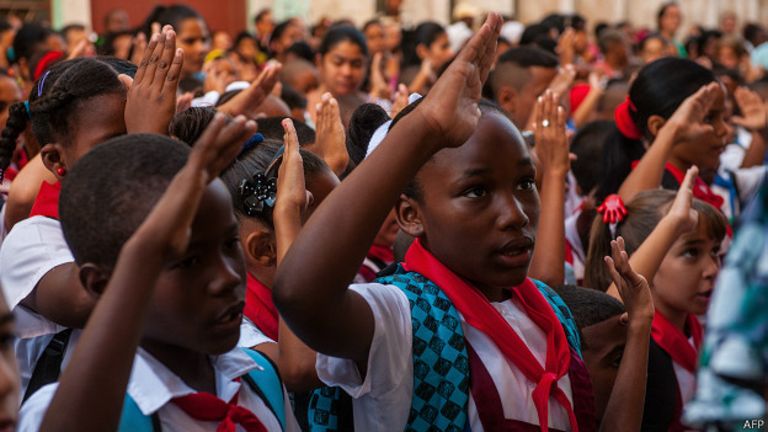
The children of those who emerged from the study-work experiment and remained in Cuba learned to differentiate between political discourse and private opinion, to say something while thinking something else…

To our New Man the concept of freedom doesn’t say much, but his eyes sparkle when someone tells him about the latest iPhone, puts his name down for the visa lottery[2] hoping to win, and he has adopted as his philosophy of life the motto of a chain of hard-currency-only stores: Me first.

Translated by Ernesto Suarez

[1] Martist = Martiana(o): referring to the ideals of Cuba’s José Martí, the National Hero. A 19 century writer, journalist, political activist and organizer of the 1895-98 war of independence from Spain.

[2] The US allows Cubans and other nationals to enter an annual lottery for permanent legal emigration visas to the US.