The silence that now dominates the batey is not only industrial: it is also electrical, economic, and emotional.
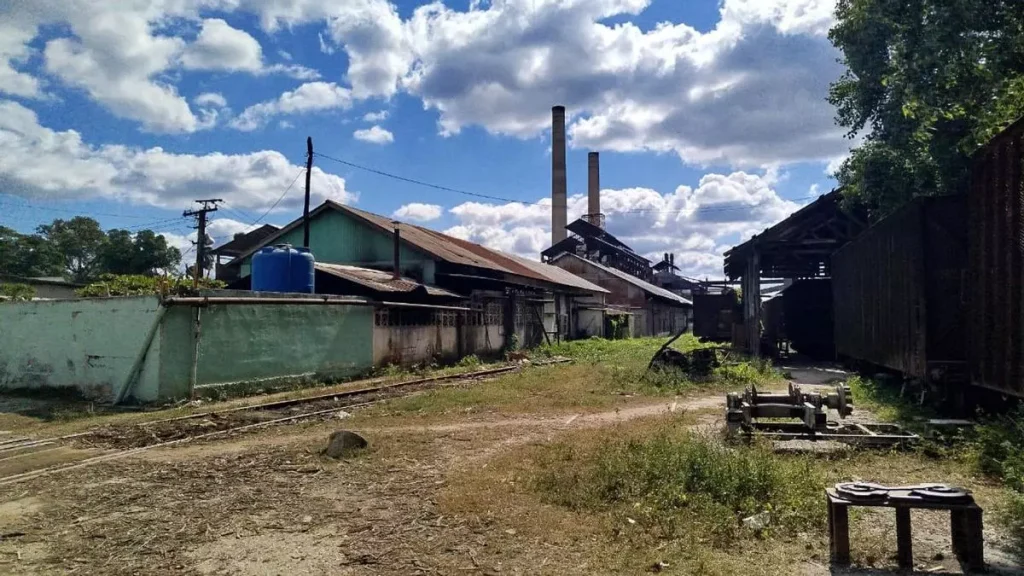
 14ymedio, Natalia López Moya/Mercedes García, Havana/Tuinucú, April 16, 2025 / The two chimneys of the Tuinucú sugar mill still stand out against the blue sky of the Sancti Spíritus plains, but they no longer emit smoke or announce the start of a new day of grinding. The silence that now reigns in the village is not only industrial: it is also electrical, economic, and emotional. Since the mill stopped grinding sugarcane a few weeks ago, daily life in this town of more than 5,000 inhabitants has changed abruptly, marked by prolonged blackouts and the feeling that the last bastion of the national sugar industry was defeated by the lack of fuel.
The Melanio Hernández sugar mill, as the Tuinucú mill is officially known, was much more than a sugar factory. Its generators produced electricity that supplied the town and contributed to the national grid, an advantage that for years made this village an exception within the province of Sancti Spíritus, even though some facilities had deteriorated over time due to a lack of state investment and the children had been transferred to another school. While in other municipalities the population suffered frequent power outages, in this town the residents became accustomed to a relatively stable supply, sustained by the energy that came from the very heart of the industrial center.
“The family whose sugar mill was taken away were the ones who sent the money to restore the Catholic church, which was in very poor condition.”
That tranquility vanished when the machinery stopped. Since then, residents have had to adapt to blackouts that exceed 12 hours a day, a situation they barely experienced before the closure of the colossus. On nights without electricity, the village is plunged into a darkness reminiscent of the worst moments of the Special Period in the 1990s.
“What little we had left they’ve taken from us too, because this town is so neglected,” says Eliécer, 79, who was born in the batey. The old man surveys the sugar mill facilities with a mixture of nostalgia and concern. For decades he worked in activities related to the harvest and saw how the sugar industry sustained the economic and social life of the community.
Eliécer recalls that the residents of Tuinucú have always been proud of their history. Even though many have emigrated to other provinces or abroad, they maintain ties with the town and contribute to preserving its traditions. “The family whose sugar mill was taken away sent the money to restore the Catholic church, which was in very poor condition,” he explains. With a firm voice, he adds that “the first shortwave radio transmission test in Cuba was conducted from this very spot, in 1912.”
The restored church still stands as a symbol of that past. Just a few meters away, however, the contrast is stark. The old school in the batey (sugar workers’ village), which for years educated several generations of children, has become an abandoned structure, with peeling walls and partially collapsed roofs. Vegetation is reclaiming the surrounding area, and the building seems to be hanging on by sheer inertia.
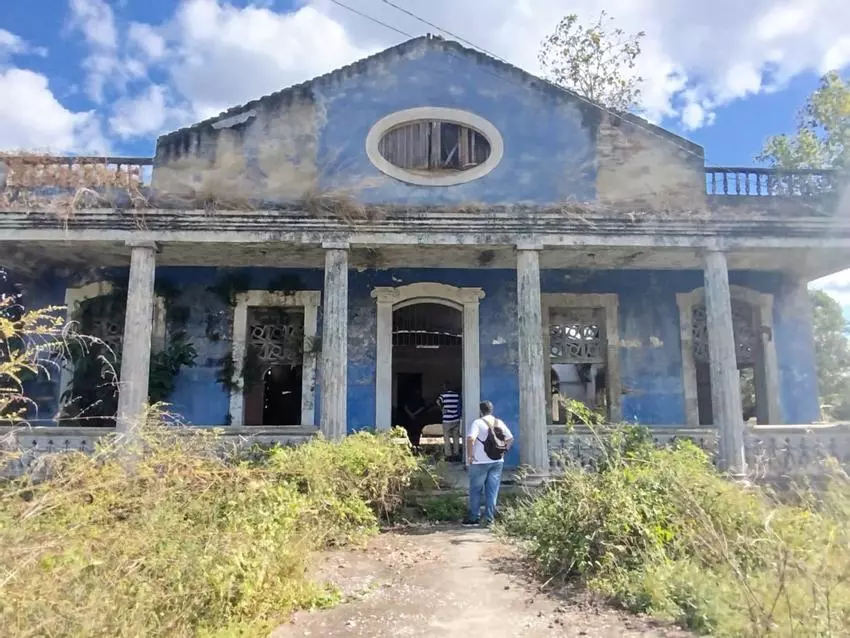
For Nieves, an elderly woman also born in Tuinucú, this decline sums up the town’s fate. She sadly recalls the years when the school was full of students and the batey buzzed with activity at the sugar mill. “It was seized, taken from its owners, and years later it was left in ruins,” she says. Her voice breaks as she describes the loss of so many “beautiful things” that were part of community life. “The recreation center for the Tuinucú workers is also destroyed.”
The shutdown of the sugar mill comes at a critical time for the Cuban sugar industry. This year, there will be little doubt that the harvest has once again been the worst in history, a title the sector has held since 2021. The Melanio Hernández mill was the only one operating on the island, and even so, it has had to cease operations due to the energy crisis.
Last year, the mill met its production plan , reaching approximately 21,000 tons of sugar, even exceeding the forecast by 1,800 tons. This figure made it a source of pride for the authorities and an example of resilience within a declining sector. For the current harvest, the goal was more modest: around 14,000 tons. Milling began a month late but progressed at an acceptable pace until a fuel shortage forced the machinery to shut down.
According to sugar company executives, the mill had produced approximately 40% of its planned sugar output—around 5,600 tons—when the decision was made to close the tipper truck’s opening . The measure was presented as temporary, but uncertainty surrounding fuel supplies and the future of the industry raises concerns that the shutdown could last longer than anticipated.
“We felt privileged because here we defended ourselves with the power the mill gave us.”
Meanwhile, workers in the sector have had to find alternative ways to stay employed. In other provinces, sugar companies have redirected their efforts toward charcoal production and agricultural work, amidst the collapse of the harvest. In Tuinucú, however, these initiatives have not yet managed to compensate for the economic loss caused by the shutdown of the sugar mill.
“We felt privileged because while in other parts of Sancti Spíritus people only have makeshift electricity , here we managed with the power from the sugar mill,” Nieves explains. She acknowledges that the change has been abrupt and that the residents weren’t prepared to deal with prolonged blackouts. “We weren’t even ready for everything that came after; people have had to rush out and buy batteries, generators, and electric lamps.”
In the streets of the batey, uncertainty mingles with resignation. The houses remain silent during the hottest hours, and small businesses adjust their schedules to take advantage of the moments when the electricity returns. Daily life now revolves around waiting, as if each neighbor awaits the signal that the chimneys will once again begin to smoke.
But that signal hasn’t arrived. In Tuinucú, the shutdown of the sugar mill has not only turned off the lights in the workers’ village, but has also ignited concerns that this is the prelude to a permanent closure.
______________________
COLLABORATE WITH OUR WORK: The 14ymedio team is committed to practicing serious journalism that reflects Cuba’s reality in all its depth. Thank you for joining us on this long journey. We invite you to continue supporting us by becoming a member of 14ymedio now. Together we can continue transforming journalism in Cuba.