Recycling Language / Rosa Maria Rodriguez Torrado #Cuba

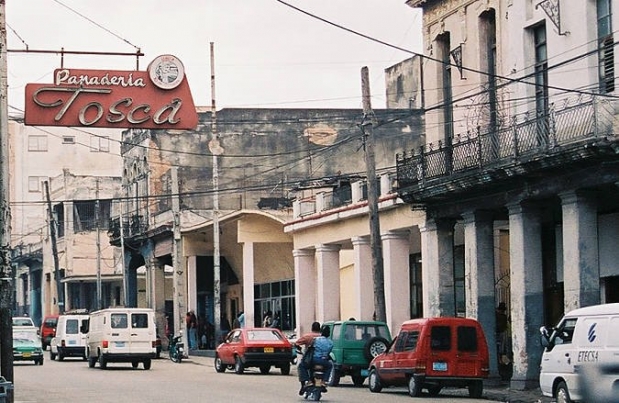
Vendedora de maní

In the decades of the ’60s and in the ’70s, leaving the country was a journey with no return, which for many represented losing one’s family forever. Therefore, the goodbyes were more traumatic, overwhelmed with more grief, and fertilized with more tears than they are today. Only the hope of reunification in democratic countries kept the family together despite the distance, the repeated scorn, the correspondence examined by police microscopes, the packages opened, broken, confiscated or lost — as it still happens — and the sporadic, torturous phone calls via third countries.

The emotional breakup that the Cuban government produced in the early years, is far from the solidarity in misfortune that is established today between those who leave and those who stay. Migrants of the early days were despotically abused, and they included political and wealthy capitalists from the previous regime who created, using mass media, statements of opinion in the migrant communities where they settled. Those who have left in recent decades do not have the same influence nor the same wealth, but they have a more constructive vision, and they maintain a more or less regular exchange with their friends and family who stayed here.

Along with the change in language, public announcements in the form of cries were also recycled. Hearing them in the hustle of daily chores, it is inevitable to see how previous offerings of fruit and services have been traded for announcements such as “I buy gold eyeglass frames, old gold watch cases, any little pieces of gooooold” etc. There are also those who even buy old irons, clothes, and empty bottles of rum and beer. They voice with their needs, the general impoverishment of the society, since they seem more like cries for help or a shameful promotion of our miseries.

Translated by: BC CASA

January 20 2013


Test and Menta / Orlando Luis Pardo Lazo

Testament of a Figurehead

Orlando Luis Pardo Lazo

Standing, naked, with eyes burned by the tears and the Cuban nights passed without blinking a damn eye. Or blinking, but jumping from nightmare to nightmare, possessed by a Havana without Castro or Marx.

Standing, decrepit, with bony phalanges, and a barbaric beard. With an ache and a void in the soul of three sets of balls. With my cock brushing the keyboard of my mercenary laptop, mercenárida, exquisite corpse that announces briefly the whole of my corpse.

And so I write this. And so I want to be remembered. And so I was a thousand nine hundred and fifty times more free than you.

When I was a child of the seventies I hated my happy childhood. I always knew more than the adults around me, who were poor and fearful but with enormous hearts. I thought that when I grew up, the eighties would find me out of that house forever. I would be free of the drowsy uniformity of this country, and of the good sun that turned my poor neighborhood into a local paradise.

I thought that Cuba would not resist the date changes. That Havana would be filled with colors and unrecognizable people before the year 2000. That was the future life. I was wrong.

All the parents and neighbors died, and all the ministers, and even the premier himself rotted inside and out while still alive, without the decency of a farewell or even an apology. They left us alone in the zoo, among beasts in uniforms of an olive-green color, green like a lie, green like silence, the green of the universal death of our nation. The future was today: futile, fossil, funeral.

It died, of course, any stupid attempt to find among so much shit the infinitesimal and infinite miracle of love.

Our hearts grew old, our bodies trapped in a childhood of penance for being such hypocrites, but not enough to smile over.

We gave in. We didn’t find our neighbor We don’t have a single motherfucking contemporary Cuban. We are extinct. Our hands only serve to wiggle our fingers in panic, telling our own biography: No, no, no…

We deserve an Absolute Revolution in perpetuity. We are the Absolute Revolution in perpetuity. Hallelujah, human time has stopped and we unknowingly lived in a state of grace.

Thank you.

I look at my books. There are thousands and thousands. I’m going to trade them to the old man who sells hookers on the corner. Except for two or a dozen, I’m still not sure. They are books that cause instability, illusions of movement, desires in mutation. They are treacherous books, like one of those most musical themes of three sad decades ago.

I look at the internet censored for Cubans in Cuba. It has been an imbecility to partake of the forbidden. The moral attitude was disgusting. Disgusting having to pirate what belongs to me by my own right. Disgusting to have entertained everyone, with a vaudevillian theater that breathed hope to the patients of a totalitarianism without a terminal phase. They should not believe me. not a single syllable of saliva. Disgusting to survive death successfully in the desert, rather than focus on the source of my insatiable thirst. Disgusting to have been so traitorous and not knowing to dwell in posthumous peace my failure. Disgusting of not having met you before, love.

And still I type standing naked, my stomach making me crick-crack like a psycho-rigid insect. They don’t invent with me. They don’t project now. Nobody is going to die. That is our gloomy phobia. Getting to an end without end.

I will not move a finger. Traveling is embarrassing if you are Cuban. To be free, inside or outside, is infamous if you’re Cuban. Individual creativity is a stigma while reality coagulates around us.

The circle of murderers approaches, shark without a country, from the absolute power of an unknown and ubiquitous government. Name three ministers if you have balls. Go ahead, name them, and you will see that you do not know who they are. Are pseudonyms, pseudopods. Name three thousand dead people and see if you remember their false features. You do not know dick, bro. You are exceptionally ignorant. Your tongue chirps like the insects of my stomach emptied of hunger and meaning. And just for that I still love you, in spite of myself.

Cuba has finally become pure action.

Things happen, but now nothing takes place.

Do you see? Do yo not see?

Adiós.

Translated by BC CASA

November 3 2012


Stigmatized Youth / Amado Calixto Gammalame #Cuba

4-calixto

Atty. Amado Calixto Gammalame


One of the problems that often confronts young people, although not exclusive to this segment of the population, is the social rejection to which men and women who have been sentenced for some crime are subjected.

It becomes evident in different ways, more commonly in the absence of job opportunities, a current problem for young people on a global scale. A requirement of the employment application is a certificate from the Central Registrar of Sentencing, which contains the criminal record of each individual, along with the police profile that Cuba keeps for every individual in the system, regardless of the resolution of a case. If it indicates that the applicant has been tried or sentenced for anything illicit, no matter how minor the crime, he is denied the job and forced to apply for “another job.” The economic crisis and the current social climate make this already critical problem worse.

I am of the opinion that, while the profiles used by authorities are necessary from a legal standpoint — as in criminal profiling, when even honesty forces one to acknowledge the technical and scientific backwardness from which we suffer in this area — ”profiling” with respect to employment is an unacceptable practice, an affront and a lifelong label.

A letter sent to AJC by Maria Emilia provides an example. In it she asks for assistance to help her son re-enter society since, as she says in her own words, he has been subject to detentions and citations to explain his conduct in being involved with other delinquent youths, and I quote … “My son is 28 years old and went to prison when he was 17, not knowing other people I turn to young people who went through the long stay in prison with him, which I suppose are seen in the communal services where he worked when he got out of prison, there are no doctors working there or others of that type, if my son at only 17 was given such a severe sentence, it’s impossible that he would know other people without the Cuban state itself enabling him.”

A separate item requires the social recognition or lack of recognition young offenders coming out of prison receive when they arrive in the neighborhood, referring to the stigma they face, a product of the devaluation of the social aspects with which they are not welcomed and recognized with such defects or social attitudes.

These efforts to mitigate the adverse effects of isolation are laudable, but the remedy is always in our hands, mainly in the hands of young people themselves. Nobody will do for them what they do not want or can not do for themselves.

There are young people eager to move forward. Children and young people are the most precious treasure of our society. You have to give them a great deal of credit, whether they have been prosecuted, punished or not. The day the country eliminates this type of injustice, so bravely, creating, proposing and doing, the harmful consequences that this type of iniquity to this important sector of society will be eliminated

 Boston College CASA and RST

September 16 2012


Believe it or Not / Esperanza Rodriguez Bernal #Cuba

espe1

Esperanza Rodríguez Bernal

As mentioned in previous works, the most common cases that come to the Law Association for help relate to the subject of housing.

It is interesting to note that most of the people that come to us for advice have already exhausted all other resources in search of a solution to their problem, and bring in documents with numerous letters addressed to different entities.

Thus, Ramon showed up at our headquarters very distressed because for approximately nine years he has been waiting for people who are living illegally in his house to leave.

To its credit, the resolution of the Municipal Housing Office for the municipality of Playa where in its First Resolve accedes to Roman’s interests and in consequence urges the occupants of said residence to abandon the property in 72 hours after the date of notification, otherwise they will be evicted with the help of the Revolutionary National Police (RNP).

In its own resolution, which notifies both parties, it is made known to them that against what the resolution itself provides, reclamation proceeds before the Chamber of the Civil and Administrative Popular Provincial Tribunal of the City of Havana (TPP).

Here is where the absurdity of absurdities begins for Ramon.  As expected the counterpart appealed to the TPP and as a result, it declared the counterpart’s pretext baseless.

Unhappy with the ruling of the TPP, the counterparty filed an Annulment Resource before the People’s Supreme Court, which upheld the TPP ruling.

Although Ramon has the judgment dated October 31, 2002 the TPP, which grants the right to occupy the property that is the subject of this litigation, the agency responsible for executing the same has ignored the ruling of the court of justice.

It is necessary here to clarify that all cases that come to our office with housing problems of this nature do not always have the same treatment: some, like the present case, can delay indefinitely eviction of the illegal occupants made, others however, at 72 hours, are unceremoniously evicted.

The obvious question then is, why in some cases are the resolutions quickly enforced in other cases with the same resolution it “sleeps the eternal sleeps”?

I tend to think that there is an “unknown” element involving either result in compliance with the judgments of the courts…although we find it hard to believe.

Translated by: Boston College CASA and RST

January 5 2013


2012-2013 School Year: Student Dead, Assasinated and Judgment Escaped / Dora Leonor Mesa #Cuba

Someday the sun will shine
In my backyard…
The Shining by Stephen King

In the clear air it seems that imagination comes alive, leaving the reins of reason. Every day, Raisa Medina sees her son return from school to go out play again, while sky and vegetation lazily spin with a slow roll, an idle globe.

The words, the sounds are dispersed in a buzz. Since any court, with shouts of annoyance will respond:

- The sentence isn’t!

With a shudder, Raisa regains sanity and looks away from the precipice.

Son Alain Izquierdo Medina: 14 years old. Dead on the afternoon of July 15, 2011

Place: Mamocillo arbor, Havana.

Cause of death: anemia

Other aggravating factors: Climbing a fruit tree on a farm accompanied by two minors who were unharmed.

Guilty: Amado Interian, retired police officer.

Facts: Shot at the teenagers. Amado Interian had time to hide and tried to evade justice for the second time.

The act of valor shown from the mother of Alain Izquierdo, Mrs. Raisa Medina, the intervention ofDr. Laritza Diversent (www.elNuevoHerald.com) and other efforts carried out by civil society, including the complaint to the Committee of Experts UNICEF, managed to transfer him to jail.

However, with the boy Alain Izquierdo dead, the mother gets bad news.

- Your boy didn’t die from the bullets, but from anemia.

- Problems in holding the trial.

- Information unconfirmed: the guilty escape. Unknown prison.

Other than these facts, the woman is hindered. She wants the copy of the judicial sentence to be the victim of her son.

It is unnecessary to explain what the death of a child means to any progenitor. But day after day, this mother feels like they’re opening her in pieces. She suffers deadly hits, burying her son in an uncertain justice, for being a black woman she receives stabbings disguised as generous offers. Additional hits because of poverty. Like a colophon: NO JUDICIAL SENTENCE

The comments abound.

God allow the rumor of the murderer’s flight to be false. Hopefully God will intercede for that mother and at least give her the consolation of having a copy of the sentence of the crime. Otherwise, it’s a question of time. Other Raisas will suffer.

Sons and phantom daughters, wandering without hope since the beginning until the end of every school year. Death and the Ungovernability, parties through the streets of Havana, saying hello to other boys and girls.

- Will we get time to pray?

- Blessed Virgin, pray for the death of this boy. Make us feel better. Do not allow more terrible news.

“Retaliate against mothers”

“Cuban infants, better victims”

“They assassinate another black boy”

“Cuba: dead justice”

Translator’s note: This post refers to a child who was shot dead by a former police officer when he climbed the officer’s fruit tree. His death was ruled to have been caused by anemia — that is the loss of blood from his bullet wound — rather than from the bullet itself. Posts from the attorney Laritza Diversent with more information about the case are here and here.

Translated by: BC CASA

September 15 2012


Our Great Challenge / Antonio Rodiles #Cuba

The arbitrary arrest of the lawyer Yaremis Flores on November 7 was followed by two waves, one repressive, taken to the extreme by the regime against numerous activists of civil society, and the other, impressive and appreciated by us, of solidarity with the victims. Personally, what happened reaffirmed my vision of the fundamental challenge that we face as a country: the articulation of all of its parts in order to transition into a democracy in which the entire nation participates.

Visualizing and working in support of a transition towards democracy in the convoluted scenario in which we live is a process that implies, above all, political and intellectual maturity, honesty, and a high level of civic awareness. We need to understand that such dynamics would not involve just one axis, just one angle. It is impossible to imagine a transition that does not take into account Cubans in Cuba today who hold different points of view. And a transition without full participation of those Cubans outside the Island, who constitute an essential part of our nation, is also inconceivable. It is not possible to outline a transition without the workers, intellectuals, professionals and entrepreneurs both inside and outside the country.

To think that change in our country will happen magically, that in the blink of an eye we will generate a modern society, a state of rights, is too simple and deceitful a fantasy. We, the  totalitarian regime’s opposition, have the duty and responsibility to show all segments of society the nature of the plural and inclusive country we are advocating and what we expect of democracy.

The strategy of the regime has always been the same. It has systematically tried to prevent by all possible means the growth of a civil society. Intimidation, repression, imprisonment, bleeding the country, generating mistrust within the opposition, creating internal conflict to undermine our work, “distracting” us so as to leave us little time to effectively advocate in society, is a strategy that has always borne fruit and should be dismantled now. We have to fix our ethics, our suppositions, our rhythm.

To responsibly work on a transition implies a true knowledge of the scenario confronting us in which are manifested the particularities of groups and individuals from a global perspective. To guarantee this range of interests and visions it is necessary they every Cuban enjoy his or her fundamental rights, thus the importance of the campaign “For Another Cuba” and our request for support from all Cubans and international public opinion.

Facing this peaceful citizen initiative, the government has responded by intensifying the repression and  excessive use of violence, slamming the door on yet another civic proposal. Nevertheless, this violent scenario begins to profile factions in society; on the one hand there are those who, although inside the system, believe a prosperous nation is possible, one where political and ideological differences are part of everyday life, where respect and decency are paramount; on the other there is a rarefied segment, formed by mixed interests, cynicism, and low ethical morals, which tries, with its irresponsible and arrogant acts, to lead us down a bruised path at the hands of violence and brutality. It is time for Cubans to decide which side we are on, from which perspective we wish to advocate and act.

Translated by: Boston College CASA

December 5 2012


Your Beer Here! / Rosa Maria Rodriguez Torrado

It seems like a silent cry, a clandestine invitation to beer drinking amid signs of drunkenness, not of admiration. The thirsty passer-by—child or adult—cannot easily sample a soft drink or a little bottle of mineral water in Havana when he wants, since in many public businesses that sell cold drinks in convertible currency, they tend to pack their refrigeration equipment mainly with beer. They hardly leaves room for anything else to drink, and it tells everyone that the alcoholic beverages are the only ones they care to refrigerate. The employees on every crew put a few waters and sodas in the coolers to “cover their backs” or keep up appearances.

It is often that, upon going to one of these businesses a little after the beginning of one or another shift, you’ll get responses like, “They’re hot” or “There aren’t any,” and you must move on. The so-called “Quickies” are the places where I most observe this problem. They remind me of those bars that were around in the capital a few decades ago that they called pilots because, just like them, the tables are often full of happy people with a significant number of empty bottles or cans of the amber liquid atop them. Likewise, in other places not suited for drinking, like some shops, kiosks and other businesses, there is again the same lack of refrigeration which endangers customers.

I ask myself why and I conclude that it appears that they get their rewards in the form of the frothy drink. The bonus is that for years the state expropriated these people and denied them a decent wage. Around here everyone “struggles” to make a decent salary that can provide enough money so that they can have a half-way decent lifestyle and can satisfy their basic needs and those of their families. The state has forced most citizens to resort to daily acts of illegality in order to be able to survive. In their long and disastrous exercise of power we have been the victims of their arbitrary decisions, which have turned virtually all of us into a prison population.

I do not fall into the trap set by officials when they uncover these kinds of things—the rustic private stills installed in homes or inadequate, dirty, illegal locations. I don’t believe it. The clandestine breweries are in state factories and use government vehicles to transport the merchandise. They are controlled by the military’s own men, who divide the output between the exploitative, multi-millionaire State and the impoverished workers.

A self-adjusted salary from which many benefit and no one sees, because the alcoholics of corruption look the other way, so as not to harm this balanced and equitable Robin Hood business, with beer belly and Party card. So as we walk around we must go along to quench our thirst and the tropical heat with some hot soft drink, while others “fill their plates and pockets” with the cold beer “fruits of their sins.”

In our country the most massive drunken binge historically has been that of the strong-man rule. The leader and his group are entrenched, at the cost of appropriating the country, they led us to this crisis of values and the socioeconomic and political ruin that oppresses us. Reasons abound for us to worry about Cuba, because when it appears to be falling, because mutated by inefficiency and immorality it wobbles, which doesn’t mean it’s drunk, but rather rotten.

Translated by Boston College Cuban-American Student Association
First paragraph by russell conner, New Orleans, LA

October 22 2012


Tempering News, Absorbing Shocks / Rosa Maria Rodriguez Torrado

Downloaded from Cubadebate.cu

The case of Angel Carromero Barrios rapidly lost relevance because of the “atmospheric pressure” of the State. Like a tropical meteorological event, its great intensity dissipated in the mediating and officializing Cuban waters. Many know that in Cuba the State is the owner, the editorialist, journalist, reporter, photographer, and censor of all daily newspapers and journals that exist in the country, which pretty much means that we only have one newspaper in the whole archipelago.

The news of the sentence against Carromero Barrios, whose judgement became conclusive on October 5, was published on the night of October 15 in the news, and at dawn the next day (October 16th), the people were surprised with the flexibilization of the law on immigration and travel. For a dictatorship that had stepped on immigration, emigration and travel rights–among other rights–of its citizenry, it was only logical that the latter news trumped the first in the consciousness of the Cuban people and the world.

Just like the date of the oral and public trial of Carromero–which was programmed for a weekend (Friday), two days before the elections in Venezuela–the master manipulators of this country’s information, without freedom of press, didn’t wait even 24 hours to dictate a law-decree which took about two years to come up with. Why didn’t they wait a few days? Let’s remember that they similarly took advantage of the beginning of the war with Iraq to begin the wave of arrests in March of 2003; despite this, the world saw, repudiated and denounced this abominable official strategy. Even if this results in speculation, there is a chance that the new immigration/travel law was devised with this purpose in mind–in the period understood between accident and sanction–but for others, it was much more important to wait.

Anyway, they spend so many years in power repeating the same — or similar — course of action, that most of the world guesses the move before it is made. It is true that they are astute and have several master’s degree in the selection of time, place and the opportune moment — it is a 50-year-old specialization — but they are not good poker players. The feeble and recently debuted migratory modification does not vindicate the Cuban diaspora as part of our people, their rights violated for decades.

Nevertheless, once more they stimulate the rich foreign investors to obtain real estate here, encourage investors generally and tourist visitors from the United States particularly, to focus their binoculars and bring part of their capital to our soil. It is very likely that the fateful economic situation of Cuban totalitarianism, and the claims of continuity on the dynastic throne will make them hurry and commit errors. In their economic hardships and customary refusals to “call a spade a spade” in order to really resolve the country’s problems, they expose the effort to show anew image of the Cuban government in the face of the closeness of the elections in the United States, probably to lobby for a possible redesign of the politics of that government towards ours. With the pretext they are trying to break the blockade, they take years blocking the legitimate exercise of the rights of their citizens, which is the same as flogging us because others hit them and they also punish us for the same reason.

The “political tricks” propaganda, of making anorexic changes to draconian laws, will have no credit or real impact on most of the population,as long as they do not restore the rights that they have violated and postponed, respecting the fundamental liberties of all Cubans — from within and without Cuba — and democratize this society. Such dirty tricks are bluffs that trick no one, and give less light. Until now the proposed reforms are condemned to failure because of the abusive and prolonged rigor of their own laws. They will have no success, because many think that it has to do with the classic maneuver of stalling for time.

It seems that they have bet on the United States’ economic serum to resolve the national disasters in which they have sunk us, like the obligatory transfusion in the veins of the ruling class and its prosperous family and stalwarts; not in those of the whole nation. I do not know if the highest Cuban authorities really want to reestablish relations with the US.; rather it seems that they want to normalize the efforts to protect their interests and above all to guarantee their continuity. Once more “they uncorked” an oblique tactical move– a crab move — to fool the people of their own backyard and “enchant” the hungry fish of other latitudes. But they don’t catch big fish with small hooks, much less, with worthless and petty baits.

Translated by: Boston College Cuban-American Student Association (BC CASA)

October 18 2012


Traveling on Astro on the Kaftro Route / Rebeca Monzo

About a month ago, my friend, Mariana, her husband and her mom decided to go on a trip to Trinity through a tourist bus company called Astro. They were very excited about the trip and expected it to go very well since they had paid 132.00 CUP (Cuban pesos) for each person both going and returning. They were anticipating a very comfortable ride with amenities such as air conditioning.

The first stop was at the Mulles de la Coubre. At this stop, which was not part of the schedule, five people got on the bus and paid the bus driver directly. However, all the seats in the bus were already full so the extra passengers were forced to accommodate themselves in the aisle of the bus. The luxurious image that they had envisioned had already been disrupted. They were not sitting in comfort, but were cramped in the bus unable to recline their chairs.

My friends also noted that the bus driver would stop to pick up anyone on the side of the road who offered him money, because of this the bus began to fill up little by little. In front of Mariana there was a woman who was holding a huge bag against her body and she had nowhere to move. As they were arriving at Aguada de Pasajeros, the bus driver recognized someone he knows. He starts yelling and signaling for the acquaintance to notice him almost throwing himself out of the window. All of the sudden, he hits the breaks, parks, and gets out of the car. He was there for about half an hour conversing with his friend, while the passengers waited patiently inside the bus. Then the bus driver returned and the journey continued until they stopped at a Terminal, where they were serving pork sandwiches without any attention to hygiene; there were flies and abandoned dogs peeing on the table where the merchandise was kept. All the passengers who desired this meal got down to satisfy their appetites. Trucks pulled by horses and trucks from the 1950s waited for possible clients.

Exhausted and tired and after traveling for five hours they finally arrived in Trindad. The three of them swore not to return through Astro and for that matter never again. After enjoying themselves for a couple of days in this colonial city, they had to negotiate their return trip to Havana through a taxi driver who had driven some people to Trinidad. They were able to bargain for a fair price under the table. Their ride back was much more enjoyable and peaceful.

Translated by: BC CASA

October 11 2012


Estado de Sats Enveloped in Venemous Spines / Anddy Sierra Alvarez

Like every other citizen, the invitation to the Estado de Sats is taken with enthusiasm, in order to take part in a work of illumination dealing with human development, both spiritual and socially.

This brings up the understandable work schedule for those who work for the Estado. The positive culture projects help offer tranquility and happiness to an island with little room to breathe.The project helps break the silence of those who are in fear and oppresed.

The repressive regime is felt stronger after every encounter, fitting perfectly with the motto and hymn of the enforcers of the state: “What will you do, retire… or be retired?”

Words so simple make you reflect; and for the most part, people do retire. There’s no need to seek physical punishment if your objectives are set aside by the desperation of those who are your superiors, who in fact fear losing their power in a not too distant future.

Translated by: Carlos Andrés Garcia, BC CASA

October 22 2012


Genesis of Today / Rosa Maria Rodriguez Torrado

They say that God created the world in six days, but the truth was that to have a palpable vision of his creation, he created a first draft. I don’t know how someone could have let this occur because God almighty was an improvisor; and more with the world that he left us, that despite the unequal disribution of natural resources, his creation was pretty good. The problem is our free will, in men and women, in our jealousy, our selfishness and our ambitions; the leaders, the struggles for power, the patronage and the justification and–of course–conveniently legalized, the underworld of et cetera.

Boston College Cuban-American Student Association (BC CASA)

October 17 2012