The Government Announces the Elimination of 92,000 Public Sector Jobs in Health, Education, Culture, and Sports.
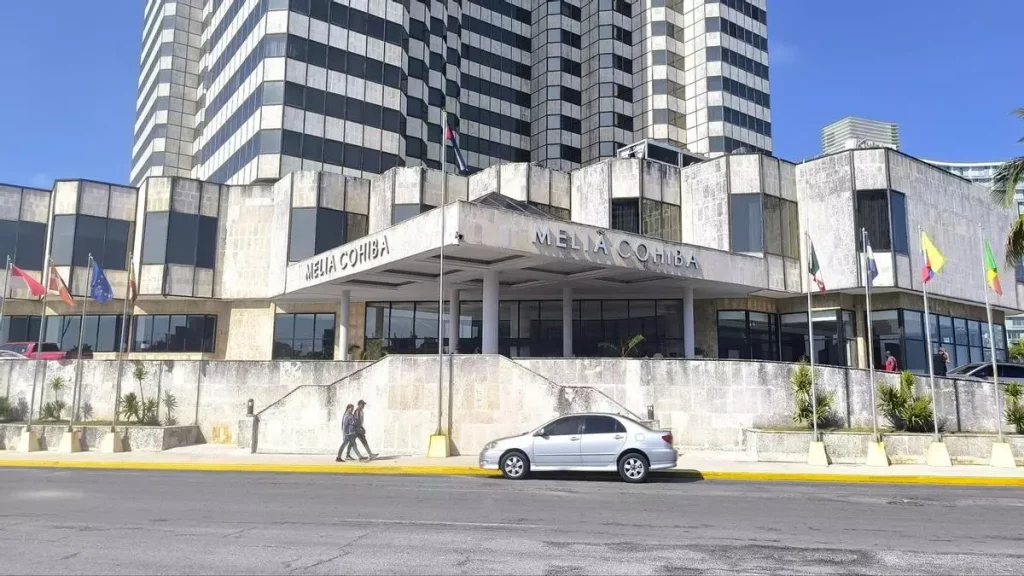
 14ymedio, Madrid, July 30, 2026 – Cuba’s National Assembly received grim news on Wednesday regarding the country’s tourism sector, once one of the main drivers of the economy but now in complete collapse. Prime Minister Manuel Marrero announced that 73% of the country’s hotel facilities are closed and that seven foreign hotel chains have left the island, leaving 25,000 workers unemployed.
The human impact of the crisis is expected to grow even further with the downsizing of the state sector. Marrero said that, so far, 92,000 public sector positions—primarily administrative jobs—have been eliminated from the Ministries of Public Health, Education, Culture, and Sports. Additional layoffs are expected in September as other ministries implement similar workforce reductions.
While the government is shrinking its administrative workforce, it still aims to expand the tourism sector. Marrero spoke about implementing measures to encourage private businesses to participate in tourism, including tax incentives and the creation of a 1% contribution to finance tourism promotion. As part of the 176 “economic and social transformations” approved in June, ecotourism businesses, vehicle rental services, travel agencies, and tour guide services will be allowed to operate privately. However, the sector’s most immediate challenge remains beyond their control: attracting tourists back to Cuba.
Ecotourism businesses, vehicle rental services, travel agencies, and tour guide services will be allowed to operate privately under the 176 “economic and social transformations” approved in June, although the most pressing and immediate problem remains outside their control: getting tourists to return
Marrero’s speech focused on what he described as the rapid progress of the reform agenda. Of the 176 planned reforms, 121 were scheduled for approval during June and July, and 110 have already been completed. Five are partially advanced, while the remaining measures are expected to be considered before the end of the week. Despite the large number of initiatives, few concrete details were provided.
Among the long list of announcements, one specific measure stood out. “The first private currency exchange house is ready to begin operations as a pilot project,” Marrero said. However, no further details have been released. It remains unknown which private entity will operate it, what exchange rates it will use, or when the first branches will open. Since the Prime Minister stated that it will operate under a license from the Central Bank of Cuba, it is expected to follow the official exchange rates, although doing so would do little to resolve the country’s currency problems.
On Wednesday, the U.S. dollar was trading at 675 Cuban pesos on the informal currency market, compared with 608 pesos under the Central Bank of Cuba’s floating official exchange rate. The euro was trading at around 790 pesos, approximately 100 pesos above its official value.
Marrero also stated that the government is updating the system for managing, controlling, and allocating foreign currency with the goal of directing freely convertible currencies toward the primary sectors of the economy, encouraging domestic production, and strengthening linkages among different economic actors.
Among the list of reforms, Marrero emphasized changes to the state enterprise system that will allow state entities to establish their own wage systems based on their revenues, set prices, make investments, and determine when employment contracts should be terminated.
“The first private currency exchange house is ready to begin operations as a pilot project,” Marrero said
The Prime Minister also referred to several measures that had already been announced in recent days, including updating the list of activities permitted for the private sector, identifying individuals eligible for government subsidies, and speeding up approvals for the creation of micro, small, and medium-sized enterprises (MSMEs), which now number more than 15,600. He also noted that mandatory civil liability insurance for vehicles has been established and that wholesale supply markets have been authorized for both individuals and legal entities.
Marrero also firmly rejected claims that Cuba is moving toward its own version of capitalism. “We are not abandoning our socialist model. On the contrary, we are defending it and making the necessary decisions to strengthen it,” he said.
Some of the proposed reforms also depend on factors beyond Cuba’s control. Economist Pavel Vidal wrote in his latest report on the Cuba Transformación proposals that “a substantial easing of economic sanctions is essential for the viability of the proposals presented for the first phase. This would not constitute a direct financial transfer, but it would significantly improve financing opportunities.”
Meanwhile, Finance and Prices Minister Vladimir Regueiro announced that the state budget deficit is expected to increase by more than 96% this year compared with 2025, rising from 67.642 billion pesos (approximately US$2.818 billion at the exchange rate for legal entities) to 132.910 billion pesos (approximately US$5.537 billion).
Translated by Regina Anavy
______________________
COLLABORATE WITH OUR WORK: The 14ymedio team is committed to practicing serious journalism that reflects Cuba’s reality in all its depth. Thank you for joining us on this long journey. We invite you to continue supporting us by becoming a member of 14ymedio now. Together we can continue transforming journalism in Cuba.