The Former Cuban Electricity Company Sues UNE and Energas and Refers to the Canadian Company Sherritt
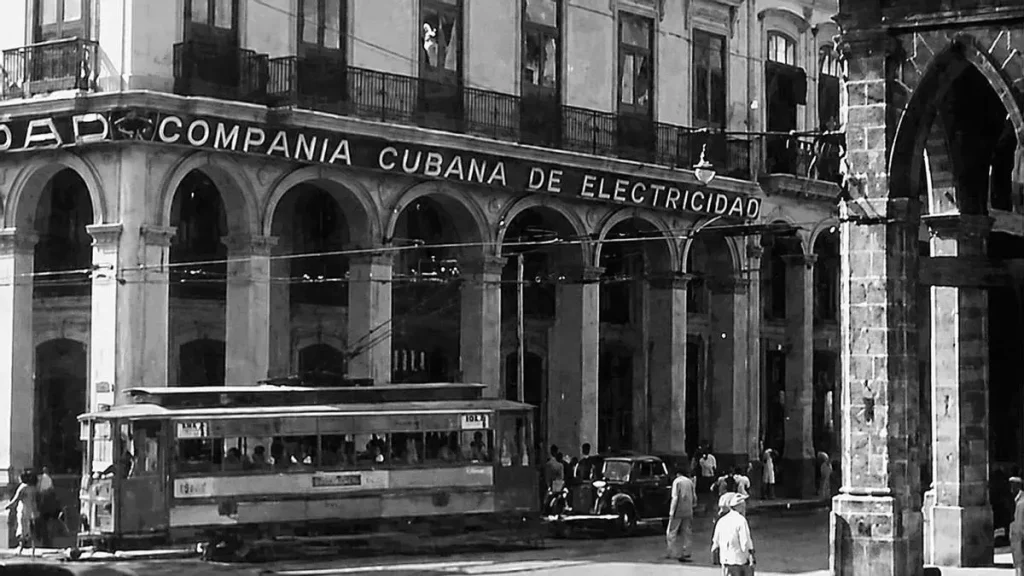
 14ymedio, Madrid, July 31, 2026 / The Cuban Electric Company (CEC), headquartered in Florida, filed a lawsuit on July 29 against Unión Eléctrica (UNE) and Energas in the U.S. District Court for the District of Columbia. The CEC maintains that both Cuban state-owned companies have profited for decades from facilities confiscated by Fidel Castro’s government in 1960 and is seeking, under Title III of the Helms-Burton Act, payment of $267.6 million, plus accrued interest of 6% per annum since the confiscation.
The lawsuit cites the Supreme Court ruling in the case of Exxon Mobil v. Cimex and Cupet, a landmark decision that set a precedent for this type of litigation by concluding that Cuban state-owned enterprises cannot invoke sovereign immunity to avoid lawsuits filed under the Helms-Burton Act. That ruling removed one of the main procedural obstacles to claiming damages for nationalized assets and has opened the door to new legal actions against entities controlled by the Cuban state.
The lawsuit also names the Canadian company Sherritt International, which owns a third of Energas’s capital along with UNE and the Cuban Petroleum Union (Cupet). Although Sherritt is not among the defendants, the litigation questions the legality of the Canadian company’s use of the infrastructure it operates.
The Cuban Electricity Company maintains that both UNE and Energas have engaged in “trafficking” in confiscated property, the term used by U.S. legislation to describe the use and commercial exploitation of nationalized property without the authorization of its owners.

Before 1959, the company was the island’s main electricity supplier and operated over 90% of the generation, transmission, and distribution nationwide. Following the nationalization decreed on August 6, 1960, it lost all its assets without receiving compensation.
According to the lawsuit, much of that infrastructure remains the foundation of Cuba’s national electricity system. Among the assets mentioned are the Antonio Maceo (Renté) thermoelectric plant in Santiago de Cuba; the Carlos Manuel de Céspedes power plant in Cienfuegos; the Melones substation and the now-decommissioned Tallapiedra plant in Havana, as well as the national transmission network and the capital’s gas distribution system.
The company maintains that UNE continues to commercially exploit these assets and generate revenue from them. In the case of Energas, it argues that its business depends on that same infrastructure.
The company maintains that UNE continues to commercially exploit these assets and generate revenue from them. In the case of Energas, it argues that its business depends on that same infrastructure: it states that the company generates electricity that is fed into the national grid through a transmission network built by the former Cuban Electricity Company and that it processes natural gas that is then distributed using Havana’s pipeline system installed before 1960.
The document adds that Cupet supplies Energas with the natural gas processed by the joint venture free of charge, a fact that, according to the plaintiff, demonstrates the control the Cuban state exerts over its operations. For this reason, the CEC maintains that both UNE and Energas act as an extension of the Cuban state itself (an “alter ego”) and must be held accountable for the exploitation of nationalized assets.
The economic basis for the claim is a certification issued in 1970 by the U.S. Foreign Claims Settlement Commission, which valued the confiscated assets at approximately $267.56 million. The company is now requesting triple damages on this amount, as provided for in Title III of the Helms-Burton Act, plus 6% annual interest accrued from the date of confiscation.
______________________
COLLABORATE WITH OUR WORK: The 14ymedio team is committed to practicing serious journalism that reflects Cuba’s reality in all its depth. Thank you for joining us on this long journey. We invite you to continue supporting us by becoming a member of 14ymedio now. Together we can continue transforming journalism in Cuba.