An initiative by the governing parties in Congress against US sanctions fails to gain the support needed to move forward.
 14ymedio, Miami, Frank Calzón, September 22, 2026 / The unthinkable has just happened. In the Spanish parliament, the Socialist Party (PSOE) and Sumar – both in government – have failed to push through an initiative asking the Executive to reject United States sanctions against Cuba.
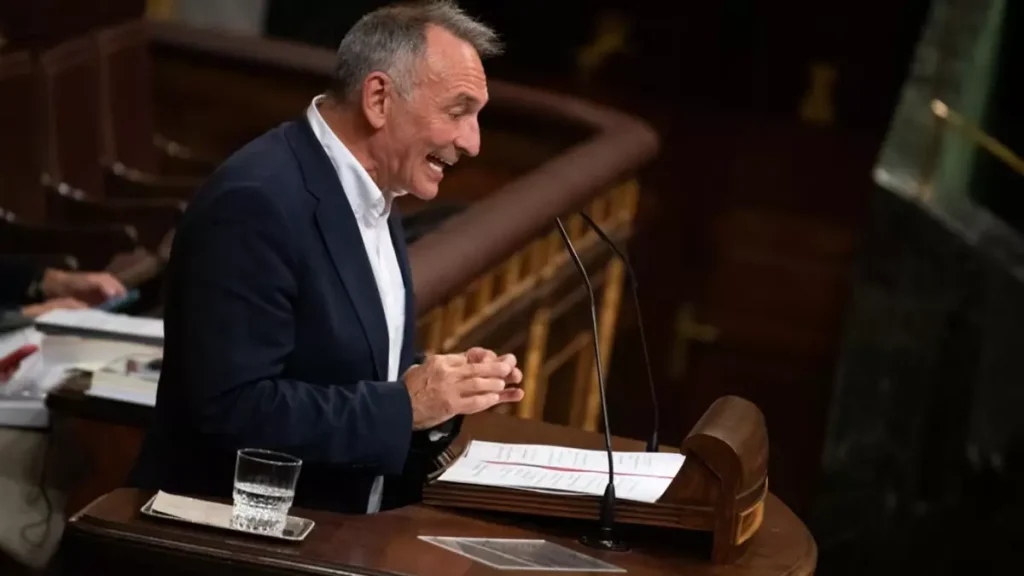
As the Madrid newspaper El País reported, the initiative was championed by Enrique Santiago, secretary general of the Communist Party of Spain and a former lawyer for the FARC in Colombia, who clarified that defending the Cuban people does not mean supporting its Government, although in speaking of interference the sponsor neglected to mention the central role played by the Cuban regime in coordinating, financing and providing armed training to dozens of terrorist organizations around the world.
With the backing of the Popular Party (PP), Vox and the Navarrese People’s Union (UPN), the Congress of Deputies struck down the proposal put forward by Sumar and later amended by the PSOE, which condemned the new tariffs ordered against Cuba by US President Donald Trump and called for an end to the embargo, in addition to urging closer cooperation with the island.
Both the Basque Nationalist Party (PNV) and Junts per Catalunya – which voted in favor of Pedro Sánchez’s investiture at the time – chose not to back the text and opted to abstain, arguing that the political situation inside Cuba must be taken into account. The proposal under debate originated from an initial, far harsher initiative, which called for an “immediate, total and unconditional” lifting of the embargo and denounced “aggression” against the island. continue reading
Likewise, the original demand that Spain promote “concrete initiatives” within the European Union to end these economic pressure measures was dropped.
Likewise, the original demand that Spain promote “concrete initiatives” within the European Union to end these economic pressure measures was dropped
During the debate in Congress, Sumar spokesman Enrique Santiago argued that the new measures adopted by Trump “have worsened” the island’s economic, energy and humanitarian situation. For its part, the PSOE, which also voiced its opposition to the embargo, explained that defending the Cuban people does not mean supporting its Government, denouncing the existence of arbitrary detentions, mistreatment and persecution of human rights defenders on the island.
PNV MP Maribel Vaquero described the Cuban Executive as a “totalitarian government,” and Junts MP Isidre Gavín rejected the initiative, arguing that it “whitewashes the left-wing dictatorship.”
The spokespeople for the PP, Vox and UPN focused their remarks on denouncing repression and the lack of freedoms on the island. The other left-wing political organizations, however – Esquerra Republicana de Catalunya (ERC), Bildu, Podemos and the Galician Nationalist Bloc (BNG) – aligned themselves with the proposal and voted in favor.
This development coincides with a further series of setbacks for the Cuban foreign ministry: the expulsion of Cuban diplomats from Santo Domingo for attempting to abduct several Cuban athletes who did not want to return to the island; the closure of the Dutch, Costa Rican, Ecuadorian and Ukrainian embassies in Havana; the elections in Bolivia, where Havana’s friends lost power; and voices within the European Community seeking to make the flow of millions of euros to the island conditional on the withdrawal of the Cuban contingent that, alongside North Korean troops, serves in Putin’s army in Ukraine. To that must be added the vote against the embargo at the United Nations, where, although the resolution so important to Havana was approved, the number of votes against that condemnation of the United States keeps rising. In the Plaza de la Revolución, the authorities must also weigh the uncertainty surrounding Donald Trump’s policy toward Cuba.
Translated by GH
______________________
COLLABORATE WITH OUR WORK: The 14ymedio team is committed to practicing serious journalism that reflects Cuba’s reality in all its depth. Thank you for joining us on this long journey. We invite you to continue supporting us by becoming a member of 14ymedio now. Together we can continue transforming journalism in Cuba.