In contrast, Venezuela will grow by 6.5% and Nicaragua by 4.5%, while the average for the Latin American continent will reach 2.2%.
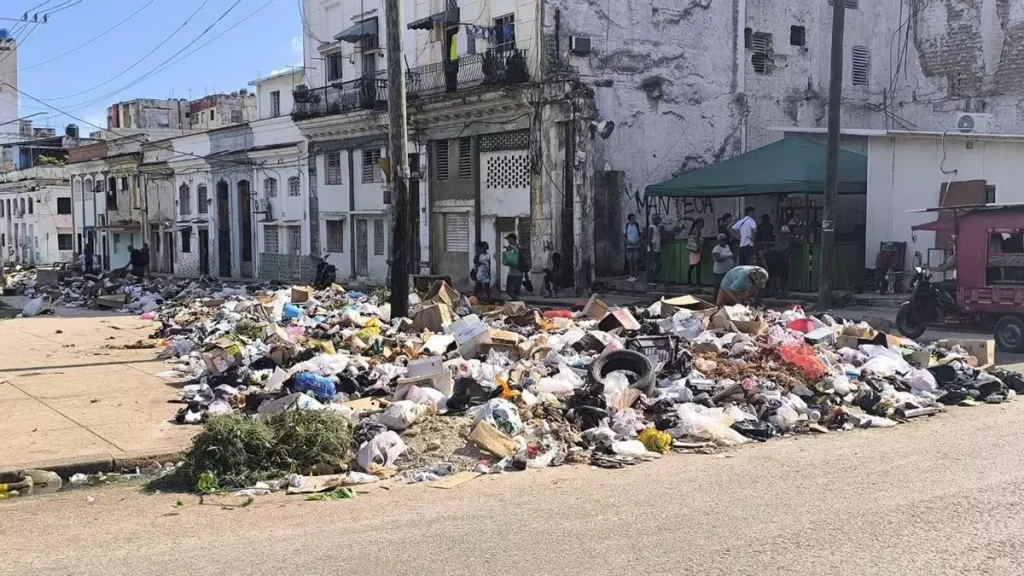
 14ymedio, Havana, August 20, 2021 / The Cuban economy will contract by 10.3% in 2026, by far the worst result in Latin America and the Caribbean, according to new forecasts from the Economic Commission for Latin America and the Caribbean (ECLAC). The organization reaffirmed its 2.2% growth estimate for Latin America on Thursday, a figure that further highlights the island’s isolated decline.
In the face of Cuba’s collapse, Venezuela presents an uncomfortable comparison for Havana. In April, ECLAC raised its growth forecast for Caracas from 3% to 6.5%, amid greater openness to private investment, especially in the energy sector. Nicaragua, another close political ally of the Cuban regime, is also projected to grow at twice the Latin American average, at 4.5%.
Guyana, driven by the extraordinary expansion of its oil industry, far exceeds those figures. ECLAC’s latest forecast for the South American country placed its growth at 16.2%.
Haiti, despite the political chaos and violence of armed gangs that control large areas of the country, remains far from the Cuban collapse
The distance between Cuba and the rest of the region’s economies has widened considerably in just a few months. In April, ECLAC estimated that Cuba’s gross domestic product (GDP) would contract by 6.5% this year. Now it projects a decline 3.8 percentage points greater. This deterioration is even more worrisome when compared to the forecast made at the end of 2025, when the organization expected minimal growth of 0.1% for Cuba.
Haiti, despite the political chaos and violence perpetrated by armed gangs that control large swaths of the country, remains far from the Cuban collapse. ECLAC also forecasts a 1.9% contraction in its economy, but much less severe than Cuba’s. Jamaica is also projected to experience a negative economic outlook, although with a more moderate decline than Cuba’s.
The confirmation of the debacle comes just two months after the government presented with gret solemnity a package of 176 economic measures promising to transform a model that the authorities themselves admit no longer works. The proposals include greater openness to foreign investment and the private sector, and changes to hiring practices, foreign trade, banking, agriculture, and the energy sector.
Although it promised to eliminate price caps across the board, the government has allowed several provinces to reimpose controls.
The measures were met with skepticism by numerous economists. The consulting firm Auge emphasized that the opening came “in the worst possible context” and would primarily benefit those who already have capital and connections.
Although it promised to eliminate price caps across the board, the government has allowed several provinces to reinstate controls, limits on profit margins, inspections, and fines in response to rising inflation. In Artemisa, Matanzas, and Holguín, for example, authorities have set a maximum profit margin of 30% on sales.
The energy crisis is another major obstacle to any recovery effort. Industrial production, commerce, and numerous services have been hampered for months by power outages that, in many provinces, exceed 20 hours a day.
The almost permanent breakdowns at thermoelectric plants are compounded by fuel shortages. The Antonio Guiteras plant, the country’s most important, had already accumulated 15 system outages by mid-June. In July, Cuba also suffered several nationwide collapses in just a few weeks, while protests over the lack of electricity and water spread to various localities.
The lack of energy also creates a vicious cycle that is particularly difficult to break.
For the coming months, the authorities have already warned of more blackouts, as they intend to take advantage of the seasonal reduction in demand to carry out maintenance, while acknowledging that breakdowns will continue to occur in aging thermoelectric plants.
The lack of energy also creates a vicious cycle that is particularly difficult to break. Without electricity, national production falls, industries and services are paralyzed, and the capacity to generate foreign currency diminishes; without foreign currency, the State faces increasing difficulties in purchasing fuel, spare parts, and raw materials necessary to restore power generation and productive activity.
ECLAC’s forecast thus turns the 176 reforms announced by the government into a race against a deterioration far more rapid than the authorities themselves seemed to anticipate. While almost the entire region is moving forward, albeit slowly, Cuba not only remains in recession, but its decline is accelerating.
______________________
COLLABORATE WITH OUR WORK: The 14ymedio team is committed to practicing serious journalism that reflects Cuba’s reality in all its depth. Thank you for joining us on this long journey. We invite you to continue supporting us by becoming a member of 14ymedio now. Together we can continue transforming journalism in Cuba.