Until now, it had continued operating six hotels belonging to Cubanacan and Gran Caribe
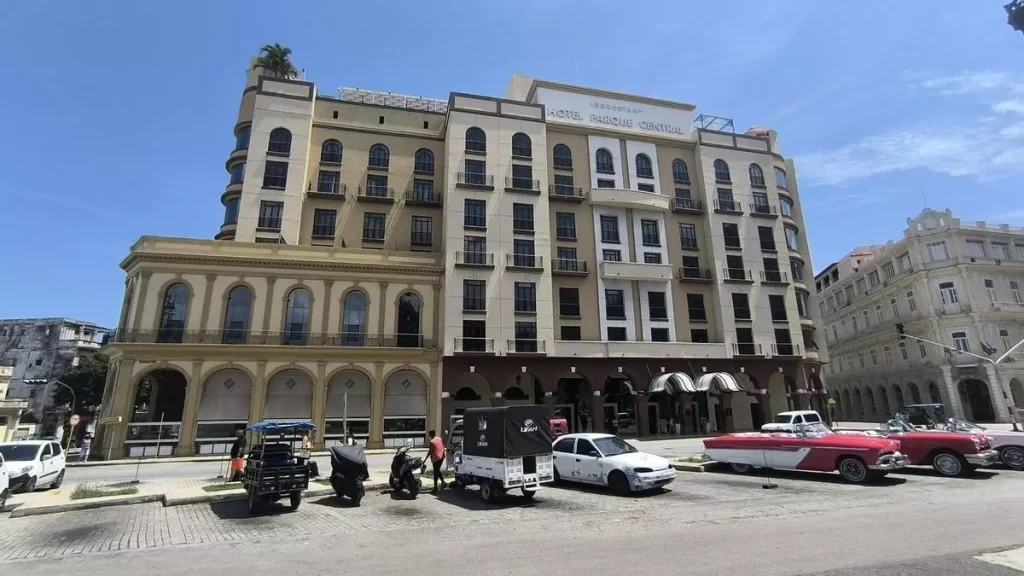
 14ymedio, Madrid, July 21, 2026 / The Spanish chain Iberostar confirmed this Tuesday that it no longer “operates or markets any hotel in Cuba.” It told the specialized outlet Hosteltur, just hours after the also-Spanish company Melia announced that, starting this Friday, it is ceasing all operations on the island.
In Iberostar’s case, no details were given as to when the withdrawal took effect. On June 1, the hotel company severed ties with Gaviota, the chain controlled by the Business Administration Group S.A. (Gaesa), which had just been sanctioned by the United States, and stopped managing the twelve hotels associated with that entity. Among them were the Hotel Grand Packard, on the Paseo del Prado, and the Iberostar Selection Habana, located in the controversial Torre K and closed for some time due to the crisis. The company announced, however, that it would maintain its presence in Cuba through six properties whose state counterpart belongs to other tourism groups not linked to the military conglomerate, including Cubanacan and Gran Caribe.
Two days later, Melia did the same. The company announced it was abandoning all the Gaviota-managed hotels it operated and retaining management of the remaining 19. Gabriel Escarrer, personally determined to remain in Cuba, had stated in recent weeks that everything was subject to whatever might happen on the island and that, as a publicly traded company, it would ultimately make the decision it had to, out of responsibility to its shareholders.
Those decisions became known close to the deadline set by the U.S. State Department under Executive Order 14404, signed by President Donald Trump on May 1, 2026, which imposed sanctions “on those responsible for repression in Cuba and for threats to U.S. national security and foreign policy.” A few days later, the decree began to take concrete form with specific sanctions against Gaesa, its president, Ania Guillermina Lastres, and Moa Nickel S.A.
Since then, both Melia and Iberostar have been in the crosshairs of U.S. pressure.
The Office of Foreign Assets Control (OFAC) set June 5, 2026, as the deadline for these companies to halt their operations, under risk of being exposed to sanctions.
Since then, both Melia and Iberostar have been in the crosshairs of U.S. pressure, even though their executives had assured months earlier that they would not leave Cuba.
In a statement sent to 14ymedio this Tuesday, Melia reported that it will halt all its activity on the island as of July 24, citing “significant” operational, legal, and financial-economic difficulties in the country resulting from U.S. pressure measures, as it also reported today to Spain’s National Securities Market Commission (CNMV).
“The company reports that its Portuguese subsidiary, Ilha Bela, has decided to cease, effective July 24, 2026, the provision of its hotel management and marketing services in connection with all of its properties in Cuba. This decision also extends to the use of licensed brands, inbound tourism services, and the local supply chain associated with supplying the aforementioned properties, whose operations will also be interrupted,” said the company owned by the Escarrer family.
In the same statement, the company denied that its CEO, Gabriel Escarrer, had recently traveled to Cuba, as Cubanet had claimed in a report published this Monday that got ahead of the Balearic hotel company’s decision. Beyond that, it referred entirely to the statement it had issued.
“The company is working to ensure an orderly and responsible transition, minimizing as far as possible the impact on the various stakeholders linked to the operation, including staff, clients, suppliers, and local partners, while maintaining transparent communication with all of them at all times, and is likewise, applying the principle of prudence, assessing the financial impacts of this decision,” the statement notes.
The company, the first foreign hotel operator to enter Cuba to manage state-owned properties, closed its statement by expressing “its gratitude to all the people and entities that have been part of its history in Cuba over the years, as well as the company’s respect and consideration for the country.”
Of the Spanish hotel companies, only Barcelo remains, but not for much longer. The company already announced last June that it plans its definitive exit from the island once its current contracts with Gran Caribe conclude, in 2027. In its case, it had only kept management of the Barcelo Solymar and the Occidental Arenas Blancas, both located in Varadero, though the latter has been closed for months due to the drop in tourism.
Translated by GH.
______________________
COLLABORATE WITH OUR WORK: The 14ymedio team is committed to practicing serious journalism that reflects Cuba’s reality in all its depth. Thank you for joining us on this long journey. We invite you to continue supporting us by becoming a member of 14ymedio now. Together we can continue transforming journalism in Cuba.