The artist was taken by the political police to Havana’s José Martí International Airport.
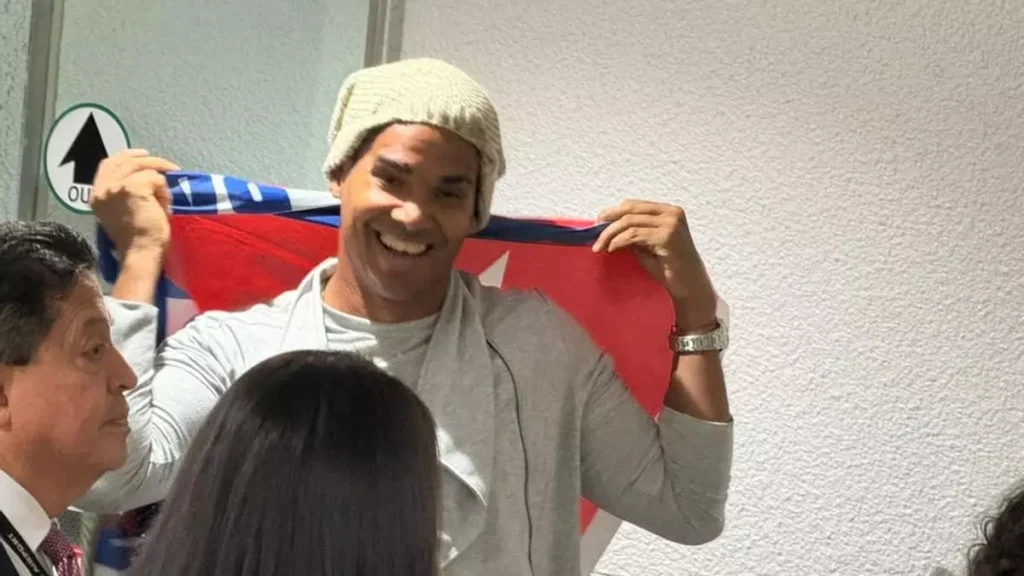
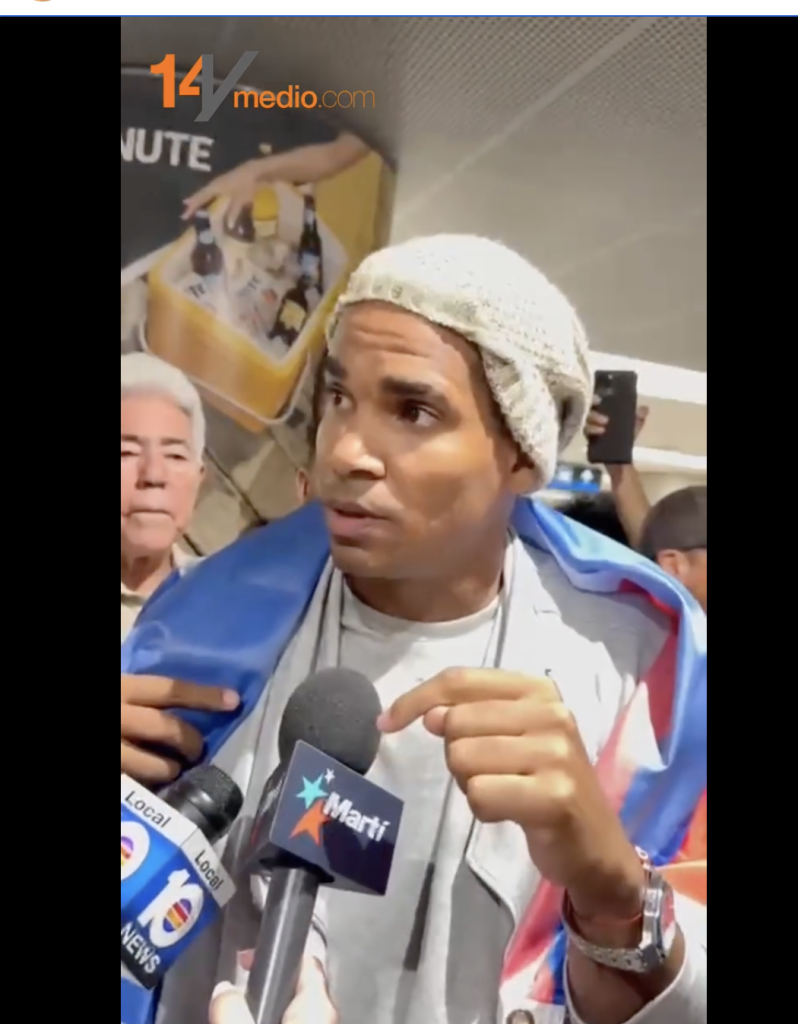
 Luis Manuel Otero Alcántara, artist and leader of the San Isidro Movement (MSI), who State Security kept in whereabouts unknown for 11 days, arrived in Miami this Saturday, one day after the United States granted him special permission (parole). A crowd of friends and supporters awaited him at the airport and greeted him by singing the Cuban national anthem.
In his first statements to the press, the artist recalled that “right now Maykel Osorbo is in prison” and asked the exile community in Miami, Cubans elsewhere, “Donald Trump,” “all those who can help us, please contribute to making Cuba free,” concluding: “that one minute of work is one minute less of dictatorship.”
After learning that the political prisoner had boarded a flight from Havana, the artist’s loved ones reported on social media that during his time in the Guanajay maximum-security prison, he “survived in an environment that deprived him of his freedom for political reasons, prevented him from fully developing his work, and separated him from the people he loves.” The regime’s repression did not extinguish Otero Alcántara’s fighting spirit: “Today he arrives with the profound desire to live again, resume his creative projects, and continue working for the freedom of Cuba.”
They also announced that, upon his arrival in Miami, the artist will visit the Shrine of Our Lady of Charity “to leave an offering of thanksgiving.” Otero Alcántara, they explained, “brings with him from Cuba a broken Virgin. Like many of us. Like Cuba. It is a gesture that invites us to gather the fragments, to piece together what has been broken, and to believe that it is still possible to heal and recover a country that has been taken hostage.”
The Cuban state media was quick to report the artist’s departure, and in an article describing him as “the mercenary Washington is looking for,” asserts that Otero Alcántara has “a criminal record, not a record of conscience,” adding that “he is neither a political opponent nor a human rights defender. He is a common criminal, convicted by the Cuban justice system for crimes defined in our laws: contempt, public disorder, and desecration of national symbols.”
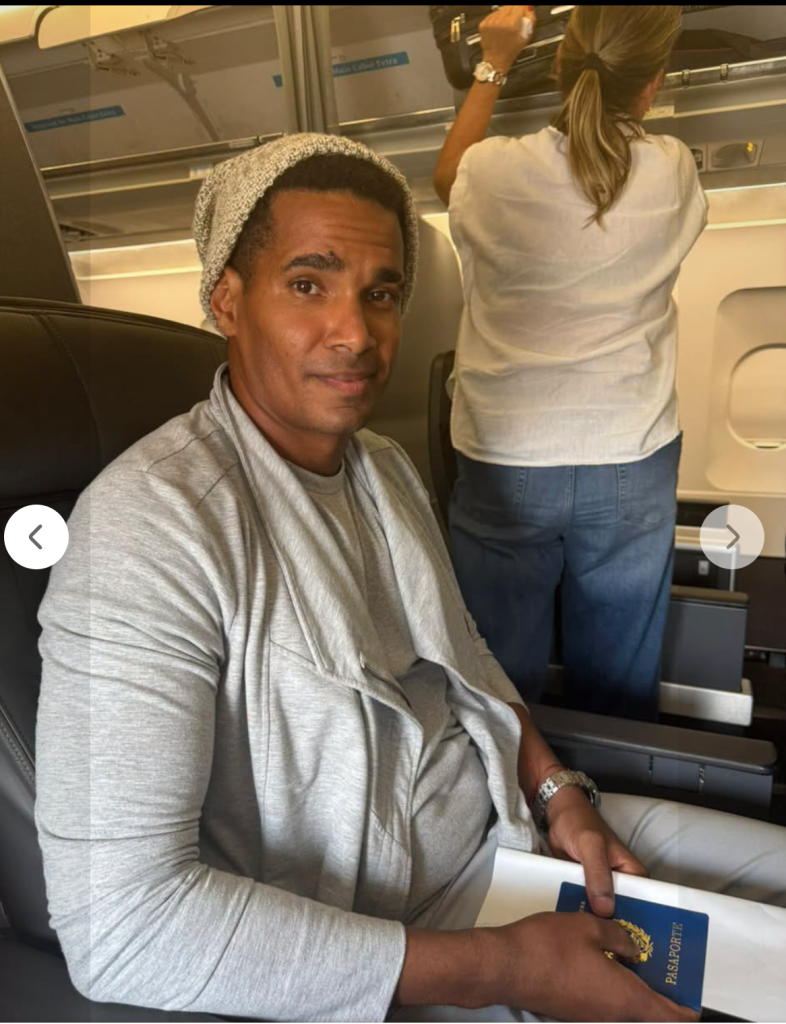
Otero Alcántara was taken by the political police to Havana’s José Martí International Airport in an escort similar to that provided to opposition figures José Daniel Ferrer and Luis Robles, “the young man with the flag,” both of whom were also released in exchange for accepting exile. In the case of the MSI leader, arrested on July 11, 2021—before he could participate in the massive demonstrations of that day—and sentenced to five years for the crimes of desecrating national symbols, contempt, and public disorder, he completed his sentence on July 9. However, by then, his family and friends did not know his whereabouts.
Two days earlier, it was reported that the artist had been taken from the maximum-security prison in Guanajay, in the province of Artemisa, to an unknown destination. On July 9th, he contacted his friend Anamely Ramos, an art historian in exile and also a member of the MSI. According to a post by the activist herself on social media, Otero Alcántara called her “from a State Security cell phone, an unknown number, and the call was on speakerphone.”
When asked how he was, the artist replied “fine,” Ramos said, “with that tone we use to indicate that we’re doing as well as can be expected, given the circumstances.” He couldn’t answer the second question: “Where are you?”
The activist explained that the parole request for Alcántara to travel to the United States was “still in process” and that the artist would be “in that unknown location until it is resolved.” According to a U.S. official who spoke to 14ymedio on condition of anonymity, by confining Otero Alcántara after he had served his sentence, the Havana regime intended to “turn the tables on Washington and make it seem as though the artist was still detained due to the Trump Administration’s delay.”
His case, along with that of rapper Maykel Castillo Osorbo, became one of the emblems of the repression after 11J.
Years ago, both expressed their willingness to accept “prison in exile,” but at no point did they participate in the releases carried out by the regime.
Three days after Otero Alcántara’s release, Castillo was transferred to the Guanajay prison from Kilo 8, in Pinar del Río, where he was serving his sentence, in his case nine years.
Despite being arrested at different times, and not on April 4, 2021, the date of the events for which the regime accused Otero Alcántara, and May 18 of the same year for Osorbo, both Cuban artists share the same prosecution file, which is yet another example of the arbitrariness of revolutionary justice.
Declared prisoners of conscience by various international organizations, both have received numerous awards during their years in prison for their fight for human rights in Cuba. The most recent was the 2026 Democracy Award, granted by the National Endowment for Democracy (NED) last June.
They have also carried out several hunger strikes at different times and have denounced the prison conditions they endured. Years ago, both expressed their willingness to accept the “prison for exile” exchange, but at no point did they participate in the releases carried out by the Cuban regime through agreements with the Vatican, one in January 2025 , days before the end of Joe Biden’s presidency, and another last March .
______________________
COLLABORATE WITH OUR WORK: The 14ymedio team is committed to practicing serious journalism that reflects Cuba’s reality in all its depth. Thank you for joining us on this long journey. We invite you to continue supporting us by becoming a member of 14ymedio now. Together we can continue transforming journalism in Cuba.