- Official data for May indicates a year-on-year increase of 15.89%, while the rise in prices in the informal market skyrockets by 66%.
- Due to the depreciation of the peso – 40% in one year – powdered milk went from 2,000 pesos per kilo on April 7 to 2,400 on May 26 and 3,200 on June 4
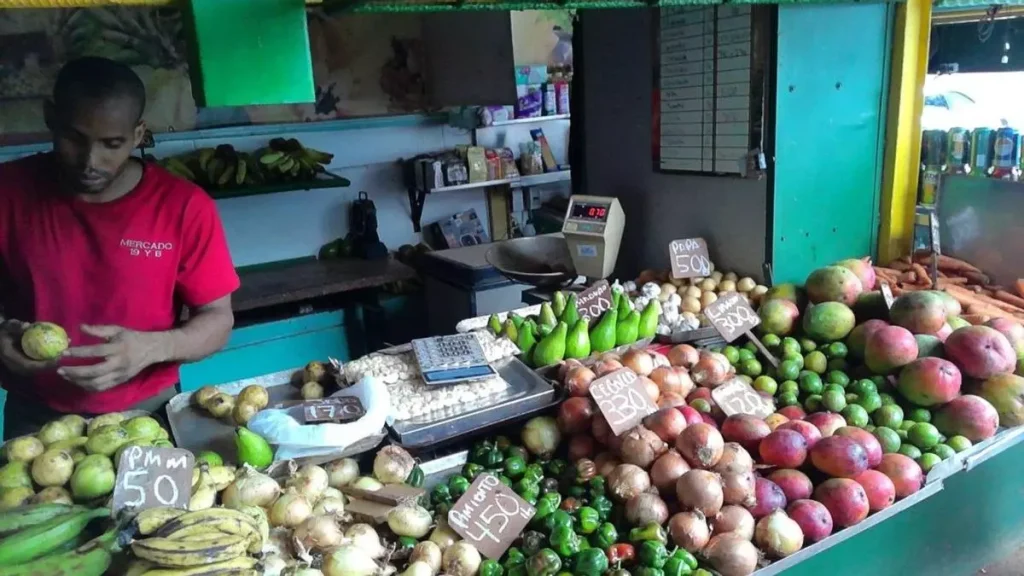
 14ymedio, Madrid, June 12, 2026 / “The price of a four-pound package of chicken went up to 2,000 pesos, 100 pesos more in just one day. And powdered milk went up to 3,200 pesos per kilo,” lamented a Havana resident last week as he left a small business. The price surge has regained momentum in recent months, and official data reflects this. So far this year, the consumer price index stood at 9.16% in May, two points higher than in the same month last year, and the year-on-year variation reached 15.89%.
This is in the formal market; if we look at the informal market, things get worse. As of June 7, US economist Steve Hanke, who regularly analyzes country-by-country data including the informal market, placed Cuba’s inflation at 66% year-on-year. Venezuela remains the world champion, with 574% despite economic changes, followed by North Korea (201%) and Iran (115%). Cuba ranks fourth, its national currency having depreciated by 40% in a year, according to the same author.
The accelerating loss of purchasing power for Cubans is the final straw in this situation. The peso is plummeting so drastically that even the freely convertible currency [MLC] is gaining strength by leaps and bounds. This Wednesday, the MLC was trading at 430 pesos on the informal currency market, and just one day later, on Thursday night, it was already trading at 488 pesos. The euro remains unattainable, trading at 730 CUP, while the most important currency, the dollar, is trading at 642, nine days after reaching a record high of 600.
This Wednesday, the MLC was trading at 430 pesos in the informal currency market, and just one day later, on Thursday night, it was already trading at 488 pesos.
The most serious aspect of the situation is that there seems to be no end in sight. Data published by the National Office of Statistics and Information (ONEI) reflects considerable price increases in some food items, which 14ymedio has already observed in June. Powdered milk is one of the products that saw the largest price increase in May, according to ONEI, at 6.2%. This newspaper, which publishes weekly prices from various markets across the island, recorded a price of 2,000 pesos for this product on April 7, which rose to 2,400 pesos on May 26, and by June 4 had already reached 3,200 pesos.
Powdered milk has been identified by authorities as one of the products experiencing shortages— preventing its normal distribution to children, who are theoretically entitled to it by the state—due to the suspension of operations by several shipping companies for fear of US sanctions and because of fuel shortages. However, some traditionally domestic products, or even those currently exported, are also experiencing significant price increases.
This is the case with coffee, which in May—according to the National Office of Statistics and Information (ONEI)—rose 7.7%. Data from 14ymedio indicates that the price of coffee beans was 600 pesos on April 4, 750 on May 16, and 850 on May 30. As for sugar, once a mainstay of the Cuban economy and now a commodity that must be imported, the price increase recorded in May on the official market was 7.69%, and the rise continues, as this newspaper was able to verify. The price was 320 pesos per pound on April 26, 380 on May 30, and 450 on June 4.
Flour, salt, and all meats also saw price increases of between 2.5% and 9% in the CPI report. Furthermore, the restaurants and hotels division, which includes food cooked outside the home, rose 2.93% last month—only alcoholic beverages and tobacco, at 3.13%, exceeded this figure—and now represents a cumulative increase of 14.95% this year and 26.54% compared to last year.
Food is also almost 20% more expensive than in May 2025, the category that most affects the population. Transportation is not far behind; although it didn’t increase significantly in the last month analyzed, it is already officially 21.7% more expensive.
Food is also almost 20% more expensive than in May 2025, the category that most affects the population. Transportation is not far behind; although it didn’t increase significantly in the latest month analyzed, it is officially 21.7% more expensive.
The official press expressed annoyance at the attention given to this issue and dedicated an article to denouncing that the figure was “presented in a decontextualized and malicious way like the percentages of medicine shortages in Cuba.” According to the pro-government publication Razones de Cuba, this “destabilizing” content concealed a different reality: that it was “the deliberate consequence of a policy of economic strangulation designed precisely to generate this scenario of shortages and suffering among the Cuban population.”
______________________
COLLABORATE WITH OUR WORK: The 14ymedio team is committed to practicing serious journalism that reflects Cuba’s reality in all its depth. Thank you for joining us on this long journey. We invite you to continue supporting us by becoming a member of 14ymedio now. Together we can continue transforming journalism in Cuba.