The iconic Peñas Altas recreational complex remains practically closed due to the energy crisis and poor state management
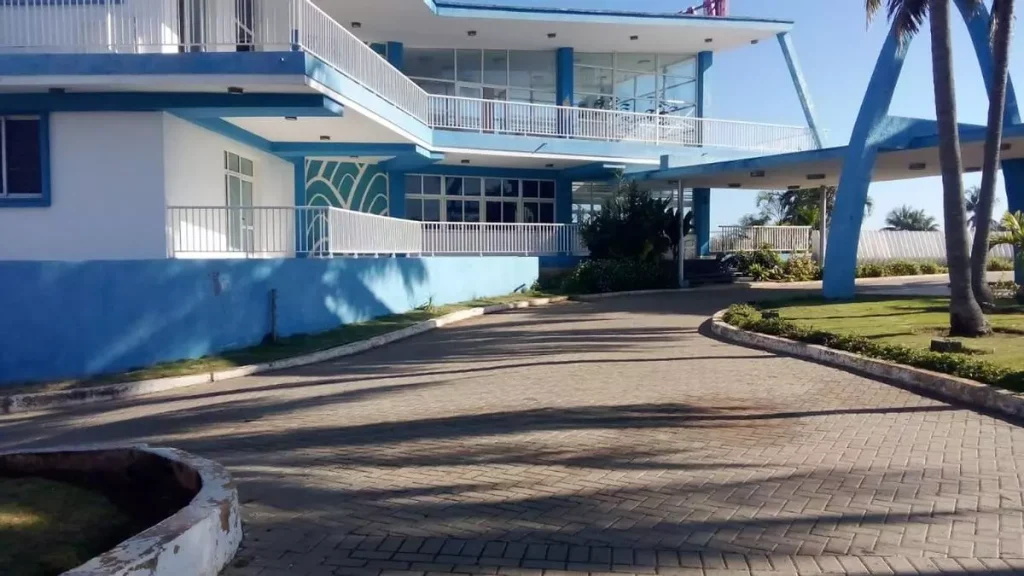
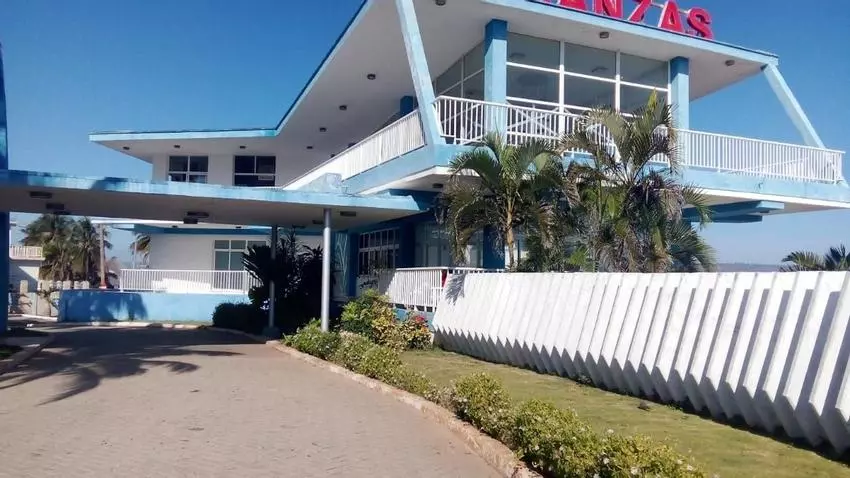
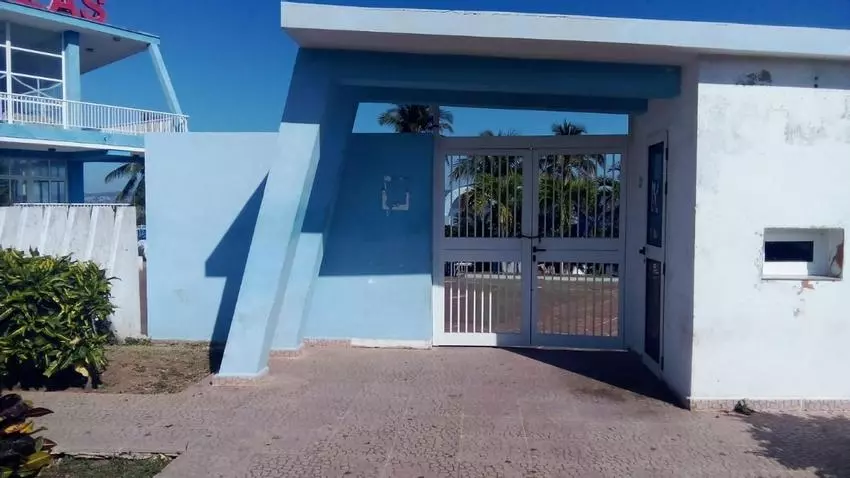
 14ymedio, Julio César Contreras, Matanzas, 20 July 2026 / The highway enters Matanzas along the coast, and before the bridges and the city skyline come into view, a building with modern lines still catches the eye. Painted blue and white, with large windows and the name of Matanzas crowning the roof in huge red letters, the gastronomic and cultural complex El Bahía retains the elegance of another era. From a distance, the photos are deceiving: it looks like a place ready to welcome tourists and families. Get closer, though, and it becomes clear that much of that splendor has been left locked behind padlocked doors.
Located in Peñas Altas, right on the coastline, El Bahía is no ordinary restaurant for the people of Matanzas. For decades it was a gathering place for family celebrations, concerts, dance nights, and dinners with one of the best views of Matanzas Bay. Today, however, the picture has gone silent.
“It’s a shame that such a beautiful place stays closed practically every day of the week. It only operates when there’s power,” Horacio, a local resident who collects empty beer and soda cans to sell to the state as raw materials, tells 14ymedio.
“It’s a shame that such a beautiful place stays closed practically every day of the week. It only operates when there’s power”
The man, his skin weathered by sun and sea salt, recalls when on weekend nights it was hard to find a spot to park an almendrón [a classic American car used as a private taxi] nearby. “Now you can walk through here and all you hear is the sea,” he says, pointing toward the ranchón and the old Las Terrazas cabaret.
There, where orchestras once played and the buzz of young people mixed with the waves breaking against the rocks, faded railings now predominate, weeds are growing across the outdoor areas, and a decline seems to be advancing faster than any recovery plan. “That whole area needs proper maintenance. If it keeps being neglected like this, it will end up costing twice as much to fix later. I think that before this keeps falling apart, the Provincial Lodging Company should lease it to someone willing to invest here,” Horacio suggests.
On the second floor, the restaurant El Mirador offered a privileged view of the bay. From its windows, diners could watch ships entering the port while they had lunch. For years, a meal service for vulnerable people also operated there.
“From Monday to Saturday they used to sell us a fairly decent meal for 20 pesos, but that’s stopped too,” Horacio laments. “They tell us they can’t cook because there’s no power or gas. The head chef assured me that lunches would come back once conditions improve, but I don’t put much faith in those promises anymore.”
The ongoing blackouts plaguing Cuba’s economy have ended up reaching even a place meant precisely for leisure. The energy crisis forces the site to close whenever there’s no electricity, but the problems go well beyond power outages.
A few steps away is another Matanzas resident, who for years worked cleaning the complex’s public restrooms. Today he sells pizzas for a private business.
“Especially on Saturdays, this place used to be packed until two or three in the morning,” the man recalls. “The electricity problem has hit us hard, but so has the lack of management. If people know they can come from downtown Matanzas and find the place closed or with nothing on offer, they simply stop coming.”
Both agree that the complex’s reputation has deteriorated at the same pace as its facilities. “Word has already gotten around all of Matanzas that the El Faro bar almost never has a variety of drinks and that the cocktails aren’t made the way they used to be,” adds the former employee. “Anyone with money wants to spend it somewhere worthwhile, not come here to try their luck.”
The paradox is even greater because just a few years ago the complex seemed to be starting a recovery. In October 2023, a modern Ocio Club with virtual reality equipment and video games was inaugurated there, presented by the state press as one of the main new recreational attractions to celebrate the city’s 330th anniversary. Authorities said at the time that the project would expand entertainment options for children and young people and revitalize the property.
However, the momentum appears to have quickly run out. The building, which still retains an attractive architecture and a prime seafront location, depends – like so many other things in Cuba – on an electrical supply that almost never arrives and on promises of recovery that have taken far too long to become reality.
Translated by GH
______________________
COLLABORATE WITH OUR WORK: The 14ymedio team is committed to practicing serious journalism that reflects Cuba’s reality in all its depth. Thank you for joining us on this long journey. We invite you to continue supporting us by becoming a member of 14ymedio now. Together we can continue transforming journalism in Cuba.