It is likely that a large part of this merchandise will be imported by the private sector.
In addition to motorbikes, used vehicles also represent a significant portion of the purchase.
14ymedio, Havana, August 9, 2025 — The Cuban government’s dependence on U.S. imports continues to trend upward, as evidenced by data from last June, provided by the U.S.-Cuba Economic and Trade Council (US-Cuba Trade). In June, US food and agricultural purchases by Cuba reached $38.4 million, an increase of 10% compared to the 34.9 recorded in June last year, and also above the $37 million of June 2023.
This monthly growth is only part of a larger picture: between January and June 2025, imports of US products to Cuba amounted to $243.3 million, representing a 15.5% year-on-year jump compared to the same period in 2024, when they accounted for $210.6 million.
Nor is the increase limited to the agricultural sector, as the Island has increased its purchases of a range of commodities, including marble, travertine and alabaster for $23,521, enzymes ($13,498) and wire processing machines (&12,000). Even products such as bicycles ($22,160), overalls ($19,500) and solar cells ($43,500) were imported to the Island last June. continue reading
Used vehicles still dominate much of the purchase, with a total value of $12 million in the first six months of 2025 alone.
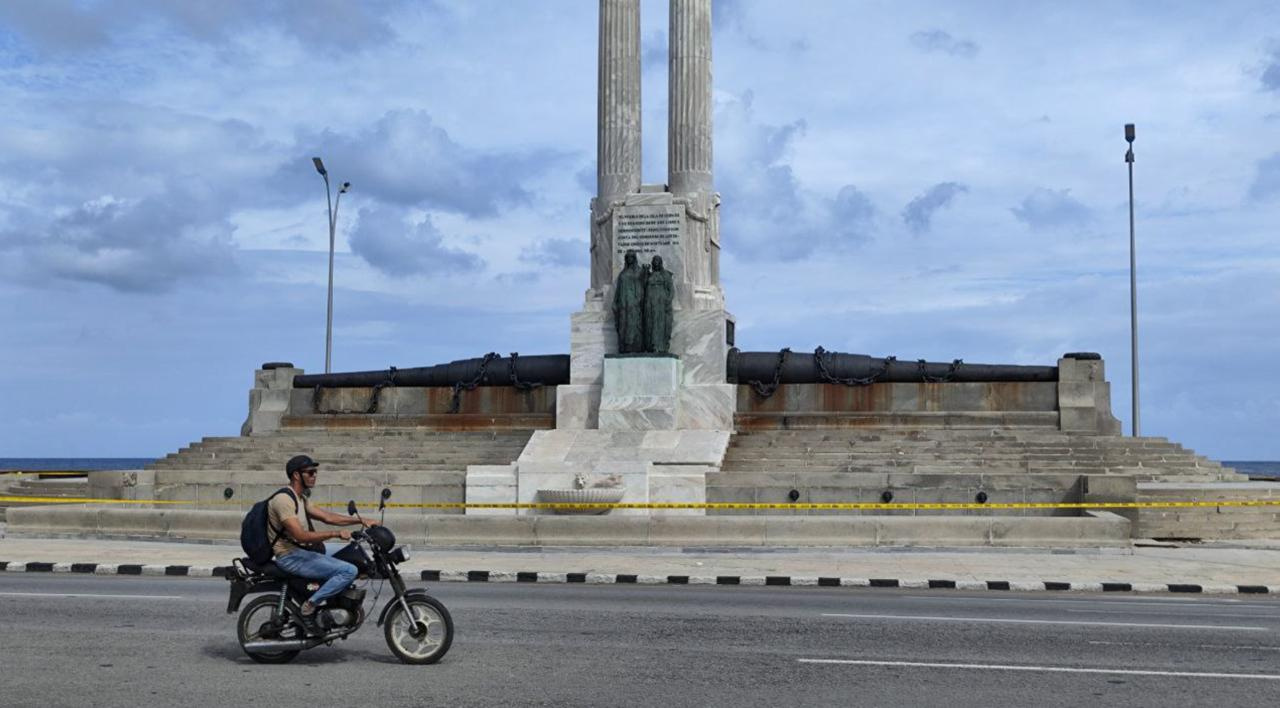
However, used vehicles still dominate much of the purchase, with a total value of $12 million in the first six months of 2025 alone. Motorbikes also stand out with $1.3 million, showing the role that transport -probably mostly in private hands- plays in the demand for US goods.
Other products stand out, either because of their scarcity on the Island or because they are unusual, such as milk ($1.8 million), pork ($3.2 million), frozen ready-made foods ($876,215), communion wafers ($776,301) and coffee ($699,273). And, of course, chicken remains at the top of the list, with 55.5% of the total purchase value, about $21.3 million.
In June 2025, imports from the U.S. of health care goods were zero. However, humanitarian donations, which could include health inputs but do not specify outputs, amounted to $14.4 million.
In June 2025, imports from the US of health care goods were zero.
The figures do not lie: the Cuban economy remains tied to the need to import products -and not only from the US- to meet both the domestic demands of the state and the private sector, in the face of an almost absolute debacle of its industry and agriculture.
This was recently recognized by the Government during the sessions of Parliament, when it revealed that in the first half of 2025, purchases abroad, from the private sector alone, exceeded $1,000 billion, 34% more than at the same date in 2024. The main products imported during this period, added the Parliament’s Economic Commission, include raw materials and intermediate products (37%), food (22%), beverages (16%), and “machines, appliances and their parts” (13%).
Contrary to the agility and purchasing capacity of the private sector, in the first half of this year the state fulfilled its plan for imports of goods and services by only 67%. “Priority was given to food, fuels, medicines and medical supplies,” said the Minister of Economy and Planning, although he acknowledged that, compared to 2024, “there is evidence of a decrease in the volume of food, which continues to be the largest item.”
Translated by Regina Anavy
____________
COLLABORATE WITH OUR WORK: The 14ymedio team is committed to practicing serious journalism that reflects Cuba’s reality in all its depth. Thank you for joining us on this long journey. We invite you to continue supporting us by becoming a member of 14ymedio now. Together we can continue transforming journalism in Cuba.
The measure was approved on Wednesday and will take effect on September 1.
The increase in the lowest pensions represents “one bag of milk or a bottle of oil” purchased from an MSME. / 14ymedio
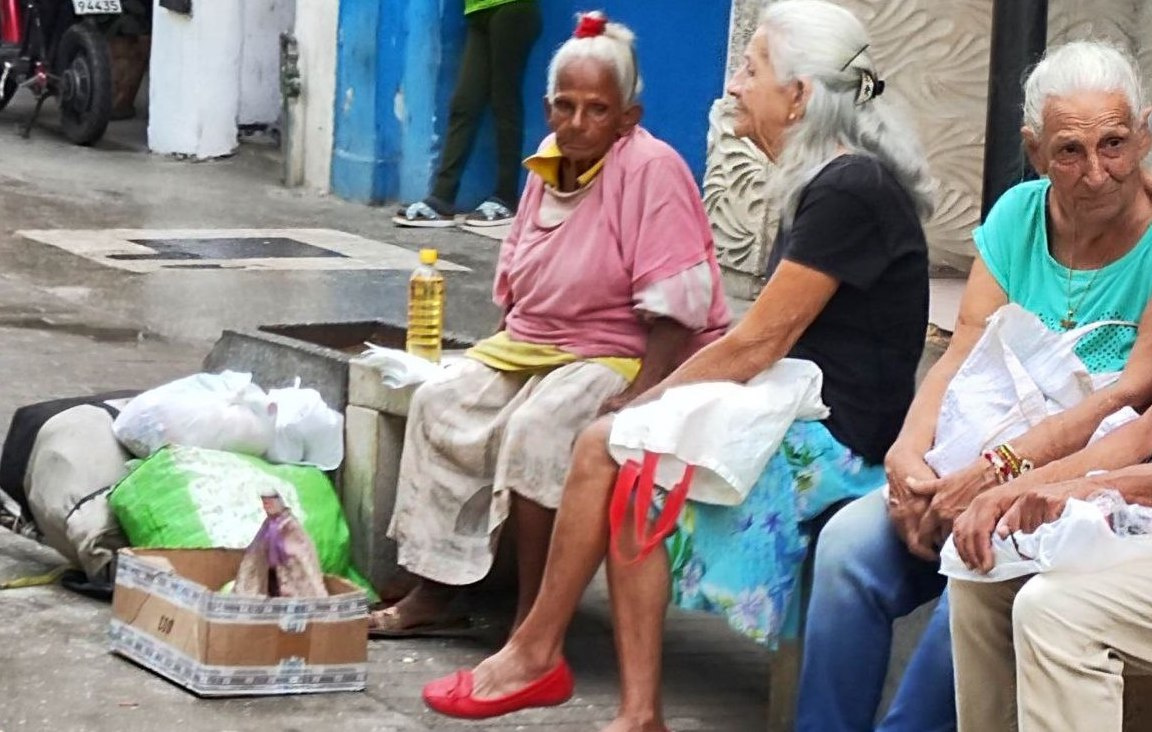
14ymedio, Juan Diego Rodríguez/Olea Gallardo, Havana, 8 August 2025 — A liter of oil, a kilogram of powdered milk, a pound and a half of pork… Cuban retirees don’t think about numbers when asked how much their pensions will increase , but rather what they will be able to buy with it in well-stocked private stores. This is a common sentiment among those interviewed for this report, along with something else: they all think the increase, announced last month by Prime Minister Manuel Marrero and implemented with the resolution published this Wednesday in the Official Gazette, won’t do much good.
“Prices are so high that this increase isn’t significant for basic needs, especially food,” says Manuel, a 68-year-old retiree from a state-owned commerce company who will benefit from the measure. In his case, he earns 1,500 pesos, and starting September 1—with payment at the end of August—his pension will reach 3,000. “For me, that doesn’t mean much; maybe a bag of milk or a bottle of oil, and that’s it.”
Still, he considers himself lucky because he has a daughter who sends him money from abroad. “Pensioners who have no other option, who aren’t healthy enough to find work to supplement their income, or who don’t have remittances, are destined to suffer hardship.”
“Pensioners without remittances are destined to suffer hardship.”
This is the case for Dulce, a Ministry of Culture pensioner. Her skepticism and annoyance are immense, after months of waiting to receive the oil from the bodega (ration store), thanks to her ration book. “Small bottles for single-person households didn’t arrive, and now I have to wait for several shipments to fill a bottle so I can continue reading
buy it,” she laments, adding ironically: “So I’ll use the extra money to buy the oil from an MSME [small private business].”
As established by law, an increase of 1,528 pesos is established for pensions up to 2,472 pesos, as well as an increase to to 4,000 pesos for pensions between 2,473 and 3,999 pesos. As for pensions due to death—such as widowhood or orphanhood—which also increase, they will be “recalculated” based on the deceased’s updated pension based on the number of beneficiaries: 70% more if there is one, 85% if there are two, and 100% if there are three or more.
Meanwhile, the Director General of the Ministry of Labor and Social Security, Benito Rey González, told the official press that citizens entitled to more than one Social Security pension “will receive the increase in the amount of their unified pension.”
“Not even if they raise it to 4,000 pesos, or 5,000, or 6,000, or 7,000,” exclaims Olivia, a retiree from the Ministry of Education. “None of that can solve a problem for someone who has worked for 30 or 40 years.” She is particularly bothered by the attempt to sell this as an achievement. “In every country in the world, that money comes out of your salary, monthly, that’s why they deduct it, and from taxes for other workers. It’s not the State that gives it away.”
“In every country in the world, that money comes out of your salary; it’s not the State that gives it away.”
Despite 37 years of uninterrupted work, she tells 14ymedio, Olivia was left with a minimal pension. “They raised my pension a little on the first go-round, and then they raised it a little bit more, to 1,500 pesos,” she says. And she adds, resigned: “Well, the law is the law. You have to accept it, because everything they tell you has to be accepted. What are you going to do? Where are you going to complain? But I really don’t think that’s going to solve anything, when a pound of milk costs 1,200 or 1,300 pesos. That’s a mouthful for all the hunger and misery experienced by the elderly in this country.”
María’s pension increase, which has so far been 1,400 pesos, will be paid to a friend of hers. A resident of the United States, she prefers it to be received in Havana, “where they face so many hardships.” This is quite common: retirees who no longer live in Cuba continue to receive their pensions through third parties.
In a climate of extreme poverty, solidarity among citizens is a last resort. In this regard, Tania, a resident of Central Havana, says she helps her 96-year-old neighbor, who earns 300 pesos less than her: 1,200. “I’m not one to go to church and give a tithe; I try to help the people who come to me because I know they use it and need it,” she explains. She adds: “When I found out about the increase, I was happier for her than for myself. She’s an elderly woman, very sweet, very polite, from a very good family, but she worked very little, in a kitchen, and they left her with the bare minimum.”
The elderly woman lives in her home with her two daughters, who are also pensioners on the bare minimum. This is not only evidence of the hardships suffered by those over 60 in Cuba, but also one of the island’s main problems: the aging population.
Leonardo, a former police officer, won’t get a raise, as he earns 4,000 pesos. “With 26 years of service and loss of sight.” Disappointed, he approached a colleague at the Ministry of the Interior, who assured him: “We’re looking into it to see if there’s a small raise for December.”
____________
COLLABORATE WITH OUR WORK: The 14ymedio team is committed to practicing serious journalism that reflects Cuba’s reality in all its depth. Thank you for joining us on this long journey. We invite you to continue supporting us by becoming a member of 14ymedio now. Together we can continue transforming journalism in Cuba.
State Security crimes and new details about the death of Oswaldo Payá
Sandro Castro—Fidel’s grandson—is one of the clan members that Miguel Díaz-Canel has the power to eliminate in the near future if his controversial behavior continues. / Instagram
14ymedio, Havana, 11 August 2025 — Rumors of various kinds of assassinations—political, commonplace, and historical—have characterized the month of July. In Cuba, killings are taking place in the streets, but also within the Central Committee and the Armed Forces, according to several on-line commentators, who say they see this wave of homicides as the harbinger of the regime’s final and bloodiest phase.
In the foreground are the high-ranking officials who hold compromising information about the top brass. According to this conspiracy theory, Raúl Castro has ordered the execution of officials and military personnel who have witnessed events whose publication would be a severe blow to the regime. The trigger: a theft of documents allegedly perpetrated by the martial arts teacher of his grandson, Raúl Guillermo, known as El Cangrejo (The Crab).
According to various rumors, not even the Castro family is immune from this operation. In fact, Sandro Castro—Fidel’s grandson and the protagonist of multiple scandals for several years—is one of the members of the clan that Miguel Díaz-Canel has the power to eliminate in the near future if his controversial behavior continues.
In the midst of a power struggle within Freemasonry, a rumor reports the alleged murder at the hands of State Security of Carlos Manuel Tejedor, 50, a Freemason critical of the regime. Tejedor was allegedly executed in the early hours of July 11 for his criticism of the political police’s interference in the fraternity and for the possibility that he might mobilize his fellow Freemasons in a protest.
In the midst of a power struggle within Freemasonry, a rumor reports the alleged murder at the hands of State Security of Carlos Manuel Tejedor, 50, a Freemason critical of the regime.
The assassins, it is said, were two men who intercepted him on a dark Havana street in the dark. They had two backpacks and stabbed him “treacherously.” Other explanations are also mentioned: that it was a personal settling of scores, that someone influential ordered his death, and that his death serves as an example for the rest of the opposition Freemasons.
This month, a rumor identified the alleged murderers of Oswaldo Payá and Harold Cepero. The suspects are: a lieutenant colonel continue reading
named Marqués; a major, with no last name, named Jairo; and an unspecified person, whose name is Luis Armando Palacios Suárez. That State Security played a significant role in the deaths of Payá and Cepero is recognized by international entities such as the Organization of American States (OAS), which published a well-documented report on this matter in 2023.
Other murders, at the street-level, have been reported this month. They are part of the reports about the rise in violence in Cuba and reflect the climate of citizen insecurity prevailing on the island. According to these rumors, a 16-year-old boy was murdered in Ciego de Ávila, while a 14-year-old stabbed someone in Las Tunas. The police, meanwhile, allegedly shot a man during a protest against power outages in Ciudad Nuclear [Nuclear City], Cienfuegos.
The energy situation, which hasn’t taken a break this summer, continues to trigger dozens of rumors of protests. The house of the governor of Matanzas was reportedly stoned several times this month by angry citizens during a power outage. Other acts of “protest and sabotage” have been reported on-line by users in Camagüey, Villa Clara, and Havana. In Santiago de Cuba, meanwhile, several anti-government signs have been spray-painted.
The police, meanwhile, allegedly shot a man during a protest against power outages in Ciudad Nuclear [Nuclear City], Cienfuegos.
Among the rumors surrounding diplomatic life in Cuba, there has also been talk of an alleged conspiracy to “scare” Mike Hammer, the Chargé d’Affaires of the US Embassy in Cuba. The diplomat has already had numerous run-ins with State Security, including warnings from the Foreign Ministry.
Another series of rumors describes the shaky government apparatus. Embarrassed by the words of the recently dismissed Cuban Minister of Labor, María Elena Feitó, regarding the absence of homeless people in Cuba, several officials from the Economic Commission have resigned, according to one rumor.
There has also been talk of increased surveillance of Cuban diplomatic personnel abroad by the Foreign Ministry. Several commenters claim they are being targeted for corruption and because they will be the first to defect if there are signs of the regime’s demise. The Minister of Foreign Affairs is meeting with the heads of mission to “read them the riot act” and prevent a stampede that is described as imminent.
____________
COLLABORATE WITH OUR WORK: The 14ymedio team is committed to practicing serious journalism that reflects Cuba’s reality in all its depth. Thank you for joining us on this long journey. We invite you to continue supporting us by becoming a member of 14ymedio now. Together we can continue transforming journalism in Cuba.
In Matanzas, Living Waters has become a lifeline for hundreds of residents.
Living Waters is based in Texas and has been present on the island since 2006. / Courtesy
14ymedio, Pablo Padilla Cruz, Matanzas, 9 August 2025 — “Everyone is talking about itand getting outraged by the blackouts, and it’s true. Electricity is essential in modern life, it’s the first thing… until you run out of water. Then you realize how vulnerable we are.” The testimony of Lázara, a resident of Ayuntamiento Final Street in Matanzas, sums up the water supply crisis plaguing the city, which has gone from being merely difficult to critical.
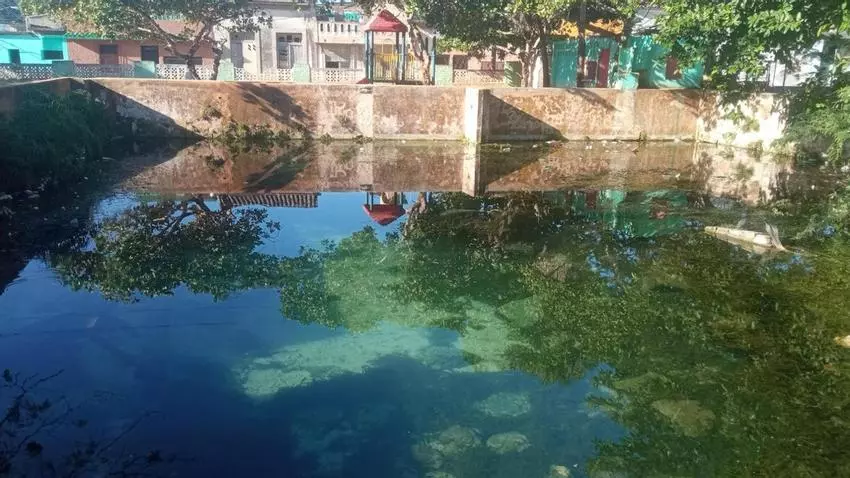
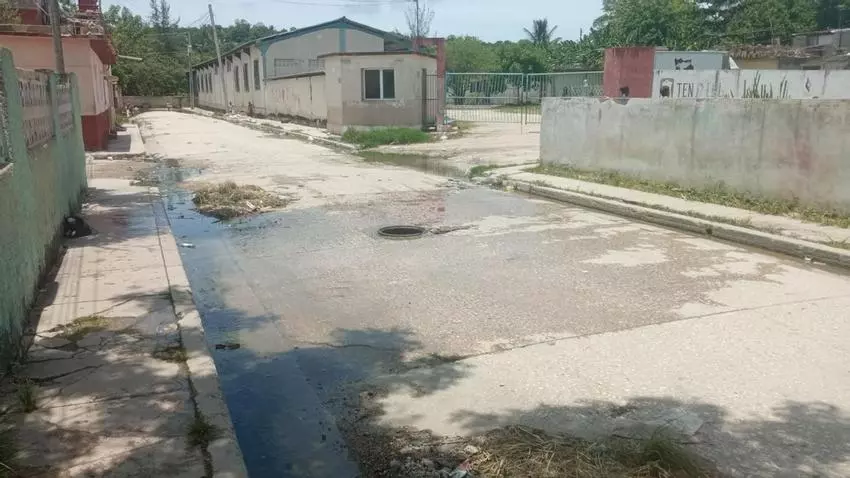
Neighborhoods such as La Marina have not received drinking water since November 2024, forcing residents to resort to alternatives such as purchasing water trucks, collecting rainwater, or even using non-potable sources, such as the well-known Pompón, a natural water outlet near the Watkins Park Zoo in the capital located on the Yumurí River.
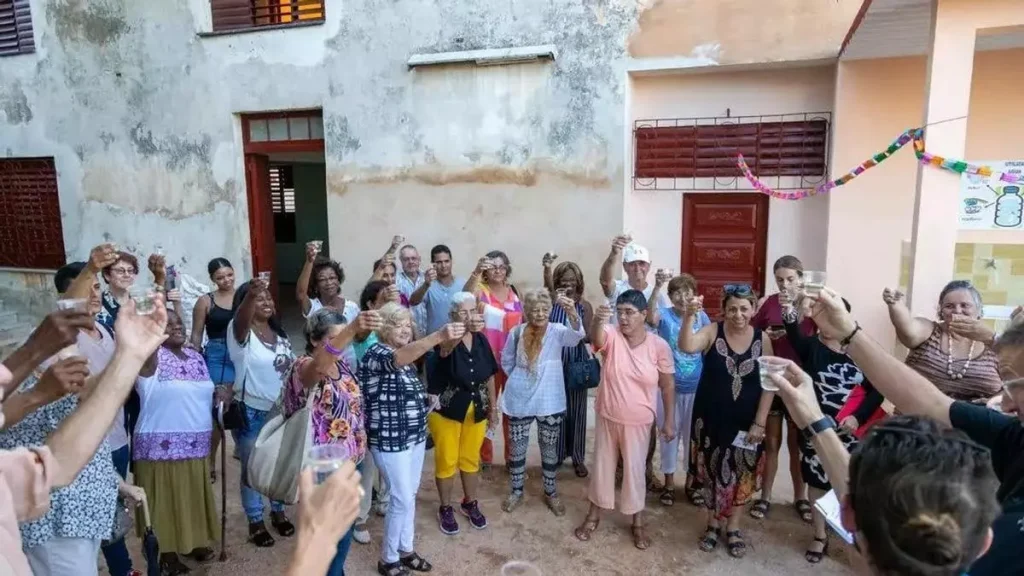
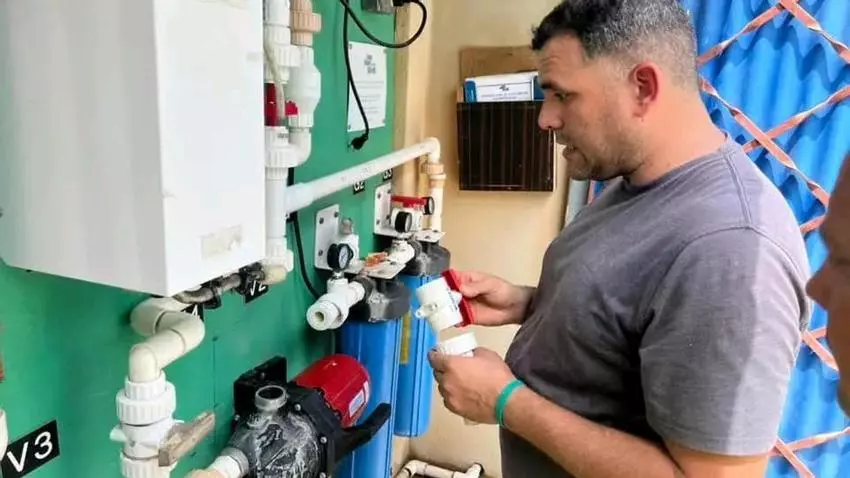
In the midst of this situation, which has been ongoing for months and is similar to what happens in other parts of the country, such as the East, the American religious organization Living Waters for the World has become a lifeline for hundreds of residents. Based in Texas, the NGO installs and maintains water purifiers in developing countries through a network of evangelical churches, primarily Presbyterian. continue reading
The Pompón is a natural water source near the Watkins Park Zoo. / 14ymedio
Present on the island since 2006, with the approval of the National Council of Churches, Living Waters for the World was officially established in 2012 and according to its website, its role is to “coordinate, train teams, and ensure the sustainability.” Currently, they report having 62 projects in Cuba—one of them “non-operational”—although they don’t specify where. From Matanzas, the Evangelical Theological Seminary, the Kairós Center—belonging to the First Baptist Church—and the Central Presbyterian Church are their focal points.
“It is worth all the effort when you see the acceptance and gratitude of the people who come from far away to fill their containers,” Julio César, head of the Kairós Center’s purification system, told 14ymedio. Despite Living Waters’ efforts, he doesn’t hide the difficulties of maintaining the equipment.
“It’s a complicated routine, even more so now that the power outage is hitting us hard,” a circumstance that, he says, “sometimes prevents the process from being completed.” Furthermore, he explains, the city’s water is rich in magnesium, so the purifier filters “don’t last more than six months.” The NGO, he asserts, “tries to make sure we don’t run out of filters, but even so, we’ve been visto apretados [stretched thin], as we say in good Cuban.”
The city’s water is rich in magnesium, so the filters in Living Waters purifiers “don’t last more than six months.” / Courtesy
Another problem is that they have to “rationalize” the amounts—that is, control how much water is distributed per person—”because we depend on pumping from the street, even though we have a large cistern and large tanks.” Even so, it’s the only alternative many Matanzas residents have.
Lázara is one of those who chooses to climb the steps of the Evangelical Seminary three times a week to fetch the water they purify there. “If there isn’t any, I know there are two other churches downtown that also provide the service.” Faced with this solution, she laments, she knows that “there are neighbors who drink the water they get from the gutters.”
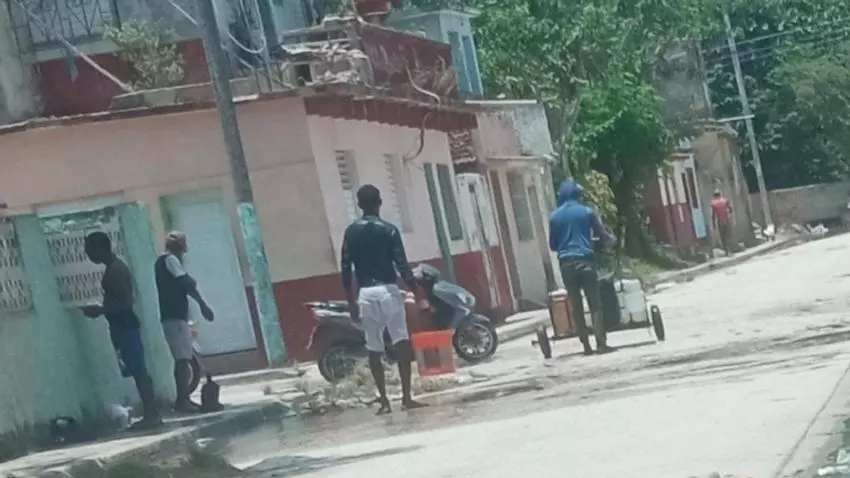
Indeed, this newspaper has witnessed the lines at a gutter where someone, at some point, began haphazardly collecting water. Unable to pay for water trucks—which in Matanzas cost around 8,000 pesos—or unable to store water, some others resort to the Pompón — a natural water source near the zoo, even if it’s just to wash, clean, or flush toilets.
There are residents who draw water directly from a gutter. / 14ymedio
The city of Matanzas sits on Cuba’s most important urban water table, which extends from the Arcos de Canasí (Canasí Arches) on the border with Mayabeque to the Bello springs. This groundwater network, stretching over 70 kilometers, supplies water to a large part of the province and feeds a spring that runs underground through the historic city center, emptying into the aforementioned Pompón River, where it joins the Yumurí River.
This underground river, dubbed the “ghost river” by Ercilio Vento Canosa in his book Matanzas y sus secretos (Matanzas and its Secrets), has become one of the last resorts for many families who lack access to safe water.
Neighborhoods like La Marina have not received drinking water since November 2024, forcing residents to resort to alternatives. / 14ymedio
____________
COLLABORATE WITH OUR WORK: The 14ymedio team is committed to practicing serious journalism that reflects Cuba’s reality in all its depth. Thank you for joining us on this long journey. We invite you to continue supporting us by becoming a member of 14ymedio now. Together we can continue transforming journalism in Cuba.
Neither the Ministry of Health nor the IMSS-Bienestar provide data on how many specialists are in hard-to-reach areas.
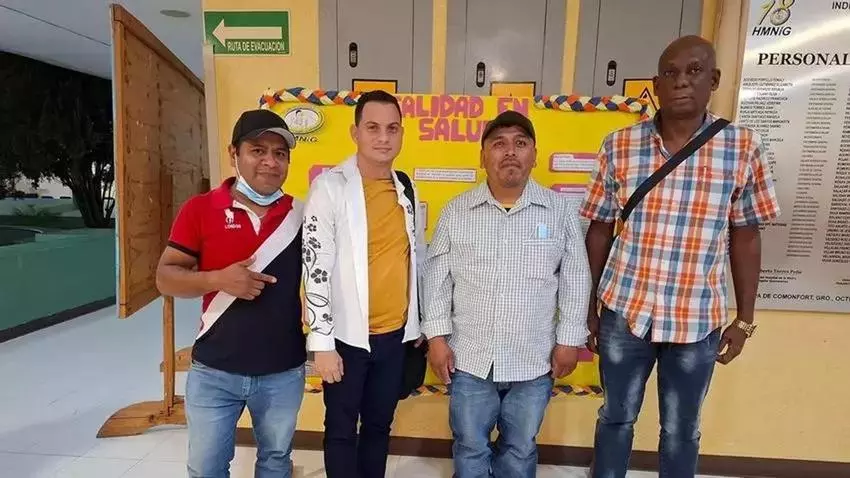
Cuban doctors in Zacualtipanito, Tepehuacan municipality of Guerrero, in the state of Hidalgo. / Facebook
14ymedio Mexico City, 8 August 2025 — Mexican health agencies do not know how many doctors were sent to marginalized areas, the primary objective for which 3,101 specialists from Cuba were hired. According to documents obtained via a request to government transparency agencies by the newspaper El Universal, there is a “lack of mechanisms” to evaluate the performance of the doctors for whom 92,525,569 euros (107,905,224 dollars) were paid between July 2022 and May 2025
The Transparency Unit of the Mexican Social Security Institute stated that the first collaboration agreement between the two countries establishes that the “results evaluation” would be handled by the General Directorate of Health Quality and Education, under the Ministry of Health, but that it does not have data on the participation of doctors from the island
The government agency argued that “the assignment of Cuban doctors was carried out in Medical Units of the Health Services of the Mexican Social Security Institute for Welfare–the free healthcare agency created in 2022 by the government of the self-proclaimed Fourth Transformation, headed by then-President Andrés Manuel López Obrador, replacing Seguro Popular–and in accordance with the coverage needs determined by the institution.
Last August, Cuban doctors arrived in the Yerba Santa community in the municipality of Acatepec (Guerrero). / Facebook/Yerba Santa
For its part, the Ministry of Health declared itself “incompetent” regarding the island’s specialists hired by Mexico. The agency delegated this responsibility to IMSS-Bienestar, stating that it continue reading
“administers and operates the Cuban Medical Specialists plan.”
However, IMSS-Bienestar responded to the request for information with a document in which it stated that “assuming without conceding that such documentary information exists (…) it is outside the scope of jurisdiction.”
Last April, a source from the Health Department told 14ymedio that everything related to doctors is coordinated through the Cuban Medical Brigade, headed by Cuban Alfredo González Lorenzo , who reports to Neuronic Mexicana, which in turn reports to Neuronic SA Cuba. Since 2018, this company, whose president is the Cuban Tania Guerra, has represented the products and services of the island’s biotechnology and pharmaceutical industries.
The initial contract with Mexico was through Comercializadora de Servicios Médicos Cubanos SA de CV, a Cuban company accused internationally of human trafficking.
The presence of Cuban specialists has also been questioned due to the preferential conditions they receive. Between July 1 and the future, under the “logistical and operational support” scheme, Cuban doctors were given a diet that included “whole-grain bread and cereals, as well as low-fat dairy products and fruits, as well as vegetables, proteins, healthy fats, plants, and carbohydrates.” The food was supposed to be “satiating, yet easy to digest.”
Bribes to Cubans have been reported in 16 of Mexico’s 32 states. In Tabasco, 13,662,169 pesos (about $680,000) were allocated through Comercializadora de la Península del Mayab SA de CV. In Veracruz, 13,002,685 pesos were paid to Diego Valay Bernal for contracted services. In Sonora, the State of Mexico, Zacatecas, San Luis Potosí, and Morelos, 74,572,438 pesos were disbursed to Distribuidora Potosina Biofar. In a second installment, in Zacatecas, 9,784,097 pesos were paid to another supplier named Eduardo Escamilla Jaime, who in 2000 was awarded several bids by the municipal government of Fresnillo
____________
COLLABORATE WITH OUR WORK: The 14ymedio team is committed to practicing serious journalism that reflects Cuba’s reality in all its depth. Thank you for joining us on this long journey. We invite you to continue supporting us by becoming a member of 14ymedio now. Together we can continue transforming journalism in Cuba.
The system is already working, but “people still don’t know about it,” said an employee at the Obispo branch in Old Havana.
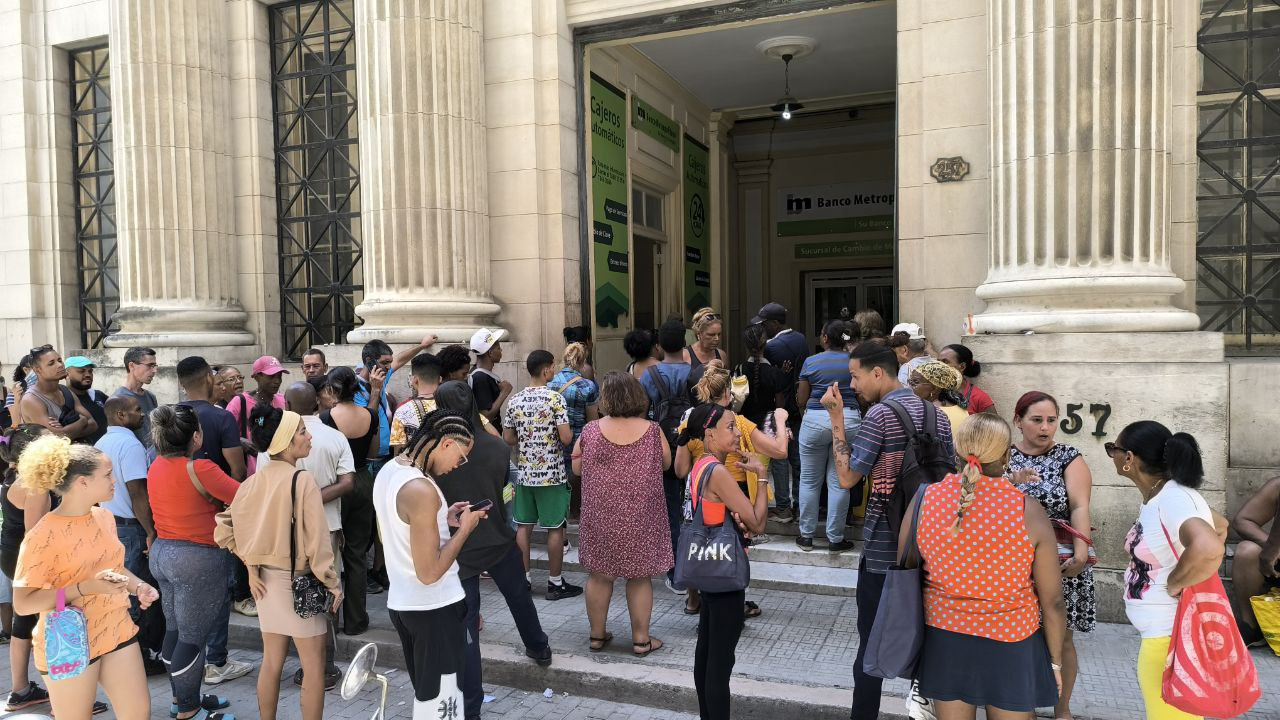
Branch 308 of Banco Metropolitano, in Old Havana, this Friday. / 14ymedio
14ymedio, Juan Diego Rodríguez, 8 August 2025 — A line on the left for the outdoor ATMs; another on the right for the indoor cash registers; and a third line for checking balances and transferring money from the machines. Among the crush of people waiting this Friday outside branch 308 of Banco Metropolitano in Old Havana, not one of them knew that the establishment now offers the option of booking an ATM appointment through the Ticket app, as the bank announced on its social media.
Asked about it, an employee confirmed that the system is already up and running, but that “people still don’t know about it.” Today, in addition to that first branch, located on Obispo Street between Cuba and Aguiar Streets, Banco Metropolitano added seven more offices with pre-reservation via Ticket. The branches participating are: number 262, at Cuba and O’Reilly Streets; number 266, at O’Reilly and Compostela Streets, and also in Old Havana; number 247, at 23rd and Montero Sánchez Streets; number 250, at Línea and Paseo Streets, both in Plaza de la Revolución; and three more, in Guanabacoa (280), San Miguel del Padrón (286), and Marianao (313).
However, once a customer downloads the app, which until now has been used for various procedures, especially purchasing fuel at gas stations in Havana, it constantly produces errors. After several attempts, Nadia, a resident of El Vedado, was able to get her appointment. Each appointment costs 10 pesos.
Part of the line outside the Obispo branch of Banco Metropolitano, this Friday. / 14ymedio
A glance at Banco Metropolitano’s Telegram page, on the other hand, reveals a common complaint among many users: the bank is experiencing “technical problems” and transactions through Transfermóvil aren’t working.
“It won’t let me log in, I need to make an urgent transfer, please provide an answer.” “Is there a problem with the transfers? Do you know what’s going on? Weren’t they supposed to have updated it last week?” “How long will the problem with Transfermóvil last?” All these are questions asked by annoyed customers.
The picture was completed by the fact that the bank had no connection.
None of the complaints received a response, despite their numerous online submissions. To address them, the bank also requested appointments through Ticket. “The only difference between scheduling appointments for questions and complaints and for banking services of any kind is that the former is free,” Nadia joked.
How will they combine reserved appointments with Tickets with time in the “traditional” line, which doesn’t seem to be disappearing for the time being? It is an open question.
____________
COLLABORATE WITH OUR WORK: The 14ymedio team is committed to practicing serious journalism that reflects Cuba’s reality in all its depth. Thank you for joining us on this long journey. We invite you to continue supporting us by becoming a member of 14ymedio now. Together we can continue transforming journalism in Cuba.
Four people involved are captured, including a former employee of the company.
There are no reports from the owners or administrators of the small town, which Escambray erroneously calls”Lancervi.” / Facebook / Landservi SURL
14ymedio, Sancti Spíritus, August 9, 2025 — In the early hours of July 11, a daring criminal operation was carried out amid a blackout in Sancti Spíritus. Landservi SURL, a wholesaler in the agri-food sector located in the Chambelon area, was the victim of a million-peso robbery. Four people, two of whom were identified as the main perpetrators, were arrested and confessed to their involvement, according to an official report issued by the Ministry of the Interior.
The assailants took advantage of the lack of surveillance and electrical power to access the premises. They climbed up, created a hole in the zinc tarp roof and entered the premises. One of those involved had previously worked at the company and knew every nook and cranny of the place and where the money was kept.
The two main perpetrators were arrested, confessed to their guilt and named two others involved.
The investigation did not require a large technical deployment by the police. Progress was made, as is usually the case in Cuba, thanks to information from the population, including a couple of anonymous complaints. Following the initial proceedings, the two main perpetrators were arrested, confessed their guilt and named two others involved. One of them would have transported the loot in a cart to his home; the other acted as an intermediary for the purchase of the means of transport that facilitated the theft. Both would have received considerable compensation. continue reading
The finding of material goods acquired with the stolen money, such as two modern motorcycles valued at more than one million pesos each, two electric motors, five high-end mobile phones, clothing, a cart, and the recovery of 2,500,000 pesos in cash show the magnitude of the theft.
Frequent blackouts have become ideal scenarios for the increase in criminal acts.
At the scene of the crime, expert work was able to identify fragments of fingerprints that matched samples from the detainees. Those involved are currently in pre-trial detention, while their possible link to other robberies in the town is being investigated.
Behind the official account, this theft highlights persistent structural problems. The frequent blackouts have become ideal scenarios for the increase in criminal acts. Weak surveillance in a strategic area shows deep cracks in institutional and business security.
The participation of a former company employee opens up an ethical and control gap in human resource management. The awarding of compensation to those involved, who received large sums for participating in the transfer and brokering of the theft, suggests a more complex level of criminal organization than a simple robbery. A script is developed with the assistance of various actors who seek to quickly gain economic benefits without taking the direct risks of the act.
The newspaper Escambray erroneously calls the company “Lancervi.”
The official narrative works with an economy of words. A criminal act is presented; the modus operandi is explained; the arrest and recovery of the loot are confirmed; and adherence to the law is affirmed. But faces, claims and voices are missing from this synthesis..
There is no testimony from the owners or from the managers of the small town, which Escambray erroneously calls “Lancervi.” There are no data on the impact of crime on commercial operations, nor analysis of the economic environment that drives these crimes. The Landservi robbery is not only a story of intruders sneaking out at night but also a reflection on an increase in the complexity of crimes in Cuba.
Translated by Regina Anavy
____________
COLLABORATE WITH OUR WORK: The 14ymedio team is committed to practicing serious journalism that reflects Cuba’s reality in all its depth. Thank you for joining us on this long journey. We invite you to continue supporting us by becoming a member of 14ymedio now. Together we can continue transforming journalism in Cuba.
As time went on, and with endless jumps, obsession began to outweigh even the memory itself.
As the years went by, he stopped jumping with the hope of changing the past; now he traveled only to witness the inevitable. / 14ymedio
14ymedio, Milton Chanes, Berlin, 9 August 2025 — Five years had passed since that first leap through time. Seventeen since the first time he lost Ana in that absurd, cruel accident.
Now, tired and consumed, he could barely recognize himself in the reflection of the man who had once dreamed of defying his fate. After countless attempts and journeys—each one driven by the irrational hope of finding a crack in the inevitable—he had come to a bitter certainty: any intervention only hastened the tragedy, or worse, made him an indispensable piece of that relentless chain. It was as if time, far from taking pity, answered his defiance with ever harsher punishment, returning him again and again to the same ending. Ana always died, her head striking the bumper of the old ‘54 Chevrolet Bel Air, driven, invariably, by the same person.
As time went on, and with endless jumps, obsession began to outweigh even the memory itself. He was no longer sure what he truly loved: Ana, or the ever-elusive possibility of saving her. He resembled more and more that gambler who, even after losing everything, insists on one more bet, convinced that next time, at last, luck will be on his side.
No one at the laboratory suspected his nocturnal incursions. Hidden behind the monotonous routine of the cleaning staff, he had become practically invisible to everyone. That invisibility, patiently cultivated over the years, allowed him to become a clandestine expert at operating the machine. He took advantage of any slip—a door left ajar, a password scribbled carelessly on a sheet—to slip into restricted areas and activate the mechanism in secret, always returning before anyone noticed his absence. Unlike the official travelers, he did not receive regenerative treatments: every jump left its mark, and his body, more foreign to him each day, bore the accumulated wear of time.
As the years went by, he stopped jumping with the hope of changing the past; now he traveled only to witness the inevitable, scrutinizing the repeated details in search of a saving fissure, even though the ending was always the same.
Obsession had condemned him to be a perpetual spectator of his own defeat.
He no longer intervened: he simply studied, over and over again, the immutable choreography of the tragedy. He confined himself to being a witness.
He no longer intervened: he simply studied, over and over again, the immutable choreography of the tragedy. He confined himself to being a witness—sometimes a few meters away, other times half a block—watching Ana die, always the same, under the rain.
He noted every step, every gesture, every shadow of that endless night; he filled notebooks with diagrams, timed the intervals, memorized the faces of the witnesses, as if that could offer him some kind of answer.
But it was no longer a matter of willpower: his body, exhausted, could barely endure another jump without proper care. Resignation grew as his exhaustion became unbearable. He knew he might have energy left for just one last journey through time. At most, he could aspire only to be another observer at the final showing of his own tragedy.
He didn’t always choose the same place to witness the scene. Sometimes, he took shelter under an umbrella across the street, eyes fixed on the corner and the café door. Other times, he hid at the bus stop, searching for the best perspective without being detected by his younger selves. Occasionally, he took refuge in a dark doorway or in the entrance of a shop, watching through the misted reflection of the glass. He even waited inside a taxi, watching the fateful corner as if it were the stage of a play repeating to the point of exhaustion.
He tried every angle, every blind spot; he studied the rhythm of the neighborhood, the flicker of the lights, the scattered reflections on the wet asphalt. Nothing changed: the scene always led to the same outcome.
Sometimes he felt the scene itself rejected him, as if he could never fully grasp it: there was always something out of focus, a silhouette dissolving, a phrase lost in the rain.
On the loneliest nights, he lingered long in front of the café, watching from the shadows as his younger self waited for Ana by the window, oblivious to everything, absorbed in a hope that no longer belonged to him. During those vigils, he sometimes had the impression that the owner of the café, from behind the counter, was scrutinizing him with silent curiosity, as if sensing that this quiet, elusive customer carried an old secret. There was something in that gaze—perhaps a mix of suspicion and a faint echo of familiarity—that unsettled him. At times, he felt the owner guessed he didn’t quite belong there, that he was an intruder in his own time, a visitor from another life.
Thus, repeating the cycle of tragedy—always a witness, never a savior—he lost strength, desire, even hope. Each jump left him more exhausted, more distant from himself. He knew his body would not withstand many more journeys. He began to accept the need for a final break, to abandon forever this life of obsessive spectator.
That is why he decided to try one last time: a leap as far back in time as possible, in search of a definitive escape
That is why he decided to try one last time: a leap as far back in time as possible, in search of a definitive escape, perhaps of oblivion. But as he adjusted the controls of the machine, an unexpected doubt stopped him: did he truly want to leave forever, or did he simply wish to see her one last time? Perhaps—that thought sent an unknown tremor through him—the last farewell was the only thing he still could choose.
One day, he realized that to break the cycle he would have to look beyond the fatal instant: to search for clues before and after the crucial moment, to explore branches of time that had until then been forbidden to him. He saw only one way out: to go even further back, even knowing that might mean being trapped in the past forever. What was the point of returning, if Ana would no longer be there to receive him? The question hurt, but the possibility of discovering a hidden meaning in the days before the tragedy, or finding some loose thread capable of altering fate, became irresistible in the face of his own ruin.
In those preceding days, the laboratory buzzed with unusual activity. Technicians and scientists worked in shifts until late, absorbed in adjustments and calibrations that they rarely fully explained. Had they noticed his absences? Had they finally discovered him? Accustomed to moving in shadows, he noticed lights on at odd hours, whispered voices, a palpable nervousness in the air. Perhaps—he thought—something in the system was failing, an instability beyond his control.
Yet what disturbed him most was his own sense of rootlessness. He could barely distinguish what time period he was living in anymore. He saw more people in the past—again and again, in the same places and dates—than in any present interaction. It was becoming increasingly difficult to tell what was the future, or if, for him, the future even still existed.
He felt his body would not withstand many more jumps. That’s why he wished to go as far as possible, even if that meant getting trapped in the past and never being able to return. He knew, from rumors, that there was a way to achieve this, though he didn’t know how. Deep down, he wanted this to be his final jump. And yet, he also knew that with each trip to the past, something in his mind sharpened: his brain seemed to grow younger, granting him an almost supernatural clarity, while his body, increasingly tired, suffered more with each return.
That night, as he programmed the machine for the final leap, he finally thought he knew what he had to do to lose himself in the past.
That night, as he programmed the machine for the final leap, he finally thought he knew what he had to do to lose himself in the past. Suddenly, he heard footsteps in the hallway. Someone was approaching the room. He hid behind a desk just in time. He saw feet pause at the doorway, hesitating. The door opened and closed softly. The person approached the machine; he could only see their shoes, not understanding what they were doing. He heard an electronic sound—perhaps an attempt to turn the device off. Then, the figure left as quietly as they had arrived. Were they going to fetch someone else? There was no time to find out. He had to act, or he’d be discovered.
In his haste, he barely checked the controls: a light blinked longer than usual, a number flashed out of place. Fear and exhaustion overrode caution. He pressed the commands almost mechanically, trusting habit more than certainty. He didn’t know if it was fatigue, fear, or simply a mistake, but in that instant, he activated the mechanism.
Only later would he understand that this leap had thrown him much further back in time than he had planned—and that perhaps, this time, there would truly be no return.
COLLABORATE WITH OUR WORK: The 14ymedio team is committed to practicing serious journalism that reflects Cuba’s reality in all its depth. Thank you for joining us on this long journey. We invite you to continue supporting us by becoming a member of 14ymedio now. Together we can continue transforming journalism in Cuba.
Trump’s veto on travel from 19 countries, including Cuba, “puts at risk” the generation of taxes, warns a report.
Migrants report that work permits are available from Canada, Germany, Australia and Switzerland. / Archive / EFE
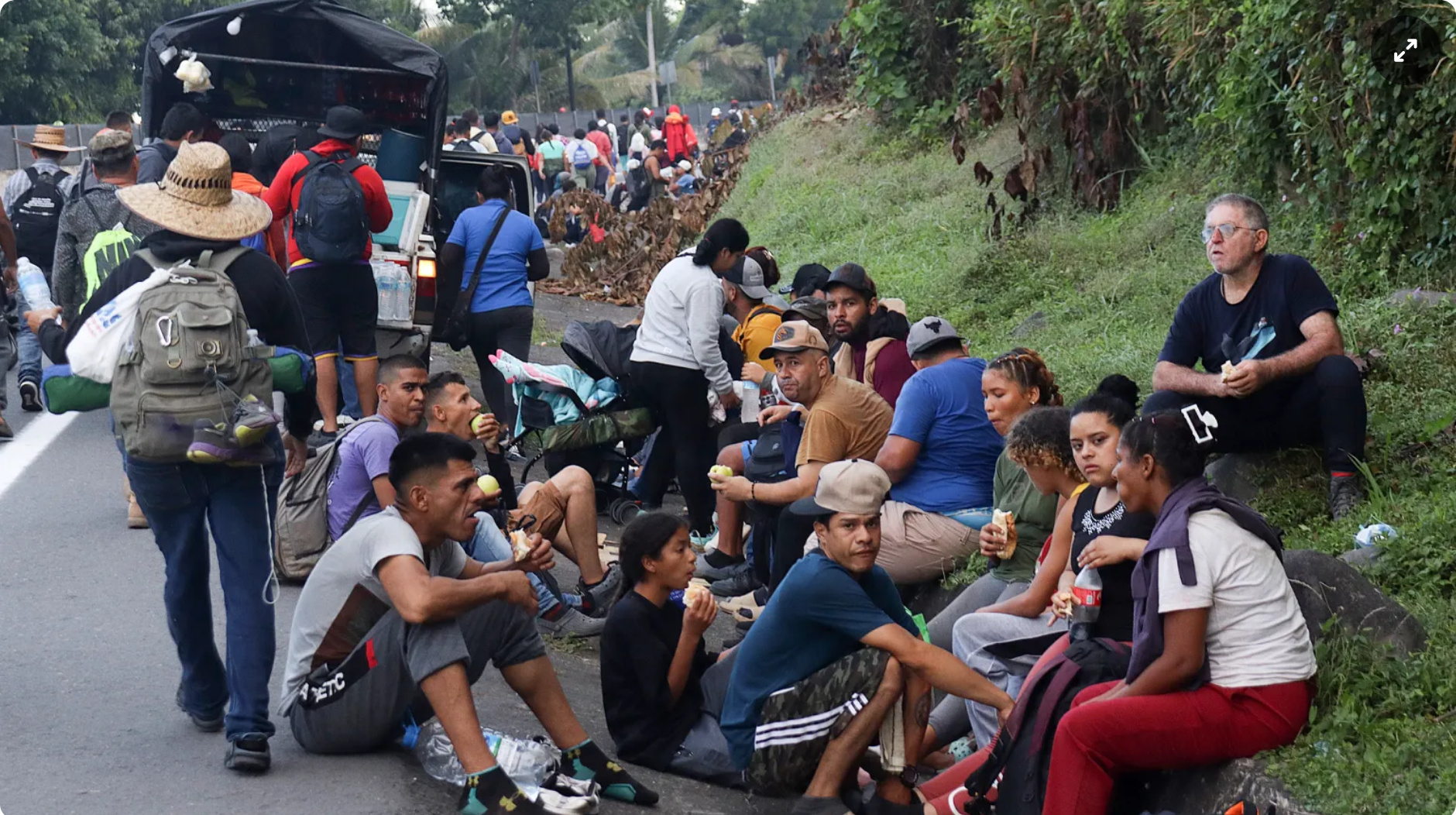
EFE (via 14ymedio), Tapachula/Washington, August 7, 2025 — Hundreds of migrants, mostly Cubans, set off on Wednesday in a new caravan from the southern border of Mexico, looking to reach the north of the country. There they hope to regularize their documents to be able to travel to Canada or other countries that offer work, in the face of the tightening of US immigration measures.
“We want to get to Monterrey because the embassies of Canada and Germany are giving us visas to work and to populate their cities,” Maydali Barajo, a Cuban woman who travels with her grandson, told EFE.
The woman explained that they had the illusion of making their dreams come true in Mexico, but the country “denied it.” Now, she says, they want to look for other horizons “where we can realize ourselves as human beings and be the honest people that we are. And fight and help those we left behind.”
La Cubana points out that she went to Mexico because she hoped that the government would welcome them and give them work opportunities after Donald Trump “closed the dream to the whole world” of entering the US. But both the Mexican Commission for Aid to Refugees (COMAR) and the migration authorities “refused everything.” continue reading
‘La Cubana’ points out that she went to Mexico because she hoped that the government would welcome them and give them work opportunities.
In the caravan there are women and men, old people and children, who are undertaking this journey on federal highway 200 despite the risks and dangers.
This was after their stay in Tapachula, Chiapas, where they had been waiting several months for the resolution of an unsuccessful asylum application.
Prior to their departure, Father Heyman Vázquez Medina, pastor of San Andrés Apóstol in Ciudad Hidalgo, Chiapas, prayed with the migrants and asked them to remain united on their way towards their next destination.
The priest said that the migrants want to reach a city so they can work, have a better quality of life and live with dignity, but he regretted that the authorities intimidated them to avoid mobilizations.
“It’s a way of telling them: ’We’re going to hold you,’ of scaring and intimidating them so that they don’t have the courage to leave. The migrants are determined; it’s good, positive, that they come out, that the government and the world realize what is happening in Chiapas,” he said.
Juan Ríos, a Nicaraguan migrant, spokesman and coordinator of the group, told EFE that they organized themselves voluntarily because they do not want to stay in Tapachula. Although some have found employment, they face 12-hour working days for a salary of only 200 pesos per day (about $10.75), while conditions in the shelters are precarious.
“We have no destination in the United States. Our destination is to get to Monterrey, because most want to travel to Canada, Germany, Switzerland and Australia, which are giving work visas,” he said.
He also argued that they are not criminals, but working people. ” We are university students; here there are doctors and nurses who are suffering under a regime, for example in Cuba, Venezuela and Nicaragua.”
The Trump administration eliminated a number of immigration programs and benefits created by his predecessor, Joe Biden, including the Humanitarian Parole Program for Cuba, Nicaragua, Venezuela, and Haiti, and the CBP One application, which allowed people to request an appointment to legally cross the border.
As a result, more than half a million people have been left in legal limbo, while the courts decide on the legality of the programs, or directly on an irregular migration situation.
More than half a million people have been left in legal limbo, while the courts decide on the legality of programs, or directly on an irregular migration situation.
Trump is seeking to accelerate deportations and detentions to fulfill his campaign promise to expel the more than 11 million undocumented migrants living in the country.
Another part of his migration plan, the ban on travel to the US from 19 countries -among which is Cuba- puts “at risk” and impacts the generation of $715 million in taxes and $2.5 billion in purchasing power, according to a report by the American Immigration Council published this Wednesday.
“Those affected by this travel ban are students, workers and family members who pay taxes, support local economies and hold jobs in industries with massive shortages,” the report says.
According to the American Immigration Council, Trump’s measure puts the generation of 2.5 billion dollars at risk, because “thousands of workers cannot enter the country or move freely in the territory.” The analysis says that during 2022, the nearly 300,000 people representing the 19 banned countries generated $3.2 million in labor income and $715 million in taxes.
The human and social impacts also include family division, as some 2.4 million people in sanctioned countries are naturalized, but now many of their relatives will not be able to visit them.
Finally, the US Immigration Council considers that the veto is an exclusionary measure towards Muslim and African groups and questions the reasons Trump gave as justification for implementing the migration veto, recalling that at least 13 of the affected countries have very low rates of migration violations.
Translated by Regina Anavy
____________
COLLABORATE WITH OUR WORK: The 14ymedio team is committed to practicing serious journalism that reflects Cuba’s reality in all its depth. Thank you for joining us on this long journey. We invite you to continue supporting us by becoming a member of 14ymedio now. Together we can continue transforming journalism in Cuba.
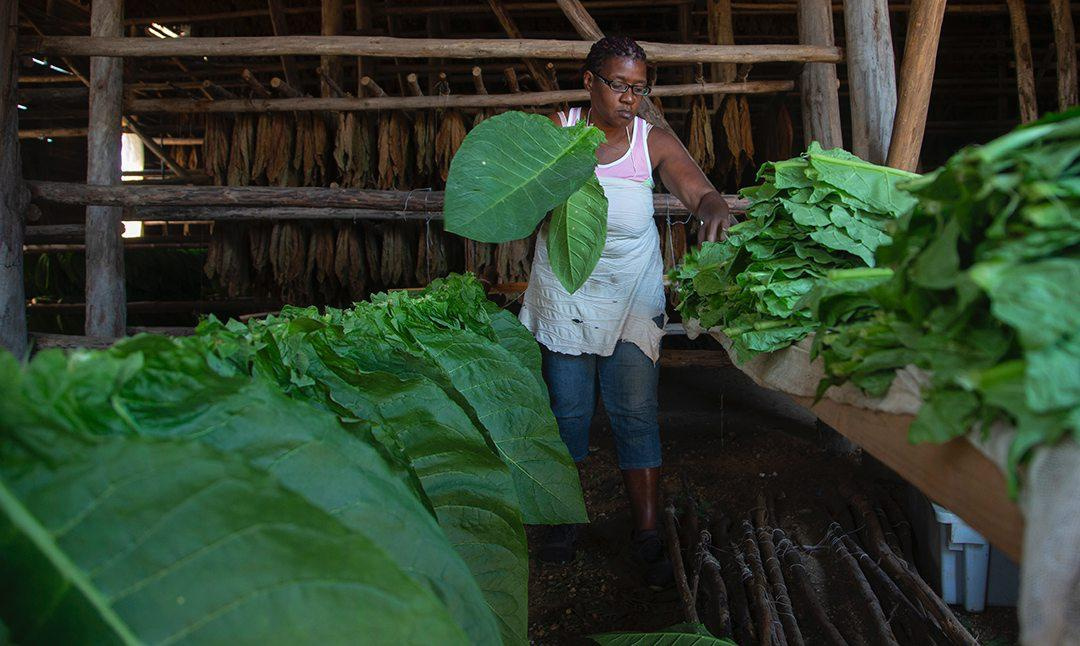
Last June, the authorities of Consolación del Sur complained that 385 hectares of the tobacco crop were ruined by lack of irrigation.
The industry has even surpassed the plan for cigarette production. / Cubadebate
14ymedio, Havana, August 9, 2025 — After months of declaring blackouts, agricultural losses and figures that seemed more appropriate for a disaster zone than for a “tobacco power,” the Cuban tobacco industry is growing again. At least, this is what the Ministry of Agriculture claims, announcing that the production of twisted tobacco for export reached six million cigars during the first half of the year. According to the agency, this figure exceeds what was achieved for the same period in 2024.
The news catches Cubans off guard, because just two months ago they read in the official press that the panorama for tobacco-growing municipalities like Consolación del Sur, in Pinar del Río, was anything but promising: 385 hectares of tobacco had been lost due to blackouts and lack of irrigation, and the yield was only 79% of that expected.
Even so, and against all odds, this Saturday the State newspaper Granma announced that not only has the plan for delivery of cigars to Habanos S.A been fulfilled by 90%, but the manufacture of cigarettes is also going strong. In fact, the Communist Party paper applauded the results, despite “two very complex months” from failures at the BrasCuba factory, located in Mariel, where production has now reached its “productive peak.” continue reading
Out of the 192 million packages planned, some 201 million were produced, so the target was surpassed at 103.4%.
The industry, said its managers, even surpassed the production plan for cigarettes: of the 192 million packages planned, some 201 million were manufactured, so the target was surpassed at 103.4%.
The recovery of the curing sheds affected by Hurricane Ian in 2022 and an upturn in agricultural production compared to the previous year are also part of the optimistic facade of Tabacuba, although there is no lack of signs of a debacle in one of the sectors that, paradoxically, the State most pampers.
Mechanized production suffers from a lack of imported parts, although according to the managers of Tabacuba, they have already produced 80% of what was planned, with the hope of catching up in the last two months of the year.
Mechanized production suffers from a lack of imported parts, although according to the managers of Tabacuba, they have already produced 80%
Even taking into account the delays in the production of cigarettes, the data contrast with the disaster declared by the authorities of Pinar del Río last June. It was planned to sow 1,500 hectares in the year with an expected yield of at least 1,778 tons, but the output was only 1,301 tons, a drop of 27 per cent.
The blow was also felt in the number of cujes (sticks for hanging the tobacco leaves): 1.9 million were achieved, just 79%, when 2.5 million were expected.
Interviewed by the official press, the farmers then admitted to being concerned about the harvest, although they assured that they would continue working “with what there is.”
Translated by Regina Anavy
____________
COLLABORATE WITH OUR WORK: The 14ymedio team is committed to practicing serious journalism that reflects Cuba’s reality in all its depth. Thank you for joining us on this long journey. We invite you to continue supporting us by becoming a member of 14ymedio now. Together we can continue transforming journalism in Cuba.
“They were thrown away, mainly paracetamol and diclofenac, to claim they were being given to patients,” a specialist told Cuba Archive.
Cuban medical brigades were sent to Bolivia between 2006 and 2019, when Evo Morales was president. / Archive/Escambray
14ymedio, Madrid, August 7, 2025 — “Patients had to be invented in order to justify all the Cubans who were part of the missions and had nothing to do with medicine.” This is what a Cuban doctor tells Cuba Archive about his experience of several years in the medical brigades sent to Bolivia by Havana during the time of the government of Evo Morales.
A doctor from the same mission confirms to 14ymedio the testimony of the specialist quoted by the organization based in the United States, and adds: “They had private cooks, custodians, drivers, laundry services, maintenance, housekeepers, counselors, maids, secretaries and support staff: all were Cubans and served as doctors.”
The doctor interviewed by Cuba Archive denounces the misuse of medicines to pretend that more patients were being treated than they actually received, in order to make the Bolivian government believe that more specialists were needed. “Surgical procedures were invented to ask for more money and make propaganda: unnecessary operations for abnormal fleshy growths and invented cataracts,” he says. continue reading
“Paracetamol and diclofenac were basically thrown away, supposedly given to patients.”
He also mentions that nurses were forced to break insulin syringes, break and burn prescription glasses and dispose of analgesics. “They basically threw paracetamol and diclofenac into the trash and said they were being given to patients,” he says, among other examples.
However, he continues, the majority of those sent were not doctors. “I remember that once in an official activity we were given a pamphlet which said that in Bolivia there were more than 700 ‘Cuban collaborators’ and, of those, fewer than 300 were healthcare personnel. I knew that the minority were doctors. The rest were handpicked. For all of them we had to invent patients and justify the money that Cuba was stealing from Bolivia.”
He also accuses the mission coordinators of living in the “most luxurious places in La Paz” with an entourage of staff: cooks, security, drivers, laundry service and all kinds of employees, who were disguised as doctors, when in reality they were political commissioners.
The doctor personally accuses the then ambassador of Cuba to Bolivia, Benigno Pérez Fernández, of sending “huge wooden crates, more than three feet high” by diplomatic bag while his colleagues were limited to 40 pounds of luggage. “The pilots and flight attendants made fun of us because we traveled with several pants and T-shirts one on top of the other in order to take some things home while the elite could send as much as they wanted,” he says.
Together with the former ambassador -in office until 2019- the doctor mentions other officials and involves the Argentine doctor Fernando Leanes–representative of the Pan American Health Organization–whom he accuses of knowing under what conditions the health workers were working without doing anything. “President Evo Morales and his family were served there, and Evo went a lot. Leanes loved stealing a camera and taking pictures with them. He knew everything, knew perfectly how we lived.”
“In Bolivia, many Cubans left the mission. Ironically, many of them were the same very revolutionary and shameless bosses]]
The doctor, who says he worked at the El Alto Eye Care Center in La Paz and is now abroad, did not leave the brigade for fear of the repercussions it could have on his family. “But in Bolivia many Cubans left the mission. Ironically, many of them were the same very revolutionary and shameless bosses.”
Similarly, he claims that he had difficulties in joining a medical brigade, because in previous years he had obtained a passport with the intention of emigrating to Spain but was refused exit. The authorities were suspicious of him, thinking that he wanted to use his job to leave the island, which is why he was systematically rejected, until an opportunity arrived for him in Bolivia.
The doctor considers that his non-military status in the Communist Party and the Union of Young Communists also played against him and states that its members paid 400 or 600 CUC (Cuban convertible currency, no longer used) to guarantee a “quick exit” from the mission. “I know that missions are bought, and even a cafeteria manager can leave as a medical technician,” he says.
The specialist earned $670, although he had been promised $800, sometimes with arrears of up to four or five months, and claims that he received a reduction of $100 per month, allegedly to pay for rent and basic services to be provided by the Bolivian Government, “so the mission leaders must have been stealing it,” he states. The doctor claims to have seen a “payroll” showing that $4,000 was paid per worker.
“Upon arrival in Bolivia, as soon as we got off the plane, someone from State Security was waiting for us at the bottom of the steps to take our passports. If you had to take another flight, they would give it back with the ticket and take it away again when you arrived at the next destination,” he says. This is consistent with what has been reported by hundreds of brigadistas, and they were forbidden from forming emotional or personal relations with nationals of the country in which they were serving. Visits to other homes were prohibited, and they were told how to respond in possible interviews.
The internationalist mission in Bolivia ended in 2019, when then acting president Jeanine Áñez cancelled the agreement with Havana, claiming that “less than a third were health professionals.”
At that time, 702 doctors left the country, of whom an estimated 205 were qualified. “They had a salary of 1,040, a stipend of 68 bolivianos per day ($9.50), and air transport costs paid by the State, making a total of about 9,000 bolivianos ($1,302) for each of them.”
Translated by Regina Anavy
____________
COLLABORATE WITH OUR WORK: The 14ymedio team is committed to practicing serious journalism that reflects Cuba’s reality in all its depth. Thank you for joining us on this long journey. We invite you to continue supporting us by becoming a member of 14ymedio now. Together we can continue transforming journalism in Cuba.
Two journalism students in Chile narrate the desertion that occurred during the 2023 Parapan American Games in Santiago.
“Escape in the Dark: the Story of the Blind Parathlete Who Deserted During Santiago 2023.” / JIT
14ymedio, Havana, 5 August 2025 — “I’m in a taxi and I’m escaping,” was the brief phrase Yunerki Ortega Ponce, a blind Cuban swimmer, told his mother over the phone after escaping from the Parapan American Games in Santiago, Chile, in November 2023.
Now, the report that recounts that flight, Escape in the Dark: The Story of the Blind Parathlete Who Deserted During Santiago 2023, published by Diego Portales University, has been nominated as a finalist for the Inter-American Press Society (IAPA) International Prize in the category of University Journalism.
Written by Francisco González and Juan José Leyton, the text accurately reconstructs the voluntary flight of Ortega Ponce, a Paralympic swimmer from the island who decided to leave the Cuban delegation.
He was the last of at least eleven Cuban athletes who deserted during that edition of the Games in Chile.
The report describes how Ortega, diagnosed with retinosis pigmentosa, came to compete in the S11 category and finished fifth in the 50-meter freestyle. He was the last of at least eleven Cuban athletes who deserted during that edition of the Games in Chile -among them members of the women’s hockey, rowing, handball and athletics teams- and his defection generated a police complaint for “alleged misfortune” before the Carabineros de Chile.
According to the report, his escape was planned with the support of a Mexican athlete friend and a lawyer in Chile. He left the Villa Panamericana in the early hours of November 19 and walked with all his belongings to the National Stadium. He was then taken by sympathetic supporters to the home of a compatriot and began the process of political asylum with attorney Mijail Bonito Lovio.
“God, don’t let them catch me, because if they grab me that will be my end.”
The text highlights the voice of Ortega, who expressed fear and determination: “God, don’t let them catch me, because if they grab me that will be my end,” in reference to possible reprisals in Cuba. It also describes his humble origin in Ranchuelo, his sports career, and the contrast between his international achievements and the lack of state support on the island.
Legislative recognition in Chile is also part of the story. In July 2025, the Chilean Senate unanimously approved granting citizenship by way of grace to Ortega, following a proposal that received support in the Chamber of Deputies in April of the same year. This institutional support helped his integration into sports in Chile. Now he is training for the paratriathlon with Venezuelan Miguel Brito as his coach and guide, with the ambition of representing Chile at the 2028 Paralympic Games in Los Angeles.
A system that rewards athletics, but marginalizes socially
The article, nominated for the Spirits International Prestige Awards (SIP), balances the chronological reconstruction of desertion with a human perspective and contextualizes the Cuban reality: a system that rewards athletically, but marginalizes socially. Ortega, a seven-time Parapan American medallist, faced obstacles in his country that led him to seek ansylum and a new citizenship in Chile, where his talent can find dignified conditions and a renewed projection.
In this sense, the journalistic work of the UDP not only exposes an individual story of escape and reinvention but also a broader phenomenon: the multiple desertions of Cuban athletes at recent international events. The narrative combines direct testimonies, logistical reconstruction and political analysis, which explains its inclusion among the finalists for the SIP competition.
Translated by Regina Anavy
____________
COLLABORATE WITH OUR WORK: The 14ymedio team is committed to practicing serious journalism that reflects Cuba’s reality in all its depth. Thank you for joining us on this long journey. We invite you to continue supporting us by becoming a member of 14ymedio now. Together we can continue transforming journalism in Cuba.
The Miami Herald got access to documents that reveal details about Gaesa’s finances and a $5 billion drop from the tourism crash.
Photo of a Cimex office in Holguín / Granma
14ymedio, Havana, August 7, 2025 — The fact that the Gaesa military conglomerate has a free hand in the Cuban economy is no secret to anyone, but knowing -with figures in hand- that the economic crisis is also affecting its finances is, to say the least, surprising. A leak of 22 internal financial documents corresponding to March and August 2024, obtained by the Miami Herald, not only provides figures on its management, but also demonstrates that the group operates without being subject to tax control or paying part of its taxes.
In the first quarter of 2024 alone, the regime’s golden goose made $2.1 billion in net profits. Cimex, its most lucrative company, was responsible for more than half of that amount, with $1.2 billion in profits as of March 2024, out of total revenues of $3.4 billion in that period, although they were even higher the previous year.
Between January and August 2024, excluding Cimex, Gaesa recorded a drop in sales and profits of 67% and 72%, respectively, compared to the same period last year.
Cimex does not appear in the 2024 balance sheets, possibly due to a cyber-security attack that paralyzed their systems in January of this year, according to the Miami Herald, which points out that the fall in the finances of the whole conglomerate -and not only Cimex- coincided with the government’s offensive against the private sector, especially against wholesalers and importers, whom it perceives as competition.
The Herald gives the example of Gaviota, the Armed Forces division dedicated to tourism, whose leaked records show that the company lost $5.8 billion in just five months last year. By March, the company had deposited $8.5 billion in “unidentified bank accounts” and in Rafin S.A., continue reading
another financial institution owned by Gaesa. Five months later, the money given to Rafin was gone, and Gaviota had only $2.7 billion in the bank.
Five months later, the money given to Rafin was no more, and Gaviota had only $2.7 billion in the bank.
According to the Herald, “there is a possibility that the military may have simply transferred the missing dollars abroad or used them to finance other investments without being recorded. However, the collapse of tourism on the Island provides a reasonable explanation for at least some of Gaviota’s losses.”
The same is true for the other companies not associated with Cimex, which between March and August 2024 went from having $14 billion in liquid assets to only 9.3 billion, a fall of 5 billion attributed to the report to the collapse of tourism.
However, the size of Gaesa’s business is such that even without taking into account the contributions of Cimex, which represent about 40% of its revenues, the rest of its companies had, in March 2024, some $18 billion in assets, of which 14.5 billion were deposited in banks or financial institutions controlled by the conglomerate itself. These figures, argues the media, give an account of a business network that functions as a state within the state and which, according to the Cuban economist Pavel Vidal -consulted by the Herald-has assumed the role of “central bank.”
The business of the conglomerate continues to generate large profits. In 2023, Gaesa accumulated $17 billion in sales and $7.2 billion in net profits in the first eight months of the year. According to Vidal, these gross gains represented about 40% of Cuba’s official GDP and were 3.2 times higher than all the State’s tax revenues.
In sectors such as tourism, construction and finance, Gaesa’s role could be even greater. “I have not been able to find a similar example of a conglomerate with such a large share in the economy of a country,” Vidal said. “It even exceeds the weight of Ecopetrol in Colombia, Petrobras in Brazil or Pdvsa in Venezuela”.
Among the companies with the largest bank accounts up to March 2024 are Gaviota, with $8.5 billion; TRD Caribe, with $3.4 billion; and Almacenes Universales, with $1.6 billion.
One of the most alarming facts revealed by the documents is that Gaesa companies do not pay taxes on their foreign exchange transactions. In August of last year, the military conglomerate owed 920 million pesos in taxes -less than 1% of its domestic sales of 100 billion pesos- but had received from the State 9.2 billion as “state investment,” ten times more.
There is also no information on the taxes that Cimex should have paid, but the documents reveal that the tax deductions that Gaesa does pay end up in an institution hitherto unknown: the Revolutionary Armed Forces Tax Administration Office.
The Herald also denounced the opacity of the conglomerate’s financial records, which distort and hide its real assets.
The Herald also denounced the opacity of the conglomerate’s financial records, which distort and conceal its real assets. For example, the finances of August 2024 report a net worth of $2 billion, identical to the profits, when in reality that patrimony amounts to $13 billion, plus 28 billion pesos.
Gaesa uses the exchange rate of 1 dollar for 24 pesos in its operations, an anonymous source close to the conglomerate told the media, and its reports add up pesos and dollars as if they were equivalent.
Although much of the information is half-baked, it is clear that Gaesa’s power within the Cuban economy is greater than expected and that the tax benefits it receives favor its enrichment. In stark contrast, the Cuban people sink ever deeper into poverty, while the dollars flow to tourism, exports and banking.
Translated by Regina Anavy
____________
COLLABORATE WITH OUR WORK: The 14ymedio team is committed to practicing serious journalism that reflects Cuba’s reality in all its depth. Thank you for joining us on this long journey. We invite you to continue supporting us by becoming a member of 14ymedio now. Together we can continue transforming journalism in Cuba.
The Island will be represented by 231 athletes, three of them hoping to win gold
One of the main contenders is the weightlifter Emanuel de la Rosa, who will compete in the category of 79 kilograms. / Granma
14ymedio/EFE, Havana, August 7, 2025 — One of the main contenders is the weightlifter Emanuel de la Rosa, who will compete in the category of 79 kilograms. His competitive record places him as a favorite, having been triple Continental Junior U13 champion and winner of three gold medals at the Pan American Youth Championship held last March in Havana. At that contest, he registered 140 kg at the start and 170 kg in the push, accumulating a total of 310 kg in the biathlon.
In the women’s section, hope is placed on the sprinter Yarima Garcia, who will participate in the 100 and 200 meter dash, in addition to the 4×100 meter relay. Her international renown grew after reaching seventh place in the U-20 World Championships of Athletics in Cali 2022. Her personal best is 11.32 seconds in the 100 meter and 23.36 seconds in the 200 meter.
In the women’s section, hope is placed on the sprinter Yarima Garcia, who will participate in the 100 and 200 meter dash.
The third outstanding name is the sprinter Reynaldo Espinosa, who will run the same tests as Garcia in the male section: the 100, 200 and 4×100 meter relays. Espinosa already has experience on the Pan American podium, after winning the silver medal in the Santiago 2023 Games with his teammates Rogelio Amores, Yaniel Carrero and Shainer Rengifo, with a time of 39.68 seconds, being surpassed only by the Brazilian team that clocked 38.68.
With a larger delegation than in the 2021 edition of Cali, where 212 athletes participated, Cuba will try to surpass the fifth place achieved then, when it accumulated a total of 70 medals: 29 gold, 19 silver and 22 bronze.
Translated by Regina Anavy
____________
COLLABORATE WITH OUR WORK: The 14ymedio team is committed to practicing serious journalism that reflects Cuba’s reality in all its depth. Thank you for joining us on this long journey. We invite you to continue supporting us by becoming a member of 14ymedio now. Together we can continue transforming journalism in Cuba.
The shells of colorful snails, endemic to the island, are sold on the internet for up to 200 dollars.
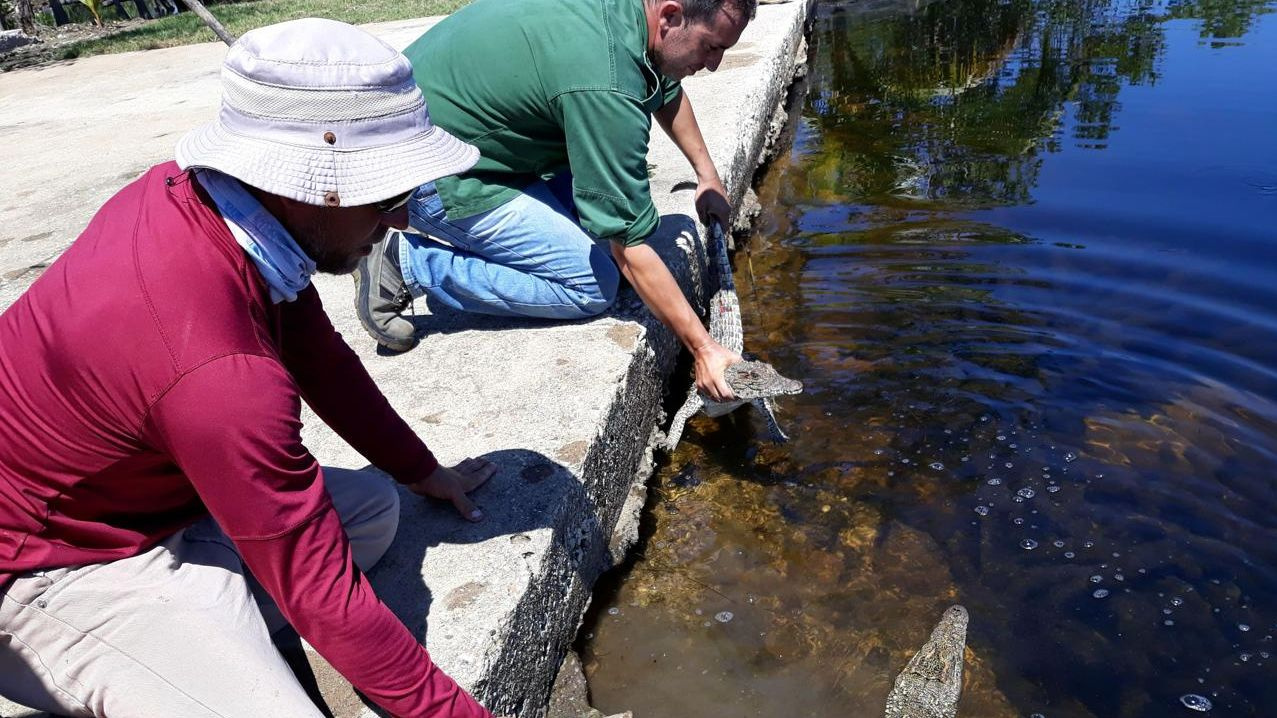
Image of caretakers at the crocodile farm in Ciénaga de Zapata. / UNDP
14ymedio, Havana, 6 August 2025 — Like many other sectors in crisis on the island, the loss of biodiversity has proved to be another sensitive issue that attracts international aid to the satisfaction of the regime. If the species are also endemic, it is likely that more resources and funds will be allocated. This is the case of the Cuban crocodile, whose protection has prompted a fund-raising effort by the United Nations Development Program (UNDP).
The campaign, called See you in a while, crocodile – based on the English expression See you later, alligator – will begin this coming October and is aimed at ensuring “the survival of the Cuban crocodile,” which is “threatened by human action on the ecosystem, climate change and other factors.”
According to the official UNDP website, “donations will make it possible to purchase satellite tags and place them on the crocodiles to monitor their movements, as well as develop educational activities that strengthen their protection in local communities.”
The program specifies that the tags will allow the study of their patterns of movement, habitat use and areas of activity, which will facilitate the planning of actions to conserve the ecosystem. They will also help identify suitable sites for releasing captive-bred crocodiles, which would increase continue reading
their chances of survival.
The initiative will also seek to strengthen collaboration with local communities, promoting educational activities that integrate residents of the Zapata Swamp in the protection of the ecosystem. “With your support, we will be able to closely follow the Cuban crocodiles in their natural habitat and better understand how to protect them,” concludes the campaign.
The initiative will also seek to strengthen collaboration with local communities, promoting educational activities.
The project is led by two specialists: biologist Etiam Pérez and veterinarian Gustavo Sosa, who, according to UNDP, have years of experience working with crocodiles. They will be responsible for the placement of satellite tags and for coordinating research, education and conservation actions that can be carried out thanks to donor contributions.
Hopefully, the funds will help to improve the quality of life of the species and extend the project, a result of an alliance between the Group of Specialists in Crocodiles of Cuba (GECC), the Company for the Conservation of the Ciénaga de Zapata, the Antonio Núñez Jiménez Foundation for Nature and Man (FANJ), and the UNDP representation in Cuba. The activities are also supported by the global Biofin initiative, coordinated in the country by the Ministry of Science, Technology and the Environment.
The Cuban crocodiles are not only a unique species of the island, but its ecosystem, close to the beaches of the south coast of Matanzas and several tourist enclaves -the breeding farm itself being one of them- has exposed them to constant human contact. Under more or less precarious conditions, crocodiles are bred in the Zapata Swamp, where they can be visited by national and international tourists, who can even taste their meat – a luxury that mostly foreigners can afford.
But the Cuban crocodile is not the only endemic species at risk for which the state receives funds and aid. In the east of the country, snails known as polymites are at risk due to climate change, habitat loss and, above all, illegal trafficking of their shells, coveted for their natural beauty and colors. A conservation study between the University of Oriente and the British University of Nottingham attempts to prevent their disappearance.
According to Cubadebate, which quotes a BBC report, there have been sales on the internet of polymite shells from the United Kingdom for more than 200 dollars, although their extraction from Cuba without permission is illegal, according to the Convention on International Trade in Endangered Species (Cites).
Among the most threatened, adds the official newspaper, is the variety sulphurosa, which has green hues with blue, orange and yellow bands. “Its beauty attracts people who collect and trade in shells. The same thing that makes them interesting as scientists is also putting them at risk,” explains Angus Davison, a geneticist at the University of Nottingham involved in the conservation project.
Of the approximately 36,700 species listed in Cuba, 35% are endangered.
The collaboration, also led by conservation biologist Bernardo Reyes-Tur, seeks to understand the genetic evolution of these species and preserve their diversity. While genetic research is being carried out in Nottingham, the work in Cuba is done “in a hot climate to try to breed snails in captivity,” a process still in the experimental phase, but which specialists believe is on track.
Cuba is facing an alarming crisis of biodiversity loss: of the approximately 36,700 species listed, 35% are endangered, and it is estimated that up to 75% of mammals could disappear. Plants are also severely affected: 580 plant species are critically endangered, along with 16 amphibian species. In addition, 70% of amphibians, of which 71 species are identified (94% endemic) on the island, are threatened.
This deterioration is mainly due to illegal hunting, intensive agriculture, mining, deforestation and pollution, which has eroded natural habitats and drastically reduced local fauna. However, the attention of the state also plays an essential part in a context of economic crisis, where the enjoyment of tourists is prioritized over the protection of natural reserves.
Even the official data confirm the state’s inability and lack of resources to protect endangered species. In the Zapata Swamp, they have come to admit, the number of rangers is insufficient.
In 2020, 14ymedio published an article on social indifference to the silent environmental crisis in Cuba. This newspaper then denounced the predation of polymites for their use in handicrafts and their illegal trade, despite being protected.
Translated by Regina Anavy
____________
COLLABORATE WITH OUR WORK: The 14ymedio team is committed to practicing serious journalism that reflects Cuba’s reality in all its depth. Thank you for joining us on this long journey. We invite you to continue supporting us by becoming a member of 14ymedio now. Together we can continue transforming journalism in Cuba.
 14ymedio, Havana, August 9, 2025 — The Cuban government’s dependence on U.S. imports continues to trend upward, as evidenced by data from last June, provided by the U.S.-Cuba Economic and Trade Council (US-Cuba Trade). In June, US food and agricultural purchases by Cuba reached $38.4 million, an increase of 10% compared to the 34.9 recorded in June last year, and also above the $37 million of June 2023.