The U.S. Secretary of State asserts that Havana is part of an organized network to pressure U.S. lawmakers.
“There is nothing spontaneous about this. It is financed. It is organized. And Cuba is part of that network and, in some cases, a crucial part of that network.” / Screenshot
EFE (via 14ymedio), Washington, August 2, 2026 / US Secretary of State Marco Rubio said Saturday that Cuba’s influence is, in his opinion, behind the “radical” protests that have taken place in the United States in recent years.
“There is nothing spontaneous about this. It is financed. It is organized. And Cuba is part of that network and, in some cases, a crucial part of that network,” he explained during an interview with Fox News.
Rubio stated that “it is a network that they will use as a weapon against us” and that its members “openly discuss how they will use that network to pressure US lawmakers.”
Rubio affirmed that Cuba, “in matters of espionage and influence operations, is a true superpower”
The United States’ chief of diplomacy also provided details about the alleged “Cuban influence on the disturbances we saw in 2020, as well as the increase in radical activity.”
Rubio believes that “the same people who were seen in the streets in 2020 then turned the tables and became pro-Hamas protesters.”
“They turned it around again, and within 48 hours of Maduro’s arrest, they already had pre-printed signs outside the courthouse demanding his release. And then they were there against ICE, attacking ICE agents,” he added, referring to U.S. Immigration and Customs continue reading
Enforcement.
“If we analyze the history of espionage in the United States, Cuba is the only country that has managed to infiltrate and maintain spies in our system consistently, even without paying them.”
Rubio, born in Miami and the son of two Cuban immigrants, explained that Cuba, “in terms of espionage and influence operations, is a true superpower.”
“If we analyze the history of espionage in the United States, Cuba is the only country that has managed to infiltrate and maintain spies in our system consistently, even without paying them,” he asserted.
This is not the first time Rubio has pointed to the Cuban government as responsible for some agitation in the United States.
Last July 16, the Secretary of State indicated that the regime on the Island “contributed to forging the extreme left” in the United States and on the continent, during the inaugural speech of the Ministerial Meeting on the Resurgence of Political Terrorism, held in Washington.
______________________
COLLABORATE WITH OUR WORK: The 14ymedio team is committed to practicing serious journalism that reflects Cuba’s reality in all its depth. Thank you for joining us on this long journey. We invite you to continue supporting us by becoming a member of 14ymedio now. Together we can continue transforming journalism in Cuba.
The lack of electricity and internet connection turns a family call between Berlin and Villa Clara into an odyssey marked by distance and exile.
That night I understood that exile doesn’t always hurt because of the distance. Sometimes it hurts because of the simplest things. / 14ymedio
14ymedio, Yankiel Gutiérrez Faife, Berlin, August 2, 2026 / At five in the afternoon I finished my workday in Berlin. It had been a long day, but since I left home in the morning my body was in Germany and my mind in Cuba. That day was my mother’s birthday and I was only thinking about one thing: managing to speak with her before her birthday celebrations on the island ended.
During my workday, I checked the clock several times. Not because I wanted it to end, but because I was calculating the time difference. I knew it wouldn’t be just any call. In Cuba, a phone call depends on too many things: electricity, phones with batteries, available coverage and internet connection, and someone able to answer.
When I got home, I didn’t even change my clothes. The first thing I did was buy international calling minutes. I couldn’t call by WhatsApp, and the messages I sent couldn’t be delivered. Without electricity, there is no internet either, and when the power outages last almost all day, a video call is a virtually impossible luxury. I wanted to hear my mother’s voice, even if it was just for a few minutes, to know how she was and wish her a happy birthday in my own voice.
I dialed her home phone, it was off, and I kept waiting until 11:30 at night in Berlin, which was 5:30 in the afternoon in Cuba. I tried calling again, but no one answered. I called again. Nothing.
In Cuba, a phone call depends on too many things
It didn’t surprise me. I imagined the phones lying uncharged on a table, waiting for that single hour of electricity they often get during the day. In Cuba, nobody takes it for granted that a phone will be on anymore.
Then I dialed Yolanda’s number, the neighbor who, luckily, still has a phone with minutes, although it also has a battery.
She has become, without any intention, the bridge between my family and me when power outages leave my parents’ house without communication. I only have a few minutes, between three and five, since it’s for emergencies.
–Hello, Yolanda. How are you?
–Hey my boy! It’s so good to hear from you. How are you?
I explained that I was calling to congratulate my mother.
–Could I speak with her for three minutes?
–Sure, wait a moment. I’ll call her now.
I hung up and called back five minutes later.
While I waited, I thought about everything that continue reading
had happened that day.
In any other country, traveling just over 250 kilometers would be a journey of a few hours. In Cuba, it can mean waiting for months.
My sister had traveled from Havana to celebrate my birthday. I hadn’t been able to visit my parents for six months. Not because I didn’t want to or because I was busy. Simply because there was no fuel, no way to get there.
In any other country, traveling just over 250 kilometers would be a journey of a few hours. In Cuba, it can mean waiting for months.
In the end, my sister, an aunt, and several cousins pooled their money to rent a car. Only then were they able to get to Villa Clara. It struck me that, living on the same island, my sister needed to plan a trip as if she were going to another country.
I was more than eight thousand kilometers away. She was just over two hundred and fifty. And yet, we both had almost the same difficulties in reaching our mother.
Suddenly I heard a voice on the other end of the line.
–Hello, Pipo?
It was my mother.
She tried to say something, but the words got trapped in her tears.
I felt a lump in my throat.
–Mom, congratulations. I wish you good health and many more years of life. I hope we can celebrate this day together very soon.
She didn’t respond for a few seconds.
I only heard her crying.
She tried to say something, but the words got stuck in her throat as she cried.
Then my father took the phone and they tried to hide it from me and divert attention from my mother’s crying, but I know her. My father and I spoke for barely a minute. He asked me how I was and how work was going. Then my mother came back.
I trepeated that I was fine, that she shouldn’t worry about me, and that I loved her very much.
I’m sure she tried to hold back her tears so I wouldn’t worry. She didn’t tell me. Nor did she need to. I’m her son, and I know my mother’s silence. I know when she’s trying to appear strong even though she’s falling apart inside. As I listened to her, I felt a lump in my throat and had to make an effort to keep my own voice from breaking.
Then the call was cut off.
At least I was able to congratulate her. It wasn’t a video call, and I couldn’t see her smile. I couldn’t sing “Happy Birthday” to her. I couldn’t hug her. I only got to give her three minutes.
The phone had run out of battery.
There was no time to say goodbye.
I stared at my phone screen for a few seconds, wondering if the call might come back, but it didn’t. I thought about the image that surely remained on the other end: my mother holding the phone, which was off, tears in her eyes, after hearing her son’s voice for just a few minutes.
At least I was able to congratulate her. It wasn’t a video call, and I couldn’t see her smile. I couldn’t sing “Happy Birthday” to her. I couldn’t hug her. I only got to give her three minutes.
That night I understood that exile doesn’t always hurt because of the distance. Sometimes it hurts because of the simplest things. Because you can’t call when you want to. Because you depend on the battery of a borrowed phone. Because you have to buy expensive international minutes since the internet disappears every time the power goes out.
While in Berlin the city was still lit up and the subway continued to function normally, in Cuba my family waited for the next moment when the electricity would return so they could charge a phone again.
______________________
COLLABORATE WITH OUR WORK: The 14ymedio team is committed to practicing serious journalism that reflects Cuba’s reality in all its depth. Thank you for joining us on this long journey. We invite you to continue supporting us by becoming a member of 14ymedio now. Together we can continue transforming journalism in Cuba.
The parish suspended the distribution after ‘line jumpers’, repeat customers, and neighbors without prescriptions appeared.
According to several attendees, the parish was distributing glasses with varying magnifications, some dipyrone tablets, and medications that residents identified as antibiotics. / 14ymedio
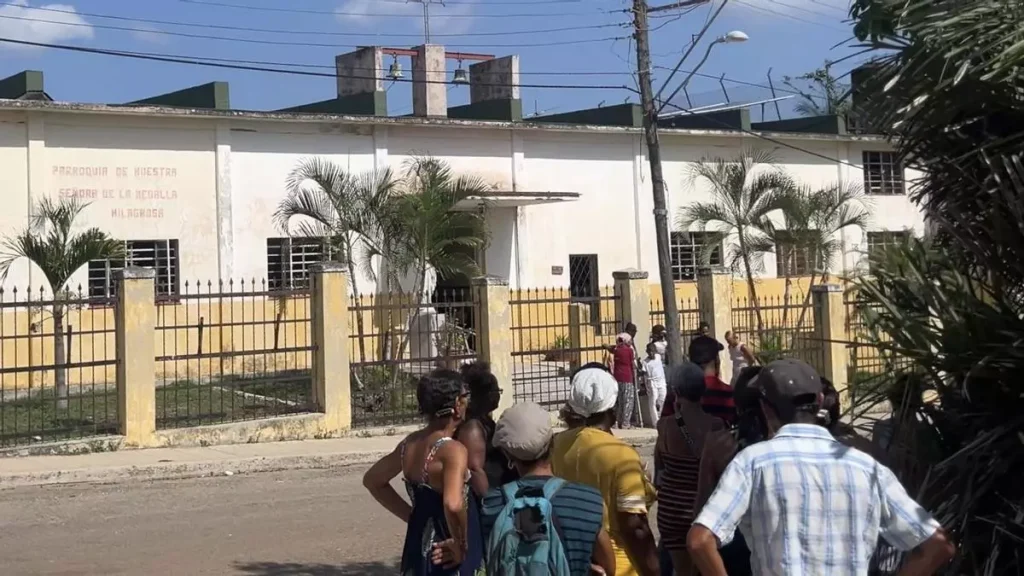
14ymedio, Darío Hernández, August 2, 2026 / “They say they’re giving away eyeglasses at the church.” The news spread through Guanabacoa this week with the speed that attends rumors about any scarce product in Cuba. In no time, a line of residents formed under the sun in front of the parish of Our Lady of the Miraculous Medal, located next to the amphitheater in the Havana municipality.
The offer was hard to ignore in a country where buying prescription glasses or obtaining antibiotics can require months of searching and an amount of money unattainable for many retirees. According to several attendees, the parish was distributing glasses with varying prescriptions, some dipyrone tablets, and medications that locals identified as antibiotics.
No one could pinpoint the origin of the donation. In line, some people claimed it was part of “aid from the United States,” while others said they had heard the goods had arrived through a religious organization.
“This is from the millions the Americans sent,” commented a woman while waiting. Another resident added, “I don’t know if it’s 10 or 100 million, but they say it came from there.” The claim was repeated from mouth to mouth without anyone being able to prove it. continue reading
“This is from the millions that the Americans sent,” commented a woman while she waited. / 14ymedio
The scene revealed, above all, the depth of the need. Elderly people, women with children, and people who had come from other parts of the municipality were gathered in front of the church. Some shielded themselves from the sun with umbrellas; others sat on the grass or stood waiting by the fence.
Initially, as this newspaper observed at the site, the process proceeded fairly normally. Simply requesting the desired prescription was sufficient. No eye exam was required, nor was a recent prescription necessary.
“They gave you whichever one you wanted,” explained one of the attendees, who left wearing black-framed glasses. The lenses appeared to be the pre-assembled reading glasses sold with standard magnification, but the residents were talking about them as if they could solve any vision problem.
“They gave you whichever one you wanted,” explained one of the attendees, who left wearing black-framed glasses. / 14ymedio
Others argued about who should have priority. “The elderly first,” some demanded. There were also complaints that there weren’t enough seats for people with mobility difficulties and that those who had been waiting the longest were afraid of losing their place.
The line ended up turning into a dispute. Attendees reported the presence of ‘line standers’ holding places, of people trying to get in twice, and others cutting in front of those who had been waiting for hours. The atmosphere “got heated,” according to several residents.
The priest then decided to halt the give-away. The suspension left dozens of people in front of the church, some annoyed and others convinced that the distribution would resume two days later. The version that circulates in the neighborhood was that the products would be distributed again on Friday.
Others remained in the surroundings for a while, observing the entrance and asking questions of those who were leaving the building. / 14ymedio
However, on Friday the parish priest announced that the distribution would not continue. Even so, several people arrived early at the church to see if there was any chance of receiving anything. “I came just in case,” said a woman in front of the gate. “Yesterday they told me they were still distributing today.” Others lingered nearby, watching the entrance and asking those leaving the building.
Among the residents, it was said that the priest was considering replacing the line with a house-to-house distribution, especially among the elderly, the sick, and people with mobility problems.
The parish, overwhelmed by demand far exceeding its capacity, ended up closing the distribution. The line remained as a portrait of a country where a small donation, even without a confirmed origin or sufficient organization, can immediately become a massive event.
______________________
COLLABORATE WITH OUR WORK: The 14ymedio team is committed to practicing serious journalism that reflects Cuba’s reality in all its depth. Thank you for joining us on this long journey. We invite you to continue supporting us by becoming a member of 14ymedio now. Together we can continue transforming journalism in Cuba.
A virus, an empty medicine cabinet, and the haunting image of those who grow old alone reveal the depth of Cuba’s health and demographic crisis.
There is no way to stop the virus in a city filled with mountains of garbage and without a vector control campaign to reduce the mosquito population. / 14ymedio
14ymedio, Havana, Yoani Sánchez, August 1, 2026 / Day One. I wake up with a tingling in my right shoulder. “I must have slept in the wrong position,” I tell myself. By ten in the morning, the discomfort has spread to my other shoulder and upper back. I keep hoping it’s just some muscle spasms, the result of all the acrobatics I have to do in bed during a night with a blackout and mosquitoes. But by the afternoon, it’s clear I have something more. I’ve caught one of those many viruses circulating in Havana, where the epidemiological situation worsens with each passing hour.
I start taking stock of the medications and medical supplies I have on hand. There aren’t many because the illness has hit my family and my neighbors hard in recent months, so a good part of the medicine cabinet is empty. There are two dipyrone tablets left, no thermometer, and the oral rehydration salts are gone. “It can’t be that bad,” I fool myself a little, although when night falls I know this isn’t the result of curling up in bed trying to find some air, nor a passing discomfort. The early morning will confirm it in the worst way.
The headaches are so intense I can’t sleep. They’re throbbing and seem to come from everywhere. Behind my eyes, in my forehead, on my cheek, and near my ears. Just when they reach a crescendo and I think I’ll get a few seconds of relief, they start up somewhere else. Sitting down is torture because then the throbbing becomes even more frequent. I’m irritated by sounds, lights, and the hum of the nearby Ministry of Transport power plant. When I try to get up, I realize I can’t speak or swallow. My entire neck, throat, and larynx are swollen and painful.
I resort to a Chinese ointment I found at the last minute. I rub it in until it’s all gone. Then the fever hits. I take a second dose of dipyrone and start crying for a thermometer. But my head hurts more as the tears flow, so I try to compose myself. What is this? Where did I catch it? Trying to answer these questions is as futile as it is agonizing. The hospitals lack the reagents to determine the name of what’s afflicting me, but I suspect it’s a virus I caught through a mosquito bite. continue reading
The hospitals lack the reagents to determine what the name of what’s wrong with me, but I suspect it’s a virus I contracted through a mosquito bite.
All the precautions I took were in vain. Finally, the insect carrying this infectious agent reached me. So many citronella incense sticks burned at night, so much repellent spray used before leaving the house, so many long-sleeved shirts and pants to avoid bites, and finally the virus entered my body. There’s no way to prevent it in a city overflowing with mountains of garbage, mired in an epidemiological crisis, and without an anti-vector campaign to reduce the mosquito population.
The second day is the worst. The fever sends chills through my entire body; I can’t get out of bed, but lying down is painful. Images race through my mind, chaotic and senseless. The rigidity spreads throughout the rest of my body. My family asks if it’s time to take me to the hospital. “To the hospital?” I reply, alarmed. There’s no electricity; in this condition, I’ll never be able to go down 14 flights of stairs, and just imagining that when I get back the power will still be out and the elevator won’t work makes my temples throb. Besides, the emergency rooms are overflowing with people like me: feverish, weak, and desperate. They can’t do much for the wave of patients arriving. They don’t have the capacity to run tests to determine what’s wrong with us, they don’t even have syringes to give injections, and the disputes with the desperate patients make the ER feel unsafe.
I decide to stay home. The following night is brutal. My fever is rising, but I’ve finally got a thermometer and can measure it; the chills are getting more intense, and new, very unpleasant symptoms are appearing, like diarrhea. I have no appetite at all, but I force myself to drink as much water as I can, even though it hurts terribly to swallow and the nausea isn’t helping me stay hydrated. In the midst of the darkness and the heat of the blackout, which I no longer feel thanks to the 39 degrees Celsius my body has reached, I start thinking about other patients in parallel situations, but under different circumstances.
Emergency rooms are overflowing with people like me: feverish, weak, and desperate. They can’t do much for this wave of patients arriving.
I imagine Matilde or Pancho, elderly people who live alone because their children have emigrated. They’ve been caught off guard by the same virus as me, but they have no shoulder to lean on and no way to buy, on the black market, the thermometer and dipyrone they need. In the delirium of fever, I can almost see them. In their beds, drenched in sweat, trembling, with the kitchen and dishes unwashed, with no one nearby to hear their faint voices pleading for help, with the power outage that has lasted for more than twenty hours, spoiling what little they had in the refrigerator and leaving them without water in the pipes.
Pancho and Matilde will keep me company for part of the time. I imagine them in their beds, with flies buzzing around and the stench growing. I manage to get a little chicken broth down my throat. It’s the last bit that survived the complete thawing after long hours without electricity. It soothes me, but I can barely swallow, so I only take a couple of spoonfuls. I go back to bed, where I’ll spend the next twelve hours in a continuous stupor, accompanied by the stories of those other patients who are going through the same thing, but with even more difficulty.
Where did I get infected? I’m obsessing again. Does it matter? I try to calm my mind. But there’s nothing more unproductive than trying to push away an obsessive thought. I remember a few days ago I was in a part of Central Park where I was attacked by mosquitoes. There were so many of them in such a short time that I can’t forget that moment. Several benches were occupied by homeless people. Are they sick too? How do you survive something so debilitating while living on the streets? People walk by and don’t notice that you’re shivering, that you’re moaning, that you’re sick.
The third night arrives. I convince myself that I’ll feel better when I wake up, that the worst is over. The fever subsides, the sore throat lessens, but sleep remains a struggle, plagued by aches and pains all over, the heat from the blackout, that affects me again, and the obsessive images that come my mind. I dream I’m beside the bed of an old woman with filthy sheets, pleading for help. There’s no one around.
A helping hand is needed to support the convalescent, someone to assist them to the bathroom, and that is very difficult to pay for from abroad.
Then I’m in an armchair in a dilapidated mansion where an elderly man tries to stand up and ends up falling to the floor because his legs won’t support him. Nor does anyone come to help. The number of elderly people living alone on this island has been growing due to the mass exodus. In times of health crisis, a remittance or a food package can hardly help; what is needed is a hand that comes to rest on the convalescent, someone to help with going to the bathroom, and that’s very difficult to pay for from abroad.
I wake up and try to get up, but the stiffness in my hips, knees, and ankles won’t let me. I diagnose myself with chikungunya. By then, I imagine Matilde and Pancho must be very ill. One must be on her way to the hospital after her neighbors noticed her absence; the other is perhaps still lying on the living room floor. Because, although the virus isn’t particularly lethal, going through it alone, in a country where even running water isn’t guaranteed and hospitals are lacking supplies and overwhelmed with patients, the chances of not surviving increase. The images of the shivering old woman in the room and the man collapsed on the floor no longer return.
I’m having my first coffee in many days, but it tastes bad. I’ll have to keep fighting this.
COLLABORATE WITH OUR WORK: The 14ymedio team is committed to practicing serious journalism that reflects Cuba’s reality in all its depth. Thank you for joining us on this long journey. We invite you to continue supporting us by becoming a member of 14ymedio now. Together we can continue transforming journalism in Cuba.
The decision also upholds the convictions of three other defendants for participating in a demonstration in Villa Clara in 2024.
Independent journalist and political prisoner José Gabriel Barrenechea Chávez / OCDH
14ymedio, Madrid, July 31, 2026 / Cuba’s Supreme Court upheld the six-year prison sentence against writer and independent journalist José Gabriel Barrenechea Chávez, winner of the Patmos Prize and contributor to 14ymedio. The independent organization Justicia 11J confirmed the news after obtaining the ruling, dated July 28, which upholds the decision issued by the Villa Clara Provincial Court on January 15 and establishes that no further appeals are possible.
The same document also confirms the eight-year prison sentences for Yandri Torres Quintana; seven years for Rafael Javier Camacho Herrera; and five years for Rodel Bárbaro Rodríguez Espinosa. All were convicted of the same crime of public disorder after participating in a peaceful protest against power outages in November 2024 in the municipality of Encrucijada, Villa Clara.
The defense had filed an appeal and challenged the assessment of the evidence. In the cases of Barrenechea, Torres Quintana, and Rodríguez Espinosa, the lawyers argued that the alleged conduct was protected by the right to complain and freedom of expression. The Supreme Court rejected all arguments and upheld the convictions. continue reading
The ruling also upholds the eight-year prison sentences for Yandri Torres Quintana; the seven-year sentence for Rafael Javier Camacho Herrera; and the five-year sentence for Rodel Bárbaro Rodríguez Espinosa.
The provincial court’s ruling stated that the defendants acted with “the intention of destabilizing public order and creating insecurity among the population,” and that these actions justified the lengthy prison sentences ultimately imposed. The ruling also included considerations regarding the defendants’ conduct and personal relationships. In Barrenechea’s case, it maintained that he “associated with people of questionable morals and social conduct” and that he “had no recognized employment relationship,” despite the fact that the writer and journalist practiced his profession independently.
The trial, held on September 24, 2025 , was marked – according to complaints from family members and independent organizations – by numerous irregularities that are often repeated in trials against government critics: vague accusations, rejection of exculpatory evidence, and a clearly discouraging environment for defense witnesses.
Barrenechea, a novelist, essayist, and contributor to 14ymedio, has for years been a highly critical voice in the debate surrounding authoritarianism, economic stagnation, and the moral crisis of the Cuban political system. His liberal thinking, his defense of pluralism, and his constant analyses of civil society have made him a frequent target of interrogations, police summonses, and pressure, as this newspaper has reported since at least 2016.
The writer entered prison – initially on provisional detention – in November 2024, at La Pendiente prison in Santa Clara. There he has endured the usual precarious conditions of Cuban prisons, including restrictions on visits, obstacles to receiving medicine and food, and isolation that has taken a toll on his health.
The journalist suffered a particularly painful event during his stay at the La Pendiente penitentiary: the loss of his mother, without being allowed to say goodbye to her.
In addition, the journalist suffered a particularly painful event during his time at La Pendiente prison: the loss of his mother —who died of cancer in May 2025 —without being allowed to say goodbye. The Cuban Observatory for Human Rights, based in Madrid, described the prison authorities’ decision as part of a pattern of “systematic psychological pressure” aimed at breaking the accused and sending a warning message to other intellectuals and activists. The organization had repeatedly called for Barrenechea and his co-defendants to be acquitted: “It is a political case from beginning to end.”
Johanna Cilano, Amnesty International’s researcher for Cuba, had expressed a similar sentiment, saying about this case: “Protest is a right, no one should be imprisoned simply for exercising their human rights.”
On Friday, Justice 11J denounced that in Cuba, “the expression of citizen discontent continues to result in sentences of years in prison.” The organization demanded the release of those convicted and emphasized: “The right to peaceful assembly and freedom of expression protect demonstrations and protests as forms of public participation. Restrictions on these rights must be legal, necessary, and proportionate, and cannot be used to discourage their exercise, as has occurred in this case.”
______________________
COLLABORATE WITH OUR WORK: The 14ymedio team is committed to practicing serious journalism that reflects Cuba’s reality in all its depth. Thank you for joining us on this long journey. We invite you to continue supporting us by becoming a member of 14ymedio now. Together we can continue transforming journalism in Cuba.
Imports of fresh produce reached $3.3 million in May, while fuel sales approached $24 million.
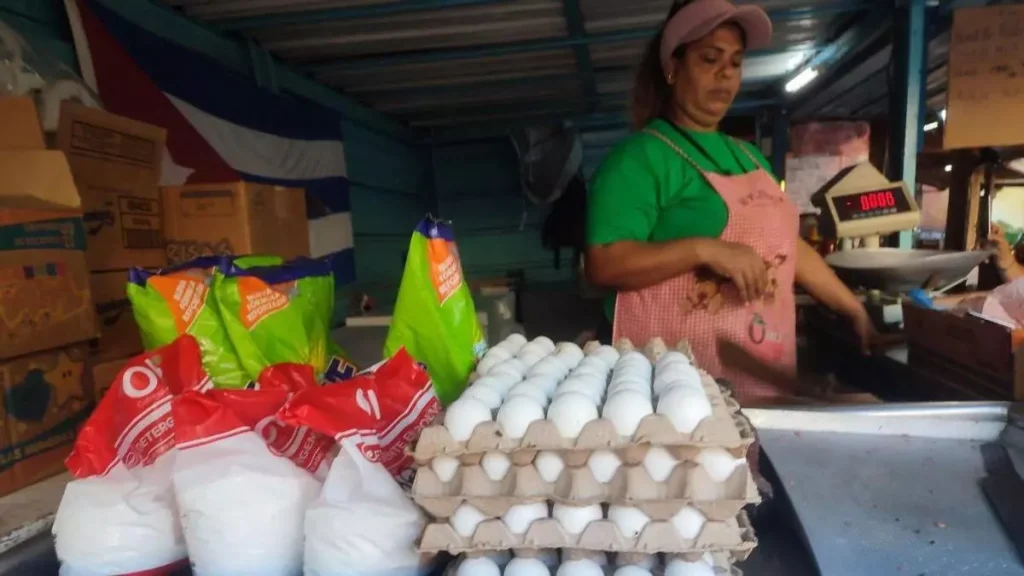
The egg shortage in Cuba has turned the Island into a fiercely contested market. / 14ymedio
14ymedio, Madrid, July 31, 2026 / The United States took advantage of the halt in egg sales from the Dominican Republic, which in 2015 had been the main supplier of the product to the island and just a few days ago announced it was resuming shipments after months of suspension. Fresh eggs have become the second most exported food item from the United States to Cuba after chicken in all its varieties, and not only that, the value of the sales has multiplied.
Last May, food export data for March published by the Consejo Económico y Comercial EE UU-Cuba (US-Cuba Trade Council) showed, for the first time, a significant jump in the rankings for eggs, where they had not previously appeared. That month, the value of egg sales was just over $527,000, a not insignificant amount, but one that was shattered in April. Then, the total reached $1,682,915.
The publication of May’s figures this Thursday reveals enormous growth, as spending on eggs from the island reached $3,319,184, nearly double the previous month. This refers only to fresh eggs, since fertilized eggs—for incubation—also arrive in Cuba from the neighboring country. Their in May alone was $1,469,677, pushing the product into the top ranks of the table, specifically eighth place—a very high position considering that the top three spots are occupied by chicken products. continue reading
The vehicle sector received its first authorization in 2022, during Joe Biden’s administration, and has continued to grow under the Trump administration.
Chicken meat remains the undisputed leader, however, among imports from the United States. The three types of frozen chicken cuts purchased by the Island—breasts, leg quarters, and wings—account for 47.1% of all sales from the neighboring country, with a value of more than $19.8 million.
Overall, sales in May totaled $42.2 million, well above those recorded during the same month in previous years. In May 2025 they reached $37.24 million, and in 2024 they totaled $34.6 million. However, the overall balance for the year is negative. Between January and May, the Island imported products worth $189 million, compared with $204.9 million during the same period the previous year, a decline of 7.7%.
In addition to food products and other health and hygiene items exempt from the embargo through a license from the U.S. Office of Foreign Assets Control (OFAC), the report includes the value of vehicle exports. This sector received its first authorization in 2022, during the Biden Administration, and has continued to grow under the Trump Administration, which has not objected to vehicle sales to the Island.
The list also includes other notable figures, such as the $285,656 spent on importing solar panels.
In May, the value of sales of vehicles, parts, motorcycles, and bicycles totaled $15.7 million, which was nevertheless much lower than the previous month, when they reached $46.6 million. One particularly surprising item in this category was the sale to Cuba of a motorhome valued at $14,360. Since the exemption for this sector was approved, the value of sales has exceeded $485 million.
Also appearing on the list are other striking figures, such as the $285,656 spent on importing solar panels and $15,579 for cane sugar.
These figures are in addition to those published in another report covering hydrocarbons, which the United States has allowed to be sold to Cuba’s private sector since February. The value of fuel and oil exports in May was $23.9 million, nearly double the $12.4 million recorded in April. However, this increase does not necessarily reflect a higher volume of shipments but rather the rising cost of refined petroleum products at U.S. refineries.
Translated by Regina Anavy
______________________
COLLABORATE WITH OUR WORK: The 14ymedio team is committed to practicing serious journalism that reflects Cuba’s reality in all its depth. Thank you for joining us on this long journey. We invite you to continue supporting us by becoming a member of 14ymedio now. Together we can continue transforming journalism in Cuba.
The CubanAmerican Voice, Julio M. Shiling / The Cuban nation has two great cities. One is Havana, the historic capital that today remains captive under the weight of a Marxist-Leninist dictatorship. The other is Miami, a city within the territorial jurisdiction of the United States but one that has, over the decades, become no less Cuban than Havana itself. If Havana embodies the tragedy of an occupied republic, Miami represents the continuity of the Cuban nation in freedom. It is there that a vigorous exile community has preserved the ideals of constitutional government, individual liberty, and democratic restoration. It has become the political, intellectual, cultural, and economic center of a Cuba that refuses to surrender.
For more than six decades, the Cuban nation beyond the island has maintained a remarkably consistent position. The crisis of Cuba cannot be solved through cosmetic reforms, administrative adjustments, or economic openings designed merely to prolong the life of the existing regime. Genuine national reconciliation requires something far more profound: the complete dismantling of the totalitarian system and the restoration of a democratic republic governed by the rule of law. Whether the Castro-Communist state were to imitate the economic models of China, Vietnam, or post-Soviet Russia would not alter the fundamental reality that a Leninist political monopoly remains incompatible with liberty.
It is precisely this unwavering position that has become one of the dictatorship’s greatest strategic obstacles. Since 1959, Castro-Communism has devoted enormous resources to influencing, dividing, infiltrating, and neutralizing the Cuban nation abroad. Opposition organizations, academic circles, cultural institutions, political networks, business communities, and media platforms have all, at various times, become targets of influence operations designed to weaken support for democratic change. The objective has rarely been to persuade the exile community to embrace communism outright. A far more attainable goal has been to cultivate neutrality, resignation, ambiguity, or fatigue regarding regime change itself. That effort has largely failed. continue reading
If anything, Miami has become the principal democratic reserve of the Cuban nation. It has generated the political leadership, institutional memory, economic resources, and international advocacy that continue to expose the true nature of Castro-Communism before the world. Recognizing this reality, the dictatorship has steadily refined its methods. Since the 1990s, the campaign to domesticate Miami has accelerated considerably. Each passing decade has witnessed increasingly sophisticated efforts to normalize the dictatorship, blur moral distinctions, and redefine what constitutes acceptable discourse about Cuba. Today, with a U.S. administration placing renewed attention on Cuba and a Cuban-American Secretary of State helping shape Washington’s policy toward the island, the strategic importance of neutralizing the external Cuban nation has become even greater from Havana’s perspective.
It is within this broader strategic context that certain carefully cultivated narratives deserve thoughtful scrutiny. One fact is beyond serious dispute. Cuba’s political prison system has, for decades, been documented by former prisoners, families, international organizations, and countless eyewitnesses as a system characterized by severe deprivation, psychological coercion, physical abuse, arbitrary punishment, prolonged isolation, and systematic violations of human dignity. This is not an isolated allegation but the overwhelming historical record. It constitutes the rule rather than the exception.
History also teaches that exceptions exist. Throughout the history of communist prison systems, some inmates have accepted varying degrees of accommodation with prison authorities and, in return, experienced treatment less severe than that imposed upon the majority. Such cases have appeared in many authoritarian systems. Their existence does not invalidate the brutality of the system itself; rather, they underscore the discretionary power of totalitarian institutions to dispense privilege selectively whenever doing so serves institutional interests.
Against this well-established backdrop, accounts involving the production of thousands of works of art during incarceration, the regular enjoyment of exceptional food, privileged access unavailable to ordinary inmates, or other unusually favorable circumstances naturally invite legitimate public questions. Such anomalies cannot simply be detached from the broader realities of a prison system whose defining characteristic has long been repression. Extraordinary experiences within an extraordinarily cruel prison system demand extraordinary explanation.
One need not allege formal recruitment or conscious collaboration to recognize how authoritarian intelligence services operate. Modern influence operations frequently rely not upon overt agents but upon situations, narratives, personalities, and circumstances that objectively advance strategic objectives. An individual need not intend to serve propaganda for propaganda to derive benefit from the individual’s public image, testimony, or conduct.
The objective is not necessarily to persuade observers that Cuba’s prisons are humane. Such a claim would collapse under the weight of thousands of testimonies accumulated over more than six decades. Rather, the purpose is subtler: to introduce confusion where moral clarity once existed; to normalize exceptional cases until they appear representative; to replace overwhelming historical evidence with carefully amplified anomalies; and, above all, to transform the extraordinary into the ordinary. This is the banality of evil in another form—not the outright denial that oppression exists, but its gradual dilution through selective storytelling until the exceptional overshadows the rule.
The dictatorship has long understood that every successful totalitarian project requires more than police power. It requires the construction of a cultural environment in which citizens begin to question realities that were once self-evident. It seeks not merely obedience but the redefinition of truth itself. What has been accomplished over decades inside Cuba is now pursued, by different methods, beyond its shores. The battlefield is no longer confined to the island; it now extends into the institutions, media, and cultural life of the free Cuban nation.
For that reason, Miami must remain intellectually vigilant. The response cannot mirror the intolerance of the dictatorship. Every individual possesses the right to speak freely, to create art freely, to express unpopular opinions freely, and even to employ language or behavior that others may regard as vulgar or offensive. These freedoms distinguish democracy from totalitarianism and must remain inviolate. Yet freedom of expression has never implied freedom from public examination. Others possess an equal right to question extraordinary claims, analyze improbable circumstances, criticize public conduct, and evaluate narratives against the accumulated evidence of history. Democratic discourse demands precisely that exercise of reasoned judgment.
The battle for Miami is therefore not merely geographical. It is a battle over historical memory, moral clarity, political legitimacy, and the future identity of the Cuban nation itself. Havana understands that as long as Miami remains intellectually unconquered, the democratic aspirations of the Cuban people remain alive. In the end, the most consequential work of art has not been painted on canvas. The real painting, in this recent case, has been painted by Castro- Communism.
The Former Cuban Electricity Company Sues UNE and Energas and Refers to the Canadian Company Sherritt
Before 1959, the company was the island’s main electricity supplier and operated over 90% of the generation, transmission, and distribution nationwide. / Ecured (AI enhanced)
14ymedio, Madrid, July 31, 2026 / The Cuban Electric Company (CEC), headquartered in Florida, filed a lawsuit on July 29 against Unión Eléctrica (UNE) and Energas in the U.S. District Court for the District of Columbia. The CEC maintains that both Cuban state-owned companies have profited for decades from facilities confiscated by Fidel Castro’s government in 1960 and is seeking, under Title III of the Helms-Burton Act, payment of $267.6 million, plus accrued interest of 6% per annum since the confiscation.
The lawsuit cites the Supreme Court ruling in the case of Exxon Mobil v. Cimex and Cupet, a landmark decision that set a precedent for this type of litigation by concluding that Cuban state-owned enterprises cannot invoke sovereign immunity to avoid lawsuits filed under the Helms-Burton Act. That ruling removed one of the main procedural obstacles to claiming damages for nationalized assets and has opened the door to new legal actions against entities controlled by the Cuban state.
The lawsuit also names the Canadian company Sherritt International, which owns a third of Energas’s capital along with UNE and the Cuban Petroleum Union (Cupet). Although Sherritt is not among the defendants, the litigation questions the legality of the Canadian company’s use of the infrastructure it operates.
The Cuban Electricity Company maintains that both UNE and Energas have engaged in “trafficking” in confiscated property, the term used by U.S. legislation to describe the use and commercial exploitation of nationalized property without the authorization of its owners. continue reading
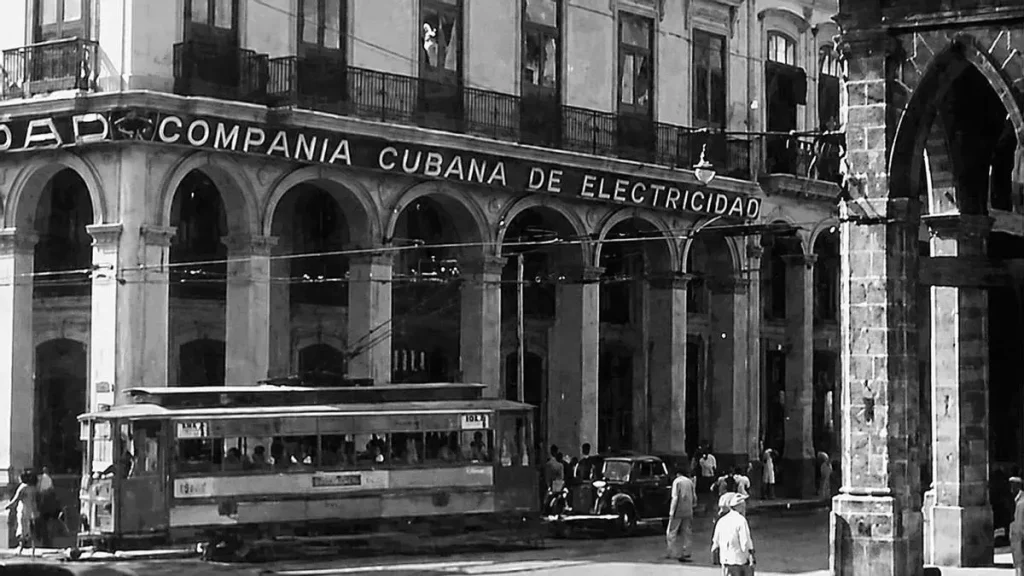
Building of the Cuban Electricity Company in Havana, 1953. / Architecture and Urbanism Magazine
Before 1959, the company was the island’s main electricity supplier and operated over 90% of the generation, transmission, and distribution nationwide. Following the nationalization decreed on August 6, 1960, it lost all its assets without receiving compensation.
According to the lawsuit, much of that infrastructure remains the foundation of Cuba’s national electricity system. Among the assets mentioned are the Antonio Maceo (Renté) thermoelectric plant in Santiago de Cuba; the Carlos Manuel de Céspedes power plant in Cienfuegos; the Melones substation and the now-decommissioned Tallapiedra plant in Havana, as well as the national transmission network and the capital’s gas distribution system.
The company maintains that UNE continues to commercially exploit these assets and generate revenue from them. In the case of Energas, it argues that its business depends on that same infrastructure.
The company maintains that UNE continues to commercially exploit these assets and generate revenue from them. In the case of Energas, it argues that its business depends on that same infrastructure: it states that the company generates electricity that is fed into the national grid through a transmission network built by the former Cuban Electricity Company and that it processes natural gas that is then distributed using Havana’s pipeline system installed before 1960.
The document adds that Cupet supplies Energas with the natural gas processed by the joint venture free of charge, a fact that, according to the plaintiff, demonstrates the control the Cuban state exerts over its operations. For this reason, the CEC maintains that both UNE and Energas act as an extension of the Cuban state itself (an “alter ego”) and must be held accountable for the exploitation of nationalized assets.
The economic basis for the claim is a certification issued in 1970 by the U.S. Foreign Claims Settlement Commission, which valued the confiscated assets at approximately $267.56 million. The company is now requesting triple damages on this amount, as provided for in Title III of the Helms-Burton Act, plus 6% annual interest accrued from the date of confiscation.
______________________
COLLABORATE WITH OUR WORK: The 14ymedio team is committed to practicing serious journalism that reflects Cuba’s reality in all its depth. Thank you for joining us on this long journey. We invite you to continue supporting us by becoming a member of 14ymedio now. Together we can continue transforming journalism in Cuba.
The Government Announces the Elimination of 92,000 Public Sector Jobs in Health, Education, Culture, and Sports.
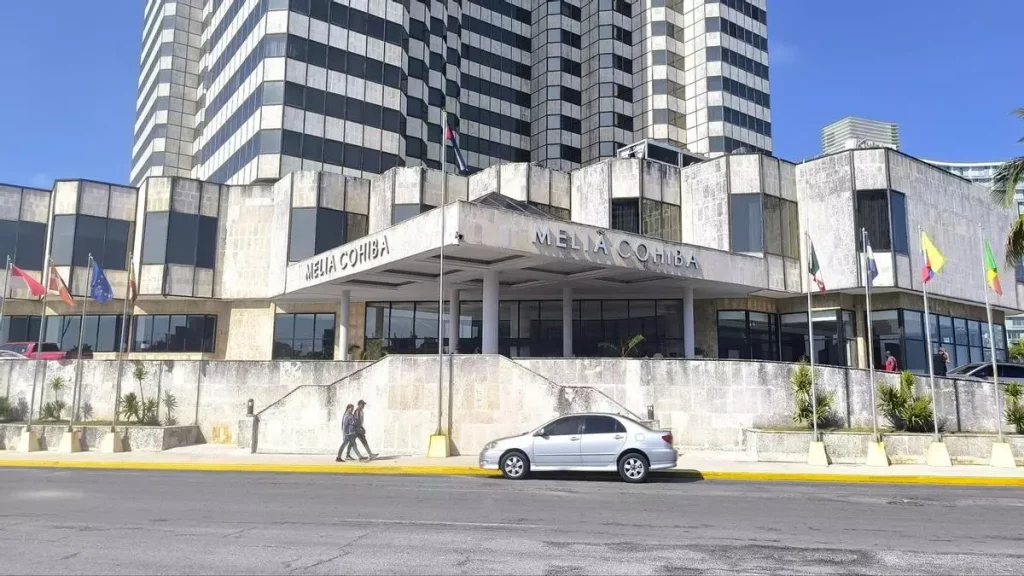
On Wednesday, July 29, the Cohiba Hotel still displayed the Meliá name at its entrance, despite the Spanish hotel chain having withdrawn five days earlier.
14ymedio, Madrid, July 30, 2026 – Cuba’s National Assembly received grim news on Wednesday regarding the country’s tourism sector, once one of the main drivers of the economy but now in complete collapse. Prime Minister Manuel Marrero announced that 73% of the country’s hotel facilities are closed and that seven foreign hotel chains have left the island, leaving 25,000 workers unemployed.
The human impact of the crisis is expected to grow even further with the downsizing of the state sector. Marrero said that, so far, 92,000 public sector positions—primarily administrative jobs—have been eliminated from the Ministries of Public Health, Education, Culture, and Sports. Additional layoffs are expected in September as other ministries implement similar workforce reductions.
While the government is shrinking its administrative workforce, it still aims to expand the tourism sector. Marrero spoke about implementing measures to encourage private businesses to participate in tourism, including tax incentives and the creation of a 1% contribution to finance tourism promotion. As part of the 176 “economic and social transformations” approved in June, ecotourism businesses, vehicle rental services, travel agencies, and tour guide services will be allowed to operate privately. However, the sector’s most immediate challenge remains beyond their control: attracting tourists back to Cuba. continue reading
Ecotourism businesses, vehicle rental services, travel agencies, and tour guide services will be allowed to operate privately under the 176 “economic and social transformations” approved in June, although the most pressing and immediate problem remains outside their control: getting tourists to return
Marrero’s speech focused on what he described as the rapid progress of the reform agenda. Of the 176 planned reforms, 121 were scheduled for approval during June and July, and 110 have already been completed. Five are partially advanced, while the remaining measures are expected to be considered before the end of the week. Despite the large number of initiatives, few concrete details were provided.
Among the long list of announcements, one specific measure stood out. “The first private currency exchange house is ready to begin operations as a pilot project,” Marrero said. However, no further details have been released. It remains unknown which private entity will operate it, what exchange rates it will use, or when the first branches will open. Since the Prime Minister stated that it will operate under a license from the Central Bank of Cuba, it is expected to follow the official exchange rates, although doing so would do little to resolve the country’s currency problems.
On Wednesday, the U.S. dollar was trading at 675 Cuban pesos on the informal currency market, compared with 608 pesos under the Central Bank of Cuba’s floating official exchange rate. The euro was trading at around 790 pesos, approximately 100 pesos above its official value.
Marrero also stated that the government is updating the system for managing, controlling, and allocating foreign currency with the goal of directing freely convertible currencies toward the primary sectors of the economy, encouraging domestic production, and strengthening linkages among different economic actors.
Among the list of reforms, Marrero emphasized changes to the state enterprise system that will allow state entities to establish their own wage systems based on their revenues, set prices, make investments, and determine when employment contracts should be terminated.
“The first private currency exchange house is ready to begin operations as a pilot project,” Marrero said
The Prime Minister also referred to several measures that had already been announced in recent days, including updating the list of activities permitted for the private sector, identifying individuals eligible for government subsidies, and speeding up approvals for the creation of micro, small, and medium-sized enterprises (MSMEs), which now number more than 15,600. He also noted that mandatory civil liability insurance for vehicles has been established and that wholesale supply markets have been authorized for both individuals and legal entities.
Marrero also firmly rejected claims that Cuba is moving toward its own version of capitalism. “We are not abandoning our socialist model. On the contrary, we are defending it and making the necessary decisions to strengthen it,” he said.
Some of the proposed reforms also depend on factors beyond Cuba’s control. Economist Pavel Vidal wrote in his latest report on the Cuba Transformación proposals that “a substantial easing of economic sanctions is essential for the viability of the proposals presented for the first phase. This would not constitute a direct financial transfer, but it would significantly improve financing opportunities.”
Meanwhile, Finance and Prices Minister Vladimir Regueiro announced that the state budget deficit is expected to increase by more than 96% this year compared with 2025, rising from 67.642 billion pesos (approximately US$2.818 billion at the exchange rate for legal entities) to 132.910 billion pesos (approximately US$5.537 billion).
Translated by Regina Anavy
______________________
COLLABORATE WITH OUR WORK: The 14ymedio team is committed to practicing serious journalism that reflects Cuba’s reality in all its depth. Thank you for joining us on this long journey. We invite you to continue supporting us by becoming a member of 14ymedio now. Together we can continue transforming journalism in Cuba.
The general manager of the thermoelectric plant, Antonio Guiteras, attributes the delay in maintenance to the World Cup.
Many pieces of equipment are damaged when that product fails, some of them “special transformers, difficult to replace.” / Cubadebate
14ymedio, Madrid, July 31, 2026 / The issue that robs Cubans of their sleep and prevents any kind of economic recovery on the island went almost unnoticed in the official press coverage of the National Assembly’s summer session. And it is that the Minister of Energy and Mines, Vicente de la O Levy, revealed a chilling statistic during his appearance before the deputies. “There are communities and population centers that have gone up to 105 days without electricity,” the official said. Almost a third of the year.
The official appeared on Wednesday, during the first of two days of parliamentary meetings, to address the “extremely tense” situation facing the national electricity system. His remarks, reported by the official newspaper Granma, offered nothing new: that US sanctions “have exacerbated the difficulties in maintaining power generation,” that the government is monitoring the situation, that renewable energy capacity has been expanded but is still insufficient to compensate for the shortages, and that it is necessary to increase national sovereignty using the island’s oil, gas, and solar resources…
De la O Levy then referred to the effort needed to “more firmly confront the theft of dielectric oil,” since it affects not only the electrical service but also the water supply. Many pieces of equipment are damaged when this product fails, some of them “special transformers, difficult to replace, which has caused some settlements to remain without electricity for many days,” Granma reported. What the official media outlet omitted was the statement, reported by Canal Caribe, that there are entire towns that have gone more than one hundred days without power, apparently without a solution in sight. continue reading
De la O Levy then referred to the effort that needs to be made to “more firmly confront the theft of dielectric oil,” since it affects the electricity service, but also the water supply.
The minister stated that these transformers “are circuits with old, outdated voltages that are difficult to acquire; and there are constant thefts: thefts of transformers, thefts from water pumps, thefts of dielectric oil.” He added that they are not like a thermoelectric plant, where “if a unit breaks down, it cools down and is repaired, even if it only lasts two days.”
Cubans are already well aware of this, accustomed to the ups and downs of the Antonio Guiteras power plant in Matanzas, to which the provincial newspaper Girón dedicated a very informative special report this Thursday, providing a technical overview of its condition. The thermoelectric plant is not the oldest on the island, much less so: Renté, which turns 60 this year, is much older.
However, it has ten more than it should theoretically have. Built in 1988 with French technology and the last subsidies from the USSR, the Matanzas plant, the largest in the country, has gone “more than 15 years without a major repair, but also without enough time to carry out diagnostic work,” says Román Pérez Castañeda, the unit’s general director, in the statement.
“Shortly after being synchronized for the last time, we realized there was a fault in a superheater tube; however, since steam is circulating through it, the plant continues to operate, albeit with high water consumption. At dawn on the 26th, there was another outage due to a fault in an economizer tube. This time we had two breakdowns: one in the low-pressure superheater and another in the economizer,” he explains regarding the most recent outage at Guiteras.
The manager explains the technical details of how a team, working grueling 12-hour shifts on such a dangerous job, struggles to resolve the constant problems plaguing the power plant. “Just the economizer and superheater failures require about 50 people to work,” he reveals, a real headache in times of labor shortages.
“Before, at our thermoelectric plant, having 20 or 25 highly qualified welders (…) was not unusual. Nowadays, finding seven or eight is almost impossible.”
In the same report, Pérez explains that mass emigration is severely impacting the plant. “We’ve lost many good, qualified people who have decided to change their work plans and have moved to other countries,” he notes.
The manager also explains that the thermoelectric plant is fundamental for the proper functioning of the system, but his response to the journalist’s question about why the major maintenance announced a year ago keeps being postponed is surprising. “From a material standpoint, I was saying that we’ve been ready for over a month to carry out a massive replacement of the economizer. But then summer arrived, the World Cup, the Cuban people’s desire for a well-deserved vacation without major power outages in their homes; and the extended shutdown of the Matanza-Riachuelo Basin has an impact,” he blurts out.
Pérez mentioned, again, the problems the embargo poses for repairs. The official pointed out that the problem isn’t only the import of parts; there is also the issue of contracting. He further warned that it’s no longer just the US, but also France and Germany, due to pressure from Washington, which has led many companies to “desist” from working with Cuba. “We have most of what we need, but not everything, and that has to do with what some people refuse to understand exists: the blockade. We received a visit from a UN rapporteur who sought evidence and became convinced that the impact is real,” he stated.
The picture accurately reflects the current situation. This Thursday, during peak hours, the outage affected 2,042 megawatts, slightly less than the previous day. Perhaps that is why, speaking about territorial inequalities in energy distribution, De la O Levy told Parliament: “There isn’t enough energy to go around.”
______________________
COLLABORATE WITH OUR WORK: The 14ymedio team is committed to practicing serious journalism that reflects Cuba’s reality in all its depth. Thank you for joining us on this long journey. We invite you to continue supporting us by becoming a member of 14ymedio now. Together we can continue transforming journalism in Cuba.
Víctor Manuel Denis is training at the Alex Sánchez Academy, while Richard Bouquet is with Bailli Baseball.
Denis is an athletic outfielder who runs the 60-yard dash in 6.3 seconds. / Francys Romero
14ymedio, Havana, July 30, 2026 — The abandonment of baseball players from Cuba shows no sign of slowing down. Between Monday and Wednesday, 21-year-old Víctor Manuel Denis and 17-year-old Richard Bouquet flew to the Dominican Republic, where they will pursue opportunities to sign with a Major League Baseball (MLB) team in the United States.
Denis’ case has attracted the most attention. Last year, the Guantánamo native was left off Cuba’s Under-23 national team that won the bronze medal at the Pan American Baseball Championship. He was not selected despite posting a .440 batting average and finishing among the top four hitters in total hits during the tournament, as journalist Pavel Otero pointed out at the time. “I have no doubt that the other outfielders selected have good numbers, but we shouldn’t leave the player from Guantánamo at home when he produced just as well,” Otero said.
Journalist Francys Romero reported that Denis will continue developing his skills at the academy run by former Major League player Alex Sánchez. The academy is also home to Cuban players Oliver Monteagudo and Alex Batista, who also chose to leave Cuban baseball.
According to Romero, Denis “is an athletic outfielder who runs the 60-yard dash in 6.3 seconds. He is a contact hitter with continue reading
strong defensive skills and power.”
Richard Bouquet, the other player who left Cuba, will train at Bailli Baseball. / Francys Romero
Other players who have trained at the Alex Sánchez Academy have gone on to sign professional contracts, including Jordan Pérez, who signed with the San Diego Padres for a $300,000 bonus, and Kevin Álvarez, who signed with the Houston Astros for a $2 million bonus. In addition, José Junior Muñiz and Cristhian Lías are reportedly close to agreements with organizations such as the Chicago Cubs and the St. Louis Cardinals.
Bouquet will train at Bailli Baseball. “With a couple of months of work, he will probably improve his tools and be close to turning professional by signing with a Major League franchise,” Romero estimated.
The Holguín native represented Cuba at the 2025 U18 World Cup and throws between 90 and 91 miles per hour.
Last July, this newspaper reported that four Cuban baseball players between the ages of 17 and 19 achieved their dream of signing with Major League Baseball organizations in the United States. Rodelvis Santiesteban signed with the Chicago Cubs and received a $20,000 signing bonus.
César Morales reached an agreement with the New York Mets. The pitcher left Cuba in June of last year after previously playing for Cuba’s Under-17 national team.
In early June, Jonathan Torres reached an agreement with the Baltimore Orioles for the current international signing period. Meanwhile, catcher Andy González signed with the Houston Astros on May 30 in the Dominican Republic.
Translated by Regina Anavy
______________________
COLLABORATE WITH OUR WORK: The 14ymedio team is committed to practicing serious journalism that reflects Cuba’s reality in all its depth. Thank you for joining us on this long journey. We invite you to continue supporting us by becoming a member of 14ymedio now. Together we can continue transforming journalism in Cuba.
Cuban doctors denounce the lack of resources, their low salaries, and the poor working conditions.
The line for X-rays at Calixto García Hospital in Havana. / 14ymedio
14ymedio, Natalia López Moya/Mercedes García, Havana/Sancti Spíritus, July 27, 2026 / “With what I earn at my job, plus the classes I teach and the occasional participation in a scientific event, I don’t even make $25 a month in salary.” Dante, a name changed to avoid reprisals against this Cuban neurologist, is speaking. Neurology is a prestigious profession in any country, but in Cuba, it’s an incentive to flee . “I live with my mother, and she helps me a lot by preparing snacks and lunches for me to take to work, but I wouldn’t have any of that if it weren’t for the help of my sister, who deserted from her mission in Brazil and helps us a lot from there,” he says.
A specialist at one of the most important hospitals in Havana’s Vedado district, the doctor believes his work is “at half capacity every day.” A resident of the eastern zone of the Cuban capital, he must cross the bay tunnel daily to reach his practice. “They say they guarantee us transportation, but everything is very unreliable . The schedules always clash with our free time because it’s almost always late getting us home.”
“I can’t detect a problem just by looking at the patient. I need to have devices on hand to measure and review neurological responses.”
The low salary and the poor conditions for getting to work each day are not, in any case, the worst of it. “My work is with the brain. I can’t detect a problem just by looking at the patient. I need to have devices on hand to measure and review neurological responses,” he explains to this newspaper. “I can’t just improvise, put a piece of wood on a fracture to immobilize it, or recommend chamomile tea to my patient to soothe their itchy skin. My specialty often doesn’t allow for substituting diagnostic methods, much less medications.”
His short-term goal is “to finish this stage of direct patient care, try to find an academic position that will relieve me of having to deal with hospital problems every day, and from there, look for a scholarship abroad.” He concludes, “I’d rather never see urban healthcare centers again, not even in photos.” It’s the same path that thousands upon thousands of professionals like him have taken.
In 2021, the year of the pandemic, Cuba had 106,131 registered doctors, but the catastrophe, which overwhelmed healthcare systems across much of the world, marked a before and after for Cuba. Just two years later, there were only continue reading
80,763 doctors in Cuba. The most recent data, from 2024, indicates that there are 75,364 registered doctors on the island, but the figures for 2025 and the current year promise to be catastrophic. The crisis is worsening, resources are increasingly inadequate, and staff cannot endure grueling shifts without the means to combat disease.
“They force us, for example, to do more than 20 consultations a day, which nobody believes can be done under these conditions.”
“I spend all day filling out paperwork, and almost everything I have to write is a lie. They force us, for example, to do more than 20 consultations a day, which no one can believe is possible under these conditions,” denounces Elsa. She is a nurse at a family doctor’s office in Nuevo Vedado, and she complains about the excessive forms and bureaucratic reports she has to fill out every day, which are killing the enthusiasm she felt for her profession a few years ago.
“We also have to report some 15 cases in the field every day, whether we have to visit a bedridden patient or go to the home of a newborn to check on them, but even that number isn’t credible; it’s never met, but we have to record that it was done.” For Elsa, “never before has there been so much lying in Public Health; everything is inflated, nothing is the truth.” She believes that these falsehoods not only distort the figures that health authorities present regarding primary care in Cuba but also “have the staff very upset and frustrated.” In her case, she is also seriously considering resigning. “I feel ashamed to face patients anymore; I no longer have the energy to keep lying so much.”
The occupation of these premises, intended for the Family Doctor program, has become a common practice throughout the Island
The same thing is happening to Yadira, a nurse at a medical clinic in the city of Sancti Spíritus. The doctor, who graduated more than a decade ago, arrived last week at the clinic where she has worked for the past five years. “We haven’t had a doctor at the clinic for a while, but I’ve continued to see patients in the area, taking their blood pressure, treating some diabetics in the neighborhood, and also taking care of some of the pregnant women,” she told 14ymedio.
“That Wednesday, when I arrived at the clinic, it turned out that the night before, a homeless family had broken in by breaking down the door.” The occupation of these premises, designated for the Family Doctor program, has become a common practice across the island. “It was a very tense situation because I had to do my job, and they were there, lying on the floor on a mat with small children who were very distressed by everything they were experiencing.” The nurse called the police, but “they didn’t arrive until after I had finished my shift.” Yadira had to treat the patients “in a small corner of the doorway.”
So far, the family has not left the clinic, and the police have not been able to evict them. “I haven’t been able to work anymore because there are no suitable conditions there. I’m currently going to the Polyclinic to try to continue treating the diabetic patients I had under my care, but I don’t have a space; I’m practically doing it in a hallway. I can’t continue like this because I can’t. I have neither the resources nor a place to practice my profession.”
______________________
COLLABORATE WITH OUR WORK: The 14ymedio team is committed to practicing serious journalism that reflects Cuba’s reality in all its depth. Thank you for joining us on this long journey. We invite you to continue supporting us by becoming a member of 14ymedio now. Together we can continue transforming journalism in Cuba.
A tour of El Vedado reveals the decline of the commercial network that the military built to control remittances, tourism, and foreign currency stores.
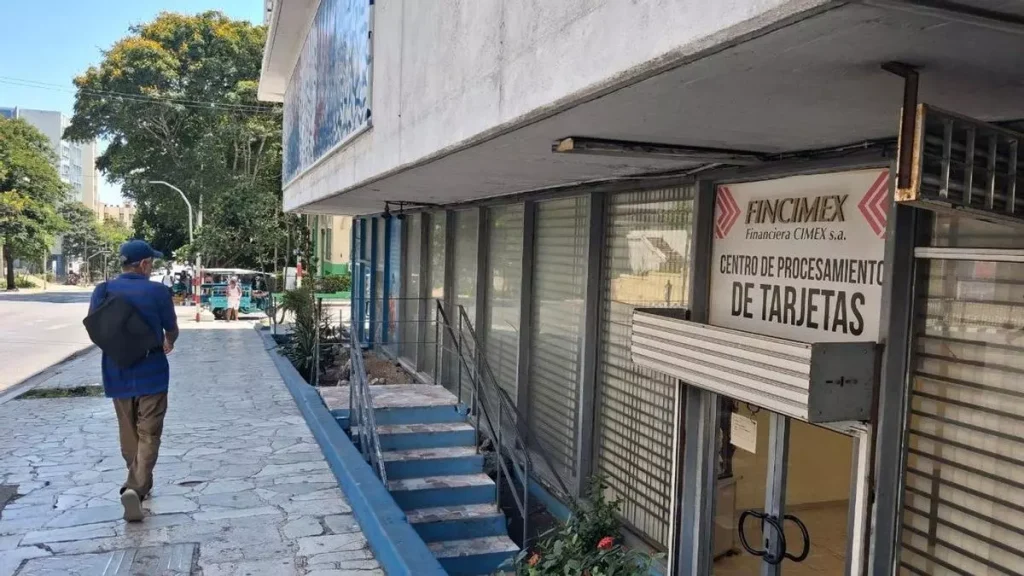
Fincimex office on 23rd Street in Havana’s Vedado neighborhood. / 14ymedio
14ymedio, Havana, Yoani Sánchez, July 29, 2026 / There are buildings that collapse with a crash, while others crumble in silence. The former Fincimex card processing center on 23rd Street in Vedado belongs to the latter category. I walk past its entrance and barely find a faded sign still proclaiming the grandeur of a company that once controlled a significant portion of the dollars entering the country. Behind the dusty windows, there are no longer lines, nor rushed employees, nor Cubans waiting to receive the magnetic card that unlocked the door to the remittances sent by an emigrant relative. Only the echo of a bygone era remains.
For years, that building was a funnel through which the money of thousands of families flowed. The prosperity within their homes fit on a plastic card with a magnetic strip and the Fincimex seal. You had to wait days to get one, but whoever left with the card in hand felt like they had conquered a lifesaver. Today, the building stands abandoned, the plaster is peeling from the walls, and silence has taken the place where impatience once reigned.
I cross the sidewalk and retrace my steps. The heat turns the asphalt into a griddle, and the shade from the trees is scarce. On the way, I enter one of those dollar markets that, just a few years ago, symbolized the power of Cimex, that immense business network of the Business Administration Group SA (Gaesa), the military conglomerate that wanted to control almost everything: remittances, hotels, hard currency stores, imports, ports, and even the last centavo a Cuban received from continue reading
abroad.
The bags of frozen chicken that some employees received as an incentive disappeared, as did the transportation that picked them up and took them to the door of the establishment.
The employee barely looks up when I walk through the door. She’s fanning herself with a folded piece of cardboard while she waits for her shift to end. Her face is tired, and her sour expression gives the lie to that self-satisfied image many Cimex employees used to project, when working there was considered a privileged position. I ask her about a product, and she answers listlessly. Before I can press her, she sighs, “I haven’t even had a snack.”
She doesn’t need to tell me more. Her very appearance tells the whole story. Gone are the bags of frozen chicken some employees received as a bonus, the transportation that picked them up and took them to the door of the establishment, the food rations that arrived punctually, and even the discreet tips left by customers grateful for having found a liter of oil or a package of detergent. Now, without US coins for change and giving change in bouillon cubes or candy, almost no one leaves them a cent, not even in Cuban bills.
Decadence has a peculiar way of equalizing people. Workers who once seemed to belong to a commercial elite now share the same weariness as the rest of the country. Their privileges evaporated as quickly as the products began to run out on the shelves.
I go down to the sea. The landscape around the Grand Aston Hotel is disconcerting. The facilities look impeccable, but a silence reigns that is unusual for a tourist establishment. The only sound is the persistent crashing of the waves against the nearby Malecón, the seawall. It is hard to believe that this was one of the most ambitious projects undertaken by Gaviota, owned by the Cuban military, and managed in partnership with a foreign partner who eventually left the island. Where a constant flow of visitors was once promised, now stillness and a sense of waiting prevail.
The sanctions imposed from Washington hit precisely the nodes where the conglomerate had accumulated the most influence
For years, Gaesa built an economic empire with the ambition of controlling every profitable corner of the country. Remittances ended up under Fincimex; tourism fell into the hands of Gaviota; stores selling goods in freely convertible currency sprouted like mushrooms under the TRD* [Tiendas Recaudadoras de Divisas] and Caribe umbrellas; imports and much of the logistics also came under its control. It seemed an impregnable model, a machinery designed to concentrate resources and power.
But that very concentration ultimately was converted into its greatest weakness. The sanctions imposed from Washington struck precisely at the nodes where the conglomerate had amassed the most influence. When the center of the system began to falter, the shockwave reached offices, shops, hotels, and workers who had built their lives around that gigantic structure.
While I retrace my steps, I look again at the Fincimex building on 23rd Street. I think that ruins aren’t always mountains of rubble. There are also administrative, commercial, and symbolic ruins. They remain standing, with closed doors and signs still hanging, as if awaiting an impossible return. Perhaps that is the ultimate fate of empires that wanted to encompass too much: to discover, when it’s too late, that size can also be a form of fragility.
*Translator’s note: TRD, Tiendas Recaudadoras de Divisas, translates literally to “Stores Collectors of Hard Currencies”
COLLABORATE WITH OUR WORK: The 14ymedio team is committed to practicing serious journalism that reflects Cuba’s reality in all its depth. Thank you for joining us on this long journey. We invite you to continue supporting us by becoming a member of 14ymedio now. Together we can continue transforming journalism in Cuba.
The authorities’ goal of finishing among the top three in the medal table is threatened by Venezuela.
Cuba’s men’s quadruple sculls team won the silver medal this Wednesday. / Jit
14ymedio, Havana, July 29, 2026 – Cuba is clinging by a thread to third place in the medal standings at the 2026 Central American and Caribbean Games in Santo Domingo. As of this Wednesday, the country has 15 gold medals, far behind first-place Mexico, which has already accumulated 56 golds, and Colombia, with 34, while holding only a slight edge over Venezuela, which already has 12.
During Wednesday’s events, the Island had already added three medals, although none were gold. The first two of the day came in rowing, both silver. In the men’s quadruple sculls event, the Cuban team posted a time of 6:39.18, behind Mexico with 6:31.18, while Venezuela finished third with 6:48.98.
The same podium was repeated in the women’s event. Cuba finished in 7:46.52, behind the favored Mexican team, which clocked 7:44.06. The Venezuelans finished a distant third with continue reading
8:06.36.
Minutes later, in archery, in the mixed recurve event, the pair of Hugo Franco and Larisa Pagán defeated Panama’s duo 5-1 in the bronze medal match.
The Cuban delegation will compete today in swimming, speed skating, softball, diving, beach and indoor volleyball, field hockey, racquetball, and handball
For today, the Cuban delegation is scheduled to compete in swimming, speed skating, softball, diving, beach and indoor volleyball, field hockey, racquetball, and handball.
As for Tuesday’s medal haul, the Cuban delegation in the Dominican Republic collected eight medals, four of them gold. The first came in taekwondo, after winning the mixed team Kyorugui event with a 2-0 victory over the Dominican Republic. Later, in rowing, Cuba’s men’s quadruple sculls crew won the event with a time of 6:20.87.
The third gold came in rapid chess. Roxángel Obregón was crowned champion on the second board of the women’s Blitz tournament. Finally, Taymara Oropesa won the women’s singles badminton title after rallying to defeat Mexico’s Vanesa García.
The Island also collected four silver medals on Tuesday. In the women’s quadruple sculls rowing event, Cuba finished second with a time of 7:11.81, behind Mexico, which recorded 7:10.96.
Two chess medals were also won thanks to Daniel Hidalgo Díaz, on the second men’s board, and Ineymig Hernández Gil
Two chess medals were also won thanks to Daniel Hidalgo Díaz, on the second men’s board, and Ineymig Hernández Gil, on the first women’s board.
Likewise, veteran cyclist Marlies Mejías returned to the podium in track cycling, this time by taking second place in the points race. It was the athlete’s second medal at the Central American Games. Last Saturday, she won gold in the time trial.
Tuesday’s medal haul, however, was overshadowed by the defection of rower Leah Daniela Almeida, the second recorded within the Cuban delegation during the regional event. The athlete, born in Máximo Gómez, in the Matanzas municipality of Perico, left the Cuban delegation just two days after winning the bronze medal in the women’s lightweight double sculls alongside Ana Laura Jiménez.
The withdrawals of Olympic wrestling champion Luis Orta, who is suffering from an arboviral illness, and boxer Erislandy Álvarez, who is still recovering from surgery for an inguinal hernia, were also reported. Both were considered strong contenders for medals.
Tuesday’s medal haul, however, was overshadowed by the defection of rower Leah Daniela Almeida
So far, in addition to its 15 gold medals, Cuba has won 16 silver and 20 bronze medals, for a total of 51.
With a delegation of 504 athletes, Cuba arrived with the goal of finishing among the top three in the medal standings, a modest objective considering that the Island has historically dominated the regional competition. Of the 24 editions of the Games, Cuba has won 12. It also remains the all-time leader in the medal table, with 1,934 gold medals, including those won in this edition, well ahead of second-place Mexico, which has 1,574.
However, the last time Cuba finished first in the competition was in 2014 in Veracruz. The last two editions, Barranquilla 2018 and San Salvador 2023, were won by Mexico, leaving the Island in third place, matching its worst historical performance in the competition, similar to its results in Panama 1938 and Kingston 1962.
Translated by Regina Anavy
______________________
COLLABORATE WITH OUR WORK: The 14ymedio team is committed to practicing serious journalism that reflects Cuba’s reality in all its depth. Thank you for joining us on this long journey. We invite you to continue supporting us by becoming a member of 14ymedio now. Together we can continue transforming journalism in Cuba.
The Elecric Union (UNE) Forecasts a Record 2,380-Megawatt Shortfall During Peak Hours.
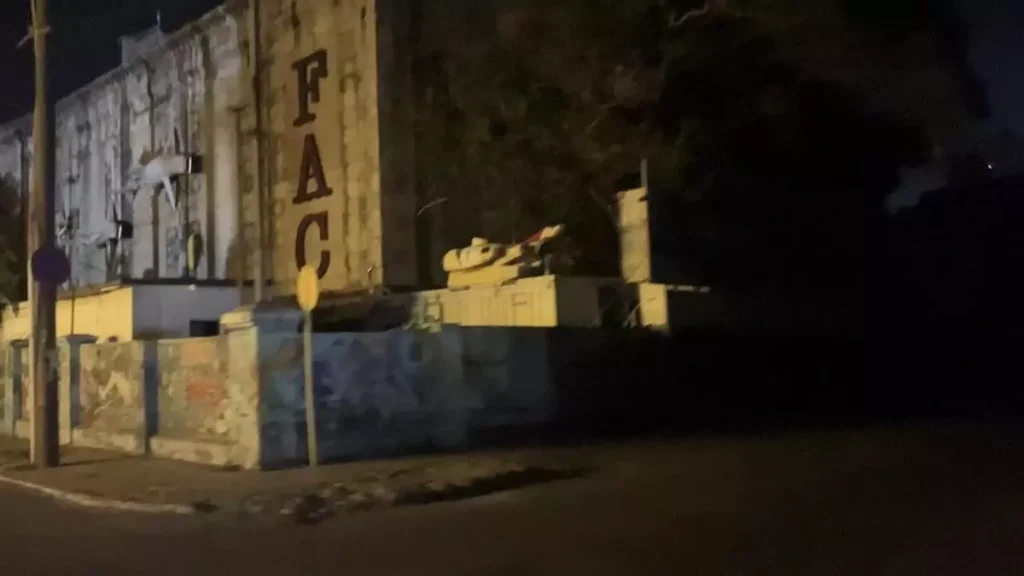
Exterior of the Cuban Art Factory, completely dark. / 14ymedio
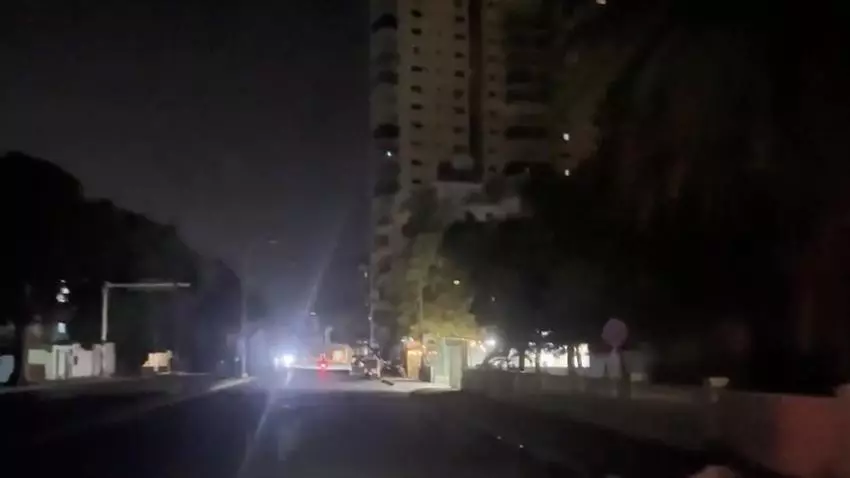
14ymedio, Darío Hernández, Havana, July 29, 2026 – Cuba’s Electric Union (UNE) forecast a record shortfall of 2,380 megawatts (MW) during peak hours this Wednesday, a figure that, if realized, would further deepen the paralysis of a country battered by blackouts, the lack of transportation, and the deterioration of its cultural spaces. The outlook was already bleak last weekend, when a nighttime tour by 14ymedio through several central areas of the capital confirmed that Havana is dead.
It was around nine at night, and only a few cars were traveling along Línea Street. The sidewalks were empty, the building facades blended into the darkness, and the few buildings that still had some light looked like isolated islands in a deserted city. There were no groups of young people walking, no couples looking for a place to sit, and no audience waiting to enter a concert. “There’s nowhere to go,” summed up a young man from Havana. The darkness swallowed everything.
And this Wednesday threatens to be even worse. UNE estimates that during the period of highest consumption there will be demand for 3,200 MW compared with availability of just 850 MW, enough to cover little more than a quarter of the country’s needs (26.5%). If the projected 2,380 MW shortfall is reached, the figure will surpass the record of 2,341 MW recorded on July 8.
If the projected 2,380 MW shortfall is reached, the figure will surpass the record of 2,341 MW recorded on July 8
Although Havana has traditionally received more favorable treatment than the provinces, prolonged outages now frequently affect large areas of the capital. The deterioration of the electrical system coincides with the fuel shortage, the collapse of public transportation, the prohibitive cost of taxis, rising violence, and the loss of continue reading
purchasing power. Going out at night has become a difficult undertaking even before choosing a destination.
And there are not many destinations left to choose from either. In front of the entrance to the Cuban Art Factory (Fábrica de Arte Cubano) this past weekend, there were no lines, conversations, or street vendors. The building remained closed and completely dark. For more than a decade, the former industrial building has been one of the busiest centers of Havana nightlife. Its halls hosted exhibitions, concerts, theater, dance, cinema, and parties that could last until dawn. Now, the vertical FAC letters were barely visible beside the walls.
At the beginning of June, the venue announced a pause in its regular programming without specifying when it would fully resume activities, although it later reopened for some individual events. Its management said it needed to reorganize in the face of difficulties that were part of “a broader context.”
During the 14ymedio tour, the vehicle’s headlights were at times the only source of illumination. / 14ymedio [view video here]The electrical crisis had already pushed the institution to the brink. In October 2023, the consumption plan assigned by the authorities only allowed it to operate two days a month instead of the usual sixteen. To keep some events going, it resorted to generators and even asked the public to bring their own sources of lighting.
The current closure has not been attributed exclusively to the blackouts, but it is impossible to separate it from a crisis that drives up fuel costs, makes air conditioning difficult, paralyzes equipment, and drives audiences away. Without electricity, the lights, sound system, refrigerators, and ventilation do not work; without transportation, there is no way to get home after a performance.
The paralysis extends along Línea Street, an avenue that for decades connected some of El Vedado’s main cultural venues. The street is home to theaters, cinemas, Café Brecht, and bars where musicians, actors, students, and audiences used to continue the night after performances. That night there was no trace of that activity.
The crisis at the Bertolt Brecht Cultural Center began even before the current worsening situation. The failure of its transformer left part of the facilities without adequate conditions, forced limitations on the use of its halls, and turned the heat into yet another enemy for artists and audiences.
The paralysis extends along Línea Street, an avenue that for decades connected some of El Vedado’s main cultural venues
Havana has always built part of its identity around the night. Cabarets, jazz clubs, theaters, cinemas, concerts, and cultural gatherings survived different periods of hardship. Even during the harshest years of the Special Period, when public transportation collapsed and the overcrowded camellos [‘camel buses‘] appeared, meeting places capable of sustaining some cultural life endured.
Now it is not just a matter of lacking electricity. There is also a lack of audiences, artists, fuel, transportation, and money. Many young people have emigrated; others remain in their homes to make use of the few hours of electricity or to avoid walking through completely dark streets.
During the 14ymedio tour, the vehicle’s headlights were at times the only source of illumination. They revealed trees, walls, parked cars, and closed entrances for a few seconds before everything disappeared again. The camera was not capturing a sleeping city, but a paralyzed city.
The forecast of a record 2,380 MW shortfall provides a technical measure of the disaster. Havana’s nightlife offers another one, visible in miles of avenues without pedestrians, closed cultural institutions, and an entire generation with nowhere to go. The capital that once prided itself on never sleeping can no longer even keep its lights on.
Translated by Regina Anavy
______________________
COLLABORATE WITH OUR WORK: The 14ymedio team is committed to practicing serious journalism that reflects Cuba’s reality in all its depth. Thank you for joining us on this long journey. We invite you to continue supporting us by becoming a member of 14ymedio now. Together we can continue transforming journalism in Cuba.
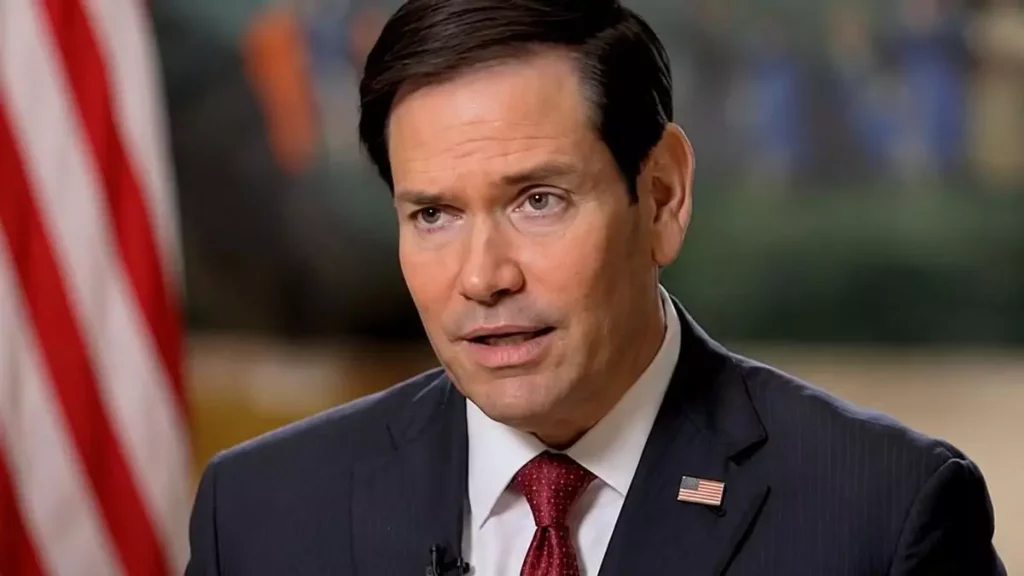
 EFE (via 14ymedio), Washington, August 2, 2026 / US Secretary of State Marco Rubio said Saturday that Cuba’s influence is, in his opinion, behind the “radical” protests that have taken place in the United States in recent years.