
The Albanians Ended Communism and Were Left Hungry

Ypi believes that communism and liberalism have a coincidence: “Both fail to understand the complexity with which ideas and history are mixed.” (@lea_ypi))

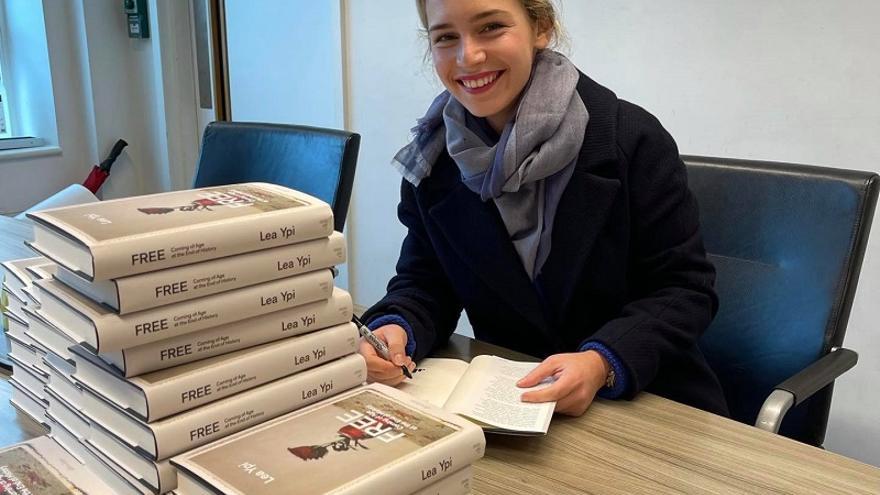
14ymedio bigger14ymedio, Rosa Pascual, Madrid, 1 January 2024 — Lea Ypi has not written a book to make friends. Free [Libre], memoirs of the childhood and adolescence of an author who enters adulthood at the same time that her country, Albania, makes the leap to democracy, is a diptych as harsh with the lack of freedoms of the communism of her childhood as with the broken promises of a liberalism that tasted like disappointment. “In 1990 we had nothing but hope. In 1997 we lost that too.”

“I never asked myself what freedom meant until the day I hugged Stalin.” With that powerful phrase, which was in all the drafts of the first (and, for now, only) novel by this Albanian born in 1979, the first part of the book unfolds with the subtitle The challenge of growing up at the end of history. The author, a political scientist at the London School of Economics, says that she sat down to write a philosophical essay about the overlap of the concept of the word freedom in communist and liberal societies, but “ideas ended up becoming people.”

Thanks to this turn, Ypi has created a novel that — better than any history book — relates the process of transition of her country from the dictatorship of Enver Hoxa to the rebellion that was about to lead to civil war. The lives – absolutely normal – of her characters, Lea’s family, friends and neighbors, paint a fresco of the daily life of communist society like no essay will.

The first ten chapters of the book are dedicated to this, with scenes in which readers who lived under the same system will soon recognize themselves.

The first ten chapters of the book are dedicated to this, with scenes in which readers who lived under the same system will soon recognize themselves. The lines to do the shopping, the start of classes shouting “pioneers of Enver,” the valuta stores for foreigners – where dreams come true – with their nylon stockings and Bic pens; the empty Coca-Cola can – a memorable chapter to which the book cover makes a nod – as a status continue reading

symbol…

But, above all, the codes. Little Lea grows up hearing talk at home about how the biographies of her acquaintances had determined their studies, identified with an initial. Although, luckily, most ended up graduating, some ended up expelled. “I’m so sorry, it’s terrible,” is said in those cases. Starting in 1990, she discovered that the letter designated a prison, to be discharged was to be released and expulsion meant death.

Lea grows up in an apparently normal family, with civil servant parents moderately critical of the regime and an intriguing grandmother – the most interesting character in the novel and to whom it is dedicated – who, without being French, speaks French. The propaganda has taken strong root in her and she is, of all those who live in the house, the one who most fervently expresses her faith in the system, to the point of insisting, as her parents told her, that there were no photos of ‘Uncle Enver’ in their house because they were looking for a nice frame.

But at age eleven her life changes completely. “It was like the moment when they tell you that Santa Claus does not exist. We had built, for the children, a myth to explain the world. Now it was necessary to know the truth,” she has said in interviews.

Lea reaches adolescence and her world suddenly falls apart – “I was one person and then I became another.” Everyone she trusted had lied to her, everything she believed in was a lie. Her family history, her biography, had also determined her seemingly unremarkable existence, dating back to her great-grandfather (former Prime Minister Xhafer Ypi), whose last name was not, as she was led to believe, a coincidence; to her religion, Muslim, to the fact that she embraced it, along with her books, to find refuge in a dark adolescence.

That is the second part of the book, the one that will disappoint those who expected an ode to the benefits of liberalism and capitalism.

That is the second part of the book, which will disappoint those who were expecting an ode to the benefits of liberalism and capitalism and which rhymes with the author’s own disappointment.

“I had always thought that there was nothing better than communism. Every morning of my life I woke up wanting to do something to make it come more quickly. But in December 1990 the same people who had participated in the marches celebrating socialism and its advance towards communism took to the streets to demand its end,” she recalls in the novel.

Lea entered 1991 trying to join the democratic enthusiasm of her parents and trembled with the first free elections. She travels for the first time outside of Albania, to Greece where her grandmother Nini was born, and on the plane she sees something hitherto unheard of: “a colored plastic bag.” And she remembers perfectly the day when her mother brought home the first issue of the first opposition newspaper, whose motto was: The freedom of the individual guarantees the freedom of all.

But she soon discovers that when the words that the regime imposed on them disappeared – dictatorship, proletariat, bourgeoisie – only another omnipresent word remains: freedom. “It appeared in all the speeches on television, in all the slogans shouted angrily in the streets. When freedom finally arrived it was as if you were served frozen food: we chewed a little, swallowed quickly and were left hungry. Some asked if they had given us leftovers, others said they were just cold starters,” she writes.

Things happen before her eyes that she did not expect. Among them is the mass exodus of Albanians to Italy, repressed by the governments of both countries. “What value does the right to leave one country have if there is no right to enter another?” she asks, which in the case of many young women her age only served to cause them to be sexually exploited. Also the new business culture, which forces her father to order massive layoffs – “structural reforms” according to the new foreign businesspeople – or the great pyramid scheme that led the country to ruin and almost ended up unleashing a civil war.

But for teenage Lea, what hurts the most is the intimate thing, the conflict with parents who deny her the right to complain. “They had the feeling that they had always wanted this new world, but now they could no longer live it. It was my responsibility, they told me, to do everything that they could not do,” the author, explains, describing that stage of confusion, violence, insecurity, conflict and trauma that her parents previously disdained. “You’re not in prison, you’re not working in a mine, nor are they persecuting you. What are you complaining about?” they told her.

Ypi left Albania in the summer of 1997. She crossed the Adriatic and entered the Faculty of Philosophy and Literature at the Sapienza University in Rome. She had broken the promise she made to her father to distance herself from Marx – she is an expert in Marxism, among other things – and her CV is brilliant, but she lives with boredom having to explain in Western Europe the lack of freedoms of communism, and in Albania and other countries in the Soviet orbit the defects of a capitalism she believes “only emancipate a few.”

At university she made new friends who “declared themselves socialists” and spoke of Trotsky or Guevara “as if they were secular saints”

At university she made new friends who “declared themselves socialists” and spoke of Trotsky or Guevara “as if they were secular saints.” She was bothered when sharing her childhood stories with them and they, paternalistically, told her that this was not “true socialism (…)” without being able to hide their irritation. “The socialism of my university classmates was clear, bright and with a future. Mine was confusing, bloody and from the past.”

But she makes no concessions to his new reality. “Liberalism was synonymous with unfulfilled promises, with the destruction of solidarity, with the right to inherit privileges, with turning a blind eye to injustice,” she says.

Ypi believes that communism and liberalism have an overlap: “Both fail to understand the complexity with which ideas and history are mixed.” Her book has the potential to anger everyone, and yet, in such a polarized time, it has united critics and audiences in praise of it. And that is already good news.

____________

COLLABORATE WITH OUR WORKThe 14ymedio team is committed to practicing serious journalism that reflects Cuba’s reality in all its depth. Thank you for joining us on this long journey. We invite you to continue supporting us by becoming a member of 14ymedio now. Together we can continue transforming journalism in Cuba.

Raul Castro Denies the Existence of ‘Generational Contradictions Within the Cuban Revolution’

Raúl Castro, 92, wanted to support his successor this Monday, the 65th anniversary of the Revolution. (Cubadebate)

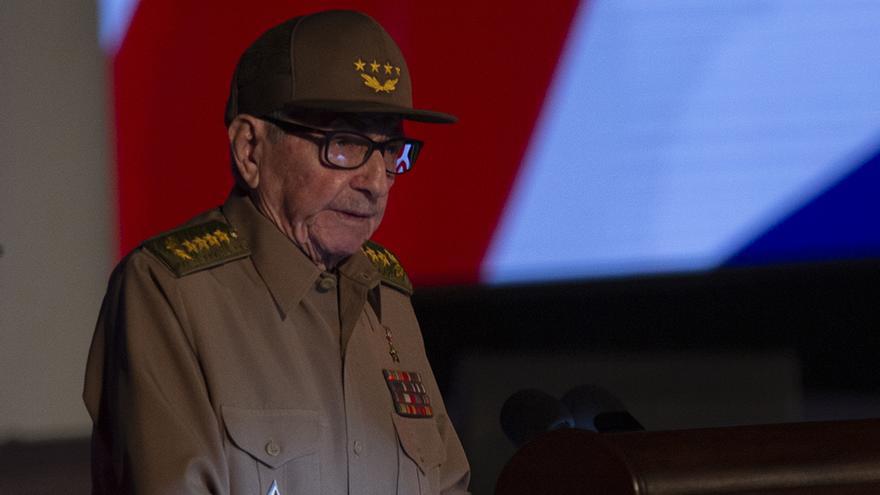
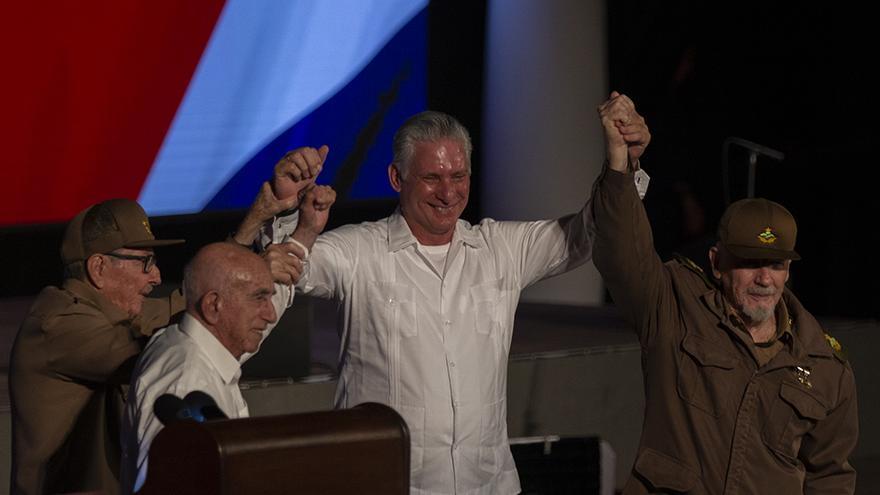
14ymedio bigger14ymedio/EFE, Havana, 2 January 2024 — Former President Raúl Castro reappeared this Monday to lead the celebrations of the 65th anniversary of the Revolution in Santiago de Cuba, in one of his most important public speeches in months. He called for unity within the Communist Party (PCC) and confidence in the new generation of leaders who have succeeded the historical leaders.

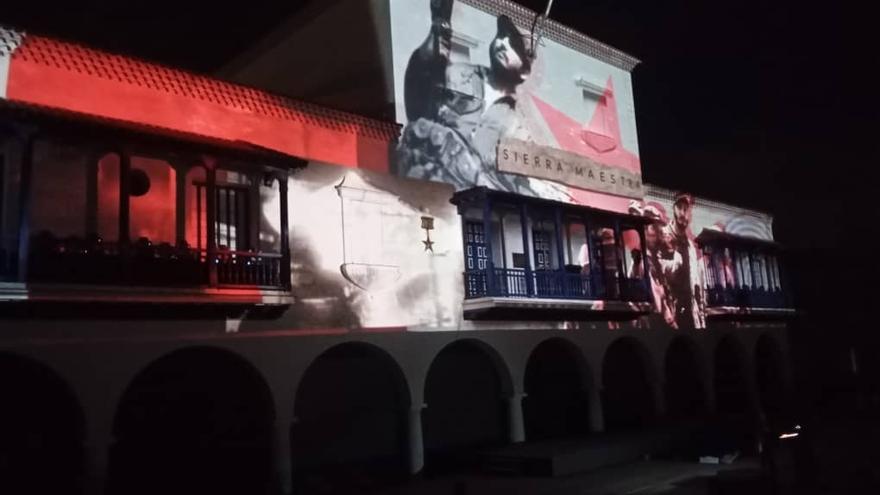
The former leader, 92-years-old, closed the annual ceremony commemorating the triumph of the guerrillas who came to power on the Island led by the late Fidel Castro (1926-2016), who was also presented, through technology, at the event. “No thieves, no traitors, no interventionists. This time it is the Revolution,” the deceased Commander was heard saying through a hologram.

His younger brother and successor in office made a speech in which he reiterated the need to close ranks within the ruling party as the “main strategic weapon” of the Revolution and the PCC. “It has allowed this small island to succeed in facing challenges. Let’s treat unity as something to be cherished,” he advised.

Fidel Castro fue omnipresente a través de las pantallas este lunes en el acto de Santiago de Cuba. (Cubadebate)
Fidel Castro was omniprsent through screens this Monday, in an event in Santiago de Cuba (Cubadebate)

Against that unity, “all the subversive plans of the enemy will fail once again,” he added.

“Today I can affirm with satisfaction that the Cuban Revolution, after 65 years of existence, far from weakening has strengthened, as I said a decade ago, on a day like today and in this very place, [and has done so] without continue reading

commitment to anyone at all, except to the people,” the former president claimed.

“I know that I express the feeling of the historical generation by ratifying confidence in those who today occupy leadership responsibility in our party and Government,” he said, in clear allusion to the current administration, led by his successor and current president of the country, Miguel Díaz-Canel, who is also the first president on the Island who was not part of the armed struggle in 1959.

Castro also emphasized that “there are no generational contradictions within the Revolution, because there is no envy or desire for power among its children,” a quote he attributed to Fidel Castro.

He also asked leaders who “because of insufficient capacity, lack of preparation or simply because they are too tired to be at the height that the moment demands,” to step aside.

Díaz-Canel spoke before Castro and was full of praise for the Revolution: “It was a libertarian act of continental projection, which not only freed the country from a servile, repressive and corrupt dictatorship, but very soon untied the knots of economic dependence on Yankee transnationals and liquidated the cruelest expressions of human exploitation that had been naturalized in the bosom of Cuban society, such as child labor, prostitution and the semi-slavery of Haitian emigrants.”

The current president highlighted what, in his opinion, have been the great pillars of Cuba after 1959: agrarian reform, education and public health. “These were works of profound and sustained social escalation that in a few years transformed a poor and backward country into a world benchmark in education, health, sports and culture,” he said.

Díaz-Canel junto a Raúl Castro en el parque Carlos Manuel de Céspedes, de Santiago de Cuba. (EFE)
Díaz-Canel with Raúl Castro in Carlos Manuel de Céspedes Park, in Santiago de Cuba. (EFE)

With that in mind, he emphasized “the makers” of the Revolution who “have brought it undefeated” and, therefore, “deserve the greatest recognition,” the main one being that the following generations will be “loyal to the history,” he added.

“This is the Revolution that after having lost 3,000 doctors due to a politically induced exodus in the 60s of the last century built one of the most formidable and prestigious health systems of our time and today has half a million workers at all levels who guarantee universal coverage and free assistance for all Cubans. At the same time, during these six decades, 600,000 Cuban health professionals have collaborated in 165 countries,” he said, with no mention of the health workers who are currently in exile due to low wages and poor working conditions in Cuba.

Cuba enters 2024 plunged into a serious economic crisis, after a fall in 2023 GDP of 1% to 2% and a fiscal deficit of 19%, in addition to a shortage of basic products such as food, medicines and fuel.

Translated by Regina Anavy

____________

COLLABORATE WITH OUR WORKThe 14ymedio team is committed to practicing serious journalism that reflects Cuba’s reality in all its depth. Thank you for joining us on this long journey. We invite you to continue supporting us by becoming a member of 14ymedio now. Together we can continue transforming journalism in Cuba.

After Three Years in Prison, the ‘Young Man With the Placard’ Goes to a Work Camp in Cuba

Robles called his mother from prison to give her the news. (Facebook/Yindra Elizastigui)

14ymedio biggerEFE (via 14ymedio), Havana, 1 January 2024 — Luis Robles, a Cuban protester imprisoned since December 2020, has received a prison permit to serve the rest of his five-year sentence in a correctional labor camp, his mother, Yindra Elizastigui, confirmed to EFE on Sunday.

Robles, considered by the Inter-American Commission on Human Rights (IACHR) as a political prisoner, as well as by organizations such as Prisoners Defenders (PD), based in Madrid, was sentenced on the Island for the crimes of enemy propaganda and disobedience.

According to Elizastigui, the 31-year-old has been transferred to a special area of the Combinado del Este, a penitentiary center on the outskirts of Havana, where he was before.

He welcomed this transfer happily because it was expected. It’s been four months since he was told that it had been approved

“Luis called us on Friday at half past five in the afternoon (to inform us of the decision). He welcomed this transfer happily because it  was expected. It’s been four months since he was told that it had been approved.” continue reading

The transfer comes days after Elizastigui went on a hunger strike to request her son’s transfer into minimum security. After meeting with the “director general” of Prisons, she was told that “the procedure on Luis’s file was quite advanced and that the final verdict would soon be announced.”

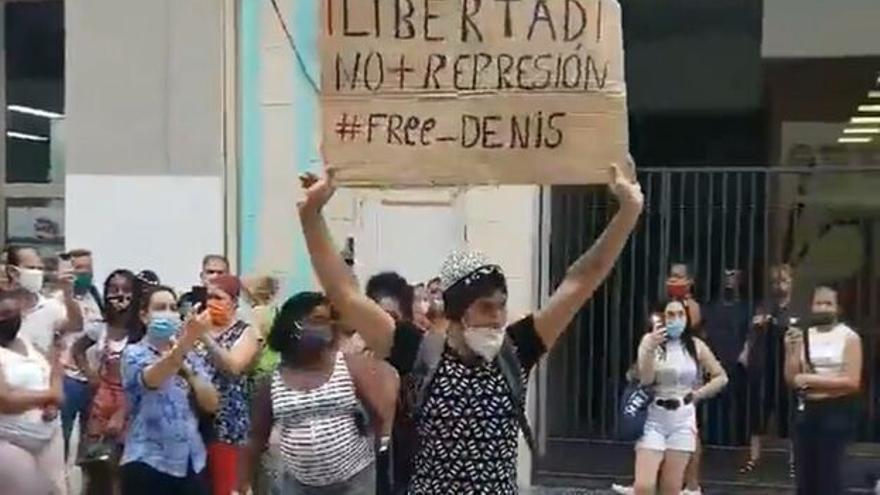
Robles, also known as the “young man with the placard,” was noticed after demonstrating alone with a sign on a central pedestrian promenade in the Cuban capital in which he asked for the release of dissident rapper Denis Solís, who had been sentenced to eight months for contempt.

The protester was arrested after holding his placard for several minutes. On that occasion, Televisión Cubana justified the arrest by claiming that Robles had resisted and engaged in a “frank act of provocation.”

For his mother, the transfer to the correctional work center is a “big step” so that he later “gets his parole”

 For his mother, the transfer to the correctional work center is a “big step” so that he later “gets his parole.”

She also said that her son “actually shouldn’t have gone through all that. They should release him because he is unjustly imprisoned. Let’s hope that in 2024 God will finally grant me the grace of my son being free.”

Translated by Regina Anavy 

____________

COLLABORATE WITH OUR WORKThe 14ymedio team is committed to practicing serious journalism that reflects Cuba’s reality in all its depth. Thank you for joining us on this long journey. We invite you to continue supporting us by becoming a member of 14ymedio now. Together we can continue transforming journalism in Cuba.

Nurse Nurisbel Guerra Was Murdered by Her Husband in the Cuban Town of Cauto Cristo

Nurisbel Guerra was a nurse and worked on a medical mission in Venezuela. (Facebook/Nurisbel Guerra)

14ymedio bigger14ymedio, Havana | 2 January 2024 — Although the year has ended, the number of women killed in 2023 continues to grow after the confirmation, this Monday, of the femicide of Nurisbel Guerra, allegedly perpetrated by her husband on December 24 in the province of Granma. There are now 87 victims counted by the independent media and observatories.

The Guerra’s murder was initially reported by YouTuber Niover Licea, who shared on his social networks details about the case, which occurred in the Granma municipality of Cauto Cristo, halfway between Bayamo and Holguín.

Her husband, identified as Oreste Tamayo, a worker of the Electric Company of the province and from whom she intended to separate, murdered her

Guerra, whose age is unknown, served as a nurse on a medical mission in Venezuela, from which she had returned for a short period. Her husband, identified as Oreste Tamayo, a worker of the Electricity Company of the province and from whom she intended to separate, murdered her. After cutting her throat, the alleged murderer committed suicide.

This December, the official press broke its usual silence to report on the femicide of Ohanis Soto in the town of Lincoln, in the province of Artemisa. During a “domestic fight,” which occurred at 6:00 pm on December 28 and “ended fatally,” Soto was stabbed several times by her partner, Osmar Frómeta. continue reading

According to the newspaper El Artemiseño, after killing Frómeta, he surrendered to the police to avoid an alleged “settling of accounts” by Soto’s family.

A recent report published by the EFE agency uses the independent records of femicides in 2023 to draw up a profile of the victims of violence against women on the Island. A 37-year-old woman, mother and resident in a rural area is the most common image of victims of femicides. In most cases, the women were killed by their former partners.

The data also revealed that this year an average of one woman was killed every four and a half days. That is to say: on the Island there were just over seven victims of gender-based violence every month.

The data also revealed that this year on average, a woman was murdered every four and a half days

The figures are even more terrifying if we consider that, due to the lack of information and the refusal of the Government to reveal official figures, many cases of femicides are not known. This is a reality denounced by platforms such as Alas Tensas and Yo Sí Te Creo en Cuba, which are still trying to verify several femicides that allegedly occurred in 2023, so it is likely that, if information is obtained during the first days of 2024, femicides will continue to be added to last year’s record.

For its part, the Government’s promises to establish policies to protect against violence against women have fallen apart. Months ago, the authorities announced that a recently created Observatory would be in charge of monitoring this type of situation in the country in real time. However, so far they have not begun to perform the task.

Translated by Regina Anavy

____________

COLLABORATE WITH OUR WORKThe 14ymedio team is committed to practicing serious journalism that reflects Cuba’s reality in all its depth. Thank you for joining us on this long journey. We invite you to continue supporting us by becoming a member of 14ymedio now. Together we can continue transforming journalism in Cuba.

Cuban Nostalgia

The December 31 dinner is an opportunity to get together with family and close friends. (14ymedio)

14ymedio bigger14ymedio, Pedro Corzo, Miami, December 31, 2023 — The common denominator of exiles and emigrants is to have left behind their country of birth and, most likely, to share the longings for the past, which for both can be overwhelming, although different. It’s worth saying that I learned this a very short time ago.

Nostalgia is one of the most personal and complex feelings. I experienced it a year ago, in a restaurant where I had dinner with my wife and with my brothers Morera and Xiomara and their wives, Kemel and Cristina.

I assimilated my nostalgia with difficulty. A Castro singer-songwriter had just died. I call him that because his songs, as Jose A. Albertini wrote, helped to silence the firing squads who were executing people. The music of this notable artist is admired by many compatriots, and one of those fans proposed to the entertainers that they perform a song in his memory.

It is worth saying that I was very upset, although I understood the situation when everyone told me, “those are his memories of that singer, try to understand, what you remember as bitter can be sweet for someone else.” This is the irreducible truth, because sometimes you remember something as charming until it becomes dangerous. continue reading

Art in general, along with sports, have been used by Island totalitarianism to manipulate the population and spread a smokescreen over the events in Cuba. In addition, artistic manifestations have been used to repress authors, as happened to Meme Solís. The performers I remember the most are Los Cinco Latino, The Platter and Luis Aguilé, a very Cuban Argentinian.

Art in general, along with sports, have been used by Island totalitarianism to manipulate the population and spread a smokescreen over the events in Cuba

Terror devoured us. The political situation was so demonic that a song entitled Adiós Felicidad (Goodbye Happiness) by Ela O’Farrill was considered counter-revolutionary. The author was arrested and humiliated, denounced by a communist professor, a friend of the family, for having composed a counterrevolutionary ballad, an accusation that determined her exile.

Christmas, from the 1960s, began to take place very discreetly. People stopped congratulating each other, or they did it privately. At the same time, there was very little to give away, and groceries were conspicuous by their absence or their prohibitive prices. However, the worst thing was that Christmas celebrations were politically incorrect, but not New Year’s Eve, which heralded the advent of the New Man.*

On January 6, the Three Kings Day celebration also went to jail or into exile. Toys, according to government propaganda, were regulated so that all children had them. The regime replaced customs and traditions. It transformed everything so that Fidel Castro could take over the collective imagination. More than a government, a new creed was imposed in Cuba.

I admit that, at Christmas, the homesickness is more severe. It is a period that, without being religious, imprisons me and puts me in a time machine that leads to sharing again with those who are no longer there in place and time and who will never return.

My last Christmas in Cuba was in 1980. On the Island it was practically banned. Somes churches discreetly decorated in accordance with the date. I remember a temple that did open its doors, located on Trista Street in the unforgettable Santa Clara.

Castroism arranged that the Christmas holidays were celebrations without devotional connotation for the people. The festivities would take place on July 25, 26 and 27

Castroism arranged for the Christmas holidays to be celebrations without a devotional connotation for the people, something that is spreading a lot today. The festivities would take place on July 25, 26 and 27, as part of its policy of destroying the national roots and transmuting the date of the assault on the Moncada barracks as the focal point of the new religion that was winning over Cubans.

The Christmas I remember the most is that of 1958, a year before the strategy of the Three Cs was put into practice – “zero cinemas, zero purchases (compras), zero cabarets” – and Fidel Castro’s July 26, with its rhythm of bombs and personal attacks that imposed terror, a situation that would drastically worsen months later.

The country was virtually at war. We were all frightened by the extreme violence on both sides. However, no one could imagine the magnitude of the coming disaster. The Republic, the whole nation, was nearing extinction: the work of the Castro brothers.

*Translator’s note: ’Che’ Guevara, in 1964, said that a revolutionary society (based on Marxism) needed to create a New Man with a “revolutionary consciousness” who wouldn’t rely on material incentives.

Translated by Regina Anavy

____________

COLLABORATE WITH OUR WORKThe 14ymedio team is committed to practicing serious journalism that reflects Cuba’s reality in all its depth. Thank you for joining us on this long journey. We invite you to continue supporting us by becoming a member of 14ymedio now. Together we can continue transforming journalism in Cuba.

Cuban Parliament Rends Its Garments over State Corruption and the Financial Crisis

The day’s agenda included reports on the state of domestic trade and foreign investments. (X/Parlamento)

14ymedio bigger14ymedio, Havana, 20 December 2023 — Corruption in grocery stores and soup kitchens, corruption in sports and educational institutions, corruption in the state sector and in small businesses. The numbers do not add up and Cuban officials were unable to avoid the word (it had been taboo among government leaders for decades) during presentations to Cuba’s parliament, the National Assembly of People’s Power, on Tuesday.

The day’s agenda included reports on the state of domestic trade and foreign investments, on the Ministry of the Interior’s eradication of marijuana crops in the eastern provinces, on measures being taken to mitigate the educational crisis and the exodus of athletes, and a closing speech — in his usual scolding tone — by National Assembly president Esteban Lazo.

The vice-minister of Foreign Trade and Investment, Ana Teresita Gonzalez, offered the day’s most optimistic figures. She reported that some 343 businesses from forty countries were interested in investing in the island and that their applications had been approved by the government. Of those businesses, 181 are “international economic association contracts,” 106 are public-private partnerships and 56 will operate completely under foreign management.

Gonzalez indicated that, despite the fact that most of these companies are in the tourism, mining and agriculture sectors, the ministry is “dissatisfied”

Gonzalez was filling in for her boss, Ricardo Cabrisas, who has been noticeably absent during these sessions. She indicated that, despite the fact that most of these companies are in the tourism, mining and agriculture sectors, the ministry is “dissatisfied” at not being able to import all the products it wanted and had to make do with the basics: beer, soft drinks, water, flour and meat. continue reading

The other parliamentary committees did not have much to celebrate either. The battered industrial, construction and energy sectors had to acknowledge that, despite government audits, there were multiple shortcomings. These included shortages of cement, steel, electric cables, plumbing fixtures and millwork; a lack of financing and oversight; and breach of contract by some of parties involved in the process.

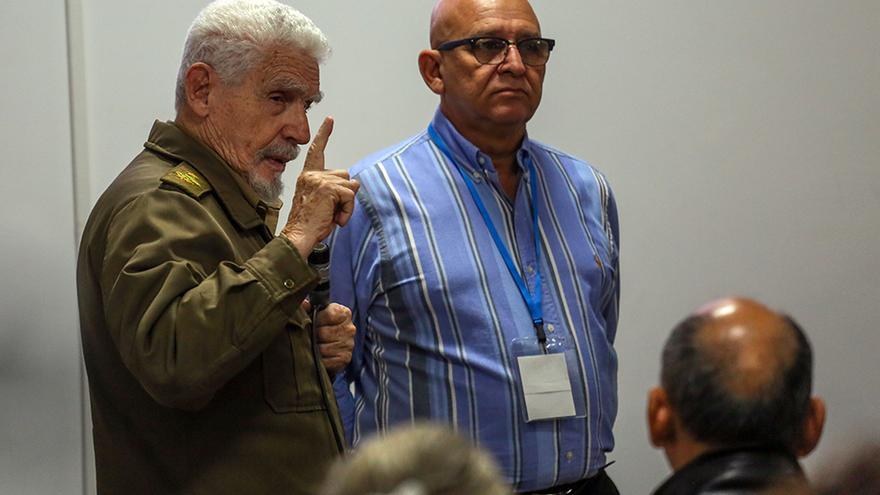
National Assembly delegates claimed the solution is to increase financing and provide additional subsidies to those who are economically disadvantaged provided Lazo and a group of key ministers agree to directly oversee the process. The delegates present were immediately met with an angry rebuke from Ramiro Valdés, with Cubadebate providing its customary photo of him making angry gestures.

'Cubadebate' publicó la ya habitual fotografía de Ramiro Valdés increpando, con gestos de enojo, a los presentes. (Cubadebate)
‘Cubadebate’ published the now usual photograph of Ramiro Valdés rebuking those present, with angry gestures. (Cubadebate)

But it is in the retail and food service sectors where corruption is the main course. Under the watchful eye of Prime Minister Manuel Marrero, Interior Commerce Minister Betsy Diaz Velazquez and Lazo himself, the parliamentarians addressed the topic of deficiencies in the family care system and island’s precarious soup kitchens.

According to official statistics, there are 1,445 such establishments in Cuba on which, as Diaz pointed out, some 59,687 rely every day for basic rationed goods, food donations and food modules. Faced with the massive theft of resources and food (Marrero euphemistically attributed the problem to “poor management”), administrators have had to introduce digital inventory controls. Lazo asked that attention also be given to another issue common to soup kitchens: systematic popular control of programs which offer resources to economically vulnerable people to evaluate their effectiveness

The quality of service in the banking and financial system was found to be lacking.

In a presentation to a parliamentary sub-commitee, the president of the Central Bank of Cuba, Joaquin Alonso, was not too enthusiastic about recent efforts to digitize the banking system. The policy known as bancarización, which took effect in August, is intended to address the country’s shortage of foreign reserves, as has been reported on national television on numerous occasions.

“The quality of service in the banking and financial system has been found to be lacking,” he stated. “This finding is based on public perceptions of the banking services offered by our institutions.” The outlook, in his opinion, is alarming.

He concluded, “Some, though not all, of the most common complaints involve long lines, organizational inefficiencies in some offices, misinformation from poorly trained staff, slow and cumbersome procedures, failures in communication and technological systems, and service disruptions during power outages.”

The directors of the Institute of Sports, Physical Education and Recreation reported an unprecedented wave of “crime, corruption and illegalities” in the sector, to say nothing of the recent stampede of athletes leaving the country. They believe athletes must be protected from the temptation of “big money” from international events.

The day ended with a report on drugs and crime provided by the Ministry of the Interior. Colonel Juan Carlos Poey alluded to the rise in fentanyl consumption in the region and pointed out that Cuba is no exception. He added, however, that the most widely produced drug in the country – especially in Granma, Holguín, Guantánamo, Las Tunas and Santiago provinces – is marijuana.

Crimes were also committed in Cuban prisons, where 165 “incidents” were recorded. There were also thirty-two “findings” (of objects that the prisoners should not have had in their cells) which were linked to thirty-one relatives of inmates. On the international front, he added that Interpol has issued red notices for twelve Cubans. “This means that, when a country finds any of them, it will detain them and we will have them extradited. We have identified 301 Cuban criminal organizations operating overseas in fifteen countries” he stated.

At the end of his speech Poey predicted that, given the “adverse situation”  in the country, it is very likely that “crime will evolve into a higher level of organization,” more complex than gangs or small trafficking networks. Luckily, he added, by the time that happens, the police will already know what to do.

____________

COLLABORATE WITH OUR WORKThe 14ymedio team is committed to practicing serious journalism that reflects Cuba’s reality in all its depth. Thank you for joining us on this long journey. We invite you to continue supporting us by becoming a member of 14ymedio now. Together we can continue transforming journalism in Cuba.

Cuba Extends the Tariff Exemption for Food, Medicines and Other Products

The import of duty-free food and medicines was approved in July 2021. (Cubadebate)

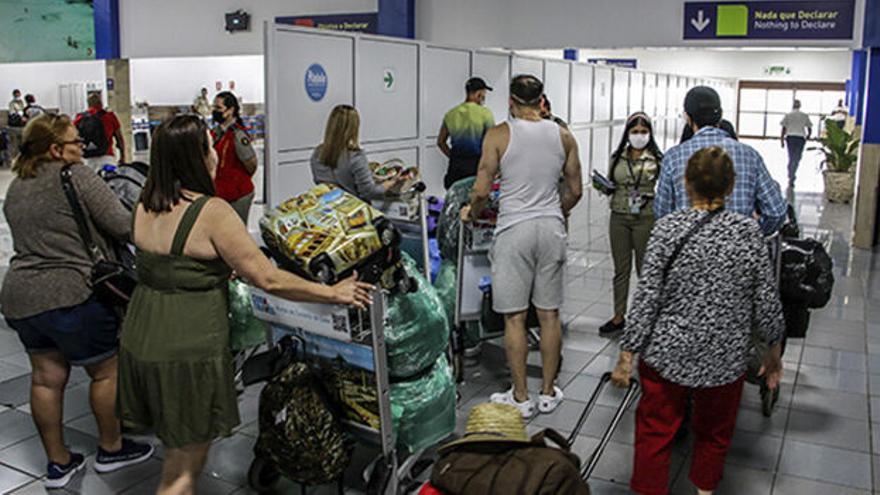
14ymedio biggerEFE (via 14ymedio), Havana, December 31, 2023 — The Cuban authorities announced this Saturday a new extension – until March 31 – to the tariff exemption for food, toiletries, medicines and even generators that travelers can bring to the Island for non-commercial purposes.

As a novelty of the measure taken in 2021 and prolonged several times, “the non-commercial import above the value established by the route of air, sea, mail and courier shipments of generators with a power greater than 900 watt-hour,” is allowed, according to the Ministry of Finance and Prices.

For the extension of the measure, “the persistence of the conditions that gave rise, in 2021, to its implementation” has been considered, according to the source.

Therefore, the tariff benefit will be maintained, which authorizes exceptionally, the non-commercial import, without limits in its value and exempt from the payment of customs duties, food, toiletries and medicines, through passengers as accompanied luggage. continue reading

The tariff benefit will be maintained, which exceptionally authorizes, the non-commercial import, without limits in its value and exempt from the payment of customs, food, toiletries and medicines

The import of food and medicines without tariff limits was a measure put into effect after the anti-government protests of 11 July 2021, which had as its main causes the scarcity and shortage of those basic products.

The law in force in Cuba on the import of luggage consists of a complex system of points and weight limits that establishes tariffs on excess items brought by travelers.

In the case of medicines, up to 22 pounds are allowed to be introduced into the country.

The economic crisis in Cuba was aggravated by the pandemic, the economic sanctions imposed by the United States and the failures in internal macroeconomic management.

Translated by Regina Anavy

____________

COLLABORATE WITH OUR WORKThe 14ymedio team is committed to practicing serious journalism that reflects Cuba’s reality in all its depth. Thank you for joining us on this long journey. We invite you to continue supporting us by becoming a member of 14ymedio now. Together we can continue transforming journalism in Cuba.

More Than 5,200 Cubans Were Deported to the Island in 2023 From Different Countries

The first flight of this year with deported Cubans arrived in Havana on April 24, with 123 people. (Cubadebate)

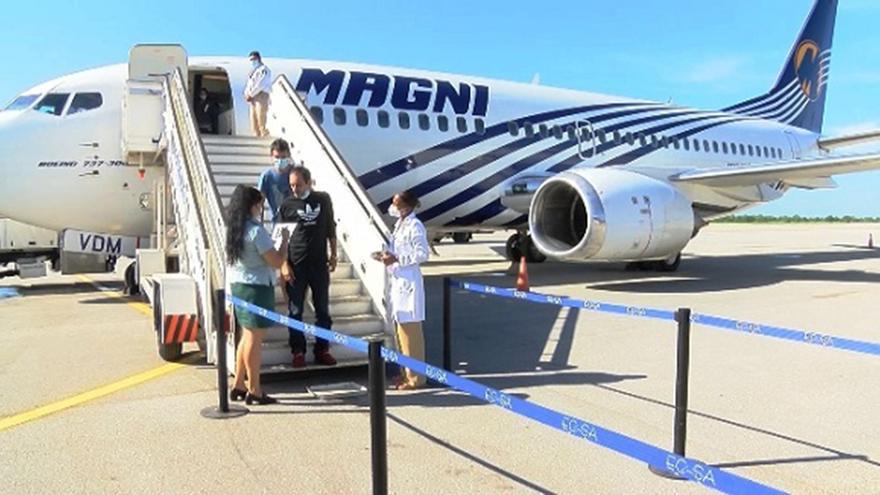
14ymedio bigger14ymedio/EFE, Havana, December 31, 2023 — A few hours before the end of 2023, the Ministry of the Interior reported that, in the last 12 months, 5,253 Cubans have been deported by air and sea from different countries in the region. Last Thursday, the U.S. Coast Guard returned nine rafters to Cuba on the ship Charles David Jr.

Among these deportations are those carried out by the United States. The most recent transfer flight to José Martí International Airport was last Thursday, with 31 Cubans who were arrested at the border.

According to Prensa Latina, in this group, made up of two women and 29 men, there were three people who had left the country illegally by sea. The rest, it reported, did so legally but “then took irregular routes to the U.S. border.”

Under the bilateral agreement between Cuba and the United States to return to the Island those who arrive by sea, eight transfers occurred to repatriate 426 Cubans since last April, when air expulsions resumed. continue reading

This year, Cuba has also received repatriated migrants from the Bahamas, Belize, the Cayman Islands, the Dominican Republic and Mexico

The first flight with this type of deportees arrived in Havana on April 24, with 123 people. On the last day of November, 37 Cubans were deported. Yoan Enríquez, who had a probation form I-220B, was one of the passengers who had to leave his wife and a three-month-old baby in Florida.

During the current fiscal year, which began on October 1, 2022, more than 6,800 Cubans have been intercepted by the U.S. Coast Guard on trips to Florida, according to official data.

This year, Cuba has also received migrants repatriated from the Bahamas, Belize, the Cayman Islands, the Dominican Republic and Mexico.

According to what was revealed to this newspaper, Cuba accepted the returns of its nationals from the month of October from Mexico, as long as the transfer expenses were covered by the Government of Andrés Manuel López Obrador. “A cost of 4,000 pesos (237 dollars) is handled for each migrant,” said lawyer José Luis Pérez.

Since Mexico resumed flights to Havana, it used the services of the airline Viva Aerobús. In total, it has transferred 435 Cubans in five connections. “Migration has a budget item for deportations. It’s not a new expense,” the official said.

Mexico also has a bilateral agreement with Venezuela for the deportation of migrants. This Sunday, a group of 122 migrants was returned to Venezuelan territory on the second repatriation flight, for a total of 329 people if you add the 207 who arrived in the early hours of this Saturday.

Since Mexico resumed flights to Havana, it used the services of the Viva Aerobús airline. In total, it has transferred 435 Cubans in five connections

The flight was carried out through the Vuelta a la Patria (Return to the Homeland) plan, a government program launched in 2018 to facilitate the return of migrants who were victims of xenophobia, according to the Venezuelan Government.

On X (formerly Twitter), the Ministry of the Interior, Justice and Peace pointed out that the migrants were received by a “comprehensive care command” in charge of verifying their data and providing medical assistance.

The Mexican government reported this Saturday the renewal of the repatriation flights of Venezuelans who are arrested on their way to the U.S. border.

It also indicated that they are working on the implementation of social programs in Venezuela, which will benefit, among others, repatriated people by linking them to productive projects and paid internships in workplaces.

Translated by Regina Anavy

____________

COLLABORATE WITH OUR WORKThe 14ymedio team is committed to practicing serious journalism that reflects Cuba’s reality in all its depth. Thank you for joining us on this long journey. We invite you to continue supporting us by becoming a member of 14ymedio now. Together we can continue transforming journalism in Cuba.

The Minister of Economy Who Never Told the Truth (I)

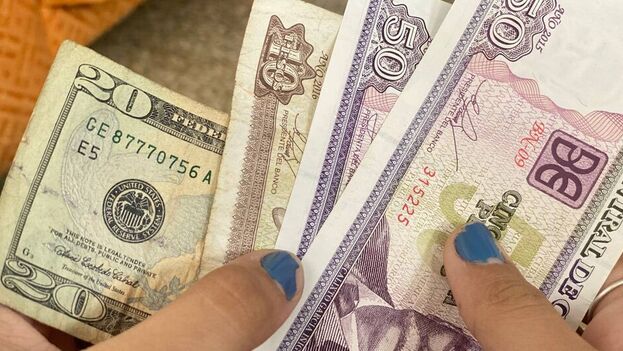
The bill on the left might buy something… the ones on the right, not much.

14ymedio bigger14ymedio, Elias Amor Bravo, Economist, December 28, 2023 — The facts speak for themselves. There is more than enough evidence that Alejandro Gil, Cuba’s Minister of Economy, knew since December 2020 and then from the first quarter of 2021, that the Ordering Task* could not go well, and that it would end up being a disaster for the weak Cuban economy. There are numerous testimonies of Spanish businessmen and investors in Cuba that confirm it.

In private, the communist leader did not welcome the economic “package” of the Ordering Task, but assuming that he had nothing against the Party or Marino Murillo, who even thought that he could succeed, or against anyone among the Cuban communist regime, he was silent and just waited for what was coming. This is not a recommended attitude for someone who is supposed to be at the head of an economy in serious crisis and locked in a vicious circle from which it is unable to exit.

That is why now, three years after the Cuban economy has lost critical mass, real GDP, investments, purchasing power and international attractiveness, it is very easy to go out on television with Randy Alonso and give a speech that aims to change the pace, not having them all with him and with an evident interference from Prime Minister Marrero. Are the Economy Minister’s days numbered? We’ll see. continue reading

Undoubtedly, it was a long Round Table program, in which Gil was accompanied by Regueiro Ale, another who is worth more for what he doesn’t say than what he does, and both undertook the unfortunate task of informing the people about the foundations of the regime’s decisions to correct the main distortions of the Cuban economy and relaunch it in 2024.

It involves two consecutive actions. First, to correct the distortions. Second, to give a boost to the economy; “reboosting” is another lie.

It is interesting to start from the distortions that Gil sees in the economy. And here, once again, the situation of the war economy is mentioned, caused by, and I quote verbatim, “the pressures of the intensified blockade, which hinders all the efforts we have to make for the economic performance of the country.”

A bad start, which loses perspective by spending energy on distortions. The intensified embargo/blockade does not prevent Cuba from developing its economic model, relating economically to 192 countries in the world, obtaining investments, tourists and most importantly, remittances, 90% from the country that “embargoes” the Cuban economy. This is a poor analysis of distortions if it is intended to find the way out of the tunnel from the available economic resources.

The second wrong idea is the mantra, repeated ad nauseam, that “we have to overcome, we have to find the alternatives by designing measures in accordance with our economic and social model, inclusive in our socialism, and that allow us, with objectivity, with realism, to get ahead.” This model failed all over the world, ask Vietnam or China, and which has been in Cuba for 65 years, a magnificent age for its retirement. If the government chooses the communist model to face the complexities, boost the economy and correct the distortions that are present in the country, in a year or two the situation may be even worse. Ministers Gil and Regueiro know it, but they are silent.

Nor does the argument work that the world economy is malfunctioning and this impacts Cuba. A simple look at the Caribbean resorts in the Dominican Republic or Costa Rica dismantles this argument. The hotels are 100% full  in this winter high season. In Cuba, they aren’t. Something is not right when the Germans, French and Swiss choose other destinations.

And of course, since there are no answers to the main questions, it’s interesting to talk about the second one, which has no solution: the regulated family basket.** Here the minister said that the population is against maintaining subsidies to all people equally since not everyone has the same purchasing power. This is a lie. What the population wants is to get rid of the regulated basket and be able to choose freely. As do many companies, too, because they could sell the products without dependence on subsidies, through the rules of supply and demand. The minister, on the other hand, says that he will review the basket, maintaining products at subsidized prices even if this is not an equitable distribution. The country’s imports for the basic basket cost more than 1.6 billion dollars as a result of increased prices in the international market.

The basket could be suppressed at any time and allow citizens to be free to choose. This is how Cuba worked before 1962, the date of the entry into force of the ration book that has been an instrument of social and economic control of communist design, which has increased poverty and misery in Cuba to levels not observable in other countries. Advances towards economic freedom are essential to relaunch the economy. Gil knows it, just as he knows that the Communist Party, committed to centralizing the decisions of choice of goods for Cubans, is the origin of the regulated basket. Any alternative to subsidized prices is seen as something negative.

And again he lies, when he says that “this doesn’t mean that the basket will disappear.” It won’t take long; it’s already happening.

Fuel is the second distortion, but Gil didn’t say why there is no oil in Cuba. Basically, two reasons. First, from the second half of 2019, Venezuela systematically reduced its oil shipments to the Island for internal reasons. Less subsidized oil forced the regime to resort to the international oil markets, but there it did not obtain financing because it wasn’t current on its debts. In Fidel Castro’s time that was possible, but in the time of Díaz-Canel either you pay or they don’t give you anything.

And by combining these two factors and attracting far fewer tourists to the Island, the ability to buy oil decreased significantly. And now Gil lies when he says that the population is worried about maintaining subsidized fuel prices, probably the lowest in the world compared to the prices of other countries. If the subsidized basket causes harms economically and socially, oil subsidies distort the energy decisions of all agents.

This is not an issue to review but to straighten out, as soon as possible. Without fuel, the economy and the country cannot function, and the dependence on oil makes Cuba a country with almost zero renewable energies. Blaming the absence of an internal mechanism of convertibility of currencies into national currency for fuel is not only a lie: it’s nonsense.

Third distortion: electricity. The same problem as fuel. Subsidized prices that prevent companies from obtaining profitability so that the quality of the service leaves much to be desired, and the lack of investment causes the network’s failures. Savings are not possible because, as a result of high prices, consumption levels are among the lowest in the world. It’s another area to be resolved with reforms in supply and demand. As in other goods and services, Gil now discovers that those who consume the most also affect those who consume the least, because when a blackout occurs, everyone suffers. It doesn’t discriminate between the largest and the smallest consumer. The solution of setting different rates depending on the level of consumption could be even worse.

He did not say it as such, but Gil incorporated the private enterprises into the list of distortions that have to be corrected by reciting some alleged opinions of the population that contribute little to the technical debate. Specifically, that those who want to buy a certain product have to go to the private companies. Why don’t Cubans find what they want in the State stores? Why is there rationing, scarcity, poverty? If the private businesses fill the need, although at a higher price, perhaps it is because this is the rule of the free market. By making the private companies fulfill a complementary function rather than a main function, the only thing achieved is that more merchandise is unavailable and people get hungry.

Then it was the turn of the distortion of the transport tariffs, which don’t earn enough to cover the costs of the State. If this is the scenario, the offer of services will fall and fewer goods and people will be transported as happened this year. Again, economic freedom is the solution, but the minister does not recognize it.

Gil pointed out that in the last four years “a group of measures has been adopted such as the incorporation of the non-State sector of the economy, the elimination of restrictions on the salaries in State companies and the removal of restrictions on distributing  profits,” but he acknowledged his poor success. He even questioned the legal rules for non-State economic actors that, in his opinion, were carried out without having a previous experience of their operation in the economy, taking as a reference the self-employed workers, which has nothing to do with the private companies. Another miscalculation, and on they go.

A special moment of the program was when Gil explained that, in the face of versions that the measures have a neoliberal character, “all decisions start from a broad process of consultation and analysis within government institutions, with the participation of academics, the Party militants and the analyses made from popular opinion.” Well, what a pity, because Vietnam, for example, thanks to well-designed neoliberal measures, overcame famines in five years and became a world’s leading exporter of rice. And what about China?

Cuban communists are the only politicians at the international level who continue to obsessively question neoliberalism, a doctrine that has given much better results than those applied by the communist model. If instead of criticizing without thinking, they reflected on what neoliberalism represents in 2023, another cock would crow.

Gil’s agenda affects the aspects that have been a failure, such as increasing the role of the State as a regulatory entity in the economy and intervening in the foreign exchange market by slowing down privatization. This gives the State a role that it cannot play because of its dependence on subsidies. Why does he lie over and over again? The market is the main mechanism for the allocation of resources in any economy, and that is neoliberal doctrine. I hope this is the way forward.

Gil’s next lie was to point out that these measures protect the social conquests of the revolution. It’s just the opposite. It is not possible to sustain a public expenditure of the dimension of the one that exists in Cuba if more wealth, employment and production are not generated. The chosen path has confirmed this for decades; a State-centralized distribution of resources goes against the trends of the world economy.

Neoliberalism, where it triumphs, does not lead the State to neglect taxes, but to liberate the markets, deregulate and act effectively. Inclusive measures to protect the people and the vulnerable need a solid economic base. Without growth, it is not possible to distribute.

So Gil is convinced that the measures will be able to correct distortions in time, and although the transformations have risks, they have to be assumed to be favorable for the revival of the economy, which is the other side of the coin.

If the intent is to lower the deficit, estimated at 18% and considered high, it must be corrected with taxes, prices and measures aimed in that direction.

It’s an important issue. Raising taxes goes against growth. If the main purpose is to accelerate the country’s economic recovery, increasing taxes is contrary to that objective. As for prices, inflation has moderated but remains high in food, recreation and transport. The minister is silent and does not tell the whole truth by assuming measures that will not give results and are poorly directed.

Part 2 is here.

Translator’s notes: 

*The Ordering Task is a collection of measures that include eliminating the Cuban Convertible Peso (CUC), leaving the Cuban peso (CUP) as the only national currency, raising prices, raising salaries (but not as much as prices), opening stores that take payment only in hard currency, which must be in the form of specially issued pre-paid debit cards, and a broad range of other measures targeted to different elements of the Cuban economy.  

**The monthly allotment of rationed goods.   

Translated by Regina Anavy

____________

COLLABORATE WITH OUR WORKThe 14ymedio team is committed to practicing serious journalism that reflects Cuba’s reality in all its depth. Thank you for joining us on this long journey. We invite you to continue supporting us by becoming a member of 14ymedio now. Together we can continue transforming journalism in Cuba.

Cubans in Manzanillo Try to Collect the Garbage Themselves Due to the Apathy of the Authorities

Without trucks, the wave of garbage threatens to become a tsunami. (14ymedio)

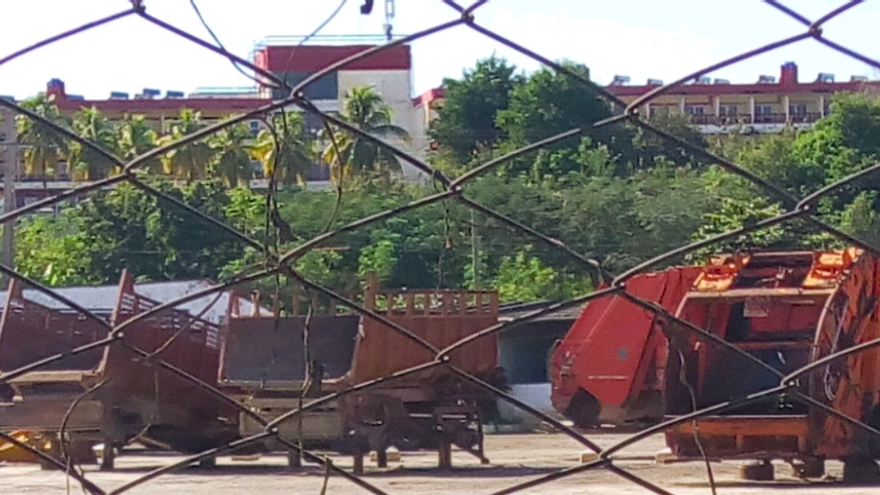
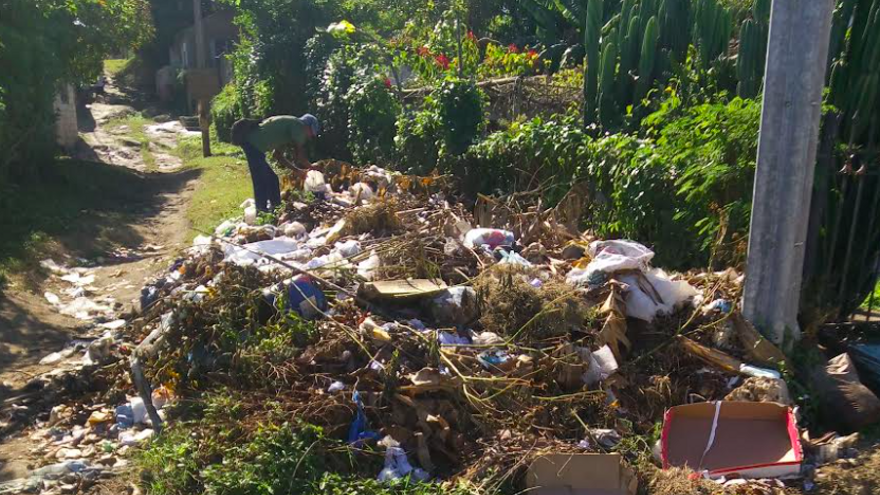
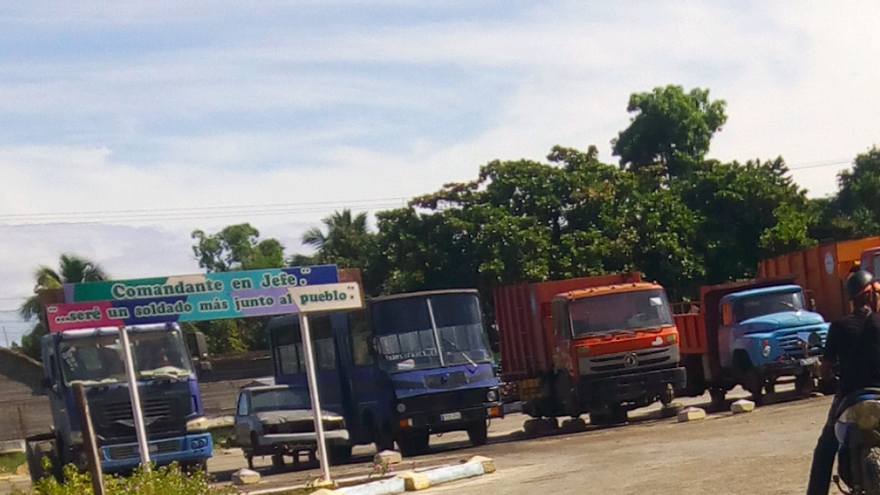
14ymedio bigger14ymedio, Juan Matos, Manzanillo (Granma Province), 31 December 2023 — It has been so many days since no one has collected the garbage on the streets of Manzanillo that the mountains of waste already have a uniform, ocher color. Due to the effect of the salt air and the indifference of the Community Services, the stench is ubiquitous in this coastal municipality in the province of Granma. The trucks that should clean the town are paralyzed due to lack of fuel or lie in a kind of scrap metal cemetery, while the landfills have become a den for countless vermin. The situation, resident agree, has reached an intolerable point.

“The trucks piled up in a Communal Services parking lot give the measure of how serious this is,” Niurka, a manzanillera, tells 14ymedio in front of her house where guano, cans and cardboard boxes accumulate. She’s right. The rusty chassis of buses and the trash collection vehicles are reminiscent of large insects, lined up with martial rigor. In front of this scrapyard is a sign: “I will be another soldier with the people. Fidel.”

The logic of the dump, analyzes Niurka, is simple: “without fuel the trucks will not start, and without trucks, the wave of garbage threatens to become a tsunami that covers everything.” Currently, only one vehicle works to collect waste from the second most important city in Granma.

The scavengers do not lose sight of their objective, but they do not dare to go down until a “diver” examines the piles of waste. (14ymedio)

Manzanillo, a town that has always been green and rural, sees the crushing effects of dirt on nature, the woman observes. Arid fields, stagnant streams, roads blackened by liquid waste, mosquito breeding grounds – with the consequent “package” of diseases they transmit – not to mention the rats continue reading

that already roam around the town at their liesure, Niurka enumerates.

Not only do the animals “eat” the garbage, but the poorest Manzanilleros do as well says Jorge, a 57-year-old retiree who lives near the Comunales parking lot, speaking to this newspaper. Between mice and cockroaches, many “dive” in the landfill looking for food scraps, he adds.

Despair and hunger eclipse any scruples, and what was previously exclusive to Havana or other highly populated cities on the Island, is now common even in the most humble hamlets. “Everything depends on the Government’s management,” Jorge criticizes. “If a realistic goal is set to solve the problem, a contingency plan, this could begin to be resolved,” he says, optimistically.

The State continues to pay for the scrapyard’s custodians, who sit there for eight hours “doing nothing,” Jorge emphasizes. “That’s corruption. Why don’t they use that money to pay for gas and pick up trash?”

In front of the scrapyard is a poster with a quote from Fidel: “I will be another soldier with the people.”

Everything has been left in the hands of the residents, who in some neighborhoods, like Nuevo Manzanillo, work on collecting the trash on their own. But the solution is limited, the retiree acknowledges. In the long run, a large-scale, organized and systematic mechanism will be needed to control the garbage dumps. “That day has not come,” he says. In another neighborhood, once called “Golden” for its opulence, neighbors make jokes about how indisputable the victory of garbage has been.

Meanwhile, the plague and unhealthiness are on the rise. The landfills “gain in stability and organization,” Jorge jokes, citing the weather report. Above a landfill near the parking lot – located not far from the Guacanayabo hotel – the man sees a group of turkey vultures flying over. The scavengers do not lose sight of their objective, but they do not dare to go down to examine the piles of waste until a “diver” leaves. At the moment, says Jorge, “the garbage dump is occupied.”

____________

COLLABORATE WITH OUR WORKThe 14ymedio team is committed to practicing serious journalism that reflects Cuba’s reality in all its depth. Thank you for joining us on this long journey. We invite you to continue supporting us by becoming a member of 14ymedio now. Together we can continue transforming journalism in Cuba.

‘I Do Not Normally Post These Kinds of Publications’

Las personas, ante el miedo, justifican lo que van a publicar con que no es una conducta habitual. (14ymedio)
People, in the face of fear, justify what they are going to publish by saying that it is not common behavior. (14ymedio)

14ymedio bigger14ymedio, Yoani Sánchez, Generation Y, Havana, 31 December 2023 — In my childhood, letters always began with “I hope upon receipt of this letter.” Now, many Cubans on Facebook warn in their first line: “I am not used to making this kind of publication.” Both formulas introduce a text and seek to create a link between the writer and their reader, but they are separated not only by the distance of decades but also by intentions. One is a mere cliché, the other is evidence of fear.

In Cuba, those who have expressed themselves freely through social networks have been penalized so much, in one way or another, that the fear of making a complaint visible, requesting medicine or reporting the state’s apathy is enormous. People feel that they have to apologize in advance for exercising their right to spread their opinions or to demand everything, from having food arrive at the ration store to having a hospital bathroom cleaned. The majority feel obliged to offer that disclaimer to make it clear that only in this extreme case are they appealing to make their annoyance or desperation visible.

They also want to distance themselves from activists, independent journalists and opponents who have made the virtual square the space to disseminate their actions, information or platforms. Before the inquisitive eyes of the political police that monitor the web, it must be clear that the Internet user in question has made an exception to their rules and has published their feelings this one time, only this once. If a co-worker were to check their Facebook wall to see what content they have shared, the colleague must also get the impression that this post is the result of urgency and will not become a habit. continue reading

The message is also intended for strangers. They will know that once the problem is solved and the personal crisis subsides, that Facebook account will go back to just posting family photos, ribbon-adorned hearts, and celebrity gossip. There should be no doubt that, after the current complaint, there will be no political positioning, no dissident attitude and, much less, the conversion of the individual into a digital leader that summons others and overshadows the prominence of officials and party leaders.

The “I do not normally post these types of publications” is a summary of the terror that has been instilled in us towards our own words. Using that formula goes beyond a platitude, it is perpetuating the gag that has been imposed on us.

____________

COLLABORATE WITH OUR WORKThe 14ymedio team is committed to practicing serious journalism that reflects Cuba’s reality in all its depth. Thank you for joining us on this long journey. We invite you to continue supporting us by becoming a member of 14ymedio now. Together we can continue transforming journalism in Cuba.

If You Want to Travel, Bring 3,000 Cuban Pesos to Bribe the Staff at the Villanueva Bus Terminal

With no money or particular skills, the majority of passengers just have to wait their turn. (14ymedio)

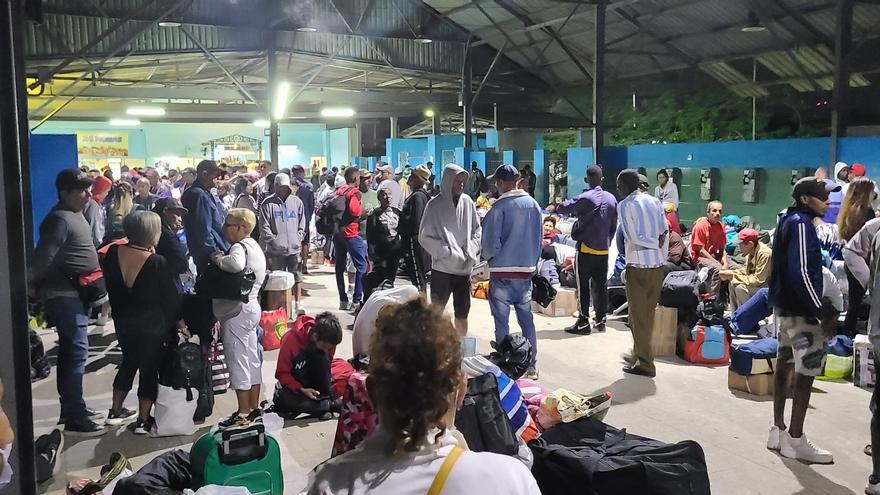
14ymedio bigger14ymedio, Havana, Pedro Espinosa, 29 December 2023 – Every day he comes into the Villanueva bus station in Havana knowing that, if it weren’t for his particular role, very few passengers would be departing from the city. A number of members of staff now don’t want to work with him. “You’re too noticeable” they tell him. But business goes on and is getting better and better. At this year’s end, for 3,000 pesos the “journey fixer” of Villanueva is able to get you a passage to any city on the island.

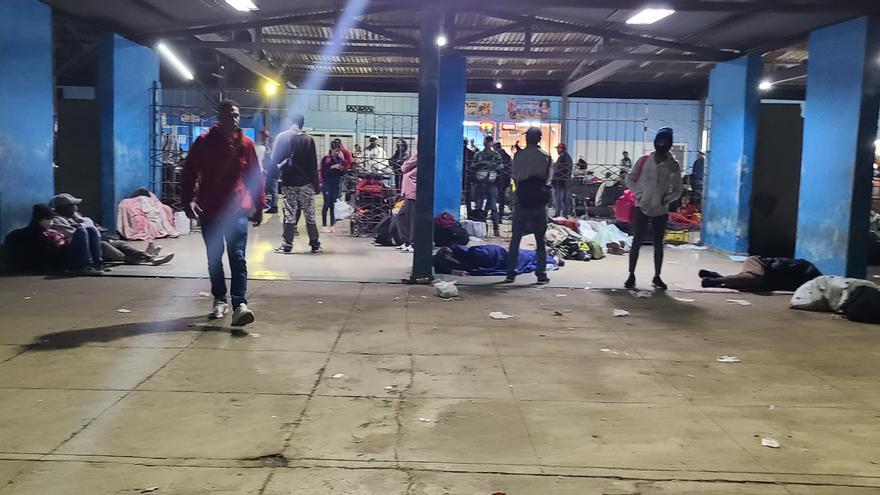
Desperate to get out of this terminal – a complete microcosm of the misery of the Cuban capital – whoever has the money also knows the tricks and passwords for finding him. The man arrives at Villanueva – a hive of people waiting, sleeping, talking – and looks for the staff member who will supply him with seats for resale that day.

They greet each other as if they don’t know one another and shortly after they enter the toilets. Here is where the first phase of the transaction takes place. The “journey fixer” then locates his client, takes a piece of paper from his pocket with a number on it – the number of his place in the waiting list – and asks him to be patient. After a moderate wait the terminal’s employee will call the client, reeling off his identity card number. This is the signal that the transaction is completed. He has paid 3,000 pesos instead of the 75 that it would normally cost him to get to Santa Clara, but it relieves him of the massive tedium of a long stay in the pigsty that is Villanueva. continue reading

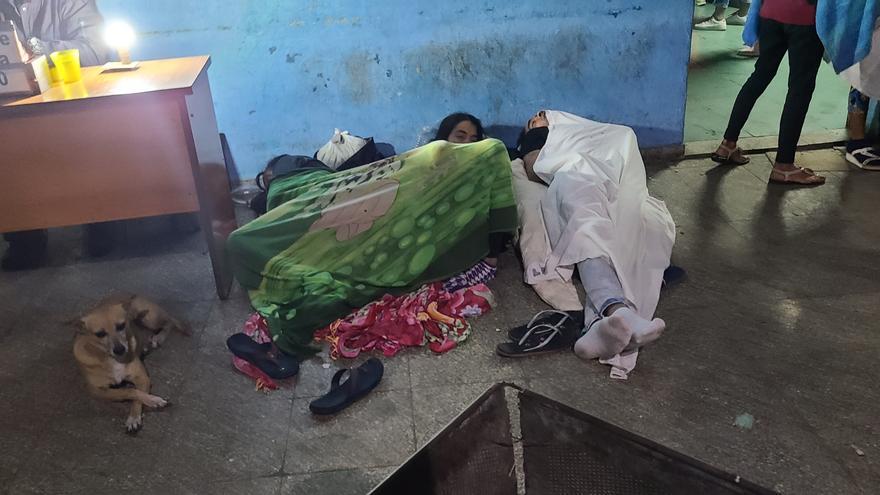
 La mugre del suelo, donde hasta los perros callejeros de la terminal se sienten incómodos, es la opción reservada para la mayoría. (14ymedio)
The majority of passengers have to put up with the filthy ground, which even the street dogs find uncomfortable. (14ymedio)

The “journey fixer” is the king of Villanueva. Everybody knows him – that’s his Achilles’ heel, but it’s also part of his modus operandi: he goes through the waiting area calling all his regulars “cousins” or “nephews”.

Outside of this “family”, and with no money or particular skills, the majority of passengers simply have to wait their turn. And that can take days. Before turning up at Villanueva the best thing to do is get yourself equipped with water, pillows and duvets. The experience is exhausting, especially for children and the elderly, who have to take it in turns to watch over and protect their luggage. Whole families often turn up at the terminal, intending to meet up – especially in holiday periods like this new year – with the extended family they left behind in the provinces where they were brought up.

The tenuous line that separates the state from the private sector passes through the cafeterias, which the government handed over to the mipymes [small/medium sized private businesses]. However, the number of customers they have is small, because a ham sandwich will cost you 150 pesos and a cookie and soft drink the same price. If you do have the money the better course of action is not to waste it on all this indigestible food at the terminal, but to use it to try and haggle a price with the “journey fixer”. Also, except in cases of emergency, the best thing is to avoid at all costs the toilets at Villanueva. The poor experience you’ll have there isn’t even free: the doorman will demand three pesos for using the facilities.

 El delicado ecosistema de Villanueva depende de la Policía y, en última instancia, del régimen, que por ahora deja hacer. (14ymedio)
The delicate ecosystem of Villanueva is dependent upon the police – and ultimately the regime – which for now leave him alone. (14ymedio)

In the microcosmic world of Villanueva, he who has managed to grab a seat is the winner. The majority of passengers have to put up with the filthy ground, which even the street dogs find uncomfortable. Recent arrivals spend hours standing around waiting on foot; the “veterans”, who have perfected the art of hunting down a seat, will sleep there: some of them even for as long as fifteen days.

In the meantime, even the “journey fixer” knows his time here is temporary. However many followers he brings together or clients he locates, the delicate ecosystem of Villanueva is dependent upon the police – and ultimately the regime – which for now leave him alone. Tomorrow? Nobody knows.

Translated by Ricardo Recluso

____________

COLLABORATE WITH OUR WORKThe 14ymedio team is committed to practicing serious journalism that reflects Cuba’s reality in all its depth. Thank you for joining us on this long journey. We invite you to continue supporting us by becoming a member of 14ymedio now. Together we can continue transforming journalism in Cuba.

Those Who Stay in Cuba

The most unfortunate people in Cuba have always been the same, before and after 1959 and until now. (14ymedio)

14ymedio bigger14ymedio, Havana, 27 December 2023 — Hundreds of thousands of Cubans have been able to leave the country for the United States during 2023 thanks to humanitarian parole; another tens of thousands are Spain-bound thanks to the new Democratic Memory Law. As the country empties, the streets are left with citizens whose faces are increasingly poorer, increasingly older, increasingly hopeless.

If that face had to be given only one color, it would undoubtedly be dark. Because the most unfortunate people in Cuba have always been the same, before and after 1959 and until now, in the middle of the unstoppable stampede: the black population.

They are evident in any city in Cuba, in the lines at increasingly scarce grocery stores, sitting on sidewalks begging for money, rummaging through garbage containers. Long ago, many of them served the regime with enthusiasm, but today, the Revolution, inexorably failed, turns its back on them and leaves them to their fate, like stray dogs.

Others are neither black nor elderly, but, even so, they have not wanted or been able to leave Cuba. Ernesto, a resident of Central Havana in his 40s, has a difficult time because he has no one to ask for “sponsorship” from the United States or from Spanish ancestors to qualify for the “grandchildren law.” A once-successful musician, not only in the theater, but in tourist shows, he survives by doing different jobs, such as delivering food for private businesses. He lives in a precariously balanced building, but he has no money or way to move out. He relies on his natural strength and some faith in something else. “I always say that God has to have something in store for me, I don’t know what, but I have to stay here.”

Emigration was very close in the case of Alberto, a 22-year-old young man from Cienfuegos, but it has not been possible yet. He signed up, together with his parents and his brother, for the Humanitarian Parole in the month continue reading

of January, when the program was announced to go into effect. Last April, his family received notification that they had been accepted, but his name was not included in the email in which they were told the good news. He is still in Cuba, but now, instead of living in the old manor house that belonged to his grandparents, he is staying at an aunt’s house, sleeping on her couch, since his parents sold their house before leaving.

Alberto’s family, with whom he speaks twice a day, insists that he must wait for his case to be resolved, but in recent weeks he has considered leaving by way of Nicaragua or using other means to emigrate. For the first time in his life, he will spend Christmas without his parents and his brother, who avoid sending him photos of the celebrations they are already having in exile in Miami, so as not to feed him the sparrow of nostalgia.

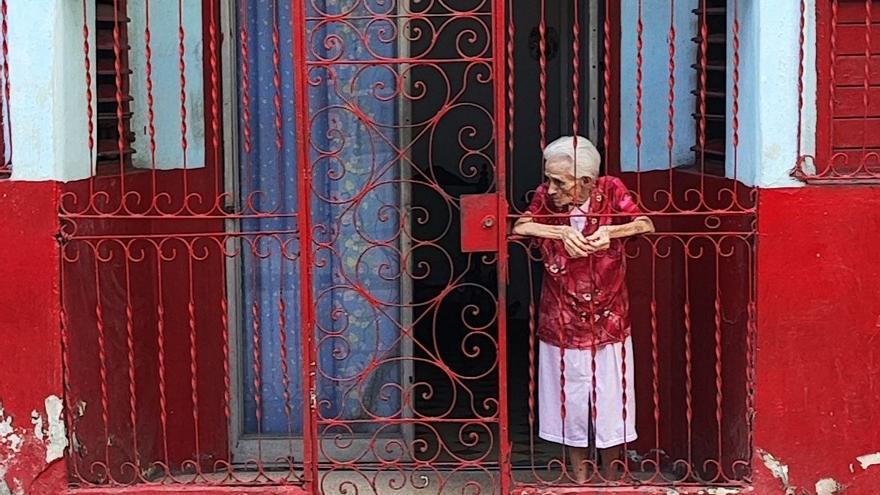
Emelia, a 78-year-old Public Health retiree, feels “still strong” but she does not plan to emigrate. Her two daughters and her granddaughters have left in the last two years, either to the United States or Spain, but she does not want to be a burden on them at a time when they are still “taking off” on their migratory path.

Another reason Emilia is that she is reluctant to leave the family home, which has been left under her sole care. The house that her parents bought when they got married and where she was born is located near Calzada del Cerro, in Havana. Although she could still sell it and use the money to buy “an apartment like a doll’s house, with new everything,” she considers herself the guardian of the family legacy. These rainy days, the leaks have not allowed her to sleep in the first room of the house, but she has four more… all empty.

The vast majority of emigrants are young people, professionals or small businessmen, those who the Cuban Government did not allow to flourish, or who were directly harassed and persecuted for being difficult. All of them are the work force, the drive and the motor, that countries other than the one where they were born are already benefitting from. The joy for each Cuban citizen who achieves freedom leaves a bitter question: who will be left to build a new Cuba?

____________

COLLABORATE WITH OUR WORK: The 14ymedio team is committed to practicing serious journalism that reflects Cuba’s reality in all its depth. Thank you for joining us on this long journey. We invite you to continue supporting us by becoming a member of 14ymedio now. Together we can continue transforming journalism in Cuba.
The Virulent Protests of the Radical Sector of the Cuban Regime Force Havanatur To ‘Kill’ Santa Claus

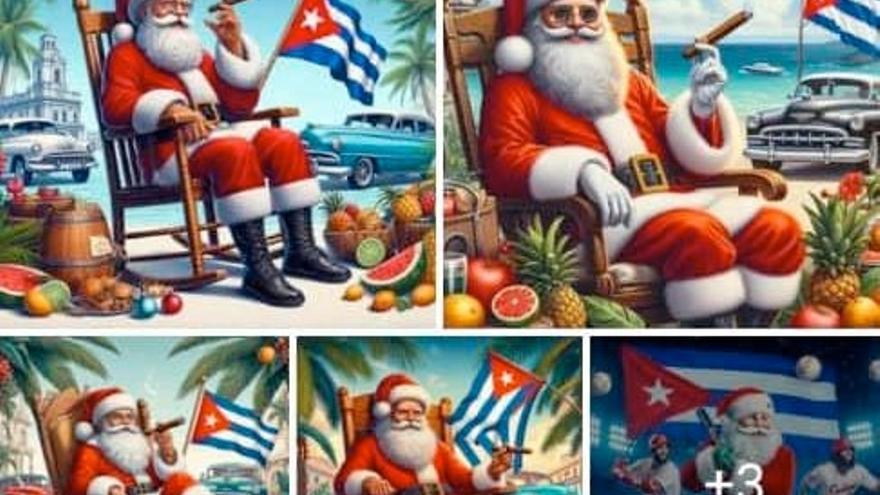
Image of Santa Claus disseminated in the tourist agency’s campaign. (Havanatur/Facebook)

14ymedio bigger14ymedio, Havana, December 30, 2023 — With a cigar in his mouth, playing baseball and distributing gifts to the children in front of the Havana Capitolio, a chubby Santa Claus promotes Cuba as a destination for Havanatur this December. The images, created with Artificial Intelligence, have unleashed a swell of criticism from the most extremist sectors, which accuse the tourist agency of succumbing “to colonizing seduction.”

The Cuban diplomat José Carlos Rodríguez Ruiz was one of those who reacted angrily to the campaign that the State company disseminated on its Facebook account, which it took down shortly after due to criticism. The former ambassador of the Island to Italy classified Santa Claus as part of the “colonizing icons and something alien to Cuban culture.”

Rodríguez’s text, which was also published by the official newspaper Tribuna de La Habana, said that “in the face of those who easily succumb to colonizing seduction, there is only one way, which is the same as our history to keep us independent and sovereign: to be alert and confront them.” The diplomat questions whether “they will have taken away the irresponsible people who thought it up, created it and published it. We don’t know. Havanatur didn’t even issue a note apologizing. They should have.” continue reading

The campaign images unleashed the anger of the most conservative followers of the Regime. (Havanatur/Facebook)

Rodríguez’s criticisms have been joined by those of fellow diplomat Orestes Hernández Hernández, who called to use, instead of the figure of the old man with a white beard dressed in red, characters from Cuban literature such as the puppet Pelusín del Monte, created by the writer Dora Alonso in 1956. For her part, the official journalist Ana Teresa Badia classified the tourism agency’s campaign as a “violation of all communication logic.”

A few hours after the first questions were published, the advertising disappeared from the Havanatur page; however, several users copied and disseminated the images in which Santa Claus swings in an armchair, smokes a cigar surrounded by tropical fruit, sunbathes on the shore of a beach and, in almost all the illustrations, is accompanied by an old American car.

Several commentators joined the angry reaction and classified Santa Claus as an “imperial construction” and “part of the war of symbols of the United States against Cuba.” However, the figure of the sympathetic old man has its origin in the second century A.D. when Nicholas of Bari was born into the bosom of a wealthy family in the Turkish city of Patara. When his parents died, he decided to distribute his wealth among the most needy and sought refuge from his pain in religion.

San Nicolás has a relationship with Havana that most Cubans ignore: he is the Greek Orthodox patron saint of the city

San Nicolás, in addition, has a relationship with Havana that most Cubans ignore: the Greek Orthodox community of the city adopted him as patron, because he is considered the protector of sailors and port cities. In fact, the Greek Orthodox cathedral of Old Havana is consecrated to him.

It is not the first time that this type of reaction has arisen to the use of foreign symbols or traditions. At the end of last October, the Maxim Rock Cultural Center, in Havana, organized a Halloween party in which an officer costume of the Nazi Schutzstaffel (better known by the acronym SS) worn by a contestant was awarded. The audacity cost the premises a temporary closure and sanctions to its managers, as later reported on social networks by the Cuban Institute of Music.

The entity then stated that the decision had been taken “given the seriousness of the fact and the evidence of the inability of the cultural institution to foresee it.” The note went beyond the specifics and took advantage of the controversy to put the festivity under the magnifying glass again. “The event (…) in addition to constituting a violation of the directives for cultural programming, puts the issue of the dangers of cultural colonization back on the table.”

Both the Cuban Institute of Music and the official spokespersons who criticized the event conveniently ignored that Halloween or Samhain, celebrated on the eve of All Saints’ Day, is a pagan festival of Celtic tradition that marked the end of the harvest season and the beginning of the new year. Irish emigrants imported it to the United States, where it was incorporated into popular culture with its own iconography. From there it has been re-exported all over the world, especially through the film industry.

That origin and the thousands of Cubans who disguise themselves every year to enjoy this holiday are systematically ignored by the Cuban authorities, who insist on identifying it exclusively with “the empire” and point to it as something foreign to the national culture, although the links of the Island with Celtic Galicia have been close for centuries.

Translated by Regina Anavy

____________

COLLABORATE WITH OUR WORK: The 14ymedio team is committed to practicing serious journalism that reflects Cuba’s reality in all its depth. Thank you for joining us on this long journey. We invite you to continue supporting us by becoming a member of 14ymedio now. Together we can continue transforming journalism in Cuba.
How Much Does 100 Dollars Weigh in Cuban Pesos?

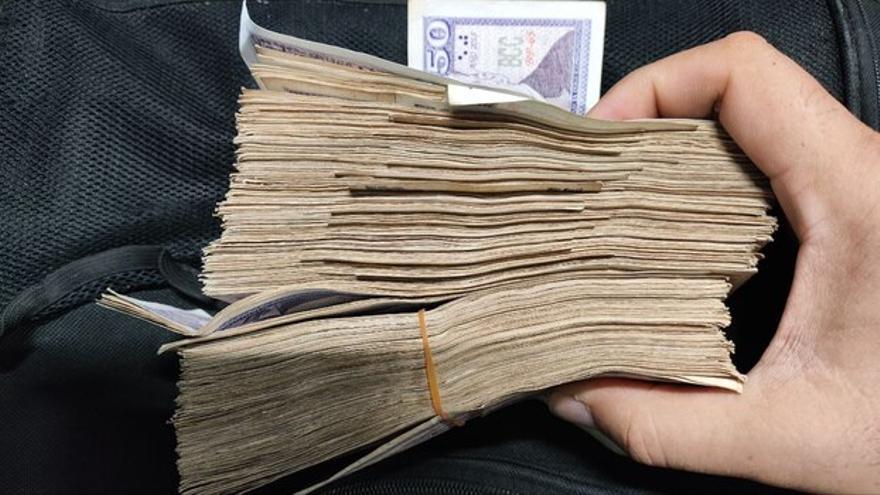
Open the zipper, the content appears: 26,000 pesos, in thick chunks of 50-peso bills. (14ymedio)

14ymedio bigger14ymedio, Mercedes García, Sancti Spíritus | 30 December 2023 — Edith has been “hunting” for a few pounds of malanga and two pork shanks for weeks. This end of the year, her house in the Los Olivos neighborhood, in Sancti Spíritus, has become a base of operations. The budget: 100 dollars that her brother sent her months ago from the United States. Her objective: to change the currency with the utmost discretion and outside her neighborhood, where the military and cadres of the provincial government are not in short supply.

On the other side of the city, in the humble neighborhood of Jesús María, Carlos has been collecting pesos all year to buy an electric pressure cooker. Before acquiring the precious artifact, he has to get dollars, go to the bank and witness their transformation – painful after “letting go of the green” – into freely convertible currency (MLC), a currency invented by the Cuban regime.

Thanks to social networks, Edith finds in Carlos the perfect candidate for her transaction. They meet at her house. With some embarrassment, Carlos deposits a worn black briefcase on the sofa that Edith examines with suspicion. He opens the zipper, the content appears: 26,000 pesos, in thick chunks of 50-peso bills with the face, repeated 520 times, of Calixto García.

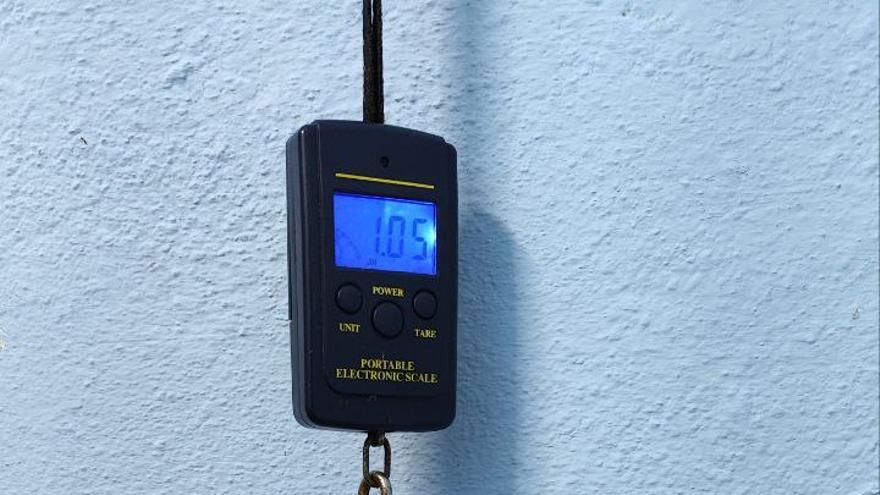
The weight of the 520 banknotes of 50 pesos is 1.05 pounds. (14ymedio)

In turn, Edith gives Carlos the thin $100 bill, with a lonely Benjamin Franklin printed in green. In the room where the exchange takes place, the television is turned on at full volume – the old trick against the gossips of the neighborhood – with the Christmas speech of the first secretary of the Communist Party of Sancti Spíritus. continue reading

“All united we will be able to move towards a better year, where the dreams, achievements and aspirations of Sancti Spíritus in progress will consolidate the unity of our people and, surely, will lead us to achieve new victories, no matter how difficult the circumstances are,” says the leader from his air-conditioned office, protected by the picture of an already senile Fidel Castro.

“But the resistance of our people, their creativity, the day-to-day effort have not made us give up our dreams,” he continues, but Edith turns off the device and says goodbye to Carlos, who goes at full speed to the bank, and from there to the hard currency store, where – he trusts – he expects to find his coveted electric pressure cooker.

Before looking for the malangas and the meat, Edith picks up the 26,000 pesos from the sofa and places it on a scale. How much does a thin 100-dollar bill weigh in pesos? The answer – amazing – is on the screen of the device: 1.05 pounds of Cuban paper.

Translated by Regina Anavy

____________

COLLABORATE WITH OUR WORKThe 14ymedio team is committed to practicing serious journalism that reflects Cuba’s reality in all its depth. Thank you for joining us on this long journey. We invite you to continue supporting us by becoming a member of 14ymedio now. Together we can continue transforming journalism in Cuba.