
“Cuban State Security Has Always Opted To Weaken Cuban Freemasonry”

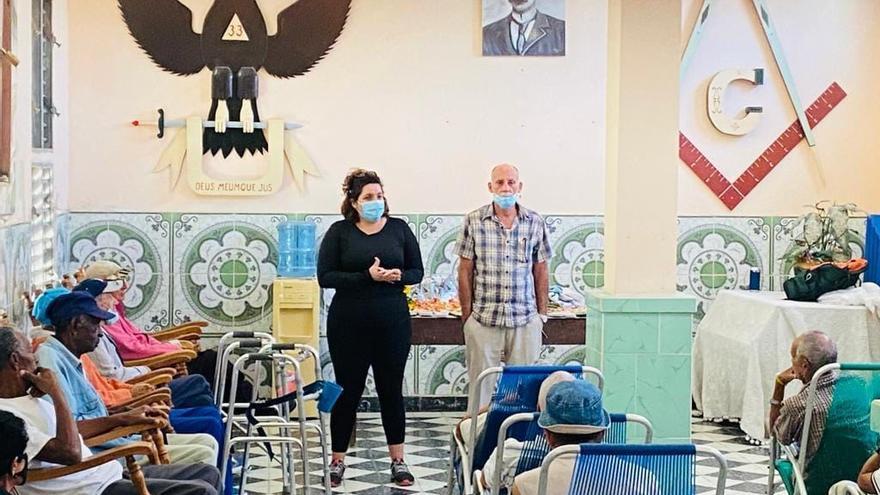
A large part of the maintenance of the elderly at the Llansó National Masonic Asylum, in the municipality of Arroyo Naranjo, depended on the lost money. (Facebook/Asilo Llansó)

14ymedio bigger14ymedio, Havana, 17 January 2024 — After the theft of some $19,000 from his office, Grand Master Mario Alberto Urquía, leader of the Cuban Freemasons, has entrenched himself against those demanding his resignation. Measures to reinforce his authority have been drastic: he dismissed senior Masonic officials who questioned him and issued an urgent “call to order.” As the crisis progresses, hopes decline that the money will appear, money on which a large part of the maintenance of the elderly at the Llansó National Masonic Asylum, in the municipality of Arroyo Naranjo, depends.

The writer Ángel Santiesteban Prats, a 33rd degree Mason – the highest step in the order’s hierarchy – and independent journalist, has been present in each phase of the process and agreed to detail it for 14ymedio. “The Board of Trustees had a sum of 21,000 dollars, between euros and dollars,” recalls Santiesteban, who is also one of the twelve members of the Board of Trustees of Llansó Asylum, the entity in charge of making decisions about the administration.

“The Grand Master says that I suggested it to him. That is not the case. I have consulted with other members of the Board of Trustees who do not recall that I had asked him to keep the money in the Grand Lodge. But he was one of the most concerned because the money was over there.” The writer describes the precariousness of the fence that leads to the “little house” of the Asylum where the money was kept. “I was obsessed with the possibility that someone would try to steal the money and hurt the workers.”

According to Santiesteban, in September 2023 Urquía took the money to the headquarters of the Grand Lodge, on Carlos III Street, Centro Habana. “At the Board of Trustees we questioned whether having that amount outside the bank was a crime. He answered no. The treasurer of the Grand Lodge, continue reading
who is a lawyer, did a whole dissertation to prove that it was not illegal,” he explains.

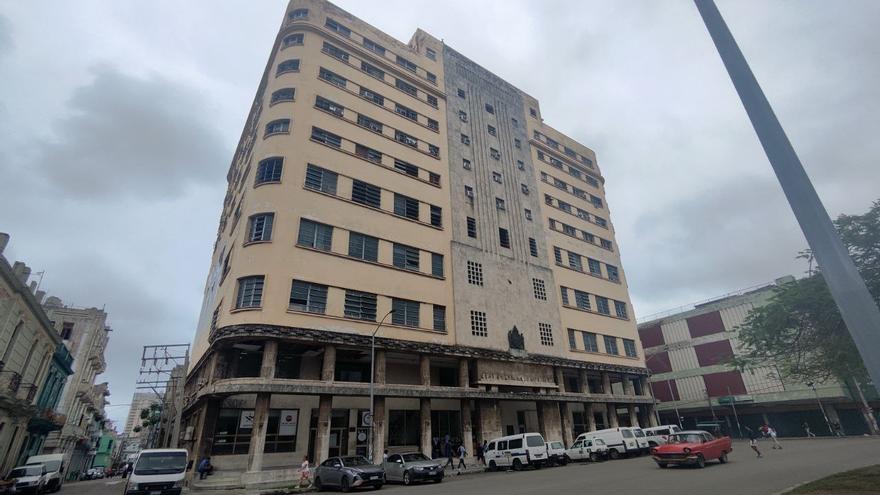
The arguments for keeping the sum in the Charles III building were clear: unlike the Asylum, it was a protected place. (14ymedio)

The arguments for keeping the sum in the Carlos III building were clear: unlike the Asylum, it was a protected place – Santiesteban confirms this – and it had a safe. In October, during the monthly meeting of the Board of Trustees, Santiesteban himself proposed making a calculation between the treasurer of the Asylum and that of the Grand Lodge. “There we found out that the money was not held by the Grand Treasurer, but rather that Urquía was personally guarding it.”

Urquía kept the sum in unacceptable conditions: “a small box,” belonging to his own family, “which he later put on a shelf without any type of security” and which was going to be unprotected during the Grand Master’s vacation.

In January, due to State delays in distribution, the usual supplies for the elderly in the Llansó Asylum did not arrive. “There is an alarm on the 9th, and at 11:00 am the director of the Asylum calls the Sovereign [José Ramón Viñas Alonso], who presides over the Board of Trustees. The Sovereign responds that he will immediately go to the Grand Lodge to look for 1,000 dollars to buy food in a MSME and notifies Urquía.

Urquía’s response, from his office on the eleventh floor of the building, was that “the Grand Lodge elevator is broken.” And he offered to take the requested amount to the offices of the Supreme Council of the 33rd Degree – at number 164 Jovellar Street – where the Sovereign works. Viñas, on the other hand, said that he preferred to go with him and climb the stairs and thus, in the process, “count the cash,” says Santiesteban. Urquía resigned himself, but warned Viñas that he would be the one to call him when he was ready to receive him.

Urquía’s response, from his office on the eleventh floor of the building, was that “the Grand Lodge elevator is broken

He didn’t call him all day. At 7:00 pm, the Sovereign finally receives the notice from the Grand Master, who asked him to go to his house. There, Urquía admits that on Friday, January 5, he “discovered that he had been robbed.” When Viñas demanded an explanation for the fact that Urquía had promised to bring the $1,000 that the Llansó Asylum required, he alleged that he had done so “to avoid talking about the matter on the phone.”

“The Board of Trustees must be convened,” urged Viñas. The twelve members, including Santiesteban, decided that a report of the theft must be made. The meeting took place at 4:00 pm on Tuesday, January 9.

“We went to the Zanja Police Station and they didn’t help us until four in the morning,” says Santiesteban. When the investigating officer finally arrived, he snapped at them: “Don’t waste my time.” Santiesteban asked him if with that phrase he was suggesting the possibility that it was a self-theft. The policeman nodded.

During the investigation, he wanted to know more details about the keys and locks of the Grand Lodge. “Urquía then began to ’draw conclusions’, such as that other grandmasters had the same keys or that someone could have made a copy,” says Santiesteban, who highlights one point: the agent asked why it had taken him so long to report the theft. “The prints could have been there then, but by now they will have been erased,” the agent explained.
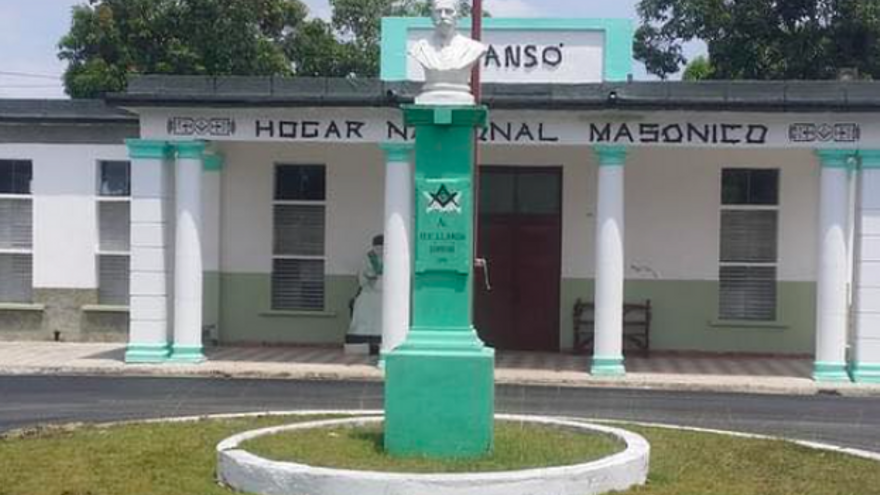
In January, a delay in state deliveries caused the Llansó Asylum to request funds from the Grand Lodge to purchase supplies. (Facebook/Asilo Llansó)

Urquía’s initial position was to admit responsibility – although not guilt – for his “negligence,” before the Board of Trustees and the Sovereign, he points out. “He said that he was going to replace the money, that they should give him until March.” Where he was going to get the stolen 19,000 from, Urquía did not say. The Grand Master, Santiesteban notes, is the owner of a MSME that is dedicated to construction.

“The Deputy Grand Master [Gerardo Cepero Díaz] and several officials asked for his resignation. They are not accusing him, at no point does the letter say that he stole the money. What they tell him is that he acted wrongly, and that his action has resulted in a negative image for the Grand Lodge. His reaction should be to resign, but he refuses.” In fact, he dismissed all those who signed the letter and sent them to the Masonic Court, “where they can be sanctioned or expelled,” says Santiesteban.

At the moment, the Board of Trustees is waiting for what the Police say, which – Santiesteban believes – will not be relevant. Cuban Freemasonry, he estimates, is going through its worst moment since Grand Master Manuel Collera Vento, who led the Cuban Freemasons in 2000, was revealed in 2011 as Agent Gerardo of State Security and a “valuable collaborator” of the regime, within the order since 1975.

The situation could be seen coming from the escape to the United States – via Mexico – of Urquía’s predecessor in office, Grand Master Francisco Javier Alfonso Vidal

In front of the world, “Cuban Freemasonry is in discredit,” laments Santiesteban. The situation could be seen coming from the escape to the United States – via Mexico – of Urquía’s predecessor in office, Grand Master Francisco Javier Alfonso Vidal. “He said that State Security pressured him to leave and that they wanted to force him to accuse Sovereign Viñas” for his criticism of the Government.

Viñas, in fact, is the common factor in the latest incidents that have disrupted the normal performance of the fraternity. After the massive protests of July 11, 2021, the Sovereign wrote a letter in which he rebuked the Government and asked for the resignation of Miguel Díaz-Canel, for instigating a civil war. “They do not forgive him. He has become a ‘counterrevolutionary’. They have detained him at the airport, State Security summons him to both Villa Marista – his headquarters – and to police stations, they visit him at his home,” Santiesteban lists. This newspaper has contacted Viñas, who has preferred “not to answer questions about the institution,” alleging his usual discretion regarding internal Masonic matters.

The theft, the pressure, the escapes, the infiltrations for decades, are symptoms of the same – and very old – objective, according to the writer: “State Security has always opted to weaken Cuban Freemasonry.”
____________

COLLABORATE WITH OUR WORKThe 14ymedio team is committed to practicing serious journalism that reflects Cuba’s reality in all its depth. Thank you for joining us on this long journey. We invite you to continue supporting us by becoming a member of 14ymedio now. Together we can continue transforming journalism in Cuba.
Cuba Monopolizes Mexican Medical Students on Scholarships to Study Abroad and Charges More Per Student Than the United Kingdom, France and the United States

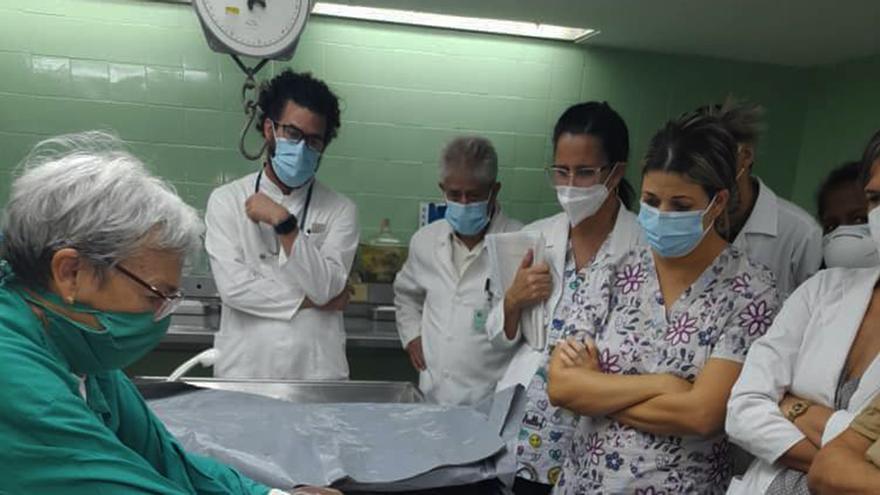
Medical students at the IPK Hospital Center. (X/@IPKCuba)

14ymedio bigger14ymedio, Mexico, January 18, 2024 — Mexico pays Cuba 27,914 dollars in foreign currency (484,041 Mexican pesos) annually for each of the 428 students studying medical specialties on the Island. The figures reveal, according to a report published this Thursday in El Universal, that the education of these scholarship recipients on the Island is more expensive for the Administration of Andrés Manuel López Obrador than, for example, in the United Kingdom, where it pays just over $21,000 for each student.

Scholarships are, in fact, one of the mechanisms for injecting money into the Cuban regime, according to data collected in the same newspaper. While the number of places for medical studies on the island increased, the National Council of Humanities, Sciences and Technologies of Mexico (Conahcyt) drastically reduced the aid in other countries. Without going any further, scholarships granted for master’s degrees went from 1,793 in 2015 to 148 in 2022, while those for doctorates suffered a plummet from 813 to 103, in the same period.

The Mexican newspaper also denounces that due to excessive payment for these studies “master’s or doctoral degrees are not obtained.” The information obtained from the database of postgraduate scholarship recipients reveals that it is cheaper for Mexico to have a scholarship student in the United States (currently there are 285), for whom it pays 20,970 dollars annually, 7,000 less than in Cuba. In other countries, the cost is lower, if possible: in the Netherlands (71 scholarship recipients), $20,389; in Spain (149), $18,666; in Canada (316), $18,415; in Germany (110), $17,379, and in France (86), $16,689.

“A scholarship in Germany costs 61.7% of what Cuba charges. France costs continue reading

59.2% of what it costs to go to study on the Island,” highlights El Universal.

A group of 172 Mexican medical students arrived in Cuba two years ago to study a specialty. (Capture)

In October of last year, a Health official, who asked that her name be withheld, confirmed to 14ymedio that “Mexico began to limit places to study in the United States, Germany, Spain and the United Kingdom and opened them in Cuba.”

The figures published by El Universal do not address the issue of desertions, which according to the official, were several due to the “lack of transparency” of the positions. “Cuba does not attract like the United Kingdom, Germany, the United States and Spain. There were many who denounced the lack of infrastructure,” she acknowledged at the time.

Given the possibility of more desertions, in 2022, Conahcyt received approval to deliver 1,500 euros as “one-time additional support” to Mexican medical students who agreed to continue their scholarship on the Island. The money, paid in a single installment, is added to the $1,100 that is deposited monthly to scholarship recipients without financial dependents and $1,400 to those who have children or are married.

Between 2021 and 2023, this same source recalled, Conahcyt has awarded scholarships to Mexican students to study their specialty at the University of Medical Sciences of Havana, the Ministry of Public Health or the Medical Surgical Research Center.

The person in charge of receiving payments for the 428 medical students on the Island is the Comercializadora de Servicios Médicos Cubanos, SA, the state company accused internationally of human trafficking and forced labor for keeping most of the salaries (between 70 % and 90%) of Cuban health personnel serving on the missions deployed in numerous countries.

____________

COLLABORATE WITH OUR WORKThe 14ymedio team is committed to practicing serious journalism that reflects Cuba’s reality in all its depth. Thank you for joining us on this long journey. We invite you to continue supporting us by becoming a member of 14ymedio now. Together we can continue transforming journalism in Cuba.

The United States Does Not Plan for Now To Allow Cuban ‘MSMEs’ Access to Its Banking System

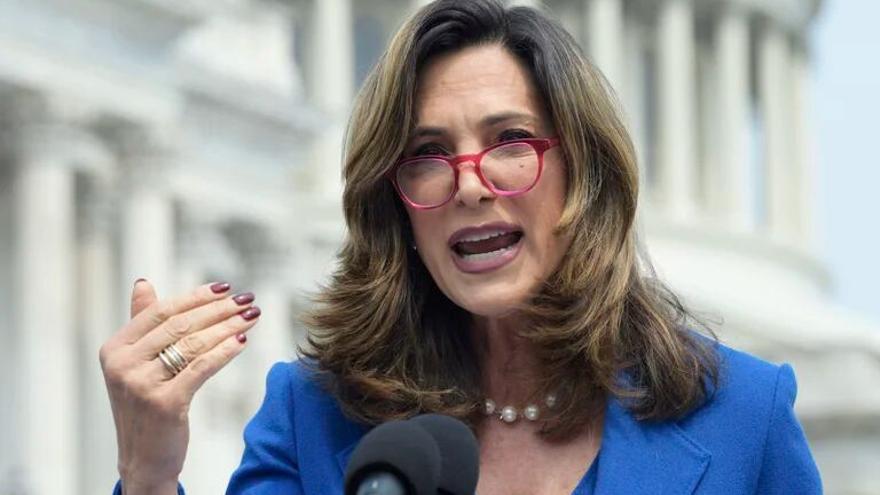
Republican Congresswoman María Elvira Salazar warned that many of these businesses are owned by people linked to the Cuban Government. (EFE)

14ymedio biggerEFE (via 14ymedio), Washington, January 18, 2024 — The United States does not plan for now to allow Cuban Micro, Small & Medium Enterprises [MSMEs] access to the US banking system, a senior State Department official said on Thursday. Eric Jacobstein, deputy undersecretary of Latin American affairs, was questioned in a congressional committee about the rumors that the U.S. Government would be considering allowing Cuban entrepreneurs to open accounts in American banks.

“At the moment I have no information about specific regulatory changes,” the official replied.

However, Jacobstein assured during his speech that the Biden Administration is committed to “supporting the Cuban people” and facilitating “the growth of the private sector” on the Island.

The deputy undersecretary stated that the “Cuban communist experiment failed,” so in 2021 the Government of Cuba had to authorize the creation of micro, small and medium-sized private companies. continue reading

The deputy undersecretary affirmed that the “Cuban communist experiment failed,” so in 2021 the Government of Cuba had to authorize the ’MSMEs’

He said that Cuban entrepreneurs “see the United States as a source of inspiration” and claimed that Washington must support them so as not to leave room for the influence of China and Russia.

In that sense, he vindicated the measures carried out by the Biden Administration, such as the lifting of the remittance limit for Cubans and the restoration of the family reunification program.

During the hearing, the Republican congresswoman of Cuban origin María Elvira Salazar warned the official that many owners of these new businesses are actually people linked to the Cuban Government, which she defined as “the Hamas of the continent.”

“Be sure to send the State Department the message that (opening the US banking system to Cuban MSMEs) would not be a good idea because it would violate the embargo,” Salazar said.

For his part, Democratic Congressman Joaquín Castro said that the “isolationism” imposed on Cuba is “impoverishing” its population and that the embargo should be lifted to allow the growth of its economy and the private sector.

Translated by Regina Anavy

____________

COLLABORATE WITH OUR WORKThe 14ymedio team is committed to practicing serious journalism that reflects Cuba’s reality in all its depth. Thank you for joining us on this long journey. We invite you to continue supporting us by becoming a member of 14ymedio now. Together we can continue transforming journalism in Cuba.
The Body of the Missing Cuban Resident in the United States Is Found in Mayabeque

Yorjelguis Bolaños Fernández had been living in the United States for eight years. (Facebook)

14ymedio bigger14ymedio, Havana, 18 January 2024 — Yorjelguis Bolaños Fernández, the Cuban resident in the United States who disappeared on January 7 in Madruga (Mayabeque), was found dead this Wednesday. The news circulated for hours on social networks and was finally confirmed by his partner, Saray Calvo Marrero, through her Facebook profile.

“My darling, I will never forget you, this will affect me all my life.  I was more than your wife; it was you and I against the world,” she said in the early morning of Thursday with a heartfelt message asking that his death not go unpunished. “RIP my darling. I will always miss you.”

According to unconfirmed information, the body was found buried near the Institute of Animal Science (ICA), in San José de las Lajas, and the cause of death was stabbing. continue reading

According to unconfirmed information, the body was found buried near the Institute of Animal Science (ICA), in San José de las Lajas, and the cause of death was stabbing

The disappearance of Bolaños Fernández, 41 years old and father of three daughters, held the entire population of Madruga and its surroundings in suspense. Neighbors and relatives had joined an active search, going so far as to offer a reward of 3,000 dollars to anyone who had news about his whereabouts.

Bolaños, who lived in San Antonio (Texas) and whose mother had recently denied that he had U.S. nationality despite residing in that country for the last eight years, routinely traveled to the Island to visit his family. On January 7, he left his mother’s house around 11:00 pm, driving a blue vehicle from the 50s with registration P194951, which, according to information disseminated on social networks, later appeared completely dismantled and with blood stains.

The news was spread through social media, and photographs of people allegedly linked to the crime began to circulate. According to those rumors, on the 13th a woman was arrested – a friend of Bolaños – whose clothes appeared burned in the vehicle and who pointed to her own partner and another acquaintance, arrested this Wednesday.

The family had insistently asked that images, comments and unconfirmed news stop being shared on social networks, in particular to avoid harm to his daughters, all minors. “Have a little pity and put yourself in our place, what we want most is to have him with us again,” they requested without too much success.

He put up a kiosk for his mother and on Sunday at 11 p.m. went to make a sale, a relative told Martí Noticias   

“He put up a kiosk for his mother, and on Sunday at 11 p.m. went to make a sale” a relative told Martí Noticias. He was in his car, and it seems they were waiting for him; until today we hadn’t seen him.” The relative was convinced that robbery was the main motive for the disappearance, which had a fatal result.

At the moment, there is no official information regarding the case. The State media are waiting for the results of the investigation to make a report. This is what happened in 2022, when professor Santiago Morgado was murdered in Sancti Spíritus. The professor was the victim of a violent robbery and ended up dead after being beaten with a stick and stone. His body was found in a well three meters deep when his attackers had already sold the motorcycle they took from him for 200,000 pesos.

The independent press reported the disappearance and death of Morgado, which was reported in detail by the official media after the murderers were already in prison.

Translated by Regina Anavy

____________

COLLABORATE WITH OUR WORKThe 14ymedio team is committed to practicing serious journalism that reflects Cuba’s reality in all its depth. Thank you for joining us on this long journey. We invite you to continue supporting us by becoming a member of 14ymedio now. Together we can continue transforming journalism in Cuba.
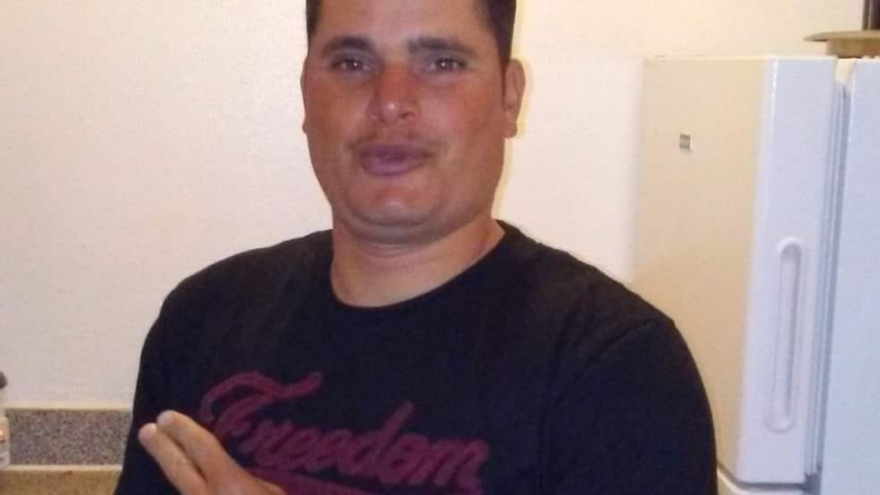
A Young Cuban Mother, 21 Years Old, Is Murdered by Her Ex-Partner in Camaguey

Talía Labañino, only 21 years old, was murdered this Wednesday in Nuevitas. (Facebook)

14ymedio bigger14ymedio, Havana, 18 January 2024 — Talía Labañido Figueredo, 21, is the second woman from Camagüey murdered by her ex-partner so far this year and the fifth in Cuba. Her family reported the femicide to the independent media La Hora de Cuba. It happened this Wednesday in Nuevita, and Yendri Rodríguez, who separated from the victim a month earlier, has been arrested.

Labañido Figueredo was born in Guáimaro, where her alleged murderer, a native of Sibanicú, went to look for her at her grandparents’ house. According to this information, revealed by an anonymous source, not finding her there, he then went to Nuevitas around 7:00 pm, where hours later a friend found her stabbed to death in the house they shared. Despite her youth, Labañido Figueredo was the mother of a little girl.

Although the alleged murderer tried to flee, the police arrested him on the outskirts of the town.

Labañido Figueredo was born in Guáimaro, where her alleged murderer, a native of Sibanicú, went to look for her at her grandparents’ house

On January 2, another woman from Camagüey, Diana Rosa Cervantes Mejías, 29, inaugurated the list of victims of fatal violence against women of 2024. The event occurred in the Juruquey neighborhood in the capital city, where her ex-partner beat her to death. According to the young continue reading

woman’s relatives, the murderer was on bail and awaiting trial for having assaulted a co-worker “with a machete.”

To them are added Yanilsa Zamora Miranda, murdered by her partner on January 9 in her house in the Santiesteban neighborhood in Holguín, and Dailene Fernández Carasa, between 32 and 34 years old, also at the hands of her partner and at home, on January 11, in Alamar, Habana del Este.

The most recent up to now was Aliuska Carmenate, also in Holguín, in Mayarí. Her murder took place last Sunday, January 14, and the aggressor – her husband, according to social networks – was arrested by the police.

Translated by Regina Anavy

____________

COLLABORATE WITH OUR WORKThe 14ymedio team is committed to practicing serious journalism that reflects Cuba’s reality in all its depth. Thank you for joining us on this long journey. We invite you to continue supporting us by becoming a member of 14ymedio now. Together we can continue transforming journalism in Cuba.
Cuban Pitcher Yariel Rodriguez Signs With the Toronto Blue Jays

Rodríguez is in the Dominican Republic, where he traveled after finishing his performance with the Cuban team in the last World Baseball Classic. (EFE)

14ymedio biggerEFE (via 14ymedio) Madrid, 18 January 2024 – Right-hander Yariel Rodríguez, who left the Cuban team after his participation in the last World Baseball Classic, reached an agreement to be part of the Toronto Blue Jays in Major League baseball.

The hiring of the 27-year-old “flamethrower” in a multi-year agreement whose amount has not yet been revealed, was announced this Wednesday by the official portal MLB.com.

Rodríguez, who is in the Dominican Republic, where he traveled after finishing his performance with the Cuban team in the last World Baseball Classic, is waiting for the visas that will allow him to enter the United States and Canada.

The new Blue Jays pitcher led the rotation of the Antilles in the World Classic, concluding with a score of 0-0 and a percentage of allowed clean runs of 2.45 in 7.1 innings, in which he recorded 10 strikeouts. continue reading

Rodríguez will have the opportunity to join in the rotation of the Blue Jays, led by Kevin Gausman to the Puerto Rican José Berríos

After his performance, Rodríguez, who was hired to reinforce the Dragons of Chunichi in the Professional League of Japan (NPB), gave up traveling to that country, changing his course to the Dominican Republic, where he auditioned for Major League teams.

Upon making that decision, the Cuban Baseball Federation (FCB) revealed that it would sue the pitcher for 10 million dollars, for the alleged damages caused by Rodríguez for not complying with his agreement with the Chunichi Dragons, which granted him the freedom to be a free agent.

Pitching in Japan, in the 2022 campaign, Rodríguez had a percentage of allowed clean runs of 1.15 with 60 strikeouts in 54.2 innings. In the National Series of Cuba, Rodríguez had a score of 32-30 and  six saves and struck out 395 batters, with a 3.50 percentage of allowed clean runs.

Rodríguez has a powerful fastball over 95 miles per hour and can pitch a changeup, curve and slider. Rodríguez will have the opportunity to join the rotation of the Blue Jays, led by Kevin Gausman to the Puerto Rican José Berríos.

Translated by Regina Anavy

____________

COLLABORATE WITH OUR WORKThe 14ymedio team is committed to practicing serious journalism that reflects Cuba’s reality in all its depth. Thank you for joining us on this long journey. We invite you to continue supporting us by becoming a member of 14ymedio now. Together we can continue transforming journalism in Cuba.

What Doesn’t Work in the Cuban Countryside

The private sector already leads agricultural production in many food groups. (Escambray)

14ymedio bigger14ymedio, Elías Amor Bravo, economist, 18 January 2024 — Communists continue to bet on the same policies as always that have shown, again and again, their failure. What is serious is that the State press does the unspeakable by trying to justify them. This is what happened with a joint exercise of control of the possession, use and legality of land and livestock, which, according to them, aims to achieve the transformation of production systems to increase food production. The experiment is carried out in 22 municipalities as part of a pilot program by the General Directorate of Land Control of the Ministry of Agriculture.

The belief that “putting order in the field guarantees greater food production,” is not only wrong but is a good example of what it means to put political and ideological decisions before productive and efficient technical decisions. Luckily, the announced “pilot program ” will be carried out in only 22 municipalities. If it were extended to the entire territory, as it seems that they intend, the famine would be fatal.

Every time the Cuban communists intervene in the agricultural production system, they end up destroying it. The first example was the so-called “land reform law” that collapsed the private farm system. Another example was the “10 million ton sugar harvest” that was never achieved. I insist, putting ideology before rational economic principles is fatal for any economy, but especially for the agricultural sector. The Cuban example is good for those who want to investigate objectively. continue reading

Because, in addition, what this experiment aims at is something that cannot be achieved with communist order and control, quite the opposite. If it is intended to increase agricultural production by promoting a decrease in the area of idle lands by improving the efficiency of those currently leased. Communist control leads to failure, because the bases of the productive system, which are the property rights of the land, are not removed.

The Vietnamese, faced with a similar scenario, had courage and launched the Doi Moi to generalize private farming property. What came next is known, a greater production of food that not only served to guarantee the food and nutritional security of the country, but also to export the surplus. The suppression of communist structures in the countryside of the Asian country caused economic agents, empowered by their property rights, and without communist controls like those that Cuba now wants to put in place in 22 municipalities, to launch mass production to increase their profits, and an end to communism in the Vietnamese countryside.

In such conditions, one would have to ask why the regime of Fidel and Raúl Castro is unable to do the same, and now they propose a reactionary return of communist inspiration to develop, they say, “an integrated work to organize local food systems.” They also announce that this experiment will be extended to all municipalities next March. We hope that before this decision is made they will be able to evaluate the failure that is going to happen, which is nothing more than a waste of time, efficiency and concentration on the technical-productive tasks that are what make production grow.

The ministry’s director of land control said that “the delivery of land in usufruct [a form of leasing] to natural and legal persons who request it is a priority, and main attention is given to young people who graduate from active military service, as a source of employment, and to those who do not have work.” And someone should remind her that the same thing has been done since he was authorized by Raúl Castro as soon as he came to power, and here are the results almost two decades later. The solution is not the delivery of land, but private property.

And of course, no one in their right mind at this point of Castroism can think that a solution to increase production is the delivery of land to the organizations, for the self-consumption productions of the workers and their families. Another example of waste and failure.

In line with strengthening control over the countryside, the director asked the relatives of land lieutenants who have died, “to update their situation in the records for which they have a period of 90 days, extendable for 90 more days, to carry out the procedure for the award of inheritance of land and agricultural assets,” while she again conveyed the fateful message that everyone expected: “the sale of land is between owners and renters is illegal.” And here we go again.

Another line that they are testing from the Ministry of Finance and Prices to increase production is contained in Resolution 303/2023, which includes tax measures for the calculation, payment and additional settlement of the Personal Income Tax, through the presentation of the affidavit for the agricultural sector. This regulation establishes a reduced tax rate of 2% for personal income tax, when the general tax rate is 5%. The difference in the percentage does not seem to have served as a stimulus for agricultural activity on the Island, which depends much more on other technical productive factors and property rights that the authorities will not modify. In fact, another threat has been the entry into force of Resolution 308/2023 of the Ministry of Finance and Prices, on the application of the tax on the idleness of agricultural and forestry lands, which requires the efficient production of the land to guarantee food for the population.

Translated by Regina Anavy

____________

COLLABORATE WITH OUR WORKThe 14ymedio team is committed to practicing serious journalism that reflects Cuba’s reality in all its depth. Thank you for joining us on this long journey. We invite you to continue supporting us by becoming a member of 14ymedio now. Together we can continue transforming journalism in Cuba.
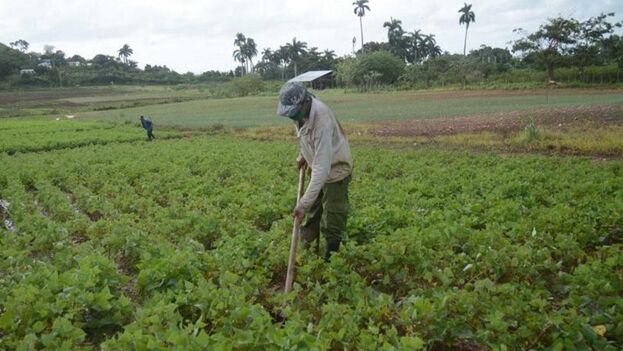
Lower Taxes for Cuban Farmers Will Not Stimulate Agricultural Production

Cuba reduces the tax on farmers to stimulate agricultural production. (Cubadebate)

14ymedio bigger14ymedio, Havana, January 17, 2024 — The Cuban Government announced on Tuesday the reduction from 5% to 2% of the tax on the wages of private ranchers and farmers. The measure, announced on State TV’s Round Table program by the directors of the National Tax Office (ONAT), responds to a strategy to stimulate the depressed agricultural sector of the Island, which imports about 80% of the food it consumes.

Juan Carlos Vilaseca Méndez, deputy head of the ONAT, explained that, as stated in the Official Gazette, the reduced tax will be applied to the gross income of landowners and usufructuaries [leasers] of State land, as well as to landless livestock holders and other private food producers, including sugarcane farmers. That is, once the expenses have been subtracted – as long as 80% of these can be justified – from the taxes and the tax withholdings that the farmers had throughout the year, then another 2% can be deducted.

The tax on retail sales of agricultural products in municipalities and popular councils where the authorities have centralized prices will also fall from 10% to 5%. The “bonus,” as stated in the law, aims to convince producers and merchants to sell in the State market rather than in the informal one.

Two years after the creation of the private enterprises, the communists set out to increase the revenue, jeopardizing the viability of many of these entities that are still weak

The ONAT authorities alluded to the new measures as something revolutionary that will allow the Cuban economy to be channeled, especially at a time of great reforms. However, in an analysis of the new tax and budgetary rules of the State, the Cuban economist Elías Amor offered a
completely different assessment of the perks to producers. According to him, the difference between what was paid before and what the producers continue reading

will deliver this year “will in no way stimulate agricultural production.”

The Official Gazette also confirms the end of tax exemptions for the private enterprises and non-agribusiness cooperatives at the end of six or 12 months. This was mentioned at the time that the benefit was implemented in 2021, which was intended to promote the creation of these companies.

The personnel hired by these entities will also be incorporated into the regular contribution plan and “will be taxed under the same rules as workers in the State sector.” The ONAT directors present this as an advance in “terms of tax equity.”

Employees of local development projects, on the other hand, will pay taxes according to the Special Social Security Contribution, which applies to self-employed workers.

“Two years after the creation of the private enterprises, the communists set out to increase the collection, jeopardizing the viability of many of these entities that are still weak,” Amor said, while the ONAT officials assert that these companies “have demonstrated contributory capacity.”

Despite the importance of these measures, the ONAT officials devoted most of their attention to the State budget. They said that the country is implementing policies “for the prevention and confrontation of tax indiscipline, non-compliance and evasive behavior,” something that Amor described as an attempt to “increase the income of the State budget, tightening the screws on State entities and, above all, on the new economic actors,” to “keep the economy controlled and inert.”

In short, [they are] measures introduced by surprise to raise more and impose discipline in the processes of raising resources in favor of the [State] budget

To those who pay their taxes on time, the State will give bonuses, such as the 5% discount offered to the owners who pay their taxes before next February 28. “If you also pay by Transfermóvil, another 3% is discounted for the use of electronic channels,” added Belkys Pino, another ONAT director who spoke on Cuban Television.

On the other hand, those who fail to comply with the deadlines will be treated with severity. “During 2023, more than 3,000 authorization withdrawals were made and 2,600 establishments were closed, temporarily or definitively. Likewise, we had more than 8,700 account seizures, 2,667 ’regulations’ of exits from the country and 2,444 taxpayers with debts who remain regulated (not allowed to travel). Those who paid all of their debts were able to travel without problems,” Pino explained.

The officials also reported that since January, a campaign of Declaration and Payment of Taxes began on the Island, “which represents one of the most important processes conducted by the Tax Administration and which requires mandatory compliance for taxpayers.” In 2023, 94.4% of natural persons and 99% of legal entities paid taxes on time, and this year the managers say that “indicators are higher in both cases than those reached before,” adding that 64% of the State budget depends on these taxes.

The ONAT leaders did not hesitate to allude to the moral values of taxpayers who demonstrate their “discipline,” their “responsibility, honesty and commitment to society.” They also stressed, despite the poor condition of the Island’s institutions, that these funds will go to vital sectors such as Public Health, Education and Social Security.

Elías Amor’s assessment, however, was not so positive. “In short, [they are] measures introduced by surprise to raise more and impose discipline in the processes of raising resources in favor of the [State] budget. They have nothing to do with the well-being of the people, nor with social justice or the necessary economic development, but rather with Marxist and Leninist postulates based on the distribution of wealth that only impoverish the Cuban people more and more.”

Translated by Regina Anavy

____________

COLLABORATE WITH OUR WORKThe 14ymedio team is committed to practicing serious journalism that reflects Cuba’s reality in all its depth. Thank you for joining us on this long journey. We invite you to continue supporting us by becoming a member of 14ymedio now. Together we can continue transforming journalism in Cuba.

The Shark… and Chicken instead of Fish

In 2012, controversy arose over whether it was appropriate to preserve or demolish the gigantic sculptural complex at G and 29th streets.

14ymedio bigger14ymedio, Yunior García Aguilera, Madrid, January 17, 2024 — The Cuban president with the biggest monument is perhaps Jose Miguel Gomez. In 2012, controversy arose over whether it was appropriate to preserve or demolish the gigantic sculptural complex at G and 29th streets in Havana. It all started with a song by the group Obsesión.

“Tear it down,” they rapped, “and don’t tell me this is about heritage / that it can’t be taken down because it belongs to Eusebio* / this is not a polite request / it is a demand from the people.” Some see the monument as a tribute to a racist, a man responsible for the massacre of independence fighters of color, which occurred a century earlier. For others, Gomez represents the personification of corruption. The only thing most Cubans know about our second president, however, is his nickname: Tiburón (the Shark). So obvious was his corruption that it was said of him, “When he swims, he splashes.”

Indeed, the ‘guajiro’ president was corrupt. There were several scandals during his tenure, such as a land exchange between Villanueva and Arsenal

Indeed, the guajiro president was corrupt. There were several scandals during his tenure, such as a land exchange between Villanueva and Arsenal. No one can deny that he emptied the coffers and left office with his pockets full. But the shark seems more like a sardine if we compare his appetite with those of the Castro brothers, who ended up taking over an entire country, spent decades destroying it, and gave us chicken instead of fish.

He was also a general in three wars of independence, a teenager who left school to take up arms, and an insurgent who rose through the ranks not from an armchair or hammock but on the battlefield. continue reading

By the time the Battle of Jíbaro ended, he was a major general and its hero. After the signing of the Treaty of Paris, which officially ended the Spanish-American War, he was one of nine generals invited to attend the handover ceremony. He later accompanied General Calixto Garcia on his visit to Washington. He was a member of the constituent assembly which drafted the country’s first constitution in 1901. He was appointed governor of Las Villas by U.S. General John Brooke and was later elected to that post by popular vote. By then, he was clearly one of the country’s most important figures, someone said to be “presidential material.”

As governor, he proved to be an excellent manager, building roads, improving agriculture and livestock, and investing in education. But perhaps his most notable achievement was the enormous popularity he gained among Afro-Cubans after appointing several black and mixed-race Cubans to posts in his government. Back then, absolutely no one considered him a racist.

To vote at that time, one had to be at least 21-years old, have a net worth of 250 pesos and be able to read. Members of the Liberation Army did not have to meet the last two requirements. And given the fact that most members of that army were of African descent, the black vote became a matter of utmost importance.

José Miguel wanted to be president so, with elections approaching, he launched an insurrection against the incumbent, Tomás Estrada Palma. For his part, Estrada Palma sought American military help, which led to a three-year period of U.S. occupation. In 1908, Gómez defeated Mario García Menocal, with 60% of the vote, to become president. His Liberal Party gained an absolute majority in Cuba’s House of Representatives. Though he and his allies would control the Senate, they had to deal with a new party: the Independents of Color (PIC).

The Liberals split into two factions: the nationalists, headed by Vice-President Alfredo Zayas, and the republicans, led by José Miguel

The Liberals split into two factions: the nationalists, headed by Vice-President Alfredo Zayas, and the republicans, led by José Miguel. One anecdote illlustrates the level of animosity between the two men. As the story goes, during the victory banquet, cigars were being passed around. Around the cigars were paper bands were images of both men printed on them. Gomez took one with the image of his vice-president on it, lit it and, in a jocular tone, said, “As for Zayas, I am smoking him.” El Chino, as Zayas was known, was not a smoker, so he responded in kind by saying, “And as for José Miguel… I am putting him in my pocket.”

Then came 1912. The PIC had been banned two years earlier. The Morúa Amendment, sponsored by a mulatto patriot, outlawed parties made up of a single racial group. The decision may have been controversial but it was fair, and several black patriots supported it. However, both conservatives and annexationists began adding fuel to the fire, seeking the overthrow of the liberals and end the American occupation. Faced with the uprising of the independents of color, Gomez acted with a heavy hand, one that was too harsh. More than 3,000 Afro-Cubans were slaughtered. ​

No, José Miguel was not a mackerel. He was a shark. But there was more than one culprit in that massacre.

*Translator’s note: a reference to the late Eusebio Leal, official historian of Havana, whose office was responsible for the restoration of the city’s historic center.

____________

COLLABORATE WITH OUR WORKThe 14ymedio team is committed to practicing serious journalism that reflects Cuba’s reality in all its depth. Thank you for joining us on this long journey. We invite you to continue supporting us by becoming a member of 14ymedio now. Together we can continue transforming journalism in Cuba.
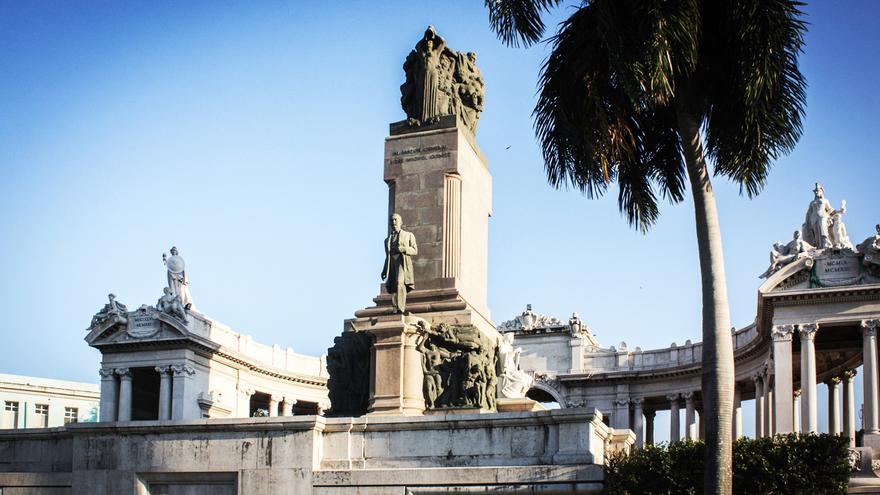
Remittances Collapsed in 2023 As the Cuban Exile Dedicated Its Money to Helping Migrants

While the continent experienced a 9.5% increase in remittances, “Cuba moved in the opposite direction,” says researcher Emilio Morales. (14ymedio)

14ymedio bigger14ymedio, Havana, January 16, 2024 – Between investing in the private companies promoted by the regime or launching a “great rescue and family reunification operation,” Cuban emigrants have opted for the latter. This is clear from the Cuba Siglo 21 center, based in Madrid, which in its most recent report estimates that in 2023, the diaspora spent between 1.8 and 2.2 billion dollars on the procedures, travel and maintenance costs of the 560,868 Cubans who left the country for the United States, more than 200,000 of them illegally.

In contrast, remittances experienced a “shocking decline” in the same period: emigrants sent just under 1.973 billion dollars to the Island, the same amount as in 2010. This is a decrease of 3.31% compared to the amount in 2022 – when 2.34 billion dollars were sent – and a scandalous 46% decrease, taking into account the figure of 2019 (3.716 billion dollars). “It is a strong warning sign that the country is losing one of its main sources of income,” says researcher Emilio Morales, author of the report and director of the Havana Consulting Group in Miami.

“Emigration is growing, but remittances are sinking,” Morales summarizes in a formula that was already announced in another of his reports, last October, which commented on the ineffectiveness of the State-run private companies to seduce Cuban-American investors. Without money from abroad, with very little margin of economic freedom and with a spurious task – to provide oxygen to the coffers of the Regime – the destiny of the private companies is to languish until they disappear completely, Cuba Sigla 21 explained at the time. continue reading

This massive exodus not only represents the reunification of Cuban families but also the loss of human resources on an unprecedented scale

“This massive exodus not only represents the reunification of Cuban families but also the loss of human resources on a scale unprecedented in the history of Cuba. The lack of confidence in internal policies, the preference for removing family members from the country rather than risking investing in the Island and the rejection of the regime’s abuse have contributed significantly to the decline of remittances,” says Morales.

The news cannot come at a worse time for the regime, the report points out. Inflation brought the value of the dollar in the informal market to 280 pesos, while the official rate remains at 120, and the “monumental desertion” of thousands of professionals – almost all young – has left the country without a workforce.

An “archaic mafia” model, denounced on numerous occasions by Cuba Siglo 21, is the only economic alternative left to the regime for its survival. But, Morales adds, placing their agents, repressors and trusted businessmen as owners of the private companies has been of little use.

“The purpose of overcoming the crisis with migratory therapies did not work on this occasion,” says Morales. The mass exodus – promoted in complicity with the Governments of Nicaragua and Venezuela – was, on the contrary, a “kick in the butt.” Experiencing disaster after disaster, the regime’s “parasitic economic dependence” with respect to exile ended up reaching a dead end.

Online stores for food and basic necessities, as well as private companies, are an “emerging” and unsuccessful strategy, and will not offer financial stability

Online stores for food and basic necessities, as well as private companies, are an “emerging” and unsuccessful strategy that will not offer the financial stability desired by the leadership or end the poverty in the country, says Morales.

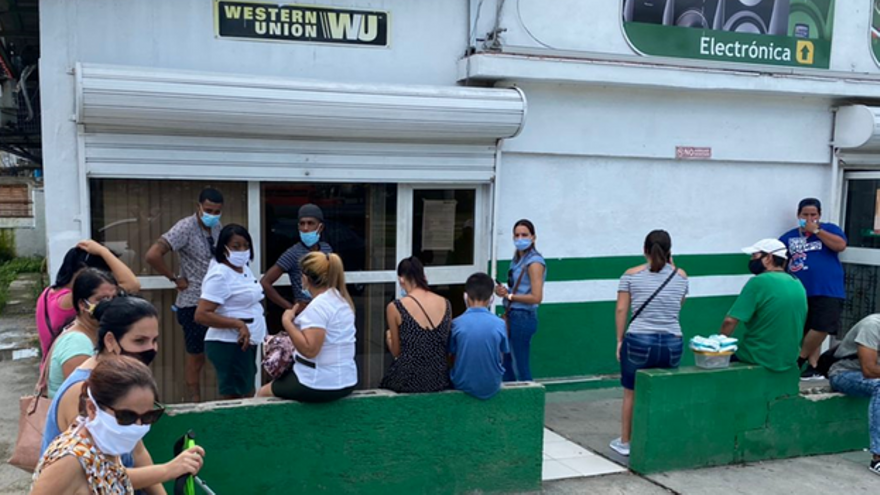
The most alarming consequence for Havana of that “disinterest” of emigrants in the Island’s economy now translates into the low volume of remittances, at a time when Latin America enjoys an injection of money from its emigrants. While the continent experienced a 9.5% increase in remittances, Morales notes, commenting on a report from the Inter-American Development Bank (IDB), “Cuba moved in the opposite direction” despite the “facility” offered by the Biden Government to the financial companies Orbit S.A. – “which operates in an opaque way with Gaesa,” the business monopoly of the Cuban Army – and Western Union.

Last November, the IDB published a report on the record number of remittances that arrived in the region in 2023 – about 155 billion dollars – that did not include data about Cuba. However, the Havana Consulting Group reported then that, despite the emigration, the Island was one of the countries that benefited from the money of its emigrants.

The IDB report explains that the highest increase occurred in Central America, with 13.2% more than the previous year, especially to Nicaragua, which grew by an impressive 59% compared to the previous year, most of the money coming from the United States. Last year, 73.5% of remittances to the Caribbean and Central America came from the United States, while Spain appears as the second source in importance, although far behind with only 11.4%.

There was also no data in the report from Venezuela, with 7,000,000 expatriates. The IDB, however, estimates that the amount received was 2.5 billion dollars.

Translated by Regina Anavy

____________

COLLABORATE WITH OUR WORKThe 14ymedio team is committed to practicing serious journalism that reflects Cuba’s reality in all its depth. Thank you for joining us on this long journey. We invite you to continue supporting us by becoming a member of 14ymedio now. Together we can continue transforming journalism in Cuba.
Three More Baseball Players Leave Cuba To Try Their Luck in the U.S. Major Leagues

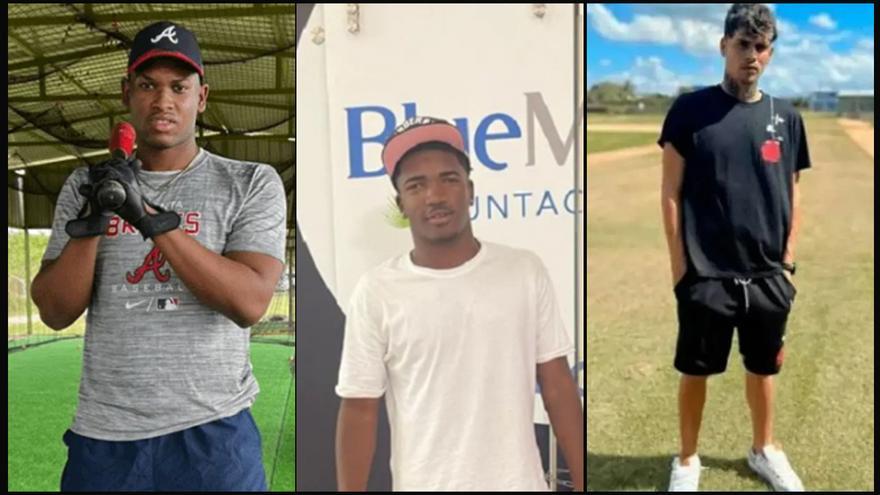
Cuban baseball players Danger Casi, Yandro Hernández and Jorge Luis Manzolo are now in the Dominican Republic. (Collage)

14ymedio bigger14ymedio, Havana, 15 January 2024 — Cuba is running out of young baseball players. On different days in the first two weeks of January, Danger Casi, Yandro Hernández and Jorge Luis Manzolo took flights to the Dominican Republic with the aim of looking for an opportunity in a Major League team of the United States.

At age 22, Danger Casi, from Guantánamo, decided to emigrate after being removed from the roster of the national team competing in the Pan American U-23 Games last November. His family denounced the “exclusion” of the athlete despite the fact that he had been the leader in batting, extra bases and doubles in the U-23 National Championship.

“Surprisingly, Casi was not included on the payroll,” journalist Francys Romero said on his social networks. The athlete was also part of the pre-selection that attended the U-23 World Cup in 2022.

Romero highlighted Casi’s statistics with the Indios of Guantánamo in the 62nd National Series. “He has an excellent physique,” but it will depend on the conditioning and the most demanding workouts he will have to undergo. continue reading

Johan Rodríguez announced his contract with the Cleveland Guardians. (X/@francysromeroFR)

At just 18 years old, outfielder Yandro Hernández, whom Francys Romero considers the best batter of the U-18 class of 2023 in Cuba, has also emigrated. “He is equally good in contact, swing speed and understanding of the zone,” stressed the specialized journalist.

Yandro is the son of Stayler Hernández, a former member of Metros and Industriales. In the Dominican Republic, he will seek to improve his batting technique. He has a batting average of .463  (80-37) and was the leader in hits with 37.

Jorge Luis Manzolo also chose the Dominican Republic for his  training. On January 10, the right-handed picher, from Báguanos, Holguín, was confirmed as staying in the Dominican Republic.

“Manzolo easily dominated the level within the youth category. His straight reached 91 miles, and he has command in his repertoire,” FR! Baseball stressed.

The best-paid agreements and contracts are a magnet for these Cuban athletes, who in the Dominican Republic are signed by talent scouts. On Monday, a new period of international signings began, and some arrangements began to be confirmed.

Boris Sarduy, a Cuban who joined the Under-12 in 2019, signed with the San Francisco Giants. The agreement guarantees him a bonus of $30,000.

Ambidextrous hitter Christian Saez signed with the San Luis Cardinals with a $150,000 bonus. (X/@francysromeroFR)

Johan Rodríguez, who left the Island at the age of 15 in 2022, formalized his hiring with the Cleveland Guardians. This baseball player, represented by Edgar Mercedes and Born to Play, was guaranteed by the team a bonus of $350,000. The team also benefited from the services of Edelvis Pérez, who will receive a $415,000 bonus.

Erik Matos is another promising player who emigrated last year. This young man is also represented by Edgar Mercedes and Born to Play, who managed to place him on the Oakland Athletics roster with a $700,000 bonus.

In December 2021, Christian Sáez left Cuba. Age 14, this native of Cienfuegos arrived as an “ambidextrous hitter,” which doubled his value, according to specialists.

The best batter of the U-12 World Cup in 2019 is now one more member of the Cardinals of San Luis with a bonus of $150,000.

Translated by Regina Anavy

____________

COLLABORATE WITH OUR WORKThe 14ymedio team is committed to practicing serious journalism that reflects Cuba’s reality in all its depth. Thank you for joining us on this long journey. We invite you to continue supporting us by becoming a member of 14ymedio now. Together we can continue transforming journalism in Cuba.
In Manzanillo, the Windows of Hard Currency Stores Are Covered Against Stones

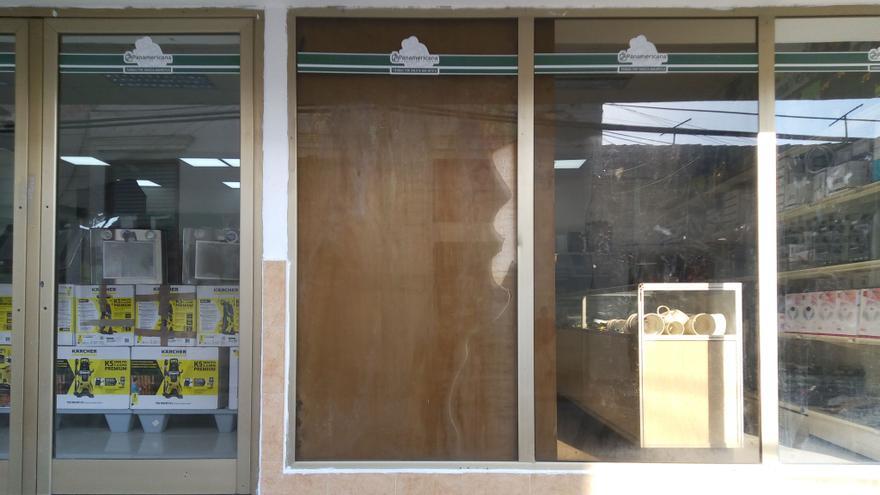
In the Primavera store, on Martí Street, belonging to the State Panamericana chain, the traces of these attacks can be seen. (14ymedio)

14ymedio bigger14ymedio, Juan Matos, Manzanillo, January 16, 2024 – The authorities of Manzanillo, in the province of Granma, have covered the windows of the stores in freely convertible currency (MLC). In recent months, stone attacks on these shops have increased, because of the population’s discontent.

Covering the windows is a temporary measure that seeks to protect the premises and prevent damage to State property, official sources say. In the Primavera store, on Martí Street, belonging to the State Panamericana chain, the traces of these attacks can be seen: a piece of wood covers a broken window.

Now, with part of the outside light cut off, the premises look smaller and darker. This Tuesday, the customers of the El Dandy store, its windows covered by metal plates, walked around in semi-darkness in the rows of water dispensers and Chinese Cheerday beer, very little valued by consumers but one of the most abundant brands in those stores. continue reading

“The covered windows in the MLC stores show how afraid they are, because they know that at any moment a stone might kill them”

One of the street vendors who spent the night in the doorway of the El Dandy store, on Loynaz Street at Martí said “the covered windows in the MLC stores show how afraid they are, because they know that at any moment a stone might kill them.”

In addition to the violent incidents, foreign exchange establishments have seen another phenomenon proliferate: the lack of customers. What at first — when in July 2020 they approved the sale of food and other basic necessities — were corridors full and shiny with imported products, today are empty shelves, with a gloomy atmosphere. “People don’t have dollars, and we get our salaries in pesos, not in MLC [freely convertible money],” a neighbor tells 14ymedio.

“The covered windows in the  MLC stores shows how afraid they are,” said a street vendor in the doorway of El Dandy. (14ymedio)

People’s lack of money, explains another resident of Manzanillo, is the main reason for the failure of these stores. “Salaries are not enough to cover basic needs and much less to allow superfluous expenses in stores of this type,” the man says. “I prefer to spend the little I have in new ventures, not in State stores.”

However, it is not only the lack of resources that justifies the few customers of foreign exchange stores and their restricted offers. It is enough to immerse yourself in some Facebook groups in Manzanillo to find some of the merchandise that informal merchants have bought in these places and then resell. Flat-screen TVs, freezers of various capacities, washing machines, kitchens and refrigerators crowd the ads.

This Tuesday, the customers walked around in semi-darkness in the El Dandy store, whose windows are covered by metal plates. (14ymedio)

The small packages of cookies “have run out in the stores, but here they have large quantities,” complained a netizen in one of those virtual markets. The response of the group’s administrator was vehement: “Yes, señora, but this is for people who don’t have MLC; it’s for those who only have pesos. They have to buy with us because the State doesn’t sell them any of this.”

The skillful merchant failed to add a detail. Those buying and selling groups on Facebook don’t have to protect themselves from stones. In addition, the products are displayed in full light and color, their windows are the immensity of the internet, and their main customer is the Cuban in need and without foreign currency.

Translated by Regina Anavy

____________

COLLABORATE WITH OUR WORKThe 14ymedio team is committed to practicing serious journalism that reflects Cuba’s reality in all its depth. Thank you for joining us on this long journey. We invite you to continue supporting us by becoming a member of 14ymedio now. Together we can continue transforming journalism in Cuba.

At the Gas Stations in Guanabacoa, Cuba, Women Rule, and Not Always by Good Means

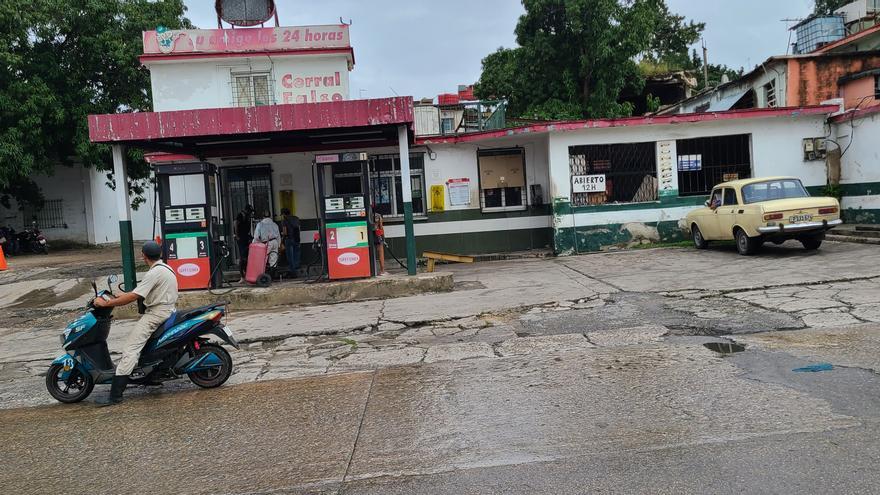
One just has to go to the Corral Falso and Los Paraguas Service Centers, in Guanabacoa, to take the pulse of the drivers’ discomfort. (14ymedio)

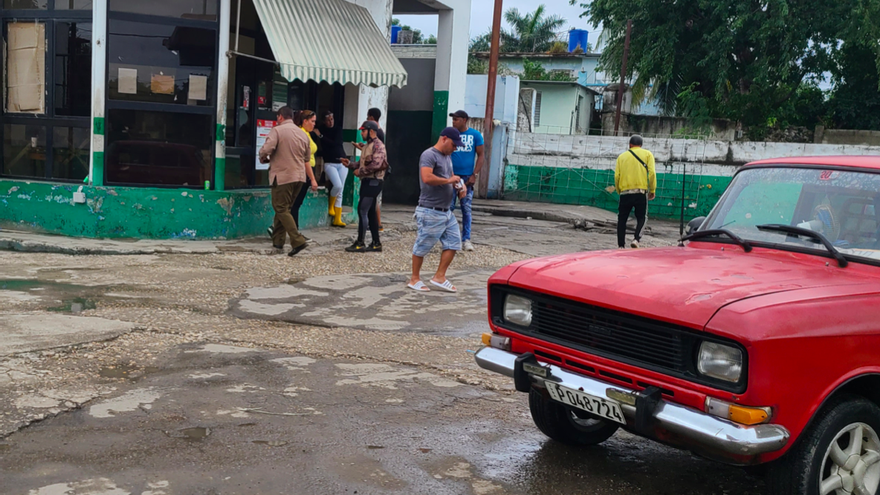
14ymedio bigger14ymedio, Havana, 11 January 2024 — While a group of Havana residents observe him, a senior officer of the Armed Forces parks his motorcycle next to a pump at the Los Paraguas Service Center in Guanabacoa. He doesn’t waste time on questions and goes directly to the gas station attendant. After a very brief conversation, and before the displeased looks of those present, the soldier returns to the vehicle, activates the hose and fills the tank.

The anger of those present has an explanation: before buying, each of them had to fight for the “privilege” of being included in a meticulous list of customers that the local government ordered to be drawn up during the fuel crisis of June 2023, and that has been reactivated a few days before the announcement of the increase in fuel prices for next February. The soldier, whose uniform opens doors for him, is above these formalities.

One just has to go to Los Paraguas or the other service center in Guanabacoa, Corral Falso, to sense the drivers’ discomfort. Dozens of sullen faces gather around a woman who gives blunt instructions to those who want to buy: “You have to sign up for the Telegram group.”

The speaker is the person in charge of making the daily list of buyers through the messaging application. On Telegram she identifies herself simply as Esther, although there is a team behind her – also with simple nicknames, such as Yanet or Carilda – which claims to be “directed by the continue reading

government of Guanabacoa.” Her mantra, which she repeats when a client questions her authority, is: “This is not anarchy, it is queue control, avoiding hoarding, profits, queues, etc.”

The soldier, whose uniform opens doors, is above formalities. (14ymedio)

The Falso SC C. group had 4,025 members this Thursday; the one at Los Paraguas, 5,046. Every morning, about 20 users join. At approximately six in the morning, Esther tells the group that she is “awaiting information.”  As the day progresses, the woman organizes the flow of clients through the client list of each service center, prepared in Excel.

Esther demands name, surname, license number, vehicle license plate and a telephone number. On more than one occasion she has stated that the list “is the same as in 2023” and that the names “were jealously guarded.” “The ones that don’t show up is because they were never there,” she alleges, and she invites the ones she does not know to “stand in line” to make their purchases after those who do show up.

However, this newspaper received a complaint from a reader who detected numerous irregularities in the customer inventory. The Los Paraguas Excel document lists 3,688 clients, of whom 114 are repeated up to four times and 77 do not have badges – a requirement that Ester always demands. In the case of Corral Falso, where 2,855 names are registered, there are 168 that are repeated up to four times and 40 without plates. Some 1,003 clients are on both lists.

No matter how much they accuse her, in groups and – according to her – privately, Esther keeps repeating that she does not have to give explanations. Next to her, a man in shorts and flip-flops acts as a bodyguard. Desperate, due to the lack of gasoline or the slowness of the queue, many customers tend to “get annoying.”

This Wednesday, Esther suspended the queue “until the police arrived and acted against three motorists who were threatening,” she told the group. “They got the wrong idea of the place. This is not a jungle.” Hours later, the woman narrated her outcome: a “person from town” “persuaded” her to resume the queue. “It bothers me that men do not respect a lady,” she summarized, especially when “this activity – the organization of the queue – is directed by women.”

Employees at Los Paraguas also refer to the group and Esther’s authority as the only way to obtain fuel. (14ymedio)

In one of her many explanations since both Telegram groups were reactivated, Esther explained why “the government of Guanabacoa took control of the queue.” “Reason: the paid line standees proliferated with their usual act of making money from human needs and no one reported them,” she argued. But there was more: “For anyone who interrupts this process, there are relevant bodies to make them understan.”

Esther develops a kind of chiefdom over both groups. The stability of the queue, the power to stop the process and her apparent direct connection with the authorities are all in her hands. She often complains that, during the early hours of the morning, those “summoned” don’t dare to go to the gas station. “Do we run or hide?” She then rebuked the clients who, given the growing lack of safety on the streets, don’t leave their house before sunrise.

Other times, she has outbursts of anger, especially when she is accused of corruption or manipulating the queue: “It’s enough for someone to react inappropriately to this comment to remove them from the group,” she threatened, after stating that she was not afraid of accusations or “attacks,” as she calls them.

Gas station employees also refer to the group and Esther’s authority as the only way to buy fuel. “You have to sign up between eight and nine, when they open the group. Meanwhile, you can’t write,” a worker at Los Paraguas service center tells 14ymedio .

As for the new prices, the employee is not happy either. “Hopefully, there will be a debate and that will change. We agree that they increase for tourists, but for self-employed persons, when you raise the cost of gasoline, the result is that they will increase their prices. If they charged 100 pesos for something before, now they will charge 500. To me, they are finished,” period.

“Hopefully, there will be a debate and that will change. We agree that they should go up for tourists, but for self-employed persons, when you increase the cost of gasoline, the result is that they will increase their prices”

 The truth is that, from the seat of Government, the outlook is not rosy either. The expert from the University of Texas (USA), Jorge Piñón, explained to this newspaper that one of the causes of the current national gasoline crisis is that Cuban refineries – particularly the one in Havana – have been out of service.

The researcher, who analyzes the behavior of gasoline, diesel and liquefied petroleum gas consumption in the country, has noted that in the last five years with official figures (2017-2021) there has been an increase of 40% in demand for gasoline in Cuba. In 2022, adds Piñón, providing his own data, the country consumed 335,000 tons, an incredible amount, if one considers that only 240,000 tons were consumed in all of the previous year. However, in 2023 there was a drop of 23% from the year before: 258,000 tons.

On the other hand, the movement of tankers through Cuban ports does not stop. The ships Ocean Mariner, Vilma and Delsa are anchored in terminals in Mexico and about to set sail for Havana. María Cristina, Alicia, Lourdes, Petion and Esperanza are waiting in Venezuela.

“What is the true cost (cash flow) of these volumes? We know that shipments from Venezuela are in exchange (barter) for products and services provided by Cuba, but there has to be an accounting statement that shows the economic impact (cash flow) in the State budget,” argues Piñón. “Same as supplies from Mexico: what is the cost of these barrels?”

“Loose tongues” is the state that best defines Cubans’ discomfort. In the huge lines of vehicles waiting their turn at the Cupet, in the masses that gather at taxi stands, in taxis, increasingly hard to pay, people emphasize: “We have to rob these people. Fuel, oil, petroleum, whatever.”

For Ernesto, age 58, the dilemma already has an answer. “I’m going to sell the car,” he tells this newspaper. Owner of an old Cadillac that he has used for years to transport passengers, this Havana native who worked for decades at an official radio station had the vehicle in the workshop months ago for bodywork. “I’m not even going to take it out of there, I already told the owner of the place that it is for sale.”

“Loose tongues” is the state that best defines the unrest of the Cubans at taxi stands. (14ymedio)

“I did a quick calculation after the Round Table [program on State TV] and it showed me that if I don’t charge the entire trip at more than 300 pesos to each passenger, I can’t pay for the fuel and keep the car running. And if I charge that, I’m going to spend every day in the street wrapped up and hearing insults, so I better stay at home,” he summarizes.

Yogurt, cheese and pork make up the offering that Iván, a resident of Alquízar, province of Artemisa, frequently takes to sell in Havana. Although he sometimes makes the trip on the train that connects the Cuban capital with San Antonio de los Baños, he also alternates trips with his son-in-law, who drives a Lada. Now, after finding out about the rise in prices, he has been “doing the math” for hours.

Between raising the price of his merchandise or suspending his merchant route, Iván, for the moment, prefers “not to promise anything” to clients, until he can verify, in practice, how much he must invest to get his merchandise to the Cuban capital. “There is always a chance that these people will back down because this is going to be a very unpopular measure,” is his hope.

____________

COLLABORATE WITH OUR WORKThe 14ymedio team is committed to practicing serious journalism that reflects Cuba’s reality in all its depth. Thank you for joining us on this long journey. We invite you to continue supporting us by becoming a member of 14ymedio now. Together we can continue transforming journalism in Cuba.

Ciego de Avila Newspaper ‘Invasor’ Once Again Questions the Transparency of the Cuban Authorities

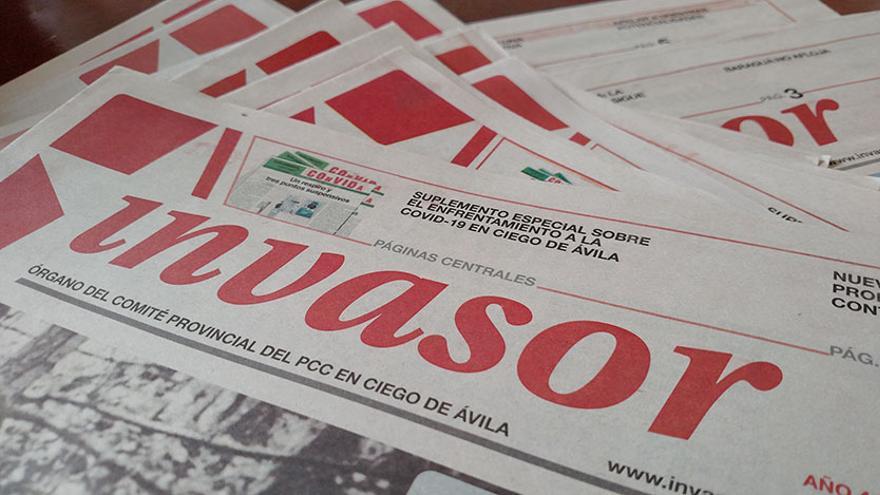
Invasor is the newspaper where some of the most critical texts against the Government have been published in the last year. (Invasor)

14ymedio bigger14ymedio, Havana, January 15, 2024 — The official newspaper Invasor published this Sunday, for the second time in four months, a warning to the officials of the Island. The reason: the lack of transparency of the authorities in the face of requests for information and solutions by the media and citizens. “People have the right to complain, and institutions have a duty to respond,” the newspaper said.

With the statistics from two of its sections, “Speaking Plainly” and “Open Letters,” Invasor gives the measure of the problem. Of the 104 notes published in 2023 in the first section, 93.2% were complaints, and the authorities responded to only 78.3%. In “Open Letters,” out of 13 letters received, only three were answered by officials or institutions.

Transport, Housing, Aqueduct and Sewerage, Communal Services and the Cuban Postal Service are some of the institutions the text mentions

Transport, Housing, Aqueduct and Sewerage, Communal Services and the Cuban Postal Service are some of the institutions that the text mentions, which have evaded on several occasions the newspaper’s requests to respond to the population, showing “non-compliance with the State’s responsibility to the citizens.”

Freeing itself from all responsibility, the official media clarifies that these situations are the “result of poor implementation of the Social Communication Policy, not the lack of insistence of this newspaper.” continue reading

“It is no less true that there are entities and institutions that are in the vanguard when it comes to sensitizing themselves to the problems of the population and will not be concerned, while others will recognize themselves here and some, perhaps, will find out that they have not acted as they should,” says the State media. They also highlight that in the “Speaking Plainly” and “Open Letters” sections, several recognitions were given to “those who have made an effort and want to satisfy the demands of the people, destroying obstacles such as bureaucracy, inefficiency, insensitivity and lack of commitment to the citizens.”

To those who have responded to the complaints without satisfying them, Invasor also dedicates a few lines: “The responses received reveal, in many cases, that the impossibility of the solution is not justified by transparent, logical and convincing  information,” which also constitutes irresponsibility on the part of the authorities.

In a similar article published last October, the media launched its first diatribe against the authorities

In a similar article published last October, the media launched its first diatribe against the authorities. “It was our intention to inform the public [about passenger transport], but at least four times, the managers of the Provincial Transport Company have left us waiting,” it said at the time.

As a shield against possible calls for attention, the media took refuge in the words of Miguel Díaz-Canel: “In the face of a certain situation that is negatively impacting the population, the responsible public servants are obliged to report immediately and by any means possible. For its part, it is up to the press to report first, and responsibly, on any sensitive information.”

Invasor is the newspaper where some of the most critical articles against the Government have been published in the last year. However, the reports always indicate that it is a particular authority, and not the system, that makes “mistakes.”

Translated by Regina Anavy

____________

COLLABORATE WITH OUR WORKThe 14ymedio team is committed to practicing serious journalism that reflects Cuba’s reality in all its depth. Thank you for joining us on this long journey. We invite you to continue supporting us by becoming a member of 14ymedio now. Together we can continue transforming journalism in Cuba.
Not Even the ‘Integrated’ Neighborhoods in Cuba Are Saved From Garbage Piles Everywhere

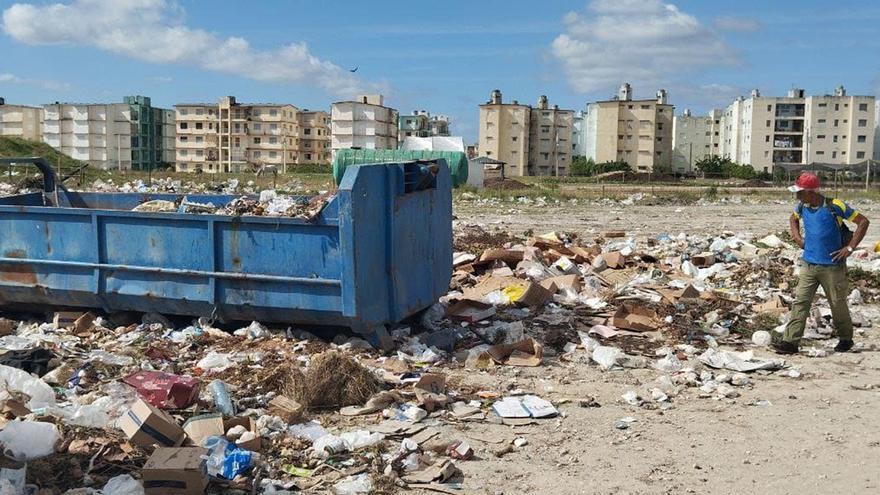
The volume accumulated in the containers is such that it would take several days of work and trucks to clean it up completely. (14ymedio)

14ymedio bigger14ymedio, Miguel García, Havana, 15 January 2024 — Not even the Cuban military are saved from the mountains of garbage that are seen everywhere on the Island. The neighborhoods of Villanueva 2 and Villanueva 3, in the city of Holguín, where hundreds of workers of the Ministry of the Interior reside, is about to be swallowed up by the mountains of waste that accumulate around it. Despite the fact that a few days ago the Comunales [Communal Services] company collected part of the waste, the accumulated volume is such that it would take several days of work and countless trucks to clean it up completely.

Bags flying in the wind, several vehicle beds full of waste and a rotten smell that floods the air is the panorama facing the neighbors in the morning when they leave their homes. “You can’t even have the windows open because the flies get everywhere,” complained a resident in the area, located behind the Pedro del Toro Polyclinic of the Pueblo Nuevo People’s Council. “This started as a little bit of garbage but now it already occupies the space of several buildings.”

The nearby buildings, most of them five floors erected by residents, are of recent construction, and in them, in addition to members of the Ministry of the Interior, live some doctors and people from Holguin who lost their homes during the passage of Hurricane Ike  in 2008 and had to wait more than ten years for a new home. “This is a very politically integrated neighborhood, and people are fuming because we have been abandoned,” a neighbor explained to 14ymedio. continue reading

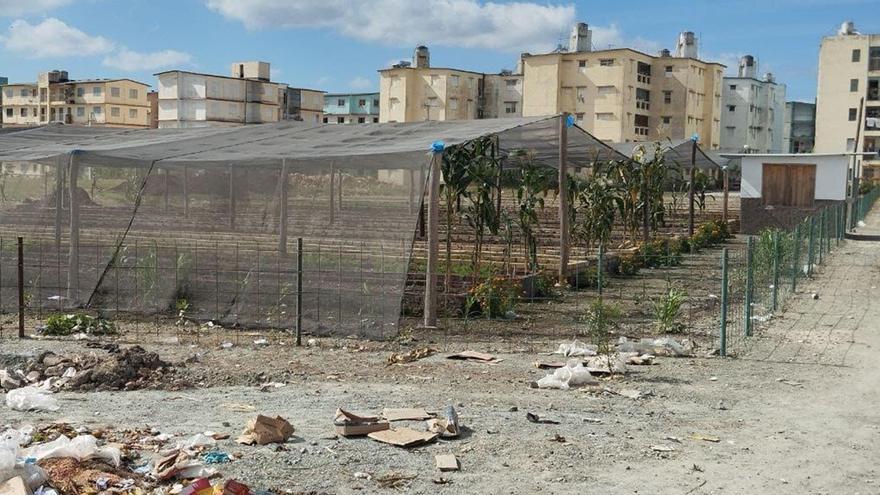
A few meters from the garbage dump, the facilities of an organoponic nursery languish due to the lack of supplies and the absence of personnel interested in working there due to the low salary. (14ymedio)

“When we moved here, this was supposed to be a neighborhood that was going to have special attention but everything has  deteriorated,” claims the holguinera. A few meters from the garbage dump, the facilities of an organoponic nursery languish due to the lack of supplies and the absence of personnel interested in working there due to the low salary.

In March 2021, a report on official television boasted of the resurgence of the organoponics system in the province. The report attributed the revival to the new economic measures, which allowed wages to go above 2,000 pesos and, in addition, the division of profits resulting from the sale of products. In the images disseminated there was no shortage of lettuce, radishes and chives, all freshly grown and available to customers.

Two years later, an entourage led by Ernesto Santiesteban Velázquez, first secretary of the Communist Party in Holguín, visited the surroundings of Villa Nueva 3 where an organoponic nursery was built that would be baptized with the optimistic name of “New Dawn.” The official inspected the areas for the cultivation of vegetables and fruits.

However, this January, instead of the promised cucumbers and kidney beans, the most common product on the lands adjacent to Villa Nueva 2 and 3 was garbage. The harvest of filth is the only one that seems to grow stronger and over-fulfill the plans for this neighborhood.

Translated by Regina Anavy

____________

COLLABORATE WITH OUR WORKThe 14ymedio team is committed to practicing serious journalism that reflects Cuba’s reality in all its depth. Thank you for joining us on this long journey. We invite you to continue supporting us by becoming a member of 14ymedio now. Together we can continue transforming journalism in Cuba.