
While the Country Is Sinking, the Cuban Regime Renews the Code of Ethics for Its Cadres

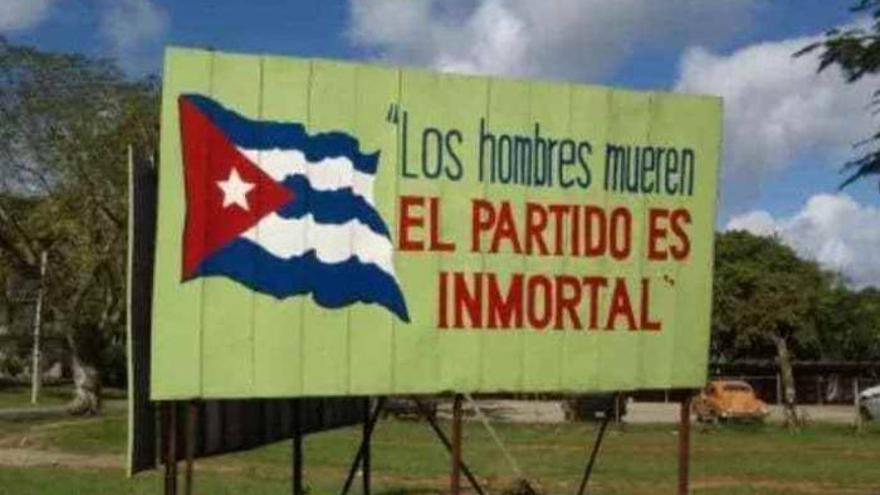
“Men die, the Party is Immortal” – The 2024 Code of Ethics of the Cuban Communist Party (PCC) replaces the previous one, in force since 1996. (laicismo.org)

14ymedio bigger14ymedio, Madrid, 16 January 2024 — After 18 years, the list of rules of conduct known as the Code of Ethics of the State Cadres already has a new version, which entered into force this Monday after its publication in the Official Gazette. The rule emphasizes aspects such as “the honor and duty to defend the socialist homeland, anti-imperialist conduct, the willingness to have permanent accountability and to submit to public scrutiny; and the duty to promote the mastery of the regulations that govern the development of society.”

The framework under which 118,000 people should be governed, according to Miriam Marbán González, a member of the Central Committee of the Communist Party and one of those responsible for the preparation of the document, is shorter than the previous one, which had 27 “precepts” after the preamble, and it has changed its name to the Code of Ethics of the Cadres of the Cuban Revolution, since it also applies to the managerial positions of mass organizations.

The new Code contains the definitions of 17 words that should govern the behavior of the cadres, starting with patriotism, understood clearly as a defense of the Revolution. Those subject to the regulation have the obligation to love the country, its symbols and to put Cuba ahead of themselves, defending it – in line with the Constitution – with weapons if necessary. continue reading

The subjects of the regulation have the obligation to love the country and its symbols and to put Cuba ahead of themselves, defending it – in line with the Constitution – with weapons if necessary

According to the preamble of the Code, the aforementioned guidelines “cultivate the dignity and sensitivity of the people from Marxist, Leninist, Martian [following José Martí] and Fidelist positions, in correspondence with the most noble values in the evolution of the homeland’s history, exposed in a masterful synthesis in the Concept of Revolution expressed by Commander in Chief Fidel Castro Ruz.”

The text asks for reliance on the so-called historic generation and calls for updating “the country’s development model,” taking into account that it is in the middle not only of the “blockade” but also of the “ideological war” that must be fought with “exemplary behavior and “revolutionary concern.”

It is precisely anti-imperialism that is the second guideline to follow, according to the curious regulations which have the rank of law. This concept requires “maintaining vigilance and rejection towards actions that seek the political, economic, technological and cultural expansions lor domination of imperialist powers” and includes attitudes such as denouncing Havanatur’s Santa Claus ads or getting the private restaurant San Pepper’s Burger de Holguín to take down their poster.

This section also contemplates the importance of “basing friendships on coincidence and respect for principles and revolutionary morality,” avoiding neighborhoods such as that of the Ecobios, the series of cartoons that recounted the discussions and affections of two Cubans as diverse as they are similar.

Next, the list outlines a whole series of virtues associated with honesty, honor, professionalism, altruism, humanism and solidarity, although the discipline makes it clear again that everything is subject to following the guidelines of the Communist Party, without being allowed at any time to question or offer any alternative within the system itself. “Promote conscious respect and loyalty to the Communist Party of Cuba, contribute with your performance to compliance with the programs, guidelines and agreements approved by its Congress and other party leadership bodies.”

The document calls for “probity” to be observed, assuming an integral attitude that helps to “foresee, combat and denounce any manifestation of indiscipline, illegality, crime and corruption in the administrative sphere” and “to take into account that corruption denigrates both those who incur it and those who tolerate it,” a section in which the Government has severe problems, since the situations in which the ruling party itself is accused of corruption of a public official are innumerable.

The document warns that non-compliance with the statutes will imply submitting to a “disciplinary analysis” in which responsibilities will be required depending on the severity

The situation has reached such heights, pushed by the denunciations of the independent press and the networks, which prevent containing what was previously barely circulating, that the regime has created its own profiles on Facebook to mention cases of corruption in its own ranks that were punished, but avoiding any analysis of what leads the average citizen to systematically break the law.

The regulations also ask for exemplary behavior in two complicated areas. First, transparency, something that the official press itself is already saying should be intrinsic to the system. Second, austerity in the sense of “refusing privileges and accommodation,” for which the citizens reproach the cadres of the Party whose privileges increases as they climb the ladder.

The document warns that non-compliance with the statutes will imply undergoing a “disciplinary analysis” in which responsibilities will be required depending on the severity.

“The bosses will be responsible for the education of their subordinates and the training of future generations, so that anyone who assumes a management role knows that these principles come first, even above other requirements and the competence that we demand,” said Miguel Mario Cabrera Castellanos, head of the Directorate of State and Government Cadres. He said that this document, which has the rank of law, applies to all those who “professionally work in management positions of political, mass and social organizations. It also applies to state, governmental and administrative spheres, and to those appointed as representatives of the Cuban State in mixed capital companies.”

Translated by Regina Anavy

____________

COLLABORATE WITH OUR WORKThe 14ymedio team is committed to practicing serious journalism that reflects Cuba’s reality in all its depth. Thank you for joining us on this long journey. We invite you to continue supporting us by becoming a member of 14ymedio now. Together we can continue transforming journalism in Cuba.
Two Children, Aged 10 and 15, Die in a Truck Crash in the Cuban Province of Granma

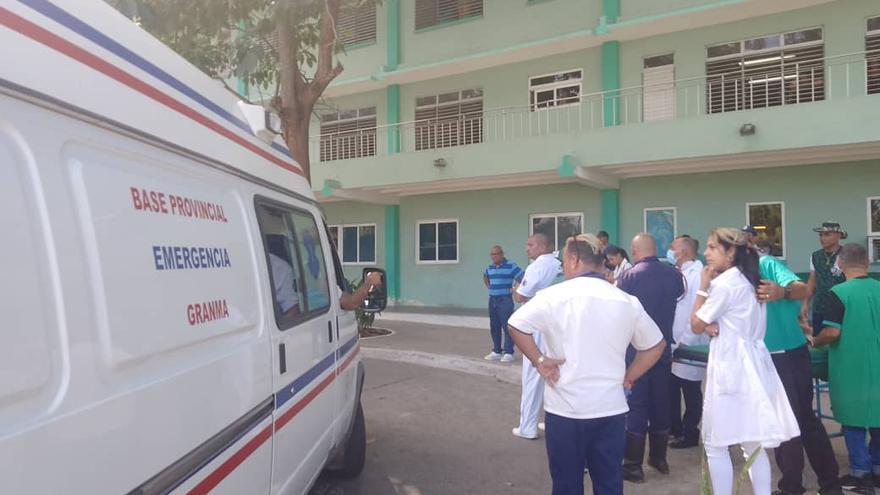
The injured were transferred to the Carlos Manuel de Céspedes hospitals, in Bayamo, and Celia Sánchez Manduley, in Manzanillo. (Radio Bayamo)

14ymedio bigger14ymedio, Havana, January 15, 2024 — At least two minors died and 13 people were injured in a truck crash that occurred on Monday in the municipality of Bartolomé Masó, in the province of Granma. According to the official press, the crash occurred when a passenger transport truck suffered a breakdown while climbing the Loma del Albergue and fell backwards downhill.

The state station Radio Bayamo identified the two deceased minors as Braudis Pujol Pérez, 10 years old and resident in Frío de Nagua, and Yerlis Solano Peña, 15 years old and a neighbor of Unit 4 of Caney de Las Mercedes, both towns in the Granma municipality.

According to the information offered by Eduardo Ramos Reyes, second head of the Police in Bartolomé Masó, a “leased truck” that was transporting passengers this morning from Frío de Nagua to the municipal capital suffered damage to the transmission, could not continue the climb and stopped halfway up the hill. Both the driver and some passengers tried to “maneuver” and stop the recoil of the vehicle “by placing wedges in the wheels,” but the truck ended up rushing backwards, the manager explained. continue reading

The injured were transferred to the Carlos Manuel de Céspedes hospitals, in Bayamo, and Celia Sánchez Manduley, in Manzanillo.

They have not revealed if it was a state company that leased the truck or if this was one of the converted vehicles that often suffer “flaws”   

The authorities have not revealed, however, if it was a state company that leased the truck or if it was one of the converted vehicles that often suffer “flaws” on the roads of the Island.

Crashes reported in the mountainous areas of the east of the country are becoming more frequent. Last September, in the town of La Juanita, in Granma, a truck that transported the workers of the provincial Construction and Assembly company broke its chassis, causing the driver to “lose control” and finally overturn. Two people died and 23 were injured, the authorities revealed at the time.

Also in August, a crash on the Loma La Mariana, in the municipality of San Antonio del Sur, in Guantánamo, left 21 injured. As explained at the time by the newspaper Venceremos, a converted truck for the transfer of passengers belonging to the provincial bus company went off the road and down a ravine.

Days before, the same thing had happened in Santiago de Cuba, when a vehicle of the Armed Forces overturned and caught fire in the municipality of Songo-La Maya, with one dead and 16 injured.

These provinces, due to their geographical peculiarities of abundant hills and roads in steep areas, constitute the region with the highest number of massive crashes, often of converted trucks or passenger vehicles that do not have the conditions to travel on the twisting and narrow roads of the Sierra Maestra. In most cases, the authorities attribute the cause of the crash to the “loss of control over the vehicle” by the driver.

Translated by Regina Anavy

____________

COLLABORATE WITH OUR WORKThe 14ymedio team is committed to practicing serious journalism that reflects Cuba’s reality in all its depth. Thank you for joining us on this long journey. We invite you to continue supporting us by becoming a member of 14ymedio now. Together we can continue transforming journalism in Cuba.

Facing a Cement Shortage, Cubans Resort to Alternative Home Building Materials

The only town in Granma province that met the state’s housing goal was Pilón, which built houses out of wood. (Granma)

14ymedio bigger14ymedio, Havana, January 8, 2024 — On Sunday, Cuba’s Ministry of Construction  added Granma to the list of provinces that failed to meet the government’s 2023 housing goals. According to official news outlets, only 737 (or 45%) of the planned 1,636 houses were built. Provincial officials blamed the “low manufacturing output” and public resistance to “alternative materials.” They admit, however, that the real problem is reduced deliveries of steel and cement, products that are not available locally.

Officials told the newspaper Granma that only 184 (28%) of the homes the ministry had planned as part of its housing initiative were actually built. For their part, state-owned companies, which invest a portion of their profits in workers’ housing, managed to build only 553 (57%) of the proposed 965 homes.

The biggest delay in the province, however, involves state financial and material subsidies for families in precarious housing situations. It was estimated that this aid would have allowed construction of 409 units. Instead, only 84 houses (15%) were built. continue reading

Local development projects, Tejeda complained, have not focused on the use of “alternative” building materials   

Michel Tejeda Acuña, the provincial government’s coordinator, explained that, in addition to a shortage of cement and steel, the “limited” prodution of provincial companies also makes it difficult to carry out the plan. Furthermore, regulations also preclude local materials such as stone, wood or clay from being used.

Local development projects, Tejeda complained, have not focused on the use of “alternative” building materials either, nor do they take into account the region’s capabilities. Only one of these projects, which was managed by private individuals and built in Bayamo from clay bricks with help from the state, seems have come close to meeting expectations.

Privately owned, and often illegal, artisan businesses have for years provided customers with inexpensive building materials they cannot find through state sources. The chronic shortage of construction materials has led many people to substitute bricks for concrete blocks, something the state itself has had to do to deal with its own shortfall.

Since potters began supplying the Ministry of Construction, hand-made brick production is the only thing that is going well. Their contribution, however, is not still not enough. “About five million bricks are produced in Granma annually. This is estimated to grow to about seven million but, to meet the housing policy’s target, we need more than twelve million a year,” explained Tejeda.

The only good news from the province comes from Pilón, a town with a policy of “more home-grown solutions and zero waste” and the only municipality to comply with the housing plan. It did this by substituting wood for cement. The homes, which were built with a type of wood that had not been specified, will be given to residents whose homes were destroyed by hurricane.

In Pinar del Río, Granma reported that this strategy has allowed some municipalities in the province to reach the goal of building homes at the rate of one per day. However, this does not include installing electricity or other items which rely on deliveries from a national distribution network. The concrete block industry is facing a similar challenge. In Vuelta Abajo it has the capacity to produce at “four to five times” the national average but only if cement and aggregate are delivered in a timely manner. “In other words, for a long time the program has been relied on resources that are not available in the province, and that, therefore, do not ensure its sustainability,” explained Jesús Nilo Soca, the regional government coordinator.

Here again, bricks are being use in place of concrete blocks. Until last November, Pinar del Río produced 800,000 bricks. “We produced more in eleven months than we had in five years, said Yalexis León, director of the Provincial Maintenance and Civil Construction Company. She estimates that production levels will reach two to two-and-half million annually in 2024.

Clay, a resource that is readily available, is used in the production of many alternate materials

Clay, a resource that is readily available, is used in the production of many alternate materials. That is, at least, how Delilah Diaz Hernandez, director general of materials for the Ministry of Construction, described it on an episode of the TV interview show Mesa Redonda (Roundtable) last June. She explained that Cuban marble, which commands a higher price, would be exported in order to finance housing construction.

Local production of building materials has been government policy for years. According to Granma, in 2010 there were 55 workshops of this type in the country versus 465 now. It concluded, “[This] means that more than 80% of the resources required for a home can be obtained locally.” Reality clearly demonstrates otherwise.

The steep increase in prices for building materials in recent years has made the dream of owning a house in Cuba unrealistic. Even with subsidies, people often complain that just building a wall is impossible without governmental assistance due to the high cost of rebars, concrete blocks and gravel. To make matters worse, these resources can no longer be found even at sites that sell building supplies.

Things are much the same with businesses and the Ministry of Construction itself, whose budget covers less and less An article published in 2022 by the magazine Invasor raised the possibility of the government purchasing houses for sale on the real estate market, something that — given the current drop in prices due to the large number of people leaving the country – would mean savings in the millions for the state in terms of materials, personnel and time. The proposal, however, fell on deaf ears.

____________

COLLABORATE WITH OUR WORKThe 14ymedio team is committed to practicing serious journalism that reflects Cuba’s reality in all its depth. Thank you for joining us on this long journey. We invite you to continue supporting us by becoming a member of 14ymedio now. Together we can continue transforming journalism in Cuba.
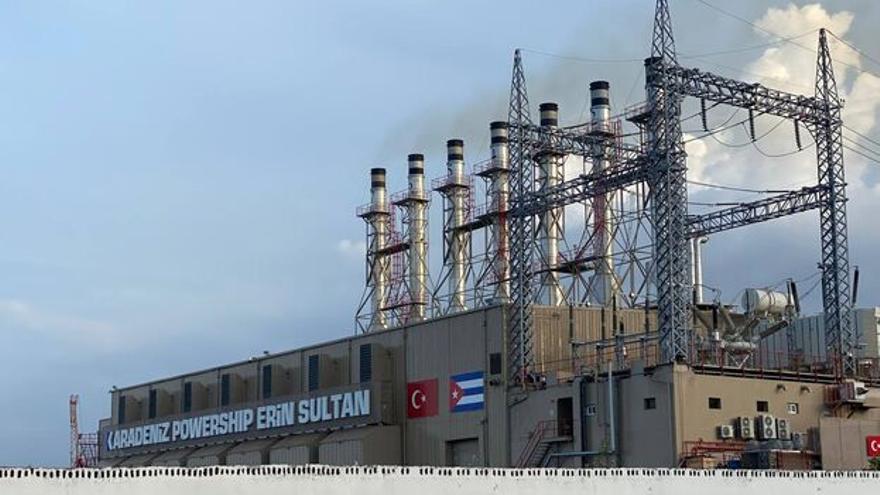
Cuba Celebrates the Day of the Power Plant Worker After a Deficit of 800 MW

The UNE claimed that there was a breakdown in a patana — a floating generator — but the newspaper Trabajadores attributed the failure of the generator to the lack of fuel. (14ymedio)

14ymedio bigger14ymedio, Madrid, 15 January 2024 — Power plant workers celebrated their day this Sunday with a lot to do. In unit 1 of the Lidio Ramón Pérez thermoelectric plant, from Felton (Mayarí, Holguín), synchronization had to be achieved to reduce Saturday’s scandalous deficit, when at least 800 MW were missing in peak hours. And the reason is still unknown.

That day there were breakdowns in unit 5 of the thermal power plant of Mariel, unit 1 of Santa Cruz, unit 5 of Diez de Octubre, and unit 5 of Renté, in addition to the two of Felton. To that should be added two more units in maintenance, unit 8 of Mariel and unit 3 of Cienfuegos. Although the entry of two more sections was expected (in Renté and Nuevitas), an unforeseen event happened with three engines of the patana (floating generator) of Melones and several other generators.

If you look back, five days ago all the plants were working, and there was a reserve of more than 400 MW. Today, five days later, almost all the plants have broken down

“At 09:04 pm there was an internal failure in the patanas of Santiago that triggered service exits of the 110 kV lines of the provinces of Santiago de Cuba and Guantánamo, and at 10:25 pm service was restored. The root cause of the failure in the patana is being determined for its subsequent service,” said the Electric Union of Cuba (UNE) in a statement. continue reading

While this version appeared as official, the newspaper Trabajadores explained that the paralysis of the patana was due to the “lack of fuel.” “The UNE and all its infrastructure are a real disaster. If you look back, five days ago all the plants were working and there was a reserve of more than 400 MW, and today, five days later, almost all the plants are in breakdown, and there’s a deficit of more than 800 MW. It’s like a case of Tras la Huella (Follow the Crime),” said a customer, referring to a detective show on Cuban television.

On Sunday, things had improved and a lack of 227 MW in peak hours was expected, attributed to the “deficit in the distributed generation.” Thus, the Minister of Energy and Mines, Vicente de la O Levy, tried to breathe encouragement into the workers in his area. “Our congratulations, recognition and gratitude to the women and men of the electricity sector. Linemen, operators, technicians, managers, from the anonymous to the most visible, who every day, in difficult conditions, make the power continue to reach all of Cuba. We will win!” he wrote on his social networks.

On social networks, the opinions varied. “The electricity and the blackouts reach all of Cuba,” a user responded on Facebook. There were many that encouraged the employees, who, even in the most difficult conditions and with very poor salaries, have little responsibility for the mismanagement of the country, but many customers lost patience. “Every 20 minutes the current goes out here in Santiago, what a joke,” someone responded to the dozens of posts published on the electricity company’s networks to celebrate the day.

All the provinces had their celebratory events, their delivery of symbols and even their chants for the selfless workers, who are fewer and fewer every day

All the provinces had their celebratory events, their delivery of symbols and even their chants for the selfless workers, who are fewer every day. Last Saturday, the technical director of the UNE, Lázaro Guerra Hernández, gave an interview to the official press in which he declared his pride for dedicating himself to the profession and thanked the dedication of the employees. “And so, to the more than 50,000 workers, each one deserves recognition, and I am one of them. Simply put, I don’t see myself doing anything else but working in electricity.”

It is not yet known how many workers left the sector in 2023, but the worst is feared after more than 15,000 left their jobs between 2021 and 2022. Two years ago, 8,089 workers quit in the first nine months, and it was expected that there would be 10,000 by the end of the year. In 2021, 6,612 power plant workers left their jobs. Many of them did it to leave the country, but there were also a large number who left to look for a job that paid better.

In 2023, the average salary of a power plant worker was between 4,000 and 8,000 Cuban pesos a month. As announced by Pedro Alberto Sánchez Torres, general director of the Fuel Oil Generator Generation and Maintenance Company, in 2023 salaries rose by about 3,000 pesos on average. This is the approximate cost of a carton of 30 eggs in the informal market.

Translated by Regina Anavy

____________

COLLABORATE WITH OUR WORKThe 14ymedio team is committed to practicing serious journalism that reflects Cuba’s reality in all its depth. Thank you for joining us on this long journey. We invite you to continue supporting us by becoming a member of 14ymedio now. Together we can continue transforming journalism in Cuba.
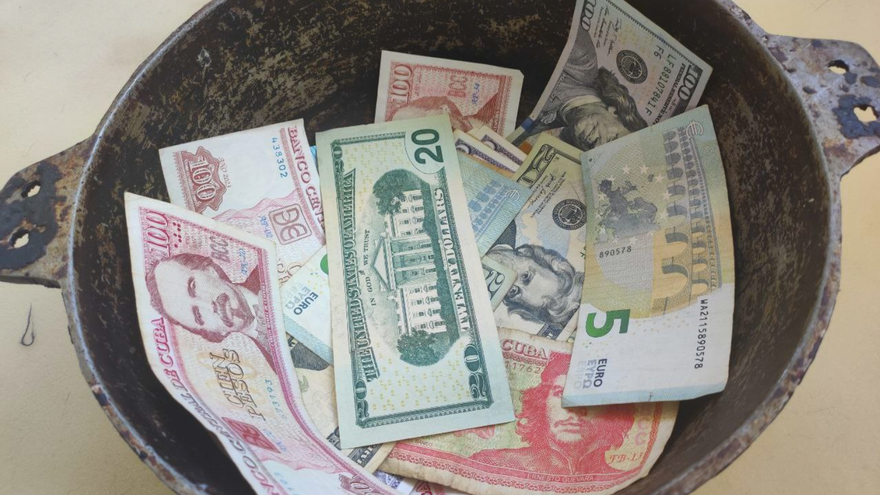
Cuba: The Dollar Breaks a New Record on the Black Market at 275 Pesos

For most people on the Island, the informal market is where they stock up on dollars. (14ymedio)

14ymedio biggerEFE (via 14ymedio) Havana,15 January 2024 — The US dollar set a new record in Cuba on Monday by trading at 275 pesos on the informal foreign exchange market, which deepens the strong depreciation of the local currency since the economic reform of 2021.

This new maximum – recorded by the independent media El Toque – comes after the announcement, in mid-December, of a large macroeconomic adjustment program by the Cuban Government.

Among the measures announced, such as the 500% increase in the price of gasoline and diesel, is the implementation of a new official exchange rate

Among the measures announced, such as the increase of 500% in the price of gasoline and diesel, is the implementation of a new official exchange rate, which since 2021 stands at 24 pesos per dollar (1.045% lower than the informal rate) for companies and 120 for individuals (129% lower than on the black market).

A few days after Prime Minister Manuel Marrero announced the plan in Parliament, the informal rate registered a slight drop to reach 265 pesos per dollar. But in 2024 it has risen again to the levels prior to the announcement, until it broke the record this Monday. continue reading

The need to import 80% of what the country consumes, the strong migratory pressure and the uncertainty due to the serious crisis are some of the main factors that explain the current partial dollarization of the Cuban economy and the consequent depreciation of the Cuban peso.

The Government has recognized on several occasions the failures in the design and implementation of the 2021 reform, called the OrderingTask,* which has not met the objectives of ending the monetary duality of the Island, which used the national currency and the convertible peso (CUC), equivalent to the dollar.

In state exchange offices only up to 100 units of the US currency are sold per person per day

Many people stock up on dollars in the informal market due to restrictions on buying them at state exchange offices, where only up to 100 units of the US currency are sold per person per day, and only if there is availability.

The El Toque index – harshly criticized by the Government for stirring up “speculation” – takes as a reference about 2,000 daily ads for the sale of foreign exchange on several Cuban websites to establish its reference exchange rate, according to this independent media.

In the absence of another type of official indicator, this index has become the benchmark on the street and for economists who study the situation in the country.

*Translator’s note: The Ordering Task is a collection of measures that include eliminating the Cuban Convertible Peso (CUC), leaving the Cuban peso (CUP) as the only national currency, raising prices, raising salaries (but not as much as prices), opening stores that take payment only in hard currency, which must be in the form of specially issued pre-paid debit cards, and a broad range of other measures targeted to different elements of the Cuban economy.

Translated by Regina Anavy

____________

COLLABORATE WITH OUR WORKThe 14ymedio team is committed to practicing serious journalism that reflects Cuba’s reality in all its depth. Thank you for joining us on this long journey. We invite you to continue supporting us by becoming a member of 14ymedio now. Together we can continue transforming journalism in Cuba.
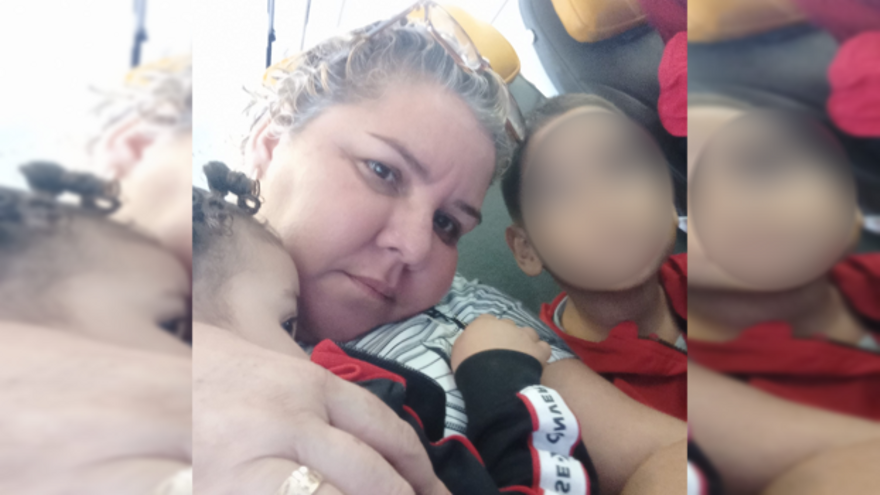
Activist Diasniurka Salcedo Goes Into Exile Forced by the Cuban Regime

Salcedo Verdecia shared this image in the plane seat with the two children she was allowed to take with her. (Facebook/Diasniurka Salcedo)

14ymedio bigger14ymedio, Havana, 14 January 2024 — Diasniurka Salcedo Verdecia made public her departure from Cuba last Thursday after being sentenced to eight years of deprivation of liberty, she said. The Cuban activist published on her Facebook account the details of her forced exile and the harassment she suffered until boarding the flight at Havana International Airport.

In the sentence, handed down by the Municipal Court of Alquízar, where Salcedo Verdecia resided, she is charged with the crimes of enemy propaganda, instigation to commit a crime, insult to national symbols and defamation against a public figure. The document adds that the sentence would be served in the penitentiary institution determined by the Ministry of the Interior.

She is charged with the crimes of enemy propaganda, instigation to commit a crime, insult to national symbols and defamation against a public figure

“I had to leave Cuba, I had to leave most of my children behind. Only two options for me: leave Cuba, my homeland, my land, the one I love and for which I have fought head-on for more than 14 years, or enter to prison to serve an unjust sentence of 8 years, despite the appeals. I had to leave Alain despite having a ticket for him, the dictatorship told me NO,” she wrote on her profile on the social network. continue reading

In the videos that Salcedo Verdecia shared from the airport, her ticket shows that she would board flight AG 931 on Aruba Airlines, which covers the route Havana-Managua, capital of Nicaragua. According to the ticket seen in her hands, she left on January 11, although the activist did not offer details of the date or the destination of the aircraft.

Salcedo Verdecia points out that she was only allowed to leave with two of the five minors who have been in her custody for four years, children of abusive parents or those who are in prison. Apparently her husband Jorge Hernández Ramos also remains on the Island, and has suffered harassment from the regime for systematically denouncing human rights violations on the Island.

Among the signs of support that Salcedo Verdecia has received through Facebook, the one from Amelia Calzadilla, a Cuban activist now based in Madrid, stands out. Calzadilla was also forced into exile for her repeated complaints about the painful situation currently being experienced in the Island.

Among the signs of support that Salcedo Verdecia has received through Facebook, the one from Amelia Calzadilla, a Cuban activist now based in Madrid, stands out

“I know how much she regrets having to leave Cuba, I even know that it destroys her to walk away from those children who, not being her biological children, she loves with the same intensity that I love the ones I saw born from my womb,” Calzadilla posted on her profile.

On December 8, Salcedo Verdecia denounced that she was the victim of a discredit campaign by the regime, whose final action was to threaten her with withdrawing custody of the minors in her care. However, a week later, at the hearing held in the Municipal Court of Alquízar, she was granted custody of the children.

However, the activist described that as “the worst of her days” because she considered the trial as a way to intimidate her for having participated in a protest with several mothers in front of the Ministry of Public Health. Women demanded quality medical care for their chronically ill children.

____________

COLLABORATE WITH OUR WORKThe 14ymedio team is committed to practicing serious journalism that reflects Cuba’s reality in all its depth. Thank you for joining us on this long journey. We invite you to continue supporting us by becoming a member of 14ymedio now. Together we can continue transforming journalism in Cuba.
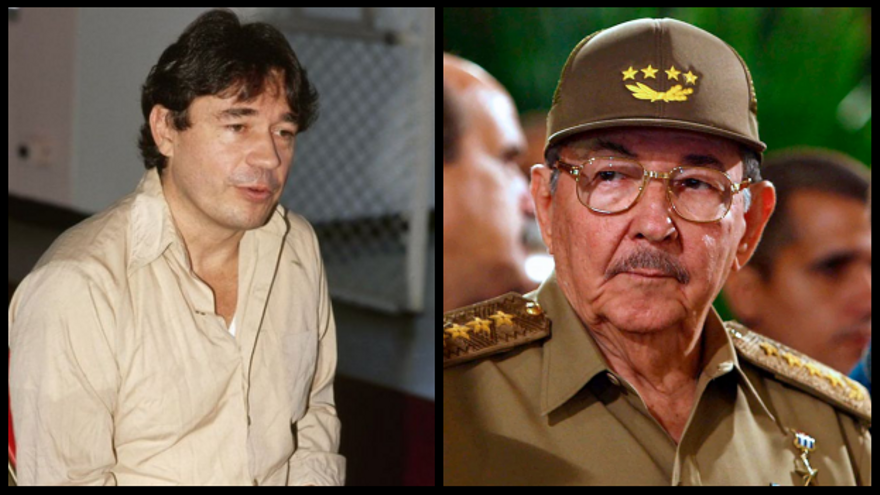
Former Colombian Drug Trafficker Carlos Lehder Recounts His Meeting with Raul Castro in Cuba

Carlos Lehder and Raúl Castro. (Collage)

14ymedio bigger14ymedio, Clara Riveros, Miami, 14 January 2023 — The complicity between drug lords and the political leaders of Latin America and the Caribbean, particularly Cuba, was key to the rise, positioning and expansion of the Colombian cartels in the decade of the 1980s, as extracted from Vida y muerte del cartel de Medellín  [Life and Death of the Medellín Cartel], the book published by Penguin Random House, with the memoirs of one of its former bosses, Carlos Lehder.

At just 24, Lehder had resources and capital beyond money, that is, education, culture, command of other languages, an American visa, and the ability and knowledge of how to move internationally. After almost 50 years, including 33 years in a United States prison, the Colombian with a German father now resides in Frankfurt: “contrite, rehabilitated, obedient to the laws and, at last, free,” he says.

Carlos Lehder, one of the most visible actors in the Medellín cartel, gives an account, for the first time, of the million-dollar economic relationships that he and his partners established with the Governments of Cuba, Panama, Nicaragua and the Bahamas. The leaders of these nations did not hide their desire for dollars and their eagerness to participate to some extent in the great drug business and its benefits. The cartels bought the revolutionary complicity of Castro’s Cuba and Sandinista Nicaragua. continue reading

Carlos Lehder reports, for the first time, on the million-dollar economic relations that he and his partners established with the governments of Cuba, Panama, and Nicaragua and Bahamas

The young drug trafficker understood early on the importance of relationships with power to expand the business and extend the criminal empire through the conquest and domination of territories through “drug diplomacy” and the seduction of political power. Lehder had his kingdom in the Bahamas and Pablo Escobar in Panama. Later, Nicaragua became a better destination, much safer thanks to the emerging revolutionary government.

For almost eight years, Lehder was the master of drug trafficking in the Bahamas, according to the memoirs of the one time narc in the Colombian magazine Semana. It was President Ronald Reagan’s declaration of war on drugs that fractured his alliance with the authorities of that archipelago just 170 kilometers from Miami. He returned to Colombia and advanced with Fidel Castro’s Cuba. In Havana they opened the doors for him and, practically, spread out a red carpet for him: “we need dollars,” they told him.

The Cuban power was associated with Pablo Escobar and Gonzalo Rodríguez Gacha, alias El Mexicano, thanks to the negotiating skill of Lehder, who narrates that “the Castro dictatorship, through the intelligence and special operations agency of Havana” extended him “a formal invitation to visit the island, with all expenses paid by the Government.”

He was greeted on his first “business” trip by “a group of plainclothes officers.” He says: “In a waiting room we met the heads of this mission, led by Colonel Antonio de la Guardia, head of the Cimex Corporation, the ’special operations’ agency of the Castro dictatorship.”

Lehder clarified that he needed Cuba to smuggle drugs and the response was immediate. They opened the door for that immense business: “For now, I can only confirm that we need all the dollars we can get,” Tony de la Guardia supposedly told him.

They authorized him to use “Cayo Largo, an island twenty kilometers long, with a good landing strip, located forty kilometers from the port of Cienfuegos.” Cimex “needed to receive five million dollars in cash to cover the Government’s expenses.” In exchange, they offered him “the rooms required on the second floor of the hotel to reside there with your workers; in addition, we will open the kitchen. We do not know how much cocaine you will bring to the island, but the more, the better; we would only have to negotiate the price per kilo landed.”

Lehder wanted a direct relationship with the Castros and asked to be introduced to Raúl, then Minister of Defense. Before the meeting he received instructions: “Protocol requires strict respect for time. There are four minutes maximum for handshakes, a courtesy phrase and farewell. You will not mention your own name.”

They took his passport, took him to a room and, after being announced, “a man with glasses appeared who, looking at me shrewdly and intently, said: ’Nice to meet you, welcome to Cuba Libre’, greeted me and extended his cold hand to me.” with the glacial gesture of the potentate who greets a shoeshine boy,” Semana quotes.

Raúl Castro’s laconic words, which apparently had nothing to do with the business, closed the mafia deal. “Here in Cuba we have achieved many advances in education, medicine and agriculture. Our trade is growing, despite the Yankee blockade; the Cuban Revolution is invincible. Enjoy your stay. You can leave,” is an extract from Lehder’s memoirs.

Raúl Castro’s laconic words, which apparently had nothing to do with the business, closed the mafia agreement

Many shipments were made to the Island. Colonel De la Guardia transported them from there to the Bahamas. Lehder maintained contacts and complicity with political power in both places. The business flourished with the direct participation of Fidel Castro’s entourage, until the suspicions of the United States intelligence services forced the regime to suspend these operations. The dictator himself decided to prosecute and execute, in 1989, four of the officers involved, including General Arnaldo Ochoa and Tony de la Guardia.

Ten years earlier, Lehder began to take an interest in Nicaragua, where the Sandinista guerrillas, led by Daniel Ortega and supported by Havana, took power. In Managua he was given diplomatic treatment at the highest level. He was received by Tomás Borge, one of the nine commanders of the Revolution and powerful Minister of the Interior.

Later, in 1987, Pablo Escobar betrayed Lehder and facilitated his capture by Colombian authorities, who extradited him to the United States.  He was sentenced to two life sentences, but served only 33 years after negotiating a reduced sentence in exchange for his testimony against former Panamanian dictator Manuel Antonio Noriega in a drug trafficking trial in 1992 in federal court in Miami.

____________

COLLABORATE WITH OUR WORKThe 14ymedio team is committed to practicing serious journalism that reflects Cuba’s reality in all its depth. Thank you for joining us on this long journey. We invite you to continue supporting us by becoming a member of 14ymedio now. Together we can continue transforming journalism in Cuba.
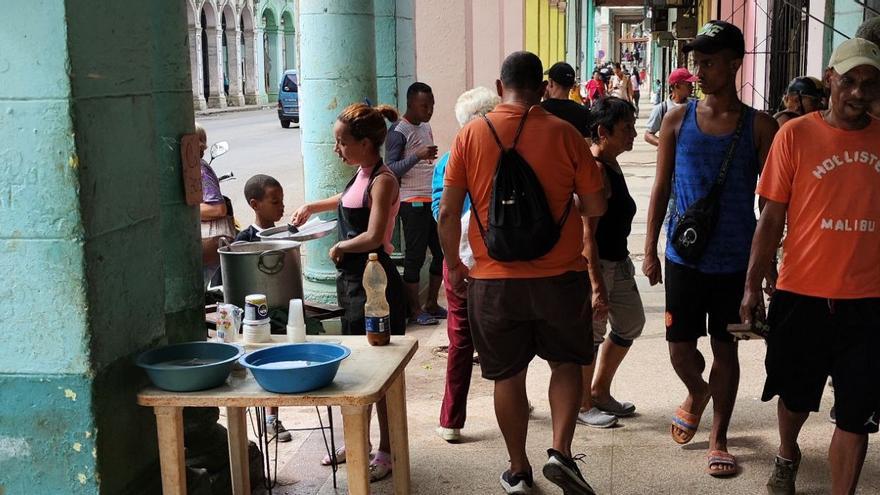
Castro’s Broth, Symbol of Cuba’s Decline

The lady drank everything in one long drink and crossed the street, avoiding the puddle of sewage right in front of the improvised food service point. (14ymedio)

14ymedio bigger 14ymedio, Juan Diego Rodríguez, Havana, January 12, 2024 — The woman quickened her pace until she reached the corner of Reina and Manrique streets, in Centro Habana. In front of a table with flimsy legs with a pot on top, she ordered “a broth for 30 pesos.” The vendor served her a pale liquid in which small pieces of something floated. The lady drank everything in one long drink and crossed the street, avoiding the puddle of sewage water right in front of the improvised food service point.

The ethnologist and jurist Fernando Ortiz defined Cuban culture as an ajiaco — a rich chicken stew made with three types of potatoes — because it mixed African, Spanish and indigenous, plus countless customs of those who migrated to the Island from different latitudes. Dense and made from rich meats and vegetables, this Creole dish could “raise a dead man,” as described by the elders, but its preparation is very difficult today, with its ingredients missing from the market platforms or extremely expensive.

There are levels and levels of broth. (14ymedio)

Instead, it is more common to find its poor cousin: broth. A lot of water, no corn and, instead of cassava or malanga, they barely add bananas or a few portions of sweet potato, which are cheaper and easier to find. The main menu of the official celebrations every September 27, the eve of the continue reading

anniversary of the Committees for the Defense of the Revolution, this is identified with the bungling and crisis that characterize the Cuban system, which is why it has become the signature recipe of Castroism.

However, there are levels and levels of broth. The one that was sold this Thursday in a doorway on Reina Street, just outside a small agricultural market, had gone down a few more steps in quality and respect for the consumer. Without any aroma coming out of the pot, with the stench of sewage accumulated a few centimeters away and made from very few components, the recipe had degenerated until it looked like warm water with shells.

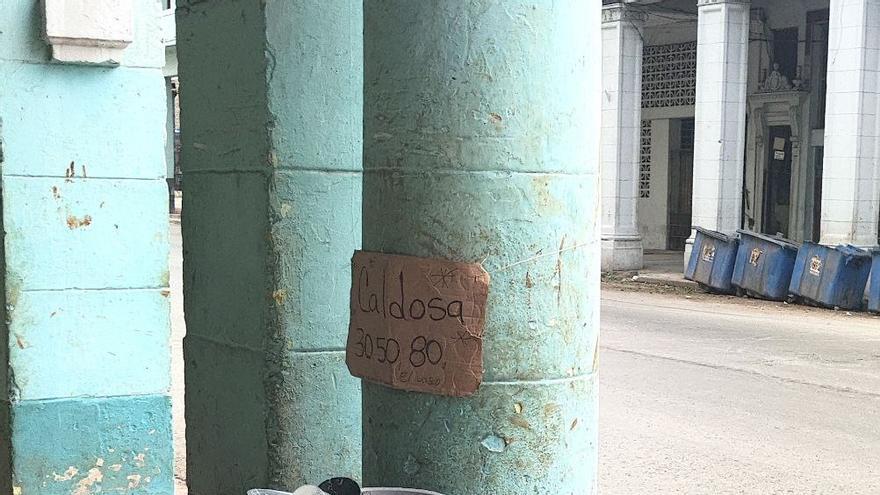
Today’s Cuba is more like a broth than an ajiaco. Gripped by the exodus, the lack of culinary references and the economic disaster, its formula has become as impoverished as the reality. Better to swallow it quickly and holding your breath, so that it fills the stomach but does not harm the palate, as did the woman who today, in Central Havana, asked for the smallest serving because she did not dare to take the largest glass, at a price of 80 pesos.

____________

COLLABORATE WITH OUR WORKThe 14ymedio team is committed to practicing serious journalism that reflects Cuba’s reality in all its depth. Thank you for joining us on this long journey. We invite you to continue supporting us by becoming a member of 14ymedio now. Together we can continue transforming journalism in Cuba.
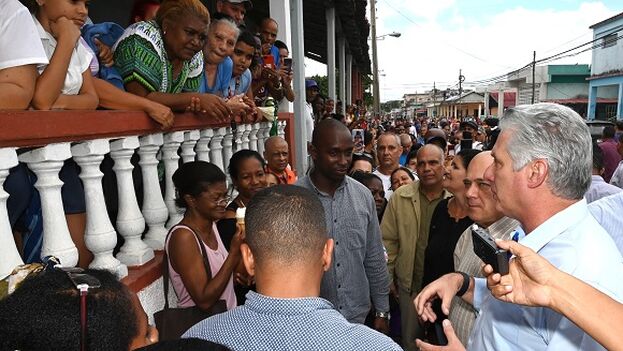
Diaz-Canel Begins a National Tour to Defend the Measures that Terrify Cubans

Díaz-Canel visited a high school, a day-care center, an agro-sugar company and a food processing center in Bahía Honda. (Cubadebate)

14ymedio bigger14ymedio, Madrid, 12 A little more than 10 kilometers from the place from which thousands of Cubans flee the Island in boats and precarious vessels and where 14 months ago seven rafters died after being attacked by the Border Guard Troops, Cuban President Miguel Díaz-Canel began this Thursday by failing to tell the truth in his  first tour of the Island  in 2024. The president stated in Bahía Honda, Artemisa, that the government measures to “invigorate the economy” “have been announced and none have been applied.”

The president thus ignored the fact that on January 1 some of them came into force, the (yes, expected) salary increases for Education and Health personnel, and the tax increases, which put an end to tax exemptions on imports of consumer products by private companies, although they are maintained for raw materials.

Díaz-Canel may claim that he was referring to the increases in the price of supplies and some basic services – electricity, gas, transportation and fuels – which are the ones that have most agitated the population, but in that case he was not right either. “Nothing has changed. The other thing is that each measure will be applied when the conditions are created,” he specified. continue reading

Unless the Government reverses its announcements, these increases already have a designated schedule to go into effect

Unless the Government reverses its announcements, these increases already have a designted schedule to go into effect. On February 1, the new fuel prices come into force, which represent increases of around 500%, while increases in the prices of electricity, gas and transport  will do so from March 1, as reported on television by the ministers of each area, who allegedly spoke to clarify doubts for the population.

But their boss’s words call into question whether the desired clarity has been achieved. “There is a lot of talk with the economic measures, and I know that this is creating a lot of uncertainty; and above all the counterrevolution is greatly detracting from the measures,” he added, while he was the one who sowed doubt about something that seemed clear to date.

“Each measure, even those that have to do with increases in rates or prices, will have a treatment for the people who could be most affected,” he explained while asking the population to have “confidence in the way the Government is going to take the measures, because there is a lot of counterrevolution building and distorting the content.” Díaz-Canel stated, however, that the measures are harsh but they must be applied “because if not, we will not put the economy in order.”

The president once again trod ground that raises countless issues by saying that “the vulnerable will always be taken into account,” a message that has been insisted on from the first moment, without knowing what criteria will determine if a citizen is in that category, how a record will be maintained, whether it will be stratified or how compliance with standards will be verified in a population accustomed to living on the black market and fleeing the radar of the authorities.

Díaz-Canel focused on being specific only about those elements where the plans are already in place, such as the increase in electricity prices, which will affect “few people,” by specifically targeting those who consume the most — more than 500 kWh in a month — 6% of the population

“All measures – he insisted – will have differentiated treatment for the vulnerable. And what we ask of you is that you be very attentive to what is explained.”

On his journey through Bahía Honda, the leader visited a high school, a ‘children’s house’ — a kind of daycare center but one where the children must go home for lunch — an agro-sugar company and a food processing center while, according to the official press, “the people were waiting in the street, with expressions of support and firmness.”

“You have to work. You have to work and you have to produce, and you have to create wealth and distribute it as equitably as possible,” said the president, for whom “that is social justice and that is socialism”

After the usually calculated mass events, Díaz-Canel met with the territory’s authorities, to whom he insisted on the importance of the harvest and food production in a province that exports more than any other.

Roberto Morales Ojeda, a member of the Political Bureau and Secretary of Organization of the Central Committee of the Communist Party, who accompanied the leader, called attention to the need to “rectify a group of deviations related to indiscipline and phenomena that have nothing to do with what what is wanted for a better society” and thus the first visit was completed, with a dose of ‘voluntarism’ — that is relying on voluntary action for implementation.

“This year we have to do better. But we have to do better by working hard ourselves. We must work. You have to work and you have to produce, and you have to create wealth and distribute it as equitably as possible,” said the president, for whom “that is social justice and that is socialism.”

“In this country there is enough dignity, talent and will,” he added, and went back to the Palace of the Revolution.

____________

COLLABORATE WITH OUR WORKThe 14ymedio team is committed to practicing serious journalism that reflects Cuba’s reality in all its depth. Thank you for joining us on this long journey. We invite you to continue supporting us by becoming a member of 14ymedio now. Together we can continue transforming journalism in Cuba.
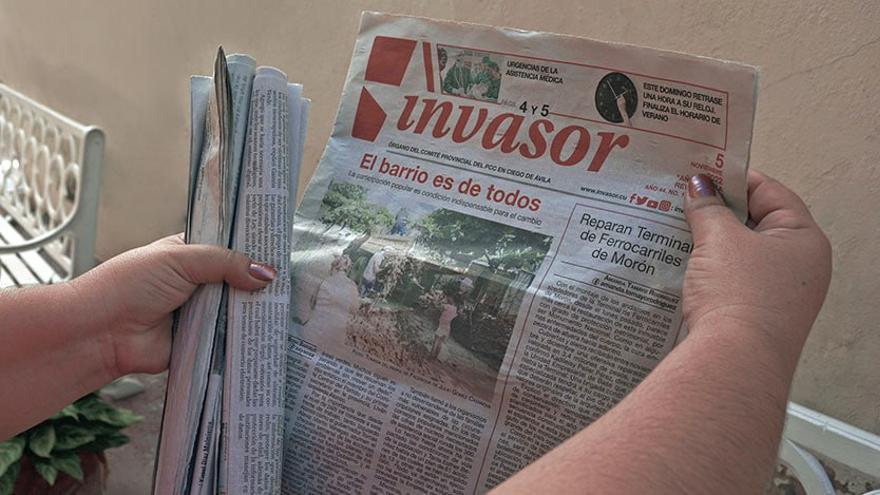
A Cuban Newspaper in Ciego de Avila, ‘Invasor’, Leaves the Fold

Si bien es cierto que no es el único y tiene en 'Escambray', el diario de Sancti Spíritus, a su mejor alumno, el avileño es el más atrevido de su clase. (Invasor)
While it is true that it is not the only one and in the Sancti Spíritus Escambray it has its best student, the Avileño paper is the most daring in its class.

14ymedio bigger14ymedio, Havana, 30 December 2023 — Subject to close control, the official Cuban media have historically been fundamental instruments of revolutionary propaganda, with Granma, the official organ of the Cuban Communist Party, as the spearhead. Eppur si muove, “and yet it moves,” a phrase attributed to Galileo; somewhat far from the capital, Ciego de Ávila’s newspaper, Invasor, is the best example, although not the only one.

The newspaper has published some of the most critical articles against the Government, from its own ranks, and continues to provide valuable material that allows the independent press to work with data and statements that are impossible to access from a medium considered illegal by the regime. While it is true that it is not the only one and in the Sancti Spíritus Escambray it has its best student, the Avileño paper is the most daring in its class.

We have been observing in recent years in 14ymedio that some provincial media dare to be more critical of power than those considered national media , but the milestone was reached this October 2023 Invasor in its article Silences, respect and pending communication, in which the author, Sayli Sosa Barceló, accuses different institutions of lack of transparency, deliberate delays in responding to journalists and even rudeness to media teams that prevent the press from fulfilling its obligation to keep the public informed.

continue reading

The article referred to another with similar characteristics, published in the summer by Escambray with a harsh title – Keep quiet and then inform – by the very official Dayamis Sotolongo, who cried out against the new policy of the Ministry of Tourism that forces the media through a bureaucratic mechanism to request information that, in the end, caused a delay in publications. In her own words: “Every trip in access to information is one more step towards censorship.”

The official provincial press has not only occasionally stood out for denouncing some behavior of the authorities, it has also revealed useful data to the independent press and the citizens themselves. A recent case is that of Girón, which this November broke the ban on reporting violence against women in Matanzas; and again Invasor, which in April warned the Government about the mistake it was making by allocating resources to the meager tourism and subtracting them from food; or Bohemia magazine, which just three weeks ago offered an extensive report with data on the increase in violence on the Island and how its citizens perceive it.

We have been observing in recent years that some provincial media dare more to be critical of power than those considered national media

It cannot be said, definitively, that there are legal media in Cuba that can display an editorial line contrary to the system that prevails in the country. The Constitution itself prevents it. Most of them tend to settle for attacking middle positions or company directors and rarely reach higher positions, as also happened in April in an opinion article published – once again – by Invasor in which its author, the journalist about Mario Martín Martín cried out against the mantra of voluntarism — i.e. relying on volunteers to do the work and solve problems. “The path is plagued with immobility, inertia, slowness and disdain, ‘paved’ by those who seek to repeat sterile formulas and remain static to continue plowing in the sea,” he wrote.

None of these newspapers has reached the point of questioning the State model, but the mere fact of opening a crack through which a hint of Cuban reality appears is no small thing in a country subjected to strict control of information for 60 years.

____________

COLLABORATE WITH OUR WORKThe 14ymedio team is committed to practicing serious journalism that reflects Cuba’s reality in all its depth. Thank you for joining us on this long journey. We invite you to continue supporting us by becoming a member of 14ymedio now. Together we can continue transforming journalism in Cuba.
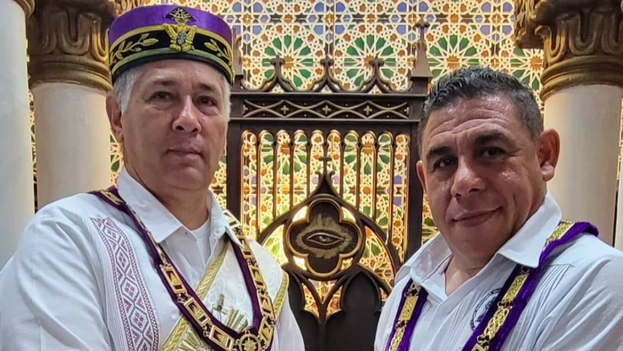
Grand Master of Cuban Masons Assumes Responsibility for a Theft of 19,000 Dollars

On the left, the Sovereign Grand Commander José Ramón Viñas Alonso, to whom Urquía (right) confessed the theft of the money. (Facebook/Grand Lodge of Cuba)

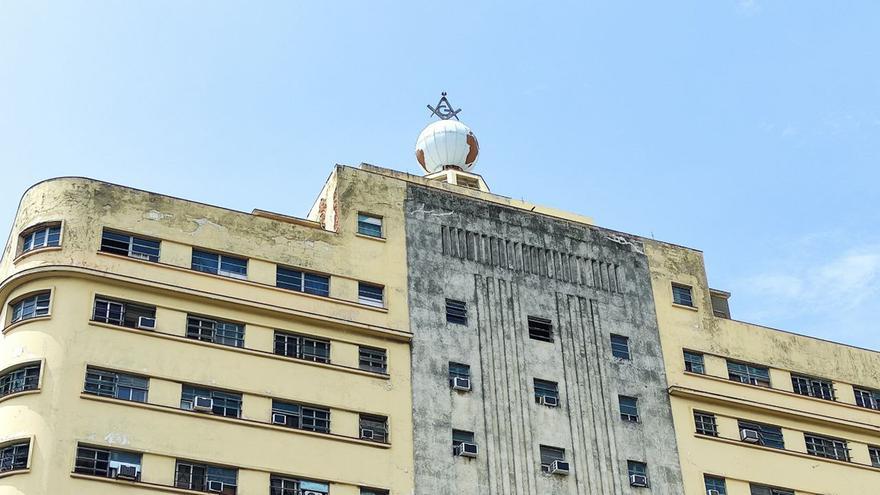
14ymedio bigger14ymedio, Madrid, January 12, 2024 — The Masonic Grand Lodge of Cuba reported at the Zanja police station, in Central Havana, the loss of a sum of 19,000 dollars (more than five million pesos in the informal currency market) which were stolen from the safe of Mario Alberto Urquía Carreño, grand master and co-president of the Board of Trustees of the Masonic Asylum.The money is the donations from the Freemasons to pay salaries to staff and finance the activities of a nursing home. The account of what happened, as read in a statement released by the institution, makes clear the distrust of the Board of Trustees in the Grand Lodge, to whom it had entrusted the care of the money and points, as can be deduced from the content, to an internal theft, since the Grand Master has agreed to assume full responsibility.

Sources close to the institution consulted by CubaNet said that there were no signs of violence or any sign that indicated that the door had been forced.

According to the Board of Trustees, an amount of 21,000 dollars was in their possession, news that began to spread by word of mouth on social networks, generating alarm among its members, who decided to move the money to a safer place considering that La Güinera, where its headquarters is located, has a “population highly prone to commit criminal acts.” continue reading

The decision, adopted unanimously, was to leave 2,000 dollars and take the remaining amount to the Grand Master’s office, in the historic building on Carlos III Street. The treasurer of the Board of Trustees, Ernesto Valdés García, and the director of the Asylum, Raúl Acosta, were in charge of the deposit, and they had three witnesses to the delivery operation in which minutes were drawn up and the money counted.

Last October, one of the members of the Board of Trustees asked that its treasurers and those of the Grand Lodge make a monthly count, at which point the Grand Master, upset by the mistrust, told them that the money was “in a safe in his office.”

The Grand Lodge admitted the lack of money in a meeting with the Board of Trustees on the roof. (14ymedio)

On 9 January 2024, the Asylum agreed to ask for $1,000 upon realizing its “delicate situation with food,” for which they contacted the Grand Master, notifying him of a visit along with several members of the institution for the withdrawal of the amount.

According to the version of the Board of Trustees, Urquía Carreño argued that the building’s elevator was broken, so he would carry the money himself. However, they rejected the proposal and indicated that the procedure would be as planned.

“The Grand Master accepts, but says that he will call later to inform them of the time they could proceed,” the story continues. Finally, Urquía Carreño and the grand treasurer of the lodge meet with José Ramón Viñas Alonso, the Sovereign Grand Commander and President of the Board of Trustees, to whom they confess that there has been a theft of the money.

“The Sovereign, surprised, exclaims that it is a very serious situation and asks why four days have passed and he has not been informed of this fact, given his hierarchy as Sovereign and as President of the Board of Trustees,” the statement said, adding that the reason given was to avoid worries. The reason, however, also annoys the Board of Trustees, which demands to know if the Police have been informed and receives the answer that they have not, because it could damage the image of Freemasonry.

“The Sovereign, surprised, exclaims that it is a very serious situation and asks why four days have passed and he has not been informed of this fact, given his hierarchy”

“Before the Grand Master leaves, the Sovereign tells him that he has to process all the information, because the facts are extremely serious, and he has to make a determination,” the text states. Once the decision was made to gather the institution, they say, Urquia Carreño asks that it not be done “because that is not in anyone’s interest.”

At the meeting, which was held despite the opposition of the Grand Master, the decision was made to denounce the theft and make a report to to the Freemasons, a decision before which the Grand Master requests “time of silence to be able to replenish the money”, a demand rejected by the Board of Trustees.

“The Grand Master stated that he was responsible for what happened and undertakes to replace the stolen money. Additionally, when the members of the Board of Trustees learn that the Grand Master would soon travel abroad, they recommend that until this situation is resolved, he should not should travel outside the country,” the text adds.

The Sovereign, Viñas Alonso, who is taking this situation very seriously, is in the crosshairs of State Security after sending a letter to Miguel Díaz-Canel in which he offered “his opinion on the call for confrontation between Cubans that he made this when everything was worse,” in reference to the repression that followed the mass protests of 11 July 2021 (’11J), of which he was very critical. From that moment on, the political police tried to get him to recant and even ’regulated’* him to prevent him from going abroad.

*Translator’s note: The Cuban Government has chosen the term ‘regulated’ to refer to those who are forbidden to leave the Island.

____________

COLLABORATE WITH OUR WORKThe 14ymedio team is committed to practicing serious journalism that reflects Cuba’s reality in all its depth. Thank you for joining us on this long journey. We invite you to continue supporting us by becoming a member of 14ymedio now. Together we can continue transforming journalism in Cuba.
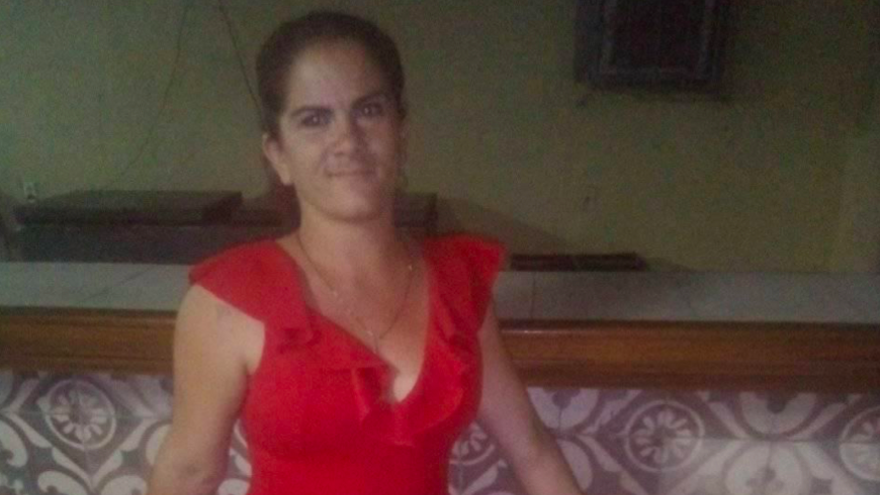
Diana Rosa Cervantes, First Femicide Victim in Cuba in 2024, Was Murdered in Camaguey

Cervantes lived in the Edén neighborhood, in the municipality of Camagüey. (Facebook/Diana Rosa Cervantes Mejías)

14ymedio bigger

14ymedio, Havana, 4 January 2024 — The new year has already claimed its first victim of fatal violence against women in Cuba. With the murder of Diana Rosa Cervantes Mejías this Tuesday, in Camagüey, the list of femicides opens just three days into 2024.

The attack on Cervantes has not yet been confirmed by independent observers, but several publications on social networks by acquaintances of the victim, collected by CiberCuba, indicate that the alleged aggressor was her partner, who killed her with blows to the head “out of jealousy”.

According to the same sources, Cervantes was the mother of a young child and a resident of the Edén development in the municipal capital of Camagüey province.  Her age is not known.

This Monday, the femicide of Nurisbel Guerra, a nurse residing in the Granma municipality of Cauto Cristo, who was on vacation from a medical mission in Venezuela, also made the news. After returning for a short vacation, on December 24 she was murdered by her husband, who committed suicide after cutting her throat. The aggressor, identified as Orestes Tamayo, from whom she intended to separate, was a worker at the province’s Electric Company, the independent media reported. continue reading

According to the same sources, Cervantes was the mother of a young child and a resident of the Edén development, in the municipal capital of the province of Camagüey

This December, the official press broke its usual silence to report the femicide of Ohanis Soto in the town of Lincoln, province of Artemisa. After a “domestic altercation” that took place at 6:00 pm on December 28 and which “ended in a fatality”, Soto was stabbed several times by her partner, Osmar Frómeta.

As revealed by the newspaper El Artemiseño, after killing the victim, Frómeta turned himself in to the Police to avoid an alleged “settling of scores” by the Soto family.

So far, Guerra is listed as the last victim of fatal violence against women of 2023, but observers’ attempts to resolve several unconfirmed cases so far, could continue to add to the list.

For their part, both the official press and the authorities maintain their distance from femicide cases, and their promises to prevent and quantify cases of violence against women in real time remain unfulfilled.

The year that just ended closed with a total of 87 confirmed victims of femicide, more than double the figure (36) registered in 2022 by independent observers, who always make mention in their reports the “under-recording” of femicides.

Translated by Norma Whiting
____________

COLLABORATE WITH OUR WORKThe 14ymedio team is committed to practicing serious journalism that reflects Cuba’s reality in all its depth. Thank you for joining us on this long journey. We invite you to continue supporting us by becoming a member of 14ymedio now. Together we can continue transforming journalism in Cuba.
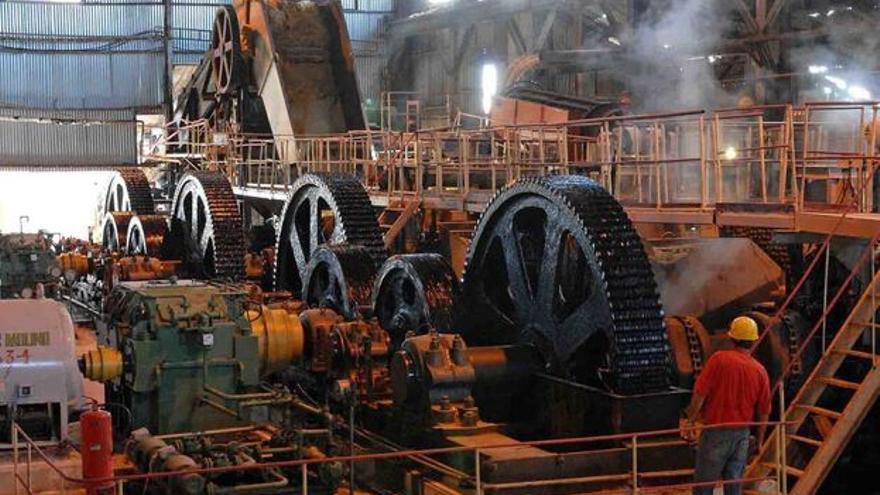
The Delay in Grinding the Sugar Heralds Another Calamitous Harvest in Cuba

The late start of the grinding, the inefficient repairs, the weather conditions and the lack of inputs for the machinery mean that the industry is not functioning. (Adelante)

14ymedio bigger14ymedio, Madrid, 13 January 2024 — The 2023-2024 sugar harvest has just begun in Cuba, but the regime cannot hide that, once again, it will end in a debacle. None of the Ciego de Ávila sugar mills, for example, have begun to grind. In an article published this Friday, the newspaper Invasor says that the delay is due to “different inconveniences,” without giving details, and adds that “compliance with the economic-productive indicators of the territory is in danger.”

At the end of November, the official press announced that of the 25 sugar mills that would be used in the current campaign, only two – Ciro Redondo, in Ciego de Ávila, and November 10, in Artemisa – due to repairs, would begin to grind late, on January 10 and in February, respectively. The others would begin in December. But this has not come to pass.

In Sancti Spíritus, according to an extensive article published on Wednesday by Escambray, they had “an unstable start,” in the words of Antonio Viamontes Perdomo, director of the Melanio Hernández sugar mill, where, they say, the collective “is performing magic to fulfill the plan.” continue reading

The Melanio Hernández sugar mill started six days later than expected, on December 26, but two days later it stopped because of the “cold” brought by the rains

The milling started six days later than planned, on December 26, but, two days later, it stopped because of the “cold” brought by the rains. After resuming its work on January 2, it was only operational for four days, because “we had to stop again to fix a crack in the supply pipes to the boiler.”

Viamontes Perdomo unraveled to the provincial newspaper his litany of problems: “When you stop for many hours everything is complicated because the industrial process uses sugary materials that determine timing and conditions; we do not yet have the bagasse [fibrous residue from the sugarcane stalk] to provide all the steam needed; there is moisture in the fields; there are 13 combine harvesters that have not been incorporated due to the lack of fuel, and those that are working suffer breakdowns. Because of all that, it is very difficult to get concrete data on the industry’s efficiency, but the workers do what is necessary to stabilize the sugar harvest.

Escambray reports that this year only 40% of the planned cane has been planted (1,984 acres of the 4,992 announced). Despite this, the article ends optimistically: “An unstable beginning doesn’t always end badly.”

Las Tunas, for its part, is also late. As reported by the regime, in this eastern province the Antonio Guiteras sugar mill hasn’t yet started. It’s waiting for the coming visit of “a commission designated to accredit the readiness of the system to start grinding.”

In the same territory, it was not until last Sunday that the Majibacoa sugar mill started up, and it is planned to produce 61,500 tons of sugar. As if that were not enough, in the first few days only 66% of the mill’s capacity was ground, according to its director, David Puig Brito, who also pointed out “an interruption as a result of failures in the supply pump of the boilers.”

Las Tunas is also late. The Antonio Guiteras sugar mill has not yet started and is waiting  for the coming visit of “a commission designated to accredit the readiness of the system to start grinding

“It’s terrible to start the harvest so late and then have cane coming from Puerto Padre, Menéndez and Yara, in Granma Province,” a local source tells this newspaper. “Having to bring cane from so far away lowers the output a lot.”

In Villa Clara, the official newspaper Vanguardia reports that the harvest has started “in difficult conditions, with material limitations and organizational deficiencies.” In an article published this Thursday, the newspaper mentioned the visit of the first secretary of the Communist Party in the province, Osnay Miguel Colina, to the three sugar mills in Villa Clara that are working. He warned of  “deficiencies” and “emphasized the need to have an efficient harvest, despite the limitations of resources and the delays, given the late start of the three mills due to lack of inputs.”

What is happening and will happen with the sugar this season, however, is no surprise. Already in September, the authorities of Sancti Spíritus predicted a harvest even worse than the previous year, because the cane had barely been planted. In June, in that province, only 30% of the harvest plan of the more than 123,553 acres available had been met.

In 2022-2023, the harvest reached only 350,000 tons, according to an official report at the time, compared to 473,720 in 2021-2022, which had meant a disaster. The result of that campaign barely exceeded half of what was expected – 911,000 tons – and was not enough to cover domestic demand, 500,000 tons, or export commitments, 411,000 tons.

Translated by Regina Anavy

____________

COLLABORATE WITH OUR WORKThe 14ymedio team is committed to practicing serious journalism that reflects Cuba’s reality in all its depth. Thank you for joining us on this long journey. We invite you to continue supporting us by becoming a member of 14ymedio now. Together we can continue transforming journalism in Cuba.
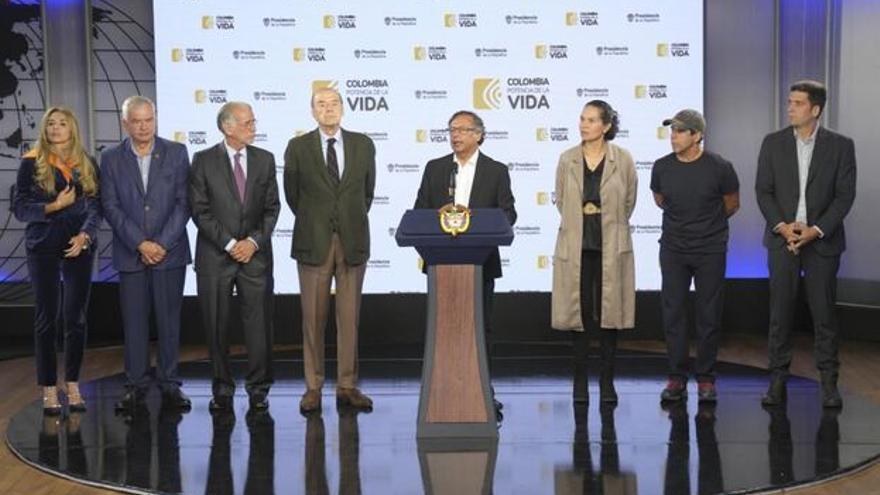
Colombia Counts on Cuba’s Vote in Its Attempt To Regain the Venue for the Pan American Games

Press conference led by Gustavo Petro, along with several sports managers, after his meeting about the Pan Americans. (Presidency of Colombia)

14ymedio bigger14ymedio, Havana, 13 January 2023 — The participation of the Cuban Professional Baseball Federation (Fepcube) in the Intercontinental Professional Baseball Series is subject to “not singing the National Anthem or using the flag” of Cuba, nor the name “Fepcube Patria y Vida” during the event that is scheduled from January 26 to February 1 at the Edgar Rentería stadium in Barranquilla (Colombia), journalist Yordano Carmona said on his social networks.

“The use of these symbols,” he warned the governing body of Colombian sport, “would be interpreted as a clear violation of Cuba’s constitutional and sports rights.”

Carmona asked if the participation of the Independent Cuban team, Pelota Cubana USA, in the Intercontinental Series was in jeopardy? The Ministry of Sports “has neither a voice nor a vote” in the organization of a “private tournament” such as the series organized by Team Rentería USA, owned by the former U.S. Major League player, Edgar Rentería, and his brother Edinson. continue reading

The Ministry of Sports of Colombia has decided to support the Government of Cuba by rejecting this team of exiles

However, the Ministry of Sports of Colombia has decided to offer its support to the Government of Cuba by rejecting this team of exiles, and this is due to its attempt to recover the venue for the Pan American Games in Barranquilla 2027, which it lost due to the non-payment of 8,000,000 dollars, for “the right of organization” and “the granting of media rights.”

Prior to the trip of the president of Colombia, Gustavo Petro, to Chile, to meet with Neven Ilic, president of the Pan American Sports Organization (Panam Sports) – in charge of designating the venue for the Pan American Games – “somehow the National Institute of Sports, Physical Education and Recreation (Inder) has put pressure (on Colombia),” Carmona denounced.

“It will take the vote of the countries of the area to resume the Pan American Games,” the journalist anticipated about the event in which Peru and Paraguay have also shown interest. “Somehow Cuba has already started with that blackmail,” noting that “they (Colombia) will need that support.”

The Colombian Ministry of Sports deauthorized, on January 9, the event of Team Rentería USA, specifying that “it is not organized by the Colombian Baseball Federation, nor is it part of the events of the World Baseball and Softball Confederation, the only organization endorsed by the International Olympic Committee.”

The athletes see no impediment to complying with the prohibition of using national symbols in exchange for participating

The athletes see no impediment to complying with the prohibition of using national symbols in exchange for participating. “If we have to have a minute of silence, we will do it. If we have to kneel on the floor, we will do it. This is a Cuban exile team. We don’t need either the flag or the anthem; we carry them in our hearts,” stressed Yunel Escobar, a member of the Patria y Vida group, at the end of this Thursday’s training at Miami Dade College.

Days before, Escobar expressed to journalist Francys Romero the “honor” he felt when he was playing with the (Cuban) baseball players who are outside the country and “representing the political prisoners and the people who died at sea, who have suffered the Cuban dictatorship”

In the Fepcube Patria y Vida team are Aledmys Díaz, Alay Lago, Albert Lara, Alex de Goti, Alejandro Rivero, Josuán Hernández, Lázaro Rivera, Luis Avilés Junior, Rangerl Ravelo, Yandy Díaz and Yuli Gurriel. Among the catchers are Edgar Quero, JC Escarra and Harold Vázquez. The outfielders are Henry Urrutia, Lourdes Gurriel Junior, Peter O´Brien, Leonys Martín, Andy Martín, Jorge Soler and Sergio Barthelemy.

Among the pitchers are Aroldis Chapman, Yennier Cano, Cionel Pérez, Daysbel Hernández, Odrisamer Despaigne, Jorge Martínez, Yoanner Negrín, Jesús Balaguer, Pedro Echemendía, William Gastón, Raidel Orta, Yuniesky Maya, Yordan Nodal, Yusniel Padrón and Edilberto Oropesa.

The series will be developed with six guest teams from countries such as Curaçao, the United States, South Korea, Japan and Colombia, who will be represented by Caimanes de Barranquilla, the last champion of the Colombian League.

Translated by Regina Anavy

____________

COLLABORATE WITH OUR WORKThe 14ymedio team is committed to practicing serious journalism that reflects Cuba’s reality in all its depth. Thank you for joining us on this long journey. We invite you to continue supporting us by becoming a member of 14ymedio now. Together we can continue transforming journalism in Cuba.