
Trafficking Networks Trap Cubans, Colombians and Venezuelans Through Emotional Bonds

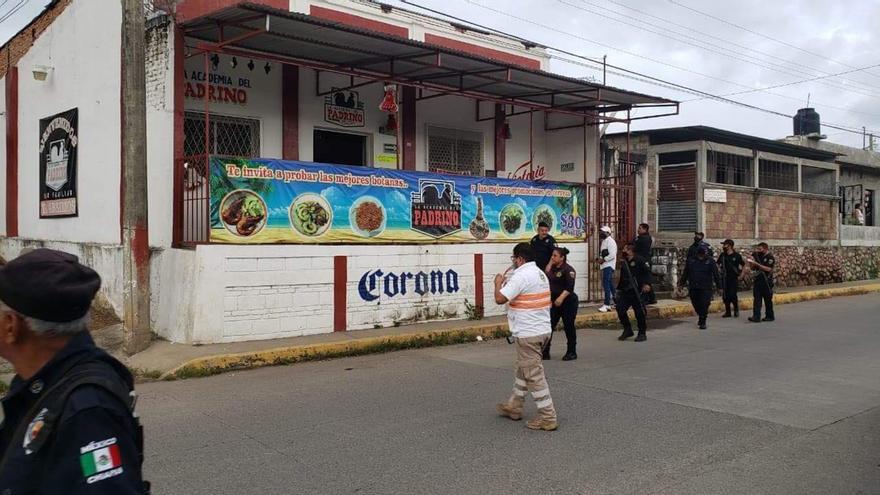
Cubans and Venezuelans have worked In beer halls and bars such as La academia del padrino, located in Tapachula. (Facebook/Tapachula City Council)

14ymedio bigger14ymedio/EFE, Mexico, 5 February 2024 — “Violations, sexual abuse, kidnappings and trafficking” is what thousands of migrants are exposed to as they pass through the border between Guatemala and Chiapas, in the south of Mexico, lawyer José Luis Pérez tells 14ymedio. On the way, some women are “kidnapped by drug cartels and forced into prostitution,” he adds.

Chiapas ranks eighth in the crime of trafficking in Mexico. In 2020, 681 victims were registered in the state; the following year it rose to 753, and “in 2022 it shot up to 936 cases,” says the lawyer. In “the first half of 2023, there were 488 people affected by this crime,” he adds.

The lawyer emphasizes that “despair over the lack of money” and the delay of up to six months in immigration processes, “which many times” have a negative result, has also led Cubans, Venezuelans, Colombians and Haitians, for the most part, to offer “sexual services” in bars, canteens and nightclubs.

Genly, a Honduran migrant in Tapachula (Chiapas), worked in one of these bars that was closed on January 11 because it operated illegally. This 20-year-old migrant carried out her procedure before the Mexican Commission for Aid to Refugees (Comar) in December last year and was given an appointment for next March 27, so she was not handed over to the Migration agents. continue reading

This cartel hooked many of the foreigners in the ADO bus terminal with the promise of giving them work and helping them reach the border with the United States

It was not the case of Yalim, 29, and Anadelys, 42, “two Cubans who were waiting for their appointment for CBP One, but because they were illegal they were taken to the Siglo XXI immigration station,” located in Tapachula. Genly affirms that during the time he was working there, some armed men arrived in vans and took some of the women, especially young Venezuelans and Colombians. “They gave them money, cell phones and clothes and told them that they could process their documents.”

On January 14, 25 women were rescued in the state of Quintana Roo – including Cuban, Venezuelan, Colombian and Mexican – who were forced to prostitute themselves. According to the investigations, the Vaider bar, located at number 500 Isla de Capri Street in the municipality of Othón P. Blanco, in Chetumal, was controlled by the Caborca cartel.

“This cartel hooked many of the foreigners in the ADO bus terminal with the promise of giving them work and helping them get to the border with the United States,” Officer Alfredo Poot García told this newspaper.

The organization Caminantas, which serves migrants who cross through Mexico, reported last Saturday an increase in cases of trafficking of Colombians, Cubans and Venezuelans. The victims, activist Laura Cortés told the EFE agency, are caught through the same modus operandi: an acquaintance on the internet “who supports them financially at a distance, buys them tickets for the trip and sends them money for the family.” Once in Mexico they are raped.

Activist María Ángel Vielma said that many women also come to this country with the promise of a job and other false commitments. “The rapist is seeing what they need in order to manipulate them; the trap is disguised as love,” she said.

There is a selective xenophobia, we say, because if you are Central American, the treatment and pejorative comments are very ugly

Vielma explained that these cases are common among women who come from countries with economic crises or with nationalities about which there are stereotypes of female beauty. “There is a selective xenophobia, we say, because if you are Central American, the treatment and pejorative comments are very ugly. In contrast, if you are Colombian, Cuban or Venezuelan you are a sexy girl, the bomb, what they see on television that they think is a woman from these countries,” she stressed.

This could explain why of the 227 foreigners killed in Mexico from 2015 to 2023, 32 were Colombians and 29 Venezuelans, according to the National Public Security System.

According to figures from the National Institute of Migration, between 2018 and 2023 there were 160 victims of trafficking registered, of which 89 women and 35 men were victims of sexual exploitation.

Migration’s numbers on trafficking are “deceptive,” says lawyer José Luis Pérez. “They account for the cases that are reported, but there are many more victims who do not report out of fear.”

Translated by Regina Anavy

____________

COLLABORATE WITH OUR WORKThe 14ymedio team is committed to practicing serious journalism that reflects Cuba’s reality in all its depth. Thank you for joining us on this long journey. We invite you to continue supporting us by becoming a member of 14ymedio now. Together we can continue transforming journalism in Cuba.
Amnesty International Denounces the Conviction of Aniette Gonzalez for Her Photos with the Cuban Flag

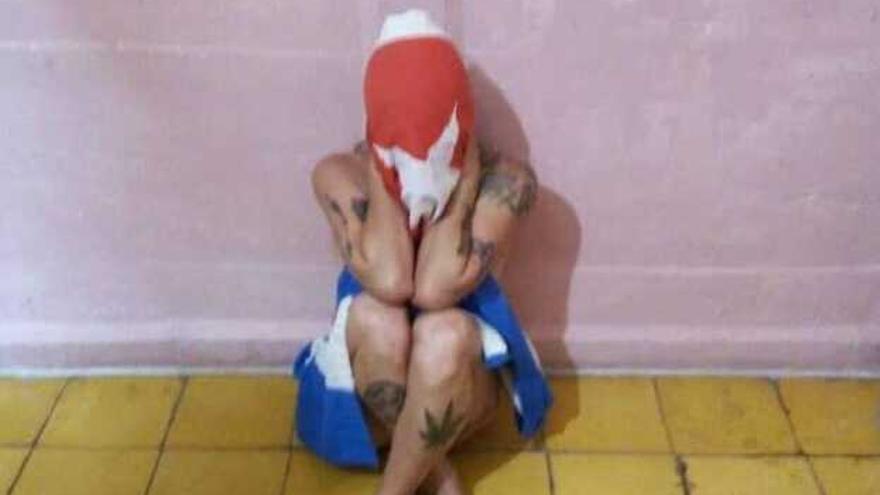
One of the photographs for which Aniette González is accused. (Facebook/Aniette González)

14ymedio bigger14ymedio, Havana, February 3, 2024 — Amnesty International condemned this Friday the decision of the Municipal Court of Camagüey to sentence activist Aniette González García to three years in prison. Accused of “outraging national symbols”, the 43-year-old woman was arrested “for publishing a photo on social networks with the national flag in solidarity with Luis Manuel Otero Alcántara.”

Hours before, independent journalist José Luis Tan Estrada had shared on his X account the sentence of González, who has been held in the Kilo 5 women’s prison, in Camagüey, since March 23, 2023. The text clarifies that the Ministry The Interior will now have the power to choose in which prison González will serve her sentence and list the accessory sanctions that apply to her.

With the loss of her freedom, the activist will also be stripped of her right to vote and of the 1.60 meter flag with which she was photographed. The banner – the “property that was used in the commission of the crime” – will, from now on, be the property of the municipal headquarters of the Union of Young Communists, “where it is delivered” and which may use it as it deems appropriate. continue reading

Aniette González has been held in the Kilo 5 women’s prison, in Camagüey, since March 23, 2023

González is regulated for the duration of the sentence — that is forbidden to travel outside the country — although the prohibition on leaving Cuba will only be valid while she is in prison. Also, as a formality, she is prevented from holding “positions” in entities that have to do with the economy and politics in Cuba.

The authorities will consider that the activist is a “repeat offender” before granting her any benefit or mitigation, underlines the text, which also decrees that González be kept in provisional prison until the sentence is fully carried out.

In August 2023, the Prosecutor’s Office had requested a four-year sanction for González for violating the flag, photographing herself wrapped in it. In March, after her arrest, González spent several days in the State Security barracks in the province of Camagüey. Shortly after, the Police informed her family that she would be transferred to jail under the precautionary measure of preventive detention and that she would be taken to trial for the photographs she spread on her social networks.

In the photos González is seen standing with her body covered by the national flag and, in another, she is sitting and has her face covered by the flag

In the photos, which are part of a performance, González is seen standing with her body covered by the national flag and, in another image, she is sitting with her face covered by the flag. With these images, the activist joined the campaign The Flag Belongs to Everyone, in solidarity with the artist Luis Manuel Otero Alcántara, imprisoned in the maximum security prison of Guanajay (Artemisa), for the crimes of insulting the symbols of the country, contempt and public disorder.

In 2019, the artist created the work Drapeau, using the flag as a claim that it is a symbol of the Cuban population. The regime immediately detained him and, after several complaints from human rights defenders, he was released, but the harassment did not stop.

On 11 July 2021, he was arrested before being able to join the mass protests that took place that day throughout the Island, although it was not until June 2022 that the Popular Municipal Court of Central Havana sentenced him to five years in prison.

____________

COLLABORATE WITH OUR WORKThe 14ymedio team is committed to practicing serious journalism that reflects Cuba’s reality in all its depth. Thank you for joining us on this long journey. We invite you to continue supporting us by becoming a member of 14ymedio now. Together we can continue transforming journalism in Cuba.
Cuba: Even if the ‘Libreta’ Arrives There Is Nothing To Buy in the Bodegas

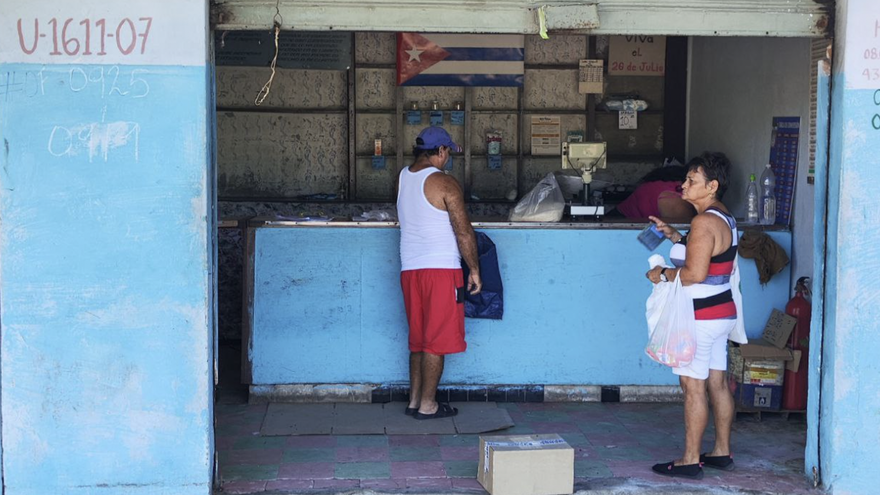
This February, there is nothing in the bodegas (ration stores) in Havana. (14ymedio)

14ymedio bigger14ymedio, Havana, February 2, 2024 — At the end of January, only six Cuban provinces and the special municipality of Isla de la Juventud had received the libreta (ration book), the official press acknowledged on Thursday. For the population, however, it is not the libreta that worries them, but the fact that the food isn’t arriving on time at the bodegas (ration stores).

According to the official Tribuna de La Habana, due to delays in printing and the low availability of raw materials, the Ministry of Internal Trade has only managed to distribute 69% of the more than 4 million libretas required on the Island, despite the fact that since last September it had the budget for their manufacture.

The December 20 deadline imposed for the libreta could not be met, something that the company Ediciones Caribe had warned from the beginning

The December 20 deadline for the  libreta could not be met, something that had been warned from the beginning by the company Ediciones Caribe, contracted for the printing. They could only prepare the booklet but not the pages with the list of products for each member of the household and their official registration address (Oficoda). With these delays, the authorities said, the deliveries of the libreta could not be done in time.

To the citizens, however, the libreta “doesn’t matter.” Manuel, a retiree who lives in Central Havana, told this newspaper that “with the delay of food in the bodega, it doesn’t matter if they give us the libreta or not, because there is nothing to buy anyway.”

According to Manuel, the gossip in the bodega predicts a February similar to the previous month, when “on the 20th we still did not have rice, and other continue reading

products from December were missing. Even the bodeguero is worried because he has not been given indications from above and has nothing to sell. If we continue like this, it’s better to buy everything in the inforrmal market, although there will be those who do not eat, but that is already happening,” he says with conviction.

Mirta, another resident of Luyanó, says that “people don’t even worry about whether it’s day one, because they know that nothing will come to the bodega.” Meanwhile, she says sarcastically, “people eat spirituality and patience.”

In other provinces such as Artemisa and Holguín, food has not arrived at the ration stores either, as this newspaper has verified.

An article in the local newspaper Venceremos announced this Thursday the delivery in Guantánamo, “in the first days of February,” of seven pounds of rice and four pounds of sugar per month per person, in addition to the beans of the month of January and the “coffee corresponding to December.”

“In the case of preserves, the ninth and tenth deliveries of last year are underway. It is also guaranteed that February will begin with milk for children up to 6 years old, who will receive chicken in place of beef; this same change will happen with medical diets,” the newspaper adds.

As for rice, “distribution to the bodegas is carried out as it is unloaded in the port of Santiago de Cuba.” However, for sugar, which depends on the production of the power plants, “the delays could continue,” Venceremos admitted.

Currently the picadillo and the December sausage are distributed, the newspaper continued, which did not clarify for which dates those deliveries for the first months of the year are expected

Currently the picadillo (ground meat) and the December sausage are being distributed, the newspaper continued, but it did not clarify when they are expected to arrive. Cleaning products, they added, are guaranteed.

Both the delivery of products purchased on the international market and those of Cuban manufacture present considerable delays in their arrivals to the Island’s bodegas, because, in part, the government only has what is necessary on a month-to-month basis. This is the case of the production of the Ecuador sugar mill, in Ciego de Ávila, which since January 17 has been producing 1,300 tons of sugar that must be distributed in the province this February.

The authorities did not say, however, what they plan to do in March, when the annual sugar harvest is over and sugar will stop being produced in the country for several months.

Translated by Regina Anavy

____________

COLLABORATE WITH OUR WORKThe 14ymedio team is committed to practicing serious journalism that reflects Cuba’s reality in all its depth. Thank you for joining us on this long journey. We invite you to continue supporting us by becoming a member of 14ymedio now. Together we can continue transforming journalism in Cuba.
Tania Diaz Castro, an Official Journalist Before Becoming a Pioneer of Free Journalism, Has Passed Away

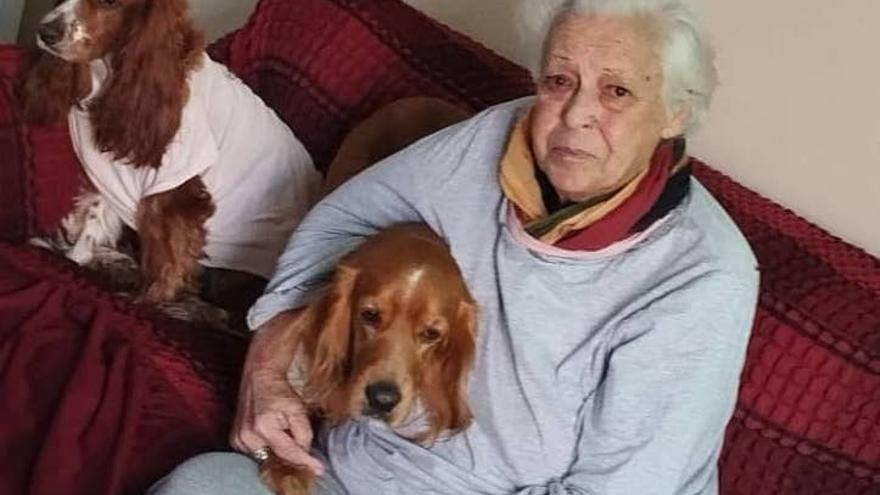
Tania Díaz Castro, at home with two of her pets, in a photo dated January 4 on her social networks. (Facebook)

14ymedio bigger14ymedio, Madrid, February 5, 2024 — The poet and journalist Tania Díaz Castro passed away this Sunday in Havana, at the age of 84, according to Periódico Cubano, which does not specify the cause. The independent newspaper CubaNet, where she has worked since 1998, does not offer more details about the circumstances of her death.

Considered a pioneer of independent journalism on the Island, she was born in Camajuaní, Villa Clara, in 1939. Her father, José Felipe Díaz – a communist at the time of Gerardo Machado and an anti-communist after Fidel Castro came to power – was also a journalist. He worked at the National Library of Cuba and died in exile in New York.

This was not the case with Tania Díaz Castro, living in Havana, who at first embraced the Revolution. Founder of the Union of Writers and Artists of Cuba (UNEAC) in 1961, and the Union of Journalists of Cuba (UPEC) in 1963, in those years she began to work as a reporter for different official media and published her first books. In the seventies, she also worked as a radio screenwriter.

However, at the end of the eighties, she began to oppose the Regime. She was part of the group that created the Cuban Committee for Human Rights in 1987, which would give rise, a little later, to the Party of the same name.

A little later, through blackmail, they forced her to publicly “retract” her work as an independent journalist and to speak ill of colleagues who were dedicated to that activity

“Suddenly, as a matter of fate, in house number 365 on Calle Lealdad, the voices of friends began to rise, speaking a different language, without any fear, as if they really had the right to say what they thought, in the middle of a quiet, frightened people, despicably deceived by so much naivety,” she herself said in a chronicle for CubaNet, which continues: “That day, our opinions were expressed in press conferences, written on paper for the world to see, attended to by journalists from foreign agencies – France Presse and Reuters – and by Cubans. Everyone was amazed by what was happening in Havana for the first time in more than 30 years.”

Her dissent soon led to harassment and repression from State Security. Between 1989 and 1990, she was imprisoned for having signed a document that asked Fidel Castro to hold a plebiscite.

A little later, through blackmail, they forced her to publicly “retract” her work as an independent journalist and to speak ill of colleagues who were engaged in that activity.

Her articles can be read on CubaNet up to 2022.

In April 2023, the feminist project Casa Palanca organized a fundraiser to “improve the quality of life” of an elderly Tania Díaz Castro, who lived alone with her pets in the neighborhood of El Roble, in the coastal municipality of Santa Fe, Havana.

Translated by Regina Anavy

____________

COLLABORATE WITH OUR WORKThe 14ymedio team is committed to practicing serious journalism that reflects Cuba’s reality in all its depth. Thank you for joining us on this long journey. We invite you to continue supporting us by becoming a member of 14ymedio now. Together we can continue transforming journalism in Cuba.
Cuban Rancher: ‘For a Bull of 1,000 Pounds They Gave Me 47 Dollars, Less Than for a Piglet’

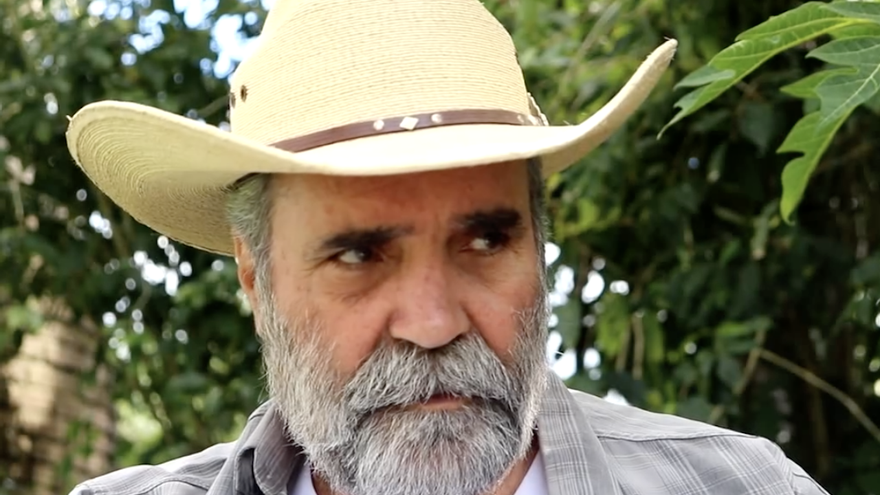
Rancher José A. Casimiro, owner of the Finca del Medio, in Siguaney (Sancti Spíritus). (Screen capture)

14ymedio bigger14ymedio, Havana, 5 February 2024 — With milk at 20 pesos, “I have to sell 4.5 gallons to make a dollar,” and the transport to take it to the destination costs the equivalent of 6.6 gallons, says rancher José A. Casimiro, owner of the Finca del Medio, in Siguaney (Sancti Spíritus), where he practices agroecology and permaculture. In a brief interview on Facebook, he describes the desperate situation of Cuban farmers in the face of the siege of the bureaucracy and the lack of decision by the authorities.

The prices of milk and cattle are almost humiliating for the small farmer, he adds. “Where in the world do you find milk with that value? In addition to the cost of transport, to take it to the State collection centers, which is 500 pesos. That means that just to cover the cost of transporting milk you have to sell almost seven gallons.”

Casimiro explains that there is no way to make a profit, either by selling the animal or by selling the milk. The State buys a bull of 1,000 pounds, after the animal has been fattened for two or three years, with all the expenses (transport, health, taxes and travel to do paperwork) and implications for its commercialization, for less than what a 47-pound piglet costs. The farmer ends up receiving the equivalent of 47 dollars for such an animal, at 14 pesos per pound. “Where is the profitability?” he asks. continue reading

The ranchers continue to be threatened by excessive controls, low prices and the obligation to sell a good part of their productions to the State

 The rancher says that he has been in the same circumstances and conditions for 30 years, facing bureaucratic obstacles and fighting against the lack of serious decisions for the development of the countryside and productive opportunities that allow the upward social mobility of Cuban farmers. “If I buy an 11-ounce tin of canned meat [in foreign exchange stores], it costs [the equivalent of] 500 pesos. It is not possible to develop agriculture, livestock or tobacco, under these conditions. This system has been broken for so long, and I don’t see the light,” he concludes.

That reality largely explains the deficit of 29 million gallons of milk with which the sector closed 2023 on the Island. For the official press, the problem lies in those responsible for the dairy industry, but as Casimiro explains, it is the underlying structure. Farmers continue to be tied up by excessive controls, low prices and the obligation to sell a good part of their productions to the State.

Marina, a 61-year-old woman who receives milk on a medical diet, said “the situation is even more serious than the authorities reveal… They create the illusion that they are handing out milk when in reality they are giving us only a drop. To top it off, milk is getting more and more watered down. You put it on the stove and it doesn’t boil. It evaporates because of the water.”

Another citizen echoed the complaints that suggest that “they are adding cassava flour to the milk. I don’t know what they are mixing it with, but my wife and I decided not to buy it anymore,” despite the need. “I won’t risk giving that to my children.”

Meanwhile, the Ministry of Agriculture ordered the cessation of transactions of purchase and sale of livestock from February 15, with exceptions of slaughters authorized for emergency health reasons or for sale to the State. The regime intends to start on March 1 a “special control” to quantify the existing head of livestock in the country and thus “have a characterization of the current situation of the livestock sector in Cuba.”

According to official figures, there are more than 200,000 people, natural and legal, who own cattle and buffalo, and about 167,000 who have horses. The last Statistical Yearbook, published in 2023 with the data from 2022, indicated the existence of 947,300 head of horses on the Island and 3,516,400 of cattle, which contrasts with the 6,000,000 that were counted in 1958. This year’s census is not any better than that of 2023.

Translated by Regina Anavy
___________________

COLLABORATE WITH OUR WORKThe 14ymedio team is committed to practicing serious journalism that reflects Cuba’s reality in all its depth. Thank you for joining us on this long journey. We invite you to continue supporting us by becoming a member of 14ymedio now. Together we can continue transforming journalism in Cuba.
From Bus to Ambulance, a Caring Havana Driver Confronts a Hospital’s Apathy

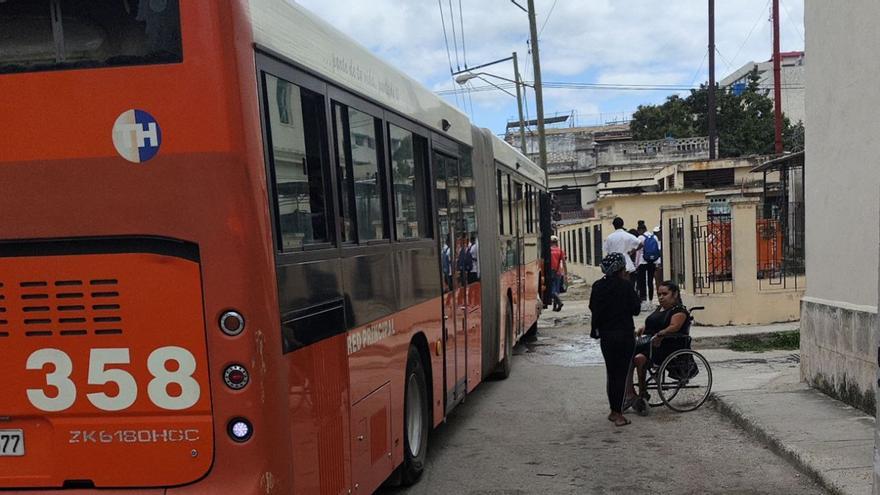
The P15 bus outside the entrance to the Freyre de Andrade General Clinical Surgical Hospital. (14ymedio)

14ymedio bigger14ymedio, Natalia López Moya, Havana, 29 January 2024 — A bus travelling at full speed and persistently honking its horn crossed Carlos III Street in Central Havana on Monday morning. The vehicle, loaded with passengers at at a time of day when demand for urban transport is high, headed towards the entrance of the nearby Freyre de Andrade General Clinical Surgical Hospital, popularly known as “Emergencies.” The reason for the race against the clock? A man who was riding on the bus had fainted, which brought the bus driver’s sense of solidarity into sharp focus.

“The boy next to the man realized that he was collapsing,” reported one of the passengers as the P15 waited outside the emergency room while the driver tried to get the unconscious man to safety. “I brought him here because I am responsible while he is in my vehicle. I couldn’t let him die but now we need a doctor!” cried the employee of the Provincial Transportation Company when faced with a disinterested man cleaning the area around the gatehouse of a hospital short on physicians.

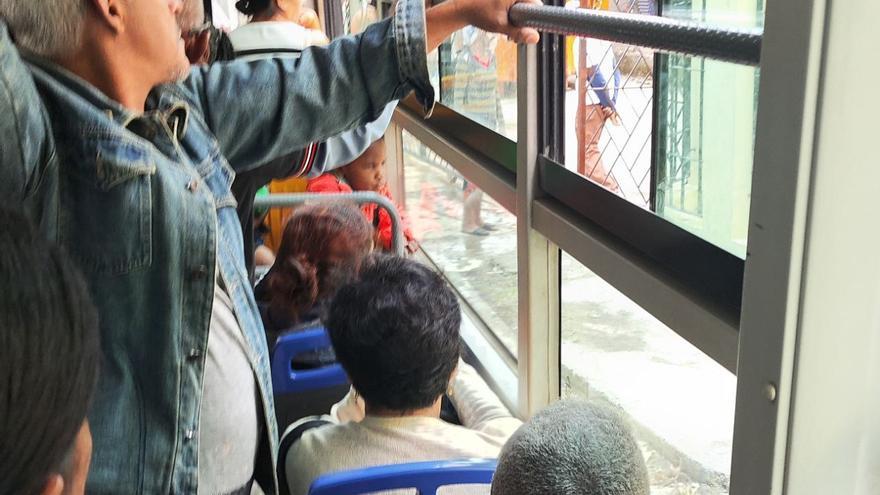
Peering out the windows, many of those waiting inside the bus became frantic, not only because the clock was ticking but also because the “rescue operation” led by the driver and supported by the passengers seemed to have run into the twin barriers of a hospital personnel shortage and the sense of apathy endemic to the Cuban public health system. Finally, the driver himself grabbed a stretcher and had to leave the patient in a hallway, alone and unattended.

Looking out the windows, many of those waiting inside the bus became frantic, not only because the clock was ticking but also because the “rescue operation” to save a man’s life. (14ymedio)

“I don’t know if it was a heart attack or if he fainted from hunger. These days, people drop like flies and the usual response is that, most likely, they didn’t have breakfast,” said a woman who was also on the bus when the incident occurred. “He was lucky the driver was a decent man but now comes the hard part, waiting for a doctor.” The cries that could be heard continue reading

coming from inside the vehicle filled the narrow access road to the hospital, leading several residents to peer down from their balconies.

“Was there a fight on the bus?” asked a passerby who heard the commotion. “No, someone fainted,” replied the companion of another patient, who was also waiting for someone in a lab coat. The P15 had to be on its way. The driver was met with applause and congratulations when he returned to the vehicle but many kept their gaze on the gatehouse as the bus pulled away. “Will he be okay?” asked one of the passengers who had helped get the man into the hospital. He was met with silence.

Faced with the big waystations of life —  birth, death, managing to reach your destination on time on a Havana bus — few people have answers.

____________

COLLABORATE WITH OUR WORKThe 14ymedio team is committed to practicing serious journalism that reflects Cuba’s reality in all its depth. Thank you for joining us on this long journey. We invite you to continue supporting us by becoming a member of 14ymedio now. Together we can continue transforming journalism in Cuba.
Amnesty International Broadcasts a Message From Luis Manuel Otero Alcantara From Prison in Cuba

Otero Alcántara has been imprisoned in the Guanajay prison, in Artemisa, for more than two years. (Facebook/Luis Manuel Otero Alcántara)

14ymedio bigger14ymedio, Havana, 1 February 2024 — “Nothing takes away my drive because since I was a child I fell in love with the eternal, so I will not leave my work, our work, unfinished.”

This is how the message from Cuban artist Luis Manuel Otero Alcántara sent from prison begins, released this Wednesday by Amnesty International.

Alcántara, leader of the San Isidro Movement, who has been in the Guanajay maximum security prison, in Artemisa, since 11 July 2021, when he was detained before being able to join the massive protests that day. He assures that he fights, in that “horrible” place, to be able to have a “deep sleep.” There, he says, his soul “goes out for a walk” with his loved ones. “Look, in two years I have never had a nightmare, so nothing has stoned the gifts of creation,” he says.

The artist, 36 years old, has carried out several hunger and thirst strikes since he has been imprisoned, to demand his freedom and to protest mistreatment by prison authorities. continue reading

“The family just waits for me. I fight because they won’t erase the benders in Havana, they won’t erase the millions of orgasms, the birth of my children

With this audio, Alcántara confirms that he remains strong, despite the suffering of which he has been a victim: “The family is just waiting for me. I fight because they will not erase the benders in Havana, they will not erase the millions of orgasms, the birth of my children, the hugs of my children after the death of my parents.”

He also had a moment of gratitude for his neighbors in the Havana neighborhood of San Isidro who have sent him food during his confinement. “I insist on the fight because despite the extreme shortages, the residents of San Isidro send me packages of sausages to feed me here in prison.”

And he concludes: “For all this I will not stop believing in you, in me, in us, in love.”

In June 2022 and after almost a year in prison, Luis Manuel Otero Alcántara was sentenced to five years in prison for the crimes of insult to the symbols of the country, contempt and public disorder. His friend, rapper Maykel Castillo Osorbo, also prosecuted in the same trial, received a nine-year prison sentence for contempt, attack, public disorder and defamation of institutions and organizations, heroes and martyrs.

Alcántara is considered a prisoner of conscience by international organizations and the US Government. In addition, he was named by Time magazine as one of the most influential people of 2021.

Despite being imprisoned, the artist has not stopped creating and some works have been part of several exhibitions. “Despite the circumstances, Luis Manuel continues to create. His ability to cling to art as a way to survive and resist is admirable. Luis is not alone. He knows it and is willing to continue the fight for the freedom of Cuba from all scenarios” said curator Claudia Genlui in 2022.

____________

COLLABORATE WITH OUR WORKThe 14ymedio team is committed to practicing serious journalism that reflects Cuba’s reality in all its depth. Thank you for joining us on this long journey. We invite you to continue supporting us by becoming a member of 14ymedio now. Together we can continue transforming journalism in Cuba.
The Cuban Government Backs off and Cancels the Increase in Passenger Transport Fares

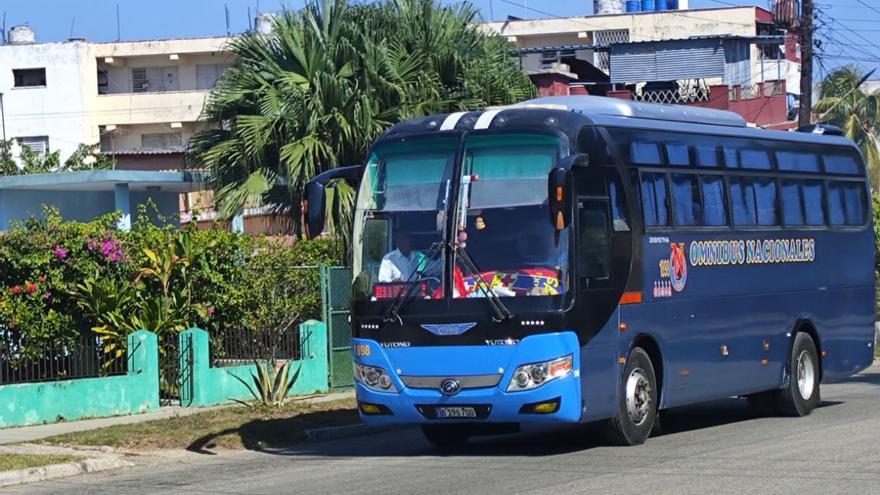
On Monday, February 5, the sale of tickets for March begins and will do so at the prices currently in force and not at those announced for that month. (14ymedio)

14ymedio bigger14ymedio, Madrid, 2 February 2024 — “The prices of any of the transportation services are not modified, all will maintain their current price,” the Cuban Ministry of Transportation announced this Thursday. This decision comes a few hours after the postponement of the drastic increase in fuel rates, following an alleged cyber attack against Cimex, the state company that manages the country’s financial network.

The Prime Time Evening News on national television, in its nightly program, collected the words of the director of passenger transportation, Luis Ladrón de Guevara, which were confirmed by the minister of the branch himself, Eduardo Rodríguez Dávila, on his Facebook account, where he published a post in which he dedicated this warning to the private transport sector: “The application of prices agreed with non-state forms of management is postponed until further notice” and “no increases can occur from today.”

State entities freeze their prices for all services: urban, suburban, rural, local boats and trains, medibus and other local services, as well as the “routes provided by Gazelles, tricycles, and the support provided by Transmetro and Escolares.” continue reading

The minister added that on Monday, February 5, tickets for March go on sale on interprovincial services and will also do so at the prices now in force

The minister added that on Monday, February 5, the tickets for March on interprovincial services go on sale and will also do so at the prices now in force, “so there are no changes.”

Finally, Rodríguez Dávila adds that when the price change announced in December is made – which was to come into effect on March 1 – the population will be informed “in a timely manner.”

Luis Ladrón de Guevara, in statements to the news, explained that air services – not mentioned by the minister – will not change their prices either and highlighted that the entity has created “the system to confront anyone who violates the established amounts,” without detailing it any further.

The general director of the Viajero company, Walter Luis Duvergel, also spoke, clarifying that the Viajando application used to market tickets will continue to apply the current prices for the sale of March tickets.

“The Cuban Government reported the day before the postponement of the update of fuel prices in foreign currency, taking into account that the projections to correct economic distortions will only be implemented if the conditions are created,” says the state agency Prensa Latina.

The announcement of the stopping of fuel price increases occurred on Wednesday afternoon, when, according to the First Deputy Minister of Economy and Planning, Mildrey Granadillo, “a cybersecurity incident occurred in the computer systems to trade fuels whose origin has been identified in a virus from abroad.”

The prices were even updated at the gas stations, with special gasoline at 156 pesos or 1.30 dollars instead of 30 pesos; regular and diesel at 132 pesos or 1.10 dollars and the motor fuel at 114 pesos or 0.95 dollars (instead of 25 and 20 pesos, respectively). The payment was planned in pesos, but also in dollars, according to the authorities to put an end to the subsidy to tourists, who must pay in foreign currency.

The payment was planned in pesos, but also in dollars, according to the authorities to put an end to the subsidy for tourists, who must pay in foreign currency

As a consequence of the alleged computer attack, remittances have been partially affected, at least from the United States. This newspaper was able to verify on Thursday that payments through Western Union (WU) were returned, as well as those made through Cuballama and Cubatel. While WU refused to give explanations “for security reasons,” Cubatel specified that transfers “are temporarily unavailable due to problems with destination banks/institutions in Cuba.”

For the moment, it is unknown when the issue will be settled and fuel prices will be updated, although the measures announced for transport, which still had more time before the increases were to take effect, predicts that it will not be immediate and rumors are running rampant across the Island, where all kinds of theories have emerged to explain the suspension of a measure that has caused a lot of annoyance in the population because it involves increases of more than 500% and promised to considerably increase inflation.

However, some are already beginning to denounce that private companies are passing on increases that have not yet occurred. Among the responses to official journalist Lázaro Manuel Alonso, who last night shared the Minister of Transportation’s post about the stopping of price increases, a commentator warned: “The state services, because the private service has already gone up. Artemisa-Guanajay was 50, now 100; and Pinar – Havana between 200 and 250, is now 500.”

____________

COLLABORATE WITH OUR WORKThe 14ymedio team is committed to practicing serious journalism that reflects Cuba’s reality in all its depth. Thank you for joining us on this long journey. We invite you to continue supporting us by becoming a member of 14ymedio now. Together we can continue transforming journalism in Cuba.
Cuban Police Announce the Arrest of the Killer of Dr. Ivan De Prada in Las Tunas

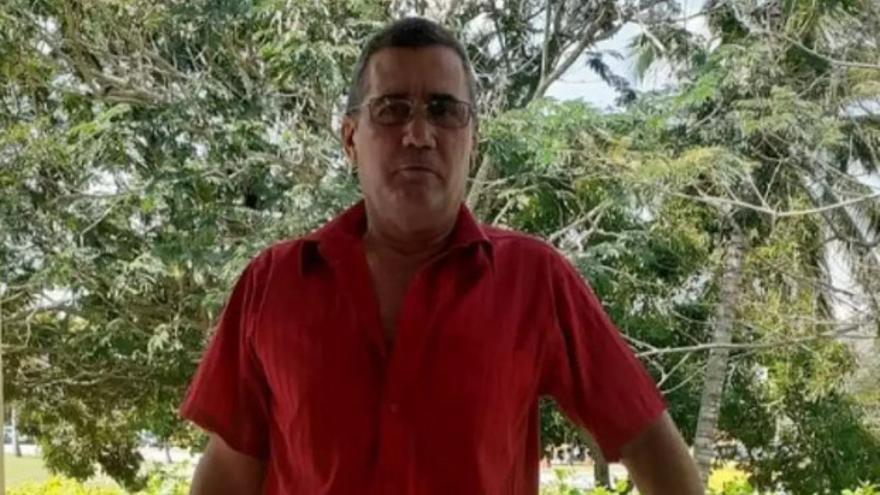
Ivan de Prada was the victim of an assault intended to steal his motorbike and money. (Facebook)

14ymedio bigger14ymedio, Havana, 4 February 2024 — The Ministry of the Interior has announced, this Sunday, the arrest of the alleged murderer of Dr. Iván de Prada Silva, which occurred in Las Tunas on January 27. In an official statement published by the official site Tiempo21, the authorities indicate that a 21-year-old man confessed to being the perpetrator of the crime.

In addition, the victim’s motorcycle and his cell phone were recovered. The doctor, Iván de Prada Silva, a specialist in pediatrics, was assaulted on January 27 in the municipality of Puerto Padre, and his body was found the next morning in front of the cooperative.

Doctor Iván de Prada Silva, a specialist in pediatrics, was assaulted on January 27 in the municipality of Puerto Padre 

A few days ago, the independent media CubitaNow revealed that the police had arrested a suspect. However, until the publication of the official statement, the Cuban authorities had not said anything about it. continue reading

De Prada Silva, in addition to his work as a pediatrician in Puerto Padre, was dedicated to delivering money from remittances that residents abroad send to their relatives in that territory. The day the crime occurred, according to CubitaNow, he had gone out to make several deliveries.

Iván de Prada served as deputy director of municipal health in Puerto Padre and had carried out “internationalist” missions.

De Prada Silva, in addition to his work as a pediatrician in Puerto Padre, was dedicated to delivering remittance money sent to local families from their relatives abroad

In June 2023, Dr. Pablo Corrales Susi was murdered in Havana, allegedly to steal his motorcycle. it took the police several days to find his body.

More recently, in December, another pediatrician was killed in the municipality of San Cristóbal, in the province of Artemisa. After strangling him, they hid his body and stole several items from his home. The doctor, identified as Efrén Padrón, worked at the Comandante Pinares hospital.

Translated by Regina Anavy

____________

COLLABORATE WITH OUR WORKThe 14ymedio team is committed to practicing serious journalism that reflects Cuba’s reality in all its depth. Thank you for joining us on this long journey. We invite you to continue supporting us by becoming a member of 14ymedio now. Together we can continue transforming journalism in Cuba.
A Storm Knocks Down Poles, Roofs and Water Tanks in Havana

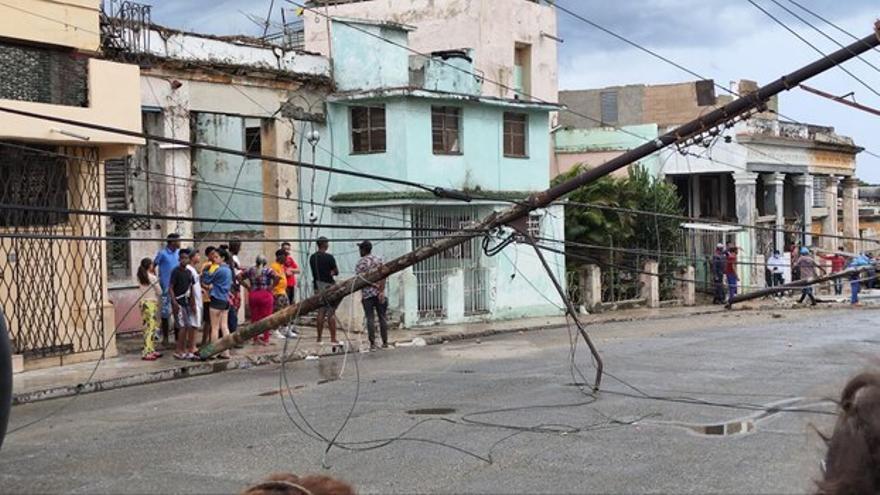
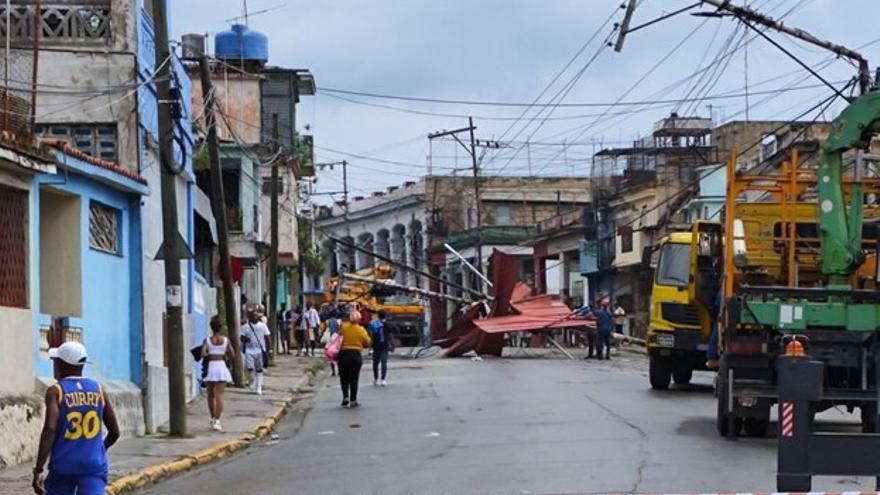
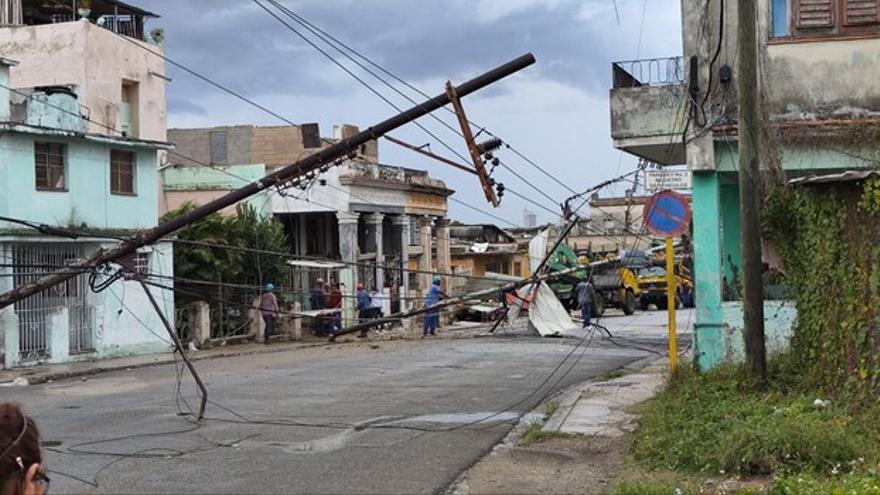
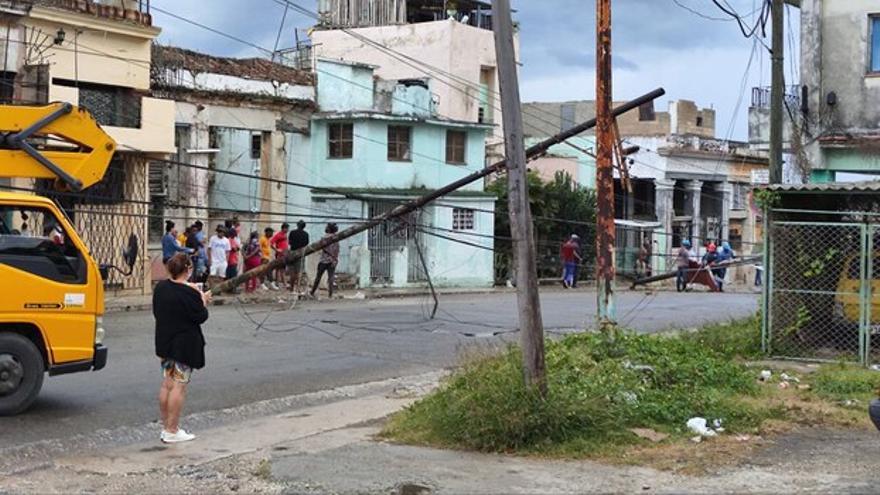
Several fallen poles are the worst damage so far from the heavy rains in Luyanó. (14ymedio)

14ymedio bigger14ymedio, Havana, 4 February 2024 — The heavy rains and strong winds have caused serious problems in different areas of the Cuban capital. As 14ymedio has witnessed in the Calzada de Luyanó in the municipality of Diez de Octubre, the gusts knocked down several poles of the power line and the roof of a house.

This roof fell from a terrace at the top of a building. (14ymedio)

According to reports from residents between Luco and Villanueva streets, some water storage tanks placed on the roofs even flew off. At the same time, power outages have increased as weather conditions worsen.

Communications have also been affected, and the internet connection is down in large areas of the city. The forecasts indicate that Sunday and Monday mornings will be especially difficult for western Cuba.

The collapse of the electric and telephone lines has caused the interruption of these services in the area. (14ymedio)

The strong winds, rains and tides will especially affect Pinar del Río, Artemisa and Havana. On the south coast, in the Batabanó area, the neighbors closest to the sea have begun to evacuate on their own, according to reports collected by 14ymedio.

Traffic remains stalled by the fallen poles and the cranes that have come to repair the damage. (14ymedio)

This Sunday in the Diez de Octubre district in Havana, the neighbors remembered January 2019, when a hurricane hit Luyanó leaving three dead and more than 170 injured. The area, several of the residents say, has not yet recovered from that experience.

Translated by Regina Anavy

____________

COLLABORATE WITH OUR WORKThe 14ymedio team is committed to practicing serious journalism that reflects Cuba’s reality in all its depth. Thank you for joining us on this long journey. We invite you to continue supporting us by becoming a member of 14ymedio now. Together we can continue transforming journalism in Cuba.
An Advisor From the U.S. State Department Met With the Cuban Government in Havana

Sara Minkara is a special advisor to the U.S. State Department for the International Rights of Persons with Disabilities. (Capture)

14ymedio biggerEFE (via 14ymedio), Washington/Havana, 2 February 2024 — The special adviser to the U.S. State Department for the International Rights of Persons with Disabilities, Sara Minkara, met this week with the Cuban Government in Havana, during a visit to the Island, the U.S. embassy in Cuba reported on Thursday. Minkara was in Cuba from last Wednesday to this Monday, the diplomatic delegation said in a statement, without making it clear with which  Cuban authorities – and from what ministry – she met.

During her stay, she held meetings with “representatives of the Government of Cuba, independent Cuban businessmen, alumni of programs sponsored by the Embassy and students of educational institutions in Havana.”

The American official, in office since 2021, “advocated for greater inclusion of Cubans with disabilities in all aspects of society,” added the U.S. embassy

The U.S. official, in office since 2021, “advocated for greater inclusion of Cubans with disabilities in all aspects of society,” added the U.S. embassy. So far, neither the Department of State nor the Government of the Island has reported on her visit.

The team of the Special Advisor for the International Rights of Persons with Disabilities is responsible, among other things, for the “promotion of continue reading

accountability and capacity building; the promotion of the inclusive democracy of disability; the promotion of the human rights of people with disabilities in countries experiencing crises; and the interruption of the narrative about disability that marginalizes people with disabilities.”

On the same day that the news broke, Cuban dissidents and opponents announced the launch of a “space of activation, action and articulation” to promote and disseminate human rights within the Island, as well as freedoms contained in the country’s Constitution of 2019.

As reported to EFE by its promoters – located on the Island – the initiative is called the Permanent Human Rights Forum and seeks to raise awareness among citizens to demand the enjoyment of the rights and freedoms to which they are entitled by the International Charter of Human Rights and Cuban legislation.

The forum, they add, seeks to be a tool of “public communication between civil society and citizenship,” as well as “the organic and systematic connection of citizenship with the issue of human rights.”

They consider that it is a “pending subject in Cuba” to disseminate and, educate about “each and every one of the rights,” from below, from the citizens and in the communities.” They also believe that the “institutional defense” of rights is fundamental.

“Beyond its rhetoric, the Government contradicts, with its systematic violations, the fundamental issues that have to do with human rights,” says a statement from the promoters of the forum. It emphasizes that “with the exception of the will of the Government, the social, political and institutional conditions to complete this subject are created.”

The statement is signed, among others, by groups such as Diverso, the Council for the Democratic Transition of Cuba (CTDC) and Plataforma Femenina. Its organizers estimated that there were between 100 and 120 of their activists in Havana.

Beyond its rhetoric, the Government contradicts, with its systematic violating practices, the fundamental issues that have to do with human rights

The forum, which claims to learn from the experience of organizations such as the Cuban Committee for Human Rights and the Cuban Commission on Human Rights and National Reconciliation, points out that the 2019 Constitution “recognizes and supports” the “possession, enjoyment and exercise of human rights.”

It intends to work for the dissemination of human and identity rights in the communities and against violence, as well as in the articulation of “legal and constitutional initiatives.”

The forum does not give details about specific actions or how it proposes to carry them out, nor about the means they have to articulate these actions.

The initiative mentions that Cuba has been an almost constant member of the UN Human Rights Council and that in 2008 it signed – although it has not yet ratified – the Covenants on Civil and Political, Social, Economic and Cultural Rights of the International Charter of Human Rights.

It also points out that the Cuban Government made a commitment on this letter by initialing the Political Dialogue and Cooperation Agreement (ADPC) with the European Union (EU) in 2016.

Translated by Regina Anavy

____________

COLLABORATE WITH OUR WORKThe 14ymedio team is committed to practicing serious journalism that reflects Cuba’s reality in all its depth. Thank you for joining us on this long journey. We invite you to continue supporting us by becoming a member of 14ymedio now. Together we can continue transforming journalism in Cuba.
The Older Generation Demonstrates Its Ineptitude in Dealing with the Devastating Crisis Cuba is Experiencing

As is common knowledge, major decisions cannot be made in Cuba before consultations with and approval from the trio of nonagenarians who hold the reins of power. (Cubaenvivo.net)

14ymedio bigger14ymedio, Reinaldo Escobar, February 2, 2023 — The economic measures that were widely dubbed “el paquetazo“* — the package — were unpopular but necessary. Even from a coldly economic perspective, however, they seemed to be too little too late.

The recent dismissal of the economics minister, Alejandro Gil, indicates that the decision to postpone increases in the price of fuel and public transportation is not due solely to an alleged virus or because Cimex’ computer networks got hacked, as has been reported, but to a change in policy to the detriment of the package’s promoter.

As is common knowledge, major decisions cannot be made in Cuba before consultations with and approval from a trio of nonagenarians — Raúl Castro, Ramiro Valdés y José Ramón Machado — who hold the reins of power. Once they have signed off, then the politburo weighs in, followed by the Communist Party Central Committee and lastly the complacent legislature, at which point the Council of Ministers is only too happy to give its approval.

What could the triumvirate’s motivation be? This is almost impossible to  know. They are driven by factors both biological and ideological, and by family commitments, about which we can only speculate. Where Gil ultimately ends up in the Cuban political hierarchy now that he is no longer economics minister is still unknown. This raises the question of whether he was fired or has “failed up” as those whose job performance is lacking yet who still manage to climb the ladder of power are jokingly described. continue reading

The nonagenarians may have calculated that, if the package’s measures took effect right now, the resulting social upheaval could occur before their ultimate biological hour of reckoning arrived

Perhaps Gil was too cautious and Cuba’s khaki-clad leaders needed a figure who could convey greater speed and toughness in implementing the measures. Or perhaps his name became too quickly associated in the public’s mind with an acceleration of economic reforms and this set off alarm bells in the older generation, whose hands still steer the ship of state.

Maybe this is just one round in a complex boxing match. This time, the almost hundred-year-old guardians of orthodoxy have won, ejecting a technocrat from the ring. He has been knocked out an apparatchik, but that does not rule out future fights. What has become clear is that the Cuban leadership no longer seems as rock solid as it once was. It cracks under pressure and sends the public an unfortunate message: uncertainty.

If this was a fight between anxious traditionalists and bureaucrats worried about economic asphyxiation —  officials who were looking for small ways to preserve the system but ventilate it financially — the traditionalists have won. Gil’s departure may be celebrated, but it could be the worst news for Cuba’s short-term future. They used him as a scapegoat but that does not stop inflation, nor does it revalue the peso much less improve what is served on Cuban dining tables.

But if the obdurate traditionalists have won this round, we must know why.

The nonagenarians may have calculated that, if the package’s measures took effect right now, the resulting social upheaval could occur before their ultimate biological hour of reckoning arrived. Prolonging the agony of the country and its people in exchange for not having to pay in life for the consequences of a disaster for which they are completely responsible illustrates the depth of their selfishness.

Perhaps the settling of scores is not over. As the popular saying goes, “the goat that breaks the drum pays with its skin.” Especially if he is a scapegoat.

*Translator’s note: “Paquetazo” is basically ‘package’, but the ending ‘azo’, signifying a blow, adds a certain heft to it. (See “Maleconazo“) See also from Spanishtogo.app: “Paquetazo, a term used predominantly in Latin America, refers to a package of economic reforms implemented by the government that often includes a series of austerity measures. Over time, it has become a popular term among citizens to express discontent with these policies.”

____________

COLLABORATE WITH OUR WORKThe 14ymedio team is committed to practicing serious journalism that reflects Cuba’s reality in all its depth. Thank you for joining us on this long journey. We invite you to continue supporting us by becoming a member of 14ymedio now. Together we can continue transforming journalism in Cuba.
‘The Problem Is Not the Ministers, It Is a Failed Model’ Summarizes a Cuban Economist

The change in economic leadership, at the gates of the ’paquetazo’, was disconcerting. (Cubadebate)

14ymedio bigger14ymedio, Havana, 3 February 2024 — The discreet headline about the dismissal of three Cuban ministers that remained on the front page of Granma since yesterday has been overshadowed, this Saturday, by a triumphant photo of Prime Minister Manuel Marrero and the announcement of a “complex meteorological situation for Sunday and Monday.” But while the official press downplays the dismissal of Alejandro Gil – economic helmsman of the regime and one of its faces – analysts and newspapers of different ideological stripes try to read between the lines of the “cadre movement” that has just shaken the leadership in the can.

Even Sputnik, Vladimir Putin’s star news agency and reference point for the island’s official press, in its Latin America Spanish edition is clear: the Cuban Government “dismissed” Gil for the “recent brake on a package of measures that included an increase in fuel prices and electricity.” However, Moscow, which took the lead on many financial measures taken during Gil’s administration, has not commented on his replacement.

In the antipodes of the Russian agency, Cuban economist Pedro Monreal agreed with Sputnik in relating Gil’s fall to the “slowdown” of the “macroeconomic stabilization” that Havana intended to implement. The replacement of the three ministers – along with Gil, Manuel Sobrino, from the Food Industry, and Elba Rosa Pérez, from Science, Technology and Environment, were dismissed – indicates that “some type of incident” occurred at the top, between two key dates: the Council of Ministers held on January 29 and the postponement of the increase in fuel prices, on the 31st. continue reading

The Council of Ministers had presented an “action plan” and an “update of the implementation schedule” about whose internal criticism there is no information, Monreal alleges. “Nothing predicted – with the public information available – that they were going to ’change horses in midstream’. The crisis and the problems of the package are systemic, but it is problematic to make substantive changes in the team that designed an approved and recently started package.”

The only sense, Monreal believes, is that Havana has retreated when foreseeing the social consequences of the so-called ’paquetazo’

The only sense, Monreal believes, is that Havana has retreated when foreseeing the social consequences of the so-called paquetazo*, “a potentially irritating measure at the citizen level.” “Perhaps apprehensions regarding possible social and political instability, plus possible bureaucratic disagreements regarding the distribution of currencies ’burst’ the schedule and caused changes in the economic team,” he summarizes.

In his analysis of the defenestration of the three ministers, economist Mauricio de Miranda Parrondo dismantles Granma ’s terminology to refer to Gil. “Release from his responsibilities” is a more serious phrase than that applied to Sobrino and Pérez, replaced “for renewal.”

De Miranda also notes the rapid rise of Joaquín Alonso Vázquez, Gil’s successor in the portfolio and until now president of the Central Bank – and architect of the bancarización (banking reform) process recommended by Moscow – and he comments on Havana’s option for a faithful cadre to occupy his position: Juana Lilia Delgado, with a lot of banking experience and former Vice Minister of Economy.

“The list of changes could be longer,” warns De Miranda, but an essential issue will remain unresolved. “The problem is not the ministers. The problem is the system. The problem is that we continue to appeal to a failed model,” he summarizes. The brakes on entrepreneurship, the lack of support for farmers, poor industrialization, repression, these are some of the evils that no defenestration will solve.

What will happen when the ordinary Cuban’s table continues to be a table of hunger? What will happen when it continues to be an odyssey to go to work because there is no transportation?

“The problem is that the State is gigantic and ineffective. And also, authoritarian and despotic,” he continues. De Miranda ended his reflection with a series of disturbing questions: “What will happen when the economy does not grow sufficiently? What will happen when the population’s already very deteriorated standard of living is not recovered?

What will happen when macroeconomic stabilization is not achieved, which will not be achieved with the announced measures? What will happen when the table of ordinary Cubans continues to be a table of hunger? What will happen when it continues to be a odyssey to go to work because there is no transportation? What will happen when the electricity cuts continue? (…) Once again, nothing?”

None of the former ministers have offered their views on their respective dismissals. However, Gil’s sister, presenter María Victoria Gil Fernández, celebrated from Spain that the former Minister of Economy was free “from the ties of an authoritarian, dictatorial, obsolete and failed system.”

“It is public knowledge that the Cuban Government, throughout its sad history, has used its leaders at will and, when they are no longer useful to them, when they confront each other and stop being puppets, they disappear and despise them. My brother, the only thing he has done has been to work tirelessly, to try to save the unsalvageable, to adopt measures that in practice are insufficient because the problem is political,” she said.

Alejandro Gil, one of the defenders of the “pure utopia” that his sister describes, will be remembered for his phrases of incredible optimism during his last appearances on national television: “May our people not be confused like this, so easily… The people in general support and understand that what we are doing is necessary.” Or another one, uttered with a smile in September, on State TV’s Round Table program: “We know that life is hard. But trust, that the only way out is the Revolution.”

*Translator’s note: “Paquetazo” is basically ‘package’, but the ending ‘azo’, signifying a blow, adds a certain heft to it. (See “Maleconazo“) See also from Spanishtogo.app: “Paquetazo, a term used predominantly in Latin America, refers to a package of economic reforms implemented by the government that often includes a series of austerity measures. Over time, it has become a popular term among citizens to express discontent with these policies.”

____________

COLLABORATE WITH OUR WORKThe 14ymedio team is committed to practicing serious journalism that reflects Cuba’s reality in all its depth. Thank you for joining us on this long journey. We invite you to continue supporting us by becoming a member of 14ymedio now. Together we can continue transforming journalism in Cuba.
While Cuba Runs Out of Fuel, Four Tanker Trucks Arrive at Esther’s Gas Station Over Three Days

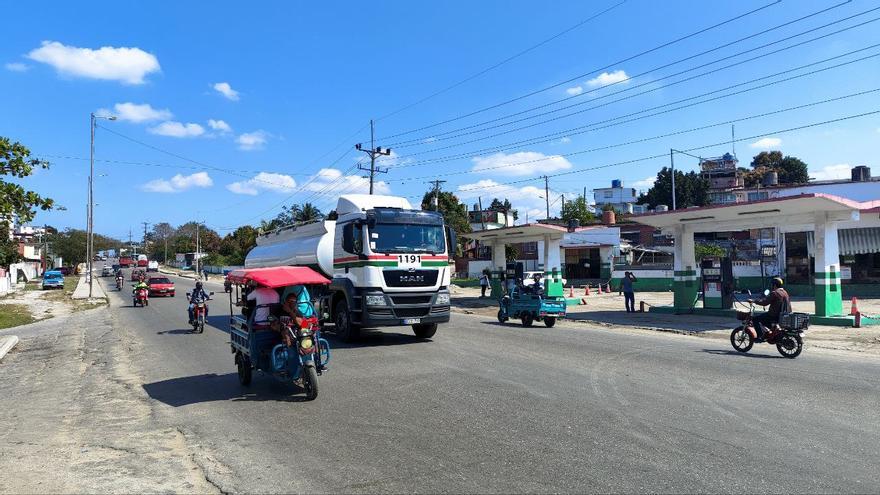
Paraguas has received four fuel trucks since February 1, a real prize. (14ymedio)

14ymedio bigger14ymedio, Juan Diego Rodríguez, Havana, 3 February 2024 — Few gas stations in Havana escape the fuel crisis that prevails in the country, stirred up by the postponement of the new rates for its purchase. Among the exceptions are Los Paraguas and Corral Falso, the two gas stations managed on Telegram by Esther Lilian Pérez Trujillo, the organizer of the line, “by decree” of the government of Guanabacoa.

Judging by Esther’s reports to the group members of both gas stations, Los Paraguas has received four tanker trucks of gasoline since February 1, a lot compared to other gas stations in the capital, like the San Rafael in Central Havana, which didn’t have any to sell this Saturday.

“One thousand five hundred eighty five gallons of premium gas and 1,849 of regular” arrived at noon. This newspaper was among the first summoned to Los Paraguas, at 1:00 in the afternoon. Few cars waited in line, close to the scheduled time, but the tension was still in the air.

“Is it coming today or not?” asked a customer. “We are on the list and have to buy but the tanker truck hasn’t arrived yet,” he explained to an employee at the gas station. The Cupet trucks, like ships loaded with water and food that are sighted by hungry castaways, were photographed along their way, and people passed on the information of their whereabouts on Facebook. continue reading

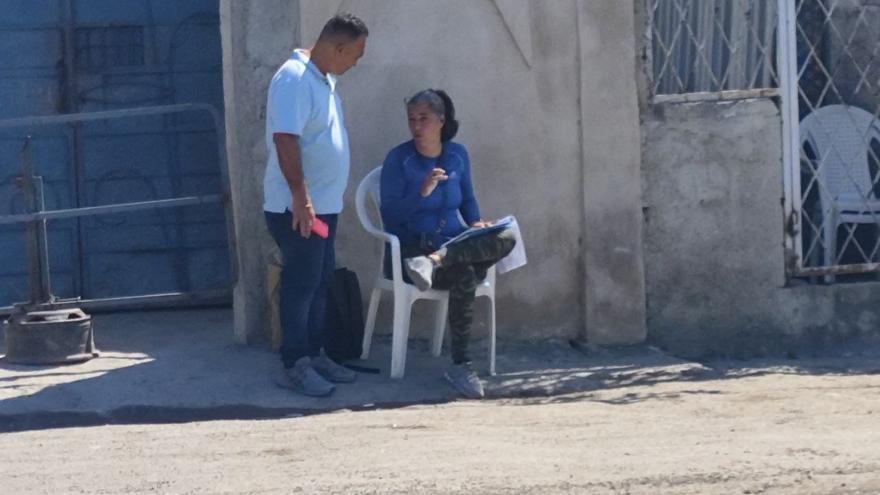
List in hand, Esther’s lieutenant sat on a plastic chair next to the starting point of the line. (14ymedio)

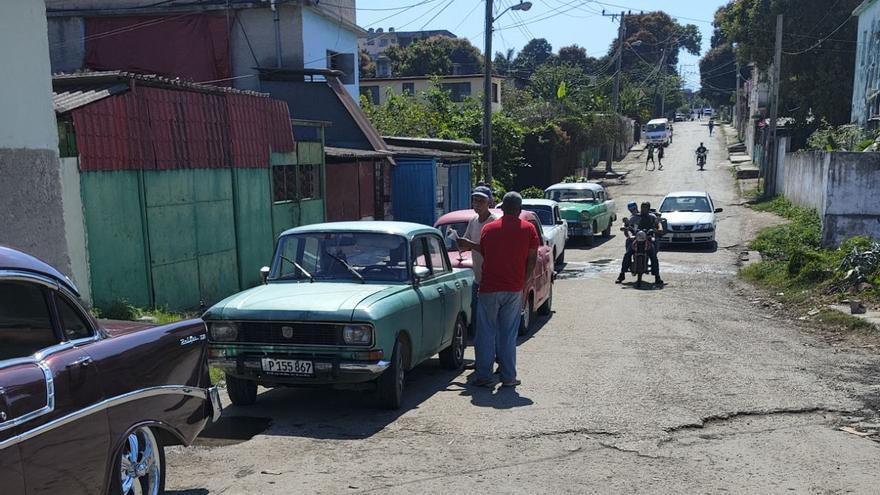
“One already went by, I think it was going to La Rotonda,” said the troubled driver of a Lada who was waiting in line at the Los Paraguas gas station when he saw a truck with the Cupet logo heading along the Via Blanca in the direction of the other service center. The drivers lined up on a street next to the pumps where the road was once covered with asphalt but now has only potholes, piles of stones and dust. The entrance to Los Paraguas itself is full of puddles of accumulated water, and the vehicles must bypass the holes to access the refueling area.

On a motorcycle, punctual and with camouflage pants, one of Esther’s lieutenants appeared at 1:00 in the afternoon. List in hand, she sat in a plastic chair next to the starting point of the line and finally began the sale.

The desperation to obtain fuel has been gaining strength in recent days, not only because of the political ups and downs and the fear of the implementation of a price increase, but also because of the possible deterioration of the weather that has been announced for the next few hours, which has the people of Havana running in search of supplies to cope at home until the storm passes.

The black market, where one can buy a bottle of cooking oil the same as a washing machine, hurried its transactions this Saturday but was hanging by a thread on the supply in the gas stations. “The kitchen is here, listening to the conversation, but we can’t take it away until the courier manages to fill the tank of the truck,” an informal seller with a wide assortment of appliances explained to a customer.

The drivers lined up in a street next to the pumps where asphalt once covered the road. (14ymedio)

This Saturday, in addition, the Electric Union predicted a deficit of 800 megawatts for the night, which will translate – as has been happening for several days – into long blackouts. A litany of breakdowns keeps the National Electric System in check, according to the official media, including the breakdown of unit 6 of the thermal power plant of Mariel, unit 3 of Santa Cruz and unit 2 of Felton. In addition, there is maintenance being done on three other units in Mariel, Santa Cruz and Cienfuegos.

The new rates for the purchase of fuel, which were already listed this Wednesday at the gas pumps, were removed after the announcement that “a virus from abroad” had destroyed the computer system of Cimex.

“The Cimex de Gaesa corporation was dropped from the entire management system, and they had no backup. They are doing  a general inventory to be able to have some control,” said Cuban influencer Manuel Milanés at the time. This newspaper toured several gas stations to take the pulse of the incident, and the question was: “What’s wrong with these people?”

The response came this Friday, when the official press reported that they had rolled the heads of three ministers, including the one of Economy, Alejandro Gil. This unforeseen “movement of cadres” was survived, however, by two leaders who have a lot to do with the energy debacle: Vicente de la O Levy, Minister of Energy and Mines, and Eduardo Dávila, the Minister of Transport.

Translated by Regina Anavy

____________

COLLABORATE WITH OUR WORKThe 14ymedio team is committed to practicing serious journalism that reflects Cuba’s reality in all its depth. Thank you for joining us on this long journey. We invite you to continue supporting us by becoming a member of 14ymedio now. Together we can continue transforming journalism in Cuba.

La Chambelona

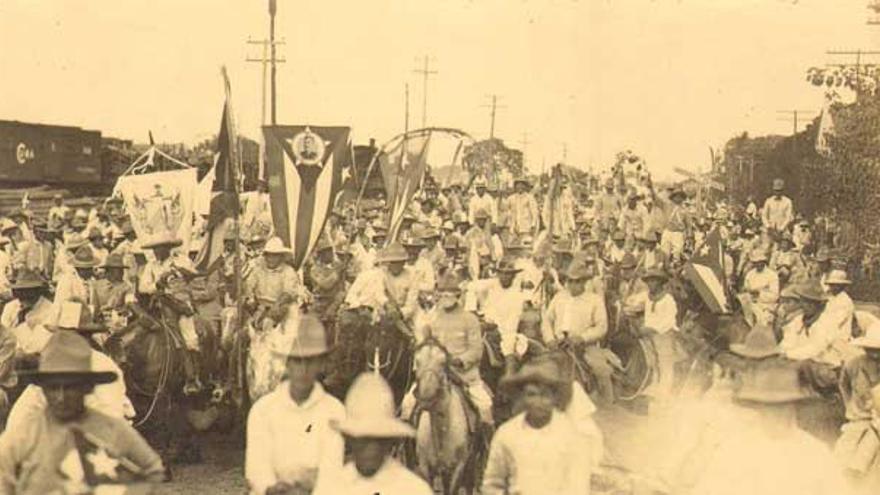
Cuban president José Miguel Gómez halted his march westward to dance to the anthem in the town Majagua. (Cubahora)

14ymedio bigger14ymedio, Yunior García Aguilera, Madrid, 1 February 2024 — The history of Cuba is sung. When Perucho Figueredo composed our own Marseillaise, he did so by disguising it as a religious march. He even played it in the main church during the Corpus Christi celebrations in the presence of the Spanish officials. They, of course, were suspicious. That melody was much too powerful and passionate to be a simple hymn dedicated to the Lord. They summoned the orchestra director and Perucho himself. Their interrogators knew nothing about music so the creator of our national anthem got away with it. When, not long after, he included the lyrics while mounted on his horse, there was no longer any doubt that La Bayamesa was a battle march.

Several years ago, Anima Studios in Holguín commissioned me to write a script for an animated cartoon about the history of our anthem. What I wrote about was the present, not the past. The words were the same dialogue we used when silently conspiring against the dictatorship. They fell for it. I think they even premiered it on one epsisode of State TV’s Roundtable program. I don’t know, however, if Cuban television will continue broadcasting material about the national anthem in which my name is at the top of the final credits.

I don’t know, however, if Cuban television will continue broadcasting material about the national anthem in which my name is at the top of the final credits.

Getting back to the topic at hand, there were several musical battles during the Republican era but perhaps the most famous of all was the one over La Chambelona. The head of government at the time was our third president, Matanza’s Aurelio Mario Gabriel Francisco García Menocal y Deop.

The Foreman, as he was nicknamed, was born in Jagüey Grande in 1866. His family was exiled during the Ten Years’ War and young Mario ended up graduating with a civil engineering degree from an American university. He became part of an ambitious project that is still being discussed today: the Nicaragua canal. continue reading

Upon returning to Cuba, he quickly joined José Martí’s war efforts, rising to the rank of major general. He was one of nine Cuban generals who were invited to attend the handover ceremony after the war ended. He was also chief of the police in Havana during the first North American occupation as well as inspector general of public works. He stepped away from politics for a time, dedicating himself to managing the Chaparra power plant in Las Tunas. But the conservatives needed a leader like him.

Running for president as a conservative candidate, he lost to José Miguel Gómez but won against Alfredo Zayas in 1912. World War I turned out to be a boon for Cuba because it raised the price of sugar. During his time time in office, the country adopted a national currency. The Cuban peso was pegged to the U.S. dollar and backed by the silver standard. If Menocal knew the peso’s worth today, he would turn over in his grave.

When the Foreman tried to get reelected, it launched the Chambelona revolution. The catchy tune, with its conga rhythm, was inspired by an old Spanish song. There are those who say that it originated in Chambas, hence the name, but that has not been proven. It is also not clear who the original author was so there were no disputes over copyright issues. La Chambelona became a liberal anthem. José Miguel Gómez himself halted his march westward to dance to La Chambelona in the town of Majagua.

Perhaps all that dancing is what caused them to arrest him and his son, and take them to Havana. Menocal’s advisors wanted to humiliate him even more

Perhaps all that dancing is what caused them to arrest him and his son, and take them to Havana. Menocal’s advisors wanted to humiliate him even more. They wanted him to walk him handcuffed along the Paseo del Prado and the Malecón to the paddy wagon. But José Miguel Gómez, the Cuban president whom official historians want to strip of all virtue, said the following: “You forget that the man who is imprisoned is a general of independence. You forget that the man who is imprisoned is an insurgent who covered himself in glory during combat. You forget that that man who is imprisoned was my friend and my comrade-in-arms.”

Cubans have had other anthems in more recent times, from Nuestro Día Ya Viene Llegando (Our Day Is Now Coming) by Willy Chirino to Patria y Vida (Homeland and Life), which was sung in the streets during the mass protests on 11 July 2021. The regime has tried to emulate these songs with some musical clunkers composed by Raúl Torres, whom the muses have not only abandoned but who has gained hundreds of thousands of “dislikes” on YouTube.

Cuba’s current president Miguel Díaz-Canel, who isn’t a poet and who cannot pull verses out of thin air, might hum a few bars of La Chambelona while in the shower. Perhaps he even sings a few lines out of tune  to himself: “I am not to blame and I don’t blame here.”

____________

COLLABORATE WITH OUR WORKThe 14ymedio team is committed to practicing serious journalism that reflects Cuba’s reality in all its depth. Thank you for joining us on this long journey. We invite you to continue supporting us by becoming a member of 14ymedio now. Together we can continue transforming journalism in Cuba.