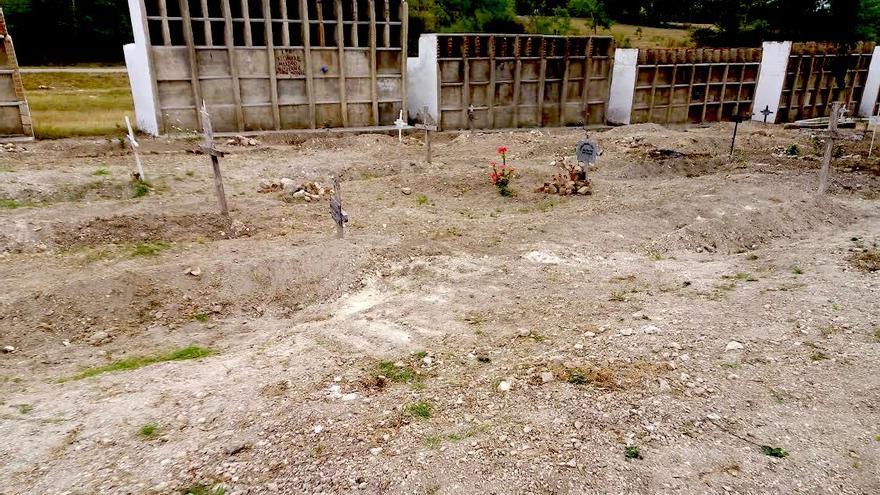
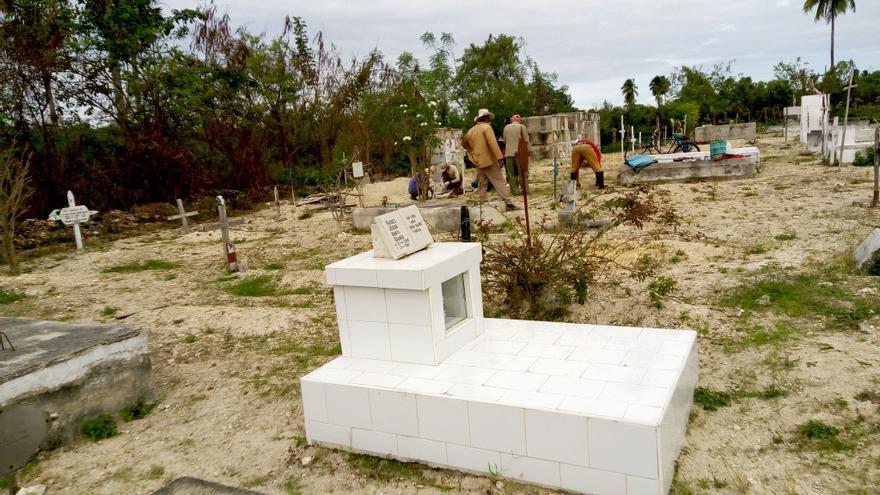
The San Francisco cemetery was too small and they had to expand it. (14ymedio)
14ymedio, Juan Matos, Manzanillo (Granma Province), 2 February 2024 — In the San Francisco cemetery complex, fifteen minutes by car from the municipal necropolis of Manzanillo (Granma), up to 200 dead were buried in a single day in mass graves during the worst time of the pandemic. Mobilized by order of the authorities, the gravediggers were unable to cope and had a clear instruction: three hours after death they had to remove the body.
The mounds, the large expanse of removed land and the precarious wooden crosses in the cemetery of San Francisco still attest to what happened in those days. “The cemetery was very small and they had to expand it. They had to prepare the area for the pandemic deaths,” one of the local employees explains to 14ymedio. “All the people buried there were from Manzanillo.”
“It was the hardest moment of my life,” says a former Manzanillo gravedigger, who remembers “as if it were yesterday” piling up the corpses. The situation was extreme. “In Manzanillo there was not, nor is there now, space for so many deaths,” he explains; hence, the leaders transferred several gravediggers to the rural community of San Francisco to take care of the mass burials. “I had been at work for many years and I hadn’t seen anything like it. A lot of people died.”
The removed earth and wooden crosses attest to what was experienced during the pandemic. (14ymedio)
Carmen, a health worker who lost her mother a few days after she gave her “a bad cold” remembers how sudden the process was. “In the hospital they gave her the rapid test and then the PCR, and she tested positive. They took her up to a room, and I couldn’t accompany her. They would only give me information about her on the phone. I was desperate.” continue reading
The phone stopped ringing for several days, and Carmen, taking advantage of her contacts, moved heaven and earth to know what was happening with her mother. “I found out that she had been dead for three days and was buried in San Francisco. I wanted to die; they had deceived us, making us believe that she was alive. I never knew the exact place she was buried, and I was so traumatized that I prefer to remember my mother alive. I’ve never been to San Francisco to see her again.”
“I never knew the exact place where she was buried, and I was so traumatized that I prefer to remember my mother alive. I have never been to San Francisco to see her again”
Returning to “normality” since the pandemic was not easy, the former gravedigger says. The cemetery of Manzanillo – his former place of work – where several heroes and mambises of the stature of Bartolomé Masó and Francisco de Céspedes are buried, is in deplorable condition.
“There are more than 1,000 tombs here,” calculates the former employee, many of them with historic value and artistically worked. The general tone of the cemetery, however, is not of the old Republican tombs, with marble statues, angels and crosses, but of the cement niches between the weeds and the burned grass.
The former gravedigger regrets that the staff of the cemetery cannot do more, but with “a little more than 2,000 pesos” – the salary paid by the administration – the payroll is now reduced to two workers, of the 12 who, ideally, would be taking care of a historic cemetery like that of Manzanillo.
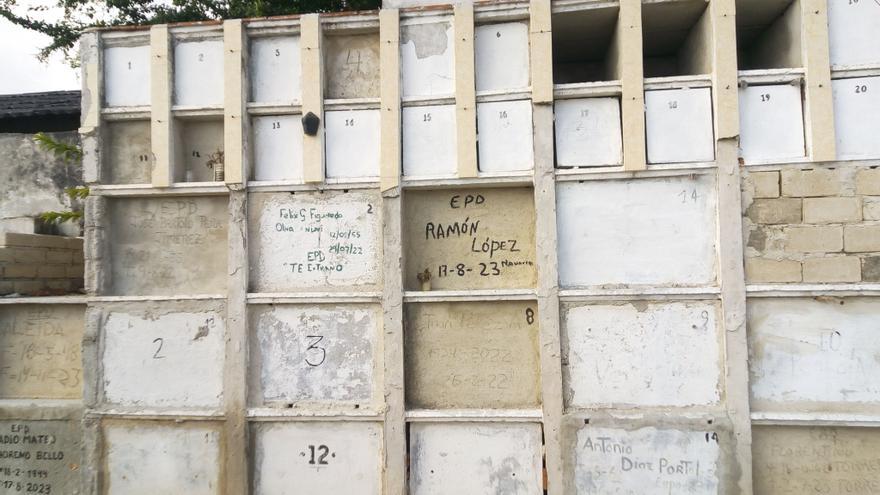
The words “Te extraño” [I miss you], an asterisk for birth and a cross for death, scratched into the cement, are the only remaining testimony of those who fought for Castro. (14ymedio)Not even the Pantheon of the Association of Fighters – the Cubans who joined Fidel Castro’s militias in the municipality – receives attention. Once a year, on October 28, the local authorities pay tribute to Camilo Cienfuegos, who disappeared that day, and in passing they remember the former members of the insurgent army. The occasion is called Operation Tribute. The niches, however, have nothing heroic about them.
Drawn by hand and with paint of any color, the epitaphs of the “dead of the Revolution” are written on sickly tombstones, which barely support the structure of the niche. The words “I miss you”, an asterisk to mark the birth and a cross to indicate death, scraped on the cement, are the only remaining testimony of those who fought for Castro.
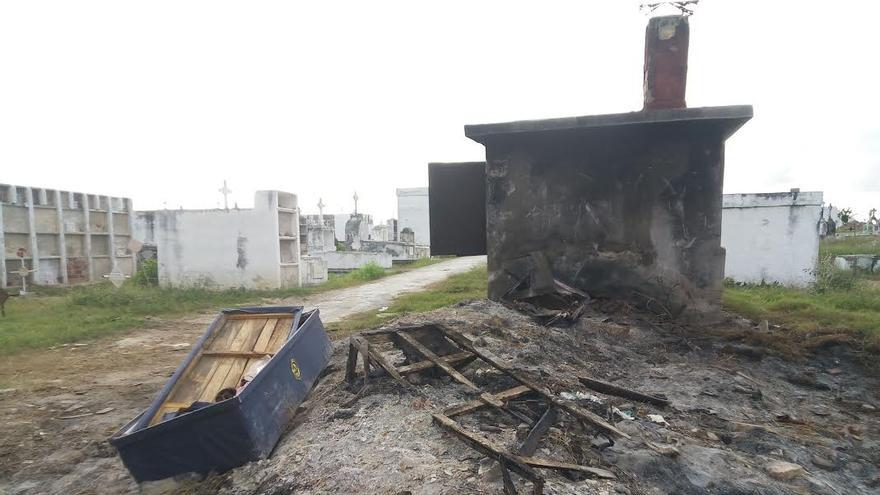
“Here are our loved ones. It’s disrespectful,” complains a woman who was visiting and cleaning her family crypt, besieged by grass and enveloped in a plague of smoke. Next to the pantheon are two destroyed coffins on the grass – with rags inside – that have been set on fire. “We have to set fire to the grass because we can’t weed it. There’s too much,” explains the employee.
Two coffins smashed on the grass, with rags inside, which were set on fire. (14ymedio)
“There are self-employed in Manzanillo who can be hired for 500 pesos a month to clean the graves,” explains the former gravedigger. “But it is generally the relatives who have to take care of them. The gravediggers don’t have time for anything. The Pantheon of the Fighters, for example, is completely unattended, and that is not their fault. The area should be treated better.”
The situation of the Manzanillo necropolis has reached the official press, which last week urged the authorities to take care of it. Juventud Rebelde claimed it is a place of absolute “patriotic richness, with art deco, inscriptions and an eclectic style; tombs with marble, bronze, iron, cement and glazed tiles,” and an important “decorative style” with numerous sculptures made in Spain, Italy, France and the United States. At the end of the list, the newspaper called on the leaders to raise the miserable salary of the employees.
The former gravedigger knows the place well. In his opinion, the workers have done too much on their own. The niches were built to alleviate the lack of space, where there are often “more than 100 people buried.” The crypts, built with the worst quality materials, tend to break.
“There was a case of disastrous collapses, and we found ourselves in the painful situation of having to collect the human remains,” remembers the former gravedigger. “We did it with a lot of respect, but sometimes we didn’t even know who was who, and we had to put them in other graves.”
Translated by Regina Anavy
____________
COLLABORATE WITH OUR WORK: The 14ymedio team is committed to practicing serious journalism that reflects Cuba’s reality in all its depth. Thank you for joining us on this long journey. We invite you to continue supporting us by becoming a member of 14ymedio now. Together we can continue transforming journalism in Cuba.
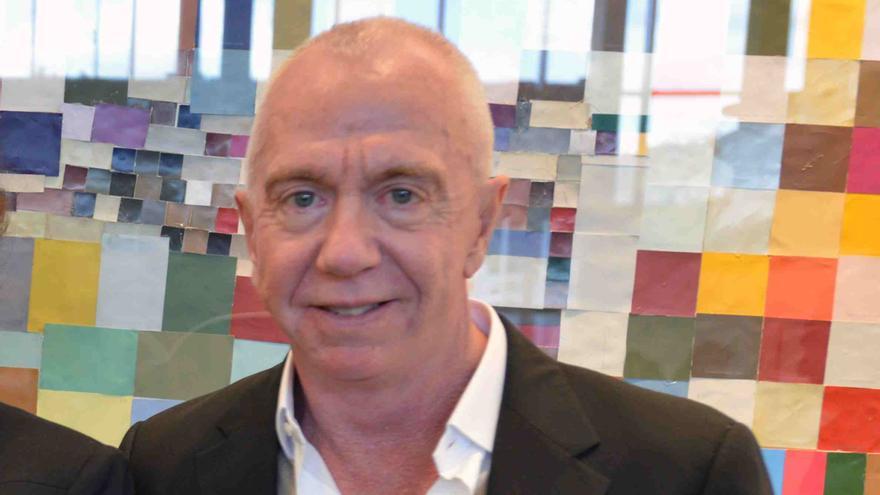
American art dealer Brent Sikkema. (Flickr/Cámara de Comercio de Bogotá)
14ymedio, Havana, January 24, 2024 — The life of 75-year-old American gallery owner Brent Sikkema, who was murdered on Sunday, January 14, in Rio de Janeiro led him time and again to Cuba. His trips to Havana and his relationships with those active in the city’s art scene and nightlife raise many questions about his death, allegedly at the hands of a 30-year-old Cuban named Alejandro Triana Prévez.
Sikkema’s final visit to Cuba lasted just a few days, from September 16 to 23, 2023. Unlike on previous occasions, he did not stay at the apartment he once shared with his former Cuban partner, Daniel G., to whom he had been married and with whom he was going through a messy divorce. Instead, he chose to stay at the high-end Elvira Mi Amor Hotel on Campostela Street in Old Havana.
He decided to stay there rather than at the house he had bought years earlier in Kohly, an area in the Havana suburb of Playa. Because foreigners are legally prohibited from owning property in Cuba, he decided to register the home under name of his partner.* Subsequent litigation between the two, and the large sums of money that Daniel G. was demanding in the U.S. courts as part of a divorce settlement, led Sikemma to avoid the home that held so many memories. continue reading
The last time Sikkema visited Cuba, he only stayed for a few days, between September 16 and 23 of last year
The plastic artist José Gabriel Capaz received him at the Elvira Mi Amor Hotel shortly after Sikkema landed on the Island. The luxurious home, which included a stately bathtub and a crystal chandelier, served as the backdrop for his last visit. His friends had no idea that, after saying goodbye to him at the airport on Saturday, they would never see him again.
Sikkema, an Illinois native, managed the gallery Sikkema Jenkins & Co., which he founded in New York’s Chelsea district in 1991. Its roster included high-profile artists such as Vik Muniz, Kara Walker and Venezuela’s Arturo Herrera. In Cuba, he also had a wide network of friends and acquaintances in the art world as well as in the hospitality sector and among foreign investors.
“They attacked him while he was sleeping. They stabbed him eighteen times,” says a female friend who lives in Havana and who learned of his murder through a former partner of Sikkema. “He was a good man. He really liked to give and to help others. He had made Cuba his second home,” says the woman, who asks to be referred to as Isolda to protect her privacy.
“He was a very trusting man. I always told him, that he should keep an eye out because there were people who approached him with good intentions and others with evil intentions,” she says. Among those she claims took advantage of Sikkema’s kindness and status as a non-resident foreigner was a female cousin of Daniel G. “What that woman did was robbery. No matter how you put it, it was a robbery.”
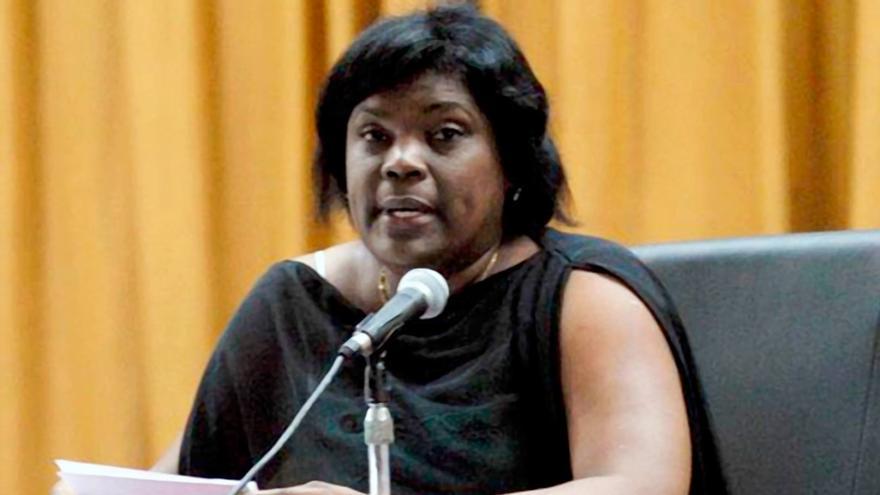
Isolda is referring to Belkis Z., a university professor with an important position in Cuba’s National Assembly
Isolda is referring to Belkis Z., a university professor with an important position in Cuba’s National Assembly, who served as a frontwoman for Daniel G. and Sikkema’s purchase of a penthouse apartment atop an imposing building on Avenue of the Presidents between 19th and 21st streets, in Havana’s Vedado district. The building is located a few yards from the Polish Embassy.
Belkis Z. was supposed to be the only person with legal possession of the apartment. Daniel G. already had another house and in Cuba an individual is not allowed to own more than one property. Her mission, according to several sources close to the couple, was to look after the apartment and disappear once the property could pass into the hands of the real owner — the couple’s now 12-year-old son, L. Sikkema — when he was of legal age.
According to friends and acquaintances, undergirding all these plans was Sikkema’s dream that Cuba would open up politically and economically, allowing him to move freely and legally between his homes in New York and Havana. The diplomatic thaw that occured during the Obama administration had especially excited him and his real estate investments on the island were made during that period of rapprochement between the two sides.
The house on Avenue of the Presidents, also known as G Street, seemed like a good idea. “He thought of it as a longterm investment and as a gift to his son, who was what mattered most to him,” says Isolda. “Between the house in Kohly, the penthouse apartment on G Street, a white Audi with a black top, and the costs for remodeling and decorating the two houses, Sikkema spent a million and a half dollars in Cuba.”
A photo on social media shows a smiling Belkis Z. posing on the rooftop of the building with the Havana skyline behind her. Soon thereafter, she would betray the American art dealer. “As soon as she found out about the divorce proceedings between Brent and Daniel G., she took over the apartment, changed the locks and, since it was in her name, there was nothing to stop her,” laments Isolda.
Later, Belkis Z. showed friends a threatening text message that she received from a Brazilian telephone number and to which 14ymedio gained access. The message talked of killing her if she did not hand over the apartment within a month. It was accompanied by a photo, taken from the street, in which she could be seen looking out of the penthouse. Despite the warning, she was not dissuaded.
“That really depressed Brent, who was already going through a bad period. He felt swindled and didn’t think he could find justice in Cuba, where he was a nobody,” says Isolda. “Daniel G. was asking the New York courts for a multi-million dollar figure. He had control of the properties in Cuba that Brent paid for out of his own pocket. But the biggest blow that that he was using their son against him.”
L. Sikkema* — the biological son of Daniel G. but legally the son of both men — was Brent Sikkema’s great concern during the bitter conflict that arose during the separation process. He feared losing the boy and petitioned for shared custody in court. According to Isolda, his former partner, who was living in New York, cut off all lines of communication between the gallery owner and the boy. “That really destroyed him. He seemed like a different person,” she says.
Sikkema and Daniel G. had met overseas when the latter, who had lived in Spain, was living in New York. “They had an open relationship but Daniel was very possessive. He didn’t like Brent talking to other men and they had almost no shared interests outside their love for their son,” says Fabio, a friend of the art dealer.
Fabio is more vague when it comes to Sikkema’s relationship with Alejandro Triana Prévez. “They met here in Havana in 2020 or 2021 but they weren’t friends or anything like that. He managed the surveillance cameras at the Kohly house. I think when they met for the first time it was after Daniel G. had already hired him,” says Fabio. “He never talked about him. I never even heard [Brent] mention him.”
Once the country’s borders were open again after the pandemic, Alejandro Triana left Cuba. He arrived in Brazil in 2022, requested asylum and began offering parcel delivery services to the island through his Facebook account
Confident and very sociable, “[Brent] always surrounded himself with young Cubans with whom he went out and had a good time, but Triana was never one of them,” says Fabio. “He was very active sexually — he had an open relationship with Daniel — and he liked to go looking for young men in the Central Park area and around 25th and 0 streets in Vedado.”
Once the pandemic was over and the country’s borders were open again, Alejandro Triana left Cuba. He arrived in Brazil in 2022 and requested asylum. Using his Facebook account, he offered parcel delivery services to the island and helped Cubans with their visa applications for travel to Brazil. He alternated these posts with others in which he sought out women for a night of passion.
Once out of Cuba, he self-published a 92-page book entitled Gray Reflections on Love. In this memoir, he provides emotional tools that readers might use “with what is on hand.” His recommendations could not have been more prescient: “Quite simply, I hope you feel every word in your heart even if you tell the world they are not there.”
In his social media posts, Triana never mentions his connection to Sikkema. According to information provided by Brazilian police, the alleged killer travelled from São Paulo to Rio de Janeiro, then to the wealthy neighborhood of Jardín Botánico, in the southern part of city, where he committed the crime. All indications are that he staked out the Sikkema’s residence for fourteen hours before entering.
It was in that house that Sikkema was murdered. Several friends tell 14ymedio that the art dealer had also bought a second home in Brazil, a country to which he traveled as many as three times a year. The money that was stolen after he was killed was intended partly to furnish that property. “He never talked about Alejandro Triana. He was not someone of importance in the family. He was just a grunt,” says Isolda.
The Brazilian police arrested Triana in the neighboring state of Minas Gerais, where he was carrying jewelry and the equivalent of more than $36,000 in cash
The newspaper O Globo and the New York Post both report that investigators now want to speak with Daniel G.
“Given that the suspect in detention is Cuban, a new phase of the investigation will begin to verify if the ex-husband had any relationship with the accused,” said Rio police spokesman Alexandre Herdy at a press conference last Friday.
“We have no doubt that this crime was premeditated,” said Herdy. “What we don’t know is the motive, if it was a robbery or something else. We know the suspect was very careful and left the air conditioning on in the bedroom so as not to arouse suspicion. He also left an expensive mobile phone near the corpse, something we don’t understand.” Sikkema’s body was found on Monday by his lawyer, who had keys to his house.
Questions by Brazilian police echo those of Sikkema’s friends. These are people who were aware of the conflicts that the couple was experiencing and the pressure being exerted by Daniel G., who would not agree to a divorce without a multi-million dollar settlement. Text messages fly quickly between those closest to the American art dealer and speculation grows.
One of those friends is Cucú Diamante, the Cuban-American singer who has become a very prominent figure due to the diplomatic and cultural rapprochement between the United States and Cuba. “This issue has affected her deeply and she does not want to talk to anyone about it but, based on messages that have been exchanged so far, she has the same suspicions as everyone else and those doubts point to New York,” says Fabio.
One of those friends is Cucú Diamante, the Cuban-American singer who has become a very prominent figure due to the diplomatic and cultural rapprochement between the United States and Cuba
Security camera footage taken outside Sikkema’s house in Rio shows Alejandro Triana entering the property on Sunday, January 14, between three and four in the morning and hurriedly leaving fourteen minutes later. The next image the public sees of him is that of a man handcuffed and looking surprised.
What led the “grunt” to target the art dealer? How much do Sikkema’s friends know but are not saying because they do not want to get involved or to expose a network that benefited from the American’s generosity? How much is being hushed up so that the scandal does not spill over into the Cuban arts and business network that depends on wealthy foreigners enthralled with the island?
Quite possibly, the public will get a clearer picture after Alejandro is interrogated in Brazil, but many other answers can only be found in Havana and New York.
*Translator’s note: The New York Post has identified Sikkema’s husband as 53-year-old Daniel Garcia Carrera Sikkema and their son as Lucas Sikkema.
____________
COLLABORATE WITH OUR WORK: The 14ymedio team is committed to practicing serious journalism that reflects Cuba’s reality in all its depth. Thank you for joining us on this long journey. We invite you to continue supporting us by becoming a member of 14ymedio now. Together we can continue transforming journalism in Cuba.
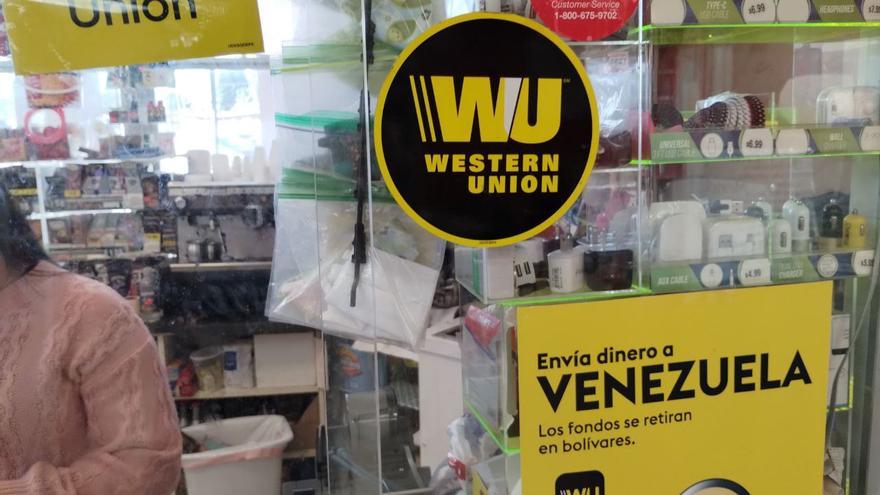
A Western Union employee in Miami confirmed that, “for the moment,” deliveries to Cuba are not possible. (14ymedio)
14ymedio, Miami/Havana, 1 February 2024 — “At the moment, deliveries to Cuba are not available until further notice,” is the response of an employee of a Western Union office in Miami this Thursday, confirming to 14ymedio the impossibility of sending remittances in this way, after trying both in the application and in three physical branches. When asked the reason, the worker replied that “the information for security reasons cannot be shared.”
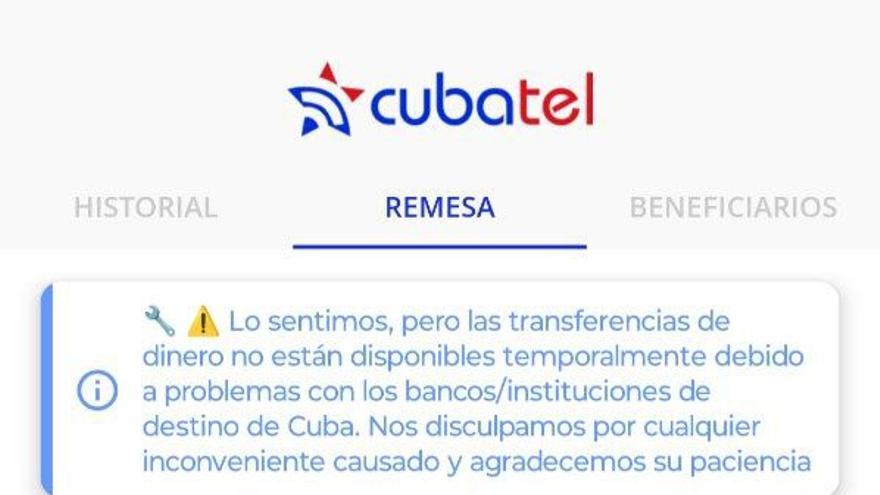
Nor can payments be made to the Island for Cuballama and Cubatel (to recharge telephone cards). In this last application, the message was clearer: “We’re sorry, but money transfers are temporarily unavailable due to problems with Cuba’s destination banks and institutions.”
“Yesterday we had customers with the same problem,” said the Western Union employee. However, a young resident of Florida said an amount he had sent on January 29 was returned to him.
The fact that the remittances have been affected by a problem in Cimex reinforces suspicions about the mysterious firm Orbit
This Wednesday, the Cuban Government decided to postpone the entry into force of the new prices for fuels, citing “a cybersecurity incident in computer systems for the commercialization of fuels whose origin has been identified in a virus from the outside.” The hack, according to official sources, affected the commercialization system of Cimex, a corporation belonging to the all-powerful Gaesa military conglomerate. continue reading
Without linking it to this issue, this Thursday the Metropolitan Bank issued a statement warning that “there are technical difficulties that affect branch services and those associated with payment technology channels” and added that “it is working uninterruptedly to restore the service in the shortest possible time.”
Opening text: We are sorry, but the transfer of money is temporarily unavailable due to problems with the banks/institutions in Cuba. We apologize for any inconvenience and appreciate your patience.
In a call to the network payment service, an employee told 14ymedio that “the problem is Fincimex” – Cimex’s financier – and she didn’t know when it will be solved. “Keep up to date with the news or visit the bank to ask every day,” was her advice.
Western Union suspended remittances to Cuba in November 2020, due to the sanctions of the Administration of then-President Donald Trump on Fincimex and AIS, because they are managed by the Cuban military. In January 2023, services resumed, this time with a different intermediary: the “non-banking” financial institution Orbit S.A., approved by the Central Bank of Cuba a year earlier.
The fact that the remittances have been affected by a problem in Cimex reinforces suspicions about the mysterious firm.
Translated by Regina Anavy
____________
COLLABORATE WITH OUR WORK: The 14ymedio team is committed to practicing serious journalism that reflects Cuba’s reality in all its depth. Thank you for joining us on this long journey. We invite you to continue supporting us by becoming a member of 14ymedio now. Together we can continue transforming journalism in Cuba.
Private vendors charge at least 150 pesos for a pound of tomatoes. (14ymedio)
14ymedio, Havana, 29 January 2024 — Rain and planting delays are conspiring to keep tomatoes out of Cienfuegos’ produce markets. At least that is the excuse provided on Monday by local officials, who readily admitted that tomatoes destined for tourist hotels and specialized food service establishments are grown year round in the controlled climate conditions of the Guamuhaya mountains, guaranteeing their availablility. Meanwhile, everyone else will have to wait until February.
Jesús Negrín Capote, the province’s director of agriculture, told the digital newspaper 5 de Septiembre (Fifth of September) that, despite the “climatological slippage,” a lot of tomatoes managed to get planted, even more than in the previous campaign. Though production is expected to be ready for the second and third month of the year, he noted that crops are not immune to the weather, which can “play tricks.”
Negrín Capote acknowledged that the quality of the tomatoes was also affected by the sudden rains at year’s end because the planting, which was scheduled for September and October, happened late. continue reading
Tomatoes grown by private producers, or taken from the “back room” of government warehouses, are beginning to appear sporadically in local markets
Meanwhile, tomatoes grown by private producers, or taken from the “back room” of government warehouses, are beginning to make sporadic appearances in local markets. Though always stunted and green, they command high prices.
Fifth of September reports that the price at state-owned stores is always the same, no matter the quality. The cost of second, third and fourth-class tomatoes is set at 50 pesos a pound, “as though they were first-class.”
Given this situation, private vendors, who know that they have a better product, think nothing of stockpiling the state tomato in order to resell it for 150 pesos a pound or more. “In short, the limited availability of tomatoes in produce and open-air markets — not to mention the involvement of the state, cooperative farms and peasant farmers — results in very unfair competition,” summarizes the paper, adding that the consequence is “diminished buying power for consumers.”
The paper proposes stepped-up controls to prevent price gouging by individuals who hoard the product
The paper proposes tightening controls to discourage price gouging by individuals who hoard the product. It blames them for the shortage because rural farmers prefer to sell their tomatoes to private businesses and street vendors, who pay a higher price than the state.
An article published last March in the state-run digital news site Invasor described the collapse of the island’s tomato industry. Compared to 2010, the acreage under cultivation in 2023 had doubled but production had fallen twenty percent.
In 2021, producers in Sancti Spíritus province, who were alarmed by prospect of losing the crop, called upon government officials to harvest the tomatoes before they rotted in the field. Unfortunately, Acopio, the state agricultural procurement agency, never responded
Along with a shortage of supplies and fuel, governmental apathy has caused one of the most popular products on Cuban tables to vanish and its price to skyrocket. In December 2023, the cost of tomatoes increased by 15.53% according to the Consumer Price Index published by the Cuban National Office of Statistics and Information.
________________
COLLABORATE WITH OUR WORK: The 14ymedio team is committed to practicing serious journalism that reflects Cuba’s reality in all its depth. Thank you for joining us on this long journey. We invite you to continue supporting us by becoming a member of 14ymedio now. Together we can continue transforming journalism in Cuba.
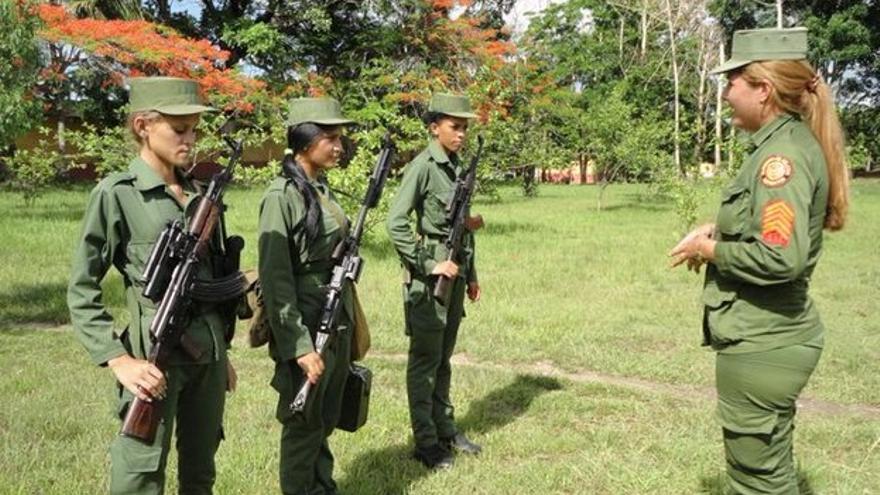
Until now, military service was mandatory for women only for those in the International Relations career. (X/Embassy of Cuba in Haiti)
14ymedio, Havana, January 31, 2024 — An interview with a young woman on a radio station in Cabaiguán, Sancti Spíritus, is the only official confirmation, for the moment, that women who wish to study journalism in Cuba must pass compulsory military service beginning next year.
The information was reported by the independent newspaper CubaNet last December. This Tuesday, a conversation with the 17-year-old student Carolina de la Caridad Rodríguez López, published by La Voz de Cabaiguán, confirms it.
“Fulfilling one year of active military service, an added requirement for young women who opt for the bachelor’s degree in journalism for the 2024-2025 academic cycle, will challenge Carolina Rodríguez, who is willing to combine her curls with the olive green uniform,” joked the announcer in the audio. continue reading
The requirement illustrates the regime’s control over this profession
The requirement – similar to the one that women who want to study International Relations have to pass – joins the aptitude tests that journalism students exclusively must take and illustrates the regime’s control over this profession.
On December 1, the official media Qva en Directo published a note explaining the obligation to fulfill one year of military service by young women who decide to study journalism. However, hours later that same day, it withdrew the publication, according to Diario de Cuba.
Compulsory military service has been the subject of criticism and denunciations inside and outside the Island. The organization Archivo Cuba, for example, determined in a report that, since the establishment of compulsory service in 1963, it has caused the death of at least 54 young people. Suicides have been especially silenced by the authorities, as evidenced by some reports published by this newspaper. In 2022, several of the fatalities from the fire at the Matanzas Supertanker Base were young people in military service who performed their duties as firefighters.
Compulsory military service has been the subject of criticism and denunciations inside and outside the Island
The new regulations may have long-term effects on the number of women who decide to study journalism on the Island, which is expected to continue to decline. Last September, Cubadebate reported that they have vacancies for journalists and repeated the offer in January. In addition, since October, the leading State newspaper Granma has offered “job opportunities” for reporters, photographers, design specialists, editorial layout designers, translators, specialists in social studies and experts in document management.
Translated by Regina Anavy
____________
COLLABORATE WITH OUR WORK: The 14ymedio team is committed to practicing serious journalism that reflects Cuba’s reality in all its depth. Thank you for joining us on this long journey. We invite you to continue supporting us by becoming a member of 14ymedio now. Together we can continue transforming journalism in Cuba.
Beatriz Johnson during a meeting in Santiago de Cuba in 2019. (Office of the Conservator of the City of Santiago de Cuba/Facebook)
14ymedio, Havana, February 1, 2024 — The first secretary of the Communist Party in Santiago de Cuba, José Ramón Monteagudo Ruiz, was replaced this Thursday after being in office for less than three years. Instead, in front of the party organization, Beatriz Johnson Urrutia, who served as governor of the eastern province, was named as his replacement.
The change was announced during the Plenary of the Provincial Committee of the Party attended by President Miguel Díaz-Canel. An official statement announced the decision to “free Monteagudo from his responsibility” and included a recognition for his work in “confronting tasks in the political, economic and social order with urgency and creativity.”
After his departure, the official “returns to the Secretariat of the Central Committee of the Communist Party of Cuba (PCC),” the text explains. Monteagudo had been appointed secretary of the PCC in the province in October 2021, a time that coincided with the worsening of the economic crisis on the Island and the social deterioration. continue reading
Several sources consulted by this newspaper point to the increase in violence and insecurity in the streets of Santiago de Cuba as part of the reason for the appointment of Johnson, more knowledgeable in the field and with a long history as a political and partisan cadre.
The substitution was announced during the Plenary of the Provincial Committee of the Party attended by President Miguel Díaz-Canel
A chemical engineer graduate, Johnson, age 54, held several managerial and administrative responsibilities at the José Mercerón Allen Cement Factory. Subsequently, she was general manager of the Cemento Santiago de Cuba Joint Venture, belonging to the Ministry of Construction.
Before being elected governor of the province, she served as vice president and president of the Provincial Assembly of the People’s Power of Santiago de Cuba. She has a reputation as an energetic person, absolutely faithful to the guidelines of the PCC and with very colloquial expressions in her public pronouncements.
In August 2022, a demonstration in the Luis Dagnes neighborhood in the People’s Council of Altamira, Santiago de Cuba, was joined by several residents to protest the blackouts and the precarious economic situation of the city. Military forces arrived, and Johnson also showed up to ask the neighbors for “patience.” She told them the blackout schedules in the area were going to be reviewed.
The official is also associated with the organization of acts of repudiation and police operations at the headquarters of the Patriotic Union of Cuba (Unpacu) where the house of opposition leader José Daniel Ferrer is located. He has been in prison since the popular protests of July 11, 2021.
Johnson now has the difficult task of leading, in the second most populous city in the country, a partisan organization in frank deterioration, with a diminished number of militants and paralyzed by the lack of political reforms. Inflation, popular unrest, growing blackouts and mass exodus complete a rather bleak picture for her mandate.
To that is added the violence expressed in frequent murders, robberies and assaults. Recently, a lieutenant colonel of the Ministry of the Interior acknowledged in public that young people, armed with knives and machetes, and organized into violent gangs, “implant terror” in Santiago de Cuba.
A video of the meeting released at the end of last month shows dozens of residents of the Santiago neighborhood Abel Santamaría listening to the officer’s speech, surrounded by other police officers. Its purpose was to report the arrest of five young members of a gang who, wielding knives, assaulted a cafeteria in the early morning of January 7.
Translated by Regina Anavy
____________
COLLABORATE WITH OUR WORK: The 14ymedio team is committed to practicing serious journalism that reflects Cuba’s reality in all its depth. Thank you for joining us on this long journey. We invite you to continue supporting us by becoming a member of 14ymedio now. Together we can continue transforming journalism in Cuba.
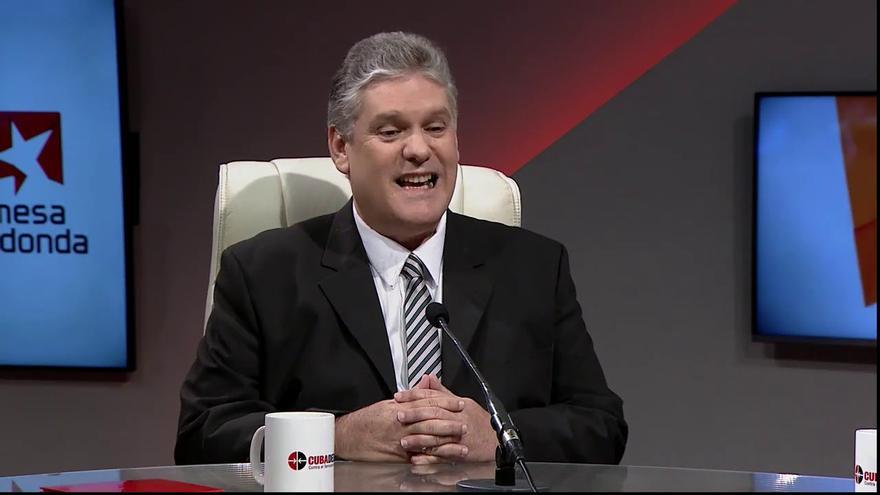
The statement does not clarify the reason for Alejandro Gil Fernández’s removal from office. (Cubadebate)
14ymedio, Havana, February 2, 2024 — The Cuban Government announced on Friday the dismissal of Alejandro Gil Fernández as Minister of Economy and Planning. He will be replaced, according to an official report, by Joaquín Alonso Vázquez, current president of the Central Bank of Cuba (BCC).
On Wednesday, the rise in fuel prices was postponed, and on Thursday, the increase in transport prices. When announcing the reason for the suspension of the first measure, Mildrey Granadillo de la Torre, first deputy minister of Economy, mentioned “the occurrence of a cybersecurity incident in computer systems for the marketing of fuels whose origin has been identified in a virus from the outside.” The same reason was given for not implementing the new transport rates.
The alleged problems in Cimex’s computer system have affected remittances from the United States, which are suspended, as was verified this Thursday by 14ymedio.
Translated by Regina Anavy
____________
COLLABORATE WITH OUR WORK: The 14ymedio team is committed to practicing serious journalism that reflects Cuba’s reality in all its depth. Thank you for joining us on this long journey. We invite you to continue supporting us by becoming a member of 14ymedio now. Together we can continue transforming journalism in Cuba.
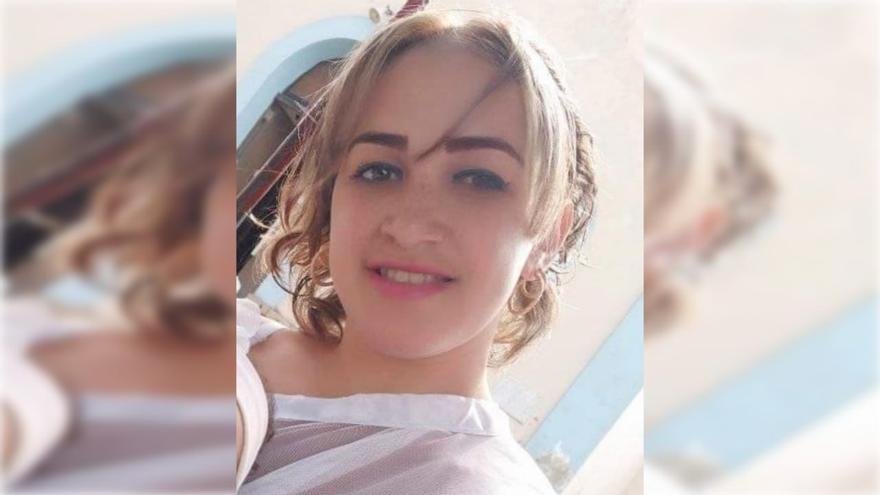
Dianny Caballero lived in the municipality of Vertientes, in Camagüey. (Facebook/Dianny Caballero)
14ymedio, Madrid, 1 February 2024 — Dianny Caballero, a 26-year-old woman and the mother of a four-year-old girl, is the sixth victim of feminicide in Cuba so far this year. As confirmed by Cubanos por el Mundo, her perpetrator, Jorge Socarrás Guerra, was her partner and is a fugitive.
The event occurred on Wednesday morning, on José Martí Street, in the popular council of Diezmero, in the Havana municipality of San Miguel del Padrón, as reported by Niover Licea with local residents as sources.
The couple was from Vertientes, in the province of Camagüey, but, explains Cubanos por el Mundo, they frequently traveled to the capital to buy merchandise that they then resold in their municipality of residence. continue reading
The couple was from Vertientes, in the province of Camagüey, but frequently traveled to the capital to buy merchandise that they then resold
Caballero’s networks show, in fact, that the young woman offered items on various buying and selling pages.
The independent feminist platforms Alas Tensas and Yo Sí Te Creo en Cuba have not yet confirmed this feminicide, which adds to the five already registered so far in 2024.
The victim before Caballero was also from Camagüey, Talía Labañino Figueredo, 21 years old and also the mother of a girl. She was murdered on January 17 at the hands of her ex-partner, Yoendris Rodríguez, who is already detained. Another Camagüeyan, Diana Rosa Cervantes Mejías, inaugurated the death list of femicides this year, on January 2.
They are joined by Aliuska Carmenate, from Mayarí, Holguín, murdered on January 14; Yanilsa Zamora Miranda, also in Holguín, in the Santiesteban neighborhood, on January 9, and Dailene Fernández Carasa, in Alamar, Eastern Havana, on January 11.
____________
COLLABORATE WITH OUR WORK: The 14ymedio team is committed to practicing serious journalism that reflects Cuba’s reality in all its depth. Thank you for joining us on this long journey. We invite you to continue supporting us by becoming a member of 14ymedio now. Together we can continue transforming journalism in Cuba.
The family had a photo at the wake of Raúl Martínez, the rafter who died in search of the American dream. (Osiel Hernández)
14ymedio, Havana, 31 January 2024 — Raúl Martínez Torres, the Cuban who went missing from the group of 13 rafters who were rescued this Monday by a cruise ship and taken to Mexico, died during the trip. “He died of hypothermia and hunger on January 16 during the crossing,” Osiel Hernández told 14ymedio, explaining that the young man’s body “was thrown into the sea” on the crossing. On Tuesday, his family had “a photo of the boy to keep watch over him,” he adds.
Before he left the Island, Martínez Torres had doubts but decided to go on the raft in search of the American dream despite the fact that he “didn’t know how to swim.” The others took care of him as far as possible, but “his health deteriorated even more due to the lack of food,” explained Hernández, who is in now in Mexico, waiting for a response from Customs and Border Patrol (CBP) to be able to travel to the United States.
They ran out of food and relied on fishing for several days. However, Martínez Torres stopped eating. He was shivering and not making any sense before he died. They kept his body for days, “but it began to decompose,” and they decided to throw it into the sea, says Hernández continue reading
Hernández regrets the death of his compatriot. “Unfortunately, Cuba forces us to do these things. Because of the dictatorial government we have, we prefer to risk our lives instead of fighting to get rid of [the regime].”
They took care of him as far as possible, but “his health deteriorated even more due to the lack of food”
The group of Cubans, made up of five women, one of whom was pregnant, and seven men, was assisted on the high seas, near the coast of Cancun by the Norwegian Prima cruise ship, which left Texas bound for the Caribbean. Currently, the migrants are at the Chetumal migratory station (Quintana Roo), from where on Tuesday they made a video call with one of the families and told them what happened to the deceased migrant, a native of Holguín, who would have turned 25 in May.
According to a statement from Migration, the corresponding procedures were initiated to give these Cubans “the necessary attention to regularize their immigration situation” in Mexico.
Last November Mexico suspended the deportations of Cubans, which it called “legally assisted returns.” Cuba accepted the returns of its nationals from the month of October, as long as the transfer expenses were covered by the Government of Andrés Manuel López Obrador. Each person returned to the Island costs Mexico 4,000 pesos ($237).
While the deportation flights to Havana were underway, Mexico used the services of the Viva Aerobús airline. In total, it transferred 435 Cubans in five connections.
This Wednesday, the release of three Cubans who were kidnapped in Tijuana, a city bordering the United States, was also confirmed, while waiting for a response from the migration authorities. According to the Univisión journalist, Javier Díaz, the amount of ransom demanded from each family was $5,000.
The reporter identified two of the victims: Yandy González Darías and Yandy David Mengana Abreu. Through his social networks, Díaz indicated that their belongings were taken from them, but he did not say if the families paid the ransom.
Translated by Regina Anavy
____________
COLLABORATE WITH OUR WORK: The 14ymedio team is committed to practicing serious journalism that reflects Cuba’s reality in all its depth. Thank you for joining us on this long journey. We invite you to continue supporting us by becoming a member of 14ymedio now. Together we can continue transforming journalism in Cuba.
López Miera decorated Jrenin on Tuesday with the Playa Girón order, granted with the consent of Miguel Díaz-Canel. (Telegram/Ministry of Defense of Belarus)
14ymedio, Havana, January 31, 2024 — The visit to Havana of the Minister of Defense of Belarus, Víctor Jrenin, resulted in speeches, medals and many photographs, but no relevant agreements. In contrast to the discretion of the official Cuban press, the media of the European country have followed step by step the journey of the Belarusian entourage through facilities of the Armed Forces of the Island and have celebrated the “approach.”
Jrenin, who has been in Cuba since last Saturday, signed with his Cuban counterpart, General Álvaro López Miera, a “military cooperation document” similar to the one that, last June and after the uprising of the Wagner group of mercenaries against Moscow, both ministers signed in Minsk. The brief statement of the Belarusian military does not reveal any of the points of the agreement but is accompanied by a video of the ceremony.
López Miera decorated Jrenin on Tuesday with the Playa Girón* order, granted with the consent of Miguel Díaz-Canel, as shown on the Telegram channel of the Belarusian military. Jrenin received the distinction, which he attributed to the good “daily martial work of all the soldiers of the Belarusian Army” and promised to do “everything possible to guarantee peace and security.”
The highlight of the visit was Jrenin’s speech at the Máximo Gómez Academy of the Cuban Army, where he met with “cadets who studied in Minsk” – it is not revealed when – whom the minister “personally” invited continue reading
to visit the Belarusian capital soon to “remember their years as students.”
The highlight of the visit was Jrenin’s speech at the Máximo Gómez Academy of the Cuban Army. (Telegram/Ministry of Defense of Belarus)
In his press conference with Cuban journalists, Jrenin also did not reveal the reason for his stay in Havana and limited himself to emphasizing that the Island is “a strategic ally in the western hemisphere,” a phrase that has been interpreted as a geopolitical warning to the United States and other NATO countries.
About his “important partner” in the Caribbean, the minister added that Cuba and Belarus are “very similar countries” and “do not give up their objectives.” At one point in the speech, quoting Belarusian President Alexander Lukashenko, he alleged that it was important for the armies of both nations to have good communication, since “military force has become the basis of political relations between countries. Therefore, it is important that the defense agencies build those relationships so that they meet the demands of our people, so that people feel safe,” he added.
Two months ago, the ministry headed by Jrenin announced that the Havana regime was interested in buying Polonez-M missiles from Belarus, with a range of 185 miles and a reputation for being “the most dangerous artillery system in Europe.” In a statement, it said that the acquisition of the weapons, actually manufactured by China, would be under negotiation outside a cooperation agreement with Minsk that Cuba’s military signed, during a meeting held in Havana. The Cuban authorities, in the meantime, remained silent on the subject.
The Belarus New agency (Belta) said at the time that this purchase of weapons was part of a bilateral plan that would be executed beginning this year.
Cuba has also been in the headlines after a senior Duma official alluded to the “need” to deploy nuclear weapons on the Island
In June 2023, after the Wagner Group’s rebellion against Moscow – which ended with the death of its leader, Yevgueny Prigozhin, under suspicious circumstances – López Miera made a trip to Moscow and Minsk. On that occasion, the agreement that both parties signed promised “ways” to develop and “intensify military contacts,” without going further.
Cuba has also been in the headlines this week after a senior official of the Russian State Duma – the lower house of the Parliament – alluded to the “need” to deploy nuclear weapons on the Island, in addition to Nicaragua and Venezuela, before the supposed threat that the United States and other NATO countries represent for Russia.
The comment has motivated multiple – and often nonsensical – analyses, but the truth is that Havana knows what geopolitical buttons to push when it comes to war rumors. A recent example was the transmission of the first part of a documentary about the underground arsenals of the Cuban Army. The Russian channel Zvezda showed the world, last December, missile launchers, war tanks and the day-to-day life of elite Cuban soldiers. The documentary, “unique” according to Russian propaganda boasts, never saw its second part released.
*Translator’s note: Referred to as “Bay of Pigs” by the United States
Translated by Regina Anavy
____________
COLLABORATE WITH OUR WORK: The 14ymedio team is committed to practicing serious journalism that reflects Cuba’s reality in all its depth. Thank you for joining us on this long journey. We invite you to continue supporting us by becoming a member of 14ymedio now. Together we can continue transforming journalism in Cuba.
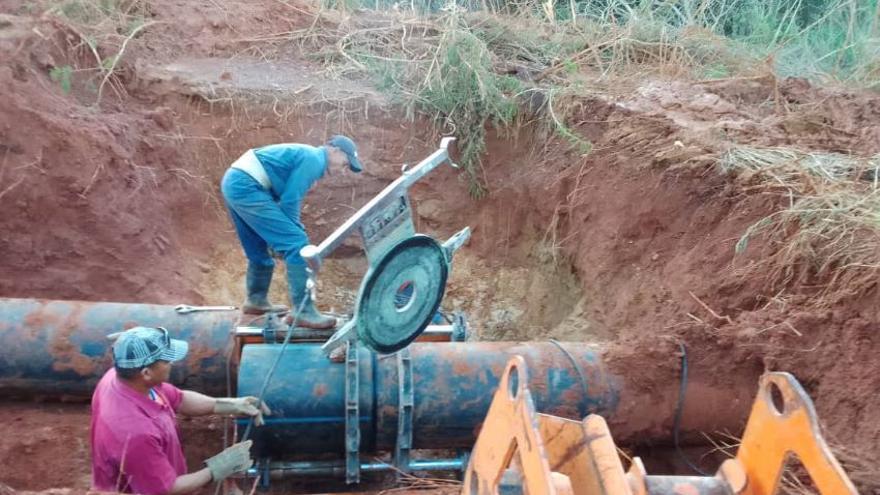
The authorities say that the pipe itself is not broken; it’s the connections that don’t contain the water. (Periódico 26)
14ymedio, Havana, 1 February 2024 — The families of Las Tunas “have continually sore arms from carrying so much water.” This was the statement on Wednesday in the local press for the umpteenth time about the water situation in the province, which has still not been resolved. On January 28, several leaks in the new water pipe – which came into operation only last October – caused the supply to stop arriving at the Piedra Hueca station.
The “ephemeral stability” of the service, according to Periódico 26, has broken down again along with the pipe, which was installed in 2021 and which the inhabitants hoped would be the definitive solution to the desperate water situation.
“A week after being in operation, we found six leaks, and they were all resolved in a short time,” Piedad Herrera, director of Aqueduct and Sewerage, told the newspaper, but she admitted that since then, leaks continue to appear from time to time without the state-owned company having the resources to repair them. “Since September 7 they have not given us fuel, and that, together with the fact that we did not want to stop the service to make adjustments, were issues that delayed the repair,” the director added. continue reading
Despite the fact that the maintenance work is now being carried out, the authorities predict that the service will remain disabled at least until the weekend. “The work is complicated because there is a lot of mud, but I think that this situation can be resolved by the weekend. We are doing everything possible for that, without rest,” said Herrera. She clarified that the brand new pipe is not broken; it’s the connections that seal it that fail to contain the water.
The neighbors of Molinet showed us, for example, how they went there in cars and on bicycles to load water from the leaks themselves, since there is no other possible option
Despite the insistence of the authorities that everything possible is being done to alleviate the situation, the media emphasized that the people in the province are having a hard time.
“We note, with great regret, how complex the situation has become in the vicinity of Piedra Hueca. The neighbors of Molinet showed us, for example, how they went there in cars and on bicycles to load water they would use at home — from the leaks themselves — with no other possible option,” the newspaper said.
The Piedra Hueca pumping station is not the most important in the province, says Periódico 26, but the cessation of its operation has an impact on the drinking water service, which has been reduced especially in the provincial capital, with the neighborhoods of the Airport, Sosa, Casa Piedra and Buena Vista being the most “vulnerable.”
The situation of the wells near Piedra Hueca is not ideal either. “Only one of those (five) wells has an assigned generator set,” and of the five electropumps that the station should have, only one works, despite the fact that last December Periódico 26 itself reported that they had been “mended” to keep them active.
The media itself puts its hope in the promise of the authorities to re-establish the flow for this weekend although, it regrets, “no one can guarantee us that the situation will not be repeated later, but they did tell us that they have high hopes that the solution, this time, will be lasting and even final.”
Six months after declaring that the situation was “somewhat critical,” the provincial authorities no longer find words to describe the drinking water deficit. For its part, the population, which in some cases spends weeks without receiving the service, no longer hesitates to launch criticism and complaints to officials on social networks. Meanwhile, managers are content with the fact that it is not “raining now,” something that would make the repair even more difficult than it already is.
Translated by Regina Anavy
____________
COLLABORATE WITH OUR WORK: The 14ymedio team is committed to practicing serious journalism that reflects Cuba’s reality in all its depth. Thank you for joining us on this long journey. We invite you to continue supporting us by becoming a member of 14ymedio now. Together we can continue transforming journalism in Cuba.
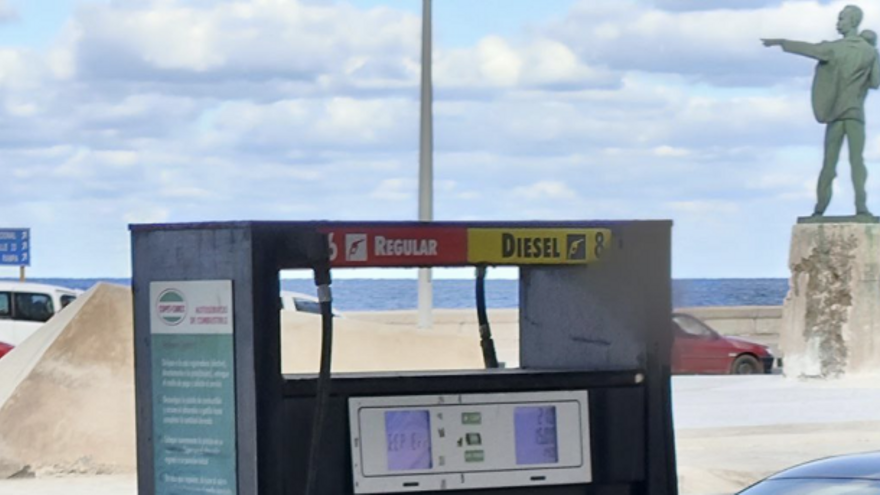
El Tángana gas station, in Havana, this Wednesday. (14ymedio)
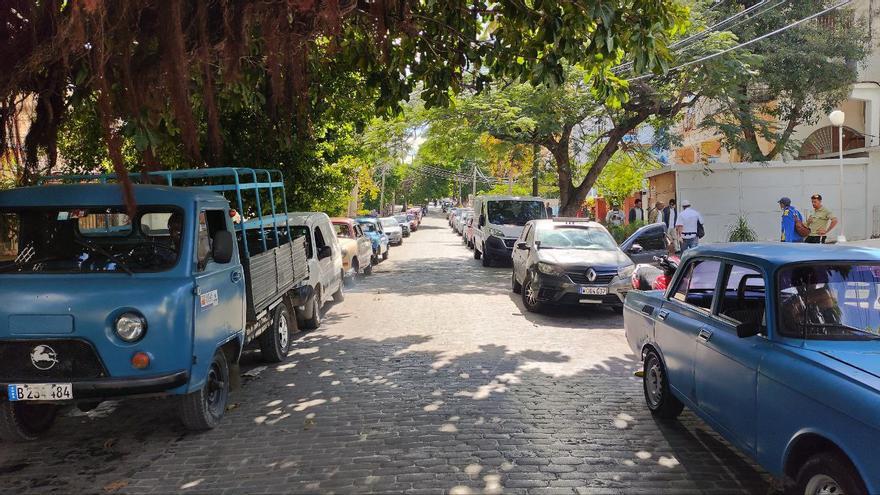
14ymedio, Natalia López Moya, Havana, 31 January 2024 — It started as a murmur. Some drivers who were waiting with their vehicles in line to buy fuel at the El Tángana gas station in Havana shared the news. “They just said it on the news,” said a driver with shortness of breath and an almost purple face. “They backtracked on the new prices,” he concluded, before the stunned gaze of the others who had been in line for days.
A few hours before the new rates came into effect, up to five times higher than the previous rates for the sale of gasoline and diesel in Cuba, the authorities have canceled the measure. The reason for the step back has been explained on national television by Mildred Granadillo de la Torre, First Deputy Minister of Economy and Planning. The official has justified the slowdown due to the occurrence of “a cybersecurity incident in the computer systems for the marketing of fuels whose origin has been identified as a virus from abroad.”
Life stopped in each Cuban service center starting a little after two in the afternoon this Wednesday, when the announcement was broadcast on national television. In other times, it would have taken hours for those who had not been in front of the television screen to find out, but, for better or worse, the Internet has shortened the time and has accelerated reactions in today’s Cuba. A few minutes after it was announced before the news microphones, the effect of the official rectification was noticeable at the gas stations. continue reading
“I spent a very cold night in this line because I knew that starting February 1, fuel would cost more. Right now I feel like they’ve laughed at me, I don’t see this as a relief, this is a mockery”
“I spent a very cold night in this line because I knew that starting February 1, fuel would cost more. Right now I feel like they are laughing at me, I don’t see this as a relief, this is a joke,” said another driver of a Lada car who had already even “made friends” with the nearby drivers of a Polski Fiat and an old American vehicle from the beginning of the 20th century. In the face of the crisis, there is no better or worse car, what counts is whether or not the owner has access to the currency, a carte blanche that, in principle soon, will facilitate access to the precious product.
And it is precisely dollars that will begin to make the difference when the new prices are implemented, postponed by the alleged hacking of the networks of the military conglomerate Cimex, which manages the gas stations on the Island. The alleged computer attack has come to add doubt to doubt and unease to a reality that was already quite immersed in unrest.
“What’s wrong with these people?” asked the driver of a Moskvitch, who this Wednesday found out about the “step back” after more than 36 hours in line to refuel in El Tángana. Behind him, the statue of José Martí, which once served for the most recalcitrant official events held in the Anti-Imperialist Platform, was seen in a peculiar and little-known foreshortening.
The sculpture, seen from the gasoline pumps, no longer showed its haughty profile this Wednesday, carrying its small son and pointing an accusing finger at the United States Embassy in Havana. Instead, it seemed timid, humble, and more down-to-earth. It summed up the feelings of frustrated drivers who did not know whether to breathe a sigh of relief or fear the worst when the date of the new rates for gasoline and diesel changed.
“Retreat!” joked on driver, paraphrasing a popular Cuban cartoon. “The Apostle* has said it: go back, we must go back,” and the long and inflexible arm of the figure seemed to agree with him. In the foreground, the screens of the fuel pumps marked a brief message: “Err” for “error” or perhaps for “eradicating” such a disastrous measure, just before it was applied.
*Translator’s note: Cubans identify José Martí [1853-1895] as the “Apostle of Cuban Independence” and he is commonly referred to simply as “the Apostle.”
____________
COLLABORATE WITH OUR WORK: The 14ymedio team is committed to practicing serious journalism that reflects Cuba’s reality in all its depth. Thank you for joining us on this long journey. We invite you to continue supporting us by becoming a member of 14ymedio now. Together we can continue transforming journalism in Cuba.
The new prices are already listed at the Rancho Boyeros and Ayestarán gas station. (14ymedio)
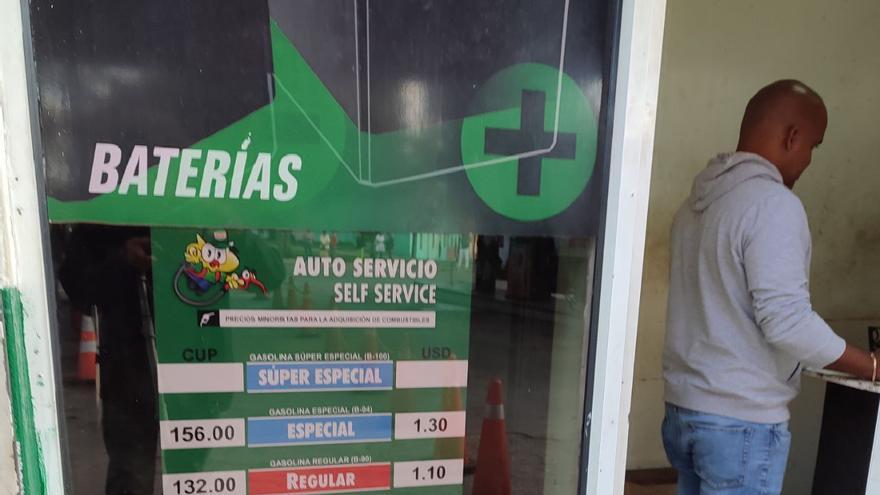
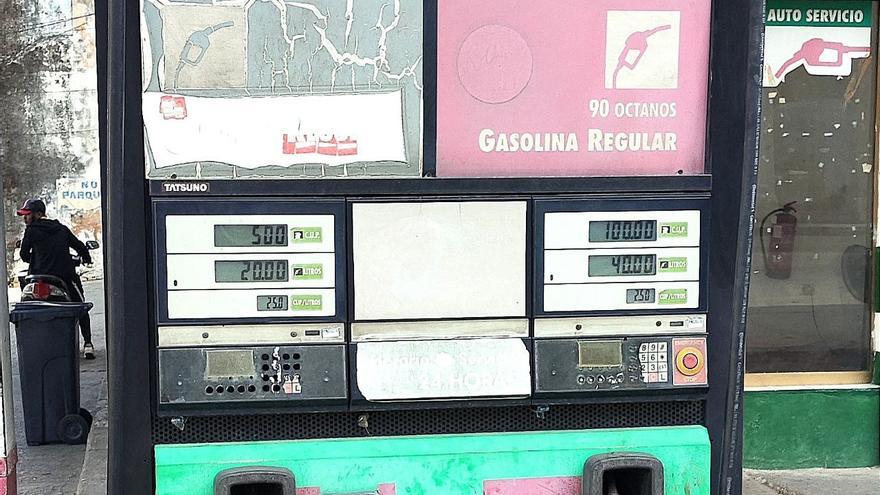
14ymedio, Havana, 31 January 2024 [translation updated with added text 1 February 2024] — In national currency and also in USD – a great novelty of the reform announced in January – the new fuel prices appeared this Wednesday on the pumps at the gas station at Rancho Boyeros and Ayestarán, in Havana. However, drivers are alarmed when they see those rates in pesos and dollars – five times more expensive than the previous ones – and the employees explain that the change will take effect tomorrow, Thursday, February 1. However, the official media reported this afternoon that the implementation of the new rates is postponed.
“The government’s projections to correct distortions and re-boost the economy during 2024 will only be implemented if the conditions for this are created,” Mildrey Granadillo de la Torre, first vice minister of Economy and Planning, told national television. “Defending this principle” it is decreed to postpone the implementation of the “price update” of gasoline, said the senior official, who added that “this decision includes the occurrence of a cybersecurity incident in the computer systems for the commercialization of fuels whose origin has been identified in a virus from abroad.”
It was also reiterated by Esther, the person in charge of organizing the queue to buy fuel in Guanabacoa via Telegram: “The update of fuel prices and its marketing in USD is extended. The decision is due to a cybersecurity attack in the marketing system of Cimex.”
The Cuban influencer Manuel Milanés alluded to this on Tuesday in a tweet from Miami: “The Cimex de Gaesa Corporation had its entire management system erased and they had no backup, they are doing a general inventory to be able to have some control.”
Asked by 14ymedio, a driver from the state-owned Copextel says that the new measure does not worry him. Premium gas is at 156 pesos or 1.30 dollars instead of 30 pesos, regular and diesel at 132 pesos or 1.10 dollars, continue reading
and diesel at 114 pesos or 0.95 dollars (instead of 25 and 20 pesos, respectively), he recites, while filling the tank of his truck. “I don’t care what it costs, because the company where I work pays for it. If I don’t have the money to pay for fuel, I’ll stay home,” he adds.
Private car drivers, however, do not show the same peace of mind. After spreading the word that the service center at 25 and G, in El Vedado, would be dispatching gasoline this morning, dozens of boteros (taxi drivers) and car owners gathered in a line that stretched for several blocks on both sides of F Street.
A line stretched for several blocks this morning on F Street to buy gas in the service center at 25 and G. (14ymedio)
“I’m behind that Kia and he’s behind the red Peugeot,” a driver shouted. “No one wants a mess here; that’s why everyone who gets in line takes a photo of the license plate of the car in front of him, so those behind don’t cut in with two other people,” one of the boteros tells this newspaper.
Uneasy about the change of prices, with which they predict irregularities and preference of the Government with foreign exchange services, many of those who wait at 25 and G will try to buy as much fuel as they can this Wednesday. “I already emptied the little gasoline I had in the car to be able to fill the tank to the top. I also always bring a few gallon containers in the trunk in case I can buy more,” says one of the drivers, who complains that the line isn’t moving. “My brother-in-law, who is a few cars ahead, even went to his oncology appointment at the hospital, and when he returned the line had barely moved.”
Another of his concerns, not far from reality, he says, is that the new card payment systems do not work in a country with constant power cuts and frequent drops in the electronic collection system. This same afternoon, the two gas stations in Guanabacoa warned that payment was only possible with the cards issued by Fincimex and that the QR code did not work.
Many drivers, annoyed by the delay and noon hunger, complain about the way the government is handling the price change, knowing that the demand for fuel will skyrocket. “It’s going to go on,” one said, “and the dollar keeps rising, you don’t even know where it’s going to go.”
“That guy you see there on the motorcycle,” he continued, “has been walking around the street all morning. It seems that they sent him to make sure everything is quiet. You notice them right away by the mask, the dark glasses and the cap they wear so that you don’t recognize them,” he says. “They have fuel for those guys.”
Regular gasoline will no longer be sold at 25 pesos and will now cost 132 pesos or 1.10 dollars a liter. (14ymedio)
In the few hours left before the prices change, there are more incidents than usual, both in the payment systems and the suspension of service, because no technician appears to fix the supposedly damaged gas pumps.
The rest of the signs that the habaneros have learned to decipher, such as the smoke of the patana (floating Turkish power plant) anchored in the bay or the fire of the Ñico López refinery, do not give indications that oil is circulating in the city. This morning, neither of them had the chimneys lit.
Cuban ports, however, report the entry of oil tankers such as the Alicia and the Chemical Contender in Havana; the Lourdes, the Ocean Mariner and the Sandino in Matanzas; the Esperanza in Cienfuegos; and the LPG Emilia in Santiago de Cuba, where they also expect the Aquila this Wednesday.
COLLABORATE WITH OUR WORK: The 14ymedio team is committed to practicing serious journalism that reflects Cuba’s reality in all its depth. Thank you for joining us on this long journey. We invite you to continue supporting us by becoming a member of 14ymedio now. Together we can continue transforming journalism in Cuba.
Donation of beds and mattresses to a hospital in Santiago de Cuba this January. (Sierra Maestra)
14ymedio, Havana, 30 January 2024 — Cuban hospitals, whose crisis of supplies, facilities and personnel has been continually denounced by the population and the independent press, currently live on donations provided by governments and foreign organizations. This same Monday, the regime celebrated the help of 280 kilograms of expendable material from a new contributor: the Cuban doctors themselves sent on a mission to Djibouti, one of the poorest countries in Africa.
“Syringes, sterile gauze, tape, serums, granules and bladder catheters” arrived at the Doctor Antonio Luaces Iraola hospital in Ciego de Ávila from the hands of two doctors who, after five years in Djibouti, bring help from “the entire brigade.” ” – about 80 health workers – who work in that country, explained the local media Invasor.
With regards to the lives Cuban health workers in Djibouti, a “desert country, with temperatures of almost 50 degrees celsius,” where they worked “without water” caring for “a population suffering from unknown diseases, including the bite of poisonous snakes,” the newspaper states that “there is no money to pay” that effort. continue reading
Invasor tacitly recognized the alarming lack of resources in the “labyrinth of wards” of Ciego de Ávila’s Luaces hospital, where, it estimates, “the 280 kilograms of medical supplies (…) at this time must have already relieved or healed pain.”
Donations of all kinds and from a multitude of countries “saved” the Cuban state three million dollars last year
For their part, several medical centers in Santiago de Cuba received a total of 96 donations in 2023 from various countries and international organizations. The shipments have allowed them to continue to operate and renew part of their equipment to “maintain services despite the severe limitations,” the official newspaper Sierra Maestra reported this Sunday.
Italian ambulances, Japanese and Swiss incubators, American beds and mattresses, refrigerators, vaccines and X-ray and imaging equipment from Unicef and the United Nations, as well as supplies for oncological treatments and research from Spain, “saved” the Cuban State three million dollars last year, according to the newspaper.
Another shipment of 27 boxes worth 22,000 euros arrived last December at the Camilo Cienfuegos hospital in Sancti Spíritus thanks to the Valencian organization Esperanza sin Fronteras [Hope Without Borders], which said it had paid for the donation with “private contributions.”
The NGO also committed to paying for the necessary supplies to supply two hospitals and two polyclinics in the provincial capital, said the digital Valencia City, which insisted on the importance of this aid for “a country that suffers the very serious consequences of the situation” of instability that has been going on for years, and that is leading a decline in meeting the basic needs of the Cuban people.
Despite the difficulties on the Island, which range from finding the most common medicines to the stampede of health workers to other sectors or abroad, the Cuban State continues signing contracts to send doctors to other countries. This January the media L’Unione Sarda reported that the Italian region of Sardinia would receive 128 health workers and 30 nurses to alleviate the lack of medical personnel in that region.
Months earlier, last August, the Italian region of Calabria had already hired nearly 500 doctors from the Island out of “desperation,” since health workers from other countries refuse to assist them due to low salaries and they urgently needed staff.
____________
COLLABORATE WITH OUR WORK: The 14ymedio team is committed to practicing serious journalism that reflects Cuba’s reality in all its depth. Thank you for joining us on this long journey. We invite you to continue supporting us by becoming a member of 14ymedio now. Together we can continue transforming journalism in Cuba.
Castro Ochoa had been treating his patients with “alternative” treatments for years. (Facebook/Carlos Castro Ochoa)
14ymedio, Havana, 26 January 2024 — Carlos Miguel Castro Ochoa, a rural healer from the Mexican municipality of Ixmiquilpan, in the state of Hidalgo, faces trial after the death of a patient whose cancer he had promised to cure with blue scorpion venom from Cuba. The “naturopathic doctor,” as he presents himself, charged about 17,000 pesos in advance – about 1,000 dollars – for the treatment with Escozul, a product manufactured in Cuba.
According to the Mexican press, Castro Ochoa supplied his patient with “large bottles with homemade printed labels,” whose doses were applied orally using a dropper. It was “a substance coming from Cuba without the necessary Mexican health permits.” Although the note does not reveal the name of the medicine, it publishes an image of its label, which corresponds to the old format of Escozul bottles.
Castro Ochoa had been treating his patients with “alternative” treatments for years and “dozens of people came to the improvised office inside his home” on Calero Street in the rural town of El Nith. Last December, the relatives of the patient – who died in the emergency room of a hospital in Ixmiquilpan – demanded money from Castro Ochoa and he “responded with threats” and claimed that “the authorities could not do anything to him.”
It is not the first time that Castro Ochoa has faced problems with the Justice Department, but – according to the newspaper Milenio – he is spared because “he is of foreign origin.” The healer promised those who came to him to be treated for advance stage cancer and diabetes, leukemia, epilepsy, sexual dysfunctions, kidney stones and other ailments, always having to pay in advance, they clarify. continue reading
A municipal ruling from Ixmiquilpan, published in 2007, prohibited “healers and fortune tellers” from operating in any of its locations.
A municipal ruling from Ixmiquilpan, published in 2007, prohibited “healers and fortune tellers” from operating in any of its locations and expelled repeat offenders, the newspaper claims. However, Castro Ochoa evaded the law due to his “alleged foreign origin.”
Facebook and Telegram groups that sell both “drugs” as a cancer cure are common in Mexico. One of these groups, attended by a user who identifies himself as “Doctor Alejandro CR,” sells Vidatox as a “general homeopathic treatment” and disqualifies Escozul as “a very expensive treatment.”
“I bring Vidatox directly from Cuba,” explains Alejandro CR bluntly. “Bringing it to Mexico is difficult, sometimes it gets confiscated. That is why you will find other people on the Internet who, like me, sell it here.” Escozul, which is less affordable, he adds, requires “going to Cuba, where they do a study and personalize the doses according to the type of cancer. Treatments with Escozul can last for years.”
The “doctor” warns against “advertisements that say that Vidatox does not work” and explains its reason for being: “It is a commercial competition”, lies launched by Escozul because “they do not agree that Vidatox exists with a much lower price than what they charge.” Next, Alejandro CR tells his potential clients to contact him privately for more information.
The mind behind Escozul is the microbiologist Alexis Díaz, the same scientist who in 2011 began selling Vidatox
Escozul is one of the two compounds derived from the venom of the blue scorpion (Rhopalurus junceus) that Cuban Public Health promotes and sells at a high price abroad. Manufactured by Lifescozul Laboratories – which has several branches in the region, including Mexico – the product is presented as “the most advanced formulation of blue scorpion venom.”
The mind behind Escozul is the microbiologist Alexis Díaz, the same scientist who in 2011, when working for the State-owned Labiofam, began selling Vidatox, to which he attributed “proven antitumor, analgesic and anti-inflammatory efficacy.” Since then, Cuba has insisted on the healing properties of scorpion venom and has published numerous “scientific” articles attempting to demonstrate its effectiveness and promote its purchase.
The Lifescozul team, very active on social networks and with headquarters in the expensive international clinic La Pradera – founded by Fidel Castro in Havana in 1996 – offers very expensive treatments to its patients. In order to be treated in Cuba, you will have to pay $1,200 or more. If you want the medication to be sent to your country, you have to pay between $80 and $110 per month for the duration of the treatment.
In 2021, Escozul signed two contracts in Mexico with the companies Pharmométrica and Research Pro. In 2022, they closed a deal with the Tecnológico de Monterrey
In 2021, Escozul signed two contracts in Mexico with the companies Pharmométrica and Research Pro. In 2022, they closed a deal with the Tecnológico de Monterrey, to give more scientific weight to Escozul’s work. Dr. Díaz’s ambition: to obtain the Health Registration of the product, which would allow its authorized sale throughout the world.
Apparent rivals in the public sphere, Escozul and Vidatox have a common origin in Havana and the improvised merchants who sell them – such as Castro Ochoa and Alejandro CR – do not distinguish these nuances when it comes to profiting from a product whose origin is unknown.
The medical reality, however, is clear: it is not scientifically proven that scorpion venom can cure cancer. The prestigious Memorial Sloan Kettering cancer research center – founded in 1884 in the United States – has explained that the benefits attributed to Escozul or Vidatox “are largely based on anecdotes, testimonies and experiments that may not have been correctly carried out.” And he adds that “in Cuba, where these products originate, the Government rejected the use of Escozul in 2009 for not having enough information.”
Translated by Norma Whiting
____________
COLLABORATE WITH OUR WORK: The 14ymedio team is committed to practicing serious journalism that reflects Cuba’s reality in all its depth. Thank you for joining us on this long journey. We invite you to continue supporting us by becoming a member of 14ymedio now. Together we can continue transforming journalism in Cuba.
 14ymedio, Juan Matos, Manzanillo (Granma Province), 2 February 2024 — In the San Francisco cemetery complex, fifteen minutes by car from the municipal necropolis of Manzanillo (Granma), up to 200 dead were buried in a single day in mass graves during the worst time of the pandemic. Mobilized by order of the authorities, the gravediggers were unable to cope and had a clear instruction: three hours after death they had to remove the body.