Honduras Ends Agreement with Cuban Doctors and Threatens to Investigate Them

The country follows in the footsteps of Guatemala, Antigua and Barbuda, as well as Guyana and Saint Vincent and the Grenadines.


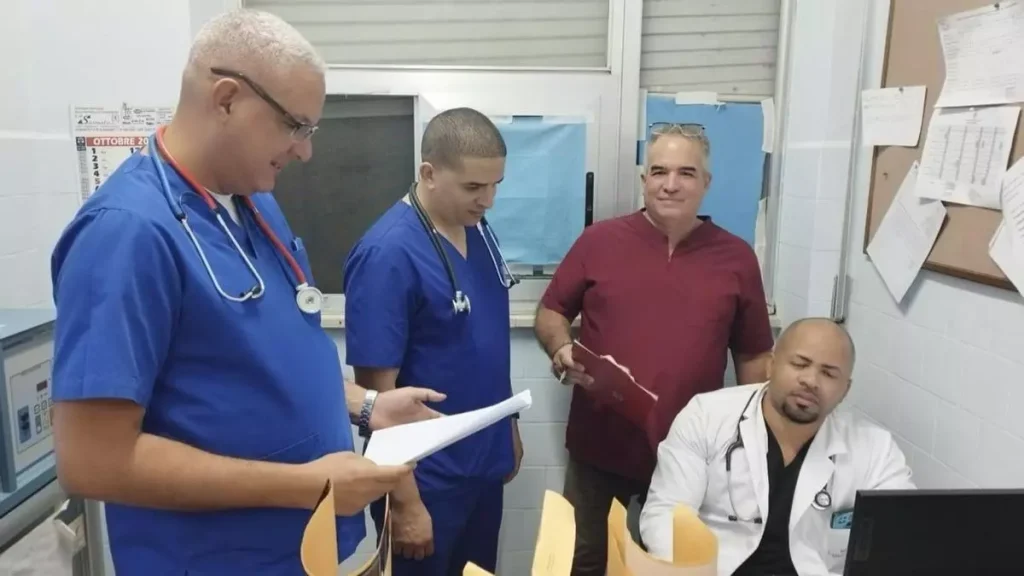
This Monday, doctors from the island who provided services at an ophthalmology clinic said goodbye to the residents of San José de Colinas, in the department of Santa Bárbara. / Video capture by Roger David Iraeta

14ymedio biggerThe Government of Honduras has ended the agreement with Cuban doctors promoted two years ago by then-president Xiomara Castro, an ally of the Island’s regime. Communications Secretary José Augusto Argueta confirmed that the departure of the specialists was due to a “foreign policy decision.”

At the same time, National Party congresswoman and vice president of the National Congress, Johana Bermúdez, stated on Monday that the Government would push for an investigation into the group to determine whether they were truly healthcare workers. “That political relationship brought in a large number of personnel, and we never knew whether they were doctors, nurses, or spies,” she said in an interview with HCH Noticias.

The departure of the specialists has generated uncertainty among the population, who fear for the continuity of the Operation Miracle program in ophthalmology clinics run by Cuban specialists. José Augusto Argueta clarified that “the centers will not close.” Regarding one center that was not providing services, he said this “could be due to political pressure.”

Likewise, the secretary specified that the five centers—“one in Siguatepeque, two in Santa Bárbara (Colinas and Arada), one in Catacamas, and another in the Central District”—are active and will be operated by Honduran doctors.

For his part, Deputy Health Minister Eduardo Midence said that work is underway on “hiring Honduran or foreign doctors duly accredited by the Medical Association.”

The AFP news agency reported the departure of 128 Cuban specialists. On Monday, doctors from the Island who had been providing services at an ophthalmology clinic bid farewell to residents of San José de Colinas, in the department of Santa Bárbara. “We are leaving knowing that we cared for you, that we worked for you, and hopefully we will return. This is continue reading

our farewell,” said one of the physicians.

According to Gonzalo Valerio, a member of the Honduras-Cuba Friendship Association aligned with the regime, the specialists are waiting for a charter flight to be arranged to take them back to the Island in early March.

The Cuban specialists who provided services at the ophthalmology clinics will be replaced by Hondurans.

Honduras follows the path of Guatemala, Antigua and Barbuda, as well as Guyana and Saint Vincent and the Grenadines, which ended their medical cooperation projects with the Island after pressure from Washington. Last June, the United States announced the revocation of visas for Honduran officials from the Health Secretariat (Sesal) and the Strategic Planning Secretariat.

The U.S. government has dnounced that these missions involve the “coercion” of healthcare professionals, who are sent to work in third countries under opaque contracts, with low wages and severe restrictions on their freedom.

Congresswoman Johana Bermúdez added that the country transferred significant sums of money to Cuba through the so-called medical brigades, a scheme that, she said, had been questioned at the time. “We denounced it as the opposition, and so did the Honduran Medical Association (CMH),” which also argued that the doctors lacked proper accreditation to practice in the country and that the Organic Law of the Medical Association was being violated.

Two years ago, the CMH stated that the Honduran government paid the Island $2,000 per doctor, in addition to providing them with housing, a vehicle, and food.

The presence of Cuban doctors in Honduras began in 1998, after Hurricane Mitch. As part of its relationship with the Island, the Central American government also agreed to send 170 general practitioners to the Island to train in one of the 23 specialties offered by Cuban universities.

Translated by Regina Anavy

______________________

COLLABORATE WITH OUR WORK: The 14ymedio team is committed to practicing serious journalism that reflects Cuba’s reality in all its depth. Thank you for joining us on this long journey. We invite you to continue supporting us by becoming a member of 14ymedio now. Together we can continue transforming journalism in Cuba.
Calabria Rejects U.S. Proposal to Get Rid of Cuban Doctors

The president of the Italian region, who met this Monday with the U.S. chargé d’affaires in Cuba Mike Hammer, is open to hiring healthcare workers “independently.”

A group of Cuban doctors at the Gioia Tauro Hospital in Reggio Calabria, Italy. / Facebook/Cuban Medical Mission in Calabria

14ymedio bigger14ymedio, Madrid, February 24, 2026 –The president of the region of Calabria (Italy) appears determined. Not only does he reject breaking the agreement with Cuba, as the United States wants, so that Cuban doctors can continue providing services in his territory, but he also wants to expand it. “I explained to my counterparts that I had in mind, in 2026, increasing the Cuban medical mission to 1,000 doctors,” said Roberto Occhiuto, who met this Monday with the U.S. chargé d’affaires in Cuba, Mike Hammer.

At the meeting, held in the city of Catanzaro with the presence of the U.S. Consul General in Naples, Terrence Flynn, the parties addressed the thorny issue of Cuban medical brigades, whose termination is a clear objective of the administration of Donald Trump. Since 2025, Secretary of State Marco Rubio himself has been actively involved in suspending all contracts that various countries have signed with the Cuban regime to import healthcare workers, using both negotiation and sanctions.

He has thus managed to have agreements modified or suspended with the Bahamas, Jamaica, Guatemala, Honduras, Antigua and Barbuda, Grenada, Guyana, and Trinidad and Tobago. But Italy is a unique case, as it is the only country in the European Union that has resorted to these agreements to address its severe shortage of doctors. For this reason, Occhiuto has been signaling for days that his answer is No: a position he reaffirmed yesterday after his “long and friendly” meeting with Hammer. continue reading

Italy is a unique case, as it is the only country in the European Union that has resorted to these agreements to address its doctor shortage.

“We had a long and cordial meeting, discussing Calabria’s urgent healthcare needs and the complexities surrounding the Cuban doctors’ mission,” he told the Italian press. “I told Hammer that the Cuban doctors, who allow Calabria’s hospitals and emergency rooms to remain open, are still a necessity, because my absolute priority is to guarantee citizens’ right to healthcare, given that our system is already facing great difficulties.”

In fact, the plan is for up to 1,000 doctors to arrive this year, he confirmed. However, Occhiuto is not closing the door to other options to address the system’s shortcomings. “In recent weeks, also thanks to a fruitful collaboration established with the U.S. State Department and the U.S. Consulate, we have decided to explore an alternative way to recruit more doctors. We did so by publishing, in mid-January, a call aimed at all doctors from the EU and non-EU countries who want to come work in Calabria,” he explained.

The leader of the Forza Italia (right-wing) party maintains that if the goal is to expand options, he is open to any solution. “We will welcome all doctors who want to come,” he said, expressly mentioning both EU and non-EU professionals.

“In conclusion, I told Hammer that foreign doctors are absolutely necessary, but that our region is willing to receive all doctors—EU, non-EU, Cuban doctors not linked to the existing mission—who independently wish to come work in Calabria, which is prepared to provide them with all the logistical and financial support we have already guaranteed to the Cuban doctors who have been living with us.”

Cuban doctors first arrived in this southern Italian region in 2023, in a contingent of about 170 healthcare workers who arrived in two groups.

Cuban doctors first arrived in this southern Italian region in 2023, in a contingent of about 170 healthcare workers who arrived in two groups. “I said it before and I repeat it: they are not going to take any jobs from Italian doctors,” Occhiuto warned at the time, rejecting criticism that accompanied the decision.

Even then, the president stated that at least 2,300 new contracts were needed to ensure the system functioned properly. Nearly 500 were expected to come from Cuba, according to the contract signed in 2022 between Cuban Health Minister José Ángel Portal Miranda and his Italian counterpart, Orazio Schillaci.

In January 2024, the Sardinian press announced the arrival from the Island of 128 doctors and 30 nurses to Sardinia, under a contract that expired on December 31, 2025, and could be renewed. Little more has emerged about that case, although at the beginning of that month local politicians expressed the need to maintain agreements with Cuba and stated that at least 1,000 doctors were required.

The Italian local press reported that for each doctor in Calabria, the region would pay 3,500 euros in salary and 1,200 euros for maintenance, housing, travel, and training. The salary, as usual, is paid to the Cuban government, which typically retains between 75% and 90%, leading the United States and some international organizations to denounce the practice as “forced labor.”

In the summer of 2025, Calabria’s opposition (social democrats) demanded explanations about the status of these agreements after a case emerged of a doctor who left his post to work at a private center. “This new case of abandonment adds to many others: in addition to those who opted for the private sector, there are those who went on vacation and never returned, those who preferred the Spanish healthcare system, those who disappeared, etc.,” denounced Ernesto Alleci, who added that “the numbers are starting to no longer add up.”

Several Italian regions, particularly the poorer ones, face difficulties hiring healthcare personnel, as their salaries are around $82,000 per year for a specialist, far less than the $99,000 in France or $172,000 in Germany.

Translated by Regina Anavy
______________________

COLLABORATE WITH OUR WORK: The 14ymedio team is committed to practicing serious journalism that reflects Cuba’s reality in all its depth. Thank you for joining us on this long journey. We invite you to continue supporting us by becoming a member of 14ymedio now. Together we can continue transforming journalism in Cuba.

“I Can’t Waste Time Assembling and Disassembling Old Rifles,” Complains an MTT Reservist

In Matanzas, with daily blackouts lasting 18 hours and endless lines to get a bit of cooking gas or some chicken, nobody seems willing to sign up for a mock battle against the US

“This time I really told them not to count on me anymore.” / 14ymedio

14ymedio bigger14ymedio, Julio César Contreras, Matanzas,  February 22, 2026 –On a dusty street corner in Los Mangos, near the Pediatric Hospital of Matanzas, Yosvany wipes the sweat with the back of his hand and stares down the block as if expecting someone from the Military Committee to show up any second. It’s not the first time they’ve come looking for him. Every so often, when Havana announces strategic exercises, “mobilizations,” or National Defense Days, his name pops back up on the list of Territorial Troops Militia reservists.

“This time I really told them not to count on me anymore,” he says, standing in front of a faded house while a neighbor on the sidewalk fans herself with her hand and another sits watching the street from a plastic chair. “I’ve got five plates to fill every single day. I can’t waste time assembling and disassembling old rifles.”

The latest reservist call-up, announced after the worsening energy crisis and rising tensions between Havana and Washington—made worse since Nicolás Maduro’s capture in early January—has brought back memories of similar previous mobilizations. On state television they talk about “combat readiness” and “defense of sovereignty,” but in the neighborhoods the conversation mixes with 18-hour blackouts and endless lines just to get cooking gas or a little chicken.

Yosvany became surplus—unemployed—as an accountant at the Provincial Commerce Directorate two years ago. Since then he’s fished tilapia in the San Juan River, pushed a wheelbarrow of root vegetables along Calzada de Tirry, and even worked as a line-holder at the Banco Popular de Ahorro on Calle Medio. “Short of stealing, I’ll do whatever it takes,” he insists. “My war is finding money so my kids don’t go without the basics. I’m not going to be just another number so the bosses can say everybody’s ready to fight here.”

“I do resist, yeah—but during an 18-hour blackout, eating four spoonfuls of plain white rice and saving the little bread ball for breakfast.” / 14ymedio

In Pueblo Nuevo, Magalis hears these stories and nods. At 73 years old, she lives on 3,000 pesos a month that barely cover rice, some beans, and the rationed bread from the market. Sitting at the entrance of a small neighborhood pizzeria, under a faded mural continue reading

of a smiling chef holding a steaming tray, the woman looks out at the street where the sun beats down hard.

“On the news they come out with those perfectly ironed olive-green uniforms, calling for resistance,” she says. “I do resist, yeah—but during an 18-hour blackout, eating four spoonfuls of plain white rice and saving the little bread ball for breakfast.” For her, these mobilizations don’t fix the lack of fuel or the leaking roof she’s been waiting years to repair.

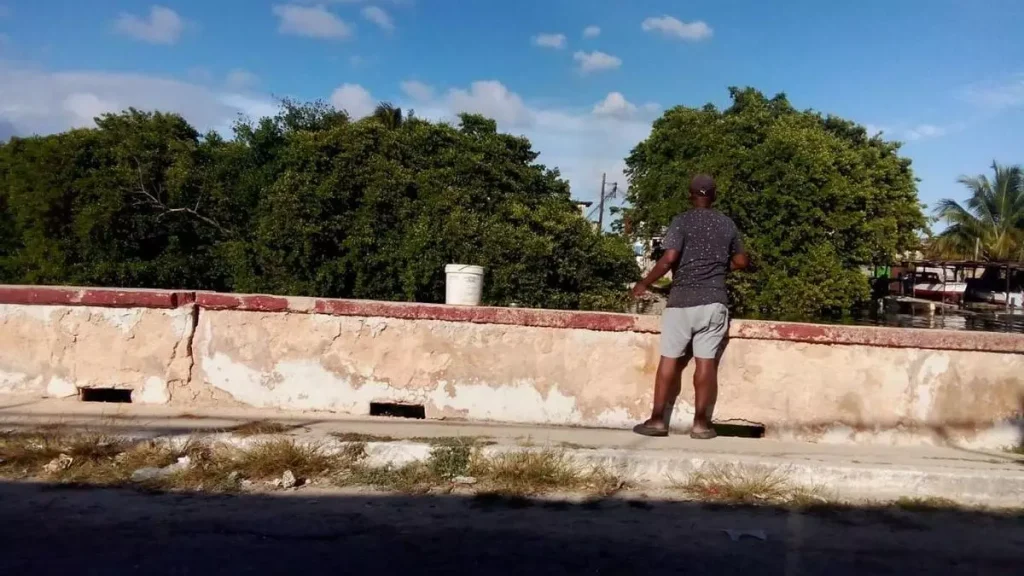
Daily life in the city contradicts the epic tone of official reports about military exercises. On a bridge over the river a man tries to catch something to take home; on another corner two old men chat in the shade of a peeling wall, under a sign advertising a shoemaker. Further on, a woman wearing a mask hurries by, dodging potholes and loose wires.

“I served on an internationalist mission and came back with my life dismantled.” / 14ymedio

Antonio, almost 65, has also been called up before. A veteran of five years in Angola, survivor of a landmine that damaged one eye and left him with psychological aftereffects, he looks at any new call with suspicion. “I served on an internationalist mission and came back with my life dismantled,” he says, sitting on the porch of his house. “After that nobody remembered us.”

He says a few years ago he asked to leave the Communist Party and the Association of Combatants. “They only call you to meetings and collect dues.” For him, the word “mobilization” has a bitter echo. “Thousands of us gave everything we had and more. Now that I’m old, all I want is some peace and quiet.”

The energy crisis has provided the backdrop for this new call to arms. The lack of fuel has paralyzed buses, slowed production, and multiplied blackouts. From the government they insist on the need to “prepare for any scenario,” while Washington toughens its rhetoric toward Havana and social media circulates versions of a possible domino effect after the fall of the Venezuelan leader.

But in Matanzas the conversation stays close to the ground. In front of houses, on makeshift chairs, people talk about rising prices, packages that never arrive, and children who have emigrated. The epic dissolves in the face of daily urgency.

“If they want me to defend something, they should start by giving me reasons to stay,” says Yosvany before saying goodbye. The afternoon sun reflects off the blue walls and tired faces. Nobody seems willing to sign up for a mock battle; they’ve got enough just trying to survive.

Translated by GH

______________________

COLLABORATE WITH OUR WORK: The 14ymedio team is committed to practicing serious journalism that reflects Cuba’s reality in all its depth. Thank you for joining us on this long journey. We invite you to continue supporting us by becoming a member of 14ymedio now. Together we can continue transforming journalism in Cuba.
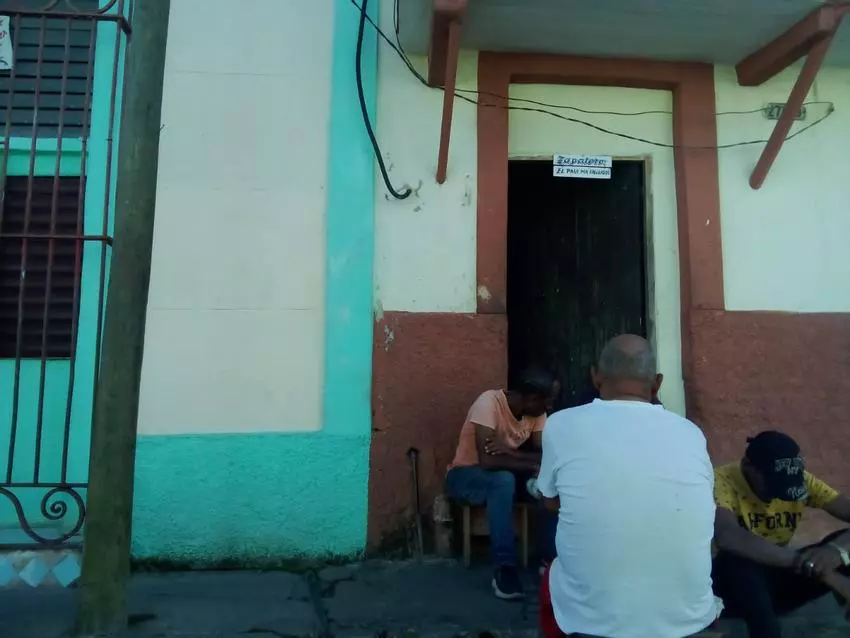
Cuba: Selling Food by Day and Surviving on the Streets by Night

The collapse of intercity transport forces many to sleep outdoors in Matanzas

“More and more of us are searching through the same containers, because many neighbors are now going to the garbage dumps to look for cardboard and wood for fuel.” / 14ymedio

14ymedio bigger14ymedio, Pablo Padilla Cruz, Matanzas, February 21, 2026 — El Jabao, as he’s known at the market, is a food vendor who travels to Matanzas from a rural area in Limonar, about 28 kilometers from the city. He leaves at dawn hoping to sell enough to cover basic expenses and the return fare. But his routine depends on calculations that almost never add up.

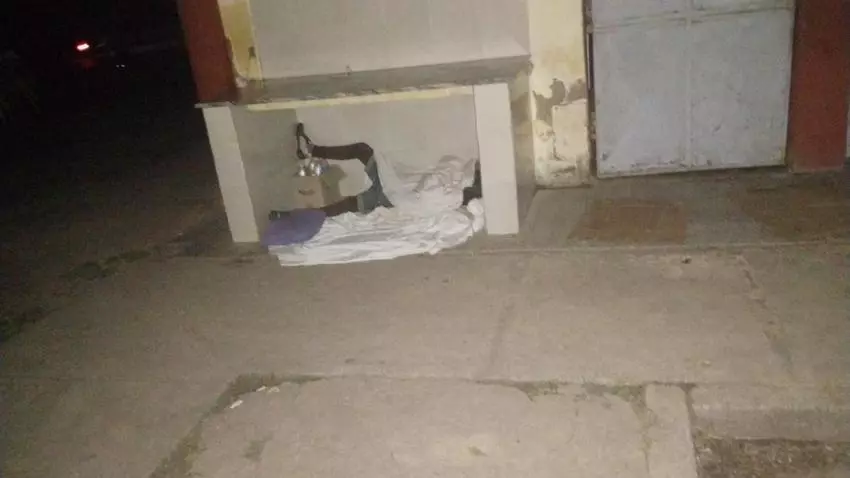
“If I sell well, I go back the same day. But sometimes the bus fare costs more than 400 or 500 pesos, and I can’t afford it. A year ago, I thought private vending machines for 200 pesos were expensive; imagine now,” he tells 14ymedio. “So I have to stay. There isn’t always nighttime transportation, and if there is, the price goes up even more. Sleeping on the street isn’t safe, but I can’t just throw away my merchandise either.”

In present-day Cuba, marked by chronic fuel shortages, the collapse of transportation, and precarious employment, the province of Matanzas has become a mirror of the tensions experienced by those who arrive from rural areas in search of income to survive, but do not always find a way to return to their homes or to have a safe roof over their heads for the night.

The provincial capital attracts men and women daily from nearby towns and villages who come to sell agricultural products, do informal work, or collect raw materials. However, the deterioration of intercity transportation and the rising cost of fares have complicated their daily return, turning a day of “making ends meet” into a night spent outdoors.

The deterioration of intercity transport and the increase in fares have complicated the daily commute. / 14ymedio

For those who live from hand to mouth, the margin is minimal. A bad run of sales can mean not only financial losses, but also spending the night away from home in difficult and dangerous conditions . The vendor himself admits that he goes out prepared for that scenario.

“I already bring a sheet to cover myself if I have to sleep on the street. And on cold days I have to stop selling, because if a cold front catches me outside it could kill me,” he explains.

Another visible facet of this reality is that of the raw material collectors. Faced with a lack of formal employment, many people—including internal migrants—travel the city searching for recyclable materials, which they then sell to state-run recycling centers.

Kike, originally from Sancti Spíritus, has been surviving like this in Matanzas for years. He lives on the streets with his dogs and spends his days collecting cans and bottles. His story paints an increasingly competitive picture.

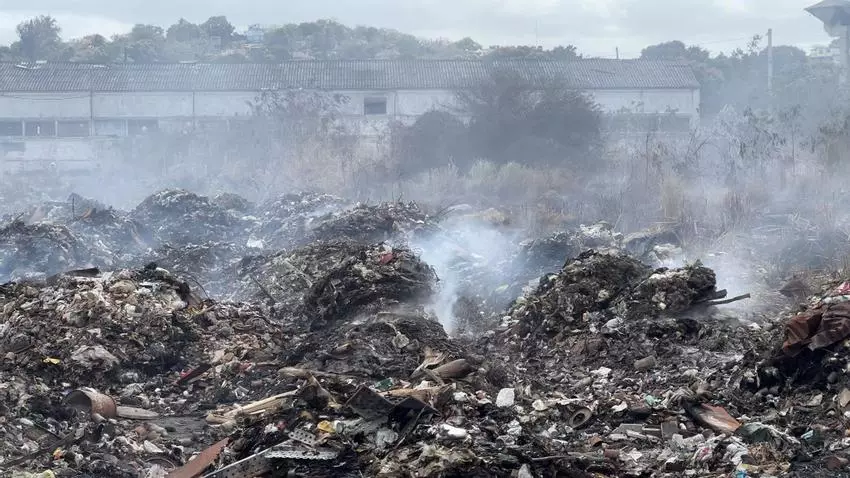
“I walk miles every day. Sometimes what I collect isn’t even enough to eat properly. And more and more of us are searching through the same containers, because many neighbors are now going to the garbage dumps to look for continue reading

cardboard and wood for fuel,” he says. “They’ve become the places where you see the most people on each block; there are even those who eat directly from the garbage.”

Garbage dumps have become “the places where you see the most people on every block.” / 14ymedio

According to official rates published by the Raw Materials Recovery Company in different territories of the country, the purchase prices to the public remain at low levels compared to inflation and the effort required to gather the materials.

Aluminum (cans) sells for between 70 and 100 pesos per kilogram; copper can exceed 400 or 500 pesos, depending on the type and quality. Plastic bottles (PET) are around 20 or 30 pesos per kilogram; cardboard and paper are bought for between 10 and 20 pesos, while glass generally goes for less than five pesos per kilogram.

Although these figures vary by province and availability, the reality is that gathering a kilogram of some materials involves long hours of searching, sorting, and transporting. For those living on the streets, like Kike, that difference determines whether they can feed themselves—and their animals—or whether they must rely on charity.

The problem isn’t limited to income. For many people with little resources arriving from rural areas, securing temporary shelter is another challenge. Private rental homes are unaffordable: a room can cost several thousand pesos per night, beyond the reach of those who barely earn a minimum wage.

Private rental homes are prohibitively expensive: a room can cost several thousand pesos per night. / 14ymedio

Some turn to distant friends or relatives; others improvise shelters in public spaces. The lack of accessible shelters or temporary housing solutions exacerbates the vulnerability of this transient group that enters and leaves the city depending on the season and available opportunities.

Social workers consulted in Matanzas acknowledge that the constant influx of people from the interior is due both to the lack of stable employment in rural areas and to the relative appeal of the provincial capital for “getting things done” during the day. However, they also admit that the city lacks the capacity to absorb this pressure.

The situation reveals an increasingly fragile balance between the countryside, which doesn’t offer enough jobs, and the city, which also fails to guarantee stability. Those who sell food depend on irregular and expensive transport; those who collect raw materials compete for scraps whose can value barely cover their basic needs.

Among sacks, bags of cassava, and bags of crushed cans, survival has ceased to be a metaphor: it is a concrete task that begins before dawn and, too often, ends in any doorway waiting for the coming of the next day.

______________________

COLLABORATE WITH OUR WORK: The 14ymedio team is committed to practicing serious journalism that reflects Cuba’s reality in all its depth. Thank you for joining us on this long journey. We invite you to continue supporting us by becoming a member of 14ymedio now. Together we can continue transforming journalism in Cuba.

Disappointment and a Little Hope Among Cubans in the US With I-220As After a Ruling by an Atlanta Court

The ruling compels a review of the case of two Cuban women whose applications for permanent residency under the Cuban Adjustment Act were denied.

Cubans with I-220A visas demonstrate, demanding the regularization of their immigration status. / 14ymedio

14ymedio bigger14ymedio, Madrid, 24 February 2025 — Frustration is the feeling most widespread among groups of migrants residing in the US with I-220A status [also known as parole]. Awaiting a decision from an Atlanta court that would clarify their uncertain future, the ruling, while not negative, will keep them in limbo once again, as it returns the case to the previous instance – the Board of Immigration Appeals (BIA). “So many have been unjustly detained and deported, and we still haven’t received an answer; we remain in immigration limbo,” lamented one of them, a resident of Texas.

Expectations were high surrounding this lawsuit, an appeal before the Eleventh Circuit Court in Atlanta filed by a Miami lawyer, Mark Prada, to review the case of two Cuban women who were denied permanent residency under the Cuban Adjustment Act.

In 2023, the BIA ruled that Form I-220A could not be considered a parole document and, therefore, to apply for residency, it was mandatory to pursue political asylum through the ordinary court process. This was the position defended by the US government, which considered these entries illegal and argued that the document only allowed them to remain free until the courts decided whether they had the right to asylum.

That was the position defended by the US government, which considered those entries illegal and the document only allowed them to be free until the courts decided whether they had the right to asylum.

Prada decided to appeal that ruling, arguing that the document her clients received, and that any person detained and subsequently released, should have been parole. Immigration law states that humanitarian parole is the only option for releasing a detainee, so it was simply a matter of applying it correctly, without creating other mechanisms. continue reading

Furthermore, he believed that federal legislation had been confusing in recent years. Now, the Court acknowledges that the Government lacked a consistent policy on admissions, with the subsequent consequences this had for obtaining immigration benefits.

The Government, however, has argued that there was never any intention to “grant the benefits of a parole status that it never intended to grant.”

“After reviewing the file and with the benefit of oral arguments, we conclude that we have jurisdiction over the matter, we annul the BIA orders in both cases and we forward the files for further proceedings,” reads the ruling, which is only six pages long.

Thus, the decision remains open, as it will again depend on the BIA to rule on the specific case of these two migrants and whether it affects the more than 300,000 Cubans living in the US with I-220A permits. The ruling could also establish criteria regarding bond applications or habeas corpus petitions, which are currently the subject of much debate due to the new immigration policies of the Trump Administration.

“This is not the decision we wanted, but we’ve won several points in this battle,” the lawyer said after the ruling was announced. The attorney expressed satisfaction in some aspects. “The Eleventh Circuit rejected the BIA criterion that a person with an I-220A is not eligible for Cuban Adjustment, and none of the government’s arguments were accepted.” In addition, Prada said the decision opens the door to a class-action lawsuit in Florida, since the Atlanta court declared itself competent to hear the case.

“This is a long fight, there is a lot to do and we have many moving parts,” said the lawyer, who has another similar case open in New York, speaking to the media.

“This is a long fight, there is a lot to do and we have many moving parts,” said the lawyer, who has another similar case open in New York

Last August , Jorge Lázaro García, a Cuban with an I-220A visa, became the first known case to be granted parole and residency by an immigration judge in New Orleans under the Cuban Adjustment Act. The decision, however, was contingent upon a possible government appeal, about which there has been no further information. Experts at the time cautioned that the case was unprecedented and it was overly optimistic to expect more.

Those affected, despite the fact that the arrests of innocent people are more frequent, maintain their faith, but it is becoming increasingly difficult. “This is unprecedented. None of us imagined leaving that island prison only to arrive here and live with this uncertainty of being sent back to where we fled from. All politics is a load of crap; they play with our lives like we’re puppets. They use the people’s money and sweat to sink us instead of saving us.”

______________________

COLLABORATE WITH OUR WORK: The 14ymedio team is committed to practicing serious journalism that reflects Cuba’s reality in all its depth. Thank you for joining us on this long journey. We invite you to continue supporting us by becoming a member of 14ymedio now. Together we can continue transforming journalism in Cuba.

Ottawa Announces an ‘Assistance Plan’ for Cuba, but Does Not Want To ‘Give Details at the Moment’

Until now, Canada was one of the largest contributors to the island’s economy through tourism and nickel mining, both of which have been paralyzed by the energy crisis.

Canada has contributed to supporting the Cuban economy for several decades. / EFE

14ymedio biggerThe Canadian government announced Monday that it is working on an aid package for Cuba in response to prolonged power outages and severe fuel shortages exacerbated by the U.S. oil embargo. “We are preparing an assistance plan. At this time, we cannot provide details of the announcement,” said Foreign Minister Anita Anand, according to a report by the Associated Press.

Although the official did not specify the form of the aid, the shipment could repeat what Mexico did in early February, when it sent two Navy ships to Havana with 814 tons of basic supplies such as milk, beans, rice, oil and tuna, in addition to the shipment of another 1,500 tons of powdered milk and beans.

As the leading source of tourists to the island and the main foreign investor in the mining and gas industries through the Sherritt Corporation, Canada has contributed to sustaining the Cuban economy for decades. The energy crisis triggered by the loss of oil donated by its Venezuelan ally after the military operation to capture then-President Nicolás Maduro on January 3rd has paralyzed two of the Cuban regime’s main sources of foreign currency: tourism and mining.

“We are preparing an assistance plan. At this time we cannot provide details of the announcement.”

In just a few weeks, Canadian airlines canceled all their flights to Cuba due to a critical fuel shortage. These included Air Canada, which operated 16 weekly flights, as well as WestJet, Air Transat, and Sunwing.

Furthermore, the Canadian government issued a travel alert to its citizens on its official website in early February, noting that the current situation on the island is “unpredictable and could deteriorate, disrupting flight availability at a short time.” It also warned that “a high degree of caution should be exercised in Cuba due to worsening shortages of electricity, fuel, and basic necessities, including food, water, and medicine, which continue reading

may also affect tourist resorts.”

The crisis, however, began long before Maduro’s fall, and Canadian tourism figures have dropped to almost half of what they were in 2015, when 1.3 million visitors arrived, fleeing the harsh winter in the northern country. In 2025, only 754,010 arrived, although the numbers improved slightly in January 2026 compared to the same month the previous year.

Last week, the mining giant Sherritt announced the suspension of its operations at the nickel and cobalt mines it operates in Moa (Holguín) due to a fuel shortage. The corporation stated that it plans to pause operations and put the processing plant on standby, during which time it will carry out “planned maintenance activities.”

The decision was made, the firm explained, after receiving “a notification that planned fuel deliveries to Moa will not be fulfilled and the timeframe for the resumption of deliveries is unknown.”

For American businessman William Pitt , whose family had multiple mining properties expropriated by the regime in 1960, the decision also jeopardizes the production of natural gas that supplies Havana, since the Cuban government was paying Sherritt with cobalt to repay its $250 million debt, and while production is stopped, it will no longer be able to do so.

______________________

COLLABORATE WITH OUR WORK: The 14ymedio team is committed to practicing serious journalism that reflects Cuba’s reality in all its depth. Thank you for joining us on this long journey. We invite you to continue supporting us by becoming a member of 14ymedio now. Together we can continue transforming journalism in Cuba.

With Both Municipal Services and Residents Burning the Garbage, Havana Is Covered in Toxic Smoke

Authorities warn of the “serious health effects” of waste incineration

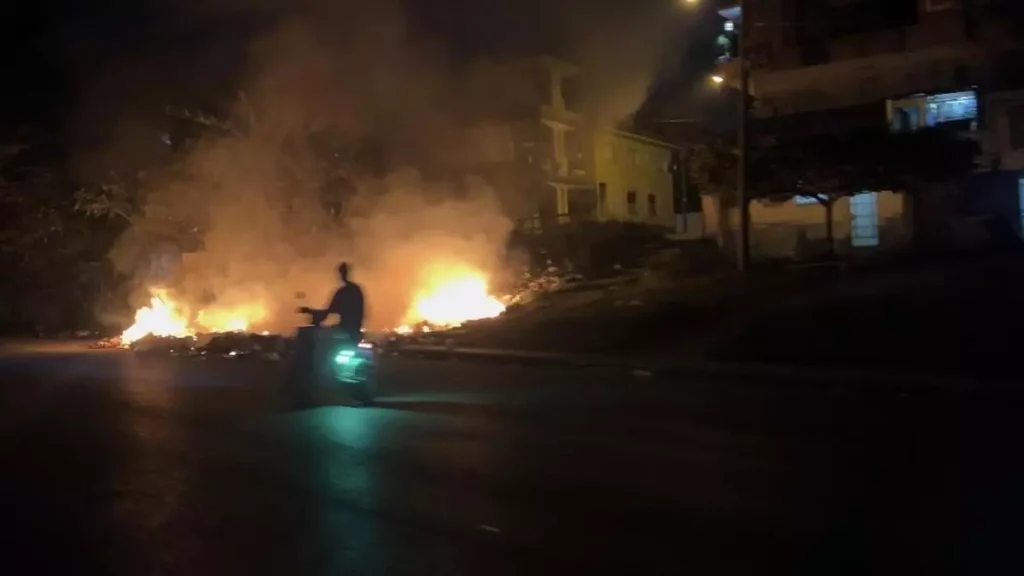
Burning of garbage on the Vento y Agua roadway in La Víbora, Havana. / 14ymedio

14ymedio bigger14ymedio, Havana, Darío Hernández, 23 February 2026 — “The garbage dump on the corner of my street is set on fire almost every day. There are times when the neighborhood is shrouded in mist, and it’s not mist, it’s smoke.” The scene Tony describes isn’t exclusive to Guanabacoa, where he lives, but rather a widespread situation in Havana. “My house is on a rise, and I can see the southwestern part of Havana all the way to the city’s First Ring Road, and every morning the level of smoke covering that entire area is heavy and very worrying.”

The burning of trash is indiscriminate, to the point that it often occurs next to hospitals, schools, or parks. Last Friday, a social media user reported a “waste burning” near Havana’s Metropolitan Park, “a mere 50 meters from the 26th Street Clinical Surgical Hospital,” she noted, “and in the middle of a densely populated neighborhood of elderly people and children,” that is, the central Puentes Grandes area in the Plaza de la Revolución municipality.

This being the case, the authorities have begun to speak out to warn of the consequences of carrying out this prohibited activity. This Sunday, the Cuban Neuroscience Center issued a Facebook post warning of the toxicity of this practice, which has proliferated during the crisis.

“Given the burning of trash in our city, we are alerting the public: this practice is seriously toxic to your health and your brain,” the text emphasizes. The center explains that, when burned, trash releases heavy metals and dioxins, which can cross the blood-brain barrier that protects the brain.

These components “act as neurological poisons: they affect memory, children’s cognitive development, and can trigger neurodegenerative diseases,” in addition to severely damaging the lungs and heart, and contaminating the soil and water. “Burning a garbage dump doesn’t clean it up; it turns it into a poison factory,” warns the institution, which states that it understands the desperation stemming from the garbage collection crisis, but at the same time objects: “The solution cannot be to make us all sick. Caring for the environment is continue reading

caring for our minds. A healthy community is a community that thinks.”

A similar alert to the one issued by the Neuroscience Institute was published this Monday by the Havana government itself, “in response to the troubling situation caused by the burning of garbage in various parts of the city.” The government explained that burning garbage refers to “incinerating solid waste in unauthorized locations or under unsuitable conditions.”

The procedure, they continue, not only pollutes the air but can also have “serious effects on human health,” such as respiratory problems, cancer, and neurological disorders. “Inhaling smoke from burning garbage can cause respiratory and cardiovascular diseases. Furthermore, the fine particles in the air can aggravate pre-existing conditions, such as asthma,” they detail.

A garbage dump is burning in the Havana municipality of Regla. / 14ymedio

The warnings have been met with applause among on-line users, who appreciate the attempt to raise awareness, but they have also sparked a heated debate about the true target of the advise. “The alert isn’t for the general public, it is for the relevant authorities, who seem indifferent to the serious and dangerous situation that is recurring throughout the country,” says a Havana woman who doesn’t hesitate to point the finger at someone. “Citizens are responsible for keeping things clean, but the State, which owns everything, is responsible for collecting the garbage. And don’t tell me it’s because of the fuel shortage caused by the old man across the way. This has been going on for years,” she adds.

As 14ymedio has confirmed , it is not only residents who are burning the trash, but also the Communal Services. “There’s a huge level of irresponsibility, ignorance, and negligence in this decision to set fire to the garbage,” laments Caridad, a resident of La Víbora. She explains: “On the one hand, the neighbors are fed up with having garbage in the neighborhood and they set it on fire, but they don’t understand the consequences. But on the other hand, the municipal department is also burning it, and that’s much more serious because there’s a disconnect between what Public Health dictates and what the municipal department is actually doing.”

This weekend in Regla, two sanitation workers could be seen next to a smoking garbage dump, not far from the Frank País elementary school. They both had a small machine for moving the trash.

Rumors that the widespread burning of trash in various parts of Havana stemmed from an order issued by different departments of the Communal Services have been circulating this weekend. An employee of this department in the Cerro municipality denied in a telephone conversation with this newspaper that it was an order from above, despite the increasing number of burning trash piles. “No, it wasn’t us, that’s just social indiscipline, compañera,” the worker responded, recommending that people call the fire department if they observe a dangerous situation with the fire.

This weekend in Regla, two sanitation workers could be seen next to a smoking garbage dump, not far from the Frank País elementary school. / 14ymedio

In Guanabacoa, the Communal Services has opted to address the situation by offering jobs to those who own animal-drawn carts. “Any Guanabacoa resident who owns an animal-drawn cart and is interested in applying should come to the company,” they announced via social media. The announcement states that payment is “based on performance” and that the goal is “to guarantee the collection of solid waste from the residential sector.”

The danger of burning trash is nothing new. As one social media user points out, the massive trash dump on 100th Street, where controlled burning of waste takes place, has posed a risk for decades. “More than 20 years ago, maybe 24 or 25, it was determined that it needed to be closed and other alternatives sought. The truth is that the smoke from that official landfill frequently and severely pollutes the air in the surrounding area, affecting large parts of Marianao, Lisa, Boyeros, and other districts,” recalls a Havana woman.

Over the years, and an ever greater shortage of fuel, of vehicles in working order to collect the waste, and of personnel to carry out such arduous and thankless work has worsened the situation, resulting in a capital city overflowing with makeshift garbage dumps on every corner. The final blow came with the oil embargo imposed by US President Donald Trump’s executive order, which, since the end of January, has threatened tariffs on countries that supply fuel to Cuba.

Last week, Prime Minister Manuel Marrero and the President of the National Assembly, Esteban Lazo, assessed the situation in a meeting in which it was determined that there would be “122 temporary waste transfer or collection points in the process of certification to increase storage capacity.”

Marrero noted there that “any alternative will be viable without strict civic discipline, order, and control.” For his part, Reynol García Moreira, vice-governor of Havana, spoke of using animal-drawn vehicles as a strategy for the capital, while electric vehicles are being enabled for the work in some provinces.

______________________

COLLABORATE WITH OUR WORK: The 14ymedio team is committed to practicing serious journalism that reflects Cuba’s reality in all its depth. Thank you for joining us on this long journey. We invite you to continue supporting us by becoming a member of 14ymedio now. Together we can continue transforming journalism in Cuba.
The Sea Invades the Deserted Streets of Havana

“It hasn’t been the worst flooding, but it’s come at the worst possible time: without water or electricity and with the garbage dump almost reaching half a block.”

“The water reaches as far as 3rd Street, and from D onwards. You can’t go there because it’s all flooded.” / 14ymedio

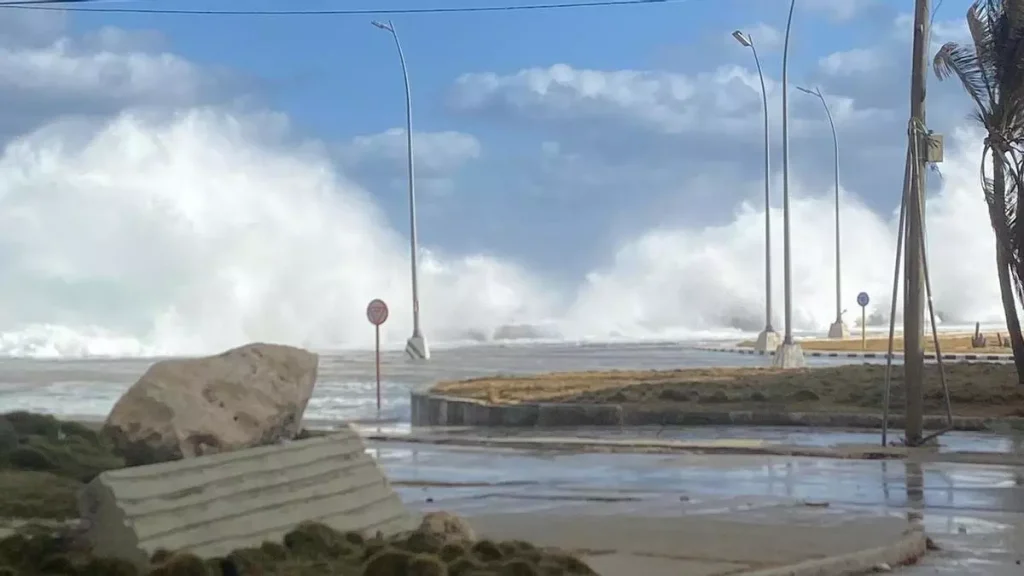
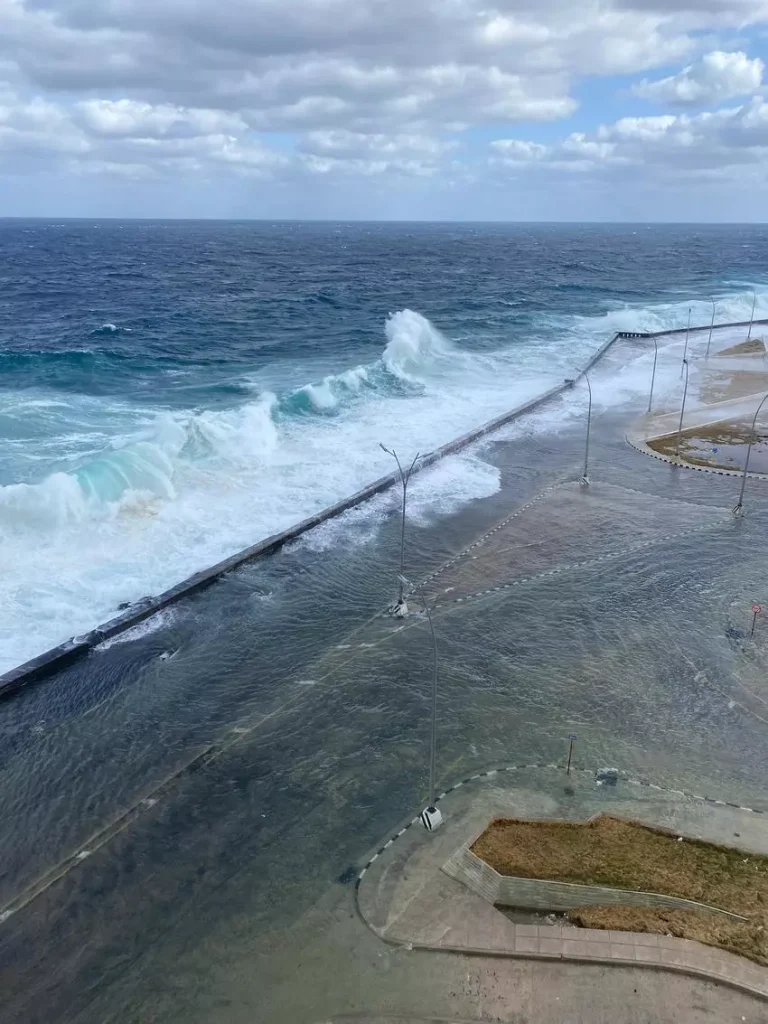
14ymedio bigger14ymedio, Havana, February 23, 2026 — Indifferent to internal crises and external tensions, the forces of nature stubbornly continue on their course, sometimes unpredictable, sometimes not so much. Such is the Atlantic Ocean off Havana during the winter months, leaping over the Malecón and spreading across several streets.

The image of the ocean forming a wall of white foam against the stone seawall has been a recurring theme in the most idyllic photographs of the capital, those that, looking west, show the old skyline—without the Torre K hotel —formed by the Habana Libre Hotel, the Hotel Nacional, and the Focsa Building, and, to the south, the Morro Lighthouse. In practice, it poses a problem every year, especially for traffic and residents of nearby areas.

From his balcony, indeed, one can see the waves crashing and the water penetrating unhindered. / 14ymedio

“The wind almost swept me away. Tremendous wind. The water reaches as far as 3rd Street, and from D Street onwards. You can’t go there because everything is flooded,” a resident of the Girón building, at Malecón and F Streets, lamented to this newspaper, as he was unable to leave this Monday to buy food.

From his balcony, indeed, one can see the waves crashing and the water pouring in unchecked. The empty avenue isn’t just because of the storm this time. “With the critical fuel shortage, there’s no need to even close the road,” the man says ironically. The streets have been almost deserted for a month, with very few foreign tourists, who in any case provide a stark contrast to an exhausted and aging population.

“It hasn’t been the worst or the most serious of the floods, but it has come at the worst possible time: with problems in the water supply, without electricity since last night, with the garbage on the corner that extends almost half a block and, to top it all off, with almost no internet access to communicate with the family and tell them that we are okay,” says a Havana resident at 1st and C.

Seeing the ocean so free is even beautiful. Some dare to say: “It’s not the only invasion we are expecting.”

______________________

COLLABORATE WITH OUR WORK: The 14ymedio team is committed to practicing serious journalism that reflects Cuba’s reality in all its depth. Thank you for joining us on this long journey. We invite you to continue supporting us by becoming a member of 14ymedio now. Together we can continue transforming journalism in Cuba.

“Don’t Give Up, Let’s Build a Just and Good People,” Kamil Zayas Urges From a Cuban Prison

Relatives of the creators of El4tico demand their release 17 days after their arrest

Kamil Zayas, one of the creators of El4tico, in an image shared on his social media in 2024. / Facebook/Kamil Zayas

14ymedio bigger14ymedio, Havana, February 23, 2026 — Family and friends of Kamil Zayas and Ernesto Medina, creators of the El4tico project, have made an urgent appeal to the international community, human rights organizations and the media to bring the case to light and demand the immediate release of both young men, who were detained on February 6 in Holguín.

In a press release issued this Sunday, their associates denounced the arbitrary nature of the arrest and pointed out that the charges brought by the Prosecutor’s Office— “propaganda against the constitutional order” and “incitement to commit crimes”—are based solely on opinions and content disseminated on social media. “Expressing oneself is not a crime. Freedom of thought and speech cannot be punished with imprisonment.”

The text also refers to the message that Kamil Zayas broadcast just the day before from the Holguín Penitentiary, where he is being held. “What began as a humble little room, they have managed to convert into an enormous house,” the young communicator says, adding: “It has been worth it. Don’t give up. Let’s build a nation now, a just and good one. We are counting on you. Long live a dignified Cuba.”

“What began as a humble little room, they have managed to turn into a enormous house.”

The message was shared by activist Paula Amador Lobón, who added in the post: “Pride and admiration fall short of describing what he has awakened. It goes without saying that Kamil is not alone. All that greatness is supported continue reading

by those of us who surround him.”

The families say they have lived in uncertainty for more than two weeks, given the lack of clear procedural guarantees, and denounce that it is “a disproportionate punishment for the peaceful exercise of freedom of expression,” and stress that despite the unjust situation, the young people “remain steadfast.”

The case of Zayas and Medina has drawn international attention in a context of extreme crisis and increasing repression, and adds to those of other Cubans prosecuted for publications on the internet or for expressing critical opinions against the Government, under criminal figures such as “propaganda against the constitutional order” or “incitement to commit crimes”.

This Monday, the Cuban Institute for Freedom of Expression and the Press (ICLEP) denounced the arrest in Havana of Moisés Legrá Díaz, who was detained after writing the phrase “Patria y Vida” [Homeland and Life] on a wall near the courthouse in the municipality of Arroyo Naranjo. According to information released by activist Anamely Ramos, Legrá Díaz was summoned days later under the pretext of an interview and subsequently transferred to Villa Marista, where he was held incommunicado for almost a week.

According to the complaint, although Legrá Díaz admitted to having done the graffiti, the authorities are trying to charge him with other acts and are also accusing him of propaganda against the constitutional order.

______________________

COLLABORATE WITH OUR WORK: The 14ymedio team is committed to practicing serious journalism that reflects Cuba’s reality in all its depth. Thank you for joining us on this long journey. We invite you to continue supporting us by becoming a member of 14ymedio now. Together we can continue transforming journalism in Cuba.

Cuba: “Two and Even Three Inspectors Show Up Together, and You Have To Give Each One Their Cut”

To avoid fines, private businesses stop selling products with capped prices, while State-run dollar stores are not subject to the same rules.

Customer in a private small business (mipyme) in Havana. / 14ymedio

14ymedio bigger14ymedio, Havana, Darío Hernández, February 23, 2026 – Alejandro, owner of a small private business in Regla, has been fined 40,000 pesos in less than a week. His “little market” was one of the few businesses in the area that still dared to sell essential goods—chicken, cooking oil, sausage, powdered milk, pasta, and detergent—which, since July 2024, have had “agreed-upon” prices; that is, capped, but which the current crisis makes impossible to maintain.

“Last week, people came from all over the municipality looking for oil, because it’s not sold anywhere. I had it at 1,300 pesos per liter, and its capped price is 990. But how am I supposed to sell it for that, if suppliers charge me an even higher price?” says Alejandro, who prefers to use another name for this report.

The price of a dollar on the informal foreign exchange market did not exceed 400 pesos when the Government imposed, more than a year and a half ago, this limit on six products it considered essential. Today, while the dollar now surpasses 500 pesos on the unofficial market and the Central Bank of Cuba sets the rate above 460 pesos, the resolution to control prices, far from benefiting the population, has encouraged corruption and shortages in businesses.

“They’re expensive products, but at least I had them. Let’s see where people will find cooking oil at 990 now. That doesn’t exist”

“I made the decision to stop selling any price-capped products, like the rest of the businesses. Beer and snacks: that’s how I get those mafiosos off my back. I get screwed, but so do the people. They’re expensive products, but at least I had them. Let’s see where people will find cooking oil at 990 now. That doesn’t exist,” Alejandro says angrily.

His decision, he explains, comes after four inspections in one week. “The Municipal Inspection Directorate came, Hygiene, Finance and Prices… and they all fine you for the same thing: the capped prices, the profit margin, and so on. The worst part is that two and even three inspectors show up together, and you have to give each one their cut. That’s another thing: you give them something, whether cash or products, so they give you the 8,000-peso fine instead of the 16,000- or 32,000-peso fine. I swear I feel defenseless, at the mercy of a gang of mafiosos. My business right now continue reading

is ‘in check’ because of them.”

Cooking oil sold for 3.55 dollars at Casalinda, a State-run dollar store. / Image taken from social media

The Administration Council of Plaza de la Revolución, boasting of its “zero tolerance for indiscipline and illegalities,” a few days ago published on its Facebook profile a fine imposed on a business for 383,000 pesos. Among the violations mentioned were failing to display prices to the public, overcharging, and lacking cost sheets and the required paperwork for commercial activity. The post included photos of some of the business’s prices, where cooking oil could be seen priced at 1,000 pesos. Most of the comments, in a joking tone, asked where that small business was located, since its prices were lower than the current market.

“My theory is that those people live in a parallel reality. Who can afford those prices right now? Either they’re disconnected from everything—which I don’t believe, because later you see them buying the same oil and sausage at 500 pesos—or they’re cynical and have normalized that level of shamelessness,” says Alejandro.

Small private business in the Havana municipality of Regla. / 14ymedio

In a note published this Monday by Invasor, the provincial newspaper of Ciego de Ávila, the author reports that in many cases the shopkeeper openly admits that the posted price is only to pretend compliance with regulations, but if you actually want the product, you have to pay more.

Meanwhile, something very different happens in state-run dollar supermarkets, such as 3rd and 70th or Casalinda. There, a liter of cooking oil can cost as much as 3.55 dollars, which, at either the official or informal exchange rate, far exceeds the imposed cap. “What are inspection institutions for? To help the population or to sideline and control private businesses?” exclaims Alejandro. “They forget that with this ‘zero tolerance’ policy, very soon there will be nothing left to control.”

Translated by Regina Anavy

______________________

COLLABORATE WITH OUR WORK: The 14ymedio team is committed to practicing serious journalism that reflects Cuba’s reality in all its depth. Thank you for joining us on this long journey. We invite you to continue supporting us by becoming a member of 14ymedio now. Together we can continue transforming journalism in Cuba.
Cuba’s Foreign Minister Promises ‘Creative Solutions’ to the Humanitarian Crisis and Offers ‘Dialogue with the United States’

Bruno Rodríguez appears before the UN Human Rights Council in Geneva as part of his international tour seeking support against the “energy siege” imposed by Washington

Bruno Rodríguez at the High-Level Segment of the Conference on Disarmament in Geneva, where he took the opportunity to speak about the oil blockade / Ministry of Foreign Affairs

14ymedio biggerEFE/14ymedio, Geneva, February 23, 2026 – On Monday, Cuba’s foreign minister, Bruno Rodríguez Parilla, appeared before the United Nations Human Rights Council and sent a message to the United States that Cuba “will vigorously and courageously defend its right to self-determination,” while at the same time extending an offer to maintain dialogue based on mutual respect.

In an address to the forum, the foreign minister promised that a humanitarian crisis in Cuba would be prevented despite what his government calls the “energy siege” resulting from Washington’s decision to threaten tariffs on countries that export oil to the Island.

“Can a great power be allowed to attempt to destroy a small nation, provoke a humanitarian tragedy, shatter its national culture (…) all under the crude pretext of national security?” the foreign minister asked. continue reading

“Can a great power be allowed to attempt to destroy a small nation, provoke a humanitarian tragedy, shatter its national culture (…) all under the crude pretext of national security?”

On that point, he acknowledged that the situation created by the United States would cause “deprivation and suffering,” although he expressed confidence that “creative solutions” would be found to mitigate the humanitarian damage.

Nevertheless, in the same speech, the foreign minister assured that “there is also willingness for dialogue with the United States,” but emphasized that it would have to be based on “international law, mutual respect, and reciprocal benefit, without preconditions or interference in internal affairs.”

Rodríguez said the goal should be “to achieve a civilized relationship within our differences, and even to promote cooperation.”

In one passage of his speech, the Cuban minister praised the “community resistance of the people of Minnesota,” referring to demonstrations against the U.S. federal government’s immigration policy and the actions of Immigration and Customs Enforcement (ICE).

In recent weeks, the United States has repeatedly claimed that it is holding talks with representatives of the Cuban regime and has even insisted that part of the Cuban government is unaware of them. Accounts differ over who is involved in the dialogue, whether it is a son or a grandson of Raúl Castro.

The government of Miguel Díaz-Canel denies this and says that everything Washington states is intended to sow distrust in Havana, while acknowledging that talks do exist: the usual ones limited to migration and drug trafficking issues.

Translated by Regina Anavy
______________________

COLLABORATE WITH OUR WORK: The 14ymedio team is committed to practicing serious journalism that reflects Cuba’s reality in all its depth. Thank you for joining us on this long journey. We invite you to continue supporting us by becoming a member of 14ymedio now. Together we can continue transforming journalism in Cuba.
Russia Completes the Repatriation of the 4,300 Tourists Stranded in Cuba Due to the Energy Crisis

“The possibility of resuming flights will be addressed after the situation with fuel supplies is normalized,” the Kremlin said.

With 131,882 travelers to Cuba in 2025, Russia is the second largest source of tourists to the island, after Canada / 14ymedio

14ymedio biggerEFE/14ymedio, Moscow, February 22, 2026 — Russian airlines announced on Sunday that they have completed the repatriation of nearly 4,300 tourists stranded in Cuba due to the energy crisis caused by the US embargo. “The airlines have completed the repatriation flights for Russian tourists from Cuba,” the Ministry of Transport said in a statement on Telegram.

The last plane landed at 5:27 p.m. local time at Moscow’s Sheremetyevo airport, which had to limit the number of flights due to Ukrainian drone attacks.

It was a flight from the Rossia company (Aeroflot Group) that took off from Varadero – one of the favorite tourist destinations among Russians – and which represented “the final flight within the framework of the campaign that began on February 13.”

In total, according to the Ministry, “almost 4,300” Russian tourists were repatriated from Varadero, Havana, Holguín and Cayo Coco on nine flights.

“Nearly 4,300” Russian tourists were repatriated from Varadero, Havana, Holguín and Cayo Coco on nine flights

“The possibility of resuming flights will be addressed after the situation with fuel supplies is normalized,” he added. continue reading

On February 11, the Russian government recommended that tour operators stop selling trips to Cuba, after which airlines announced they would temporarily suspend flights.

With 131,882 travelers to Cuba in 2025, Russia is the second largest source of tourists to the Island, after Canada (754,010), which in turn finished the repatriation of its nearly 28,000 tourists on Friday.

Cuban Foreign Minister Bruno Rodríguez discussed the energy crisis this week in Moscow with Russian leader Vladimir Putin and his counterpart, Sergey Lavrov. “You know our position on this. We will not accept anything like this,” Putin said at the beginning of the meeting.

Bruno Rodríguez discussed the energy crisis in Moscow this week with Russian leader Vladimir Putin.

Kremlin spokesman Dmitry Peskov confirmed that the meeting addressed the specific assistance Moscow can provide to Havana under the current circumstances.

Previously, Lavrov and Rodríguez called for dialogue with the United States, asking it to abandon its plans for a naval blockade of Cuba.

Moscow recently announced that it is in contact with Cuban authorities and that oil supplies to the Castro regime are planned, something that has not happened since the shipment of 100,000 tons of crude oil in February 2025.

______________________

COLLABORATE WITH OUR WORK: The 14ymedio team is committed to practicing serious journalism that reflects Cuba’s reality in all its depth. Thank you for joining us on this long journey. We invite you to continue supporting us by becoming a member of 14ymedio now. Together we can continue transforming journalism in Cuba.
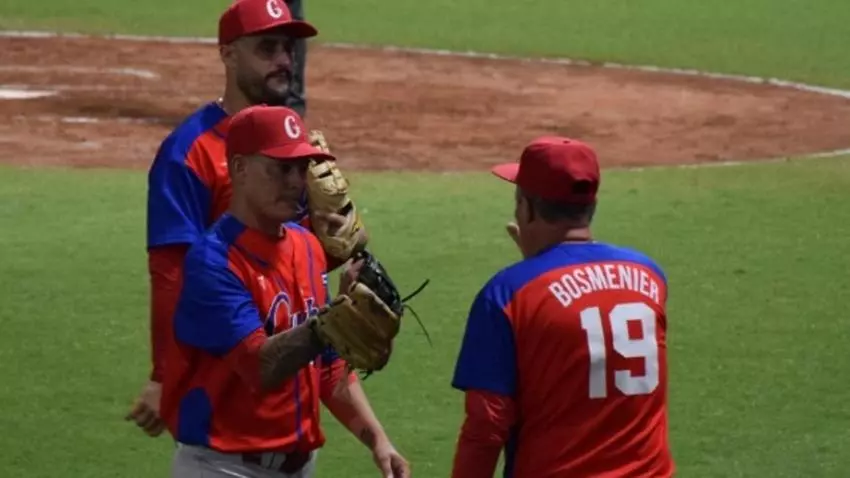
Major League Baseball Experts in the U.S. See Cuba as a Weak Team for the World Baseball Classic

Analysts highlight the absence of star players and the lack of visas.

Analyst Will Leitch noted that the current team is far from the one that competed in 2006. / Jit

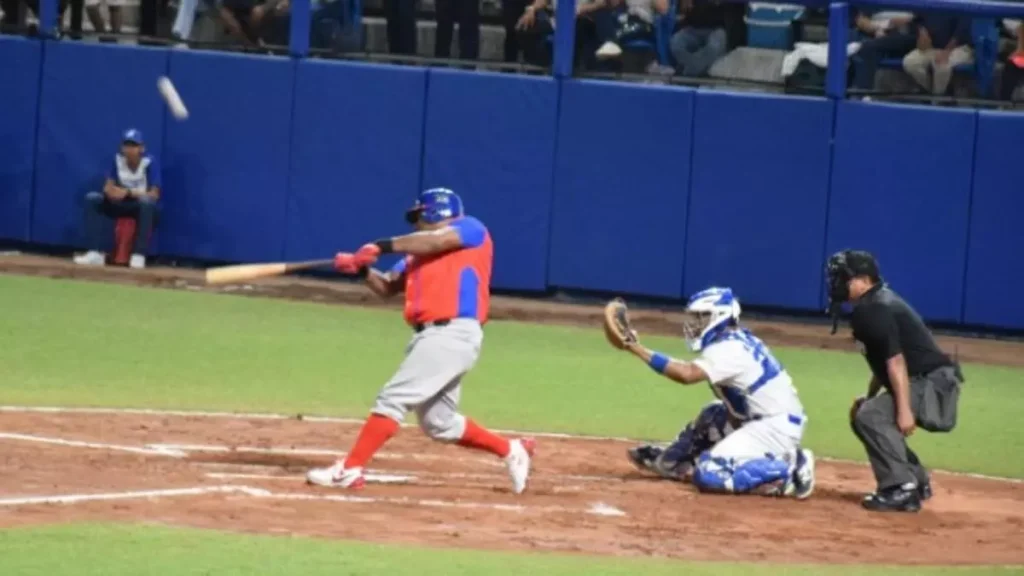
14ymedio bigger14ymedio, Havana February 22, 2026 – Cuba is considered one of the weakest teams in the World Baseball Classic, agreed U.S. Major League Baseball analysts Will Leitch and Michael Clair. The sports commentators point to the United States, Japan, and the Dominican Republic, where several Cuban players have defected, as the favorites.

Leitch, founder of the sports blog Deadspin under Gawker Media, emphasized the changes both on and off the field, noting that the current squad is far removed from the 2006 team, which drew attention as a “mysterious and intriguing” group that ultimately reached the championship game.

The analyst also recalled that, for various reasons, several players declined to join the team managed by Germán Mesa. “There is only one active Major League player on this edition of the Cuban team (Yoán Moncada),” he said.

According to Leitch, “It will be fun to see Alexei Ramírez, 44, on the team, nearly a decade after his last Major League game.” The commentator added that every time the veteran “comes to the plate, I’ll think continue reading

of Hawk Harrelson’s call during Mark Buehrle’s perfect game: ‘Alexei?!’”

Several players refused to join Cuba’s team led by Germán Mesa. / Jit

The analysis notes that Ramírez is not exactly a “new” player to watch in the World Baseball Classic. “He is the oldest player in the tournament. Ramírez—yes, the same Alexei Ramírez who retired from Major League Baseball a decade ago in 2016—returns to play for Cuba at 44, and frankly, we’re very curious to see what kind of numbers a 44-year-old retired Major Leaguer can produce.”

In response to these remarks, the specialized outlet Swing Completo acknowledged that the Cuban team “lacks well-established names, especially after several key players—Andy Pagés, Andy Ibáñez, Daysbel Hernández, Víctor Labrada, and Ernesto Martínez—withdrew their initial interest in joining.”

Manager Mesa will have to “lean on two standout pitchers at the top level of Japanese baseball, Liván Moinelo and Raidel Martínez, as well as reliever Yariel Rodríguez and young left-handed starter Daviel Hurtado, who has stood out in the New York Mets’ minor league system.”

Adding to the challenges, Cuban players currently in Managua lack visas to enter the United States. “No one who is there today in Nicaragua has a visa in hand yet,” journalist Yordano Carmona said.

In a recent interview, manager Germán Mesa maintained that historically visas have never been denied to the team. The federation insists that efforts are ongoing. Meanwhile, the players continue training as if their participation in the World Baseball Classic were assured.

Translated by Regina Anavy

______________________

COLLABORATE WITH OUR WORK: The 14ymedio team is committed to practicing serious journalism that reflects Cuba’s reality in all its depth. Thank you for joining us on this long journey. We invite you to continue supporting us by becoming a member of 14ymedio now. Together we can continue transforming journalism in Cuba.
It Is Confirmed That the Ocean Mariner Attempted To Divert to Cuba a Tanker Bound for the Dominican Republic

The tanker was intercepted by the U.S. Coast Guard after making a suspicious maneuver.

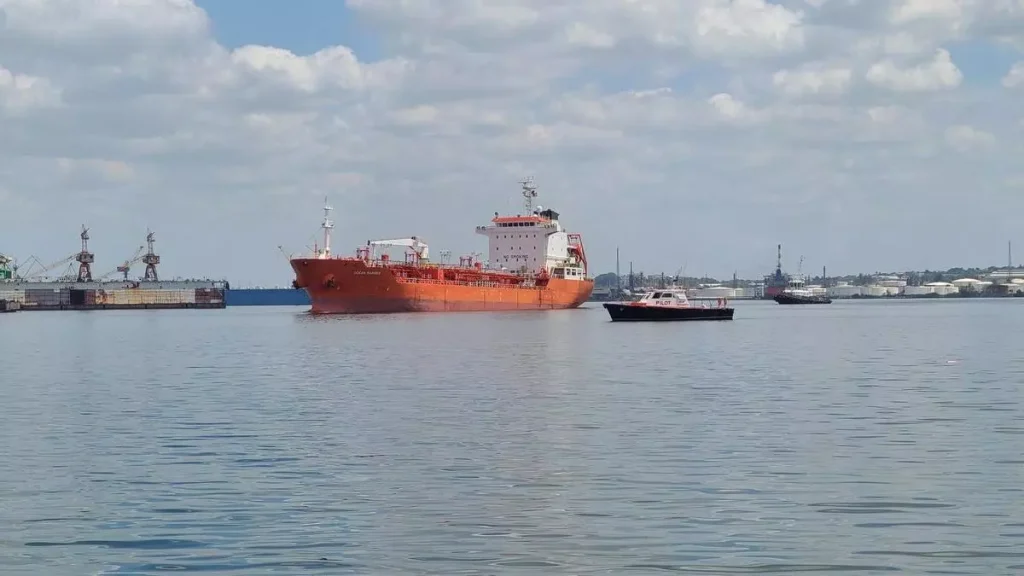
The vessel Ocean Mariner has transported several crude oil shipments between Mexico and Cuba / 14ymedio

14ymedio bigger14ymedio, Havana, February 22, 2026 – New details have emerged about the attempt by the Ocean Mariner, a tanker that usually transports Mexican fuel to Cuba, to circumvent the U.S. oil embargo on February 10 in order to deliver a shipment to the Island, after having declared that its destination was the Dominican Republic.

The fuel oil on board had three buyers since its origin in Colombia, the last being Trafigura Maritime Logistics, a Dutch multinational based in Singapore with commercial ties to the Cuban regime.

According to a report published Friday by Colombian outlet El Tiempo, the 84,579 barrels of fuel oil were originally sold by ISM Ingeniería Servicios, Montaje, Estaciones de Servicios SAS, and the initial buyer was Monarch Security Latin America Inc., based in Panama City. The Liberian-flagged ship docked at the Colombian port of Palermo in Barranquilla, Colombia, The New York Times also reported Friday, citing data released by the shipping company itself and satellite imagery. When it departed Colombia on February 5, it announced that its destination was the Dominican Republic, carrying fuel valued at $6.9 million.

After setting sail, the Ocean Mariner headed toward Dominican waters. However, on February 10 it changed course toward Cuba. A day later continue reading

, just 106 kilometers from the Island, it made a sharp U-turn, according to data from Kpler, a maritime transport data company. According to The New York Times, it “appeared to have realized it was being pursued.”

The Ocean Mariner initially headed toward Dominican waters. However, on February 10 it changed course toward Cuba.

The following day, a U.S. Coast Guard vessel, the Stone, approached the tanker to ask where it was headed. The response was that it was bound for the Dominican Republic, despite being far off course, according to a U.S. official. Given the suspicious maneuver, the Coast Guard sailed alongside the tanker for nearly two days and escorted it to Dominican waters, where it remained for several days without unloading the fuel.

After the vessel’s interception, Trafigura appeared in the transaction network. The company holds a 49% stake in Empresa Minera del Caribe SA (Emincar), together with Cuba’s state-owned Geominera (51%), and operates the copper mines of Matahambre in Pinar del Río. The firm officially purchased the cargo after the Ocean Mariner incident with the Coast Guard. However, Trafigura did not buy directly from Monarch, the original buyer of the shipment, but from a third company whose name no one has disclosed.

El Tiempo reports that the original seller and buyer argued that their responsibility “for the cargo ended once the ship set sail, under the terms of the contract in the Free On Board (FOB) modality.” Additionally, they have not so far received any request from authorities. They also insist that the operation followed legal export procedures and that information about a possible diversion attempt to Cuba “is not official but based on press reports.”

“The destination of the product listed in the shipping documents corresponds to Río Haina, Dominican Republic. Since the operation was carried out under FOB terms, once the product was loaded and dispatched from the port of Palermo, the availability, control, and management of the cargo rests with the buyer,” said Iván Lombana, legal representative of ISM, the original seller. He also emphasized that the company does not receive operational updates on routes once ownership (of the fuel) and risk are transferred to the buyer.

Spokespersons for Trafigura interviewed by the Colombian outlet denied any connection to a shipment to the Island.

Spokespersons for Trafigura interviewed by the Colombian outlet denied any connection to a shipment to the Island. They stated that they agreed to purchase the Colombian-origin fuel oil transported on the Ocean Mariner for delivery in the Bahamas. “Trafigura had no prior involvement with this cargo or voyage and did not charter the vessel. As one of the world’s largest traders of oil and petroleum products, we are regularly contacted by counterparties seeking buyers for uncommitted cargoes,” they said, though they declined to reveal from whom they purchased it.

This Sunday at 1:24 a.m., Colombian President Gustavo Petro, through X, without mentioning the fuel sale process or the attempted breach of Washington’s oil embargo, stated: “I do not agree with blockading a country; what is needed is more freedom, not more chains.”

In the post, in which he spoke about Cuban music and Silvio Rodríguez, he added that “there is no crime in the free transport of oil in the Caribbean, but it is preferable that the Caribbean’s energy be provided by the sun that rises almost every day.” He also said that the United States “must change its policy toward Cuba” and called for “unleashing the solar energy program across the entire Island. In Latin America we can support this by manufacturing solar panels. Colombia can provide its silica sands and copper. We already produce panels for export if necessary.”

Meanwhile, in an interview with the Spanish newspaper ABC, Mike Hammer, chargé d’affaires at the U.S. Embassy in Havana, confirmed that the aim is to send fuel to “support the Cuban people without it being exploited by the regime and used to sustain itself, which is what they have done for 67 years.” The official added that they would seek to replicate the model used for food and medicine shipments after Hurricane Melissa, in which donations were channeled through the Catholic Church and Caritas Cuba, “because we want to ensure that any assistance to those affected actually reaches them.”

Translated by Regina Anavy 

______________________

COLLABORATE WITH OUR WORK: The 14ymedio team is committed to practicing serious journalism that reflects Cuba’s reality in all its depth. Thank you for joining us on this long journey. We invite you to continue supporting us by becoming a member of 14ymedio now. Together we can continue transforming journalism in Cuba.
Vedado, the Heart of Havana’s Nightlife, Is Now Converted Into a Desert

Without transportation and without gasoline, La Rampa, 23rd Street, Coppelia and other iconic places suffer from the crisis affecting the entire country

It’ is the first vehicle I’ve seen after sitting in that spot for several minutes. / 14ymedio

14ymedio bigger14ymedio, Yoani Sánchez, Havana, Februay 22, 2016 — It’s Saturday and I’m heading out to Vedado. Just a few years ago, the combination of this day of the week with La Rampa, 23rd Street, and the area around the Hotel Habana Libre and the Coppelia ice cream parlor, for years mean fun, meeting up with friends and ending the night enjoying some shot. But this city no lonver exists. Now, the avenues are almost deserted, the clubs remain closed, and the familiar faces and names that once defined every corner have left. The only ones who remain are those who couldn’t leave.

I head through the La Timba neighborhood until I reach the edge of Revolution Square. Forget about catching a ride to the vicinity of avenida de los Presidentes. I’ll do the whole trip on foot. Paseo Street is deserted at ten in the morning. On a lamppost, someone has dared to hang a sign that says “Gasoline” and a cell phone number. I imagine that if I call, they’ll tell me the price of that liquid which, right now, monopolizes the dreams and anxieties of the entire country. Yesterday, a neighbor told me he had a liter of premium for 4,000 pesos, but it must have gone up by now. I imagine that if I call they’ll tell me the price of that liquid which, right now, monopolizes the dreams and anxieties of the entire country.

I imagine that if I call they’ll tell me the price of that liquid which, right now, monopolizes the dreams and anxieties of the entire country. / 14ymedio

On one corner, several gaudy pink convertibles participate in the filming of a music video. The contrast is brutal. The passengers smile at the camera from the peculiar row of gleaming vehicles just a few meters from a vast garbage dump. As I watch the spectacle, a mosquito bites my ankle, a patch of skin I forgot to treat with repellent. Insecticides have become an inseparable part of our “war kit” before leaving home. We’re in a constant battle to avoid catching one of the arboviruses that are plaguing us.

My husband has been suffering for months from the aftereffects of chikungunya. Swollen hands, joint pain, weakness, and a slow gait that has become the hallmark of those who have had the disease. Ahead of me continue reading

, on D Street, a woman walks with that robotic gait the illness has left her with. I can’t help but recall scenes from the film Juan de los muertos [Juan of the Dead], with a city full of zombies attacking those who are still breathing. But in Havana, there are no living people left to attack; we are all, in one way or another, already cadavers.

I am standing in front of Cuba’s tallest building. One would expect the areas around the Iberostar Selection Hotel, also known as Torre K, would be bustling with the comings and goings of taxis, tourists, and tour guides, but there’s nothing. The completely empty entrance lends an air of abandonment to this ugly block of concrete and glass. Only one man, delirious and shouting incoherent phrases, disturbs the lethargy that stretches along this stretch of sidewalk to what was once Havana’s most vibrant corner: 23rd and L.

Passengers smile at the camera from the peculiar line of gleaming vehicles just meters from a vast landfill. / 14ymedio

I cross to the other side of the left atrium of the heart of Vedado, even though the pedestrian light is still red. It doesn’t matter. I could dance for a while in the middle of the popular intersection and I wouldn’t be in any danger of being run over. Two teenagers pass by on their scooters , and another lunatic waves his arms like the blades of a fan in front of the Yara movie theater. Losing your mind is easy in a reality that challenges us with new absurdities every day. The friends who haven’t left live on pills that anesthetize them. “I don’t want to go crazy,” a neighbor repeats to me while showing me the blister pack of tiny pills she carries in her wallet.

I reach Infanta Street. It smells of urine. I sit down in a doorway across from Radio Progreso. Within minutes, several elderly people file past, begging for money. A nearby business has hired two burly security guards who prevent the beggars from interacting with their customers. A family of tourists, the first I’ve seen on my journey, approaches to read the restaurant menu. The woman asks the employee if he can help her get internet access because the SIM card she bought from Etecsa “isn’t working.” The man explains that the service is unreliable and there are times of day when it doesn’t work. Her face is a poem: she doesn’t understand why she was charged for something that doesn’t work.

A gleaming yellow excavator drives past me. It’s the first vehicle I’ve seen in several minutes of sitting here. Five men are riding on the bucket. I’m going to have to ask my neighbor for one of those little pills to keep from going crazy.

______________________

COLLABORATE WITH OUR WORK: The 14ymedio team is committed to practicing serious journalism that reflects Cuba’s reality in all its depth. Thank you for joining us on this long journey. We invite you to continue supporting us by becoming a member of 14ymedio now. Together we can continue transforming journalism in Cuba.