In Matanzas, with daily blackouts lasting 18 hours and endless lines to get a bit of cooking gas or some chicken, nobody seems willing to sign up for a mock battle against the US
 14ymedio, Julio César Contreras, Matanzas, February 22, 2026 –On a dusty street corner in Los Mangos, near the Pediatric Hospital of Matanzas, Yosvany wipes the sweat with the back of his hand and stares down the block as if expecting someone from the Military Committee to show up any second. It’s not the first time they’ve come looking for him. Every so often, when Havana announces strategic exercises, “mobilizations,” or National Defense Days, his name pops back up on the list of Territorial Troops Militia reservists.
“This time I really told them not to count on me anymore,” he says, standing in front of a faded house while a neighbor on the sidewalk fans herself with her hand and another sits watching the street from a plastic chair. “I’ve got five plates to fill every single day. I can’t waste time assembling and disassembling old rifles.”
The latest reservist call-up, announced after the worsening energy crisis and rising tensions between Havana and Washington—made worse since Nicolás Maduro’s capture in early January—has brought back memories of similar previous mobilizations. On state television they talk about “combat readiness” and “defense of sovereignty,” but in the neighborhoods the conversation mixes with 18-hour blackouts and endless lines just to get cooking gas or a little chicken.
Yosvany became surplus—unemployed—as an accountant at the Provincial Commerce Directorate two years ago. Since then he’s fished tilapia in the San Juan River, pushed a wheelbarrow of root vegetables along Calzada de Tirry, and even worked as a line-holder at the Banco Popular de Ahorro on Calle Medio. “Short of stealing, I’ll do whatever it takes,” he insists. “My war is finding money so my kids don’t go without the basics. I’m not going to be just another number so the bosses can say everybody’s ready to fight here.”

In Pueblo Nuevo, Magalis hears these stories and nods. At 73 years old, she lives on 3,000 pesos a month that barely cover rice, some beans, and the rationed bread from the market. Sitting at the entrance of a small neighborhood pizzeria, under a faded mural of a smiling chef holding a steaming tray, the woman looks out at the street where the sun beats down hard.
“On the news they come out with those perfectly ironed olive-green uniforms, calling for resistance,” she says. “I do resist, yeah—but during an 18-hour blackout, eating four spoonfuls of plain white rice and saving the little bread ball for breakfast.” For her, these mobilizations don’t fix the lack of fuel or the leaking roof she’s been waiting years to repair.
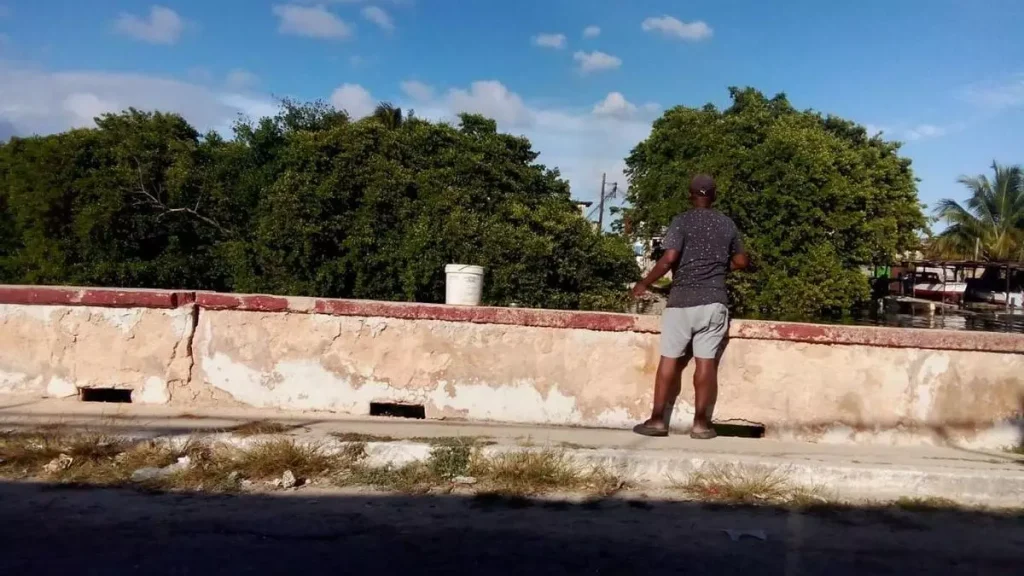
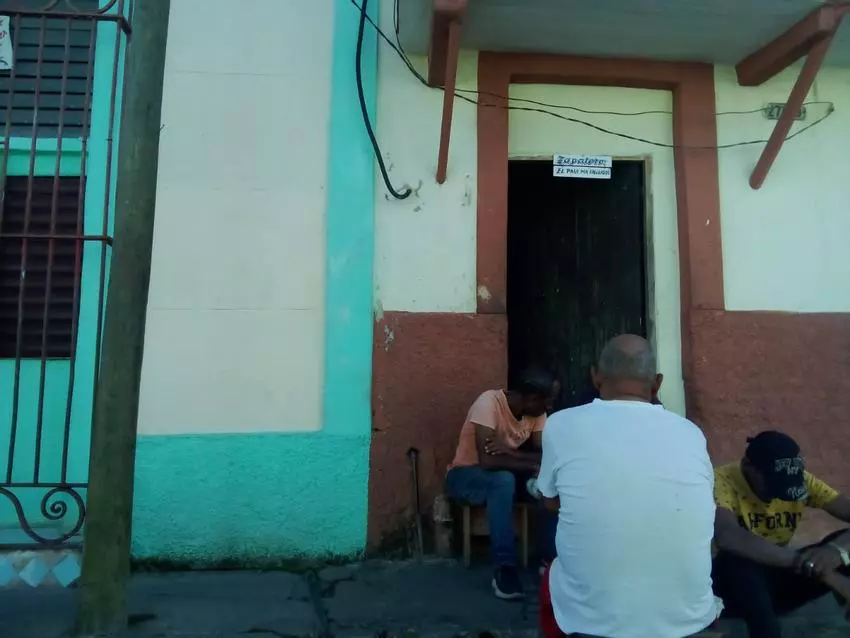
Daily life in the city contradicts the epic tone of official reports about military exercises. On a bridge over the river a man tries to catch something to take home; on another corner two old men chat in the shade of a peeling wall, under a sign advertising a shoemaker. Further on, a woman wearing a mask hurries by, dodging potholes and loose wires.
Antonio, almost 65, has also been called up before. A veteran of five years in Angola, survivor of a landmine that damaged one eye and left him with psychological aftereffects, he looks at any new call with suspicion. “I served on an internationalist mission and came back with my life dismantled,” he says, sitting on the porch of his house. “After that nobody remembered us.”
He says a few years ago he asked to leave the Communist Party and the Association of Combatants. “They only call you to meetings and collect dues.” For him, the word “mobilization” has a bitter echo. “Thousands of us gave everything we had and more. Now that I’m old, all I want is some peace and quiet.”
The energy crisis has provided the backdrop for this new call to arms. The lack of fuel has paralyzed buses, slowed production, and multiplied blackouts. From the government they insist on the need to “prepare for any scenario,” while Washington toughens its rhetoric toward Havana and social media circulates versions of a possible domino effect after the fall of the Venezuelan leader.
But in Matanzas the conversation stays close to the ground. In front of houses, on makeshift chairs, people talk about rising prices, packages that never arrive, and children who have emigrated. The epic dissolves in the face of daily urgency.
“If they want me to defend something, they should start by giving me reasons to stay,” says Yosvany before saying goodbye. The afternoon sun reflects off the blue walls and tired faces. Nobody seems willing to sign up for a mock battle; they’ve got enough just trying to survive.
Translated by GH
______________________
COLLABORATE WITH OUR WORK: The 14ymedio team is committed to practicing serious journalism that reflects Cuba’s reality in all its depth. Thank you for joining us on this long journey. We invite you to continue supporting us by becoming a member of 14ymedio now. Together we can continue transforming journalism in Cuba.