Authorities warn of the “serious health effects” of waste incineration
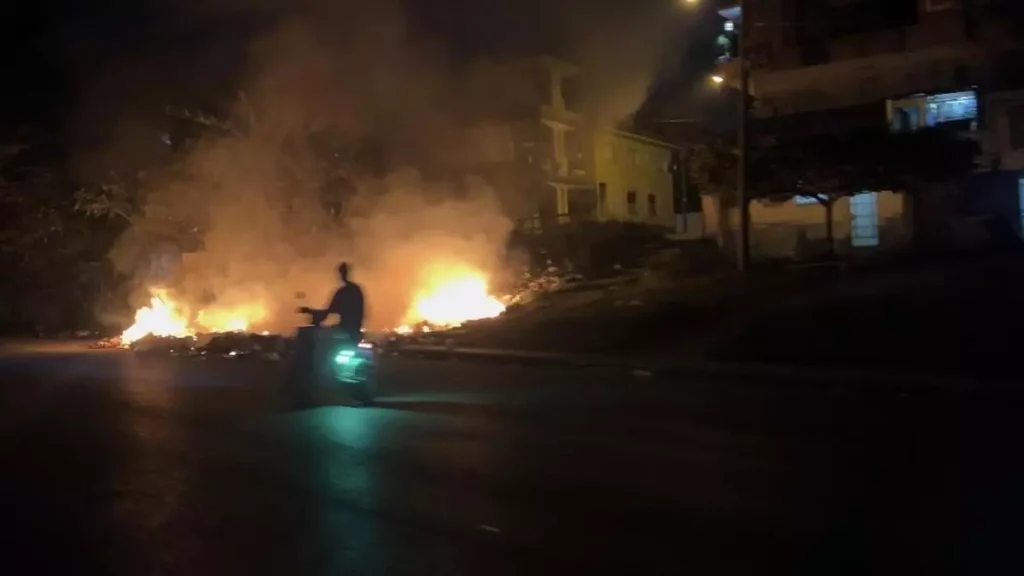
 14ymedio, Havana, Darío Hernández, 23 February 2026 — “The garbage dump on the corner of my street is set on fire almost every day. There are times when the neighborhood is shrouded in mist, and it’s not mist, it’s smoke.” The scene Tony describes isn’t exclusive to Guanabacoa, where he lives, but rather a widespread situation in Havana. “My house is on a rise, and I can see the southwestern part of Havana all the way to the city’s First Ring Road, and every morning the level of smoke covering that entire area is heavy and very worrying.”
The burning of trash is indiscriminate, to the point that it often occurs next to hospitals, schools, or parks. Last Friday, a social media user reported a “waste burning” near Havana’s Metropolitan Park, “a mere 50 meters from the 26th Street Clinical Surgical Hospital,” she noted, “and in the middle of a densely populated neighborhood of elderly people and children,” that is, the central Puentes Grandes area in the Plaza de la Revolución municipality.
This being the case, the authorities have begun to speak out to warn of the consequences of carrying out this prohibited activity. This Sunday, the Cuban Neuroscience Center issued a Facebook post warning of the toxicity of this practice, which has proliferated during the crisis.
“Given the burning of trash in our city, we are alerting the public: this practice is seriously toxic to your health and your brain,” the text emphasizes. The center explains that, when burned, trash releases heavy metals and dioxins, which can cross the blood-brain barrier that protects the brain.
These components “act as neurological poisons: they affect memory, children’s cognitive development, and can trigger neurodegenerative diseases,” in addition to severely damaging the lungs and heart, and contaminating the soil and water. “Burning a garbage dump doesn’t clean it up; it turns it into a poison factory,” warns the institution, which states that it understands the desperation stemming from the garbage collection crisis, but at the same time objects: “The solution cannot be to make us all sick. Caring for the environment is caring for our minds. A healthy community is a community that thinks.”
A similar alert to the one issued by the Neuroscience Institute was published this Monday by the Havana government itself, “in response to the troubling situation caused by the burning of garbage in various parts of the city.” The government explained that burning garbage refers to “incinerating solid waste in unauthorized locations or under unsuitable conditions.”
The procedure, they continue, not only pollutes the air but can also have “serious effects on human health,” such as respiratory problems, cancer, and neurological disorders. “Inhaling smoke from burning garbage can cause respiratory and cardiovascular diseases. Furthermore, the fine particles in the air can aggravate pre-existing conditions, such as asthma,” they detail.
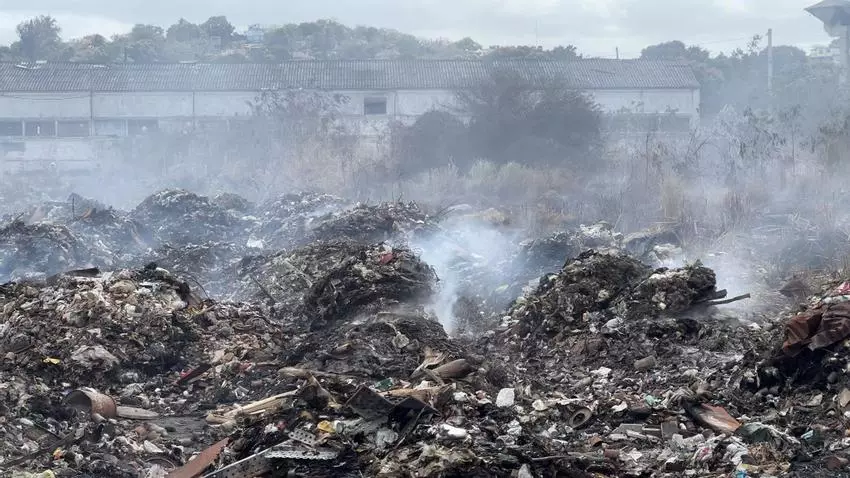
The warnings have been met with applause among on-line users, who appreciate the attempt to raise awareness, but they have also sparked a heated debate about the true target of the advise. “The alert isn’t for the general public, it is for the relevant authorities, who seem indifferent to the serious and dangerous situation that is recurring throughout the country,” says a Havana woman who doesn’t hesitate to point the finger at someone. “Citizens are responsible for keeping things clean, but the State, which owns everything, is responsible for collecting the garbage. And don’t tell me it’s because of the fuel shortage caused by the old man across the way. This has been going on for years,” she adds.
As 14ymedio has confirmed , it is not only residents who are burning the trash, but also the Communal Services. “There’s a huge level of irresponsibility, ignorance, and negligence in this decision to set fire to the garbage,” laments Caridad, a resident of La Víbora. She explains: “On the one hand, the neighbors are fed up with having garbage in the neighborhood and they set it on fire, but they don’t understand the consequences. But on the other hand, the municipal department is also burning it, and that’s much more serious because there’s a disconnect between what Public Health dictates and what the municipal department is actually doing.”
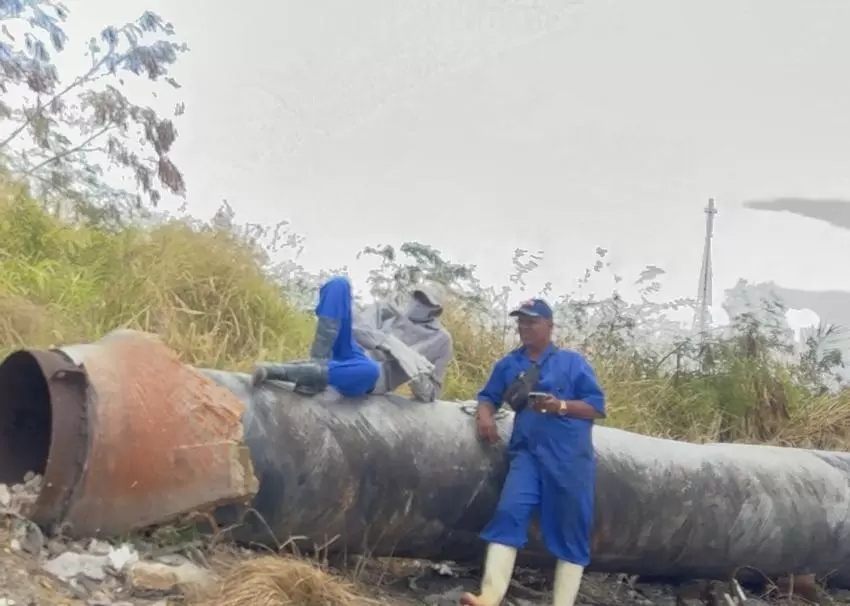
This weekend in Regla, two sanitation workers could be seen next to a smoking garbage dump, not far from the Frank País elementary school. They both had a small machine for moving the trash.
Rumors that the widespread burning of trash in various parts of Havana stemmed from an order issued by different departments of the Communal Services have been circulating this weekend. An employee of this department in the Cerro municipality denied in a telephone conversation with this newspaper that it was an order from above, despite the increasing number of burning trash piles. “No, it wasn’t us, that’s just social indiscipline, compañera,” the worker responded, recommending that people call the fire department if they observe a dangerous situation with the fire.
In Guanabacoa, the Communal Services has opted to address the situation by offering jobs to those who own animal-drawn carts. “Any Guanabacoa resident who owns an animal-drawn cart and is interested in applying should come to the company,” they announced via social media. The announcement states that payment is “based on performance” and that the goal is “to guarantee the collection of solid waste from the residential sector.”
The danger of burning trash is nothing new. As one social media user points out, the massive trash dump on 100th Street, where controlled burning of waste takes place, has posed a risk for decades. “More than 20 years ago, maybe 24 or 25, it was determined that it needed to be closed and other alternatives sought. The truth is that the smoke from that official landfill frequently and severely pollutes the air in the surrounding area, affecting large parts of Marianao, Lisa, Boyeros, and other districts,” recalls a Havana woman.
Over the years, and an ever greater shortage of fuel, of vehicles in working order to collect the waste, and of personnel to carry out such arduous and thankless work has worsened the situation, resulting in a capital city overflowing with makeshift garbage dumps on every corner. The final blow came with the oil embargo imposed by US President Donald Trump’s executive order, which, since the end of January, has threatened tariffs on countries that supply fuel to Cuba.
Last week, Prime Minister Manuel Marrero and the President of the National Assembly, Esteban Lazo, assessed the situation in a meeting in which it was determined that there would be “122 temporary waste transfer or collection points in the process of certification to increase storage capacity.”
Marrero noted there that “any alternative will be viable without strict civic discipline, order, and control.” For his part, Reynol García Moreira, vice-governor of Havana, spoke of using animal-drawn vehicles as a strategy for the capital, while electric vehicles are being enabled for the work in some provinces.
______________________
COLLABORATE WITH OUR WORK: The 14ymedio team is committed to practicing serious journalism that reflects Cuba’s reality in all its depth. Thank you for joining us on this long journey. We invite you to continue supporting us by becoming a member of 14ymedio now. Together we can continue transforming journalism in Cuba.