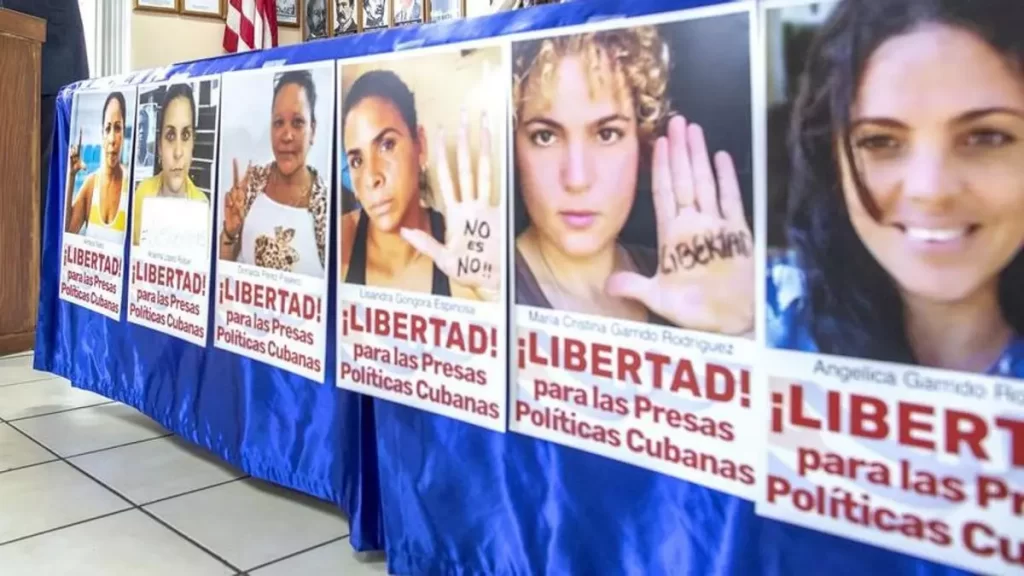

Of the 314 Women Detained in Cuba for Political Reasons Since 11 July 2021 Protests, 56 Are Still in Jail

Banners with photos of Cuban women prisoners during a press conference in Miami, Florida, on May 16, 2023. (EFE/EPA/CRISTOBAL HERRERA-ULASHKEVICH) 14ymedio

14ymedio bigger14ymedio, Havana, 15 March 2024 — One month after being diagnosed with a five-centimeter uterine fibroid, Lizandra Góngora, a political prisoner for participating in the Island-wide protests of 11 July 2021 and sentenced to 14 years, remains in Los Colonos prison, on the Island of Youth. Although neither the hospital of the special municipality nor the prison’s medical services have the supplies or personnel to treat her, the authorities are still reluctant to send her to Havana for medical treatment.

Góngora’s situation, who was also imprisoned far from her province of origin (Artemisa) and her husband and children, reflects just one aspect of the circumstances of the 56 women who remain in detention since 11 July  2021 (commonly referred to as ’11J’) onwards, due to the protests in Cuba. Of the 56 prisoners, 30 are mothers and two are awaiting sentencing after being tried. Only one, Leydiana Cazañas, detained in March 2023 without protest, remains awaiting trial.

According to the NGO* Justicia 11J database, since the 2021 protests and to date, a total of 314 women have been detained for political reasons. Of that total, 40 were released and 171 were sentenced to house arrest, mobility restriction, correctional work, or fines and bail, so they did not serve time in prison. Another 30 women live in exile. continue reading

The NGO has requested help to find out the statuses of 15 other women. It is not known whether they remain in prison or have been released

Alina Bárbara López, a Matanzas professor who has been arrested on several occasions for her activism, has been banned from leaving the country and was tried and sentenced to pay a fine of 7,500 pesos after refusing to attend a police summons that she considered illegitimate.

The situation of the transsexual woman Brenda Díaz, imprisoned in a male prison for AIDS patients, has been one of the most widespread outrages. Last January, Ana María García, mother of the political prisoner, complained to prison authorities about the constant abuse that the inmate, a participant in the 11J protests, is being subjected to.

As she explained, Díaz was locked in a punishment cell after being unfairly linked to alcohol trafficking within the prison. After clearing up the misunderstanding she was released, but when she reported her mistreatment, she was returned to her cell.

The case of Díaz, sentenced to 14 years and seven months – to which were added another seven months last April 2023 for “contempt” – even caught the attention of Mariela Castro, Director of the National Center for Sexual Education and daughter of Raúl Castro, who assured the EFE agency that García’s story is an “overblown tale full of fantasies.”

The NGO has requested help in finding out the statuses of another 15 women whose situations are unknown, whether they remain in prison or have been released.

After the July 11 explosion, when thousands of Cubans took to the streets in several of the country’s provinces, the regime began a repressive wave that ended with the arrest of 1,580 protesters, of which 676 remain detained. Protests such as those of November 15, 2021 and those of the summer of 2022, added other names to the list, which, according to several organizations, now records the arrest of 1,900 people, of which 1,067 remain imprisoned.

There are 663 protesters out of prison, but serving some type of sentence. Only 18 of those who were convicted for taking to the streets on June 11 are free and continue living in Cuba.  Another 80 went into exile.

*Translator’s note: NGO: a non-governmental organization that operates independently of any government, typically one whose purpose is to address a social or political issue.

Translated by Norma Whiting

____________

COLLABORATE WITH OUR WORKThe 14ymedio team is committed to practicing serious journalism that reflects Cuba’s reality in all its depth. Thank you for joining us on this long journey. We invite you to continue supporting us by becoming a member of 14ymedio now. Together we can continue transforming journalism in Cuba.

The Mother of Political Prisoner Sayli Navarro Was Arrested During Cuban President Diaz-Canel’s Visit to Matanzas

Sonia Álvarez is a member of the Ladies in White and wife of the former prisoner of the Black Spring, Félix Navarro

14ymedio bigger14ymedio, Havana, March 26, 2024 — Sonia Álvarez, mother of political prisoner Sayli Navarro, was arrested for several hours on Tuesday morning at the Jovellanos police station. Álvarez’s arrest was part of the security operations for the visit of Miguel Díaz-Canel to several municipalities in the province of Matanzas, says activist Annia Zamora.

Zamora, mother of Sissi Abascal, a political prisoner who, like Navarro, was convicted of participating in the popular protests of July 11 and 12, 2021, tells 14ymedio that Álvarez had scheduled a visit to the La Bellotex prison where her daughter is imprisoned, but “when I left my house I was arrested without any explanation.”

Sonia Álvarez, who is a member of the Ladies in White and wife of the former prisoner of the Black Spring, Félix Navarro, currently also in prison, spent several hours in detention. “She was released at 11 in the morning without any explanation,” Zamora adds.

“When she was released they told her that she could continue to the prison, but so far we don’t know if she was able to see Sayli”   

“They only told her to continue to the prison where her daughter is being held” adds the activist, for whom the arrest had a clear reason: Cuban president Miguel Díaz-Canel was visiting this Tuesday in several municipalities in the province of Matanzas, including Jovellanos, “a town where they painted the facades, picked up the garbage that had been continue reading

accumulating in the streets for months and made  everything look pretty before his arrival.”

“That mother spent the whole night preparing food for her daughter, and it spoiled because of her arrest, and no one told her why she was arrested,” says Zamora. “When she was released, they told her that she could continue to the prison, but so far we don’t know if she was able to see Sayli.”

Sayli Navarro, Lady in White and activist of the Cuba Decide movement, was sentenced in March 2022 to eight years in prison for the alleged crimes of public disorder, assault and contempt. She had gone to the police station of Perico, the town where she lives with her family, to protest the arrest of demonstrators in the Island-wide ’11J’ protests on 11 July 2021. Her father, Félix Navarro, joined the protest and was sentenced to nine years in prison.

Navarro, 70, was one of the political prisoners of the Black Spring of 2003, when 75 opponents and independent journalists received long prison sentences. In 2011, as a result of several negotiations between the Governments of Spain and Cuba and with the mediation of the Catholic Church, they were released and sent into exile, but Navarro was part of the twelve former prisoners who at that time decided to stay in Cuba.

Translated by Regina Anavy

____________

COLLABORATE WITH OUR WORKThe 14ymedio team is committed to practicing serious journalism that reflects Cuba’s reality in all its depth. Thank you for joining us on this long journey. We invite you to continue supporting us by becoming a member of 14ymedio now. Together we can continue transforming journalism in Cuba.

Sentenced to Eight Years in Prison in Cuba, Diasniurka Salcedo Arrives in Miami

Diasniurka Salcedo reunites in Miami with her son, whom she hadn’t seen for nine months

14ymedio bigger14ymedio, Havana, 26 March 2024 — “I’m free.” With these words, Diasniurka Salcedo Verdecia confirmed on Monday her arrival in Miami (Florida), after spending several days detained in a migrant center in Arizona, on the border with Mexico.

Salcedo also traveled with two of the five children she took care of in Cuba – children of abusive parents or prisoners – after her demonstration last November with several mothers in front of the Ministry of Public Health. The regime gave her the choice between leaving the country before January 15 or serving eight years in prison.

“They told me that he (Alain) must stay because someone had to be detained so that I would be silent,” Salcedo said   

Salcedo Verdecia surrendered at the beginning of last week to the Border Patrol in Arizona – after making the crossing from Nicaragua to the southern border of the United States – and remained incommunicado for several days. This Tuesday, the activist landed at Miami International Airport, where her son and relatives received her. continue reading

In a video published by Telemundo, the activist explained that she cannot return to the Island, because she was “threatened.” She  also said that last January, at Havana International Airport and about to board the flight to Managua, State Security agents prevented Alain, another of the minors she cares for and whom she planned to take with her, from leaving the country. “They told me that he must stay because someone had to be detained so that I would be silent,” she told the television station.

Asked about the March 17 (17M) demonstrations in Santiago de Cuba and other provinces, Salcedo said that they are a clear sign that “the regime has little left.” “They know it and that’s why there’s so much repression.”

Salcedo said that the 17M demonstrations are a clear sign that “the regime has little left”   

Due to the warnings by State Security and a sentence of eight years in prison – suspended on the condition that she leave the country – Salcedo cannot return to Cuba. The ruling was issued in January by the Municipal Court of Alquízar, which accused her of the crimes of enemy propaganda, incitement to commit crimes, insulting patriotic symbols and defamation against a public figure. However, she stated that she will continue with her activism from the United States.

Prior to her exile, and after the protest in front of Public Health – in which she and other mothers asked for medical attention for their children with chronic diseases – the activist said she was a victim of a discredit campaign by the regime. On December 8, she explained on her social networks that the threats were a way to withdraw custody of the minors in her care. However, a week later, at the hearing held in the Municipal Court of Alquízar, she was granted custody of the infants.

Translated by Regina Anavy

____________

COLLABORATE WITH OUR WORKThe 14ymedio team is committed to practicing serious journalism that reflects Cuba’s reality in all its depth. Thank you for joining us on this long journey. We invite you to continue supporting us by becoming a member of 14ymedio now. Together we can continue transforming journalism in Cuba.

Nine NGOs Criticize Havana’s Rejection of UN Recommendations

The recommendations were made during the United Nations Universal Periodic Review

14ymedio biggerEFE (via 14ymedio) Washington D.C., 26 March 2024 — Nine NGOs criticized Cuba for rejecting 28 of the recommendations in the Universal Periodic Review (UPR), which, among other issues, have to do with political prisoners and the repression of dissent.

The nine groups that sent reports for the UPR – including Cubalex, Article 19, Justice 11J and Pen International – released a statement on the same day that the final report of the Working Group of the UPR mechanism of the UN Human Rights Council was approved.

This UN document indicates that Cuba accepted 292 of the 361 recommendations made – mostly from other states – while it took note of 41 and rejected 28.

“Rejecting 28 recommendations related to the rights to freedom of expression and association shows the lack of commitment of the Cuban authorities to their international human rights obligations,” the NGOs stated. continue reading

It was recommended that Cuba allow “the access of independent observers to trials and prisons   

Among the rejected recommendations are the “liberation of people deprived of liberty for political reasons, the cessation of repression and the harassment against dissident voices.”

Likewise, Cuba was asked to allow “the access of independent observers to trials and prisons, and the development of ’free and fair’ elections,” according to the NGOs.

In their opinion, the rejection of these points acquires “special relevance” after the peaceful demonstrations on March 17 and 18 in several parts of the Island, where hundreds of people protested the prolonged blackouts and the shortage of food.

According to their records, “at least 14 people remain arbitrarily detained” after these events. The Cuban authorities have not offered data in this regard.

The NGO Prisoners Defenders, for its part, puts at 32 the number of people who remain in prison and could be added to its list of political prisoners in Cuba, which in its latest report numbered 1,066 people.

“We demand that the Cuban State recognize and guarantee the fundamental rights of people residing in the country, regardless of their political position, religious belief, profession, race, sexual orientation and gender identity,” the statement concludes.

The signatory groups are Cubalex, Article 19, Justicia 11J, Pen International, Artists at Risk Connection (ARC), Cuban Prisons Documentation Center, Institute on Race, Equality and Human Rights, Cuban Youth Dialogue Table and Museum V.

Translated by Regina Anavy
__________________________

COLLABORATE WITH OUR WORKThe 14ymedio team is committed to practicing serious journalism that reflects Cuba’s reality in all its depth. Thank you for joining us on this long journey. We invite you to continue supporting us by becoming a member of 14ymedio now. Together we can continue transforming journalism in Cuba.
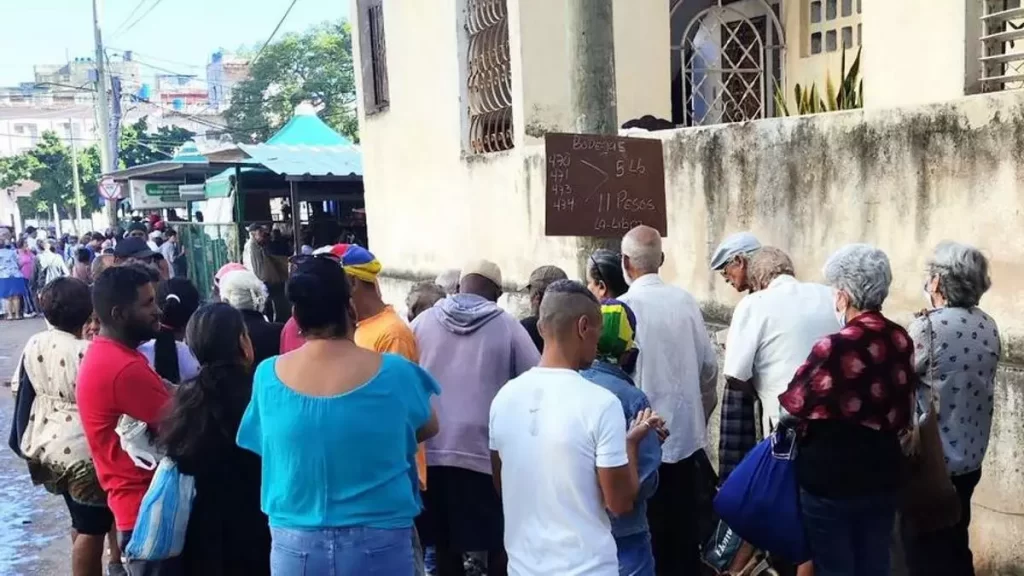
Much Excitement in Havana over the Arrival of the Year’s First Rationed Potatoes

In the long line that takes up both sides of the street alongside the park, the topic of conversation is the quality of the product / 14ymedio

14ymedio bigger14ymedio, Natalia López Moya, Havana, 25 March 2024 — They crane their necks and look, calculating how long before they reach the counter. The streets are damp after the weekend’s heavy downpours and the water seeps through the soles of their shoes. Most of those who got up early today to line up in front of the kiosks under the blue tents in Central Havana’s Trillo Park are elderly. Their mission: to buy the potatoes that the ration stores are putting on the Cuban capital’s shelves for the first time this year.

In the long line that takes up both sides of the street alongside the park, the topic of conversation is the quality of the product. “I’ve heard they’re rotten,” says a 70-year-old woman who has just gotten in line, “ready for a fight.” She carries a small shopping cart that converts into a chair in case her wait turns out to be a long one. “My daughter sent it to me from the U.S. because she knows that my legs hurt a lot when I stand for a long time.”

On this cool Monday morning, some buyers are wearing jackets, others wear coats. Almost all have bags slung over their shoulders. “They’re selling five pounds per person for 11 pesos and there are two of us in my house,” says a man sporting a Real Madrid shirt. “But it’s been very humid lately and the quality doesn’t look good. This is where you see the effects of the rotten potato plague.” continue reading

In spite of complaints about the product’s condition, the overriding feeling among the peope here is one of excitement at seeing the spuds for the first time this year. They know that, once they get them home, they will be able to stretch the daily rice ration and make dishes that have long been absent from Cuban tables such as stuffed potatoes or, to please the grandmother of the family, mashed potatoes topped with a fried egg. Anything beyond that would be dreaming because the quantities available on the rationed market do not allow for much else.

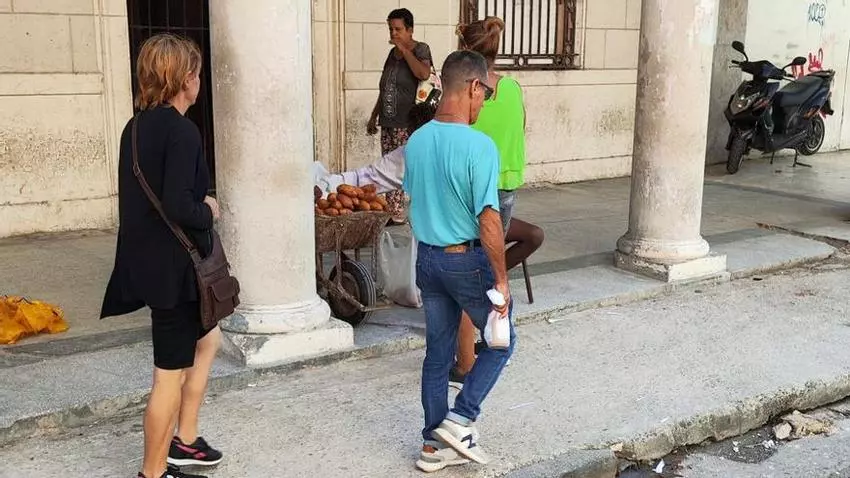
Some distance away, in the doorways of Galiano Street, private vendors sell everything from diapers to Bluetooth speakers. Customers can also buy potatoes here without having to wait in line and without all the pushing and shoving / 14ymedio

My grandchildren have been waiting days for this moment so I can make them some fries but that would be wasteful,” says another woman waiting in line at Trillo Park. “Today, I’m going to make them what they want but I’m saving the rest for soups and stews because we’ll get more meals out of them that way.”

Local officials have released a district-based distribution schedule and, in turn, each local governing body has its own program based on whose turn it is to buy potatoes on any given day. Customers must check to see if the number of their local ration store matches the number that appears on the kiosk boards. Even if they do, there is no guarantee that the buying process will be easy.

“I got up before dawn because I knew it was going to be wild,” explained Dayron, a young resident of San Rafael Street. He managed to get a spot in line for himself and two neighbors whom he says could not leave their house because, he said, “They are very old.” This morning there is also no shortage of coleros,* street vendors and arguments. In Cuba, the potato has the ability to fill empty plates and encite passions.

Some distance away, in the doorways of Galiano Street, private vendors sell everything from diapers to Bluetooth speakers. Customers can also buy potatoes here without having to wait in line and without all the pushing and shoving. “They’re 150 pesos a pound,” an unlicensed vendor tells an elderly woman who has approached him, drawn by the vision of clean, dry and almost shiny tubers. “If you buy from me, I’ll throw in the bag for free,” the man adds. But the price scares off the woman, who continues on towards nearby Zanja Street.

A young man in extremely white tennis shoes, who is trying to avoid the muddy puddles on the sidewalk caused by the earlier downpour, approaches the vendor and hands him a 1,000-peso bill, then a 500-peso bill. Ten pounds of potatoes are loaded into a transparent nylon bag, its contents clearly visible. As he leaves, heads turn to look, their faces grimacing with envy.

*Translator’s note: People others pay to wait in line for them.

____________

COLLABORATE WITH OUR WORKThe 14ymedio team is committed to practicing serious journalism that reflects Cuba’s reality in all its depth. Thank you for joining us on this long journey. We invite you to continue supporting us by becoming a member of 14ymedio now. Together we can continue transforming journalism in Cuba.
Outrage in Manzanillo Over the Prohibition of Holy Week Processions

Dionisio García Ibáñez made a plea in the Palm Sunday prayer before the Virgen de la Caridad del Cobre / Screen capture

14ymedio bigger14ymedio, Madrid, Juan Ramos, 25 March 2024 — Rumors about the suspension of Holy Week processions in the diocese of Bayamo-Manzanillo, in Granma province, are true, as confirmed to 14ymedio by a priest who asked to remain anonymous. “The Government does not want people on the street for fear of possible demonstrations. That has obliged us to stop doing something that we have been doing year after year. Last year there were processions, and everything was done with the peace of God,” he says.

The priest points out that religious acts have not been suspended, but they will be inside the temples. He explains that Holy Week processions are a tradition that dates back to at least 1952, and “they have been carried out for years and years, depending on how the Government is doing.” However, in 2020 and 2021 they were stopped, as part of the measures to avoid contagion during the COVID-19 pandemic.

“We are very disgusted by that decision; faith has nothing to do with politics and should not be mixed,” he told this newspaper, visibly indignant. His opinion was shared by a seller who usually placed himself at the corner of the church, who didn’t like the measure either. continue reading

“I don’t know how long the Government will have the power to influence matters of the Church”

“I don’t know how long the Government will have the power to influence matters of the Church. The Church is apart from the Government and has nothing to do with it. If they are afraid of demonstrations, that’s their problem. But it’s easier to prohibit than to solve the people’s problems,” he says.

News of the suspension circulated from a source that alerted the Catholic media Aciprensa. The article included the opinion of Osvaldo Gallardo, a writer and religious activist who currently resides in Miami but lived more than 40 years on the Island, working on culture and communication projects for the Cuban Episcopal Conference. “[The regime] is very afraid of any large concentrations of people right now,” he said.

“The processions of the Catholic Church often bring together not only the faithful but also a number of other people. So the Government fears, since the demonstrations of less than a week ago are still ’fresh’, that similar events will be repeated.”

Gallardo recalled a case that occurred on September 10, 1961, when a young man named Arnaldo Socorro was mortally wounded in front of the church of Our Lady of Charity in Havana, for defending a prohibited procession and shouting “long live Christ the King.”

A seller of devotional items next to the parish church of the Purísima Concepción, in Manzanillo / 14ymedio]

“A procession can, under the enthusiasm and devotion of Easter, create a breeding ground so that another political demonstration suddenly explodes,” the writer said.   This Sunday, meanwhile, the archbishop of Santiago de Cuba, Dionisio García Ibáñez, known for his criticism of the Government, which has caused him some problems with the Conference of Catholic Bishops of Cuba, made a plea in the Palm Sunday prayer before the Virgin of Charity of Cobre in defense of the demonstrators who ask for “current and food.” “Is that unattainable? Is it asking too much? No. Our people also ask for freedom. For what? So that everyone can carry out their own project,” said the prelate, who left a phrase to be remembered: “In the absence of energy, we ask the Lord to give us inner energy.”

García Ibáñez defended the right of those who protest to express themselves and argued that “in the vast majority of cases it’s done without violence. On the contrary, they are expressing a feeling. In situations that seemed a little tense the same people have begun to chant ’no more violence’. This is what our people ask for and want,” he added.

In addition, the archbishop, visibly moved, also referred to the massive Cuban migration. “Many of our children go to other places because they can’t find it [their development] here. And there are others who hope to do it. What a pity, if this is our land, the one that God gave us!”

Translated by Regina Anavy

____________

COLLABORATE WITH OUR WORKThe 14ymedio team is committed to practicing serious journalism that reflects Cuba’s reality in all its depth. Thank you for joining us on this long journey. We invite you to continue supporting us by becoming a member of 14ymedio now. Together we can continue transforming journalism in Cuba.

Diaz-Canel’s Heirloom Vase Is Crumbling

A scene from one of the protests that took place in Santiago de Cuba on Sunday, March 17

14ymedio bigger14ymedio, Pedro Corzo, Miami, 24 March 2024 — It might not happen tomorrow but it is quite clear that the giant vase now in the care of Cuba’s dictator designate, Miguel Diaz Canel, is already cracked and could shatter at any moment. People, who are fed up with sixty-five years of oppression, are starting to realize they have the right to a better life.

The oppressed are fed up. Like genies in a bottle, they will eventually break out of the narrow confines of totalitarianism in a fury. And who knows what may happen to those who have supported it for decades? Incidentally, the last two major protests in Cuba occurred on a Sunday, as my wife pointed out to me, so totalitarianism may yet give us a Sunday that turns out to be bleak for them, its supporters, and bright for us, all those who love freedom.

The oppressed are fed up. Like genies in a bottle, they will break out of their narrow totalitarian confines in a fury

Remember that this is someone who inherited power because he didn’t have a backbone. In a government of indignities, he proved to be even more of a lackey than Roberto Robaina or Felipe Pérez Roque, whom Fidel Castro once described as the person who best interpreted his thoughts. Roque still got sacked. That is why it is worth asking how much Díaz-Canel had to humble himself before being left in charge of the country that the Castro brothers turned into a barracks. continue reading

Don Miguel is not holding onto power because he has courage or talent, which is presumably why the old guard — the Moncada Barracks generation — get nervous anytime the situation “turns red,” a popular expression in Cuba for circumstances that are getting complicated.

There is one precedent we should keep in mind. On September 4, 1933, soldiers, students and teachers joined forces to prompt the fall of the regime that had replaced the dictatorship of President Gerardo Machado. We can only hope that the military, with popular support, will put an end to all the humiliation and subjugation.

On September 4, 1933, soldiers, students and teachers joined forces to prompt the fall of the regime that had replaced the dictatorship of Gerardo Machado

That protest, in my opinion, is more relevant that one that took place on 11 July 2021. On that glorious day, it was mostly young people who stormed the streets to demand freedom. The impetus of youth, suppressed for so long, cannot come too soon. I determined, however, that the average protester was actually older, a symptom that must deeply alarm those in the upper echelons of power.  It is a serious sign of desperation when it is the parents who assume the responsibility of taking risks.

We could all see and hear the protestors yelling at four government henchmen, who had climbed onto a rooftop as they tried to flee, that none of them had been chosen by the people. In another protest, I heard a group of fellow countrymen singing a stanza from the national anthem that goes, “Run towards combat, Bayamese, do not fear a glorious death.” On this occasion, I did not get the sense of a people surrendering to totalitarianism as I had at other times. Quite the opposite. I appreciated their desire to end the oppression sooner rather than later.

Certainly, some were protesting out of exhaustion with the scarcity and misery that they have suffered for decades, but many more did so — just like on 11 July 2021 — to claim their rights, demanding political change in a country for everyone.

It seems that the residents of the largest country in the Antilles are preparing to storm their Bastille, otherwise known as the Palace of the Revolution

Setting aside the historical anomalies for a moment, it seems the residents of the largest country in of the Antilles are preparing to storm their Bastille, otherwise known as the Palace of the Revolution. I am not saying this simply out of enthusiasm but because at least some of them perceive it that way. We could see this when official newscaster Humberto Lopez repeated on his TV program — the one the regime gave him because of his obvious nastiness — the same threats Fidel Castro or his spokesmen have been making since that dark New Year’s Day of 1959.

Lopez continues to stoke Cubans’ fears of the United States. Although there are many survivors on the island, the hardships are so great that only those slavishly loyal to totalitarianism, such as Lopez himself, can get by. What they really want is to forget the revolution and go live in this or some other coutry.

No one believes the argument that restoring democracy in Cuba will mean more poverty and misery for the population. Those who are protesting already find themselves living below the poverty line. How much more fearful can you make people who have nothing?

____________

COLLABORATE WITH OUR WORKThe 14ymedio team is committed to practicing serious journalism that reflects Cuba’s reality in all its depth. Thank you for joining us on this long journey. We invite you to continue supporting us by becoming a member of 14ymedio now. Together we can continue transforming journalism in Cuba.
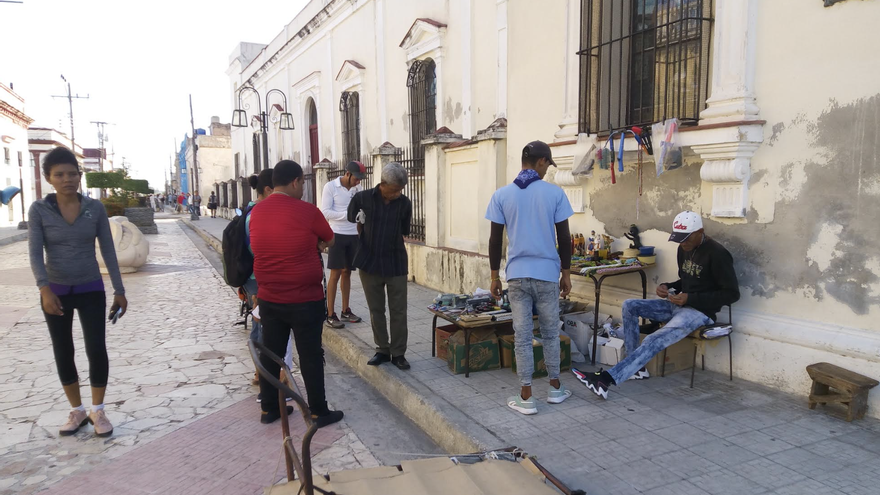
The Grand Master Is Expelled From Cuban Freemasonry to the Cry of ‘Out With the Thief!’

The Freemasons considered that Urquía was illegally carrying out the position / Facebook

14ymedio bigger14ymedio, Havana, 25 March 2024 — The Grand Master of the Grand Lodge of Cuba, Mario Alberto Urquía Carreño, has been expelled by the representatives of more than 300 lodges on the Island to the cry of “Out with the thief, usurper, scoundrel, traitor!” The event took place on Sunday, when Urquía, who continues to hold the position after the controversial theft of $19,000 from his office, was preparing to preside over the biannual session of the Masonic Upper Chamber.

The information, reported by CubaNet, was confirmed to 14ymedio this Monday by Ángel Santiesteban, an independent journalist who is a 33rd grade Mason – the highest step in the hierarchy of the order – who could not attend the event but knows the facts. In his opinion, whoever succeeds the Grand Master – predictably the Deputy Grand Master, Gerardo Cepero Díaz, a critic of Urquía – will stop the interference of State Security in the lodge, something that leaves room for optimism.

The Freemasons considered that Urquía was illegally carrying out the position, since on January 25 he was expelled by the Supreme Council of Grade 33 for the Republic of Cuba for his alleged “betrayal.” continue reading

“That had never happened in Cuban Freemasonry, not the painful  aftermath of the robbery, nor the blatant interference of State Security and the expulsion of an acting Grand Master

A witness to what happened this Sunday told CubaNet that the Grand Master refused to leave the room, but he had to do so due to the almost unanimous demand of the representatives of the lodges. “There was a lot of indignation accumulated over the actions of the Grand Master. He came out saying that he would call the Registry of Associations (of the Ministry of Justice) to complain, but they have no authority here,” he said.

“That had never happened in Cuban Freemasonry,” he added, “not the painful aftermath of the robbery, nor the blatant interference of State Security and the expulsion of an acting Grand Master. Today is a day of shame, a day in which Cuban Freemasons demonstrate our autonomy and integrity.”

The Grand Lodge had expelled Urquía for “punishable and intentional” conduct, despite the fact that his responsibility in the theft of money – which belonged to the Llansó Masonic National Asylum, in the Havana municipality of Arroyo Naranjo – is still being investigated. The Supreme Council then added that his “entrenchment” had as a consequence a “major Masonic schism in the national territory.”

Urquía continued to cling to the position despite the rejection of a large majority of Freemasons, some of whom had asked the United States to deny him a possible entry into the country for “being an active collaborator of the intelligence agencies of the Cuban regime.” This was stated by the Freemason residing in Colombia, Pompilio Portuondo, on his Facebook account, where he added the names of some alleged “collaborators.”

“We will expose them so that the entire international community and especially the United States will know, so that they will be denied entry as agents of the regime”

“We will gradually continue to bring to light more names of people who are collaborating with Mario Alberto Urquia and all the brothers who in one way or another have hidden, supported or helped Mr. Mario Alberto Urquia Carreño in the next session of the Masonic Upper Chamber of the Grand Lodge on Sunday, March 24. We will expose them so that the entire international community and especially the United States will know, so that they will be denied entry as agents of the regime,” he said.

According to CubaNet, once Urquía’s departure was achieved, and under the transitional presidency of the former Grand Master, Ernesto Zamora, all the Decrees that Urquía had formed after January 25 to date were challenged, “including those in which he sent to the Court those who had confronted him.”

It remains to be seen what will happen to José Ramón Viñas Alonso, Sovereign Grand Commander of the Supreme Council of the 33rd grade, who was expelled from Freemasonry for seven years by a sentence of the Supreme Court of Masonic Justice of Cuba on Thursday, February 22. His “punishment” was interpreted by many as a revenge of Urquía Carreño against Viñas, for having reported the theft of the $19,000 in dispute.

Translated by Regina Anavy

____________

COLLABORATE WITH OUR WORKThe 14ymedio team is committed to practicing serious journalism that reflects Cuba’s reality in all its depth. Thank you for joining us on this long journey. We invite you to continue supporting us by becoming a member of 14ymedio now. Together we can continue transforming journalism in Cuba.

About 400 Chickens Drowned in the Storm in Artemisa

With the strong winds of this weekend, the chicken coops lost part of their roofs / Cubadebate

14ymedio bigger14ymedio, Havana, 25 March 2024 — The Poultry Company of Artemisa reported on Monday the death of 400 birds in the Ciro Redondo unit, due to the storm that hit the western provinces this weekend. The poor condition of the roofs, which were detached by the strong winds, caused water to enter the chicken coops and some of the birds to drown, the official press explained.

As the provincial authorities told El Artemiseño, “due to the heavy rains and the poor condition of the roofs, it was impossible to prevent some birds from getting wet.” The greatest damage is reported in the José Martí unit, where five warehouses have holes in the roofs, 500 zinc tiles were lost and “damage to the steel structures was reported.”

The greatest damage is reported in the José Martí unit, where five of the warehouses have holes in the roofs   

“At the moment, the workers of the Artemiso poultry farm are in the recovery phase with the tiles that were blown inside and outside the perimeter of the units,” the media added. continue reading

Although the authorities did not offer data about the performance of the poultry industry in the province, the loss of several hundred birds cannot be good news for a company that, at the end of 2023, reported a decrease of 80 million eggs compared to the production of 2020, when they reached 185 million.

“We have 80 million fewer eggs, 50 million because we have fewer chickens and the rest because of low efficiency, since over 70% of the birds are in their second production cycle,” Luis Alberto Hernández Blanco, director of the company, told Cubadebate at the time.

Production was also affected, according to Hernández Blanco, in the months of July and August, when “the food consumption of birds almost reached zero and “the company fell from 62% of position to barely 16%.” “From 300,000 eggs a day we went to 17,000,” he said, and although the company managed to recover, it never attained the level it had before the crisis.

The Irregular deliveries of raw materials, the low quality of the chicken feed and the difficulties in the production of egg cartons are the worst problems that the industry faces, not only in Artemisa but also at the national level.

A credit of 4 million pesos granted by the provincial government last year demonstrates what the industry could achieve with the support of the State

A credit of 4 million pesos granted by the provincial government last year demonstrates what the industry could achieve with the support of the State: in a short time the units acquired better feed, which raised the positions by 70%, and the company sold almost 4 million cartons in the capital city alone. However, far from boosting national production, famous for its “depressed” and “decrepit” chickens, the Government decided to import eggs from Colombia.

After the negotiations began last July and the health certifications were approved in December, the Colombian Agricultural Institute sent the first batch of eggs to Cuba at the beginning of March: two containers, 40 feet each, with 17,280 boxes of 30 units – 518,400 eggs in total. The State has not pronounced on the purchase of this product, nor the price it will have in the Cuban market, where the eggs that arrive on the tables of Cubans are rationed in the bodegas (ration stores), five a month per person.

In the informal market, where inflation and hunger set the rules, a carton of 30 eggs costs 3,000 pesos, a figure well above the average monthly salary.

Translated by Regina Anavy

____________

COLLABORATE WITH OUR WORKThe 14ymedio team is committed to practicing serious journalism that reflects Cuba’s reality in all its depth. Thank you for joining us on this long journey. We invite you to continue supporting us by becoming a member of 14ymedio now. Together we can continue transforming journalism in Cuba.

Spanish Agency Announces a Competition to Rehabilitate Havana’s Galiano Street

View of buildings along Havana’s Galiano Street, whose facades would be restored as part of an urban renewal project / 14ymedio

14ymedio bigger14ymedio, Juan Diego Rodríguez/Olea Gallardo, Havana, 22 March 2024 — Plans to restore iconic Galiano Street in Central Havana seem serious this time around, at least for the impoverished block between Virtudes and Conde Cañongo. On Thursday, the local government publicly solicited proposals for the “recovery, maintenance and restoration of the facades” of the buildings in this area.

It is a highly unusual but understandable move given that the area is part of the so-called Galiano Street Comprehensive International Revitalization Cooperation Project, financed by the Spanish Agency for International Development Cooperation (AECID).

The buildings whose facades would be restored are numbers 201 to 211 on the east side of the street and 202 to 212 on the west. Not included is number 210, which the official press release describes as being in very bad condition. continue reading

In a visit to the site on Friday, 14ymedio learned that the building, whose address should be 210 since it is on the even side of the street but which is mistakenly numbered 211, is in ruins though it is still inhabited on the ground floor.

The building, whose address should be 210 since it is on the even side of the street but which is mistakenly numbered 211, is in ruins though it is still inhabited on the ground floor

The area is known for its nightlife — bars such as Cumbaking, 212 and V&S are located there — and as a hotbed of fistfights, drug dealing and prostitution.

The stretch includes precarious apartment buildings such as those at numbers 201, 204 and 205, which has a state-owned store, La Cancha, on the ground floor, that has been rented out to small private vendors, popularly known as merolicos.

Another building, number 208, retains its original Sevillian tiles, remnants of a more glorious past. Built in the 1930s, it once belonged to José Alvarez Ruiz, a businessman whose initials can still be seen on the facade of the building. Housing took up the upper floor; a loan and jewelry business occupied the lower floor. In the 1940s, the building housed the Cuban branch of Remington Rand, an American company that manufactured sewing machines and typewriters, and imported a wide range of office supplies.

Nationalized by the state after the Cuban revolution, the striking building had had several uses — these included the headquarters of the Comittees for the Defense of the Revolution and a library — until the roof collapsed in 1999.

The area is known for its nightlife — bars such as Cumbaking, 212 and V&S are located here — and as a hotbed of fistfights, drug dealing and prostitution / 14ymedio

The announcement posted jointly by the municipal government and AECID on the official website indicates that proposals must include a separate budget, in Cuban pesos, for each of the building facades on both sides of the street.

Similarly, they point out that restoration of facades must include “all required actions such as carpentry, lighting, ironwork and any others needed to restore the facades to their original state.”

The construction period for each facade may not excede four months “from the delivery of the client’s letter of authorization letter to the bidder.”

According to a AECID document signed on June 30, 2021, the agency foresees a total of seven such projects on the Island at a cost of of 3.5 million euros

The Galiano Street restoration project, sponsored by AECID, is nothing new. State media announced it with great fanfare back in late 2022, even reviving the thoroughfare’s old name: Avenida de Italia. The goal, as reported at the time, was to convert the area into “an innovative urban district and a reference for the principles of the circular economy, digital culture and creativity and the enhancement of products from supply chains.”

On Thursday, the same day the competition was announced, the street was also referred to by its old name on the website of the Information Technology Fair, which is taking place in Havana. State media reported a plan to install “broadband telecommunications infrastructure using fiber optic cables along three kilometers of Galiano Street — from Reina Street to the Malecón — for the benefit of 109 properties, with an average of twelve customers per property.”

According to a AECID document signed on June 30, 2021, the agency foresees a total of seven such projects on the Island at a cost of of 3.5 million euros.

AECID’s budget for what was billed as a “comprehensive revitalization of Galiano Street, preserving its urban and architectural values and enhancing its commercial, recreational and cultural character” was originally 312,000 euros, with a May 2023 completion date. Neither the Spanish agency nor its Cuban partner has provided an explanation for the delay in plans.

____________

COLLABORATE WITH OUR WORKThe 14ymedio team is committed to practicing serious journalism that reflects Cuba’s reality in all its depth. Thank you for joining us on this long journey. We invite you to continue supporting us by becoming a member of 14ymedio now. Together we can continue transforming journalism in Cuba.

Arrests Continue for the March 17 Protests in Santiago de Cuba

The two most recent detainees for their links to the 17J protests in Santiago de Cuba are father and son. Yosmany Mayeta Labrada / Facebookddd

14ymedio bigger14ymedio, Havana, 25 March 2024 — Almost a week after the protests that took several hundred people to the streets in Santiago de Cuba, on Saturday the authorities arrested 18-year-old, Cristian Kindelán, for having participated in the marches of the Carretera del Morro.

According to the Santiago journalist Yosmani Mayeta Labrada, who lives in the United States, the boy was removed from his house and taken to the Police Unit known as “El Palacete.” He was later transferred to the “operations and torture center” in the Altos de Versailles neighborhood.

The young man’s father, Asdrúbal Kindelán Garbey, was arrested a few hours later in the same center, after going there with several relatives to make a report on Facebook about the situation.

Teresa Garbey, Asdrubal’s mother and Cristian’s grandmother, sent a message on her social networks about the situation. In it she explains that her grandson was arrested for having appeared in a video of the protests and when she asked the agent, whom she identifies as “Major Oscar” and as the one responsible for the case, he told her, “with tremendous disrespect continue reading

that he did not have to give an explanation.” At this, the young man’s father Asdrúbal, annoyed, reprimanded the agent, which in turn caused his arrest.

“It seems that we are in the times of a dictatorship, where people disappear without any explanation, something our commander fought so much against”

“It seems that we are in the times of a dictatorship, where people disappear without giving any explanation, something which our commander fought so much against,” the woman wrote. “It seems that they want to erase all their ideas and bury their legacy in the past. I make this publication to call for the reflection of the officers of this Revolution and their new rulers. This is nothing more than a way to repress people and break them, and I wonder what they fought for and lost so many lives for only to destroy that legacy. I only ask the authorities of this country to reflect on that. I don’t sayPatria y vida’* [Homeland and life], I say ’patria y muerte’ [homeland and death].”

Her statement in defense of the regime motivated an angry response on-line from Mayeta, who wrote “I strongly ask all my followers to share this publication, because if this lady, mother and grandmother does not raise her voice for her own family and continues to support the dictatorship, I, as a Cuban from Santiago and a fighter for the freedom of Cuba and a lover of freedom, will do it.”

This weekend, the Prisoners Defenders organization said that those arrested on March 17 total 38, although the amount could be much higher.

The organization, based in Spain, pointed out that it is very difficult to obtain a final figure due to the lack of official data and the reluctance of many people to give an account of their situation, especially those who have only received a fine or a precautionary measure.

By provinces, Holguín, with 13, had the most arrests, while in Santiago de Cuba there were 12, in Havana four, in Cienfuegos two and in Artemisa three. Six of the total have now been released.

Meanwhile, Justicia 11J counted 13 detainees in total, although two of them have now been released.

*Translator’s note: “Homeland and Life” was the motto for the demonstrations of 11 July 2021, meant to contrast with the regime’s motto of “Homeland and Death.”

Translated by Regina Anavy

____________

COLLABORATE WITH OUR WORKThe 14ymedio team is committed to practicing serious journalism that reflects Cuba’s reality in all its depth. Thank you for joining us on this long journey. We invite you to continue supporting us by becoming a member of 14ymedio now. Together we can continue transforming journalism in Cuba.

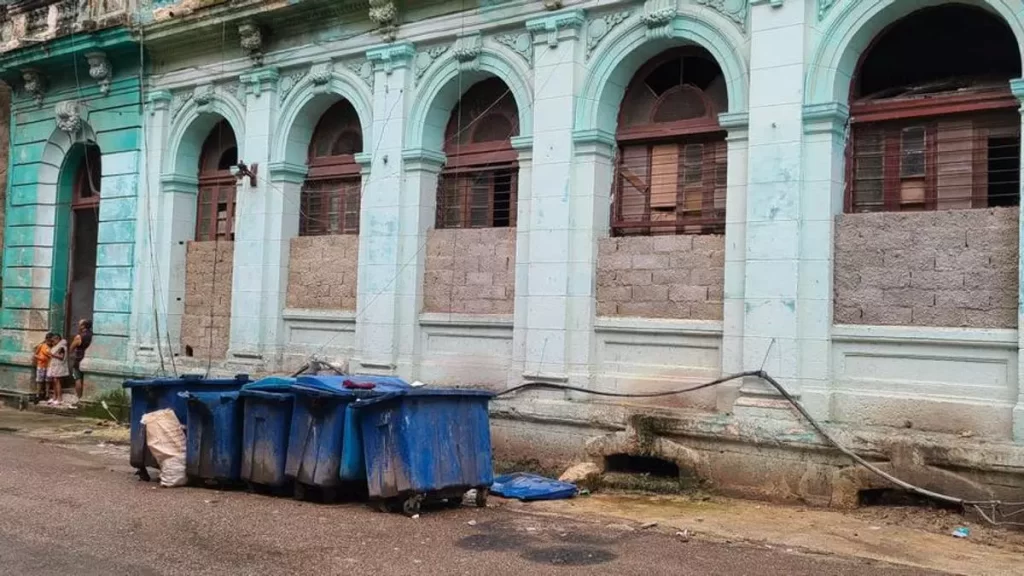
Over Three Feet of Water Entered the Occupied Tenements at Galiano and Virtudes From the Rain and Hail

The vents lead onto the street, but also to several garbage containers, whose stench gets worse with the rain / 14ymedio

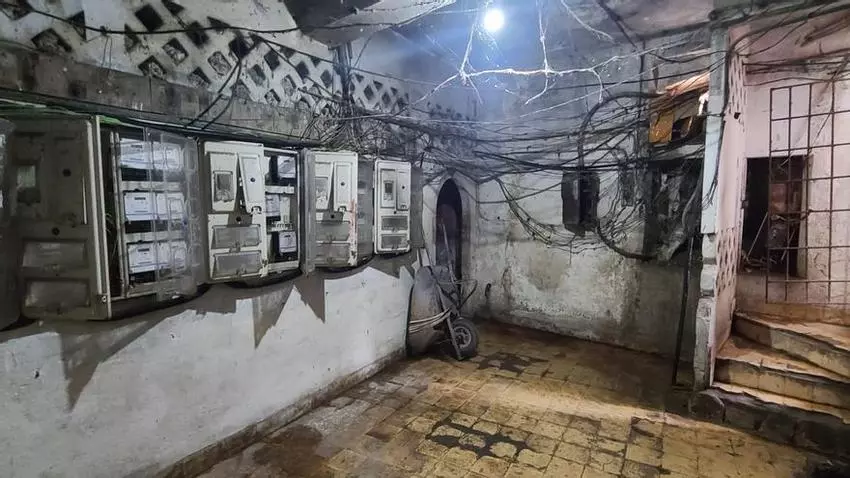
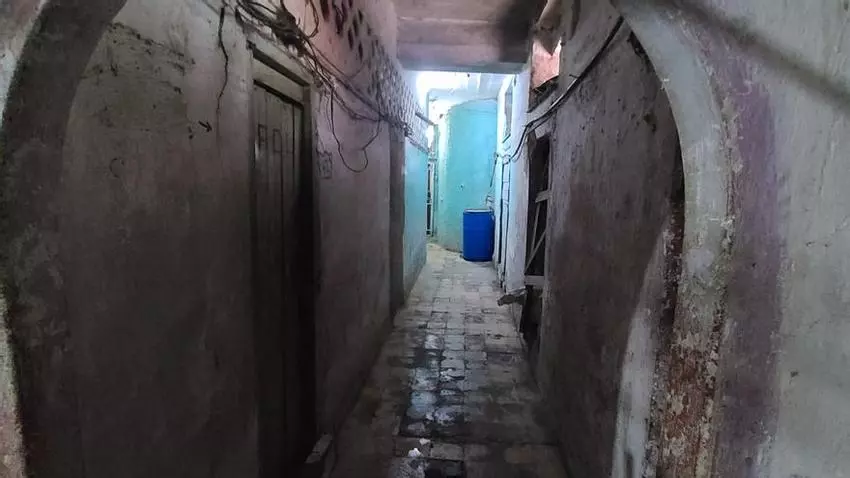
14ymedio bigger14ymedio, Pedro Espinosa, Havana, March 23, 2024 — The only natural light that residents enjoy in the tenements [“citadel” in Spanish] at Galiano and Virtudes in Havana comes from the vents at street level. However, those same openings allowed the penetration of the water that flooded the basement under an abandoned pharmacy, where several families with children live.

Storms like those that hit the west of the Island this weekend are fatal for a natural environment that is strained and in which people live in deplorable conditions. The vents lead onto the street, but also to several garbage containers the stench of which gets worse with the rain.

This Saturday, after the downpour, which also brought hail to several municipalities in Havana, residents removed water from their homes with buckets. Desperate, they asked the State for a suction pump to draw out the water, which is more than three feet deep. continue reading

This Saturday, after the downpour and the flooding, the residents had to use buckets to remove the water / 14ymedio

The pharmacy above the tenements has been closed for ten years, but the residents say that is no reason to relocate them: “There is no danger of collapse,” they have been told, despite the fact that the bricks of the pharmacy’s facade barely support the building’s arches.

One of the side effects of the storm has been, precisely, the collapses of weak and abandoned structures such as the one that, in the Matanzas neighborhood of Pueblo Nuevo, collapsed this Friday. The building, located on San Juan de Dios Street, fell with a big “rumble” at 10:00 pm, according to what the neighbors told the official press. Many said that they had tired of warning the authorities about the danger. “What they warned about finally happened,” said one of the interviewees.

Storms like those that hit the west of the Island this weekend are fatal for an environment that, by nature, is rarefied / 14ymedio

Translated by Regina Anavy
____________

COLLABORATE WITH OUR WORKThe 14ymedio team is committed to practicing serious journalism that reflects Cuba’s reality in all its depth. Thank you for joining us on this long journey. We invite you to continue supporting us by becoming a member of 14ymedio now. Together we can continue transforming journalism in Cuba.

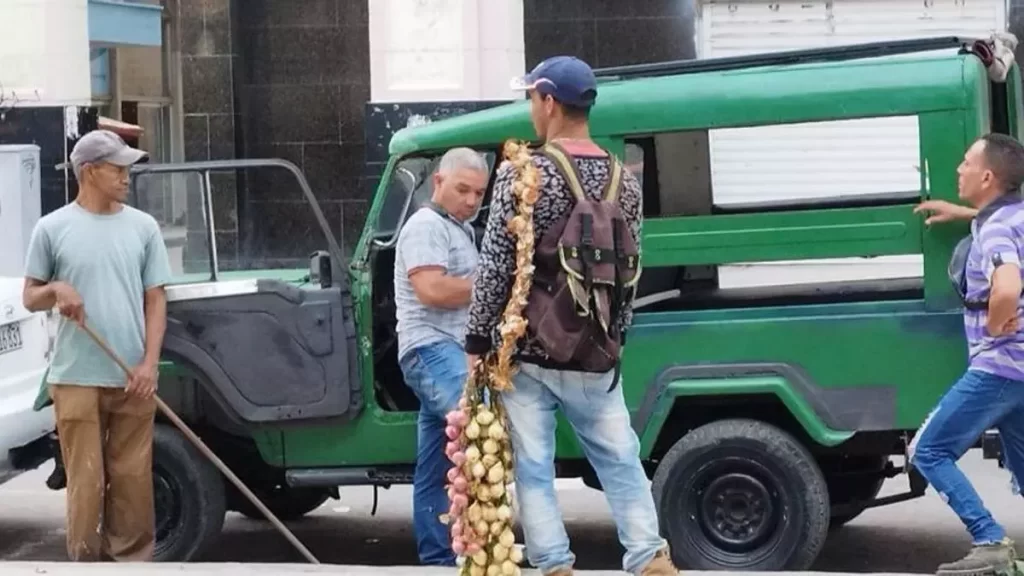
The Creole Mojo Falters With the Rise in Price of Garlic in Cuba

A street vendor of garlic / 14ymedio

14ymedio bigger14ymedio, Natalia López Moya, Havana, March 24, 2024 — Yucca with creole mojo, tamales with a good portion of sofrito on top and the marinade for meat. In each there is an ingredient that leads and surpasses in importance to all the others: garlic. Cuban cuisine basically smells like the aromatic condiment that accompanies a good part of everyday recipes.

However, ensuring that garlic cloves end up next to the black beans or the boiled malangas is becoming more and more difficult for the pocketbooks of Cuban families. Traditionally sold in the form of bulbs, cloves or strings, garlic is one of this year’s products that has experienced a greater price increase in the agromarkets that 14ymedio monitors every week.

At the beginning of January, on Plaza Boulevard in the city of Sancti Spíritus, a string of garlic reached 1,000 Cuban pesos, and this season’s offer for bulbs and cloves barely appeared on social platforms. “We can’t sell untied garlic because it’s not profitable,” said a seller from a well-known agromarket last January when this newspaper questioned why customers had to buy a complete string of 50 small bulbs. continue reading

“Almost everything was seasoned with the popular bulb, and it was also used in herbal teas for many ailments and in skin plasters”

“I put a small bulb in the garlic juicer and there’s plenty of space,” complained a buyer. “It’s not worth peeling because the cloves are so puny that it takes a lot of work; it’s better to crush them all together and use them like that to at least give some flavor to the food.” This is the method to “not give up eating with some garlic.”

‘Paro Nacional’ (National Strike) Is El Funky’s New Song for the Resistance in Cuba, Is Launched in Miami

“Everyone go on strike! Down with the dictatorship,” says a citizen of the Island in the video clip of El Funky’s new song / Screen capture

14ymedio biggerEFE (via 14ymedio), Miami, 20 March 2024 — This Wednesday in Miami, the Assembly of the Cuban Resistance (ARC) presented the new song by Eliexer Márquez “El Funky”, Paro Nacional (National Strike), as part of a series of initiatives in support of the resistance in Cuba.

Composed of 54 groups inside and outside the Island, the coalition reported a march this Sunday in Miami, which will start from the Bahía de Cochinos Monument and will conclude at the House of the Cuban Political Prisoner, under the slogans “Support the people of Cuba,” “End the Castro dictatorship” and “Support the National Strike.”

At an event held at the House of the Cuban Political Prisoner, the ARC presented the video of the song.

El Funky is one of the creators of the song Patria y Vida, the anthem of the 11 July 2021 protests in Cuba and winner of the Latin Grammy Awards for Song of the Year and Best Urban Song in 2021.

“We ask the international community, the European Union (EU) and Canada to stop financing the Castro regime,” Orlando Gutiérrez, coordinator of the ARC, told EFE

“We ask the international community, the European Union (EU) and Canada to stop financing the Castro regime,” Orlando Gutiérrez, coordinator of the ARC, told EFE.

Gutiérrez expressed the unconditional support of the ARC for the “Cuban people in the streets for a real change” in Cuba, a change that can only take place, he said, “with the exit from power and the illegalization of the Communist Party and the departure from the Island of the Castro family.”

In the video calling for a national strike in Cuba, several citizens express their indignation from the Island.

“Not a minute more on your knees, Cuba will be free, National Strike,” several voices over the video clip repeat, before the artist sings: “There is no government that resists or that endures that pressure, what Cuba needs is a strike.”

Translated by Regina Anavy

____________

COLLABORATE WITH OUR WORKThe 14ymedio team is committed to practicing serious journalism that reflects Cuba’s reality in all its depth. Thank you for joining us on this long journey. We invite you to continue supporting us by becoming a member of 14ymedio now. Together we can continue transforming journalism in Cuba.
After an Exodus of Auditors, Governmental Corruption Goes Unchecked in Ciego de Avila Province

The meeting was led by Gladys Bejerano Portela (center), Comptroller General of the Republic of Cuba

14ymedio bigger14ymedio, Havana, 19 March 2024 — Last year, Ciego de Ávila had only 99 of the 172 trained government employees needed to conduct financial audits in the province. The reduction in personnel, who are tasked with preventing theft and the diversion of resources at state companies, was the hot topic at the annual meeting to discuss the work of the provincial government’s auditing system according to an article published on Monday in Invasor, the province’s official Communist Party newspaper.

The article cited low graduation rates in mid-level accounting programs, poor working conditions and meager salaries as the causes of a “marked tendency toward depression” among accountants. It made no mention, however, of the unprecedented exodus that has been draining the Island of all types of workers in recent year, nor of the widespread rejection of accounting as an occupation in a country where the diversion of resources is a way of life of many public-sector employees.

The news comes amid a disastrous situation the government is facing in the agriculture, food manufacturing and tourism sectors. “The Gran Caribe hotel group has no database auditors at its five Jardines del Rey resort hotels. Only Emprestur and Palmares have in-house auditors at all,” reports Invasor. continue reading

The news comes amid a disastrous situation the government is facing in the agriculture, food manufacturing and tourism sectors

Of the 121 audits Ciego de Avila carried out in 2023, thirty found incidents the article described as “deficient” and three it described as “bad.” The result was a loss of 97,603,548 pesos in economic damages, the cost of which amounted to 1,746,000 pesos. Invasor noted that, “once again,” the largest number of financial irregularities was in the retail and food service sectors. In several cases, the article points out, the managers justified their actions by saying that the missing money was returned.

As the article points out, actions leading to economic losses in the millions is nothing new. In fact, they are rising dramatically. The figure for 2020 came to more than 5,000,000 pesos. Two years later, Ciego de Ávila auditors revealed that losses amounted to 71,500,000 pesos.

Invasor points out that one of the causes for these losses is failure to meet contractual obligations, from exceeding fuel consumption standards to spending more than was budgeted.

In spite of all the troubles auditors in Ciego de Ávila face, those who work in the Ministry of Construction actually enjoy what they describe as good working conditions. Fidel Contreras, head of the audit department at the Construction and Assembly Company, said his four employees were provided with laptops and motorbikes to facilitate their work.

The solutions proposed by the comptroller’s office to increase the number of auditors do not seem very promising. The short-term plan is to expand career opportunities in auditing starting in September and, in the meantime, to offer training courses to graduates of technical-professional education programs and involve students in “prevention and control actions as part of pre-professional practice.”

The solutions proposed by the comptroller’s office to increase the number of auditors do not seem very promising

One of the first decisions that Raúl Castro made after formally assuming power in 2008, after his brother Fidel stepped aside for health reasons, was to create the post of Comptroller General of the Republic. The bureau and its provinicial subsidiaries quickly accumulated oversight power. Every November, it conducts a review of state-run businesses and publishes the results.

Over the years, however, this annual exercise has lost steam while its reports became slimmer and contained fewer details. The Comptroller’s Office is also receiving less attention from the state media while the prominence of Comptroller General Gladys María Bejarano’s prominence at public events and government meetings has decreased significantly.

____________

COLLABORATE WITH OUR WORKThe 14ymedio team is committed to practicing serious journalism that reflects Cuba’s reality in all its depth. Thank you for joining us on this long journey. We invite you to continue supporting us by becoming a member of 14ymedio now. Together we can continue transforming journalism in Cuba.