A Flood of Livestock ‘Incidents’ Alarms Artemisa’s Inspectors

The control of state lands and livestock began on March 1 throughout the Island / El Artemiseño

14ymedio bigger14ymedio, Havana, 29 March 2024 — “Animals without a brand or ear tag, with an unreported change of category, off the farm without authorization and without documents” have been just some of the 9,300 violations found by the Cuban authorities during the investigation carried out this month on the lands and livestock in Artemisa province.

In February, the State banned the purchase and sale of animals to carry out an inventory of livestock and idle lands. According to the official press, farmers have attended livestock control registries en masse to register animals that died or that were raised illegally. However, the number of violations is still remarkable.

In Artemisa alone, during the inventory, about 2,600 liters of milk per day were redirected to the informal market, thereby “deflecting” them from the State channels, according to El Artemiseño. continue reading

The farmers have been redirecting some 2,600 liters of milk per day to the informal market, “deflecting” them from the official channels

Of the total incidents, only 2,777 – 29% – have been solved with “warnings,” “fines” and “even confiscation” of the cattle. The municipalities identified by the authorities as the worst are Bahía Honda (with 38% of the cases), Güira de Melena (37.5%) and San Cristóbal (25%).

As for the lands, the newspaper reported “more than 500 violations associated with poor use, problems with the production agreement, abandonment of the land without inheritance procedures and illegal occupation.”

The control of state lands and especially of livestock, which began on March 1 throughout the Island, has been a desperate measure by the Government to try to stop the fall in meat and milk production in recent years.

This Wednesday, the Council of Ministers published an Official Gazette in which they approved an increase in rates for the purchase of milk from both state and private producers. “The maximum collection price in Cuban pesos was approved, for fresh cow and buffalo milk of first quality, in the producer’s field or warehouse, at 38 Cuban pesos per liter, and will be effective in the purchase operations carried out from March 1,” summarized Periódico 26 on Friday.

The rate clarifies that the payment proceeds as long as compliance with the delivery plan is proven

The rate, however, clarifies that the payment proceeds as long as compliance with the delivery plan agreed between the producers and the local companies of Acopio* is proven, and leaves it to the industry to establish bonuses for overcompliance and fines for delays in deliveries.

Also, “the maximum prices paid by Acopio in Cuban pesos for cattle destined for industry or authorized slaughterhouses, were approved, and several rates were registered depending on age, sex and other characteristics,” the newspaper added.

Beyond the “tricks” of the farmers and the illegal theft and slaughter of livestock, the problem with milk and meat production on the Island is structural. The neglect of animals, which reproduce less and less and die more from hunger and malnutrition, has not been solved with an incentive to the farmers that, in addition, is almost four times less than what they can earn by selling a liter of milk in the informal market – about 150 pesos.

Last February, the regime requested for the first time help from the World Food Program (WFP) in the face of the country’s difficulties in distributing subsidized milk to children under seven years of age. Several articles published by the official press have also, although in an accusatory way, reported the complaints of the farmers, for whom raising livestock is no longer profitable.

*Translator’s note: Acopio is the State entity that collects and distributes all agricultural production.

Translated by Regina Anavy

____________

COLLABORATE WITH OUR WORKThe 14ymedio team is committed to practicing serious journalism that reflects Cuba’s reality in all its depth. Thank you for joining us on this long journey. We invite you to continue supporting us by becoming a member of 14ymedio now. Together we can continue transforming journalism in Cuba.

Rice Production in Sierpe, Cuba Falls 62 Percent after Vietnamese Advisors Leave

Farmers are having trouble “keeping the harvest going,” say managers / Escambray

14ymedio bigger14ymedio, Mercedes García, Sancti Spíritus, 28 March 2024 — Since technical advisors from Vietnam left in frustration in 2022, the rice farmers of Sierpe, a town in Sancti Spíritus province, are increasingly feeling pressure from the state to increase production. They are not happy about having to turn over the bulk of their crops to ACOPIO, the state agricultural procurement and distribution agency, or about the low prices the state pays them. “We feel coerced. We have no way out because they only allow us to keep a small portion of what we harvest for our own consumption and we have to hand over the rest,” says Mariano, one of the producers.

To prevent farmers from selling the rice at provincial markets or “on the side,” local officials have strengthened security measures and are insisting farmers turn over the rice that was grown under Vienamese management.

“We all feel uncomfortable with the pressure, which ultimately isn’t helping because we’re still only paid a pittance”

“We all feel uncomfortable with the pressure, which ultimately isn’t helping because we’re still only paid a pittance. But what can we do? Most of us have spent our whole lives farming rice and our livelihoods depend on it,” Mariano complains.

In an interview published on Thursday in Escambray, Héctor Yoel Feitó, director of the Sur del Jíbaro cooperative in Sierpe, reports that rice cultivation is, so far, on track. He hopes to have a yield as high as 4.8 tons per hectare, a figure similar to what farmers were able to achieve with Vietnamese guidance. However, the article also indicates that the yield in 2023 amounted to only 1.8 tons per hectare. continue reading

“The cooperative has planted 458 hectares of grain. Lot #7, one of the most advanced, has 227 hectares planted with the Selection variety, which is doing great at the moment. The dozen workers on this tract are committed to achieving the highest quality possible,” says Feitó.

Feitó also pointed out that farmers, whose responsibility it is to produce the higher yields, are looking for immediate alternatives in an effort to put more rice on the province’s tables. He acknowledged that there have been production problems in “keeping the harvest afloat” but blamed the U.S. embargo for difficulties in obtaining herbicides and fertilizers.

In mid-2022, Vietnamese rice experts, who had been been providing advice and technical assistance to producers in Sierpe, ended their cooperation agreement with the island. They arrived in Cuba twenty years earlier, bringing with them equipment and machinery, but were never able to achieve the expected results.

Despite backing out of its collaboration agreement with Cuba a year earlier, Vietnam made three donations of rice to Cuba in 2023  

They also had to deal with fuel shortages, ACOPIO’s inefficiency and governmental bureaucracy, all of which prompted their decision to return to Vietnam before the agreement ended.

Despite backing out of its collaboration agreement with Cuba a year earlier, Vietnam donated 5,000 tons of rice to Cuba in May 2023, followed by another 2,000 tons in September. A third  donation was announced last August but the exact date of delivery was not indicated.

Last November the local newspaper in Artemisa indicated that there was only enough rice to meet the ration quotas for the municipalities of Candelaria and San Cristóbal, a situation that has been repeating itself in neighborhood ration distribution sites across the island. Unable to provide the 18,000 tons of rice per year that Artemisa’s consumers need, officials called upon producers to redouble “self-management” efforts. So far, however, it has not worked.

Every month Cubans face the challenge of finding rice, a product essential to their diet but which commands exhorbitant prices both on the open market and at state-run stores. According to a price list compiled by 14ymedio, a pound of rice at the market on Plaza Boulevard in Sancti Spíritus cost 240 pesos* as of March 22.

*Translator’s note: These numbers are a constantly moving target, but as of December 2023, the minimum pension in Cuba was reported as 1,528 pesos per month and the minimum wage was 2,100. Based on the official exchange rate today, these numbers are $64 and $88 US. Thus, roughly, the minimum monthly wage is not enough to buy ten pounds of rice, while the minimum pension is not enough to buy 7 pounds. 
____________

COLLABORATE WITH OUR WORKThe 14ymedio team is committed to practicing serious journalism that reflects Cuba’s reality in all its depth. Thank you for joining us on this long journey. We invite you to continue supporting us by becoming a member of 14ymedio now. Together we can continue transforming journalism in Cuba.
Cuban Military Tries To Regain Control of Remittances

MLC (freely convertible currency) cards from the Metropolitano, Bandec and BPA banks will also be able to receive remittances through the application / 14ymedio

14ymedio bigger14ymedio, Havana, 28 March 2024 — The Cuban regime took another step this Wednesday in its attempt to capture a greater amount of foreign exchange. The Clásica card, issued by Fincimex, the financial wing of the Gaesa military conglomerate, can now receive remittances from any country through the Tocopay application, based in Bilbao, Spain. Fincimex also announced days ago the restoration of transfers to American International Service (AIS) cards, rechargeable by the same gateway, which had been suspended since February.

The dramatic fall in remittances sent to Cuba in recent years has forced the regime to devise alternatives to attract foreign exchange. In 2023, Cuban emigrants sent just under 1.973 billion dollars to the Island, the same amount as in 2010. This is a decrease of 47% compared to the 2019 figure (3.716 billion).

The Clásica cards, issued by Fincimex bank branches, in which money is deposited in dollars, were created by the regime along with the economic reforms at the beginning of the year and include the option of buying fuel in the gas station in dollars. continue reading

Tocopay is the Spanish platform for sending remittances, created for Cuba

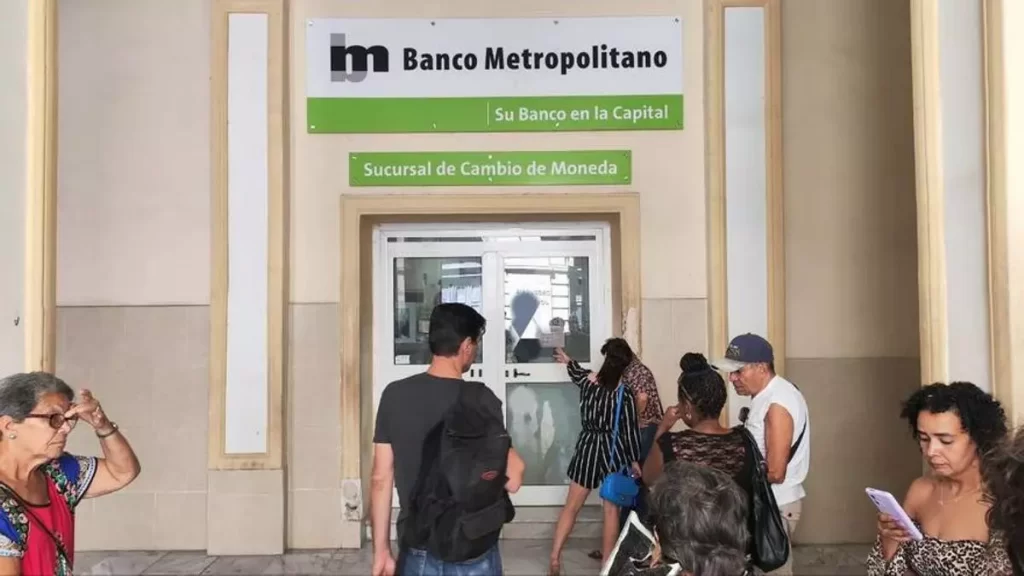
Tocopay, the Spanish platform for sending remittances to Cuba, not only offers the possibility of making deposits on the Clásica and AIS debit cards, but also of sending money to the cards in MLC (freely convertible currency) of the Metropolitan, Popular Savings (BPA) or Credit and Commerce (Bandec) banks.

This Thursday, a post on Tocopay’s social networks highlights the benefits of acquiring a Classic card: a 5% discount in Cimex, Caribe and Trimagen stores (all Gaesa companies), and a 10% discount on Gaviota’s tourist facilities, also owned by the military consortium. “That’s not all. New features and incentives will be announced soon,” the post promises.

Tocopay also allows a person to send up to 3,000 dollars or euros per quarter, and the sender can request the creation of an AIS or Classic card for the beneficiary in Cuba, although, in another publication on its social networks, the application clarifies that this service is not yet available. For a remittance of 100 dollars to a Classic card, the gateway charges a fee of $11.54 dollars. For the same amount, to send money to an AIS or MLC card, Tocopay charges $10.15 and $10.47, respectively.

As for the AIS cards, sanctioned in 2020 by the Donald Trump Administration, they were disabled in February, when Fincimex announced a “cybersecurity incident” that paralyzed the implementation of the new prices for fuel, electricity and public transport until the beginning of March.

Another strategy of the regime to evade Washington’s sanctions was the creation in 2020 of the finance company Orbit by the Central Bank of Cuba, “officially” detached from the Armed Forces, and therefore able to process the sending of remittances from the United States.

Since then, Fincimex customers who have AIS cards have not stopped complaining to the financial company about the delay in the deposit of remittances, and they expect the restoration of the service to solve the problem. “I hope they give me the money tomorrow because I’ve been trying since January 29 and it hasn’t arrived yet,” a client complained days ago in the comments section. Another user claimed that since “a month and 20 days ago” she has been waiting for the money.

Nor do the rest of Fincimex’s services seem to be meeting the deadlines established by the company

Nor do the rest of Fincimex’s services seem to be meeting the deadlines established by the company. “What’s the problem with the Metropolitano cards? I’ve been waiting 12 days for the money.” said a third client.

Western Union, another platform that many emigrants use to send money to their relatives on the Island, has not yet resumed its services since the fall of Fincimex’s operations. Days ago, the company said that it had no set date for the restoration of operations, contrary to what several of its agents told 14ymedio last February, when they estimated that the service would be available beginning April 1.

Due to the interruption and delays in these services, which also charge high fees for the deposit of remittances in Cuba, many Cubans residing abroad prefer to send money through other platforms, using the mobile recharge service or simply with friends and mules who travel to the Island with the foreign currency, which allows them to take advantage of the exchange rate on the informal market, almost three times higher than the official one.

According to the record of El Toque, this Thursday the dollar reached 332 pesos in Cuba and the euro 340 at the informal exchange rate, while the MLC remains at 275 pesos.

Translated by Regina Anavy

____________

COLLABORATE WITH OUR WORKThe 14ymedio team is committed to practicing serious journalism that reflects Cuba’s reality in all its depth. Thank you for joining us on this long journey. We invite you to continue supporting us by becoming a member of 14ymedio now. Together we can continue transforming journalism in Cuba.

Cuban Choreographer Lizt Alfonso: I Have Dedicated Myself To Dance ‘With Soul, Heart and Life’

Lizt Alfonso directs a rehearsal in Havana / EFE

14ymedio biggerEFE (via 14ymedio), Havana, 25 March 2024 — With a tour of Europe included, the director of the Cuban dance company Lizt Alfonso faces 2024 full of energy and projects, despite the difficult situation in which her country is immersed, or precisely because of it. In an interview with EFE, the dancer and choreographer explains how “exciting” she finds it to return to Barcelona and Madrid, talks about dance as her “life mission” and explains why she sees it necessary to continue making art in the midst of the crisis.

“(Now) is when it makes the most sense. Man does not live on bread alone. Bread is fundamental, but so is the spirit. The spirit must be fed and, if you do not feed it, it has no way of resisting the vicissitudes of life in general and this (the current crisis in Cuba) is one and it is very big,” she reasons.

She recalls that she founded the company in the middle of the Special Period (the crisis that followed the collapse of the Europe’s Soviet bloc), when “there was absolutely nothing” in Cuba, neither food nor electricity. Looking back over the past few decades, she says her country has become accustomed to “permanent resilience.” “I don’t think we’ve ever had really good times,” she notes.

Faced with difficulties, Alfonso is clear: “Total dedication 24 hours a day. With a lot of passion, with a lot of love. Because if not, you can’t achieve it. It is impossible. (Dance) is my life mission, I have dedicated myself to that with soul, heart and life.” continue reading

As a highlight for this year, this spring the Lizt Alfonso Dance Cuba company is brining to Spain the work Cuba vibra, a selection “for all spectators” of the “milestones” of its 32 years of experience, embedded in a plot that covers the history of the island from the 50s to the present.

There will be between 25 and 27 people on stage at all times, counting the musicians playing live.

The piece combines “cha cha cha, mambo, conga, afro and contemporary dance,” as always with “the backbone of the dance,” in a “unique” fusion style resulting from “the influences of Cuba.”

“We are 30 people including musicians, dancers and, of course, the technical team,” says Alfonso, who points out that there will be between 25 and 27 people on stage at all times, counting the musicians who play live.

The tour kicks off on May 6 at the Teatro Apolo in Barcelona – where the company made its international debut – and, after three weeks of performances, it will move to the EDP Gran Vía in Madrid for another three weeks starting on May 28.

Then, from November to January 2025, the second part of the tour is scheduled to take place, which will take the company to other cities in Spain, and also to Germany, Italy and Portugal.

In parallel, the company has performances planned in Martinique, Panama, Peru and Colombia, as well as its usual two seasons at the Teatro Martí in Havana.

____________

COLLABORATE WITH OUR WORKThe 14ymedio team is committed to practicing serious journalism that reflects Cuba’s reality in all its depth. Thank you for joining us on this long journey. We invite you to continue supporting us by becoming a member of 14ymedio now. Together we can continue transforming journalism in Cuba.

A Mother of Two Children Is Murdered in Camaguey, Cuba by Her Ex-Partner

Pedroza was allegedly killed with a machete / Facebook / Yudeisi Pedroza

14ymedio bigger14ymedio, Havana, 28 March 2024 — The independent platforms Alas Tensas and Yo Sí Te Creo en Cuba (YSTC) confirmed this Thursday the death of Yudeisi Pedroza, murdered on March 25. According to the 14ymedio record, Pedroza’s is the 14th femicide registered this year. The 45-year-old victim was killed in her home in the municipality of Sibanicú, in Camagüey, allegedly at the hands of her ex-partner. According to the activists, Pedroza was the mother of two children, one of whom is a minor.

The news of the femicide was disseminated on Monday by the “influencer” Niover Licea, who said he had contacted people close to Pedroza. According to Licea, the aggressor waited for the woman to be alone in her house and attacked her with a mocha (a type of machete), leaving several cuts on her body.

The news of the femicide was disseminated this Monday by the “influencer” Niover Licea   

On March 6, the platforms reported the murders of the Cuban women Dinosca Rivera Martí, a resident of the town of Carlos Rojas, in Matanzas, and Martina Hernández, a resident of Becerra, a rural neighborhood in the city of Las Tunas.

The murder of Rivera Martí, 34, happened a day earlier at the hands of her partner and father of her children. “The aggressor attacked her on the public road after she left her two young children at school, who at least did not witness the event,” the feminist platforms explained. continue reading

In the case of Hernández, whose age could not be specified, the murder occurred on February 12, also at the hands of her partner.

So far, independent platforms have not confirmed the femicide of Samantha Heredia, a 22-year-old nurse, allegedly murdered in Santiago de Cuba by her husband, Dr. Pedro Carmenate, at the beginning of March.

Days ago, Alas Tensas and YSTC also reported the murder of two elderly women: Paulina Chiquitica Collazo Diago, which occurred in Los Arabos, Matanzas, “under extreme violence,” and María, 92 years old, at the hands of her son-in-law in Lawton, on March 3.

The two platforms consider both cases as femicides, though 14ymedio does not.

In 2023, the number of people convicted of femicides in Cuba tripled compared to the 2022 record

The average profile of victims of femicide in Cuba in 2023 – when 87 such murders were counted – is that of a 37-year-old woman, with at least one minor in her care, murdered by her ex-partner.

For its part, the Attorney General’s Office acknowledged that since 2021 and until the end of October 2023, 117 femicides had been registered on the Island. This figure differs from those collected by independent platforms and media.

During a congress of the Federation of Cuban Women in 2023, President Miguel Díaz-Canel revealed that the Island tripled the number of people convicted of femicides that year compared to the 2022 record. According to him, 93% of the penalties were for more than 20 years in prison, and in five cases it was life imprisonment.

Translated by Regina Anavy

____________

COLLABORATE WITH OUR WORKThe 14ymedio team is committed to practicing serious journalism that reflects Cuba’s reality in all its depth. Thank you for joining us on this long journey. We invite you to continue supporting us by becoming a member of 14ymedio now. Together we can continue transforming journalism in Cuba.

Who Killed Julio Antonio Mella?

Portrait of Julio Antonio Mella in Mexico (1929) / Tina Modotti

14ymedio bigger14ymedio, Yunior García, Madrid, 23 March 2024 — On the night of Thursday, January 10, 1929, two scandalously beautiful young people walk down a Mexican street. In a room nearby are photos that some might consider indecent. Not only have they made love until dehydration in every corner of that space for the last four months, but she has wanted to immortalize the glory of their naked bodies. He is not yet 26 and she is about to reach the age of Christ. He has left a wife and a small child in Cuba. She has other lovers.

Two shots ring out at the corner of Abraham González and Morelos. A bullet from a 38 caliber revolver enters Julio Antonio Mella through his left elbow and passes through his intestine, the second one tears his lung. He falls to the ground, bleeding out. She screams for help and kneels next to him. An ambulance takes the body to the Red Cross hospital. When he inevitably dies, Tina closes his eyes and does what she does best in this world: flash on the corpse’s face, which is still strangely beautiful.

Officialdom blames Machado, without questioning any other possibility  

From there, all kinds of theories have been launched about who was the intellectual author of Mella’s death. The complex thing is that almost all the hypotheses are too sprinkled with ideology. The ruling party blames Machado, without questioning any other possibility. The opposition insists on pointing out the communists themselves, whether they are Cubans, Mexicans or hitmen sent directly by Stalin. Agatha Christie devotees swear by the love triangle and the crime of passion. There is so much material on the networks claiming to be “the definitive truth” about this case, that any reader will find some “conclusive” version that satisfies their own ideological prejudices.

It is a fascinating story, on that we all agree. Starting with the fact that neither Tina nor Julio Antonio were their real names. La Modotti was actually called Assunta Adelaide Luigia, a little less sexy than Tina. And he was registered in Havana as Nicanor McPartland y Diez, even less sexy.

The son of an adulterous relationship, little Mella wanted to take on the world from his cradle. As a child, he grew up hearing anecdotes about his grandfather Matías Ramón, a Dominican hero. When he traveled to the United States, while still a teenager, he lied about his age to enlist in the Army. They dragged him out of there by his ears and made him return to continue reading

Cuba. At 17 he tried the same thing in Mexico, but the new Constitution prevented him from doing so, due to the fact that he was a foreigner. Then, since fate was kicking him away from the dream of weapons, he decided to embrace communism. A fatal decision, but understandable, in an era full of utopias.

It is known that Mella was arrested for some bombs that exploded at Havana’s Payret theater box office in September 1925.

It is known that Mella was arrested for some bombs that exploded at Havana’s Payret theater box office in September 1925. It is also known that the young man declared a hunger strike, holding out for 17 days, until suffering a heart attack. What the regime avoids saying out loud is that the Communist Party itself founded by Mella expelled him after his strike. The action was described as insubordination and “tactical opportunism.” They accused him of having ties to the bourgeoisie and “lacking feelings of solidarity.”

Disappointed, Mella did what almost all of his historical role models did before: he went into exile. But the Mexican communists would not receive him with just smiles and hugs either. There, too, Mella would show his rebellious side, generating a greater crisis among the ranks of the supporters of Trotsky or Stalin.

By that time there were already many people with an interest in his death. Beyond differences and political positions, there was something much more vulgar in the desire to annihilate him: envy. Mella had it all, he was tall, attractive, athletic, sensual, intelligent, charismatic, bold… and on top of that he had a legend. Juan Marinello would say that to know him was to believe in him. Both for his enemies and for his allies who aspired to achieve some measure of prominence, Mella was too burdensome an obstacle.

A friend who hates communism, but who admires this controversial figure, tells me that she does not see the Mella of today in any of the test tubes of the FEU [University Student Federation], the UJC [Young Communist League] or the AHS (Asociación Hermanos Saíz), much less in the insipid presenters on Cuba’s State TV Con Filo program. For my friend, today’s Mella is surely in some dark cell, or perhaps in exile, while others plan his death.

____________

COLLABORATE WITH OUR WORKThe 14ymedio team is committed to practicing serious journalism that reflects Cuba’s reality in all its depth. Thank you for joining us on this long journey. We invite you to continue supporting us by becoming a member of 14ymedio now. Together we can continue transforming journalism in Cuba.

Cuba Extends the Tax-Free Import of Food and Medicines Until June 30

Since 2021, the tax exemption for importing food and medicines has been in force / Courtesy

14ymedio bigger14ymedio, Madrid, 28 March 2024 — Another extension has been given for the tax-free import of food, toiletries and medicines for non-commercial purposes. The measure is extended this time until June 30, three years since it first entered into force, always on an exceptional and temporary basis. The resolution of the Minister of Finance and Prices is dated March 21, although it was published this Wednesday, and it indicates that the extension of the measure is carried out “taking into account that the limitations in the offers of the products that motivated the exemptions persist in the country.”

The resolution explains that the exemption from the customs tax on medicines, food and toiletries up to a value of 500 dollars or a weight of 50 kilos/110 pounds is applied, when they are brought in as baggage. However, when they are shipped by air, sea or mail, the limit is 200 dollars or 20 kilos/44 pounds.

On the other hand, and this is the only novelty, the limit is increased from 200 to 500 dollars for products in general that arrive by air, sea or post  

On the other hand, and this is the only novelty, the limit is increased from 200 to 500 dollars, for products in general that arrive by air, sea or postal route. In addition, the exemption from the customs tax for the first 30 dollars or 3 kilograms/6.6 pounds of excess in the shipment is ratified, while a tariff of 30% is applied for packages of greater value or weight. continue reading

Along with this resolution, another one is published that also extends the import of generators, as was already done in December 2023. The text indicates that the measure is extended “taking into account the benefits for the residential sector of the acquisition of generators through shipments, in the face of the contingencies that persist in the national energy system.”

The tax-free import of food and medicines came into force for the first time in July 2021, a few days after the massive protests of ’11J’ and in the midst of a very critical shortage of these products. At that time it was announced that the rule would continue until December 31, but the Government has been forced to extend it on many occasions, with deadlines of between three and six months, since conditions have not only not improved, but continue to worsen.

The delay in this last extension, announced just four days before the previous one expired, had generated all kinds of rumors among the population, who feared the end of the measure.

The delay in this last extension, announced just four days before the previous one expired, had generated all kinds of rumors among the population, who feared the end of the measure   

Two weeks ago, Nelson Cordovés Reyes, director of the General Customs of the Republic, went on State TV’s Round Table program to talk about the challenges that his services face, including the increase in the inflow of drugs and the outflow of money. At that time he revealed that tax exemptions were being used to import products that ended up on the black market and gave as an example a woman who was detected with 57,000 Enalapril pills (a medicine for blood pressure control) and large quantities of soft drinks and bags of fries.

“They say that it’s for other people, and some have also said that it’s for sale. This is a warning, fundamentally, that people should not abuse this measure,” he said. The official argued that the measure was taken so that Cubans could stock up on certain scarce and necessary products and not so some could be enriched by taking advantage of the desperation of others. His call for responsibility suggested that the measure would not be renewed.

Finally, the Government decided to continue three more months with this benefit, a short period in which it is obvious that the problem of shortages will not have been solved.

Translated by Regina Anavy

____________

COLLABORATE WITH OUR WORKThe 14ymedio team is committed to practicing serious journalism that reflects Cuba’s reality in all its depth. Thank you for joining us on this long journey. We invite you to continue supporting us by becoming a member of 14ymedio now. Together we can continue transforming journalism in Cuba.

Cuba Agrees on a ‘Road Map’ With Turkey, a Key Energy Partner of the Island

The Turkish power platforms (’patanas’) have been a palliative in the face of the acute crisis caused by the lack of generation capacity in the Cuban electricity system

14ymedio biggerEFE/14 ymedio, Havana, 12 March 2024 — The Cuban Deputy Prime Minister, Ricardo Cabrisas, and the Turkish Minister of Commerce, Ömer Bolat, agreed on Tuesday in Turkey on a “road map” for bilateral economic-trade cooperation between 2024-2026, which includes the energy area, a key aspect for Havana.

The visit of Cabrisas, the Foreign Ministry reported in a statement, seeks to review the state of economic, commercial, financial and cooperation relations, examine the existing potentials for their development and give continuity to the political dialogue “at the highest level” between the two Governments.

Bolat stated on social networks that the agreement includes a “41-point action plan” that covers areas such as trade, investments, legal infrastructure, industry, technical cooperation, finance, transport, energy, agriculture, health and medicine, culture, tourism and education.

“We clearly see the growing interest of our entrepreneurs in the Cuban market, after our trade volume increased by approximately 60% last year, reaching 81 million dollars,” the Turkish minister added. continue reading

He also pointed out that the agreed agenda “exhaustively describes the steps that must be taken within two years to further strengthen trade and economic relations” between the two countries.

“We clearly see the growing interest of our entrepreneurs in the Cuban market, after our trade volume increased by approximately 60% last year, reaching 81 million dollars”

In the area of energy, bilateral cooperation has been strengthened in recent years, and one of its reference points is the income received by the Turkish companies Karpowership and Karadeniz Holding from the Cuban Government for seven floating power plants.

Turkish power platforms (’patanas’) have been a palliative in the face of the acute crisis caused by the lack of generation capacity in the Cuban electricity system, which has seven obsolete Soviet plants active, many of them with problems, and also suffers from fuel shortages.

The visit of Cabrisas, considered an experienced negotiator, coincides with a moment when Cuba suffers a new wave of blackouts, mainly due to the fuel deficit and breakdowns, as explained by the island’s authorities.

Since the end of January, the energy deficit has been between 20% and 45% of the maximum demand, which means blackouts of up to 18 hours in some regions of the Island. The Electric Union reported that for the maximum demand time of this Tuesday, an impact of 1,105 megawatts is estimated.

Meanwhile, blackouts continue to spread in the Cuban capital. On social networks, the Electric Company of Havana has published the impact by blocks, but, unlike the other provinces, the power outages only last four hours and include the hours from 10 am to 2 pm and from 7 pm to 9 pm.

Translated by Regina Anavy

____________

COLLABORATE WITH OUR WORKThe 14ymedio team is committed to practicing serious journalism that reflects Cuba’s reality in all its depth. Thank you for joining us on this long journey. We invite you to continue supporting us by becoming a member of 14ymedio now. Together we can continue transforming journalism in Cuba.
Three ‘Coyotes’ Kidnapped 50 Cubans and Threatened To Hand Them Over to Drug Traffickers

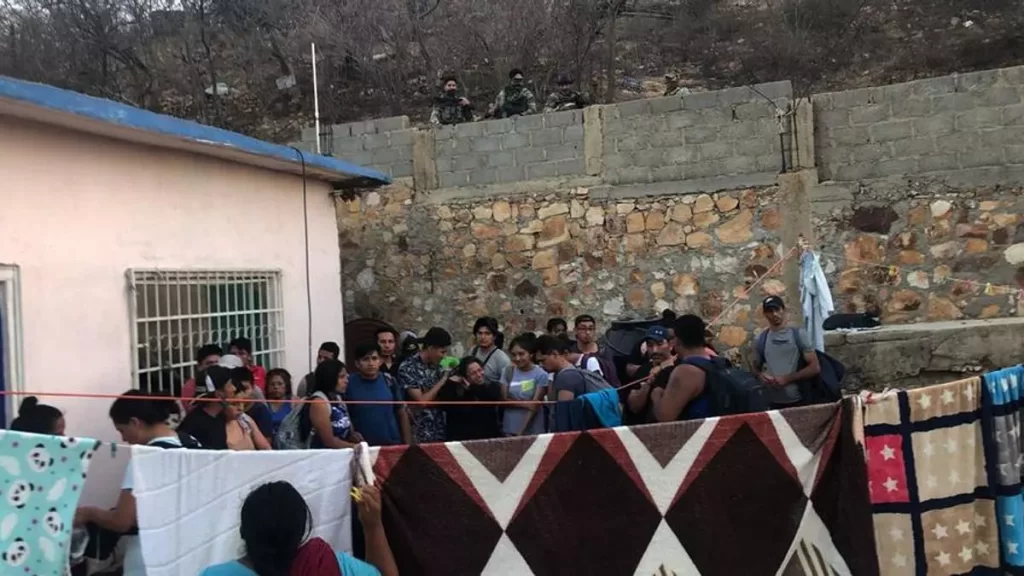
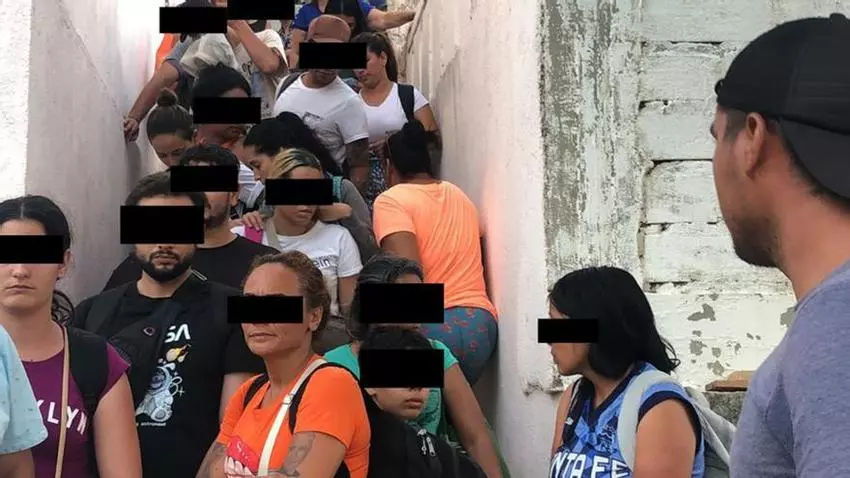
Fifty Cuban migrants were held for one week in a house in Oaxaca / FGE Oaxaca

14ymedio bigger14ymedio, Ángel Salinas, Mexico, 27 March 2024 — The Mexican authorities rescued 85 migrants, including 50 Cubans, after coyotes demanded $300 each to allow them to continue to the United States. They had been in a house located in Bahías La Ventosa, in the port of Salina Cruz (state of Oaxaca) for at least a week, and according to municipal policeman Felipe Santiago, “the coyotes threatened to hand them over to drug traffickers if they didn’t pay.”

It was thanks to a telephone complaint received by the municipal police that the house could be located. The Police requested the support of the Mexican Navy and the State Investigation Agency to free the kidnapped migrants. During the operation, Santiago reports, two women and a man were captured.

One of the victims said they paid 2,500 dollars per person for their transfer from Guatemala to the U.S. border

According to the official, the detainees are accused of the alleged crimes of “illegal deprivation of liberty, threats and extortion.” One of the victims told the officers that the group had paid 2,500 dollars per person for their transfer from Guatemala to the U.S. border. continue reading

The coyote they paid led the group to Bahías La Ventosa, where a man and two women detained the migrants and asked them for more money, in addition to 20 dollars a day for food and water. “Among the things they found with the human traffickers were the identification papers and cell phones of the migrants,” explains Santiago.

The authorities transferred 50 Cubans, 30 Ecuadorians and five Dominicans who were part of the group to a house in Oaxaca de Juárez. A Migration source reported to this newspaper that the nationals of Ecuador were offered the option of repatriation. If they accept, the Government of Mexico will provide them with $110 a month for six months and help them find a job.

The Migration official told 14ymedio that the Cubans requested assistance from the Mexican Refugee Aid Commission to avoid deportation but “were told that it was only for people who wanted to stay in Mexico.”

The Cubans have been in the immigration station of Oaxaca de Juárez / FGE Oaxaca since Monday / FGE Oaxaca

The Government of Mexico reported this Tuesday that to stop the migratory flow, it agreed with Venezuela, Colombia and Ecuador to provide economic support for six months to returning migrants. In addition they are offering them employment in the subsidiaries of the Mexican companies Bimbo and Femsa established in these countries.

The United Nations Refugee Agency (UNHCR) reported at the beginning of March that 56% of migrants who crossed Mexico in 2023 suffered some type of abuse, 27% were victims of robbery and 15% of physical threats.

According to data from the Mexican Ministry of the Interior, last year 782,176 “events of people in an irregular migratory situation in Mexico” were recorded, 340,000 more than in 2022.

Translated by Regina Anavy
____________

COLLABORATE WITH OUR WORKThe 14ymedio team is committed to practicing serious journalism that reflects Cuba’s reality in all its depth. Thank you for joining us on this long journey. We invite you to continue supporting us by becoming a member of 14ymedio now. Together we can continue transforming journalism in Cuba.
Delicate New Mission for Colombia’s Ambassador: Delivering 500,000 Eggs to Cuba

Colombian producers have been “working for more than a decade to bring the chicken and egg to new frontiers” / El Colombiano

14ymedio bigger14ymedio, Havana, 27 March 2024 — To the diplomatic file of José Noé Ríos, Colombian ambassador to Havana and skillful negotiator during the most tense moments of the dialogue with the FARC guerrillas, a “historical milestone” has just been added: he received – personally – the 518,400 eggs that the National Federation of Poultry Farmers (Fenavi) “put on the tables” in Havana.

The episode achieved picturesque headlines in the Colombian press: “First shipment!: Cuba now consumes eggs from Colombia,” with multiple applause for the architect of the shipment, Gonzalo Moreno, president of Fenavi, along with Ríos and the Government of Gustavo Petro. Smiling in all the photographs, Moreno is already known in the agricultural sector of the Latin American country as “the lawyer who managed to send 500,000 eggs to Cuba.”

“Today Colombia exports 518,400 eggs to Cuba, two 40-foot containers with 17,280 trays of 30 units. This achievement is a consequence of the investment in the health status of the country and the sustainable production capacity of more than 17 billion eggs per year,” the businessman proudly tweeted. continue reading

In addition, he published a video with images of the containers, which departed from the port of Cartagena, accompanied by a slogan: “The quality and safety of the Colombian egg transcends borders.”

“Everything happened,” says the newspaper Las Dos Orillas, “after his participation (Moreno’s) in Alimentos Cuba 2024, the International Fair of Food, Beverages and Food Technology,” which the media describes as “the most important food event in the country that has Miguel Díaz-Canel as its president.” The Cubans were very persuasive, and immediately “the conditions were defined,” and the initial negotiations began in 2023.

In another interview, Moreno said that he has always had this ambition and has been “working for more than a decade to bring the Colombian chicken and egg to new frontiers.” His colleagues in Fenavi and the Colombian Agricultural Institute (ICA) support him: “As a country, we are very proud,” said Juan Roa, general manager of the ICA. “We are sure that our high-quality fresh eggs will be well received by the consumers of the Island.”

If Fenavi’s announcement is correct and Moreno’s promise is fulfilled – “to gather fresh eggs from all over the country,” at least once a month – Ambassador Ríos will have his agenda occupied with new “receptions.” In fact, as the press reports, the 63-year-old diplomat is “looking for more Colombian products to provide food to Cubans, now in a “serious crisis,” whose first victim is “the family basket” sold through the nationwide rationing system.

Translated by Regina Anavy

____________

COLLABORATE WITH OUR WORKThe 14ymedio team is committed to practicing serious journalism that reflects Cuba’s reality in all its depth. Thank you for joining us on this long journey. We invite you to continue supporting us by becoming a member of 14ymedio now. Together we can continue transforming journalism in Cuba.

The Home of Havana Journalist Julio Aleaga Was Broken Into and a Laptop Stolen

Taking advantage of the fact that there was no one home, the thief broke the door, apparently with a crowbar / Courtesy

14ymedio bigger14ymedio, Havana, 27 March 2024 — A short video shows the moment when a man entered, last Monday, the building where independent journalist Julio Aleaga Pesant resides on 1st Street, between C and D, in El Vedado, Havana. About 40 minutes later, the same security camera, from a private cafeteria located on the ground floor of the building, captures the subject leaving with a bicycle and a bulging bag.

The journalist’s wife arrived a little after noon and found the door broken. The family immediately filed a complaint with the police. Nobody saw the thief or heard the noise he presumably made when violently accessing the property. The only traces left by the criminal are the images captured by the private cafeteria camera on the ground floor.

In the brief sequence, you see an individual walking quickly, wearing a cap with a visor, sports pants and a cross-body bag, who enters the staircase to the building. The restaurant table closest to that entrance is occupied by four people, and an employee moves between the room, located on a terrace overlooking the street, and the service desk. continue reading

The next image is captured 40 minutes later. At the table now there are other people, and the same man leaves the building, but this time with a bicycle, owned by Aleaga’s son. The camera captures the thief’s bag, which was empty when he arrived and now is bulging.

After reporting what happened, the Police arrived at Aleaga’s house and took the fingerprints left by the thief at the door. They also took the recording of the security camera of the cafeteria, La Chuchería, located on the ground floor. The agents were struck by the fact that there were no open drawers or furniture that showed they had been searched.

“It looks like they went straight to the laptop,” the uniformed men told him. Aleaga suspects that State Security is behind the robbery, since they have harassed the journalist for years, with police operations around his home, subpoenas and arrests.

So far, the family has no clue about the man who robbed them in broad daylight  

So far, the family has no clue about the man who robbed them in broad daylight. Residents of the area, with multiple private businesses and very close to luxury hotels such as the Grand Aston and Meliá Cohiba, feel safer than in other parts of the capital where there are more robberies.

According to Colonel Idael Fumero Valdés, head of Information and Analysis of the Technical Directorate of Investigations of the Ministry of the Interior, recently invited to Cuban Television, robberies account for 25% of the violent crimes that occur on the Island. These are cases in which some means of force is used, such as breaking a door or forcing a lock.

Faced with the growing number of complaints on social networks about these events, Fumero was categorical: “violent crimes are not increasing, which doesn’t mean that there is no increase in other crimes.”

Translated by Regina Anavy

____________

COLLABORATE WITH OUR WORKThe 14ymedio team is committed to practicing serious journalism that reflects Cuba’s reality in all its depth. Thank you for joining us on this long journey. We invite you to continue supporting us by becoming a member of 14ymedio now. Together we can continue transforming journalism in Cuba.

Cuba Promises Russian Businessmen That They Will Be Able To Manage Hotels on the Island

Last year, Russian tourism grew 3.4 times compared to 2022 / 14ymedio

14ymedio bigger14ymedio, Havana, 15 March 2024 — With the arrival in Russia of Juan Carlos García Granda, Cuban Minister of Tourism, this week, the Island took a step further in its attachment to the Kremlin. Investment opportunities, inauguration of Russian-managed hotels and all kinds of facilities for tourists are Havana’s new promises to Moscow in exchange for obtaining, “in the short term,” the arrival of half a million travelers.

“The task we have put forward is to attract capital from Russian investors for Cuban tourism (…). We are working with the Russian hotel industry to have them manage hotel chains in Cuba. We want Russian businessmen to build their hotels in Cuba,” García Granda said at a conference in Moscow on Thursday.

We want Russian businessmen to build their hotels in Cuba,” García Granda said on Thursday

Cuba expects to receive more than 200,000 Russian tourists this year, a modest goal if you take into account that in 2023 more than 184,800 Russians visited Cuba, which resulted in a 3.4 percent increase in tourism from that country compared to the previous year. This was also recognized by the minister, who explained that “it is not a very large figure in absolute terms, but it will be a rather motivating result for us. I hope that in the short term, while I’m still minister, we will reach half a million.”

“The hotel business in Cuba has been developing for 30 years with the help of foreign investment. And, if we depend on Russian tourism, then it would be logical for this business to be managed by people who know Russian tourists well,” argued the minister. He added that this will involve the creation of “hotel complexes, various facilities with parking for yachts and other expansions.” continue reading

According to the minister, Cuba has adapted part of the sector so that Russian travelers feel comfortable when they visit the Island. “For example, Canadian tourists buy only one excursion while they are on vacation in Cuba. The Russians buy an average of three excursions. But over the years, customer preferences change, and we are planning to develop active and adventure tourism,” he explained. In addition, he added, “they can combine a vacation on the beach with an excursion and become familiar with Cuban culture, dance, rum production and tobacco plantations.”

The implementation of payments with MIR cards, since November 2023, was another of the “achievements” highlighted by the minister in the plan to “make things easier for the Russian client.”

“In these first months of operation, more than 2.7 million dollars have been transferred through MIR cards. There are 20,000 POS (point of sale) terminals in the main stores and tourist points throughout the country. This is something that is going to grow and all the conditions are created for it to do so,” he guaranteed. García Granda also insisted on the attractiveness of the Island for Russian tourists and clarified that “he hasn’t given up on the goal of the Russians occupying one of the first three places among foreign visitors to the country.”

Both countries propose to increase the number of flights and have their sights set on St. Petersburg

Even during the COVID-19 pandemic, the minister recalled, relations between Moscow and Havana allowed Russian travelers to continue arriving on the Island. Now, both countries intend to increase the number of flights and have their sights set on St. Petersburg, the second most populous and important city in Russia.

Last November, the Cuban ambassador to Moscow, Julio Garmendia, reported that both countries had agreed to establish an air route every ten days between St. Petersburg and Cayo Coco airport, in Ciego de Ávila, by the end of the year. However, the authorities have not revealed whether the agreement was finalized.

A similar plan was suggested this February by the St. Petersburg Tourism Development Commission, which expressed the intention to inaugurate charter flights from the Russian city to the Island. “We have to support the development of the tourism industry of each one. I think we have all the conditions to move from words to deeds,” said Óscar Enríquez, representative of the Ministry of Tourism of Cuba in Russia.

The disproportionate investment in the tourism sector, compared to others such as food or health, has not yielded the results that the regime expected. According to the annual report of selected tourism indicators, in 2023 three out of four hotel rooms on the Island were left empty.

Translated by Regina Anavy

____________

COLLABORATE WITH OUR WORKThe 14ymedio team is committed to practicing serious journalism that reflects Cuba’s reality in all its depth. Thank you for joining us on this long journey. We invite you to continue supporting us by becoming a member of 14ymedio now. Together we can continue transforming journalism in Cuba.

A Chilean Court Tries a Mapuche Leader Who Brought Weapons and Ammunition From Cuba

Llaitul is famous for launching, on different platforms, several “declarations of war” against the Chilean State/ Infobae

14ymedio bigger14ymedio, Havana, March 21, 2024 — The Chilean Police revealed on Wednesday that Héctor Llaitul, leader of the armed organization Coordinadora Arauco-Malleco and imprisoned for his responsibility in multiple attacks, bought and transferred “large-caliber weapons” and “ammunition” from Cuba. The experts found on the accused’s cell phone “different conversations” about a trip to Havana to acquire weapons, which were presented in the trial against Llaitul in Temuco, in the Chilean region of La Araucanía.

A confessed defender of political violence, supporter of the regimes of Havana and Caracas, Llaitul kept on his phone information about efforts to transfer the weapons – “with their respective ammunition” – from the Island through the border of Chile with Argentina. The Police also showed photographs of different attacks taken by the accused, who sent them to the media.

Neither the Cuban government nor the official press – which usually publishes communiqués and apologies from the Arauco-Malleco Coordinator – has commented on the accusations against Llaitul for the time being. On the Island there are no private sellers of military weapons, and the arsenals are owned by the Army, so any acquisition and transfer of “large-caliber weapons” cannot have gone unnoticed by the authorities. continue reading

Llaitul was also a regular and “honored” guest in Caracas, where the regime of Nicolás Maduro has shown its “solidarity with his  causes and struggles several times   

Llaitul was also a regular and “honored” guest in Caracas, where Nicolás Maduro’s regime has shown its “solidarity with his causes and struggles” several times. During one of his last visits, in 2018, he was received by then Foreign Minister Jorge Arreaza and Adán Chávez, brother of the late caudillo Hugo Chávez.

After hearing the report from investigators, the prosecutor stressed that the telephone messages will not only serve for Llaitul’s case, but will also serve as a background for investigations against others accused of violent acts and, subsequently, during the trials for other charges against the leader of the armed group.

“The content of the phone shows when instructions are given for the transfer of weapons and [conversations] to make decisions about who will participate in certain events or attacks,” explained prosecutor Héctor Leiva, who clarified that the current trial focuses only on the charges of theft, usurpation and violations of the State Security Law. If he is found guilty after the trial – which will last 29 days – he could remain in prison for 25 years.

Llaitul is famous for launching, on different platforms, several “declarations of war” against the Chilean State and exhortations to an armed uprising. During the trial, the Prosecutor’s Office read excerpts from his book Chem Ka Rakiduam [Thought and Action], written in the Mapuche language, where Llaitul affirms: “We are responsible (the members of the Arauco-Malleco Coordinator) for political violence as a coherent response to our right to rebellion.”

Llaitul himself, in his long plea – it took him two days to read it before the court – declared on March 13 that he considered himself a “political prisoner” and the “visible face” of the conflict between the Mapuche and the Chilean State. He criticized the authorities for calleing him a “terrorist” when the United Nations invited him to speak in Switzerland five years ago.

“What for you is or can be a crime, for us is justice, a duty   

About political violence, he was clear: “What for you is or can be a crime, for us is justice, a duty,” he said, adding that he was not making “an apology for violence.”

In 2021, the Chilean Police wrote a report on the weapons used by armed groups in southern Chile, where Llaitul was suspected of being linked to the presence of weapons in the region. Llaitul was a member of the Manuel Rodríguez Patriotic Front, an organization that opposed the dictatorship of Augusto Pinochet in the 80s and had weapons supplied by Fidel Castro.

According to police sources, Havana had then sent to Chile “80 tons of weapons and explosives, among which were Colt M-16 rifles, 5.56 caliber.” “This arsenal was seized,” the report said, but “not in its entirety,” so it was not ruled out that the Mapuches continued to use it.

However, this information is not mentioned in the trial. According to the Chilean press, the conversations found on Llaitu’s phone about the acquisition of weapons from Cuba are recent.

Translated by Regina Anavy

____________

COLLABORATE WITH OUR WORKThe 14ymedio team is committed to practicing serious journalism that reflects Cuba’s reality in all its depth. Thank you for joining us on this long journey. We invite you to continue supporting us by becoming a member of 14ymedio now. Together we can continue transforming journalism in Cuba.

Cuba’s Communist Party Forbids Holy Week Processions

Catholics in Sagua la Grande, a town in Villa Clara province carry a lifesize crucifix outside, taking advantage of the only permit they were able to get. 14ymedio

14ymedio bigger14ymedio, 26 March 2024 Havana — Several churches will see their Holy Week celebrations scaled back because the Cuban Communist Party is not issuing permits for street processions. Sources within the Catholic Church have informed 14ymedio that celebrations in at least two parishes in Villa Clara province have been suspended, while other members of the clergy have publicly notified their communities that officials have rejected routine applications for permits.

Leaders of other Christian denominations in Matanzas, who have decided to celebrate Holy Week together, are fearful that the PCC’s Department of Religious Affairs will not allow them onto to the streets for the final stretch of activities next weekend.

“The Stations of the Cross on Good Friday (the procession in which a large crucifix is carried to several churches) from the Sanctuary of Our Lady of Charity to the Baptist church on Medio Street in Matanzas was not authorized,” reports one of the celebrations organizers. continue reading

The PCC’s decision mean Sagua la Grande parish’s Good Friday procession will be limited

The PCC’s decision mean Sagua la Grande parish’s Good Friday procession will be limited. In a post on social media, its pastor, Wilfredo Leiter, explained they would be carrying out their lifesize crucifix outside, taking advantage of the only authorization they were able to obtain.

“This crucifix is meant to be taken out on Good Friday. And since the authorities say they will respect religious freedom on that day, we’re taking it out. If this this 300-pound Christ comes down from the altar, there’s no way he’s staying inside,” the source says.

The most notorious case, however, is once again that of Lester Zayas, the Havana priest critical of the government who, for the second year in a row, is prohibited from staging Sacred Heart parish’s Good Friday procession in Havana’s Vedado district. “Yesterday I was informed through the relevant channels that the procession would not be approved,” the Dominican priest said on Facebook.

In a break with an eleven-year tradition, the PCC denied the parish’s application despite its having been submitted on time, an action that Zayas says will have consequences for his community. He notes that, last year, officials claimed they did not have enough personel to provide adequate security for the celebration. “On that occasion, the denial had to do with me personally. It seems my sermons made some people uncomfortable or nervous,” he says.

On that occasion, the denial had to do with me personally. It seems my sermons made some people uncomfortable or nervous

“Never, in all my years as a priest, have I ever made use of the public space for anything other than processions, to exhort nothing other than piety. I am very aware of the public space and am a diehard defender of the secular state. I know how to distinguish between the public space, which requires one type of behavior, and the religious space, which requires another,” he said. He noted, however, that the procession would take place inside the church.

Another voice critical of the government is that of a Catholic priest, Kenny Delgado, who recalled in his Monday sermon at Saint Thérèse of the Child Jesus Church in Havana’s Arroyo Naranjo district the words of Cuban priests to the police following the 11 July 2021 (11J) protests: “Do not raise your hand against your brother.”

Drawing a parallel between Cuban security agents and the Roman legions in the Passion of Christ narrative, Delgado alluded to those who attack the people with “a pipe, a chain, a knife.” In response, the parishioners chanted 11J’s message of non-violence.

On Monday, a Catholic priest told 14ymedio that no processions would be taking place in the Bayamo-Manzanillo diocese. “The government does not want people out in the street because it’s afraid of demonstrations. That means we have to forget about doing something we have done year after year. There were processions last year and they all took place with the peace of God,” he said.

“We’re very disgusted by this decision. Faith has nothing to do with politics and they shouldn’t be mixed”

“We’re very disgusted by this decision. Faith has nothing to do with politics and they shouldn’t be mixed,” he added, visibly aggravated. This opinion is shared by a vendor who typically can be found at the corner where the Manzanillo church is located and who has nothing good to say about the measure.

Word of the cancellation came to light after a source alerted the Catholic news website Aciprensa. The article extensively quotes Osvaldo Gallardo, a writer and religious activist who currently resides in Miami but who lived for more than forty years on the Island, working on culture and communication projects for the Cuban Conference of Catholic Bishops. “[The regime] is very afraid of public gatherings right now,” he said.

Gallardo recalled a case from September 10, 1961 when a young man named Arnaldo Socorro was fatally injured in front of Our Lady of Charity Church after coming to the defense of a banned procession and for shouting “Long live Christ the King.”

Meanwhile, the archbishop of Santiago de Cuba, Dionisio García Ibáñez, who is known for making statements critical of the Cuban government, which have caused him some problems with the Cuban Conference of Catholic Bishops, made a plea during a prayer last Sunday to the Virgin of Charity of Cobre on behalf of the people. “Electricity and food?… “Is that unattainable? Is that asking too much? No. Our people are also asking for freedom,” said the prelate.

____________

COLLABORATE WITH OUR WORKThe 14ymedio team is committed to practicing serious journalism that reflects Cuba’s reality in all its depth. Thank you for joining us on this long journey. We invite you to continue supporting us by becoming a member of 14ymedio now. Together we can continue transforming journalism in Cuba.

A Small Town Shelters a Woman Who Stands up to the Cuban Regime

González Martínez, a hairdresser by profession, is not new to this, but she is noticing a recent change among those around her. / Yasmary González Martínez/Facebook

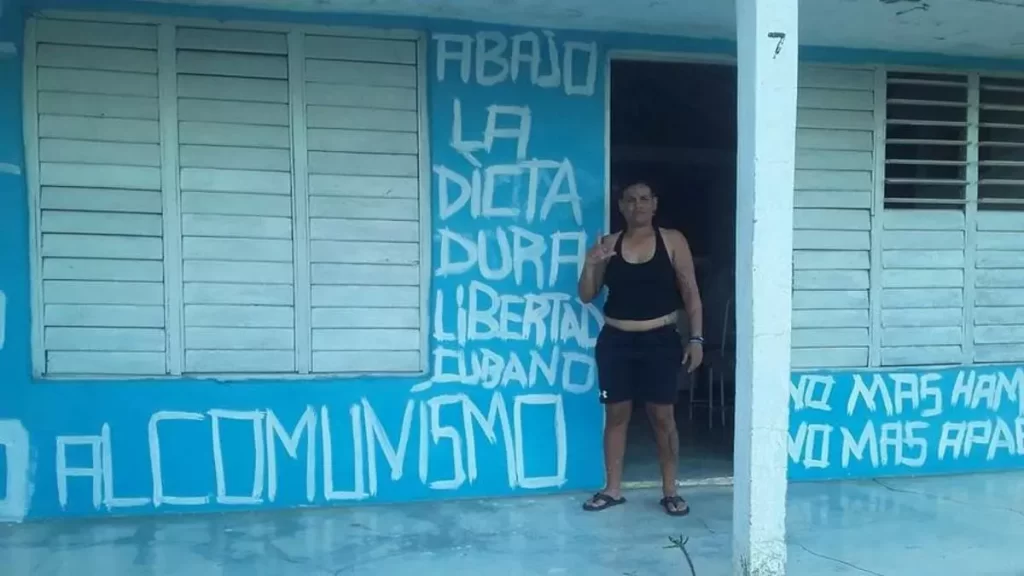
14ymedio bigger14ymedio, Mercedes García, Sancti Spíritus, 21 March 2024 — A State Security agent on a motorcycle arrived at the small town of Las Tosas, 11 kilometers from Sancti Spíritus, to ask what was happening. The reason? A simple blue house appeared full of huge white graffiti that made the text stand out even more.

“Miguel Díaz-Canel, get out of Cuba”, “Down with the dictatorship”, “No to Cuban communism”, “Freedom”, “No more hunger”, “No more blackouts”, “Freedom for Cuba”. There is barely a gap in the façade and at the entrance to the home of Yasmary González Martínez, who did not hesitate to take her photograph drawing with her fingers the symbolic L for ‘libertad’, with which activists demand freedom.

“Last night,” she told 14ymedio this Wednesday, “a State Security agent came on a motorcycle. He threatened me, the same as always. He said to remove the posters painted on the walls of my house and we argued. The neighbors, upon hearing my voice, came out to ask me what was happening and the guy left.”

González Martínez, a hairdresser by profession, is not new to this, but she is noticing a recent change among those around her. “My neighbors comment that I am right, although they do not express it themselves,” she explains to this newspaper. “So far, they have not carried out acts of repudiation*. My neighbors are not willing to do that, since when State Security comes to my house, they go out into the street, and, if they as much as touch me, my neighbors will defend me.” continue reading

The Sancti Spiritus resident argues that she painted the walls of her house to express that she is not “afraid of the dictatorship, that there is a future.”

According to González, the Cuban government “plays with the people’s pain” and is not interested in their survival. “The hatred that this misgovernment has sown in the heart of every Cuban is so great that we want them to leave power,” she maintains.

The Sancti Spiritus resident argues that she painted the walls of her house to express that she is not “afraid of the dictatorship, that there is a future.” She says that she is tired of children being poorly fed, that the elderly do not have medicines and that there are political prisoners. “We want no more brothers killed by Cuba’s implanted communism, it is time to break the chains that have bound us for more than 60 years,” she cries.

González has compromised her own house to give precise voice to the people of Sancti Spiritus, but her poster is not the only one against the Government found in Cuba in recent days. One of the ones that has achieved the most popularity is the one that appeared on the beach El Tenis, on the viaduct in the city of Matanzas, on which you could read “Díaz-Canel singao**”.

For this type of graffiti against Díaz-Canel or the Cuban Communist Party (PCC), there have been arrests and prison sentences in Cuba recently. This is the case of Yasmany González Valdés, who was prosecuted in February for enemy propaganda and for whom the Prosecutor’s Office requested 6 years in prison, of the eight that this type of crime can entail. In his case, the activist acknowledged being the author of several posters in Havana that simply read, “No to the PCC (Communist Party of Cuba).”

Translator’s notes
* More examples of “acts of repudiation” can be seen here.
**This epithet rhymes; ‘singao’ is commonly translated as ‘motherfucker’.

Translated by Norma Whiting

____________

COLLABORATE WITH OUR WORKThe 14ymedio team is committed to practicing serious journalism that reflects Cuba’s reality in all its depth. Thank you for joining us on this long journey. We invite you to continue supporting us by becoming a member of 14ymedio now. Together we can continue transforming journalism in Cuba.