
The Cuban Regime Continues with Arrests in Nuevitas

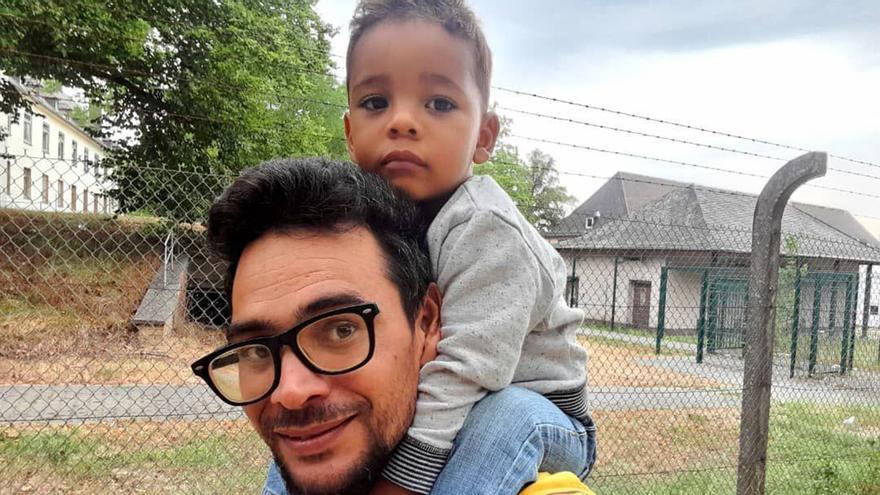
Jimmy Johnson Agosto was arrested by the police on his way back from having an electroencephalogram. (Justice 11J)

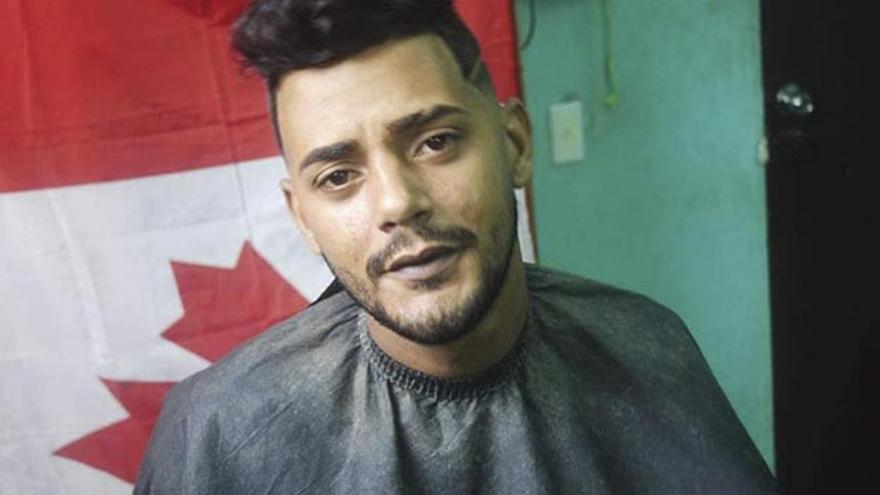
14ymedio bigger14ymedio, Havana, 8 September 2022 — Despite the apparent calm in Nuevitas, Camagüey, where three weeks ago the largest demonstrations took place on the island since July 11, 2021, the Cuban regime continues with arrests. The organization Justice 11J reported on Wednesday the arbitrary arrest of five people in recent days.

The legal platform pointed out, on Tuesday, the arrest of Jimmy Johnson August, 26 years old, when he returned from having an electroencephalogram after an episode of epilepsy.

In a Facebook post, the organization explains that Johnson Agosto was arrested without shoes and is still in poor health. He remained in these conditions in a unit of the Nuevitas Police, where he was also not offered food or carbamazepine, the drug used to stabilize an epileptic patient during a seizure.

The young man was transferred to Villa María Luisa, the State Security prison in Camagüey, and the authorities have not reported the type of crime for which he is accused. “There is only one alleged complaint of having damaged a store window” during the protests, Justice 11J points out, taking as the only evidence that the young man possessed “a slingshot and pellets, that he has used for years to hunt doves.”

The organization also reported that the police searched his home, but it’s unknown if they had a court order to support this procedure. “We demand the immediate release of Jimmy, who remains in detention under the imminent risk of deterioration of his health,” the movement insisted.

Likewise, Justicia 11J confirmed to 14ymedio the arrest in the Camagüey town of La Gloria of four more people, whom it hasn’t yet been able to identify, in similar circumstances.

On the night of August 19, hundreds of people in Nuevitas took to the streets banging on their pots and pans, not only to demand the restoration of the electricity service, but also to shout “freedom.” The demonstrators were immediately repressed by the police and military, and there were even complaints about two girls who were beaten by the uniformed men. continue reading

Recently Roberto Morales Ojeda, a member of the Political Bureau of the Communist Party of Cuba, said that the Government understands the “annoyances and inconveniences” caused by the continuous power outages, which, he asserted, don’t “justify” the demonstrations.

“There will never be a justification for those who try to generate vandalism, destabilizing acts or promote violent demonstrations in the country. Each of these provocations will have a strong response within the framework of the law,” he said at an event for the 65th anniversary of the Popular Uprising on September 5 in Cienfuegos.

The organization Prisoners Defenders (PD) said on Thursday that there are 1,016 political prisoners in Cuba, of which 43 were arrested this month alone, and 904 correspond to the demonstrations of July 11, 2021.

In a statement, PD points out that hundreds of arrests have been carried out since the demonstrations in Nuevitas, including adults and children beaten “savagely” by the security forces. “In particular, there are 43 defendants, which is the most conservative figure possible since many families are terrified and still don’t dare to speak.”

PD pointed out that the repression occurs at the hands of a new unit of the Counterintelligence Services, created by people from Havana, who study all possible protests and coordinate the deployment of the security forces. PD adds that this unit has an “order to use violence without limit to stop demonstrations and take to prison, without consequences for any of the agents, officials or civilians involved in these operations, even in the event of deaths.”

The protests of Nuevitas were also alluded to by the Cuban Observatory of Human Rights (OCDH), which, in a report released on Tuesday, pointed out that at least 327 repressive actions have been recorded; 90 correspond to some type of arrest and 237 to unspecified abuses.

The OCDH warned that the exact number of repressions during the protests in both Nuevitas and Artemisa – where the police thwarted the attempt of Cubans to flee – is unknown, but said that judging by the images, there could be more than a hundred.

The images show evidence of abuses, such as entry into homes, harassment, police summonses, threats, fines, physical assaults, impediments to travel to foreigners and forced exile. OCDH also recalls that five independent journalists were forced to give up their professional activities due to threats from State Security.

Translated by Regina Anavy

____________

COLLABORATE WITH OUR WORKThe 14ymedio team is committed to practicing serious journalism that reflects Cuba’s reality in all its depth. Thank you for joining us on this long journey. We invite you to continue supporting us by becoming a member of 14ymedio now. Together we can continue transforming journalism in Cuba.
Six Cuban Opposition Organizations Unite to Refound the Republic

The collective maintains that it’s necessary and urgent to recover the republican project. (14ymedio)

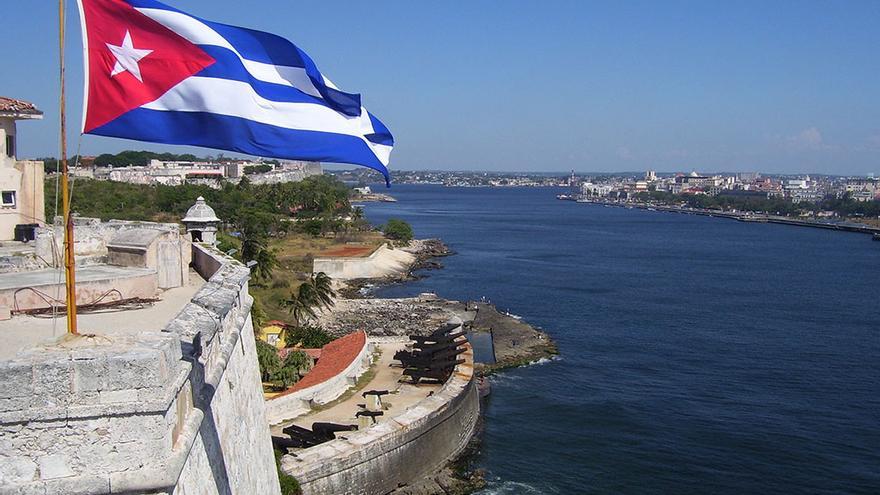
14ymedio bigger14ymedio, Havana, 8 September 2022 — Members of the Cuban opposition inside and outside Cuba announced their support for “D Frente,” a group of “coordination of plural Cuban civil and political actors, whose central objective is to achieve the refounding of the Republic, guided by José Martí’s idea of building a country ’with everyone and for the good of all.’” This is how the collective is defined in a message made public this Wednesday on their Facebook page, in which they informed the public about their founding.

The united organizations in this “Front” and their representatives are Luis Rodríguez Pérez, from the Association of Mothers and Relatives of Political Prisoners for Amnesty; Ileana de la Guardia, from the Council for the Democratic Transition in Cuba; Enrique Guzmán Karell, from the Center for Studies on the Rule of Law and Public Policies for the Next Cuba; Yunior García Aguilera, from Archipíelago; Jorge Masetti, of the French Association for Democracy in Cuba; and Yanelys Núñez, of the San Isidro Movement.

D Frente highlights in its statement that it considers “democracy and the rule of law” as “the best way to achieve inclusion, political pluralism, the sovereignty of citizens and the civilized rules of coexistence.”

The document made public yesterday by D Frente establishes in its road map five fundamental ideas: amnesty for political prisoners and the decriminalization of dissent; work for the full recognition of popular sovereignty and the end of the Communist Party as the only leading force of society; the search for the effective rights of free expression, information, press, demonstration and assembly, among others; the promotion of a new electoral law; and the creation of legal, institutional, civic and cultural conditions that favor the convening of a constituent process.

In addition, the Front proposes the holding of a plebiscite “so that the people, in the exercise of popular sovereignty, decide.”

The collective initially established its principles, which include: respect for the full dignity of the individual and human rights; the condemnation of all forms of violence, including that of the State; the promotion of a pluralist dialogue and national reconciliation; the commitment to peaceful actions of social and political activism, resistance and negotiation; respect for all political and ideological creeds, religions and gender identities; respect for national sovereignty, non-interference and rejection of unilateral actions contrary to international law. continue reading

The new platform maintains that it’s necessary and urgent to recover the republican project in the face of an authoritarian regime that is apathetic about poverty, exclusion and violence: and for this it has appointed a Provisional Coordinating Committee that will prepare a proposal for statutes, a road map for action and other operational issues. The members are Elena Larrinaga, Manuel Cuesta Morúa, Boris González Arenas and Michel Fernández.

Yunior García Aguilera, one of the signatories on behalf of Archipíelago, tells 14ymedio that the initiative is still in a very preliminary phase and needs work, but that he joined the project because of its comprehensive vision. “What I find interesting is the breadth it has, with a wide range from one side and the other of the [ideological] spectrum, and, above all, because I think that the strategy within it for how to achieve these objectives is a little clearer.”

Aware that democratizing political initiatives have been and are multiple, some even with the same members, García emphasizes that this proposal has “an intent of balance, objectivity and search for realistic strategies to achieve democracy in Cuba. Now we’ll see what happens; it’s better that there are four or five attempts to coordinate than none, but it remains to be seen. We have work to do,” adds the playwright, currently exiled in Madrid.

At the time the manifesto was published, almost 150 people had signed it, including historic opponents of the Regime, members of the San Isidro Movement and 27N (27 November), and a multitude of relatives of the prisoners of ’11J’, the protests of 11 July 2021. Among some of the best known are José Daniel Ferrer, leader of the Patriotic Union of Cuba (UNPACU) and Félix Navarro, both in prison since July 11, 2021. In addition, there are plastic artists such as Julio Llópiz-Casal and Hamlet Lavastida, the emigrant historian Julio Antonio Fernández Estrada, and the economist Elías Amor Bravo, among many others. In a personal capacity, different anonymous people have shown their support from the beginning.

The birth, however, has not been without controversy. Hours after the text was disseminated, Salomé García Bacallao, of the organization Justicia 11J, called for the inclusion of the signatures of four relatives of political prisoners who, in his opinion, had not wanted to appear on the list. D Frente claims to have received the list from the Association of Mothers and Relatives of Political Prisoners for Amnesty. But a Facebook user, the father of a prisoner, says he doesn’t know that group and wants information.

Translated by Regina Anavy

____________

COLLABORATE WITH OUR WORKThe 14ymedio team is committed to practicing serious journalism that reflects Cuba’s reality in all its depth. Thank you for joining us on this long journey. We invite you to continue supporting us by becoming a member of 14ymedio now. Together we can continue transforming journalism in Cuba.
The Gastronomic Debacle of the Habana Libre Hotel Reaches an Unprecedented Level

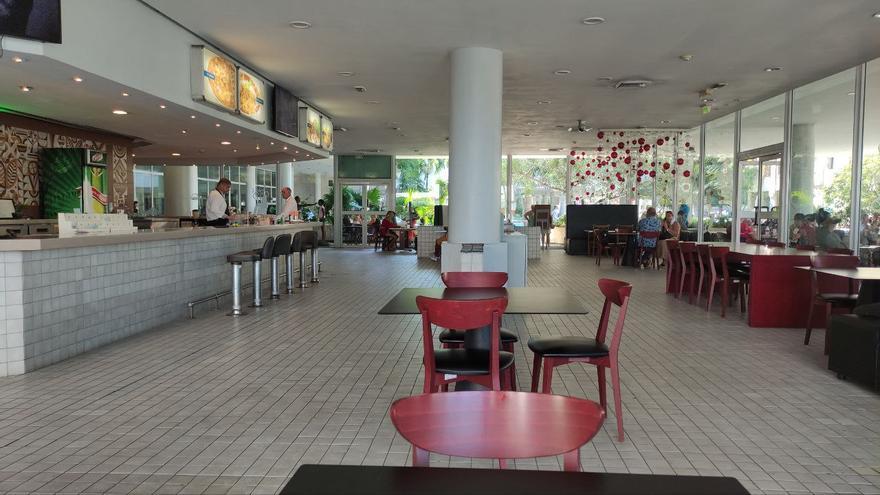
Located in the Habana Libre hotel, the La Rampa cafeteria has suffered the same fate as the establishment that hosts it and has become a small restaurant. (14ymedio)

14ymedio bigger14ymedio, Juan Diego Rodríguez, Havana, 7 September 2022 — The La Rampa cafeteria, with its terrace protected from the flow of 23rd street, has known better times. Located in the Habana Libre hotel, it has suffered the same fate as the establishment that hosts it and has become a small restaurant of little heritage, whose prices give no respite to the hungry citizen.

The old Hilton, destined to be one of the most luxurious on the continent, opened its doors in 1958 and was nationalized by Fidel Castro only two years later. Time and underdevelopment have reduced its category rating many times, but nothing, not even the resounding Special Period, compares to the debacle it’s going through today, which has already reached its dining establishments without adapting the prices to the poverty of the offerings.

At the entrance of La Rampa, the clerks place a black, battered banner with the menu of the day written in chalk. A ham and cheese sandwich costs 250 pesos; a juice, 100; depending on the amount, the coffee will cost 30, 60 or 70; and for those who are in the mood at the time to buy a drink of 150 pesos, you can choose among a mojito, a daikirí and a cuba libre.

There’s nothing more. Inflation and the lack of products pull each other down, so that not only is supply expensive, but there is no supply at all.

A maid, very busy scaring away two foreigners who have chosen her space, is slow to write down the request of Cubans. “This table is dirty,” scolds the woman, “you can’t sit here.” “So clean it,” they reprimand her. For them, the state of the cafeteria is inconceivable.

At last it’s possible to request something to eat and when, after a long wait, the food arrives at the table, the Cubans devour it quickly and bitterly. The “natural” juice is actually an artificial preparation to which too much ice has been added; the tiny bread, baked with whole wheat flour, is pale and tasteless. The worst: the cook had no scruples about frying “chopped” sweet potato flakes, bitten by insects, and the little insect pieces leave a black border. continue reading

The total cost of a lunch is 400 pesos. As the hotel is partially managed by the Gran Caribe company and not by the all-powerful Gaviota, there is still the option of paying in cash. Otherwise, you would have to present a magnetic card that not all Cubans have.

But that’s not all. There are other examples of the sad decline of the Habana Libre. The 25th and L sweet shop, before full of exquisite sweets even despite the pandemic, offers empty refrigerators, and only a few small, lackluster pieces are offered. “Thanks for the four sweets!” exclaimed an ironic customer on Wednesday. “Now if I want to buy cake, I’ll have to come when you open.”

The El Polinesio restaurant, which was once the gastronomic pride of the hotel, follows the same route as the cafeteria and the sweet shop.

As soon as he approaches the entrance of the premises, the customer is hit by the smell of moisture and accumulated fats stored on the carpet. Where before was the roasting area for its mythical barbecue chicken, which diners could see while it turned golden on the firewood, now there is only one useless area full of dust. From the decor that recalled the wildlife of Polynesia, there are a few masks left on the wall and some wooden logs covered with flies.

Despite this, you need to make a reservation to eat at the premises. “You have to call on the phone or come the day before,” clarifies one of the waiters. After the culinary disappointment at La Rampa, reading the Polynesian menu is enough not to eat there. All dishes exceed 300 pesos, and the famous chicken reaches 500, although it has little to do with the recipe of yesteryear.

Ordering a coffee or a sandwich in a hotel cafeteria and hanging out in a different environment was something acceptable even for some Cubans capable of making the economic effort in exchange for escaping routine and the heat of Havana.

Inflation and the recent measures of the Ministry of Economy to capture as much currency as possible have made this option impossible for the majority of the population, for whom even several salaries are not enough to cover a lunch.

“Where does the rope break? On the weakest side,” a social networks user commented this Friday, attributing to the “crazy monetary reorganization” his decision not to consume again in the prestigious Manzana, Parque Central, Packard or Paseo del Prado hotels. “Bye bye, cubanitos; bye bye, terraces of Havana,” he wrote. In the case of the Habana Libre, you can pay for luxury, but you can’t find it.

Translated by Regina Anavy

____________

COLLABORATE WITH OUR WORKThe 14ymedio team is committed to practicing serious journalism that reflects Cuba’s reality in all its depth. Thank you for joining us on this long journey. We invite you to continue supporting us by becoming a member of 14ymedio now. Together we can continue transforming journalism in Cuba.
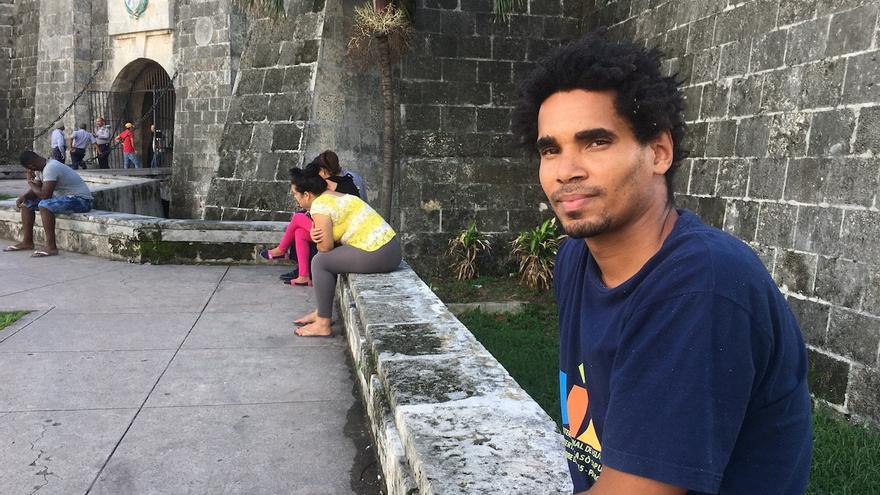
Cuban Otero Alcantara Wins the Impact Award from the Dutch Prince Claus Foundation

The artist Luis Manuel Otero Alcántara, in a 2017 image, after being released from arbitrary detention. (14ymedio)

14ymedio bigger14ymedio, Madrid, 6 September 2022 — The artist Luis Manuel Otero Alcántara, leader of the San Isidro Movement (MSI), is one of the winners of the Impact awards of the Prince Claus Foundation in the Netherlands, which every two years recognizes cultural professionals around the world, not only for their work but for their “positive contribution to the development of their society.”

The foundation reported on Tuesday, through its social networks, that along with the Cuban, the award also went to the Brazilian Ailton Krenak, the Argentine María Medrano, the Egyptian May al-Ibrashy, the Moroccan Hassan Darsi and the Senegalese Alain Gomis.

The Dutch foundation explains on its website that the beneficiaries of this award “are promising leaders in their field” and “excellent models to follow,” who “have demonstrated transformative power, constant dedication and commitment within their contexts and beyond” and who “deserve much broader recognition.”

According to the institution, these awards are presented at a ceremony at the Royal Palace in Amsterdam and, also, in the respective countries of origin of the winners, in collaboration with the Dutch Chancellery, through the embassies of the Netherlands.

It’s not the first time that the Prince Claus was awarded to personalities of Cuban dissent: in 1999 it was awarded to the magazine Vitral, by Dagoberto Valdés; in 2008, to the artist Tania Bruguera, founder of the Hannah Arendt Institute of Artivism; and in 2010, to the director of this newspaper, Yoani Sánchez. continue reading

Via Facebook, the MSI congratulated Otero Alcántara, who is serving a five-year sentence in Guanajay’s maximum security prison for the crimes of outrage to the symbols of the homeland, contempt and public disorder.

The artist was arrested on July 11, 2021, before being able to join that day’s protest in Havana, and he was tried along with others, including rapper Maykel Castillo Osorbo, for several accusations that had nothing to do with the demonstrations of that day.

The rapper said a few days ago that he is willing to exchange prison for exile, a letter with which State Security has blackmailed him, to treat an illness that hasn’t been diagnosed in prison. In the case of Alcántara, he has made it clear, at least for now, that he “will not accept exile as an option under any circumstances.”

Both activists refused to appeal their convictions last July. Osorbo then declared, through his friends, that he would no longer lend himself “to that circus,” referring to the trial to which they were subjected.

“It’s been the independent artists who in recent years have continued to give prestige to Cuban art,” the Movement declared in its publication on Tuesday. “In the midst of censorship, repression, economic precariousness and the systemic violence of the Castro leadership, the art organization has managed to impose itself, at the same time that it offers emancipatory references to citizens.”

As an example of awards that have given prestige to Cuban culture in recent years, mentions include the two Latin Grammys obtained for the song Patria y Vida — of which Osorbo is co-author and in the music video Alcántara spoke — the Egeda prize awarded to Carlos Lechuga for his film Vicenta ,and the Special Mention awarded to Sergio Fernández Borrás for his film Cuba and the Night, at the 19th International Documentary Cinema of Madrid.

Translated by Regina Anavy

____________

COLLABORATE WITH OUR WORKThe 14ymedio team is committed to practicing serious journalism that reflects Cuba’s reality in all its depth. Thank you for joining us on this long journey. We invite you to continue supporting us by becoming a member of 14ymedio now. Together we can continue transforming journalism in Cuba.

Filmmaker Lester Hamlet Arrives in the United States After Confronting Cuban Arts Institute

Filmmaker Lester Hamlet, 51, was sanctioned by the ICAIC after not handing over the official passport. (Facebook)

14ymedio bigger14ymedio, Havana, 6 September 2022 — Cuban filmmaker and producer Lester Hamlet, who said two weeks ago that the Cuban Institute of Arts and Cinematography (ICAIC) prohibited him from returning to the Island, announced his arrival in the United States.

In a short video shared on his social networks this Monday, Hamlet appears at an airport walking towards a friend whom he hugs, visibly excited. The filmmaker doesn’t identify the place, but accompanies the images with the song “It’s a Beautiful Day,” by Michael Bublé, and the words: “Friendship and loyalty, above all things!” On his social networks, some of his relatives greet him: “Welcome to the United States.”

On August 24, Hamlet posted on Facebook that the ICAIC had imposed a sanction on him that prevented him from returning to Cuba in the next five years.

Immediately, the ICAIC responded with another post on Facebook, denying the sanction and clarifying that they had called the filmmaker because he had left Cuba for Mexico to attend an event in the state of Quintana Roo, with an official passport, which “is only valid within the dates for which it is requested.”

“In the exchange of WhatsApp messages between Lester and the ICAIC official, the latter asked him if he was already in the country. Lester asked to call him on the phone and, in the telephone communication, informs the official that he had not yet returned to Cuba and that his decision was not to do so,” Tania Delgado, vice president of the institution, said at the time. continue reading

In his wake, the Minister of Culture and Sports, Alpidio Alonso, also spoke up and said on Twitter that Lester Hamlet can “enter Cuba whenever he wants. It’s a constitutional right. Anything else they have said since the ICAIC Protocol is a mistake.”

However, the artist insisted that he was prevented from returning, because “they do not want at home those of us who have different ideas” about freedom and homeland. “I accept the gift with honor and embark on restarting my life elsewhere, at the age of 51, full of new dreams and under the impact of knowing exile in the first person,” he wrote on August 24.

Born in Havana in 1971, Lester Hamlet has directed short films of fiction, advertising, musicals and documentaries, and has received several official awards throughout his career, such as the Caracol Award of the National Union of Writers and Artists of Cuba.

Translated by Regina Anavy

____________

COLLABORATE WITH OUR WORKThe 14ymedio team is committed to practicing serious journalism that reflects Cuba’s reality in all its depth. Thank you for joining us on this long journey. We invite you to continue supporting us by becoming a member of 14ymedio now. Together we can continue transforming journalism in Cuba.

Cuban Customs Corrects Itself and Will Allow More Powerful Generators to be Imported

Electric generators need fuel, which is also currently scarce on the Island. (Facebook)

14ymedio bigger14ymedio, Havana, 6 September 2022 — Despair over the lack of electricity has provoked the first amendment to the package of measures “to save the Cuban economy” that, in reality, simply made the import of some non-commercial items to Cuba more flexible. The provisions of the General Customs of the Republic went into effect on August 15, allowing up to two electric generators with a maximum power of up to 15,000 watts to be brought to the island, upon payment of the 30% tax.

But the document provided for market prices very different from the real ones, so the Government has issued a new rule that rectifies the previous one, according to which units of up to 900 watts for 200 dollars, from 900 to 1,500 watts for 500 dollars and greater than 1,500 watts for 950 dollars were allowed.

“When assessing the effects on the residential sector that still persist, as a result of the energy deficit caused by the breakdowns in the national electro-energy system, it’s necessary to authorize, on a temporary basis, the import of generators with a power greater than 900 watts, whose reference value in Customs exceeds the maximum value of two hundred (200) US dollars allowed to be imported by air, sea, post and non-commercial couriers,” says the new resolution, published this Monday in the Official Gazette.

The situation requires the government “to authorize, exceptionally, the non-commercial import, above the established value for air, sea, postal and courier shipments, of generators with a power greater than 900 watts, which are presented to the office of the General Customs of the Republic until December 31, 2022.”

In addition, a 30% fee will be applied for the payment of customs tax on the excess of the load to be taxed. continue reading

Currently, there are few offers under 500 dollars for generators that exceed 900 watts, neither in the markets of the United States nor in those of Panama, some of the most popular destinations for Cuban ’mules’ and travelers who go abroad to look for electronic or technological products that are absent on the Island.

The measure reflects the urgency of the Government to try to tackle the blackouts and power outages that are bringing so much discomfort and protest to the population. However, the “patch” has limitations.

The largest consumers of this type of device, with such high power, will not be so much households as small businesses that need to stay afloat in the midst of the growing crisis, but the shortage of fuel portends difficulties in supplying the equipment. There are many services that currently keep the sale of gasoline in containers limited, although it’s also not difficult to find workers who break the norm and provide the liquid in exchange for compensation, as long as it’s available. In addition, its storage is considered potentially dangerous and can cause fires if done incorrectly.

Furthermore, the high cost of the generators reduces the possibilities of buying and importing them. Even so, those who manage to do so will see their homes light up in front of those who lack any ability to do the same for themselves.

Translated by Regina Anavy

____________

COLLABORATE WITH OUR WORKThe 14ymedio team is committed to practicing serious journalism that reflects Cuba’s reality in all its depth. Thank you for joining us on this long journey. We invite you to continue supporting us by becoming a member of 14ymedio now. Together we can continue transforming journalism in Cuba.
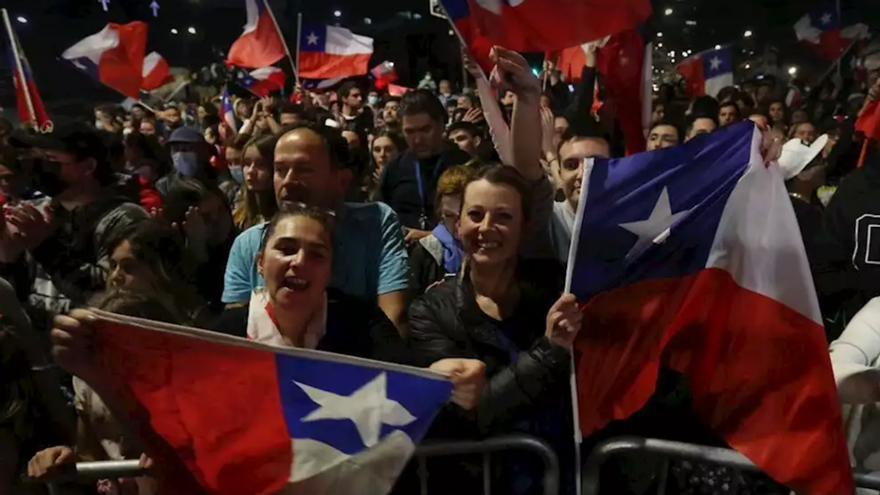
The Official Cuban Press Chokes on the Voters’ Rejection of the Constitution in Chile

Supporters of the “Rejection” option celebrate the result of the constitutional plebiscite, in Santiago de Chile. (EFE/Elvis González)

14ymedio bigger14ymedio, Juan Izquierdo, Havana, 5 September 2022 — The rejection by Chileans of the draft Constitution endorsed by President Gabriel Boric hasn’t taken the Cuban pro-government media by surprise, but it still provokes resentment and bitterness.

This Sunday, the proposal was defeated, with almost 62% of the votes, and Chile chose to maintain the current text, written in 1980, and reformed after the fall of Pinochet and the establishment of democracy.

Meanwhile, in Cuba, several reports, articles and opinion pieces, programmed from the offices of the Central Committee of the Communist Party, spared no reproach or nefarious adjective against those who revalidated the “Constitution of the dictatorship.”

An analysis by journalist Oliver Zamora, broadcast on Noticiero Nacional de Televisión, described the approval of the project as “the most important political event in Chile” since the end of the government of Augusto Pinochet. Enthusiastic about the continental turn to the left, no matter if it’s grotesque or outdated, the reporter doesn’t hide his dismay at defeat.

Chileans were supposed to vote to “delete the legacies of the dictatorship,” and achieve the “real, not apparent, change” that only socialism can offer. Zamora points out that Chile rejected the possibility of a “stronger state,” which would guarantee rights and not allow itself to be “conquered” by neoliberalism.

They threw away, in the opinion of the journalist, a “superior” Constitution because of the media campaign of their enemies, which is a sign that Chile is a “polarized society, trapped in the past.” continue reading

Once the result was known, another of the voices of officialdom, the journalist Talía González, insulted the text of the current Constitution, “written during the military dictatorship.” “The Chileans,” she lamented, “denied their support for a text written by leftist and progressive forces,” to which President Boric had given his “total support.”

Both the State newspaper Granma and Cubadebate took advantage of euphemisms so as not to admit the defeat of the preliminary draft. Metaphors, circumlocutions and extensive paragraphs were intended to cover up the “Rejection option.”

“The option of maintaining a Constitution inherited from the time of Augusto Pinochet is announced as the winner,” admitted the national organ of the Communist Party. “Several experts agree that this result is the consequence of a wide campaign of disinformation regarding the new Constitution; and of an incentive, with a lot of money, to reject the text or deliver invalid votes,” it simplified.

“The most likely thing,” the editors said with disdain, is that Chileans will “wake up without the possibility of having a Constitution” with guarantees in health, education, the environment and pensions.

For Juventud Rebelde, the opportunity was missed to crystallize “the popular claims of the decades under the laws left by the dictator Augusto Pinochet.” Its previous articles warned, with alarm, that all polls pointed to the “possibility of the triumph of Rejection.”

But the “newspaper of Cuban youth” reassured its readers: “There are totally different forecasts and mathematical prediction studies” based on readings from social networks, which “have predicted that the triumph will be of Approval.”

However, there is something that all the official Cuban media agree on. Despite not understanding the mechanisms inherent in democracy and that it seems inconceivable that the government of a country doesn’t have absolute authority over the approval of the laws it intends to propose, as happens on the Island, each comment about Chile ends up predicting Boric’s triumph by any means.

It doesn’t matter if it is the direct one, which has just failed; or the more subtle and slow one, calling a plebiscite again. “Boric needs it,” say the Cuban newspapers, in order to consolidate the socialist reform in a complex country like Chile, which will not easily give up freedom to choose its future.

Translated by Regina Anavy

____________

COLLABORATE WITH OUR WORKThe 14ymedio team is committed to practicing serious journalism that reflects Cuba’s reality in all its depth. Thank you for joining us on this long journey. We invite you to continue supporting us by becoming a member of 14ymedio now. Together we can continue transforming journalism in Cuba.
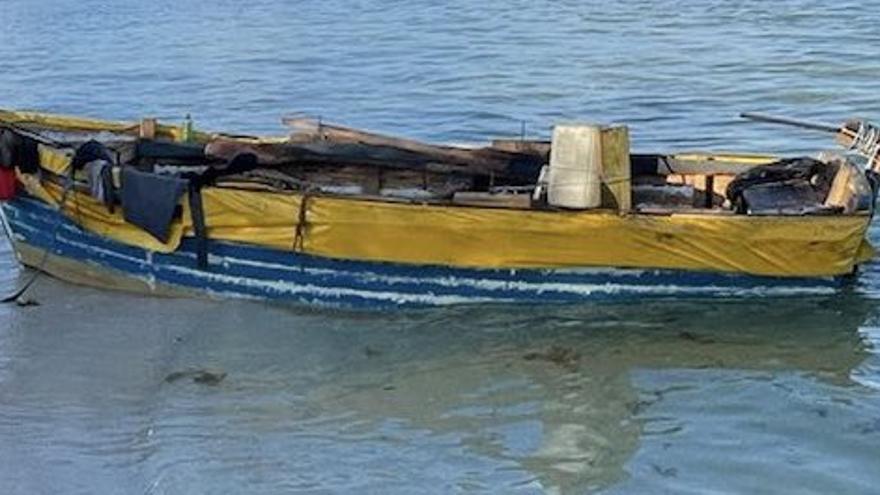
The U.S. Embassy in Cuba Announces an Increase in Control in the Florida Straits

One of the boats in which Cuban rafters were traveling this August. (Twitter/@USBPChiefMIP)

14ymedio bigger14ymedio, Madrid, 5 September 2022 — The U.S. embassy in Cuba warned on Sunday of the increase in surveillance in the Straits of Florida in the face of the unstoppable flow of people trying to reach the United States by that route.

“The Joint Task Force of Homeland Security increased its operational position to deal with a recent increase in irregular maritime migration. Agencies are increasing patrols and law enforcement by land, air and sea, day and night,” the institution said on Twitter.

“People who try to enter the country illegally by sea will be intercepted and must wait to be repatriated to their country of origin, or to the country from which they left, in accordance with the laws, policies and obligations of the international treaties of the United States,” it added in a second message.

The warnings were issued a day after the Border Patrol detained 42 Cuban migrants off the coast of Florida. Walter N. Slossar, chief agent of the corps in the Miami sector, explained that 21 rafters made landfall in the Dry Tortugas, and another 21 arrived in Islamorada.

That same Saturday, the Coast Guard had suspended the search for a Cuban who disappeared in Islamorada after overturning a boat. With him were 20 people who were rescued and will be repatriated to Cuba, and four others who managed to make landfall. continue reading

Operations of this type do not cease, in any case. On Friday, September 2, the Coast Guard repatriated another 37 people from the Island, and in the third week of August the Border Patrol intercepted 96 Cuban rafters.

In total, from October 1, 2021 until last Friday, 5,113 Cubans have been intercepted. The figure is close to that of 2016, when the last major migration crisis occurred. In that period, 5,396 arrived in the United States, a number that could be exceeded in by the end of September, which will mark the end of this fiscal year.

In the last five years, the number of Cubans intercepted at sea by the U.S. authorities had decreased progressively, especially during the pandemic. In 2017, 1,468 arrived, in 2018, there were 259; in 2019, 313; in 2020, 49 and in 2021, 838.

The intention to increase surveillance in the area was communicated this Friday by the Southeast National Security Working Group in a document stating that the objective is to prevent the loss of life at sea.

“The Miami Sector of the U.S. Border Patrol is committed to working together with our federal, state and local law enforcement partners in an entire government-wide effort to prepare for and address any potential increase in irregular maritime migration or threats to border security in Florida,” Slosar said.

In addition, Brendan C. McPherson, director of the department and commander of the Seventh District of the Coast Guard, stressed that “illegal maritime travel in the Caribbean is always dangerous and often deadly.”

“The smugglers exploit vulnerable migrants for profit while putting their lives at risk on board overburdened boats that are unfit to sail. These dangerous trips should not be attempted. Safe, legal and orderly migration saves lives,” he added.

Translated by Regina Anavy

____________

COLLABORATE WITH OUR WORKThe 14ymedio team is committed to practicing serious journalism that reflects Cuba’s reality in all its depth. Thank you for joining us on this long journey. We invite you to continue supporting us by becoming a member of 14ymedio now. Together we can continue transforming journalism in Cuba.

Cubans Wait All Night at the Currency Exchange to Buy Dollars, Which Now Cost 150 pesos in the Informal Market

Like an anthill, the people of Santa Clara hunkered down during the early hours at the junction of Cuba and Tristá streets. (14ymedio)

14ymedio bigger14ymedio, Juan Diego Rodríguez and Juan Izquierdo, Havana, September 5, 2022 — The night begins to cool off over Santa Clara and, after having a bite to eat, the coleros [people standing in line for others, for pay] cross Vidal Park on their way to the currency exchange (Cadeca). The custom is new but the method is as common as poverty and underdevelopment on the island: hold on all night to guarantee one of the first places in line.

The booty: the hundred dollars “per head” that the Government promises to sell to anyone who has a place. Like an anthill, the people of Santa Clara hunkered down during the early hours of Friday at the junction of Cuba and Tristá streets.

It’s a central corner and a crucial one for the movement of the city, interrupted, however, by a long zinc fence, which slows down traffic. The inhabitants of the city are accustomed to going around the obstacle, which “protects” them from the ruins of the old Florida hotel, to reach the Cadeca and the branch of the Bank of Credit and Commerce.

“A tremendous show broke out that night,” one of its readers in Santa Clara tells 14ymedio. “More than a hundred people waiting, and everything is a disaster. A guy started shouting that it was a shame and that he couldn’t take it anymore.”

At ten at night, the man says, the atmosphere was already “heated.” From afar, in the park, the police didn’t lose any time in harassing the coleros. “It’s normal that they patrol that area and, from time to time, intercept a drunkard or an unsuspecting university student and ’invite’ them to enter the guasabita,” he adds.

The guasabita is the name that the people of Santa Clara give to a small gray bus where the officers improvise their “interrogations.” “People leave there on a stretcher,” says the man, “that’s why the coleros also avoid it.” continue reading

But not even a hypothetical beating or an unforeseen arrest stop those who have to exchange their dollars. In the Cadeca, the mechanisms of a gear that no one fully understands and that works based on traps, tricks and bribes, begin to rotate.

The fundamental rule: maintain your ground and be aware of the movements of others. The euphemism par excellence, “taking care of the line,” is the ace up the sleeve of those who appear and disappear, exchange places with someone, or duplicate their place under all kinds of pretexts.

The “dollar line” is confusing and exhausting, with the additional danger of knowing that everyone who goes in or out carries money in their pockets, which tempts the city’s bandits and assailants.

“I’ve even been afraid of standing in line,” admits the man, who says he feels the same neurosis in the Cadeca as in a line for chicken, coffee or cigarettes. The overnight sale of foreign exchange has become another business in the informal market.

“But make no mistake,” he adds, “this is a small business; it isn’t the ‘mafia’ of Santa Clara. This is the same thing that happens when people ‘struggle’ with their ration books for meat or some tobacco. The idea is to spend the time that others can’t or don’t want to spend. That’s why they [the coleros] take a percentage.”

At the moment of greatest agony, when there is no longer any desire to shout or protest, the sun rises. Cadeca workers, very calmly, open the door and start calling the first numbers. But there is no guarantee that there will be enough dollars to cover the demand.

“Everyone knows that you can spend the night here and that it’s a choice,” the man concludes, “but that’s what it is. This is the only country where you can live from standing in line for someone.”

Those who read the daily reports of the official press won’t be able to detect any abnormalities. With subtlety, the Government is recalibrating the balance of exchange: every day it sells the most expensive dollar, but demands to buy it at the lowest possible price.

Meanwhile, exchange rates have skyrocketed on the informal market. The dollar reached 150 pesos on Saturday, according to the monitoring of the digital media El Toque. Those who experienced the instability of the currencies during the Special Period soon recognized that this was the figure at which the dollar came to be valued during the previous crisis.

At exchange rates of 149 and 148 pesos, respectively, the euro and the Freely Convertible Currency (MLC) almost reached the threshold of the US currency. With these figures, phrases such as “recovering the purchasing power of the salary in Cuban pesos” or “single type of exchange,” formulated by Minister Alejandro Gil Fernández, are already terrible jokes of economic humor.

Translated by Regina Anavy

____________

COLLABORATE WITH OUR WORKThe 14ymedio team is committed to practicing serious journalism that reflects Cuba’s reality in all its depth. Thank you for joining us on this long journey. We invite you to continue supporting us by becoming a member of 14ymedio now. Together we can continue transforming journalism in Cuba.
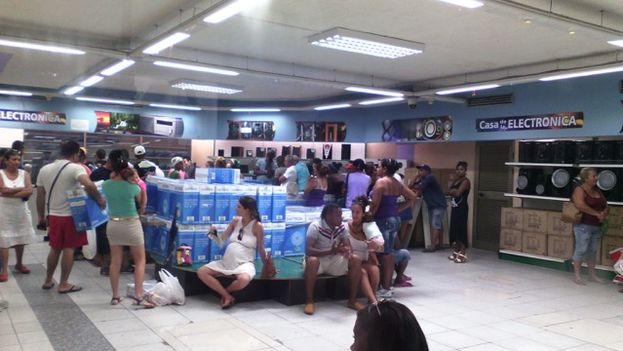
From Cuba’s Daily Drama of Blackouts to Unimplemented Innovations, No One Understands It

Customers in a Havana electronics store, in line to buy fans, to cool the night air and repel mosquitos. But the fans are useless when there is no electricity.

14ymedio bigger14ymedio, Elías Amor Bravo, Economist, 5 September 2022 — La Guiteras has been incorporated into Cuba’s national electricity system after overcoming the failures that caused its shutdown, news that in any other country in the world would be inconsequential. But in Cuba, in this agonizing summer of 2022, in which the alumbrones [a word coined to mean periods when the lights are on] have become a daily event in the difficult coexistence on the Island, it’s great news when a thermoelectric power plant produces electricity.

And as the communist regime enjoys the propaganda and the legendary narrative of the events that happen in the country, the article published in the State newspaper Granma is not wasted and says something like “after about four days of uninterrupted work, in which more than 200 maintenance actions were carried out, the largest unitary bloc in the country went online after ten o’clock on Saturday night, and on Sunday morning it exceeded 200 MW.” That doesn’t fool anyone and isn’t a heroic deed. This is a brief description of the usual operation in these cases, by the way, not exclusive to La Guiteras, since the rest of the plants are the same, or worse.

Granma added that “the operators solved the localized breakdown in the boiler and the vacuum damage in the condenser-turbine, and eliminated the causes that led to high water consumption, the origin of the problem that forced the plant to stop.” This is one more example of the work of informational monitoring by the regime so that Cubans understand the official version of the origin of the blackouts and attribute them to short-term or specific causes, which are resolved in this way, when the national electricity system is really a victim of the prevailing economic model, and its destiny is linked to it. That is, in order to enjoy quality electricity again and continuously, it is necessary to implement structural changes that the regime doesn’t even want to talk about. continue reading

And as the Guiteras problem will promptly return, Granma says that “to achieve greater reliability, it will be necessary, as soon as possible, to carry out the proper cleaning of the boiler and eliminate all the defects that limit its efficiency.” (so, what have they done?) and adds in this regard that “the washing of the boiler requires a shutdown of approximately ten days to increase the load to 280 MW and prolong its permanence in the system, without unforeseen exits.” Thus, a shutdown of Guiteras and a return to the blackouts are foreseen.

Several Police Officers Asked for $7,500 From Coyotes Who Were Hiding Cubans Are Arrested in Mexico

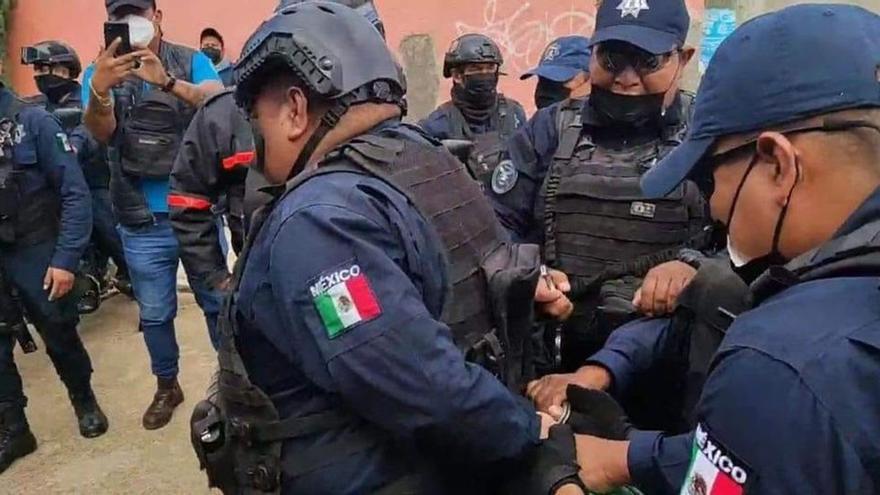
The moment when the handcuffs are placed on a municipal policeman in Oaxaca who was accused by the inhabitants of threats and extortion. (Screen capture)

14ymedio bigger14ymedio, Havana, 2 September 2022 — At least four municipal police officers from the Mexican state of Oaxaca were arrested for trying to extort money from coyotes, demanding 150,000 pesos (7,500 dollars) so as not to betray 25 migrants from Cuba, Guatemala and El Salvador who were crowded into a large house in the municipality of Pueblo Nuevo.

An argument between the officers and the coyotes alerted the neighbors, who realized that the civilians were not from the area. “They were arguing over a payment that wasn’t made,” a witness who identified himself as Felipe López told 14ymedio. “One of the cops threatened to take out his gun if they didn’t pay.”

According to the source, in the morning a patrol car was parked in front of the house where the migrants were hiding, which had been covered with sheeting the month before. “There was movement at night; they arrived in a van, but we had never seen the people who took them out,” López said. continue reading

“While these guys were arguing outside, we could hear some children crying inside, so we thought they were kidnappers,” the witness said. “With the support of drivers and neighbors, we surrounded the police and the coyotes, until the state security officers arrived. How could we imagine that they were migrants? The coyotes had put down cardboard on the floor for them to sleep.”

According to data from the Ministry of Public Security of Oaxaca, an investigation on the detained uniformed officers was opened for the alleged crime of extortion, but it will be the police unit that will define the punishment.

Oaxaca is a point of reference for Cubans. The Government of Mexico has detected several networks of coyotes in that region that charge between $4,500 and $10,000 for migrants going to the United States. In addition, the so-called central region is one of the main routes that traffickers exploit to transport the Island’s nationals in vans and cargo trucks.

The detained foreigners, including five children, were handed over to the National Institute of Migration of the state of Oaxaca. Their migratory status will be defined in the coming days.

In Ciudad del Carmen, on the Yucatan peninsula this Thursday, the National Guard arrested a group of 16 Cubans and Nicaraguans who were being transferred to the state of Tabasco in a van. A state security source confirmed to 14ymedio that these people would be expelled to their country of origin.

According to official figures, Mexico has repatriated 1,657 Cubans to the Island this year. This Friday, a group of 28 people arrived at José Martí International Airport in Havana.

Meanwhile, from the United States, the Coast Guard repatriated 95 rafters on board the ship William Trump on Thursday, bringing the total to 5,086 Cubans returned since October last year.

These repatriations have not stopped the arrival of rafters from the Island. This Friday, the Coast Guard announced that a boat with at least 25 Cubans was shipwrecked in front of the Florida keys.

“Partners and crews of good Samaritans responded to the shipwreck of a boat and people in the water near Islamorada as a result of an adventure of illegal immigrants,” the Coast Guard said on its social networks. “Twenty migrants were placed in custody, four allegedly landed, and the search for one, reported missing, continues.”

The rescued rafters, the government agency said, are on board a cutter and will be repatriated to Cuba.

Translated by Regina Anavy

____________

COLLABORATE WITH OUR WORKThe 14ymedio team is committed to practicing serious journalism that reflects Cuba’s reality in all its depth. Thank you for joining us on this long journey. We invite you to continue supporting us by becoming a member of 14ymedio now. Together we can continue transforming journalism in Cuba.
More ‘Business Opportunities’ in Cuba for Kempinski Luxury Hotels

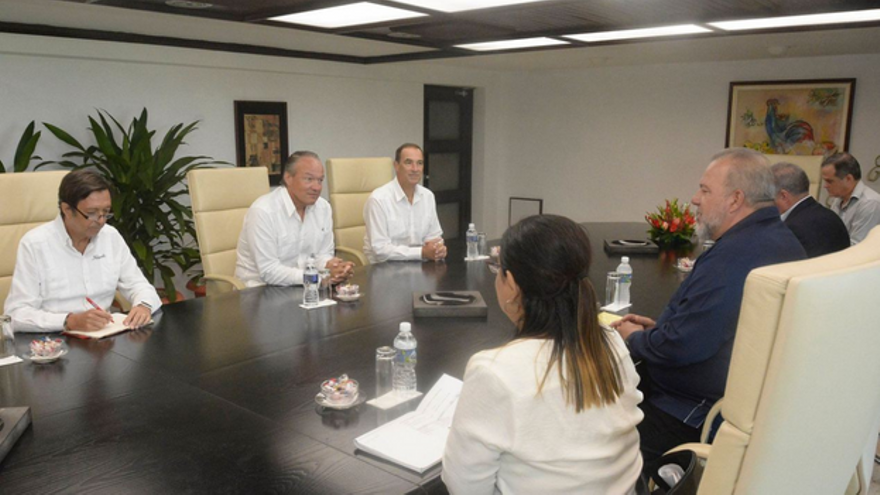
Kempinski already has two establishments in the Cuban capital: the Gran Hotel Manzana, inaugurated in 2017, and the Gran Hotel Bristol, in 2020. (Twitter/Manuel Marrero Cruz)

14ymedio bigger14ymedio, Havana, 2 September 2022 — The Cuban Prime Minister, Manuel Marrero Cruz, foresees more “business opportunities” on the Island with the luxury hotel group Kempinski. In a meeting held on Thursday in Havana with Bernold Schroeder, president of the Board of Directors of the company, Marrero negotiated the expansion of the group in Cuba.

Qualified by Marrero as a “high standard” German company, Kempinski already has two establishments in the Cuban capital: the Gran Hotel Manzana, inaugurated in 2017 with five-stars plus, and the Gran Hotel Bristol, which opened its doors in 2020.

Despite the optimistic tone of the meeting, a recent 14ymedio tour of the hotel cartography of Havana revealed that the Manzana hotel was under repair, with excavators and without customers, while the Bristol, after a brief opening, was closed to the public.

Bernold Schroeder, the manager who met Marrero, has been part of Kempinski since 2017 and has been running the company since 2020. According to the company’s official website, Schroeder boosted the growth of the group in Asia and Europe, which earned him the promotion to his continue reading

present position, and has been responsible, to a large extent, for the rapprochement with Cuba.

In 2019, the Gran Manzana Kempinski  hotel was included by Donald Trump in the List of Restricted Cuban Entities, an inventory of companies that could be sued by the U.S. justice system for profiting from properties expropriated after the 1959 Revolution, although several companies registered in the European Union have legal protections against this mechanism.

All these companies were managed or directed by Gaesa, the administration group of the Armed Forces, then led by the recently deceased General Luis Alberto Rodríguez-López Calleja.

In the midst of the resounding crisis that Cuba is going through, the Cuban government’s link with a high-caliber hotel company such as Kempinski arouses several controversies. For example, why is government management concentrating on unnecessary projects, when there is a moderate number of tourists entering Cuba, in addition to the hotels being excessively expensive.

Marrero, who served from 2004 to 2019 as Minister of Tourism and was part of the administrative apparatus of Gaesa, personally manages the deal with large companies, while the owner of that portfolio, Juan Carlos García Granda, occupies a secondary place in these businesses.

Reproducing topics and tropical clichés, Kempinski announces Havana as a “city stopped in time, slow,” where people “take their time.” The Cuban government has not offered additional information about the projects that the German company intends to carry out or where they will be located.

The Kempinski group was founded in 1897 and today manages 79 five-star establishments in about thirty countries. On the island, in addition to the Manzana and Bristol hotels, with 246 and 162 luxury rooms, respectively, the company opened the Cayo Guillermo Resort Kempinski, located in the north of the province of Ciego de Ávila, in 2019.

Translated by Regina Anavy

____________

COLLABORATE WITH OUR WORKThe 14ymedio team is committed to practicing serious journalism that reflects Cuba’s reality in all its depth. Thank you for joining us on this long journey. We invite you to continue supporting us by becoming a member of 14ymedio now. Together we can continue transforming journalism in Cuba.
Due to Lack of Resources, Only 23 Sugar Mills Will Process Cane in Cuba in the Next Harvest

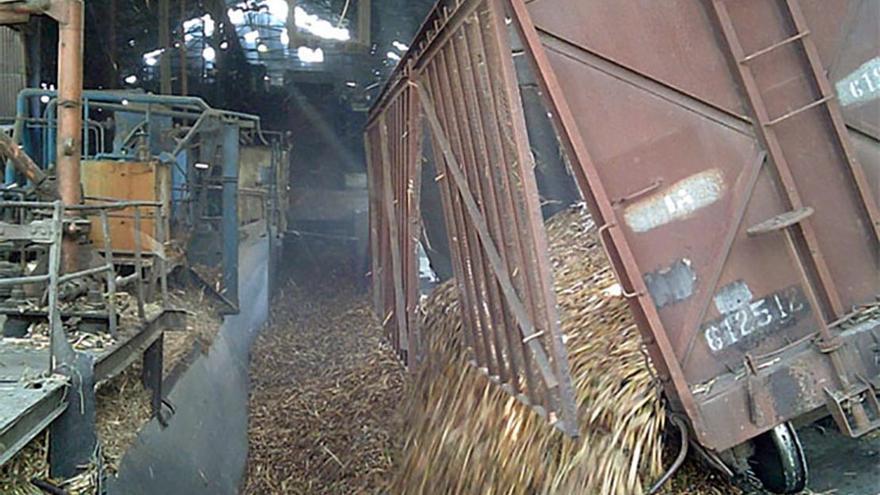
The planned harvest is half the goal of the last campaign and lower than that achieved. (Granma)

14ymedio bigger14ymedio, Havana, 2 September 2022 — The Cuban authorities have set themselves the goal for the next harvest at even fewer tons than were achieved in the previous one, which was the worst in the history of the Island. It’s true they have called it small, but it’s difficult to understand why they call it “efficient” since in no case does it even cover domestic demand.

Julio Andrés García Pérez, the General Manager of Azcuba, a group of companies in charge of sugar production, announced that 455,198 tons of sugar must be produced for the ’family basket’, tourism, medicines, industrial production and exports. It’s too little sugar for so much demand, if we take into account that domestic consumption requires around a half million tons, and, last year, 411,000 tons were committed to foreign sales.

The plan wasn’t achieved last year, since 911,000 tons had been projected and barely 473,720 were obtained. This year, therefore, officials adjusted their forecasts according to the poor production recorded in 2022, and even a little less. The figure is more realistic, although it remains to be seen if it is reached, in the midst of the current economic and financial debacle, lack of fuel, blackouts and a planting that has already started badly.

The campaign will begin in mid-November, which on this occasion will involve 23 sugar mills. In the past there were 36, but only three fulfilled their production plans, according to the authorities, who already warned that for this year the number of sugar mills would be reduced to 26. In the end, the number is even more modest.

In the meeting held yesterday between the leadership of Azcuba and the Party leadership, García Pérez explained that “it’s a matter of planning the harvest so it’s objective, flexible and, although small, with good practices, concentrating resources in fewer sugar mills to achieve greater efficiency.” continue reading

Deputy Prime Minister Jorge Luis Tapia Fonseca, who emphasized “discipline,” recalled that this year “there will be no more subsidies for losses in the sector” and fiercely placed the responsibility on the workers, whom he asked to be aware of how much they will achieve each day, because “if the mill doesn’t mill, the economic results won’t be good.”

“Indicators of efficiency are the main weapons of this harvest, which will be the beginning of the recovery of sugarcane in the country,” said Tapia Fonseca, to the astonishment even of the readers of the official media, Cubadebate.

“One of the most serious problems we have is triumphalism, which then dissolves into sad realities,” says a commentator in the article, entitled “Cuba is getting ready for a small, but more efficient harvest.” And another spits out, “That title is repeated every year.”

Meanwhile, a reader who has reviewed the accounts of the previous campaign says regretfully: “That means that the sugar production in the next harvest (455,198 tons) will be lower than in the last (480,000 tons in round numbers, the lowest production in more than a hundred years). We keep moving forward like the crab. We are already announcing that we will break the record we had ’achieved’ in the last harvest. And when I woke up, the directives were still there.”

The warning has also caught the attention of the Spanish-based Cuban economist Elías Amor. “Knowing that the economic situation is very serious, they no longer try to hide the disaster but broadcast it before it happens, so that people can prepare. It’s a change of strategy that, in the case of sugar or blackouts, is now set,” he says. The expert describes the adjective “efficient” as “a macabre joke” for the coming harvest.

Elías Amor has dedicated numerous analyses to the resounding fall of the sugar industry, which has gone through times of glory. In 1959, Cuba had 156 operational factories that produced 5.6 million tons of sugar. During the years of the Soviet subsidy, although without reaching the mythical 10 million announced by Fidel Castro, record figures were reached that exceeded eight million tons in the best harvests, between 1970 and 1989.

The root causes of the debacle in recent years are, for the authorities, the lack of fuel, breakage in machinery and transport and industrial failures, in addition to the humidity of the fields and COVID-19. According to the economist’s analysis, the greatest burdens are the absence of financing (due to the lack of access to financial markets), the impossibility of attending to domestic consumption and the little technology available to obtain sugar production byproducts* – “which is where the profitable sugar lines are.”

These causes explain the failure of one of the industries that contributed the most money to Cuba in history, well ahead of tobacco, but there will also be consequences. The lack of sugar for export will prevent the much-needed acquisition of foreign currency, and its absence for the domestic market will force the State to spend amounts of money that it doesn’t have. Meanwhile, the street finds a new reason for discontent.

*Translator’s note: The four main byproducts of the sugarcane industry are cane tops, bagasse, filter muds and molasses.

Translated by Regina Anavy

____________

COLLABORATE WITH OUR WORKThe 14ymedio team is committed to practicing serious journalism that reflects Cuba’s reality in all its depth. Thank you for joining us on this long journey. We invite you to continue supporting us by becoming a member of 14ymedio now. Together we can continue transforming journalism in Cuba.
Spinning with the Failure of Foreign Investment in Cuba

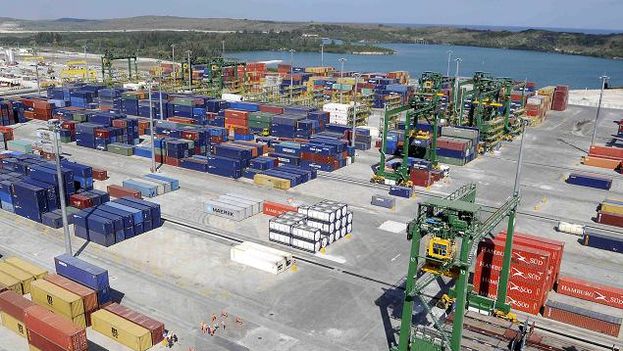
Mariel Special Development Zone – ZEDM

14ymedio bigger14ymedio, Elías Amor Bravo, Economist, 4 September 2022 — Cuban communists have failed dramatically with foreign investment. They were wrong to believe that an interventionist law and not guaranteeing property rights were going to serve to promote investment. They were wrong about the Mariel Special Development Zone, which has not been special, nor anything close. They were wrong about the devices for hiring labor, the design of joint ventures or the absence of funding. They were wrong in everything; hence, the failure.

And now, the State newspaper Granma published an article entitled “Lend a hand” to national industry and economy with foreign investment. Wouldn’t this be like going for the jugular? Nor would putting the national infrastructure that is still state-owned at the service of foreign investment make it possible to patch over a pothole that has its explanation in the desire to apply the communist model to foreign capital, an erroneous pretense that doesn’t have a leg to stand on.

The foreign investor wants freedom to decide what to do with his money. The hands of the state, the farther away, the better. This is something that the Cuban communist regime cannot understand, and that’s how it goes.

Contrary to what is stated in Granma, analysts emphasize that the framework of foreign investment in Cuba continues without undergoing the necessary changes to achieve its increase, and the recent decisions of the regime have passed without pain or glory, because they don’t go to the heart of the problem. But with these decisions, the communist state intends to solve critical problems that throw the Cuban economy into a situation of extreme weakness, such as with food or electricity, and in these matters, foreign capital seems to have little interest. continue reading

The regime intends for foreign capital to enter to operate in wholesale distribution, but this stumbles over the legal framework in Cuba. On one hand, there is no guarantee because this activity is subject to control by the regime, and on the other, why dedicate itself to distribution when the problem is that there are not sufficient products or goods?

The two vectors point to a scenario in which no matter how hard the authorities try, they won’t find a foreign distributor to provide the technology and experience that will achieve radical changes in the gray commercial landscape of the communist economy. You don’t build a house from the roof down; you need a solid foundation. As much as Minister Gil tries at the National Hotel to convince representatives of embassies, national and foreign businessmen and officials from agencies of the State, he knows that this initiative won’t go very far; and in any case, if it happens, the government will have a partner subject to communist decisions who, sooner or later, will abandon the business.

Likewise, Gil claimed the new scenario according to which, currently, both the private and state sectors have a demand for resources to produce, backed up by imports, which means a space for the participation of foreign capital in wholesale trade. But in this, he also didn’t tell the truth, since while the state sector agrees to dollar-to-peso exchanges at the rate of 1×24, others, the non-state, must get used to the semi-official rate of 1×130, or resort to the informal market rate of 1×150, and rising.

Gil said that the country has an infrastructure that is above production levels, and this is false, according to the results of 2021, but by disagreeing with it, he refused to accept the technological obsolescence of numerous sectors and companies in sugar, electricity, manufacturing, transport, etc. The minister is wrong to say these things, and the foreign investor is attentive to all this when making decisions.

It’s not surprising that other Caribbean countries, such as the Dominican Republic, benefit from this black hole of the Castro regime, which aims to trap unsuspecting investors so that they place their capital in warehouses or factories whose cost of reactivation is much higher than putting it into operation from the beginning. If you think not, look at the estimate of 255 million dollars to update the electricity sector.

Haste has never been a good adviser in economic policy decisions. In reality, attracting foreign capital to Cuba simply requires another model, another economic structure, another legal framework, and that doesn’t happen overnight. Going around in a vicious circle doesn’t lead anywhere.

Therefore, when the minister declares that he is willing “to make national infrastructure available to foreign investment,” he should clarify how he intends to do it, in terms of what model, with what instruments and within what deadlines, because that being said, in open terms, he will not be able to attract anyone; on the contrary, he will scare off foreign capital. The lost foreign exchange income in the country, which is more than 3 billion in a very short period, will never come within the current framework of foreign investments.

The minister abandons the idea of international investors deploying their structures to produce and generate employment in Cuba, seeing that this is impossible, and therefore, he now wants to make it easier for foreigners to bring products into the country, taking advantage of their experience, their financial facilities, their technology and for this, to take advantage of the communist state infrastructures. They aren’t going to be successful, not in the wholesale trade and much less in the retail trade. There are many countries to attend to first, with promising markets. Cuba lags behind in this international competition, and for Cubans things are getting worse and worse.

As always happens in these business forums, such as the one held at the National Hotel, ministers participate in the road show to present business opportunities to foreigners who then, when studied in detail, end in nothing. The five proposals offered by the director of foreign trade of Havana, Luis Carlos Góngora, surprised the attendees. First, the possibility of wholesale and retail production and marketing of consumer and intermediate goods in the capital, which are in high demand, associated with the activity of breadmaking and pastry, artisanal and industrial productions of candies and other jams, and the processing and preservation of food.

He stressed that there is a market for this, due to the growing number of micro, small and medium-sized companies that are engaged in these activities, in addition to the fact that these products and raw materials are for widespread domestic use, in family food, which also justifies a retail market. And among the products to be marketed, he mentioned sugar, salt and flour, in addition to specific mixtures, gluten-free flour, packaging, fats, oils, yeasts and dyes, among other raw materials.

The business director of the Ministry of Industries, Tomás Oviedo, proposed several areas for foreign investment; for example, the marketing of tires and rubber articles, as well as inputs and equipment related to these productions. The proposal would be in the form of a wholesale marketing company, and the opportunity lies in the high unmet demand, with potential customers such as the ministry itself, MITRANS [the Minstry of Transport], the construction sector or any other branch of the economy that owns automotive transport.

From the chemical industry, there was talk of the creation of a wholesale entity that markets flat glass and items of this material, supplies and equipment for the respective factories, which would  meet the demands of that market, acquire new technologies for the development of this industry and recover and make the most of the capacities already installed.

In the field of agriculture, it was proposed to develop a chain of wholesale and retail stores, no less than five, to offer a variety of products and commodities with national reach, supported by wholesale warehouses. This proposal would be supported by a high demand in the sector for raw materials, tools and accessories, among other things, and as another potential it added the existence of underutilized logistics capabilities, with a network of establishments that are out of stock.

The question that appears in all this list of opportunities is the same: Why haven’t the Cubans done this themselves, and why do you have to resort to foreign capital? Or more importantly, why doesn’t the state do it with its state companies?

On the other hand, it abounded in several conditions and guarantees of operation, such as the “Single Window,” created to accompany investors and facilitate the entire process.

Castroite leaders have thrown in the towel, aware that the communist model can’t go on, except to highlight interventionist nonsense such as the portfolio of opportunities or the one-stop-shop. They speak of a more favorable environment for foreign investment, but they don’t realize that the current times, due to a serious global economic crisis caused by Cuba’s partner, Putin, will bring with it a collapse of markets and financing. It’s unfortunate that Cuban leaders are going to look for investments just when it can become more complicated. Always swimming against the current.

Not even letting businesses operate in foreign currency, which means taking them away from the reality of a weak and increasingly fragmented domestic market, will manage to interest any foreign investor. No one trusts these types of decisions that, at any time when the conditions of the economy change, can be reversed, and then it’s over. This lack of guarantees is what worries many investors.

The eternal bureaucracy is also frightening investors, so, when the flexibility in the requirements for proposals was announced, the reduction in the content of the documentation that is required today for approval, some rejoiced, but sadness returned when it was seen that the required paperwork remained the same and that the multiplicity of partners again casts shadows of doubt.

Finally, no one told Minister Gil and his colleagues that in order to attract foreign capital for business opportunities in the sectors of the economy, something must be done first, and that it’s very important.

And that is to pay off the debts. No attendee said anything about this issue. It’s an annoying matter for those who haven’t paid the Paris Club and other creditors for two years. And so, with that data about non-payment, they want to attract investments? Good luck with that.

Translated by Regina Anavy

____________

COLLABORATE WITH OUR WORKThe 14ymedio team is committed to practicing serious journalism that reflects Cuba’s reality in all its depth. Thank you for joining us on this long journey. We invite you to continue supporting us by becoming a member of 14ymedio now. Together we can continue transforming journalism in Cuba.
Journalist Ricardo Fernandez Asks for Asylum in Germany with his Family

Ricardo Fernández has been in Germany with his family since last August waiting to obtain political asylum. (14ymedio)

14ymedio bigger14ymedio, Havana, 1 September 2022 — Independent journalist and collaborator of 14ymedio Ricardo Fernández has been in Germany with his family since last July waiting for political asylum. The reporter, who suffered an intense siege from the political police, recognizes that so much pressure has left him with a damaged soul.

Fernández has lived through years of harassment and arbitrary arrests. Now, from a refugee camp in Zirndorf in the state of Bavaria, he details the pressures he felt in recent months. “Until that moment I had been the one who had put myself at risk for my ideals, but since the beginning of 2022, the new objective of State Security was my wife, my mother-in-law and my eldest daughter.”

By the month of May, “the situation had already become unsustainable, and I couldn’t sacrifice my family members for a struggle that they didn’t choose.” Fernández recognizes that he didn’t have the “right to offer the lives of others” because of his personal determination to practice independent journalism under a regime allergic to freedom of information.

Once the decision was made to leave the Island, they began the procedures to obtain passports and put family matters in order. “When State Security learned that we were in that process, the harassment multiplied.” A three-hour arrest at the third Camagüey Police Unit, on July 14, confirmed the need to leave as soon as possible.

It was not the first time the reporter was arrested. In July 2019, he spent nine days in a dungeon for the simple fact of visiting the headquarters of the Ladies in White Movement in the Havana neighborhood of Lawton. From that arrest he came out with a warning report for being “illegal” in the Cuban capital, a document that he refused to sign. Last July, he also received new threats.

“I was given the ultimatum that I had a month to leave the country. I am sure that in previous years they would not have told me that way, because I would have categorically denied it, but when they saw me start the process they threw themselves at me like dogs against an injured animal.” Even so, the political police retained the family’s passports and only handed them over at the end of July. continue reading

Boarding the plane, feeling it take off and flying over the Atlantic were bittersweet moments for Fernández, his wife and his three children. On the one hand, they felt relief at leaving the police threats behind, but on the other, the question opened up to them of what would become of their lives from that day on. They didn’t carry a single euro with them.

“The asylum process in Germany, after being approved by the police authorities in charge of carrying out the express deportation of those who cannot present evidence of persecution, is quite simple, and the organization is impressive,” he explains to this newspaper. “There is a large volume of requests for refuge, mainly from Ukrainian families fleeing the war.”

In the refugee center where the reporter is waiting for a response to his case, there aren’t a lot of Cubans. The days take place there in a peculiar way: “Because of the difference in schedule with Cuba and the desire to talk to our loved ones, there is little sleep at night. During the day we are engaged in adapting to this reality.”

Although the surprises before everything new seem to have no end, Fernández and his relatives have also realized that they are “broken inside.” “When we meet to share a coffee, strained precariously, we laugh at our own wounds and compare the hoarding habits that we carry in our souls.”

“Some keep boxes of bottled water; others sleep with the goodies that they accumulate. Everyone stores what they can as if there were no more tomorrow. That’s what we laugh at, avoiding the issues that break our souls. Finally, night comes and everyone retires to connect with their loved ones who were left behind.”

Now, the emergency list is very clear to the reporter: “My priority is to get my family to heal from the psychological damage it has suffered for years of persecution, while supporting my homeland in everything that can serve it.” In the midst of the uncertainty of what will happen to him and his family in the coming days, he avoids thinking of an option in which he doesn’t receive asylum and bets that “the hope of a life in peace will flourish.”

Translated by Regina Anavy

____________

COLLABORATE WITH OUR WORKThe 14ymedio team is committed to practicing serious journalism that reflects Cuba’s reality in all its depth. Thank you for joining us on this long journey. We invite you to continue supporting us by becoming a member of 14ymedio now. Together we can continue transforming journalism in Cuba.