Without electricity, without water, and now without the last fuel to which part of the capital’s population still had access.
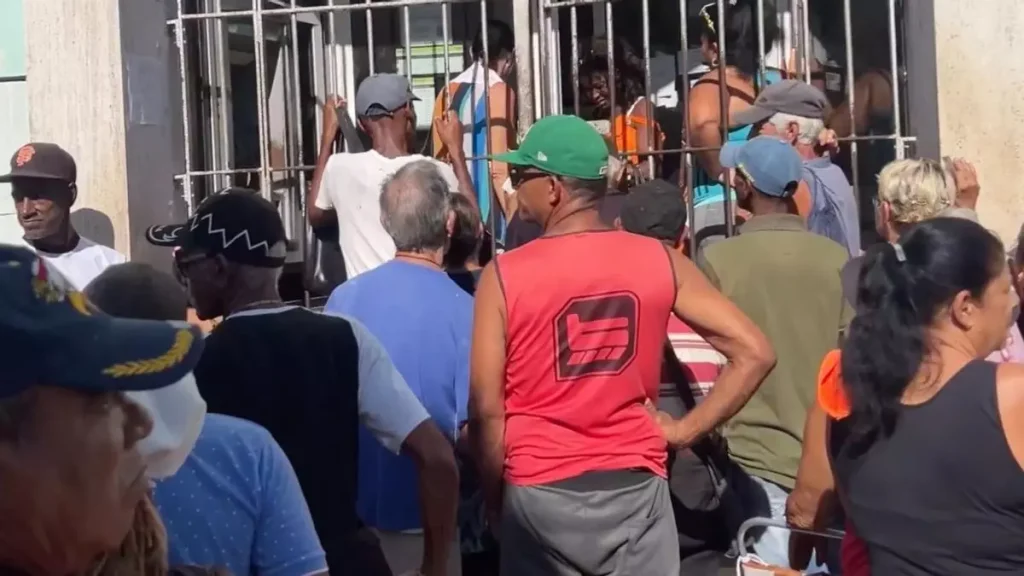
 14ymedio, Darío Hernández, Havana, June 30, 2026 – This Tuesday, the 14ymedio newsroom, located in Nuevo Vedado, woke up without a supply of manufactured gas. It was not an isolated situation: from several parts of Havana, residents quickly confirmed the same problem. “No electricity, no water, no connection, and no gas,” repeated a resident of Luyanó like a mantra.
A brief statement from the Manufactured Gas Company confirmed the interruption early in the morning. “Due to an unforeseen force majeure technical issue detected in the natural gas delivery and reception system, a pressure drop has occurred that has affected the distribution network,” the entity explained.
The company added that its specialized technical personnel were already “carrying out diagnostic and repair work on the issue as quickly as possible,” without providing an estimated time for restoring service.
The lack of information has left tens of thousands of Havana residents wondering how long the outage will last. The interruption affects one of the few energy services that had still been functioning with relative stability in part of the capital. Liquefied gas in cylinders has disappeared from the state supply system and can only be found for foreign currency, making it inaccessible to most Cubans.
“People can’t take it anymore. Those who ask you to ‘endure’ have electricity, water, food, everything”
In Havana, manufactured gas also powers small generators that many residents have purchased to cope with power outages. It was the solution they had found by taking advantage of the only fuel still available. A resident of the Cerro municipality told this newspaper what consequences the sudden popularity of these generators could have: “That means that at any moment they are going to raise the price of gas on the street or simply cut it off.”
In Guanabacoa, where several residents had already gone more than 28 hours without electricity by Tuesday, the day also began without power or water. Among residents, complaints and a sense of abandonment predominate, but today any possibility of protest is being watched by police and military personnel, who patrol at night and circulate through the neighborhoods.
“There is nothing left: the only things there are are blackouts and police in the streets,” says one resident, adding: “People can’t take it anymore. Those who ask you to ‘endure’, they have electricity, water, food, everything.”
Videos recorded by 14ymedio show crowds engaged in what has become their daily routine: long lines in front of basic services. Many of those residents are simply waiting to collect their monthly salaries, which average around 3,000 pesos—approximately five dollars—at a time when a liter of cooking oil can cost as much as 2,000 pesos.
“There is nothing left: the only things there are are blackouts and police in the streets”
“Everything bad that can happen is happening,” summarizes another resident waiting in line, visibly exhausted.
Another explains how the crisis is deepening economic differences. “There are people investing thousands of dollars in solar panels. Installing a system with batteries to have electricity all day costs about $5,000. Who can afford that?”
The sustained accumulation of shortages gradually wears down the resilience of any human being. A blackout, a water outage, or a gas shortage may be bearable as isolated events. But the prolonged accumulation of these simultaneous hardships is exhausting the population’s patience.
Translated by Regina Anavy
______________________
COLLABORATE WITH OUR WORK: The 14ymedio team is committed to practicing serious journalism that reflects Cuba’s reality in all its depth. Thank you for joining us on this long journey. We invite you to continue supporting us by becoming a member of 14ymedio now. Together we can continue transforming journalism in Cuba.