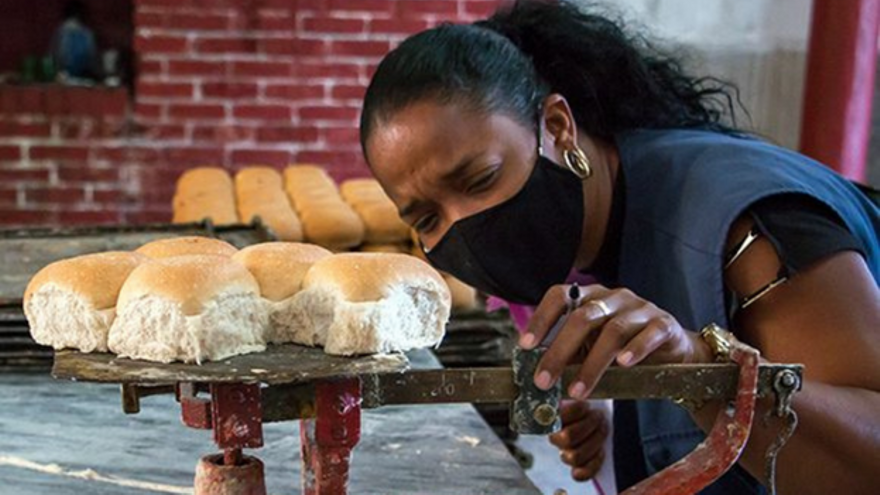

Instead of Facilitating the Import of Flour, the Cuban Government Lashes Out Against the ‘Resellers’

The Government has already released a pack of inspectors throughout the province, with instructions to “detect any illegality.” (Cubadebate)

14ymedio bigger14ymedio, Havana, 31 August 2022 — The shortage of wheat flour in Cuba, with the consequent increase in the price of bread and cookies on the market, has quickly reached its critical point. In addition to the difficulties in making the products, there is the absence of an effective mechanism for the import of the necessary raw material.

However, without offering solutions to the problem of hunger, which will be further aggravated by the arrival of the new school year, or facilitating imports for the self-employed, the Cuban Government, more inefficient than ever, has concentrated its efforts on a raid against food vendors.

“Any small or medium-sized business (SME) can, in theory, import products,” a cookie producer in Sancti Spíritus tells 14ymedio. “Of course as long as you can find them. What you can’t do is go to another country and bring a container of flour, for example, to sell here to producers who need it for their businesses.”

“A month ago,” he continues, “when the disappearance of flour began, I went to Cubaexport to request the import of the quantities I needed. But they can only supply small amounts, so dealing with them doesn’t work. The same thing happened to me with other state import routes: they’re a problem.”

From Havana, they told him about someone who sold flour in quantities: “They told me it was legal, but of course you always know what’s happening.” continue reading

The producer says several of them met and went to the Government to request permission to import a container of flour that they would later distribute among all. “The officials straightened us out,” he laments. “The justification was that you can make contract as a SME or self-employed person, under the terms of the Government, but that collectively you can’t. “That’s reselling,” they told us.

The sellers of Sancti Spíritus have begun to approach the official reporters on the street. “Now they say that from next week we will not be able to sell any product with bread or wheat flour. Do you know about this?” they asked the author of a chronicle published in the newspaper Escambray about the shortage of flour in the province.

The journalist, who advances along Espirituano Boulevard overwhelmed by the “stratospheric prices of almost everything,” has to admit his ignorance when citizens demand explanations from him in the face of the unstable fluctuations in bread and cookie prices.

Another seller suspects that “the provincial government banned its sale and we don’t want to take risks.” At twenty or twenty-five pesos, the packages of cookies exceed 120, that is if you manage to “capture” some improvised merchant passing by on bicycle or on foot.

The rise in prices is an expression of doubt and insecurity on the part of the self-employed, the journalist recognizes, but when he must point out a culprit, he doesn’t look for him in the bureaucracy of state trade, but in the producers themselves.

Once the “enemy” has been identified, Escambray lashes out at the private sector: “What if because of the war in Ukraine, the price of flour went up on the black market, and people could no longer could get it so easily, and if the price of the dollar on the street exceeded 145 pesos…, in short, a string of excuses to justify the rise in price.”

Not satisfied with making the increase in price and disappearance of flour clear to the official culprit, the reporter goes to the provincial authorities. Ricardo García Hernández, coordinator of Programs and Objectives of the provincial government of Sancti Spíritus — the same person who declared the “innocence” of the officials who ordered the destruction of a patrimonial locomotive of 1917 in Jatibonico — makes his position clear: “There is no justification for private companies to continue raising prices.”

The Government has not issued any prohibition, he says. It’s rather a strategy of the private sector to “manipulate the people” and justify the rise in prices.

“Here we haven’t talked about prohibiting anything; we haven’t even restricted prices, although we draw attention to some abusive prices that we’ve detected in recent days with respect to cookies and bread,” says the official, washing his hands of the problem.

He warns, however, that the government has already released a pack of inspectors throughout the province, with instructions to “detect any illegality associated with the production of such food.”

After concluding his meeting with García Hernández, the reporter ignores or pretends not to know why food prices in Cuba are rising: “If the government of the province hasn’t banned the sale of bread, cookies, sweets or any product that contains bread or wheat flour, why then do some insist on constantly raising prices? Why is it so easy to keep squeezing the already battered pocket of the workers?”

As in Sancti Spíritus, other state media have turned to local governments to repeat the pantomime of an “official explanation.” In each of the cases, the official invokes the note published by the Ministry of Internal Trade on August 23: the shortage is due to an “intensification of the blockade [i.e. the US embargo], the current international logistics crisis and the financial limitations of the country,” which has limited its imports of wheat.

On the other hand, the authorities ask for more “creative resistance” and offer examples such as that of Gabriel Pérez, a young man from Guanabacoa who makes “alternative” flour. Together with his sisters, Pérez sold an apartment in Havana and bought a plot of land to “get into the flour business.”

The farmers of the area taught them some cultivation techniques that they then took advantage of to make their brand, Bacoretto. Its product, which the Government exposes as an emblem of self-ownership, manufactures flour from carob, rice, cassava, coconut and banana. “It’s the same thing that has always been done, many years ago, in the Cuban east and in the countryside,” Pérez says, to reassure his clients.

While the official press interviews “inventors” of flour and seeks to absolve the Government of all guilt, Cuban mothers are still concerned about the coming school year and the impossibility of offering their children bread to take to school as a snack. Families continue to buy bags of cookies at inconceivable prices, and producers try to maintain a “low profile” in front of inspectors who, more than criminals, are looking for scapegoats.

Translated by Regina Anavy

____________

COLLABORATE WITH OUR WORKThe 14ymedio team is committed to practicing serious journalism that reflects Cuba’s reality in all its depth. Thank you for joining us on this long journey. We invite you to continue supporting us by becoming a member of 14ymedio now. Together we can continue transforming journalism in Cuba.
‘El Toque’ Denounces Harassment Against its Journalists in Cuba

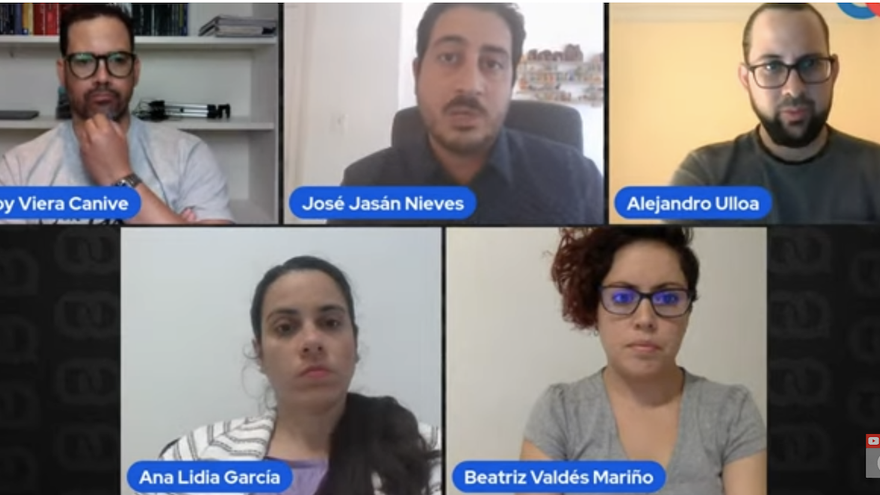
Members of El Toque during their virtual press conference this Wednesday. (Captura)

14ymedio bigger14ymedio, Havana, 1 September 2022 — The editorial team of the independent news source El Toque denounced on Wednesday, from its editorial office in Cuba, the harassment by State Security of nine young journalists, who, as a result, gave up their jobs.

During a conference broadcast on YouTube, the directors, residing abroad, answered the questions raised that same day by an editorial entitled “The night will not be eternal,” using a phrase from the opposition leader Oswaldo Payá.

Four of these young people, Mauro Díaz Vázquez, José Leandro Garbey, Aleiny Sánchez and Meilin Puertas, were “regulated” [Translator’s note: The term chosen by the regime to mean ’forbidden to travel’] before they were able to travel to Argentina, where they had been invited to participate in the Media Party, one of the most important regional journalism events.

José Jasán Nieves, director of the media, explained that on their ignoring the travel ban, State Security subjected them to “direct and indirect” pressure to give up their jobs.

Nieves describes the methods of the political police as “a mechanism of psychological torture,” a “term that may sound strong,” but perfectly describes the actions of the repressive bodies of the Cuban Government, which has declared an “open war” on anyone who contravenes official propaganda. continue reading

According to the report from these young people, they were asked to make public their resignation from El Toque, to film a video of “self-incrimination” that, Nieves alleges, has a lot to do with the famous Padilla Case for its “Stalinist resonances.” It was an exercise of “sadism,” he insists, which Humberto López or some other “person of the regime” will then use to carry out a ’disqualification’ campaign against them, that is a “character assassination.”

For his part, Eloy Viera, coordinator of the El Toque Jurídico space, mentioned that it’s difficult to “find legality” in the actions of the Cuban regime. “Only propaganda is admitted,” he said. The rest is not allowed, and there is a tendency to use the law as a mechanism to “legitimize human rights violations,” appealing to concepts such as national security.

After its denunciation, the editorial team took advantage of the moment to reflect on the context of independent journalism on the Island, from the complaints of the artists before the Ministry of Culture on November 27, 2020, and the protests of July 11 of the following year.

On the other hand, he discussed two points with which the Government usually disqualifies the work of this medium: the monitoring of currency exchange rates in the informal market and the financing of the page. On the first, he explained that transparent and public algorithms are used to reach the daily figure that is made known to users, and as for the economics of the medium, he explained that no program or institution has ever intervened in its editorial agenda.

It’s logical that “a power that needs us to live in an alternative reality” attacks the opposition “with all the repressive force of its apparatus,” added Nieves, who also lamented the exile into which the main directors of the medium have been forced.

“Thanks to technology, it’s becoming easier to continue reporting about Cuba even if we’re not in Cuba,” he said, and indicated that his team, which he described as “multilocated,” will find “ways” to communicate from abroad, “because they will not silence us.”

Nieves specified that the situation is not exclusive to El Toque, but that other media have experienced similar “repressive waves” in recent years, which “is nothing more than another expression of the circumstance and the general crisis that our country is experiencing.”

Translated by Regina Anavy

____________

COLLABORATE WITH OUR WORKThe 14ymedio team is committed to practicing serious journalism that reflects Cuba’s reality in all its depth. Thank you for joining us on this long journey. We invite you to continue supporting us by becoming a member of 14ymedio now. Together we can continue transforming journalism in Cuba.
Entering, Buying and Leaving, the Great Achievement Advertised by State Businesses in Cuba

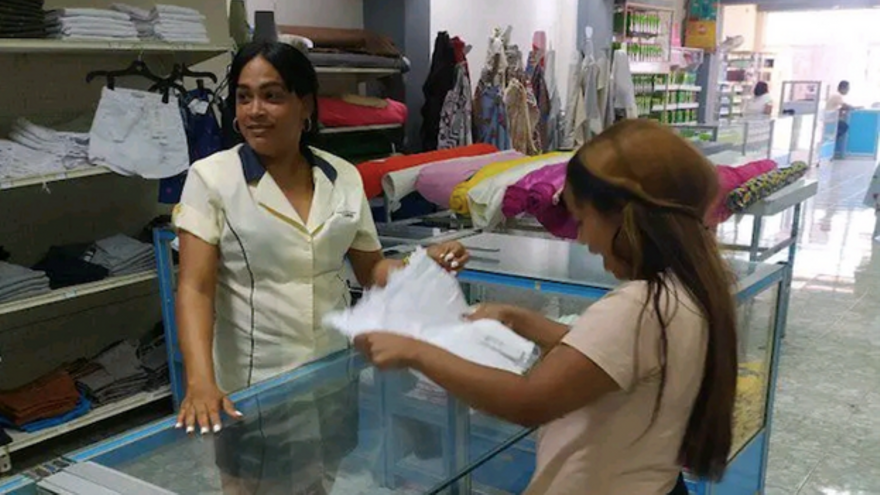
“You should have called all the world’s news agencies. For the first time, good treatment was discovered in a Cuban store.” (Facebook/Caribbean Granma Stores)

14ymedio bigger14ymedio, Daniel Wilt, Holguín, 1 September 2022 — The Facebook page of Tiendas Caribe de Granma [Caribbean Shops of Granma Province] delighted readers on Tuesday with an unusual “story of the day.” The text began by clarifying that what was coming really happened, in a store in Bayamo, and that “the words used were exactly the same.”

Next, the story presented “a young customer” who went to the El Arte store, in Bayamo, to whom “instantly,” an extraordinary event happened: “The workers of the place welcomed her as she deserved,” because, it clarified, “at that moment she was the only one who was passing by there.” This detail wouldn’t cause a peep out of the people from Bayamo, because it’s one of the stores with the lowest influx of buyers in the municipality.

Without at any time revealing a spirit of mockery in the publication, the story continued: “The young lady walked in and was very interested in one of our garments. She went directly to a spandex dress of polyester, with a white color and fringes, very much in tune with the summer season.”

And it reproduced an excellent dialogue.

“I want to try a size 7.”

“Yes, of course, I’ll show it to you right away, and you can use the changing room in that corner so you can see it and choose the one that suits you best.”

Satisfied, the customer went to the cashier “to make the payment.” Then, the clerk “proceded to accept the payment.” With this, “the sale was successful, and the clerk gave her the receipt and put the merchandise in a plastic bag.”

After being told goodbye by the employee with a “thank you for your visit, come back soon!” the young woman, the only person in the store if we look at the narration, was subjected to the scrutiny of the receipt by the doorman, to verify the merchandise that was bought, and “to review and ensure the integrity of the shop.”

It wasn’t long before the publication, offering the story as “an example of a sale to a customer with great success and satisfaction,” was plagued by humorous comments that laugh at presenting an anodyne act like buying something in a store as an unprecedented achievement. continue reading

“This writing seems too short to me. The author got the exclusive scoop out of all the world’s news agencies. For the first time, good treatment was discovered in a Cuban store,” one mocks. “The tension, the mastery of language, the development of the characters… sublime,” says another, and one of many adds, giving free rein: “I think it’s a very beautiful composition. I was eager to know more. What would be the dramaturgical continuity of the story? What did her mom tell her when she got home with the spandex dress of polyester? What dreams materialized with her dress? Under what armpit did she transport it, by bike taxi, to her abode? With which bra (the latter bought in what other state store?) did she combine it for her Sunday walk? Please, don’t delay in giving us the rest of the story, so we can keep on living.”

“As we are in prehistory, we don’t know how to communicate and are learning. This is the first class on Customer Service. Thank you. I’m waiting for the second one,” says Madelaine Verdecia Enamorado.

Jotabarrioz, for his part, jokes: “Top 5 Cuban clients with the most luck in the world,” and others, such as Yaneth CM, get serious: “The clerk did nothing more than fulfill her position profile. I don’t understand the merit. The truth is, the only thing these publications promote is mockery.”

There is no shortage of those who, in the ten photographs that accompany the writing, all with smiles and in color, observe suspiciously that everything is a fiction. And certainly, only the words “once upon a time” are missing for the unforgettable, almost fantastic adventure in the socialist paradise of the Caribbean, of a correctly made sale.

Translated by Regina Anavy

____________

COLLABORATE WITH OUR WORKThe 14ymedio team is committed to practicing serious journalism that reflects Cuba’s reality in all its depth. Thank you for joining us on this long journey. We invite you to continue supporting us by becoming a member of 14ymedio now. Together we can continue transforming journalism in Cuba.
The United States Resumes Interviews for Parole for Family Reunification at its Embassy in Havana

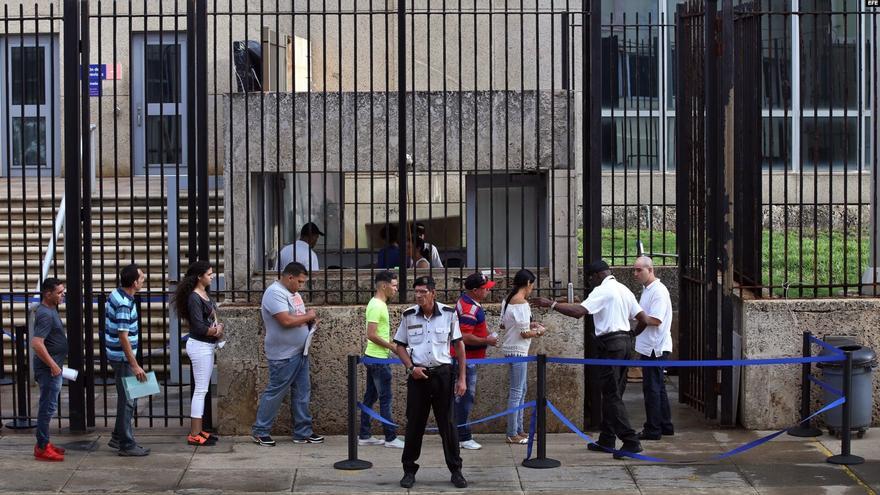
The United States Embassy in Havana. (EFE)

14ymedio bigger14ymedio, Havana, 1 September 2022 — The United States Citizenship and Immigration Service (USCIS) reported on Thursday the resumption of the procedures for the Cuban Family Reunification Permit (CFRP) program at its embassy in Havana.

In a statement, the USCIS explains that it will process applications to the program that are pending and that it has already sent notifications to the beneficiaries, but it will not issue “new letters of invitation at this time.” In fact, USCIS started doing interviews on August 18.

The government body warns that the embassy “has limited capacity” and that applicants should not “take any action” without having received an appointment.

The USCIS also warns applicants in its text to have their postal addresses updated. “We will not send you an email or call you to ask for money or the payment of fees,” they reiterate. “Don’t become a victim of an immigration scam.”

The decision to resume the Cuban Family Reunification Program was brought forward at the beginning of last June, when the US Department of Homeland Security explained that the decision was part of the search for “safe and orderly alternatives to irregular migration and its many dangers and indignities.” continue reading

The CFRP, established in 2007, “provides a safe and orderly path” to U.S. territory for “Cuban beneficiaries of approved family-based immigrants,” the institution said at the time. The permission granted by this program allows the family member to travel to the United States and go to an immigration authority there to process their residency.

The United States reduced the staff of its embassy in Cuba in 2017, after about thirty of its diplomats suffered mysterious health incidents known as “Havana syndrome,” whose causes haven’t yet been clarified.

Since then, family visa procedures have been carried out at other embassies outside the island, mainly in Georgetown, Guyana, where hundreds of Cubans still have to wait for the resolution of their procedures, not exempt from irregularities.

The United States Consulate in Havana resumed the processing of visas for immigrants on May 3, processing only the IR-5 category. Two months later, it expanded the visa categories and began processing the immediate relatives of U.S. citizens, including spouses and children under the age of 21.

Despite this restart of procedures, the US immigration authorities have made it clear on several occasions that the headquarters in Georgetown, Guyana, would continue to be “the main place of processing for most Cuban applicants for immigrant visas.”

Translated by Regina Anavy

____________

COLLABORATE WITH OUR WORKThe 14ymedio team is committed to practicing serious journalism that reflects Cuba’s reality in all its depth. Thank you for joining us on this long journey. We invite you to continue supporting us by becoming a member of 14ymedio now. Together we can continue transforming journalism in Cuba.

A Blackout Frustrates Dozens of Customers in a Foreign Currency Store in Havana

Supermarket at 3rd and 70th, in Miramar, Havana, during a blackout. (14ymedio)

14ymedio bigger14ymedio, Juan Diego Rodríguez, Havana, 29 August 2022 — Scheduled power cuts don’t bypass even profitable businesses. This Monday, it happened in the 3rd and 70th Shopping Center, in Miramar, Havana, three times. After the power went out the first time, the center turned on a generator, but it quickly stopped working. The second time, they used another generator, which also went out quickly. The third time the blackout arrived, there was no auxiliary equipment to turn on, and the store was completely in the dark.

The explanations of the employees didn’t alleviate the displeasure of the customers. “With all the dollars they extort from people here, you’d think they’d have power,” a woman protested aloud. Meanwhile, workers shouted to the customers to go to the cash registers next to the windows, where there would be natural light.

“You can’t record here, please, you damage the image of the shop,” a cashier told a young man who took out his cell phone to photograph the corridors in the dark. “Same with the image here; it’s not very good,” the boy replied.

The 3rd and 70th supermarket is one of the largest in the city that sells its products in foreign currency. It was also one of the first stores to be dollarized when there was economic flexibility in the 90s, and nearby is an abundance of embassies, the houses of diplomats and the homes of more affluent families, so it’s considered a business with a somewhat exclusive clientele.

But not even this location and the uniqueness of its consumers has saved the place from shortages, fights in the lines and the deterioration of its facility. To prevent the semi-empty shelves from being seen, the Center’s administration places the same product repeatedly, a very common practice in Cuban state stores. This Monday, the sequence of cans of the same vegetable or the row of mustard bottles tried to hide the reality that even these markets don’t have a great variety of goods. continue reading

The butcher’s area was the one that showed the least number of options. If it weren’t for the products of private businesses, the refrigerators of the place would have been practically deserted, devoid of dairy products, frozen food or the long-awaited boxes of chicken quarters and breasts, which are so in demand in a country where no one knows when they’ll come across certain foods again.

This Monday, at one point and to the chagrin of the buyers, the employees sent everyone out. Just when almost everyone had left, the current came back, and people began a stampede. “The light came back, the light came back!”

Translated by Regina Anavy

____________

COLLABORATE WITH OUR WORKThe 14ymedio team is committed to practicing serious journalism that reflects Cuba’s reality in all its depth. Thank you for joining us on this long journey. We invite you to continue supporting us by becoming a member of 14ymedio now. Together we can continue transforming journalism in Cuba.
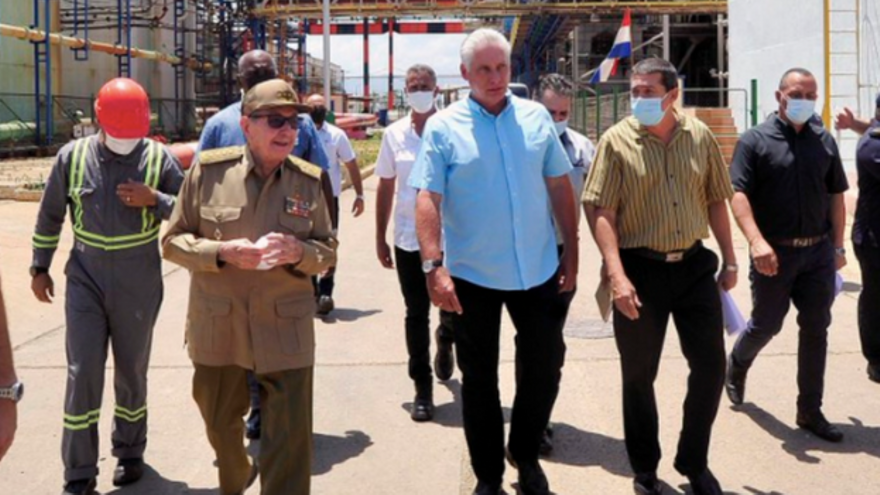
A New Fault Delays the Promise of Diaz-Canel and Raul Castro About the End of the Blackouts

“The fact that Raúl Castro shows his face can mean a warning for those foreign investors who are looking for memories with the Castros for their offices in Madrid or Paris.” (Revolution Studios)

14ymedio bigger14ymedio, Havana, 30 August 2022 — The Antonio Guiteras thermoelectric plant, in Matanzas, left the National Electric System this Tuesday, according to the Cuban Electric Union (UNE), “due to losses of turbine parameters (empty).” Although the state company then assured that “work will be done immediately on the solution to the leak in the boiler that had already been detected previously,” the news, in any case, further casts a shadow over the announcement made by President Miguel Díaz-Canel this Monday: that the blackouts will end in December.

That date would look promising if it were not for the fact that the same man stated last May that the energy situation would improve before the start of June, while just last week, on State TV’s Roundtable program, industry officials warned that the “complexity” would last at least a year.

Together with Díaz-Canel, Raúl Castro went for a walk through the Lidio Ramón Pérez thermoelectric plant, in Felton, in Mayarí. The general stood to the right of his successor during the tour of the Holguin center as a more-than-necessary support-cane for the leader.

“Felton 1 decides today the course of the recovery strategy, and its start-up is vital for the fulfillment of the outlined objectives, first, to minimize or eliminate blackouts by next December,” Díaz-Canel said. continue reading

Edier Guzmán Pacheco, director of thermal generation of the Electric Union (UNE) explained that since the beginning of August, a program is being carried out that should solve the problems of the plant this summer, with a view to starting the production and startup of the unit “very soon.”

To this end, technical modifications have been made to the machinery and the auxiliary systems, in addition to tests that guarantee “the stability, reliability and efficiency of the equipment.”

Felton, the Holguin energy colossus, with the capacity to supply about 500 MW, had a breakdown in the boiler of unit 1 at the end of July that caused its exit from the National Electrical System, while unit 2 has been disabled since it suffered a major fire at the beginning of the same month.

The machinery of the first unit, which is being repaired, must reach, according to the director of the plant, Euclides Rodríguez Mejías, 260 MW. “It would be a positive injection and would significantly reduce the effects on the population,” he said.

“We’re going to have the support we need in Felton,” Rodríguez told the official press. “It’s a commitment, but Felton is ready to take it on.”

With regard to block 2, the project manager, Eric Milanés Quinzán, said that its structure has been dismantled by 8%, and work will be done on the reconstruction of the boiler and maintenance of the high-medium cylinder of the turbine, as well as the incorporation of various equipment.

Díaz-Canel, who had also visited the Santiago de Cuba power plant, explained that the task is not only focused on quickly repairing the failures to overcome the power cuts of up to 12 and 14 hours, which has pushed citizens to their limits, but also about stabilizing the system with investments that will arrive in 2023 and change the electro-energy matrix.

These investments and their acquisition are, in the opinion of the Cuban economist living in Spain, Elías Amor, one of the possible reasons that led Raúl Castro to place himself yesterday, at the age of 90, next to his dauphin. “That Raúl Castro shows his face can be a warning for those foreign investors who scan their memories with the Castros from their offices in Madrid or Paris,” says the expert, who warns of Díaz-Canel’s low media attractiveness for businessmen who “in their youth had communist ideas and now, at the head of large corporations, feel a sickly attraction to the Cuban regime.”

And the economist considers that there is another important reason: to express the Army’s support for the head of state and, therefore, the risks faced by citizens who protest the blackouts.

“Díaz-Canel will feel calmer having obtained the explicit support of Raúl Castro, so any maneuver to relieve him of the post has been put on hold until further notice,” he adds. “The Cuban communists thus lose political initiative, if they ever had it, and instead of concentrating on changing things and preparing a viable future for Cuba, they concentrate on technical programs to solve the failures that took the different units of the power plants out of service, so they don’t raise their heads. Order and discipline, Raúl Castro’s eternal song.”

Meanwhile, the population remains desperate, and this Monday the week began with a deficit of 36%, with a generation of 2,280 MW for a maximum demand of 3,100 MW. The UNE predicted that up to 890 MW would be missing during the highest consumption period.

Translated by Regina Anavy

____________

COLLABORATE WITH OUR WORKThe 14ymedio team is committed to practicing serious journalism that reflects Cuba’s reality in all its depth. Thank you for joining us on this long journey. We invite you to continue supporting us by becoming a member of 14ymedio now. Together we can continue transforming journalism in Cuba.
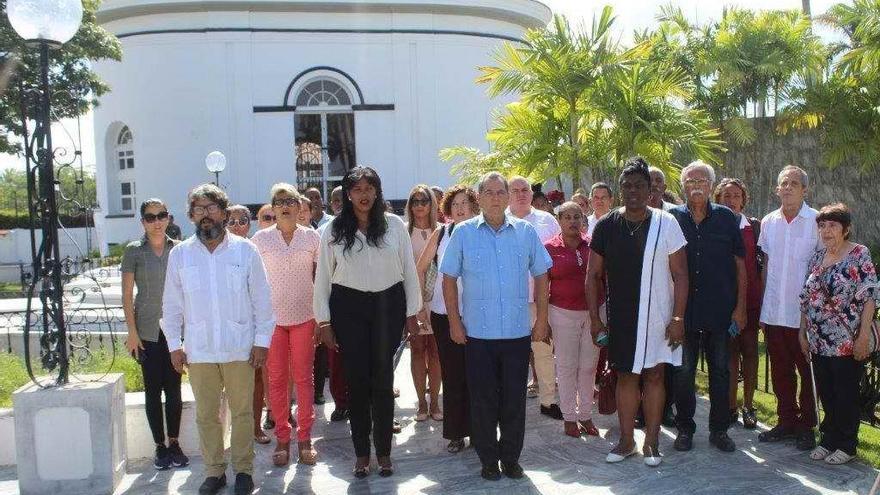
Castroism Stole the Cuban Rum Industry and Now Seeks to Appropriate the Figurehead of the Bacardi Family

Members of the Communist Party of Cuba paying homage to Bacardi at the Santa Ifigenia cemetery, in Santiago de Cuba. (Juventud Rebelde)

14ymedio bigger14ymedio, Juan Izquierdo, Havana, 29 August 2022 — The imposing funerary pyramid of Emilio Bacardí Moreau, who died on 28 August 1922, is not far from the mortuary stone of Fidel Castro, the man who dismantled the rum distillery and the cultural legacy of the Bacardí family.

One hundred years after the death of the patriot, historian and philanthropist from Santiago, the same regime that expropriated the Bacardí distilleries and buildings intends to pay tribute to the first Republican mayor of Santiago de Cuba.

Tributes and biographical notes in the official newspapers now present Bacardí as a kind of politician precursor of the revolutionary practices of 1959. He is credited with a rabid anti-imperialism, and his business and political acumen is minimized. The issue of rum is taboo, and they almost classify him as a feminist for asking the widows of the mambises to fill positions in the town hall.

Bacardí will attain everything the Cuban regime needs, including a “little war of memory” against the heirs and directors of the company, who are currently based in Bermuda.

However, investigating and quoting Bacardí means playing with fire, because not all those who have contributed to the tribute have expressed themselves in politically “desirable” terms. continue reading

Some texts recover the sappy language of the social chronicle of the Republic, in addition to making use of terms such as patrician, eminent and patriarch, inconceivable in the official organs of the Communist Party.

Censorship confronts journalists with a curious dilemma: they must reconstruct the history of Cuban rum manufactured by Bacardí, talk about it as if it were still being distilled on the Island and suspend any reference after 1960.

“If Cuban rum is the best on the planet,” Cubadebate reasons, “in Cuba the best is that of Santiago de Cuba, the one initiated by Facundo and bequeathed by Don Emilio Bacardí Moreau,” the official government site says, without mentioning the expropriations after the triumph of the Revolution or talking about “trademarks.”

In commemorating his death, Bohemia magazine repeats that the initial tomb of the patriot was “humble to the point of surprise” — the phrase is by Fernando Portuondo — but they forget to talk about the sumptuous mausoleum of a millionaire that was later dedicated to him, described as just a “symbolic pyramid structure.”

The “main course” of the tributes was the presentation, once again, of the two volumes of Emilio Bacardí Moreau: on Passionate Cuban Humanism, published in 2018 by the historian Olga Portuondo, a controversial biography of the patriot whose distribution and sale was delayed, until it was almost impossible to find in bookstores.

Successfully, but serving the official appropriation of “uncomfortable” figures, Portuondo introduces the work of Bacardí as the founder of the oldest Cuban museum, as well as the author of the monumental collection Chronicles of Santiago de Cuba and other books, fictional and historical, of smaller scope. He is presented as an intellectual and mambí conspirator, rather than a politician or entrepreneur.

During the commemorations, there was no shortage of those who remembered quietly the “prophetic coconut tree” of Facundo Bacardí. Facundo, father of the Bacardi clan, was the man who, in 1862, coined the symbol of the bat to identify his new technique for distilling rum. In the vicinity of the factory he planted a palm tree that survived earthquakes, wars, fires, independence and flag changes.

“The company will live in Cuba as long as the coconut tree,” the legend said. On October 14, 1960, on the eve of the centenary of the company, the coconut tree just dried up, and Fidel Castro expropriated Bacardi’s premises without compensation.

The family members went into exile, with the “secret recipe” of rum, honey and yeast strains. Several international legal proceedings have been brought against the Cuban government, but none have been successful.

To this day, the most emblematic brand of Cuban rum continues its production in the United States, Mexico, Puerto Rico, Italy and the Bahamas, but not on the Island.

This Sunday, numerous officials, Party leaders and historians aligned with the regime, and some workers of the Provincial Heritage Center, concluded the tribute in front of the mausoleum of the patriot in the cemetery of Santa Ifigenia.

Whipped by the sun of eastern Cuba, and after anachronistic speeches by the members of the Central Committee, none of the attendees were able to toast to the memory of Don Emilio with a drink of Bacardi rum.

Translated by Regina Anavy

____________

COLLABORATE WITH OUR WORKThe 14ymedio team is committed to practicing serious journalism that reflects Cuba’s reality in all its depth. Thank you for joining us on this long journey. We invite you to continue supporting us by becoming a member of 14ymedio now. Together we can continue transforming journalism in Cuba.
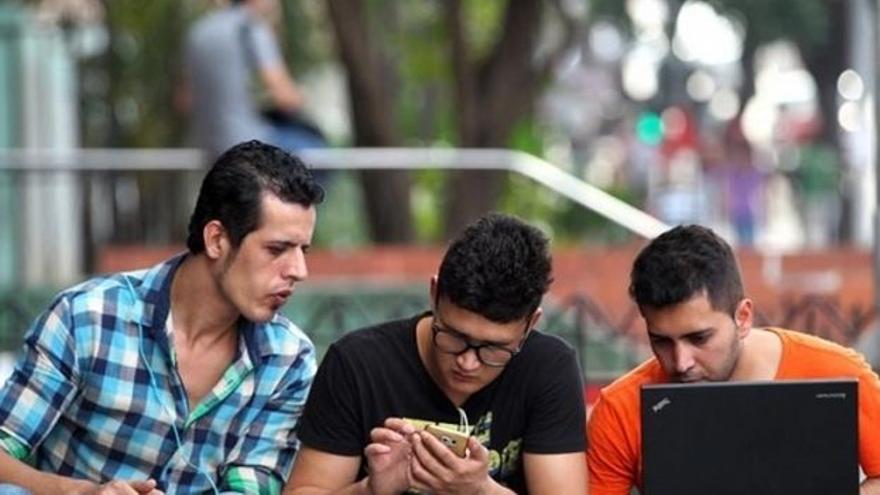
With the New Cuban Data Protection Law, State Security Will Go Unpunished

Among the rights that, according to the text, should be guaranteed is the protection of identity, immigration status and political affiliation, among others. (EFE)

14ymedio bigger14ymedio, Havana, 27 August 2022 — With the publication this Friday of Law 149 on the Protection of Personal Data, which will enter into force in February 2023, a set of rules is made official that aims to guarantee respect for “personal privacy.”

The appearance of a legal body that regulates the processing of private information, “by public and private individuals or entities,” is still controversial in a country like Cuba, where the State intervenes unscrupulously in conversations and personal databases, to manipulate them in its favor in legal processes or as a method of surveillance.

This new legislation, based on articles 40 and 48 of the Constitution of the Republic on “human dignity,” also addresses the existence of archives, information reservoirs and data storage on digital platforms, in addition to the “promotion” of a social culture of data protection.

Published this Friday by the Official Gazette, Law 149 was approved on May 14 by the National Assembly and will enter into force within 180 days. Among the rights that, according to the text, it should guarantee, is the protection of data related to image, voice, identity, religious beliefs, migratory status and political affiliation, as well as medical, judicial and administrative information.

Because the data is of a more sensitive nature, whoever requests it, whether people, companies or authorities, must clearly state the reason to the citizen, in addition to guaranteeing its security and confidentiality. The owner, in addition, must offer his express consent, “freely and unequivocally,” so that his data can be stored in any file, including government files. continue reading

“The person may not be obliged to provide sensitive personal data, nor is its processing lawful without the consent” of the owner, according to the legislation in its article 16.1, except “for reasons of general welfare, public order and the interest of defense and national security.”

As for the police and other authorities, Cubans have “the obligation to identify themselves” through their documents, but the authorities don’t have the right to demand “other data other than that reflected in those documents.”

Article 19, one of the most problematic for describing a common practice of some spaces and programs of the Cuban Information System, states that citizens “have the right not to disclose these [their data] and, consequently, to have respected their personal and family privacy, their personal honor and identity, their own image and voice.”

The use of videos, fragments of conversations, photographs, names and other sensitive data as part of the regime’s propaganda, exposed on national television by journalists such as Michel Torres and Humberto López, is a flagrant violation of a right that existed even before the drafting of this law.

In article 54, Law 149 adds that “the use of recordings of images and voices of people obtained from mobile phones, cameras, recorders and other similar devices, in no case can affect the rights protected in article 19.

This situation also contradicts the practices of the Ministry of the Interior and State Security, which have systematically used as legal evidence to hold trials after July 11, 2021, material from networks and personal devices.

Despite the fact that the articles of Law 149 are introduced as guarantees for citizens, it’s unlikely that they can be invoked against the Government during criminal proceedings. As has happened on other occasions, the National Assembly formulates laws as diplomatic tricks to cleanse the image of the regime vis-à-vis international organizations, but it gives them little real value.

The document is full of formulas that, if invoked by the defense of someone whose right to privacy has been violated, ensure the impunity of the State. The “public order and interest of defense and national security” will continue to be the regime’s alibi every time it needs to violate its own Law on the Protection of Personal Data.

Translated by Regina Anavy

____________

COLLABORATE WITH OUR WORKThe 14ymedio team is committed to practicing serious journalism that reflects Cuba’s reality in all its depth. Thank you for joining us on this long journey. We invite you to continue supporting us by becoming a member of 14ymedio now. Together we can continue transforming journalism in Cuba.
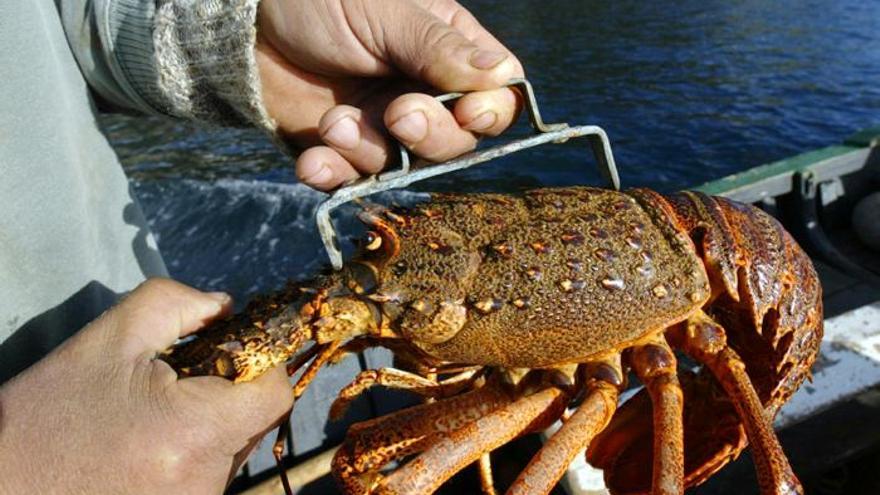
The Preparation of Cuban Lobster Destined for Export

Cuba was the fifth largest exporter of lobster in the world in 2020.(El Universal)

14ymedio bigger14ymedio, Havana, 29 August 2022 — The production of lobster destined for export is one of the few things that seems to be going strong in Cuba. In Niquero, a municipality of Granma Province, the plan for July of 44 tons was exceeded in just nine days, reaching 52 tons of the crustacean.

According to Jorge Rosa Acuña, plant manager of the company InduNiq, most of the success can be attributed to the implementation of new technology: a tunnel freezer and a plate freezer that have accelerated the capacity to store the lobster.

“Previously, it took us 24 hours to freeze a production; today we need only eight. The plate freezer allows us to carry out other productions on a par,” the official explains to the local newspaper La Demajagua.

In a context of constant blackouts and energy limitations for companies, the Government seems determined to maintain a meteoric march of the lobster industry, which in 2020 — the last year for which data are available — returned an income of 40.5 million dollars. The island was then the fifth largest exporter of the product worldwide, only behind Brazil, Nicaragua, the Bahamas and Honduras.

One of the company’s workers explained to the provincial newspaper that the processing of lobster is very delicate due to the demands on foreign sales. In Cuba, the product has practically disappeared from all markets. continue reading

“There are several indispensable requirements to meet the customer’s demands. Lobster is an export product that goes to the world market: Asia, Africa and Europe. So it includes review processes and quality control,” he said.

It is the second Cuban company in just three months to report its success in this area, one of the main ones along with rum, tobacco, nickel and shrimp. Last May, the La Coloma fishery in Pinar del Río presented in the official press its lobster hatchery project for export.

“It’s a project that, more than increasing the amount of product to be exported, raises the economic value of the company and is one more selection for customers that we will offer,” said Ray Leonar Sánchez Ramírez, director of the company.

The investment in the ponds, which keep the crustacean for up to 72 hours before it is moved abroad, is two million pesos, but it would allow the production of two tons of lobster per day.

The lobster catch season runs from the beginning of June to the end of January. After the end of the season, a closure period of at least four months is established to facilitate the recovery of the species before the start of the new season.

Cubans hadn’t seen lobster for ages, until after the protests of July 11, 2021 (known as ’11J’), the Government sent to the markets some products that hadn’t been seen for a long time, in order to appease the spirits of the population. Among them were the ground beef and the reputed crustacean, which cost 200 pesos without being of excellent quality.

In the most well-known gastronomic places in Havana, a Cuban lobster dish can easily exceed 700 pesos. This is the case of the state-owned Bodeguita del Medio, where 280 grams of lobster costs 705 Cuban pesos, as well as of the private bar-café Mercy, which serves it for 990.

On the black market, prices can be more affordable. In the case of fishing towns such as Batabanó or Caibarién, they can even be less than 100 pesos, but on average, lobster can be obtained for 400 pesos a pound on the “informal” market.

Translated by Regina Anavy

____________

COLLABORATE WITH OUR WORKThe 14ymedio team is committed to practicing serious journalism that reflects Cuba’s reality in all its depth. Thank you for joining us on this long journey. We invite you to continue supporting us by becoming a member of 14ymedio now. Together we can continue transforming journalism in Cuba.
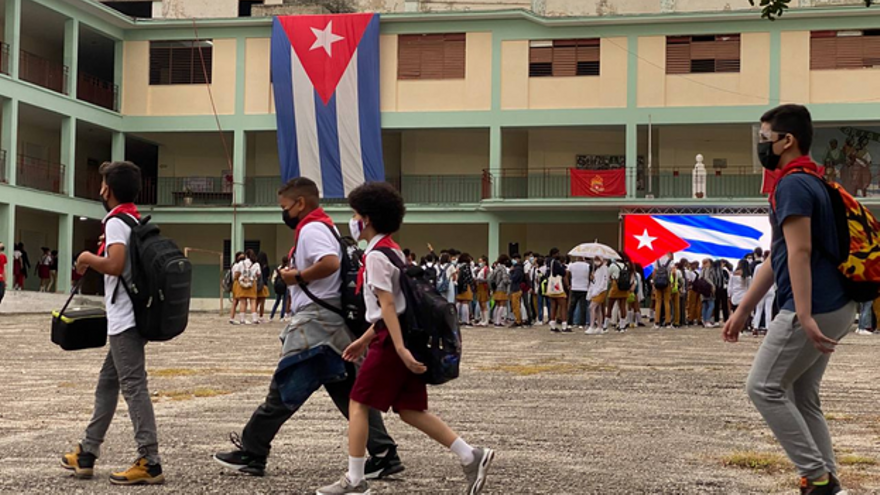
Cuban Parents are Distressed by the Outrageous Prices of School Supplies

In Cuba, even elementary school students don’t feel sure about the exams if they haven’t paid a tutor for several sessions beforehand. (14ymedio)

14ymedio bigger14ymedio, Juan Izquierdo, Havana, 26 August 2022 — After two years of ups and downs, between the forced confinement of the pandemic and the economic crisis, the beginning of the school year in September is causing more than one scramble in Cuban homes. The return to school will take place in the midst of high inflation that increases the price of shoes to the snack that students need.

Parents wonder what this new beginning of teaching will be like with the long blackouts that hit the island, the shortage of flour that has sunk the production of bread, so necessary for school snacks, and the loss of value of the Cuban peso against foreign currency, in a country where only in stores that take payment in freely convertible currency can you buy shoes or a backpack.

Given the succulent slice they can get from the sale of school accessories, even several restaurants that sell their products through the Internet have added offers that have nothing to do with food. Backpacks for children at 60 dollars, snack bags, water bottles, pencils and erasers now alternate with their dishes of lasagna or fried rice.

“School supplies for girls,” reads one of these options, which for $120 include the backpack, a pair of notebooks and other tools needed in class. Home delivery in Havana can add about ten dollars more, but in the provinces it can be even more expensive. Having a family abroad that finances the purchase is essential in this case, because payment is made online with Visa or Mastercard.

Those who don’t have emigrated relatives must buy school supplies in Cuban pesos, at the exchange rate with the dollar that is currently in force in the market. Translated into the national currency, the price of a small backpack purchased in Panama can exceed 2,000 pesos, plus 300 for shipping to the house. continue reading

As for the school uniform, the nightmare is no less pressing. “I’ve been wearing this uniform since the tenth grade,” a student from Sancti Spíritus, who is about to start his last year of high school, tells 14ymedio.

“They give you high school uniforms, but no one thinks about the growth spurt at age 17. In the eleventh grade my mom had to ask for another pair or pants and depend on the officials to solve it,” he says.

He’s lucky that his mother is a seamstress, otherwise everything would get tight. “To top it all off, the polyester fabric is hot and fades easily,” he says. In the middle of the school year, the family had to buy a few meters of fabric that was very expensive to sew extra shirts and pants. “I have to take care of them,” the boy continues, “because when high school is over I have to donate them to a cousin of mine who is just starting out.”

No matter what grade he’s in, his municipality or the family’s condition, the student will always have hand-me-downs in need of repair from their use by many generations, with books full of Soviet anecdotes, anachronistic for today’s Cuban student.

“My books always have to be passed down,’” says the young man, showing the texts marked with a pen, drawn on the back and the covers or unbound. “Pencils and notebooks are another story: before you could go to Artex, and get a pencil and a couple of notebooks, but now there isn’t even that.”

The return to school will take place in the midst of high inflation that increases prices from shoes to the snack that students need. (14ymedio)

The shops of the Artex group used to market stationery, backpacks and other school supplies. But with the extinction of the Cuban convertible peso and the dollarization of the economy, the family can invest very little money in materials that Artex no longer even offers, as it is now almost entirely dedicated to the sale of tobacco and handicrafts at outrageous prices.

“Books almost never arrive; notebooks, which are of very bad paper, always come in the second or third week, hopefully. And it’s better not to mention the pencils with horrible graphite” says the student interviewed by this newspaper.

The young man has been wearing the same backpack since junior high school; the shoes are sent to him by a family member from the United States and the rest, such as socks and underwear, had to be bought in the informal market.

After two years of zero, or hasty and mediocre activity, the logistical aspect is just one side of the problem. Even primary school students don’t feel sure about the exams if they haven’t paid a tutor for several sessions beforehand. In many cases, those who offer these support classes are the same people as the student’s teachers, who have found in these reviews of the coursework a financial complement to their squalid salaries.

Another issue is the food,” continues the young man. “When you live far from the school, you have to bring a snack, because the prices of snack vendors and the private restaurants are impossible to pay. Or you walk home, which, for example, can be over one mile from school.”

Despite these and other obstacles to learning, such as the terrible school furniture or the lack of hygiene in the bathrooms, triumphalist announcements about the beginning of the new school year proliferate in the official press.

“The material base of study is assured in both internal and semi-internal centers,” lies the newspaper Tribuna de La Habana, although it discreetly admits the deficit of 4,000 teachers in the capital’s classrooms, which will be covered “with various alternatives.”

“Completing the faculty and ensuring retention” are priorities of the new course at the Artemisa pedagogical school, says a local newspaper, although it doesn’t specify what measures will be taken to achieve that goal when there are only 77 places out of the 122 that should be filled.

In the continuous journeys through the provinces by the Minister of Education, Ana Elsa Velázquez, the directors of the sector formulate the same guarantees: the State has resolved all the weaknesses, everything has been repaired and the panorama is positive.

The domestic reality, the complaints of mothers on social networks and the external aspect of schools suggest the opposite. Those Cubans who expose the reality are harassed by State Security, as happened with Trilce Denis, a Havana mother who denounced in a direct transmission the difficulty of starting school in such precarious conditions.

“I want to know, on the 7th, when school starts, what snack is going to be given to the children,” Denis said, upset. “Today I decided that I’m not going to send my son,” she concluded.

Translated by Regina Anavy

____________

COLLABORATE WITH OUR WORKThe 14ymedio team is committed to practicing serious journalism that reflects Cuba’s reality in all its depth. Thank you for joining us on this long journey. We invite you to continue supporting us by becoming a member of 14ymedio now. Together we can continue transforming journalism in Cuba.
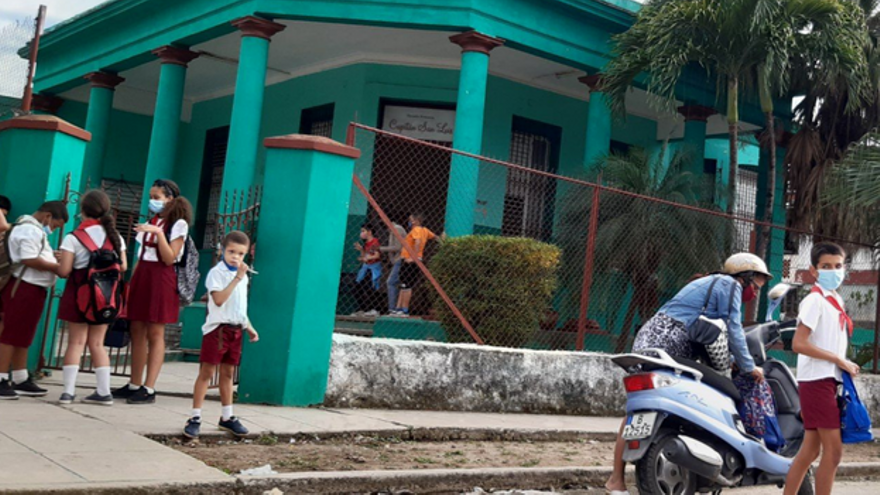
Diaz-Canel Says Goodbye to Camilo Guevara, “Promoter of the Ideas of his Father,” ‘el Che’

Camilo Guevara March was Che’s third son and was 60 years old. (Latin Press)

14ymedio bigger14ymedio, Havana, 30 August 2022 — Despite his irrelevance in Cuban public life, it was the president himself who announced on Tuesday the death of Camilo Guevara March, one of the sons of Ernesto Che Guevara.

“With deep sorrow we say goodbye to Camilo, Che’s son and promoter of his ideas, as director of the Che Center, which retains part of his father’s extraordinary legacy,” wrote Miguel Díaz-Canel, who sent in his message “hugs to his mother, Aleida, his widow and daughters and to the entire Guevara March family.”

According to the Prensa Latina agency, Guevara March was “on a visit in Caracas” and died “as a result of a pulmonary thrombolism that resulted in a heart attack.”

Born in 1962, Camilo was the third son of Che, after his sister Hilda, the daughter of Che’s first wife, Hilda Gadea; and his sister Aleida, who was also the daughter of Camilo’s mother, Aleida March. Camilo also had a younger sister, Celia, and a younger brother Ernesto, the last two children of Che and Aleida March. continue reading

Despite being a “director of the center dedicated to the study and dissemination of the thought of the Heroic Guerrilla,” as described by Cubadebate in a brief statement, Camilo, like all the descendants of Che Guevara, has lived removed from power in Cuba. With his sister Aleida, of course, they were the most visible heirs. Both traveled around the world and participated in official events.

Few things were known about his private life, except that he had a relationship with Suylén Milanés, daughter of Pablo Milanés, who recently passed away, and had with her a daughter, Camila, dedicated to the world of music. He was a lawyer, although he did not practice his profession.

Translated by Regina Anavy

____________

COLLABORATE WITH OUR WORKThe 14ymedio team is committed to practicing serious journalism that reflects Cuba’s reality in all its depth. Thank you for joining us on this long journey. We invite you to continue supporting us by becoming a member of 14ymedio now. Together we can continue transforming journalism in Cuba.

Cuban Doctors in Mexico Are a Cover for Political and Military Tasks

Pa rt of the 55 Cuban doctors who arrived in the Mexican state of Colima in the second week of August. (Facebook/Indira Vizcaíno)

14ymedio bigger

14ymedio, Havana, August 25, 2022 — The president of the Prisoners Defenders Association, Javier Larrondo, said this Thursday during a conference, that “there are State Security agents” among the 641 Cuban doctors hired by Mexico. The conference, entitled “The military truth behind Cuban medical missions in Mexico,” was attended by several members of Mexican civil society and took place in the Casablanca Hotel in Mexico City.

Larrondo added that the administration of President Andrés Manuel López Obrador “is allowing slavery on Mexican soil” and “financing” the Cuban regime. He also specified that, when the health workers entered the facilities of the Mexican Air Force, they were under less control than that usually executed by the military, unlike what happens with ordinary passengers.

In addition, “no one has seen the degrees of the Cuban doctors,” whose presence has already been evaluated by some analysts as a “risk to the security” of the State, Larrondo noted.

Another member of the conference, Beatriz Pagés, former deputy and director of Siempre magazine, pointed out that the mission of medical groups is “more political, more military and indoctrination than healthcare.”

She recalled that this procedure has been carried out by Cuba in other countries, and that it responds to “the advice of those who helped Hugo Chávez and now Nicolás Maduro to preserve themselves in power in Venezuela.” continue reading

By introducing the military with the support of Havana, López Obrador intends to “consolidate his autocratic project and have the presidency guaranteed in 2024,” Pagés said. The Mexican government is “increasingly approaching the most radical dictatorships in Latin America, where human rights are violated, journalists, priests and free-thinking women and men are imprisoned and it’s moving away from democracy,” the journalist warned.

Diplomat and politician Ricardo Pascoe, who served as Mexico’s ambassador to Cuba from 2000 to 2002, explained that the visit to the island of the Mexican president last May also had a military connotation. General Luis Cresencio Sandoval González, Secretary of National Defense, and José Rafael Ojeda, Secretary of the Navy, were traveling in the official delegation, with the task of “organizing political cadres, as in Venezuela.”

According to Pascoe, López Obrador’s government is financing a regime that replaces “the lack of economic development with slave labor.” The result is a strengthening of the “capacity for internal repression” of a regime that is extending as long as possible the “last days before its fall.”

Cuba learned this system of labor exploitation from North Korea, Pascoe explained. The Asian country “invented” an effective way to “rent its people to other countries. There are millions of North Korean slaves working in Malaysia, Indonesia, Vietnam and China.” With that money, Pyongyang “develops its nuclear weapons.”

Comercializadora de Servicios Médicos Cubanos, S.A., a Cuban company internationally accused of human trafficking, agreed with Mexico to hire more than 600 doctors, for the monthly payment of $1,308,922.

For her part, the vice president of the European Parliament for Latin America, Dita Charanzová, explained that “80% of what is charged for the missions goes to the regime. It’s time for the people to know the truth and the other side of Cuban medical missions.”

During the conference, the testimony of a Cuban doctor who was in Mexico during the pandemic was disseminated. He revealed that upon their arrival in the country their passports are withdrawn. Seventeen colleagues escaped from his group, who left the hotels where the Mexican government hosted them. “Cuba doesn’t release the specialists for fear that they will leave,” said the man, who also said that the detachment sent by Cuba is composed of military and general practitioners “who work in primary care clinics.”

This data confirms the suspicion of Dolores González Meza, a union leader in the medical sector, who indicated last Sunday that Cuban doctors are not specialists and that they have limited themselves to offering “ambulatory care, prevention and health promotion.”

The doctor consulted by Prisoners Defenders also mentioned that, on his trip to Mexico, 123 Cuban health workers took a course of just five days on the treatment of COVID-19, when the duration on the Island itself is one year.

“We had a preparation with some Sabina ventilators that had nothing to do with those in Mexico, which also has advanced technology. Their technicians are at a higher level than Cubans,” the man said.

According to several reports written by the Cuban health workers themselves, they were limited during the pandemic to “making  beds, taking vital signs, conducting surveys, and handing sponges to patients for bathing.” This contrasts with the triumphalism of the Cuban authorities, who even arrogantly managed to claim  the decrease in mortality caused by the coronavirus in Mexico.

In addition to these speakers, Javier Nart, Vice President of the Delegation of the European Parliament for Central America, journalist and novelist Desirée Navarro and lawyer Emiliano Robles, were part of the press conference. Prisoners Defenders, a non-profit association based in Madrid, focuses on the defense of “human rights and pro-democratic defense through legal action.”

Translated by Regina Anavy

____________

COLLABORATE WITH OUR WORKThe 14ymedio team is committed to practicing serious journalism that reflects Cuba’s reality in all its depth. Thank you for joining us on this long journey. We invite you to continue supporting us by becoming a member of 14ymedio now. Together we can continue transforming journalism in Cuba.
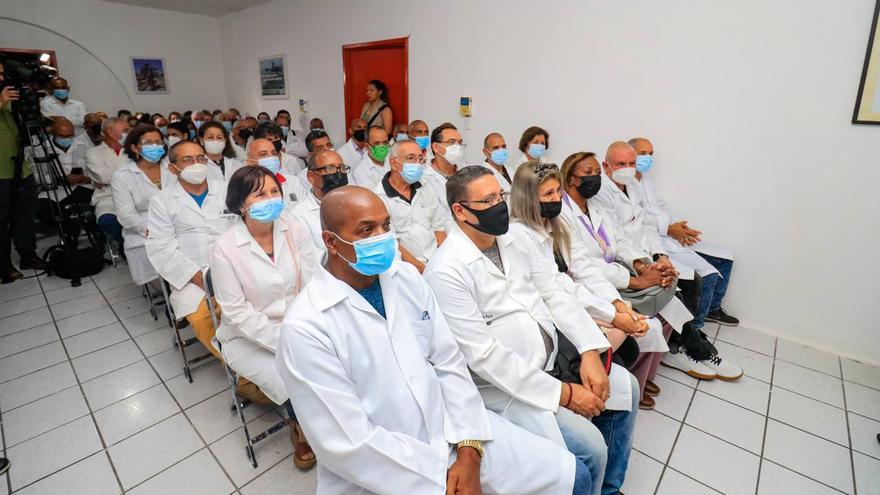
Report Reveals ‘The Military Truth Behind the Cuban Medical Missions in Mexico

Image disseminated by the official press last July of Holguín “specialists” who will serve in Mexico. (Ahora)

14ymedio bigger14ymedio, Madrid, August 26, 2022 — The characteristics of the last Cuban medical brigade imported by Mexico, which began to arrive in the last week of July, offer no doubt about the spurious interests behind the facade of humanitarian collaboration with which they have been sold to public opinion.

“They are all military” and “none of the doctors are specialists” (they’re family doctors or general practitioners), says Prisoners Defenders (PD) in its detailed report, “The Military Truth Behind Cuban Medical Missions in Mexico,” presented this Thursday in the Mexican capital, about the more than 600 health workers hired by the Government of Andrés Manuel López Obrador to, supposedly, fill places that Mexican specialists don’t want due to “insecurity and remoteness.”

Some of those ‘soldiers’, according to the report and asserted by the director of PD, Javier Larrondo, at this Thursday’s press conference, are “from Cuban Intelligence or G2, now introduced into the country through military airports, without the authorities, except for President Andrés Manuel López Obrador and his closest team, being able to know this fact.”

The document dismantles what he calls “national fraud” on the part of the Mexican president: the solicitation to fill 13,765 places for medical specialists “in poor and high-risk areas of the country,” launched after complaints against previous contracted Cuban missions.

“The characteristics of the areas under contract, which concentrated most of the ’vacant’ places, don’t have the basic infrastructure and equipment for training, care and decent work for doctors, as presented by schools, associations and federations on June 1,” the report explains. “Therefore, the inevitable happened and what could undoubtedly be predicted by the Government: more than 60% of the positions became vacant.” continue reading

That is, the solicitation, in the opinion of the Madrid-based organization, was only an “excuse” for the hiring of Cuban doctors, who, despite what was advertised by the official propaganda, do not have any specialty.

Havana presents them as such, PD says, after passing courses of between three and five days, “without documentary evidence or any professional validation or accreditation in Mexico.”

The discrimination that Cubans pose against their Mexican counterparts, who, as described in the report, are required to practice as specialists, is also being denounced precisely by health personnel from the state of Colima, one of the areas where doctors on the Island have already arrived, along with Nayarit.

Prisoners Defenders also points out in its report the “political, civil and criminal responsibility” faced by López Obrador for knowing “perfectly the convictions for slavery and all the circumstances that affect this slavery and putting at risk the health of Mexican citizens, as well as the embezzlement that this farce of health services represents for the public coffers.”

Among them is the violation of several articles of the Free Trade Agreement between Mexico, the United States and Canada “by promoting human trafficking and slavery on Mexican soil.” The consequences of this, the NGO says, “could be broad for the Government of the Republic and entail even more serious sanctions or consequences.”

The report includes an account of the health missions that have been sent to Mexican soil, since the first one, in April 2020, with the argument of helping to combat the COVID-19 pandemic. All of them were harshly questioned from the beginning by the medical profession, the Mexican media and opposition politicians.

On the hiring of the first contingents, PD details the specific amounts that the Mexican Administration paid to Havana: more than six million dollars from the government of Mexico City (where 585 health workers worked), two million dollars from the government of Veracruz (which hosted 174) and almost two million pesos (about 100,000 dollars) from the government of Quintana Roo (where seven health workers were sent). In addition to them, 40 doctors collaborated in Tabasco during those months.

Reports on the following brigades, largely sent to military hospital facilities, were vague. However, in recent years there have been not a few reports published in the local press revealing some details, such as, for example, that Cuban health workers, far from fighting COVID-19, limited themselves to “making beds” and “carrying out surveys” due to their lack of specialization.

In total, between April 6, 2020 and July 15, 2021, according to Prisoners Defenders, a total of 1,947 Cuban collaborators were sent to Mexico due to the COVID-19 pandemic. Of these, 17 “deserted,” the organization reported.

For the more than 600 who will be reaching 15 Mexican states in the coming months, according to the legal agreement reviewed by Prisoners Defenders, the Mexican Social Security Institute (IMSS) will give the Marketer of Cuban Medical Services up to 1,177,300 euros per month (more than 14 million euros per year). Payments will be made, the NGO continues, to an account of the Marketer, “by bank transfer to an account of the Government of Cuba.”

PD recalls, finally, in its investigation, all the instances that organizations have spoken out against internationalist missions, calling them forced labor, such as the Human Rights Foundation, Human Rights Watch, the US Department of State and the European Parliament.

Translated by Regina Anavy

____________

COLLABORATE WITH OUR WORKThe 14ymedio team is committed to practicing serious journalism that reflects Cuba’s reality in all its depth. Thank you for joining us on this long journey. We invite you to continue supporting us by becoming a member of 14ymedio now. Together we can continue transforming journalism in Cuba.
Releasing Mosquitoes with Drones, the Hope for Fighting Dengue in America

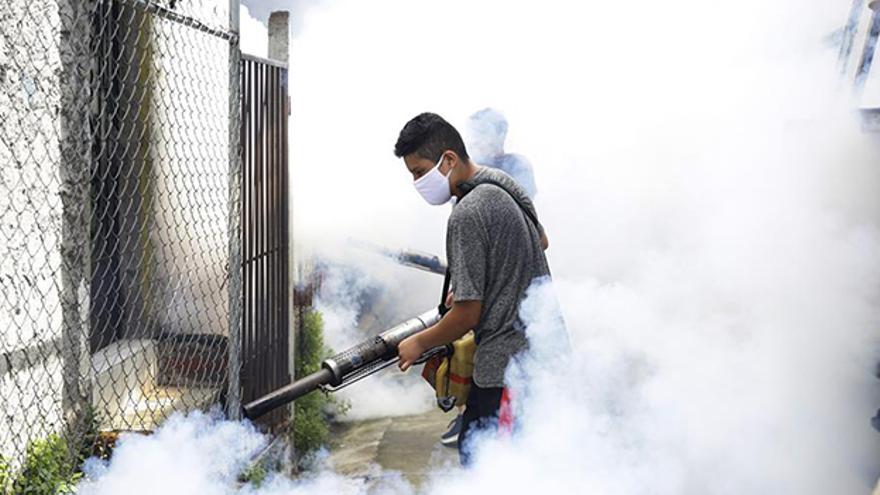
America fights mosquitoes that transmit dengue fever with fumigations. (EFE)

14ymedio biggerEFE (via 14ymedio), Lucy Lorena Libreros, 27 August 2022 — America continues to fight a hard battle to counteract the advance of dengue fever in the region. In addition to measures such as the elimination of mosquito breeding sites and fumigation, there is now an unusual technique: using drones to release communities of mosquitoes ’vaccinated’ with a bacteria in areas with a high incidence of the disease.

The innovative experiment — whose benefits are recognized by the health authorities on the occasion of the commemoration of International Day against Dengue this Friday — will take place beginning in September in Cali, the third largest city in Colombia, which in 2019 registered 15,000 cases of dengue fever.

This figure represents 15% of the total reported in a country where it’s estimated that more than 25 million people are at risk of contracting the disease. So far this year, the figure has reached 1881.

But how can we understand that it’s the aedes aegypti mosquito itself, the transmitter of dengue, Zika and chikungunya, that is now in charge of curbing these diseases?

Ana María Vélez, a representative of the World Mosquito Program (WMP), makes it look simple: “These transmitting mosquitoes, which are released in a controlled way in areas with a high incidence of dengue, are carriers of a bacterium called wolbachia, which interrupts their ability to transmit diseases to people.” continue reading

Starting in September, WMP, in partnership with the Ministry of Health of Cali, will release — for the first time in America — between 150 and 200 adult mosquitoes that carry the bacteria in different parts of the city, through an 8-motor and 2-meter-long drone, which, guided by a GPS, will accurately recognize the areas where these “new” mosquitoes are needed.

Although it will be the first time that drones will be used, this technique of releasing mosquitoes with wolbachia has already been successfully tested in countries such as Brazil — one of the most affected by dengue — where the bacteria have achieved significant reductions in the number of cases.

This is because it “is transmitted from generation to generation by the maternal line. That is, the new generations of mosquitoes will be born with wolbachia, in order to sustain the bacteria over time. Studies show that the bacteria can remain in the same area for up to 50 years,” the expert tells EFE.

In the case of Cali — where cases of dengue are endemic, at a rate of about 100 cases per 100,000 inhabitants — the release with drones constitutes the third phase of an experiment that began in 2019 with other types of mosquito releases.

This strategy so far has impacted about 800,000 people. “With this new phase, 300,000 more people will be impacted, which would represent in total about half the population of Cali,” says Vélez.

The release of mosquitoes with wolbachia becomes a new step in the fight against an epidemic, which, in the Americas, had a record year in terms of cases in 2019, especially affecting Brazil and Central America, with more than 3 million cases and 1,500 deaths.

Although the authorities in the Americas estimate that during the pandemic there was an underreporting of cases of dengue — one of the diseases “that most congests the hospital system,” in the words of Vélez — this year countries such as Brazil, Peru and Mexico have again raised their numbers.

Brazil, with figures up to July of 2022, has had 752 deaths from dengue, which represents an average of 25 per week, according to recent data from the Ministry of Health.

The figure is 205.6% higher than that caused by the disease in 2021, reflecting the resurgence of dengue.

Also, during that period the country recorded 1,288,403 cases of dengue. A number 195.3% higher than for the same period of the previous year, and more than double that recorded in all of 2021 (543,657).

Peruvians were forced to launch an epidemiological alert last April in the face of the sustained increase in cases with high lethality, which — until the twelfth week of the year — had exceeded the highest peaks of notifications recorded in the last four years.

Until then, infections reached 20,491, an incidence rate of 61.35 per 100,000 inhabitants.

In Mexico, the figures have also set off alarms with the authorities. So far in 2022, 3,134 cases have been confirmed, an increase of 78.5% over the same period in 2021, according to figures from the federal Ministry of Health.

To this are added 8 deaths, 3 more than recorded in the same period last year.

Other countries such as the United States are waiting for what happens in the rest of the region. Although three cases of local dengue have been reported in Miami-Dade, the authorities are already taking precautions in the face of the possible appearance of more contagion as a result of immigration.

Central America has been one of the regions most affected by dengue. Honduras, for example, has a total of 14,764 cases of dengue fever and 6 people killed by the disease so far in 2022, according to the Ministry of Health.

Of the total number of cases, 14,485 patients correspond to the classic type, while patients with bleeding or severe symptoms total 279.

On the other hand, Cuba reported 4 times more cases in a week than in the first half of the year. Last Wednesday, the authorities reported the detection in the same week of 11,634 reactive cases of dengue, 3.8 times more than the positive cases reported in the first half of the year (3,036).

The Government also warned about the increase in the breeding grounds for aedes aegypti and, at the beginning of July, revealed that the Island broke the record for the second year in 15 years for the number of breeding points of the mosquito. It described the epidemiological scenario as “complex.”

The figures are of concern not just to countries in the region. The World Health Organization (WHO) estimates that about 390 million dengue infections occur every year in the world, while about one billion people will be exposed to diseases such as dengue fever by the end of the 21st century, as global temperatures increase, according to a study in the specialized journal Plos Neglected Tropical Diseases.

Translated by Regina Anavy

____________

COLLABORATE WITH OUR WORKThe 14ymedio team is committed to practicing serious journalism that reflects Cuba’s reality in all its depth. Thank you for joining us on this long journey. We invite you to continue supporting us by becoming a member of 14ymedio now. Together we can continue transforming journalism in Cuba.
Nearly 80,000 Migrants Have Entered Honduras in 2022, Most of Them Cubans

Honduras receives migrants from the Caribbean, South America and other regions of the world. (Archivo)

14ymedio biggerEFE (via 14ymedio), Tegucigalpa (Honduras), 27 August 2022 — About 80,000 ‘irregular’ migrants traveling with the idea of arriving in the United States have arrived in Honduras so far this year, mostly of Cuban nationality, according to figures from the National Institute of Migration (NIM), consulted this Friday by EFE.

Between January and 19 August 2022, 79,667 migrants entered the Central American country trying to advance north with the aim of reaching the United States, according to official data.

The NIM said that so far this year the ‘irregular’ migrants entering Honduras include: 44,535 Cuban migrants, 19,222 Venezuelans, 4,795 Ecuadorians and 3,051 Haitians. continue reading

The numbers from other countries are: 642 from India, 636 from Colombia, 592 from Senegal, 569 from Angola, 470 from Bangladesh, 478 from the Dominican Republic, 446 from Brazil, 423 from Ghana, 403 from Nicaragua, 329 from Cameroon, 278 from Somalia, 256 from China, 239 from Nepal, 209 from Eritrea, and 2,094.

In comparison, according to NIM statistics for the same period last year — between January and 19 August 2021 — a total of 10,032 ‘irregular’ migrants entered Honduras. Of these, 4,294 were from Haiti and 3,622 from Cuba, the predominant nationalities in this group.

Men comprise 55% (43,676) of the immigrants, 28% (22,728) are women and 17% (13,263) are children and adolescents of both genders.

Of the total number of migrants this year, 53% (41,847) were under 30 years old, and 47% (37,820) were over 30.

The Migration Institute also indicated that 77% (61,556) of migrants entered Honduras through the municipalities of Danlí and Trojes, in the department of El Paraíso, on the border with Nicaragua.

In recent months, El Paraíso has become a new route that migrants, mainly from Cuba, Venezuela and Haiti, are using to continue on to the United States.

At the beginning of August, a legislative decree entered into force that exempts migrants ‘passing through’ who enter Honduras from the payment of an administrative fine of more than $200.

The immigration amnesty was published on August 3 in the official newspaper, La Gaceta, three months after its approval in the Honduran Parliament.

Most immigrants who enter Honduras do so in “blind spots” through human traffickers, known as “coyotes,” who don’t always take them to the border with Guatemala.

Translated by Regina Anavy

____________

COLLABORATE WITH OUR WORKThe 14ymedio team is committed to practicing serious journalism that reflects Cuba’s reality in all its depth. Thank you for joining us on this long journey. We invite you to continue supporting us by becoming a member of 14ymedio now. Together we can continue transforming journalism in Cuba.