Malnutrition is also present in 125 infants, 4.5% of the 2,807 registered in the province.
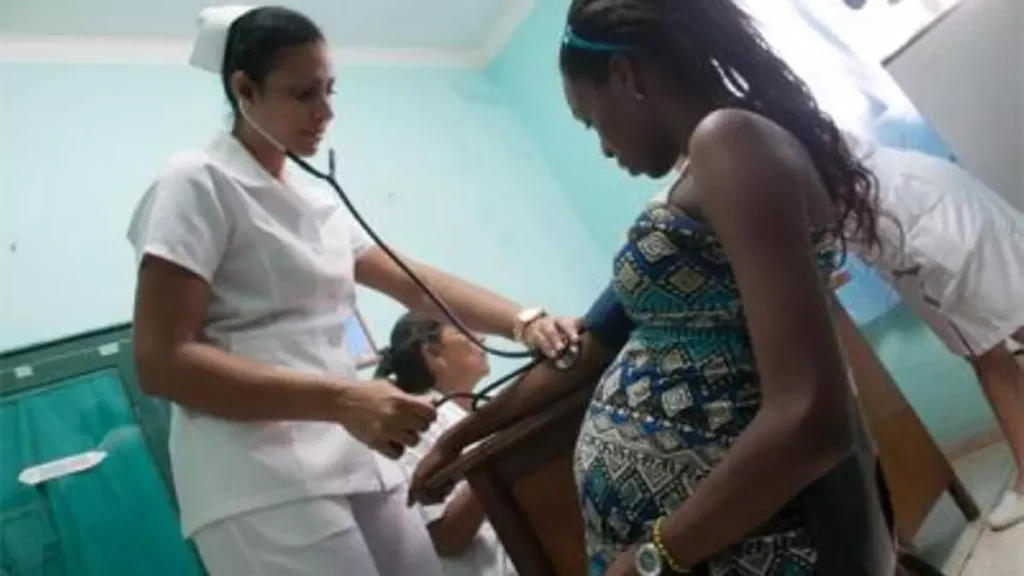
 14ymedio, Madrid, June 29, 2026 — A pioneer in Cuba’s unprecedented worsening of infant mortality, the province of Ciego de Ávila continues to struggle in maternal and neonatal care. Of the 1,393 pregnant women registered in the province, 351—25.2%, or one quarter—have some form of nutritional problem, including 88 with anemia. The figures were provided by the official press itself in a report published this Monday.
The province is not only above the national average for malnutrition among pregnant women—which is already a significant 22.5%—along with Guantánamo, Granma, and Santiago de Cuba, but also exceeds the national average for infant malnutrition. Of 2,807 children under one year of age, 125—4.5%—suffer from it, placing Ciego de Ávila third in the country for this problem, behind only Granma and Santiago de Cuba. Among these infants, Invasor reports that 260 have an “associated social risk,” the official term used to indicate extreme poverty.
The province also lags behind in the number of maternity homes, with only 11 facilities for its 10 municipalities, two of which have “structural problems.” In three municipalities, the provincial newspaper continues, there is not even a maternity home, and pregnant women must instead be admitted to polyclinics. In fact, the article is illustrated with one of these centers, in Florencia, which remains closed and half-built, despite, in Invasor’s words, having been “scheduled for completion in the first quarter of the year.”
The province also lags behind in the number of maternity homes, with only 11 facilities for its 10 municipalities, two of which have “structural problems”
In the municipality of Primero de Enero, the maternity home is only 60% complete, according to the official media outlet, while Bolivia municipality “has a designated site but has not begun construction.”
In addition, Invasor reports that Ciego de Ávila “is among the provinces with the largest number of municipalities—all of them—that do not guarantee the delivery of all products stipulated in Diet 06.02,” the medically prescribed diet for pregnant women.
Shortages extend to cribs, mattresses, and even adult scales in medical offices. The province lacks 137 scales, “with no possibility of immediate replacement because they are imported equipment,” according to the provincial newspaper.
The figures do not clearly describe the situation regarding teenage pregnancy, but Invasor does report that 10 pregnant girls aged 15 or younger “refuse admission to maternity homes.” It is of little comfort that authorities report 29 pregnant women and two infants still awaiting layette packages, or that efforts are underway to “resolve” the situation of 48 pregnant women, 10 infants, and two children “without a registered home address” who are receiving neither diet supplements, layettes, cribs, nor mattresses.
The number of people “in preparation” to receive Home Social Assistance Services illustrates the scale of hardship: only 456 across Ciego de Ávila, Havana, Cienfuegos, Sancti Spíritus, Holguín, Granma, and Santiago de Cuba.
This precarious situation will undoubtedly affect maternal and child health indicators. According to the Ministry of Public Health, Cuba ended 2025 with an infant mortality rate of 9.9 deaths per 1,000 live births, compared with 7.1 the previous year, an increase of nearly three points in just 12 months.
During the last session of the Cuban Parliament in December, Prime Minister Manuel Marrero had already outlined the problem, reporting that the rate had reached 9.7 and acknowledging the “deterioration” of this health indicator.
The speed at which this figure has worsened nationwide is alarming. The trend was already evident by mid-2025, when the infant mortality rate rose to 8.2 deaths per 1,000 live births, nearly one point higher than during the same period in 2024. At that time, the arbovirus epidemic—chikungunya and dengue—which claimed most of its fatalities among those under 18 years of age, had not yet spread throughout the Island.
Cuba recorded 68,051 births last year, 3,108 fewer than in 2024, according to official figures.
Far removed is the situation in 2018, when the infant mortality rate was considered a model for the region. That year, the country recorded 3.9 deaths per 1,000 live births, the best figure in the entire Americas.
The same applies to maternal mortality figures for 2025. Health authorities reported a rate of 44.1 deaths per 100,000 live births, compared with 40.6 in 2024, noting that “the increase from one year to the next amounted to one additional maternal death.”
Translated by Regina Anavy
______________________
COLLABORATE WITH OUR WORK: The 14ymedio team is committed to practicing serious journalism that reflects Cuba’s reality in all its depth. Thank you for joining us on this long journey. We invite you to continue supporting us by becoming a member of 14ymedio now. Together we can continue transforming journalism in Cuba.