The Rampa People’s Council will charge 100 pesos per month per household to collect waste at fixed points and at two times of the day
 The tireless Pedro Garcés never stops. President of the Rampa People’s Council, organizer of the service stations in El Vedado, coordinator of the Gente de Barrio social group, and now, at the helm of El Rampeño, a local development project for much-needed solar-powered garbage collection that will launch this Wednesday in Havana. The initiative is funded with public money, although residents who wish to benefit from the promised service will have to contribute 100 pesos as a starting point.
“Here, a facility is being built that will assume, based on the intention of the Party and the central Government, the allocation of 30 electric tricycles for the collection of solid waste in the Rampa People’s Council, as well as for the recovery of raw materials,” the official enthusiastically tells Cubadebate, which this Tuesday publishes a very partisan report on the project.
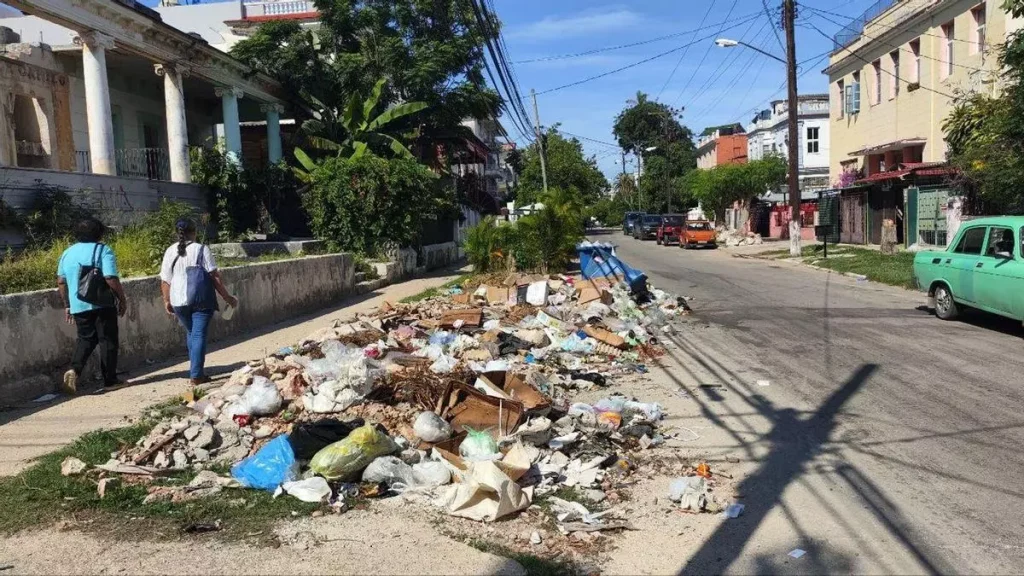
El Rampeño is located at the corner of 23rd and J streets, a key point in the Cuban capital where El Quijote Park is situated, one block from Coppelia ice cream parlor and the giant Torre K. The goal is to improve “not only the neighborhood’s cleanliness, but also the quality of life for those who frequent this central area of the city.” Tourists are not abundant at the moment, but if the project is successful, they will be among those who benefit most from the removal of the current mountains of garbage that mar the landscape.
Tourists are not plentiful at the moment, but if the project works, they will be among those who benefit most from the removal of the current mountains of garbage that mar the landscape.
Cubadebate points out the urgency of resolving this problem, exacerbated by fuel shortages since the US oil embargo began in late January of this year. However, it admits: “Hygiene in Havana is not a recent problem.”
The ‘solinera’ (solar-powered) waste collection system, inspired by those already operating in Santa Clara – and similar to the private one in Holguín – will use solar energy to power the electric tricycles that will collect the garbage, as well as private vehicles and appliances, in addition to contributing to the National Electric System. The project will begin as a pilot program in Rampa with the intention of expanding to the rest of the municipality. According to the report, five of the thirty tricycles that will make up the fleet are currently available, and the service is scheduled to begin with two collection times, 7:00 a.m. and 8:00 p.m., with the possibility of adding more times depending on demand.
“We’ve been sharing this through our digital networks—Facebook, WhatsApp, Telegram, and the Gente de Barrio group—and the response has been tremendous. People have contributed ideas that have enriched and perfected what we initially envisioned,” says Garcés, who is instructing residents on how to proceed.
“You don’t need to be waiting for the truck with your bag,” she clarifies, but urges everyone to be punctual. “You put your bag there and they’ll pick it up. We just ask that you come on time, so the waste doesn’t stay on the street for long.” She adds that you don’t need to buy a new one; you can take your bin down to where the garbage is being emptied, leave the contents, and leave: the usual procedure.
In addition to the government’s contribution of tricycles, there is the territorial contribution—the well-known 1%—a tax levied on the gross income of public and private companies that goes directly to the municipal budget and is used to finance these projects. Cubadebate points out that private companies have been contributing to this tax since 2024 and that their participation has made the 1% “a significant source of funding.” In the case of El Rampeño, these funds have gone toward the construction work and the installation of the panels.
The other pillar supporting the project is the monthly fee of 100 pesos per household, from which vulnerable families are exempt. According to the official version, those who will benefit from the free service will be identified by the “delegates and representatives of each district,” which, a priori, leaves the selection in the hands of the party and without public or transparent criteria.
In any case, the media outlet emphasizes, the most significant revenue will come from charges levied on companies—both state-owned and private—which will pay more for the collection of waste and raw materials. There will also be tiered rates for those requesting nighttime collection, and large clients will be charged more than small businesses. Finally, El Rampeño will also profit from the sale of recyclable materials.
The most significant revenue will come from charges to businesses, which will pay more for waste and raw material collection. There will also be tiered rates for those requesting nighttime collection, and large customers will be charged more than small businesses.
According to reports, the project is expected to generate around 70 direct jobs, with priority given to local residents. The salaries sound promising, especially considering what’s currently paid at Comunales (the municipal services department). El Rampeño promises an average of 15,000 pesos, though this will depend on the specific role. In a report published by 14ymedio last December, street sweepers in Havana told the newspaper that their salary was around $10. While currency volatility is currently very high in Cuba, at Tuesday’s informal exchange rate, a worker at El Rampeño would earn more than double what they would earn working for Comunales.
The memo suddenly mentions fines, though it offers no details. However, Garcés warns that if there is a repeat offense—it doesn’t specify exactly what kind—”there could even be criminal charges for disobedience or spreading an epidemic.” The official, who dedicates the final paragraphs to educating and raising awareness among the population, starting with children, believes the project is defined by the word “success,” though he then admits it’s more of an aspiration. “We are obligated to succeed in this project because the people demand it.”
While waiting for the initiative to begin, questions like those raised by entrepreneur Yulieta Hernández are on the table: “Vedado, tall buildings, power outages, aging population…? Will residents go down stairs during a power outage to comply with the garbage collection schedule?”
______________
COLLABORATE WITH OUR WORK: The 14ymedio team is committed to practicing serious journalism that reflects Cuba’s reality in all its depth. Thank you for joining us on this long journey. We invite you to continue supporting us by becoming a member of 14ymedio now. Together we can continue transforming journalism in Cuba.