
Cohiba’s goal of 2 Million Cigars in 2022 Recalls the Failure of Cuba’s ’10 Million Ton Harvest’*

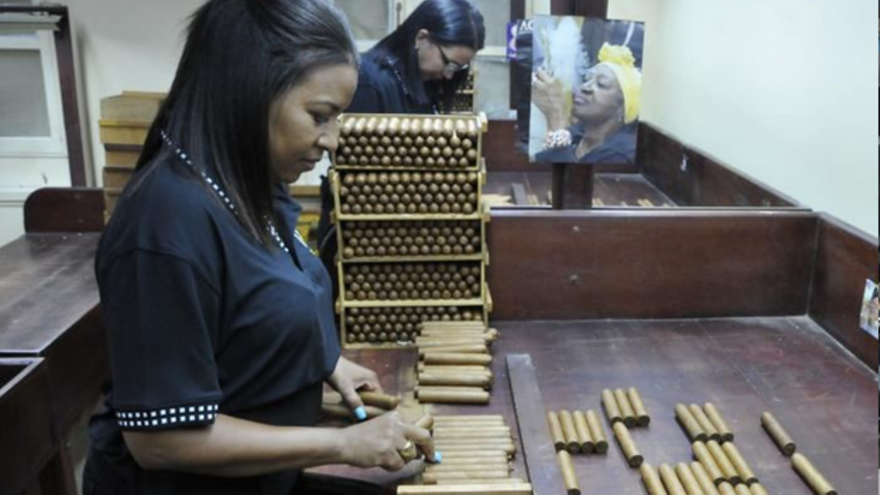
The factory has mobilized its 252 workers, most of them women, to manufacture the planned amount at a rate of 9,000  cigars per day. (Granma)

14ymedio bigger14ymedio, Juan Izquierdo, Havana, 9 September 2022 — While the quality and distribution of cigars in Cuban shops are at their lowest point, the directors of the famous El Laguito factory, in Havana, promise to make and export two million cigars of the Cohiba brand before the end of this year.

The goal will be met “despite the difficulties,” said the director of the cigar company, Oscar Rodríguez Carballeira. Attracted by the 55th anniversary of the Cohiba label, invented by Fidel Castro to entertain foreign leaders and diplomats, almost 700 cigar fans, including journalists and buyers, attended El Laguito on Thursday.

The manager indicated that the factory has mobilized its 252 workers, most of them women, to manufacture the expected quantity at a rate of 9,000 cigars per day. According to Rodríguez Carballeira, not even two years of pandemic managed to interrupt production at El Laguito.

Although the cigar is fabricated in the old republican factory , the leaf that is processed in El Laguito comes from the highest quality plantations in the country: those of the towns of San Juan y Martínez and San Luis, in Pinar del Río, both located in the tobacco growing region of Vueltabajo, the mecca of the Cuban puro (cigar).

El Laguito, since 1966, has been a factory of excellence, once supervised directly by Fidel Castro and Celia Sánchez. For more than five decades it has produced, in addition to about twenty well-known brands such as Montecristo, Romeo and Juliet, Partagás and H. Upmann, the range of Cohiba premium puros, whose anniversary the Government has decided to celebrate in style. continue reading

This Friday, a gala dinner is planned at the Pabexpo fairgrounds, in which the Habanos awards for 2020 and 2021 will be presented, in the categories of Production, Business and Communication. That same night, the traditional humidor auction will be held, where millionaires from various parts of the world bid to obtain a specialized container to store their cigars, probably signed by Fidel Castro before his death.

Without being in the same category as the noisy Festivals of the Habano (the Havana cigars), which are based at the Convention Center, the celebration for the 55th anniversary of Cohiba will avail itself of the opportunity to raise as much hard currency as possible.

Under the tutelage of the Spanish investors, who finance and distribute the product of the Cuban corporation Habanos S.A., the cigar industry continues to be fundamental in the Cuban economy.

Anticipating these celebrations, the Government planned a luxurious hotel facility in Pinar del Río, which is scheduled to open this month. The delegate of the Ministry of Tourism in that province, José Antonio Aguilera, explained that the hotel, located in San Juan y Martínez, will have only eight exclusive rooms, managed by Islazul.

Customers, who are the same anonymous millionaires who come to El Laguito this year, will enjoy a bar, humidors, specialized shops and a smoking room. “We want tourists to come and share with the community, and local development will benefit,” said Aguilera.

In 2021, Cuba reported $568 million in cigar sales. The main and most stable buyers are still Spain, China, Germany, France and Switzerland.

With the issuance of limited-edition cigar bands, the prices for the  Cohiba brand, the former Indian name for the cigar or the smoking ceremony, have skyrocketed internationally. A pure Cohiba of small or medium caliber can reach 25 euros per cigar in Spanish tobacconists, while cigar bands of the highest quality such as the Pirámides Jar exceed 500, and the Special Reserve Selection, one of the most expensive, exceed 730. In the European informal market, these cigars reach 1,000 euros apiece.

Meanwhile, the cigar stores in Cuba, where you need to pay with foreign currency, have definitively closed their doors for the Cuban, who cannot and does not want to pay the overwhelming prices for the best cigar in the world.

*Translator’s note: See here for the Ten Million Ton Sugar Harvest

Translated by Regina Anavy

____________

COLLABORATE WITH OUR WORKThe 14ymedio team is committed to practicing serious journalism that reflects Cuba’s reality in all its depth. Thank you for joining us on this long journey. We invite you to continue supporting us by becoming a member of 14ymedio now. Together we can continue transforming journalism in Cuba.
Cuban and U.S. Authorities Talk in Havana About the Smuggling of Migrants

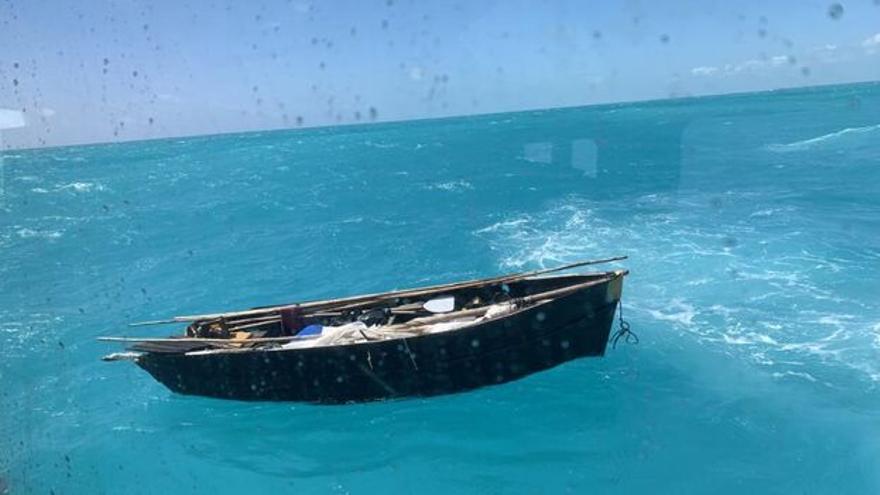
Boat in which four undocumented Cubans were traveling, intercepted by the Coast Guard on March 12, approximately five miles east of Isla Morada, Florida. (Coast Guard)

14ymedio biggerEFE (via 14ymedio), Havana, 10 September 2022 — Authorities of the Cuban Border Guard Troops and the United States Coast Guard Service met in Havana on Thursday and Friday to talk about migration.

The meeting discussed ways to increase cooperation between the two services to deal with the smuggling of migrants, according to an article published this Friday by the Ministry of the Interior.

Illegal departures, illicit drug trafficking and maritime search and rescue operations were also discussed.

“The delegations of both countries highlighted the usefulness of these meetings and agreed on the importance of advancing cooperation in this area,” the article adds.

It also points out that the meeting took place in a “respectful and professional” atmosphere. continue reading

The article, published by the official newspaper Granma, says that according to reports, “both parties agreed to continue these technical meetings in the future.”

These conversations have taken place at a time when the exodus of Cubans has skyrocketed, both those who take migratory routes through Central American countries and those who launch themselves into the sea in precarious boats — all with the aim of reaching the United States.

The U.S. Coast Guard has arrested about 4,500 Cubans off the coast of Florida since October 1, 2021, when the current fiscal year began, according to data from the Customs and Border Protection agency (CBP).

The CBP has recorded the arrival of 177,848 Cuban migrants in the United States.

The figure exceeds the largest flow of Cubans so far, reported in 1980, when 125,000 people left through the port of Mariel in just seven months.

Last April, delegations from Cuba and the United States resumed their bilateral dialogue on migration issues in Washington, the first high-level meeting since the arrival of President Joe Biden at the White House in January 2021.

These meetings had been suspended in 2018 during the Presidency of Donald Trump (2017-2021), who reversed the historic process of rapprochement with the Island launched by his predecessor, Barack Obama (2009-2017).

The Cuban government called it a “positive sign” that the United States held a meeting on immigration issues with a delegation from its country, and, for its part, the Biden Administration considered that these immigration talks between the two parties were “productive.”

The United States has recently implemented several measures, including the increase in the consular services of its embassy in Havana and the reestablishment of a family reunification program that had been suspended since 2017.

However, the Cuban government blames Washington for the irregular flow of Cuban citizens and the illegal departures by sea and other routes, and also for the breach of the bilateral agreement that stipulates the delivery of 20,000 visas per year for Cubans.

In addition, it attributes the increase in migration to the still-in-force Cuban Adjustment Act of 1966, which allows Cubans to apply for permanent residence in the United States after one year and one day of being in the country.

Cuba is going through a serious economic crisis due to the combination of the pandemic, the tightening of US sanctions and internal errors in macroeconomic management.

Translated by Regina Anavy

____________

COLLABORATE WITH OUR WORKThe 14ymedio team is committed to practicing serious journalism that reflects Cuba’s reality in all its depth. Thank you for joining us on this long journey. We invite you to continue supporting us by becoming a member of 14ymedio now. Together we can continue transforming journalism in Cuba.

Cuban Independent Media ‘El Toque’ Describes the Pressures on its Journalists as ‘Bullying and Psychological Torture’

According to the coordinating team, headed by José Jasán Nieves, ’El Toque’ has lost 16 journalists since the beginning of September. (Facebook/El Toque)

14ymedio bigger14ymedio, Havana, 10 September 2022 — The directors of the digital platform El Toque denounced, this Friday, new pressures from State Security against their team on the island. The public resignation of Wimar Verdecia and Iran Hernández, director and illustrator, respectively, of  Xel2 graphic humor supplement  led to the shutting down of this feature, which has been published since 2019 and already has had 190 issues.

With the resignation of both artists, there are now 16 members of El Toque whom State Security has forced to abandon their work since the beginning of September, through a “script of interrogations and blackmail.” This was reported by the directors of the newspaper in an article bemoaning the “sickly insistence” of the Cuban political police to obtain “confessions” on video from the journalists.

The public statements of those involved, filmed in “protocol houses of the Ministry of the Interior,” have been a characteristic of this raid against independent journalism, which José Jasán Nieves, director of El Toque, has defined as “psychological harassment and torture.”

In these recordings, State Security indicates to journalists that they must “’confirm” the central ideas of a fallacy, which is that the publication is financed by opposition organizations, and “this mercenary entity” proposed the destabilization of the Cuban government.

According to Nieves, such videos will be part of a “propagandistic attack” plan, which will serve to discredit not only the reporters, but also the general project of El Toque. continue reading

“It’s very obvious that they’re preparing to use manipulated videos, taken out of context, and statements obtained under pressure, to ’build’ one of those ’complaints’ presented as ’reasons’ of a country to ’defend itself,’” the team of coordinators points out in the article, alluding to television spaces such as Hacemos Cuba, Con filo and Razones de Cuba, which have also carried out constant attacks against this newspaper.

The directors regretted the “closure of one of the most challenging creative experiences we have ever experienced,” and recalled that Xel2 took care, during its activity, to explore the ups and downs of Cuban citizens and their competition with the Government. They also promised the management of a new graphic humor project that “continues the commitment to political satire.”

The campaign against independent journalism, which has always been a priority for Cuban State Security, has spread more strongly since the protests of July 11 of last year and especially after the wave of popular demonstrations against the blackouts that the Island has experienced.

Arbitrary Internet cuts, regulations to prevent travel and constant harassment of journalists and their families have been increasing in recent months.

This Friday, activist Raúl Soublett López, founder of the Afro-Cuban Alliance, was forced to close his project, “In defense of the rights of AfroLGBTIQ+ people,” active since 2017, to concentrate on taking care of his “physical and mental health.” The same thing happened with journalist Jancel Moreno, forced to cancel his Dame la mano [Give me your hand] project and declare that he had not been working “actively” for any independent media for more than a year.

For their part, some human rights organizations have spoken out against the hunt for independent reporters. In an article published this Friday, Cubalex states that “public statements of resignations are not spontaneous,” and that they therefore violate the Cuban Criminal Code itself.

According to this legislative body, “the Cuban authorities commit the crimes of abuse of authority and regulated torture,” since they “cause mental suffering, intimidate and coerce journalists in order to obtain a confession.”

Translated by Regina Anavy

____________

COLLABORATE WITH OUR WORKThe 14ymedio team is committed to practicing serious journalism that reflects Cuba’s reality in all its depth. Thank you for joining us on this long journey. We invite you to continue supporting us by becoming a member of 14ymedio now. Together we can continue transforming journalism in Cuba.
Rice Waste is Used to Stretch Rationed Bread Dough in Sancti Spiritus

“We can’t do anything; we’ve been told to add up to 20% of rice straw and husks to the bread.” (14ymedio)

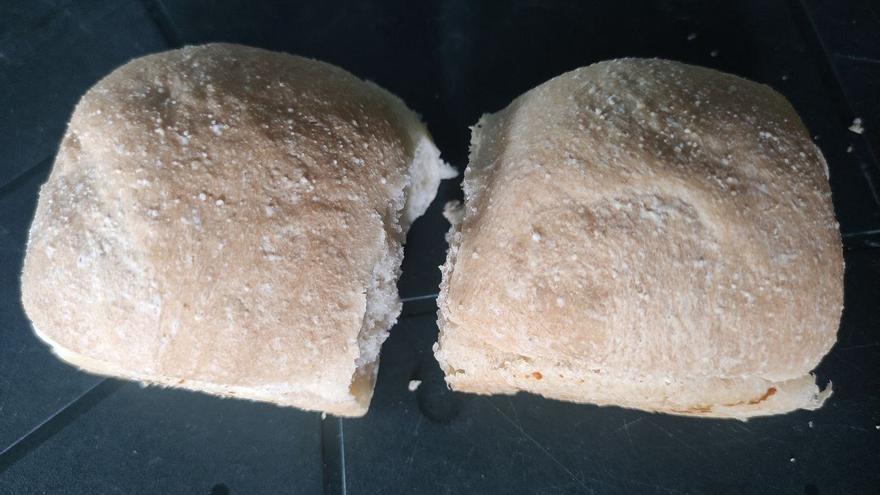
14ymedio bigger14ymedio, Mercedes García, Sancti Spíritus, 9 September 2022 — “No one has eaten it in two days,” laments Luciano, a resident of the San Luis de Sancti Spíritus neighborhood, while showing some neighbors on Friday morning the rationed bread. In the midst of the wheat flour deficit, state bakeries in several areas of this city must add up to 20% of husked rice waste to the dough, a mixture that gives it a sandy texture and sour taste.

“They’re even using it in cakes, and they are hard, very hard,” adds the retiree, who, after shopping last Thursday at the standard bakery, returned to complain to the employee about the poor quality of the product. “We can’t do anything; we’ve been told to add up to 20% of rice straw and husks,” the worker explained. However, nowhere in the store is there a sign alerting customers to the new recipe.

“She told me because she has known me all her life, but they haven’t been told that they should inform consumers about this change,” says the retiree. The employee confessed to Luciano that “when they make the new formula, they have to increase the amount of rice, and it’s very difficult to mix in. The bakers are very upset with this, because they’re the ones who have to face the customers.”

Another worker at a bakery in the Viento Negro neighborhood confirms to 14ymedio the change in the manufacture of bread. He says that it began to be implemented this week, although it’s not the first time that other products have been added to the flour to stretch it. “They bring the bags of waste from the mills on the Jíbaro road, where the rice is husked,” he explains. continue reading

“It has usually been used as feed for pigs, because it includes rice straw and also the husks. As animal food it’s not bad, but it doesn’t help much to make bread.” The man says that “before this ’invention,’ the guajiros who raise pigs paid about 250 pesos for a can of this waste; they cooked it and then had something to give the animals to eat.”

However, in the mixture with wheat flour for human consumption, the state employee says that “the final dough dries out, and that’s why the bread crumbles as if it were sand. It also gets dark, and what doesn’t look good to the eyes doesn’t enter the mouth: people buy it and return it. As soon as they cut it, they see that dark, yellowish color and get scared.” On top of that, “it tastes bad, like a sack, like straw.”

Mixing other ingredients with wheat flour to make rationed bread is nothing new. In the crisis of the ’90s and also in recent months, state bakeries have used sweet potatoes, cassava and bananas to meet demand. But these mixtures haven’t managed to convince customers, who claim that with these additions the bread can be kept for less time due to the heat, and, to top it off, it quickly takes on a sour taste.

Translated by Regina Anavy

____________

COLLABORATE WITH OUR WORKThe 14ymedio team is committed to practicing serious journalism that reflects Cuba’s reality in all its depth. Thank you for joining us on this long journey. We invite you to continue supporting us by becoming a member of 14ymedio now. Together we can continue transforming journalism in Cuba.
A Physiotherapist With Dengue Fever Dies Due to Lack of Ambulances in Santiago de Cuba

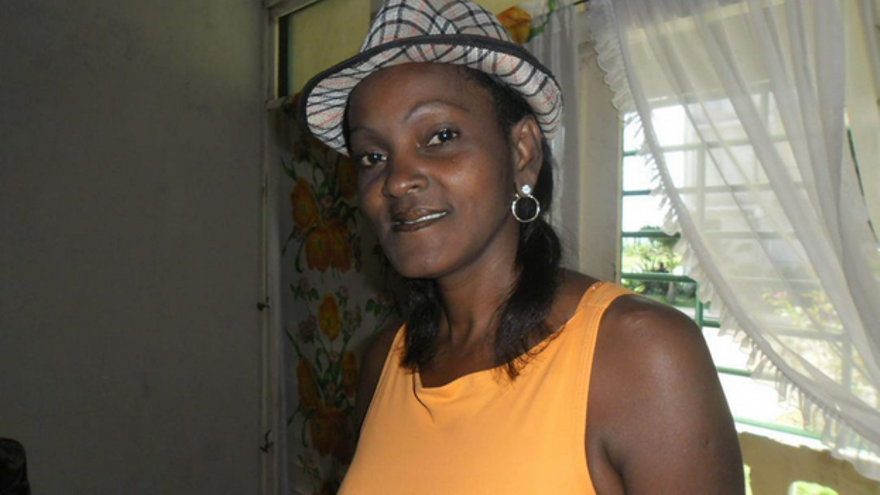
The Provincial Health Directorate remembered Elba Rosa López as a professional dedicated to her work, and as a loving mother. (Facebook/Elba Rosa López)

14ymedio bigger14ymedio, Havana, 9 September 2022 — Physiotherapist Elba Rosa López Nápoles, infected with dengue, died in the province of Santiago de Cuba after she couldn’t be transferred to a care center due to a lack of ambulances, her sister reported.

The Provincial Health Directorate of Santiago de Cuba sent condolences for her death and recognized her work in a Facebook post shared this Tuesday, accompanied by several photographs of the professional along with her colleagues from the Carlos Juan Finlay polyclinic, in the Songo La Maya municipality.

In a comment to the post, her sister Mercedes López Nápoles reported that they asked for an ambulance to take her to a provincial hospital but were told that she wasn’t reported in serious condition with dengue fever, nor did they have vehicles available.

“After she died, those words meant nothing, since no arrangements were made to transfer her to the provincial hospital. From my municipality, I called the SIUM (Integrated Medical Emergency System), and the coordinator replied that there was only one vehicle, in poor technical condition, and that it had to go to Los Reynaldos to locate a child who had dengue,” she wrote online. continue reading

This is the second member of the López Nápoles family to die in less than a month due to not receiving medical assistance. According to Mercedes López, the same thing happened with her brother, on August 19, although she didn’t specify if he was a victim of dengue. “Now, they can use all the words they want, but the fact is that they let them die,” she wrote.

For its part, the Provincial Health Directorate remembered Elba Rosa López as a professional dedicated to her work, and a loving mother. “If I kept talking about you, it would never end. It only remains to be said that the Carlos Juan Finlay La Maya polyclinic lost a warrior.”

Dengue, a highly contagious disease, once again tests the Cuban health system with hundreds of infections, and the Government still hasn’t confirmed exact figures.

In the State television program Roundtable on Thursday, the Deputy Minister of Public Health, Carilda Peña García, chose to refer to the Latin American figures provided by the Pan American Health Organization (PAHO), which reveal that between the first and the 32nd weeks of 2022, there was an increase of up to 300% in dengue infections.

In its records from last year, the Ministry of Public Health reported that dengue was circulating in nine Cuban provinces but that, as of September, infections were reduced by 29.3% compared to 2020.

While hundreds of Cubans with the disease prefer to stay at home, “exported” infections have also skyrocketed: of the 100 cases of dengue reported this summer in Spain, two thirds were people who had traveled to Cuba; of the 123 positives in France, 44 came from the Island; and in Florida there were 193 cases out of the total of 216 with the same origin.

Translated by Regina Anavy

____________

COLLABORATE WITH OUR WORKThe 14ymedio team is committed to practicing serious journalism that reflects Cuba’s reality in all its depth. Thank you for joining us on this long journey. We invite you to continue supporting us by becoming a member of 14ymedio now. Together we can continue transforming journalism in Cuba.
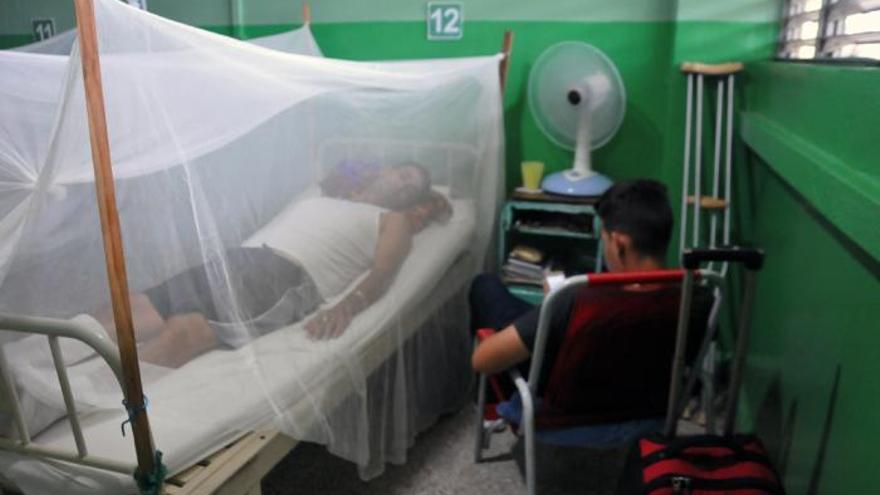
Cuban Government Warns of the Brutal Rise of Dengue on the Island, but Hides the Figures

According to the Pan American Health Organization (PAHO), cases of dengue have increased by 300% in the first half of the year. (Granma)

14ymedio bigger14ymedio, Madrid, 9 September 2022 — In the hour and a half that the State television Roundtable program lasted, dedicated this Thursday — in its own words — to “provide comprehensive information about the dengue fever virus,” no one was able to learn the number of cases that have been diagnosed in Cuba.

The Deputy Minister of Public Health, Carilda Peña García, avoided giving exact figures and said that Latin America, between the first and the 32nd weeks of the year, an increase of 300%, and an increase of 165% compared to the figures of 2021, according to the Pan American Health Organization (PAHO). “[Cuba] is in the context of what is happening in the region,” she added, resolving the matter.

Determining the number of patients in Cuba seems impossible, since the Island has been talking about percentages and rates for several years. The Ministry of Public Health already indicated in its balance sheet last year that dengue had circulated in nine provinces and that “from the month of September, cases of dengue were reduced by 29.3% compared to 2020.” Without specific numbers, the dimension of the problem is unknown.

Despite the secrecy, the deputy minister did drop three important details. On the one hand, that the problem has only just begun, something she made clear when she warned that complicated months are coming. “It’s a difficult time, and we are moving towards the most complex period of the disease, because the cycle shows its highest peaks starting from the end of October and the beginning of November.”

A bad omen for the start of the high season for a tourism that is already on alert, after it has been revealed that, of the 100 cases of dengue reported this summer in Spain, two thirds had traveled to Cuba. In addition, of the 123 positives in France, 44 came from the Island, and in Florida there were 193 cases out of the total of 216 with the same origin. continue reading

The second news that came out in the middle of the extensive program was the severity of type 3, which predominates in Cuba, with 60% of the cases, something that the medical guild had already warned about. Guadalupe Guzmán, head of the Center for Research, Diagnosis and Reference of the Pedro Kourí Institute of Tropical Medicine, offered a whole historical and scientific class on the four types of dengue virus — all of which circulate on the Island — their combinations and which ones have been responsible for the worst epidemics in recent history. But the important fact was in a single sentence.

What the laboratory detects is not that all four are on an equal footing, but that dengue 3 is being detected in more than 60% of cases. This is the serotype of the virus that is causing the serious cases — even deaths — because we have had deaths from this disease,” she said. And again she left out the fundamental data, the number of deaths, which is broadcast only, with greater or lesser reliability, through social networks and is impossible for the independent press to verify.

The expert specified that young age, along with other pre-existing diseases, is a risk factor for dengue hemorrhagic fever, a figure consistent with the number of children who have been reported as deceased through Facebook.

The third piece of information that can be rescued from among so much verbiage was also given by the deputy minister, who unambiguously acknowledged that the Government has not been able to prevent the epidemic. “What really had to be done inside homes was not possible,” she said. And in a second and unusual gesture between the authorities, tending to accuse citizens of irresponsibility, she affirmed that the population “yes, showed signs of eliminating outbreaks of the vector in their homes. We know that it’s our responsibility and that it didn’t go as it should have,” she said.

Peña García specified that the highest infection rates — once again without data — are in Santiago de Cuba, Havana, Las Tunas, Guantánamo, Camagüey, Matanzas and Isla de la Juventud. And they are followed by Holguín, which has had the highest numbers in previous weeks, Sancti Spíritus and Villa Clara.

In addition, she indicated that there are many infested workplaces, about 53 cases per week and that, if this trend continues, “the year will close with more than 300 where a focus was found due to the responsibility of the entire group,” she said, after recalling that water tanks are the main places of concentration of the mosquito.

“Today we are fumigating in 71 municipalities of the country, belonging to the provinces mentioned above,” she added. Resources, she pointed out, are imported and therefore scarce, but in addition, and as has been said in previous weeks, fuel is lacking and personnel are needed for the campaign to be carried out correctly.

Health deficiencies, in addition, are aggravating the situation, despite the fact that they were not mentioned yesterday by specialists. Many Cubans have reported through their social networks about the difficulties they go through to be diagnosed due to lack of reagents, and patients who arrive at the hospital often lack adequate treatment, not to mention those who don’t even want to go for fear of ending up admitted to centers where hygiene and good conditions are conspicuous by their absence, aggravating the risk of contagion.

While dengue keeps the population on alert without its real scope being known, the population continues to have access every day to information about the total number of people infected in Havana and the provinces, hospitalized, recovered and killed by Covid-19, a disease that continues to circulate, but that has lost its initial virulence.

Translated by Regina Anavy

____________

COLLABORATE WITH OUR WORKThe 14ymedio team is committed to practicing serious journalism that reflects Cuba’s reality in all its depth. Thank you for joining us on this long journey. We invite you to continue supporting us by becoming a member of 14ymedio now. Together we can continue transforming journalism in Cuba.

Cuba: In Defense of Radio Martí

Radio Martí has reduced its transmission hours due to financial difficulties. (Archivo)

14ymedio bigger14ymedio, Pedro Corzo, Miami, 10 September 2022 — The Cuba Broadcasting Office (OCB), which groups together Radio and Television Martí and its website, Martí Noticias, is facing serious problems to survive, since the administration of President Donald Trump drastically reduced its budget. President Joe Biden has not considered increasing it and, according to some, would welcome its closure, as the Cuban dictatorship has always demanded.

Due to the lack of resources, the transmission has been reduced to 12 hours a day and it is unknown to what levels it will decrease after planned Reduction in Force (RIF) has been implemented, which would drastically affect the already small workforce, of just over 60 people, possibly affecting 23.

At a time when the situation in Cuba is especially convulsive and the population, particularly activists, need to communicate with each other, the decrease in the operations of these media is harmful, because their listeners have a high confidence in what they hear from them, which protects them from falling into provocations, a common practice of the dictatorship.

Beyond any other consideration, the work carried out by the OCB has been highly beneficial for the people of Cuba and in particular for the opposition to the totalitarian regime. I confess to being proud of having had the opportunity to work for 23 years at Radio Martí. continue reading

I joined leading the station with Herminio San Román and Roberto Rodríguez Tejera. Two notable journalists were directing news, Gilberto Rosal and William Valdez. The four were committed to truthfully informing the Cuban people, to assisting all the opponents on the island, and to ensuring that the news and analysis were based on reality. Everyone was deeply hurt by the situation in Cuba and we were striving to get truthful information to the island.

The stations have always worked according to the guidelines of the federal government, which are very rigid as far as information is concerned, measures that we may or may not like as Cubans, but that are established for all the media controlled by the Government.

Unfortunately, there has been no shortage of people who for different reasons have severely criticized the station. It is true that there have been mistakes and mismanagement, that it has been possible to do things better, but that does not detract from the OCB’s many achievements in favor of informing the Cuban people and serving as a liaison to those who fight for freedom in the interior of the island. We must not forget that the iron Castro censorship makes it practically impossible for what happens at one point on the island to be known a few kilometers away.

The vast majority of workers are talented, information professionals who take their work very seriously, and are governed by very strict reporting standards that must be faithfully adhered to. I assure you, without any reservation, that objectivity in the information is fundamental, and editorializing in a news story, regardless of the orientation, is rejected. I learned about cases of colleagues separated from their duties, in my opinion, after no serious transgressions, because a supervisor in Washington interpreted a report or a program with too much zeal.

Periodically, from the central office in Washington, which coordinates all the communication offices of the federal government, officials travel to give seminars to refresh old guidelines or point out new provisions. It should not be forgotten that the OCB is an agency of the United States Government, which acts on the basis of the provisions of the officials designated to direct it, and these do not always support the existence of the station, or simply do not sympathize with its programming.

The OCB, in my opinion, is in danger of dying from consumption. If the readjustment takes place, they will have to reduce more hours, so I wonder: will the organizations in exile continue to remain silent in the face of the slow death of Radio Martí? More importantly, will the Cuban-American congressmen who defended these entities for decades simply attend their funeral without striving to resurrect it, as Ileana Ros-Lehtinen would without even being a representative of the House? I repeat, there have been bad officials, but repeating to the late colleague Cristina Sansón: “Where is the mission and commitment to Cuba?”

The OCB is an important instrument to help totalitarianism disappear on the island, in addition, it is very useful to continue defending freedom and democracy throughout the hemisphere. Let’s do something.

Translated by Regina Anavy

____________

COLLABORATE WITH OUR WORKThe 14ymedio team is committed to practicing serious journalism that reflects Cuba’s reality in all its depth. Thank you for joining us on this long journey. We invite you to continue supporting us by becoming a member of 14ymedio now. Together we can continue transforming journalism in Cuba.
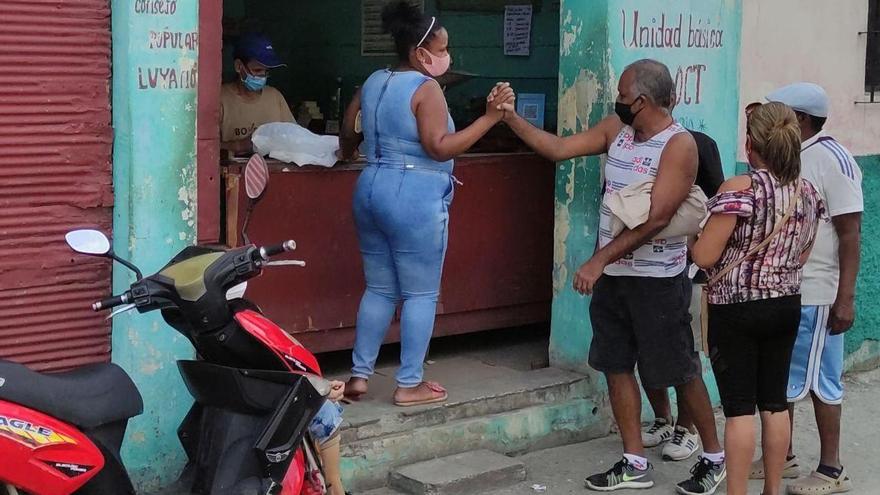
‘D Frente’: A New Effort to Find Solutions in Cuba

Those wanting a change or perhaps “the change” that opts for moderation and prudence can join the project. (14ymedio)

14ymedio bigger14ymedio, Reinaldo Escobar, Havana, 9 September 2022 — The document announcing the constitution of an entity called D Frente [D Front] is part of the civilized tradition of using words to call for action, as opposed to the revolutionary practice of executing actions that are then justified with words.

The text complies with three indispensable rules: relevance, precision and correctness.

It is relevant because the Cuban nation needs immediate and profound transformations; it is precise because it includes the essential conquests worth working for at this time; it is correct because it is inclusive and peaceful, renounces offenses and shows respect for those who want the same thing but choose different paths.

D Frente will surely be seen from the official viewpoint as “another attempt to destroy the conquests of the Revolution,” and from the most radical environments of the opposition will probably be described as a “dialogue,” an accomplice of the dictatorship or a promoter of “fraudulent change.” The spokespersons of the regime will cite the nefarious articles of the new Criminal Code to threaten its signatories; those who refuse to renounce violence will be reproached for the absence of a clear purpose to overthrow the dictatorship.

There will be reproaches of another kind, such as that the new attempt aims to supplant existing efforts, that there is talk of reconciliation without mentioning justice, that it was no longer alluding to this or that matter or that “if so-and-so signed it, I won’t,” and whoever complains of not having been invited to write the document will always appear.

However, if it’s not violently crushed by the repressive forces, D Frente can win the approval of anyone who is looking for a civilized space of civic participation. Those who wish for a change or perhaps for “the change” that opts for moderation and prudence can join the project.

D Frente is not the first attempt of this type. Hopefully it won’t be the last!

Translated by Regina Anavy

COLLABORATE WITH OUR WORKThe 14ymedio team is committed to practicing serious journalism that reflects Cuba’s reality in all its depth. Thank you for joining us on this long journey. We invite you to continue supporting us by becoming a member of 14ymedio now. Together we can continue transforming journalism in Cuba.
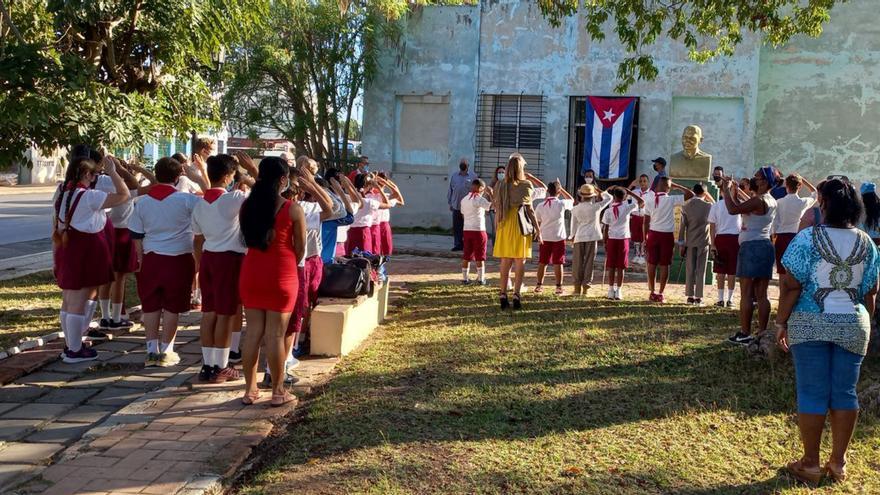
The School Snack Is The Most Recent Victim Of The Economic Crisis In Cuba

The school snack, which began to be distributed in 2003, included a glass of soy yogurt and a bread roll that could contain sausage, cheese, ham or a croquette. Photo is of a ‘morning assembly’ at an elementary school. (14ymedio)

14ymedio bigger14ymedio, Natalia López Moya, Havana, 5 September 2022 — A kiss at the door of the house and his mother’s gaze following him until he turned the corner was part of Jeancarlos’ routine this Monday. The eleven-year-old boy resumed school on September 5, and, unlike a few months ago, he will no longer be able to have even half a bread roll for a snack.

Since school stopped for the summer holidays, a lot has changed on the Island. The blackouts were prolonged, the Cuban peso sank in the face of foreign currency, and flour became an increasingly scarce product. The cookies and rolls that underpinned the students’ snacks have practically disappeared.

“In order for him to take a roll with something in it to school, someone in the house has to stop eating their own,” explains Jeancarlos’ mother, referring to the rationed products. But the sixth grader is not the only student in the family. “My daughter started first grade, and I gave her my roll because she’s small and doesn’t understand why she can’t have a snack,” she explains.

Days before restarting the school year, she investigated possible solutions. “A small package of cookies costs 100 pesos at a minimum, and there is nothing to give my son, so I won’t even tell you about that option because it doesn’t solve the problem,” she explains to 14ymedio. An informal merchant sold her “a soda extract that guarantees that at least he doesn’t bring just water to school.” continue reading

Recently, the young Trilce Denis launched a sour diatribe against the ruler Miguel Díaz-Canel through a video posted on her Facebook page. “Now I want to know, when school starts, what snack will be given to the children; I’m already sick from nervousness,” she said.

Denis complained that even when she could arrange a snack for her son, he would have to eat it next to other children who couldn’t bring any food. This concern is shared by many parents who fear an increase in social inequality expressed in the economic inability of families to offer bread to their children.

The contrasts are seen not only in the quality of footwear or the backpack in which students carry their books, but also in the mere fact of having some cookies, sandwiches or bread, which means belonging to a certain social class that has access to stores in freely convertible currency or receives remittances from abroad.

Ulises, 43, landed this Saturday in Havana from Miami. After arriving in the United States six years ago, it’s the third time he’s returned to the Island to visit his sister and two school-age nephews. “Most of my suitcases were full of food,” he tells this newspaper. “Drinks of all kinds, flour, cookies and bread,” he says.

“I brought her everything they need for next month’s snack. Then we’ll see how to manage so that they can bring something to eat to school, but for the moment at least they have solved the first month.” Instant soda powder, milk powder and some jams were part of the “family rescue,” as Ulises called his luggage.

“With the flour I brought, my sister has already started making her own bread because no one can eat the bread from the ration book: it’s acidic and hard.” But the first days of school won’t be the most difficult test for families with children and teenagers. “Normally, during this first week of September, everything is more relaxed. The worst will come later,” admits Ulises.

On the site for classified ads, there’s an abundance these days that promise “packages of cookies ideal for school snack” or “assorted jams in independent envelopes, perfect to take to school.” But prices deter many potential buyers. A package of four sweet cookies with “chocolate chips” at 200 pesos shows the increase in inflation.

“It’s not just about putting something in your mouth; at this age teenagers are very sensitive,” said a father outside the ’Protesta de Baraguá’ Junior High School in Central Havana. “My son tells me that he doesn’t want to bring anything because he feels sorry for his friends who don’t have anything, but that means he goes all morning without eating anything, which can’t be good.”

Outside the school, while the students were getting ready for the first morning, some parents recalled that there was a time when “a hearty snack” was implemented for secondary school students. “The government didn’t want the kids to be wandering the streets, so instead of going out at lunchtime they were given bread with something inside and yogurt,” one mother said.

That school snack, which began to be distributed in 2003, included a glass of soy yogurt and a roll that could contain sausage, cheese, ham or a croquette. This was so the students didn’t have to go home at lunchtime, because many didn’t return to school. But the initiative, supported by the economic comfort that Venezuelan oil allowed, barely survived a decade.

“I’m one of those teenagers who threw bread around the school and played ’throw the sausage’,” said one of the parents outside the Centro Habana Junior High school. “Who would have thought that I was going to be here now dreaming that at least my nephew would have something like that?” Times have changed, and now the snack is a luxury that few can afford.

Translated by Regina Anavy

____________

COLLABORATE WITH OUR WORKThe 14ymedio team is committed to practicing serious journalism that reflects Cuba’s reality in all its depth. Thank you for joining us on this long journey. We invite you to continue supporting us by becoming a member of 14ymedio now. Together we can continue transforming journalism in Cuba.
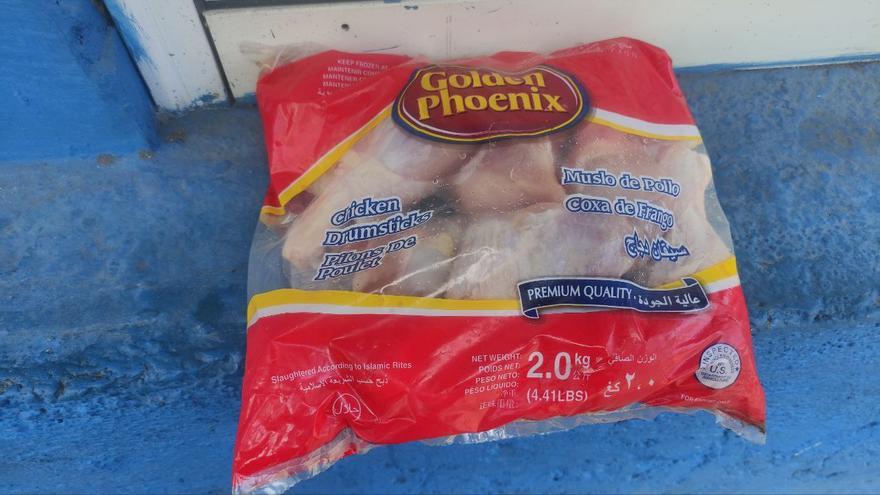
The Price of Chicken Imported From the U. S. Rises, and Cuba Purchases Less

Chicken became visibly more expensive this July, and Cuba bought less from the U.S. (14ymedio)

14ymedio bigger14ymedio, Madrid, 8 September 2022 — In July, Cuba paid the highest price in the last three years for a pound of chicken. According to the latest data from the U.S. Department of Agriculture, published by Cuban economist Pedro Monreal, the product reached $2.2/pound that month, a record in the monthly statistics available, which begin in January 2019.

To date, the highest value reached was $1.04, in May 2021. A month later, in June of last year, the cost dropped to $1.02. Since then, it was only in May of this year that it increased again.

This July, Cuba bought 20,832 tons of chicken from the U.S., 10% less than last month, when the amount exceeded 23,000, compensating for the scarce amount acquired in May 2022, which, at 14,248 tons, was the lowest since November 2020.

Despite the reduction in its purchases, Cuba had to pay 2% more this year, reflecting the increase in unit value. In Monreal’s opinion, this increase is due to “the combination of high demand for a cheap protein source, the increase in supply factors and greater operational risk.”

Since the beginning of the year, Cuba has already paid $152.3 million to the United States for the meat of this bird alone. According to data from the U.S.-Cuba Economic and Trade Council, Cuba’s purchase volume from the U.S. amounts to $167,653,569, reflecting the fact that chicken accounts for 90.8% of total spending.

According to July data, U.S. exports of agricultural products exceeded $23 million, compared to almost $20 million in the same month in 2021 and $12.8 million in July 2020. continue reading

However, annual sales have fallen by 6.2% compared to the previous year, when they reached $178,774,363.

Among the products that the Island acquires from the U.S., in addition to chicken which accounts for the largest share, are coffee, butter, cocoa, vegetable juices, olive oil, wood pulp, popcorn, corn chips and non-alcoholic beverages, as well as deodorant, soap, disinfectant and insecticide.

Despite the multi-million dollar amounts, which largely belie the regime’s discourse on the U.S.blockade — Cuba is exempt from the embargo on purchases of agricultural, pharmaceutical or basic necessities as long as it pays in advance and in cash. Cubans continue to rebuke the Government for the shortage of chicken meat, whose domestic production is rock bottom (19,700 tons in 2021) and, meaning 90% of consumption depends on imports.

On September 1, the Ministry of Internal Trade, in an article published in the official media, said that the family basket was ensured for that month. However, many responses addressed to the entity showed that chicken has not reached many people for months.

“If all that is guaranteed, how is it possible that we are in September and all the chicken of the month of August hasn’t yet been distributed; what explanation is there for that?” one user demanded to know.

Although the ministry’s spokesman replied that there were delays and that the August chicken would be distributed in September, mistrust and weariness are no longer hidden.

“Where is the August chicken, where is the meat for people with special diets, where is the children’s picadillo, where is the August coffee, where, where, where is your truth, you managers of internal trade?” asked another commentator, indignant.

Translated by Regina Anavy

____________

COLLABORATE WITH OUR WORKThe 14ymedio team is committed to practicing serious journalism that reflects Cuba’s reality in all its depth. Thank you for joining us on this long journey. We invite you to continue supporting us by becoming a member of 14ymedio now. Together we can continue transforming journalism in Cuba.
Food Prices Increased in Cuba by 52 Percent Last Year

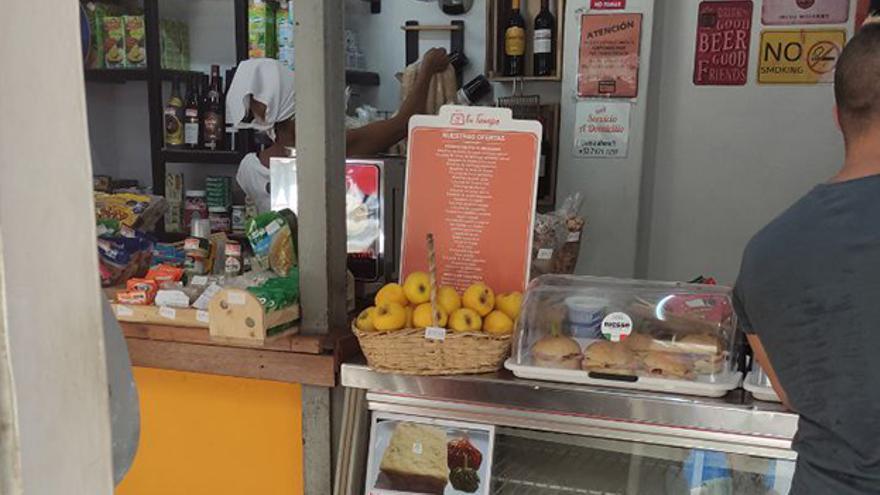
Havanans resist buying some food because of the price increase. (14ymedio)

14ymedio bigger14ymedio, Madrid, 6 September 2022 — The rise in the consumer price index (CPI) gives no respite in Cuba and increased this July by 3.35%, boosted by the unstoppable rise in food prices. Data from the National Bureau of Statistics (ONEI) reveal that, so far this year, the CPI has grown by 17.28%, and the year-on-year variation stands at 32.32%.

Although the increase is moderate, compared to the months of April and May, when it was 3.54% and 3.55% respectively, the deterioration is perceived compared to June, when prices grew by 2.83%.

Alcoholic beverages and tobacco lead the rise, as their prices increased that month by more than 6%, although the most worrying thing remains the increase in the cost of food and non-alcoholic beverages, which grew in July by 4.67% compared to the previous month and already accumulate an increase of more than 27% for the year. In addition, compared to the price they had the previous year, the increase is 52.59%.

“The year-on-year inflation level of 32% in July 2022 reflects macroeconomic imbalance. Either it is corrected, or inflation will further sink the purchasing power of the national average wage and impoverish the average household,” Cuban economist Pedro Monreal said on Monday, commenting with concern on the rise in the most recent data indicating the loss of purchasing power of Cubans. continue reading

The figures provided by ONEI put in black and white the concerns of citizens, who have been alarmed for months about the increase in the cost of almost all goods. The document reflects that the products with a greater variation compared to the previous month are intercity collective transport, which grows by almost 17%, intercity taxi, with more than 14%, bricks, more than 11%, and cigarettes and snapper, which increase in price by more than 9%.

In addition, by sector, food and non-alcoholic beverages (65.69%), restaurants and hotels (13.15%) and transport (8.21%) are the ones that experience the most variations compared to June.

The rise in the price of pork, which little by little has become a prohibitive product, is 6.33%, with a real effect that is close to 33%. But other meats are not spared: poultry varies by almost 8% and the mutton by 4.6%, while eggs rose by 2.99%.

In the list, the appearance of rice among the fastest growing foods stands out, 4.22%, which translates into a monthly effect of 6.29%, complicating access to a basic food in the Cuban culture and diet, and one with which most families have been easing the shortage of other products for decades.

Last August, the American economist Steve Hanke placed Cuba as the country with the second highest inflation in the world, behind Zimbabwe, in Africa. “The economic collapse knows no barriers in Cuba’s communist paradise,” said the professor of Economics at Johns Hopkins University. According to his calculations, on August 18, inflation reached 135%, a much higher number than that reported by ONEI, which only has the official prices in a country where the parallel market is effectively dominant.

Translated by Regina Anavy

____________

COLLABORATE WITH OUR WORKThe 14ymedio team is committed to practicing serious journalism that reflects Cuba’s reality in all its depth. Thank you for joining us on this long journey. We invite you to continue supporting us by becoming a member of 14ymedio now. Together we can continue transforming journalism in Cuba.
Mexican Authorities Rescue 11 Cuban Rafters Who Were Adrift in the Caribbean

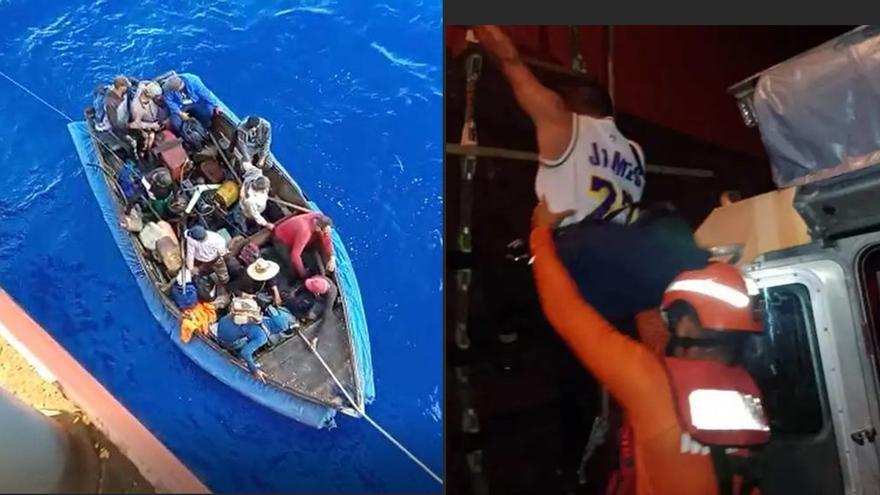
The rafters were transferred to Puerto Juárez, where they received medical assistance before being handed over to Migration. (Collage)

14ymedio bigger14ymedio, Ángel Salinas, Mexico, 8 September 2022 — On Wednesday, the Mexican Coast Guard intercepted a rustic boat with 11 Cubans on their way to Isla Mujeres, a Mexican beach in the Caribbean Sea that has been identified by the authorities as one of the escape routes in use by the rafters. According to the Navy, the migrants were intercepted 12 nautical miles from the tourist area.

“They made it known that they were adrift and had left Cuba due to the crisis there,” a Navy source who preferred anonymity told 14ymedio. “After being treated by naval health personnel and, later, transferred to the dock of the Advanced Naval Station in Puerto Juárez, it was explained to them that the National Institute of Migration would define their immigration situation.

Javier Robles, who has a catamaran that he rents tourists for snorkeling, told this newspaper that the arrival of Cubans in speedboats has increased since the end of last year.

“It’s a mafia that exploits the route through the Sian Ka’an Biosphere Reserve, where surveillance is minimal,” the fisherman explained. “I don’t know the numbers, but I do know it’s in dollars. Those who don’t bring them through the reserve bring them in through Cancun and Playa del Carmen.” continue reading

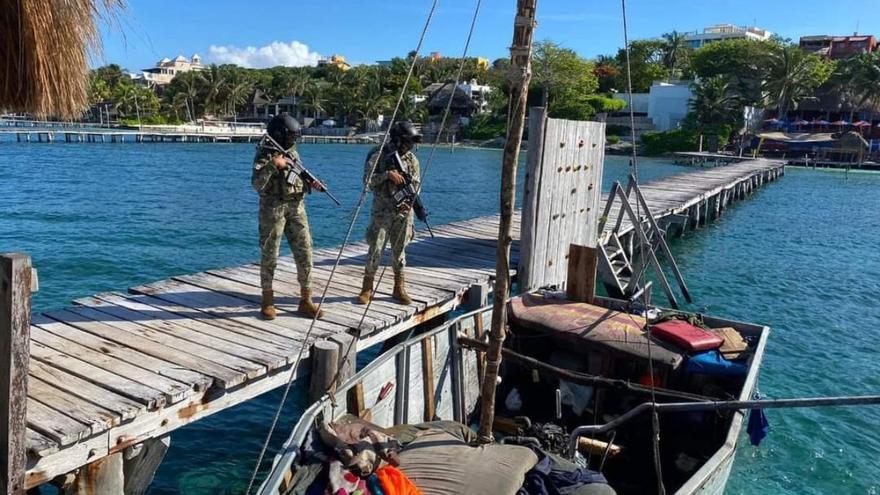
On August 25, members of the Navy toured Isla Mujeres in search of Cubans who left a raft on the beach. (Semar)

Robles said that for Isla Mujeres, most of the Cubans who enter arrive on rafts. “Less than a week ago the Navy deployed several troops in search of rafters who had arrived on a raft that they abandoned on the beach.”

Last Saturday, a foreign-flag cargo ship requested the support of the Navy to rescue 16 rafters, 13 men and three women, who were adrift 78 nautical miles from Isla Mujeres, according to Noticaribe.

According to the report “Offshore: Migrants and Shipwrecks at Sea,” prepared by the United Nations, there are also other routes for migrant-smuggling in Rosarito, the beaches of Tijuana to San Diego, Puerto Nuevo-Chula Vista and Ensenada-Popotla. There, coyote networks charge between $15,000 and $17,000 for illegal transfers to the United States. These groups recruit fishermen for trips in exchange for $1,000 per person.

The transit of Cubans through Mexico in their attempt to reach the U.S. has increased exponentially. So far in fiscal year 2022, which began in October 2021, the Border Patrol has detained 175,147 Cubans.

Translated by Regina Anavy

____________

COLLABORATE WITH OUR WORKThe 14ymedio team is committed to practicing serious journalism that reflects Cuba’s reality in all its depth. Thank you for joining us on this long journey. We invite you to continue supporting us by becoming a member of 14ymedio now. Together we can continue transforming journalism in Cuba.
A Russian Diesel Tanker Arrives at the Cuban Port of Matanzas

The ship, from the Russian Sovcomflot, travels under the flag of Liberia. (Peter Beenjes)

14ymedio bigger14ymedio, Havana, 7 September 2022 — The ship Transsib Bridge, carrying 300,000 barrels of Russian diesel, arrived on Wednesday at the port of Matanzas. The tanker, which operates under the flag of Liberia, took on the fuel at the port of Nakhodka (Russia) and, after passing through the Panama Canal, docked in Cartagena (Colombia).

On September 2, when it arrived at it scheduled destination, it didn’t unload — although Reuters speculates about a possible transfer of part of the cargo — and then updated its trajectory, declaring that it was on its way to the Island.

The oil tanker has been managed since April by Sun Ship Management, a unit of the Russian company Sovcomflot, which has been sanctioned by the United States, the United Kingdom and Canada, and has lost the insurance provided by Western companies for its fleet. continue reading

Russian fuel consumption, which plummeted in the West after the sanctions imposed following the invasion of Ukraine, has increased in Cuba in recent months. Last July, a Russian tanker, also from Sovcomflot and flying the flag of Liberia, arrived at the port of Matanzas with 700,000 barrels of oil from Ust-Luga.

The oil tanker’s cargo was valued at about $70 million, according to the price of the product at that time.

The largest amount of fuel that Cuba obtains, however, continues to come from the agreement it maintains with Venezuela. From there, 81,000 barrels of oil and derivatives a day arrived on the Island in August, one of the largest quantities recorded in recent years.

Fuel arrives at a very necessary time for Cuba. The country is immersed in a serious energy crisis, and on Monday gave the green light to the import of electric generators of greater power than previously allowed.

A month ago, Customs authorized the free importation of different products, mainly electronics and household appliances. Among them, and in order to alleviate the tense electrical situation, it allowed the bringing in of two generators with an economic value less than the current forecasts, such that after a few weeks, Customs was forced to correct the rule.

Generator owners have competed for long hours this summer with vehicle drivers to be able to get fuel. The lines even caught the attention of the international press, amazed by the number of Cubans who waited more than four days to fill a tank.

Translated by Regina Anavy

____________

COLLABORATE WITH OUR WORKThe 14ymedio team is committed to practicing serious journalism that reflects Cuba’s reality in all its depth. Thank you for joining us on this long journey. We invite you to continue supporting us by becoming a member of 14ymedio now. Together we can continue transforming journalism in Cuba.

A Lack of Three-Phase Electrical Transformers Paralyzes High-Demand Services in Cuba

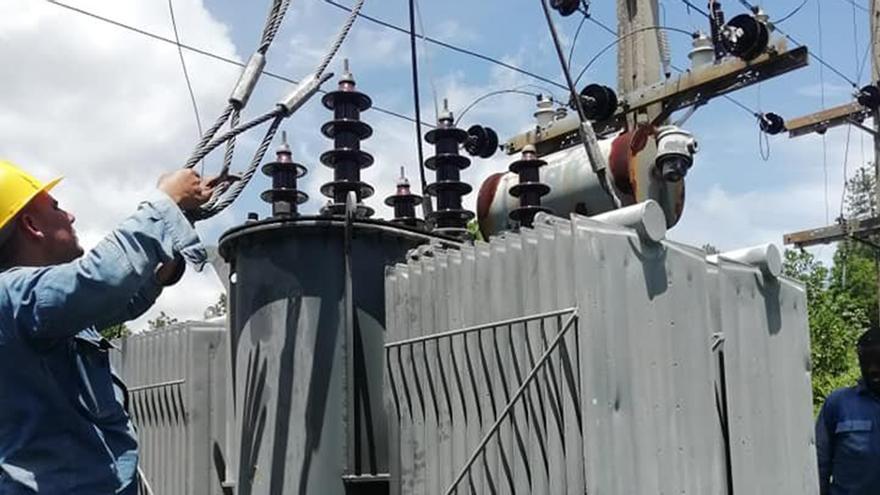
Workers change a transformer in the province of Villa Clara. (Unión Eléctrica)

14ymedio bigger 14ymedio, Mercedes García, Ciego de Ávila, 8 September 2022 — As he does very morning, Luis Andrés got on his bicycle to go to the private workshop where he fabricates bricks, blocks and tiles on the outskirts of Ciego de Ávila. But as soon as he approached and felt the silence, he knew that something wasn’t right: the electric transformer that supplies energy to the premises had broken, and he would soon know the dimension of his misfortune, because the Electric Union of Cuba (UNE) had no other of its kind to replace it.

“The oven we work with is electric and powered by a three-phase transformer that supplies 110 to 380 volts; a lightning strike damaged it and paralyzed production. We had several orders from people who are building a house and from other private businesses, but everything stopped,” Luis Andrés tells 14ymedio. He worked for years in the state sector as an accountant until he went to work in the self-employed sector.

The first reaction of the owner of the small industry in Avila was to report the break to the UNE, which took several days to get there. “When they came and saw the damage that the lightning had done, they concluded that they had to change the transformer but clarified that the country doesn’t have these three-phase devices, and they could only install a conventional, single-phase one,” explains the employee.

“When we insisted and commented that this workshop supplies a good part of the blocks and tiles that people need in these surroundings, they replied that being a private business, the State had no responsibility. In other words, if a new transformer arrives at the company later, it won’t be for us, but for a state entity that needs it.”

Seven people work in the small industry, all of them with families that depend heavily on the pay that these employees receive. For ten days, these private workers haven’t received a cent, because production has stopped and they haven’t been able to complete the orders. In addition, customers are also delayed in their construction work due to the lack of these materials. continue reading

The deficit of transformers of this type is confirmed in the Investment Department of the Electricity Union of Havana, where customers who want to install one to use the benefits of three-phase current in their private business must direct themselves. “There are difficulties, and we can’t guarantee that the device can be installed in the short or medium term,” an employee of this state agency confirms to 14ymedio.

“There are few resources right now, and what we’re doing is advancing the contract of the self-employed who need to install one of these transformers. We do all the paperwork and then the customer must keep calling to know when there is availability. But to promise that he will have it quickly, we can’t do that,” says the UNE worker.

In Havana, Enmanuel and Lucy have been trying for months to get a contract to have a three-phase transformer to supply their ceramics workshop in La Víbora. “We have gone to the commercial office of the Electric Union in the municipality, talked to several officials and explained our need to solve this as soon as possible, but they always respond that right now this equipment isn’t available.”

The couple, who have decided to start a private business in which they combine her industrial design knowledge and his experience as a potter, never believed that a metal rectangle from which cables come out could be the obstacle that would stop them for so long. “No one told us that this was going to be a difficulty the size of the Turquino Peak,” Lucy laments.

A mutual friend has recommended a faster way to solve the problem. This entrepreneur, who runs a turning business, has closed the deal with UNE employees “under the table.” “With 20,000 Cuban pesos, the three-phase transformer appears–the truck to take it, the cables to install it and even the technician who smiles at you after it’s ready,” the man says, ironically.

But Enmanuel and Lucy prefer to do everything “legally.” A path where “all phases are shut down” at the moment.

Translated by Regina Anavy

____________

COLLABORATE WITH OUR WORKThe 14ymedio team is committed to practicing serious journalism that reflects Cuba’s reality in all its depth. Thank you for joining us on this long journey. We invite you to continue supporting us by becoming a member of 14ymedio now. Together we can continue transforming journalism in Cuba.
A Century Later than Mexicans, Cubans Will be Able to Separate Their Property When They Get Married

Photograph from February 11, 2017, during a marriage on the beach of Tarará, in Havana. (EFE)

14ymedio bigger14ymedio, Havana, 8 September 8 2022 — Spanish laws provide for the separation of property in marriage since 1889; Mexican laws, since 1927. With a century of delay, Cuba hopes that the new Family Code, which will be submitted to a popular referendum on September 25, will grant “greater freedom” in marriage to decide what will happen to the property, in case of divorce, separation or death of the spouses.

With the signing of a “pact,” the couple will be able to define the economic regime that they will assume once the union is legally recognized, in addition to determining which goods are their own and which are common. “This offers legal certainty, prevents future surprises and facilitates the painful moment of separation or divorce,” says an article published on Wednesday in the official newspaper Granma.

The explanations about the separation of goods are part of the national campaign that the Cuban Government is carrying out to ensure the approval of the Code. This forecast, as explained in the article, constitutes an evolutionary step with respect to current legislation.

Until now, Article 29 of the current Family Code made it mandatory to consider the resources acquired by the formal couple, exclusively, as “community property.” This obliges the spouses, in case of separation, to share their assets equally.

In 1975, when this body of law was approved, “the participation of women in paid work was negligible,” the article justifies, so the Government had to guarantee the “compulsory support of the woman after separation.” continue reading

However, the current dynamics of life as a couple make this rule anachronistic, so the new Code responds better to “the reality of litigants,” according to Guantanamo judge Yeniseis Palacio Durruthy, interviewed by Granma.

Palacio Durruthy points out that, in many cases, the rule is taken advantage of by one of the spouses to evade responsibility for the family or validate the squandering of “common heritage.”

“It could happen that an international ’collaborator’, married and posted in another country on a mission, had left his partner at home,” but on his return, the wife had squandered his property, forcing him, by divorce, to give her even the profits of his “mission,” the judge alleges.

Another verified case, according to Palacio Durruthy, is the citizens who have been out of Cuba for a long time, “without taking direct care of the family or the home,” and whom the law must oblige to “share or compensate their spouse for the time they spent caring for the common goods.”

The new Family Code, he says, intends to break that “legal bond” and resolve any possibility of dispute even before signing the marriage certificate. If approved, the couple may go to a notary and opt for a “mixed regime” or a “separation of property.”

In any case, this would not be an obligation of citizens but “a right that is exercised or not, at will,” clarifies Dairon Lorenzo Salazar Caramanzana, a specialist in Criminal Law of Collective Law Firms in Guantánamo.

In addition to redefining the economic regime of the couple, Granma concludes, the new Family Code will offer possibilities for greater consensus of the couple regarding the order of the children’s surnames*, their religious affiliation and family coexistence.

*Translator’s note: Traditionally, Cuban children carry both parents’ surnames, with the father’s name first, a practice common throughout Mexico and Central and South America.

Translated by Regina Anavy

____________

COLLABORATE WITH OUR WORKThe 14ymedio team is committed to practicing serious journalism that reflects Cuba’s reality in all its depth. Thank you for joining us on this long journey. We invite you to continue supporting us by becoming a member of 14ymedio now. Together we can continue transforming journalism in Cuba.