The kits will be purchased directly from small local cooperatives on the Island to support local production.
Archive image of the arrival in Cuba of a shipment of Spanish humanitarian aid / EFE / Rolando Pujol
14ymedio /EFE/, Madrid, March 16, 2026 – The Spanish Agency for International Development Cooperation (AECID) is preparing to provide food and medicines to 5,000 people in Cuba, where the humanitarian situation has deteriorated as a result of the severe energy crisis affecting the island. About twenty photovoltaic panels will also be sent.
Specifically, according to the agency in a statement, a new aid package will be launched that includes 1,000 food kits and hygiene kits intended to cover the basic needs of about 5,000 people. These kits will be purchased directly from small local cooperatives in Cuba, helping to support local production.
In addition, the agency, which depends on the Ministry of Foreign Affairs, will send between 15 and 20 photovoltaic panels of 12 kW each to support the energy needs of social centers, such as schools or senior centers, benefiting approximately 15,000 to 20,000 people.
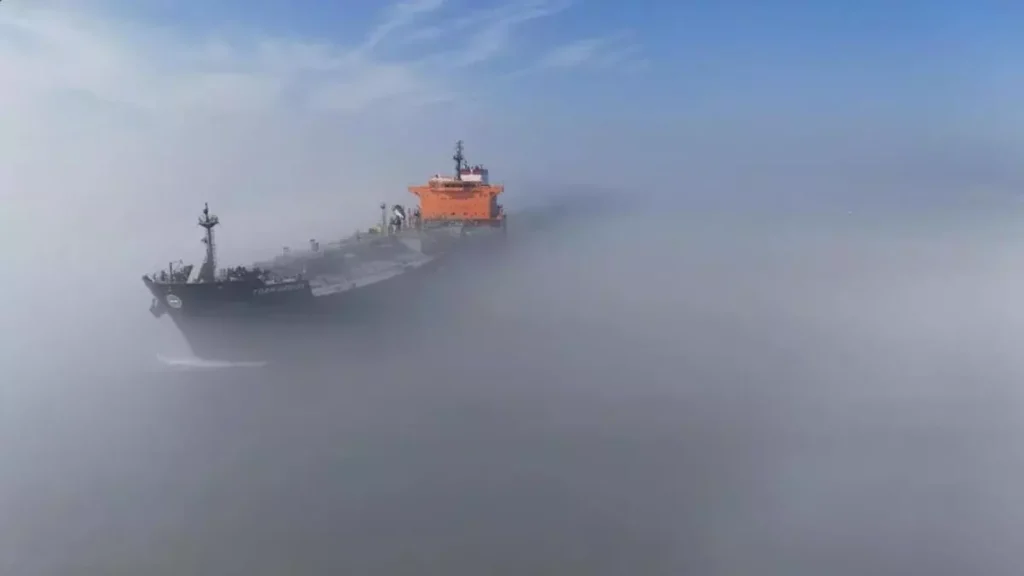
AECID emphasized that various international organizations have warned that the shortage of fuel and energy has reduced the operation of critical infrastructure, although it did not at any point mention the blockade on fuel shipments from Venezuela imposed by the United States, which has ultimately worsened a situation that was already complicated. continue reading
AECID will activate its emergency agreement with the Spanish Red Cross, valued at 160,000 euros, in order to contribute to the supply and installation
According to the agency, barely 500 health centers remain operational for emergencies, and millions of people have problems accessing drinking water and sanitation, with 4.5 million at risk of food insecurity.
Under these circumstances, Spain maintains close coordination with the Directorate-General for European Civil Protection and Humanitarian Aid Operations of the European Commission (ECHO), and with humanitarian actors present in the country to identify new opportunities for support that would expand assistance to the affected population, AECID assured.
In addition, AECID will activate the emergency agreement with the Spanish Red Cross, valued at 160,000 euros, in order to contribute to the supply and installation of photovoltaic systems in medical facilities, in collaboration with the Cuban Red Cross.
This new package adds to the one million euros announced last month to support the response of international organizations in the areas of food and essential medical supplies. That contribution has been channeled through the World Food Programme (WFP) and the Pan American Health Organization (PAHO).
Translated by Regina Anavy
______________________
COLLABORATE WITH OUR WORK: The 14ymedio team is committed to practicing serious journalism that reflects Cuba’s reality in all its depth. Thank you for joining us on this long journey. We invite you to continue supporting us by becoming a member of 14ymedio now. Together we can continue transforming journalism in Cuba.
The two Castro brothers committed crimes against the democratic countries of the hemisphere and directly against the United States on countless occasions.
Raúl Castro was the most loyal and efficient operator that Fidel had throughout his malevolent existence. / Cubadebate
14ymedio, Miami, Pedro Corzo, March 15, 2026 – It would be something like divine justice if the chief prosecutorial figure of Castroist totalitarianism were prosecuted by a U.S. court, considering that RaúlCastro was the most loyal and efficient operator Fidel had throughout his malevolent existence.
The two committed crimes against the democratic countries of the hemisphere and directly against the United States on countless occasions, such as the shootdown over international waters of the planes of Brothers to the Rescue, which caused the deaths of four activists: three U.S. citizens and one resident.
Indeed, we view with great satisfaction that the Attorney General of Florida has initiated an investigation into the downing of the two aircraft, a crime that would not have occurred if RaúlCastro, who at the time was Cuba’s minister of defense, had not authorized it. Furthermore, we suggest to the authorities that it would be very appropriate to bring to light the other crimes in which the executioner of Loma de San Juan was involved.
In 1993, RaúlCastro was investigated by another Florida jury for involvement in drug trafficking activities
For example, in 1993, RaúlCastro was investigated by another Florida jury for involvement in drug trafficking activities. However, the investigation was closed due to a lack of political will on the part of the Clinton administration. Raúl was also accused of being the leader of a conspiracy aimed at introducing tons of cocaine into the United States, with Cuba serving as the platform. continue reading
The Castro brothers supplied weapons and explosives to extremist groups, fostered espionage networks such as the Wasp Network, and seduced several U.S. officials into spying against their own country. Let’s not forget that the Castros are counted among the pioneers in organizing, with the backing of a government structure, the introduction and distribution of narcotics within the territory of the United States.
On the other hand, the system both brothers imposed in Cuba implemented a campaign of subversion and terrorism that affected the entire hemisphere, with repercussions in this country, including the assassinations of U.S. government officials, among them Dan Mitrione in Uruguay and Ambassador to Guatemala JohnGordon Mein, executed by subversive groups trained and supplied by the Castroist system.
A Castroist agent named Manuel Hevia Cosculluela provided information about Mitrione to the Tupamaros, the terrorist group that carried out the crime.
The case of Mitrione was the most scandalous. A Castro agent named Manuel Hevia Cosculluela provided information about Mitrione to the Tupamaros, the terrorist group that carried out the crime.
A sector of the Cuban exile community has always supported the international prosecution of the brothers Fidel and RaúlCastro, an effort that has produced no positive results because, despite the evidence, no government has shown the political determination to prosecute these criminals.
RaúlCastro, aside from being an executor, served as the prosecutor in all the major judicial proceedings carried out by Castroism. He orchestrated a spurious trial that ended in the 71 executions at Loma de San Juan on January 11, 1959, in Santiago de Cuba, and he performed the same role in the trial against Huber Matos and his companions in December of that same year.
Another trial in which he assumed the role of prosecutor, closely resembling Robespierre, was the case of the so-called “micro faction” in 1967.
It is appropriate to recognize that the bloodiest purge of Castroism took place in 1989 with the Ochoa case
That episode was an enormous scandal. The accused, more than thirty people, were sentenced to various prison terms, including one man who became deeply aware, perhaps more than most, of the damage the new system would cause the Cuban people: Ricardo Bofill Pagés, who years later, while in prison, would lay the groundwork for promoting new forms of struggle against totalitarianism.
The constant internal conflicts within Castroism, which were genuine fights among hyenas, led to the dismissal in 1968 of Ramiro Valdés, the once all-powerful and bloodthirsty minister of the interior, apparently as a result of his rivalry with the brother of the pharaoh. Nevertheless, “Ramirito” was irreplaceable in his role as a hardliner, which is why he has never ceased to be among the most notorious executioners of the system.
It is appropriate to recognize that the bloodiest purge of Castroism, aside from the numerous and unexplained deaths of generals and doctors in recent years, took place in 1989, when General Arnaldo Ochoa and three other high-ranking officers of the armed forces were sentenced to death and executed by firing squad.
Unfortunately, the Cuban people are not in a position to judge their executioners, so let us hope they will be prosecuted by our friends.
Translated by Regina Anavy
______________________
COLLABORATE WITH OUR WORK: The 14ymedio team is committed to practicing serious journalism that reflects Cuba’s reality in all its depth. Thank you for joining us on this long journey. We invite you to continue supporting us by becoming a member of 14ymedio now. Together we can continue transforming journalism in Cuba.
The UNE says that no breakdowns were reported at any of the thermoelectric plants that were operating at the time the system was disconnected.
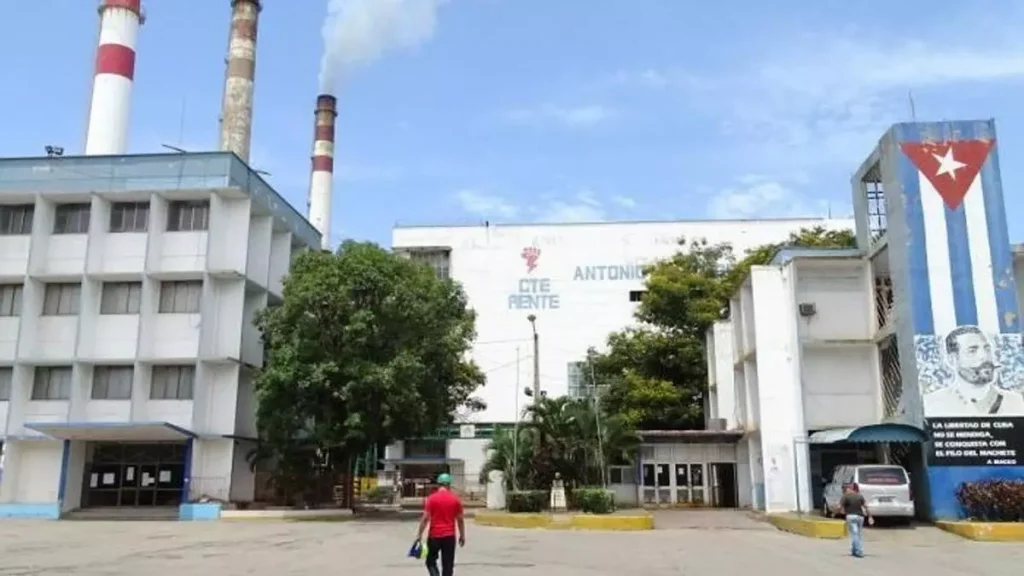
Archived image of the CTE Antonio Guiteras, in Matanzas. / Granma
14ymedio, Madrid, March 16, 2026 — A total shutdown of the national power grid (SEN) on Monday left the entire country in a simultaneous blackout around 2:00 PM. The Cuban Electric Union (UNE) reported the incident in a brief statement published on the Havana Electric Company’s Telegram channel, indicating that they were beginning to “implement restoration protocols,” but without providing any further explanation.
In the capital, the power went out in a strange way. “It was like turning off, turning back on, and then immediately turning off again,” said a resident of Nuevo Vedado. Residents in other provinces also reported the sudden power outage.
An hour later, in another message, the state-owned company detailed that no breakdowns were reported “in any of the thermal units that were operating at the time of the SEN disconnection.” It was precisely a breakdown at the Antonio Guiteras thermoelectric power plant (CTE) in Matanzas that caused the partial blackout on March 4, which left two-thirds of the country without power, from Camagüey to Pinar del Río.
“It was like turning off, turning on, and then turning off again immediately,” says a resident of Nuevo Vedado.
Monday’s outage was the first total collapse of the National Electric System (SEN) so far in 2026, and the sixth in a year and a half on the island. Between late 2024 and early 2025, five nationwide or regional blackouts were recorded, some caused by failures in key units and others by extreme generation deficits, which forced the shutdown of entire blocks to prevent further damage. On several occasions, the total collapse of the SEN left the country in darkness for hours, with restoration processes slow and phased by microsystems.
The recovery after the March 4th disaster was difficult, due to the lack of fuel – exacerbated in these two months of an oil blockade – which is necessary to operate continue reading
precisely those microsystems or “microislands” to serve specific areas.
Shortly after 3:30 in the afternoon, UNE reported that “microsystems in several territories” were beginning to operate, and twenty minutes later, they assured that the Energás plant, operated with the Canadian company Sherritt in Boca de Jaruco, already had “a generating unit in service.”
As is usual in similar situations, the authorities said that “the restoration will be done gradually as conditions in the National Electric System allow.”
The Mesa Redonda [Round Table] program announced that the interview with Oscar Pérez-Oliva Fraga would take place at 7:00 pm
The prolonged power outages since the most recent partial system failure, which have lasted more than three days in some areas, have reignited the flames of indignation across the island, which awoke this Monday after its tenth consecutive night of pot-banging protests. The climax of these protests occurred last Friday in Morón (Ciego de Ávila), where dozens of residents took to the streets chanting “Freedom.”
The march traveled through different areas of the city to the rhythm of banging pots and pans, reached a police unit and ended in front of the headquarters of the Communist Party of Cuba, where the protesters stormed the building, threw furniture and banners into the street and lit a bonfire in the middle of the public road.
The Mesa Redonda program announced that the interview with the Minister of Foreign Trade and Foreign Investment, Oscar Pérez-Oliva Fraga , announced last Friday by President Miguel Díaz-Canel, will take place at 7:00 pm, an unusual time, likely due to the total power outage. It is expected that during the interview, the Vice Minister, who is also the great-nephew of Fidel and Raúl Castro, will provide details about what he already confirmed to NBC News: that Cubans abroad, including those residing in the United States, will be able to invest in private businesses on the island.
Translated by Regina Anavy
______________________
COLLABORATE WITH OUR WORK: The 14ymedio team is committed to practicing serious journalism that reflects Cuba’s reality in all its depth. Thank you for joining us on this long journey. We invite you to continue supporting us by becoming a member of 14ymedio now. Together we can continue transforming journalism in Cuba.
The privatization of sports on the Island, with the injection of capital that would entail, seems to be the only solution.
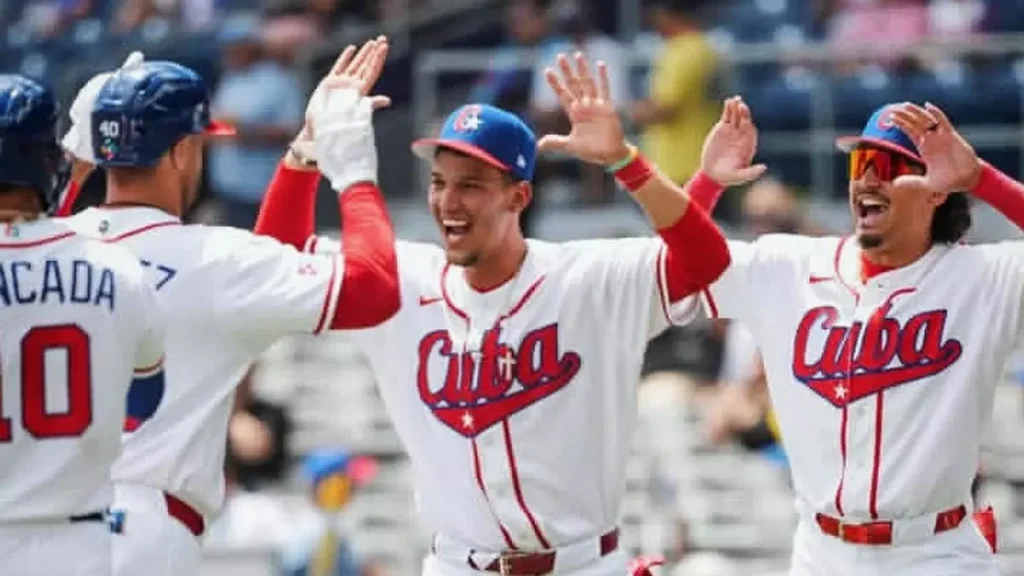
During the group stage, Cuba had the third-worst team batting average at .168, surpassed only by Czechia’s .167 and Brazil’s .130. / Instagram/Ariel Martínez
14ymedio, Matanzas, March 15, 2026 – Cuba’s baseball team recorded its worst performance in World Baseball Classic history by failing to advance past the group stage in the 2026 edition. The team managed by Germán Mesa finished third in Group A after starting with two victories against Panama (3–1) and Colombia (7–4) and ending with losses to Puerto Rico (1–4) and Canada (2–7), the latter with too many defensive errors in a key game for qualification to the quarterfinals.
Without a doubt, the lack of hitting limited the chances of victory for this Cuban squad. With bat in hand during the group stage, Cuba had the third-worst team batting average at .168, only by the Czech Republic’s .167 and Brazil’s .130 were worse.
In terms of on-base percentage (OBP), the Cubans ranked fourth worst at .277, behind Israel (.261), the Czech Republic (.230), and Brazil (.217). To make matters worse, together with the Czechs they were the third team that struck out the most, with 41 strikeouts, a negative statistic in which Great Britain (44) and Brazil (50) occupied the top spots.
Given this scenario, in which Cuba hit rock bottom on the biggest stage of international baseball, a series of reforms will be needed when assembling the representatives of the Four Letters for the next World Baseball Classic.
A first step would be to eliminate internal political restrictions that prevent access to the best available players
A first step would be to eliminate internal political restrictions that prevent access to the best available players. Although Cuba already calls up players from the U.S. Major League system, there is still reluctance to reintegrate players who have defected from sports delegations abroad, such as Lourdes Gurriel Jr., José Iglesias, and Aroldis Chapman, among others. In addition, players born outside Cuba but of Cuban descent who are willing to represent the Island are not included either. That was the case of Cuban American Zach Neto, whose father told 14ymedio that he wished to play in the Classic for Cuba but was not continue reading
allowed to.
As for athletes who left contracts under the control of the Island’s sports authorities, there is also no guarantee that all of them will be readmitted. Although Yariel Rodríguez was allowed to pitch again in a Classic after abandoning his contract with the Chunichi Dragons in the Japanese League, it was never clarified whether other baseball players in the same situation such as Oscar Colás or Julio Pablo Martínez would be allowed to wear the uniform of the Four Letters again.
Experience at the highest level of Major League Baseball (MLB) is not only needed among players, but also within the coaching staff. Having coaches familiar with organized baseball in the United States is vital to strengthen the team project and encourage the top stars to take part. Above all, Cuba needs to appoint a general manager who can operate in the United States, negotiate each player’s availability with the organizations, and meet face to face with the potential stars of a future roster. In that regard, it may be necessary to take lessons from other Caribbean baseball powers.
Last but not least, it is essential to restore the strength of the local baseball championship. In 2006, Cuba managed to finish as runner-up in the World Baseball Classic using only players from its National Series. However, over time, the massive exodus suffered by the country, its decline across all branches of the economy, and its political and social collapse have contributed to the deterioration of the state-run sports structure. Government funds have lost the capacity to sustain the training of high-performance athletes and to turn domestic tournaments into a spectacle.
For nearly seven decades, since the rise of Castroism to power, Cuban sports have suffered excessive government interference for propaganda purposes and have been stripped of professionalism. Today, the privatization of sports in Cuba, with the capital injection it would bring, appears to be the only solution to prevent national passions such as baseball from dying through neglect. And perhaps, to correct the taboos that persist in our sport, it will be necessary to correct the political system that gave rise to them.
Translated by Regina Anavy
______________________
COLLABORATE WITH OUR WORK: The 14ymedio team is committed to practicing serious journalism that reflects Cuba’s reality in all its depth. Thank you for joining us on this long journey. We invite you to continue supporting us by becoming a member of 14ymedio now. Together we can continue transforming journalism in Cuba.
According to the newspaper, the Government will announce it this Monday during a television appearance by Minister Oscar Pérez-Oliva.
Empresarios manifiestan interrogantes respecto de las garantías que La Habana estaría dispuesta a ofrecer / 14ymedio
14ymedio, Havana. March 15, 2026 – “Perhaps the time has come,” says Joe García, former Democratic congressman for Miami and former executive director of the Cuban American National Foundation, quoted by El Nuevo Herald. García is referring to an economic reform that could open the door to one of the most significant changes on the Island in decades: allowing Cubans living abroad, including Cuban Americans, to invest in and own private businesses in the country.
The announcement, according to the media, would come this Monday, the same day a public appearance is expected by Oscar Pérez-Oliva, the great-nephew of Raúl and Fidel Castro and vice prime minister and minister of Foreign Trade and Foreign Investment, as previously announced by Cuban president Miguel Díaz-Canel.
Sources cited by the newspaper say that Cuban authorities have prepared this package of reforms, which would also allow investment capital in the private sector, as a way to attract liquidity, technologies, and international experience that would benefit the Island. Currently, many private businesses in Cuba receive informal financing from relatives abroad, especially from the United States, something the reform would explicitly legalize.
These measures come amid pressure from the Trump administration, including the oil blockade following the U.S. military intervention in Venezuela last January, and at a time when talks between the two countries are taking place, as acknowledged by Díaz-Canel last Friday. continue reading
The president said that a set of measures has been adopted aimed at easing current bureaucratic barriers
During an appearance before state media and international outlets friendly to the Government, when asked about Cuban Americans who allegedly want to invest in the country, the president said that a set of measures has been adopted aimed at easing current bureaucratic barriers. The decisions will be announced Monday in an appearance by Pérez-Oliva on a television program that could be, he said without full certainty, the Mesa Redonda [Round Table] program.
“The return of the Cuban diaspora is imminent,” says a source familiar with the issue interviewed by the Herald, who also raises doubts about how quickly all the measures agreed upon behind closed doors will be implemented. Laws and regulations approved by the Cuban Government have sometimes taken months or even years to be fully developed.
Some entrepreneurs in Miami interviewed by the newspaper expressed questions about the guarantees Havana would be willing to offer to provide legal certainty to investors. Such guarantees would require modifications to Cuban legislation and, ultimately, to the Constitution itself. Without those guarantees, they expect the country to receive few large-scale investments.
On this matter, Sebastián Arcos, who directs the Cuban Research Institute at Florida International University, said in an interview with Local 10 News that “obviously, they are more interested in making money than in the freedom of the Cuban people.”
“Obviously, they are more interested in making money than in the freedom of the Cuban people”
The academic, born in Havana and experienced in monitoring human rights violations on the Island, also noted that “there cannot be an economic recovery unless there is first a political reform,” warning that doing business in Cuba “would be too risky” for now.
Carlos Giménez, a U.S. congressman of Cuban origin, also emphasized the importance of a profound change in the country. Through X, he stated that “there will be no investment from the United States unless a major political change takes place on the Island.” He also made it clear that “the regime needs us; the United States does not need them.”
Despite these warnings, some entrepreneurs say they are ready for the new opportunities that could open up in the country. That is the case for a group in Miami’s Little Havana.
“Hopefully now that things are changing very quickly,” says Fidel Asís López, owner of The Havana Collection on Calle Ocho, which specializes in guayabera shirts. When asked whether he would invest in Cuba, Asís López responded: “In a free Cuba, 100% for sure.”
Translated by Regina Anavy
______________________
COLLABORATE WITH OUR WORK: The 14ymedio team is committed to practicing serious journalism that reflects Cuba’s reality in all its depth. Thank you for joining us on this long journey. We invite you to continue supporting us by becoming a member of 14ymedio now. Together we can continue transforming journalism in Cuba.
The newborn was found inside a box, on Martí Street, between Máximo Gómez and Béquer.
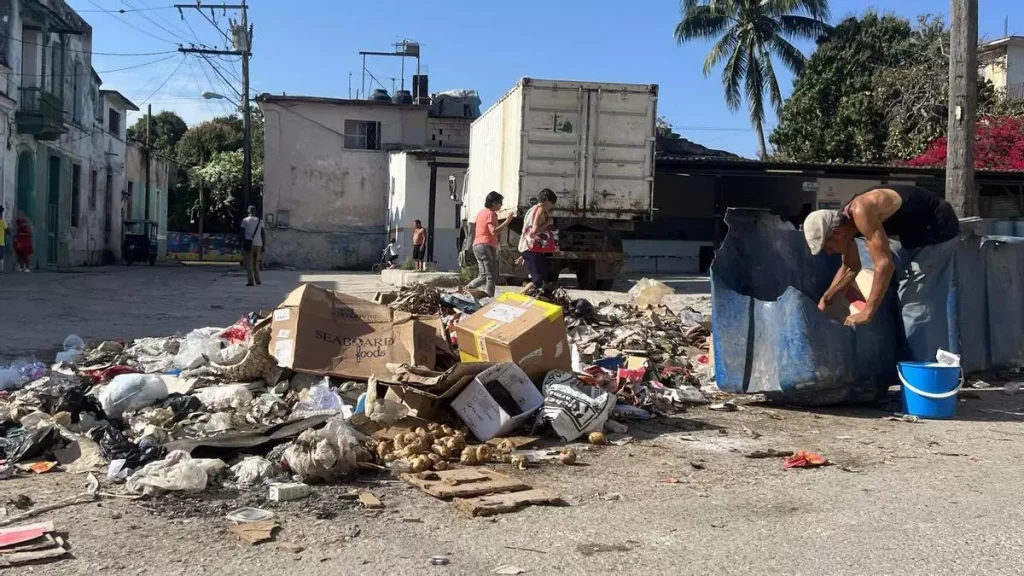
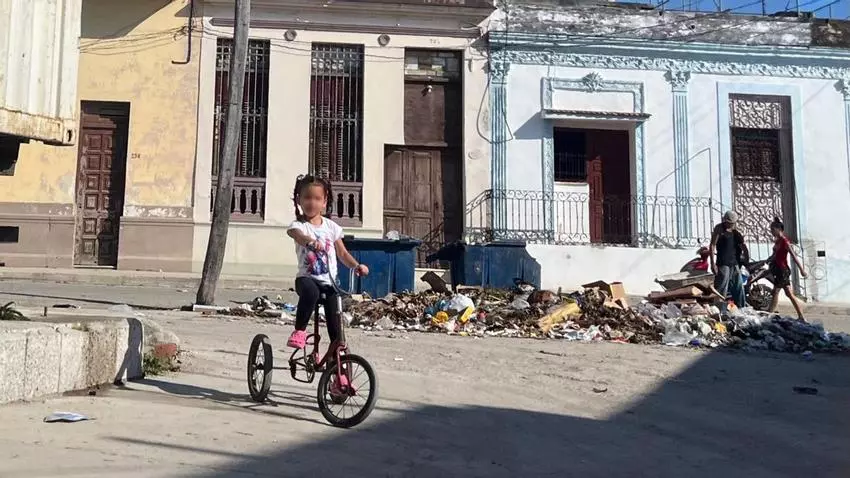
One of the many garbage dumps that fill the streets of Guanabacoa, in Havana / 14ymedio
14ymedio, Havana, March 15, 2026 – Residents of the Havana municipality of Guanabacoa found the body of a newborn baby in a garbage dump on Friday. According to residents of the area who spoke with 14ymedio, the baby was found inside a box on Martí Street, between Máximo Gómez and Béquer, by municipal sanitation workers who were collecting waste at the site.
The discovery occurred during the early hours of the morning, when workers were checking the garbage accumulated at the collection point. Witnesses say the baby still had the placenta when it was discovered, indicating that it had been born shortly before being abandoned.
“It was something very hard to see. Nobody expects to find a baby in the garbage,” said Yaneisy, a resident of the neighborhood who witnessed the aftermath of the discovery.
“It was something very hard to see. Nobody expects to find a baby in the garbage,” said Yaneisy, a resident of the neighborhood who witnessed the moment after the discovery. According to her testimony, several people began calling the authorities and medical services to come to the site. Some neighbors commented that the newborn may have been between eight and nine months gestation and weighed around seven pounds, although these details have not been officially confirmed.
So far, no details have been released about the identity of the mother or the circumstances under which the baby was abandoned. No public information has been provided about the condition of the baby or about the progress continue reading
of a possible investigation related to the case.
Children and elderly people live among garbage scattered throughout the municipality of Guanabacoa, in Havana. / 14ymedio
Similar cases have been reported in recent years in different parts of Havana, such as the case of a baby girl found in June 2025, still with the umbilical cord, in the municipality of Cerro.
Cuba was one of the first countries in Latin America to legalize abortion. However, today many of these procedures are carried out without anesthesia due to a lack of supplies and the precarious conditions of the healthcare system. This is compounded by the well-known shortage of condoms and contraceptive pills.
According to a report from the National Office of Statistics and Information published in May 2024, the capital recorded 27,864 deaths, almost triple the 10,783 births counted during the same period.
Translated by Regina Anavy
______________________
COLLABORATE WITH OUR WORK: The 14ymedio team is committed to practicing serious journalism that reflects Cuba’s reality in all its depth. Thank you for joining us on this long journey. We invite you to continue supporting us by becoming a member of 14ymedio now. Together we can continue transforming journalism in Cuba.
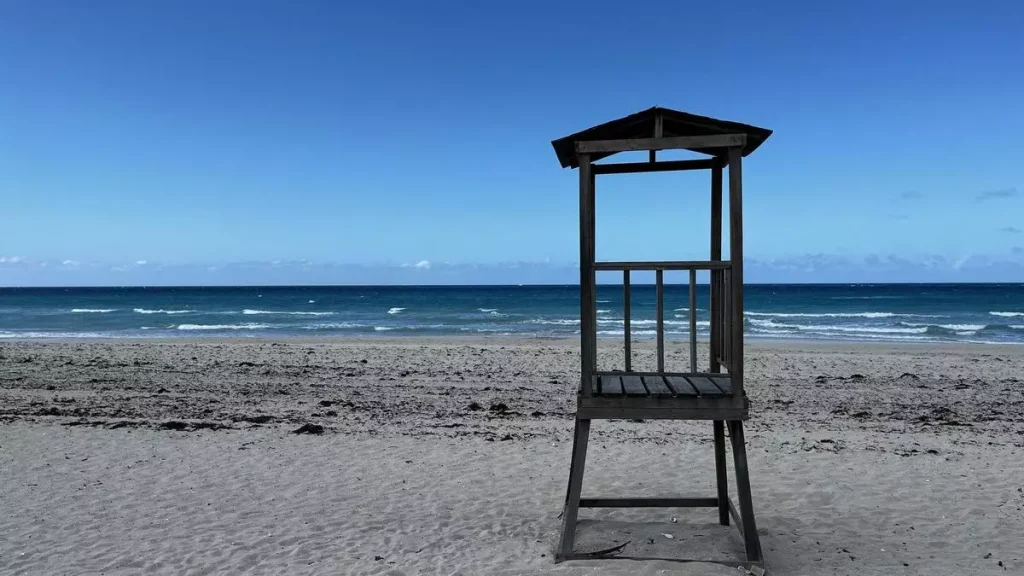
The wind and the occasional carriage drivers urging on their horses are the only sounds accompanying the decline of Varadero, once considered the best beach in the Caribbean islands. / 14ymedio
14ymedio, Pablo Padilla Cruz, Varadero (Matanzas), March 15, 2026 – If there are sectors where the deep crisis currently affecting Cuba is most painfully reflected, they are precisely those that were once the backbone of its economy. Tourism, for example, with the suspension of flights due to the lack of fuel, now threatens to become the same kind of corpse that the sugar harvest has turned into.
One of the most affected places has been the Island’s main international destination, Varadero. Over the last decade, the resort area of Matanzas prided itself on receiving more than one million travelers annually, but that figure has dropped drastically. Today, it faces a decline of 70%, a number that many workers in the sector never imagined they would experience.
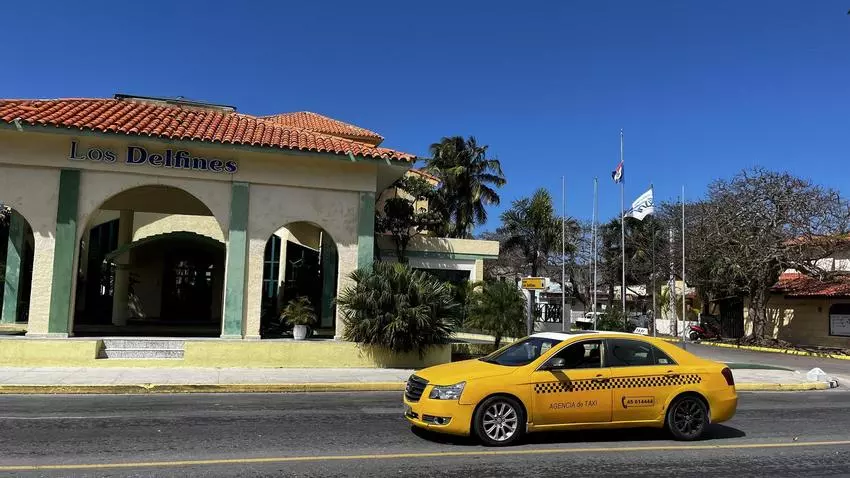
Hotel Los Delfines, on 32nd Street in Varadero, closed / 14ymedio
“Varadero is in chaos right now,” says a worker at the Hotel Los Delfines, on 32nd Street in the city. “There is no water in this area, the electricity goes out constantly, and that’s why they decided to close the hotel and concentrate the tourists in the Club Tropical hotel.” The closure of accommodations and the “compaction” of visitors in other hotels has been one of the measures taken by the regime following the blockade of all fuel entering the Island after the United States intervention in Venezuela on January 3, and the subsequent threat by Donald Trump to third countries that send oil to Cuba.
The employee’s words reflect the difficult situation the entire sector is experiencing. “At first they brought us to the hotel, and we stayed three days working, then they sent us home for another three days. But soon they started telling us, ‘don’t come anymore.’ That way, a month would go by without them calling me to work again,” he explains. This situation has become common in many hotels, where employees are sent home without prior notice, hoping to be called back when the situation allows.
Hotel Los Delfines, on 32nd Street in Varadero, closed / 14ymedio
The uncertainty is palpable. This worker, who prefers not to give his name, says that job options in this context are few. “They offered me jobs in Municipal Services or as a guard at the Matanzas cemetery, but that’s not continue reading
what I studied. It’s a job that not even the unemployed want to take, and the worst thing is that they present it as if it were a solution,” he says with frustration.
Maday, a clerk at a café in central Varadero, also recounts her experience with a mixture of resignation and concern. “Fortunately, I can still work, but the number of customers keeps getting smaller. Cubans, who used to help us on a bad day, hardly come anymore. Besides, I have to spend 200 pesos to get to Varadero from Cárdenas, and another 500 on an electric car to return home in the afternoon,” she says. That means a daily expense of 700 pesos, which is hardly compensated by the tips she receives. The tourists simply are not enough to maintain the flow of income.
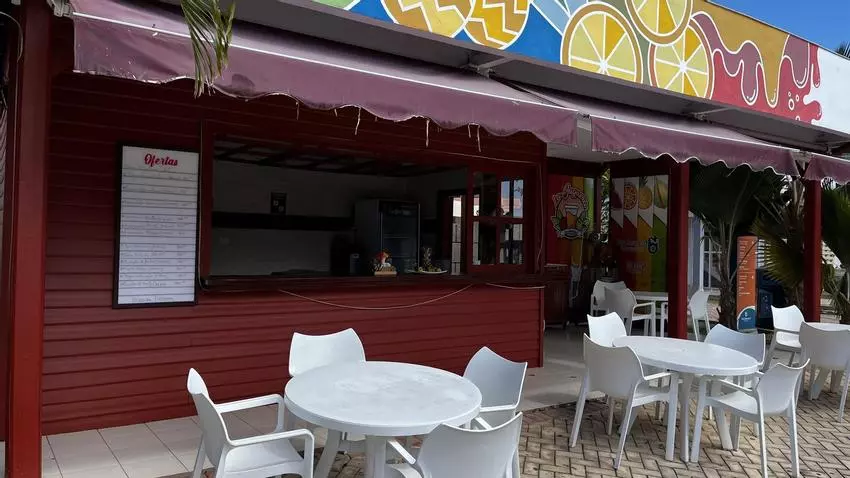
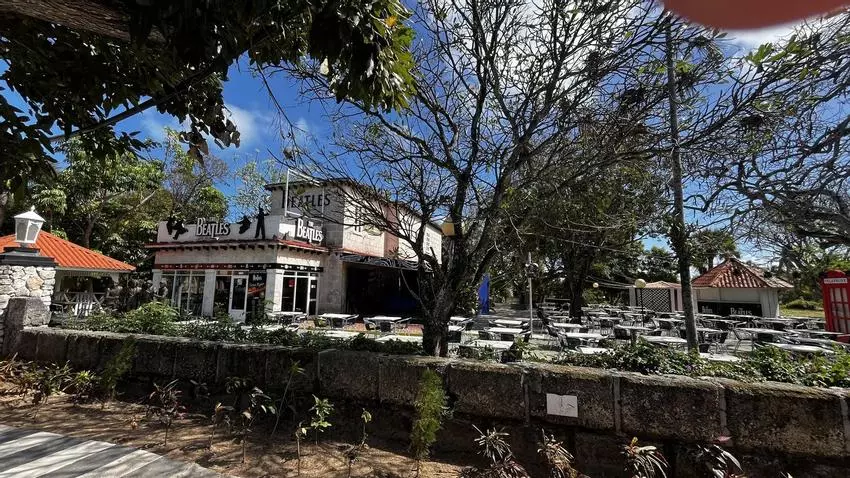
“The Beatles” Bar in Josone Park in Varadero (Matanzas) / 14ymedio
“If you want to be ‘interrupted’ [work on specific days], the job options they offer are in an organoponic garden or in municipal services,” adds Maday, sadly: “They offer me these positions just to complete the paperwork, but in reality I have no options.”
Meanwhile, buy-and-sell groups on social media in cities like Matanzas and Cárdenas have seen the demand for work multiply. Clerks, cooks, DJs, and artisans are trying to find their way in an oversaturated market, seeking to survive amid the uncertainty of the private sector. However, the situation becomes even more complicated for workers at craft fairs, who historically have depended on tourism to sustain their work.
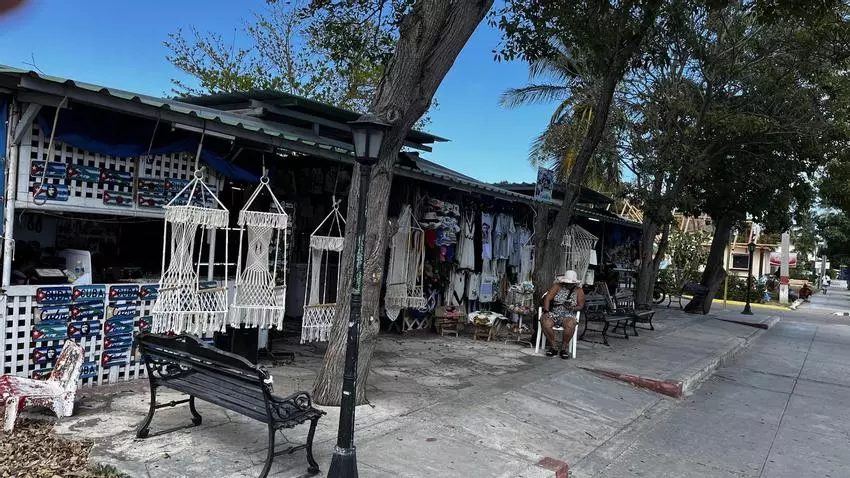
Raúl, a visual artist who has spent nearly two decades working in crafts, laments the crisis affecting his sector. “I’ve seen good and bad moments over the years, but what we’re living through now is unprecedented,” he says. “With Covid-19, we knew the situation would improve someday, but now we’re facing a crisis with no short-term solution.” Like other workers in the sector, Raúl notes that the Varadero craft fairs, which once received thousands of tourists, are now deserted. “Varadero adapted to receive more than one million foreigners a year, but now not even 250,000 arrive. The few who survive are those who have tables inside the hotels,” he points out.
“The Beatles” Bar in Josone Park in Varadero (Matanzas) / 14ymedio
Competition among artisans has increased significantly, making it even harder to generate sales. “When a tourist shows up, there are so many of us competing that we barely manage to make anything,” Raúl says. And, to make matters worse, the National Fund for Cultural Assets, which manages the spaces for the fairs, demands payments for the use of the space, another burden for the already impoverished workers in the sector.
Beatriz, a Spanish tourist who has been returning to Varadero for ten years, has also witnessed the crisis affecting the Island. “I knew the situation was difficult, but I didn’t think it was this bad,” she comments. Bea, as the workers at the Cuatro Palmas hotel call her, considers herself almost part of the family in Varadero, since she has returned year after year. “This beach is the best in the world, but the situation has become unsustainable. The electricity goes out too often, and I’ve even had to bring eggs from Spain,” she says with frustration.
Hotel Barlovento, in Varadero, also closed / 14ymedio
Beatriz also notes a change in her relationship with Cubans. “They no longer see me here as a foreigner but as an ATM,” she says regretfully. “No matter what I give away, they always want more.” The friendliness and warm atmosphere she once felt on the Island have been overshadowed by the desperation of those who depend on tourism to survive. “I don’t know if I’ll return next year. If I do, it will be for less time, or maybe I’ll change destinations,” she concludes, hinting that the crisis may have marked the end of her relationship with Varadero.
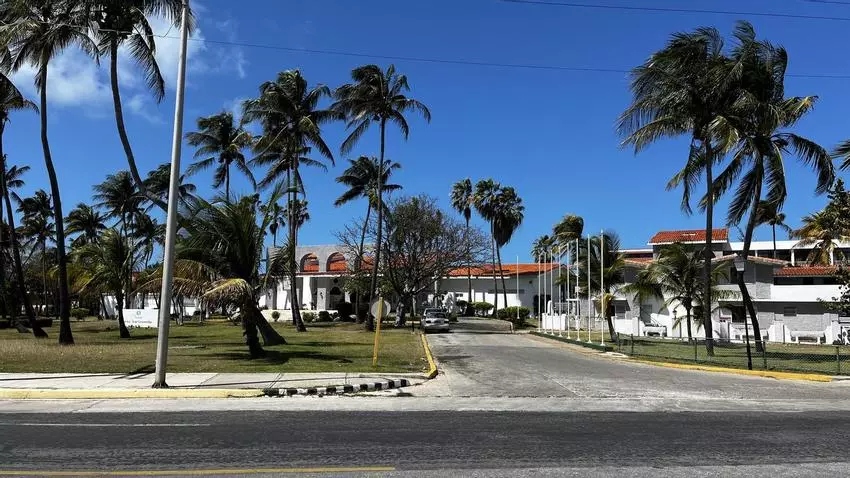
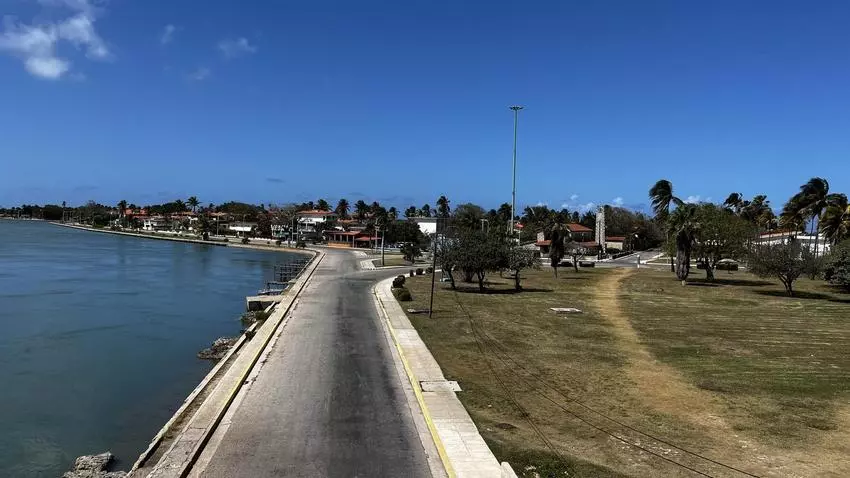
The city, which was once the locomotive of the Cuban economy, now lies almost empty. Buildings are half-repaired, the lack of potable water and electricity is constant, and only a few residents walk through streets once crowded with tourists. Hotels, private hostels, and recreational centers remain mostly closed. The laughter of tourists is gone, and the bustle of workers returning home has faded. Now, the wind and the occasional carriage drivers urging on their horses are the only sounds accompanying the decline of what was once considered the best beach in the Caribbean islands.
Hotel Barlovento, in Varadero, also closed / 14ymedio
Translated by Regina Anavy
______________________
COLLABORATE WITH OUR WORK: The 14ymedio team is committed to practicing serious journalism that reflects Cuba’s reality in all its depth. Thank you for joining us on this long journey. We invite you to continue supporting us by becoming a member of 14ymedio now. Together we can continue transforming journalism in Cuba.
Tensions in the Strait of Hormuz and the U.S. attack on Iran’s Kharg Island increase oil volatility and threaten more global inflation.
View of an oil tanker that had to divert to avoid passing through the Strait of Hormuz / EFE/Olivier Hoslet
EFE (via 14ymedio), Madrid, March 14, 2026 – The war being waged by the United States and Israel against Iran since February 28 has driven the price of oil up by 37% in just two weeks, with a barrel around 100 dollars and a 64% increase so far this year.
Since the outbreak of the war, the price of Brent crude, the benchmark in Europe, has fluctuated continuously depending on the evolution of tensions in the Middle East and various statements by U.S. President Donald Trump about the duration of the conflict.
Last Monday, Brent climbed 30% and reached 119.50 dollars, which caused stock markets to plunge. However, that same day Trump stated that the war with Iran was practically over and crude began to fall, reaching 90 dollars.
The volatility that day allowed Brent to record, first, the largest increase in its history, of 26.7 dollars, and later also the largest intraday drop.
On Tuesday, Brent continued to retreat and plunged 11.28%, to 87.80 dollars, still influenced by Trump’s claim that the war would be brief. continue reading
The volatility allowed Brent to record, first, the largest increase in its history, of 26.7 dollars, and later also the largest intraday drop
These lows did not last long because a day later, on Wednesday, oil rose again by more than 5% and the barrel approached 93 dollars, despite the fact that the International Energy Agency had announced the release of 400 million barrels, the largest reserve intervention in history.
In the early hours of Thursday, the barrel reached 101.59 dollars, a rise that moderated throughout the morning but gained strength again after Iran’s new supreme leader, Mojtaba Khamenei, said that the Strait of Hormuz must remain closed, pushing crude back to 101 dollars.
Alongside Brent, West Texas crude, the benchmark in the United States, has also recorded strong fluctuations and is currently trading around 97 dollars.
Middle Eastern crude exports, which normally depend on the Strait of Hormuz, are approximately 16 million barrels per day.
A prolonged conflict in Iran with extended disruptions in Hormuz would push Brent to 120 dollars
Analysts at XTB have analyzed several possible scenarios for Brent, estimating a 50% chance that it will move around 100–110 dollars in a scenario of containment in Iran, while a ceasefire or political agreement, with a 25% probability, could bring crude down to 80 dollars.
The most unlikely scenario, a prolonged conflict in Iran with the risk of longer disruptions in Hormuz, would place Brent above 120 dollars per barrel.
The near-total slowdown of maritime transport through the Strait of Hormuz has begun to test the resilience of the global economy, with the risk of slower growth accompanied by higher inflation.
UBP’s Director of Information Systems and its Head of Advisory and Asset Allocation, Michael Lok and Nicolás Laroche, respectively, have highlighted that Europe and Asia are more affected by the conflict in Iran because they are net energy importers, in contrast to the United States, which is a net exporter and the largest oil producer in the world.
The Iranian Army said it will destroy “all oil, economic and energy infrastructure related to the United States” if there is aggression against its own energy facilities
The Iranian Army said this Saturday that it will destroy “all oil, economic and energy infrastructure related to the United States” in the Middle East if there is aggression against its own energy facilities, following the U.S. attack on Iran’s Kharg Island, the heart of the Islamic Republic’s oil industry.
“If there is an attack on the oil, economic and energy infrastructure of the Islamic Republic of Iran, as we have already warned, all oil, economic and energy infrastructure belonging to oil companies in the region that have U.S. shares or cooperate with the United States will be destroyed and turned into a pile of ashes,” said a spokesperson for the Khatam al-Anbiya Central Headquarters.
The statement, in response to “the declarations of the aggressive and terrorist president of the United States,” came after U.S. President Donald Trump said on social media that his armed forces carried out one of the “most powerful” bombings in the history of the Middle East against “military targets” on Kharg Island, where 90% of the oil the country exports to the world is stored.
Trump said he had chosen “not to destroy the island’s oil infrastructure,” a decision he may reconsider if the blockade in the Persian Gulf continues.
“If Iran, or anyone else, does anything that interferes with the free and safe passage of ships through the Strait of Hormuz, I will immediately reconsider this decision,” he warned on his Truth Social account.
Kharg, located 25 kilometers off the Iranian coast, is described as a vital point for Iran because it concentrates the country’s main oil terminal and is the largest crude loading point for oil tankers.
According to local media, the island is also known for having large oil storage tanks used to distribute crude to the international market.
Translated by Regina Anavy
______________________
COLLABORATE WITH OUR WORK: The 14ymedio team is committed to practicing serious journalism that reflects Cuba’s reality in all its depth. Thank you for joining us on this long journey. We invite you to continue supporting us by becoming a member of 14ymedio now. Together we can continue transforming journalism in Cuba.
Shouting “Freedom!” dozens of residents of the city in Ciego de Ávila protest against the endless blackouts and clash with the police. There are at least five detainees.
The protesters took chairs, tables and propaganda posters from inside the building and piled them up in the street to set them on fire. / Screenshot
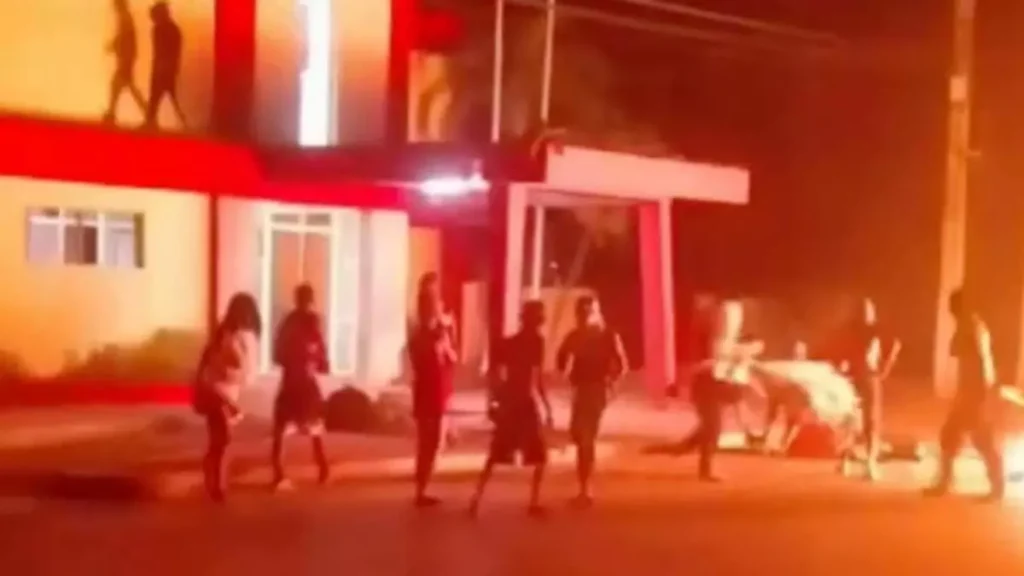
14ymedio, Havana, March 14, 2026 – “Freedom!” That was the cry that echoed on Friday night in the streets of Morón, in the province of Ciego de Ávila, when dozens of residents went out to protest against the blackouts that are suffocating the country. The march passed through different areas of the city to the rhythm of pot-banging, reached a police unit, and ended in front of the headquarters of the Communist Party of Cuba (PCC), where protesters burst into the building, threw furniture and banners into the street and built a bonfire in the middle of the road.
Videos shared on social media show groups of people moving through the streets of the municipality in Ciego de Ávila while demanding an end to the blackouts that are hitting the entire Island, which are usually longer in towns and cities in the interior. According to several testimonies, when the march arrived in front of the police unit the protesters were met with threats and officers armed even with machetes.
The protest continued to the municipal headquarters of the PCC. In some images, protesters can be seen taking chairs, tables and propaganda posters from inside the building and piling them up in the street to set them on fire. It can also be seen how they attempted to set fire to the building, a symbol of the regime’s continue reading
political control in the territory.
The official government press speaks of “acts of vandalism” carried out by “a group of people” from the El Vaquerito neighborhood council
The scene contrasts with the version published by the official government newspaper Invasor, which described what happened as “acts of vandalism” carried out by “a group of people” from the El Vaquerito neighborhood council. According to the state media outlet, what began as a peaceful protest over the electrical situation and food shortages “turned into acts of vandalism against the headquarters of the Municipal Party Committee,” where a small group allegedly threw stones at the entrance of the building and started a fire with furniture from the reception area.
Images shared by residents tell a more complex story. In several videos, dozens of people can be seen walking through the city, banging pots and chanting slogans. Some witnesses say the march advanced without incident for a long stretch, until it gathered in front of the PCC headquarters, where tensions with security forces finally erupted.
One of the most serious moments of the night was captured in a recording circulating on social media: a young man is carried in the arms of several protesters after receiving a gunshot wound to the thigh. According to testimonies shared by residents of the area, the shot was fired by
a police officer who was trying to disperse the crowd gathered in front of the Party building.
In the images, several people can be seen carrying the wounded man while trying to move him away from the area to give him first aid. The government newspaper denies the shooting and claims that the injured person was “in a state of drunkenness” and “suffered a fall.” It also states that the person is being “treated at the Roberto Rodríguez General Hospital.”
The official publication also mentions supposed damage to other establishments
Other reports speak of violent repression by special forces from the Ministry of the Interior, including black-beret units and officers with dogs. Witnesses claim the forces released the animals against the protesters and carried out arrests, five according to the newspaper Invasor.
The official publication also mentions supposed damage to other establishments, including a pharmacy and a sales point belonging to the Tiendas Caribe chain, although it offers no details about the damage or about the real scale of the protest.
What does seem clear is the origin of the outbreak: it is the energy collapse the country is experiencing, which in recent weeks has caused prolonged blackouts across the Island. In Morón, as in much of Ciego de Ávila, electricity cuts have stretched for hours amid food shortages and the general deterioration of basic services.
Ciego de Ávila is under the provincial political leadership of Julio Heriberto Gómez Casanova, first secretary of the PCC in the territory. Gómez replaced Liván Izquierdo Alonso in 2024. Despite corruption scandals surrounding Izquierdo in the province, he ended up being appointed first secretary of the Party in Havana. Gómez Casanova’s account on X remains restricted.
The events in Morón also occurred on the same day that Díaz-Canel appeared before the government press to confirm that the Government is holding talks with the United States
Direct political and administrative responsibility for Morón rests with three key figures in the state and party apparatus: Alberto Echemendía Manzanares, first secretary of the PCC in the municipality; Celia María López Reyes, president of the Municipal Assembly of People’s Power; and Yorqui Navarro Pérez, mayor. In a system where the Party dominates all state structures, the three concentrate the political and governmental leadership of the territory and are therefore the main officials responsible for local management amid the crisis that triggered the protests.
The events in Morón also occurred on the same day that the country’s president, Miguel Díaz-Canel Bermúdez, appeared before the official press to confirm that the Government is holding conversations with the United States, after repeatedly denying those contacts. His speech, which once again repeated the usual narrative without offering concrete solutions to the crisis, generated widespread rejection both among critics of the regime and within sectors traditionally aligned with the Government.
In reaction to the events, the Cuban Observatory of Human Rights (OCDH) said this Saturday that the protests reflect the growing social exhaustion on the Island. In a statement released from Madrid, the organization said that only hours after the televised appearance of Miguel Díaz-Canel, “the people took to the streets demanding freedom and a change of system.” The OCDH also asked countries such as the United States, Canada, the Netherlands, the Czech Republic and Sweden to promote actions to protect protesters and opposition members, and reiterated that in the face of the regime’s economic and social collapse, the only way forward for Cuba is a peaceful transition to democracy.
Translated by Regina Anavy
______________________
COLLABORATE WITH OUR WORK: The 14ymedio team is committed to practicing serious journalism that reflects Cuba’s reality in all its depth. Thank you for joining us on this long journey. We invite you to continue supporting us by becoming a member of 14ymedio now. Together we can continue transforming journalism in Cuba.
Chillón Paizán, known for his activism in favor of constitutional changes, has been transferred to Villa Marista.
Juan Carlos Chillón Paizán is accused of having spoken out against Díaz-Canel during the protests. / Facebook
14ymedio, Havana, March 13, 2026 – “I am accusing the president of Cuba, Miguel Díaz-Canel, of violating what the Constitution says,” was the phrase spoken by Juan Carlos Chillón Paizán that led to his arrest last Wednesday during protests in the Havana neighborhood of Lawton.
Chillón Paizán was detained in an operation that included four police patrol cars, according to the detainee’s mother, María Cristina Paizán, a retired doctor, who spoke to Martí Noticias. Videos shared by users on Chillón Paizán’s own profile show the arrest, which neighbors tried to resist while shouting at the police “Abusers!” “Shameless!” and “Down with the dictatorship!”
The activist was transferred to the headquarters of State Security, known as Villa Marista, where he remains under investigation for alleged crimes against State Security. These carry penalties ranging from 10 to 30 years in prison and can even lead to life imprisonment or the death continue reading
penalty, according to the current Cuban Penal Code (Law 151 of 2022).
Paizán’s mother said that a police investigator at Villa Marista received her and informed her that her son was under investigation for violating constitutional provisions. “He says that my son led the public demonstration and explained to me that they recognize the right to freedom of expression and the right to protest, but that it has a limit. What he could not explain to me was what limit my son crossed,” the mother said.
“He explained to me that they recognize the right to freedom of expression and the right to protest, but that it has a limit. What he could not explain to me was what limit my son crossed.”
Juan Carlos Chillón Paizán is an activist who has participated in civic movements seeking democratic reforms in Cuba. He has been president of the M-SURD movement, dedicated to promoting constitutional changes and respect for citizens’ rights, and he has a history of arrests for his activism in Havana, including during the Island-wide 11 July 2021 [’11J’] protests.
His mother says that Paizán had already filed a complaint days earlier with the Provincial Prosecutor’s Office of Havana, when he submitted a document stating that several rights recognized in the Constitution are not respected in practice.
She has not been able to see him since his arrest and says that at Villa Marista she was prevented from delivering medication, even though Chillón Paizán suffers from epilepsy and needs treatment with carbamazepine. “I went to bring the medicines, but they would not accept them because I had to bring a medical certificate explaining why he takes carbamazepine,” she said.
The family says they do not have the resources to hire a lawyer who could clarify the legal process the detainee is facing.
On social media, users have expressed solidarity with Chillón Paizán, demanding his immediate release. The messages ask for a “proof of life” and hold the authorities responsible for his physical safety.
“I went to bring the medicines, but they would not accept them because I had to bring a medical certificate explaining why he takes carbamazepine.”
His case adds to the wave of arrests that has occurred during the recent protests against blackouts. The independent legal organization Cubalex has documented at least 14 detentions related to demonstrations recorded since March 6 in Havana. Of those arrests, the identities of only eight people have been confirmed.
In its February report, the organization Prisoners Defenders reported a new record number of political prisoners in Cuba: 1,214, including 131 women and 31 detainees who were minors at the time of their arrest.
Meanwhile, political prisoner Roilán Álvarez Rensoler, a member of the Patriotic Union of Cuba (Unpacu), has been on a hunger strike for nearly 40 days and is hospitalized in serious condition.
Álvarez Rensoler was arrested on January 30 of this year for alleged anti-government graffiti in several municipalities of Holguín and began his hunger strike while detained at the Pedernales police operation center.
His sister reported that authorities have conditioned his release on the family guaranteeing his immediate departure from the country. “They asked whether we had a way to get him out of here immediately, even tomorrow. If there was any certainty about something, it was that they would take him out of the situation he is in,” she explained.
Álvarez Rensoler is currently in intermediate care with severe kidney damage because he is consuming only minimal amounts of water.
Translated by ReginaAnavy
______________________
COLLABORATE WITH OUR WORK: The 14ymedio team is committed to practicing serious journalism that reflects Cuba’s reality in all its depth. Thank you for joining us on this long journey. We invite you to continue supporting us by becoming a member of 14ymedio now. Together we can continue transforming journalism in Cuba.
The NGO regrets that those released will have to serve their sentences under a form of house arrest and could be returned to prison.
The sentences of these five individuals remain in force, and their release takes place under a particularly restrictive parole regime. / EFE
14ymedio, Havana, March 13, 2026 – The Spanish NGO Prisoners Defenders confirmed this Friday the release of at least ten political prisoners in Cuba following the government’s announcement of the release of 51 inmates. They also report that the group of beneficiaries may include common prisoners, as already happened in January 2025. So far, two releases of inmates convicted of crimes unrelated to political motives have been verified.
Among those released are Ibrahín Ariel González Hodelin (26 years old, sentenced to 9 years, imprisoned in Mar Verde Prison); Ariel Pérez Montesino (52 years old, sentenced to 10 years, Guanajay Prison); Juan Pablo Martínez Monterrey (32 years old, sentenced to 11 years, Ceiba 5 Forced Labor Prison); Ronald García Sánchez (33 years old, sentenced to 14 years, Toledo 2 Forced Labor Prison); and Adael Jesús Leivas Díaz (29 years old, sentenced to 13 years, Zona 0 Forced Labor Prison, Combinado del Este).
Prisoners Defenders specified that the sentences of these individuals remain in force and that their release occurs under a particularly restrictive parole regime known as a “conditional parole regime.” This means they remain subject to strict controls and continue reading
conditions while serving the rest of their sentences outside prison, and any violation could result in their return to a penitentiary facility. This model of conditional release has previously occurred in other cases of negotiated releases.
The decision applies to those who have served a significant portion of their sentence and have shown good behavior during their time in prison.
Cuba’s Ministry of Foreign Affairs explained that the decision applies to those who have served a large part of their sentence and demonstrated good conduct while imprisoned. The government described the measure as sovereign, although it noted that contacts were maintained with the Vatican, in line with the tradition of dialogue on prisoner release processes. In its statement it also linked the measure to the “proximity of the celebrations of Holy Week.”
Amnesty International and Justicia 11J criticized the lack of transparency in the process, since the complete list of those released has not been published and the conditions of their release have not been detailed. Amnesty International also denounced the use of prisoners as “bargaining chips in a political game” and reiterated its demand for the “immediate and unconditional” release of those it considers unjustly imprisoned in Cuba.
Cuban Foreign Minister Bruno Rodríguez met on February 28 at the Vatican with Pope Leo XIV and the Secretary of State, Cardinal Pietro Parolin, to discuss dialogue and mediation on prisoner issues. In addition, the U.S. ambassador to Cuba, Mike Hammer, met days earlier with Paul Richard Gallagher, the Vatican’s secretary for Relations with States.
In 2026, Cuba reached a historic record of political prisoners with a total of 1,214, according to the latest report by Prisoners Defenders published at the end of last February.
Translated by Regina Anavy
______________________
COLLABORATE WITH OUR WORK: The 14ymedio team is committed to practicing serious journalism that reflects Cuba’s reality in all its depth. Thank you for joining us on this long journey. We invite you to continue supporting us by becoming a member of 14ymedio now. Together we can continue transforming journalism in Cuba.
Political representatives from Florida remain silent in the first hours after news of the talks with Cuba became known.
Silence appears to be the rule among Florida congressmembers at this time. / EFE
14ymedio, Madrid, March 13, 2026 – José Daniel Ferrer was paying close attention this morning to the remarks of Miguel Díaz-Canel who, shortly before his announced press conference, confirmed through the official press that the regime is holding talks with the United States. “I am listening to the dictator Díaz-Canel. What planet does this individual live on? Does he not understand that the terrible reality Cuba is experiencing because of them demands their prompt downfall, through flight, capture, or elimination?” the opposition figure said from Miami.
The leader of the Patriotic Union of Cuba, now in exile, commented in several messages on social media about the appearance, skeptical of the president’s words. “Díaz-Canel compares the current talks with the United States to those that took place more than 10 years ago between Obama and Raúl Castro. This guy seems not to understand what is happening and what will happen if they do not leave power,” he added. “Nothing will happen. The plan of the United States is to keep them there,” one user replied.
Silence appears to be the guideline among Florida congressmembers at this time. María Elvira Salazar, Carlos Gimenez, and Mario Díaz-Balart have posted on their X accounts, but nothing related to Miguel Díaz-Canel’s statements. The latter two did repost a video from Thursday in which Díaz-Balart told journalist Mario J. Pentón that the only conversations taking place with Raúl Castro’s inner circle were aimed at bringing the regime continue reading
to an end.
“Any negotiation that preserves a one-party communist dictatorship while ignoring the fundamental requirements of the Libertad Act (Cuban Liberty and Democratic Solidarity Act of 1996) is unacceptable.”
In the interview, however, he compared that dialogue with those that took place in Iran or “with the Maduro regime,” he emphasized. A phrase that offers little reassurance to those who fear something remotely similar could happen that would allow high officials of the current Cuban government to remain in power, as has happened in Venezuela.
That concern is reflected in the statement by Miami-Dade County commissioner Natalie Milian Orbis, who considered that “any negotiation that preserves a one-party communist dictatorship while ignoring the fundamental requirements of the LIBERTAD Act is unacceptable.” For now, she is the only one to specifically refer to Díaz-Canel’s announcement. “Today’s announcement (…) highlights the desperation of a regime facing an increasingly deep economic and political crisis,” she said.
Although she believes that Trump “deserves recognition” for the pressure exerted on the Island, “the law of the United States is clear. Sanctions can only be lifted when Cuba begins an irreversible transition toward a multiparty democracy, fully respects basic human rights and civil liberties, and takes concrete steps to return or compensate for the properties confiscated from Cuban and Cuban-American families,” she argued.
Milian Orbis stressed that the pressure must lead to “real changes” and that the United States “must not legitimize or finance their oppression.” “The Cuban people deserve freedom, not another agreement that keeps a communist dictatorship in power,” she added.
“Mexico will always promote peace and diplomatic dialogue, particularly in the face of this injustice that has been committed for many years against the Cuban people through the blockade.”
From Mexico, President Claudia Sheinbaum welcomed the dialogue, something she had proposed mediating many times. “That’s good,” the president said during a press conference in Colima (western Mexico) when asked about the talks.
“Mexico will always promote peace and diplomatic dialogue, particularly in the face of this injustice that has been committed for many years against the Cuban people through the blockade* that has generated various problems. Therefore, it is essential that this dialogue take place,” the president declared.
Sheinbaum also reiterated Mexico’s support for the Cuban people, both for humanitarian reasons and because of the country’s foreign policy principles. “Mexico will continue supporting the Cuban people through all possible channels, not only as a matter of humanitarian aid but also because our Constitution establishes the self-determination of peoples and solidarity in the search for peace,” she stated.
*Translator’s note: There is, in fact, no US ‘blockade’ on Cuba, but this continues to be the term the Cuban government prefers to apply to the ongoing US embargo. During the Cuban Missile Crisis the US ordered a Naval blockade (which it called a ‘quarantine’) on Cuba in 1962, between 22 October and 20 November of that year. The blockade was lifted when Russia agreed to remove its nuclear missiles from the Island. The embargo had been imposed earlier in February of the same year, and although modified from time to time, it is still in force.
Translated by Regina Anavy
______________________
COLLABORATE WITH OUR WORK: The 14ymedio team is committed to practicing serious journalism that reflects Cuba’s reality in all its depth. Thank you for joining us on this long journey. We invite you to continue supporting us by becoming a member of 14ymedio now. Together we can continue transforming journalism in Cuba.
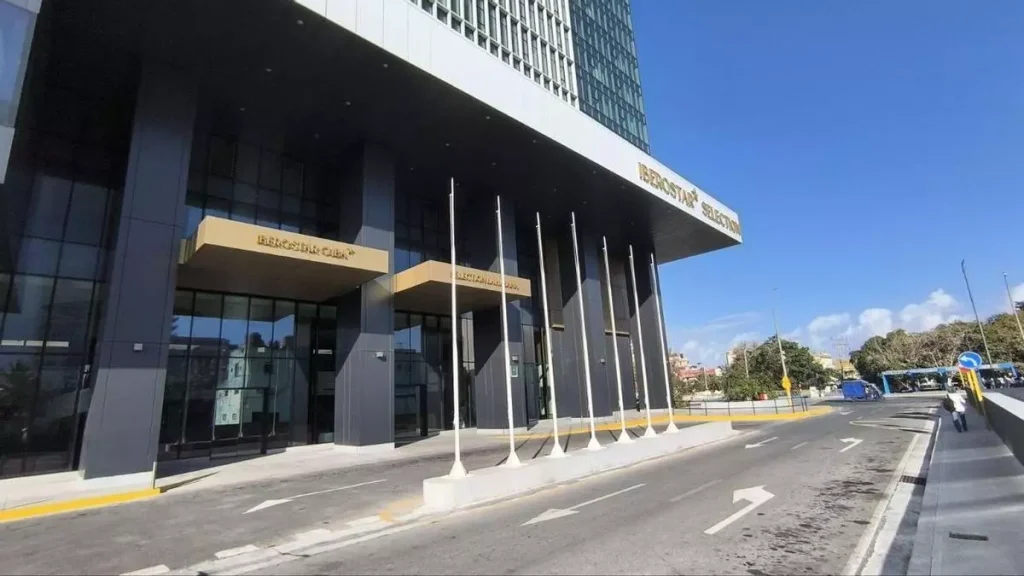
There are no flags on the flagpoles at the main entrance, which indicates a decision beyond something temporary.
14ymedio, Havana, Juan Diego Rodríguez, March 13, 2026 –The Iberostar Selection La Habana hotel, which occupies the skyscraper located on the central 23rd Avenue known as Torre K and was inaugurated only last year, has closed its doors, and no one knows when it will reopen. At its main entrance, there are not even flags on the flagpoles, which indicates a decision that goes beyond something temporary.
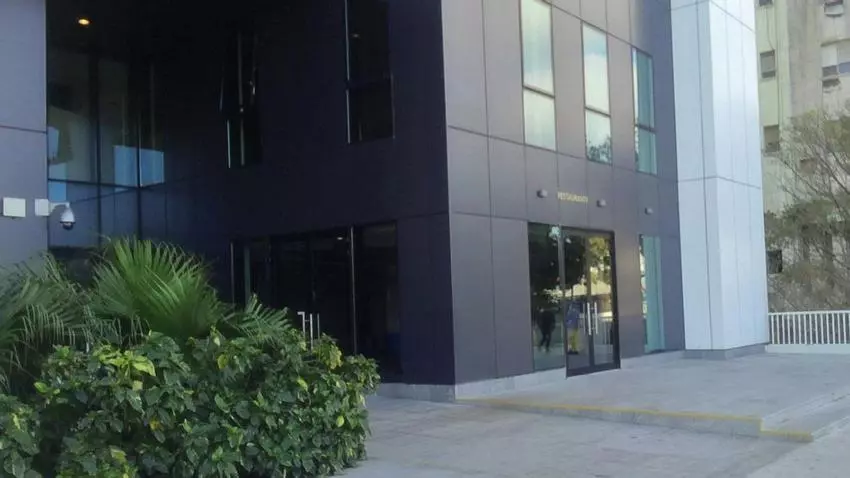
Asked about it, the guard at the site, without a uniform, responds that he does not know and that the closure is “because of the country’s situation.” The Avenida 23 cafeteria, located on the ground floor with views of K Street, which provides service to the public and not only to hotel guests, is also closed. “The only thing still open inside the hotel is the bank, until noon,” the guard also says.
The man does not specify which institution he is referring to, and on the official website of the accommodation no bank branch appears among its services.
Just two days ago, sources familiar with the matter revealed to 14ymedio that, due to the lack of electricity, Aguas de La Habana would stop pumping the water supply to the capital for at least 48 hours. “Anything that runs on motors, including Torre K, is pointless,” said an employee of the state company.
“The only thing still open inside the hotel is the bank, until noon,” the guard also says.
The hotel has its own generators, which have provided it with electricity even during the worst blackouts, including complete collapses of the national power system. These require fuel oil, and after more than two months without a tanker arriving in Cuba, fuel is scarcer than ever.
According to posts on social media, tourists who were staying at the facility have been transferred to the Hotel Packard, located on Paseo del Prado, but in truth there is no confirmation that there were even guests there. Torre K had been almost a ghost hotel since continue reading
its opening due to the lack of customers. This newspaper confirmed it during a visit three months after its inauguration.
Not even the building’s main attraction, the observation deck on the 41st floor, drew enough visitors. From up there, the highest point in Havana, the city could be seen as never before, and only the ocean seemed free from decay.
The iconic buildings Focsa and Habana Libre, which were once the tallest in the capital, appeared diminished and deteriorated. Trying to identify the Castillo del Morro, the Hotel Nacional, the José Martí Memorial, or the dozen buildings erected in the 1950s before the Revolution swept away modernity produced only discouragement. From Torre K, misery was evident on every rooftop.
The Avenida 23 cafeteria, on the ground floor and overlooking K Street, which serves the public and not only hotel guests, is also closed. / 14ymedio
“They told us it was paid for with government money, that it cost I don’t know how many millions of dollars and was handed over to Iberostar to manage. But from the outside it looked closed; we didn’t see much activity,” a Spanish tourist told 14ymedio last October. She had vacationed on the Island the previous month and said her travel agency had “deceived” them by hiding the country’s real situation.
Controversy surrounded the building from the moment its construction was announced in 2018. The structure, first popularly called the “López-Calleja Tower” (before the death of the head of the military conglomerate Gaesa, which owns the facilities through one of its subsidiaries, the Gaviota Group) and later Torre K, represented from the outset a waste of resources in an impoverished country.
As construction progressed and tourism numbers kept falling, technical criticism also began. Several architects pointed out the project’s “mistakes,” including its “pretentious gigantism,” the “insulated glass” that is blinding in a tropical country, and the poor orientation of the hotel, which lacks views to the north, the best side for orienting rooms so they do not suffer from “that Caribbean sun that costs a lot of energy and money to cool.”
The opening of a luxury Iberostar inside the massive structure added further controversy and was not without setbacks. Its inauguration was delayed several times after it had been announced. Initially, Havanatur said it would open on January 15, 2025, but that did not happen. Days later, the company enabled reservations starting February 1, but it was still not ready by then.
When reservations finally opened to the general public in March 2025, after the rooms had briefly been used to house visitors to the Habano Festival, a source linked to Iberostar, the second Spanish hotel company with the largest presence in Cuba after Meliá, admitted that management was concerned about the negative image the hotel had already acquired among citizens.
“People are going to associate the hotel with an increase in misery,” the source told 14ymedio.
Translated by Regina Anavy
______________________
COLLABORATE WITH OUR WORK: The 14ymedio team is committed to practicing serious journalism that reflects Cuba’s reality in all its depth. Thank you for joining us on this long journey. We invite you to continue supporting us by becoming a member of 14ymedio now. Together we can continue transforming journalism in Cuba.
The most affordable drink for Cubans has gone from 30 to 70 pesos amid the general rise in prices in the province.
Now the choice is to go back home or continue on the road with the same thirst and frustration. / 14ymedio
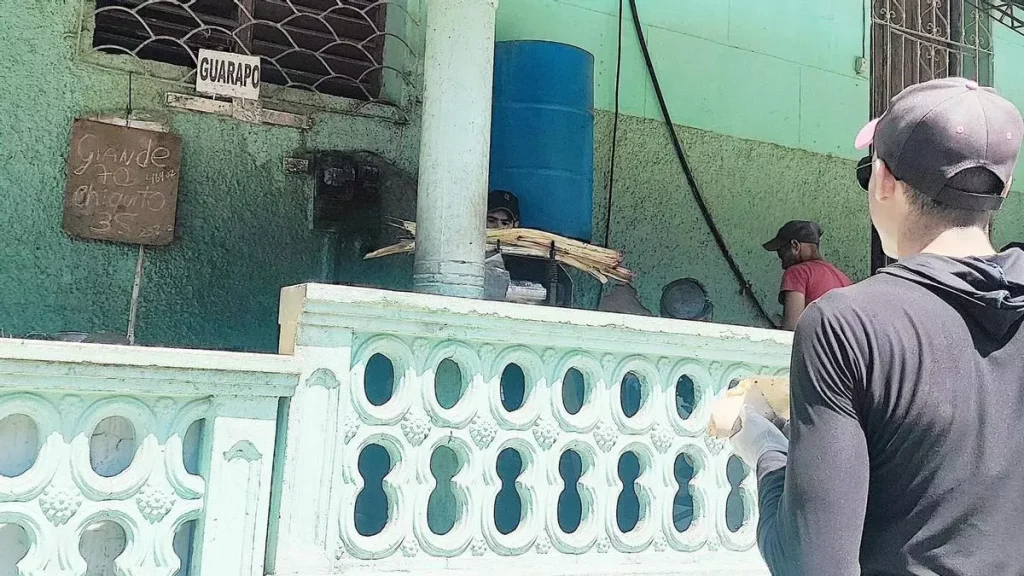
14ymedio, Sancti Spíritus, Mercedes García, March 13, 2026 – In Sancti Spíritus, the price of even the most humble items has begun to rise. In just a couple of days, guarapo — raw sugarcane juice — went from 30 to 70 pesos.
What for decades had been the most affordable drink to relieve the heat or recover strength in the middle of the day has suddenly become a small luxury that more than one person now hesitates to indulge in. Now the choice is to return home or continue on the road with the same thirst and frustration, saving every last peso.
Guarapo, extracted from sugarcane, has historically been a refreshing comfort against the exhaustion of the difficult daily life of Cubans, regardless of the customer’s social level or purchasing power. The drink’s low price, stimulating properties, and quick preparation have always been the main factors that attracted people to this juice.
The cost of the most basic products continues to rise in Sancti Spíritus amid a particularly harsh situation.
Although the presence of these guarapo stands has been declining in recent years due to the collapse of the sugar sector, along with difficulties obtaining ice or even sugarcane, as well as the blackouts that paralyze the presses, some still remained in Sancti Spíritus.
Meanwhile, the cost of the most basic products continues to rise in the province amid a particularly harsh situation caused by prolonged blackouts, which at times have lasted more than a full day without electricity. The energy crisis forces many families to cook with charcoal due to the lack of gas or kerosene, while food spoils because it cannot be refrigerated. The fuel shortage and the difficulties in maintaining basic services have left the population dealing with improvised solutions and growing frustration over the deterioration of living conditions.
Translated by Regina Anavy
______________________
COLLABORATE WITH OUR WORK: The 14ymedio team is committed to practicing serious journalism that reflects Cuba’s reality in all its depth. Thank you for joining us on this long journey. We invite you to continue supporting us by becoming a member of 14ymedio now. Together we can continue transforming journalism in Cuba.
Miguel Díaz-Canel says the goal is to “identify areas of cooperation” and “concretize actions for the benefit of the peoples of both countries.”
To the right, Raúl Guillermo Rodríguez, alias “El Cangrejo,” grandson of Raúl Castro, present during Miguel Díaz-Canel’s appearance / Screenshot / Canal Caribe
14ymedio, Madrid, March 13, 2026 – The Cuban president, Miguel Díaz-Canel, confirmed this Friday that conversations are taking place with the U.S. government to “identify areas of cooperation” and “concretize actions for the benefit of the peoples of both countries, to confront threats and guarantee the peace and security of both nations and also of the region.”
The president made these remarks in a room where Raúl Castro was present, along with his grandson, the alleged mediator in the talks, according to leaks from U.S. media in recent days. Another member of the family was also present: Oscar Pérez-Olivia, the grand-nephew of Raúl and Fidel Castro and deputy prime minister and minister of Foreign Trade and Foreign Investment. Also seen in the room were Foreign Minister Bruno Rodríguez Parrilla, Interior Minister Lázaro Alberto Álvarez Casas, and Army Corps General Roberto Legrá Sotolongo, among other high-ranking officials.
Díaz-Canel emphasized that the talks began inspired by the spirit of the Revolution and commanded by Raúl Castro. “And by me,” he stressed, in a context in which there has been speculation that the president is being sidelined not only by the Trump administration but also by the regime itself.
“These conversations have been aimed at seeking solutions, through dialogue, to the bilateral differences that exist between the two nations. There are international factors that have facilitated these exchanges,” said the president.
“These conversations have been aimed at seeking solutions, through dialogue, to the bilateral differences that exist between the two nations.”
For weeks, the contacts, first mentioned by U.S. President Donald Trump at the beginning of January, had been denied by members of the regime, who limited the dialogue to the usual exchanges on security and immigration matters. Díaz-Canel alluded to this indirectly, saying that “it has not been, nor is it the practice of the leadership of the Cuban Revolution to respond to speculative campaigns about this type of issue.”
According to his version, the matter is very sensitive and is being handled with “seriousness and responsibility, because it affects continue reading
bilateral relations between the two nations and requires enormous and arduous efforts to find solutions and create spaces of understanding that allow us to move forward and away from confrontation.”
Díaz-Canel insisted that “in the exchanges that have taken place, the Cuban side has expressed its willingness to carry out this process on the basis of equality and respect for the political systems of both states, for sovereignty, and for the self-determination of our governments,” taking into account “reciprocity” and adherence to international law.
At a press conference following his initial remarks, where there was not a single question about the dialogue with the United States, Díaz-Canel spoke about the seriousness of the energy situation. The president claimed that no ship carrying crude oil has entered the country in the last three months, although reports indicate that the Ocean Mariner entered Cuba on January 9, and that the situation has worsened, especially in March.
Up to that point, the country had been working with rationed crude oil that was supplied to the engines in Moa and Mariel, and it has now run out. Aside from that, only the thermoelectric plants using domestic oil, Energás, and solar energy remain. The latter sometimes contributes, he said, up to 53% of energy, but not all of it can be used due to the adjustments needed to balance the system. “There are 1,400 megawatts of fuel that cannot be used,” he regretted.
The president praised the workers of the Cuban Electric Union for the continuous effort they make, as well as the population, which is affected in daily services such as water, communications, and health care, although he also reproached those who “criticize.” “The magnitude of the problem is so great that it cannot be seen,” he said, before listing the countless temporary fixes that have been implemented to alleviate the situation, from charcoal to solar panels installed in countless places. He also announced future photovoltaic parks, progress in the works at the Matanzas supertanker base, increased national crude production, and the incorporation of thermoelectric units for the remainder of the month.
Díaz-Canel also spoke about the situation at universities, during a week in which several students have protested demanding reforms. The president only referred to the controversial semi-in-person teaching format and, after acknowledging that the academic year may advance with difficulty under these circumstances, rejected ending classes. “What are we going to do, throw in the towel?”
The decisions will be communicated Monday in an appearance by Pérez-Oliva on some television program that could be, he said without complete certainty, Mesa Redonda.
Asked about Cuban Americans who allegedly want to invest in the country, Díaz-Canel said that a set of measures has been adopted that will ease current bureaucratic barriers and facilitate those practices. The decisions will be announced Monday in Pérez-Oliva’s television appearance, possibly on Mesa Redonda.
At the press conference, there was also discussion of donations from third countries and the interception of a boat from Villa Clara. “In the investigation, everyone has acknowledged that they fired at our border guard service and have provided very important details that will be revealed later about who recruited them, who prepared them, and their names,” he said.
Only at that point did Díaz-Canel again refer to Washington, announcing that a delegation from the FBI will soon arrive on the Island to investigate the case. “Yes, there is cooperation,” he stated.
Before concluding and leaving for “defense activities,” Díaz-Canel referred to the announced release of 51 prisoners, a process that the Holy See also referred to on Friday to confirm its participation. The president, aware that the move will be interpreted as a concession toward the United States, emphasized that the decision was made in a sovereign manner. “Now prepare to be happy,” he added.
Translated by Regina Anavy
______________________
COLLABORATE WITH OUR WORK: The 14ymedio team is committed to practicing serious journalism that reflects Cuba’s reality in all its depth. Thank you for joining us on this long journey. We invite you to continue supporting us by becoming a member of 14ymedio now. Together we can continue transforming journalism in Cuba.

 14ymedio /EFE/, Madrid, March 16, 2026 – The Spanish Agency for International Development Cooperation (AECID) is preparing to provide food and medicines to 5,000 people in Cuba, where the humanitarian situation has deteriorated as a result of the severe energy crisis affecting the island. About twenty photovoltaic panels will also be sent.