Cuba’s new “Investment” Law: the Castroist Piñata

It is in reality about laundering the billions hidden in tax havens of Castro-communism: it is Cuba’s transition toward Putinism
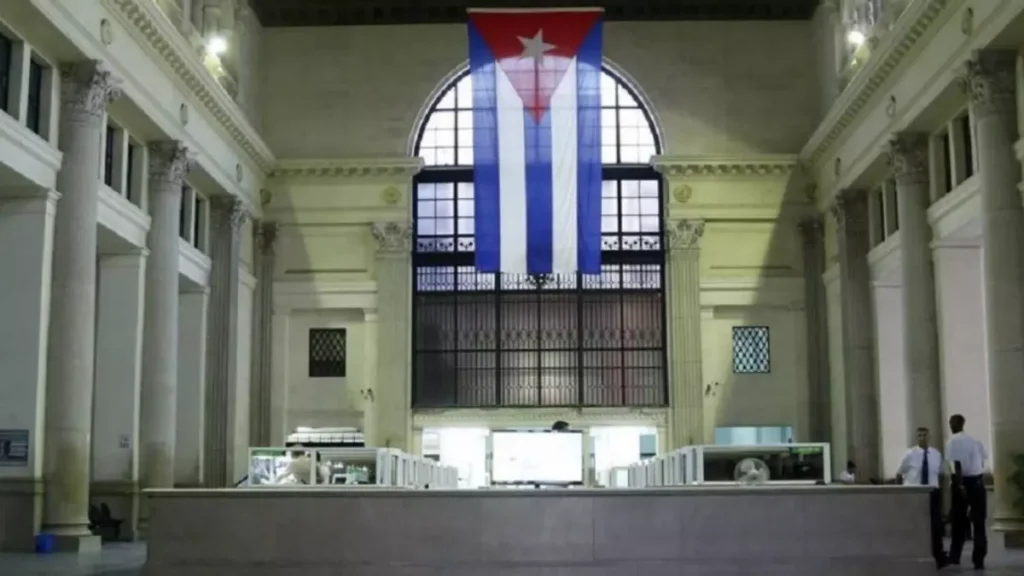

Havana International Bank has long functioned as the regime’s main money laundering vehicle. / El Carabobeño

14ymedio bigger14ymedio, Julio M. Shiling, Miami, March 23, 2026 – On March 16, 2026, the deputy prime minister and minister of Foreign Trade and Investment of communist Cuba, Óscar Pérez-Oliva Fraga, announced a radical change. Cubans living abroad, regardless of their residency status, can now invest, own, and partner in private businesses on the Island, including large infrastructure projects. The Castro regime presented it as an opening towar the exile and the diaspora. In reality, this decree is the opening act of a carefully orchestrated transfer-of-wealth heist, designed to launder the billions hidden in offshore tax havens of Castro-communism and return them to the Island under the pretext of “legal” private investment. It is Cuba’s transition toward Putinism.

The parallels with post-Soviet Russia are unmistakable. After the collapse of the USSR, the nomenklatura — top Communist Party officials, their families, and the security apparatus — devised a fraudulent “privatization” plan. State assets were auctioned off at bargain prices to insiders who had already moved wealth abroad through shell companies. The result was not capitalism, but kleptocracy: a new oligarchic class emerging directly from the old regime. Cuba is now replicating that model. Members of the regime who have deposited fortunes in offshore vehicles will soon “invest” those same funds in their own country, acquiring legal ownership of businesses while ordinary Cubans remain trapped in poverty. The very financial architecture of the dictatorship makes this plan possible.

Members of the regime who have deposited fortunes in “offshore”vehicles will soon “invest” those same funds in their own country, acquiring legal ownership of businesses while ordinary Cubans remain trapped in poverty

Let us consider the regime’s proven offshore network. Havana International Bank (Havin Bank Ltd.), headquartered in Canary Wharf, London, at 189 Marsh Wall, has long functioned as the regime’s main money laundering vehicle. This Castro-Communist front company is 100% state-owned and linked to the Central Bank of Cuba. It was sanctioned by the U.S. Treasury’s Office of Foreign Assets Control (OFAC) in 2020 precisely for channeling funds to the dictatorial government in Havana. Other entities —ACMEX Management Company in the opaque tax haven of Liechtenstein, Mid-Atlantic structures registered in Luxembourg, and Caroil Transport Marine Ltd. in Cyprus— form an interconnected network of shipping companies and holding firms used to move assets discreetly.

These are not neutral companies. They are instruments of the State. The new law provides the perfect legal excuse: a relative or trusted representative of a high-ranking official, now reclassified as a “Cuban resident abroad,” can channel those offshore millions into Cuban businesses, converting the regime’s illicit capital into “private” property.

There are three possible interpretations of the regime’s sudden generosity. First, it could be the classic Castro “bait-and-switch” strategy. Havana has repeatedly continue reading

offered limited openings, only to reverse course once capital has flowed in and its political usefulness has been exhausted. History suggests this pattern remains likely. Second, the regime may genuinely hope to imitate China’s model: leveraging exile and diaspora capital to drive growth while maintaining political control. This scenario is unlikely for two reasons. The Cuban exile community has consistently refused to invest while the dictatorship remains in place, citing the risk of future confiscation and moral opposition to supporting repression.

More decisively, any significant investment by Cuban Americans or other U.S. persons would still require specific authorization from the OFAC of the U.S. Treasury Department, under the long-standing U.S. embargo against Cuba. The embargo, enforced through the OFAC, generally prohibits direct investment in Cuban businesses by U.S. persons, with very limited exceptions that do not extend to broad commercial participation. Washington is not willing to issue the licenses necessary for large-scale flows that would rescue the regime.

Washington is not willing to issue the licenses necessary for large-scale flows that would rescue the regime

That leaves the third and most plausible explanation: the Russian-style model is now underway. The decree is not economic liberalization; it is legal cover for the mass repatriation and legitimization of hidden communist assets. The regime, aligned individuals, high-ranking officials, their families, and the structural apparatus will obtain “investor” status under the new migratory category. Their foreign holdings will suddenly appear as legitimate diaspora capital, buying stakes in hotels, agricultural enterprises, and micro, small, and medium-sized businesses. The plunder becomes “legal.” The dictatorship shifts from overt state socialism to a Putinist hybrid: nominal private ownership controlled by the same clique that has ruled for sixty-seven years.

The implications are stark. This is not an invitation to genuine entrepreneurs, but a structured operation to convert looted national wealth into protected private fortunes. Once “invested,” these assets will be shielded from future sanctions and international scrutiny under the cover of law. In effect, the looters are not only evading justice but are also legally entrenching their theft for decades to come.

Nominal private ownership controlled by the same clique that has ruled for sixty-seven years

The United States, in shaping its foreign policy in line with the November 2025 National Security Strategy statement, must draw a clear and uncompromising line. No investment law or regulation enacted by the Castro-communist regime deserves even minimal recognition. For the future democratic government of a free Cuba, every transaction, partnership, share transfer, or property claim enabled by this March 2026 decree must be declared null and void from the outset, as it is legally tainted, morally repugnant, and strategically unacceptable. This is not an economic opening. It is the regime’s final piñata party for the nomenklatura, in which the billions hidden and looted from the Cuban people over decades are finally broken open and redistributed among the same ruling clique and its proxies under the thin disguise of “diaspora investment.”

Treating any of these measures as legitimate is handing thieves the keys to their own getaway car and blessing the robbery in real time. The Cuban people (and U.S. businesses and individuals) have already been victims of the mass asset theft carried out in 1959. They should not be forced to watch a second theft unfold without resistance. Democratic governments, international financial institutions, and the exile community itself have a clear duty: reject the plan outright, invalidate every dollar that flows through it, and deny the Castro dynasty the Putin-style rebranding it so desperately seeks. Anything less is complicity in the most cynical heist in history.

Editor’s Note: This text was originally published on the Patria de Martí website.

Translated by Regina Anavy

______________________

COLLABORATE WITH OUR WORK: The 14ymedio team is committed to practicing serious journalism that reflects Cuba’s reality in all its depth. Thank you for joining us on this long journey. We invite you to continue supporting us by becoming a member of 14ymedio now. Together we can continue transforming journalism in Cuba.
Small Businesses in Matanzas, Cuba, Are Closing Due to Falling Sales: People Look, but They No Longer Buy

“For Cuban pockets, the priority is food. Everything else has to wait.”

“Those who sell food are the ones most likely to survive.” / 14ymedio

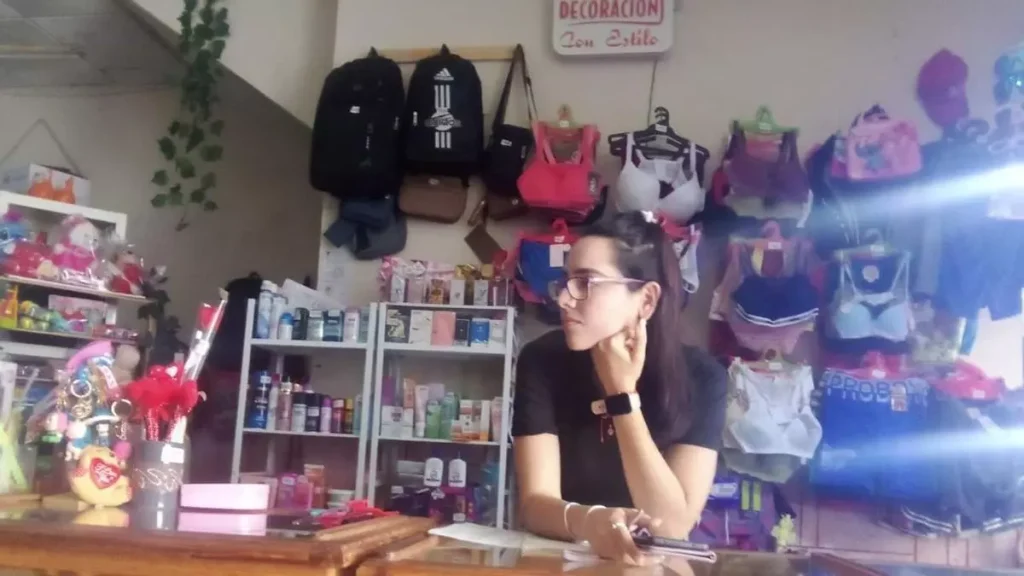
14ymedio bigger14ymedio, Julio César Contreras,. Matanzas, March 22, 2026  / Taking stock of sales around noon, Yunia reviews a notebook where the numbers are written halfheartedly. The total doesn’t add up: barely 2,200 pesos all morning. Behind her, necklaces, bracelets, and keychains shine under a dim light that fails to attract customers. “No matter how much I try to promote the products, people come, look, and leave,” she says, without taking her eyes off the table.

At that small stand, a few blocks from Plaza de la Vigía, two eras intersect: that of a city that once lived off commercial bustle, and that of a present where every peso counts and is almost never enough. Yunia knows it. She also knows her stand is hanging by a thread. “It’s not my fault that a plastic broom costs 1,500 pesos, but in the end I’ll be the one who pays the consequences of these crazy prices,” she says. The business owner has already hinted that, if sales don’t improve, she herself will sit behind the table. For Yunia, that would mean losing her job.

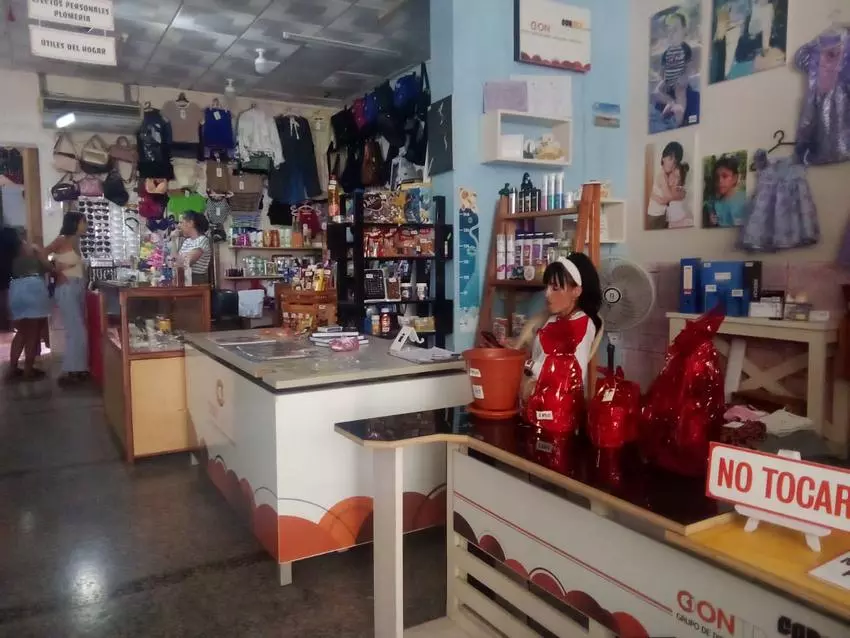
Inflation, which gives no respite, has been pushing these small merchants into a kind of daily survival. Money loses value as quickly as prices rise, and what used to be a minor expense — a handbag, a decoration, a perfume — today competes directly with food. “For Cuban pockets, the priority is food. Everything else has to wait,” sums up Idael, an entrepreneur who recently closed her shop on Medio Street.

“Not even on dates like February 14 were there big profits.” / 14ymedio

Her story is not unique. For years she sold women’s clothing and men’s shoes in one of those spaces where constant foot traffic ensured customers. Today, that same flow has turned into a parade of glances that calculate, compare, and leave empty-handed. “There was a lot of money going out and very little coming in. Between rent, taxes, and merchandise, the numbers didn’t work,” she explains. The decision was drastic: she gave up continue reading

the license and left the premises.

Inside another store, not far away, a young woman rests her chin on her hand while watching the door. Around her, backpacks, underwear, and hygiene products share space on shelves that are full but motionless. The scene repeats itself: merchandise comes in but doesn’t go out. “Since the end of last year there’s been no need to restock anything,” Yunia comments. “Not even on dates like February 14 were there big profits.”

The city, meanwhile, seems to be slowing down. On streets like Milanés or Calzada de Tirry, activity drops sharply after midday. “Here, the little that gets sold happens at 1:00 in the afternoon . After that hour, this place is empty,” says another shopkeeper, who shares space in a large room with other trades that have been disappearing one by one. First it was the cellphone repairman, affected by blackouts that prevented him from working. Then the watchmaker. Then the jewelry seller. All of them closed.

“Not even on dates like February 14 were there big profits.” / 14ymedio

She has held on, but only halfway. She has negotiated to pay only half a day’s rent for the space and has diversified her offerings over the limit of what is permitted. “My license doesn’t include selling hygiene products, but if I don’t take the risk, I’ll starve,” she admits. Thus, among handbags and wallets, she offers soap, toothpaste, and razors that end up being the most sought-after products.

The crisis has pushed many to reinvent themselves outside physical spaces. Idael, for example, now sells through social media. “I have a manager who posts on Facebook and Instagram. I pay her a commission for each sale,” she explains. Without a storefront, without fixed employees, and without the associated costs, she has managed to stay afloat. But she acknowledges that not everyone is as lucky. “Those who sell food are the ones most likely to survive.”

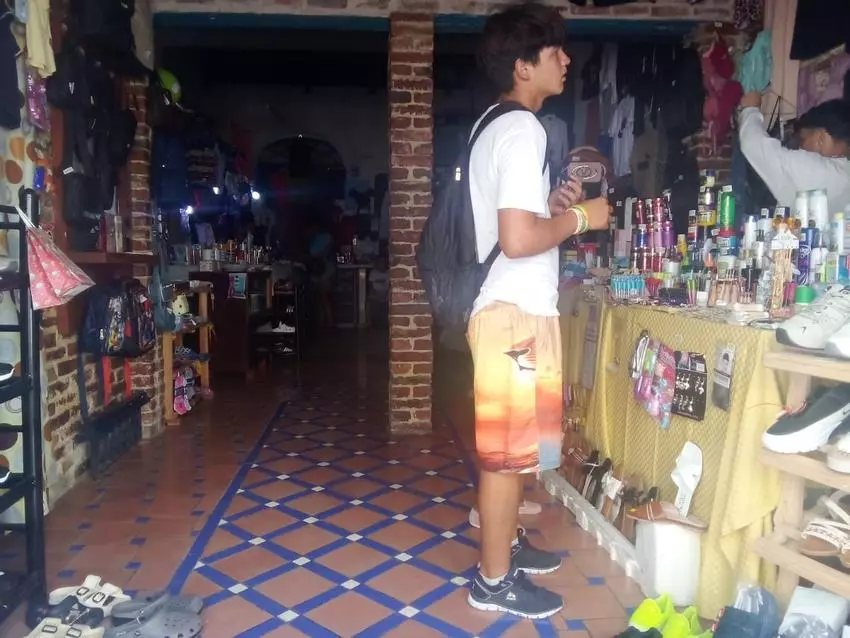
On a porch with brick columns, a young man scans a table full of perfumes, costume jewelry, and small imported items. He stops, picks up a bottle, asks the price, and puts it back. The gesture repeats at every counter. The walk is not for buying, it is for recognizing limits. Outside, the city continues at its slow pace, with fewer cars, fewer people, and less money circulating.

Yunia closes her notebook and puts away the pen. She looks again at the table, adjusts a bracelet, lines up some earrings. The gesture is almost automatic, a routine that tries to maintain order amid imbalance. “This used to guarantee sales,” she says, referring to the location of the shop. Today, it barely guarantees anything else than the certainty that, in an economy where the peso is worth less and less and prices keep rising, there is no one to buy what is not absolutely necessary.

Translated by Regina Anavy

______________________

COLLABORATE WITH OUR WORK: The 14ymedio team is committed to practicing serious journalism that reflects Cuba’s reality in all its depth. Thank you for joining us on this long journey. We invite you to continue supporting us by becoming a member of 14ymedio now. Together we can continue transforming journalism in Cuba.
In Guanabacoa, Cuba, Multicolored Springs of Sewage Water Run Through the Streets

A neighbor improvised a bridge of blocks to be able to leave her house: “You can’t even go out in flip-flops if you don’t want to come back with dirty feet.”

The problem of sewage water in Havana goes back a long time. / 14ymedio

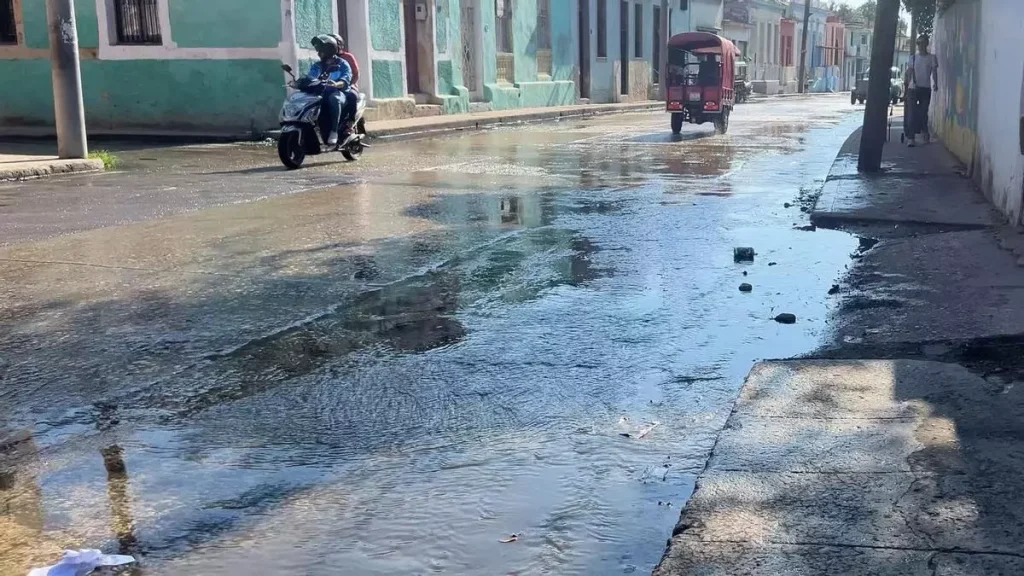
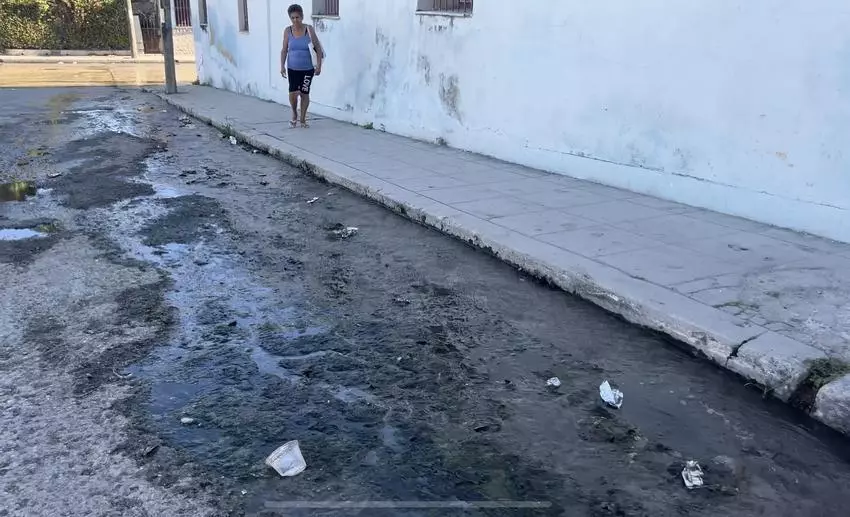
14ymedio bigger14ymedio, Darío Hernández, March 21, 2026 – Havana / Sewage water flows freely through the streets of Guanabacoa, to the point that Corral Falso, the municipality’s main avenue, is impossible to cross in stretches that span several blocks. Overflowing septic ditches have further undermined sanitation in the area, and residents are forced to live with a dark, green, viscous river up to 20 cm deep, under a blazing sun and temperatures above 30 degrees.

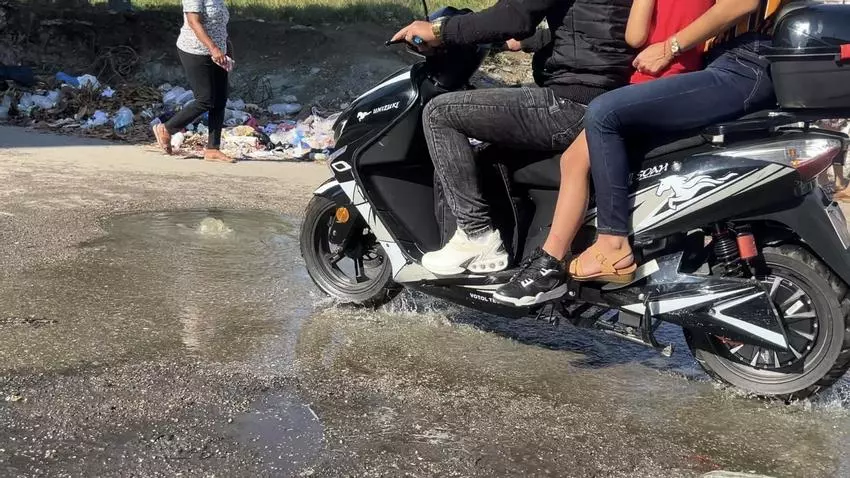
Overflowing drains can be seen even in the most unsuitable places. For example, on the corner by the Guillermo Tomás music school, which also has a garbage dump nearly 30 meters long in front of it. Or every weekend, around the agricultural markets, where trucks arrive and distribute food for the population on improvised platforms.

The problem of sewage water in Havana goes back a long time, and in most cases is due to breaks, lack of sanitation, and above all the poor condition of the capital’s sewer system. However, it has worsened with the unchecked proliferation of garbage dumps due to the lack of fuel.

“The stench, the flies, the mosquitoes, and everything that comes with it is something we have to live with.” / 14ymedio

“This is a never-ending war. You call Aguas de La Habana or Communal Services, and they come when they can and unclog the sewer in question, but as soon as the water starts flowing again, the blockage and the rot return,” says Zulema, who has one of those “multicolored springs,” as she ironically calls them,running in front of her doorway.

“That green stuff you see there shows you that the water stagnates here for weeks. The stench, the flies, the mosquitoes, and everything that comes with it is something we have to live with,” Zulema continues. The neighbor has had to improvise a “bridge” of blocks to be able to leave her house. “You can’t even go out in flip-flops if you don’t want to come back with dirty feet.”

Tricycles and electric motorcycles—because there are no longer cars—slow down on these blocks so as not to splash and dirty continue reading

their vehicles. On some corners and along the edges of sidewalks, plants of dubious origin have begun to grow.

Workers from Communal Services broke a pipe while carrying out cleaning work, “and now the sewer overflows more easily.” / 14ymedio

Lázaro, another affected resident, says the problem already existed before, but that “the water was more potable, not as unsanitary.” The problem worsened, he recounts, when workers from Communal Services recently broke a pipe while doing cleaning work, “and now the sewer overflows more easily.” Added to this, he continues, is that at every corner there is a “mini dump.” “If you put those two things together, the result is what we are living through,” he summarizes. “What are we living through? I can’t define it in words, but it’s profoundly immoral.”

“When the agricultural fairs began, I had my stall on that block. They were all around the Amphitheater, but we had to move over here,” says Miguel, who now sells root vegetables and produce on the block next to the Amphitheater. “There was one time when the entire fair was moved to another location, a few blocks from the Municipal Party headquarters, precisely because of this, because of the filth in this place. Apparently there were complaints from residents. It really was just one block that, although wide, was uncomfortable for everyone, and the following week we came back here. In other words, they know this is not the ideal place to sell food, but there’s no alternative.”

River of sewage in Guanabacoa: living among waste / 14ymedio

Translated by Regina Anavy
______________________

COLLABORATE WITH OUR WORK: The 14ymedio team is committed to practicing serious journalism that reflects Cuba’s reality in all its depth. Thank you for joining us on this long journey. We invite you to continue supporting us by becoming a member of 14ymedio now. Together we can continue transforming journalism in Cuba.
Cuban President Díaz-Canel Capitalizes on the Arrival of the Nuestra América Convoy Amid the Regime’s Erosion

The solidarity of discredited figures from the international left aligns with the dictatorship and its lack of response to the productive collapse and the hardship imposed on the population.

The Spaniard Pablo Iglesias asserted that the situation in Cuba is not as “it is being presented from outside.” / 14ymedio

14ymedio bigger14ymedio, March 21, 2026, Havana / Havana once again staged one of those events this Friday in which official rhetoric tries to prevail over a crisis that is already difficult to conceal. Miguel Díaz-Canel received at the Convention Palace the members of the Nuestra América Convoy, an international solidarity initiative that brings humanitarian aid to Cuba and that the Government has presented as proof of political backing amid the tightening of United States sanctions.

The event, laden with slogans, expressions of gratitude, and references to the “blockade,”* served the authorities to project an image of resistance and international support. But it also made clear the extent to which the country today depends on external aid to alleviate basic shortages, despite having presented itself for decades as a moral, medical, and political power of the continent. With an unproductive economy in ruins, the Island once again needs food, medicines, hygiene products, and solar panels arriving from abroad to meet urgent needs.

The arrival of the convoy, promoted by civil organizations and left-wing platforms such as the Progressive International, has been presented as a response to the economic and energy siege imposed by Washington. The Cuban Government has clung to that narrative to insist that the crisis the Island is experiencing is almost exclusively the result of the U.S. embargo*. However, the constant use of that argument contrasts with the lack of deep reforms and the persistence of internal obstacles that continue to limit economic development and hold back emerging sectors, such as small and medium-sized private enterprises.

Pablo Iglesias’s assessment came after listening in Havana almost exclusively to Communist Party leaders and without having set foot on the capital’s streets

Fernando González Llort, president of the Cuban Institute of Friendship with the Peoples (ICAP), was one of those tasked with opening the round of speeches. He spoke of “decency, morality, and dignity,” and asserted that the convoy is making history for Cuba and for the world. According to him, about 650 visitors from 33 countries and more than 140 social, cultural, and political organizations have joined the initiative.

International support was, indeed, the focus of the day. From Uruguay, the president continue reading

of the Broad Front, Fernando Pereira, condemned U.S. interference in Latin America and defended leftist internationalism. Medea Benjamin, American co-founder of Code Pink, said that Washington’s policy toward Cuba is “cruel and inhumane” and asserted that this stance does not represent all the people of the United States. The leader of the British left, Jeremy Corbyn, for his part called on Europe to take a firmer position against the oil blockade and maintained that there is no legal basis in international law that justifies the sanctions.

Pablo Iglesias, former vice president of the Spanish Government and founder of the Podemos political party, stated on El Tablero that the situation in Cuba is not as “it is being presented from outside.” His assessment came after listening in Havana almost exclusively to Communist Party leaders and without having set foot on the capital’s streets. He also said he was surprised by the following of Canal Red, his online television program, on the Island, although the example he gave was that of a Cuban woman residing in Germany for ten years.

The invited voices agreed on one idea: Cuba is not alone. However, that international support, staged alongside the ruling leadership, contrasts with the daily experience of millions of Cubans, marked by blackouts, shortages, high prices, lack of medicines, and the absence of effective channels to demand change. The event projected an image of political support for the Government but left out that other Cuba that survives amid deterioration and increasingly expresses its discontent.

A convoy does not change the structural deterioration of an economy that neither produces, exports, or pays its workers decently

In parallel with the political event in Havana, the material side of the initiative was advancing from Mexico. According to EFE, a first vessel departed from Puerto Progreso, in Yucatán, with about 30 tons of aid destined for Cuba. Two other smaller vessels, planned from Isla Mujeres, had to delay their departure due to bad weather. The maritime coordinator of the operation, Adnaan Stumo, explained that the change in wind direction and intermittent rains forced the postponement of the vessel’s departure, which would transport an additional three to four tons.

The cargo includes food, medicines, hygiene products, and solar panels. It is not insignificant, but it is not enough to alter the magnitude of the Cuban crisis. That a solidarity convoy brings 20 or 30 tons of aid has considerable political and symbolic weight, but it does not change the structural deterioration of an economy that neither produces, exports, or pay its workers decently, and also fails to guarantee essential services to its citizens.

Díaz-Canel, faithful to the official script, took advantage of the stage to insist that Cuba is facing a “fourth-generation war,” an offensive of disinformation aimed at breaking the country’s ties with its historical and cultural roots. He also rejected that the Revolution came to power illegitimately, denied that Cuba is a terrorist state, and maintained that the greatest human rights violation against Cubans is the embargo.

*Translator’s note: There is, in fact, no US ‘blockade’ on Cuba, but this continues to be the term the Cuban government prefers to apply to the ongoing US embargo. During the Cuban Missile Crisis the US ordered a Naval blockade (which it called a ‘quarantine’) on Cuba in 1962, between 22 October and 20 November of that year. The blockade was lifted when Russia agreed to remove its nuclear missiles from the Island. The embargo had been imposed earlier in February of the same year, and although modified from time to time, it is still in force.

Translated by Regina Anavy

______________________

COLLABORATE WITH OUR WORK: The 14ymedio team is committed to practicing serious journalism that reflects Cuba’s reality in all its depth. Thank you for joining us on this long journey. We invite you to continue supporting us by becoming a member of 14ymedio now. Together we can continue transforming journalism in Cuba.
The U.S. Has Deported Nearly 500 Cubans to Mexico in the Last Month, an Activist Reports

“They are people who have been left in limbo,” says Luis Rey García Villagrán.

Mexican authorities have ignored the demands of Cubans deported by the US. / EFE

14ymedio bigger14ymedio, Ángel Salinas, March 19, 2026 – Mexico City / In Tapachula there are nearly 500 Cubans deported by the U.S. who have been “abandoned in the early morning over the last month in different locations,” reports Luis Rey García Villagrán, director of the Center for Human Dignification. “They are people who have been left in migratory limbo,” he says.

The activist tells 14ymedio that “these people have lost all their rights” and asserted that “they are in a situation of statelessness.” They are migrants, he said, whom Cuba does not want and who in the U.S. “have already lost their rights.”

Mexican authorities have ignored the demands of these deportees. The activist points out that when going to the offices of the Mexican Commission for Refugee Assistance (Comar), deported Cubans are allowed to fill out forms, and “in the best case they are asked to wait between three and four months to receive an email that will never arrive.”

With the closure of the U.S. border since Donald Trump assumed the presidency, García Villagrán says that around 30,000 Cubans have been stranded, to which must be added the people being deported, among whom “there are elderly people and others living on the streets.”

The director of the Center for Human Dignity, Luis Rey García Villagrán / EFE

The deputy secretary for Human Mobility of the Secretariat of the Southern Border, Eduardo Antonio Castillejos Argüello, acknowledged to local media that last year nearly 12,000 people deported from the United States were recorded, without continue reading

specifying their nationality.

In December of last year, Oliver, who is Cuban, told this newspaper that the U.S. was deporting criminals to Mexico and “erasing their records before they cross.”

Oliver, who had an I-220A form, reported that along with 37 other migrants from the Island he was expelled and abandoned “without documents or money” in the country, and his future was left in limbo. The man spent two days sleeping on the street, wandering  without eating because the rest of the deportees split up. “Here, friendship is nothing. It’s every man for himself.”

García Villagrán said they are seeking to pressure Comar and the National Migration Institute to assist migrants deported by the U.S., for which they have already gathered around 350 signatures. “Many of them remain in precarious conditions, sleeping in public spaces or carrying out informal activities to survive, while facing the lack of documents that define their migratory status.”

In migration offices “there are around 15,000 applications from Cubans” that have been pending for months without a solution, the activist added.

Translated by Regina Anavy

______________________

COLLABORATE WITH OUR WORK: The 14ymedio team is committed to practicing serious journalism that reflects Cuba’s reality in all its depth. Thank you for joining us on this long journey. We invite you to continue supporting us by becoming a member of 14ymedio now. Together we can continue transforming journalism in Cuba.
“Here, Every Little While They Are Banging on the Pots”

Residents in the Diez de Octubre neighborhood protests again while in Luyanó there are residents who have been without water for 30 days.

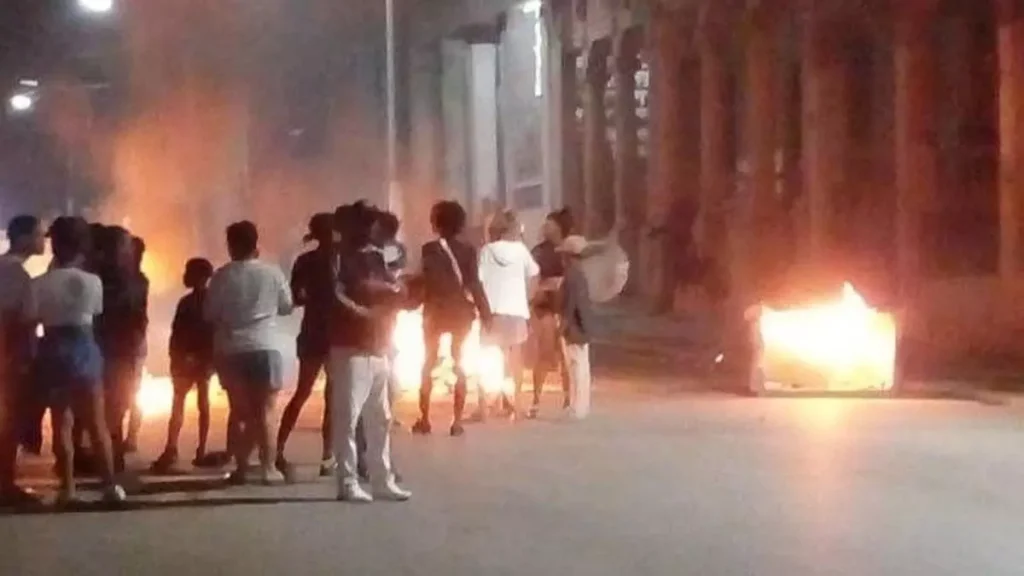
Residents of Diez de Octubre once again built barricades and bonfires on Thursday night. / 14ymedio

14ymedio bigger14ymedio, Juan Diego Rodríguez, March 20, 2026 – Havana / The protests, which in recent weeks have moved from social media to the streets, were very loud this Thursday in Havana. At the intersection of Santa Irene and Diez de Octubre Avenue, several bonfires were lit and barricades were built demanding electricity, images that have gone halfway around the world through social media. It was the most striking focal point of last night’s demonstrations, but in Alamar shouts of “Freedom” and “Down with the dictatorship” were also heard, banged out on pots and pans, mixed with demands for electricity.

“Here, every little while the pots are banging,” says María, a resident of Diez de Octubre, “but they have no shame anymore, they don’t care about the protests. And I don’t go outside because, where exactly are they banging? I hear them, and from my house I bang mine, I don’t care. The problem is that if I go out and the young guys come running…,” adds this retiree, who fears joining a protest and being injured in a bad fall that could land her in a precarious hospital.

According to her experience, after several days of hearing pot-banging protests, public lighting turns on quickly when there is a demonstration, but only in the streets and not in homes. “To sum it up: we are like in Peru, when there’s no water or electricity. And now we’re worse, because when there’s no water there’s no electricity, no gas, nothing. Not even shame in this country,” she complains. continue reading

“To sum it up: we are like in Peru, when there’s no water or electricity. And now we’re worse, because when there’s no water there’s no electricity, no gas, nothing. Not even shame in this country”

In Santos Suárez, Lawton and Víbora Park, where the protest caught on in a big way, they are more fortunate than in Luyanó, residents of this latter neighborhood believe, where in addition to problems with electricity there are also issues with water supply. Pedro, a resident of this area, tells 14ymedio that his cousin has been without water for a month. “Yesterday he spent the whole day holding back from going to the bathroom, until a bucket showed up that a neighbor gave him and he was able to go,” he complains.

The poor supply situation is not new for Pedro, but things have worsened in recent times, and small and medium private businesses have a lot to do with it, in his opinion. “Here where I live we are all elderly, physically disabled. There is a community cistern that supplies about eight or ten apartments. So we have requested a water truck, but they say they have a very long list. But water trucks are never lacking for the two or three most famous private businesses around here,” he says.

Pedro states that few have the possibility of paying the 26,000 pesos that the water truck driver demands, under the table. “I can’t. First of all, either I eat or I drink water.” The residents have the option, he says, of getting a bottle at a church “sponsored by some Canadians” that purifies it with a special filter, but there are “huge lines.”

Reality thus clashes, once again, with the epic narrative of the official press. The report that the State newspaper Granma dedicates to the return of unit 4 of the Carlos Manuel de Céspedes thermoelectric plant, in Cienfuegos, and the 158 megawatts – the same as block 3 – that were added to the system on Wednesday are completely overshadowed by deficits that continue hovering around obscene levels. The 316 megawatts (MW) now in the system corresponding to the entire plant have been of no use: for this Friday, the expected deficit is 1,864 MW. Little difference from the 1,960 MW on Monday, before the most recent addition.

Pedro states that few have the possibility of paying the 26,000 pesos that the water truck driver demands, under the table

On Tuesday the 17th, in the middle of the collapse of the national electric system (SEN), unit 4 synchronized with the rest of the grid after a year and four months of repairs. It still had a scare this Wednesday the 18th, when a failure in the feed pump ruined the triumphant debut, but it recovered a few hours later and the Electric Union was able to celebrate the return.

The population’s indifference was total: “So what? How does that benefit us? Circuit 1 of Palma Soriano was supposed to have power restored from 4 in the afternoon to 7 at night and they didn’t do it. According to information from a colleague at the electrical dispatch, there was no availability at that time, so we have to continue in blackout until they feel like it. Today it has rained all day, imagine cooking with charcoal or firewood under heavy downpours,” complained one user.

The day is expected to be hard again, since during peak hours it is forecast that only 60% of the electricity the country demands will be generated, 1,834 MW compared to the 3,050 needed. The UNE no longer has distributed generation due to the lack of diesel, and thermal generation has limitations of 437 MW, with units 6 of Mariel and 5 of Nuevitas under maintenance and units 5 and 6 of Mariel, 3 of Santa Cruz del Norte, 2 of Felton and 3 and 6 of Antonio Maceo out of service.

Photovoltaic parks, the Government’s great hope, are contributing more and more: 236 MW as the maximum power delivered yesterday Thursday. But when night falls, darkness returns to the Island.

Translated by Regina Anavy

______________________

COLLABORATE WITH OUR WORK: The 14ymedio team is committed to practicing serious journalism that reflects Cuba’s reality in all its depth. Thank you for joining us on this long journey. We invite you to continue supporting us by becoming a member of 14ymedio now. Together we can continue transforming journalism in Cuba.
Four State Security Agents Are Sent To Detain Jorge Fernández Era During a Peaceful Protest in Havana

State Security arrests the writer once again amid growing repression in Cuba.

14ymedio bigger14ymedio, March 19, 2026, Havana / The writer and activist Jorge Fernández Era was detained this Wednesday in Havana for several hours after leaving his home to carry out his usual peaceful protest, which he holds on the 18th of each month.

The writer himself later posted that he remained detained between 3:13 pm and 11:33 pm at night in a cell at the Zanja police unit in Centro Habana.

Fernández Era recounted the details this Thursday in a Facebook post titled The Pact of Zanja, referring, with his usual humor, to the agreement that ended the Ten Years’ War between Cuba and Spain in 1878.

According to the writer, he was intercepted in the Santos Suárez neighborhood by a patrol car with four agents, two from State Security and two from the police and taken handcuffed—“of course,” he writes—to the station. “Given the deployment, people must have thought they had finally caught the second most wanted drug trafficker in the world,” he joked.

Given the deployment, people must have thought they had finally caught the second most wanted drug trafficker in the world

Fernández Era points out that the Zanja station brings back memories of the beating the police gave him last year in that same place. During his detention, he was interrogated by a lieutenant colonel from State Security, who allegedly suggested that he cease his activism: “In the style of Martínez Campos, between the lines he proposed surrender.” The writer rejected the proposal: “I replied that for a long time now the counterrevolution is represented by them and all those who live well at the expense of the sacrifice, silence, and double standards for the people. I told him that he should take me to trial if he felt like it for telling him what he was constantly writing down: I would go proudly to prison if continue reading

he proceeded that way.”

The activist also pointed out the ironic concern the Police had for his physical integrity when releasing him after 11:30 at night. According to his account, his release was not an act of goodwill but rather due to the authorities’ fear of a public reaction.

News of his arrest had been made public yesterday by his wife, Laideliz Herrera Laza, through a message on Facebook: “My husband, Jorge Fernández Era, left at 2:15 p.m. to exercise his right to peaceful protest, recognized in the Constitution, and has not yet returned home.” Hours later, she warned that the activist had not returned. After more than seven hours, she confirmed his release: “My husband is now home. Thank you all for your support.”

The detention occurred just two months after a similar arrest on January 18, when Fernández Era remained missing for 16 hours after attempting to carry out the same monthly protest. The writer has been detained on multiple occasions, and in several of them he has reported mistreatment, including beatings by authorities, who inflicted injuries he later showed to the media.

The writer has been detained on multiple occasions, and in several of them he has reported mistreatment, including beatings by authorities

The writer has participated in these actions since 2023, joining the initiative promoted by academic Alina Bárbara López Hernández, who has also been detained dozens of times for protesting peacefully and who has a pending trial, postponed without a date, for the crime of contempt and disobedience that, according to State Security, occurred during one of those arrests.

This detention takes place amid an intensification of police repression, which has worsened in recent days following protests over power outages. In this context, authorities have increased the use of short-term detentions without charges against activists and independent journalists, especially those who attempt to exercise the right to protest in public spaces.

Translated by Regina Anavy

______________________

COLLABORATE WITH OUR WORK: The 14ymedio team is committed to practicing serious journalism that reflects Cuba’s reality in all its depth. Thank you for joining us on this long journey. We invite you to continue supporting us by becoming a member of 14ymedio now. Together we can continue transforming journalism in Cuba.
Imported Beer and Other Alcoholic Beverages Will Increase in Price in Cuba

The Ministry of Finance and Prices establishes a tax of 0.30 USD per liter for all alcohol imports.

An imported 355 ml can of beer could increase in price by about 50 pesos if purchased from a mipyme. / 14ymedio

14ymedio bigger14ymedio, March 19, 2026, Havana / Starting today, imported alcoholic beverages will have a special tax of 0.30 dollars per liter. This is established by the Official Gazette published this Wednesday, signed last March 6 by the Ministry of Finance and Prices.

The list of items subject to the new rate includes malt beers, ethyl alcohol of various strengths, whisky, rum, vodka, gin, liqueurs, and other spirits.

The measure has generated rejection among the population, as can be seen in reactions to the publication on social media, since it implies the inevitable increase in the price of alcoholic beverages for consumers.

In practice, an imported 355 ml can of beer could increase in price by about 50 pesos if purchased from an MSME [mipyme]*, taking into account the current price of the dollar on the informal market. According to statistics published by the Ministry of Public Health in 2022, around 73% of Cubans consume alcohol regularly.

The Ministry of Finance and Prices emphasizes in the resolution that the revenue obtained will go directly to the State Budget “for its redistribution through social continue reading

spending programs in health, education, security, social assistance, and culture, among others.”

The measure has generated rejection among the population, since it implies the inevitable increase in the price of alcoholic beverages for consumers

Domestic production is excluded from the measure, where brands such as Bucanero and Parranda stand out, which could in theory benefit the local industry.

The tax will be applied to the tariff subheadings corresponding to these products and must be paid by both state entities and non-state economic actors that import them. The resolution is based on Decree Law 107 of April 2025 and entered into force on March 19, 2026.

Although the tax formally falls on importers, it will, as is natural, be passed on directly to consumers. A one-liter bottle could increase by at least 0.30 USD. In larger formats or sales in bars, the increase could accumulate significantly for logistical reasons.

The increase occurs in a context of limited access to imported alcoholic beverages, dependence on state stores and mipymes that sell in dollars, freely convertible currency (MLC), or their equivalent in Cuban pesos. A tax of 0.30 USD per liter may seem small, but it adds to high logistical costs and exchange rate volatility.

According to the National Office of Statistics and Information (Onei), alcoholic beverages and tobacco led price increases in 2025, with a year-on-year rise of 69.82%.

The informal foreign exchange market reflects a weakening of the Cuban peso, with the dollar surpassing 530 CUP at the end of March 2026. This, together with reduced imports by mipymes and the decline in tourism, contributes to a generalized increase in the price of imported products.

*Micro, Small, Medium Enterprises [mipyme in Spanish]

Translated by Regina Anavy

______________________

COLLABORATE WITH OUR WORK: The 14ymedio team is committed to practicing serious journalism that reflects Cuba’s reality in all its depth. Thank you for joining us on this long journey. We invite you to continue supporting us by becoming a member of 14ymedio now. Together we can continue transforming journalism in Cuba.
The Sea Horse Managed To Clandestinely Unload 190,000 Barrels of Russian Diesel in Cuba, According to Windward

The maritime intelligence agency asserts that the tanker manipulated positioning signals and entered a port on the Island at night in early March.

The Sea Horse, flying the Hong Kong flag, is not subject to sanctions but uses “deceptive” practices to transport sanctioned crude. / Vesselfinder

14ymedio bigger14ymedio, March 19, 2026 – Madrid/Despite the oil blockade imposed more than two months ago by the U.S. on Cuba, there is strong evidence that the tanker Sea Horse (also Seahorse), under the Hong Kong (China) flag, managed to clandestinely reach a port on the Island and unload about 190,000 barrels of Russian diesel. The arrival took place at the beginning of this month, according to the maritime intelligence agency Windward, which detected manipulation of the Automatic Identification System (AIS), which transmits the location, identity, course, and speed of vessels.

The tanker, which is not sanctioned according to Windward, loaded diesel using the ship-to-ship method in Cyprus in early February. It then indicated it was heading to Cuba but soon altered its route and reported “Gibraltar for orders,” a nautical instruction used to indicate that it will remain in that port (belonging to the United Kingdom and located in southern Spain) awaiting final orders.

Between mid- and late February, the Sea Horse was navigating the Atlantic, stopped 1,300 nautical miles from Cuban waters, and began drifting at speeds below one knot, with the warning “not under command,” a visual signal—black balls by day and red lights at night—normally used when, due to damage or malfunction, the captain cannot properly maneuver. In practical terms, this grants what is known as the right of way and requires other vessels to avoid it. Although the purpose is to prevent accidents, in this case the signal may have been used fraudulently to proceed without difficulty.

The Sea Horse was navigating the Atlantic, stopped 1,300 nautical miles from Cuban waters, and began drifting at speeds below one knot, with the warning “not under command”

According to Windward, this is one more of the deceptive techniques the tanker has used before, including switching off transponders during the transfer of Russian oil to evade sanctions against Moscow over its war of aggression in Ukraine. According to the information, this would be the first tanker to reach Cuba since early January, when the Ocean Mariner did so with a cargo of more than 80,000 barrels of Mexican fuel, even though Cuban President Miguel Díaz-Canel said at a press conference last Friday that not a single drop of crude had entered the Island in three months. continue reading

Asked about Windward’s information, University of Texas expert Jorge Piñón told 14ymedio: “Anything is possible, but tracking services, Reuters, and Bloomberg do not indicate it.” However, they do point out, as he himself confirmed again this Tuesday to this newspaper, that the tanker is once again heading toward the Island with some 200,000 barrels of Russian diesel. “Our calculations indicate it would take approximately five days to reach the north coast of Cuba, 1,146 nautical miles away,” the specialist said, after the ship had been drifting. It is now moving “under its own power” at a speed of 9.9 knots.

Added to that vessel is the Anatoly Kolodkin, loaded with Russian oil and heading toward Cuba, according to Bloomberg and the Financial Times, which cite information from the maritime intelligence firm Kpler. The tanker carries nearly 730,000 barrels of Urals crude on board and is scheduled to arrive at the port of Matanzas at the end of March.

The tanker carries nearly 730,000 barrels of Urals crude on board and is scheduled to arrive at the port of Matanzas at the end of March

Recent data indicate that the promised Russian aid, which until now had remained only words, may materialize or may have already done so. Since the Trump Administration announced at the end of January sanctions on countries that sold or supplied oil to Cuba, no country had defied the measure, which was technically neutralized by the Supreme Court’s decision declaring illegal the basis on which the White House planned to justify them: tariffs under presidential powers that the president does not possess under current circumstances. Despite this, the president could seek ways to penalize deliveries by resorting to another rule, which has so far functioned as a deterrent mechanism.

In recent days, due to the war in Iran affecting global hydrocarbon trade following the blockade of the Strait of Hormuz and attacks by both sides on gas and oil facilities, the U.S. has temporarily lifted sanctions on Russian crude in an attempt to ease a market whose prices are rising by the minute, a decision that could ultimately benefit Cuba.

Correction: A previous version of this article mistakenly included a reference to the sale of gasoline through the Ticket application. The text was corrected to eliminate confusion between gasoline and diesel.

Translated by Regina Anavy

______________________

COLLABORATE WITH OUR WORK: The 14ymedio team is committed to practicing serious journalism that reflects Cuba’s reality in all its depth. Thank you for joining us on this long journey. We invite you to continue supporting us by becoming a member of 14ymedio now. Together we can continue transforming journalism in Cuba.
In a Cuba Without Electricity and Without Water, the Government Press Defends Moringa as a Magical Solution

A doctor advises the use of this plant, which obsessed Fidel Castro, to purify murky water as a substitute for chlorine and boiling.

An elderly Fidel Castro touching a moringa plant / Cubadebate/Archive

14ymedio bigger14ymedio, March 18, 2026 – Madrid / With the energy crisis as a trigger, Cuba is moving at a rapid pace toward a public health crisis in which the inability to manage garbage collection and the lack of electricity to operate the water supply system are delivering the final blow. Two years ago, when the economic situation was not so alarming, barely half of the population had safe access to water, a figure that has dropped sharply in the current context and in the face of which, inexplicably, Cubadebate now offers a high-risk recipe: moringa seeds.

This Tuesday,  government newspaper published a text signed by Johann Perdomo Delgado, a doctor specializing in Natural and Traditional Medicine and head of the department and national group of that specialty at the Ministry of Public Health. With these credentials, the expert presents the natural properties of moringa as an almost magical solution for “the purification of drinking water” and places it practically on the same level as chlorination or even something much simpler and more economical: boiling.

The doctor reviews the medicinal uses of moringa, an invasive plant that grows without any control in Cuba and whose properties were an obsession of Fidel Castro, particularly in the last years of his life. Among them are “antioxidant, anti-inflammatory, antihypertensive, diuretic, antimicrobial, antipyretic, antidiabetic, hypolipidemic, anti-ulcer, antineoplastic, cardio, and hepatoprotective” properties. continue reading

There are up to 90 nutrients in the plant, including proteins, vitamins, and minerals, but its seeds also have, he adds, the ability to “reduce turbidity and eliminate up to 99% of the bacteria”

There are up to 90 nutrients in the plant, including proteins, vitamins, and minerals, but its seeds also have, he adds, the ability to “reduce turbidity and eliminate up to 99% of the bacteria” present in water in a “short settling period.” According to the text, this helps prevent several diseases transmitted by unsafe water, such as cholera, other diarrheal diseases, dysentery, hepatitis A, typhoid fever, and poliomyelitis.

Although the note admits that “for the prevention of infectious diseases transmitted by water, chlorination is a well-known and advisable method that makes it possible to eliminate harmful microorganisms,” it recklessly claims that with moringa seeds it is possible to “guarantee from home the consumption of safe water, through the use of this plant resource.”

In addition, it explains the recipe, as simple as removing the shell from about ten seeds of the plant, crushing them into a paste, and mixing them with 20 liters of water. After stirring and mixing for three minutes, it is enough to let it sit for between an hour and a half or two hours and filter it with a clean cloth. “With this method, according to studies carried out that have proven its harmlessness, it is possible to obtain water that is suitable for human and animal consumption. In this way, especially in the case of natural disasters or other emergencies, resorting to moringa seeds is a way in which we can guarantee the care of our health… all natural!” the text adds casually.

The World Health Organization (WHO) does indeed cite the many natural properties of moringa and has reviewed countless studies on the use of its seeds to purify water. There are at least 20 publications in the institution’s IRIS repository containing information on water treatment using this method, particularly for developing countries, but its benefits are more limited than Cubadebate suggests.

Although they observe that the results are promising, they note that “they still face significant limitations that restrict their widespread use”

The main property of the seeds for this use lies in coagulating cationic proteins, which have a positive surface charge, as a natural way to make dirty (turbid) water appear clear; they adhere to dirt like a magnet. The cleaning is real, but relative. As the doctor himself says, it can reach 99%, although the WHO considers it may be reduced to 90%, leaving enough margin for the consumed water to contain viruses and parasites capable of causing illness. For this reason, science always recommends that this be, at most, a preliminary step to chlorination or, in cases where that is not possible, boiling.

The Pan American Health Organization (PAHO) manuals for water treatment do recognize the use of moringa seeds for a first step: removing turbidity. But this must be followed necessarily by either of the two previously mentioned methods or, in more extreme cases, the SODIS method, widely used in emergency areas with considerable success and consisting of exposing water to sunlight for long hours with extreme precautions regarding the container used.

At the beginning of 2026, the WHO published a study conducted in Brazil on the “viability of plant-based coagulants, including moringa, in water purification,” which in turn reviewed previous publications, with the aim of “advancing sustainable, low-cost treatment solutions.” However, although they observe that the results are promising, they note that “they still face significant limitations that restrict their widespread use.”

Translated by Regina Anavy

______________________

COLLABORATE WITH OUR WORK: The 14ymedio team is committed to practicing serious journalism that reflects Cuba’s reality in all its depth. Thank you for joining us on this long journey. We invite you to continue supporting us by becoming a member of 14ymedio now. Together we can continue transforming journalism in Cuba.
Despite Popular Rejection and a Ruined Army, Cuban President Díaz-Canel Threatens With “An Impregnable Resistance”

“Cuba would not last even one night against a drone and satellite attack” from the U.S., notes an article in the Spanish press.

Díaz-Canel dressed in military attire during a National Defense Council in 2025 / Cubadebate

14ymedio bigger14ymedio, March 18, 2026 – Madrid / In the midst of the holding pattern affecting a Cuba that is at the center of conversations abroad, but immobile within its own borders, this Tuesday brought the bad news. While on Monday the deputy prime minister Oscar Pérez-Oliva delivered the good news by announcing to the media – of the U.S. first, the order also matters – the opening of the Island to investment by Cuban emigrants and Americans, yesterday his boss, Miguel Díaz-Canel, lashed out against the “empire.”

“The United States publicly threatens Cuba, almost daily, with overthrowing the constitutional order by force. And it uses an outrageous pretext: the severe limitations of the weakened economy that they have attacked and tried to isolate for more than six decades,” the president wrote on his X account.

The post came a day after the U.S. president told the press that it would be “a great honor” for him “to take Cuba.” “I think I can do whatever I want with it,” he snapped, after again referring to the economic collapse looming over the Island following the oil blockade decreed in January by his Administration. The statement is just one more among the nearly daily references by Donald Trump in the same vein, although it was followed by remarks from his Secretary of State, Marco Rubio, stating that the opening to investments announced by Pérez-Oliva the day before was insufficient and that Cuba needed “drastic changes” and “to put new people in charge.”

“They intend and announce plans to take over the country, its resources, its properties, and even the very economy they seek to suffocate. Only in this way can the fierce economic war applied as collective punishment against the entire people be explained. Faced with the worst scenario, Cuba is accompanied by one certainty: any external aggressor will clash with an impregnable resistance,” Díaz-Canel added, shortly after Rubio’s statements.

“They intend and announce plans to take over the country, its resources, its properties, and even the very economy they seek to suffocate”

One of the most visible faces of Díaz-Canel’s government is his foreign minister, Bruno Rodríguez, who repeated almost entirely his boss’s message. “The U.S. threatens Cuba with destroying continue reading

the constitutional order and taking control of the country. The collective punishment applied to us Cubans will not diminish the full exercise of sovereignty nor creativity in the face of the blockade and the energy siege. Any aggression from imperialism will clash with the irreducible will of the Cuban people in defense of the independence of the Homeland.”

The foreign minister – the space also matters – attended Díaz-Canel’s appearance on Friday with a shadow seated behind him: that of Raúl Rodríguez Castro, El Cangrejo, the grandson of Raúl Castro tasked by his grandfather with monitoring political personnel, who occupied a seat behind the minister of foreign affairs both at the president’s meeting with the rest of his cabinet and at the subsequent press conference.

Díaz-Canel and Rodríguez are the only ones who have come out to confront the U.S. at this crucial moment in the negotiations, while the prime minister, Manuel Marrero, remains silent, and although nothing is written, it may be a clue for those who see that there is already nothing left to lose. Both concluded their respective posts yesterday with a “Cuba stands firm,” but the truth is that the regime is at the limit in two key aspects at this moment: popular support and the capacity to face an aggression by force.

Evidence of the first is seen every day in the streets of the Island. When night falls, pots clang; when the sun rises, graffiti appears: “Down with the dictatorship” “Díaz Canel singao [motherfucker].” The blackouts exceeding 30 consecutive hours; the shortage of drinking water, the use of charcoal for cooking, and the improvised garbage dumps on every corner have eroded any trace, if any remained, of sovereign pride. Those who convincingly call to resist are conspicuously absent, while those who demand, publicly or privately, that something happen now, whatever it may be, are plentiful.

But even if there were hands to defend the regime, the means are more than deficient. Not only because it faces one of the largest and best-armed armies in the world, but because it could not even resist a modest one. This Wednesday, the Spanish sports newspaper – yes, sports – AS publishes an exhaustive special on the precariousness of the Revolutionary Armed Forces (FAR) that lays the situation bare.

According to the article, the Air Force barely maintains about twenty aircraft in flying condition and frequently resorts to dismantling old units for spare parts, while the Navy is limited to a coastal fleet of about 33 vessels without ocean-going capacity. As for defense capabilities, the Island has S-125 Pechora systems, Soviet missiles from the 1950s updated last year by Belarus, along with 144 launchers as its best asset, since the rest is standard artillery and there are no drones. “In a war of drones and satellites, the Island is still fighting with its grandparents’ binoculars,” the text says.

“In a war of drones and satellites, the Island is still fighting with its grandparents’ binoculars,” the text says

The ground weapons –around 300 tanks– are described by the writer as “a rolling Soviet museum that anywhere else in the world would be scrap, but in Cuba is the backbone of defense.” As with the aircraft, parts are cannibalized to keep them running.

The best asset is personnel, which in principle amounts to 50,000 active soldiers, 39,000 in reserve, and 90,000 paramilitaries, including Territorial Troops and Defense Committees. It is the only option to attempt to resist a land invasion, but as the article warns, “the theoretical mobilization capacity exceeds one million people. Feeding, moving, and sustaining that million is another story.” In addition, among the many striking lines scattered throughout the text, it adds: “Cuba would not last even one night against a drone and satellite attack.”

The epic of resistance that Díaz-Canel has once again resorted to, in contrast to the pragmatism with which the Castros conduct negotiations, clashes with reality. Although it may also be that this is precisely the last role he has been assigned.

Translated by Regina Anavy

______________________

COLLABORATE WITH OUR WORK: The 14ymedio team is committed to practicing serious journalism that reflects Cuba’s reality in all its depth. Thank you for joining us on this long journey. We invite you to continue supporting us by becoming a member of 14ymedio now. Together we can continue transforming journalism in Cuba.
Matanzas Under Siege Amid the Appearance of Posters Against the Regime

State Security harasses an evangelical pastor for allowing “subversive ideas” in his congregation.

Etecsa center in Peñas Altas, where they are paying one thousand pesos per shift to trusted individuals to keep watch / 14ymedio

14ymedio biggerPablo Padilla Cruz, Matanzas, March 17, 2026 – The “City of Bridges” does not sleep, not because of the bustle of its cultural life or the flow of its rivers but because of the weight of a security operation that reveals an unprecedented institutional vulnerability. Following the appearance of a sign in the central Playa del Tenis where the word “Communism” was intertwined with a Nazi swastika, the repressive apparatus in Matanzas has gone on maximum alert, revealing that, for the regime, a can of paint is now more dangerous than a weapon.

Less than 72 hours after the protests in Morón and just one day after the incident at Playa del Tenis, Matanzas woke up militarized at its key points. The speed with which State Security agents covered the anti-communist graffiti was not enough to contain the paranoia. According to internal sources, the security perimeter has expanded to public buildings and strategic locations, attempting to shield a normality that exists only in official discourse.

The fear is not only of crowds but of symbols. The appearance of posters with the word “libertad” [freedom] in the neighborhoods of Naranjal and Los Mangos has triggered a disproportionate response that combines worker coercion, technological sabotage, and religious persecution.

The appearance of posters with the word “libertad” [freedom] in the neighborhoods of Naranjal and Los Mangos has triggered a disproportionate response that combines labor coercion, technological sabotage, and religious persecution

The escalation of tension reached a critical point this Sunday, March 15, when surveillance shifted from walls to religious institutions. In what worshippers describe as “an assault on faith,” an evangelical pastor in the city was the target of a violent repressive operation as he prepared to carry out his pastoral duties.

Eyewitnesses reported that State Security agents intercepted the religious leader, accusing him of allowing “subversive ideas” to filter into his congregation under the cover of the social crisis affecting the province. This attack is not isolated; it is part of the dictatorship’s strategy to decapitate any figure with moral leadership who could continue reading

channel public discontent. The detention or harassment of the pastor, whose name is withheld for fear of further reprisals, confirms that the regime now fears not only paint on walls but also words from the pulpit.

Image of the place where the evangelical pastor was arrested on Monday morning / 14ymedio

The telecommunications company Etecsa, an enforcement arm of digital control on the Island, has turned its workers into ideological custodians. According to employee testimonies, management has formed “shock brigades” made up mostly of members of the Communist Party of Cuba (PCC).

Despite the collapse of the national electric system (SEN), these brigades remain on guard at bases and telecommunications antennas. “Each antenna will now have reinforced guards,” said a worker speaking on condition of anonymity. The fear is twofold: physical attacks on the facilities or the use of these structures as canvases for public discontent.

Even more alarming is the confirmation of a mass disconnection protocol. Yesterday afternoon, a “drill” left the city without internet access or landline service for two hours. The order is clear: at any sign of protest or anti-communist action, the city must be cut off to prevent the contagion effect that social media facilitated in July 2021.

The most surreal symptom of government fear is visible in commercial areas. Places that have remained closed and abandoned for months are now lit by rechargeable lamps and guarded by civilian personnel linked to the PCC.

In the Peñas Altas neighborhood, the former Mercado Ideal, turned by neglect into a public urinal and out of service since the pandemic, is now a strategic target. Local residents confirm that the government is paying one thousand pesos per shift (from 7:00 PM to 7:00 AM) to trusted individuals to guard the ruins.

“That place has been abandoned for a year, no one has taken care of it. The fact that they now spend money to guard it only shows they are more afraid that someone will paint a sign there than that someone might steal something that no longer exists”

“It’s absurd,” said a local resident. “That place has been abandoned for a year, no one has taken care of it. The fact that they now spend money to guard it only shows they are more afraid that someone will paint a sign there than that someone might steal something that no longer exists. The fear is of ink, not vandalism.”

The deployment in Matanzas reveals a government that knows it is being watched and rejected. The mobilization of PCC members to guard empty buildings, the repression of religious leaders on a Sunday of worship, and the preparation to cut off national communications are tactics of a power that has lost consensus and retains only force. While State Security rushes to erase posters, the reality of the province is laid bare: a city where the government watches the shadows, fearing that any wall or any voice might tell the story of an ending already felt in the streets.

Translated by Regina Anavy

______________________

COLLABORATE WITH OUR WORK: The 14ymedio team is committed to practicing serious journalism that reflects Cuba’s reality in all its depth. Thank you for joining us on this long journey. We invite you to continue supporting us by becoming a member of 14ymedio now. Together we can continue transforming journalism in Cuba.

Experts: The Government’s Measures Are Stopgaps and Will Not “Resolve or Correct the Multiple Crises”

In addition to facing legal obstacles on the Island and in the U.S., it will be necessary to create guarantee mechanisms for potential investors.

The La Carreta restaurant, in the heart of El Vedado, in Havana, belongs to a Cuban American even though the law until now prohibited it / 14ymedio

14ymedio bigger14ymedio, March 17, 2026 – MADRID / The ball is in the U.S.’ court about whether it will respond or not to the changes announced this Monday by Cuba’s deputy prime minister, Oscar Pérez-Oliva, in several interviews with U.S. media and the Island’s official outlets. As the Minister of Foreign Investment and Foreign Trade himself has admitted, the announcements will come to nothing if Washington does not make a move, since embargo legislation prevents it. “The United States blockade is, without a doubt, an element that affects the development of these transformations,” the official stated.

“For Cuban residents in the U.S., the proclamation of an official Cuban measure is not enough. The approval of that government would be essential, along with the modification of restrictions on investments in Cuba, without requiring a specific license from the Office of Foreign Assets Control (Ofac),” economist Pedro Monreal, based in Madrid, said on his X account.

The expert highlights a factor on the Cuban side that creates an inexplicable gap. The expansion of the private sector through emigrant investment “is based on a legal limbo,” he recalls, since “there is no current legislation published in the Official Gazette continue reading

that allows residents abroad to be partners or owners of small and medium-sized private enterprises.” The regulation was approved by Parliament in July 2024 but has never come into force.

“There is no current legislation published in the Official Gazette that allows residents abroad to be partners or owners of small and medium-sized private enterprises.”

“Even if both legal obstacles were resolved and assuming basic guarantees were adopted—legal stability, currency exchange facilities, and protection against expropriation—additional guarantees would be needed for foreign investment and small business modalities,” Monreal adds. In his view, this implies creating an independent and accessible dispute resolution mechanism (strengthened or hybrid national arbitration), a guarantee fund or insurance against political risks, and direct access to foreign trade and international banking.

This would entail, it is suggested, the creation of one or several Chambers of Commerce for private actors, transparency in authorization processes, a digital one-stop shop for emigrant partners, and commitments of non-retroactivity with a long grace period. “Without a legal framework with basic and additional guarantees that builds trust, many emigrants will prefer to continue sending remittances instead of investing directly, but that type of guarantee does not appear to be on the radar. One should not sell the bear’s skin before catching it,” he concludes.

His is not the only voice pointing out how premature the announcements are on their own. Ricardo Torres, author of Cuba Economic Review, told EFE that if Havana’s “intention” is to “send a signal, then it’s not bad.” However, from a technical standpoint, he says the proposals outlined are partial, incremental, insufficient, late, and heavily bureaucratic.

“None of these measures will change the state of affairs,” he adds. In his opinion, in addition to opening the economy and “creating institutions and regulatory capacity,” “a very strong signal would need to be sent that the paradigm has changed,” which would even imply changes in political leadership for reasons of “credibility.” On the table, according to several U.S. media outlets, is the departure of Miguel Díaz-Canel, demanded by the U.S., which, however, is not asking anything regarding the Castro family, according to sources from The New York Times and USA Today.

Tamarys Bahamonde, a Cuban professor at the City University of New York, has also weighed in, stating that Cuba does not need stopgaps but “medium- and long-term” policies to “resolve or correct the multiple crises” it faces. “Cuba now needs transformations so deep that speaking only of reforms is very limited. Cuba needs real changes in the economic, social, and political spheres,” she emphasizes.

In her opinion, these needs require “solid investors” capable of waiting for medium- or long-term returns, and she calls on the White House to begin lifting sanctions. “The experience of Venezuela and Iran has taught us that Washington’s objective is not democratization and regime change but economic-financial expansion and control,” she underscores.

“The experience of Venezuela and Iran has taught us that Washington’s objective is not democratization and regime change but economic-financial expansion and control.”

In her view, there is a clear loser: the people are bearing the full pressure of this tug-of-war. “They do not deserve this; they are the ones suffering,” she states.

The Spanish agency EFE also spoke with economist Pavel Vidal, a professor at the Pontifical Xavierian University in Cali, Colombia, and head of the Cuban Observatory of Currencies and Finances (Omfi). “The Cuban economy requires a broad stabilization and liberalization program that includes a new strategy of international integration, allowing it to generate exports to pay its debts and begin investing in a productive infrastructure that is practically in ruins,” he emphasizes. He adds that “much more is needed to show willingness for change and to build trust,” especially since the effects are minimal if sanctions are not eased and the oil blockade is not lifted.

Miguel Alejandro Hayes, of the Institute for Research on the Caribbean Basin, believes the reforms are not ambitious enough for Washington’s expectations, as they amount to little more than a “tactical readjustment” given the circumstances.

“The current model and its managers have demonstrated a structural inability to generate the resources needed to overcome the current situation,” he states. In his view, it is necessary to secure “international financing” and implement “a macroeconomic stabilization plan grounded in the restoration of infrastructure,” a key element for enabling large-scale sustainable growth.

The consulting firm Auge, which on its Telegram channel sees the new measure as a “clear” opportunity has been more positive with the uncertainty. “There is a flow of capital and knowledge outside the Island seeking to land in productive projects within the country. For the Cuban private sector, this means potential access to financing and strategic partners,” they state.

However, they also stress that “the challenge is implementation: having the measure published is not the same as having the investment carried out. Viability depends on proper migration classification, obtaining specific licenses, and legal structuring to protect both parties. It is not just about measures but about knowing how to take advantage of them in the context of each business. The theory, which is not yet directly written into regulations, requires well-guided practice.” The consulting firm has not missed the opportunity and offers its experience and analysis to Cubans both inside and outside the Island.

Translated by Regina Anavy

______________________

COLLABORATE WITH OUR WORK: The 14ymedio team is committed to practicing serious journalism that reflects Cuba’s reality in all its depth. Thank you for joining us on this long journey. We invite you to continue supporting us by becoming a member of 14ymedio now. Together we can continue transforming journalism in Cuba.

Cuba Wakes Up With the Electrical System Connected From Pinar Del Río to Holguín

Guantánamo, shaken by a magnitude 6 earthquake early this morning, while Granma and Santiago de Cuba remain outside the National Electric System (SEN)

The rains helped cool Havana overnight and into the morning this Tuesday, in the midst of a general blackout. / 14ymedio

14ymedio bigger 14ymedio, Havana, March 17, 2026 – The reconnection of Cuba’s national electric system (SEN) is progressing very slowly, and by 8 a.m. this Tuesday, 18 hours after the grid collapse, it was possible to link the system from Pinar del Río to Holguín. The three easternmost provinces are still operating with microsystems while awaiting the startup of the Felton thermoelectric plant to achieve full integration of the SEN.

In the morning, 38% of Havana had electricity, totaling 332,926 customers, and 40 hospitals had power. The vice prime minister, Inés María Chapman, reported that the absolute priority is water supply, which was affecting hundreds of thousands of people in the capital, with three pumping stations restored. The weather helped ease the situation overnight, with slightly cooler temperatures in the capital and early morning rain, which intensified in the morning and helped people get through the night without air conditioning or fans.

Meanwhile, in the east, panic was widespread, as the darkness was compounded by an earthquake a few kilometers from Imías, in Guantánamo. The tremor, with a magnitude of 6, struck at 12:28 a.m. this Tuesday and had several aftershocks, according to O’Leary Fernando González Matos, director of the National Center for Seismological Research, who warned that the situation would be monitored and urged the population to “stay informed through official media” during the blackout. “The east is collapsing with the tremors and in darkness. It’s a curse,” lamented a user on social media. continue reading

From the newsroom of 14ymedio, most of the lights visible before dawn came from Havana’s ministerial district. / 14ymedio

Most reports on social media indicate that the earthquake was felt very strongly in areas near the epicenter, as well as in neighboring Santiago de Cuba, although no serious damage is known, and some residents reported having connectivity through Nauta Hogar and some electricity. “I was exhausted; the bed shook, and the noise woke me up. It’s the biggest earthquake I’ve felt in my life,” one user said. “The tremor was extremely strong; the movements were felt continuously. The electrical cables swayed like a kite. It sounded like a train moving forward dragging houses. Neighbors went out into the streets, others were sleeping and didn’t even notice. We’re waiting for aftershocks; damage is unknown; only comments and experiences remain,” added another.

In Santiago, where the tremor was also strongly felt, a microsystem remains in place using the Santiago Este and Pavón engines to supply healthcare centers.

If the good news of the night was the startup of the 10 de Octubre thermoelectric plant in Nuevitas, Camagüey, whose Unit 6 began contributing about 80 megawatts (MW) to the system after receiving external power, by morning, Unit 8 in Mariel, Unit 3 at Carlos Manuel de Céspedes, and the Antonio Guiteras plant were in the startup process, with the latter ready to begin ignition.

“Power may come and go in circuits that have already been restored while the system stabilizes,” authorities in Camagüey warned last night.

In Sancti Spíritus, according to sources from 14ymedio, security was at its highest last night, with surveillance at institutional buildings and mobilization at workplaces due to the risk of spontaneous demonstrations, although some employees resisted complying with the requirement. At this time, 71,221 customers have service, although authorities warn: “It is important to note that some circuits were restored and then affected again, although they did not include vital services,” all in an effort to balance the system.

Sancti Spíritus on Monday night, in the midst of a total blackout. / 14ymedio

In Matanzas, progress was theoretically broader, with 21% of the population – nearly 67,000 users – having service, including some areas of Cárdenas and the historic center of the provincial capital. Authorities there announced the sale of prepared food, water distribution via tanker trucks, and the “use of amateur radio systems to maintain communication between municipalities.”

In Villa Clara, there are 48 MW available at this time, and all municipalities have some electricity, except Corralillo and Ranchuelo. Hospitals in Santa Clara, Sagua la Grande, Caibarién, and Placetas have power, as do the Palmarito and Minerva-Ochoíta water systems, which are operational. The provincial electric company warned, however, that there will be no rotation of circuits until the major thermoelectric plants are synchronized.

In Las Tunas, reconnection occurred at 1 a.m., with 25 MW available at dawn. The official press emphasized that “for the first time in months, the fuel oil (Delicias) and diesel (Las Tunas) plants were synchronized simultaneously,” sending power toward Holguín to support the startup of the Felton thermoelectric plant.

In Holguín, where this plant is located, the connection was achieved after 6 a.m., with service in several circuits and illuminated areas in Mayarí, Nipe, Báguano, and Banes.

As happened during the last disconnection of the SEN, which left two-thirds of the Island in darkness two weeks ago, the lack of oil is complicating the initial startup of all systems, although most of the population can no longer distinguish between a general outage and a scheduled blackout due to shortages. “This can’t be endured anymore. Please, all of you leave, because none of you fulfill the responsibility of guaranteeing basic services to the people,” cried a woman from Guanabacoa on social media.

The causes of this outage are, this time, more unclear than usual. The general director of Electricity at the Ministry of Energy and Mines, Lázaro Guerra, told state television that the causes are under investigation and that “all system parameters are being analyzed” to identify what happened.

“So far, all parameters are normal,” he added, and noted that “no issues were reported in the generating units that were in service at the time of the blackout.”

Translated by Regina Anavy

______________________

COLLABORATE WITH OUR WORK: The 14ymedio team is committed to practicing serious journalism that reflects Cuba’s reality in all its depth. Thank you for joining us on this long journey. We invite you to continue supporting us by becoming a member of 14ymedio now. Together we can continue transforming journalism in Cuba.

The U.S. Conditions an Agreement With Cuba on the Departure of Díaz-Canel, According to The New York Times

Two officials told the newspaper that the president should resign, but they leave the subsequent steps in the hands of the regime.

The proposal would involve removing Díaz-Canel, but not necessarily modifying the structure of the current political system. / Estudios Revolución

14ymedio biggerEFE (via 14ymedio), Washington, D.C., March 17, 2026 – The administration of the President of the United States, Donald Trump, has raised the possibility that the Cuban leader, Miguel Díaz-Canel, will step down from power as part of contacts between officials from both countries about the future of the Island, according to The New York Times (NYT).

According to two officials cited anonymously by The New York Times, U.S. representatives have indicated to Cuban negotiators that the president should resign, although they have left the subsequent steps in the hands of Cuban authorities.

The proposal would involve removing Díaz-Canel, but not necessarily modifying the structure of the current political system, according to the newspaper.

The cited sources added that, for now, Washington is not pushing for measures to be taken against members of Fidel Castro’s family, who continue to be influential figures within the country’s power structure.

Some U.S. officials believe that the departure of the head of state could facilitate structural economic changes that, in their view, Díaz-Canel would be unlikely to support. continue reading

Some U.S. officials believe that the departure of the head of state could facilitate structural economic changes that, in their view, Díaz-Canel would be unlikely to support

Trump stated this Monday that it would be “a great honor” for him to “take Cuba,” amid tensions between the two countries over the energy blockade against the Island.

The Republican president has threatened in recent weeks to take control of the Island, whether in a “friendly” or hostile manner, and has repeated