The Mother of Cuban YouTuber Anna Bensi Is Threatened With Five Years in Prison

The Inter American Press Association denounces that this type of harassment against independent journalists and their relatives has become constant in Cuba.


Anna Bensi and her mother Caridad Silvente / Image taken from social media

14ymedio bigger14ymedio, Havana, March 12, 2026 – The wave of repression in Cuba has continued intensifying in recent days. Interrogations and arbitrary criminal proceedings are being used to stop any form of critical expression.

Caridad Silvente, the mother of YouTuber Anna Sofía Benítez Silvente (“Anna Bensi” on social media) was interrogated at a police station in Alamar, in Havana, and now faces criminal proceedings for having circulated images of the agent who delivered her police summons.

Silvente stated that she was interrogated for nearly two hours, during which she was accused of allowing her daughter to publish denunciations against the Government and was threatened with a sentence of up to five years in prison.

The accusation is based on Article 393 of the Cuban Penal Code, which punishes “acts against personal and family privacy, one’s own image and voice,” after she revealed the identity of a ‘suboficial’ of the Ministry of the Interior, Yoel Leodan Rabaza Ramos, who went to the home to deliver the summons. Anna Bensi had shared these images as a denunciation of police intimidation.

According to Silvente, the agents called her a “bad mother” and accused Anna Bensi of being “counterrevolutionary,” of “conspiring,” and of receiving orders from the United States. After the interrogation, Silvente was informed that she is under house arrest and cannot receive visitors. She is required to find a lawyer within five days for her criminal case. They also told her that Anna Bensi will be summoned soon.

The agents called her a “bad mother” and accused Anna Bensi of being “counterrevolutionary,” of “conspiring,” and of receiving orders from the United States.

In a message published on Facebook, the 21-year-old posted a public response addressed to State Security, in which she denounces how this intimidation is meant to pressure her to stop expressing herself freely on social media. “My mom is not a criminal,” she wrote. “If anything happens to my mom or continue reading

to me, it will be your fault [State Security].” She also stressed that she will continue expressing her ideas freely without fear.

The U.S. Embassy in Cuba spoke out against this harassment on its X profile: “We have not had the pleasure of meeting Anna Bensi or her mother, but why are the regime’s authorities summoning them? Why are they threatening them?”

The case shows the increasingly frequent practice of police pressure against the relatives of activists. A similar intimidation was reported last Tuesday against the father of a member of the digital project Fuera de la Caja [Outside the Box] who was intercepted by State Security agents at his workplace and threatened with having his children imprisoned if they continue their political activity on social media.

Fuera de la Caja reported today on its Facebook profile that Anna Bensi and her mother have had their internet connection cut off, another repressive measure by the State.

This wave of harassment has raised alarm among international organizations. The Inter American Press Association (IAPA) yesterday denounced the increase in repression against independent journalists on the Island, pointing to arrests, police blockades, and physical assaults. In a statement released from Miami, the organization said this represents a persistent pattern of intimidation directed at those who exercise the right to report information.

The repetition of arrests, police blockades, physical assaults, and threats demonstrates the systematic use of the state apparatus to intimidate and silence journalists.

It is the second series of incidents documented by the organization since the end of January. “The repetition of arrests, police blockades, physical assaults, and threats demonstrates the systematic use of the state apparatus to intimidate and silence journalists,” said the organization’s president, Pierre Manigault.

The president of the IAPA’s Press Freedom Commission, Martha Ramos of Organización Editorial Mexicana (OEM), stated that “the persecution not only reaches those who report the news, but also their relatives and close associates, in a strategy intended to generate fear and encourage self-censorship.”

The 2025 edition of the Chapultepec Index of Freedom of Expression and Press, released yesterday by the IAPA, classifies Cuba as a country with “High Restriction”: “Cuba presents a strengthened dictatorship that has normalized situations adverse to freedom of expression, refining the restrictive environment to the point of nearly preventing citizen expression, which, although it still exists, faces new obstacles due to prior repression within an institutional blockade.”

Translated by Regina Anavy

______________________

COLLABORATE WITH OUR WORK: The 14ymedio team is committed to practicing serious journalism that reflects Cuba’s reality in all its depth. Thank you for joining us on this long journey. We invite you to continue supporting us by becoming a member of 14ymedio now. Together we can continue transforming journalism in Cuba.
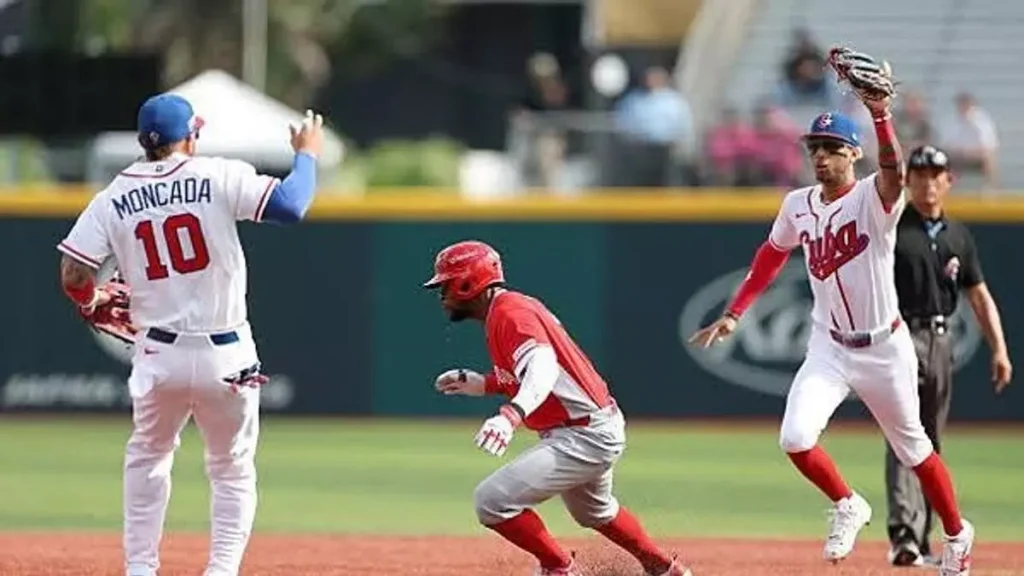
Cuba Has a “Disastrous Finish” in the World Baseball Classic and for the First Time Fails To Pass the First Round

Canada defeats Team Asere 7–2 at Hiram Bithorn Stadium.

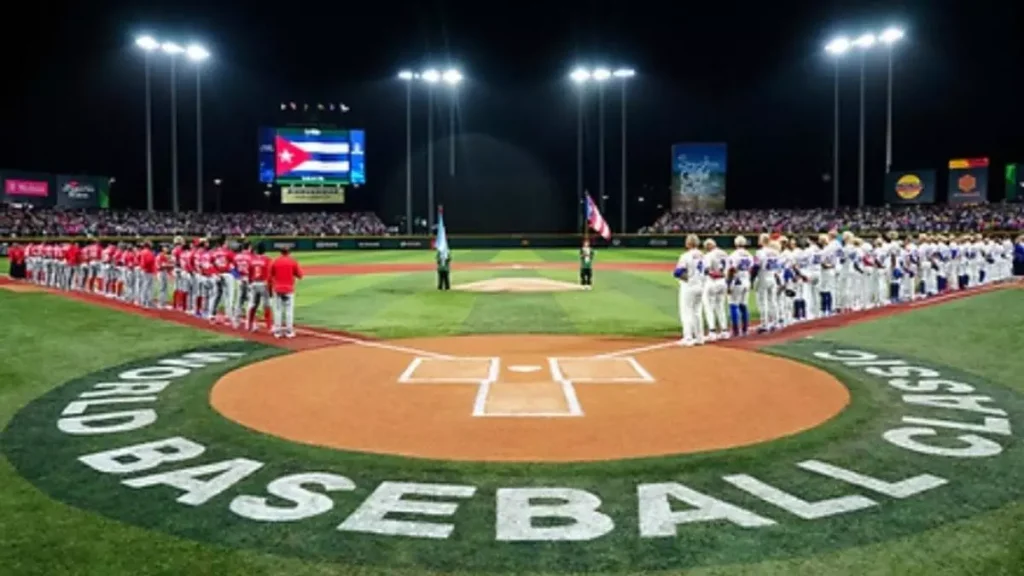
Never before had Cuba been eliminated in the first round of the World Baseball Classic. / Jit

14ymedio bigger14ymedio, Havana, March 12, 2026 – The squad managed by Germán Mesa had a “disastrous finish” on the field of Hiram Bithorn Stadium, acknowledged the pro-government media Jit. Cuba’s 2–7 loss to Canada hurt. The game not only exposed the weaknesses of Team Asere but also marked the worst performance in the six editions of the event. Never before had the Island been eliminated in the first round.

The team displayed “a conglomerate of lapses in the three aspects of the game,” the same media described, which the opponent knew how to take advantage of. In addition, the team continued with “a brutal offensive drought.” In the game they recorded five hits, a total of 20 in four games, and “struck out a whopping 13 times.”

Speaking to the media, Mesa admitted that “work was done, but the way the game was played makes it very difficult to win a baseball game.” The manager spoke about conducting an evaluation and said this defeat will serve as experience for the next World Baseball Classic.

Journalist Francys Romero, who closely followed Team Asere’s performance, was blunt: “A radical change is needed.” The commentator believes that for Cuba to be a winning team it is urgent that “the system stop controlling the sport” and the Cuban Baseball Federation (FCB).

The commentator believes that for Cuba to be a winning team it is urgent that “the system stop controlling the sport” and the Federation.

Romero recalled that, under the current conditions, the call-up of players is limited to 50. The selection is restricted by the athletes’ “political status,” and those who have abandoned a delegation are excluded. The analyst regretted that changing this “is not contemplated in the mentality of the current system.”

For El Nuevo Herald contributor Jorge Ebro, “relievers Yariel Rodríguez, Yoan López, Darién Núñez and Raidel Martínez were unable to contain the Canadian attack, although starter Liván continue reading

Moinelo had managed to keep the score close in the early innings, despite working too long and using up valuable pitches.”

The loss was blamed on Yariel Rodríguez. However, journalist Yasel Porto Gómez of DPorto Sports LLC said that “it isn’t fair for him to take all the lightning bolts that are coming down on him on social media.”

Porto says that the Cuban Baseball Federation and the team’s leadership also bear responsibility, since they brought “two catchers without the necessary level,” when there were veterans such as Ariel Pestano. “Nor should Andrys take all the criticism for a game in which others also didn’t perform well, and I don’t think he deserves the worst attacks and insults either,” he added.

Juan Carlos Guerra Alonso, JuanK, from Por La Goma LLC, was emphatic: “You can’t build a national team without calling up the best players born in your country. This is the level that group has, and this is the result. It is not a matter of chance or of lighting candles to the saints: it is pure reality.”

The analyst emphasized that “they stubbornly insisted on players who were no longer suited for tournaments of this type, betting on the luck of the famous ‘blessed hit’ that never arrived. In that effort they ended up destroying the beautiful history of several of them, degrading them and making them look very bad on a stage where they didn’t deserve to end like that. All because of archaic ideas that unfortunately ended up demonstrating how wrong they were.”

The analyst emphasized that “they stubbornly insisted on players who were no longer suited for tournaments of this type, betting on the luck of the famous ‘blessed hit’ that never arrived.”

With the win against Cuba, Canada qualified for the quarterfinals for the first time and will play this Saturday in Houston (United States) in the quarterfinals against the second-place team from Group B, which will be decided between Mexico, the United States, and Italy.

The Canadians, managed by Ernie Whitt, advanced to the quarterfinal stage with a 3–1 record and surpassed Puerto Rico for first place in Group A thanks to a higher number of runs scored, 21 to 10 allowed, while the hosts finished with a 15–7 balance.

With an outstanding performance by pitcher Cal Quantrill, who won the game against Cuba after throwing five innings, allowing one unearned run, two hits, one walk and five strike-outs, and with a home run by Abraham Toro, Canada dominated the game.

Translated by Regina Anavy

______________________

COLLABORATE WITH OUR WORK: The 14ymedio team is committed to practicing serious journalism that reflects Cuba’s reality in all its depth. Thank you for joining us on this long journey. We invite you to continue supporting us by becoming a member of 14ymedio now. Together we can continue transforming journalism in Cuba.
Bewilderment in the Exile Community Over the Alleged Trump Economic Agreement for Cuba

“I fear that supposed liberation may be approaching, which is an offense and a humiliation for the people of Cuba,” says Ramón Saúl Sánchez.

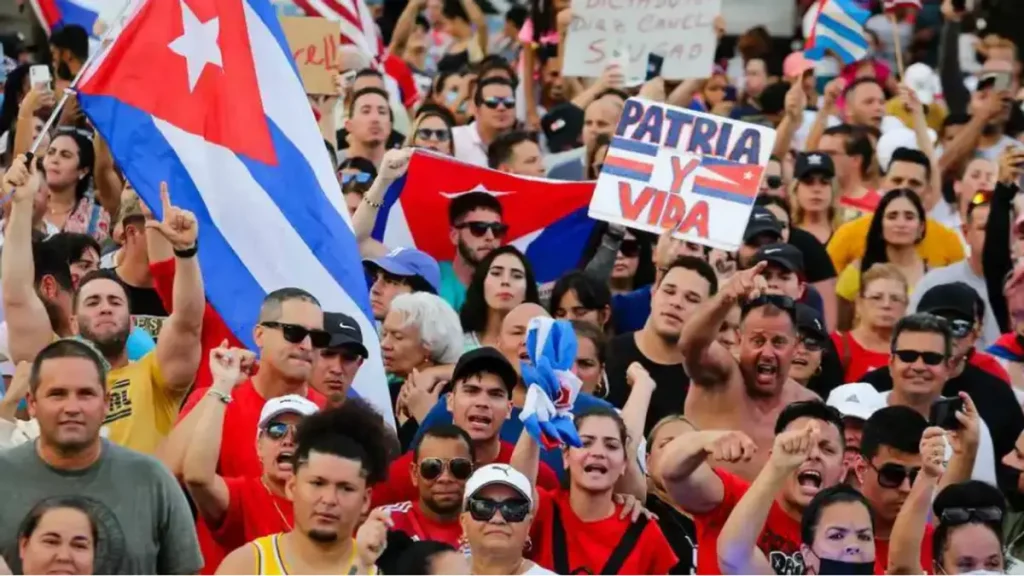
Cubans in Miami protest in solidarity with the Island. / Semana

14ymedio bigger14ymedio, Madrid, March 11, 2026 – Emotions have heated up  in Florida since last Sunday when USA Today published an exclusive report claiming that the White House was very close to announcing an agreement with the Cuban regime, mainly of an economic nature. The pact, revealed by two sources close to the U.S. Government, supposedly contains concessions to Washington in the areas of energy, tourism, and ports. In exchange, the ban on Americans traveling to the Island would be lifted, while also providing an exit for Miguel Díaz-Canel and allowing the Castros to remain in the country.

The uproar spread quickly on social media in the early hours, but exile leaders remained cautiously silent, possibly waiting for clarification or a denial that never came. Thus, more than 24 hours after the puzzling report, José Daniel Ferrer exploded: “If after capturing Nicolás Maduro, if after eliminating Ali Khamenei and other high-ranking leaders of the Iranian regime, President Trump and Secretary of State Marco Rubio end up closing only an economic deal with the Castros and they remain in Cuba, then when the current administration ends, the United States would once again have to confront dangerous enemies on the continent,” he wrote on the social network X.

The former political prisoner and leader of the Patriotic Union of Cuba (UNPACU) did not directly attack the supposed contents of the agreement but warned about the consequences of leaving the Castros in control of the Island. “The United States would have new October Crises with Russian and Chinese missiles, and many Castros, Chávez, Evo, Correa, and Ortega,” he said.

“The United States would have new October Crises with Russian and Chinese missiles, and many Castros, Chávez, Evo, Correa, and Ortega.”

The White House did not respond to this statement either, but it did impel Ramón Saúl Sánchez, leader of the Democracy Movement, to publish a video on Tuesday in which he appeared visibly saddened. “Apparently, according to information coming out in credible press outlets and from statements by our officials, the President of the United States and the Secretary of State, Marco Rubio, I fear that continue reading

this supposed liberation may be approaching, which is an offense and a humiliation for the people of Cuba,” he said.

These statements were the first in which a historic exile figure accepted the supposed plan as plausible, which he says confirms something he had “unfortunately” predicted. Sánchez, who faced a deportation process that he won in 2023, believes his message could put his stay in the United States at risk, but he argues that he will not remain silent. “Are they now going to tell us that because corporations buy or extract nickel or cobalt from Cuba we will be free? That the Castros can stay there while corporations come to extract minerals? Is that freedom?” he asked.

In a report published this Wednesday by El País, Sánchez reiterates his hopes: “I don’t want to die without seeing my homeland free, but I also don’t want to see it occupied by American corporations, squeezing out the last remains of our country with those henchmen in power,” he insists.

Luis Enrique Ferrer, brother of José Daniel and also an opposition leader in exile, spoke Tuesday on Miami television, where he stated that the regime’s only path to survival is repression, but with the Castros still inside there will be no freedom. “The real change is removing the Castro family from power, Díaz-Canel, and all the accomplices of the dictatorship, and letting the Cuban people have the opportunity to choose their leader.”

Although he maintains some faith in Donald Trump’s administration, his indirect mention of Delcy Rodríguez reflects his fears. “We can see something similar with what is happening in Venezuela. The dictatorship buys time and plays with the timelines of democracy.”

Florida politicians have begun fearing the worst, and this Tuesday some timid denials began circulating that have not fulfilled their goals. “We cannot leave any Castro behind. If they are speaking with any Castro it is only about when they are leaving, how they are leaving, and under what conditions, but not for anyone to stay,” said Republican congresswoman María Elvira Salazar, implying that negotiations with the son or grandson of Raúl Castro, both named by international media as interlocutors (especially the latter), are indeed taking place.

More uncertainty was generated by the response of the usually hard-line Mario Díaz-Balart, who did not even want to deny the possibility. “The goal is that this regime no longer exists. How is that done? You have to trust Secretary of State Marco Rubio, who is very clear about it,” he told Univisíon.

“The goal is that this regime no longer exists. How is that done? You have to trust Secretary of State Marco Rubio, who is very clear about it.”

The ambivalence of the ever-contradictory Trump also does not help calm the staunch opponents of rapprochement. The U.S. president said last week that the “taking control” of Cuba could be friendly and, in the next sentence, added that it might not be. Nevertheless, the Speaker of the House of Representatives, Mike Johnson, almost completely ruled out the military option on Tuesday. “I don’t think there is a need. I don’t think there is an appetite for putting boots on the ground in Cuba. I think some of this happens organically,” he emphasized.

More clues favoring a friendly option came Monday from the Vatican. There, the powerful Secretary of State Pietro Parolin confirmed that he is mediating to “promote a negotiated solution to the crisis.” The cardinal mentioned contacts with Cuban Foreign Minister Bruno Rodríguez, head of U.S. mission in Havana, Mike Hammer, and other diplomats to address a solution through dialogue, highlighting that the Holy See “has taken the necessary steps” in its conversations. Not much has been revealed, but history shows that Vatican intervention has been a decisive lever in numerous agreements, from the so-called thaw during Barack Obama’s administration to the recent release of more than 500 prisoners in exchange for being taken off the list of state sponsors of terrorism for one week.

On Tuesday, influencer Alexander Otaola also intervened in the debate and argued that the information from USA Today comes from an attempt to manipulate public opinion against Donald Trump before the midterm elections. In his view, the report, whose accuracy he accepts, about the creation of a task force within the Department of Justice to study a possible criminal indictment of the regime’s leadership is incompatible with this kind of agreement, and he calls for trust and calm.

However, the debate on social media again features a persistent specter.  “It’s the same thing they did in Venezuela. Take the oil, the gold mines, and whatever else they can grab. In Cuba they bring in American companies and install Cuban millionaires. They take over all the hotels and make billions from tourism, which is what they were doing under Batista. If they allow that agreement to be signed, they will leave us in the same conditions we’re in now, because they are not interested in the Cuban people, only in business. Hopefully I’m wrong.”

Translated by Regina Anavy

______________________

COLLABORATE WITH OUR WORK: The 14ymedio team is committed to practicing serious journalism that reflects Cuba’s reality in all its depth. Thank you for joining us on this long journey. We invite you to continue supporting us by becoming a member of 14ymedio now. Together we can continue transforming journalism in Cuba.
The Ghost Gas Station of Peñas Altas in Matanzas, Cuba

Without fuel since February, rumors are circulating that this service station will soon switch to dollars, as is happening throughout the country.

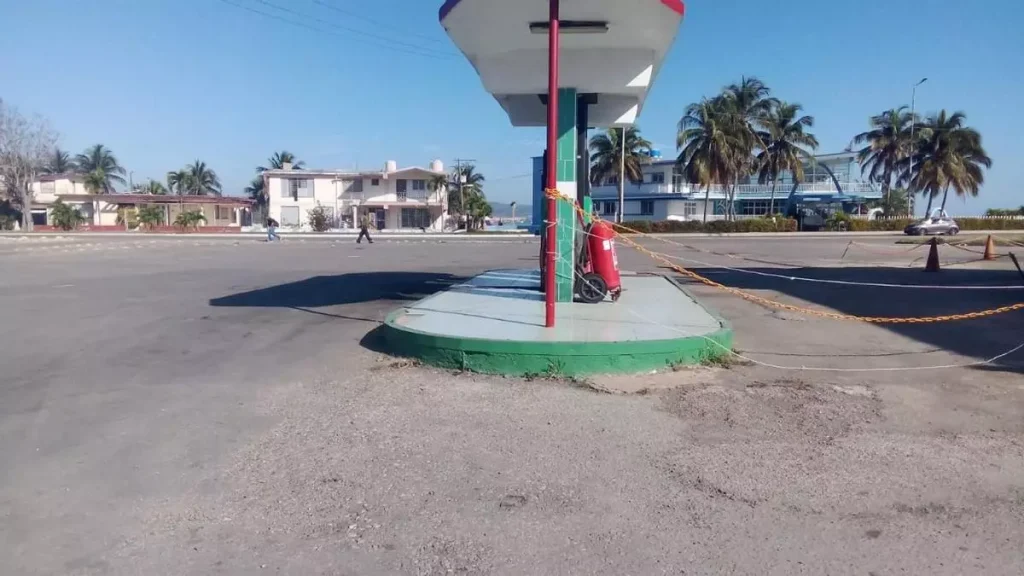
An improvised chain surrounds the pumps, and the place is dominated by silence. / 14ymedio

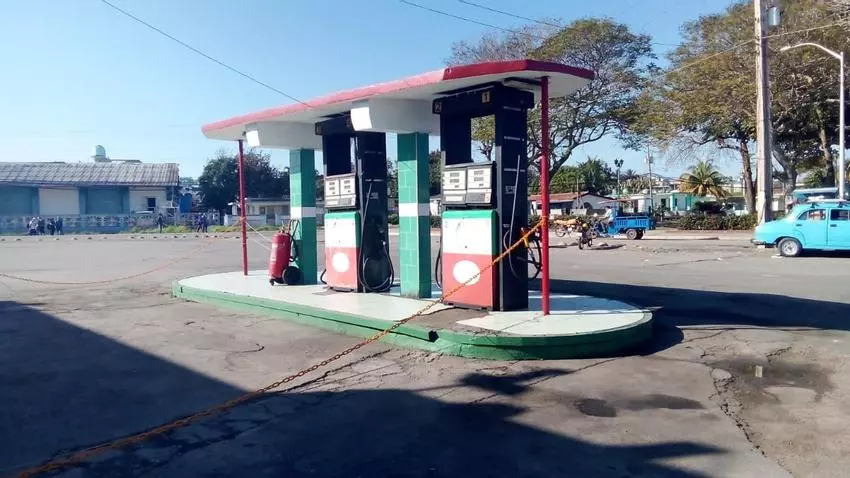
14ymedio bigger14ymedio, Julio César Contreras, Matanzas, March 11, 2026 – Under a cloudless sky, the two fuel pumps at the Cupet station in Peñas Altas, Matanzas, look more like an abandoned facility than a functioning service station. An improvised chain surrounds the pumps and silence dominates the place. No lines, no impatient drivers, no usual smell of gasoline in the air.

The lack of fuel keeps the service station’s equipment practically unused, and the employees pass the time chatting while waiting for the end of their workday.

“Since last month I haven’t seen the tanker truck unload fuel here,” a motorcyclist watching the scene from a nearby cafe tells 14ymedio. His motorcycle rests against the curb while he keeps an eye on the Cupet station with a mixture of resignation and distrust.

According to the young man, this gas station was for years a mandatory refueling point for buses carrying workers to and from Varadero. The Yutong buses of the National Bus Company, whose repair workshop is located just a few meters away, also refueled here.

Today, however, the place remains almost empty. The province of Matanzas has the largest number of gas stations open in the country, but they sell fuel in dollars, operate with only a few shifts per day, and have strict orders not to dispense more than 20 liters per person.

“Until now, this Cupet sold in national currency,” the motorcyclist adds. Then he lowers his voice, as if sharing a secret everyone already knows. “But they say that very soon they will dispense only in dollars.” The dollarization of fuel has been spreading across the Island, but even paying in foreign currency does not guarantee getting any gasoline. continue reading

The motorcyclist has had to look for alternative solutions due to the shortages in the state service station network: buying gasoline at inflated prices at a house in Reparto Iglesias, one of the many informal points that have proliferated amid the scarcity.

Located between the Central Highway and the Vía Blanca, for decades it was a strategic stop for those entering or leaving the city of Matanzas. / 14ymedio

The privileged location of this Cupet explains why its decline is so visible. Located between the Central Highway and the Vía Blanca, for decades it was a strategic stop for those entering or leaving the city of Matanzas.

In the 1950s, older residents say, the place operated day and night. “My father used to tell me it had fuel 365 days a year, 24 hours a day,” recalls Felipe, a 61-year-old driver who has pulled his Chevrolet over to the side of the station.

Felipe looks at the inactive pumps with a frustrated expression.

“Now it’s completely bankrupt,” he regrets. For the driver, the decline of the place is not only a consequence of the energy crisis hitting the country but also of years of poor management.

The most recent episode happened just a few days ago. “When I tried to enter the service station, an employee stopped me saying they were closed,” he recounts. Up to that point, nothing surprising in these times of shortage.

But what happened afterward left him outraged. “I asked if they knew when fuel would arrive, and he told me he could let me know… if I gave him 2,000 pesos for the favor.” Felipe shakes his head while recalling the scene. “I’m too old for them to make money off me in such a dirty way.”

Now, the cars passing along the Central Highway no longer stop at the Peñas Altas gas station. They simply drive past, as if the place had ceased to exist.

Translated by Regina Anavy

______________________

COLLABORATE WITH OUR WORK: The 14ymedio team is committed to practicing serious journalism that reflects Cuba’s reality in all its depth. Thank you for joining us on this long journey. We invite you to continue supporting us by becoming a member of 14ymedio now. Together we can continue transforming journalism in Cuba.
Cuban Private Sector Concerned Over Energy Caps Imposed by the State

Some companies already badly weakened by blackouts fear that the new measures will affect production.

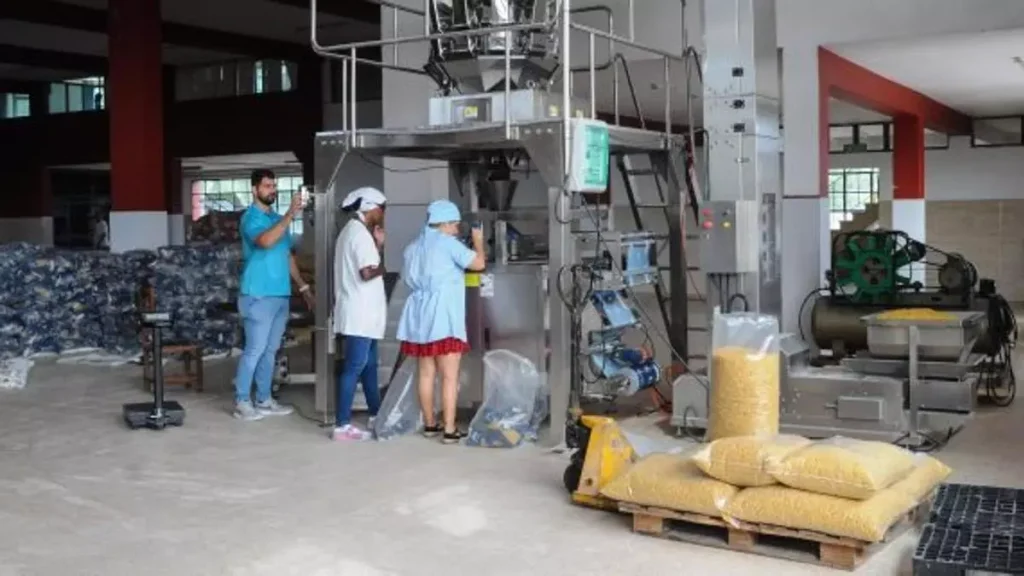
State factory La Pasiega, in Havana, where the private company Jolyni operates. / Cubadebate

14ymedio bigger 14ymedio, Madrid, March 11, 2026 – The 470,000 private entities currently operating in Cuba, including companies, self-employed workers, and cooperatives, must submit to the monthly energy-saving plan determined by the State. Of these, 110,089 have already been officially notified of the consumption they are allowed to use, and although authorities claim that most are willing to cooperate without problems, they also admit there is concern that the limitations may be “so rigid” that they affect productive capacity.

The measure represents an extension, throughout the last quarter of 2025, of the plan announced at the end of 2024 for electricity savings under Decree 110. That regulation established the need to control and efficiently use the national energy system because it is a limited resource and highly subsidized in Cuba. The strictest conditions were aimed at high consumers, equal to or greater than 30 MWh or 50,000 liters of fuel, who had to immediately apply the savings plan and have a self-consumption system ready to cover 50% of their needs by 2028 (or immediately in the case of newly created companies).

In recent months, consumption limits apply to all economic actors without exception, explained Welner Collejo Jerez, deputy director of the National Office for the Control of the Rational Use of Energy (Onure), in an interview with Cubadebate. The measure is taken, he noted, “under the socialist principle of consuming only what is necessary for production and services.”

The calculation until now has initially been simple: the limit equals the same consumption used in the same month of the previous year. The exception has been Havana and Varadero, which must adjust to 15% less “because this year the level of disruption in those places was not as significant as in the rest of the provinces.”

Collejo recalled that one way to increase potential consumption is self-sufficiency, preferably with solar panels.

In any case, the official said that “the process of requesting, approving, and assigning the plan is a flexible process” and that, since each territory has prioritized activities, it can and should review allocations according to municipal needs. Collejo also noted that one way to increase potential consumption is self-supply, preferably through solar panels, which do not require the scarce fuel available in the country.

During visits to nearly 340,000 private businesses to establish the limits, Onure technicians found that some, without knowing the measure would affect them, had changed their conditions compared with the previous year, due to increases in personnel or equipment with higher consumption. In these cases, he said, the plan is being adapted continue reading

to their new circumstances.

“Although this is a flexible process, it always begins with planning and daily control of consumption levels, which will allow municipal energy councils to foresee and warn about compliance with the plan,” he said. Companies themselves must carry out a daily self-reading that will be compared with the electric company’s billing at the end of the month. Sanctions for those who exceed the cap are those established in Decree 110, ranging from “publicizing bad practices, identifying non-compliant entities or those where violations occur, preventive notification, fines, and suspension of the license.”

Collejo insisted that the measure will be accompanied by training and information for those affected, as well as encouragement to acquire solar panels through loans, something that currently does not appear to be working very well, as the official press itself has acknowledged on several occasions and as this same report notes.

Her company has had to modify work shifts and move them to night and early morning hours, when electricity supply is more stable.

“So far the experience is that non-state economic actors are fully aware of the situation and therefore maintain behavior aligned with the measures adopted,” the official said. But Cubadebate spoke with some of the business owners subjected to the limits, and the mood is not as optimistic.

Anabell Meléndez, director of the dairy products SME Delola, is already recognizing that Miguel Díaz-Canel’s instructions to contribute through production to the country’s social commitments “clash with reality.”

“We practically have no electricity,” she confirms. Her company has had to modify work shifts and move them to night and early morning hours, when the electrical supply is more stable.

“Last week, the partial collapse of the National Electric System caused the loss of 1,000 liters of milk in the maturation process. They were lost. We couldn’t recover them because we don’t have energy backup,” she regrets. Attempts to install renewable energy to change the situation have also been unsuccessful.

“They tell me that to apply for a loan you must have a project endorsed by a certified company in the country that prepares lending projects. Then that project must be certified, and only then can we go to the bank,” she explains.

In addition, in her case she had to dismantle all the machinery she found in the factory when she arrived, which previously produced white ceramics and was classified as a high-consumption facility. Delola now uses only 30% of what its predecessor consumed, but Onure has still not assigned it a new cap, and she fears it will be too low.

“We need eight hours of electricity, with the equipment operating at one-third of its capacity. Otherwise we cannot sustain production. If they reduce that consumption too much, it will be very difficult to produce.”

“Any power outage damages the quality of the product and halts the process.”

Although she believes the future lies in installing solar panels, she is still waiting for authorization for the 80 million pesos she needs to install 120,000 kilowatts.

Others interviewed by Cubadebate are more relaxed, such as an SME that repairs machinery in the municipality of Cotorro or the owner of a shop, bar, and ranchón restaurant in Boyeros who, although he has had to reduce refrigeration consumption, believes the effort is necessary.

However, a sales representative from Confecciones Entaya in Camajuaní (Villa Clara) says they have had to obtain generators that operate throughout the workday, so they are involved in “advancing the process of importing fuel,” in addition to acquiring solar panels.

More frustrated is Jorge Félix Peraza Noriega of the widely promoted food company Jolyni, which partners with the state enterprise in whose factory it operates but is still not spared from blackouts.

“Any power outage damages the quality of the product and halts the process. After that, if we don’t have diesel for the generators, production stops completely. The lack of energy and fuel to produce food has negative effects. The only result is having to import more food and making the country spend more.”

Translated by Regina Anavy

______________________

COLLABORATE WITH OUR WORK: The 14ymedio team is committed to practicing serious journalism that reflects Cuba’s reality in all its depth. Thank you for joining us on this long journey. We invite you to continue supporting us by becoming a member of 14ymedio now. Together we can continue transforming journalism in Cuba.

Cuba: In Villa Clara, Unpasteurized Milk Is Sent to Municipalities To Save Fuel

The official newspaper ‘Granma’ presents this and other measures the province has had to adopt due to the crisis as an “environmental success.”

The measure solves the “waste” represented by using 2,200 liters of diesel daily to transport the milk to the company. Today, only 259 liters are used for direct delivery. / CMHW

14ymedio bigger14ymedio, Havana, March 10, 2026 – Faced with the severe fuel shortage, Villa Clara has decided to send most of its milk directly to neighborhood ration stores in the municipalities without passing through pasteurization, with the exception of Santa Clara, where the process is carried out using solar panels. The information appeared this Monday in the official newspaper Granma, which considers that the measure resolves the “waste” that previously meant using 2,200 liters of diesel per day to collect and transport the milk to the processing company. Today, only 259 liters are used for direct delivery.

The measure is part of a longer list of decisions adopted by the Villa Clara Dairy Company to cut costs, which the newspaper describes as an “achievement of innovation” and an example of “turning challenge into opportunity.” Thus, it mentions alternatives used in services for workers, such as cooking with firewood or transportation by tricycles, examples of “creativity in times of crisis.”

“As the grandparents used to say, it’s never too late to start; solutions and initiatives have begun to appear everywhere,” states Granma, which insists that there has been waste of “human and material resources in most sectors, as if this were a rich country or one functioning in a normal context.”

“As the grandparents used to say, it’s never too late to start; solutions and initiatives have begun to appear everywhere.”

The official newspaper resorts to several quotes attributed—most of them incorrectly—to Albert Einstein to argue that the crisis forces the search for new solutions and alternatives and emphasizes that “solutions and initiatives have begun to appear everywhere, demonstrating the existing potential in the nation to resist the imperial assault.” One example is pasteurization using 400 solar panels that continue reading

, last year, allowed savings of 47 tons of diesel as well as 131 tons of carbon dioxide emissions into the atmosphere.

The process, now limited only to the provincial capital, serves to eliminate potentially dangerous bacteria through heat and is one of the basic methods for guaranteeing the sanitary safety of milk. Its absence reduces the possibility of preserving the product, which would then need to be kept under proper refrigeration conditions, something that can hardly be guaranteed in a country affected by prolonged blackouts.

For this year, the number of panels is expected to reach 1,364, guaranteeing 10% of the total energy needed by the complex. “And since the Villa Clara dairy thinks big,” according to Granma, the company is already working on acquiring 18 electric tricycles to transport all the milk that moves within Santa Clara, leaving trucks only to move the remaining milk in the municipalities.

Solar panels will also be the solution for the La Purísima dairy products factory, whose production of mayonnaise and other dressings had been in doubt until 60% of the systems that will allow operations to continue were installed, as well as for the Chichi Padrón slaughterhouse, which is also joining the energy-saving measures by planning the installation of 272 solar panels that will provide about 300 kilowatts. Otoniel González Ruiz, director of the entity, says that now they will be able to carry out all their work and adds that they will also apply the “very well thought-out” measure of replacing the employees’ bus with tricycles in order to minimize fuel consumption.

The Agustín Rodríguez Mena rum distillery in Santo Domingo also has 2,752 panels with which it generates the energy it needs and sends the surplus to the National Electric System, although in its case they were more forward-looking and did not have to wait for the crisis to tighten the screws, since their systems were installed in 2016.

“He who overcomes the crisis overcomes himself without being overcome,” Granma quotes—again incorrectly attributing it to Einstein—to conclude the list of solutions that, like the rum distillery, could have been adopted earlier without waiting for them to become unavoidable.

Translated by Regina Anavy

______________________

COLLABORATE WITH OUR WORK: The 14ymedio team is committed to practicing serious journalism that reflects Cuba’s reality in all its depth. Thank you for joining us on this long journey. We invite you to continue supporting us by becoming a member of 14ymedio now. Together we can continue transforming journalism in Cuba.
The Most Difficult Trip: Getting to the Maternal Hospital in Matanzas, Cuba

Without buses or state taxis, pregnant women and relatives depend on motorcycles and tricycles to reach the José Ramón López Tabrane Gynecology and Obstetrics Hospital.

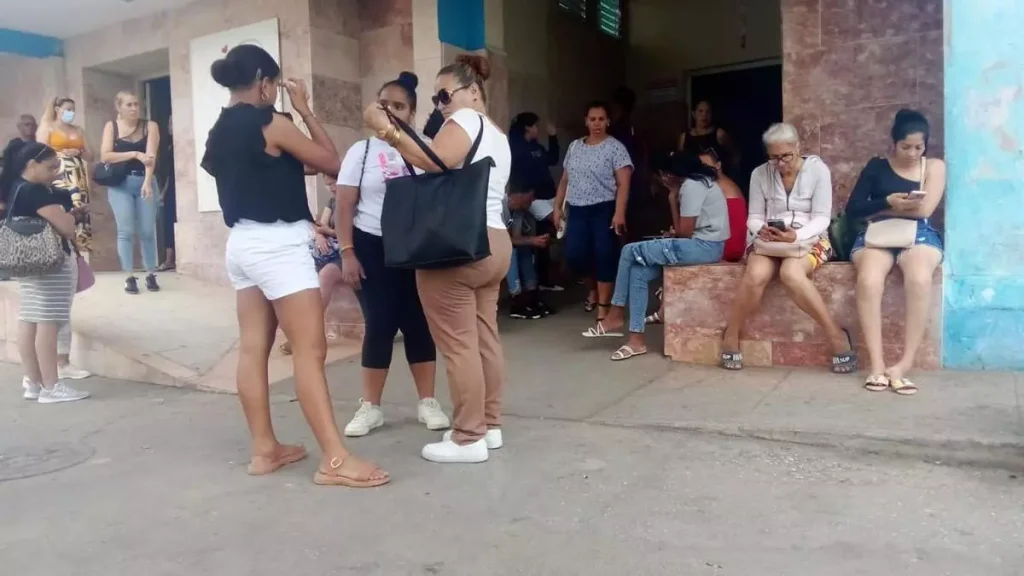
Entrance to the José Ramón López Tabrane Gynecology and Obstetrics Hospital in Matanzas. / 14ymedio

14ymedio bigger14ymedio, Matanzas, Julio César Contreras, March 10, 2026 – Getting to or leaving the José Ramón López Tabrane Gynecology and Obstetrics Hospital, in the Versalles neighborhood, has become a daily ordeal for patients and their relatives in the city of Matanzas. In front of the main entrance of the well-known Maternal Hospital, pregnant women, companions carrying bags, and young people persistently searching for transportation that rarely appears all mingle together.

At the building’s entrance, several people sit waiting on the edge of the steps. Some check their phones with resignation, others speak quietly while looking toward the street as if a lifesaving taxi might turn the corner at any moment. But the asphalt remains almost empty. From time to time a motorcycle or an electric tricycle passes by and is immediately surrounded by people trying to negotiate a seat.

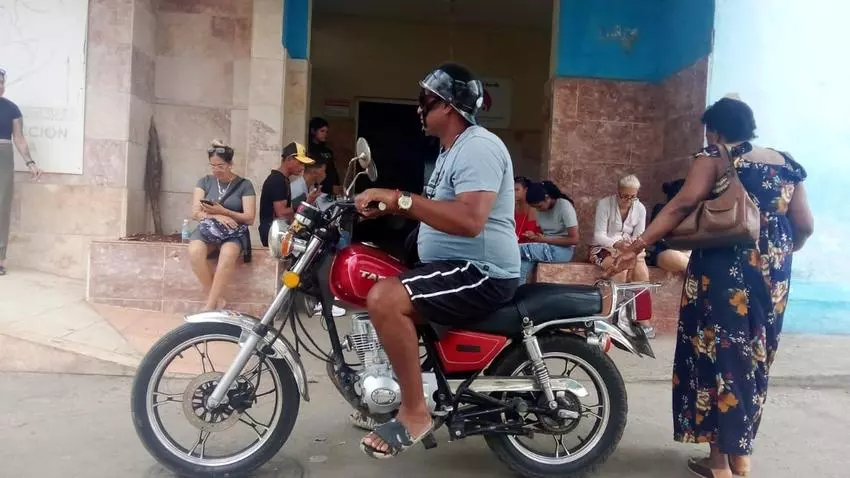
“Local buses are not coming to this part of the city,” says Sandra, a young pregnant woman who has just gotten off a red motorcycle taxi. The driver has not even started the engine again when she is already mentally calculating the money she will have to spend to return home.

From time to time a motorcycle or an electric tricycle passes by and is immediately surrounded by people trying to negotiate a seat. / 14ymedio

“I just paid 1,000 pesos to bring me from my house, which is about three kilometers from here. If I don’t make that sacrifice I miss the genetics appointment,” she explains while adjusting her bag on her shoulder.

Sandra is in her third month of pregnancy and has already had to go to the hospital several times for checkups with the obstetrician. During none of those visits has she been able to find public transportation or any official vehicle associated with the Maternal Hospital taxi stand.

“I haven’t seen a state taxi parked in front of the emergency entrance even by chance,” she says. According to what she has been told, there is a car available 24 hours a day to assist with transporting patients, but it almost never appears. “They always say it’s on the road or attending an emergency.” continue reading

The scene surrounding the hospital entrance reflects the energy crisis the country is experiencing. The fuel shortage has reduced the circulation of buses and state taxis to a minimum, forcing people in Matanzas to rely on motorcycles, electric tricycles, or any vehicle that does not require fuel to move.

In one corner of the doorway, several women talk while waiting for news about possible transportation. One of them is Idania, who holds a bag full of baby clothes. Her niece has just been discharged after giving birth.

“There’s no ambulance here, no taxi, and no shame from the Public Health bosses. They go around in cars everywhere.” / 14ymedio

“She gave birth the day before yesterday and today she’s going home,” she explains. “The question is how we’re going to get there.” The woman looks toward the street with clear frustration. “There’s no ambulance here, no taxi, and no shame from the Public Health bosses. They go around in cars everywhere.”

Sitting on a concrete bench, Idania says she has spent the morning trying to avoid a solution she considers excessive: paying 50 dollars for a private taxi to take the mother and the newborn to Santa Marta.

“When it was time for the birth a neighbor did us the favor of bringing us,” she recalls. “At least in our case, the guarantee of institutional transport has been completely absent. We came on our own and we will leave on our own.”

For her the problem goes beyond the lack of fuel. “Here the answer is always that there isn’t any,” she complains. “But what there also isn’t is sensitivity.”

A few meters away, Lizandra watches the scene with concern. The young university student studies psychology and is going through her first pregnancy. While waiting to be called for an appointment, she calculates what each visit to the hospital costs her.

“Just to get here and then return home you need at least 2,000 pesos,” she explains. That is if you are lucky and a motorcycle or tricycle appears with space available.

The uncertainty about transportation adds to the normal fears of pregnancy. / 14ymedio

The uncertainty about transportation adds to the normal fears of pregnancy. “You already are nervous, as with any medical appointment, and on top of that you have to think about how you are going to get here and how you will get back home,” she says.

For pregnant women who live outside the provincial capital the situation is even more complicated.

“I have friends who have practically gone through their entire pregnancy at home because they have no way to come from Ceiba Mocha or from Pedro Betancourt,” Lizandra says. Getting to the hospital means organizing an uncertain trip, and, many times, one that is too expensive.

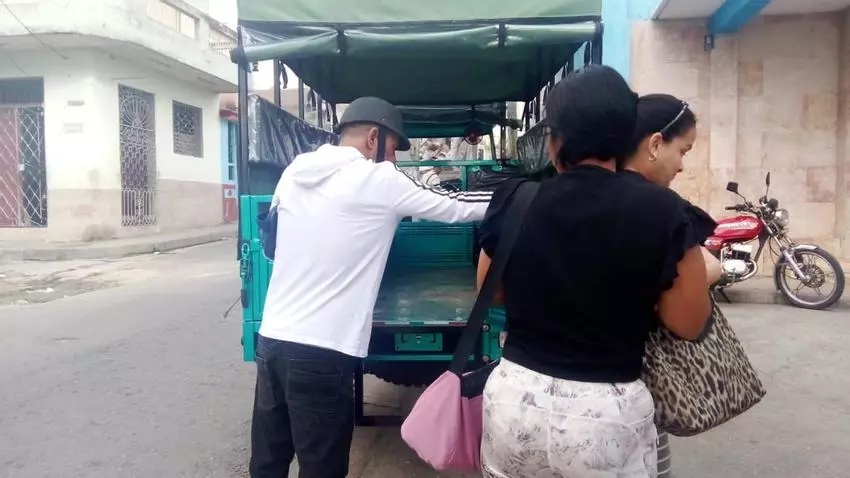
Meanwhile, in front of the Maternal Hospital the small group of people waiting for transportation continues to grow. A green tricycle stops for a few seconds and immediately several relatives approach to ask if there is space.

The driver shakes his head and starts moving again.

A motorcyclist stops shortly afterward, with his helmet raised and the engine still running. Two women approach to negotiate the price. The driver raises three fingers.

“1,500 pesos,” he says.

The women look at each other. One sighs and finally nods.

In the hospital no one seems surprised by these scenes. State taxis, recognizable by their yellow color, are nowhere to be seen. Ambulances only appear when there is a medical emergency. The rest of the time, patients and companions must manage on their own.

In the hospital doorway, Sandra looks at her phone again before entering her appointment. In a few hours she will have to repeat the same process: go out to the street, raise her hand, and wait for some motorcycle or tricycle to agree to take her.

In today’s Matanzas, even getting to the hospital can become an uncertain journey. And returning home often simply depends on having enough money to pay for the trip.

Translated by Regina Anavy

______________________

COLLABORATE WITH OUR WORK: The 14ymedio team is committed to practicing serious journalism that reflects Cuba’s reality in all its depth. Thank you for joining us on this long journey. We invite you to continue supporting us by becoming a member of 14ymedio now. Together we can continue transforming journalism in Cuba.
Closed Doors for the Meeting With Students: The University of Havana Deactivates the Protest

The institution avoids the “media show” that, in its view, occurred this Monday, when about twenty students gathered on the steps to demand the resumption of the academic term.

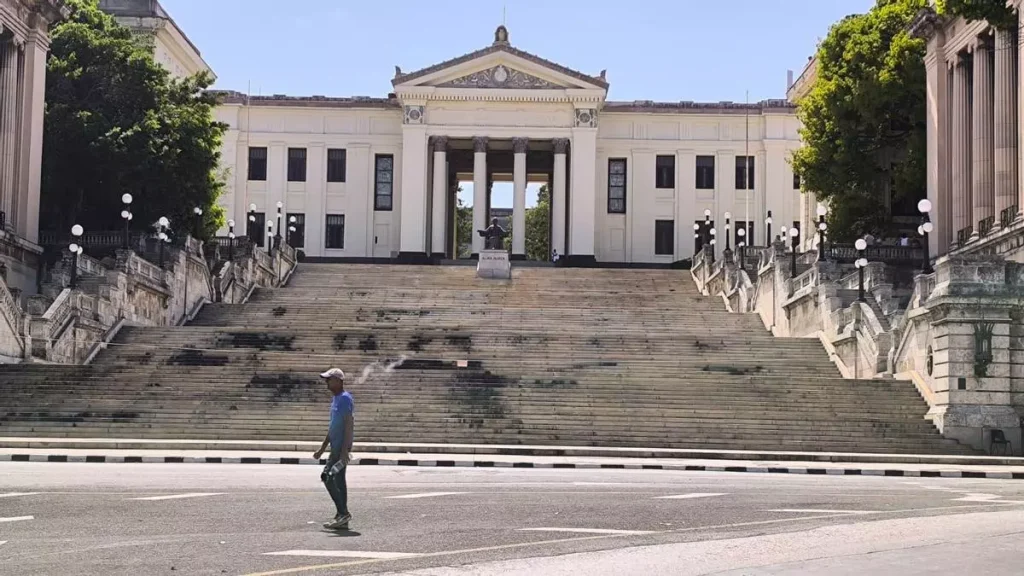
Steps of the University of Havana in the early afternoon this Monday / 14ymedio

14ymedio bigger14ymedio, Havana, March 10, 2026 – Cuban authorities seem to have achieved their objective of deactivating the continuation of Monday’s university student protest. The students had called for a dialogue this Tuesday at 10 a.m. in Víctor Hugo Park, but they moved the activity indoors at the request of the rector’s office. “After a fruitful negotiation, the University of Havana (UH), as an institution, has provided us with a classroom for our meeting in order to avoid unnecessary attention, the presence of the press, and agents external to the student body,” they announced in a WhatsApp group created to coordinate the actions.

The message indicates that the steps will once again be the meeting point for those who wish to attend the exchange, but from there participants will move to the room “enabled for use.” In this way, the institution avoids the “media show” that, in its view, occurred this Monday, when about twenty students gathered in that iconic place to demand the resumption of the academic term, which had been suspended due to extreme energy-saving measures taken to confront the energy crisis, aggravated by the U.S. oil blockade and transportation problems.

For the meeting scheduled for today, the student body has indicated some “parameters” to follow. “First, to clarify that our intention is to gather the opinions of students belonging or not to UH who are integrated into the higher education system. Second, that there will be zero tolerance for those who, through words or actions, hinder this process. This also implies zero tolerance for acts of provocation, vandalism, or eccentric behavior that ultimately damage the reputation and credibility of the process. Thank you in advance.”

“Where are the results, what the students are asking for? Oh, right, next week they will meet again to explain that they are ‘still’ working on it.”

These recent messages suggest that the idea promoted by the Cuban government has taken hold, that yesterday’s action serves “media outlets” seeking a “media show with the clear intention of harming” the Revolution. The students will discuss their demands behind closed doors in order to present continue reading

their concerns to the Minister of Higher Education, Walter Baluja, who, they say, “agreed to listen to the claims of those present.” Next Monday, March 16, a meeting is scheduled for the entire university student body at UH with the aim of unifying positions.

The situation appears to have calmed after alarms were raised yesterday, when State Security prevented people from joining the initial group of participants. Official media reported the incident as an exchange of views with Baluja, who went to the steps due to the commotion, and the UH rector. Commentators in state media themselves have shown disagreement with the way that press coverage was handled.

“Let’s see… the students PROTESTED, just as Fidel Castro and Mella once did. Is that journalism?” said a Cubadebate reader on social media. Although another user repeatedly responded to those questioning the approach by asking why no one complains to the “pedophile master of the North,” most expressed their discomfort. “They are hypocrites trying to whitewash the student protest,” another commented. Most doubted the issue would be resolved, no matter how many meetings are held: “Where are the results, what the students are asking for? Oh, right, next week they will meet again to explain that they are ‘still’ working on it. Ok, thanks for the information.”

University students have expressed their displeasure over the postponement of the academic term, but they seem to fear a larger escalation in a context where fear still dominates the population.

“When you protest, you can’t find a job. They take measures against you or your family,” a sociology student from the University of Artemisa told the Reuters news agency. On Tuesday Reuters published a report from San Antonio de los Baños noting that guaranteeing anonymity is still the only way to get Cubans to speak about the regime. During a tour through several areas near Havana, the agency found about a dozen people willing to identify themselves, but the rest preferred to hide their identity. “People are not going to get involved, because in real life nobody wants to be imprisoned again. The people have no way to defend themselves.”

Translated by Regina Anavy

______________________

COLLABORATE WITH OUR WORK: The 14ymedio team is committed to practicing serious journalism that reflects Cuba’s reality in all its depth. Thank you for joining us on this long journey. We invite you to continue supporting us by becoming a member of 14ymedio now. Together we can continue transforming journalism in Cuba.
Cuba Loses to Puerto Rico and Puts Its Qualification for the Final Round of the World Baseball Classic in Doubt

The Island’s team barely managed two hits, its worst offensive performance in the entire tournament.

Cuba is in second place in Group A, with a 2–1 record. / Jit

14ymedio bigger14ymedio, Havana, March 10, 2026 – Cuba’s national team was exposed this Monday by Puerto Rico in its third game of the World Baseball Classic, losing 4–1. The defeat at Hiram Bithorn Stadium in San Juan puts Team Asere’s qualification for the final round in doubt, as it will now have to defeat Canada this Wednesday afternoon to advance to the next stage.

From the second inning, the Puerto Ricans pulled ahead. Catcher Martín Maldonado hit a double that drove in three runs against starting pitcher Julio Robaina. In the fifth inning the fourth run came on a sacrifice fly by Carlos Cortés against pitches from Havana reliever Josimar Cousín, who recorded eight outs, four of them by strikeout.

For Cuba, the only run came in the sixth inning thanks to a double by Alfredo Despaigne off Yacksel Ríos, combined with an error by the Puerto Rican defense. With that hit, the Cuban player reached 29 hits and moved into third place in the history of the World Baseball Classic, behind Frederich Cepeda from Sancti Spíritus (32) and Puerto Rican Carlos Beltrán (30).

After that brief attempt at offense, Team Asere could no longer generate any threat. Puerto Rico’s pitching staff shut down the Cuban offense, which had hit four home runs in its first two games against Panama and Colombia. Puerto Rico’s pitchers, with starter Elmer Rodríguez (three innings) and relievers Jovani Morán (two), Yacksel Ríos (two), Fernando Cruz (one) and Edwin Díaz (one), allowed only two hits, marking Cuba’s worst offensive performance of the entire tournament. “That makes it very difficult to salvage a smile in such a demanding competition,” the newspaper Jit concluded this Tuesday.

“That makes it very difficult to salvage a smile in such a demanding competition.”

With the loss, Cuba sits in second place in Group A with a record of two wins and one loss. To advance, it must defeat Canada, which arrives with the same chances as the Island, turning the game into an early final continue reading

for both teams. For that game, the pitcher for Germán Mesa’s team will be Liván Moinelo, who defeated Panama in the opening game. Meanwhile, Puerto Rico has already secured its place in the final round with a 3–0 record at the top of the group.

This was the third time the two teams have faced each other in a World Baseball Classic. In the 2006 edition they met twice, with one win for each side, although the most important victory went to Cuba, then managed by Higinio Vélez, which secured its place in the semifinals of that tournament.

Besides the remaining spot sought by Cuba and Canada, another place remains to be decided in Group B, where last night the United States (3–0) secured its advancement by defeating Mexico 5–3. Japan (3–0) and South Korea (2–2) have also secured their participation in the quarterfinals from Group C, along with Venezuela and the Dominican Republic, both with 3–0 in Group D.

Japan (3–0) and South Korea (2–2) have also secured their participation in the quarterfinals from Group C.

Unlike Cuba’s first two games in this tournament, the match against Puerto Rico did not feature any type of protest against the Island’s government, at least not any that were captured by the international broadcast.

The most notable case occurred in the opening game against Panama. Behind home plate, where the television camera focuses for much of the game, a fan displayed a banner reading “Down with the dictatorship! Díaz-Canel’s days are numbered.” The message, captured by the Fox television network and repeated by several media outlets, went around the world, although manager Germán Mesa said he did not see it.

Also during the game against Colombia, cameras focused on two fans wearing black T-shirts with the phrase “Díaz-Canel bastard,” an anti-government protest message that can carry long prison sentences if displayed in Cuba,.

Translated by Regina Anavy

______________________

COLLABORATE WITH OUR WORK: The 14ymedio team is committed to practicing serious journalism that reflects Cuba’s reality in all its depth. Thank you for joining us on this long journey. We invite you to continue supporting us by becoming a member of 14ymedio now. Together we can continue transforming journalism in Cuba.
The United States Creates a Group To Study Bringing Criminal Charges Against Cuban Leaders

The crimes that they are analyzing for bringing criminal charges are related to drug trafficking, immigration, and violence.

Trump said this Thursday that the fall of Cuba would be “the icing on the cake” after the January operation in Venezuela that ended with the capture of Nicolás Maduro. / Granma

14ymedio bigger14ymedio, Madrid, March 7, 2026 – The Government of Donald Trump is studying ways to bring criminal charges against leaders of the Government and the Communist Party of Cuba (PCC), according to several U.S. media outlets reporting on Friday. For this purpose, a task force has been created within the Department of Justice which, according to The Washington Post, could be “a significant step” in the current U.S. administration’s initiative “to overthrow the regime.”

The group will include, the Post reports, citing a government official familiar with the matter, employees from different government agencies, including the Department of the Treasury, which for the Washington newspaper could mean that Trump is considering imposing more sanctions against Cuba. The Wall Street Journal adds that agents from the FBI and the Drug Enforcement Administration (DEA) will also be included.

According to NBC sources, the crimes around which they are considering opening criminal proceedings are related to drug trafficking, immigration, and violence. Charges of narco-terrorism were precisely the ones used by the United States to capture and depose Venezuelan President Nicolás Maduro on January 3, in a military operation in Caracas that resulted in the Venezuelan leader being prosecuted in New York and the installation of Delcy Rodríguez at the head of an interim government under Trump’s supervision.

At the same time, a federal prosecutor in Florida is also working to present criminal charges against high-ranking officials of the Cuban regime

At the same time, a federal prosecutor in Florida is also working to present criminal charges against high-ranking officials of the Cuban regime, according to The Wall Street Journal. This is also echoed by The Washington Post, which cites the views of several former prosecutors continue reading

from the Miami U.S. Attorney’s Office. They are not surprised that the office is leading an initiative specifically focused on legal proceedings related to Cuba. “The Miami office has a long track record of handling high-profile cases related to wrongdoing linked to the Cuban regime,” the newspaper says.

These reports were published the same day that Donald Trump again insisted to the media that Cuba “will fall very soon” and that Havana is “very eager” to negotiate with Washington.

A day earlier, the Republican warned that Havana is “desperate” to reach an agreement with his administration immediately and assured that it is “only a matter of time” before attention turns toward the Caribbean country, suggesting that the military campaign against Iran has somewhat diverted the White House’s focus.

The fall of Cuba would be “the icing on the cake” after the January operation in Caracas.

He also said this Thursday, in an interview with Politico, that the fall of Cuba would be “the icing on the cake” after the January operation in Caracas. Trump cited as an example the “wonderful” collaboration with the interim government of Chavista leader Delcy Rodríguez, with which Washington announced on Thursday that it will restore relations after decades of distance.

In recent weeks, U.S. media have reported on contacts between U.S. Secretary of State Marco Rubio and a grandson of former Cuban president Raúl Castro, Raúl Guillermo Rodríguez Castro, known as El Cangrejo, and Trump himself confirmed that Rubio was handling the negotiations “at the highest level.”

The Cuban exile community in Miami hopes that, after Maduro, Washington will accuse Raúl Castro of the 1996 killing of four pilots from the group Brothers to the Rescue who were assisting rafters fleeing the island.

Translated by Regina Anavy

______________________

COLLABORATE WITH OUR WORK: The 14ymedio team is committed to practicing serious journalism that reflects Cuba’s reality in all its depth. Thank you for joining us on this long journey. We invite you to continue supporting us by becoming a member of 14ymedio now. Together we can continue transforming journalism in Cuba.
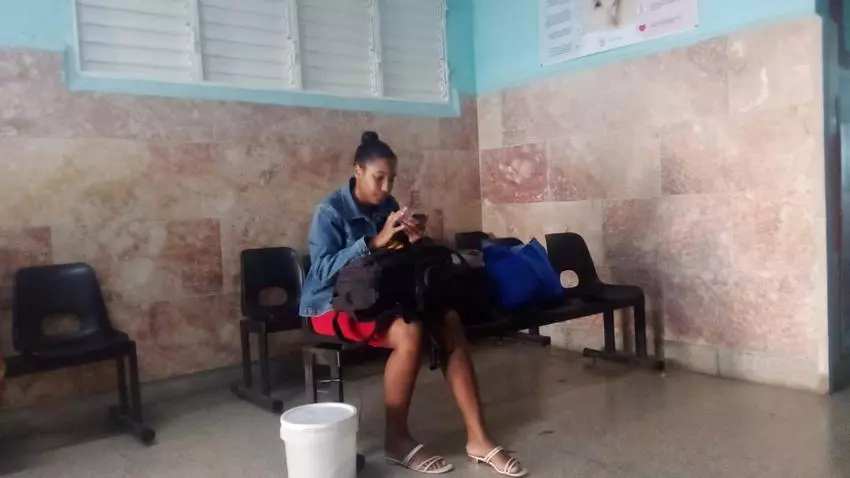
A Woman With a Beaten Face Is Released After Being Detained for Pot-Banging Protests in Havana

“They are going to take me now, they are going to take my phone,” says Marianela Peña Cobas before being captured during a protest over the blackouts.

Marianela Peña Cobas was detained for approximately 15 hours. / Facebook / Facebook

14ymedio bigger14ymedio, Havana, March 8, 2026 – Fifteen hours after being detained during the second night of mobilizations over blackouts in Havana, Marianela Peña Cobas was released this Sunday morning with marks of beatings on her right cheek, signs of injuries, swelling, bruises, and bleeding. The incident was reported by her sister, opposition activist Marisol Peña, through social media from the moment she learned of the arrest on Saturday night.

“Good morning everyone. They have now released my sister, not because they are good, but because there are not enough prisons to lock up all the Cubans who loudly demand freedom and the fall of that murderous regime,” opposition activist Marisol Peña wrote in her post. She has lived in the United States since 2023, where she fled after State Security summoned her seven-year-old daughter, Katherin Acosta Peña, for questioning. “Look at the beating they have given a woman for shouting Freedom! One and a thousand times freedom for the people of Cuba, freedom for all political prisoners,” she added in the post, which in just four hours went viral, with nearly 9,000 reactions, more than 2,000 comments, and 2,200 reposts.

The series of posts by the opposition activist about the mobilizations in the capital began shortly before her sister’s detention. In the first message about the pot-banging protests, she wrote that “Havana is in the streets banging pots and shouting ‘Down with communism!’ ” Only six minutes later she reported Marianela’s detention: “They have just arrested my sister and taken her away. Please share.” In her message she posted several audio recordings in which the sound of pots being struck can be heard in the background along with the voice of Marianela Peña Cobas. In the first one, she complains that they have been “five days without electricity and 67 years with hunger and misery.” continue reading

In her message she posted audio recordings in which the sound of pots being struck can be heard in the background along with the voice of Marianela Peña Cobas.

Then she says that “it is the entire people” who are protesting and immediately adds: “And now they are going to take me.” A moment later she sends another short audio message in which she says: “They are going to take my phone.” In another recording several seconds of pot-banging can be heard, and at the end Marianela’s voice shouts: “What the hell, let me go!” Finally, in the last message she cries out for “freedom!”

Although the place of the detention was not reported, one internet user indicated that it happened “in Guanabacoa on the street,” one of the districts where mobilizations took place on Saturday. In that area, 14ymedio could confirm simultaneous cacerolazos — pot-banging protests — to denounce the long blackouts affecting the entire country. Demonstrations of the same type were also reported in other parts of Havana, such as Marianao and Cotorro, and in other provinces.

In Guanabacoa, in the Corral Falso area, there was a group shouting “Down with the dictatorship!” as can be seen in the video filmed by this media. Pot-banging could be heard on several streets, some louder than others. Many of those banging pots were children, undoubtedly with the consent of their parents.

The detention occurred in the context of the mobilizations that began Friday night in western Cuba, especially in Havana. After the most recent collapse of the national electrical system four days ago, and given the difficulty of restoring it due to the lack of fuel, the noise of pots and pans has once again filled the darkness as a sign of protest. “Abusers! How long is this going to last?” “Turn the power on!” “Díaz-Canel singao*!” and “Down with communism!” were some of the shouts heard Friday night.

“Abusers! How long is this going to last? “Turn the power on!” “Díaz-Canel bastard!”, and “Down with communism!” were some of the shouts.

Accustomed to blackouts lasting more than 20 hours, this is the first time this year that simultaneous pot-banging protests have taken place in numerous municipalities. Last Wednesday, the shutdown of the Antonio Guiteras thermoelectric plant, the largest in the country, triggered a chain reaction that left two-thirds of the country without electricity, from Camagüey to Pinar del Río.

As for the violence used against Marianela Peña Cobas, it occurred on International Women’s Day, a date that Cuban President Miguel Díaz-Canel used to speak about “the achievements won” by women.

Through a thread on X this Saturday afternoon, after a meeting with a group of women, he said that “it always uplifts, emancipates, fills us with emotion and strengthens our convictions to engage in dialogue with Cuban women.” In that space he called for “continuing to fight any vestige of discrimination.” Nevertheless, he also used the forum to talk about “the energy blockade by the government of the United States” and reiterated that the country will not renounce “any of its dreams.”

He also spoke about the topic on Facebook, which unleashed a wave of complaints. In his message, accompanied by the image of a woman, Díaz-Canel wrote: “The light of our days has much of woman: sensitivity, talent, and commitment to the fate of the country.”

The word “light” was the trigger. One user replied: “Good morning, I ask please that no one talk to me about light, at least until service is restored; what sensitivity, commitment, or fate can you have after a blackout?”

Another user also referred to the lack of electricity and complained that there are “women who struggle daily, without electricity, with all the food spoiled, with children of school age, growing, with elderly parents. In short, women of today, not the ones highlighted on social media but those who every day give even their soul.”

*Translator’s note: “Diaz-Canel singao” rhymes. The epithet is variously translated as ‘bastard’, ‘motherfucker’ and other insults.

Translated by Regina Anavy

______________________

COLLABORATE WITH OUR WORK: The 14ymedio team is committed to practicing serious journalism that reflects Cuba’s reality in all its depth. Thank you for joining us on this long journey. We invite you to continue supporting us by becoming a member of 14ymedio now. Together we can continue transforming journalism in Cuba.
Cuban President Díaz-Canel Accuses the Miami Summit of Threatening Regional Peace

The Cuban Government maintains that the agreement opens the door to the use of U.S. military force in internal problems.

President Miguel Díaz-Canel together with Cuban Foreign Minister Bruno Rodríguez / Cubadebate

14ymedio biggerEFE (via 14ymedio), Havana, March 8, 2026 – The Cuban Government criticized this Saturday the summit held in Miami (United States), led by U.S. President Donald Trump and attended by more than a dozen regional leaders ideologically aligned with Washington.

Cuban President Miguel Díaz-Canel referred to the so-called “Shield of the Americas” as a “small reactionary and neocolonial summit in Florida” for “undermining the independence, security and peace of Latin America and the Caribbean.”

“It is an attack against the Proclamation of Latin America and the Caribbean as a Zone of Peace, an assault on the aspirations for regional integration, and a manifestation of the willingness to subordinate themselves to the interests of the powerful neighbor to the North under the principles of the Monroe Doctrine,” the Cuban leader posted on his X profile.

He criticized the summit’s agreement that commits the signatories to “accept the lethal use of U.S. military force to resolve internal problems”

He especially criticized the summit’s agreement that commits the signatories to “accept the lethal use of U.S. military force to resolve internal problems and maintain order and tranquility in their countries.” continue reading

For his part, Cuban Foreign Minister Bruno Rodríguez also lashed out on social media against what he called “the mini-summit,” stating that it “seeks to force [the governments] to accept” a “greater subordination of their nations to the power of the North,” which he described as a “clear and dangerous setback” in the independence process of Latin America and the Caribbean.

“The only publicly known result is the signing by the attendees of a servile and dishonorable document that advocates the use of military force, particularly that of the United States, as a repressive weapon against criminal cartels in each country and to suppress internal and border problems,” Rodríguez said.

In conclusion, the foreign minister noted: “It represents a serious threat to peace, security, stability and regional integrity and a blatant violation of the Proclamation of Latin America and the Caribbean as a Zone of Peace,” which was signed more than a decade ago in Havana.

Translated by a Regina Anavy

______________________

COLLABORATE WITH OUR WORK: The 14ymedio team is committed to practicing serious journalism that reflects Cuba’s reality in all its depth. Thank you for joining us on this long journey. We invite you to continue supporting us by becoming a member of 14ymedio now. Together we can continue transforming journalism in Cuba.

‘Abusers,’ ‘Turn On the Power,’ ‘Down With Communism’: the Cuban Night Once Again Fills With Pot-Banging Protests

This Friday the Island reached a record deficit of almost 67% of electricity demand.

Protests in Arroyo Naranjo / Image taken from social media

14ymedio bigger14ymedio, Havana, March 7, 2026 – “Abusers! How long is this going to last?” “Turn the power on!” “Díaz-Canel singao*!” and “Down with communism!” were some of the shouts heard on Friday night in several places in western Cuba, especially in Havana. After the most recent collapse of the national electrical system (SEN) three days ago, and given the difficulty of restoring it due to the lack of fuel, the noise of the cacerolazos — banging on pots and pans — once again fills the darkness as a sign of protest.

According to eye-witness reports shared on social media, there were demonstrations in Jagüey Grande (Matanzas) and in neighborhoods of the capital such as Centro Habana, Arroyo Naranjo, Old Havana, San Miguel del Padrón, and Marianao, among others.

Cuban-American congressman Carlos A. Giménez, a representative from Florida, posted on his X profile: “The people of Cuba are in the streets demanding freedom. This moment is incredible.” He also shared videos circulated by conservative influencer Eric Daugherty and images published by independent journalist Thomas van Linge showing that Cuban citizens were protesting in the streets.

Fellow Cuban-American lawmaker María Elvira Salazar reacted on social media by posting a video in which pot-banging protests can be heard from her phone. “Cuba is in the streets asking for freedom. To the dictatorship: not one more abuse against the Cuban people!” the congresswoman says in the video, while also warning Cuban authorities not to repress the protests: “We tell the regime: do not go against them. They have the right to go out into the streets and say whatever they want.”

“Cuba is in the streets asking for freedom. To the dictatorship: not one more abuse against the Cuban people!”

Journalist Mario J. Pentón, from Radio and Television Martí, shared several recordings of the pot-banging protests on social media and said he had verified some continue reading

of the reports through direct contact with residents.

Some videos, such as the one reported from Arroyo Naranjo, also show that people in the street, in the middle of the blackout, had lit a bonfire around which demonstrators gathered. Other images show the arrival of police patrol cars at the protests, although no cases of violent repression have been reported.

So far, Cuban authorities have not issued public statements about these incidents.

The state telecommunications company Etecsa has had to ration connectivity service in some provinces, limiting it to only a few hours per day.

Accustomed to blackouts lasting more than 20 hours, this is the first time this year that simultaneous pot-banging protests have taken place in numerous municipalities. Last Wednesday, the shutdown of the Antonio Guiteras thermoelectric plant, the largest in the country, triggered a chain reaction that left two-thirds of the country without electricity, from Camagüey to Pinar del Río.

Although service began to be gradually restored, the system continues operating at minimal levels, to the point of producing unprecedented deficit forecasts. For this Friday, an absolute record of 2,158 megawatts (MW) was expected, 70% of demand (3,055 MW). According to today’s report from the Cuban Electric Union, it did not reach that level (2,046 MW), but it still set a record, almost 67% of demand.

In numerous provinces, power outages exceed 20 hours per day, affecting not only household lighting but also water pumping, food refrigeration, transportation, and connectivity. In some provincial areas, the state telecommunications company Etecsa has also had to ration connectivity service, limiting it to only a few hours per day.

*Translator’s note: “Diaz-Canel singao” rhymes. The epithet is variously translated as ‘bastard’, ‘motherfucker’ and other insults.

Translated by Regina Anavy

______________________

COLLABORATE WITH OUR WORK: The 14ymedio team is committed to practicing serious journalism that reflects Cuba’s reality in all its depth. Thank you for joining us on this long journey. We invite you to continue supporting us by becoming a member of 14ymedio now. Together we can continue transforming journalism in Cuba.

The Other Revolution Does Not Need a Foreign Intervention

The regime knows that if it brutally represses a social explosion, it will be handing the powerful neighbor the excuse to intervene on a silver platter.

If they cannot stop the new revolution that threatens them from below, join it from above. / X / Presidency

14ymedio bigger14ymedio, Miami, Ariel Hidalgo, February 28, 2026 – According to what we have seen in Venezuela since the capture of Maduro until now, almost two months later, and what followed afterward: the rise of Delcy Rodríguez to the Presidency with Washington’s approval, a slow-motion release of political prisoners without guarantees they will not be jailed again, as well as the persistence of dictatorial structures, like a form of madurismo without Maduro, and the control of that country’s oil by President Trump (not for nothing did he publish his photograph as president of Venezuela), it seems to us like an image of what could happen in Cuba, also taking into account what has been reaching us so far about a supposed cabinet made up of figures from the regime.

I do not want to be a spoilsport and I am sure that Cuba’s freedom is closer than ever, but people should not blindly trust the promises of representatives of a foreign power. Is that the only alternative? The uprising of 11 July 2021 [’11J’] was not organized by anyone, neither by dissidents, nor by the CIA, nor by Cubans in Miami, and yet it shook the foundations of power. Did it fail?

We can lament the repression and the imprisonments with draconian sentences, but the massive demonstrations in dozens of cities constituted a political victory, because they were the beginning of a process that leads to another revolution, a word many people do not like but whose meaning is very simple: radical change. Ask yourselves when the last radical changes happened in Cuba. It has been a long time. Nothing changes; they only make reforms that lead nowhere in order to maintain a system that everyone already knows—even they themselves—is a failure. However, they do nothing to change it and improve the living conditions of the people. continue reading

The 11 July uprising was not organized by anyone, neither by dissidents, nor by the CIA, nor by Cubans in Miami, and yet it shook the foundations of power.

Why? Because they fear the people, because those demonstrations not only shook the foundations of the regime but also the conscience of many people who until then could not conceive that something like that could happen, and above all because they know what a pre-revolutionary process is. In the 1950s that process lasted five and a half years from the attack on Moncada until the dictator fled. Although such processes do not last the same amount of time, they generally differ by a few months more or a few months less. And this one has already been going on for a little less than five years.

What will its outcome be? That will depend on the decisions the governmental cabinet makes before that probable social explosion. They know that if that explosion occurs and they repress it brutally, they will be handing the powerful neighbor the excuse for intervention on a silver platter. Then it would be smarter to avoid it.

How? By detaining dissidents or preventing them from leaving their homes? We have already said that it is not dissidents who provoke it, but that they are spontaneous, provoked rather by the leadership itself with its mistaken policies. They cannot station guards outside the homes of millions of people. By cutting the internet? They cannot keep it suspended indefinitely. And since no one can foresee when that explosion will occur, the first spark will be inevitable, wherever it may be, and there will be no time to cut the internet and prevent the news from spreading throughout the country in just seconds.

Therefore, the only solution to avoid it is to change policy in such an evident way that everyone becomes convinced that this time it is not about formal changes meant to change nothing, but about going to the essence of the problems: freeing all political prisoners and engaging in dialogue, not with the external enemy but with the dissidents, who have already become spokespersons for the people. If they cannot stop the new revolution that threatens them from below, join it from above.

Translated by Regina Anavy

______________________

COLLABORATE WITH OUR WORK: The 14ymedio team is committed to practicing serious journalism that reflects Cuba’s reality in all its depth. Thank you for joining us on this long journey. We invite you to continue supporting us by becoming a member of 14ymedio now. Together we can continue transforming journalism in Cuba.

The Electric Union Generates Barely One-Third of the Energy Demanded by Cuba

This Thursday an absolute record was reached since records began, with a deficit of 2,158 megawatts, 70% of demand.

Cuatro Caminos could not open this Friday until almost 11 a.m. due to a lack of fuel to supply its generator, but it finally appeared. / 14ymedio

14ymedio bigger14ymedio, Madrid, March 6, 2026 – Tonight, when peak electricity demand in Cuba arrives, estimated at 3,050 megawatts (MW), the country will only be generating 1,015, just over a third of what it needs. That amount, representing around a 68% deficit (2,075 MW), would be a record on paper, although it remains to be seen whether reality will surpass the forecast. Last night saw the greatest shortage since records began, when at 7:00 in the evening, during peak hours, demand was 3,055 MW and only 920 were produced, a deficit of 2,158, or 70%.

These figures easily surpass those that previously held the record, earlier this same week. On Monday a deficit of 64% was expected, surpassing the 63% of January 30, with the same percentage recorded this Wednesday when the system collapsed in western and central Cuba.

Last November, the Government announced that the Antonio Guiteras power plant would go offline, which was postponed shortly afterward for an “unpostponable” repair. At the time, Cubans trembled at the thought of what would become of them, already exhausted by very long blackouts, when the country’s largest thermoelectric plant, located in Matanzas, stopped providing service. In February came the first test, when the plant suffered two incidents that kept it out of the system for a total of 12 days, amid alarm over the U.S. oil blockade.

Last November, the Government announced the shutdown of the Antonio Guiteras plant, which was postponed shortly afterward for an “unpostponable” repair.

But the biggest rehearsal came Wednesday, when a serious failure disconnected two-thirds of the Island from the National Electric System (SEN), from Camagüey to Pinar del Río, because there is less and less diesel left with which to restore the system. Specialists from the Electric Union acknowledged this on Thursday, saying this was the reason reconnection was proving more complicated than on other occasions. continue reading

The method, now more than familiar to engineers, consists of starting engines with fuel oil and creating energy islands that gradually begin feeding circuits of increasing size until everything is reintegrated into the SEN. Now, however, saying that resources are limited would be a serious understatement.

Although shortly after 5:00 in the morning yesterday the system was unified, the situation remained extremely precarious throughout the day. In Havana there were no school activities, affecting at least 300,000 students who had to remain at home. Problems were also reported with the water supply due to failures in pumping stations, and there were constant interruptions in the manufactured gas service that reaches hundreds of thousands of households in the capital.