The privatization of sports on the Island, with the injection of capital that would entail, seems to be the only solution.
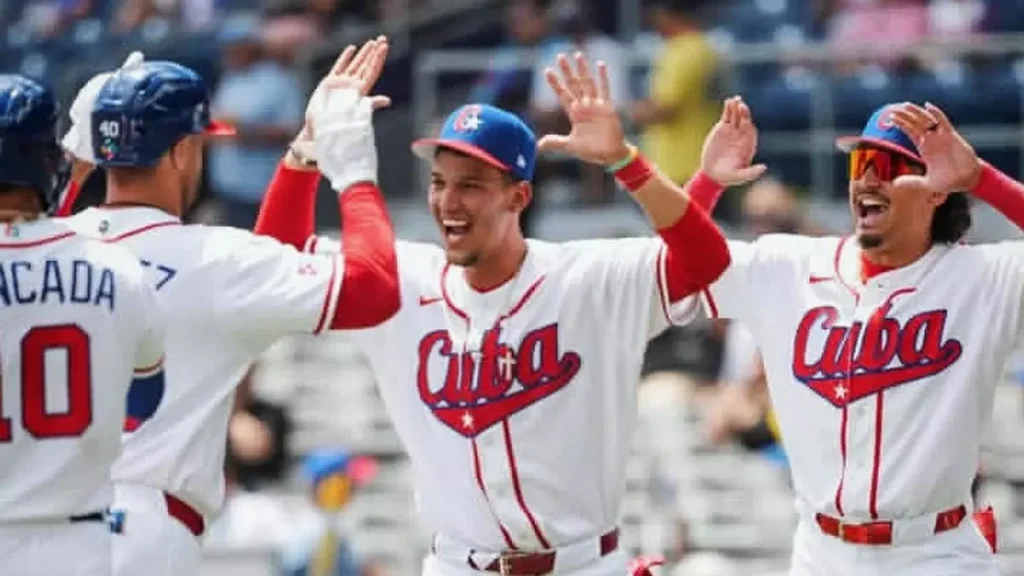
 14ymedio, Matanzas, March 15, 2026 – Cuba’s baseball team recorded its worst performance in World Baseball Classic history by failing to advance past the group stage in the 2026 edition. The team managed by Germán Mesa finished third in Group A after starting with two victories against Panama (3–1) and Colombia (7–4) and ending with losses to Puerto Rico (1–4) and Canada (2–7), the latter with too many defensive errors in a key game for qualification to the quarterfinals.
Without a doubt, the lack of hitting limited the chances of victory for this Cuban squad. With bat in hand during the group stage, Cuba had the third-worst team batting average at .168, only by the Czech Republic’s .167 and Brazil’s .130 were worse.
In terms of on-base percentage (OBP), the Cubans ranked fourth worst at .277, behind Israel (.261), the Czech Republic (.230), and Brazil (.217). To make matters worse, together with the Czechs they were the third team that struck out the most, with 41 strikeouts, a negative statistic in which Great Britain (44) and Brazil (50) occupied the top spots.
Given this scenario, in which Cuba hit rock bottom on the biggest stage of international baseball, a series of reforms will be needed when assembling the representatives of the Four Letters for the next World Baseball Classic.
A first step would be to eliminate internal political restrictions that prevent access to the best available players
A first step would be to eliminate internal political restrictions that prevent access to the best available players. Although Cuba already calls up players from the U.S. Major League system, there is still reluctance to reintegrate players who have defected from sports delegations abroad, such as Lourdes Gurriel Jr., José Iglesias, and Aroldis Chapman, among others. In addition, players born outside Cuba but of Cuban descent who are willing to represent the Island are not included either. That was the case of Cuban American Zach Neto, whose father told 14ymedio that he wished to play in the Classic for Cuba but was not allowed to.
As for athletes who left contracts under the control of the Island’s sports authorities, there is also no guarantee that all of them will be readmitted. Although Yariel Rodríguez was allowed to pitch again in a Classic after abandoning his contract with the Chunichi Dragons in the Japanese League, it was never clarified whether other baseball players in the same situation such as Oscar Colás or Julio Pablo Martínez would be allowed to wear the uniform of the Four Letters again.
Experience at the highest level of Major League Baseball (MLB) is not only needed among players, but also within the coaching staff. Having coaches familiar with organized baseball in the United States is vital to strengthen the team project and encourage the top stars to take part. Above all, Cuba needs to appoint a general manager who can operate in the United States, negotiate each player’s availability with the organizations, and meet face to face with the potential stars of a future roster. In that regard, it may be necessary to take lessons from other Caribbean baseball powers.
Last but not least, it is essential to restore the strength of the local baseball championship. In 2006, Cuba managed to finish as runner-up in the World Baseball Classic using only players from its National Series. However, over time, the massive exodus suffered by the country, its decline across all branches of the economy, and its political and social collapse have contributed to the deterioration of the state-run sports structure. Government funds have lost the capacity to sustain the training of high-performance athletes and to turn domestic tournaments into a spectacle.
For nearly seven decades, since the rise of Castroism to power, Cuban sports have suffered excessive government interference for propaganda purposes and have been stripped of professionalism. Today, the privatization of sports in Cuba, with the capital injection it would bring, appears to be the only solution to prevent national passions such as baseball from dying through neglect. And perhaps, to correct the taboos that persist in our sport, it will be necessary to correct the political system that gave rise to them.
Translated by Regina Anavy
______________________
COLLABORATE WITH OUR WORK: The 14ymedio team is committed to practicing serious journalism that reflects Cuba’s reality in all its depth. Thank you for joining us on this long journey. We invite you to continue supporting us by becoming a member of 14ymedio now. Together we can continue transforming journalism in Cuba.